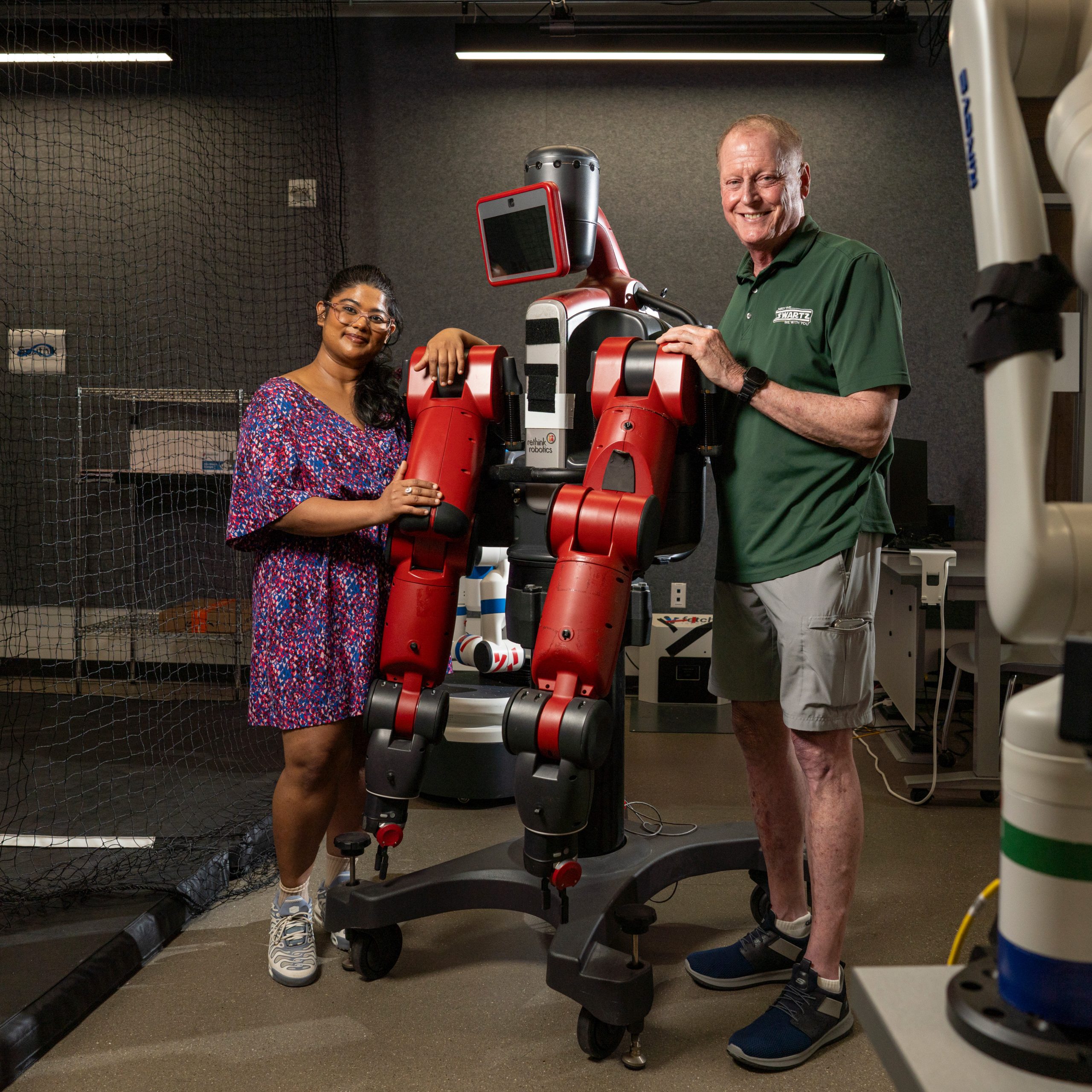
PITTSBURGH — Saisri Akondi had already started a company in her native India when she came to Carnegie Mellon University to get a master’s degree in biomedical engineering, business and design.
Before she graduated, she had co-founded another: D.Sole, for which Akondi, who is 28, used the skills she’d learned to create a high-tech insole that can help detect foot complications from diabetes, which results in 6.8 million amputations a year.
D.Sole is among technology companies in Pittsburgh that collectively employ a quarter of the local workforce at wages much higher than those in the city’s traditional steel and other metals industries. That’s according to the business development nonprofit the Pittsburgh Technology Council, which says these companies pay out an annual $27.5 billion in salaries alone.
A “significant portion” of Pittsburgh’s transformation into a tech hub has been driven by international students like Akondi, said Sean Luther, head of InnovatePGH, a coalition of civic groups and government agencies promoting innovation businesses.
“Next Happens Here,” reads the sign above the entrance to the co-working space where Luther works and technology companies are incubated, in an area near Carnegie Mellon and the University of Pittsburgh dubbed the Pittsburgh Innovation District. The neighborhood is filled with people of various ethnicities speaking a variety of languages over lunch and coffee.
What might happen next to the international students and graduates who have helped fuel this tech economy has become an anxiety-inducing subject of those conversations, as the second presidential administration of Donald Trump brings visa crackdowns, funding cuts and other attacks on higher education — including here, in a state that voted for Trump.
Related: Interested in innovations in higher education? Subscribe to our free biweekly higher education newsletter.
Inside the bubble of the universities and the tech sector, “there’s so much support you get,” Akondi observed, in a gleaming conference room at Carnegie Mellon. “But there still is a part of the population that asks, ‘What are you doing here?’ ”
Much of the ongoing conversation about international students has focused on undergraduates and their importance to university revenues and enrollment. Many of these students — especially in graduate schools — fill a less visible role in the economy, however. They conduct research that can lead to commercial applications, have skills employers need and start a surprising number of their own companies in the United States.
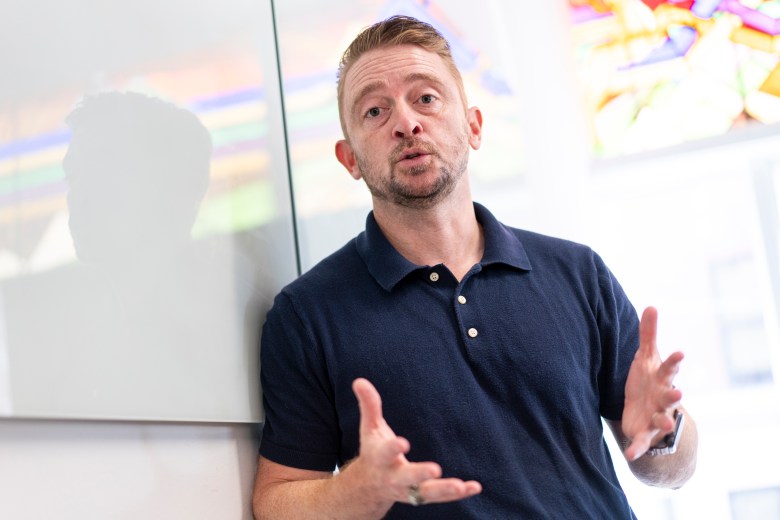
“The high-tech engineering and computer science activities that are central to regional economic development today are hugely dependent on these students,” said Mark Muro, a senior fellow at the Brookings Institution who studies technology and innovation. “If you go into a lab, it will be full of non-American people doing the crucial research work that leads to intellectual property, technology partnerships and startups.”
Some 143 U.S. companies valued at $1 billion or more were started by people who came to the country as international students, according to the National Foundation for American Policy, a nonprofit that conducts research on immigration and trade. These companies have an average of 860 employees each and include SpaceX, founded by Elon Musk, who was born in South Africa and graduated from the University of Pennsylvania.
Whether or not they invent new products or found businesses of their own, international graduates are “a vital source” of workers for U.S.-based tech companies, the National Science Foundation reported last year in an annual survey on the state of American science and engineering.
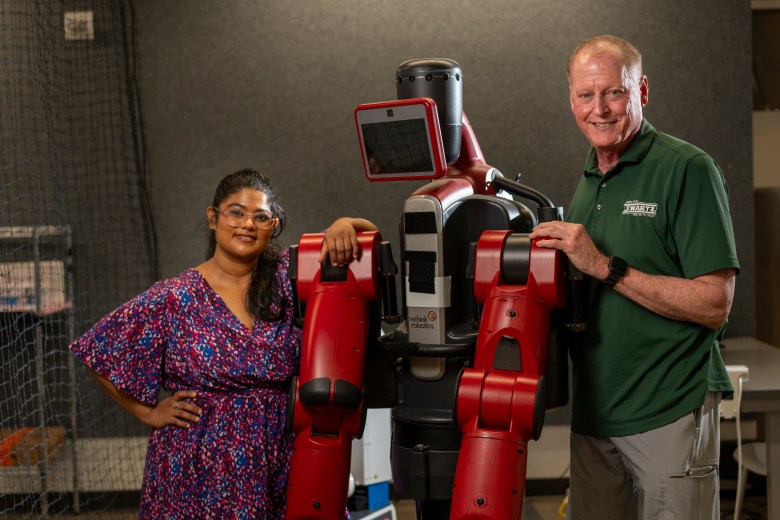
It’s supply and demand, said Dave Mawhinney, a professor of entrepreneurship at Carnegie Mellon and founding executive director of its Swartz Center for Entrepreneurship, which helps many of that school’s students do research that can lead to products and startups. “And the demand for people with those skills exceeds the supply.”
States with the most international students
California: 140,858
New York: 135,813
Texas: 89,546
Massachusetts: 82,306
Illinois: 62,299
Pennsylvania: 50,514
Florida: 44,767
Source: NAFSA: Association of International Educators. Figures are from the 2023-24 academic year, the most recent available.
Related: So much for saving the planet. Climate careers, and many others, evaporate for class of 2025
That’s in part because comparatively few Americans are going into fields including science, technology, engineering and math. Even before the pandemic disrupted their educations, only 20 percent of college-bound American high school students were prepared for college-level courses in these subjects. U.S. students scored lower in math than their counterparts in 21 of the 37 participating nations of the Organization for Economic Cooperation and Development on an international assessment test in 2022, the most recent year for which the outcomes are available.
One result is that international students make up more than a third of master’s and doctoral degree recipients in science and engineering at American universities. Two-thirds of U.S. university graduate students and more than half of workers in AI and AI-related fields are foreign born, according to Georgetown University’s Center for Security and Emerging Technology.
“A real point of strength, and a reason our robotics companies especially have been able to grow their head counts, is because of those non-native-born workers,” said Luther, in Pittsburgh. “Those companies are here specifically because of that talent.”
International students are more than just contributors to this city’s success in tech. “They have been drivers” of it, Mawhinney said, in his workspace overlooking the studio where the iconic children’s television program “Mister Rogers’ Neighborhood” was taped.
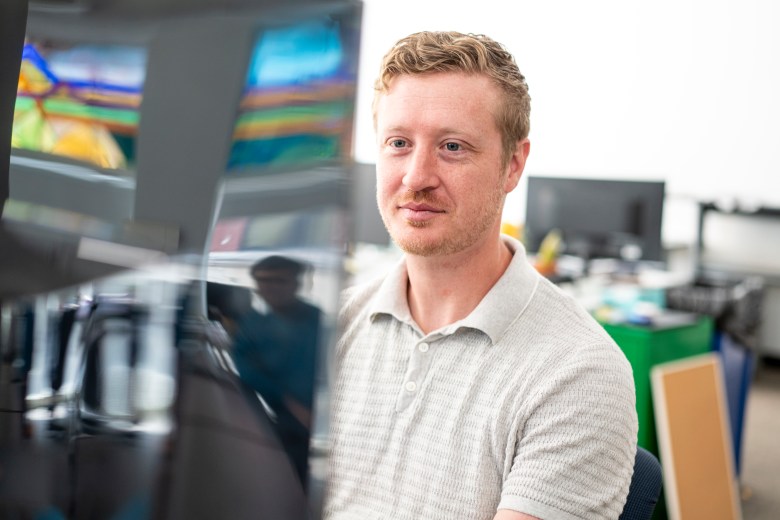
“Every year, 3,000 of the smartest people in the world come here, and a large proportion of those are international,” he said of Carnegie Mellon’s graduate students. “Some of them go into the research laboratories and work on new ideas, and some come having ideas already. You have fantastic students who are here to help you build your company or to be entrepreneurs themselves.”
Boosters of the city’s tech-driven turnaround say what’s been happening in Pittsburgh is largely unappreciated elsewhere. It followed the effective collapse of the steel industry in the 1980s, when unemployment hit 18 percent.
In 2006, Google opened a small office at Carnegie Mellon to take advantage of the faculty and student expertise in computer science and other fields there and at neighboring higher education institutions; the company later moved to a nearby former Nabisco factory and expanded its Pittsburgh workforce to 800 employees. Apple, software and AI giant SAP and other tech firms followed.
“It was the talent that brought them here, and so much of that talent is international,” said Audrey Russo, CEO of the Pittsburgh Technology Council.
Sixty-one percent of the master’s and doctoral students at Carnegie Mellon come from abroad, according to the university. So do 23 percent of those at Pitt, an analysis of federal data shows.
Related: International students are rethinking coming to the US. That’s a problem for colleges
The city has become a world center for self-driving car technology. Uber opened an advanced research center here. The autonomous vehicle company Motional — a joint venture between Hyundai and the auto parts supplier Aptiv — moved in. So did the Ford- and Volkswagen-backed Argo AI, which eventually dissolved, but whose founders went on to create the Pittsburgh-based self-driving truck developer Stack AV. The Ford subsidiary Latitude AI and the autonomous flight company Near Earth Autonomy also are headquartered in Pittsburgh.
Among other tech firms with homes here: Duolingo, which has 830 employees and is worth an estimated $22 billion. It was co-founded by a professor at Carnegie Mellon and a graduate of the university who both came to the United States as international students, from Guatemala and Switzerland, respectively.
InnovatePGH tracks 654 startups that are smaller than those big conglomerates but together employ an estimated 25,000 workers. Unemployment in Pittsburgh (3.5 percent in April) is below the national average (3.9 percent). Now Pitt and others are developing Hazelwood Green, which includes a former steel mill that closed in 1999, into a new district housing life sciences, robotics and other technology companies.
In a series of webinars about starting businesses, offered jointly to students at Pitt and Carnegie Mellon, the most popular installment is about how to found a startup on a student visa, said Rhonda Schuldt, director of Pitt’s Big Idea Center, in a storefront on Forbes Avenue in the Innovation District.
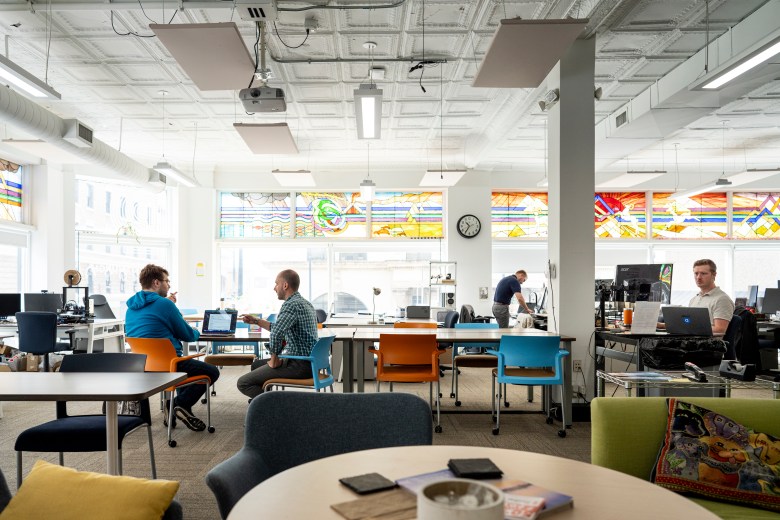
Some international undergraduates continue into graduate school or take jobs with companies that sponsor them so they can keep working on their ideas, Schuldt said.
“They want to stay in Pittsburgh and build businesses here,” she said.
There are clear worries that this momentum could come to a halt if the supply of international students continues a slowdown that began even before the new Trump term, thanks to visa processing delays and competition from other countries.
The number of international graduate students dropped in the fall by 2 percent, before the presidential election, according to the Institute of International Education. Further declines are expected following the government’s pause on student visa interviews, publicity surrounding visa revocations and arrests and cuts to federal research funding.
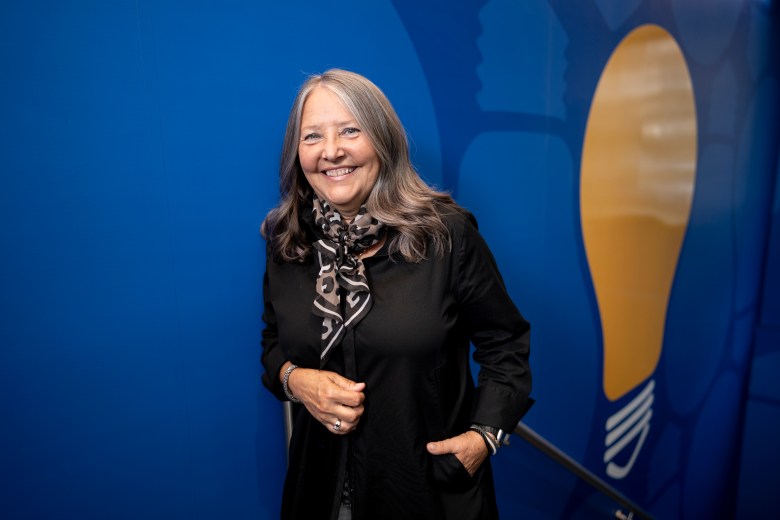
It’s too early to know what will happen this fall. But D. Sole co-founder Saisri Akondi has heard from friends who planned to come to the United States that they can’t get visas. “Most of these students wanted to start companies,” she said.
“I would be lying if I said nothing has changed,” said Akondi, who has been accepted into a master’s degree program in business administration at the Stanford University Graduate School of Business under her existing student visa, though she said her company will stay in Pittsburgh. “The fear has increased.”
This could affect whether tech companies continue to come to Pittsburgh, said Russo, at least unless and until more Americans are better prepared for and recruited into tech-related graduate programs. That’s something universities have not yet begun to do, since the unanticipated threat to their international students erupted only in March, and that would likely take years.
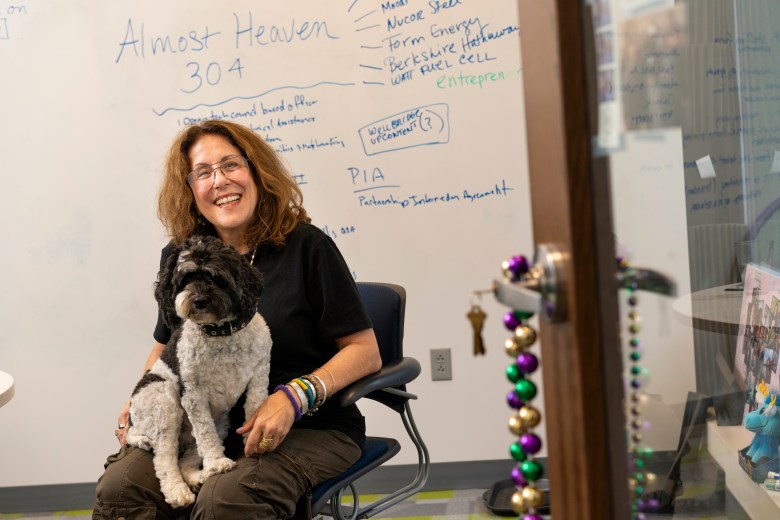
“Who’s going to do the research? Who’s going to be in these teams?” asked Russo. “We’re hurting ourselves deeply.”
The impact could transcend the research and development ecosystem. “I think we’ll see almost immediate ramifications in Pittsburgh in terms of higher-skilled, higher-wage companies hiring here,” said Sean Luther, at InnovatePGH. “And that affects the grocery shops, the barbershops, the real estate.”
There are other, more nuanced impacts.
“Whether we like it or not, it’s a global world. It’s a global economy. The problems that these students want to solve are global problems,” Schuldt said. “And one of the things that is really important in solving the world’s problems is to have a robust mix of countries, of cultures — that opportunity to learn how others see the world. That is one of the most valuable things students tell us they get here.”
Pittsburgh is a prime example of a place whose economy is vulnerable to a decline in the number of international students, said Brookings’ Muro. But it’s not unique.
“These scholars become entrepreneurs. They’re adding to the U.S. economy new ideas and new companies,” he said. Without them, “the economy would be smaller. Research wouldn’t get done. Journal articles wouldn’t be written. Patents wouldn’t be filed. Fewer startups would occur.”
The United States, said Muro, “has cleaned up by being the absolute central place for this. The system has been incredibly beneficial to the United States. The hottest technologies are inordinately reliant on these excellent minds from around the world. And their being here is critical to American leadership.”
Contact writer Jon Marcus at 212-678-7556, [email protected] or jpm.82 on Signal.
This story about international students was produced by The Hechinger Report, a nonprofit, independent news organization focused on inequality and innovation in education. Sign up for our higher education newsletter. Listen to our higher education podcast.