Tag: Latin

  • What’s next for Latin American international education in 2026?

    What’s next for Latin American international education in 2026?

    Outbound mobility 

    Intra-regional and outbound mobility from Latin America are set to grow over the next five years, according to QS Student Flows data, though tighter visa restrictions in major destinations and shifting student priorities are transforming study decisions. 

    “Outbound flows are being reshaped by affordability pressures and visa tightening in traditional destinations, pushing students toward Europe, especially Spain,” said Studyportals researcher Karl Baldacchino.  

    “Sector analyses highlight affordability, employability and flexibility as the dominant decision drives for Latin American students,” he said, highlighting that post-study rights and labour-market relevance increasingly matter more than institutional brand. 

    What’s more, international student caps in Canada and Australia, as well as stricter English requirements and dependents restrictions in the UK, and political volatility in the US, are accelerating a shift toward continental Europe, stakeholders noted.  

    They highlighted Spain as the most popular European destination, which is supported by favourable policies and linguistic proximity, with Studyportals data confirming this rise in interest across Latin America.  

    What’s more, Baldacchino said Erasmus+ 2026 – which is open to partnerships beyond the EU – was a way for Latin American institutions to strengthen European ties through student and faculty exchange, joint programs and capacity building.  

    The importance of career outcomes and immigration pathways were trends also noted by EdCo LATAM Consulting founder Simon Terrington, who predicted students from Brazil, Mexico and Colombia would continue to dominate outbound flows.  

    According to a recent EdCo LATAM partner enrolment survey, Canada received a greater proportion of undergraduate Latin American students compared to the UK and Europe, which were predominantly seen as postgraduate destinations. This region was popular among master’s students from Mexico – the largest sender of this cohort – closely followed by Colombia and Brazil.

    Alongside educational opportunities, Terrington said the impact of political volatility and security concerns in some Latin American countries were notable drivers for students wanting to study in different environments. 

    Meanwhile, QS senior consultant Gabriela Geron said Trump’s policies in the US – traditionally the primary study destination for Latin America – would be “critical to monitor as they may influence visa regulations, international student flows and partnerships affecting the region”.  

    Amid recent escalations in US-Venezuela relations, students from the South American country are increasingly turning away from the US, with interest from across the region “somewhat softening”, experts have said, amid reports of noticeable declines in visa approval rates for Latin American students.  

    Inbound mobility  

    When it comes to inbound mobility: “Latin America is taking modest but important steps toward becoming a host region thanks to growing scholarship schemes and targeted English taught expansion”, said Baldacchino. 

    “The region’s biggest missed opportunities remain limited English-taught capacity, underdeveloped TNE partnerships, and the absence of a structured pre-tertiary mobility pipeline,” he continued, identifying the former as the primary constraining factor.  

    While the TNE gap between Latin America compared with Asia and the Middle East has become more visible, Baldacchino said awareness of the issue could also create momentum for new partnership models.  

    Geron agreed that limited program expansion, insufficient English-taught courses, language barriers and infrastructure challenges were reducing the region’s competitiveness compared to emerging hubs in Europe and Asia.

    The biggest structural constraint remains underdeveloped English-taught capacity

    Karl Baldacchino, Studyportals

    She identified three key opportunities for the region: “Strengthening engagement with neighbouring countries, leveraging growing demand from Europe and investing in flexible delivery models – including digital solutions and TNE – to remain competitive”. 

    Baldacchino highlighted some progress by institutions in Chile and Ecuador entering the QS Latin America & Caribbean 2026 rankings, driven by increased international collaboration and incremental expansion of English-taught courses.  

    What’s more, scholarship schemes in Brazil and Mexico continue to attract interest from the Global South, “signalling a gradual move toward Latin America becoming a genuine host rather than only a sending region”, he said.  

    Meanwhile, Geron predicted that Argentina would maintain its position as the leading host destination in Latin America, supported by its long-standing offer of accessible public higher education driving significant intra-regional mobility. 

    However, though there are yet to be any formal policy changes, ongoing political debate about charging tuition fees to non-resident international students has introduced a degree of uncertainty for prospective students, Geron noted.  

    Elsewhere, Brazil’s introduction of post-study residence and work authorisation for international graduates “represents a positive step toward linking higher education with labour market retention”, with the policy set to improve the country’s retention outcomes this year, she said.  

    With elections scheduled this year across Brazil, Colombia, Costa Rica, Peru and Nicaragua, Geron saw several opportunities for Latin America’s development as a study destination.  

    She highlighted positive policy adjustments in countries such as Uruguay, the Dominican Republic, El Salvador and Ecuador, which, while representing progress towards internationalisation, are unlikely to significantly alter the region’s standing in higher education in 2026. 

    “The improved rankings, expanded scholarship schemes, and targeted English-taught provision across Latin America suggest a slow but meaningful pivot toward diversity,” said Badacchino, advising institutions in the region and beyond to articulate clear, employment-led value.  

    Source link

  • A Critical Tool for Understanding U.S. Intervention in Latin America

    A Critical Tool for Understanding U.S. Intervention in Latin America

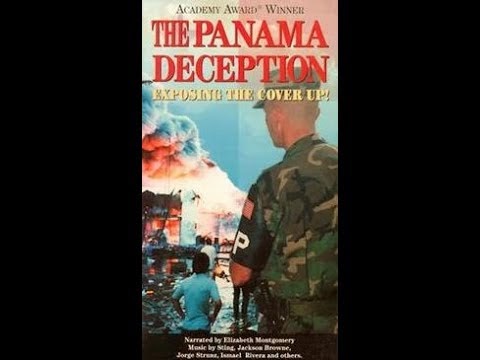
    Barbara Trent’s 1992 documentary The Panama Deception remains an essential work for comprehending the nature and impact of U.S. military interventions in Latin America. Winner of the Academy Award for Best Documentary Feature, the film offers a critical examination of the December 1989 U.S. invasion of Panama—Operation Just Cause—and challenges official narratives about that intervention.

    Reframing the Official Narrative

    The Panama Deception scrutinizes the publicly stated justifications for the 1989 invasion, including protecting U.S. citizens, defending democracy, and combating drug trafficking. In doing so, it highlights stark discrepancies between government claims and on‑the‑ground realities, arguing that the invasion served broader strategic interests rather than solely humanitarian or legal objectives.

    The film foregrounds how the U.S. government and mainstream media shaped public perceptions, often downplaying civilian casualties and simplifying complex political dynamics to justify military action. By exposing this media bias, the documentary encourages viewers to question official accounts and consider how information is framed in service of policy goals. 

    Human Cost and Civilian Impact

    A central contribution of the documentary is its focus on the human toll of the invasion. Using firsthand testimonies, footage of destruction, and accounts of displacement, the film documents the suffering of Panamanian civilians—particularly in impoverished neighborhoods such as El Chorrillo—which received limited attention in U.S. media coverage. 

    These portrayals deepen our understanding of how military interventions affect everyday lives beyond abstract geopolitical objectives. For students and scholars of international relations, human rights, and media studies, this emphasis provides a critical counterpoint to sanitized official histories.

    Historical and Geopolitical Context

    The Panama Deception situates the Panama invasion within a longer history of U.S. influence in the region. It suggests that long‑standing strategic interests—including control over the Panama Canal and hemispheric dominance—shaped U.S. policy long before the invasion’s official rationales were publicly articulated.

    While the Torrijos‑Carter Treaties mandated transfer of canal control to Panama by 1999, the film and many independent observers argue that U.S. policymakers were intent on maintaining influence and minimizing threats to American strategic goals. 

    Media Critique and Public Perception

    One of the documentary’s most enduring contributions lies in its examination of media complicity. The Panama Deception demonstrates how mainstream outlets often uncritically echoed government talking points, marginalizing dissenting voices from Panamanian civilians, independent journalists, and human rights advocates. 

    This critique remains relevant for students exploring how propaganda, framing, and selective reporting can influence public support for foreign policy decisions. The film thus serves as a case study for media literacy alongside political critique.

    Conclusion: Educational and Analytical Value

    The Panama Deception offers a multifaceted analysis of U.S. interventionism that transcends a single historical event. By combining archival evidence, eyewitness accounts, and critical commentary, it provides learners with a structured means to examine the intersections of power, narrative, and human consequence. For educators and researchers in Latin American studies, political science, and media studies, the film underscores the importance of questioning official narratives and exploring the lived effects of foreign policy decisions.


    Selected Sources

    • The Panama Deception (1992 documentary overview and details). 

    • Analysis of the film’s critique of U.S. media and government narratives. 

    • Historical context on media bias and human impact. 

    • Wider context on the invasion and implications related to Panama Canal treaty issues. 

    Source link

  • Oil, Crypto, and the Struggle for Latin America’s Universities

    Oil, Crypto, and the Struggle for Latin America’s Universities

    Latin America—a region of thirty-three countries stretching from Mexico through Central and South America and across the Caribbean—has spent more than a century fighting against foreign exploitation. Its universities, which should anchor local prosperity, cultural autonomy, and democratic life, have instead been repeatedly reshaped by foreign corporations, U.S. government interests, global lenders, and now crypto speculators. Yet the region’s history is also defined by persistent, courageous resistance, led overwhelmingly by students, faculty, and Indigenous communities.

    Understanding today’s educational crisis in Latin America requires tracing this long arc of exploitation—and the struggle to build systems rooted in equity rather than extraction.

    1900s–1930s: Bananas, Oil, and the Rise of the “Banana Republics”

    Early in the 20th century, American corporations established vast profit-making empires in Latin America. United Fruit Company—today’s Chiquita Banana—dominated land, labor, and politics across Guatemala, Honduras, and Costa Rica. Standard Oil and Texaco secured petroleum concessions in Venezuela and Ecuador, laying foundations for decades of foreign control that extracted immense wealth while leaving behind environmental devastation, as seen in Texaco’s toxic legacy in the Ecuadorian Amazon between 1964 and 1992.

    Universities were bent toward these foreign interests. Agricultural programs were geared toward serving plantation economies, not local farmers. Engineering and geological research aligned with extractive industries, not community development.

    Resistance did emerge. Student groups in Guatemala and Costa Rica formed part of early anti-oligarchic movements, linking national sovereignty to university reform. Their demands echoed global currents of democratization. Evidence of these early student-led struggles appears in archival materials and Latin American scholarship on university reform, and culminates in the influential 1918 Córdoba Manifesto in Argentina—a radical declaration that attacked oligarchic, colonial universities and demanded autonomy, co-governance, and public responsibility.

    1940s–1980s: Coups, Cold War Interventions, and the Deepening of U.S. Oil Interests

    During the Cold War, exploitation intensified. In Guatemala, the CIA-backed overthrow of democratically elected President Jacobo Árbenz in 1954 protected United Fruit’s land holdings. Universities were purged or militarized, and critical scholars were exiled or killed.

    In Chile, the 1973 overthrow of Salvador Allende—supported by American corporate giants such as ITT and Anaconda Copper—ushered in a brutal dictatorship. Under Augusto Pinochet, thousands were murdered, tortured, or disappeared, while the Chicago Boys imported radical neoliberal reforms that privatized everything, including the higher education system.

    Throughout the region, oil deals disproportionately favored American companies. Mexico and Venezuela saw petroleum wealth siphoned off through arrangements that benefited foreign investors while leaving universities underfunded and politically surveilled. Scholarship critical of foreign intervention was marginalized, while programs feeding engineers and economists to multinational firms were expanded.

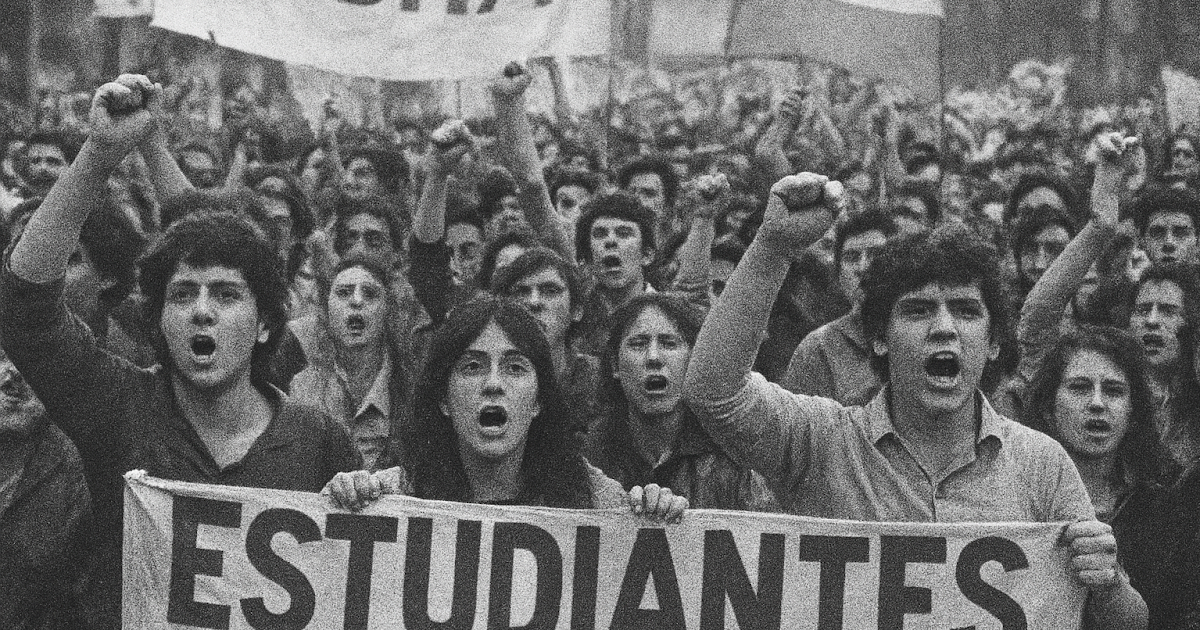
    Student resistance reached historic proportions. Chilean students and faculty formed the core of the anti-dictatorship movement. Mexico’s students rose in 1968, demanding democracy and university autonomy before being massacred in Tlatelolco. CIA declassified documents reveal that student uprisings across Latin America in the early 1970s were so widespread that U.S. intelligence considered them a regional threat.

    1990s–2000s: Neoliberalism, Privatization, and the Americanization of Higher Education

    In the 1990s, neoliberalism swept the region under pressure from Washington, the IMF, and the World Bank. After NAFTA, Mexico’s universities became increasingly aligned with corporate labor pipelines. In Brazil, Petrobras’ partnerships with American firms helped reshape engineering curricula. Private universities and for-profit models proliferated across the region, echoing U.S. higher ed corporatization.

    Hugo Chávez captured the broader sentiment of resistance when he declared that public services—including education—cannot be privatized without violating fundamental rights.

    Students fought back across Latin America. In Argentina and Brazil they contested tuition hikes and privatization. In Venezuela, the debate shifted toward whether oil revenue should fund tuition-free universities.

    Indigenous Exclusion, Racism, and the Colonial Foundations of Inequality

    One of the greatest challenges in understanding Latin American education is acknowledging the deep racial and ethnic stratification that predates U.S. exploitation but has been exacerbated by it. Countries like Ecuador, Bolivia, Peru, Mexico, Brazil, and Guatemala have large Indigenous populations that, to this day, receive the worst education—much like Native American communities relegated to underfunded reservation schools in the United States.

    Racism remains powerful. Whiter populations enjoy greater economic and educational access. University admission is shaped by class and color. These divisions are not accidental; they are a machinery of control.

    There have been important exceptions. Under President Rafael Correa, Ecuador built hundreds of new schools, including Siglo XXI and Millennium Schools, and expanded public education access. In Mexico, the 2019 constitutional reform strengthened Indigenous rights, including commitments to culturally relevant education. Bolivia—whose population is majority Indigenous—has promoted Indigenous languages, judicial systems, and education structures.

    But progress is fragile. Austerity, IMF conditionalities, and elite resistance have led to cutbacks, school closures, and renewed privatization across the region. The study you provided on Ecuador documents Indigenous ambivalence, even hostility, toward Correa’s universal education plan—revealing how colonial wounds, cultural erasure, and distrust of state power complicate reform and provide openings for divide-and-conquer strategies long exploited by ruling classes.

    These contradictions deepen when Indigenous movements—rightfully demanding no mining, no oil extraction, and protection of ancestral lands—collide with leftist governments reliant on resource extraction to fund public services. This tension is especially acute in Ecuador and Bolivia.

    2010s–Present: Crypto Colonialism and a New Frontier of Exploitation

    Cryptocurrency has opened a new chapter in Latin America’s long history of foreign-driven experimentation. El Salvador’s adoption of Bitcoin in 2021, promoted by President Nayib Bukele, transformed the country into a speculative test lab. Bukele has now spent more than $660 million in U.S. dollars on crypto, according to investigative reporting from InSight Crime. Universities rushed to create blockchain programs that primarily serve international investors rather than Salvadoran students.

    In Venezuela, crypto became a survival tool amid hyperinflation and economic collapse. Yet foreign speculators profited while universities starved. Student groups warned that crypto research was being weaponized to normalize economic chaos and distract from public-sector deterioration.

    Resistance has grown. Salvadoran students have protested the Bitcoin law, demanding that public resources focus on infrastructure, health, and education. Venezuelan students call for rebuilding social programs rather than chasing speculative financial technologies.

    Contemporary Student Resistance: 2010s–2020s

    Across the region, student movements remain powerful. The Chilean Winter of 2011–2013 demanded free, quality public education and challenged Pinochet’s neoliberal legacy. The movement culminated in the 2019 uprising, where education reform was central.

    Mexico’s UNAM students continue to resist corruption, tuition hikes, gender violence, and the encroachment of corporate and foreign interests. The 1999–2000 UNAM strike remains one of the longest in modern higher education.

    Colombian students have forced governments to negotiate and invest billions in public universities, framing their struggle as resistance to neoliberal austerity shaped by U.S. policy.

    Argentina continues to face massive austerity-driven cuts, sparking protests in 2024–2025 reminiscent of earlier waves of resistance. Uruguay’s Tupamaros movement—largely student-led—remains a historical touchstone.

    Every country in Latin America has experienced student uprisings. They reflect a truth that Paulo Freire, exiled from Brazil for teaching critical pedagogy, understood deeply: education can either liberate or oppress. Authoritarians, privatizers, and foreign capital prefer the latter, and they act accordingly.

    Today’s Regional Education Crisis

    The COVID-19 pandemic pushed the system into further crisis. Children in Latin America and the Caribbean lost one out of every two in-person school days between 2020 and 2022. Learning poverty now exceeds 50 percent. Entire generations risk permanent economic loss and civic disenfranchisement.

    Infrastructure is collapsing. Rural and Indigenous communities suffer the worst conditions. Public investment is chronically insufficient because governments are trapped in cycles of debt repayment to international lenders. Ecuador has not seen a major public-investment program in a decade, as austerity and IMF repayments dominate national budgets.

    The result is a system starved of resources and increasingly vulnerable to privatization schemes—including U.S.-style online coursework, ideological “instruction kits,” and for-profit degree mills.

    Latin American Universities as Battlegrounds for Sovereignty

    Latin America’s universities are shaped by the same forces that have dominated the region’s history: oil extraction, agribusiness, foreign capital, neoliberalism, structural racism, debt, and now crypto speculation. Yet universities have also been homes to transformation, rebellion, cultural resurgence, and hope.

    Across more than a century, students—Indigenous, Afro-descendant, mestizo, working-class—have been the region’s fiercest defenders of public education and national sovereignty. Their resistance continues today, from Quito to Buenos Aires, from Mexico City to Santiago.

    For readers of the Higher Education Inquirer, the lesson is clear: the struggle for higher education in Latin America is inseparable from the struggle for democracy, racial justice, Indigenous autonomy, and freedom from foreign domination. The region’s ruling elites and international lenders understand that an educated public is dangerous, which is why they starve, privatize, and discipline public schools. Students understand the opposite: that education is power, and that power must be reclaimed.

    The next chapter—especially in countries like Ecuador—will depend on whether students, teachers, and communities can defend public education against the dual forces that have undermined it for more than a century: privatizers and fascists.


    Sources (Selection)

    National Security Archive, CIA Declassified Documents (1971)
    InSight Crime reporting on El Salvador Bitcoin expenditures
    Luciani, Laura. “Latin American Student Movements in the 1960s.” Historia y Memoria (2019)
    The Córdoba Manifesto (1918)
    UNESCO, World Bank data on learning poverty (2024)
    Latin American studies on United Fruit, Standard Oil, Texaco/Chevron in Ecuador
    LASA Forum: Analysis of Indigenous responses to Correa’s education reforms
    Periodico UNAL: “The Student Rebellion: Córdoba and Latin America”
    Multiple regional news sources on Argentina’s 2024–2025 education protests

    Source link

  • Greg Grandin on Latin American History, from Colonization to CECOT to Pope Francis (Democracy Now!)

    Greg Grandin on Latin American History, from Colonization to CECOT to Pope Francis (Democracy Now!)

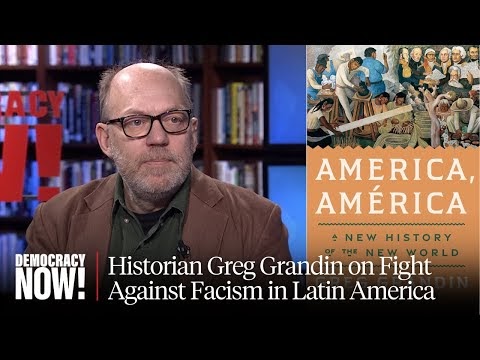
    We spend the hour with acclaimed historian Greg Grandin discussing his new book, America, América: A New History of the New World, which spans five centuries of North and South American history since the Spanish conquest, including the fight against fascism in the 1930s. He examines the U.S.-Latin American relationship under Trump, with a focus on El Salvador, Panama, Ecuador and Cuba. Grandin also has a new piece for The Intercept that draws on the book, headlined “The Long History of Lawlessness in U.S. Policy Toward Latin America.” “If the United States really has given up its role as superintending a global liberal order and the world is reverting back to these kind of spheres of power competitions, then Latin America becomes, essentially, much more important,” says Grandin. We also continue to examine the legacy of the late Pope Francis, the son of Italian immigrants to Argentina and the first pope from Latin America. Grandin shares how the Catholic Church’s involvement in the conquest and colonization of the continent impacted the pope’s beliefs. 

    Democracy Now! is an independent global news hour that airs on over 1,500 TV and radio stations Monday through Friday. Watch our livestream at democracynow.org Mondays to Fridays 8-9 a.m. ET.

    Source link