Tag: Launches

  • Tennessee launches direct admissions pilot with student aid component

    Tennessee launches direct admissions pilot with student aid component

    Dive Brief: 

    • Tennessee is joining the ranks of states with direct admissions programs by launching a pilot this fall that will automatically offer certain high school students spots at the state’s two- and four-year colleges based on their academic records. 
    • The program, led by the Tennessee Higher Education Commission, will pair admissions offers with financial aid information for about half the high school students to test whether that boosts their chances of enrolling
    • In a statement Wednesday, THEC Executive Director Steven Gentile cast the initiative as a way to simplify the path to college. “For the first time in the nation, we are pairing direct admissions with personalized financial aid information, so students not only know where they’ve been accepted — they’ll also know how they can afford to go.”

    Dive Insight: 

    The TN Direct Admissions pilot is to launch in November, when roughly 41,000 students from more than 230 randomly selected high schools in the state will receive letters listing which participating colleges have automatically accepted them. Around half of those students will also get information about available state and institutional financial aid tailored to them based on their GPA, test scores or other criteria. 

    To participate, students will need to complete an application for the Tennessee Promise program by Nov. 1.

    Researchers will use the information from the pilot to study how providing this information influences college-going behavior. 

    They aim to find out whether high school students who receive both financial aid information and direct admissions bids are more likely to attend college than those who just get automatic admissions offers. They will also compare the data against that for students who don’t receive direct admissions letters at all. 

    “Through this study, we will learn not only about the impact of direct admissions and financial aid on students’ college enrollment, but how students feel about their direct admission experience,” Trisha Ross Anderson, a Harvard University researcher working on the project, said in a Wednesday statement. 

    The financial aid component — which THEC said in a Wednesday statement is the first of its kind for a direct admissions program — will inform students of their eligibility for institutional grants and scholarships, as well as for state programs such as the Tennessee Promise. That program covers remaining tuition and fees for students at state community or technical colleges after all other grant aid has been applied.  

    Overall, 53 colleges are participating in the fall pilot. That includes all 13 of the state’s community colleges and its 23 technical colleges, as well as 17 public and private universities. 

    Tennessee joins several other states that have recently launched direct admissions programs. Earlier this year, Illinois Gov. JB Pritzker signed a bill into law to send high school and community college students direct admissions offers to the state’s universities depending on their academic performance. 

    And last October, New York launched an effort to guarantee fall 2025 spots to at least one of its public universities for high school students graduating in the top 10% of their class. The nine initial participating colleges included the state’s two flagships, University at Buffalo and Stony Brook University.

    Source link

  • Western Sydney uni launches 5-year plan – Campus Review

    Western Sydney uni launches 5-year plan – Campus Review

    Western Sydney University (WSU) has doubled down on its commitment to make every year the ‘year of the student’ in its new 2030 strategic plan.

    Please login below to view content or subscribe now.

    Membership Login

    Source link

  • Wayne State Launches Prison Education Program

    Wayne State Launches Prison Education Program

    Wayne State University

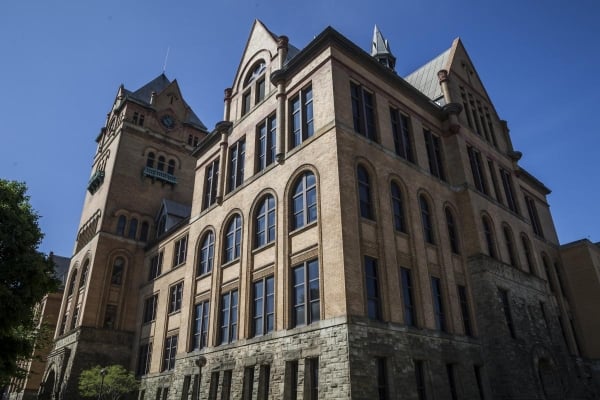
    With the reinstatement of Pell Grant eligibility for incarcerated individuals in 2023, more colleges have launched or restarted prison education programs. Wayne State University in Michigan will join their ranks this fall, offering a bachelor’s degree to incarcerated individuals for the first time.

    Twenty-five students will join the inaugural cohort in August, and the university is forging ahead with program plans despite looming Pell Grant cuts.

    What’s the need: Twenty-five percent of formerly incarcerated people have no high school diploma, and 20 percent have only a high school diploma, compared to the 91 percent of Americans who have attained at least that credential. “We know that today’s workforce, much of it requires a college education, so it’s almost a necessary criterion to earn a living wage in today’s society,” said Michelle Jacobs, a professor of sociology and Wayne State’s Prison Education Program lead.

    While many incarcerated individuals express an interest in postsecondary education, college often gets placed on the back burner after they leave prison as they focus on more pressing challenges, such as meeting basic needs and providing for themselves, Jacobs said. Higher education–in–prison programs help students get a head start on reclaiming their lives after they are released.

    The initiative also ties into Wayne State president Kimberly Andrews Espy’s Prosperity Agenda for the Detroit area, which includes supporting economic mobility for students, improving the health of urban neighborhoods and fostering innovation in the local economy.

    Individuals who participate in postsecondary education programs while in prison are 48 percent less likely to be reincarcerated than those who don’t, and they are more likely to get a job after their release. Research also shows that education-in-prison programs not only benefit the individual but also increase safety in prison settings and can improve families’ socioeconomic mobility.

    “One of our goals for the program is to empower families in low-income communities that have been disproportionately impacted [by mass incarceration],” Jacobs said.

    How it works: Wayne State’s Prison Education Program will enroll 25 incarcerated men at the Macomb Correctional Facility in Lenox, Mich., about 35 miles northeast of the university.

    To be considered, applicants have to be at least five years from their earliest release date, giving them time to finish the program, and they must complete an essay outlining why they want to participate.

    All courses will be delivered in person and the university will provide any school supplies or resources the students need for their coursework, including pens, paper and dictionaries. Students have to complete paper applications and FAFSA forms, so staff will assist with that process.

    Program participants will complete a degree in sociology, as well as a range of general education courses, similar to their on-campus peers. Students can also opt in to an entrepreneurship and innovation minor.

    Both programs are designed to support the unique experiences of incarcerated people, Jacobs said.

    “I’m extremely biased towards sociology, and I think that benefits everyone,” Jacobs said. “I think that incarcerated individuals can benefit so much, not only in terms of understanding the broader structures that have impacted their own realities, but also on that interactional level … I think that’ll be really helpful for them as they’re navigating their lives postrelease.”

    Faculty members from across the university will serve as instructors.

    Facing headwinds: Since beginning the project, Wayne State has encountered various challenges.

    The initial plan was to use donor funding to kick off the program, but officials had to pivot to relying on Pell dollars and money from the Michigan Department of Corrections to cover student tuition. Then, reorganization at the federal Department of Education and a lack of staff stalled approval of the program. Changes to the Pell Grant may further impede the program’s future.

    Despite the obstacles, Jacobs and her team are pushing on.

    “Once we started working on it, I couldn’t let it go,” Jacobs said. “I deeply believe in the transformative power of education, and I also deeply believe that there is an amazing among of talent and wit and love and humor and expertise already in carceral settings … I just made a decision that we will forge ahead regardless of what is happening at the federal level—while, of course, paying attention to it.”

    Wayne State staff received advice and support in establishing the program from the Michigan Consortium for Higher Education in Prison. “It’s very collaborative instead of competitive, which is unique for academic spaces, and I appreciate it so much,” Jacobs said.

    Next steps: Jacobs and her team are currently reviewing student applications to select the inaugural cohort, with plans to enroll another cohort in fall 2026.

    Before classes start this August, participating faculty and students will both complete an orientation. The faculty orientation will provide instructors with professional development that helps prepare them to teach inside a prison, supported by a student organization on campus focused on criminal justice reform.

    Students will be given college-readiness support, as well as access to academic and support resources similar to those offered on campus.

    If your student success program has a unique feature or twist, we’d like to know about it. Click here to submit.

    Source link

  • China Select Committee Launches AI Campaign with Legislation to Block CCP-Linked AI from U.S. Government Use

    China Select Committee Launches AI Campaign with Legislation to Block CCP-Linked AI from U.S. Government Use

    FOR IMMEDIATE RELEASE:

    June 25, 2025

    Contact:

    Alyssa Pettus

    Brian Benko

    WASHINGTON, D.C. — As the House Select Committee on the China opens its landmark hearing, “Authoritarians and Algorithms: Why U.S. AI Must Lead,” Committee leaders are unveiling new bipartisan legislation to confront the CCP’s growing exploitation of artificial intelligence.

    Chairman John Moolenaar (R-MI) and Ranking Member Raja Krishnamoorthi (D-IL) today announced the House introduction of the “No Adversarial AI Act” bipartisan legislation also being championed in the Senate by Senators Rick Scott (R-FL) and Gary Peters (D-MI). The bill would prohibit U.S. executive agencies from acquiring or using artificial intelligence developed by companies tied to foreign adversaries like the Chinese Communist Party. The House legislation is cosponsored by a bipartisan group of Select Committee members, including Reps. Ritchie Torres (D-NY) and Darin LaHood (R-IL). 


    “We are in a new Cold War—and AI is the strategic technology at the center,” said Chairman Moolenaar. “The CCP doesn’t innovate—it steals, scales, and subverts. From IP theft and chip smuggling to embedding AI in surveillance and military platforms, the Chinese Communist Party is racing to weaponize this technology. We must draw a clear line: U.S. government systems cannot be powered by tools built to serve authoritarian interests.”

    What the No Adversarial AI Act Does:

    • Creates a public list of AI systems developed by foreign adversaries, maintained and updated by the Federal Acquisition Security Council.
    • Prohibits executive agencies from acquiring or using adversary-developed AI—except in narrow cases such as research, counterterrorism, or mission-critical needs.
    • Establishes a delisting process for companies that can demonstrate they are free from foreign adversary control or influence.


    “Artificial intelligence controlled by foreign adversaries poses a direct threat to our national security, our data, and our government operations,” said Ranking Member Raja Krishnamoorthi. “We cannot allow hostile regimes to embed their code in our most sensitive systems. This bipartisan legislation will create a clear firewall between foreign adversary AI and the U.S. government, protecting our institutions and the American people. Chinese, Russian, and other adversary AI systems simply do not belong on government devices, and certainly shouldn’t be entrusted with government data.”

    Senator Rick Scott said“The Communist Chinese regime will use any means necessary to spy, steal, and undermine the United States, and as AI technology advances, we must do more to protect our national security and stop adversarial regimes from using technology against us. With clear evidence that China can have access to U.S. user data on AI systems, it’s absolutely insane for our own federal agencies to be using these dangerous platforms and subject our government to Beijing’s control. Our No Adversarial AI Act will stop this direct threat to our national security and keep the American government’s sensitive data out of enemy hands.”

    The legislation marks a major action in the Select Committee’s AI campaign, which aims to secure U.S. AI supply chains, enforce robust export controls, and ensure American innovation does not fuel authoritarian surveillance or military systems abroad.


    Today’s hearing and legislation continues the series of new proposals and messaging the Committee will roll out this summer to confront the CCP’s exploitation of U.S. innovation and prevent American technology from fueling Beijing’s AI ambitions.

    Source link

  • Counslr Launches in Texas to Increase Access to Mental Health Support for Staff and Students

    Counslr Launches in Texas to Increase Access to Mental Health Support for Staff and Students

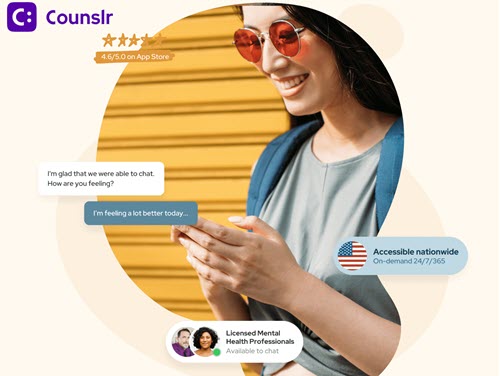
    New York, NY –  Counslr, a leading B2B mental health and wellness platform, announced today that it has expanded its footprint into the State of Texas starting with a partnership with Colorado Independent School District (ISD) in Colorado City, TX. This partnership will empower students and staff to prioritize their mental health by enabling them to access unlimited live texting sessions with Counslr’s licensed and vetted mental health support professionals, who are available on-demand, 24/7/365 and also utilize the app’s robust and curated wellness resources. By increasing accessibility to Counslr’s round-the-clock support, Colorado ISD aims to empower those silent sufferers who previously did not or could not access care, whether due to cost, inconvenience, or stigma.

    Texas is facing a critical mental health care crisis, with over 95% of its counties officially designated as Mental Health Professional Shortage Areas. This alarming statistic underscores the severe lack of access to mental health services across the state, particularly in rural, border, and frontier communities. This resource scarcity underscores the urgent need for additional resources and innovative solutions to bridge this critical care gap for school communities.

    “We’re excited to partner with Counslr to bring innovative, accessible mental health resources to our school community,” said Alison Alvarez, Family and Community Engagement Coordinator, of Colorado ISD. “This partnership empowers our 6-12 grade students and staff with the support they need to thrive—both in and out of the classroom.”

    As factors such as academic pressures, social media influence, burnout and world events contribute to an increase in mental health challenges for young people, schools throughout the country are recognizing the growing need to offer more accessible, prevention-focused resources. A recent study found that digital mental health apps like Counslr can play an important role in expanding access to mental health support, especially for school communities. Most users turned to Counslr through on-demand sessions, showing just how valuable it is to have someone available in the moment when support is needed most. Interestingly, more than 80% of sessions happened between 7 PM and 5 AM, a time when traditional counseling services are usually unavailable. This suggests that Counslr helps fill a critical gap, offering students and school community members a reliable way to talk to licensed counselors around the clock. The app was also used for a wide range of concerns, highlighting its potential to meet diverse mental health needs through both immediate and scheduled support.

    “As we expand across the country, we’re proud to partner with new school communities to ensure that every student, regardless of location or background, has access to the mental health support they deserve,” said Josh Liss, Counslr CEO. Adding that, “With most of Counslr’s users being first-time care seekers, we’re excited to help reach those traditionally unreachable, who need help but do not or cannot access it, no matter where they are located.”

    ABOUT COUNSLR

    Counslr is a text-based mental health support application that provides unlimited access to robust wellness resources and live texting sessions with licensed professionals, 24/7/365. Users can access support on-demand within two minutes of opening the app, or by scheduled appointment. Through real-time texting, users enjoy one-on-one, private communication with a licensed counselor that can be conducted anytime, anywhere. Counslr was designed to help individuals deal with life’s day-to-day issues, empowering individuals to address concerns while they are “small” to help ensure that they stay “small”. Counslr partners with organizations of all shapes and sizes (companies, unions, nonprofits, universities/colleges, high schools, etc) so that these entities can provide Counslr’s services to their employees/members/students at no direct cost. For more information, please visit www.counslr.com.

    eSchool News Staff
    Latest posts by eSchool News Staff (see all)

    Source link

  • Unibuddy launches AI tool to boost student engagement

    Unibuddy launches AI tool to boost student engagement

    Unibuddy, a higher education peer-to-peer engagement platform, has officially launched Assistant – an AI tool designed to support large-scale, authentic student-led conversations.

    Following a successful beta phase, the tool is now fully live with 30 institutions worldwide and delivering impressive results: tripling student engagement, cutting staff workload significantly, and maintaining over 95% accuracy.

    As universities face increasing pressure from tighter budgets and rising student expectations, Unibuddy said its Assistant tool offers a powerful solution to scale meaningful engagement efficiently, combining the speed of AI with the authenticity of real student voices.

    • 65,000 unique students have used Assistant
    • 100,000+ student questions answered automatically without requiring manual intervention
    • 125% increase in students having conversations
    • 60% increase in lead capture
    • five hours saved per day for university staff

    “Today’s students demand instant, authentic and trustworthy communication,” said Diego Fanara, CEO at Unibuddy. “Unibuddy Assistant is the first and only solution that fuses the speed of AI with the credibility of peer-to-peer guidance – giving institutions a scalable way to meet expectations without sacrificing quality or trust.”

    Unibuddy has partnered with more than 600 institutions globally and has supported over 3,000,000 prospective students through the platform. As part of this extensive network, it regularly conducts surveys to uncover fresh insights. Although chatbots are now common in higher education, survey findings highlight key limitations in their effectiveness:

    • 84% of students said that university responses were too slow (Unibuddy Survey, 2025)
    • 79% of students said it was important that universities balance AI automation (for speed) and human interaction (for depth) while supporting them as they navigate the decision-making process (Unibuddy Survey, 2025)
    • 51% of students say they wouldn’t trust a chatbot to answer questions about the student experience (Unibuddy Survey, 2024)
    • 78% say talking to a current student is helpful — making them 3.5x more likely to trust a peer than a bot (Unibuddy Survey, 2025)
    • Only 14% of students felt engaged by the universities they applied to (Unibuddy Survey, 2025)

    Unibuddy says these finding have shaped its offering: using AI to handle routine questions and highlight valuable information, while smoothly handing off to peer or staff conversations when a personal, human connection is needed.

    Buckinghamshire New University used Unibuddy Assistant to transform early-stage engagement – generating 800,000 impressions, 30,000 clickthroughs, and 10,000+ student conversations in just six months. The university saved over 2,000 staff hours and saw 3,000 referrals to students or staff. 

    Today’s students demand instant, authentic and trustworthy communication
    Diego Fanara, Unibuddy

    Meanwhile the University of South Florida Muma College of Business reported over 30 staff hours saved per month, with a 59% click-to-conversation rate and over a third of chats in Assistant resulting in referrals to student ambassador conversations. 

    And the University of East Anglia deployed Assistant across more than 100 web pages, as part of the full Unibuddy product suites deployment of peer-to-peer chat, with student-led content contributing to a 62% offer-to-student conversion rate compared with 34% of those who didn’t engage with Unibuddy. 

    Source link

  • SMART Technologies Launches AI Assist in Lumio to Save Teachers Time

    SMART Technologies Launches AI Assist in Lumio to Save Teachers Time

    Lumio by SMART Technologies, a cloud-based learning platform that enhances engagement on student devices, recently announced a new feature for its Spark plan. This new offering integrates AI Assist, an advanced tool designed to save teachers time and elevate student engagement through AI-generated quiz-based activities and assessments.

    Designing effective quizzes takes time—especially when crafting well-balanced multiple-choice questions with plausible wrong answers to encourage critical thinking. AI Assist streamlines this process, generating high-quality quiz questions at defined levels in seconds so teachers can focus on engaging their students rather than spending time on quiz creation.

    More News from eSchool News

    HVAC projects to improve indoor air quality. Tutoring programs for struggling students. Tuition support for young people who want to become teachers in their home communities.

    Almost 3 in 5 K-12 educators (55 percent) have positive perceptions about GenAI, despite concerns and perceived risks in its adoption, according to updated data from Cengage Group’s “AI in Education” research series.

    Our school has built up its course offerings without having to add headcount. Along the way, we’ve also gained a reputation for having a wide selection of general and advanced courses for our growing student body.

    When it comes to visual creativity, AI tools let students design posters, presentations, and digital artwork effortlessly. Students can turn their ideas into professional-quality visuals, sparking creativity and innovation.

    Ensuring that girls feel supported and empowered in STEM from an early age can lead to more balanced workplaces, economic growth, and groundbreaking discoveries.

    In my work with middle school students, I’ve seen how critical that period of development is to students’ future success. One area of focus in a middle schooler’s development is vocabulary acquisition.

    For students, the mid-year stretch is a chance to assess their learning, refine their decision-making skills, and build momentum for the opportunities ahead.

    Middle school marks the transition from late childhood to early adolescence. Developmental psychologist Erik Erikson describes the transition as a shift from the Industry vs. Inferiority stage into the Identity vs. Role Confusion stage.

    Art has a unique power in the ESL classroom–a magic that bridges cultures, ignites imagination, and breathes life into language. For English Language Learners (ELLs), it’s more than an expressive outlet.

    In the year 2025, no one should have to be convinced that protecting data privacy matters. For education institutions, it’s really that simple of a priority–and that complicated.

    Want to share a great resource? Let us know at [email protected].

    Source link

  • Education Department launches probes into over 50 colleges after anti-DEI guidance

    Education Department launches probes into over 50 colleges after anti-DEI guidance

    Dive Brief: 

    • The U.S. Department of Education’s Office for Civil Rights launched investigations into more than 50 colleges Friday over allegations that their programs and scholarships have race-based restrictions, a move in line with the agency’s broad crackdown on diversity initiatives. 
    • The civil rights investigations include prominent private colleges, such as Yale University and the Massachusetts Institute of Technology, as well as dozens of large public institutions, including Arizona State University and University of California, Berkeley. 
    • The investigations follow the Education Department’s Dear Colleague letter last month that says colleges are barred from considering race in their programs and policies. The guidance has drawn at least two lawsuits that accuse the letter of being unconstitutional. 

    Dive Insight: 

    The new investigations are just one of the aggressive moves the Education Department has taken to carry out President Donald Trump’s policy priorities to reshape higher education. 

    Trump and his administration’s top officials have not only threatened to pull funding from colleges over their diversity initiatives but also over the way they handle student protests and if they allow transgender women to play on teams corresponding with their gender identity. 

    Friday’s announcement escalates the Trump administration’s threats to pull federal funding over diversity efforts. 

    The Education Department said it is investigating allegations that 45 colleges have partnered with an organization for doctoral students that has race-based eligibility criteria. It is also looking into allegations that six have race-based scholarships and that one has a “program that segregates students on the basis of race.”

    The probes follow the Feb. 14 Dear Colleague letter, which interpreted the 2023 U.S. Supreme Court decision against race-conscious admissions to also mean that colleges were prohibited from considering race in their policies and programs, including scholarships and housing. 

    The letter panned diversity, equity and inclusion initiatives, describing them as discriminatory practices aimed at “smuggling racial stereotypes and explicit race-consciousness into everyday training, programming, and discipline.” The guidance threatened to pull federal funding from colleges that didn’t comply with the Education Department’s interpretation of civil rights law. 

    At least two lawsuits have challenged the legality of the guidance, arguing that the letter is unconstitutionally vague, undermines academic freedom and violates free speech rights. 

    The plaintiffs and other critics have pointed out that the 2023 Supreme Court decision only touched on admissions. 

    OCR’s letter goes beyond that in a way that is simply off-base, encompassing virtually all programs at schools and universities, including race-neutral policies,” researchers at The Century Foundation, a left-leaning think tank, said in a post this week. 

    Both The Century Foundation and some legal scholars have cautioned colleges to not overly comply with the letter.

    “It is important to ensure that educational policy is not changed based on a letter that oversteps legal boundaries,” Liliana Garces, an educational leadership and policy professor at the University of Texas at Austin, wrote in a February op-ed for The Chronicle for Education.

    Two weeks later after the Education Department issued the Dear Colleague letter — amid widespread outcry — the agency appeared to walk back some of the most contested provisions of the guidance in a Q&A

    For instance, the Education Department said using words like “diversity,” “equity,” and “inclusion” would not necessarily mean colleges are violating civil rights law. The agency also noted that it doesn’t have the power to control classroom instruction. 

    Yet the American Federation of Teachers, one of the groups suing over the guidance, said the Q&A only made the letter “murkier.”

    The Education Department’s new round of investigations also follow dramatic cuts at the agency, which eliminated nearly half its workforce through mass firings and voluntary buyouts. Department leaders concentrated many of the cuts in OCR, the very division responsible for carrying out the new civil rights investigations.

    Source link

  • U.S. Department of Education Launches “End DEI” Portal (US Department of Education)

    U.S. Department of Education Launches “End DEI” Portal (US Department of Education)

    WASHINGTON – Today, the U.S. Department of Education launched EndDEI.Ed.Gov, a public portal for parents, students, teachers, and the broader community to submit reports of discrimination based on race or sex in publicly-funded K-12 schools.

    The secure portal allows parents to provide an email address, the name of the student’s school or school district, and details of the concerning practices. The Department of Education will use submissions as a guide to identify potential areas for investigation.

    “For years, parents have been begging schools to focus on teaching their kids practical skills like reading, writing, and math, instead of pushing critical theory, rogue sex education and divisive ideologies—but their concerns have been brushed off, mocked, or shut down entirely,” said Tiffany Justice, Co-Founder of Moms for Liberty. “Parents, now is the time that you share the receipts of the betrayal that has happened in our public schools. This webpage demonstrates that President Trump’s Department of Education is putting power back in the hands of parents.”

    Source link

  • UTSA launches first-year seminar for veteran students

    UTSA launches first-year seminar for veteran students

    The transition to college is a challenge for many students as they navigate the bureaucracy of higher education, build community and discern their goals and plans after graduation.

    For student veterans, an added challenge can be having too many choices.

    “The beauty of the military is they tell you what your path is in life and where you’re going to be assigned, what your job is gonna be,” says Brian Rendell, senior director of academic credentialing, leadership development and marketable skills at University College, part of the University of Texas at San Antonio. “Once you leave that, it’s an open book.”

    A new course offering at UTSA helps individuals with military service experience adjust to their life at the university and connect with peers who have similar backgrounds. The course, launched this calendar year, fulfills a general education requirement and provides personalized assistance with obtaining credit for prior learning.

    What’s the need: UTSA, located in San Antonio, known as “Military City USA,” Rendell jokes, serves a large number of military-affiliated learners, including offering a robust ROTC program and enrolling dozens of student veterans.

    Veterans, compared to their peers, are often older and have complex life experiences.

    Student veterans at UTSA shared with campus leaders that they didn’t always feel connected with their peers who came straight out of high school, which pushed administrators to consider other ways to create community for military-affiliated learners.

    The course is also designed to help consider their military training from an asset-based perspective.

    “What a lot of veterans don’t realize is the military teaches you so many skills,” Rendell says, including teamwork, discipline and hard work, which can assist in academic pursuits. While some careers have a direct application into postmilitary life, such as pilots, “there’s no tank drivers in the civilian world,” so helping students see where their skills and talents could assist them in the future requires some individual attention.

    How it works: The course, part of the Academic Instruction and Strategies (AIS) program, provides support and community for veterans for their academic and personal achievement.

    UTSA enrolls a large population of military-affiliated students, including ROTC cadets and veterans.

    AIS is required for all incoming students with fewer than 30 credits, and the initial Air Force pilot cohort fell within this category, though the course may be open to additional learners in the future, Rendell says.

    All AIS courses address academic skills and career planning, but unique to student veterans is one-on-one support from staff to evaluate their past experiences and military training to see where to award credit for prior learning.

    The in-person course is exclusively being taught by faculty and staff who are former service members themselves. Rendell, a retired Air Force colonel, is teaching the pilot cohort and has found his shared experiences help break down barriers.

    “I’ve been pleasantly surprised with how honest these students have been about the struggles they’ve had in the military or just in life,” Rendell says.

    Rendell invited representatives from the Veterans Association and the Student Veteran Association to speak in class, helping build connections across the institution and beyond.

    Looking ahead: The initial cohort of AIS student veterans includes five learners, but Rendell anticipates course enrollment to grow quickly due to the university’s large number of military-affiliated students.

    Next fall, he anticipates two to three sections of a veterans-only AIS with 20 to 30 learners per class.

    Campus leaders will track qualitative feedback from veterans to gauge the impact of the program, as well as CPL awarded to veterans, as measures of success.

    UTSA currently has a Center for Military Affiliated Students, which helps with onboarding and financial aid, and is launching a living-learning community on campus for ROTC participants to further connect students physically.

    If your student success program has a unique feature or twist, we’d like to know about it. Click here to submit.

    Source link