Tag: lawsuit

  • LAWSUIT: Texas bans the First Amendment at public universities after dark

    LAWSUIT: Texas bans the First Amendment at public universities after dark

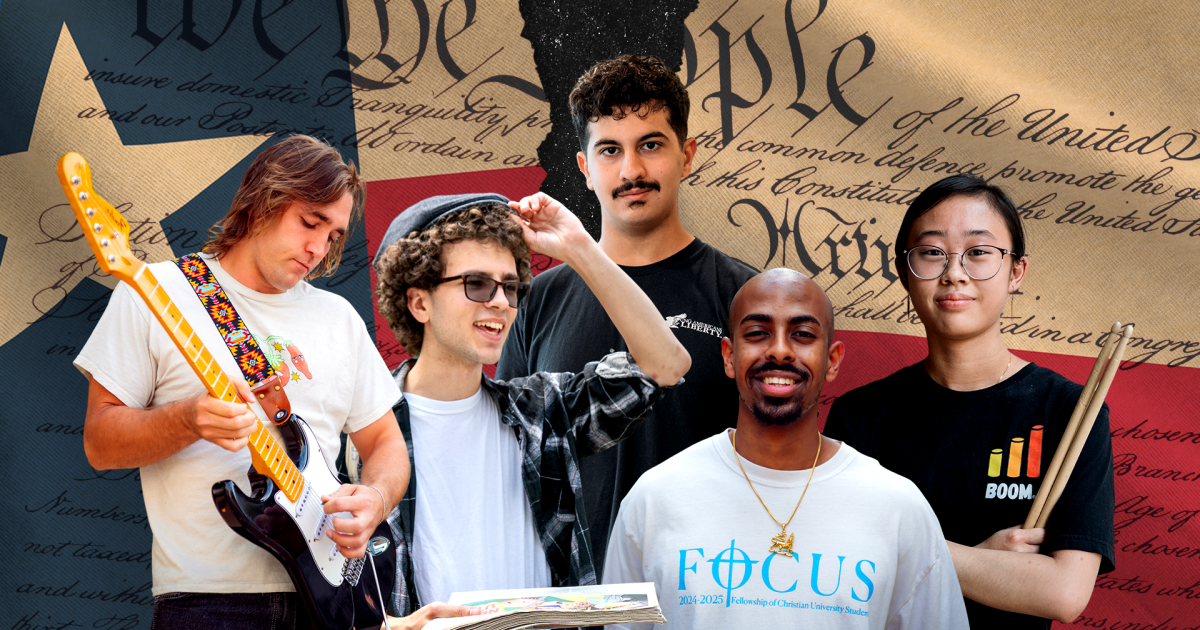
    AUSTIN, Texas, Sept. 3, 2025 — The Foundation for Individual Rights and Expression filed a lawsuit today to stop enforcement of a new, unconstitutional law that turns every public university in Texas into a speech-free zone starting at 10 p.m. every day. FIRE is suing the University of Texas System on behalf of student musicians, journalists, political organizers, and religious students who span the ideological spectrum, all of whom the new Texas law threatens to silence.

    “The First Amendment doesn’t set when the sun goes down,” said FIRE senior supervising attorney JT Morris. “University students have expressive freedom whether it’s midnight or midday, and Texas can’t just legislate those constitutional protections out of existence.”

    In 2019, Texas was a national leader in protecting student speech, passing a robust law enshrining free speech on public university campuses. But after a series of high-profile protests over the Israeli-Palestinian conflict in 2024, the Texas legislature reversed course and passed Senate Bill 2972, transforming the speech-protective 2019 law into one mandating that the state’s public universities and colleges impose a host of sweeping censorship measures.

    FIRE’s lawsuit is challenging two major provisions of the law, which went into effect on Sept. 1. The first requires public universities in Texas to ban all “expressive activities” on campus between the hours of 10 p.m. and 8 a.m., which the law defines as “any speech or expressive conduct protected by the First Amendment.”

    That is a shocking prohibition of protected speech at public universities. Under the new law, universities now have the power to discipline students at nighttime for wearing a hat with a political message, playing music, writing an op-ed, attending candlelight vigils — even just chatting with friends.

    “This law gives campus administrators a blank check to punish speech, and that authority will inevitably be used to target unpopular speech,” said FIRE attorney Adam Steinbaugh. “Administrators have plenty of ways to prevent disruptive conduct that do not involve such a broad censorship mandate.”

    FIRE is also challenging the law’s mandate that universities ban student groups from a host of protected expression during the last two weeks of any semester or term, including inviting guest speakers, using amplified sound, or playing a drum. The Fellowship of Christian University Students at UT-Dallas, for example, would be unable to invite an off-campus minister to lead a prayer during finals.

    “Our organization gives students on campus a place to worship with one another and hear from Christian leaders,” said FOCUS committee chair Juke Matthews. “For many of them, this is their church away from home. This law would yank away part of their support system right at the most stressful time of the term.”

    COURTESY PHOTOS OF STUDENT CLIENTS FOR MEDIA USE

    If state officials and campus administrators want to regulate disruptive speech, the First Amendment demands that they narrowly tailor any such regulation. But Texas’ blanket ban makes no distinctions about the noise level or location of the expression. The Texas law would permit a tuba concert during finals weeks, but not one with drums. And the law exempts “commercial speech” from its sweeping bans on speech. So Texas students are free to advertise t-shirts featuring the First Amendment after hours… but could face discipline for wearing them.

    FIRE is suing on behalf of a diverse group of students and student organizations whose speech the new Texas law will harm. Along with the UT-Dallas chapter of FOCUS, other plaintiffs include:

    • Young Americans for Liberty is an Austin-based national grassroots organization for students who want to advance the cause of liberty. Many of their student members at Texas universities engage in protests, petitions, and “Free Speech Balls” that traditionally take place during evening hours. FIRE is also representing an individual YAL member who attends UT-Austin and would personally face punishment for inviting YAL speakers in the final weeks of term or for sharing his political opinions at the wrong hour.
    • The Society of Unconventional Drummers is a registered student organization at UT-Austin that puts on performances throughout the term, including at the end of each semester. Texas’s arbitrary rule banning percussion the last two weeks of any semester would force the students to cancel one of their most popular shows.
    • Strings Attached is a student music group that holds public performances on UT-Dallas’s campus, including in the final two weeks of term. Some of their concerts take place after hours or during the day with sound amplification, both of which could fall afoul of the Texas law’s sweeping bans.
    • The Retrograde is a new, independent student newspaper that serves the UT-Dallas community. Whether it’s writing a story, emailing sources, editing a column, much of its staff’s newsgathering and reporting necessarily happens after Texas’ 10 p.m. free speech cutoff.

    “Under these new rules, we’re at risk of being shut down simply for posting breaking news as it happens,” said Retrograde Editor-in-Chief Gregorio Olivares. “With that threat hanging over our heads, many student journalists across the UT system face the impossible decision between self-censorship and running a story that criticizes the powers on campus.”

    FIRE’s clients will ask the U.S. District Court for the Western District of Texas to issue a preliminary injunction to prevent UT’s new speech bans from taking effect. The defendants in the lawsuit include the members of the UT System Board of Regents, UT System Chancellor John M. Zerwas, UT-Austin President Jim Davis, and UT-Dallas President Prabhas V. Moghe.


    The Foundation for Individual Rights and Expression (FIRE) is a nonpartisan, nonprofit organization dedicated to defending and sustaining the individual rights of all Americans to free speech and free thought—the most essential qualities of liberty. FIRE recognizes that colleges and universities play a vital role in preserving free thought within a free society. To this end, we place a special emphasis on defending the individual rights of students and faculty members on our nation’s campuses, including freedom of speech, freedom of association, due process, legal equality, religious liberty, and sanctity of conscience.

    CONTACT:

    Alex Griswold, Communications Campaign Manager, FIRE: 215-717-3473; [email protected]


    Source link

  • DHS Offers to “Simplify” Harvard Lawsuit

    DHS Offers to “Simplify” Harvard Lawsuit

    The Trump administration has extended an offer to Harvard University to “simplify” an ongoing legal battle by pulling back on threats made in a May 22 letter from U.S. Department of Homeland Security secretary Kristi Noem to revoke the institution’s ability to host international students.

    At the time, Noem wrote in a letter to Harvard officials that DHS was stripping its Student Exchange and Visitor Program certification due to an alleged “failure to adhere to the law.” Harvard responded with a lawsuit, and a judge quickly granted a temporary restraining order to block the federal government from stripping Harvard’s SEVP certification, which would have likely resulted in a loss of international students and dealt the university a severe financial blow. (Harvard also sued the Trump administration over frozen federal research funding in April.)

    Harvard argued in its May lawsuit that the revocation was “a blatant violation of the First Amendment” and due process and a retaliatory move by the federal government after the university rejected demands to control its governance, curriculum and the “ideology” of faculty and students. The move, according to the lawsuit, could potentially “erase a quarter of Harvard’s student body” and would harm students who had already been admitted to the university.

    Now, in a Wednesday court filing, government attorneys have agreed “that the May 22 letter will not be used to revoke Harvard’s SEVP certification or Exchange Visitor Program designation.” They called the proposal “an attempt to jointly simplify the case.”

    DHS officials wrote in the filing that they are “open to counterproposals and a meet and confer.” However, they wrote that Harvard “did not accept.”

    Harvard declined to comment and DHS did not respond to an inquiry from Inside Higher Ed.

    As Harvard and the federal government battle over international students in court, the Trump administration has found other ways to ratchet up pressure on the nation’s wealthiest university. Last month the U.S. Department of State announced it was opening an investigation into Harvard’s eligibility to participate in the Exchange Visitor program, which is overseen by the State Department and grants J-1 visas for visiting scholars, researchers and postdocs. Secretary of State Marco Rubio wrote that the probe will ensure programs don’t “run contrary to our nation’s interests.”

    There have been recent reports—and denials—that Harvard is nearing a settlement with the Trump administration, which, in addition to attempting to cut off its flow of international students, has leveled a litany of claims against the university, including vague allegations of unlawful action and accusations of antisemitism. The Trump administration has demanded sweeping changes at Harvard, which the university has largely rebuffed thus far.

    Congressional Democrats have threatened to investigate if Harvard agrees to a settlement.

    If Harvard settles, it would be the third Ivy League university to strike a deal with the federal government since mid-July. Columbia University was the first, agreeing to a seemingly unprecedented settlement, which closed investigations into allegations of antisemitism and restored some frozen research funding in exchange for changes to admissions, academic programs and other concessions that will be overseen by a third-party resolution monitor. Columbia agreed to pay $221 million as part of the settlement.

    Brown University also reached an agreement in late July to settle investigations into alleged antisemitism and restore about $510 million in frozen federal research funds. Brown agreed to spend $50 million on state workforce development efforts, provide admissions data to the federal government and bar transgender athletes from competing, among other stipulations.

    Outside the Ivy League, the University of California system announced earlier this week that it intends to negotiate with the federal government over $584 million in suspended federal funding amid Department of Justice investigations into alleged antisemitism. UC officials said the system is seeking a “voluntary resolution agreement” with the Trump administration to restore funding.

    Source link

  • LAWSUIT: FIRE challenges unconstitutional provisions Rubio uses in crusade to deport legal immigrants over protected speech

    LAWSUIT: FIRE challenges unconstitutional provisions Rubio uses in crusade to deport legal immigrants over protected speech

    • The First Amendment trumps the statutes that the government is abusing to deport people for speech alone
    • This lawsuit seeks a landmark ruling that the First Amendment forbids the government from deporting lawfully present noncitizens for constitutionally protected speech
    • FIRE attorney: ‘In a free country, you shouldn’t have to show your papers to voice your opinion’

    SAN JOSE, Calif., Aug. 6, 2025 — Today, the Foundation for Individual Rights and Expression sued Secretary of State Marco Rubio, challenging two federal immigration law provisions that give him unchecked power to revoke legal immigrants’ visas and deport them for protected speech.

    “In the United States of America, no one should fear a midnight knock on the door for voicing the wrong opinion,” said FIRE attorney Conor Fitzpatrick. “Free speech isn’t a privilege the government hands out. Under our Constitution it is the inalienable right of every man, woman, and child.” 

    But since March, Rubio and the Trump administration have waged an assault on free speech, targeting foreign university students for deportation based on bedrock protected speech like writing op-eds and attending protests. Their attack is casting a pall of fear over millions of noncitizens, who now worry that voicing the “wrong” opinion about America or Israel will result in deportation.

    Noncitizens in the United States have First Amendment rights. Despite that, Rubio is wielding two provisions of the Immigration and Nationality Act to target lawfully present noncitizens for their opinions.

    • The first allows the secretary of state to initiate deportation proceedings against  any noncitizen for protected speech if the secretary “personally determines” the speech “compromises a compelling foreign policy interest.”
    • The second enables the secretary of state to revoke the visa of any noncitizen “at any time” for any reason. 

    As FIRE’s lawsuit explains, the provisions are unconstitutional when used to revoke a visa or deport someone for speech the First Amendment protects. 

    The Trump administration is proudly using the provisions to revoke the visas of and deport lawfully present noncitizens for their speech if the government deems it anti-American or anti-Israel. Rubio used the first provision to target Columbia University student Mahmoud Khalil for protected pro-Palestinian speech and the second to target Tufts University student Rümeysa Öztürk for coauthoring an op-ed.

    Rubio and the Trump administration claim — as all censors do — that this time is different. They claim that this political speech comes from noncitizens, which therefore warrants setting aside America’s protection of free speech.

    That’s wrong. America’s founding principle is that liberty comes not from the government, but is an inherent right of every individual. Every person — whether they’re a U.S. citizen, are visiting for the week, or are here on a student visa — has free speech rights in this country.

    “Two lawful residents of the United States holding the same sign at the same protest shouldn’t be treated differently just because one’s here on a visa,” said FIRE Legal Director Will Creeley. “The First Amendment bars the government from punishing protected speech — period. In our free country, you shouldn’t have to show your papers to speak your mind.”

    Plaintiffs in FIRE’s lawsuit represent the wide range of groups and individuals whose speech is threatened by the continued assault on noncitizens’ protected speech:

    • The Stanford Daily, the independent, student-run newspaper at Stanford University, where writers with student visas are declining assignments related to the conflict in the Middle East, worried that even reporting on the war will endanger their immigration status
    • Jane Doe and John Doe, two legal noncitizens with no criminal record who engaged in pro-Palestinian speech and now fear deportation and visa revocation because of their expression

    “There’s real fear on campus and it reaches into the newsroom,” said Greta Reich, editor-in-chief of The Stanford Daily. “I’ve had reporters turn down assignments, request the removal of some of their articles, and even quit the paper because they fear deportation for being associated with speaking on political topics, even in a journalistic capacity. The Daily is losing the voices of a significant portion of our student population.”

    There’s also historical context that should give the government pause. Congress passed the Alien and Sedition Acts 225 years ago. One of those acts allowed President John Adams to deport noncitizens if he thought they posed a “danger” to the country. It was one of the most unconstitutional laws in our nation’s history and died a quick death two years later, after the acts contributed to Adams’ resounding loss in the 1800 presidential election to Thomas Jefferson. 

    FIRE aims to stop the government’s use of the two provisions that stand counter to our ideals as a nation: Provisions that — in their expansive scope and unchecked authority — are more at home in countries like China and Russia than in a free America. By defeating these provisions, no administration of any party will be able to weaponize them against individuals for expression disfavored by the government.

    FIRE moved for a preliminary injunction to stop the government from abusing the visa provision while the case is ongoing.

    Marc Van Der Hout, Johnny Sinodis, and Oona Cahill at Van Der Hout LLP are serving as local and advisory counsel on the case.

    From today’s lawsuit: “Our First Amendment stands as a bulwark against the government infringing the inalienable human rights to think and speak for yourself.”

    The Foundation for Individual Rights and Expression (FIRE) is a nonpartisan, nonprofit organization dedicated to defending and sustaining the individual rights of all Americans to free speech and free thought — the most essential qualities of liberty. 

    CONTACT:

    Daniel Burnett, Senior Director of Communications, FIRE: 215-717-3473; [email protected]

    Source link

  • HACU Seeks to Fight Lawsuit Targeting HSIs

    HACU Seeks to Fight Lawsuit Targeting HSIs

    The Hispanic Association of Colleges and Universities, represented by the civil rights organization LatinoJustice PRLDEF, recently filed a motion to intervene in a lawsuit that takes aim at Hispanic-serving institutions.

    The lawsuit was brought against the U.S. Department of Education by the state of Tennessee and Students for Fair Admissions, the advocacy group whose lawsuits against Harvard and the University of North Carolina at Chapel Hill resulted in the U.S. Supreme Court ruling against affirmative action in college admissions. The lawsuit claims the federal designation for HSIs, which requires 25 percent Latino enrollment, is discriminatory and therefore unconstitutional.

    HACU, an association representing HSIs, argued in its motion that it should become a party to the lawsuit to stand up for the constitutionality of the HSI program. The organization suggested the Education Department is unlikely to vigorously defend the federal designation while it’s in the process of dismantling itself.

    Antonio R. Flores, president and CEO of HACU, said the lawsuit “directly undermines years of advocacy by our founding members that led the federal government to formally recognize HSIs in 1992.”

    “The HSI program is a vital engine of educational excellence, workforce readiness and opportunity for all students attending these exemplary learning communities,” Flores said in a statement. “HACU joins in defending the policies and resources HSIs need to educate and serve 5.6 million students from all backgrounds nationwide.”

    Source link

  • UCLA Settles Lawsuit With Jewish Students for $6.45M

    UCLA Settles Lawsuit With Jewish Students for $6.45M

    The University of California, Los Angeles, agreed to pay $6.45 million to settle a lawsuit brought by Jewish students, the Los Angeles Times reported. The agreement, which would be in effect for 15 years, now awaits approval from the judge overseeing the case.

    The lawsuit, brought by three Jewish students and a medical school professor in June 2024, alleged UCLA enabled pro-Palestinian activists to cut off Jewish students’ access to parts of campus, violating their civil rights.

    Violence broke out in and around an encampment established at UCLA in spring 2024 when pro-Israel counterprotesters attacked it with fireworks and other projectiles. Hours of chaos ensued between protesters and counterprotesters before campus police intervened. UCLA’s former chancellor Gene D. Block, named in the lawsuit alongside other UCLA officials, was among the higher ed leaders called before Congress for campus antisemitism hearings.

    As part of the settlement agreement, each plaintiff will receive $50,000. Another $320,000 will go toward a campus initiative to combat antisemitism. About $2.3 million will be donated to eight different Jewish community and advocacy groups, including Hillel at UCLA, the Academic Engagement Network, the Anti-Defamation League, the Jewish Federation Los Angeles Campus Impact Network and the Film Collaborative Inc., to produce a film related to the Holocaust.

    UCLA also agreed that it is “prohibited from knowingly allowing or facilitating the exclusion of Jewish students, faculty, and/or staff from ordinarily available portions of UCLA’s programs, activities, and/or campus areas,” which includes “exclusion … based on religious beliefs concerning the Jewish state of Israel.”

    Source link

  • Lawsuit Over NIH Grant Funding Heads to Supreme Court

    Lawsuit Over NIH Grant Funding Heads to Supreme Court

    Photo illustration by Justin Morrison/Inside Higher Ed | Adam Bartosik and Jacob Wackerhausen/iStock/Getty Images

    The Trump administration has taken its fight over grants awarded by the National Institutes of Health to the Supreme Court, requesting permission Thursday to finalize millions of dollars in award cuts, CBS News reported.

    President Trump began slashing research funding shortly after he took office in January, targeting projects that allegedly defied his executive orders against issues such as gender identity and DEI. By early April, 16 states and multiple academic associations and advocacy groups had sued, arguing the funding cuts were an unjustified executive overreach and bypassed statutory procedures.

    Since then, a federal district court ordered a preliminary injunction requiring all grants to be reinstated, and a court of appeals denied the Trump administration’s request to halt the decision. Now, executive branch legal officials are taking the case to the highest court.

    In an emergency appeal, Solicitor General John Sauer wrote that the NIH is attempting to “stop errant district courts from continuing to disregard” presidential orders.

    The solicitor also pointed to an April ruling from the Supreme Court allowing the Department of Education to terminate some of its own grants for similar reasons. In that case, the justices said the Trump administration would likely be able to prove that the lower court lacked jurisdiction to mandate the payment of a federal award.

    The court system does not allow a “lower-court free-for-all where individual district judges feel free to elevate their own policy judgments over those of the Executive Branch, and their own legal judgments over those of this Court,” Sauer wrote.

    Source link

  • Pennsylvania officers face First Amendment lawsuit for trying to criminalize profanity and using patrol car to chase man who recorded police

    Pennsylvania officers face First Amendment lawsuit for trying to criminalize profanity and using patrol car to chase man who recorded police

    ALLENTOWN, Pa., July 23, 2025 — In a bizarre scene, a police officer in Allentown, Pennsylvania, drove his patrol cruiser down a sidewalk at a man who was protesting police misconduct by filming outside a police station. 

    Today the Foundation for Individual Rights and Expression filed a lawsuit defending Phil Rishel’s rights to film and criticize police activity in public spaces — behavior that is protected by the First Amendment — without being assaulted or retaliated against for doing so. 

    “The retaliation over my speech confirms that there is a huge issue with the culture of the Allentown Police Department,” said Phil. “These officers have a disdain for the rights of the people they’re sworn to protect — and I hope my lawsuit changes things for the better.”

    Since 2015, the City of Allentown, Pennsylvania, has paid at least $2 million related to claims of police misconduct. In 2023, Phil began protesting in Allentown by non-disruptively recording police activity while standing on public sidewalks outside local police precincts.

    COURTESY PHOTOS OF PHIL RISHEL

    On March 26, 2024, Phil went to the Hamilton Street police station, where he stood on a public sidewalk and recorded what he could see in plain view. Approximately 15 minutes after he arrived, an officer approached him and briefly paused while looking at a “No Trespassing” sign. Phil responded, “Yeah, that’s a nice sign. Too bad it doesn’t apply to the public sidewalk.” The officer then silently walked away from Phil into the depths of the garage and up a vehicle ramp. Phil called out after him about his disregard of a sign next to the ramp that read: “PEDESTRIANS MUST USE STAIRS ONLY.”

    About 10 minutes later, the officer drove his patrol car out of the garage and sharply turned onto the sidewalk towards Phil while blaring the siren. The officer pursued him down the sidewalk, even driving around a lamppost in his way and back onto the sidewalk to chase Phil. The officer then exited the car, went into the office, and emerged with a police sergeant. They accused Phil of loitering and banned him from the public sidewalk under threat of arrest. 

    WATCH THE VIDEO FOOTAGE

    The next day, Phil returned to the same public sidewalk outside the Hamilton Street station’s parking garage and picked up where he left off, recording police activity in plain view. The same sergeant threatened to arrest him for returning and told him that filming the police “is not a First Amendment right,” while also claiming that Phil’s profanity the previous day constituted disorderly conduct. Ultimately, he charged Phil with disorderly conduct and loitering via a criminal citation sent in the mail.

    At the hearing on the criminal charge, the sergeant testified that Phil was in an area closed for construction and blocked pedestrian traffic and the parking garage entrance, but none of this was true, as shown by the video Phil took that day. Based on the sergeant’s testimony, the court found Phil guilty on the loitering charge, although the conviction was reversed on appeal. The disorderly conduct charge was dismissed by the lower court based on longstanding Pennsylvania case law.

    The First Amendment protects citizens’ right to film police officers and their activities. It also protects individuals who verbally criticize police and their actions, even by cursing or using profane language. 

    FIRE’s lawsuit seeks to enforce these established constitutional rights for Phil and other Allentown citizens. The complaint seeks a declaration that the Allentown police violated First Amendment rights, an injunction against the City of Allentown for failing to provide adequate training to its police officers about protecting and respecting First Amendment rights, and an award of damages to Phil for the treatment he received.

    “Citizens trying to hold police officers accountable should not be punished,” said FIRE attorney Zach Silver. “Public officials, including police officers, must uphold the law and respect citizens’ right to record police and to use harsh language, not bully them into silence.”

    The Foundation for Individual Rights and Expression (FIRE) is a nonpartisan, nonprofit organization dedicated to defending and sustaining the individual rights of all Americans to free speech and free thought—the most essential qualities of liberty. FIRE educates Americans about the importance of these inalienable rights, promotes a culture of respect for these rights, and provides the means to preserve them.

    CONTACT
    Katie Stalcup, Communications Campaign Manager, FIRE: 215-717-3473; [email protected] 

    Source link

  • Columbia University Settles Class Action Lawsuit Over Inflated Rankings Data for $9 Million

    Columbia University Settles Class Action Lawsuit Over Inflated Rankings Data for $9 Million

    Columbia University has reached a $9 million settlement agreement with undergraduate students who alleged the institution deliberately submitted false information to U.S. News & World Report to artificially boost its college rankings position.

    The preliminary settlement, filed last Monday in Manhattan federal court and pending judicial approval, resolves claims that Columbia misrepresented key data points to enhance its standing in the influential annual rankings. The university reached as high as No. 2 in the undergraduate rankings in 2022 before the alleged misconduct came to light.

    Students alleged that Columbia consistently provided inaccurate data to U.S. News, including the false claim that 83% of its classes contained fewer than 20 students. The lawsuit argued these misrepresentations were designed to improve the university’s ranking position and, consequently, attract more students willing to pay premium tuition rates.

    The settlement covers approximately 22,000 undergraduate students who attended Columbia College, the Fu Foundation School of Engineering and Applied Science, and the School of General Studies between fall 2016 and spring 2022.

    The controversy began in July 2022 when Columbia mathematics professor Dr. Michael Thaddeus published a detailed analysis questioning the accuracy of data underlying the university’s No. 2 ranking. His report alleged that much of the information Columbia provided to U.S. News was either inaccurate or misleading.

    Following the publication of Thaddeus’s findings, Columbia’s ranking plummeted to No. 18 in September 2022. The dramatic drop highlighted the significant impact that data accuracy has on institutional rankings and reputation.

    In response to the allegations, Columbia announced in June 2023 that its undergraduate programs would withdraw from participating in U.S. News rankings altogether. The university cited concerns about the “outsized influence” these rankings have on prospective students’ decision-making processes.

    “Much is lost when we attempt to distill the quality and nuance of an education from a series of data points,” Columbia stated in explaining its decision to withdraw from the rankings process.

    While denying wrongdoing in the settlement agreement, Columbia acknowledged past deficiencies in its reporting practices. The university stated it “deeply regrets deficiencies in prior reporting” and has implemented new measures to ensure data accuracy.

    Columbia now provides prospective students with information that has been reviewed by an independent advisory firm, demonstrating the institution’s commitment to transparency and accurate representation of its educational offerings.

    Columbia’s decision to withdraw from U.S. News rankings reflects a growing skepticism among elite institutions about the value and impact of college ranking systems. Harvard and Yale have also stopped submitting data to U.S. News for various programs, signaling a potential shift in how prestigious universities approach rankings participation.

    Under the terms of the agreement, student attorneys plan to seek up to one-third of the settlement amount for legal fees, which would leave approximately $6 million available for distribution among affected students. The settlement requires approval from a federal judge before taking effect.

    Student lawyers characterized the accord as “fair, reasonable and adequate” given the circumstances of the case and the challenges inherent in proving damages from ranking manipulation.

    Source link

  • VICTORY: New York high school to strengthen First Amendment protections following FIRE lawsuit

    VICTORY: New York high school to strengthen First Amendment protections following FIRE lawsuit

    CHAPPAQUA, NY, June 25, 2025 — The Foundation for Individual Rights and Expression agreed to drop its First Amendment lawsuit against Chappaqua Central School District after the district’s board of education adopted a robust First Amendment regulation that will protect the constitutional free speech rights of its students.

    FIRE sued the district in 2024 on behalf of O.J., an LGBTQ+ student suspended for violating the district’s “hate speech” definition in its code of conduct because he used the words “faggot” and “twink” in a rap song recorded in his friend’s home after school. In the song, O.J. rapped the refrain, “faggot, fart, balls.” The song also included another person’s lyrics, which contained violent imagery. After O.J.’s friend uploaded the song to a music-sharing website, the school received three complaints and promptly suspended the student.

    “In the Supreme Court’s decision in Mahanoy Area School District v. B.L., the Court held that students’ off-campus, nondisruptive speech is protected by the First Amendment,” said FIRE attorney Colin McDonell. “That is true even when the speech receives criticism.”

    In communications with the district, O.J.’s father cited Mahanoy and argued the school could not punish his son for his off-campus speech because it did not disrupt the educational environment. When this proved unsuccessful, O.J.’s father reached out to FIRE for assistance. On April 15, 2024, FIRE sued the district on behalf of O.J. and his father in the federal district court for the Southern District of New York.

    After commencement of the lawsuit, FIRE and the district worked together to craft a First Amendment regulation that would protect its students’ rights to express themselves both on and off school campus, consistent with and reconciled with Mahanoy and the New York State Dignity for All Students Act and its regulations. The district’s insurer also agreed to pay $70,000 to FIRE, encompassing attorneys’ fees, and the district removed the disciplinary action based on the song from the student’s file.

    “With its adoption of a First Amendment regulation, the board of education has affirmed the rights of its students to engage in protected speech on and off campus,” said FIRE Senior Attorney Greg H. Greubel. “We’re pleased that we could work with the board to avoid further litigation and turn this situation into a positive outcome for our client and all students in the district.”


    The Foundation for Individual Rights and Expression (FIRE) is a nonpartisan, nonprofit organization dedicated to defending and sustaining the individual rights of all Americans to free speech and free thought — the most essential qualities of liberty. FIRE educates Americans about the importance of these inalienable rights, promotes a culture of respect for these rights, and provides the means to preserve them.

    CONTACT:

    Karl de Vries, Director of Media Relations, FIRE: 215-717-3473; [email protected]

    Source link

  • Tenn. Lawsuit Puts Hispanic-Servings’ Fate on the Line

    Tenn. Lawsuit Puts Hispanic-Servings’ Fate on the Line

    Two years after its Supreme Court victory against Harvard and UNC Chapel Hill, Students for Fair Admissions has a new target in its sights: Hispanic-serving institutions. On Wednesday, the advocacy group joined the state of Tennessee in suing the U.S. Department of Education, arguing that the criteria to become an HSI are unconstitutional and discriminatory. The move is distressing HSI advocates, who hoped to see the institutions left out of the political fray.

    To qualify as an HSI, a college or university needs to have a student body comprised of at least 25 percent Hispanic students and enroll at least 50 percent low-income students, or more than other comparable institutions, among other criteria. No Tennessee institutions operated by the state meet the threshold and are thus prohibited from applying for HSI-specific grants—even though they serve Hispanic and low-income students, according to the Tennessee attorney general and SFFA. As a result, the federal designation criteria amounts to discrimination, and Tennessee universities and students suffer as a result, the plaintiffs argue.

    They also say Tennessee institutions find themselves in an “unconstitutional dilemma”: Even if they wanted to, they argue, they can’t use affirmative action to up their Hispanic student enrollments since the U.S. Supreme Court ruled against using race as a factor in college admissions. That 2023 decision resulted from lawsuits SFFA brought against Harvard and the University of North Carolina at Chapel Hill.

    “The HSI program is particularly egregious in terms of how it treats students based on immutable characteristics,” Tennessee attorney general Jonathan Skrmetti, who’s representing the state in the suit, told Inside Higher Ed. “It is just manifestly unfair that a needy student in Tennessee does not have access to this pool of funds because they go to a school that doesn’t have the right ethnic makeup.”

    The lawsuit calls for “a declaratory judgement that the HSI program’s ethnicity-based requirements are unconstitutional” and “a permanent injunction prohibiting the [Education] Secretary from enforcing or applying the HSI program’s ethnicity-based requirements when making decisions whether to award or maintain grants to Tennessee’s institutions of higher education.”

    HSI proponents may be jarred by the legal challenge, but they aren’t entirely surprised. Conservative think tanks like the Manhattan Institute and the American Civil Rights Project have previously proposed abolishing enrollment-based minority-serving institutions (MSIs), including HSIs and Asian American and Native American Pacific Islander–serving institutions, which are defined as enrolling 10 percent of students from these groups.

    “It was only a matter of time before the anti-DEI movement hit the enrollment-based MSIs,” said Gina Ann Garcia, a professor who studies MSIs in the school of education at the University of California, Berkeley. “It still was a punch to the gut.”

    2 Sides At Odds

    Congress established the HSI program in the 1990s to improve the quality of education at colleges and universities that disproportionately serve Latino students, who were concentrated at colleges with relatively fewer financial resources. They’ve historically enjoyed bipartisan support. Last year, the federal government appropriated about $229 million for the country’s roughly 600 Hispanic-serving institutions; $28 million of that funding went to 49 of the HSIs that applied for the competitive grants.

    Deborah Santiago, co-founder and CEO of Excelencia in Education, an organization that promotes Latino student success, believes the lawsuit mischaracterizes the program and its role in the national higher education landscape. She said it’s in the country’s “self-interest” to invest in colleges and universities with limited resources that serve a growing student population with stubborn degree-attainment gaps.

    “If a disproportionate number of students of any background are at an institution that has a high enrollment of needy students, low educational core expenditures and serves a high proportion of students that that could benefit from that [funding] to serve the country, I don’t think that’s discriminating,” she said.

    She also stressed that the grant program “doesn’t explicitly require any resources to go to a specific population” but funds capacity-building efforts, like building new laboratories and facilities, that benefit all students at the institution.

    The HSI program is a way “to target limited federal resources and meet the federal mandate of access for low-income students,” she said. “We know that it costs more to educate Hispanic students, because they’re more likely to be low income and first gen, so college knowledge, student support services—all of that takes institutional investment.”

    But opponents of HSIs don’t buy it.

    Wenyuan Wu, executive director of the Californians for Equal Rights Foundation, a think tank and watchdog organization focused on promoting “equal rights and merit,” firmly believes enrollment-based minority-serving institutions are discriminatory and applauded the lawsuit as a step in the right direction.

    She argued that HSI funding has gone to efforts specifically to support Latino students, including some she sees as “ideological.” For example, the University of Connecticut at Stamford proposed using the funding to start a program called Sueño Scholars, to “recruit, support and mentor undergraduate Hispanic, other minority, low-income, and high-need students” to enter teaching graduate programs and included a goal of “developing and sustaining antiracist orientations towards teaching and learning,” according to the department’s list of project abstracts.

    Wu asserted that putting federal money toward efforts like these is a problem. She’d rather see the funds designated for HSIs channeled into Pell Grants or other supports for low-income students.

    “Taxpayer funds should not be used to engage in racial balancing, and that’s exactly the kind of behavior that has been incentivized by MSIs,” said Wu, who is also chair of the Georgia Advisory Committee to the U.S. Commission on Civil Rights.

    Possible Outcomes

    Robert Kelchen, head of the Educational Leadership and Policy Studies Department at the University of Tennessee at Knoxville, believes the lawsuit has “a possibility of success.” It was filed in a conservative-leaning federal district court in Knoxville, and Tennessee seems to have shown it has legal standing, he said.

    Even “if the court here in Knoxville doesn’t agree, another state could choose to file a similar lawsuit in their district court as well,” he said. Ultimately, “the question is, can they find one court that agrees with the plaintiffs’ interpretation.”

    The move by Tennessee comes just a week after the federal government successfully sued Texas to eliminate in-state tuition for undocumented students—a policy Republican state lawmakers had tried but failed to end. The Texas attorney general celebrated the challenge, siding with the U.S. Department of Justice in a matter of hours, and a judge promptly quashed the two-decade-old state law. (Stephen Vladeck, a professor of law at the Georgetown University Law Center, called the episode “transparently collusive.”)

    Kelchen believes the Tennessee lawsuit is following a similar playbook. He expects to see more red states and conservative organizations sue the Education Department on issues where they align “to get rid of things that neither of [them] like,” he said—though in Tennessee’s case, it’s unclear how the department will respond.

    Skrmetti told Inside Higher Ed that “from Tennessee’s perspective, this is not part of a broader strategy to influence education policy. This is about discrimination against Tennessee schools because of the ethnic makeup of their student bodies.”

    If the plaintiffs win, it’s unclear whether that would mean changing the federal definition of an HSI to eliminate a Hispanic enrollment threshold or axing the HSI program altogether. The implications for other types of enrollment-based minority-serving institutions are also hazy.

    Skrmetti is open to multiple options.

    “At the end of the day, there’s [HSI] money out there to help needy students, and we want to make sure that needy students can access it regardless of the ethnic makeup of the schools they’re at,” he said. “There are a couple different avenues I think that could successfully achieve the goal operationally. We need to just get a declaration that the current situation does violate the Constitution.”

    Santiago, of Excelencia in Education, said there’s room for “thoughtful discussion” about reforming or expanding requirements for HSI grant funding, but she believes “it needs to come from the community.”

    She also pointed out that the lawsuit is against the Department of Education, which administers HSI funding but doesn’t control it—Congress does. So the department doesn’t have the power to end the funding.

    Nonetheless, “it would be foolish to not take it seriously,” she said.

    Garcia, the Berkeley education professor, said that while she’s not a lawyer, she believes there are legal questions worth raising about the lawsuit, particularly the way it leans on the Supreme Court’s ruling against affirmative action in admissions.

    She pointed out that HSIs tend to be broad-access or open-access institutions that admit most applicants, rather than selective institutions explicitly recruiting Latino students; only about two dozen of the 600 HSIs are highly selective, she said. So, the assertion that HSIs have any connection to the affirmative action ruling is up for debate, she said.

    Skrmetti believes it’s a cut-and-dried case.

    “You can’t make determinations about the allocation of resources based on ancestry or skin color or anything like that without inherent discrimination,” he said. “We need to help all needy students. And the HSI designation is an obstacle to that.”

    Garcia believes that regardless of whether the lawsuit is successful, it’s already done damage to HSIs by dragging them—and enrollment-based MSIs in general—into the country’s political skirmishes over diversity, equity and inclusion.

    “I’ve been just watching HSIs fly a little bit under the radar,” she said. “They don’t come up a lot” in national conversations about DEI. But the lawsuit “brings HSIs into the light, and it brings them into the attack.”

    She worries that students are the ones who will suffer if HSIs no longer receive dedicated funding.

    HSIs “are often underresourced institutions,” she said. “They’re institutions that are struggling to serve a large population of minoritized students, of students of color, of low-income students, of first-gen students. We’re not talking about the Harvards and the Columbias.”

    Source link