Tag: lawsuit

  • Columbia University Settles Class Action Lawsuit Over Inflated Rankings Data for $9 Million

    Columbia University Settles Class Action Lawsuit Over Inflated Rankings Data for $9 Million

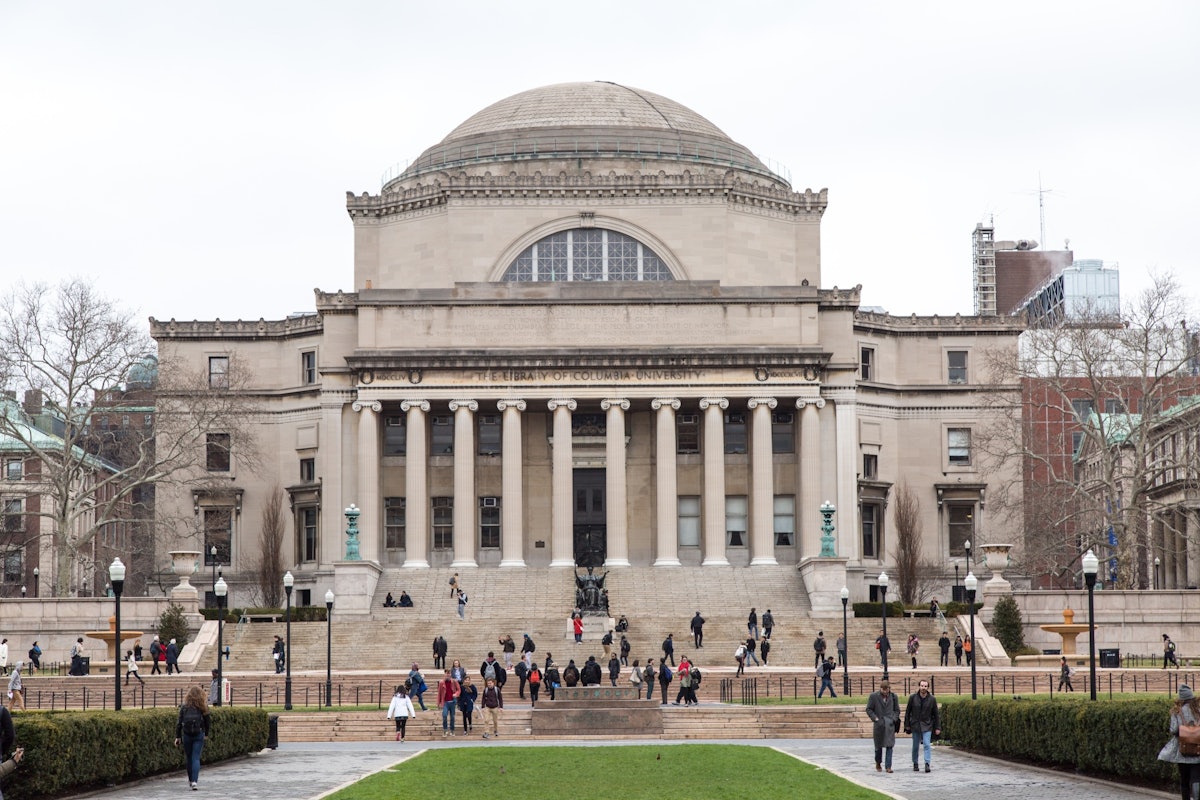
    Columbia University has reached a $9 million settlement agreement with undergraduate students who alleged the institution deliberately submitted false information to U.S. News & World Report to artificially boost its college rankings position.

    The preliminary settlement, filed last Monday in Manhattan federal court and pending judicial approval, resolves claims that Columbia misrepresented key data points to enhance its standing in the influential annual rankings. The university reached as high as No. 2 in the undergraduate rankings in 2022 before the alleged misconduct came to light.

    Students alleged that Columbia consistently provided inaccurate data to U.S. News, including the false claim that 83% of its classes contained fewer than 20 students. The lawsuit argued these misrepresentations were designed to improve the university’s ranking position and, consequently, attract more students willing to pay premium tuition rates.

    The settlement covers approximately 22,000 undergraduate students who attended Columbia College, the Fu Foundation School of Engineering and Applied Science, and the School of General Studies between fall 2016 and spring 2022.

    The controversy began in July 2022 when Columbia mathematics professor Dr. Michael Thaddeus published a detailed analysis questioning the accuracy of data underlying the university’s No. 2 ranking. His report alleged that much of the information Columbia provided to U.S. News was either inaccurate or misleading.

    Following the publication of Thaddeus’s findings, Columbia’s ranking plummeted to No. 18 in September 2022. The dramatic drop highlighted the significant impact that data accuracy has on institutional rankings and reputation.

    In response to the allegations, Columbia announced in June 2023 that its undergraduate programs would withdraw from participating in U.S. News rankings altogether. The university cited concerns about the “outsized influence” these rankings have on prospective students’ decision-making processes.

    “Much is lost when we attempt to distill the quality and nuance of an education from a series of data points,” Columbia stated in explaining its decision to withdraw from the rankings process.

    While denying wrongdoing in the settlement agreement, Columbia acknowledged past deficiencies in its reporting practices. The university stated it “deeply regrets deficiencies in prior reporting” and has implemented new measures to ensure data accuracy.

    Columbia now provides prospective students with information that has been reviewed by an independent advisory firm, demonstrating the institution’s commitment to transparency and accurate representation of its educational offerings.

    Columbia’s decision to withdraw from U.S. News rankings reflects a growing skepticism among elite institutions about the value and impact of college ranking systems. Harvard and Yale have also stopped submitting data to U.S. News for various programs, signaling a potential shift in how prestigious universities approach rankings participation.

    Under the terms of the agreement, student attorneys plan to seek up to one-third of the settlement amount for legal fees, which would leave approximately $6 million available for distribution among affected students. The settlement requires approval from a federal judge before taking effect.

    Student lawyers characterized the accord as “fair, reasonable and adequate” given the circumstances of the case and the challenges inherent in proving damages from ranking manipulation.

    Source link

  • VICTORY: New York high school to strengthen First Amendment protections following FIRE lawsuit

    VICTORY: New York high school to strengthen First Amendment protections following FIRE lawsuit

    CHAPPAQUA, NY, June 25, 2025 — The Foundation for Individual Rights and Expression agreed to drop its First Amendment lawsuit against Chappaqua Central School District after the district’s board of education adopted a robust First Amendment regulation that will protect the constitutional free speech rights of its students.

    FIRE sued the district in 2024 on behalf of O.J., an LGBTQ+ student suspended for violating the district’s “hate speech” definition in its code of conduct because he used the words “faggot” and “twink” in a rap song recorded in his friend’s home after school. In the song, O.J. rapped the refrain, “faggot, fart, balls.” The song also included another person’s lyrics, which contained violent imagery. After O.J.’s friend uploaded the song to a music-sharing website, the school received three complaints and promptly suspended the student.

    “In the Supreme Court’s decision in Mahanoy Area School District v. B.L., the Court held that students’ off-campus, nondisruptive speech is protected by the First Amendment,” said FIRE attorney Colin McDonell. “That is true even when the speech receives criticism.”

    In communications with the district, O.J.’s father cited Mahanoy and argued the school could not punish his son for his off-campus speech because it did not disrupt the educational environment. When this proved unsuccessful, O.J.’s father reached out to FIRE for assistance. On April 15, 2024, FIRE sued the district on behalf of O.J. and his father in the federal district court for the Southern District of New York.

    After commencement of the lawsuit, FIRE and the district worked together to craft a First Amendment regulation that would protect its students’ rights to express themselves both on and off school campus, consistent with and reconciled with Mahanoy and the New York State Dignity for All Students Act and its regulations. The district’s insurer also agreed to pay $70,000 to FIRE, encompassing attorneys’ fees, and the district removed the disciplinary action based on the song from the student’s file.

    “With its adoption of a First Amendment regulation, the board of education has affirmed the rights of its students to engage in protected speech on and off campus,” said FIRE Senior Attorney Greg H. Greubel. “We’re pleased that we could work with the board to avoid further litigation and turn this situation into a positive outcome for our client and all students in the district.”


    The Foundation for Individual Rights and Expression (FIRE) is a nonpartisan, nonprofit organization dedicated to defending and sustaining the individual rights of all Americans to free speech and free thought — the most essential qualities of liberty. FIRE educates Americans about the importance of these inalienable rights, promotes a culture of respect for these rights, and provides the means to preserve them.

    CONTACT:

    Karl de Vries, Director of Media Relations, FIRE: 215-717-3473; [email protected]

    Source link

  • Tenn. Lawsuit Puts Hispanic-Servings’ Fate on the Line

    Tenn. Lawsuit Puts Hispanic-Servings’ Fate on the Line

    Two years after its Supreme Court victory against Harvard and UNC Chapel Hill, Students for Fair Admissions has a new target in its sights: Hispanic-serving institutions. On Wednesday, the advocacy group joined the state of Tennessee in suing the U.S. Department of Education, arguing that the criteria to become an HSI are unconstitutional and discriminatory. The move is distressing HSI advocates, who hoped to see the institutions left out of the political fray.

    To qualify as an HSI, a college or university needs to have a student body comprised of at least 25 percent Hispanic students and enroll at least 50 percent low-income students, or more than other comparable institutions, among other criteria. No Tennessee institutions operated by the state meet the threshold and are thus prohibited from applying for HSI-specific grants—even though they serve Hispanic and low-income students, according to the Tennessee attorney general and SFFA. As a result, the federal designation criteria amounts to discrimination, and Tennessee universities and students suffer as a result, the plaintiffs argue.

    They also say Tennessee institutions find themselves in an “unconstitutional dilemma”: Even if they wanted to, they argue, they can’t use affirmative action to up their Hispanic student enrollments since the U.S. Supreme Court ruled against using race as a factor in college admissions. That 2023 decision resulted from lawsuits SFFA brought against Harvard and the University of North Carolina at Chapel Hill.

    “The HSI program is particularly egregious in terms of how it treats students based on immutable characteristics,” Tennessee attorney general Jonathan Skrmetti, who’s representing the state in the suit, told Inside Higher Ed. “It is just manifestly unfair that a needy student in Tennessee does not have access to this pool of funds because they go to a school that doesn’t have the right ethnic makeup.”

    The lawsuit calls for “a declaratory judgement that the HSI program’s ethnicity-based requirements are unconstitutional” and “a permanent injunction prohibiting the [Education] Secretary from enforcing or applying the HSI program’s ethnicity-based requirements when making decisions whether to award or maintain grants to Tennessee’s institutions of higher education.”

    HSI proponents may be jarred by the legal challenge, but they aren’t entirely surprised. Conservative think tanks like the Manhattan Institute and the American Civil Rights Project have previously proposed abolishing enrollment-based minority-serving institutions (MSIs), including HSIs and Asian American and Native American Pacific Islander–serving institutions, which are defined as enrolling 10 percent of students from these groups.

    “It was only a matter of time before the anti-DEI movement hit the enrollment-based MSIs,” said Gina Ann Garcia, a professor who studies MSIs in the school of education at the University of California, Berkeley. “It still was a punch to the gut.”

    2 Sides At Odds

    Congress established the HSI program in the 1990s to improve the quality of education at colleges and universities that disproportionately serve Latino students, who were concentrated at colleges with relatively fewer financial resources. They’ve historically enjoyed bipartisan support. Last year, the federal government appropriated about $229 million for the country’s roughly 600 Hispanic-serving institutions; $28 million of that funding went to 49 of the HSIs that applied for the competitive grants.

    Deborah Santiago, co-founder and CEO of Excelencia in Education, an organization that promotes Latino student success, believes the lawsuit mischaracterizes the program and its role in the national higher education landscape. She said it’s in the country’s “self-interest” to invest in colleges and universities with limited resources that serve a growing student population with stubborn degree-attainment gaps.

    “If a disproportionate number of students of any background are at an institution that has a high enrollment of needy students, low educational core expenditures and serves a high proportion of students that that could benefit from that [funding] to serve the country, I don’t think that’s discriminating,” she said.

    She also stressed that the grant program “doesn’t explicitly require any resources to go to a specific population” but funds capacity-building efforts, like building new laboratories and facilities, that benefit all students at the institution.

    The HSI program is a way “to target limited federal resources and meet the federal mandate of access for low-income students,” she said. “We know that it costs more to educate Hispanic students, because they’re more likely to be low income and first gen, so college knowledge, student support services—all of that takes institutional investment.”

    But opponents of HSIs don’t buy it.

    Wenyuan Wu, executive director of the Californians for Equal Rights Foundation, a think tank and watchdog organization focused on promoting “equal rights and merit,” firmly believes enrollment-based minority-serving institutions are discriminatory and applauded the lawsuit as a step in the right direction.

    She argued that HSI funding has gone to efforts specifically to support Latino students, including some she sees as “ideological.” For example, the University of Connecticut at Stamford proposed using the funding to start a program called Sueño Scholars, to “recruit, support and mentor undergraduate Hispanic, other minority, low-income, and high-need students” to enter teaching graduate programs and included a goal of “developing and sustaining antiracist orientations towards teaching and learning,” according to the department’s list of project abstracts.

    Wu asserted that putting federal money toward efforts like these is a problem. She’d rather see the funds designated for HSIs channeled into Pell Grants or other supports for low-income students.

    “Taxpayer funds should not be used to engage in racial balancing, and that’s exactly the kind of behavior that has been incentivized by MSIs,” said Wu, who is also chair of the Georgia Advisory Committee to the U.S. Commission on Civil Rights.

    Possible Outcomes

    Robert Kelchen, head of the Educational Leadership and Policy Studies Department at the University of Tennessee at Knoxville, believes the lawsuit has “a possibility of success.” It was filed in a conservative-leaning federal district court in Knoxville, and Tennessee seems to have shown it has legal standing, he said.

    Even “if the court here in Knoxville doesn’t agree, another state could choose to file a similar lawsuit in their district court as well,” he said. Ultimately, “the question is, can they find one court that agrees with the plaintiffs’ interpretation.”

    The move by Tennessee comes just a week after the federal government successfully sued Texas to eliminate in-state tuition for undocumented students—a policy Republican state lawmakers had tried but failed to end. The Texas attorney general celebrated the challenge, siding with the U.S. Department of Justice in a matter of hours, and a judge promptly quashed the two-decade-old state law. (Stephen Vladeck, a professor of law at the Georgetown University Law Center, called the episode “transparently collusive.”)

    Kelchen believes the Tennessee lawsuit is following a similar playbook. He expects to see more red states and conservative organizations sue the Education Department on issues where they align “to get rid of things that neither of [them] like,” he said—though in Tennessee’s case, it’s unclear how the department will respond.

    Skrmetti told Inside Higher Ed that “from Tennessee’s perspective, this is not part of a broader strategy to influence education policy. This is about discrimination against Tennessee schools because of the ethnic makeup of their student bodies.”

    If the plaintiffs win, it’s unclear whether that would mean changing the federal definition of an HSI to eliminate a Hispanic enrollment threshold or axing the HSI program altogether. The implications for other types of enrollment-based minority-serving institutions are also hazy.

    Skrmetti is open to multiple options.

    “At the end of the day, there’s [HSI] money out there to help needy students, and we want to make sure that needy students can access it regardless of the ethnic makeup of the schools they’re at,” he said. “There are a couple different avenues I think that could successfully achieve the goal operationally. We need to just get a declaration that the current situation does violate the Constitution.”

    Santiago, of Excelencia in Education, said there’s room for “thoughtful discussion” about reforming or expanding requirements for HSI grant funding, but she believes “it needs to come from the community.”

    She also pointed out that the lawsuit is against the Department of Education, which administers HSI funding but doesn’t control it—Congress does. So the department doesn’t have the power to end the funding.

    Nonetheless, “it would be foolish to not take it seriously,” she said.

    Garcia, the Berkeley education professor, said that while she’s not a lawyer, she believes there are legal questions worth raising about the lawsuit, particularly the way it leans on the Supreme Court’s ruling against affirmative action in admissions.

    She pointed out that HSIs tend to be broad-access or open-access institutions that admit most applicants, rather than selective institutions explicitly recruiting Latino students; only about two dozen of the 600 HSIs are highly selective, she said. So, the assertion that HSIs have any connection to the affirmative action ruling is up for debate, she said.

    Skrmetti believes it’s a cut-and-dried case.

    “You can’t make determinations about the allocation of resources based on ancestry or skin color or anything like that without inherent discrimination,” he said. “We need to help all needy students. And the HSI designation is an obstacle to that.”

    Garcia believes that regardless of whether the lawsuit is successful, it’s already done damage to HSIs by dragging them—and enrollment-based MSIs in general—into the country’s political skirmishes over diversity, equity and inclusion.

    “I’ve been just watching HSIs fly a little bit under the radar,” she said. “They don’t come up a lot” in national conversations about DEI. But the lawsuit “brings HSIs into the light, and it brings them into the attack.”

    She worries that students are the ones who will suffer if HSIs no longer receive dedicated funding.

    HSIs “are often underresourced institutions,” she said. “They’re institutions that are struggling to serve a large population of minoritized students, of students of color, of low-income students, of first-gen students. We’re not talking about the Harvards and the Columbias.”

    Source link

  • Trump Takes Education Department Lawsuit to Supreme Court

    Trump Takes Education Department Lawsuit to Supreme Court

    The Trump administration asked the Supreme Court on Friday to allow it to move forward with its plan to lay off nearly half of the Education Department’s employees and dismantle the agency, USA Today reported

    In late May, a federal district court ruled that the reduction in force made it impossible for the executive branch to carry out congressionally mandated programs and services. An appeals court affirmed that ruling June 4.

    President Trump and his Department of Justice, however, disagree with both rulings, and they hope the 6-to-3 conservative majority on the Supreme Court will, too.

    “The Constitution vests the Executive Branch, not district courts, with the authority to make judgments about how many employees are needed to carry out an agency’s statutory functions, and whom they should be,” Solicitor General John Sauer wrote in the emergency appeal to the Supreme Court. 

    States, school districts and teachers’ unions involved in the case have until June 13 to respond to Trump’s appeal, the Supreme Court stated. 

    Source link

  • After Michigan State trustees told students to call professor a racist, his lawsuit is moving ahead

    After Michigan State trustees told students to call professor a racist, his lawsuit is moving ahead

    Professor Jack Lipton scored a victory for free speech last week after a federal court allowed his lawsuit to move forward against two Michigan State University trustees who he claims not only urged students to call him racist, but told them how to phrase it.

    In his lawsuit, Lipton alleged that two trustees, Rema Vassar and Dennis Denno, met with MSU students, encouraged them to file complaints against Lipton with MSU’s internal civil rights office, and asked students to condemn Lipton as racist in public statements, op-eds, and on social media. MSU hired the law firm Miller & Chevalier to conduct an independent investigation, producing a report you can read online. According to Lipton, it found that Vassar and Denno planned the attacks and even provided others with specific language to paint Lipton as racist, anti-Palestinian, and anti-Muslim.

    For example, in one recorded conversation, Denno told students, “The other thing you can do to help us is attack Jack Lipton, the Chair of the Faculty Senate . . . call him out, call him a racist.”

    What was Lipton’s “racist” crime?

    In October 2023, at a public Board of Trustees meeting that followed an open letter accusing then-BOT Chair Vassar of ethics violations, Lipton read a resolution on behalf of faculty calling for Vassar’s resignation. The meeting erupted in chaos, marked by jeers from Vassar’s supporters.

    The Constitution doesn’t cease to exist just because someone’s feelings got hurt at a trustee meeting.

    The next day, while making clear he was speaking in his personal capacity and not as a faculty representative, Lipton told a reporter that Vassar could have stopped the chaos of the meeting with “a single statement … yet she elected to let the mob rule the room.”

    That single word — mob — triggered what Lipton describes as a coordinated retaliation campaign by Vassar and Denno.

    Lipton apologized for using the word “mob,” as well as for any unintended racial undertones, but did not stop calling for accountability over Vassar’s alleged ethics violations — and he says Vassar and Denno’s harassment of him continued.

    In November 2023, the NAACP Michigan State Conference Youth & College Division released a statement accusing Lipton of “racial terrorism.” Also that month, the organization Diverse: Issues In Higher Education published an op-ed arguing that Lipton had used the word “mob” because he wanted to traumatize black and Palestinian students. At a BOT meeting that December, Denno read a statement accusing Lipton of “criminalizing students” and described his use of the word “mob” as “racism and violent language.”

    What’s more, even though the board eventually voted to censure both Vassar and Denno, as advised by investigators for a range of misconduct including their attacks on Lipton, Vassar didn’t stop there. At a meeting in September 2024, she mocked Lipton and questioned his right to speak on matters of civil discourse, which he cites as yet another effort to chill his speech.

    In language as dry as it was devastating, the court summarized the allegations that these trustees abused their power to carry out what amounts to a smear campaign. Lipton claims that Vassar and Denno “used their positions as BOT members to attack Lipton for the comment he made as a private citizen” and “used their BOT pulpit to funnel adverse action towards Lipton via proxies, leveraging their BOT membership to speak through students, supporters, and members of the public.”

    The court also noted that Lipton’s original “mob” comment was “speech regarding matters of public concern,” as it critiqued the behavior of a public official at a public meeting, and Lipton made the remark as a private citizen. The First Amendment protects faculty when they speak as private citizens on matters of public concern, such as raising state university ethics violations to the media, as Lipton did.

    UPDATE: Another federal appeals court backs academic free speech for public employees

    After FIRE secured a lawyer for a law professor at the University of Illinois Chicago, the school reached a resolution but later reneged on the deal. That’s when the professor sued.


    Read More

    While the court dismissed MSU and its Board of Trustees as defendants, Lipton is now free to pursue his claims against Vassar and Denno themselves — and they have not exactly covered themselves in glory. The university investigation that recommended their censure found that Vassar had taken courtside tickets and free flights while Denno had pressured consultants reviewing MSU’s response to the 2023 mass shooting on campus to tone down any criticism of the trustees. In fact, just this week, Gov. Gretchen Whitmer declined the MSU board’s official request to remove Vassar and Denno, though the governor’s counsel said this “by no means indicates a condoning of the conduct alleged in the referral.” Vassar and Denno may have retained their seats on the board, but they are hardly out of the woods. 

    Now, Lipton’s case moves to discovery, where we’ll get a closer look at how MSU’s top brass reacted when a faculty member stepped out of line by doing his civic duty, and potentially to trial. While this week’s court decision is far from a final ruling, it shows the court believes Lipton’s allegations deserve to be heard, and it’s a reminder that the Constitution doesn’t cease to exist just because someone’s feelings got hurt at a trustee meeting.

    Source link

  • Lawsuit from UCF professor targeted for tweets survives summary judgment motions

    Lawsuit from UCF professor targeted for tweets survives summary judgment motions

    In the summer of 2020, two issues dominated the headlines: the COVID pandemic and the widespread unrest surrounding George Floyd, Black Lives Matter, and the “racial reckoning.” It was in this environment, with the country also at or near the apex of “cancel culture,” that the University of Central Florida tried to fire associate professor of psychology Charles Negy for his tweets about race and society. Negy fought back and sued.

    Five years later, his lawsuit continues — and last week, it brought good news not just for Professor Negy but for everyone who cares about free speech on campus.

    Last week, Judge Carlos E. Mendoza of the U.S. District Court for the Middle District of Florida ruled that Negy’s lawsuit could proceed against four of the five administrators he sued. Importantly, the court denied claims of qualified immunity, a doctrine that says public officials aren’t liable for unconstitutional activity unless they knew or should have known their actions were unconstitutional. By denying qualified immunity to UCF’s administrators, Judge Mendoza formally recognized what was obvious from the very beginning: UCF knew or should have known that what it was doing violated the First Amendment, but they went ahead and did it anyway.

    (As a note, Negy is represented by Samantha Harris, a former FIRE colleague, which is how I learned about his case a few years ago.)

    Negy was fired for his speech, then re-instated by an arbitrator

    In the summer of 2020, Negy posted a series of tweets (since deleted) commenting on race and society. (For example, on June 3, 2020, he tweeted: “Black privilege is real: Besides affirm. action, special scholarships and other set asides, being shielded from legitimate criticism is a privilege.”)

    After some students complained to the school about Negy’s tweets, UCF responded by soliciting further complaints about him. That led to the opening of an investigation into Negy’s classroom speech as well. Seven months later, what began as an investigation of tweets led to 300 interviews; which led to a (get ready for this) 244-page report. As I wrote at the time, the report made absolute hash of academic freedom with what struck me as nonsensical lines drawn between speech it believed to be protected and unprotected: 

    According to the UCF investigation, it is protected speech to say that girl scouts preserve their virginity (p. 25), but not that women are attracted to men with money (p. 26). It is protected speech to say that Jesus was schizophrenic (p. 36), but unprotected to say that Jesus did not come into the world to die for everyone’s sins (p. 36). It’s protected to say that Islam is cruel and not a religion of peace (p. 107) but not that it is a toxic mythology (p. 35).

    Based on the report, in January 2021, UCF administrators decided to fire Negy without providing a normally required six-month notice period — allegedly because he was a “safety risk.” (Caution: Dangerous Tweets!) Unsurprisingly, in May of 2022, an arbitrator ordered him re-instated, citing a lack of due process. And as I pointed out then

    UCF’s case against Negy was never likely to survive first-contact with a neutral decision-maker. When an investigation of tweets includes incidents from 2005 — the year before Twitter was founded — either the investigator is lying about their purpose or confused about the linear nature of time.

    In 2023, Negy sued the institution and five individuals who had been involved in the UCF decision. Some of Negy’s claims were dismissed last year; the recent ruling was on motions for summary judgment on the remaining claims. 

    Why claims only went forward against four out of five defendants

    Last week’s ruling involved two causes of action. The first is a First Amendment retaliation claim against five individual defendants. First Amendment retaliation is basically just what it sounds like: a government employee retaliating against an individual for his or her protected speech. In Negy’s case, his claim is that certain UCF employees didn’t like his tweets, and decided to fire him for those tweets — with everything in-between, including the investigation and report, motivated by the desire to punish him for using his First Amendment rights on the Internet.

    The second cause of action is against one particular UCF employee — the employee who was in charge of writing the report — alleging a direct First Amendment violation. Again, that’s just what it sounds like: a government official censoring Negy’s protected expression. Negy argued UCF’s report claimed that several instances of Negy’s in-classroom speech amounted to discriminatory harassment, when his speech was actually protected by the First Amendment as an exercise of academic freedom. In other words, Negy claimed that the UCF employee violated his First Amendment rights by telling decision-makers that Negy’s speech wasn’t protected. 

    To understand the judge’s ruling, it’ll be helpful to be able to refer to the defendants by something more than pronouns. Let’s meet them!

    The first three were joint decision-makers about what to do with the investigation results. They are: 

    • Alexander Cartwright, the president of UCF. 
      • FUN FACT: While this case was pending, Cartwright received a 20% pay raise, giving him a base salary of $900,000 and potential total compensation of $1.275 million.
      • QUOTE: As quoted in the opinion, Cartwright responded to demands that Negy be immediately fired with: “Sometimes we have to go through a process, as frustrating as … that process is to me.” When asked, Cartwright could not recall what was frustrating about the process. 
    • Michael Johnson, UCF’s provost and executive vice president for academic affairs. 
      • FUN FACT: After 35 years at UCF, Johnson announced his retirement last month. 
      • QUOTE:  Johnson publicly condemned Negy’s tweets the day the investigation started. At a 2022 arbitration hearing, Johnson said Negy was “dangerous” and that “[w]e didn’t see any way to put him safely in a classroom situation again.” Johnson was apparently so unconvincing that the arbitrator re-instated Negy anyway.
    • Tosha Dupras, who was at the time the interim dean of UCF’s College of Sciences. Dupras issued the notice of termination.
      • FUN FACT: Since 2022, this native of Canada has been dean of the College of Arts and Sciences at Texas Tech. 
      • QUOTE: When responding to an email calling for Negy’s removal from the classroom long before the investigation was complete, Dupras said: “I agree with the thoughts you have expressed in [y]our email.”  

    Two others had different roles, but were not directly the decision-makers:

    • Nancy Fitzpatrick Myers, then the director of UCF’s Office of Institutional Equity. Myers ran the investigation.
      • FUN FACT: Since 2024, attorney Myers has been director of Yale’s University-Wide Committee on Sexual Misconduct.
      • QUOTE: From the opinion: “Although Myers stated that OIE performed an independent credibility assessment for the witness statements, she noted that the results were not written down and that it ‘was something [she] was assessing as [she] went through the record.’” 
    • S. Kent Butler, who at the time was UCF’s interim chief Equity, Inclusion and Diversity officer, and is now a professor of counselor education. Butler, Cartwright, and Johnson put out the initial statement soliciting complaints about Negy. 
      • FUN FACT: Butler did crisis management work in New Orleans after Hurricane Katrina. 
      • QUOTE: Less than 24 hours after the start of the investigation, an incoming freshman asked Butler what would happen to Negy. Butler responded: “The wheels are in motion … [B]elieve that by the time you get on the campus as a freshman, it will have been dealt with.” 

    A brief summary of their roles in Negy’s firing, at least as described in the court’s opinion (I wasn’t there, after all): 

    • Cartwright, Johnson, and Butler issued UCF’s initial statement about Negy, which invited people to submit complaints about him. 
    • Myers wrote and submitted the 244-page report to Negy’s supervisor (not a party to this action), who then recommended Negy’s termination.
    • Cartwright, Johnson, and Dupras made the decision to terminate Negy

    The court granted Butler’s motion for summary judgment, deciding that Butler wasn’t at any point in the process a decision-maker. If Butler wasn’t part of the process to decide to terminate Negy, the court reasoned, then he wasn’t in a position to retaliate. I’m not sure I agree; I think putting out a press release inviting people to submit complaints could certainly create a chilling effect on speech, and therefore constitute an act of retaliation. 

    The court seems to view the termination as the only form of retaliation in question, but that isn’t how the complaint was written, which lists the statement as a form of retaliation. Sure, termination is worse, but I think that anything that would chill a person of reasonable fortitude from speaking out is potentially a form of retaliation. Having a government official multiple levels of supervision above you put out a call for complaints specifically about you would be a disincentive for most people, I’d think. But what do I know? “I’m just a caveman… your world frightens and confuses me.” 

    The court also granted Myers’ summary judgment motion on the second claim for direct censorship, ruling that the right to academic freedom over in-class speech has not been clearly established in the Eleventh Circuit. Negy had precedent from other circuits, but not this circuit, to show that in-classroom speech was entitled to some level of academic freedom. The court here is indeed bound by bad circuit precedent. The Supreme Court needs to fix this doctrine at some point

    Nevertheless, let’s move on… 

    The court rejects the qualified immunity defense for the retaliation claims

    The remaining defendants argued they were entitled to qualified immunity, specifically arguing that Negy could not show he was terminated for his tweets. After all, in a vacuum, at no point did any of them say, “You, sir, have the wrong opinions on the Internet, and therefore you must fly from us. Begone!” Instead, there was a long investigation that found lots of things they didn’t like about what he said in the classroom. So their argument, in a nutshell, was that there’s no causality here. Where’s the smoking gun? 

    Negy’s response was that there was no observable “smoking gun” because the entire process was a smokescreen, and the decision to terminate him was effectively made by the time they announced the investigation. (Duh.) Because this was a motion for summary judgment made by the defendants, Negy only had to show the possibility that he could prove it at trial, and so he provided evidence that suggested the decision-makers had a preordained outcome in mind.

    Scroll back and read the quotes in the mini-bios above. The court found that a reasonable jury could determine, given this and more evidence like it, that the investigation was a pretense. 

    There’s a second way the defendants could have gotten qualified immunity: by showing they’d have made the decision to fire Negy even if he hadn’t tweeted those statements, on the basis of the things reflected in the report. But the argument that they would’ve fired Negy for his classroom speech alone faced an awfully big hurdle: their 15 years of deciding not to do that. It wasn’t like Negy woke up one morning in 2020 after a lifetime of milquetoast platitudes and chose rhetorical violence. 

    From following this case, it seems to me that Negy’s entire career has been what I’d describe as punk rock pedagogy: he didn’t care if you loved it or hated it, as long as you remembered the show. There is an argument that the pursuit of truth is enhanced by that kind of teaching — a darned good one given how many of us have experienced it at one time or another. All of our interactions are balances between our honest opinions and what we can say within the bounds of society. There is only one human being I genuinely believe was so intrinsically good that his unfiltered views were socially acceptable to everyone, and Fred Rogers isn’t with us anymore. The rest of us are wearing masks at least some of the time, and letting those masks slip to study our real thoughts is something we might want to allow in a psychology classroom

    The court also noted that the purpose of qualified immunity was to avoid liability for unsophisticated decision-makers or decisions that had to be made on-the-spot, where the decision-maker wasn’t in a position to know what they did was unlawful. (The paradigmatic example is that of a police officer who has to make a split-second decision.) The court rejected that rationale: “Defendants had ample time to make reasoned, thoughtful decisions regarding how they wished to proceed with the investigation. Moreover, they had the benefit of making those decisions with counsel.” At some point, while writing their 244-page report, perhaps one of them might have considered the law? (FIRE has pushed this argument before.)

    You stop that censorship right meow

    The excessively logical among you might well be asking: If (diversity officer) Butler’s motion for summary judgment on the retaliation claim was granted because he wasn’t a decision-maker, and (investigator) Myers also wasn’t a decision-maker, why wasn’t Myers able to get summary judgment on the retaliation claim, too? 

    It has to do with something called the “cat’s paw” theory. The name comes from the fable of the monkey and the cat. The short, not-very-artistic version is this: A clever monkey talks a cat into reaching into a fire and pulling chestnuts out of it, promising to share them. Instead, the monkey eats the chestnuts as they come out, and all the cat gets is a burned paw. (Is it just me, or are monkeys in fables always mischievous? Where’s the decent monkey in mythology? Just once, give me the monkey who shares the chestnuts and and even brings some milk. Just once, 17th century French authors, subvert my expectations.) 

    Under the cat’s paw theory, a state actor can be liable for retaliation if they make intentionally biased recommendations to the decision-maker (who then does not independently investigate) in order to reach the desired outcome. Was this a biased investigation? My feelings on the topic are summed up in a 2021 story

    The entire process of preparing this report was motivated by complaints about Negy’s tweets. Nobody interviews 300 people over seven months about incidents covering 15 years unless they’re desperate to find something, anything, to use against their target. UCF’s lack of sincerity in their investigation of Negy’s tweets — which, technically, was what they were investigating, based on the spurious allegation that Negy’s offensive tweets were required reading in his classes — is reflected in their decision to investigate allegations as far back as 2005, the year before Twitter was founded.

    I’ll paws here to make clear that I don’t purr-sonally know either Negy or the Defendants. Still, based on the timeline, the purr-ported need for the investigation, and its fur-midible scope, I’m feline like Negy was purr-secuted. The meow-nifestly unfair termination, I feel, is inseparable from the hiss-tory behind the report’s creation. (Okay, I’ll stop. Sorry, I was just kitten around.)

    Institutions need to avoid overreacting to outrage 

    For Negy and the defendants (which is not the name of a punk rock band, yet), the next step is to decide if they can work this out themselves or they need a trial to look deeper into whether UCF’s decision to fire him was effectively made when the investigation started. But there’s a larger principle here that other institutions need to learn before they learn it the embarrassing way UCF has.

    Maybe, just maybe, people saying things that merely offend you isn’t that serious. Maybe having someone in your community of nearly 70,000 students and over 13,000 faculty and staff members who says things that simply offend people is not actually a sign of a dire crisis. Maybe the students who demand that level of ideological conformity are not the ones you should be trying to attract. Because maybe, if you cultivate a level of automatic groupthink that rejects the possibility of dissenting views, you will come to discover that, eventually, your administration has a dissenting view

    What if, instead of reacting to every declaration of witchcraft by tightening the buckles on your hats, you tried explaining that lots of things might be offensive, and if you don’t like Negy, you might have luck with one of the thousands of other professors? What if, instead of modeling the kind of purge your ideological opponents might adopt one day if, I don’t know, they were politically powerful at some point, you modeled the idea that we can cooperate across deeply-held but incompatible beliefs? 

    I don’t know much about politics, but… It would certainly be cheaper, wouldn’t it? 

    FIRE will continue to follow Negy’s case and keep you updated. 

    Source link

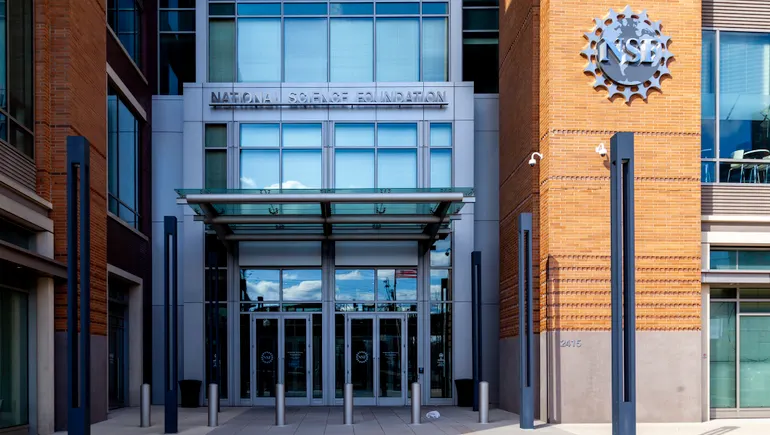
  • National Science Foundation faces lawsuit over 15% indirect research cap

    National Science Foundation faces lawsuit over 15% indirect research cap

    This audio is auto-generated. Please let us know if you have feedback.

      Dive Brief:

    • A group of universities and higher education associations is suing the National Science Foundation over its new cap on reimbursement for indirect research costs for all future college grants.
    • In court documents filed Monday, the plaintiffs — led by the American Council on Education, the Association of American Universities and the Association of Public and Land-Grant Universities — allege the unilateral 15% cap, which took effect May 5, violates the law in “myriad respects” and that its effects will be “immediate and irreparable.”
    • The new lawsuit follows two other legal challenges over similar caps implemented by the National Institutes of Health and the U.S. Department of Energy — both of which have been blocked, at least temporarily.

    Dive Insight:

    NIH implemented the first federal cap on indirect research costs in February. Colleges and higher ed groups sued, and a federal judge permanently blocked the agency’s plan last month. 

    In the ruling, the judge said NIH unlawfully implemented the cap and violated constitutional prohibitions on applying new rules retroactively. The Trump administration quickly appealed the ruling, and the case is ongoing.

    Next came the Energy Department. In April, the agency announced the same 15% cap on indirect research costs, alleging the plan would save taxpayers $405 million annually. Again, colleges sued, and a federal judge blocked the plan — albeit temporarily — while the lawsuit moves forward.

    The ACE, AAU and APLU are plaintiffs in both cases.

    Now NSF has introduced its own cap, to the chagrin of colleges and higher ed experts. When announcing the 15% cap, the agency argued the move would streamline and add transparency to the funding process and “ensure that more resources are directed toward direct scientific and engineering research activities.”

    But the new lawsuit argues that NSF’s policy echoes the other agencies’ attempts, to deleterious effect.

    “NSF’s action is unlawful for most of the same reasons, and it is especially arbitrary because NSF has not even attempted to address many of the flaws the district courts found with NIH’s and DOE’s unlawful policies,” it said. 

    Like the lawsuits against NIH and Energy Department’s policies, the plaintiffs allege that the NSF’s cap oversteps the agency’s authority.

    “It beggars belief to suggest that Congress — without saying a word — impliedly authorized NSF to enact a sweeping, one-size-fits-all command that will upend research at America’s universities,” it said.

    In fiscal 2024, Congress gave NSF $7.2 billion to fund research and related activities. In turn, the agency funded projects at 1,850 colleges — more than 1 in 4 of the higher education institutions in the U.S. eligible to receive federal dollars.

    That year, NSF awarded Arizona State University, one of the plaintiffs, 172 awards worth a total of $197.5 million in anticipated and obligated funding, according to court documents. Prior to the NSF’s new policy, the institution negotiated a 57% rate for indirect costs in fiscal 2026. 

    The University of Illinois, another plaintiff, received just over $129 million in NSF funding in fiscal 2024 — making the agency its biggest funder — and negotiated an indirect research funding rate of 58.6%.

    The university said in court documents that it has received the most NSF funding of all U.S. colleges for six years in a row, and it is poised to lose more than $23 million a year if the agency’s new cap is allowed to continue.

    The college plaintiffs are:

    • Arizona State University.
    • Brown University, in Rhode Island.
    • California Institute of Technology.
    • The University of California.
    • Carnegie Mellon University, in Pennsylvania.
    • The University of Chicago.
    • Cornell University.
    • The University of Illinois.
    • Massachusetts Institute of Technology.
    • The University of Michigan.
    • The University of Minnesota.
    • The University of Pennsylvania.
    • Princeton University, in New Jersey.

    The lawsuit also cited an attempt by the first Trump administration to cap rates for indirect research at a federal agency. In 2017, the White House proposed cutting the cap to 10% for all NIH grants. Congress – then under Republican control as it is now — “identified serious problems immediately” and took “swift and bipartisan” action against the proposal, the lawsuit said.  

    Source link

  • Lawsuit challenges Trump ICE raid policy, citing LAUSD activity

    Lawsuit challenges Trump ICE raid policy, citing LAUSD activity

    This audio is auto-generated. Please let us know if you have feedback.

    The Trump administration’s Immigration and Customs Enforcement policy allowing ICE raids on school grounds and other sensitive locations was challenged in a lawsuit filed this week on behalf of an Oregon-based Latinx organization and faith groups from other states. 

    The lawsuit cites ICE activity at two Los Angeles elementary schools last month, as well as parents’ fears of sending their children to school in other locations across the country. 

    “Teachers cited attendance rates have dropped in half and school administrators saw an influx of parents picking their children up from school in the middle of the day after hearing reports that immigration officials were in the area,” said the lawsuit filed April 28 by the Justice Action Center and the Innovation Law Lab. It was filed in the U.S. District Court for the District Court of Oregon’s Eugene Division.

    The two organizations filed on behalf of Oregon’s farmworker union Pineros y Campesinos Unidos del Noroeste, whose members say they are afraid to send their children to school,” per the draft complaint. The farmworker union’s members, especially those who are mothers, say their livelihood depends on sending their children to school during the day while they work. 

    “They now must choose between facing the risk of immigration detention or staying at home with their children and forfeiting their income,” the lawsuit said. One of the members of the union said her children were “afraid of ICE showing up and separating their family.” 

    The lawsuit challenges a Department of Homeland Security directive, issued one day after President Donald Trump’s inauguration, that undid three decades of DHS policy that prevented ICE from raiding sensitive locations like schools, hospitals and churches. 

    “Criminals will no longer be able to hide in America’s schools and churches to avoid arrest,” a DHS spokesperson said in a January statement on the order. “The Trump Administration will not tie the hands of our brave law enforcement, and instead trusts them to use common sense.”

    When asked for comment on the lawsuit, an ICE spokesperson said the agency does not comment on pending or ongoing litigation. 

    Monday’s lawsuit and others filed against the directive say the change in policy is impacting students’ learning and districts’ ability to carry out their jobs. 

    A lawsuit filed in February by Denver Public Schools said the DHS order “gives federal agents virtually unchecked authority to enforce immigration laws in formerly protected areas, including schools.” It sought a temporary restraining order prohibiting ICE and Customs and Border Protection from enforcing the policy. 

    According to the American Immigration Council, over 4 million U.S. citizen children under 18 years of age lived with at least one undocumented parent as of 2018. A 2010 study cited by the council found that immigration-related parental arrests led to children experiencing at least four adverse behavioral changes in the six months following the incidents.

    Another study cited by the organization, conducted in 2020, found that school districts in communities with a large number of deportations saw worsened educational outcomes for Latino students.

    Source link

  • States File Lawsuit Challenging Education Department Cuts

    States File Lawsuit Challenging Education Department Cuts

    Twenty Democratic state attorneys general filed a lawsuit Thursday against the Trump administration for its massive job cuts at the Education Department, seeking to block what they say is “an effective dismantling” of the department. 

    The suit argues that by eliminating half the staff, the department is essentially abdicating its responsibility to deliver statutorily mandated programs, like federal student aid and civil rights investigations—many of which also affect state programs. 

    “This massive reduction in force is equivalent to incapacitating key, statutorily-mandated functions of the Department, causing immense damage to Plaintiff States and their educational systems,” the suit reads.

    The plaintiffs include Arizona, California, Colorado, Connecticut, Delaware, the District of Columbia, Hawaii, Illinois, Maine, Maryland, Massachusetts, Michigan, Minnesota, Nevada, New Jersey, New York, Oregon, Vermont, Washington and Wisconsin.

    The lawsuit is at least the eighth to be filed against the Trump administration over its education policies in the past month. Follow Inside Higher Ed’s Trump Lawsuit Tracker for updates on the case.

    Source link

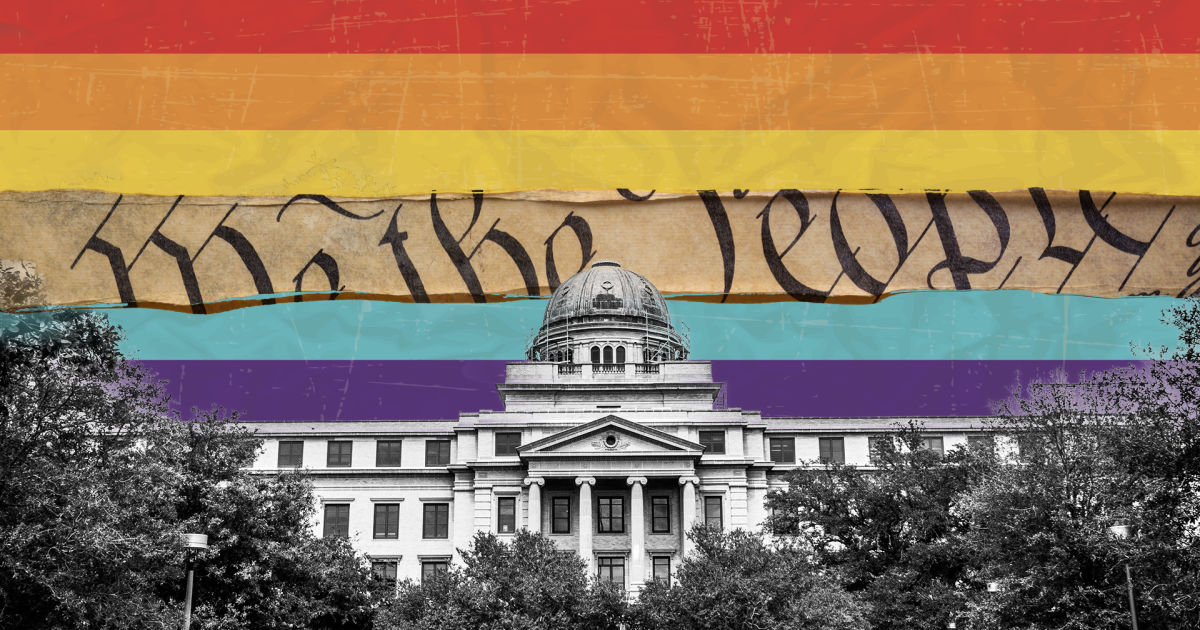
  • LAWSUIT: LGBTQ student group sues to overturn Texas A&M’s unconstitutional drag ban

    LAWSUIT: LGBTQ student group sues to overturn Texas A&M’s unconstitutional drag ban

    HOUSTON, Texas, March 5, 2025 — The Foundation for Individual Rights and Expression filed a federal lawsuit on behalf of an LGBTQ+ student organization to block a new policy from the Texas A&M University System that bans drag performances on its 11 public campuses — a clear violation of the First Amendment.

    FIRE is asking a court in the Southern District of Texas to halt Texas A&M officials from enforcing the drag ban, abruptly adopted on Friday afternoon. The lawsuit is on behalf of the Queer Empowerment Council, a coalition of student organizations at Texas A&M University-College Station and the organizers of the fifth annual “Draggieland” event that was scheduled to be held on campus on March 27. 

    “We refuse to let Texas A&M dictate which voices belong on campus,” said the Queer Empowerment Council. “Drag is self-expression, drag is discovery, drag is empowerment, and no amount of censorship will silence us.”

    Texas A&M students first held “Draggieland” (a portmanteau of “Drag” and “Aggieland,” a nickname for Texas A&M) at the campus theatre complex in 2020, and the event has been held on campus annually ever since. But last Friday, the Board of Regents suddenly voted to ban drag events entirely across all 11 Texas A&M campuses. 

    “The board finds that it is inconsistent with the system’s mission and core values of its universities, including the value of respect for others, to allow special event venues of the universities to be used for drag shows,” the board’s resolution reads. The regents also claimed that drag performances are “offensive” and “likely to create or contribute to a hostile environment for women.”

    “Public universities can’t shut down student expression simply because the administration doesn’t like the ‘ideology’ or finds the expression ‘demeaning,’” said FIRE attorney Adam Steinbaugh. “That’s true not only of drag performances, but also religion, COVID, race, politics, and countless other topics where campus officials are too often eager to silence dissent.”

    The regents’ attempts to justify the drag ban as anything other than illegal viewpoint discrimination are feeble. The board admits they want to ban drag on campus because they find it “demeans women,” “promotes gender ideology,” or runs contrary to their “values”—- but the First Amendment squarely protects speech that offends and even angers others. And in all cases, it prevents campus officials from silencing speech because they disagree with the “ideology.” As a taxpayer-funded university system, Texas A&M campuses cannot treat some student events differently simply because they dislike the view being expressed. 

    “Even putting on an on-campus production of Shakespeare or Mrs. Doubtfire, or taking part in powderpuff, could be banned at A&M if some hostile administrator thinks they ‘promote gender ideology,’” said FIRE senior attorney JT Morris. “But if the First Amendment means anything, it’s that the government can’t silence ideologies they don’t like — real or perceived.”

    Title IX’s prohibition on creating a “hostile environment” also does not give public universities the ability to run around the First Amendment. FIRE has long seen efforts to suppress speech on the basis that it might contribute to a “hostile environment” because someone finds it offensive, but if speech can be suppressed because someone believes it is offensive, no speech is safe. The First Amendment does not permit public universities to suppress speech because someone thinks it is inappropriate.

    In order to fit the definition of harassment the Supreme Court has established, speech must be “objectively offensive” AND “severe” AND “pervasive.” A once-a-year drag show in an enclosed theatre that requires a ticket to enter doesn’t even come close to satisfying those strict conditions.

    “If other students dislike or disagree with Draggieland, the solution is simple: don’t go,” said FIRE attorney Jeff Zeman. “Or they could organize a protest, as students opposing drag have in the past. The First Amendment protects drag and the ability to criticize drag — and it forbids the government silencing the side it disagrees with.”

    Finally, the regents’ motion notes that “there are alternative locations for such events off-campus.” But that violates the First Amendment, too. The government cannot censor speech in places the First Amendment protects it, just because a speaker might express themselves elsewhere. “Draggieland” highlights why that principle is so vital: if a student group can’t reach their campus community with their message, then their message can’t fulfill its purpose.

    In the face of unconstitutional censorship, Draggieland organizers have remained unbowed. They have announced to supporters that they will hold an on-campus “Day of Drag” protest on Thursday and that they are committed to holding the event even if forced off-campus.

    “We are committed to ensuring that our voices are heard, and that Draggieland will go on, no matter the obstacles we face,” the Queer Empowerment Council announced.


    The Foundation for Individual Rights and Expression (FIRE) is a nonpartisan, nonprofit organization dedicated to defending and sustaining the individual rights of all Americans to free speech and free thought—the most essential qualities of liberty. FIRE recognizes that colleges and universities play a vital role in preserving free thought within a free society. To this end, we place a special emphasis on defending the individual rights of students and faculty members on our nation’s campuses, including freedom of speech, freedom of association, due process, legal equality, religious liberty, and sanctity of conscience.

    CONTACT:

    Alex Griswold, Communications Campaign Manager, FIRE: 215-717-3473; [email protected]

    Source link