CLARKSDALE, Miss., Feb. 25, 2025 — After receiving widespread condemnation for obtaining a temporary restraining order that forced Mississippi’s Clarksdale Press Register to take down an editorial critical of the city, Clarksdale’s Board of Mayor and Commissioners voted Monday to drop the lawsuit.
Last week, the Foundation for Individual Rights and Expression first called national attention to the plight of the Press Register after the city sued the small-town Coahoma County newspaper to force it to take down an editorial criticizing local officials. On Friday, FIRE agreed to defend the Press Register, its editor, and parent company in court to have the unconstitutional restraining order lifted.
“The implications of this case go beyond one Mississippi town censoring its paper of record,” said FIRE attorney David Rubin. “If the government can get a court order silencing mere questions about its decisions, the First Amendment rights of all Americans are in jeopardy.”
By Monday, Clarksdale’s Board had convened, voted not to continue with the lawsuit, and filed a notice of voluntary dismissal with the court. That means the city’s suit is over and with it the restraining order preventing the Press Register from publishing its editorial.
“While we are relieved the city has voted to drop its vindictive lawsuit, it doesn’t unring this bell,” Rubin said. “The Press Register is exploring its options to ensure that the city refrains from blatantly unconstitutional censorship in the future.”
The controversy began when the city of Clarksdale held an impromptu meeting on Feb. 4 to discuss sending a resolution asking the state legislature to let it levy a 2% tax on products like tobacco, alcohol, and marijuana. By state law, cities must notify the media when they hold such irregular “special-called meetings,” but the Press Register did not receive any notice.
In response, the Press Register blasted the city in an editorial titled “Secrecy, Deception Erode Public Trust,” and questioned their motive for freezing out the press. “Have commissioners or the mayor gotten kick-back from the community?” the editorial asked. “Until Tuesday we had not heard of any. Maybe they just want a few nights in Jackson to lobby for this idea – at public expense.”
“For over a hundred years, the Press Register has served the people of Clarksdale by speaking the truth and printing the facts,” said Wyatt Emmerich, president of Emmerich Newspapers. “We didn’t earn the community’s trust by backing down to politicians, and we didn’t plan on starting now.”
Rather than taking their licks, the Clarksdale Board of Commissioners made a shocking move by voting to sue the Press Register, its editor and publisher Floyd Ingram, and its parent company Emmerich Newspapers for “libel.” Last Tuesday, Judge Martin granted ex parte – that is, without hearing from the PressRegister – the city’s motion for a temporary restraining order to force it to take down the editorial.
By silencing the Press Register before they could even challenge Clarksdale’s claims, Judge Martin’s ruling represented a clear example of a “prior restraint,” a serious First Amendment violation. Before the government can force the removal of any speech, the First Amendment rightly demands a determination whether it fits into one of the limited categories of unprotected speech or otherwise withstands judicial scrutiny. Otherwise, the government has carte blanche to silence speech in the days, months, or even years it takes to get a final ruling that the speech was actually protected.
Judge Martin’s decision was even more surprising given that Clarksdale’s lawsuit had several obvious and fatal flaws. Most glaringly, the government itself cannot sue citizens for libel. As the Supreme Court reaffirmed in the landmark 1964 case New York Times v. Sullivan, “no court of last resort in this country has ever held, or even suggested, that prosecutions for libel on government have any place in the American system of jurisprudence.”
But even if the Clarksdale commissioners had sued in their personal capacities, Sullivan also established that public officials have to prove not just that a newspaper made an error, but that it did so with “actual malice,” defined as “knowledge that it was false or with reckless disregard of whether it was false.” Clarksdale’s lawsuit didn’t even attempt to prove the Press Register editorial met that standard.
Finally, libel requires a false statement of fact. But the Press Register’s broadside against city officials was an opinion piece that expressed the opinion that there could be unsavory reasons for the city’s lack of candor. The only unique statement of fact expressed in the editorial — that Clarksdale failed to meet the legal obligation to inform the media of its meeting — was confirmed by the city itself in its legal filings.
“If asking whether a politician might be corrupt was libel, virtually every American would be bankrupt,” said FIRE attorney Josh Bleisch. “For good reason, courts have long held that political speech about government officials deserves the widest latitude and the strongest protection under the First Amendment. That’s true from the White House all the way down to your local councilman.”
“If the board had grumbled and gone about their day, this whole brouhaha wouldn’t have traveled far outside our town,” said Emmerich. “But when they tried to censor us, the eyes of the nation were on Clarksdale and millions heard about our editorial. Let this be a lesson: if you try to silence one voice in America, a hundred more will take up the call.”
The Foundation for Individual Rights and Expression (FIRE) is a nonpartisan, nonprofit organization dedicated to defending and sustaining the individual rights of all Americans to free speech and free thought — the most essential qualities of liberty. FIRE educates Americans about the importance of these inalienable rights, promotes a culture of respect for these rights, and provides the means to preserve them.
CONTACT:
Alex Griswold, Communications Campaign Manager, FIRE: 215-717-3473; [email protected]
A lawsuit filed in July against the Columbia University chapter of the American Association of University Professors, along with 20 other organizations and individuals, alleged that our public statements in support of antiwar and pro-Palestinian student protests last spring harmed other students by contributing to the campus shutdown that followed. Unraveling the cynical logic of this claim is for the courts. But what is clear from this lawsuit is that the purpose of such recourse to legal theater is not to ameliorate harm. It is to silence public and academic speech.
The tactic used against us is what is known as a strategic lawsuit against public participation (SLAPP). These suits are brought principally not to win in court but to harass and intimidate individuals or groups into curtailing speech. By entangling defendants in costly and invasive litigation—or even just threatening to do so—plaintiffs can frighten those with whom they disagree into silence. In the context of higher education, this comes at an incalculable cost.
On its own, this lawsuit certainly threatens the speech of Columbia-AAUP. But in the current climate, it also opens a front in the widespread attack on universities as sanctuaries of critical inquiry and reasoned debate. In their mere filing, lawsuits like this one aim especially to chill dissenting speech, including speech that takes place at the intersection of the classroom and the public square. Such legal instruments are a dangerous cudgel that could be used to threaten broad swaths of political and academic speech on American campuses.
Our chapter has precisely sought to combat this hostile environment in the speech over which we are being sued. In multiple public statements made during the height of the campus protests last spring, we condemned partisan congressional meddling in Columbia’s affairs, arguing that this “undermine[s] the traditions of shared governance and academic freedom.” We called for a vote of no confidence in university leadership, who we believe “failed utterly to defend faculty and students” and “colluded in political interference.” And we affirmed the Columbia Faculty of Arts and Sciences’ subsequent vote of no confidence in our then-president for her “failure to resist politically motivated attacks on higher education,” whereby she endangered students and undermined our rights as faculty.
In challenging our statements in support of faculty and students, this particular SLAPP targets both our constitutionally protected public speech and our academic freedom. We are fortunate enough to be represented by the American Civil Liberties Union and civil rights firm Wang Hecker LLP, who have filed a motion to dismiss on our behalf that utilizes New York State’s anti-SLAPP law, one of the 35 state-level anti-SLAPP laws on the books across the United States. But the outcome of a SLAPP shouldn’t depend on your counsel, or the state in which you live. Unfortunately, for many faculty and students faced with a SLAPP, the only available option may well be to self-censor.
Interests committed to the mainstream political consensus have found pro-Palestinian political advocacy on American campuses to be unacceptable. To silence dissent, they have shown themselves willing to use every instrument at their disposal in a manner that recalls the red scares of the early and mid-20th century, when character assassination and blacklists were employed in industry and civil society, including academia. This SLAPP revives such measures, as do the theatrical congressional grillings of college presidents, including our own, and the wave of censorship that has swept over higher education during the course of the past year. In this context, attacks on public speech are also attacks on academic freedom.
Academic freedom depends essentially upon a social contract that remains under perpetual debate both inside and outside the academy. SLAPPs like this one aim at the very heart of that contract, which accords to academics relative autonomy to explore difficult and often uncomfortable truths on the assumption that those truths will ultimately benefit society. Although the classroom, the laboratory and the library are classic sites for the practice and protection of this freedom, the truths pursued there translate to worlds outside the campus gates. Bullying faculty and students into self-censorship in the public square, SLAPPs seek to further silence and constrain the pursuit of uncomfortable truths in the classroom.
Scholarly knowledge consists of truth claims, not dicta. Whether exercised in the classroom or in the public square, academic freedom is therefore the freedom to make and to contest such claims. This goes for all sides in a debate, including the debates still quietly raging on our campuses. However, a stark reality disclosed by SLAPPs is that political force is now poised to govern the contest over truth in place of enlightened reason and democratic deliberation.
If such high-minded concepts as truth claims, enlightened reason and democratic debate seem too lofty for the dirty realism of the day, it is important to remember that these still lie at the core of any academic freedom worthy of the name. Academic freedom is not a narrowly academic matter; it is a matter of determining whether something is or is not true. SLAPPs are designed to decide such questions in advance, in favor of those who can afford the attorneys, or on whose behalf politically motivated law firms work. It is time for us to exercise our freedoms and responsibilities as academics, in defense of our right and that of our students to speak.
Reinhold Martin is president of the American Association of University Professorschapter at Columbia University, on whose behalf he wrote this piece, and a professor of architecture.
This audio is auto-generated. Please let us know if you have feedback.
Dive Brief:
Two transgender high school athletes are challenging in federal court President Donald Trump’s Feb. 5 executive order banning transgender girls and women from participating in sports aligned with their gender identity.
Originally filed against a New Hampshire state law that bars transgender girls in grades 5-12 from playing school sports, the lawsuit filed by Parker Tirrell and Iris Turmelle, is expanding to include Trump and the federal departments of justice and education among the defendants.
Tirrell and Turmelle, represented by GLAD Law and the ACLU of New Hampshire, allege Trump’s executive order is discriminatory and violates their federal equal protection guarantees under the 14th Amendment and their rights under Title IX.
Dive Insight:
Henry Klementowicz, deputy legal director at ACLU of NH, said in a Wednesday statement that every child in the state deserves “a right to equal opportunities at school.”
“We’re expanding our lawsuit to challenge President Trump’s executive orders because, like the state law, it excludes, singles out, and discriminates against transgender students and insinuates that they are not deserving of the same educational opportunities as all other students,” Klementowicz said.
The U.S. District Court for the District of New Hampshire previously ordered in September that the two students could play sports on teams corresponding with their gender identities while Tirrell and Turmelle v. Edelblut advanced.
Trump’s “No Men in Women’s Sports” executive order, which is now being targeted by the lawsuit, calls for a recission of all federal funds from educational programs that allow transgender girls and women to participate in girls’ sports. The order also directs the U.S. secretary of education to zero in on Title IX enforcement against K-12 schools and colleges where girls and women are required “to compete with or against or to appear unclothed before males.”
The day after Trump issued that executive order, the U.S. Department of Education opened Title IX investigations into a middle and high school athletics association in Massachusetts, as well as two universities, on the basis that they allowed transgender girls and women to play on teams aligned with their gender identity.
Trump’s order further directs the U.S. Department of Justice to abide by the nationwide vacatur from a recent court order by a federal judge who struck down the Biden administration’s Title IX rule in January. The Biden-era Title IX rule was the first time protections were codified for LGBTQI+ students and employees at federally funded schools under the anti-sex discrimination law.
After that January court decision, the Education Department said it would enforce the Title IX regulations finalized in 2020 during the first Trump administration.
GERMANTOWN, Tenn., Feb. 12, 2025 — Christmas in Germantown, Tennessee, might be merry and bright, but be careful if your decorations give a fright: you might get dragged into court and fined.
Today, the Foundation for Individual Rights and Expression filed a federal lawsuit seeking to strike down on First Amendment grounds the Memphis suburb’s ordinance dictating to residents how and when they’re allowed to display holiday decorations. On Thursday, FIRE will also defend Alexis Luttrell before a municipal court, after the Germantown resident was cited for celebrating Christmas with decorative skeletons.
“There is simply no good reason for the government to care how and when a resident celebrates a holiday in their own front yard,” said FIRE attorney Colin McDonell. “When government officials try to stop that resident from expressing their holiday spirit to others, that violates the First Amendment.”
In October, Alexis set up a decorative skeleton and skeleton dog in her front yard to celebrate Halloween. Then for Election Day, she used the same skeletons to hold political signs. But in December, a Germantown code officer left a notice that she was in violation of Ordinance 11-33, which decrees that home and yard holiday decorations “shall not be installed or placed more than 45 days before the date of the holiday” and must be removed within “30 days, following the date of the holiday.”
So Alexis updated her skeletons for Christmas, dressing them up for the holiday alongside her inflatable tree and Santa Claus.
But Germantown still had (ahem) a bone to pick. On Jan. 6, she received a citation from the city saying she was still in violation and that she would have to appear before a judge on Feb. 13. If found guilty, she could be subject to fines, a court order prohibiting skeletons in her holiday displays, and even city officials entering her property and forcibly removing the skeletons.
“You don’t have to like my decorations, but that doesn’t mean Germantown has the right to force me to take them down,” said Alexis. “This is America. Even our local government has to respect our rights.”
Germantown’s ordinance violates the First Amendment, no bones about it. To start, it targets residents’ displays based on their message — specifically, whether they celebrate a holiday. It’s perfectly legal to have miniature deer figurines in your yard year-round, for example . . . unless there’s nine of them and one of them has a red nose. The Supreme Court has long held that speech restrictions based on content are unconstitutional unless they are narrowly tailored to serve a compelling government interest.
“City governments can impose reasonable restrictions on yard displays that address concerns like safety, noise, or light pollution, but Alexis’s decorations aren’t harming anyone,” said McDonell. “Germantown is simply targeting protected expression.”
The ordinance is also unconstitutional viewpoint discrimination because it allows government officials to enforce their own subjective views on what decorations may celebrate a particular holiday. By refusing to permit Alexis’s skeletons as an acceptable Christmas display, Germantown is telling residents they have to celebrate Christmas the government-approved “right” way, even if they have a macabre sense of humor or just enjoy “The Nightmare Before Christmas.”
How one celebrates a holiday should be dictated by their personal taste, not government officials. And many religions and cultures have different ideas of when a holiday falls or how it should be celebrated that defy Germantown’s narrow view:
A Filipino living in Germantown might want to put up Christmas decorations as early as September.
An Orthodox Christian wouldn’t celebrate Christmas until Jan. 7, and a Hispanic resident might intend their nativity scene to encompass both Christmas and Día de Los Reyes on Jan. 6.
A Chinese resident would only have until Jan. 31 to keep up a “Happy New Year!” sign, even though his traditional New Year started Jan. 30.
Lastly, Germantown’s ordinance is unconstitutionally vague. Regulations have to be clear enough for the average person to know if they’re breaking the law or not, but the ordinance offers no guidance on what decorations are “intended” to celebrate a particular “holiday.” As a result, Germantown residents are constantly in the dark about which holidays their city will enforce, when they officially begin, and which decorations qualify for that holiday — and which are forbidden.
Alexis’s skeletons are currently dressed, for example, in a “Love is Love” theme. St. Valentine’s Day isn’t an official government holiday — but then neither is Halloween, and Germantown officials targeted her skeletons nonetheless. Her rainbow-colored decorations are intended as a Valentine’s Day message — but it’s also imagery about LGBT acceptance that many people display year-round. Alexis can only guess at whether her display meets the city’s definition.
With FIRE on her side, Alexis is fighting this unconstitutional ordinance. Once Valentine’s Day has passed, she has plans to put her skeletons in costumes for St. Patrick’s Day, Easter, Pride Month and other holidays this year and for years to come.
“Perhaps for President’s Day, I’ll dress the skeleton like a Founding Father and give him a copy of the Constitution,” said Alexis. “Maybe a visual display will make it finally sink in when they ask me to tear it down.”
The Foundation for Individual Rights and Expression (FIRE) is a nonpartisan, nonprofit organization dedicated to defending and sustaining the individual rights of all Americans to free speech and free thought — the most essential qualities of liberty. FIRE educates Americans about the importance of these inalienable rights, promotes a culture of respect for these rights, and provides the means to preserve them.
CONTACT:
Alex Griswold, Communications Campaign Manager, FIRE: 215-717-3473; [email protected]
FRESNO, Feb. 10, 2025 — After a lawsuit from the Foundation for Individual Rights and Expression challenged regulations mandating the evaluation of professors based on their commitment to “diversity, equity, inclusion, and accessibility” (DEIA), the California Community Colleges system and a community college district attested in court that the regulations do not require community college professors to teach and endorse the state’s pro-DEIA views in the classroom.
In March 2023, the California Community College system amended its tenure and employee review guidelines to “include diversity, equity, inclusion, and accessibility standards in the evaluation and tenure review of district employees.” The new regulations stated that faculty members “shall employ teaching, learning, and professional practices that reflect DEIA and anti-racist principles” and mandated they “promote and incorporate culturally affirming DEIA and anti-racist principles.”
That August, FIRE filed suit against California Community Colleges and the State Center Community College District on behalf of six Fresno-area community college professors who oppose the highly politicized concepts of “DEIA” (more often called “DEI”) and “anti-racism” and thus did not want to incorporate them into their teaching.
Forced to defend the regulations in court, the state chancellor and district quickly disclaimed any intention to use the state guidelines or the district’s faculty contract to police what professors teach in the classroom or to punish them for their criticism of DEI.
Specifically, the Chancellor’s Office “disavowed any intent or ability to take any action against Plaintiffs” for their classroom teaching. The district likewise confirmed that none of the plaintiffs’ “proposed future actions” for their courses violate the rules or the faculty contract. It added that plaintiffs are not “prohibited from presenting” their “viewpoints or perspectives in the classrooms” and will not “be disciplined, terminated, or otherwise punished for doing so.”
In particular, the Defendants denied they would punish Plaintiffs for any of their proposed speech, including “assigning certain literary works, such as Martin Luther King Jr.’s Letters from Birmingham Jail,” using “methodologies and course materials in their classroom” intended to encourage debate and discussion about the merits of DEI viewpoints, criticizing concepts like “anti-racism,” or supporting a color-blind approach to race in their self-evaluations.
On Jan. 28, U.S. District Judge Kirk E. Sherriff relied on those assurances to hold as a legal matter that because of the college officials’ disavowals, the professors had not suffered a harm sufficient to challenge the regulations’ constitutionality. In dismissing the lawsuit, Judge Sherriff emphasized that neither the DEI Rules nor the faculty contract “mandate what professors teach or how any DEIA principles should be implemented.”
“FIRE filed suit to prevent California’s community colleges from evaluating our faculty clients on the basis of their classroom commitment to a political ideology, and that’s exactly the result we’ve achieved,” said FIRE attorney Daniel Ortner. “As a result of our suit, the state and the district promised a federal judge they won’t interfere with our clients’ academic freedom and free speech rights. The classroom is for discussion and exploration, not a top-down mandate about what ideas must take priority. We’ll make sure it stays that way.”
“FIRE will be watching like a hawk to ensure that the state chancellor and district live up to their word,” said FIRE attorney Zach Silver. “If they force any professors to parrot the state’s DEI views, or punish them for criticizing the state’s position, we’ll be ready to stand up for their rights.”
Despite unobjectionable-sounding labels, “diversity, equity, and inclusion” and “anti-racism” frameworks often encompass political topics and ideology that are contested and controversial. The glossary of DEI terms put out by California Community Colleges, for example, stated that “persons that say they are ‘not a racist’ are in denial,” while denouncing “colorblindness” as a concept for “perpetuat[ing] existing racial inequities.”
DEI requirements are also highly controversial within academia. FIRE’s most recent faculty survey indicated that half of faculty think it is “rarely” or “never” justifiable for universities to make faculty candidates submit statements pledging commitment to DEI before being considered for a job (50%) or to be considered for tenure or promotion (52%).
Since FIRE filed its lawsuit in 2023, many top universities and university systems have voluntarily moved away from mandatory DEI, including Harvard, the Massachusetts Institute of Technology, and the University of Arizona system. Most recently, the University of Michigan dropped the use of diversity statements in hiring and firing in December 2024 following a viral New York Times article that detailed how the school’s DEI practices stifled academic freedom and discourse at the school.
FIRE sued on behalf of six professors, James Druley, David Richardson, Linda de Morales, and Loren Palsgaard of Madera Community College, Bill Blanken of Reedley College, and Michael Stannard of Clovis Community College. (Professors Stannard and Druley withdrew from the case in 2024 upon retiring from teaching.)
“Wherever you stand on the debate over DEI, the important thing is there is a debate in the first place,” said Palsgaard. “I’m happy that thanks to our lawsuit, we know that debate will continue in California, both inside and outside the classroom.”
The Foundation for Individual Rights and Expression (FIRE) is a nonpartisan, nonprofit organization dedicated to defending and sustaining the individual rights of all Americans to free speech and free thought — the most essential qualities of liberty. FIRE recognizes that colleges and universities play a vital role in preserving free thought within a free society. To this end, we place a special emphasis on defending the individual rights of students and faculty members on our nation’s campuses, including freedom of speech, freedom of association, due process, legal equality, religious liberty, and sanctity of conscience.
CONTACT:
Alex Griswold, Communications Campaign Manager, FIRE: 215-717-3473; [email protected]
AUSTIN, Texas, Feb. 7, 2025 — After a lawsuit from the Foundation for Individual Rights and Expression and Davis Wright Tremaine, a district court today stopped enforcement of a Texas law that would have blocked access to broad categories of protected speech for minors and forced websites to collect adults’ IDs or biometric data before they can access social media sites.
Northern District of Texas Judge Robert Pitman granted FIRE’s motion for a preliminary injunction against provisions of the Securing Children Online through Parental Empowerment Act (SCOPE Act) requiring content monitoring and filtering, targeted advertising bans, and age-verification requirements, ruling that these measures were unconstitutionally overbroad, vague, and not narrowly tailored to serve a compelling state interest.
“The court determined that Texas’s law was likely unconstitutional because its provisions restricted protected speech and were so vague that it made it hard to know what was prohibited,” said FIRE Chief Counsel Bob Corn-Revere. “States can’t block adults from engaging with legal speech in the name of protecting children, nor can they keep minors from ideas that the government deems unsuitable.”
The SCOPE Act would have required social media platforms to register the age of every new user. Platforms would have been forced to track how much of their content is “harmful” to minors and, once a certain percentage is reached, force users to prove that they are 18 or older. In other words, the law would have burdened adults who wanted to view content that is fully legal for adults, serving as an effective ban for those who understandably don’t trust a third-party website with their driver’s license or fingerprints.
The law also required websites to prevent minors from being exposed to “harmful material” that “promotes, glorifies, or facilitates” behaviors like drug use, suicide, or bullying. That definition was far too vague to pass constitutional muster: whether speech “promotes” or “glorifies” an activity is inherently subjective, and platforms had testified that they would be forced to react by censoring all discussions of those topics.
Today’s ruling should serve as yet another warning to states tempted to jump on the unconstitutional bandwagon of social media age verification bills.
“At what point… does alcohol use become ‘substance abuse?’” asked Judge Pitman in his ruling. “When does an extreme diet cross the line into an ‘eating disorder?’ What defines ‘grooming’ and ‘harassment?’ Under these indefinite meanings, it is easy to see how an attorney general could arbitrarily discriminate in his enforcement of the law.”
FIRE sued on August 16 on behalf of three plaintiffs who use the Internet to communicate with young Texans and keep them informed on issues that affect them. A fourth plaintiff, M.F., is a 16-year-old rising high school junior from El Paso who is concerned that Texas is blocking his access to important content.
Lead plaintiff Students Engaged in Advancing Texas represents a coalition of Texas students who seek to increase youth visibility and participation in policymaking.
Nope to SCOPE: FIRE sues to block Texas’ unconstitutional internet age verification law
Press Release
Texans browsing your favorite websites, beware. If the state has its way, starting next month, the eyes of Texas may be upon you.
“Young people have free speech rights, too,” said SEAT Executive Director Cameron Samuels. “They’re also the future voters and leaders of Texas and America. The SCOPE Act would make youth less informed, less active, and less engaged on some of the most important issues facing the nation.”
Earlier, Judge Pitman enjoined the content moderation requirements while ruling on a separate lawsuit from the Computer & Communications Industry Association and Netchoice. Judge Pitman ruled in August that Texas “cannot pick and choose which categories of protected speech it wishes to block teenagers from discussing online.”
“This is a tremendous victory against government censorship, especially for our clients—ordinary citizens—who stood up to the State of Texas,” said Adam Sieff, partner at Davis Wright Tremaine. “The Court enjoined every substantive provision of the SCOPE Act we challenged, granting even broader relief than its first preliminary injunction. We hope this decision will give other states pause before broadly restricting free expression online.”
Texas lawmakers perhaps could have predicted today’s ruling. Age verification laws have been enjoined by courts across the country in states like California, Arkansas, Mississippi, Ohio, and even initially in Texas, in another law currently before the Supreme Court for review.
“Today’s ruling should serve as yet another warning to states tempted to jump on the unconstitutional bandwagon of social media age verification bills,” said Corn-Revere. “What these laws have in common is that they seek to impose simplistic one-size-fits-all solutions to address complicated problems.”
The Foundation for Individual Rights and Expression (FIRE) is a nonpartisan, nonprofit organization dedicated to defending and sustaining the individual rights of all Americans to free speech and free thought — the most essential qualities of liberty. FIRE educates Americans about the importance of these inalienable rights, promotes a culture of respect for these rights, and provides the means to preserve them.
CONTACT:
Alex Griswold, Communications Campaign Manager, FIRE: 215-717-3473; [email protected]
The University of Tennessee’s pharmacy school twice investigated a grad student for her sex-positive social media posts.
UT voted to expel her from her doctoral program — but reversed its decision when FIRE intervened.
Today’s settlement is a warning to colleges around the country: If you police students’ personal online expression, there will be consequences.
Student: ‘We all need to speak up when someone tries to take our rights away — our voice is way too powerful to let anyone shut it down.’
MEMPHIS, Tenn., Jan. 29, 2025 — After her First Amendment lawsuit set precedent last fall for student free speech rights, Memphis pharmacist Kimberly Diei agreed to a $250,000 settlement with the University of Tennessee.
School administrators twice investigated and nearly expelled Diei over her sex-positive social media posts on her personal account. Concerned she and other students would face future investigations for speech fully protected by the First Amendment, Kim connected with the Foundation for Individual Rights and Expression to sue UT on her behalf in 2021.
“UT’s pharmacy school learned an important lesson today,” said FIRE attorney Greg H. Greubel. “There is nothing unprofessional about students expressing love of hip-hop and their sexuality on social media. Kim has proven something FIRE has said for 25 years: The First Amendment robustly protects students’ rights to have a voice outside of school, even if college administrators don’t like what they have to say.”
Just a month into her studies in September 2019, UT’s pharmacy school investigated Kim for her social media content focused on sexuality, fashion, and music. The college justified the investigation by using vague “professionalism” standards — standards it never provided to Kim — but ultimately dropped that first investigation.
In one tweet, Kim contributed to a trending discussion on Twitter about the song “WAP” by Cardi B and Megan Thee Stallion, suggesting lyrics for a possible remix. In another, she posted a selfie and referenced lyrics from a popular Beyoncé song.
Unfortunately, Kim’s ordeal was not unique. For years, colleges around the country have wieldedprofessionalismcodes against students for their expression even when the student’s speech has no bearing on their ability to succeed in a given field. Kim’s posts were wholly separate from the college, as her accounts operated under a pseudonym and did not reveal her then-identity as a student.
Yet by the following year, Kim was under a second investigation, and UT administrators voted to expel her. In the midst of preparing for exams, she appealed to the dean, who reversed the decision after hearing from FIRE. Then, FIRE sued on behalf of Kim in February 2021.
“I wasn’t about to let my university get away with silencing me or any other student for speaking our truth,” Kim said. “Staying positive while fighting for my rights for years wasn’t easy, but it was necessary. We all need to speak up when someone tries to take our rights away — our voice is way too powerful to let anyone shut it down.”
Kim’s posts complied with the social media sites’ policies and involved expression that the First Amendment squarely prevents public universities from investigating and punishing.
In 2024, a federal appeals court agreed, ruling that her expression — which administrators called “sexual,” “crude,” and “vulgar” — was “clearly protected” by the First Amendment. Crucially, in a blow to the qualified immunity that often shields government actors from paying damages for violating constitutional rights, the court emphasized that previous Supreme Court precedent and prior Sixth Circuit rulings put “beyond debate” that the First Amendment protects Kim’s speech.
“Students don’t give up their free speech rights the day they sign up for grad school,” said FIRE attorney JT Morris. “Without FIRE, UT could have derailed Kim’s whole professional career. We were proud to fight for Kim. Her win will help protect students everywhere from campus censors at public universities.”
The Foundation for Individual Rights and Expression (FIRE) is a nonpartisan, nonprofit organization dedicated to defending and sustaining the individual rights of all Americans to free speech and free thought — the most essential qualities of liberty. FIRE educates Americans about the importance of these inalienable rights, promotes a culture of respect for these rights, and provides the means to preserve them.
CONTACT:
Daniel Burnett, Senior Director of Communications, FIRE: 215-717-3473; [email protected]
Johns Hopkins University and the California Institute of Technology agreed to settle in a federal antitrust lawsuit that alleges 17 wealthy institutions, known as the 568 Presidents Group, illegally colluded on financial aid formulas and overcharged students for years.
Late Friday, JHU settled for $18.5 million and Caltech for $16.7 million, according to court filings. Both were more recent additions to the group, which was established in 1998. Johns Hopkins joined in November 2021, and Caltech in 2019.
The class action lawsuit was filed in January 2022 and initially implicated Caltech along with Brown, Columbia, Cornell, Duke, Emory, Georgetown, Northwestern, Rice, Vanderbilt and Yale Universities; Dartmouth College; the Massachusetts Institute of Technology; and the Universities of Chicago, Notre Dame and Pennsylvania.
Johns Hopkins was added to the lawsuit in March 2022.
After Friday’s court filing, 12 of the 17 institutions have settled. Altogether the settlement amounts add up to nearly $320 million. Vanderbilt had the largest settlement: $55 million.
The five remaining defendants in the lawsuit—Cornell, Georgetown, MIT, Notre Dame and Penn—have denied wrongdoing and continue to fight the antitrust case in court. The 568 Presidents Group name is a reference to a carve-out in federal law that allowed member institutions to discuss financial aid formulas with immunity from federal antitrust laws due to their need-blind status. Congress created that exemption following a 1991 price-fixing scandal that involved all eight Ivy League universities and MIT.
The legislative carve-out expired in 2022, and the group subsequently dissolved.
However, plaintiffs have argued that defendants did consider financial circumstances and made decisions based on family wealth and donation history or capacity, often admitting students on “special interest lists” with substandard transcripts compared to the rest of accepted classes.
“I spent a couple of bucks on legal fees, and they spent a whole lot more. I did it to make his life miserable, which I’m happy about.” — Donald J. Trump
That is the kind of mindset that lies in wait to ambush First Amendment values. Its aim: punitive. Its logic: force those who disagree with you to pay — literally! Its motivation: intimidation. Its endgame: muzzling critics.
That kind of mindset is a form of cancel culture, insofar as once such practices are allowed to stand, the net effect is to chill critics into numbing silence.
“Donald Trump is abusing the legal system to punish speech he dislikes. If you have to pay lawyers and spend time in court to defend your free speech, then you don’t have free speech.” — FIRE attorney Adam Steinbaugh
As presented, that assertion helps to explain Trump v. Selzer — and a similar suit filed by The Center for American Rights, who are suing The Des Moines Register, its parent company Gannett, and Selzer. The case arises out of a flawed election poll conducted by the noted pollster J. Ann Selzer. As published in The Des Moines Register, she had Kamala Harris leading Donald Trump by three percentage points in Iowa. She was off — way off! Trump won the state by 13 points and then went on to a sizable victory nationwide. Hence, the Center for American Rights’ allegation that Selzer’s poll and the Register’s publication of it were “intentionally deceptive” or done with reckless disregard of the truth — a high bar to meet.
Though Trump prevailed in the presidential election, and roundly so, he thereafter sought damages for the poll prediction that had him behind. Even after his victory, the very idea of that poll offended him.
Iowa pollster J. Ann Selzer
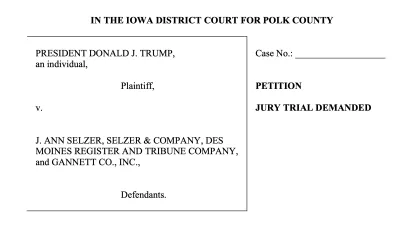
The injury to Selzer’s reputation over the mistaken prediction was not enough. Selzer and the Register found themselves on the wrong end of a lawsuit first filed by Alan R. Ostergren on behalf of the former president and now president-elect. Here are two key parts of what was alleged as a cause of action:
This action, which arises under the Iowa Consumer Fraud Act, Iowa Code Chapter 714H, including § 714H.3(1) and related provisions, seeks accountability for brazen election interference committed by the Defendants in favor of now-defeated former Democrat candidate Kamala Harris (“Harris”) through use of a leaked and manipulated Des Moines Register/Mediacom Iowa Poll conducted by Selzer and S&C, and published by DMR and Gannett in the Des Moines Register on November 2, 2024 (the “Harris Poll”) (boldness added)
However, “[i]f there is a bedrock principle underlying the First Amendment, it is that the government may not prohibit the expression of an idea simply because society finds the idea itself offensive or disagreeable.” Texas v. Johnson (1989).
FIRE’s defense of pollster J. Ann Selzer against Donald Trump’s lawsuit is First Amendment 101
News
A polling miss isn’t ‘consumer fraud’ or ‘election interference’ — it’s just a prediction and is protected by the First Amendment.
As FIRE’s Adam Steinbaugh and Conor Fitzpatrick have observed:
The lawsuit is the very definition of a “SLAPP” suit — a Strategic Lawsuit Against Public Participation. Such tactical claims are filed purely for the purpose of imposing punishing litigation costs on perceived opponents, not because they have any merit or stand any chance of success. In other words, the lawsuit is the punishment. And it’s part of a worrying trend of activists and officials using consumer fraud lawsuits to target political speech they don’t like.
Steinbaugh and Fitzpatrick offer a compelling critique of this lawsuit, why it is statutorily and constitutionally flawed, and why it is more punitive in nature than persuasive in law. Their critique points to the need for a national Anti-SLAPP law similar to the ones that currently exist in some 34 states (Iowa is not one of them).
FIRE, with Robert Corn-Revere as the lead counsel, is representing Selzer. Revere tagged the Trump lawsuit as “absurd” and “a direct assault on the First Amendment.”
One need not be called to the witness stand in defense of George Stephanopoulos’ journalism to concede that the former president could well have a basis to seek legal relief against those who actually defame or otherwise cause him cognizable injury (see FAN 451) — or, consistent with Time, Inc. v. Hill (1967), that he might be able to demonstrate a reckless disregard for the truth.
But Trump v. Selzer is a difficult case to fit into that legal peg.
Five Suspect Arguments
1. The Tale of Two Predictions Argument: In both 2016 and 2020, Ann Selzer predicted Trump’s Iowa victories. In 2024, the Registercommissioned her to do another poll and she predicted a Harris victory by a small margin — using the same methodology. Despite this, she and her publisher were slapped with two lawsuits. Can this really be the basis (albeit unstated) for a call to legal action?
2. The Fraudulent Consumer Fraud Argument: The Iowa consumer fraud law pertains to deceit in the context of the advertisement or sale of “commercial merchandise.” Does polling information check that conceptual box? Is it a commercial “service” in the same way that fraudulently providing home insurance would be? Is the product that a newspaper produces “merchandise” as that word is commonly used? As a matter of statutory construction (duly mindful of overbreadth concerns), should courts conflate laws made to regulate commerce with political speech? Is the legal supervision of the marketplace of goods to be the same as in the marketplace of ideas? To quote Eugene Volokh:
“I’m far from sure that, as a statutory matter, the Iowa consumer fraud law should be interpreted as applying to allegedly deceptive informational content of a newspaper, untethered to attempts to sell some other product.”
3. The No-Guidelines False Political Speech Argument: Once the government has elected to punish political speech by civil or criminal laws, what are the exact guidelines for determining falsity? And how great does such falsity have to be? Are such calls to be made by lawmakers or judges? Of all political figures, Donald Trump should be quite apprehensive of such arguments — given all the false speech he has been accused of disseminating.
4. The Demand to Punish Newspapers for False Political Speech Argument: If the Press Clause of the First Amendment is to have any functional meaning, and if the era of sedition laws has taught us anything, it is that when it comes publishing political speech a news story is not, generally speaking, to be judged as being the same as the speech of a shyster used-car salesperson. Absent strong safeguards, allowing punitive or treble damages for political speech takes on a dangerous meaning when it comes to the Press. To again draw on Volokh:
“[T]he First Amendment generally bars states from imposing liability for misleading or even outright false political speech, including in commercially distributed newspapers — and especially for predictive and evaluative judgments of the sort inherent in estimating public sentiment about a candidate.”
“[T]he suit alleges that a story within the newspaper was misleading, therefore making the sale or advertisement of the newspaper misleading. In other words, they are attacking the content of the newspaper, not the sale or advertisement of the newspaper itself. The content of a media source, other than an advertisement for merchandise it might contain, is subject to strong First Amendment protection.”
Moreover, such lawsuits create “an environment,” said Seth Stern, director of advocacy for the Freedom of the Press Foundation, “where journalists can’t help but look over their shoulders knowing the incoming administration is on the lookout for any pretext or excuse to come after them.”
5. The Need to Deter “Radical” Pollsters Argument: The complaint seeks the relief it does (injunctive and otherwise) in order “to deter Defendants and their fellow radicals” from continuing to skew “election results.” And if alleged consumer falsity is the norm in the political speech realm (with the requisite intent, of course), will that not have an enormous chilling effect on all election pollsters? And what newspapers or other media outlets would be willing to publish election poll predictions if the liability Sword of Damocles hovered over their heads? And what of those campaigning for political office?
Related
Full Disclosure
Robert Corn-Revere, FIRE’s chief counsel, represented me pro bono in a 2003 petition to the governor of New York to posthumously pardon Lenny Bruce. While FIRE hosts FAN, the content of this newsletter is determined free of any and all influence by FIRE.
The TikTok case
The Supreme Court on Friday seemed likely to uphold a law that would ban TikTok in the United States beginning Jan. 19 unless the popular social media program is sold by its China-based parent company.
Hearing arguments in a momentous clash of free speech and national security concerns, the justices seemed persuaded by arguments that the national security threat posed by the company’s connections to China override concerns about restricting the speech either of TikTok or its 170 million users in the United States.
Early in arguments that lasted more than two and a half hours, Chief Justice John Roberts identified his main concern: TikTok’s ownership by China-based ByteDance and the parent company’s requirement to cooperate with the Chinese government’s intelligence operations.
If left in place, the law passed by bipartisan majorities in Congress and signed by President Joe Biden in April will require TikTok to “go dark” on Jan. 19, lawyer Noel Francisco told the justices on behalf of TikTok.
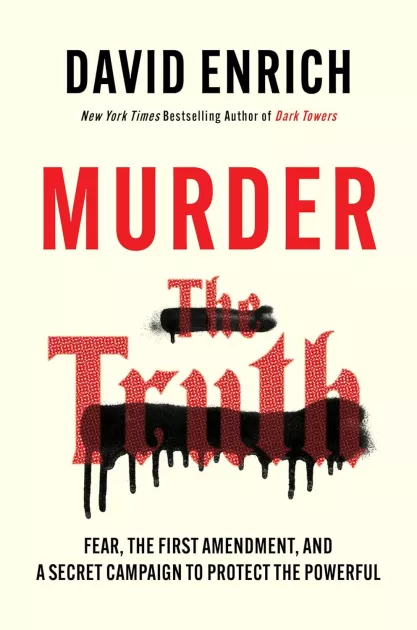
Forthcoming book on ‘campaign to protect the powerful’
The #1 bestselling author of Dark Towers, Enrich produces his most consequential and far-reaching investigation yet: an in-depth exposé of the broad campaign — orchestrated by elite Americans — to overturn 60 years of Supreme Court precedent, weaponize our speech laws, and silence dissent.
It was a quiet way to announce a revolution. In an obscure 2019 case that the Supreme Court refused to even hear, Justice Clarence Thomas raised the prospect of overturning the legendary New York Timesv. Sullivan decision. Though hardly a household name, Sullivan is one of the most consequential free speech decisions, ever. Fundamental to the creation of the modern media as we know it, it has enabled journalists and writers all over the country — from top national publications and revered local newspapers to independent bloggers — to pursue the truth aggressively and hold the wealthy, powerful, and corrupt to account.
Thomas’s words were a warning — the public awakening of an idea that had been fomenting on the conservative fringe for years. Now it was going mainstream. From the Florida statehouse to small town New Hampshire to Trump himself, this movement today consists of some of the world’s richest and most powerful people and companies, who believe they should be above scrutiny and want to silence or delegitimize voices that challenge their supremacy. Indeed, many of the same businessmen, politicians, lawyers, and activists are already weaponizing the legal system to intimidate and punish journalists and others who dare criticize them.
In this masterwork of investigative reporting, David Enrich, New York Times Business Investigations Editor, traces the roots and reach of this new threat to our modern democracy. Laying bare the stakes of losing our most sacrosanct rights, Murder the Truth is a story about power — the way it’s used by those who have it, and the lengths they will go to avoid it being questioned.
Douek and Lakier vs Volokh on private power and free speech
New scholarly article on revenge porn and more
Since our nation’s founding, the private sex lives of politicians have been a consistent topic of public concern. Sex scandals, such as those involving Alexander Hamilton, Bill Clinton, and Donald Trump, have consumed the focus of the public. With the advent of the internet and social media, a new dimension has been added to that conversation: now, details of a politician’s sex life often come accompanied by photo or video evidence. Outside of the election context, when someone shares an individual’s private explicit material without their consent, they have committed the crime of “revenge porn.”
Recent high-profile incidents have raised the question of whether the crime of revenge porn can still be prosecuted when the disclosure of private explicit materials involves a political candidate. In the election context, unique First Amendment concerns about chilling political speech result in heightened speech protections. Before prosecuting a case, prosecutors must grapple with the question: Does the First Amendment protect revenge porn when it is used to influence an election? This essay argues that the special First Amendment concerns about elections are diminished in the revenge porn context: the statutes are already tailored to address those concerns, and the state’s independent interest in enforcing revenge porn laws is still compelling. As such, it concludes that the First Amendment should not have extra force in a revenge porn case just because the disclosure occurred in the context of an election.
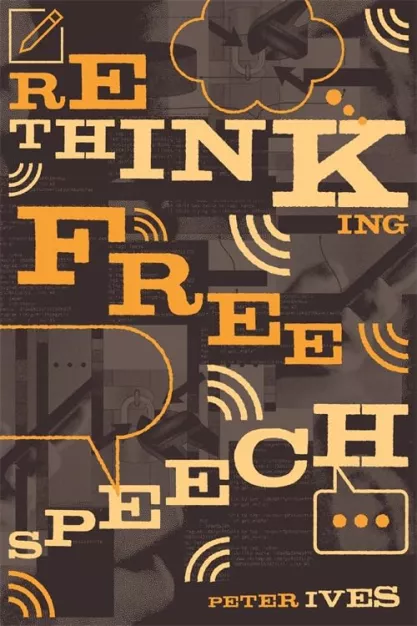
New Book on ‘rethinking free speech’
Clashes over free speech rights and wrongs haunt public debates about the state of democracy, freedom and the future. While freedom of speech is recognized as foundational to democratic society, its meaning is persistently misunderstood and distorted. Prominent commentators have built massive platforms around claims that their right to free speech is being undermined. Critics of free speech correctly see these claims as a veil for misogyny, white-supremacy, colonialism and transphobia, concluding it is a political weapon to conserve entrenched power arrangements. But is this all there is to say?
Rethinking Free Speech will change the way you think about the politics of speech and its relationship to the future of freedom and democracy in the age of social media. Political theorist Peter Ives offers a new way of thinking about the essential and increasingly contentious debates around the politics of speech. Drawing on political philosophy, including the classic arguments of JS Mill, and everyday examples, Ives takes the reader on a journey through the hotspots of today’s raging speech wars.
In its bold and careful insights on the combative politics of language, Rethinking Free Speech provides a map for critically grasping these battles as they erupt in university classrooms, debates around the meaning of antisemitism, the “cancelling” of racist comedians and the proliferation of hate speech on social media. This is an original and essential guide to the perils and possibilities of communication for democracy and justice.
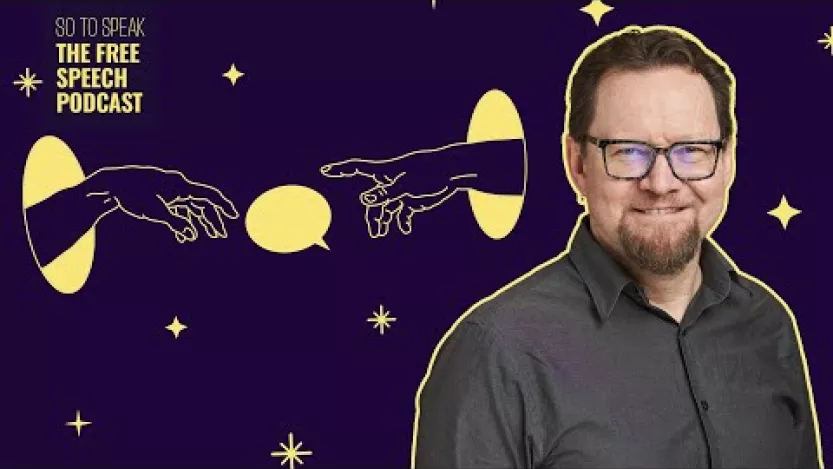
‘So to Speak’ podcast interview with author of ‘Rethinking Free Speech’
Is the free speech conversation too simplistic?
Peter Ives thinks so. He is the author of “Rethinking Free Speech,” a new book that seeks to provide a more nuanced analysis of the free speech debate within various domains, from government to campus to social media.
Ives is a professor of political science at the University of Winnipeg. He researches and writes on the politics of “global English,” bridging the disciplines of language policy, political theory, and the influential ideas of Antonio Gramsci.
2024-2025 SCOTUS term: Free expression and related cases
Cases decided
Villarreal v. Alaniz(Petition granted. Judgment vacated and case remanded for further consideration in light of Gonzalez v. Trevino, 602 U. S. ___ (2024) (per curiam))
Murphy v. Schmitt (“The petition for a writ of certiorari is granted. The judgment is vacated, and the case is remanded to the United States Court of Appeals for the Eighth Circuit for further consideration in light of Gonzalez v. Trevino, 602 U. S. ___ (2024) (per curiam).”)
This article is part of First Amendment News, an editorially independent publication edited by Ronald KL Collins and hosted by FIRE as part of our mission to educate the public about First Amendment issues. The opinions expressed are those of the article’s author(s) and may not reflect the opinions of FIRE or Mr. Collins.
DES MOINES, Iowa, Jan. 7, 2025 — The Foundation for Individual Rights and Expression announced today it will defend veteran Iowa pollster J. Ann Selzer pro bono against a lawsuit from President-elect Donald Trump that threatens Americans’ First Amendment right to speak on core political issues.
“Punishing someone for their political prediction is about as unconstitutional as it gets,” said FIRE Chief Counsel Bob Corn-Revere. “This is America. No one should be afraid to predict the outcome of an election. Whether it’s from a pollster, or you, or me, such political expression is fully and unequivocally protected by the First Amendment.”
Trump’s lawsuit stems from a poll Selzer published before the 2024 presidential election that predicted Vice President Kamala Harris leading by three points in Iowa. The lawsuit, brought under Iowa’s Consumer Fraud Act, is meritless and violates long-standing constitutional principles.
The claim distorts the purpose of consumer fraud laws, which target sellers who make false statements to get you to buy merchandise.
“Consumer fraud laws are about the scam artist who rolls back the odometer on a used car, not a newspaper pollster or TV meteorologist who misses a forecast,” said FIRE attorney Conor Fitzpatrick.
Trump’s suit seeks damages and a court order barring the newspaper from publishing any future “deceptive polls” that might “poison the electorate.” But Selzer and The Des Moines Register were completely transparent about how the poll was conducted. Selzer and the newspaper released the demographic breakdowns showing the results of the telephone survey and the weighting system. Selzer also released an analysis of how her methods might have contributed to missing the mark.
“I’ve spent my career researching what the people of Iowa are thinking about politics and leading issues of the day,” Selzer said. “My final poll of the 2024 general election missed the mark. The response to a mismatch between my final poll and the decisions Iowa voters made should be thoughtful analysis and introspection. I should be devoting my time to that and not to a vengeful lawsuit from someone with enormous power and assets.”
Selzer’s Iowa polls have long enjoyed “gold standard” status among pollsters. She correctly predicted Trump’s win in Iowa in 2016 and 2020 using the same methodology in her 2024 poll.
“Donald Trump is abusing the legal system to punish speech he dislikes,” said FIRE attorney Adam Steinbaugh. “If you have to pay lawyers and spend time in court to defend your free speech, then you don’t have free speech.”
America already rejected its experiment with making the government the arbiter of truth. President John Adams used the Sedition Act of 1798 to imprison political rivals for “false” political statements. Trump’s lawsuit is just a new spin on the same theory long rejected under the First Amendment.
The lawsuit fits the very definition of a “SLAPP” suit — a Strategic Lawsuit Against Public Participation. Such tactical claims are filed purely for the purpose of harassing and imposing punishing litigation costs on perceived opponents, not because they have any merit or stand any chance of success. In other words, the lawsuit is the punishment. As Trump once colorfully put it after losing a lawsuit: “I spent a couple of bucks on legal fees, and they spent a whole lot more. I did it to make his life miserable, which I’m happy about.”
By providing pro bono support, FIRE is helping to remove the punishment-by-process incentive of SLAPP suits — just as we’ve done when a wealthy Idaho landowner sued over criticism of his planned airstrip, when a Pennsylvania lawmaker sued a graduate student for “racketeering,” and when an education center threatened to sue a small, autistic-led, nonprofit organization for criticizing the center’s use of electric shocks.
“Pollsters don’t always get it right,” said Fitzpatrick. “When the Chicago Tribune published its famously incorrect ‘Dewey Defeats Truman’ headline, it was because the polls were off. Truman didn’t sue the newspaper. He laughed — his victory was enough. That’s how you handle missed predictions in a free society.”
The Foundation for Individual Rights and Expression (FIRE) is a nonpartisan, nonprofit organization dedicated to defending and sustaining the individual rights of all Americans to free speech and free thought — the most essential qualities of liberty. FIRE defends free speech for all Americans, regardless of political ideology. We’ll defend your rights whether you’re a student barred from wearing a “Let’s Go Brandon” sweatshirt, a professor censored under Florida’s STOP WOKE Act, or a mother arrested for criticizing your city’s mayor. If it’s protected, we’ll defend it. No throat-clearing, no apologies.
CONTACT:
Daniel Burnett, Senior Director of Communications, FIRE: 215-717-3473; [email protected]