Tag: lawsuits

  • At Moms for Liberty summit, parents urged to turn their grievances into lawsuits

    At Moms for Liberty summit, parents urged to turn their grievances into lawsuits

    KISSIMMEE, Fla. — It’s not a rebrand. But the Moms for Liberty group that introduced itself three years ago as a band of female “joyful warriors” shedding domestic modesty to make raucous public challenges to masks, books and curriculum, is trying to glow up.

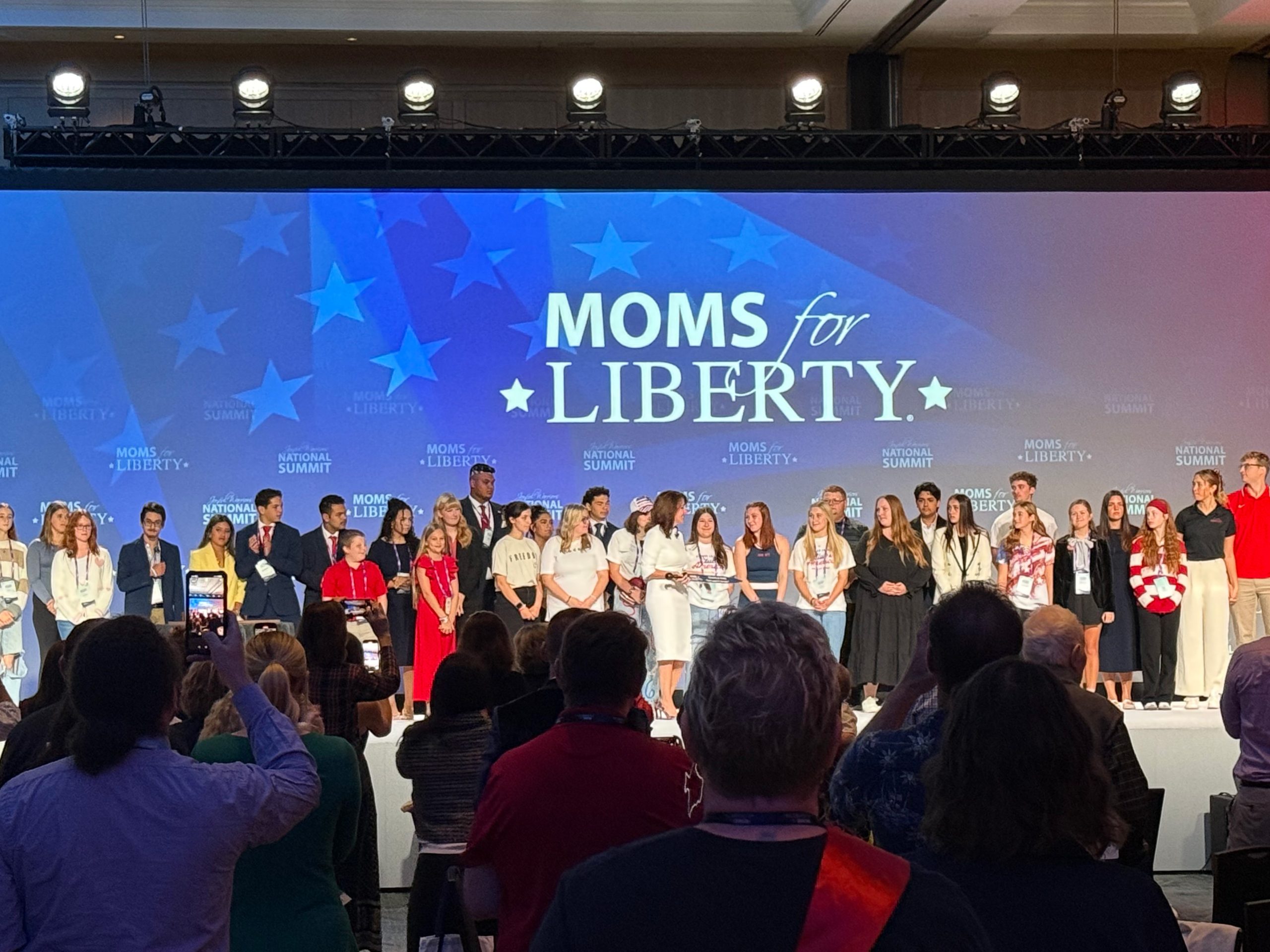
    The group’s national summit this past weekend at a convention center outside Orlando leaned into family (read: parental rights), faith — and youth. The latter appeared to be a bid to join the cool kids who are the new face of conservatism in America (hint: young, Christian, very male), as well as a recognition of the group’s “diversity,” which includes grandparents, men and kids. 

    But even as the youth — including 20- and 30-something podcasters and social media influencers, as well as student members of the late Charlie Kirk’s Turning Point USA — brought a high-energy vibe, stalwart members got a new assignment. Where past Moms for Liberty attendees were urged to run for school board, this year they were encouraged to turn their grievances into legal challenges. 

    Moms for Liberty CEO and co-founder Tina Descovich acknowledged that while many of them had experienced backlashes as a result of running for school board or publicly challenging books, curricula and policies, they needed to continue the fight. (The more pugnacious co-founder, Tiffany Justice, is now at Heritage Action, an arm of right-wing think tank The Heritage Foundation.) 

    “You have lost family, you have lost friends, you have lost neighbors, you’ve lost jobs, you’ve lost whole careers,” she said. Yet she insisted that it was vital that they “shake off the shackles of fear and stand for truth or we are going to lose Western civilization as a whole.”

    Related: Become a lifelong learner. Subscribe to our free weekly newsletter featuring the most important stories in education. 

    The gathering held up “the free state of Florida” as an example of Republican policies to be emulated, including around school choice and parental rights. The state’s attorney general, James Uthmeier, boasted of having created a state Office of Parental Rights last spring, describing it as “a law firm for parents.” 

    He trumpeted the state’s lawsuit against Target over the “market risks” of LGBTQ+ pride-themed merchandise and encouraged parents to reach out with potential legal actions. “If you’re identifying one of these wrongs that’s violating your rights and then subjecting our kids to danger and evil, then we want to know about it,” he said. “And we’re going to bring the heat in court to shut it down.”

    Tina Descovich, CEO and co-founder of Moms for Liberty, was interviewed on Real America’s Voice, a conservative news and entertainment network that set up a remote studio outside of the Sun Ballroom at the Moms for Liberty national summit. Credit: Laura Pappano for The Hechinger Report

    The shifting legal landscape, not just in Florida but nationally, had speakers gushing about the opportunity to file new challenges, particularly in the wake of the Supreme Court decision in Mahmoud v. Taylor in June. It gives parents broad power to object to school materials, including with LGBTQ+ themes, and the right to remove their children from public school on days when such materials are discussed. 

    “This is where we need to take that big Supreme Court victory and start fleshing it out,” said Matt Sharp, senior counsel at Alliance Defending Freedom, a Christian law firm. He added that they were “needing warriors, joyful warriors, to file cases to start putting meat on the bones of what that does.” 

    The directive to file suit was not just around opt-out policies, which were the basis for the Mahmoud case. (Moms for Liberty has opt-out forms and instructions on its website.) Rather, attendees were also urged to file lawsuits in support of school prayer; against school policies that let students use different names and pronouns without parental consent (what Moms for Liberty terms “secret transitions”); and to give parents access to surveys students take at school, including around mental health.

    “We need people willing to stand up legally and be, you know, named plaintiffs,” Kimberly S. Hermann, president of the Southeastern Legal Foundation, a conservative policy group, said on a panel featuring two moms who sued their school districts. Winning a lawsuit or even just bringing one in one state, said Hermann, can get other school districts and states to adopt policies, presumably to avoid lawsuits themselves. 

    “One offensive litigation can have this amazing ripple effect,” she said. She and others made clear that there is staff to provide support. The legal groups will “stand with you,” said Sharp, “whether you’re passing the law or passing the local policy all the way to litigating these cases.”

    Even as speakers criticized public schools particularly around LGBTQ+ issues, not as a form of inclusion but as foisting views into classrooms, they relished the chance to infuse their values into schools. 

    Filing these lawsuits is more than “just fighting for your role as parents,” Sharp told parents in a breakout session. “You’re ultimately fighting for your kids’ ability to be in their schools and make a difference, to be the salt and light in those classrooms with their friends and to take our message of freedom, of faith, of justice and to really spread it all across the schools.”

    Related: America’s schools and colleges are operating under two totally different sets of rules for sex discrimination 

    Overall, this year’s Moms for Liberty event lacked the obvious drama of recent years. The flood of protesters in 2023 in Philadelphia required a large police presence and barricades around the hotel, along with warnings not to wear Moms for Liberty lanyards on the streets. 

    This year, there were no protests. That was partly because the event was held in a secluded resort convention center that could accommodate 800 (larger than the 500-ish of past hotels). But the group failed to fill the venue or attract much media attention. There was on-location broadcast by Real America’s Voice, a conservative news and entertainment network, from a set outside the Sun Ballroom. (Steve Bannon interviewed Descovich on his show, “The War Room.”)

    It also didn’t draw opposition because protesters had a bigger target. Saturday saw “No Kings” rallies across the country, with thousands decrying what they see as President Donald Trump’s authoritarianism. “I forgot it was happening since they’re mostly ignored these days,” state Sen. Carlos Guillermo Smith, (D-Orlando) and a senior advisor to LGBTQ+ rights group Equality Florida, said in a text message about the Moms for Liberty event. Liz Mikitarian, founder of the national group, Stop Moms for Liberty, which is based in Florida, said the moms “are still a threat” but not worth organizing a protest against. 

    It was also a quieter affair than last year’s in Washington, D.C. There, Trump’s appearance fed a party atmosphere with Southern rock, sequined MAGA outfits and a cash bar. (This year, Trump appeared, but only in a prerecorded video message.)
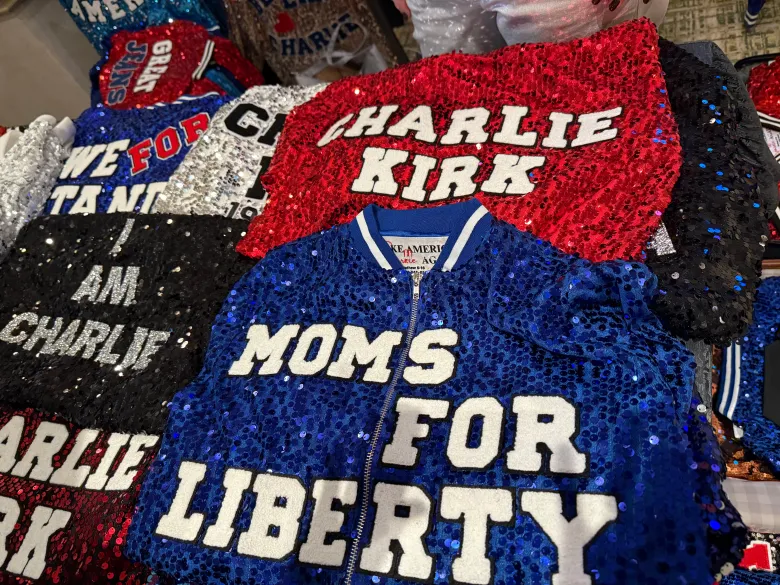
    Sequined merchandise for sale at the Moms for Liberty gathering by the company Make America Sparkle Again included tops and jackets that paid tribute to Charlie Kirk, the slain founder of Turning Point USA. Credit: Laura Pappano for The Hechinger Report

    The three-day event, of course, aired familiar grievances in familiarly florid language — conservative school choice activist Corey DeAngelis railed against teacher unions over the “far-left radical agenda that they’re trying to push down children’s throats in the classroom.” Other sessions covered the expected — the alleged dangers of LGBTQ+ policies, in sports, restrooms, school curricula and books — but there was also discussion of concerns (shared on left and right) over youth screen use, online predators and artificial intelligence.

    The event made room for MAHA, the Make America Healthy Again movement led by Robert F. Kennedy Jr., the secretary of Health and Human Services. Descovich interviewed Dr. Joseph Ladapo, the Florida surgeon general who is working to eliminate all vaccine mandates for the state’s schoolchildren.

    But the move by Moms for Liberty to attract young conservatives elevated the energy in the room. It was apparent not only in a tribute to Kirk, the slain founder of Turning Point USA, which trains young conservatives on high school and college campuses. About 40 Florida TPUSA members took the ballroom stage to accept the “Liberty Sword,” the group’s highest honor, posthumously awarded to Kirk. 

    Related: Red school boards in a blue state asked Trump for help — and got it

    It also showed up in a breakout session of mostly conservative social media influencers and podcasters who offered tips on using humor and handling online trolls: Lydia Shaffer (aka the Conservative Barbie 2.0), Alex Stein, Gates Garcia, Kaitlin Bennett, Angela Belcamino (known as “The Bold Lib,” who said she was surprised to have been invited), and Jayme Franklin, who in addition to her podcast is the Gen Z founder of The Conservateur, a conservative lifestyle brand that The New Yorker called “Vogue, But for Trumpers.”

    They have built huge followings based on their compulsion to provoke. “We need to go back to biblical values of what it means to be a real man and what it means to be a real woman,” urged Franklin. “People want that guidance, and that needs to begin at church. We need to push people back into the pews.”

    Their inclusion, like that of conservative commentator Benny Johnson, who moderated a panel, “Fathers: The Defenders of the Family,” appeared to recognize a need to expand the base — and be edgier. Johnson charged out on stage and trumpeted that “God’s first commandment to us was, ‘Go, be fruitful, multiply.’ Go make babies!!!!” He quipped that “right-wing moms, they’re happier, right?” and asked the crowd, “Any trad wife moms out there?”

    The phrase is shorthand for a woman who embraces a traditional domestic role, often with an emphasis on fashion and style. Johnson — who credited Kirk for prodding him to find Jesus, get married and become a father (he has four children) — argued that Republicans, especially those in Gen Z, should embrace the traditional nuclear family identity as a winning political move.

    “We are the party of parents. We are the party of children,” he said, adding that traditional values were already dominating culture and politics. “We live in a center-right country. And I’m tired of pretending that we don’t,” he said, and showed a map of red and blue votes in the 2024 presidential election. “This is the shift. You live in a red kingdom.”

    Contact editor Caroline Preston at 212-870-8965, via Signal at CarolineP.83 or on email at [email protected].  

    This story about Moms for Liberty was produced by The Hechinger Report, a nonprofit, independent news organization focused on inequality and innovation in education. Sign up for the Hechinger newsletter.
    The Hechinger Report provides in-depth, fact-based, unbiased reporting on education that is free to all readers. But that doesn’t mean it’s free to produce. Our work keeps educators and the public informed about pressing issues at schools and on campuses throughout the country. We tell the whole story, even when the details are inconvenient. Help us keep doing that.

    Join us today.

    Source link

  • Small District to Pay $7.5 Million to Settle Lawsuit Over Sexual Abuse Decades Ago – The 74

    Small District to Pay $7.5 Million to Settle Lawsuit Over Sexual Abuse Decades Ago – The 74


    Get stories like this delivered straight to your inbox. Sign up for The 74 Newsletter

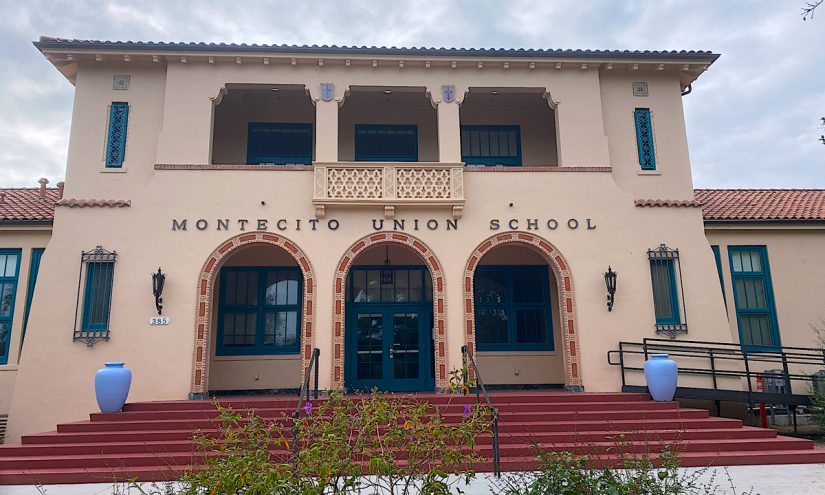
    On the eve of what was expected to be a long and gut-wrenching trial, a small school district in Santa Barbara County has settled a sexual abuse lawsuit for $7.5 million with two brothers, now 65 and 68 years old, who claimed a long-dead principal molested them in the 1970s.  

    The brothers had sought $35 million for the harm they said they suffered, an attorney for the youngest brother said.

    The settlement equals about 40% of the 350-student district’s 2025-26 budget, although the district did not disclose the terms and timetable for the payment. The district’s superintendent acknowledged in a statement that there would be an impact on the budget. 

    Board members of the Montecito Union School District announced the settlement over the weekend. The trial was scheduled to start Monday.

    The case was brought under a 2019 state law, Assembly Bill 218, that removed a statute of limitations for filing claims that employees of public agencies, including school districts and city and county governments, sexually abused children placed in their care.

    Estimates suggest settlements and jury awards could cost California school districts as much as $3 billion by one projection, and possibly a lot more. Los Angeles County alone has agreed to pay $4 billion to settle abuse claims with more pending, mostly involving plaintiffs who were once in foster care.

    With many larger lawsuits with multiple victims yet to be settled or go to trial, the financial impacts are hard to predict. Small districts are worried that multimillion-dollar verdicts could devastate budgets, if not lead to insolvency. Insurance costs, meanwhile, have soared by more than 200% in five years, according to a survey of districts.

    In the Montecito case, the brothers were seeking $35 million in damages combined, John Richards, a lawyer representing one of them, said outside of court Monday.

    Montecito is not alone in facing decades-old accusations. The San Francisco Unified School District is embroiled in an ongoing suit involving a teacher who allegedly molested a student in the mid-1960s, records show.

    School boards association helps with legal fees

    The Montecito case drew the attention of the California School Boards Association, which gave the district a $50,000 grant to help with legal costs, said spokesman Troy Flint.

    Flint said Montecito Union Superintendent Anthony Ranii has “been a staunch advocate for AB 218 reform because he understands how this well-intentioned law carries such significant unintended consequences that compromise the educational experience of current and future students.”

    Montecito Union “is just one example of what potentially awaits school districts and county offices of education statewide,” Flint added.

    The settlement came just weeks after state Assembly members let a measure that would have restored a statute of limitations to such cases, Senate Bill 577, go without a vote in the final days of the legislative session. Its sponsor, Sen. John Laird, D-Santa Cruz, said he would bring it back next year.

    At a brief hearing Monday, Santa Barbara County Superior Court Judge Thomas P. Anderle called the Montecito matter “a case of real consequence.” He had scheduled 17 days for trial, court records show. The district’s lawyers did not attend the hearing.

    The brothers’ lawsuit was filed in 2022 and alleged that Montecito Union’s former superintendent and principal, Stanford Kerr, molested them in the early 1970s, including raping one of them. Kerr died in 2013 at 89. He never faced criminal charges.

    A third plaintiff who also claimed Kerr abused him settled earlier with the district for $1 million. He had described a full range of abuse covering many types of conduct, which included rape, court filings state.

    Just recompense for years of suffering

    The brothers, identified in court documents as John Doe 1 and John Doe 2, pushed forward, Richards said, hoping to be compensated for years of agony. The younger of the two, Richards said, has suffered a lifetime of substance abuse, which is blamed on Kerr’s assaults. 

    “The money is nice,” Richards said, but the younger brother also seeks “social acknowledgment that what happened to (him) was terrible. He has a long way to go,” in recovering.

    The district admitted no liability in making the settlement.

    Montecito Union has no insurance coverage going back to the period the brothers said the abuse occurred — 1972 to 1978, Ranii said in a statement.

    “We were prepared to mount a vigorous defense,” he said. But the possibility of a jury awarding far more than the district could afford pushed the idea of a settlement after years of pretrial maneuvering.

    The superintendent’s statement did not directly address the brothers’ claims. It also did not mention Kerr.

    “We are deeply mindful of the enduring pain caused by sexual abuse and feel for any person who has experienced such abuse,” Ranii said in the statement.

    A large award in the event of a trial would have “diminished our ability to serve students now and well into the future,” Ranii said. “Continued litigation created exceptional financial vulnerability. Settling now allows us to stabilize operations and remain focused on today’s students.”

    Montecito is an unincorporated oceanfront community just south of Santa Barbara in the shadows of the Santa Ynez Mountains. Its residents include Oprah Winfrey and Prince Harry and Meghan Markle. The district is one of the state’s richest, with more than $40,000 per student in funding due to tax receipts from high-value properties. 

    The district will manage the costs through a hiring freeze, staff reductions “when natural attrition occurs,” and redirecting “funds previously designated for capital repair,” Ranii said. The settlement allows the district to avoid layoffs, he said.

    The brothers’ case was built around the testimony they would have given about Kerr’s abuses, Richards said. There was no physical evidence. At one point, a district employee went to the brothers’ home and forced their parents to sign a document requiring them to make sure the boys came right home after school and avoided Kerr, according to court filings.

    Richards said the district did not produce such a document in discovery. It had no records that the boys ever attended the school, he said, although their photos appear in yearbooks. The district also had no records that Kerr ever faced accusations of abuse or sexual misconduct.

    Two school board members from Kerr’s time as superintendent said in depositions taken for the brothers’ suit that they would have taken action had they known he was abusing students, Richards said. But with the case settled, the elderly former members won’t be called to testify.

    All that remains is a final hearing that the judge scheduled for Nov. 19 to make sure the payment has been received “and that the check’s been cashed,” he said.

    Editor-at-Large John Festerwald contributed to this story.

    This story was originally published by EdSource. Sign up for their daily newsletter.


    Get stories like these delivered straight to your inbox. Sign up for The 74 Newsletter

    Source link

  • Tracking Key Lawsuits Against the Trump Administration

    Tracking Key Lawsuits Against the Trump Administration


    By

    Jessica Blake


    President Donald Trump’s efforts to reshape higher education and the federal government have spurred a flurry of lawsuits as higher education associations, students, legal advocacy organizations and colleges push back and seek relief through the courts.

    The lawsuits started almost immediately after Trump’s first day, and seven months later, advocates continue to file new complaints, challenging various executive orders, guidance documents or decisions to cut grants. Inside Higher Ed is tracking some of the key legal challenges related to higher ed. That includes Harvard University’s efforts to restore more than $2.7 billion in frozen research funding and protect its ability to enroll international students as well as several lawsuits aiming to stop the dismantling of the Education Department. Of the 42 included in our searchable database, judges have ruled against the administration in two-thirds of the cases so far. You can find more analysis of the lawsuits filed so far here.

    We’ll refresh the database weekly, so check back on Mondays for updates.

    What’s new as of Sept. 8: In one of the more significant rulings for higher ed this year, the district court judge ruled that it was illegal for the administration to freeze more than $2 billion in federal research funding for Harvard University. The judge wrote that doing so violated the institution’s First Amendment and procedural rights. The government is planning to appeal but hasn’t done so yet. Legal experts expect the fight over funding to end at the Supreme Court. For more on details of the ruling and what it means for higher education at large, check out Inside Higher Ed’s reporting on the matter here and here.

    Source link

  • States, districts seek to end federal funding freeze lawsuits

    States, districts seek to end federal funding freeze lawsuits

    This audio is auto-generated. Please let us know if you have feedback.

    Dive Brief:

    • Twenty four states and the District of Columbia are seeking to throw out a lawsuit challenging this summer’s delay of K-12 federal grant funding. A joint motion to dismiss was filed Monday by the coalition of states, led by California, and the Trump administration, with both parties agreeing that the balance of the remaining funds be released no later than Oct. 3. 
    • The expected July 1 release of more than $6 billion in funding was delayed for several weeks due to a “programmatic review” by the White House’s Office of Management and Budget. OMB said an initial review found that “many of these grant programs have been grossly misused to subsidize a radical leftwing agenda.”
    • The funding delays impacted after-school programs, English learner services, academic supports, migrant student assistance, adult education and professional development. The inaction caused significant financial disruptions just as schools were finalizing staffing and programming for the upcoming school year, according to educators, families, lawmakers and education-related organizations. 

    Dive Insight:

    The states’ lawsuit, State of California, et al. v. Linda McMahon, et al., was filed July 14 and said the “abrupt freeze is wreaking similar havoc on key teacher training programs as well as programs that make school more accessible to children with special learning needs, such as English language learners.”

    President Donald Trump, U.S. Education Secretary Linda McMahon and OMB Director Russell Vought are named as defendants in the lawsuit, as are OMB and the U.S. Department of Education.

    In a statement Monday, California Attorney General Rob Bonta said the assurance by the federal government that it will release the remaining funds resolved the states’ lawsuit. 

    “The Trump Administration upended school programs across the country when it recklessly withheld vital education funding just weeks before the school year was set to begin,” Bonta said. “Our kids deserve so much better than what this anti-education Administration has to offer, and we will continue to fight to protect them from this President’s relentless attacks.”

    The Trump administration has said it wants to close the Education Department and give states more decision-making authority over federal K-12 spending.

    The states’ lawsuit said ​​that the funding freeze had violated federal funding statutes and regulations. In addition to the states’ lawsuit, a coalition of 14 school districts, parents, teachers unions and nonprofit organizations also sued the Education Department and OMB for withholding the K-12 federal funds. Both parties in that lawsuit — Anchorage School District, et al. v. U.S. Department of Education, et al. — also filed a joint motion to dismiss that lawsuit on Monday.

    That motion said the second tranche of federal funding due to states should be available on or about Oct. 1.

    Source link

  • Students for Fair Admissions drops lawsuits against West Point, Air Force Academy

    Students for Fair Admissions drops lawsuits against West Point, Air Force Academy

    This audio is auto-generated. Please let us know if you have feedback.

    Dive Brief:

    • Students for Fair Admissions has dropped its lawsuits against the U.S. Military Academy at West Point and the U.S. Air Force Academy over race-conscious admissions — practices that are no longer in effect at either institution under the Trump administration.
    • Both academies axed admissions goals based on race, ethnicity and gender shortly after President Donald Trump’s defense secretary, Pete Hegseth, took office. 
    • SFFA had filed the lawsuits after the U.S. Supreme Court in 2023 sided with the anti-affirmative action group in its landmark ruling banning race-conscious admissions at colleges but allowed the practice to continue at military academies.

    Dive Insight:

    In a footnote to Chief Justice John Roberts’ majority opinion in Students for Fair Admissions v. Harvard — the case that ultimately ended decades of race-conscious admissions — the court said the decision did not address the practice at the nation’s military academies.

    While no military academy had been party to the case, the court effectively created a carve-out for race-conscious admissions at the institutions “in light of the potentially distinct interests that military academies may present.”

    In a friend-of-the-court brief to that case, the Biden administration wrote that “the Nation’s military strength and readiness depend on a pipeline of officers who are both highly qualified and racially diverse — and who have been educated in diverse environments that prepare them to lead increasingly diverse forces.”

    After the ruling came down, SFFA soon filed legal challenges against military academies and their race-conscious admissions policies. 

    In its 2023 complaint against West Point, SFFA alleged, “Instead of admitting future cadets based on objective metrics and leadership potential, West Point focuses on race.” 

    The lawsuit further argued: “West Point has no justification for using race-based admissions.” 

    SFFA’s cases against West Point and the Air Force Academy, along with another one against the U.S. Naval Academy, were in progress when Trump retook the presidency in January. 

    The group quickly found it had an ideological ally in the new administration, whose policies reflect SFFA’s goals.

    Hegseth banned race-based admissions at the nation’s military academies in January, days after being sworn in. In doing so, Trump’s defense secretary described diversity initiatives as “incompatible with the values of DoD,adding that “the DoD will strive to provide merit-based, color-blind, equal opportunities to Service members but will not guarantee or strive for equal outcomes.”

    Hegseth has gone much further than just rejecting race-conscious admissions at the academies. Under his leadership, the Pentagon ordered the military academies to purge hundreds of books from their libraries that deal with racism and gender issues, a move that has sparked outcry as well as lawsuits and at least one reversal.

    In June, the Justice Department and SFFA asked that the group’s lawsuit against the Naval Academy be declared moot, after that institution dropped race-conscious admissions under Hegseth’s directive. The case was under appeal at the time, after a federal judge upheld the institution’s policies in December. In July, an appeals court dismissed the case in response to the request from SFFA and the Justice Department.

    SFFA President Edward Blum said in a June statement, “We applaud this extraordinary accomplishment by the President and the Department of Defense which restores the colorblind legal covenant that binds together our military institutions.”

    Source link

  • Institute of Education Sciences cuts imperil high-quality research, lawsuits allege

    Institute of Education Sciences cuts imperil high-quality research, lawsuits allege

    This audio is auto-generated. Please let us know if you have feedback.

    Dive Brief:

    • “Dramatic, unreasoned, and unlawful actions” taken by the Trump administration to significantly downsize the U.S. Department of Education’s Institute of Education Sciences are making it impossible to carry out education research, according to a lawsuit filed Tuesday by the American Educational Research Association and the Society for Research on Educational Effectiveness.
    • The funding and staffing cuts made to IES will hamper the institute’s ability to conduct impartial, high-quality research and share those findings with educators, researchers and policymakers, according to the federal lawsuit, which was filed in Maryland district court.
    • With this legal challenge, the pushback against the Trump administration’s actions to reduce the size of the federal government continues to grow. Another lawsuit disputing IES shrinkage was filed by the Association for Education Finance and Policy and the Institute for Higher Education Policy on April 4 in federal court in Washington, D.C.

    Dive Insight:

    Both lawsuits say the the Trump administration’s actions are preventing IES from carrying out its statutory duties. They ask that U.S. Education Secretary Linda McMahon and the Education Department end their efforts to eliminate IES and restore its contracts, staff and other resources.

    The Education Department did not respond to request for comment on Wednesday. 

    The challenge by AERA and SREE, which are represented in the lawsuit by Democracy Forward, a national legal organization, calls the February cancellation of $881 million in education research grants and the March 11 termination of 90% of IES staff “arbitrary” and “capricious” and a violation of the Administrative Procedure Act. 

    Only about 20 staff remain at IES, and only three people are still employed at the National Center for Education Statistics, which is one of four centers within IES, according to the AERA-SREE lawsuit.

    NCES and its predecessor organizations have focused on data collection and analysis for more than 150 years. NCES’ demise will make it “impossible to track progress, assess learning, identify gaps affecting students, and set priorities for attention over time and across the country,” including for student proficiency trends from the National Assessment of Educational Progress, also known as the Nation’s Report Card, the complaint said.

    The AEFP-IHEP lawsuit adds that Congress has not repealed the Education Sciences Reform Act or eliminated statutory mandates that require IES to collect and analyze data, support research on specific topics, and provide access to research and data to the public. The organizations are represented in the lawsuit by Public Citizen Litigation Group, a nonprofit consumer advocacy organization.

    Michal Kurlaender, president of AEFP, said in an April 4 statement that many of its members have “faced serious challenges to their research and work” because of the IES funding and staffing cuts.

    “We want to do all that we can to protect essential data and research infrastructure,” Kurlaender said. “This is fundamental to our mission of promoting research and partnerships that can inform education policy and improve education outcomes.”

    Source link

  • Executive Watch: Trump’s weaponization of civil lawsuits — First Amendment News 462

    Executive Watch: Trump’s weaponization of civil lawsuits — First Amendment News 462

    This is the latest installment of Professor Timothy Zick’sExecutive Watch,” which debuted with First Amendment News 457. This post focuses on civil suits by government figures, mainly by the sitting president. It comes at a time when the legitimacy of the New York Times v. Sullivan case is being challenged, and while efforts to establish a national anti-SLAPP law are being thwarted.

    Several future posts are in the works, as well as a Resources Page, so stay tuned. – rklc

    Professor Timothy Zick

    Presidents and suppressive campaigns: Today’s unprecedented practices 

    Executive Watch is an effort to record and analyze the many First Amendment-related conflicts and concerns arising during the second administration of President Donald Trump. One of the challenges in assessing the administration’s approach to the press and critics is to identify and explain what is distinct or unique about it. After all, the policies and actions of every administration have raised First Amendment issues and concerns. John Adams had reporters jailed under the Sedition Act, Richard Nixon had his “enemies list,” President Obama’s Department of Justice was criticized for prosecuting reporters in national security cases, and President Biden’s administration was accused of pressuring social media platforms to censor disfavored speech.

    However, as I explained in my introductory post for Executive Watch, what is distinct about the current president and administration is the depth and breadth of the campaign they are waging against critics, both inside and outside government.

    Among other actions, the president and various government agencies have attacked the press and called for the firing of individual reporters; excluded media outlets from official events for failing to use preferred geographic language; retaliated against civil servants who investigated or prosecuted crimes Trump allegedly committed; punished private law firms for lawful advocacyused the FCC and other agencies to investigate and sanction media outlets for negative coverage; scrubbed government websites of truthful information about racial health disparities and gender discrimination; threatened to prosecute critics of Elon Musk’s efforts to downsize the federal government; arrested a green card holder for participating in campus protests; and suppressed disfavored speech about diversity, equity and inclusion in workplaces and on university campuses.

    That is just a partial list.

    Notably, these efforts have been undertaken not just by Trump, but also through actions by a host of federal agencies including the Department of Justice, the Department of Education, the Federal Communications Commission, and the Department of State.

    The current situation represents an unprecedented and coordinated effort to use courts, governmental agencies, and even private individuals to engage in retribution, intimidate media and non-media critics, impose official orthodoxies, and punish dissent.

    Civil lawsuits as engines of leverage and intimidation

    “I spent a couple of bucks on legal fees, and they spent a whole lot more. I did it to make his life miserable, which I’m happy about.” — Donald J. Trump

    One aspect of the broader current agenda involves the filing of civil defamation, consumer fraud, and other lawsuits against the press and others who publish disfavored information or opinions critical of Trump or his administration.

    Like any other citizen, a political candidate, president, or ex-president has the right to file lawsuits and seek redress for reputational or other harms. Indeed, prior to Trump, at least one ex-president did so. However, the extent to which Trump has relied, and continues to rely, on defamation and other civil lawsuits against media and non-media defendants is a unique aspect of a broader campaign against political critics. No other political candidate or president has wielded the civil lawsuit as a political sword quite as Trump has.

    When it comes to civil litigation, Trump is in a league of his own. By one account, Trump has been involved in more than 4,000 civil lawsuits over the years, ranging from business disputes to defamation and other actions. Even for someone like Trump, who has been involved in a variety of complex business ventures, that is a remarkable number of civil actions.

    One lesson Trump likely learned from his litigation experience is that lawsuits can be an effective form of leverage in business and other dealings. Indeed, even if a claim has no or little legal merit, it can be useful in terms of exhausting, intimidating, and silencing opponents.

    For a long time, many of Trump’s civil lawsuits were business-related. However, since he became a political candidate, Trump’s filing of defamation actions has significantly spiked. As a political candidate and officeholder, he has pursued several defamation lawsuits against media and non-media defendants.

    Trump has sued CNN, The Washington Post, and The New York Times, as well as local media outlets, for critical coverage of his campaign and first term as president. For example, he brought a $475 million defamation lawsuit against CNN over the network’s use of the term “the Big Lie” to describe his false claims that he won the 2020 election. That claim was dismissed. More recently, Trump brought a $20 billion civil action against “60 Minutes” and CBS for allegedly editing an interview with Kamala Harris in ways that obscured or improved her answers to questions.

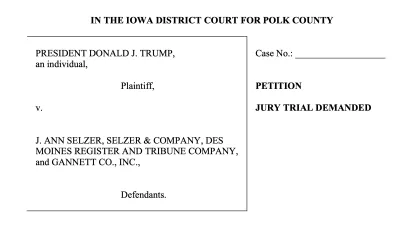
    Trump also sued ABC News and George Stephanopoulos for stating that he had been found liable for “rape” in a civil case. Finally, Trump sued The Des Moines Register and its parent company, Gannett, for publishing a flawed poll showing Trump trailing Harris in the 2024 presidential election in Iowa. He also filed suit against the pollster herself, J. Ann Selzer. All of this despite Trump ultimately winning Iowa handily, raising questions about what damages he allegedly suffered.

    Screenshot of the front page of the Trump v. Selzer lawsuit

    Trump has also filed civil lawsuits against non-media defendants. For example, he has sued the Pulitzer Board for recognizing The New York Times for its reporting on the Russia investigation. (That suit has been allowed to proceed, at least for now.) 

    Trump and his lawyers have also been expanding their civil suit repertoire. He sued CBS and the defendants in the Iowa case for consumer fraud and election interference. His lawsuit against CBS also contains a claim under the Lanham Act, which provides civil damages for false advertising. These suspect allegations target core press functions and political speech.

    Additionally, Trump has vowed to file many more civil lawsuits against those who publish unflattering opinions or disfavored information. He has claimed such legal action is necessary to “straighten out the press” and punish those he accuses of fraud and election interference.

    Poor litigation track record

    For all his litigation experience, Trump has a very poor track record in civil lawsuits, particularly those claiming defamation. In fact, he nearly always loses — sometimes very badly. Trump has even been ordered to pay media defendants substantial damages for filing harassing and frivolous defamation lawsuits. Some states have laws that impose liability on plaintiffs for bringing so-called SLAPPs (Strategic Lawsuit Against Public Participation) — essentially, defamation actions intended to silence or intimidate critics. Trump has been found liable for damages under such laws. 

    This is one context in which Trump may not mind being a loser or even paying damages. Weaponizing civil lawsuits and courts is not about restoring Trump’s damaged reputation, recovering damages, protecting consumers, ensuring the integrity of elections, or any other legitimate private or public interest. Rather, they are a means of punishing critics and chilling, through expensive and often frivolous litigation, the publication of unfavorable or unflattering information and opinion.

    Civil lawsuits as political weapons

    “Donald Trump is abusing the legal system to punish speech he dislikes. If you have to pay lawyers and spend time in court to defend your free speech, then you don’t have free speech.” — Adam Steinbaugh

    Like many other aspects of the Trump administration’s agenda, civil lawsuits serve important political purposes. They are part of the campaign to suppress dissent, undermine the press, and entrench executive power. 

    Decades of litigation have likely convinced Trump that the prospect of defending against frivolous and strategically harassing claims will either convince defendants to settle, trim their critical reporting, or both. In that sense, civil lawsuits are an effective means of intimidating, leveraging, and silencing opponents.

    The civil lawsuits communicate political narratives about the press as an institution, hoping to further weaken its public standing. Many of Trump’s civil complaints present hyperbolic and unsupported claims concerning Trump, the press, or both. They also highlight longstanding grievances against the media and other critics. Regardless of their outcome, Trump will be applauded by political supporters for waging war against the press, which Trump continues to describe as “the enemy of the American people.” 

    In a broader sense, civil lawsuits are part of a campaign to entrench executive power by undermining or eliminating institutions — including the press, agencies, lawyers, and universities — that can check the administration’s political and other narratives. Destroying the credibility of media and non-media fact-checkers and harassing them in civil suits, often through exorbitant demands for damages, serves these larger goals. 

    Regardless of their merit, Trump’s lawsuits force defendants to consider whether it is worth publishing truthful information or opinions that reflect poorly on him or his administration. The ordinary demands and pressures of civil litigation are even more pronounced when the plaintiff is the president of the United States. Judges may be reluctant to dismiss frivolous claims as a result of Trump’s status, and juries in some jurisdictions may be inclined to side with the president against his critics.

    Past as prelude: The Sullivan story and its current importance

    Using civil lawsuits as a cudgel against the media and other critics is an abusive practice that threatens to chill communication of opinions and facts. Although unprecedented for a presidential candidate or president, weaponizing defamation and other civil lawsuits to suppress criticism and chill reporting is not a new tactic. 

    During the Civil Rights Era, local southern officials relied on pro-plaintiff standards to censor and intimidate both media outlets and civil rights activists. Through frequent lawsuits, local and state officials sought to control the narrative about racial segregation. 

    Recognizing the chilling effect of this litigation tactic, in its 1964 decision New York Times Co. v. Sullivan the Supreme Court adopted a demanding standard of proof applicable to public officials who sued for allegedly defamatory statements about the conduct of their official duties. Under that precedent, public officials must show the statements were made with “actual malice,” i.e., that the defendant knew they were false when published or published them with reckless disregard for their truth. The Court later extended the actual malice standard to suits brought by public figures, including those like Trump who have gained extensive public notoriety.

    Sullivan was a direct response to early SLAPPs, which were filed to censor local and national reporting about the extent and effects of racial segregation. As the Court recognized, because no double jeopardy limit applied in the civil context, defamation lawsuits could be even more chilling to a free press than the threat of criminal prosecution. 

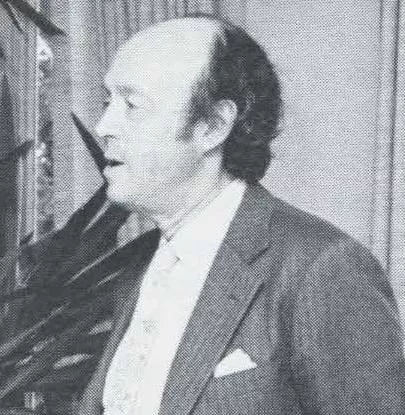
    New York Times columnist and lawyer Anthony Lewis

    Anthony Lewis

    Indeed, as Anthony Lewis observed in his book about the Sullivan case, by 1964, southern officials had brought $300 million in libel claims against the press for truthfully reporting on civil rights abuses. Sullivan’s protective standard — which the president favors eliminating — has been an effective shield for defendants sued by Trump. Without it, media and non-media defendants may face sizable damage awards for publishing even truthful criticism of Trump or the administration.

    To be sure, the press does not always act responsibly. Media outlets and reporters can be held liable for knowingly or recklessly publishing false statements about public officials or figures. At the same time, as anti-SLAPP legislation shows, expensive lawsuits and the threat of civil damages can undermine the ability of the press and others to share vitally important information with the public. Trump and his lawyers have upped the ante with consumer fraud and other claims, which must still be rebutted even if frivolous. 

    In the hands of political officials, including presidents, abusive civil lawsuits can significantly undermine efforts to check power and educate the public. 

    Troubling successes — and possible responses

    Trump has had some recent success in his civil lawsuits. For example, ABC News settled a defamation lawsuit, agreeing to donate $15 million to Trump’s presidential library and issue an apology for George Stephanopolous’s comments about the civil sexual assault verdict (which the trial judge held was “substantially true” in another Trump defamation lawsuit). CBS and “60 Minutes” are reportedly also considering a settlement, even though legal experts agree the lawsuit is based on a frivolous theory that a news network can be held liable for how it edits interviews. 

    Meanwhile, Trump has already extracted (if that is the right word) hefty settlements from Meta and X, for seemingly defensible decisions they made to de-platform or restrict Trump based on violations of their terms of service. A judge had dismissed Trump’s action against Twitter (now X), which was based on the First Amendment. 

    Of course, as law students in my classes know, the First Amendment constrains state action, not the private actions of social media platforms.


    WATCH VIDEO: Firing the Watchdogs | 60 Minutes Full Episodes

    There are many reasons a defendant might want to settle a civil lawsuit. One reason being to avoid a protracted and costly court proceeding, to avoid discovery, or to avoid the risk of a jury verdict. However, settlement of SLAPPs raise concerns about press obeisance and lack of independence. Rather than defend core First Amendment press prerogatives and functions, large media corporations with regulatory or other business before the Trump administration may be making balance sheet decisions. 

    As some commentators have suggested, social and media legacy companies may be settling meritless cases to grease the regulatory skids for pending mergers and other potential benefits from the Trump administration. Some have even suggested that some of these settlements may constitute a novel form of political corruption. Thus, one commentator referred to settling frivolous civil lawsuits brought by Trump as “a novel pathway to engage in political bribery.” (Of course, even if the practice fits that description, the administration can simply refuse to enforce political corruption laws against settling defendants.)

    There are several means of combatting the weaponization of civil lawsuits. The most direct and obvious is to defend against these lawsuits and offer a robust First Amendment defense. As history shows, weaponizing civil lawsuits has dangerous implications for the freedoms of the press and speech. Trump’s aggressive resort to defamation and other civil lawsuits also highlights the importance of retaining Sullivan’s press-protective standard. Defendants ought to put up substantial and sustained resistance to lawsuit weaponization.

    Anti-SLAPP statutes can also provide a deterrent. A federal anti-SLAPP law would make this important protection more widely available. Thus far, Trump has not been much deterred by anti-SLAPP liability. However, making such protections available regardless of jurisdiction would provide all defendants an opportunity to dismiss harassing defamation claims.

    There are also actions judges can take to punish and deter abusive civil lawsuits. Judges have the power to dismiss baseless or frivolous claims on their own, and to sanction lawyers who file them. Some commentators have urged judges to refuse to approve media settlements of frivolous claims brought by Trump, on the grounds that they are the product of duress or fraud, or are otherwise against public policy.

    Like agency employees, private employers, lawyers, universities, and others who have been subject to executive actions meant to punish or chill expression, media and non-media defendants currently face a critical choice: capitulate or fight. 

    For the sake of the First Amendment, let us hope the targets of strategic civil lawsuits defend them vigorously.


    2024-2025 SCOTUS term: Free expression and related cases

    Cases decided 

    • Villarreal v. Alaniz (Petition granted. Judgment vacated and case remanded for further consideration in light of Gonzalez v. Trevino, 602 U. S. ___ (2024) (per curiam))
    • Murphy v. Schmitt (“The petition for a writ of certiorari is granted. The judgment is vacated, and the case is remanded to the United States Court of Appeals for the Eighth Circuit for further consideration in light of Gonzalez v. Trevino, 602 U. S. ___ (2024) (per curiam).”)
    • TikTok Inc. and ByteDance Ltd v. Garland (The challenged provisions of the Protecting Americans from Foreign Adversary Controlled Applications Act do not violate petitioners’ First Amendment rights.)

    Review granted

    Pending petitions 

    Petitions denied

    Last scheduled FAN

    FAN 461: “Intimidating abridgments and political stunts

    This article is part of First Amendment News, an editorially independent publication edited by Ronald K. L. Collins and hosted by FIRE as part of our mission to educate the public about First Amendment issues. The opinions expressed are those of the article’s author(s) and may not reflect the opinions of FIRE or Mr. Collins.

    Source link