Florida is now the second state to drop its requirement that lawyers in the state hold a degree from a law school accredited by the American Bar Association, The Tallahassee Democrat reported Thursday.
The Florida Supreme Court, which sets law-licensure requirements, said the decision is designed to open the door for more law school accreditors.
“The rule changes create the opportunity for additional entities to carry out an accrediting and gatekeeping function on behalf of the Court,” the Jan. 15 opinion read. “The Court’s goal is to promote access to high-quality, affordable legal education in law schools that are committed to the free exchange of ideas and to the principle of nondiscrimination.”
Republicans, including Florida attorney general James Uthmeier, who called the ABA “a captured, far-left organization,” have targeted the ABA, which accredits the vast majority of law schools in the country, as part of a broader crusade against diversity, equity and inclusion efforts. Last year, the ABA suspended its DEI standards in response to conservative criticism.
On Thursday, Gov. Ron DeSantis praised the state Supreme Court’s decision as a “Good move” in a post on X. “The (highly partisan) ABA should not be a gatekeeper for legal education or the legal profession.”
For now, though, a new law school accreditor has yet to emerge. And experts say it’s unlikely most law schools will abandon their ABA accreditation any time soon, because it’s created reliable professional standards that make it easier for lawyers to practice in multiple states.
Justice Jorge Labarga, the only dissenting vote in the Florida opinion and the only justice who wasn’t appointed by DeSantis, cautioned that a new law school accreditor would have a tough time rivaling the ABA.
“[The ABA] has cultivated unmatched proficiency in dealing with Florida law-school-specific issues that would require decades for any successor to develop,” he wrote in his dissent. “Refinements can always be made. However, replacing an established entity with an unknown alternative is detrimental in the context of disputes.”
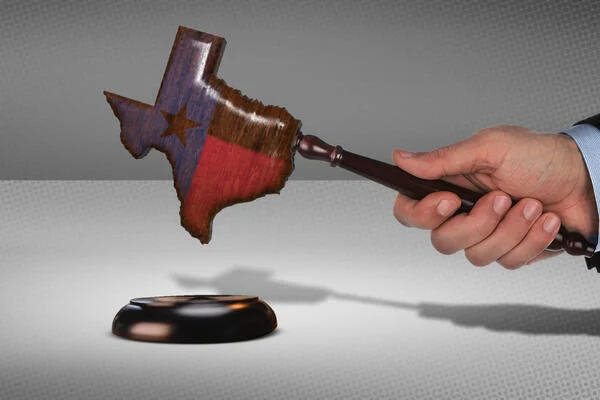
For the first time in 43 years, lawyers who want to practice in Texas will no longer be required to hold a degree from a law school accredited by the American Bar Association, the Texas Supreme Court decided last week.
While the ABA is “continuing to work with the Texas Supreme Court—and all other state supreme courts and bar admitting authorities—to help preserve the portability of law school degrees throughout the country,” the policy “reinforces the authority that the Supreme Court of Texas has always had over the licensure of JD graduates,” Jenn Rosato Perea, managing director of the ABA’s accrediting arm, wrote in an email to Inside Higher Ed.
Since 1983, Texas has ceded some of that authority to the ABA, whose Section of Legal Education and Admissions to the Bar accredits the majority of law schools in the United States. Most other states have similar ABA oversight in place; it became a popular move in the 1980s because law was becoming increasingly national business. Widespread adoption of ABA accreditation as a licensure standard offered more uniformity and has made it easier for lawyers to practice in multiple states.
The new Texas policy comes amid the broader crackdown on higher education accreditors by the Trump administration and its allies, and specifically on the ABA, which has become a target of the Republican-led anti-DEI crusade in recent years. Indeed, the ABA suspended its diversity, equity and inclusion standards last year. Now Texas has become the first state to say it will no longer rely on the accreditor to help to set law licensure standards.
“[The Court] intends to provide stability, certainty, and flexibility to currently approved law schools by guaranteeing ongoing approval to schools that satisfy a set of simple, objective, and ideologically neutral criteria (such as bar exam passage rate) using metrics no more onerous than those currently required by the ABA,” read a Jan. 6 order signed by all nine justices of the Texas Supreme Court. “[It] does not intend to impose additional accreditation, compliance, or administrative burdens on currently approved law schools.”
While the policy likely won’t change much in the short term, critics say it invites the creation of alternative law school accreditors, which could make it harder for lawyers to move their practice across state lines.
Republican-controlled Florida, Ohio and Tennessee are weighing similar measures.
“This could be the beginning of the end of the ABA as the accreditor of choice for law schools nationally,” Peter Lake, a law professor at Stetson College of Law’s Center for Excellence in Higher Education Law and Policy, told Inside Higher Ed. “It’s a little too early to call the game, but this is a significant step toward a goal the Trump administration and many states want to see happen.”
Part of that goal involves asserting more control over higher education accreditors.
In April, Trump issued an executive order directing the Department of Education to suspend or terminate the federal recognition of accreditors found “to engage in unlawful discrimination in accreditation-related activity under the guise of ‘diversity, equity, and inclusion’ initiatives.” It specifically called for an investigation of the ABA and the Liaison Committee on Medical Education, which accredits medical schools. In June, six states—Florida, Georgia, North Carolina, South Carolina, Tennessee and Texas—announced the launch of a new regional accreditor, the Commission for Public Higher Education; at the time, Florida governor Ron DeSantis described it as part of an effort to root out “woke ideology” in higher education and break up the “accreditation cartel.”
The federal government made adjacent arguments in supporting the Texas Supreme Court’s plan to minimize the ABA’s oversight of legal education, also announced last April. In December, the Federal Trade Commission submitted a public comment letter in support of the policy, accusing the ABA of having a “monopoly on the accreditation of American law schools” and of imposing “rigid and costly requirements” mandating “every law school follow an expensive, elitist model of legal education.”
Texas Open to ABA Alternative
While the Texas court stopped short of establishing a new law school accreditor, it acknowledged that it might in the future consider “returning to greater reliance on a multistate accrediting entity other than the ABA should a suitable entity become available,” according to the final version of the policy.
Lake said that could happen eventually, especially if other states decide to follow Texas and ditch the ABA’s oversight. “This is an open invitation to form a [new law school–accrediting] organization,” he said. “And I suspect that whatever group forms will probably be a little more aligned with the Trump administration’s goals and ideas.”
Educators and experts believe such a move will only impede the goals of legal education and practice.
“ABA accreditation provides a nationally recognized framework for quality assurance and transparency; portability of licensure through recognition of ABA accreditation by all 50 states, which is critical for graduates’ career flexibility; consumer protections and public accountability through disclosure standards; and a baseline of educational quality that correlates with higher bar passage rates and better employment outcomes,” the deans of eight of the state’s 10 ABA-accredited law schools wrote in a letter to the Texas Supreme Court in June.
The dean of South Texas College of Law Houston was among those that objected to minimizing the ABA’s oversight of law licenses in the state.
JHVEPhoto/iStock/Getty Images
A degree from an ABA-accredited law school is generally required to pursue a career as a lawyer, said Oren R. Griffin, a law professor at the University of Tulsa College of Law.
“ABA accreditation is a national stamp of approval,” he said. “Law schools may differ on what they prioritize, such as curriculum or clinics they offer, but the standards have identified some basic requirements that allow all law schools to operate at an efficient, effective level.”
And even if a state says it will license lawyers who didn’t graduate from an ABA-accredited law school, graduates from such institutions may still face limited opportunities.
“Law schools have been very well served by these standards,“ Griffin said. “If other states were to follow suit and begin to not require ABA accreditation as a national standard, you could end up with some real disparities or differences among the 50 states, which could increase the complexities for students who are graduating and want to be able to practice in multiple states.”
Regardless of the Texas Supreme Court’s new policy, law schools won’t likely abandon ABA accreditation anytime soon, said Austen L. Parrish, dean of the University of California, Irvine, School of Law and president of the Association of American Law Schools.
“For example, a school like the University of Texas—where about 40 percent of students come from out of state and some 30 percent of graduates are placed out of state—cannot afford to not be ABA accredited. And I suspect that’s true for all of the ABA-accredited schools,” he said, adding that any school that eventually gives up ABA accreditation would be charting “a very dangerous path.”
Students who are not held to the ABA’s national accreditation standards are less likely to receive a quality legal education, Parrish said—a result long demonstrated by the poor outcomes at California’s handful of non-ABA-accredited law schools, which have high attrition and low bar-passage rates, he added.
“The unraveling of the national accreditation system would be really harmful to students and law schools,” Parrish said. “We’re in a world where schools need to recruit from all over and students end up practicing all over. To have a school that doesn’t do that makes them less attractive to students and more likely to create some of the problems at some of the unaccredited schools in California.”
And even if Texas and other states do band together to form their own law school accreditor, rivaling the ABA’s influence would be a challenge.
First, “it’s very difficult to set up an accrediting body and takes quite a bit of money,” Parrish said. “They could set up a regional accreditor, but it’s not necessarily clear who will see that as sufficient for licensing eligibility, which means the schools in those states will still have to go with ABA accreditation … I’m skeptical that more progressive states are going to buy into something that’s blatantly political.”
For now, he interprets the Texas order as a placeholder.
“There probably won’t be many changes right now,” he said, “other than keeping the pressure on the ABA, because [Texas] has signaled a willingness to move to a different approach, though it’s not clear what that is right now.”
Join HEPI for a webinar on Thursday 11 December 2025 from 10am to 11am to discuss how universities can strengthen the student voice in governance to mark the launch of our upcoming report, Rethinking the Student Voice. Sign up now tohear our speakersexplore the key questions.
This blog was kindly authored by Utkarsh Leo, Lecturer in Law, University of Lancashire (@UtkarshLeo)
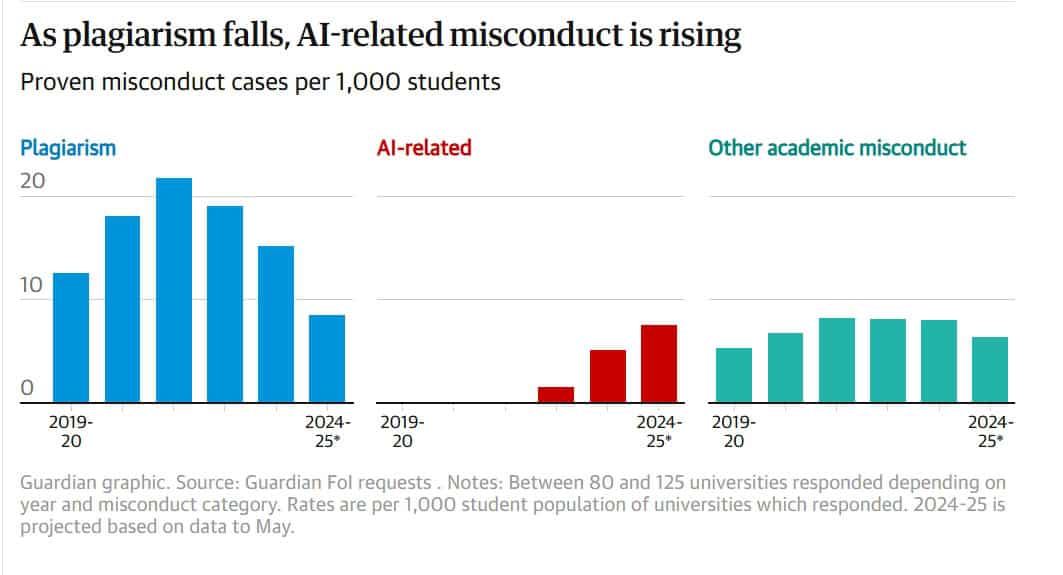
UK law students are increasingly relying on AI for learning and completing assessments. Is this reliance enhancing legal competence or eroding it? If it is the latter, what can be done to ensure graduates remain competent?
Studying law equips students with key transferable skills – such as evidence-based research, problem solving, critical thinking and effective communication. Traditionally, students cultivate doctrinal (and procedural) knowledge by attending lectures, workshops and going through assigned academic readings. Thereafter, they learn how to apply legal principles to varying facts through assessments and extracurriculars like moot courts and client advocacy. In this process, they learn how to construct persuasive arguments and articulate ideas, both orally and in writing. However, with widely available and accessible Gen AI, students are taking shortcuts in this learning process.
The HEPI/Kortext Student Generative AI Survey 2025 looked into AI use by students from a range of subjects. It paints a grim picture: 58% of students are using AI to explain concepts and 48% are using it to summarise articles. More importantly, 88% are using it for assessment related purposes – a 66% increase compared to 2024.
Students are relying on shortcuts largely due to rising economic inequality. Survey data published by the National Union of Students shows 62% of full-time students work part-time to survive. This translates into reduced studying time, limited participation in class discussions and extracurriculars. Understandably, such students may find academic readings (which are often complex and voluminous) as a chore, further reducing motivation and engagement. In this context, AI offers a quick fix!
Quick fixes, as shown above, promote overreliance: resulting in cognitive replacement. Most LLB first-year programmes aim to cultivate critical legal thinking: from the ability to apply the law and solve problems in a legal context to interpreting legislative intent to reading/finding case law and developing the skills to spot issues, weigh precedents and constructing legal arguments. Research from neuroscience shows that such essential skills are acquired through repeated effort and practice. Permitting AI usage for learning purposes at this formative stage (when students learn basic law modules) inhibits their ability to think through legal problems independently – especially in the background of the student cost-of-living crisis.
More importantly, only 9 out of more than 100 universities require law degree applicants to sit the national admission test for law (LNAT) – which assesses reasoning and analytical abilities. This variability means we cannot assume that all non-LNAT takers possess the cognitive tools necessary for legal thinking. This uncertainty reinforces the need to disallow AI use in first-year law programmes to ensure students either gain or hone the necessary skills to do well in law school.
Technical discussion
Furthermore, from a technical perspective, the shortcomings of AI summaries are well known. AI models often merge various viewpoints to create a seemingly coherent answer. Therefore, a student relying on AI to generate case summaries enhances the likelihood of detaching them from judicial reasoning (for example, the various structural/substantive principles of interpretation employed by judges). It risks producing ill-equipped lawyers who may erode the integrity of legal processes (a similar argument applies to statutes).
Alongside this, AI systems are unreliable: from generating fake case-law citations to suggesting ‘users to add glue to make cheese stick to pizza.’ Large language models (LLMs) use statistical calculation to predict the next word in a sequence – therefore, they end up hallucinating. Despite retrieval-augmented generation – a technique for enhancing accuracy by enabling LLMs to check web sources – the output generated can be incorrect if there is conflicting information. Furthermore, without thoughtful use, there is an additional concern that AI sycophancy will further validate existing biases. Hence, despite the AI frenzy, first year students will be better off if they prioritise learning through traditional primary and secondary sources.
How to ensure this?
Certainly, we cannot prohibit student’s from using AI in a private setting; but we can mitigate the problem of overreliance by designing authentic assessments evaluated exclusively through in-person exams/presentations. This is more likely to encourage deeper engagement with the module. Now more than ever, this is critical. Despite rising concerns of AI misuse and the inaccuracy of AI text detection primarily due to text perplexity (high false positives; especially for students for whom English is not their first language), core law modules (like contract law and criminal law) continue to be assessed through coursework (for either 50% or more of the total module mark).
However, sole reliance on in-person exams will not suffice! To promote deeper module engagement (and decent course pass rates), the volume of assessments will need to be reduced. As students are likely to continue working to support themselves, universities could benefit from the support and cooperation of professional bodies and the Office for Students. In fact, in 2023, the Quality Assurance Agency highlighted that universities must explore innovative ways of reducing the volume of assessments, by ‘developing a range of authentic assessments in which students are asked to use and apply their knowledge and competencies in real-life’.
To promote experiential learning, one potential solution could be to offer assessment exemption based on moot-court participation. Variables such as moot profile (whether national/international), quality of memorial submitted, ex-post brief presentation on core arguments, and student preparation could be factored to offer grades. Admittedly, not all students will pursue this option; however, those who choose to participate will be incentivised.
Similarly, summer internships or law clinic experiences can be evaluated through patchwork assessment where students can complete formative patches of work on client interviews, case summaries and letters before action, followed by a reflective stitching piece highlighting real world learning and growth.
Delayed use of gen AI – year II and onwards
It is crucial to emphasise that despite the critique of Gen AI, its vast potential to enhance productivity cannot be overlooked. Nevertheless, what merits attention is that such productivity is contingent on thoughtful engagement and basic domain specific knowledge – which is less likely to be found in first year law students.
Thus, a better approach is to delay approved use of AI until the second year of law. To ensure graduates are job ready, modules such as Alternative Dispute Resolution and Professional Skills could go beyond prompting techniques to include meaningful engagement with technology: through domain specific AI tools, contract review platforms and data-driven legal analytics ‘to support legal strategy, case assessment, and outcomes’.
Communication skills remain key
Above all, despite advances in tech, law will remain a people-centred profession requiring effective communication skills. Therefore, in the current climate, law school education should emphasise oral communication skills. Prima facie, this approach may seem disadvantageous to students with special needs, but it can still work with targeted adjustments.
In sum, universities have a moral responsibility to churn out competent law graduates. Therefore, they must realistically review the abilities of AI to ensure the credibility of degrees and avoid mass-producing surface-level lawyers.
Acknowledgement: I am grateful to Rachel Nir, Director of EDI at the School of Law and Policing, University of Lancashire, for her insightful comments and for kindly granting the time allowance that made this research possible.
In the long decline of American higher education, a certain class of professionals has quietly prospered—lawyers who specialize in defending institutions from the consequences of their own behavior. These attorneys rarely appear in public debates over student debt, predatory recruitment, or collapsing regional colleges. Yet their fingerprints are everywhere: in courtroom strategies designed to run out the clock, in motions that narrow the rights of borrowers, in settlement agreements that mask wrongdoing without forcing structural reform. They are the legal custodians of an industry that has spent decades avoiding accountability.
These lawyers often frame their role as neutral, simply providing representation to clients who need it. But the nature of the representation matters. When institutions mislead students, inflate job-placement claims, push them into unaffordable debt, or fire whistleblowers who object to unethical practices, these firms defend the institution—not the student, not the truth, and certainly not the public interest. Litigation summaries and public communications frequently present a parallel universe in which colleges are the victims, regulators are overreaching meddlers, and students who seek restitution are opportunists or pawns of political forces.
The legal work is highly lucrative. In many cases, struggling institutions spend more on their attorneys than they do on direct student support. Colleges on the brink of closure still find six-figure retainers to fight state attorney general investigations or borrower defense claims. Public institutions use taxpayer dollars to shield themselves from transparency, all while students—particularly first-generation, low-income, and working-class students—absorb the losses. Attorneys in this sector are acutely aware of the harms their clients may have caused, yet their work consistently prioritizes institutional preservation over student restitution.
The history of this defense strategy is well documented. In 2011, federal courts began seeing cases from former students challenging institutions for misleading claims, untransferable credits, and failure to provide promised training. Courts often compelled arbitration, effectively removing class action rights and leaving individual students to pursue costly and complex proceedings alone. This pattern set a precedent: institutional defense relied on procedural tools rather than addressing substantive misconduct. Between 2012 and 2013, state supreme courts upheld arbitration clauses that stripped students of collective redress, signaling to institutions that strategic legal defenses could block accountability. Students’ claims of misrepresentation, fraud, and breaches of enrollment agreements were repeatedly forced into private arbitration. The courts emphasized procedural enforcement over consideration of the underlying harms, allowing institutions to continue operating without public scrutiny.
From 2015 to 2018, the Department of Education’s Inspector General documented widespread mismanagement of federal Title IV funds, showing that hundreds of millions in federal loans were issued to students at institutions that were later found to have misrepresented outcomes or violated federal regulations. Lawsuits brought by former students during this period, including allegations under the False Claims Act, were often dismissed or compelled to arbitration. Institutions were shielded, while borrowers were left with debt and limited recourse.
In 2018 and 2019, state attorneys general filed enforcement actions against multiple institutions for fraudulent recruitment practices and misrepresentation of accreditation status. In almost every case, institutions relied on their legal teams to secure procedural victories: dismissal of class action claims, enforcement of arbitration clauses, and delays in settlements. While regulators attempted to intervene, the structural power of corporate legal defense delayed, diluted, or obscured accountability. During the COVID-19 pandemic in 2020–2021, students sued institutions for failure to provide adequate online instruction and for abrupt changes in course delivery. Defense attorneys successfully argued that enrollment agreements allowed these operational changes, resulting in widespread dismissal of student claims. Again, institutional defense won the day while students absorbed the financial and educational consequences.
From 2022 to 2025, the Borrower Defense to Repayment program and the SAVE Plan promised relief for students harmed by mismanaged institutions. Yet litigation and regulatory challenges have slowed implementation. Institutions and their attorneys have repeatedly used procedural maneuvers to contest forgiveness, compel arbitration, or delay repayments, leaving thousands of students in limbo while debt accumulates. Throughout this period, legal strategy has consistently prioritized institutional survival over student restitution. Arbitration clauses, procedural dismissals, and regulatory delay have allowed colleges and universities to maintain access to federal funds, complete mergers, or restructure under bankruptcy protection, all while leaving harmed students with debt, disrupted education, and minimal legal recourse.
These attorneys also help shape the narratives consumed by policymakers, journalists, and college trustees. Public-facing summaries often downplay institutional misconduct and amplify court decisions that limit student rights. They rarely acknowledge the emotional and financial devastation suffered by borrowers or the systemic risks created when institutions know their lawyers can absorb most of the blow. Instead, they champion a legal environment that treats higher education primarily as a business subject to claims risk, not as a public trust.
Justice, in this ecosystem, becomes a matter of resources. Students and former employees face a wall of corporate legal expertise, while institutions with long records of abuse continue to operate behind settlements and sealed agreements. Attorneys who could use their considerable skills to protect the most vulnerable instead use them to reinforce a system that extracts value from students and leaves them to fend for themselves once the promises fall apart.
The Higher Education Inquirer has long documented the College Meltdown: the closures, the debt, the failed oversight, and the human cost. But the meltdown is not only a story about administrators, investors, or federal agencies. It is also a story about the lawyers who defend the indefensible and who help maintain a higher education marketplace where accountability is optional and harm is routine. They may sleep well, but only because the consequences of their work are borne by others.
The question is not how they sleep at night. The question is how many more students will lose before the legal strategies that protect institutions are no longer enough to protect the industry itself.
Sources:
U.S. Department of Education, Borrower Defense to Repayment decision data, 2022–2025
Government Accountability Office (GAO), “For-Profit Colleges: Student Outcomes and Federal Oversight,” 2021
Department of Education Office of Federal Student Aid, Borrower Defense decisions, 2020–2025
State Attorneys General filings and enforcement actions against higher education institutions, 2018–2023
U.S. Department of Education Office of Inspector General, audits and reports on Title IV program compliance, 2015–2022
GAO report on arbitration clauses in for-profit colleges, 2018
Attorneys representing a group of New Jersey parents and activist groups are asking a state appellate court to weigh in on a case that could reshape the state’s public education system.
At the center of the fight is whether New Jersey schools are unconstitutionally segregated by race and socioeconomic status. A lower court judge in October 2023 acknowledged the state’s public schools are segregated by race and that the state must act, but also found that the plaintiffs had failed to prove the entire system is segregated across all its districts.
“It is imperative that no more students be deprived of these rights by the trial court’s avoidance of the straightforward conclusion compelled by the facts and the law in this case — that the state defendants, who are legally obligated to take action to desegregate public schools regardless of the reasons for that segregation, have acted unconstitutionally by failing to do so,” the attorneys wrote in the filing.
Gov. Phil Murphy and the state Department of Education have until April 28 to respond to the plaintiffs’ new filing. A spokesman for the Murphy administration declined to comment.
The case dates to 2018, when the Latino Action Network, the NAACP New Jersey State Conference, and several other families and groups sued the state alleging New Jersey failed to address de facto segregation in public schools. The plaintiffs cited data showing that nearly half of all Black and Latino students in New Jersey attend schools that are more than 90% non-white, in districts that are often just blocks from predominantly white districts.
In New Jersey, students typically attend schools in the municipality where they live. Plaintiffs argued that long-standing housing policies that led to segregated residential neighborhoods led to segregated schools also. New Jersey is the seventh-most segregated state for Black and Latino students, the plaintiffs say.
In October 2023, after Superior Court Judge Robert Lougy issued his ruling that acknowledged racial segregation in New Jersey schools but said it was not widespread, both sides entered mediation talks in hopes it would resolve more quickly than continued litigation.
Attorneys for the parties said in February that it’s unlikely continuing the talks would “be constructive.”
The plaintiffs’ attorneys say the lower court’s October ruling should be reversed. They want a judge to review what they say are six errors in the 2023 order, like the fact that Lougy did not identify a disputed fact.
“Rather than reach the only logical conclusion that followed — that the state defendants violated plaintiffs’ constitutional rights — the trial court left the question of liability for another day,” the filing reads.
If the appellate court denies the motion, the case would return to the trial court, or could be appealed to the state Supreme Court.
New Jersey Monitor is part of States Newsroom, a nonprofit news network supported by grants and a coalition of donors as a 501c(3) public charity. New Jersey Monitor maintains editorial independence. Contact Editor Terrence T. McDonald for questions: [email protected].