Tag: lay

  • University of Northern Colorado plans to lay off 50 employees

    University of Northern Colorado plans to lay off 50 employees

    This audio is auto-generated. Please let us know if you have feedback.

    Dive Brief:

    • The University of Northern Colorado plans to lay off about 50 staff members in early November and eliminate roughly 30 vacant roles, CFO Dale Pratt said during a town hall last week. 
    • The layoffs come as the university tries to close a projected $7 million budget shortfall for fiscal 2026 and shrink its scale to meet lower enrollment levels. The job eliminations are expected to save $8 million to $10 million annually, or up to 7.5% of its personnel expenses. 
    • Signaling that layoffs were on the horizon earlier this month, university President Andy Feinstein pointed to unexpected reductions in state funding, lower-than-anticipated revenue from enrollment, inflation and historically low employee turnover.

    Dive Insight:

     Many of the University of Northern Colorado’s financial woes stem from enrollment that is shrinking faster than expenses. Between 2018 and 2023, the public institution’s fall headcount fell by nearly a third, to 9,067 students.

    Following the pandemic, officials had expected a rebound in enrollment that has yet to materialize, Pratt said. Meanwhile Feinstein said the university is still optimistic that growth lies ahead given robust retention rates and other factors.

    Even so, its student body is likely to remain smaller in the years ahead compared to the past. In his presentation, Pratt cited a note from S&P Global Ratings analysts arguing that the university’s financial health depended on its ability to scale down to meet a smaller student body going forward. 

    He also pointed to metrics showing that the university has more employees per student than nearly all other colleges in the state, and that its net operating results per student have been negative since fiscal 2023.

    Going into the fiscal year, officials had a balanced budget drawn up for fiscal 2026, based in part on expected employee turnover and projected enrollment. Leaving jobs unfilled would have allowed University of Northern Colorado to save on costs without having to resort to layoffs, which leaders did consider when initially making the budget earlier this year, Pratt said. 

    But not as many employees left on their own as the university expected, with its turnover rate falling from 19.1% in June 2022 to 11.8% in June of this year, according to Pratt’s presentation. Just between 2024 and 2025, the turnover rate fell by 2 percentage points.

    Moreover, Colorado lawmakers reduced the university’s funding for the current fiscal year by $550,000 to plug an unanticipated hole in the state budget, Pratt said. 

    An even bigger financial blow came as the new school year began. In the fall semester, 391 fewer students enrolled than the institution budgeted for, with an actual headcount of 8,443. That metric includes 119 fewer degree-seeking undergraduate students than anticipated, which Pratt described as especially worrisome. 

    “There were changes here that occurred that really caught us off guard,” Pratt said. 

    Although officials are still analyzing what exactly happened, Pratt pointed to the Trump administration’s aggressive approach to immigration and visas, including for international students, and the recent state budget cuts. 

    That translated into a dip in international enrollment at larger universities in the state, including University of Colorado and Colorado State University. However, to compensate for the declines, those institutions may have recruited and enrolled students that otherwise would have gone to the University of Northern Colorado, Patt and Feinstein said. 

    All of those factors combined to strain the University of Northern Colorado’s budget and pressure leaders to make cuts. Officials were still clearing the layoffs with the university’s legal and human resources offices at the time of the townhall, Pratt noted. 

    He also said that faculty positions would only be eliminated through vacancies or nonrenewals of contracts. 

    In addition to its workforce, the university plans to rein in spending on travel, professional development and services and supplies. It is also reviewing student wages and graduate assistantships. 
    Source link

  • Southern Oregon University to cut 23 programs and lay off 18 employees

    Southern Oregon University to cut 23 programs and lay off 18 employees

    This audio is auto-generated. Please let us know if you have feedback.

    Dive Brief:

    • Southern Oregon University will eliminate 10 bachelor’s degrees, 12 minors and one graduate program in the face of long-term structural budget deficits after a vote by the institution’s board.
    • The public university will also lay off 18 employees and cut roughly three dozen other jobs through retirements, the elimination of vacant positions and other methods. SOU will shift 17 jobs off its payroll by funding them through alternative sources, such as the SOU Foundation, a nonprofit affiliated with the university.
    • The cuts are intended to stabilize SOU following years “marked by unprecedented fiscal crises,” according to the plan approved by trustees last week in a 7-2 vote.

    Dive Insight:

    SOU has faced a quartet of problems plaguing other higher education institutions — declining enrollment, flat state funding, rising costs and a shifting federal policy landscape.

    The university’s full-time equivalent enrollment fell almost 22% from 4,108 students in 2015 to 3,209 in 2024, according to state data. 

    “It is also highly likely that the federal government’s intent to dismantle support systems for low-income students also will have a devastating impact,” the plan noted.

    Earlier this year, the Trump administration sought to reduce funding to certain need-based student aid programs and eliminate others altogether, such as the Federal Supplemental Educational Opportunity Grant program. Since then, both chambers of Congress have rejected some of those overtures in their own budget proposals for fiscal year 2026, though House lawmakers likewise pitched eliminating FSEOG. 

    At the state level, Oregon’s fiscal 2025-27 budget raised funding for its public universities slightly. But SOU argued that the bump fails to cover increasing costs outside of its control, such as retirement and medical benefits.

    In June, SOU’s board of trustees directed the university to find $5 million in savings by the end of fiscal 2026.

    In response, University President Rick Bailey planned more significant cuts to set SOU up for longer-term stability. He declared financial exigency at the beginning of August, paving the way for a dramatic restructuring at the institution.

    The plan pitched to SOU’s board Friday will cut more than $10 million from the university’s annual educational and general budget over the next four years, bringing it down to approximately $60 million total.

    Academically, the proposal will sunset “low-enrolled or less regionally relevant programs” to focus on “what SOU does best for the majority of students,” it said.

    Following the reduction, the university will offer a total of 30 majors and 19 minors meant to lead students toward interdisciplinary programs “aligned with regional workforce demands.”

    “SOU is no longer a comprehensive university,” the plan said. “We cannot continue to provide all the programs and supports as we have in the past.”

    Bachelor’s degrees slated for elimination include international studies, chemistry, Spanish and multiple mathematics programs. It will also cut a graduate leadership degree focused on outdoor expeditions.

    Some programs originally considered for elimination — such as creative writing and economics — will go on with restructured curricula and face additional review in coming years. 

    The plan will also restructure SOU’s honors college and eliminate direct funding for its annual creativity conference.

    During Friday’s meeting, board member Debra Fee Jing Lee supported the cuts, arguing SOU‘s strength moving forward will be based on its ability “to be lean and agile and entrepreneurial.”​​

    Board member Elizabeth Shelby similarly voted for the proposal.

    “It’s incumbent upon us to plan as we must for the next several years, even if that requires additional cuts,” she said.

    But Hala Schepmann, a board member and chair of SOU’s chemistry and physics department, opposed the plan, calling it “the nuclear option.”

    “Do we need to make immediate cuts? Yes,” she said. “But taking away key foundational components of our institution will make it harder for us to make progress.”

    Schepmann also took issue with deciding on the plan amid “significant fluctuations” in the university’s projected budget.

    This summer, SOU lowered projections for its expected revenue by $1.9 million after an internal analysis found “a multi-decade issue” of double-counting some online education tuition revenue.

    The workforce reduction comes just two years after SOU eliminated nearly 82 full-time positions through a combination of layoffs, unfilled vacancies, voluntary reductions and retirements. 

    That wave of cuts left the remaining employees “feeling as though they were asked to do more with less,” according to the proposal. It argued that the new round of cuts will address this issue by paring down programs in tandem with shrinking the workforce.

    Source link

  • Temple University to lay off 50 employees

    Temple University to lay off 50 employees

    This audio is auto-generated. Please let us know if you have feedback.

    Dive Brief:

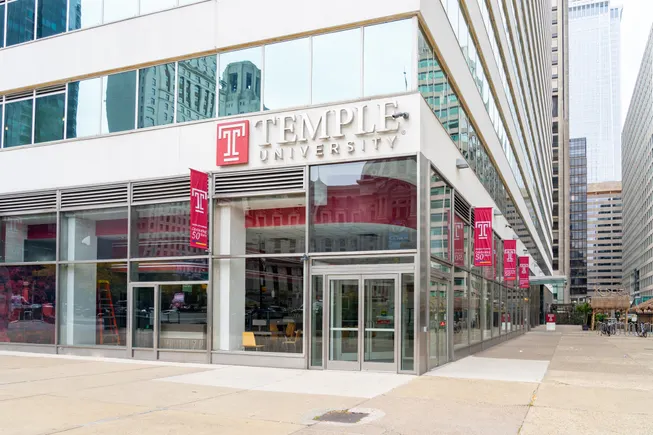
    • Temple University in Philadelphia plans to lay off about 50 staff members as it looks to cut a budget deficit previously forecasted at $60 million down to $27 million, according to a community message Friday from university President John Fry. 
    • The layoffs — amounting to nearly 1% of Temple’s workforce are part of a larger reduction of 190 positions across the university, the majority of which were eliminated via attrition, retirement or cutting vacant roles. None of the layoffs impact faculty members, a spokesperson said Monday.
    • Temple is also “closely monitoring” the potential impacts of changes to the federal student loan and Pell Grant programs set to start in the 2026-27 academic year following the implementation of Republicans’ massive new spending bill, Fry said.

    Dive Insight:

    Temple leaders signaled in June that job cuts were likely as officials tried to reduce the university’s structural budget. At the time, Fry pointed to a long-term dip in enrollment, specifically a decline of 10,000 students since 2017, with much of the loss coming during the pandemic. As of fall 2023, Temple had just over 30,200 students.

    However, the public university just logged its highest-ever number of first-year student deposits — 6,313 — indicating a second year of growth in Temple’s first-year class on top of a projected overall enrollment increase of roughly 200 students, according to Fry’s announcement. That would mark the first time the university’s student body has grown since 2017.  

    But for Temple, the historic enrollment decline has meant a drop of $200 million in tuition revenue, putting pressure on the university to reduce its expenses — the large majority of which are tied to employee compensation and benefits. And so to cut the university’s deficit, leaders have looked to its workforce.

    Of the coming layoffs, Fry said “considerable efforts were made to ensure that the reduction to our current workforce was as minimal as possible.”

    “It is my promise that care will be taken to ensure that any employee’s separation from the university will be handled as equitably and compassionately as possible,” he added.

    In his message, Fry described “significant financial challenges” facing Temple, stemming from both its structural deficit as well as “uncertainty at the federal level.”

    Fry highlighted the changes set for the federal student aid program without elaborating on their potential impact on Temple. Those changes include new limits on Pell Grant eligibility, caps on student and parent borrowing, and an elimination of Grad PLUS loans, which allow graduate students to take out loans up to their cost of attendance. 

    He also announced the roster of a 13-member university advisory group made up of faculty, students and staff to, as he put it, “help us navigate this complex and evolving environment.”

    Wide swaths of the higher education world are making workforce and spending cuts as the Trump administration takes a hatchet to the federal research funding system. Colleges are also bracing for further financial impacts from other federal policy changes in Republicans’ spending and tax bill, including an increased endowment tax and Medicaid cuts that will land hard on many university hospital systems.

    Source link

  • Ivy Tech in Indiana to lay off 200 employees (WSBT-TV)

    Ivy Tech in Indiana to lay off 200 employees (WSBT-TV)

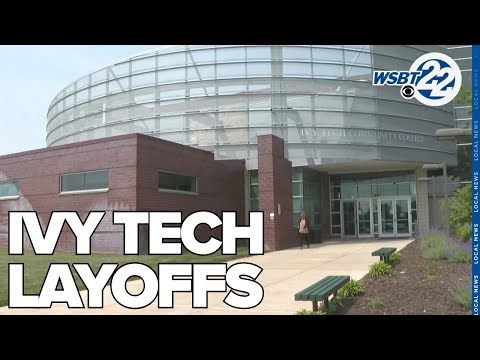
    More than 200 jobs at Ivy Tech are being eliminated due to a cut in state funding, and some of that loss is impacting people in South Bend. The student in this story discusses questions about the value of a community college education and finding gainful employment after graduation.   

    Source link

  • Johnson & Wales University to lay off 91 faculty and staff

    Johnson & Wales University to lay off 91 faculty and staff

    Dive Brief:

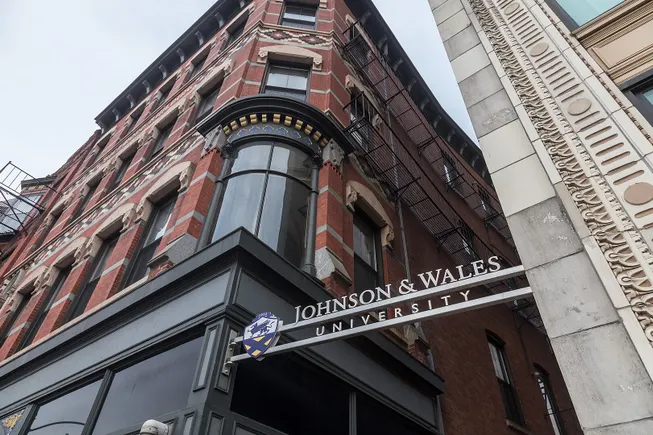
    • Johnson & Wales University plans to lay off 91 faculty and staff members — about 5% of its workforce — as it tries to rapidly evolve its operating model, officials said. The cuts will affect its two campuses in Providence, Rhode Island, and Charlotte, North Carolina.
    • The private nonprofit faces an operating deficit of $34 million after more than a decade of enrollment declines. “We simply cannot afford to be the size that we once were, and we believe this reduction will allow us to close a financial deficit and to move forward with a balanced budget,” Chancellor Mim Runey said Monday in a community message.
    • With its cash reserves almost depleted, the university is also delaying salary increases until later this year when officials can “evaluate what is possible,” Runey said.

    Dive Insight:

    To explain why Johnson & Wales is reducing its workforce, Runey pointed to a 54% decline in overall enrollment since fiscal 2012, with headcounts falling from a high of 17,294 to over 8,000 in recent years. 

    The chancellor attributed the shrinking student body to demographic declines, fewer international students and shifting public attitudes about higher education.

    Staffing and budgets, meanwhile, have fallen at a slower pace than enrollment, Runey said, framing the layoffs as rightsizing the university’s operations. 

    “While there is some indication that we are on the right track with enrollment, we do not believe we will return to levels of enrollment that supported a much larger organization and operating budget,” she said.

    The university has already downsized in the recent past. In 2021, Johnson & Wales shuttered its campuses in Florida and Coloradoboth of which opened to expand the university during times of growth in the higher education market

    Along with reducing expenses, the sale of those former campus buildings added to university’s endowment and reserves. Those reserves, however, have been drained to plug recent budget gaps.

    The university has also pared down the number of senior leaders by about half since 2012, Runey noted. Additionally, it has consolidated academic programs, closed others with low enrollment, reduced jobs through attrition and streamlined aspects of its operations.

    At the same time, Johnson & Wales has invested in a wide array of new programs to try to attract students. Over the past decade, some of those new offerings have “yielded great results while others less so, and some were reduced or discontinued,” Runey said. 

    She also pointed to more recently launched health and wellness programs. Those come with start-up costs such as specialized facilities, faculty and marketing efforts. 

    “These new program investments, while showing great early outcomes, have not yet had time to yield returns that would significantly improve the operational budget,” Runey said.

    That stands in contrast to more rapid enrollment growth other rounds of new programming brought the university in the past, when market conditions were better. 

    “Today we plan with the conservatism that the times demand,” the chancellor said.

    Source link

  • Johns Hopkins to lay off 2,200 workers as it reels from Trump’s USAID cuts

    Johns Hopkins to lay off 2,200 workers as it reels from Trump’s USAID cuts

    This audio is auto-generated. Please let us know if you have feedback.

    Dive Brief:

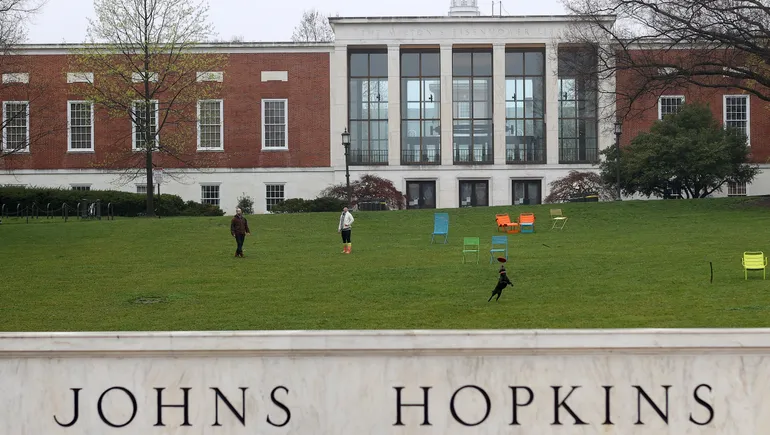
    • Johns Hopkins University is moving to cut over 2,200 jobs, the largest layoffs in its history, according to a university spokesperson.
    • The layoffs are tied directly to the Trump administration’s unilateral cuts to the U.S. Agency for International Development, which brought an $800 million funding hit to Johns Hopkins.
    • The job cuts include 1,975 international positions across 44 countries as well as 247 in the U.S, the spokesperson said. Another 29 international and 78 domestic employees will be furloughed with a reduced schedule. 

    Dive Insight:

    Earlier in March, Johns Hopkins President Ron Daniels revealed the depth of the funding gap wrought by the Trump administration’s suspension of foreign aid via executive order and efforts to gut USAID without congressional approval. Daniels said then that the university would have to wind down its projects funded by USAID grants.

    Employees in USAID-funded positions at Johns Hopkins have worked to “care for mothers and infants, fight disease, provide clean drinking water, and advance countless other critical, life-saving efforts around the world,” a university spokesperson said in an emailed statement.

    The affected jobs set for elimination are in its medical school; the Bloomberg School of Public Health, which includes the Center for Communication Programs; and Jhpiego, a nonprofit affiliate that provides medical care abroad. 

    The decimation of USAID has been challenged in court. On March 10, a federal judge issued a partial preliminary injunction in the case, saying the cuts likely violated the Constitution

    “The Executive not only claims his constitutional authority to determine how to spend appropriated funds, but usurps Congress’s exclusive authority to dictate whether the funds should be spent in the first place,” according to the decision from the U.S. District Court for the District of Columbia.

    Daniels previously told the campus community that federal funding cuts and the resulting chaos would likely bring reductions to the university’s personnel and budgets

    “Over the past six weeks, we have experienced a fast and far-reaching cascade of executive orders and agency actions affecting higher education and federally sponsored research,” Daniels said in early March. “What began as stop work orders or pauses in grant funding allocations has morphed into cancellations and terminations.”

    In addition to the USAID fallout, Johns Hopkins faces many millions in shortfalls from the National Institutes of Health’s move to cap funding for institutions’ indirect research costs at 15%. 

    The university is among those suing NIH to block the cap, which plaintiffs say violates federal law, regulation and agency authority. In court papers, Laurent Heller, Johns Hopkins’ executive vice president for finance and administration, said the institution received over $1 billion in funding from NIH in fiscal 2024. Of that, $281.4 million covers indirect costs, one of the largest of which is physical space. 

    The funding helps support clinical trials for treatments related to cancer, pediatrics, heart, lungs, brain, liver and other areas, as well as other research and services. 

    “The proposal to cap indirect cost rates at 15% could end, seriously jeopardize, or require significant scaling back of the projects and infrastructure described above, as well as hundreds more projects of importance for life-saving medical discoveries, treatments, cares, and cures,” Heller said.

    There again, a court has ruled that the administration likely overstepped its authority. A judge overseeing several cases against NIH issued an injunction in March compelling the agency to keep paying negotiated rates for indirect costs as the case continues. 

    The funding cuts represent a risk of “halting life-saving clinical trials, disrupting the development of innovative medical research and treatment, and shuttering of research facilities, without regard for current patient care,” the judge wrote.

    Harvard University, Columbia University, Northwestern University and many other higher ed institutions have announced hiring freezes and cutbacks amid uncertainty over NIH and other federal funding sources.

    Source link