Tag: layoffs

  • Judge halts layoffs of federal employees — for now

    Judge halts layoffs of federal employees — for now

    This audio is auto-generated. Please let us know if you have feedback.

    On Wednesday, a federal judge ordered the Trump administration to immediately stop the mass firing of federal employees during the government shutdown. 

    The Trump administration cannot issue any additional reduction-in-force notices, and it cannot enforce the notices already issued, according to the ruling from Judge Susan Illston of the U.S. District Court for the Northern District of California. 

    The temporary block follows a Sept. 30 lawsuit filed by two unions — the American Federation of Government Employees and the American Federation of State, County and Municipal Employees — against the U.S. Office of Management and Budget for violating the law when OMB Director Russ Vought threatened a mass firing of federal workers during a shutdown. 

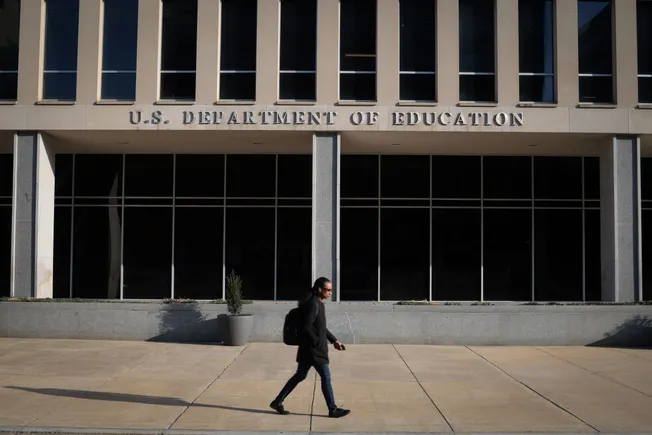
    For the second time this year, the Trump administration on Oct. 10 laid off a significant number of staff in the U.S. Department of Education, as part of President Donald Trump’s broader effort to abolish the agency. 

    The first round of RIF notices at the Education Department came in March, leading the agency to get entangled in multiple lawsuits that challenged the legality of those firings. 

    Before Trump took office on Jan. 20, the department had 4,133 employees. In March, that dwindled to 2,183. The number of staff then dipped further to an estimated 2,000 after the Oct. 10 firings, which also impacted other federal agencies nearly two weeks after a federal shutdown began after lawmakers failed to reach an agreement on the federal budget.   

    Meanwhile, U.S. Education Secretary Linda McMahon said in a X post on Wednesday that schools are operating as normal despite the government shutdown, which confirms that the U.S. Department of Education is “unnecessary.”

    “The Department has taken additional steps to better reach American students and families and root out the education bureaucracy that has burdened states and educators with unnecessary oversight,” McMahon wrote. “No education funding is impacted by the RIF, including funding for special education, and the clean CR [continuing resolution] supported by the Trump Administration will provide states and schools the funding they need to support all students.”

    Here’s a timeline of events leading up to the agency’s latest round of RIFs and the continued downsizing of the federal education footprint.

    • March 11, 2025

      The Education Department announced a massive reduction in force, with plans to slash nearly half of its workforce, impacting all divisions within the federal agency — some “requiring significant reorganization,” according to McMahon.

      The cuts, along with previously accepted employee “buyouts,” reduced the department’s headcount from 4,133 when Trump was inaugurated Jan. 20 to approximately 2,183 — affecting over 1,900 employees.

    • March 12, 2025

      As part of the Education Department’s mass downsizing of its staff, the agency also shuttered seven of its 12 civil rights enforcement offices. The seven closed offices of the Education Department’s Office for Civil Rights oversaw half of the nation’s states, impacting nearly 60,000 public schools and over 30 million K-12 students.

      The Trump administration also informed all seven Office of Educational Technology employees in an email that their positions and office were being “abolished” as the Education Department announced massive layoffs across the agency the day prior.

    • March 20, 2025

      President Donald Trump signed an executive order calling on McMahon to “take all necessary steps to facilitate the closure of the Department of Education,” marking the boldest push from the president to shut down the agency since its establishment under the Carter administration over four decades ago.
    • April 14, 2025

      A lawsuit was filed against the Trump administration over its significant downsizing of the Education Department’s Institute of Education Sciences in March. The lawsuit from the American Educational Research Association and the Society for Research on Educational Effectiveness said the layoffs made it impossible for IES to carry out education research.

      A similar lawsuit disputing the IES cuts was filed by the Association for Education Finance and Policy and the Institute for Higher Education Policy on April 4 in federal court.

    • April 17, 2025

      Despite massive layoffs that left the Education Department with a skeleton crew in charge of administering and analyzing the Nation’s Report Card, the agency said the assessment will continue as planned in 2026.
    • June 18, 2025

      A federal judge ordered the Education Department to reinstate all laid-off Office for Civil Rights employees for the time being, saying the layoffs and shuttering of seven regional offices had rendered the remaining staff “incapable of addressing the vast majority of OCR complaints.”
    • July 14, 2025

      The U.S. Supreme Court allows the Trump administration to carry on with its efforts to lay off nearly half the Education Department’s staff as lower courts weigh in on the layoffs’ legality in New York v. McMahon.
    • July 15, 2025

      Management of key federal workforce development programs began shifting from the Education Department to the U.S. Department of Labor under an interagency agreement signed in May, both agencies announced.
    • Aug. 19, 2025

      Following a federal judge’s order directing that the Education Department be restored to “the status quo,” the agency said it plans to bring back more than 260 Office for Civil Rights staff who were cut as part of the March reduction in force, and it will be returning groups of employees to the civil rights enforcement arm in waves every two weeks from Sept. 8 through Nov. 3.
    • Sept. 29, 2025

      The 1st U.S. Circuit Court of Appeals overturned a lower court’s order requiring the Education Department to restore the Office for Civil Rights to the “status quo,” which also allowed the department to move forward with plans to cut half of its OCR staff as litigation proceeds.
    • Oct. 1, 2025

      The federal government enters the first day of its shutdown as Congress remains at a funding impasse for fiscal year 2026. During the shutdown, the Education Department planned to furlough about 95% of its non-Federal Student Aid staff for the first week, according to a Sept. 28 memo from U.S. Education Secretary Linda McMahon.

      The Trump administration’s Office of Management and Budget issued a memo a week before that threatened mass firings of federal employees if a government shutdown occurs, according to a Sept. 30 lawsuit filed by labor unions against OMB.

    • Oct. 10, 2025

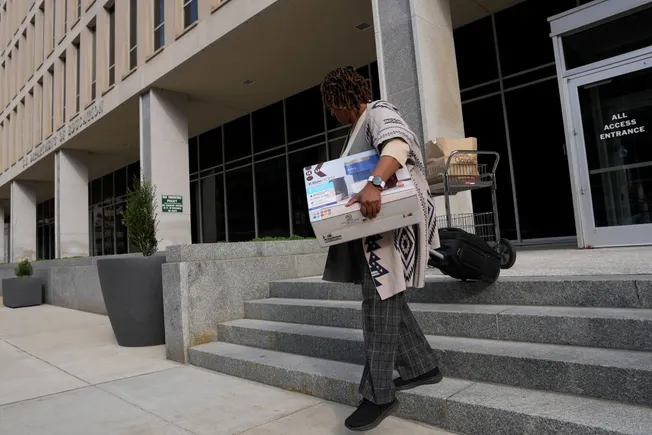
      The Trump administration issued reduction-in-force notices throughout the federal government, including at the Education Department where court filings show 466 Education Department employees were impacted by the layoffs. Most of the employees at the Office of Special Education Programs — where staffing had remained fairly stable — were laid off as part of the department’s second wave of RIF notices this year, according to several special education professional organizations.

      The latest RIFs also reached Education Department offices that oversee civil rights, student achievement supports, budgeting services, school safety, postsecondary education and more, according to the American Federation of Government Employees, a union representing more than 2,700 Education Department employees.

    • Oct. 15, 2025

      A federal judge ordered the Trump administration to cease any mass firings of federal employees initiated during the government shutdown. The temporary block came in response to a lawsuit filed by two federal employee unions against OMB over the office’s threats to initiate mass firings ahead of the Oct. 1 shutdown.

      Judge Susan Illston of the U.S. District Court for the Northern District of California said the administration’s issuance of reduction-in-force notices to over 4,000 employees throughout the federal government during the shutdown is illegal, exceeds the administration’s authority and is arbitrary and capricious.

    Source link

  • Trump’s Latest Layoffs Gut the Office of Postsecondary Ed

    Trump’s Latest Layoffs Gut the Office of Postsecondary Ed

    Photo illustration by Justin Morrison/Inside Higher Ed | Tierney L. Cross/Getty Images | Matveev_Aleksandr/iStock/Getty Images

    Education Secretary Linda McMahon has essentially gutted the postsecondary student services division of her department, leaving TRIO grant recipients and leaders of other college preparation programs with no one to turn to.

    Prior to the latest round of layoffs, executed on Friday and now paused by a federal judge, the Student Services division in the Office of Postsecondary Education had about 40 staffers, one former OPE employee told Inside Higher Ed. Now, he and others say it’s down to just two or three.

    The consequence, college-access advocates say, is that institutions might not be able to offer the same level of support to thousands of low-income and first-generation prospective students.

    “It’s enormously disruptive to the students who are reliant on these services to answer questions and get the information they need about college enrollment and financial aid as they apply and student supports once they enroll,” said Antoinette Flores, a former department official during the Biden administration who now works at New America, a left-leaning think tank. “This [reduction in force] puts all of those services at stake.”

    The layoffs are another blow to the federal TRIO programs, which help underrepresented and low-income students get to and through college. President Trump unsuccessfully proposed defunding the programs earlier this year, and the administration has canceled dozens of TRIO grants. Now, those that did get funding likely will have a difficult time connecting with the department for guidance.

    In a statement Wednesday, McMahon described the government shutdown and the RIF as an opportunity for agencies to “evaluate what federal responsibilities are truly critical for the American people.”

    “Two weeks in, millions of American students are still going to school, teachers are getting paid and schools are operating as normal. It confirms what the president has said: the federal Department of Education is unnecessary,” she wrote on social media.

    This is the second round of layoffs at the Education Department since Trump took office. The first, which took place in March, slashed the department’s staff nearly in half, from about 4,200 to just over 2,400, affecting almost every realm of the agency, including Student Services and the Office of Federal Student Aid.

    Nearly 500 employees lost their jobs in this most recent round, which the administration blamed on the government shutdown that began Oct. 1. No employees in FSA were affected, but the Office of Postsecondary Education was hit hard.

    Jason Cottrell, a former data coordinator for OPE who worked in student and institution services for more than nine years, lost his job in March but stayed in close contact with his colleagues who remained. The majority of them were let go on Friday, leaving just the senior directors and a few front-office administrators for each of the two divisions. That’s down from about 60 employees total in September and about 100 at the beginning of the year, he said.

    At the beginning of the year, OPE included five offices but now is down to the Office of Policy, Planning and Innovation, which includes oversight of accreditation, and the group working to update new policies and regulations.

    Cottrell said the layoffs at OPE will leave grantees who relied on these officers for guidance without a clear point of contact at the department. Further, he said there won’t be nonpartisan staffers to oversee how taxpayer dollars are spent.

    “Long-term, I’m thinking about the next round of grant applications that are going to be coming in … some of [the grant programs] receive 1,100 to 1,200 applications,” he explained. “Who is going to be there to actually organize and set up those grant-application processes to ensure that the regulations and statutes are being followed accurately?”

    Flores has similar concerns.

    “These [cuts] are the staff within the department that provide funding and technical assistance to institutions that are underresourced and serve some of the most vulnerable students within the higher education system,” she said. “Going forward, it creates uncertainty about funding, and these are institutions that are heavily reliant on funding.”

    Other parts of the department affected by the layoffs include the Offices of Special Education and Rehabilitation Services, Communications and Outreach, Formula Grants, and Program and Grantee Support Services.

    Although the remaining TRIO programs and other grant recipients that report to OPE likely already received a large chunk of their funding for the year, Cottrell noted that they often have to check in with their grant officer throughout the year to access the remainder of the award. Without those staff members in place, colleges could have a difficult time taking full advantage of their grants.

    “It’s going to harm the institutions, and most importantly, it’s going to harm the students who are supposed to be beneficiaries of these programs,” he said. “These programs are really reserved for underresourced institutions and underserved students. When I look at the overall picture of what has been happening at the department and across higher education, I see this as a strategic use of an opportunity that this administration has created.”

    Source link

  • Financial aid administrators report disruptions since Education Department layoffs

    Financial aid administrators report disruptions since Education Department layoffs

    Dive Brief: 

    • A large majority of financial aid administrators, 72%, say they’ve experienced “noticeable changes” in the Federal Student Aid office’s communications, responsiveness and processing timelines since the U.S. Department of Education’s mass layoffs in March

    • That’s according to a July survey conducted by the National Association of Student Financial Aid Administrators. The results also show that “federal support channels for students are breaking down,” including through issues with call centers, NASFAA said. 

    • These disruptions are hampering colleges’ ability to assist students, it said. “Unless federal service channels stabilize, the aid system risks becoming less accessible, less predictable, and less trusted by the very students it is intended to serve,” it added. 

    Dive Insight: 

    When the Education Department moved to lay off roughly half its staff in March, student advocates voiced concerns that the agency wouldn’t have enough workers to carry out core functions, including financial aid services. 

    NASFAA’s survey builds on those concerns. The survey found that higher shares of financial aid administrators surveyed in July said they are experiencing delays and a lack of communication from the Education Department than those polled just two months before. 

    For instance, 59% of officials surveyed in May said they had experienced disruptions in the Federal Student Aid office’s responsiveness, communication and processing timelines — a number that has since jumped to 72%.

    Ellen Keast, deputy press secretary at the Education Department, sharply rebuked the survey. 

    “It is an embarrassment for NASFAA to release a ‘survey’ that blatantly parrots falsehoods and is not representative of the higher education community nor the American people’s overwhelming charge for change,” Keast said in an emailed statement Wednesday. “Clearly, NASFAA is peddling a false narrative to preserve the status quo.”

    An Education Department official accused the survey of having methodological shortcomings. The official pointed to the survey’s response rate — completed by over 549 institutions — saying that represents less than 10% of the roughly 5,800 colleges that work with Federal Student Aid. 

    The official also said questions spurred respondents to report negative experiences and that those polled were overrepresented by administrators working at nonprofit and public four-year colleges, which the agency accused as being the most likely to oppose the Trump administration. 

    Additionally, the official said the mass layoffs did not impact FAFSA staff or Federal Student Aid’s ability to serve customers. 

    Melanie Storey, president and CEO of NASFAA, said in a statement that the survey reflects “the real, everyday experiences of financial aid professionals.”

    “To dismiss these concerns as fabricated or political undermines the expertise of those working directly with students every day, eager to deliver on the promise of postsecondary education, and shows that the administration is not interested in working with experts in the field to achieve the best results for students; instead, it is focused on advancing its own agenda,” Storey said. 

    In the survey, 32% of respondents said they’ve experienced processing delays for the Free Application for Federal Student Aid since May. 

    Earlier this month, the Education Department began beta-testing for the 2026-27 FAFSA form. So far, more than 1,000 students have completed the form, according to a department official. 

    Meanwhile, 49% of financial aid administrators have experienced processing delays with the e-App, the application colleges submit to the Education Department to participate in federal financial aid programs. Among colleges that submitted the e-App, 63% said in July that it still had not been processed. 

    More students are reaching out to their financial aid offices, according to the survey. Sixty percent of administrators said they’ve seen spikes in student questions about the Education Department’s services in the July poll, compared with 45% who said the same in May. 

    While several respondents said students were confused about the FAFSA process or federal aid, not all officials specified whether the inquiries were related to the Education Department’s mass layoffs or other recent federal changes.

    Republicans recently made sweeping changes to the student loan system through their massive domestic policy bill signed into law in July. That includes consolidating the student loan repayment programs into just two options and phasing out Grad PLUS loans, which allow graduate and professional students to borrow up to the cost of attendance. 

    Critics have noted that the Education Department will have to carry out the vast policy changes mandated by the bill with about half the workforce it had before President Donald Trump retook office. 

    U.S. Education Secretary Linda McMahon has framed the layoffs as the first step to Trump’s goal of eliminating the Education Department and shifting its duties elsewhere — a change that would require congressional approval. 

    A federal judge initially blocked the Education Department’s mass layoffs, but the U.S. Supreme Court lifted that order in July while litigation challenging their legality proceeds.

    Source link

  • Union seeks delay in Education Department layoffs

    Union seeks delay in Education Department layoffs

    This audio is auto-generated. Please let us know if you have feedback.

    U.S. Department of Education employees caught in the Trump administration’s reduction in force say they are being terminated against the terms of their bargaining agreement. The union representing them, American Federation of Government Employees Local 252, is seeking to delay the department’s termination date as a result. 

    It filed a grievance against the department on Wednesday, claiming the new Aug. 1 termination date only gives employees two weeks rather than the required 60-day notice. The department put in place the new termination date after a recent U.S. Supreme Court decision greenlighting the layoffs.

    On July 14, the Supreme Court allowed the department to move forward with a mass termination of over 1,000 employees originally announced in March. The department, in turn, notified employees that their new separation date was Aug. 1 rather than the previously announced date of June 9 — which got delayed due to the legal challenges. 

    The union claims, however, that the department must re-start its RIF process — which requires longer notice than two weeks and a briefing — since it walked back its March RIF due to blocks from the lower courts.

    During that time, the department sent RIF’d employees multiple emails over the course of a few months saying they were planning for the employees’ reentry into the office, the AFGE Local 252 grievance document says. “We are actively assessing how to reintegrate you back to the office in the most seamless way possible,” a June 6 email from the department told employees on administrative leave. 

    The Education Department, however, says its termination date set two weeks after the Supreme Court’s decision complies with the 60-day notice period required within the collective bargaining agreement. 

    “The CBA does not specify that the agency must provide 60 consecutive days’ notice,” said Madi Biedermann, deputy assistant secretary for communications, in an email to K-12 Dive. “ED is now providing affected employees with, in total, more than 60 days’ notice.” 

    The union’s grievance is the latest wrinkle in the Trump administration’s efforts to wind down the department, which have been met with resistance and criticism from former department employees, lawmakers and some public education advocates concerned about the agency’s effectiveness with only half of its staff remaining. 

    While these wrinkles unfold, the department has been spending $7 million in taxpayer dollars per month to pay workers on leave.

    That dollar amount is only for 833 of the 962 laid-off Education Department workers that the union represents and whom it was able to reach for its analysis. Thus, much more than $7 million is actually being spent per month to keep the more than 1,300 laid-off employees on payroll.

    Source link

  • How Mass Layoffs at the Education Dept. Affect Colleges

    How Mass Layoffs at the Education Dept. Affect Colleges

    Before the Department of Education laid off half its staff in March, college financial aid officers on the west coast could typically help a student track down their missing login information for the federal aid application in a matter of minutes.

    But now, due to limited hours of agency operation, tracking down a student’s Federal Student Aid ID can take days or even weeks; an east coast-based help line, which used to be open until 8 p.m. now closes at 3 p.m.—or noon Pacific time, according to Diane Cooper, the senior financial aid officer at Northwest Career College in Las Vegas.

    For Cooper, the reduction in force has upended countless advising sessions and made it difficult to enroll working adult learners with tight schedules.

    “When I have a student who’s driven 30 minutes to get here and then we have this issue, I can’t do anything,” Cooper said. “When they did this reduction, I don’t think they thought about colleges on the west coast.”

    Over the past three months, the financial aid office at Northwest has tried to be proactive and warn students about retrieving their username and password in advance, but not everyone gets the message in time.

    “When [prospective students] face a roadblock, it’s very frustrating,” Cooper said. “I’ve even had some people say, ‘Well, college just must not be meant for me.’”

    Difficulties applying for financial aid are just one of the many road bumps students and university staff across the country have faced since Education Secretary Linda McMahon and the Department of Government Efficiency cut the department down to just over 2,000 employees—about half of what it was during the Biden administration.

    The Department of Education told Inside Higher Ed that all three of its help lines, the Federal Student Aid Information Center, FSA Partner School Relations and the FPS Helpdesk were open well past noon Pacific time.

    “Just within President Trump’s first six months, the Department has responsibly managed and streamlined key federal student aid features, including fixing identity verification and simplifying parent invitations, while ensuring the 2026–27 FAFSA form is on track,” said deputy press secretary Ellen Keast.

    But Cooper said ever since the reduction in force if she calls FPS in the afternoon they are closed.

    Since March, colleges, advocates and others have noticed lags in communication about financial aid. Between March 11 and June 27, the department also dismissed more than 3,400 civil rights complaints—an unprecedented number, according to one former official. Additionally, the department ended an IPEDS training contract, among other changes at the Institute for Education Sciences, sparking concerns about the future of data collection at the agency.

    Some college administrators expressed optimism that the staff shortage would be temporary after a district court blocked the layoffs in May. But the Supreme Court extinguished that hope last week when it overturned the ruling, giving McMahon the go-ahead to proceed with the pink slips and other efforts to dismantle her agency.

    Now, higher education experts are adjusting to the reality of a smaller department for potentially years to come.

    “It’s a whole lot easier to break things than it is to put them back together again,” said Ted Mitchell, president of the American Council on Education (ACE).

    He and others worry that the department’s deficiencies will only get worse as staffers rush to overhaul the federal student loan system and implement other policies in the Big Beautiful Bill over the course of the next year. Add to that President Trump’s plan to dismantle the department by transferring certain programs to other agencies and what you have, Mitchell said, is “a mess.”

    “I suppose we all need to adopt a ‘time will tell’ philosophy about this,” he said. “But I for one am not optimistic.”

    Keast, on the other hand, said the department is complying with court orders and fulfilling its statutory duties.

    “We will continue to deliver meaningful and on time results while implementing the President’s [One Big Beautiful Bill] to better serve students, families, and administrators,” she said.

    Behind the Scenes ‘Breakdown’

    Cooper and Northwest Career College are not alone in struggling to get help from the Federal Student Aid Office. Nearly 60 percent of colleges and universities experienced noticeable changes in agency responsiveness or processing delays, according to a survey conducted by the National Association of Student Financial Aid Administrators in May.

    While 48 percent of respondents ranked front-facing glitches that directly affect students as their top concern, Melanie Storey, NASFAA’s president and CEO, noted that the Free Application for Federal Student Aid and aid distribution have been operating relatively smoothly. Many of the challenges created by the reduction in force, she said, are actually taking place behind the scenes.

    Nearly half of the institutions surveyed said that the FSA regional office they reported to had closed, and about a third said they were experiencing gaps in support as a result. Applying for the financial aid eligibility of a new program or addressing compliance concerns was already difficult before the regional offices closed, said Storey, who worked at FSA during the Biden administration. Now it will be even more arduous.

    “Our communities are just not getting answers to questions that they have,” she explained. “But if we see a breakdown in that work, we will see a breakdown in the delivery of aid.”

    Paula Carpenter, the director of financial aid at Jefferson College, a community college in eastern Missouri, said the biggest unknown is whether she will be able to complete the college’s recertification before the September 30 deadline and maintain its eligibility for federal aid.

    In the past, when it was time to begin the recertification process, Carpenter received an email from staff at the FSA Kansas City office, which was one of eight that closed in March.

    Now, “I’m uncertain on when I should submit the application, how long it’s going to take, and the impact it will have on other changes along the way,” she said. “The loss of those working relationships we had with the Kansas City participation team is definitely creating a lot of uncertainty.”

    Although critics have accused DOGE of operating in a rash and haphazard manner, one senior FSA official told Inside Higher Ed that the decision to cut staff at the regional offices that handled eligibility and compliance was likely deliberate.

    “The easiest place to cut is in functions that the broader public doesn’t see, even if they may be impactful,” said the official, who requested anonymity to speak freely. “You can’t cut the FAFSA … and you can’t cut the teams that support the actual technology for dispersing aid and handling repayment, because then borrowers start calling the press and calling Congress,” they added. “But if it just takes longer for schools to go through the process, get questions answered and get support then there’s not a discrete pain.”

    But just because the pain may not be publicly distinct, that doesn’t mean colleges aren’t feeling it.

    “There’s never been a worse time to be starting or renewing a Title IV program, and there’s never been a better time to be not following Title IV regulations,” the staffer said.

    Future of ‘Flying Blind’

    Other concerns raised by higher education advocates are more focused on the future.

    The sweeping Big, Beautiful Bill, signed into law July 4, includes a swath of higher education policy changes, ranging from revamping student loan repayment plans to introducing a novel accountability metric for colleges. Getting those changes implemented by July 1, 2026 with fewer employees is a tall order for the department, and many higher education advocates worry that the agency will struggle to pull it off.

    Mitchell from ACE fears that a general lack of data will hamper efforts to implement the new policies. The Institute for Education Sciences, an agency focused on collecting and analyzing education data to inform policy, was almost entirely gutted by the layoffs. Fewer than 20 employees remain, down from more than 175 at the start of the year, according to the Hechinger Report. The National Center for Education Statistics, one of the most crucial arms of IES, is down to just three staff members.

    Without IES fully staffed, Mitchell worries colleges and universities will be held to new student outcome standards based on inaccurate data.

    “Who will be on the other side receiving information about program level earnings? We don’t know,” he said, referring to the new post-graduation income test that colleges will have to pass. “If the cuts go through the way they are planned, higher education will largely be flying blind. We won’t know what programs and interventions will work to improve student success at the very moment when higher ed is facing a crisis of confidence about whether it is doing the right thing for students.”

    Without the department, colleges will have to increase their own technical capacities, he added, and that comes at a cost.

    The department acknowledged that the bill includes major changes to the federal student aid system and the development of a new accountability program but said that, with billions of dollars in federal funding, the Office of Federal Student Aid will be able to complete both projects.

    More disruptions are expected at the department in months to come as the Trump administration aims to shift certain responsibilities and programs to other agencies. Last week, shortly after the Supreme Court ruling, McMahon formally announced a plan to move career, technical (CTE) and adult education programs to the Labor Department. Trump and other officials have also talked about moving the federal student loan program to either the Small Business Administration or the Treasury Department.

    But the FSA official said the department is using the transfer of smaller CTE programs as a test run first and will take its time to move the federal aid system—if it does at all. The official is also confident the department will be able to put the new policies and programs in motion, but only if Congress extends the deadlines.

    “I think there’s a wide recognition, including on the Hill, that the timelines in the bill aren’t realistic,” the official said. “I feel good about being able to get [it] done … [But] if the question is, can we hit all the details and all the timelines? I think that’s impossible.”

    Both the department staffer and Storey from NASFAA said that if lawmakers and White House staff are smart, they will apply the lessons learned from the last time FSA overhauled student aid programs. For the Biden administration, pressure to finish a big project in a short amount of time, combined with a lack of feedback from college leaders, led to a botched rollout of the new financial aid application, they said. Hopefully, this time things will be different.

    “If we learned anything from the FAFSA debacle, it was that while the department was struggling to get their implementation in order, they neglected institutions and vendors who are incredibly important partners in that ecosystem of delivering aid,” Storey said. “Let us not make that mistake again. Ignore the role of institutions, at your peril. They are the front lines.”


    Source link

  • Trump 2.0 brings layoffs and budget cuts at 8 major colleges

    Trump 2.0 brings layoffs and budget cuts at 8 major colleges

    The economic climate for higher education wasn’t exactly breezy when the year began.  

    Years of regional demographic shifts, heightened inflation and wavering demand for college have taken their toll on institutional operations across wide swaths of the sector. 

    President Donald Trump’s return to office introduced myriad new fiscal ordeals for colleges, along with legal and political tribulations. 

    Already the administration has terminated or slowed countless research grants both universally and in targeted attacks on disfavored institutions. With the passage and signing of Republicans’ massive budget bill, taxes will rise for some of the larger college endowments while the student aid system will undergo a revamp that includes an end to Grad PLUS loans and introduction of various borrowing limits, all of which could weigh on revenues.

    Moreover, Trump’s aggressive stance on immigration and international students could hamper college demand and revenue, as Moody’s analysts recently noted.

    As colleges try to adapt, reimagine their operations or just survive, many are shrinking their budgets, including by laying off faculty and staff. In effect, Trump has introduced a new era of austerity for higher ed, while the pain of inflation and enrollment pressure never went away. 

    Here’s a look at how some are girding for an uncertain fiscal future in Trump’s second term:  

    Source link

  • University of Southern California signals layoffs amid $200M budget gap

    University of Southern California signals layoffs amid $200M budget gap

    This audio is auto-generated. Please let us know if you have feedback.

    Dive Brief: 

    • The University of Southern California plans to use layoffs and other budget austerity measures to tackle a $200 million operating deficit and gird against a massive blow to federal funding, Interim President Beong-Soo Kim said in a community message on Monday
    • On top of USC’s growing budget shortfall, which ballooned from $158 million in fiscal year 2024, officials are now grappling with federal headwinds affecting the outlook for research support, student financial aid and international enrollment, Kim said.
    • Lower federal research funding could cost the highly selective private university $300 million — or more — each year, Kim said. “To deal decisively with our financial challenges, we need to transform our operating model, and that will require layoffs,” he said. 

    Dive Insight: 

    Kim pointed out that USC isn’t alone in making painful budget decisions — but said that didn’t make the news any easier to hear. Indeed, many other well-known research universities have also been tightening their budgets and signaling layoffs amid the Trump administration’s widespread federal grant terminations. 

    That includes Stanford University, a fellow California college, and Brown University, in Rhode Island, which have both signaled potential staff reductions as they contend with federal funding shifts. Boston University, another private nonprofit, recently cut 120 employees and eliminated an equal number of vacant positions to deal with those challenges. 

    Kim did not disclose how many employees the university plans to lay off, and a USC spokesperson did not provide more details in response to questions Tuesday. But Kim said in his message to faculty and staff that USC has also taken other measures to shore up its budget. 

    The university will forego merit raises for the 2026 fiscal year, has ended certain services from third parties, and tightened discretionary and travel spending. It’s also planning to sell unused properties, streamline operations and adjust pay for the most highly compensated employees. 

    Kim, however, said it wasn’t feasible to bank on increased tuition revenue, drawing down more on the university’s endowment or taking out additional debt. 

    “Each of these ‘solutions’ would simply shift our problem onto the backs of future generations of Trojans,” Kim said, referring to the university’s mascot and student body nickname. 

    He also noted that the university could not likely count on federal funding returning to prior norms. “While we will continue to advocate for the vital importance of research and our academic mission, we cannot rely on the hope that federal support will revert to historical levels,” he said. 

    Kim’s message comes just two weeks into his tenure as the college’s interim leader, making it one of his first acts. 

    USC depends heavily on federal research funding. In fiscal 2024, the university received $569 million for federally funded research, according to a recent FAQ posted to its website. Overall, the university brought in nearly $7.5 billion in operating revenue that year and had $7.6 billion in operating expenses.

    Source link

  • SCOTUS Allows Mass Layoffs at Education Department

    SCOTUS Allows Mass Layoffs at Education Department

    Photo illustration by Justin Morrison/Inside Higher Ed | Tierney L. Cross/Getty Images | Matveev_Aleksandr and raweenuttapong/iStock/Getty Images

    The Supreme Court gave Education Secretary Linda McMahon the go-ahead Monday to proceed in firing half the department’s staff and transferring certain responsibilities to other agencies.

    The unsigned, one-paragraph order does not explain why a majority of justices decided to overturn a lower court injunction that an appeals court upheld. It did, however, explain that the injunction will remain blocked as lawsuits challenging mass layoffs at the department continue. The high court order represents a major step forward in President Donald Trump’s effort to dismantle the 45-year-old agency.

    “Today, the Supreme Court again confirmed the obvious: the President of the United States, as the head of the Executive Branch, has the ultimate authority to make decisions about staffing levels, administrative organization, and day-to-day operations of federal agencies,” McMahon said in a statement about the decision. The department will now “promote efficiency and accountability and to ensure resources are directed where they matter most—-to students, parents, and teachers.”

    The American Federation of Government Employees, the union representing the department’s staff, said the ruling was “deeply disappointing” and would allow the Trump administration to continue implementing an “anti-democratic” plan that is “misalign[ed] with the Constitution.” Sheria Smith, president of AFGE Local 252, added that just because McMahon can dismantle the department, that doesn’t mean she has to.

    “Let’s be clear,” Smith wrote, “despite this decision, the Department of Education has a choice—a choice to recommit to providing critical services for the American people and reject political agendas. The agency doesn’t have to move forward with this callous act of eliminating services and terminating dedicated workers.”

    The original ruling from a Maryland district judge required McMahon to reinstate more than 2,000 employees who were laid off in March. (As of July 8, 527 of those employees had already found other jobs.)

    Higher education policy advocates and laid-off staffers warned that the department was already struggling to keep up with the overload of civil rights complaints and financial aid applications. With half the workforce, they said, fulfilling those statutory duties would be nearly impossible.

    In addition to the layoffs, the lower court order prevented McMahon from carrying out Trump’s executive order to close the department to the “maximum extent appropriate and permitted by law.” Department officials later revealed in court filings that the order blocked a plan to send funding for career and technical education programs to the Department of Labor.

    The departments reached an agreement in May regarding the CTE programs, but neither said anything about it publicly. CTE advocates worry that putting Labor in charge of about $2.7 billion in grants could sow confusion and diminish the quality of these secondary and postsecondary career-prep programs. Others see the shift as the beginning of the end of the Education Department. Democrats in Congress have objected to the plan, which can now move forward.

    After news of the Supreme Court order dropped Monday, education policy experts sounded the alarm and took issue with the lack of explanation.

    “The president can’t close down ED by fiat but Congress and SCOTUS sure can facilitate it,” Dominique Baker, an associate professor of education and public policy at the University of Delaware, wrote on BlueSky.

    Daniel Collier, an assistant professor of higher education at the University of Memphis, also chimed in, asking, “Am I in the minority by believing that all SCOTUS rulings should have a well detailed and written rationale attached and there should be no exceptions?”

    The Supreme Court’s order included a scathing 18-page dissent from Justice Sonia Sotomayor. Justices Ketanji Brown Jackson and Elena Kagan joined in full. Sotomayor noted that the department plays “a vital role” in the nation’s education system by “safeguarding equal access” and allocating billions of dollars in federal funding. Knowing this, she added, “only Congress has the power to abolish the department.”

    “When the executive publicly announces its intent to break the law, and then executes on that promise, it is the judiciary’s duty to check that lawlessness, not expedite it,” Sotomayor wrote. “Two lower courts rose to the occasion, preliminarily enjoining the mass firings while the litigation remains ongoing. Rather than maintain the status quo, however, this court now intervenes, lifting the injunction and permitting the government to proceed with dismantling the department. That decision is indefensible.”

    Others, however, said the Supreme Court made the right call.

    “There is nothing unconstitutional about the executive branch trying to execute the law with fewer people, which is what the Trump administration is doing,” said Neal McCluskey, director of the Center for Educational Freedom at the Cato Institute, a libertarian think tank, who also contributed an opinion piece to Inside Higher Ed today. If the Trump administration wanted to eliminate the Department of Education unilaterally, he said, “It would have fired everyone. Not only did it not do that, but members of the administration have stated that it is ultimately Congress that must eliminate the department.”

    Source link

  • Supreme Court green-lights Education Department layoffs

    Supreme Court green-lights Education Department layoffs

    This audio is auto-generated. Please let us know if you have feedback.

    The U.S. Supreme Court on Monday allowed the Trump administration to proceed with laying off nearly half the U.S. Department of Education’s staff — a significant victory for the administration’s mission to dissolve the department to the greatest extent possible. 

    The decision in New York v. McMahon green-lights the department’s reduction in force initiated in March as the original question of the layoffs’ legality works its way through the lower courts. The layoffs closed department offices and spurred concerns from public school advocates that the education system would descend into chaos with little federal oversight. 

    The Monday order allowing the reduction in force to continue was met with dissent from liberal justices Sonia Sotomayor, Elena Kagan and Ketanji Brown Jackson, who called the majority’s decision “indefensible” in their 18-page dissent. 

    “When the Executive publicly announces its intent to break the law, and then executes on that promise, it is the Judiciary’s duty to check that lawlessness, not expedite it,” they said. 

    U.S. Secretary of Education Linda McMahon, who was tasked with shutting down the department to the greatest extent “permitted by law,” celebrated the decision.

    “Today, the Supreme Court again confirmed the obvious: the President of the United States, as the head of the Executive Branch, has the ultimate authority to make decisions about staffing levels, administrative organization, and day-to-day operations of federal agencies,” McMahon said in a statement.

    Until now, the department’s RIF had left staff — who were technically still employed but had been on administrative leave since March — in limbo. The Trump administration had planned to lay off employees June 9, but U.S. District Judge Myong Joun ruled in May that the layoffs left the department as “a shell of itself” and required that staff remain employed in a preliminary injunction.

    The layoffs leave the department with only about 2,183 employees out of its previous approximately 4,133.

    “A department without enough employees to perform statutorily mandated functions is not a department at all,” Joun wrote. In a separate case, the same judge last month also ordered that the department’s Office for Civil Rights be restored to its former self.

    Joun’s May order required the department to routinely report to the district court the steps it was taking to restore its staff — which it did by sending out multiple surveys to employees on administrative leave as a way of “actively assessing how to reintegrate you back to the office in the most seamless way possible.” At the same time, the department was appealing its case to the Supreme Court, hoping its RIF would be allowed through.

    The Monday order from the Supreme Court means those employees can be terminated even as the case over the legality of the layoffs proceeds in the lower court.

    The Supreme Court’s decision to allow the layoffs was preceded by another decision from the high court in April that also bolstered the Trump administration’s attempts to close the department. That ruling maintained a freeze on over $600 million in teacher training grants that the administration called “divisive.”

    It also follows a Supreme Court decision last week allowing mass terminations to move forward across other federal agencies.

    Are statutory obligations impacted?

    The department argued that depleting its staff by almost half — including closing down civil rights offices and leaving only a handful of employees in the office that administers the National Assessment of Educational Progress — does not impact its statutory obligations. McMahon has told concerned lawmakers that NAEP is administered through contracts that remain in place.

    In the meantime, however, former employees and Democratic lawmakers allege the department has already missed key deadlines on tasks that are required by law, and that no one remains in place to oversee the contracts and ensure the quality of the work.

    The annual Condition of Education report, for example, was due to Congress by June 1 — an obligation that the department missed “for the first time ever,” according to Sen. Patty Murray, D-Wash.

    Source link

  • George Washington University hints at layoffs amid federal policy upheaval

    George Washington University hints at layoffs amid federal policy upheaval

    This audio is auto-generated. Please let us know if you have feedback.

    Dive Brief:

    • Faced with an “unsustainable compounding deficit,” George Washington University is freezing hiring and could lay off employees down the road, the private Washington, D.C.-based institution said in a community message Tuesday. 
    • The hiring freeze applies to positions funded directly by the university and is set to last at least until Oct. 1. GWU also plans to review large procurement contracts, cut back on capital spending, and tighten budgets for travel, events and entertainment, among other moves. 
    • Despite earlier budget-tightening measures, senior university leaders said the outlook for the upcoming fiscal year has deteriorated since April. Officials plan to present a full fiscal 2026 budget to the university’s governing board in early September.

    Dive Insight:

    In their announcement, university President Ellen Granberg, Interim Provost John Lach and other officials cited political, economic and demographic challenges that are exacerbating GWU’s budget pressures.

    On the policy front, they pointed to the Trump administration’s ongoing efforts to limit funding for indirect research costs, such as facilities, utilities and other overhead, to federal grant awardees. While federal courts have paused or struck down those moves at four federal agencies, they have created deep financial uncertainty for many universities. 

    The officials also pointed to “significant changes in the overall federal research landscape,” which has big implications for the university, a major nexus for federal grants. In fiscal 2024, GWU spent a total of $471.6 million in federal grants from a wide array of federal agencies and other grantors. 

    Along with research funding disruption, officials pointed to a slowdown in visa processing and President Donald Trump’s recent move to ban or restrict travel from 19 countries. They described these changes as “constraints on our ability to enroll international students.” In 2024, GWU enrolled 3,661 international students, according to institutional data.

    Moreover, the university, with its deep ties to the D.C. area, is beginning to see domestic enrollment impacts from the Trump administration’s massive slashes to federal agency workforces, as well as general financial uncertainty among American consumers.

    Even more pressure on graduate enrollment could come amid the elimination of Grad PLUS loans and caps on total student borrowing, brought on by the massive budget bill passed by Republicans and signed by Trump last week. 

    But GWU had financial challenges before Trump took office. As Granberg, Lach and other officials noted, revenue growth averaged 6.1% from fiscal 2022 through 2024 while expenses grew 6.8%. 

    “While this difference might not seem significant, its cumulative effect is an unsustainable compounding deficit,” they said. 

    That budget gap resulted from pre-Trump structural challenges in the higher education world, including rising costs and declining master’s degree enrollments.

    Between 2018 and 2023, GWU’s total fall graduate student enrollment declined 9.2% to 14,181 students, according to federal data. The officials pointed to declines in international student enrollment, which began at the university before Trump’s newest travel bans and “at this point can no longer be viewed as temporary.”

    University leaders in April announced a pause on merit-based salary increases and a 3% budget cut across units. But the challenges have only deepened since then. 

    Now officials aim for deeper budget cuts for fiscal 2026, “which we recognize will likely lead to some reductions in the number of staff and certain faculty positions, a step we have tried to avoid but cannot any longer,” they said Tuesday.

    Source link