Tag: layoffs

  • Layoffs Gut Federal Education Research Agency

    Layoffs Gut Federal Education Research Agency

    Five years after the COVID-19 pandemic first forced schools and colleges into remote learning, researchers, policymakers and higher education leaders may no longer have access to the federal data they need to gather a complete picture of how those disruptions have affected a generation of students long term—or hold states and colleges accountable for the interventions they deployed to address the fallout.

    That’s because the National Center for Education Statistics, the Education Department’s data-collection arm that’s administered surveys and studies about the state of K-12, higher education and the workforce since 1867, is suddenly a shell of itself.

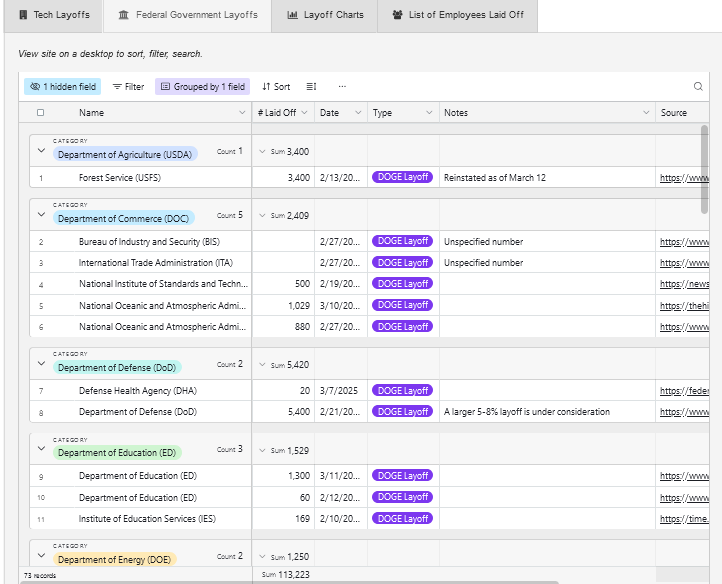
    As of this week, the NCES is down to five employees after the department fired nearly half its staff earlier this week. The broader Institute of Education Sciences, which houses NCES, also lost more than 100 employees as part of President Donald Trump’s campaign to eliminate alleged “waste, fraud and abuse” in federal funding.

    The mass firings come about a month after federal education data collection data took another big blow: In February, the department cut nearly $900 million in contracts at IES, which ended what some experts say was critical research into schools and fueled layoffs at some of the research firms that held those contracts, including MDRC, Mathematica, NORC and Westat.

    Although Trump and his allies have long blamed COVID-related learning loss on President Joe Biden’s approval of prolonged remote learning, numerous experts told Inside Higher Ed that without some of the federal data the NCES was collecting, it will be hard to draw definitive conclusions about those or any other claims about national education trends.

    ‘Backbone of Accountability’

    “The backbone of accountability for our school systems begins with simply collecting data on how well they’re doing. The fact that our capacity to do that is being undermined is really indefensible,” said Thomas Dee, a professor at Stanford University’s Graduate School of Education and research associate at the National Bureau of Economic Research. “One could conceive this as part of an agenda to undermine the very idea of truth and evidence in public education.”

    But the Education Department says its decision to nearly eliminate the NCES and so many IES contracts is rooted in what it claims are the agency’s own failures.

    “Despite spending hundreds of millions in taxpayer funds annually, IES has failed to effectively fulfill its mandate to identify best practices and new approaches that improve educational outcomes and close achievement gaps for students,” Madi Biedermann, deputy assistant secretary for communications at the department, said in an email to Inside Higher Ed Thursday.

    Biedermann said the department plans to restructure IES in the coming months in order to provide “states with more useful data to improve student outcomes while maintaining rigorous scientific integrity and cost effectiveness.”

    But many education researchers disagree with that characterization of IES and instead view it as an unmatched resource for informing higher education policy decisions.

    “Some of these surveys allow us to know if people are being successful in college. It tells us where those students are enrolled in college and where they came from. For example, COVID impacted everyone, but it had a disproportionate impact on specific regions in the U.S. and specific social and socioeconomic groups in the U.S.,” said Taylor Odle, an assistant professor of educational policy studies at the University of Wisconsin at Madison.

    “Post-COVID, states and regions have implemented a lot of interventions to help mitigate learning loss and accelerate learning for specific individuals. We’ll be able to know by comparing region to region or school to school whether or not those gaps increased or reduced in certain areas.”

    Without uniform federal data to ground comparisons of pandemic-related and other student success interventions, it will be harder to hold education policymakers accountable, Odle and others told Inside Higher Ed this week. However, Odle believes that may be the point of the Trump administration’s assault on the Education Department’s research arm.

    “It’s in essence a tacit statement that what they are doing may potentially be harmful to students and schools, and they don’t want the American public or researchers to be able to clearly show that,” he said. “By eliminating these surveys and data collection, and reducing staff at the Department of Education who collect, synthesize and report the data, every decision-maker—regardless of where they fall on the political spectrum—is going to be limited in the data and information they have access to.”

    Scope of Data Loss Unclear

    It’s not clear how many of the department’s dozens of data-collection programs—including those related to early childhood education, college student outcomes and workforce readiness—will be downsized or ended as a result of the cuts. The department did not respond to Inside Higher Ed’s request for clarity on exactly which contracts were canceled. (It did confirm, however, that it still maintains contracts for the National Assessment of Educational Progress, the College Scorecard and the Integrated Postsecondary Education Data System.)

    A now-fired longtime NCES employee who asked to remain anonymous out of fear of retaliation said they and others who worked on those data-collection programs for years are still in the dark on the future of many of the other studies IES administers.

    “We’ve been out of the loop on all these conversations about the state of these studies. That’s been taking place at a higher level—or outside of NCES entirely,” said the terminated employee. “What these federal sources do is synthesize all the different other data sources that already exist to provide a more comprehensive national picture in a way that saves researchers a lot of the trouble of having to combine these different sources themselves and match them up. It provides consistent methodologies.”

    Even if some of the data-collection programs continue, there will be hardly any NCES staff to help researchers and policymakers accurately navigate new or existing data, which was the primary function of most workers there.

    “We are a nonpartisan agency, so we’ve always shied away from interpreting or making value judgments about what the data say,” the fired NCES worker said. “We are basically a help desk and support resource for people who are trying to use this data in their own studies and their own projects.”

    ‘Jeopardizing’ Strong Workforce

    One widely used data set with an uncertain future is the Beginning Postsecondary Students Longitudinal Study—a detailed survey that has followed cohorts of first-time college students over a period of six to eight years since 1989. The latest iteration of the BPS survey has been underway since 2019, and it included questions meant to illuminate the long-term effects of pandemic-related learning loss. But like many other NCES studies, data collection for BPS has been on pause since last month, when the department pulled the survey’s contract with the Research Triangle Institute.

    In a blog post the Institute for Higher Education Policy published Wednesday, the organization noted that BPS is intertwined with the National Postsecondary Student Aid Study, which is a comprehensive nationwide study designed to determine how students and their families pay for college and demographic characteristics of those enrolled.

    The two studies “are the only federal data sources that provide comprehensive insights into how students manage college affordability, stay enrolled and engaged with campus resources, persist to completion, and transition to the workforce,” Taylor Myers, assistant director of research and policy, wrote. “Losing these critical data hinders policy improvements and limits our understanding of the realities students face.”

    That post came one day after IHEP sent members of Congress a letter signed by a coalition of 87 higher education organizations and individual researchers urging lawmakers to demand transparency about why the department slashed funding for postsecondary data collection.

    “These actions weaken our capacity to assess and improve educational and economic outcomes for students—directly jeopardizing our ability to build a globally competitive workforce,” the letter said. “Without these insights, policymakers will soon be forced to make decisions in the dark, unable to steward taxpayer dollars efficiently.”

    Picking Up the Slack

    But not every education researcher believes federal data is as vital to shaping education policy and evaluating interventions as IHEP’s letter claims.

    “It’s unclear that researchers analyzing those data have done anything to alter outcomes for students,” said Jay Greene, a senior research fellow in the Center for Education Policy at the right-wing Heritage Foundation. “Me being able to publish articles is not the same thing as students benefiting. We have this assumption that research should prove things, but in the world of education, we have very little evidence of that.”

    Greene, who previously worked as a professor of education policy at the University of Arkansas, said he never used federal data in his assessments of educational interventions and instead used state-level data or collected his own. “Because states and localities actually run schools, they’re in a position to do things that might make it better or worse,” he said. “Federal data is just sampling … It’s not particularly useful for causal research designs to develop practices and interventions that improve education outcomes.”

    Other researchers have a more measured view of what needs to change in federal education data collection.

    Robin Lake, director of the Center on Reinventing Public Education at Arizona State University, has previously called for reforms at IES, arguing that some of the studies are too expensive without enough focus on educators’ evolving priorities, which as of late include literacy, mathematics and how to handle the rise of artificial intelligence.

    But taking a sledgehammer to NCES isn’t the reform she had in mind. Moreover, she said blaming federal education data collections and researchers for poor education outcomes is “completely ridiculous.”

    “There’s a breakdown between knowledge and practice in the education world,” Lake said. “We don’t adopt things that work at the scale we need to, but that’s not on researchers or the quality of research that’s being produced.”

    But just because federal education data collection may not focus on specific interventions, “that doesn’t mean those data sets aren’t useful,” said Christina Whitfield, senior vice president and chief of staff for the State Higher Education Executive Officers Association.

    “A lot of states have really robust data systems, and in a lot of cases they provide more detail than the federal data systems do,” she said. “However, one of the things the federal data provides is a shared language and common set of definitions … If we move toward every state defining these key elements individually or separately, we lose a lot of comparability.”

    If many of the federal data collection projects aren’t revived, Whitfield said other entities, including nonprofits and corporations, will likely step in to fill the void. But that likely won’t be a seamless transition without consequence.

    “At least in the short term, there’s going to be a real issue of how to vet those different solutions and determine which is the highest-quality, efficient and most useful response to the information vacuum we’re going to experience,” Whitfield said. And even if there’s just a pause on some of the data collections and federal contracts are able to resume eventually, “there’s going to be a gap and a real loss in the continuity of that data and how well you can look back longitudinally.”

    Source link

  • Half of OCR eliminated after Trump Education Department layoffs

    Half of OCR eliminated after Trump Education Department layoffs

    This audio is auto-generated. Please let us know if you have feedback.

    The U.S. Department of Education has let go of hundreds of its employees charged with protecting the civil rights of students and educators. The agency also shuttered seven of its 12 civil rights enforcement offices, according to former department employees.

    Offices in Chicago, Philadelphia, New York City, Dallas, San Francisco, Boston and Cleveland have been closed. Those in Atlanta, Denver, Kansas City and Seattle remain open, as well as the OCR headquarters in Washington, D.C. 

    In total, the seven closed offices of the Education Department’s Office for Civil Rights oversaw half of the nation’s states, impacting nearly 60,000 public schools and over 30 million K-12 students.

    Those fired include scores of civil rights attorneys, according to an internal memo from the American Federation of Government Employees Local 252. The union represents nearly 1,000 of the roughly 1,300 Education Department employees laid off Tuesday evening as part of the Trump administration’s sweeping effort to gut the department, including at least 240 OCR staff.

    More than 6,000 investigations impacted

    “The Department of Education has turned its back on civil rights in schools,” said Catherine Lhamon, who led OCR under the Biden administration. “It’s not possible to resolve cases… effectively with fewer than half the investigative staff that the office had had two days ago” 

    The agency’s civil rights enforcement arm is responsible for implementing protections for all students, including underserved students. It is tasked with ensuring that, among others, students with disabilities, students from all racial backgrounds, and sexual assault survivors have equal access to education. 

    Doing so requires investigations of alleged civil rights violations and compliance reviews of school systems that sometimes take years — even with all 12 offices operating and fully staffed. The offices that were closed were in charge of many of those cases. 

    “You’re talking about cases being in the middle of mediation right now,” said Victoria DeLano, who worked for the Atlanta office as an equal opportunity specialist prior to her termination. 

    The cases OCR settles with schools and universities often set the tone for civil rights policies and practices in schools nationwide. The seven offices shuttered had over 6,000 open investigations as of Jan. 14, according to OCR’s website that was last updated under the Biden administration.

    With the abrupt closures and layoffs, however, much of that is up in the air.

    “I can’t even comprehend it — the fallout that this is going to have,” said DeLano.

    Offices close as complaints climb

    In the past few years, the office’s caseload had been steadily climbing. In fiscal year 2023, the office received 19,201 complaints, representing a 2% increase from 2022 and nearly triple the number of complaints in 2009.

    Prior to the new administration and its sweeping layoffs, each OCR investigative staff was juggling a caseload of about 50 complaints, which Lhamon already considered “untenable.” In fact, the high number of cases and slim number of investigators at the time had prompted former Education Secretary Miguel Cardona to request more funding from Congress, which would have helped hire additional OCR staff. 

    In contrast, the Trump administration has cited a desire to reduce the Education Department’s budget as part of the reason driving the sweeping layoffs.

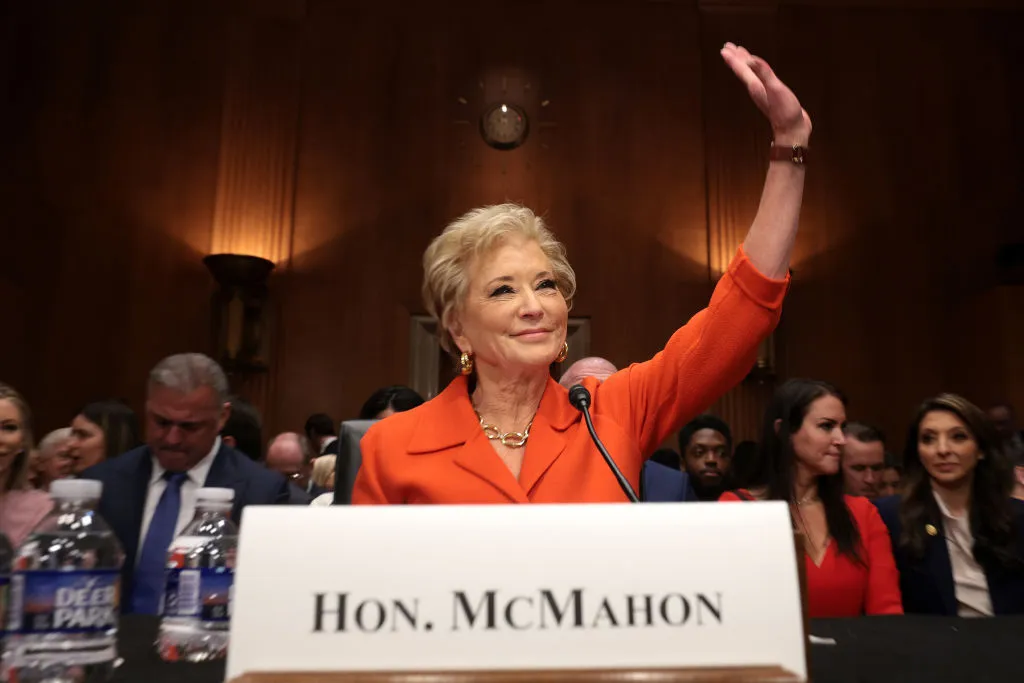
    Some of those cut as part of President Donald Trump and Education Secretary Linda McMahon’s effort to “end bureaucratic bloat” were onboarded just months before being fired without notice, according to DeLano, who was hired in December under the former administration and then terminated in February. 

    DeLano realized she was out of a job after being locked out of her government laptop, and she only received a formal notice of termination after six days of being denied access.

    “It was done just completely heartless,” DeLano said. “I cannot believe that 50% of OCR is gone.”

    The massive cuts come after the administration told OCR staff to hit pause on its open investigations, and — instead of addressing public complaints — directed its resources to addressing the president’s priorities, like scaling back Title IX to exclude LGBTQ+ rights. Following a Feb. 5 executive order barring transgender women from playing on sports teams aligning with their gender identities, the Education Department launched multiple investigations into athletic associations, colleges and schools over their sports policies.

    Source link

  • Johns Hopkins Plans for Layoffs Amid $800M Cut to Federal Grants

    Johns Hopkins Plans for Layoffs Amid $800M Cut to Federal Grants

    Johns Hopkins University is planning for staff layoffs after the Trump administration canceled $800 million in U.S. Agency for International Development grants for the Baltimore-based institution, The Wall Street Journal reported Tuesday.

    The grants supported a variety of health-related initiatives overseen by Johns Hopkins, including a breastfeeding support project in Baltimore and mosquito-net programs in Mozambique.

    The foreign aid agency was one of the first targets of the Trump administration’s crusade against alleged widespread “waste, fraud and abuse” of federal funding. Secretary of State Marco Rubio said earlier this week that he’s purged 83 percent of USAID’s programs and the remaining contracts will be administered by the U.S. Department of State.

    The $800 million in cuts comes on top of another $200 million Johns Hopkins stands to lose if the National Institutes of Health succeeds in capping indirect research costs at 15 percent. Johns Hopkins is among numerous universities, states and other organizations that have sued the National Institutes of Health over the plan to limit research funding, which a federal judge has temporarily blocked.

    “At this time, we have little choice but to reduce some of our work in response to the slowing and stopping of grants and to adjust to an evolving legal landscape,” JHU president Ronald Daniels wrote in a letter to campus, according to The Baltimore Banner. “There are difficult moments before us, with impacts to budgets, personnel, and programs. Some will take time to fully understand and address; others will happen more quickly.”

    Such drastic cuts to Johns Hopkins—the nation’s largest spender on research and development and the biggest private employer in Baltimore—will reverberate far beyond the campus itself.

    “Johns Hopkins has bet very heavily on a century and a quarter of partnership with the federal government,” Theodore Iwashyna, a JHU critical care physician who is currently overseeing an NIH grant studying at-home care for pneumonia patients, told the Journal. “If the federal government decides it doesn’t want to know things anymore, that would be bad for Johns Hopkins and devastating for Maryland.”

    Source link

  • Trump tells agencies to plan for mass layoffs

    Trump tells agencies to plan for mass layoffs

    The Trump administration on Wednesday ordered federal agencies to start preparing for “large-scale reductions in force,” the latest step in a broader effort to dramatically reduce the federal workforce.

    The memo from the Office of Management and Budget and Office of Personnel Management applies to all federal departments, and the Department of Education could face heavy cuts as a result of Trump’s promise to “sweepingly reform” what he calls a “bloated, corrupt federal bureaucracy.” 

    The president has repeatedly talked about shutting down the Education Department, and this memo’s orders could give him an opportunity to diminish the agency. Specifically, the OMB document tells agency heads to eliminate all “non-statutorily mandated functions”—an action proponents of abolishing the department have supported.

    The OMB memo cites an executive order, “Implementing The President’s ‘Department of Government Efficiency’ Workforce Optimization Initiative,” that was signed Feb. 11 as justification and directed agencies to submit a reorganization plan by March 13.

    “Pursuant to the President’s direction, agencies should focus on the maximum elimination of functions that are not statutorily mandated while driving the highest-quality, most efficient delivery of their statutorily-required functions,” wrote OMB director Russell Vought and Charles Ezell, the acting director of the Office of Personnel Management. “Agencies should also … implement technological solutions that automate routine tasks while enabling staff to focus on higher-value activities … and maximally reduce the use of outside consultants and contractors.”

    The memo notes that reduction should not impact positions necessary to meet border security, national security or public safety responsibilities, nor should it affect agencies or services that are directly provided to citizens “such as Social Security, Medicare, and veterans’ health care.”

    Source link

  • NIH faces pivotal hearing amid layoffs, grant freeze

    NIH faces pivotal hearing amid layoffs, grant freeze

    As mass layoffs and suspended grant reviews at National Institutes of Health sow more chaos for the nation’s once-cherished scientific enterprise, a federal judge is set to hear arguments Friday morning on whether to extend a temporary block on the NIH’s attempt to unilaterally cut more than $4 billion for the indirect costs of conducting federally funded research at universities, such as hazardous waste disposal, laboratory space and patient safety.

    If the cuts move forward, they will “destroy budgets nationwide,” higher education associations and Democratic attorneys general, along with medical colleges and universities, argued in court filings this week. “But the consequences—imminent, certain, and irreparable—extend far beyond money, including lost human capital, shuttering of research projects and entire facilities, stalling or ending clinical trials, and forgoing advances in medical research, all while ending the Nation’s science leadership.”

    The NIH refuted that claim in court filings, arguing that the plaintiffs “do not establish that any irreparable impacts would occur before this case can proceed to the merits.”

    Friday’s hearing comes two weeks after the NIH’s Feb. 7 announcement that it will cap indirect research cost rates at 15 percent, which is down from an average rate of 28 percent, though some colleges have negotiated reimbursement rates as high as 69 percent.

    The National Institutes of Health is one of the largest sources of funding for research at the universities and colleges and has supported breakthroughs in medical technology and treatments for diseases like cancer and Alzheimer’s. In fiscal year 2024, the agency sent about $26 billion to more than 500 grant recipients connected to colleges. About $7 billion of that went to the indirect expenses—a source of funding that universities argue is crucial but still doesn’t cover the full cost of conducting research.

    Federal data shows that in fiscal year 2022, universities contributed approximately $25 billion of their own institutional funds to support research, including more than $6.2 billion for the federal government’s share of indirect costs that it did not reimburse.

    Nonetheless, Elon Musk, the unelected billionaire bureaucrat President Donald Trump has charged with heading the nascent Department of Government Efficiency, characterized NIH reimbursements for universities for indirect research costs as “a rip-off.” Meanwhile, the academic research community warned that such drastic cuts—which Trump failed to get congressional approval for during his first term—would hamper university budgets, local economies and medical breakthroughs.

    Within days of NIH’s directive, a federal judge put the rate cut on hold after 22 state attorneys general sued the agency, joined by numerous higher education research advocacy organizations, including the Association of American Medical Colleges, the Association of American Universities, the Association of Public and Land-grant Universities, and the American Council on Education. Across three separate lawsuits, they argued NIH doesn’t have the authority to unilaterally change the cap and that its guidance was “arbitrary and capricious,” among other points.

    Although the nationwide injunction gave colleges a brief reprieve from the cuts, which briefly took effect Feb. 10, university administrators have spent the last two weeks sounding the alarm about the estimated losses and other impacts. Some Republicans in Congress have also opposed the plan, saying it violates language in federal legislation that bars NIH from modifying indirect costs.

    ‘Irreparable Injury’?

    In its motion for the dismissal of the injunction filed on Feb. 14—a day before the NIH fired some 1,000 workers—lawyers for the agency argued that the federal district court “lacks jurisdiction” over the case and only federal claims court should hear the case, because the plaintiffs “are effectively seeking damages for breach of contract—the regulations incorporated into their grant agreements.” They also claimed that the NIH “ran afoul of no statute” and that the plaintiffs “have failed to show that they would suffer an irreparable injury” without a temporary restraining order.

    “Where declarants assert that reducing funds is likely to harm research or clinical trials,” the motion said, “they generally do not assert that those harms are imminent as opposed to eventual reductions in their capacity that would occur from sustained diminished funding after a ruling on the merits.”

    The motion went on to claim that the NIH’s capping of indirect cost rates seeks to “further its mission of advancing public health in a manner reflecting wise stewardship of the public money entrusted to it,” claiming that indirect costs are “difficult” for NIH to oversee. “To be clear, the Supplemental Guidance will not change NIH’s total grant spending; rather, it simply reallocates that grant spending away from indirect costs and toward the direct funding of research.”

    But that’s not how the NIH publicly framed the indirect cost cap in a post on the social media site Musk owns that said the policy change will “save more than $4B a year effective immediately.”

    And in a response filed earlier this week, the plaintiffs argued that the NIH’s policy change “bears no rational connection to NIH’s stated goal” in its court filings, because nothing in the NIH’s notice to cap indirect costs “directs more money to direct expenses.” The response also argues that the NIH has not provided adequate evidence to support its assertions that indirect costs are “difficult to oversee” and implored the court to reject the NIH’s attempt to “deprive Congress of its power of the purse.”

    Mass Layoffs, Grant Reviews Still Suspended

    While the temporary injunction has halted the rate cap for about two weeks, it hasn’t stopped Trump and Musk from destabilizing federal science agencies in other ways. Over the past week, thousands of mostly probationary employees—ranging from top-ranking agency officials to grant administrators who help grantees ensure their projects are compliant with federal regulations—across numerous science agencies, including the NIH, the National Science Foundation and the Centers for Disease Control and Prevention, lost their jobs.

    “The majority of what people who work for those agencies do is get the grant money out the door,” said Carrie Wolinetz, a science and health policy consultant who worked for the NIH between 2015 and 2023. “Because the layoffs took place across job categories, any of those critical positions could be affected. It’s hard to imagine that’s not going to have some impact on the ability of those agencies to fulfill its mission of getting those grants out the door.”

    And even before the layoffs and indirect cost cap directive, the NIH had already derailed its operations by temporarily pausing communication and grant reviews last month. Although the courts put those orders on hold, Nature reported Thursday that nearly all NIH grant-review meetings remain suspended.

    When the reviews finally do resume, the process will likely face even more challenges with fewer agency employees.

    “The fewer people, the greater the bottleneck,” Wolinetz said. “Uncertainty itself causes delays. When people are confused, afraid and worried after watching their colleagues being dismissed, all of that just causes a slowing down of the entire system.”

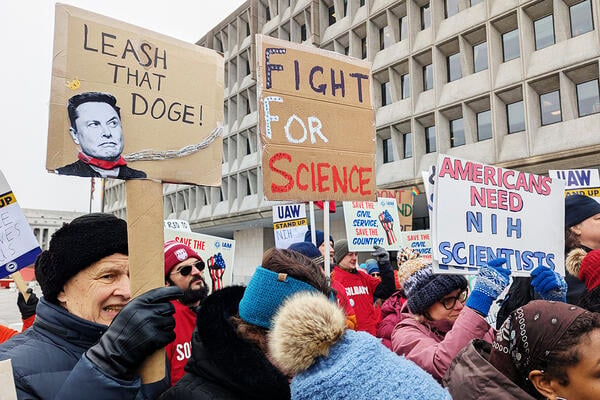
    On Wednesday, hundreds of scientists, federal workers and their supporters rallied outside of Department of Health and Human Services headquarters in Washington, D.C., wielding signs with phrases such as “Leash That DOGE,” “Fight for Science” and “America Needs NIH Scientists” and speaking out against cuts to science funding. (The rally was part of a national day of action to oppose the research funding cuts and layoffs.)

    Hundreds of protesters gathered in front of HHS headquarters Wednesday.

    “It is important that we understand exactly what is at stake right now,” Kailyn Price, a neuroscience doctoral student at George Washington University, told the crowd. “Cutting indirect costs is like telling a football team to do their work with only the players and the coach—no lights for the field, no physical therapist for the players, no water for the showers.”

    She said casting indirect costs as an unchecked and unnecessary burden on taxpayers is all part of the government’s plan to turn the American public against scientists and their work.

    “They want you to be angry and misinformed, incensed and ignorant,“ Price said. “Trump and his unelected billionaire backers want you to look at the people like us—making $20, $30, $40,000 a year, working late nights through the weekends because we believe that much in the work that we do—as the enemy.”

    And the federal workers who remain at the agencies that support university research may not be there for long, either.

    “Messaging from the agency is changing on a daily basis. Everyone is internally freaking out,” one still-employed NIH scientist told Inside Higher Ed on the condition of anonymity. “I’m applying for other jobs, and most people are hedging their bets and sending out other applications, assuming they could get let go.”

    The chaos at the NIH, including the firings and the potential for billions in funding cuts, means “there just won’t be the same number of scientists coming out of American universities,” the NIH researcher said. “On the bright side, though, there is the rest of the world.”

    The cuts “are also adversely affecting important agency functions, such as support for research security at universities,” Toby Smith, senior vice president for government relations and public policy at the AAU, said in an email.

    “Cutting key research security offices at the NSF and NIH will make it more difficult for universities and our science agencies to implement new congressionally mandated research security requirements aimed at protecting sensitive information and data from competitors at a crucial time when we are trying to stay at the forefront of global scientific leadership.”

    Ryan Quinn contributed to this report.

    Source link

  • Higher ed unions rally against Trump’s cuts, layoffs

    Higher ed unions rally against Trump’s cuts, layoffs

    At more than a dozen events across the country Wednesday, workers and faculty at colleges and universities gathered to speak out against what they see as an attack on federal research funding, lifesaving medical research and education. 

    In Washington, D.C., hundreds rallied in the front of the Department of Health and Human Services, while in Philadelphia, hundreds gathered at the office of Senator Dave McCormick, a Pennsylvania Republican. Other protests were planned at colleges in Seattle and St. Louis, among others. 

    The rallies were part of a national day of action organized by a coalition of unions representing higher ed workers, students and their allies. The coalition includes the American Association of University Professors, the American Federation of Teachers, Higher Ed Labor United and United Auto Workers, among others.

    Hundreds in Philly braved the freezing temps to rally for our healthcare, research, and jobs! ❄️💪Workers & students from CCP, Drexel, UPenn, Rutgers, Temple, Jefferson, Arcadia, Rowan, Moore—alongside elected leaders & union presidents—made it clear: We won’t back down. #LaborForHigherEd

    [image or embed]

    — Higher Education Labor United (HELU) (@higheredlabor.bsky.social) February 19, 2025 at 2:33 PM

    In recent weeks, the Trump administration has proposed capping reimbursements for indirect research costs, laid off hundreds of federal employees and cracked down on diversity, equity and inclusion. Most recently, the Education Department gave colleges and K-12 schools until Feb. 28 to end all race-conscious student programming, resources and financial aid. Higher education advocates have called that directive “dystopian” and “very much outside of the law.”

    Colleges and universities sued to block the rate cut for indirect costs, warning it would mean billions in financial losses and an end to some research. Some colleges have already frozen hiring in response, even though the cut is temporarily on hold.

    “If politics decides what I can and cannot study, I’m afraid I will fail the very people who need this research and inspire me to do it,” said Lindsay Guare, a doctoral student at the University of Pennsylvania, in a news release about the Philadelphia event. “In an ideal world, I would be fighting to expand support for my science instead of fighting to keep it afloat … The work done in Philadelphia’s institutions doesn’t just lead the world in innovation—it saves lives.”

    Source link