Tag: lays

  • Michigan State University lays off 99 employees

    Michigan State University lays off 99 employees

    This audio is auto-generated. Please let us know if you have feedback.

    Dive Brief:

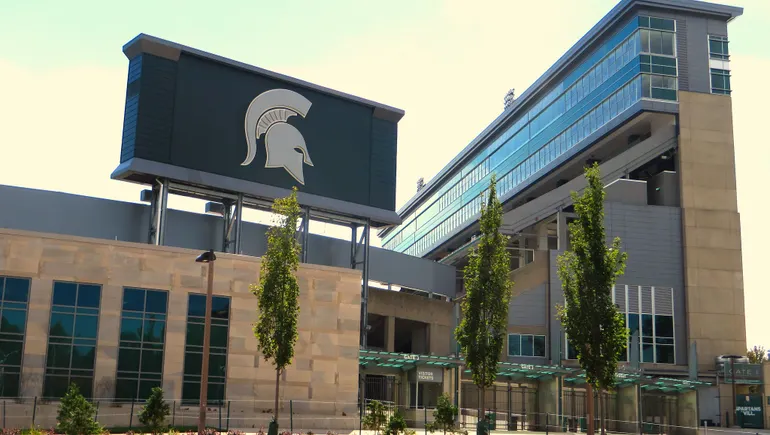
    • Michigan State University is laying off 99 faculty, staff and executives this month amid rising costs and other budget pressures, President Kevin Guskiewicz said in a public message Wednesday
    • The university had cut an additional 83 employees since March because of the Trump administration’s revocation of federal research funding. Taken together, the job cuts represent 1.3% of Michigan State’s workforce.
    • Officials expect the job eliminations to save the university $50 million annually. “Today we expect the overall general fund budget to be largely on target,” Guskiewicz said.

    Dive Insight:

    In explaining the layoffs, Guskiewicz pointed to rising costs, including significant increases in employee healthcare costs. The institution’s operating expenses generally have risen as well, a sectorwide trend playing out across the country.

    Between the fiscal years 2023 and 2024, Michigan State’s operating expenses rose 10% to $3.2 billion, according to its latest financial report. They rose 17.9% between fiscal years 2020 and 2024.

    Revenue hasn’t kept pace, and the university’s operating loss widened by nearly a quarter to $840 million in fiscal 2024. However, with state funding and other outside revenue sources factored in, the university’s total net position more than tripled during the same period.

    Along with inflation, federal funding disruptions have weighed on Michigan State’s budget. 

    By Oct. 1, the Trump administration had terminated 74 federally funded projects at the university, totaling $104 million in multiyear grants and contracts, according to Guskiewicz. Those include grants from the National Science Foundation, the U.S. Agency for International Development, the National Endowment for the Humanities, the National Institutes of Health and the U.S. Department of Agriculture.

    Another 86 research projects, at minimum, have been hit with stop-work orders, pauses on future funding or conditional terminations, Guskiewicz said. 

    Enrollment has been a bright spot for the university, with its fall headcount hitting 51,838 students, according to institutional data. 

    This total is close to our predictions and will keep us on the budget path we have laid out,” Guskiewicz said. Michigan State’s undergraduate class this semester hit a record 41,415 students.

    However, he noted recent declines in international enrollment have weighed on tuition revenue. International students made up 8.2% of Michigan State’s student body in fall 2025, down from 8.5% last year. Their share of the university’s enrollment has almost halved since 2015, when they made up 15% of its students.

    Michigan State’s colleges and administrative units have been working since the summer to cut their budgets by 9%. 

    I am proud of units achieving as many savings as possible through non-personnel actions and evaluating vacancies before filling open roles,” Guskiewicz said. “Nearly two-thirds of the reductions, in fact, were proposed across supplies, services and other non-personnel expenses.”

    But, he added, Michigan State wasn’t entirely able to avoid layoffs, hence the round of workforce cuts announced this week. 

    These colleagues are valuable parts of our community, and their loss, for any reason, is still felt by colleges and programs,” Guskiewicz said.  

    The layoff numbers don’t include those whose employment classification changed, or faculty whose contracts were not renewed. However, Guskiewicz said it was difficult to quantify how many of those contract nonrenewals were related to the budget cuts or other factors such as enrollment levels or course demand.
    Source link

  • Carnegie Mellon lays off 75 employees at engineering institute amid federal funding shifts

    Carnegie Mellon lays off 75 employees at engineering institute amid federal funding shifts

    This audio is auto-generated. Please let us know if you have feedback.

    Dive Brief:

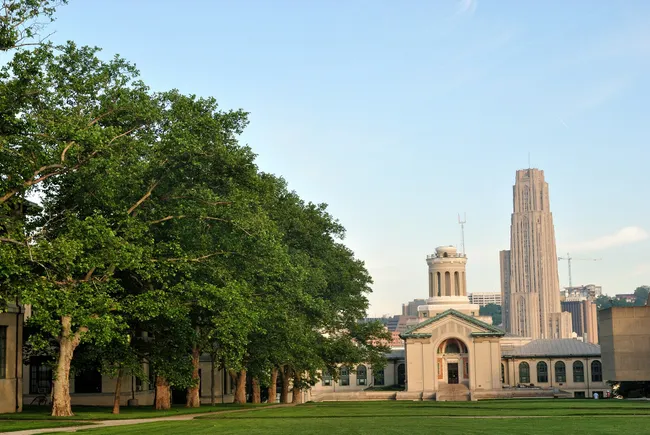
    • Carnegie Mellon University has laid off 75 employees in its Software Engineering Institute as it wrestles with disruptions to federal funding, according to a community message Wednesday from Vice President for Research Theresa Mayer.
    • Mayer tied the cuts — which amount to 10% of SEI’s workforce — to the engineering institute’s “unique financial structure as a federally funded research and development center as well as the shifting federal funding priorities that are shaping the research landscape.”
    • Carnegie Mellon as a whole is in a “strong financial position” for fiscal 2026, university President Farnam Jahanian said in August, noting that the Pittsburgh institution cut its expenses by $33 million.

    Dive Insight:

    Jahanian said in an August community message that Carnegie Mellon is poised to get through the current fiscal year without a deficit, which is more than some of its peer institutions can say. 

    But the university faces stiff financial headwinds — and what its president described as “existential challenges” — from the Trump administration’s disinvestment in scientific and academic research. 

    To tighten its budget, Carnegie Mellon has paused merit raises, reduced nonessential expenditures, limited new staff and faculty hiring, and has reduced staff in certain units through voluntary retirements and employee reductions.  

    In the August message, Jahanian described “signs of a marked decline in the pipeline of new federal research awards nationally and at Carnegie Mellon.” He added that university officials expect more cutbacks in federal agencies’ research budgets under a Republican-led Congress. 

    The university’s Software Engineering Institute, which Mayer described as integral to Carnegie Mellon’s overall research enterprise, is one of the institution’s biggest recipients of federal research funding. Sponsored by the U.S. Department of Defense, SEI develops new technologies and studies complex software engineering, cybersecurity and AI engineering problems, in large part to advance the strategic goals of federal agencies. 

    The institute took in $148.8 million in grants and contracts revenue in fiscal 2024. 

    Prior to this month’s job cuts, officials at the institute took “extensive steps to avoid this outcome, including implementing cost-saving measures in recent months,” Mayer said Wednesday. “Despite these efforts, SEI was unable to reallocate or absorb costs, so staff reductions were unavoidable.”

    Along with a slackening grant pipeline, Jahanian’s August message pointed to the possibility of reduced funding for research overhead costs. 

    The Trump administration has sought to unilaterally cap reimbursement rates for indirect research costs at 15% across multiple agencies, though these policies have been blocked by courts

    Carnegie Mellon is a plaintiff in one of the lawsuits that led to the 15% cap being permanently blocked at the National Institutes of Health, though the Trump administration has appealed the ruling. The university is also represented in lawsuits against other agencies through its membership in the Association of American Universities. 

    If a 15% cap were implemented on research overhead, that would create an additional $40 million annual shortfall for Carnegie Mellon, according to Jahanian. Indirect research costs include overhead expenses such as laboratories and support staff. 

    Beyond federal funding woes, Jahanian also noted in August that Carnegie Mellon’s projected $365 million in graduate tuition revenue for the current fiscal year is about $20 million short of initial estimates due to “lower-than-expected enrollment.”

    While Jahanian didn’t offer reasons for the shortfall, he did note that going forward Carnegie Mellon was examining its balance of undergraduate to graduate and international to domestic students to “ensure long-term stability.”

    Other universities have experienced major declines in their international enrollment amid the Trump administration’s disruptions to the visa approval process and aggressive immigration policies. 

    Officials at DePaul University, in Chicago, said recently that new international graduate student enrollment fell by 62% year over year this fall, contributing heavily to a budget crunch at the institution. 

    One group has predicted that international enrollment could drop by as much as 150,000 students this fall. 

    In recent years, Carnegie Mellon’s enrollment has grown, as has its graduate student ranks. Between 2018 and 2023, overall enrollment increased 11.2% to 15,596 students and graduate enrollment grew 11.7% to 8,307 students.

    Source link

  • Houston ISD lays off, reassigns hundreds of teachers

    Houston ISD lays off, reassigns hundreds of teachers

    Dive Brief:

    • Houston Independent School District laid off 160 uncertified teachers and 54 staff members as part of “staff leveling” efforts “to align teachers with student enrollment,” according to a district announcement on Monday. Additionally, 232 teachers were reassigned to unfilled positions.
    • The district’s student enrollment data for the 2025-26 school year has yet to be released, though Houston ISD said in a February board meeting that it was conservatively budgeting for a decrease in enrollment of about 8,000 students, which would lead to a loss of $67 million in revenue.
    • At the same meeting, the district said it would consider a proposal this fall to close some schools in the 2026-27 school year. It cited a 30,000 student decline in Houston ISD’s enrollment over the last decade.

    Dive Insight:

    The major staffing shift for Houston ISD “is a standard process that ensures the most effective teachers are leading our classrooms,” said Trey Serna, a district spokesperson, in a Monday video announcement.

    When staffing adjustments are needed, Texas’ largest school district primarily considers a teacher’s performance and certification, Serna said. 

    The move comes as the district has recently reported early successes during a state takeover aimed at turning around low-performing schools.  Superintendent Mike Miles, who was appointed by the state in June 2023, reported a sharp increase in A- and B-rated schools in the 2024-25 school year and has promised that all Houston ISD schools will fall into A- and B-rated categories by 2027.

    Adjustments to budgets and staffing due to enrollment declines are a challenge many public schools are facing nationwide. 

    If declining enrollments persist, education economics researchers foresee more layoffs and hiring freezes for districts moving forward. This, they said, could lead to a broad reversal in teacher shortages. 

    Education finance experts have suggested that while districts increasingly consider teacher layoffs, they should focus on firing ineffective and uncertified educators first. 

    In September, Florida’s Orange County Public Schools announced mass teacher reassignments as it faces a sharp, unexpected decline in enrollment this school year. Because Orange County Public Schools had 157 vacancies due to a hiring freeze, Superintendent Maria Vazquez said she was hopeful the district could retain most of its instructional staff.

    Texas’ Austin Independent School District is also moving ahead with plans to consolidate some of its schools amid ongoing enrollment declines. Superintendent Matias Segura said in a Wednesday Instagram video that the district will publish its first draft for consolidation and boundary changes by Friday evening.   

    “It won’t be perfect, and it isn’t final,” Segura said of the draft plan. “Our goal is the same one our community shares: every family deserves an excellent neighborhood school that is vibrant, well-resourced, and ready to meet each child’s needs.”

    The district plans to collect community feedback and refine the plan before the school board votes on Nov. 20.


    Source link

  • Washington University lays off over 300 employees

    Washington University lays off over 300 employees

    This audio is auto-generated. Please let us know if you have feedback.

    Dive Brief:

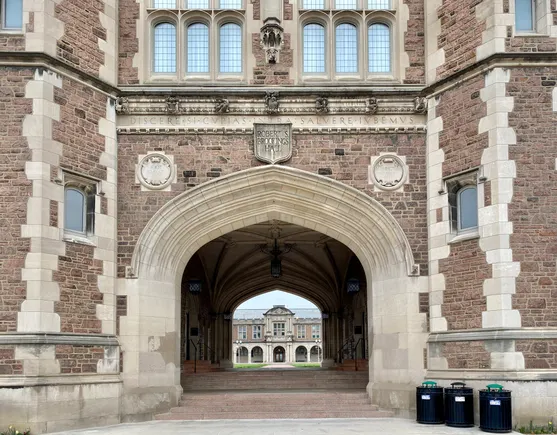
    • Washington University in St. Louis has laid off 316 staffers and eliminated another 198 unfilled positions since March, Chancellor Andrew Martin said in a community message Tuesday. 
    • Leaders made the cuts to the private university’s main campus as well as to its medical center. In all, the reductions are expected to save about $52 million annually, Martin said. 
    • The chancellor cited several budget pressures driving the cuts, including “drastic reductions in federal research funding,” the changing needs of students, and “ineffective processes and redundancies in the way we operate.” 

    Dive Insight:

    Martin framed the workforce cuts overall in terms of mission and financial sustainability. “If we want to be great, and not just good, we must focus our resources where they will have the most impact and ensure that we’re positioned for success in the long-term,” he said.

    He said the current round of reductions were finished but hinted that there could be more changes down the line. “We must continue to evaluate how we work and identify additional ways to operate more effectively in support of our mission, if we are to be successful,” Martin said. 

    Nonetheless, WashU is in a much stronger position than many of its peers in the private college world. 

    For fiscal 2024, the university logged $20.5 billion in assets on its balance sheet and an operating surplus of $150.3 million. 

    Still, that surplus has been steadily shrinking in recent years. Just between fiscal years 2022 and 2024, the figure fell by 58%. Over the same period, total expenses rose by nearly 25%, or about $1 billion, to $5.1 billion in fiscal 2024.

    For fiscal 2025, the university broke even on its budget thanks to “prudent financial management and thoughtful work,” Martin said in late July. Among other actions, WashU paused new construction projects such as a planned arts and sciences building and green space upgrades.

    In the same July message, Martin pointed to long-term “structural budget challenges that WashU must address” and announced that the university would skip annual merit raises for its employees for fiscal 2026. 

    I know this is disappointing news,” he said. “Please know it is not a reflection of your hard work and contributions, which I deeply value, but a necessary step as we prioritize long-term institutional stability and strategic investment in our core mission.” 

    As WashU looks ahead to future fiscal years, Martin noted in his July message that the university will face a heightened endowment tax bill of roughly $37 million after Republicans’ massive tax and budget bill passed this summer takes effect. 

    In fiscal 2024, the university’s endowment was worth $12 billion, or about $797,600 per student, according to the latest study from the National Association of College and University Business Officers and asset management firm Commonfund.

    Source link

  • Stanford University lays off 363 employees

    Stanford University lays off 363 employees

    This audio is auto-generated. Please let us know if you have feedback.

    Dive Brief:

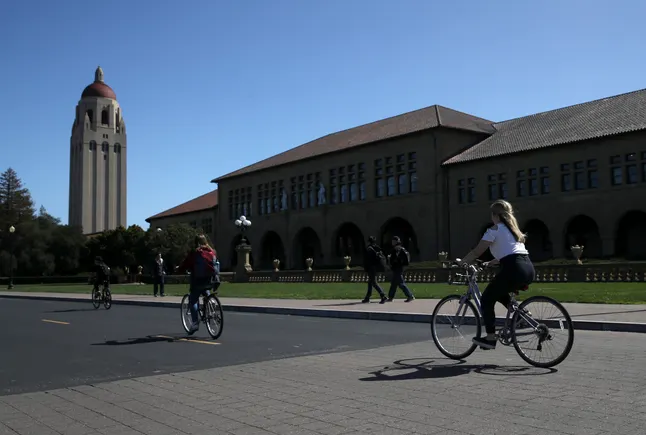
    • Stanford University laid off 363 staff members last week as part of a plan to reduce its budget by $140 million for the 2025-26 academic year.
    • In a July 31 message to campus, senior university leaders attributed the need for cuts to “a challenging fiscal environment shaped in large part by federal policy changes affecting higher education.”
    • The private California institution warned of forthcoming layoffs in June, when it extended a hiring freeze implemented in February and said it would focus capital spending on critical projects or those with external sources of funding.

    Dive Insight:

    “Ongoing economic uncertainty” has created serious challenges for the higher education sector, according to Elizabeth Zacharias, Stanford’s vice president for human resources.

    “At Stanford, anticipated changes in federal policy — such as reductions in federal research funding and an increase in the excise tax on investment income — are expected to have significant budgetary consequences,” Zacharias said in a July 31 filing with the California Employment Development Department

    Like many research institutions, Stanford has suffered under the tidal wave of efforts by the Trump administration to slash federal spending on research and development — despite some of those moves being blocked in court for the time being.

    Changes to the endowment tax could also hit Stanford hard.

    In fiscal 2024, the university had the fourth-largest endowment among U.S. colleges, valued at $37.6 billion, according to research from the National Association of College and University Business Officers and asset management firm Commonfund.

    Before 2017, colleges did not pay taxes on their endowment earnings. That year, a GOP-controlled Congress enacted a 1.4% tax on private nonprofit colleges with at least $500,000 in endowment assets per student. 

    But President Donald Trump’s signature spending bill introduced a tiered tax based on endowment assets per student that will more than quintuple the tax for the wealthiest institutions from 1.4% to 8%. Stanford, with roughly $2.1 million in endowment assets per full-time-equivalent student, will likely pay the top rate. 

    These shifts, combined with rising operational costs and changes to funding sources and programs, pushed Stanford to implement layoffs, Zacharias said.

    Stanford employs 18,000 staff and faculty, according to its website.

    The affected employees — about 2% of its workforce — worked in departments from across the university, ranging from student support services to libraries to donor and alumni relations, according to legal filings.

    In addition to 60 days of legally mandated paid notice to impacted workers, eligible employees received severance packages and career transition services, a university spokesperson confirmed Wednesday.

    Source link

  • Columbia Lays Off 180 Amid “Intense” Financial Strain

    Columbia Lays Off 180 Amid “Intense” Financial Strain

    Columbia University is laying off 180 researchers after the Trump administration cut the university’s research funding by more than $650 million.

    “Columbia’s leadership continues discussions with the federal government in support of resuming activity on these research awards and additional other awards that have remained active, but unpaid,” university leadership wrote in a memo Tuesday morning. “We are working on and planning for every eventuality, but the strain in the meantime, financially and on our research mission, is intense.”

    While federal agencies such as the National Institutes of Health, the National Science Foundation and the Department of Energy have cut research funding at universities across the country, the Trump administration has specifically targeted a handful of high-profile universities, including Columbia, for allegedly failing to curb antisemitism on campus. 

    Columbia is taking a two-pronged approach to navigating the sudden deep cuts to federal research funding. The first focuses on “continued efforts to restore our partnerships with government agencies that support critical research,” and the university said the second prong is about taking “action to adjust—and in some cases reduce—expenditures based on current financial realities.”

    Despite Columbia’s previous president acquiescing to Trump’s demands to enact numerous policy changes to address alleged unchecked antisemitism if it wanted its funding back, the university is still negotiating to recover it. In the meantime, the layoffs announced Tuesday represent about 20 percent of researchers who are funded “in some manner by the terminated grants,” according the statement signed by Claire Shipman, Columbia’s acting president; Angela V. Olinto, provost; Anne Sullivan, executive vice president for finance; and Jeannette Wing, executive vice president for research. 

    And the layoffs this week likely aren’t the end of the financial repercussions of the cuts to Columbia’s federal research funding. 

    “In the coming weeks and months, we will need to continue to take actions that preserve our financial flexibility and allow us to invest in areas that drive us forward,” the statement said. “This is a deeply challenging time across all higher education, and we are attempting to navigate through tremendous ambiguity with precision, which will be imperfect at times.”

    Source link

  • Haskell Indian Nations U lays off probationary workers

    Haskell Indian Nations U lays off probationary workers

    Haskell Indian Nations University, a small tribal college in Lawrence, Kan., laid off nearly 30 percent of its faculty and staff to comply with the Trump administration’s directive to shrink the size of the federal workforce. 

    An order came through the Office of Personnel Management Feb. 13 to fire all probationary employees who had not yet gained civil service protection.

    Haskell is one of two tribal colleges funded by the Department of the Interior. As of fall 2022, the institution had 727 full-time students and employed 146 faculty and staff. Local news reports that about 40 probationary employees have been laid off.  

    The Haskell Board of Regents said in a statement that it was “closely monitoring the recent directive from the Office of Personnel Management, which has resulted in the termination of certain probationary federal employees across multiple agencies. At this time, the Board has not received confirmation that Haskell Indian Nations University is exempt from these layoffs.”

    A member of Haskell’s Board of Regents said the layoffs are in “basically every department on campus”—faculty, student services, athletics, IT and more, according to The Lawrence Times.

    The institution has faced recent turmoil, running through eight presidents in six years and being subject to a congressional investigation over failing to address student concerns about sexual assault.

    In December, Kansas Republican senator Jerry Moran and Republican representative Tracey Mann put forward legislation to take the college out of the hands of federal oversight and transfer it to a Haskell Board of Trustees appointed by the tribal community.

    Source link

  • Education Department lays off civil servants

    Education Department lays off civil servants

    The U.S. Department of Education laid off some civil servants on Wednesday, Politico reported, citing multiple people familiar with the matter. 

    It’s not yet clear how many employees were affected, but they worked for a range of offices within the department, from civil rights to federal student aid. Earlier that day, a federal judge approved the Trump administration’s plan to offer buyouts to vast swaths of the federal workforce. 

    The move is the latest personnel disruption at the agency. Earlier this month, dozens of employees were put on administrative leave after attending a diversity, equity and inclusion training during the first Trump administration.

    Many of the terminated department employees were still in their probationary period, according to Politico, meaning they’d been on the job for less than a year and lacked full civil service protections, though nonprobationary employees were also affected. On Thursday, the Associated Press reported that the Trump administration had ordered all federal agencies to terminate their probationary employees, part of a broader effort to reduce the federal workforce.

    Source link

  • Harvard lays off staff at its Slavery Remembrance Program

    Harvard lays off staff at its Slavery Remembrance Program

    Harvard University last week laid off the staff of the Harvard Slavery Remembrance Program, who were tasked with identifying the direct descendants of those enslaved by Harvard-affiliated administrators, faculty and staff, The Boston Globe reported.

    The work, which was part of the university’s $100 million Legacy of Slavery initiative, will now fall entirely to American Ancestors, a national genealogical nonprofit that Harvard was already partnering with, according to a news release.

    A Harvard spokesperson declined to comment on the layoffs to the Globe.

    The Harvard Crimson first reported the news, noting that the HSRP staff were terminated without warning Jan. 23.

    Protesting the move, Harvard history professor Vincent Brown resigned from the Legacy of Slavery Memorial Project Committee, which was assigned the task of designing a memorial to those enslaved by members of the Harvard community.

    Brown wrote in his resignation letter, which he shared with Inside Higher Ed, that he had recently returned from a productive research trip to Antigua and Barbuda when he “learned that the entire [HSRP] team had been laid off in sudden telephone calls with an officer in Harvard’s human resources department.” He called the terminations “vindictive as well as wasteful.”

    “I hope and expect that the H&LS initiative will weather this latest controversy,” Brown wrote. “I only regret that I cannot formally be a part of that effort.”

    Harvard’s Legacy of Slavery Initiative has repeatedly come under fire since it was announced in 2022. Critics assailed its lack of progress last year. The two professors who co-chaired the memorial committee resigned last May, citing frustration with administrators; the executive director of the initiative, Roeshana Moore-Evans, followed them out the door. Then HSRP founding director Richard Cellini told the Crimson last fall that vice provost Sara Bleich had instructed him “‘not to find too many descendants.’”

    A university spokesperson denied that charge, telling the Crimson, “There is no directive to limit the number of direct descendants to be identified through this work.”

    Cellini was among those fired from the HSRP last week.

    Source link