Tag: lead

  • How Higher Ed Marketers Can Lead With Creativity

    How Higher Ed Marketers Can Lead With Creativity

    Colleges and universities continue to compete for attention across countless platforms; this scattershot approach often comes at the expense of cohesion. But simply adding more content—made easy within the decentralized environment of many campuses—isn’t a solution to deeper strategic and directional challenges. In the famous words of Merry Baskin, “Like a shark, brands must move forward or die.” For colleges and universities, that forward motion begins with centering courageous, strategic creativity as a core operating principle and with higher education marketing leaders creating a system to ensure all are moving in the correct direction.

    I have argued that creativity continues to drive commercial value, however, investing in the intangible up front can be difficult when budgets remain static. So, our focus isn’t on only proving that creativity adds value but also showing how investing in it up front can maximize the value it creates. We need a framework for higher ed marketing leaders to establish a system for defining and embedding a culture of creativity across teams. This will help teams create more effective work and collaborate with agencies in support of institutional goals.

    Modeled loosely on WARC’s creative effectiveness ladder, this three-phase framework should help marketing leaders not only spark creativity but also systematize it as a shared method. First, start by defining what creativity means within our unique institutional contexts instead of a loose collection of ideas. Then, develop the systems, roles and language that bring that definition to life. Finally, diffuse those practices across teams and departments to embed creativity into the fabric of institutional strategy.

    Step 1: Define

    Start by establishing the foundation for creative effectiveness by aligning on what creativity means, how it’s measured and why it matters. This will bring clarity to metrics, principles and strategic outcomes so creative work can be evaluated with purpose.

    Create a shared set of key measures for creative effectiveness

    Marketing leaders must establish clear, institution-specific indicators of what effective creativity looks like. No matter how rigorous the approach, consistent application and ensuring these measures are aligned are most important. Example measures include:

    • Brand recall: Did prospective students or alumni remember the name of the institution after seeing an ad? This indicates a clear connection to the brand.
    • Distinctiveness scores: In focus groups, ask audiences to compare your marketing to peer institutions—does your work stand out or feel generic? No matter the medium, attention is the first barrier to more effective work.

    Determine principles of creative effectiveness

    Determining principles of creative effectiveness means articulating the core beliefs and standards that guide all creative work across the institution. These principles serve as guardrails—ensuring that creativity remains consistent, purposeful and aligned with institutional values. When widely understood and adopted, they help teams evaluate work objectively and make more confident, collaborative decisions. Examples can be directional:

    • Brand prominence: Brand or branding must be present within the first three seconds.
    • Distinctive assets: Consistently use the school’s signature color palette, typeface and photographic style—even on social platforms—to maintain visual recognition. Stay on brand, not on trend.
    • Commit to creativity: Use longer durations, more media channels and consistent storytelling over time to drive cumulative impact.
    • Emotional truth wins: Campaigns should connect emotionally with audiences; stories of real students often outperform statistics.

    Align key measures of effectiveness to marketing KPIs

    Marketing leaders should evaluate creative work using engagement-based metrics—such as time on page, view-through rates, social saves and content shares. These go beyond impressions to signal true resonance and provide a shared set of indicators for what effective creativity looks like in practice.

    Step 2: Develop

    Once effectiveness is clearly defined, leadership should build the internal systems to support and scale it. This phase is about ensuring teams are equipped to execute in practice.

    Identify critical roles within the institution

    First develop a network of collaborators: content producers, enrollment leaders, advancement partners, institutional researchers and/or agency teams. Map out who holds creative influence across the institution and define the roles they play in shaping, supporting and evaluating creative work. Clarity will empower contributors and reinforce accountability.

    Create a shared language for evaluation

    Marketing leaders need a consistent, responsive way to evaluate creative work. By building in intentional check-ins throughout the creative process, teams can replace feelings with shared language that sharpens feedback and improves outcomes.

    Leaders should consider three stages of evaluation:

    • Pretest: Introduce a lightweight, consistent method to test creative ideas before launch. This might include quick student feedback loops, internal scoring rubrics or pilot testing in key markets.
    • Platform: Centralize creative assets, guidelines and effectiveness learnings into a shared, accessible platform.
    • Pulse: Establish a regular cadence for reviewing the performance of creative work both in-market and in internal perception.

    Step 3: Diffuse

    With creativity defined and the right systems in place, the final step is to diffuse that culture across the institution. To drive real institutional value, creative effectiveness must be shared, socialized and scaled across departments, disciplines and decision-makers.

    Identify key working groups to deliver creativity workshops

    Start by identifying key teams or departments—enrollment, advancement, student life, academic units—that shape public-facing messages or student experiences. Bring them into the fold through collaborative workshops that unpack creative principles, show examples of effective work and introduce shared evaluation tools.

    Develop measurement frameworks aligned to department-level KPIs

    Creativity becomes powerful when its effectiveness is measured in context. That means helping individual departments or units tie creative performance to their own goals—whether it’s growing attendance at student events, boosting open rates on fundraising emails or improving reputation scores for a new academic program. By co-creating simple measurement frameworks with each team, marketing leaders position creativity as a strategic asset.

    Build a best-in-class repository for cross-campus learning

    Finally, celebrate and scale what works. Create a living archive of standout creative work, from bold campaigns to scrappy social posts that have delivered results. Share the backstory: What was the challenge? What was the idea? What impact did it have? This becomes a source of inspiration, a tool for onboarding new team members and a tangible way to reinforce these new values.

    By defining what creativity means, developing the systems to support it and diffusing its value across campus, marketing leaders can turn creativity into a measurable, repeatable driver of effectiveness.

    Christopher Huebner is a director of strategy at SimpsonScarborough.

    Source link

  • Marketing Can’t Lead If It’s Shackled by Structure 

    Marketing Can’t Lead If It’s Shackled by Structure 

    Over the past few years, I’ve had the opportunity to conduct organizational assessments for a range of colleges and universities, from small private institutions to large public campuses. Despite the wide variety in size, mission, and complexity, one core issue continues to surface: 

    The greatest threat to effective integrated marketing communications in higher education isn’t a lack of creativity, talent, or ambition; it’s internal misalignment. We have to get out of our own way. 

    This misalignment isn’t just a problem with processes or a cause of inefficiencies. It directly impacts a university’s ability to generate revenue, build and protect its reputation, and, ultimately, secure its long-term viability. 

    Below are five consistent themes I’ve observed across the institutions I’ve worked with, including those I personally worked for before consulting. I have found patterns that emerge regardless of structure, budget or institutional type. They’re internal challenges that severely undermine the very work marketing and communications professionals are tasked to deliver. 

    1. Decentralized Chaos 

    Most institutions operate under some form of distributed marketing where individual colleges, divisions, and programs employ their own communications and/or marketing staff. That’s not inherently problematic. The issue arises when these teams operate independently without shared planning cycles, coordinated messaging, or a central strategy to anchor their work. 

    At best, this results in duplicate efforts, inconsistent voice, and campaign overlap. At worst, it results in undertrained and underresourced staff holding the institution’s reputation and revenue in their hands with anchor to a central strategy.  

    2. Roles That Don’t Match Reality 

    Job descriptions across campuses are often written for tactical support roles: social media posting, event promotion, basic writing. In practice, many of these individuals are leading strategic initiatives, advising campus leaders, coordinating major campaigns, and serving as the face of their departments. 

    This gap between expectation and reality leads to chronic role strain, under-recognition, and burnout. Institutions end up relying on strategic thinking that they haven’t resourced or defined. Additionally, these roles tend to live in isolation, left to their own devices to prioritize their time and resources and even improve their own skillsets, while any connection to the central marcom unit is deemed optional. 

    3. Data Without Direction 

    Marketing technology is everywhere (CRMs, CMSs, project management tools, calendars, analytics platforms). However, the ability to extract meaningful, coordinated insight from those systems is rare. This may be the most critical issue I have seen uniformly across campuses.  

    Too often, teams track different metrics (if they track at all), interpret success in different ways, and lack access to integrated dashboards or audience journey data. There’s no central hub for marketing intelligence, and no unified approach to campaign evaluation. And in most cases, there are no connections between data sources to see if efforts are working. 

    4. Strategy Without Governance 

    Even when a university-wide marketing strategy exists, it often lacks enforcement mechanisms. Central communications teams may offer brand guidelines, campaign frameworks, or shared messaging, but unit-level teams aren’t always required or even incentivized to use them. 

    This results in fragmentation of messaging and a reactive culture in which strategy is optional and consistency is left to chance. 

    5. The Forgotten Internal Audience 

    Internal communications are frequently overlooked in the broader marketing ecosystem. Staff often describe a culture of “self-navigation,” where onboarding is informal, institutional goals are unclear, and team alignment is hit-or-miss. 

    Without strong internal communication, even the most ambitious marketing strategies falter. People can’t execute on what they don’t understand or weren’t invited into. 

    The Cost of Misalignment 

    These internal barriers are often invisible to the public but have real consequences: 

    • Missed enrollment targets 
    • Ineffective or underperforming campaigns
    • Brand inconsistency 
    • Lack of alumni engagement 
    • Delayed crisis responses 
    • Low morale and high turnover 
    • Internal resentment and lack of respect 
    • Risk to institutional reputation 

    In short, when internal teams aren’t set up to succeed, the institution’s ability to drive revenue and protect its reputation is compromised.

    What Institutions Must Do Now 

    If colleges and universities want to compete, marketing and communications cannot be treated as a service unit or support function. They must be positioned as strategic leaders with the authority and infrastructure to drive outcomes that directly influence institutional viability. 

    This means moving beyond collaboration and into accountability, with clear decision rights, cross-campus responsibility, and presidential endorsement. Just as individual units cannot hire a person without HR, they should not be able to advertise on behalf of the institution without central authority. 

    Here’s what that requires: 

    Elevate Marcom to a Strategic Leadership Function 

    Marketing and communications must sit at the strategy table, not just in times of crisis or campaign launches, but as a permanent fixture in institutional planning. That includes having a seat on executive leadership teams. While a reporting line to the president or chancellor is ideal, it isn’t necessary if access and support exist.  

    No major initiative—enrollment, advancement, academic innovation—should move forward without Marcom’s leadership embedded from the beginning. 

    Centralize Authority, Decentralize Execution 

    Establish a clear governance structure that defines who owns the brand, who approves campaigns, and how messaging is prioritized. Marcom should lead the strategy, planning cycles, audience research, and brand integrity, while colleges and units execute within those frameworks. 

    This approach balances institutional consistency with local relevance and eliminates duplicative, misaligned marketing efforts. 

    Redefine Roles to Match Reality 

    Audit all marketing and communications roles across the institution. Rewrite job descriptions to reflect the actual strategic, analytical, and leadership work staff are doing. Then, align titles, compensation, and reporting structures accordingly, building accountability to the central Marcom strategy. 

    The reality is that many professionals are already acting as strategists but without the recognition, decision-making authority, or organizational support to do so effectively. This should include much-needed professional development for those typically forced to self-teach. 

    Build the Infrastructure for Insight and Alignment 

    Invest in integrated systems (integrated CRMs, content management platforms, campaign dashboards, and persona libraries) but pair those tools with processes. This means shared campaign calendars, institution-wide planning cycles, and a unified set of performance indicators. 

    Without alignment on audiences, channels, timing, and outcomes, even the best content will underdeliver. 

    Use a Marketing Maturity Model to Drive Progress 

    Adopt a clear roadmap to measure and grow marketing capabilities across six key domains: brand management, audience journey integration, insights infrastructure, strategic alignment, risk management, and organizational culture. 

    Then give Marcom the responsibility (and the resources) to lead that transformation. Not just participate in it. Own it. 

    This is not about creative polish or tactical execution. It’s about institutional sustainability. The higher education market is louder, more competitive, and less forgiving than ever. 

    Institutions that continue to treat marketing and communications as a support function will struggle to adapt. Those that empower it as a core leadership discipline, with the needed structure, authority, and resources, will build stronger brands, increase revenue, and secure their relevance for the future. 

    Source link

  • Lead Generators Still Lurking for Bodies

    Lead Generators Still Lurking for Bodies

    Predatory lead generators are still lurking the internet, looking for their next victims.  These ads continue to sell subprime online degrees from robocolleges like Purdue Global, Colorado Tech, Berkley College, Full Sail, Walden University, and Liberty University Online.  After you provide your name and number, they’ll be calling you up.  But these programs may be of questionable value. Some may lead to a lifetime of debt.  Buyer beware.  

    This ad and lead generator is originating from TriAd Media Solutions of Nutley, New Jersey.  

    Down the rabbit hole…

    Source link

  • Senate Dems Grill Trump’s Pick to Lead Civil Rights Office

    Senate Dems Grill Trump’s Pick to Lead Civil Rights Office

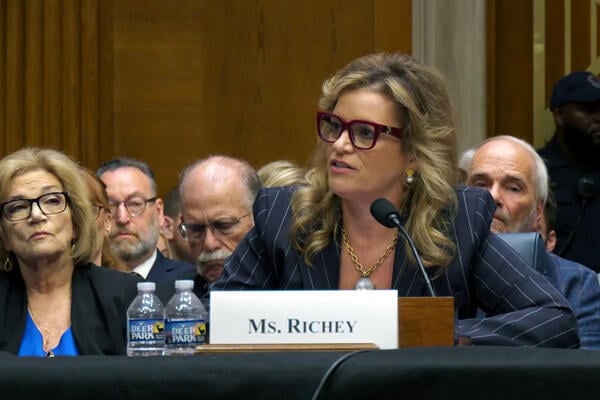
    Kimberly Richey, a Florida education official, made her case Thursday about why she should lead the Education Department’s Office for Civil Rights, pledging “unwavering” support of the administration’s priorities such as protecting Jewish students.

    “Should I be confirmed as assistant secretary for civil rights, I will proudly be joining an administration that will not allow students to be intimidated, harassed, assaulted or excluded from their institutions,” she said in her opening remarks.

    But repeatedly throughout the hearing, Democratic senators interrogated her on how she plans to address a massive backlog in complaints—which one senator said has more than doubled since Trump took office, to 25,000—with a reduced staff.

    “This administration has fired more than half of the staff at OCR, and President Trump is now asking, in his budget, to slash that by $49 million next year, so explain to me how those firings and that funding cut will help reduce that backlog? I want to understand how you’re going to square that circle,” Sen. Patty Murray, a Democrat from Washington, asked early on in the hearing.

    Richey mostly avoided answering the questions, arguing that she had not yet assumed the role of assistant secretary and, therefore, had no say in the recent changes to OCR.

    “As a nominee, I do not have access to information with regard to the decisions that are being made at the department,” Richey responded. “I’m not in communication with OCR leadership or the secretary. One of the reasons why this role is so important to me is because I am always going to advocate for OCR to have the resources it needs to do its job. I think that what it means is I’m going to have to be really strategic, if I’m confirmed, stepping into this role, helping come up with a plan where we can address these challenges.”

    Several others doubled down on Murray’s line of questioning, including Sen. Andy Kim, a New Jersey Democrat, who asked Richey if antisemitism was getting worse in America. When she said it was, he questioned how cutting OCR staff is conducive to fighting antisemitism on college campuses. She reiterated her answer to Murray’s question, saying, “I can’t explain or provide information on decisions I wasn’t involved in.”

    Richey was one of four people who testified Thursday before the Senate Health, Education, Labor and Pensions Committee. She and the nominee for deputy secretary of education, Penny Schwinn, fielded the bulk of the committee’s questions as lawmakers pressed for answers about the OCR’s operations and priorities, proposed budget cuts, and the president’s plans to dismantle the Education Department. The senators didn’t vote on whether to advance the nominations to the Senate floor; that step will likely occur at a later meeting.

    Richey is currently senior chancellor for the Florida Department of Education and has twice served in OCR before, including a brief stint as acting secretary of civil rights at the end of Trump’s first term and the beginning of Biden’s presidency. Her confirmation hearing comes months after the Trump administration slashed more than half of OCR’s staff, including shuttering seven of the 12 regional offices dedicated to investigating complaints. The office has also reportedly begun prioritizing opening cases regarding trans women athletes and antisemitism since Trump’s second term began, letting other cases pile up and go unaddressed, according to multiple news reports.

    In the confirmation hearing, Richey expressed strong support for those causes, stressing that she led OCR when it investigated one of the federal government’s earliest cases against a school for allowing a trans woman to play on a women’s sports team.

    “I’m certainly committed to vigorously enforcing it and continuing to pursue these cases,” she said.

    In response to a different question, though, she did say that OCR would investigate certain complaints of discrimination related to gender identity and sexual orientation—an answer that appeared to incense Republican senator Josh Hawley of Missouri.

    “I want to be crystal clear on this—I think it’s a very dangerous thing to start allowing this into Title IX, which, as you know, it is a landmark statute, it is vitally important, and it has been under attack for four long years,” he said, asking her to confirm that OCR will “go after” colleges and universities that allow trans women to play women’s sports.

    He also warned Richey that she should “rethink” her position that OCR can investigate discrimination based on gender identity.

    Sen. Angela Alsobrooks, a Democrat from Maryland, pressed Richey on whether she would continue OCR’s new system of prioritizing cases regarding antisemitism and trans athletes, asking if all forms of discrimination should be treated with equal importance.

    Richey told Alsobrooks she does believe “it’s important to vigorously enforce all of the federal laws that OCR is responsible for enforcing.” Later in the hearing, she noted that Education Secretary Linda McMahon is “prioritizing” removing trans women from women’s athletics, and she plans to do the same if confirmed.

    Schwinn, who was formerly Tennessee’s commissioner of education, received most of the panel’s questions about the Trump administration’s efforts to dismantle the education department. In response a question from Sen. Jim Banks, an Indiana Republican, about what steps would be required to dismantle the department, she stated that she “would certainly work, if confirmed, with the secretary and with Congress on any actions related to the role of the department” and that she believes in equipping states with legislation and funding that will help them improve their own educational systems.

    “A department or an agency in the federal government is not going to change the outcomes of students—the teacher in the classroom is going to teach the standards that are approved by that state. The parent is the parent of that child. What we need to do is ensure we’ve created a system that is going to drive outcomes,” she said. “That is not going to happen from the federal government, whether there is a Department of Education or not.”

    Source link

  • Distorted Views of Higher Ed Lead to Wrong Remedy (opinion)

    Distorted Views of Higher Ed Lead to Wrong Remedy (opinion)

    Every day, in articles, podcasts and social media, I learn about American higher education.

    I learn that it aggressively stifles ideas that deviate from a narrow leftist orthodoxy. I learn that it privileges identity and politics over merit and knowledge.

    I learn that it is rife with antisemitism while serving as a safe harbor for people of color and LGBTQ+ people. I learn that Harvard, Columbia and other Ivy League universities are the prominent tip of a higher education iceberg that threatens to destroy our culture and country.

    If that is all I knew about American higher education, I would support tearing it down.

    I would think that American higher education, in anything resembling its current form, cannot and should not be saved.

    However, because I am a college president and have the opportunity to engage with students, faculty, staff and other college leaders every day, I think otherwise.

    Every day, I see students from myriad backgrounds and with disparate beliefs flourishing because they interact with one another in class, in the dining hall, in student residences, on athletic teams and in clubs. I hear about students whose understanding of the world is being pushed and transformed by faculty who expose them to new perspectives and new information.

    Every day I interact with students and alumni who are achieving their full potential because our college and our donors provide financial aid that caps student loans at $27,000 over four years, which is less than the average new car loan. Every day I am reminded that racism, sexism and transphobia have not been eliminated from our classrooms or our campuses—despite seeing daily evidence of our efforts to ensure that neither race, religion, nor any other identity confers advantages or disadvantages on our students, faculty and staff.

    It is because I see what college is every day, and not just what occurs on rare days on some campuses, that I know that ongoing efforts to tear down higher education are a travesty for our children and our country.

    It is why I know that the actions of those who are rarely on campus, and those who are focused on scoring political points, represent existential threats to America in what will continue to be a world in which knowledge and technology dominate.

    Much of the past 80 years shows what happens when the United States chooses knowledge over ignorance and decides to invest in its young people. After World War II, the U.S. made it possible for veterans, and then women, people of color and lower-income students, to attend college, raising the quality of life for millions.

    Our government partnered with universities to develop a research infrastructure that became the envy of the world. Innovations transformed lives and society. Diseases were cured. People lived longer and healthier lives.

    So, what confronts us now is a decision that will determine what kind of lives our children and grandchildren have.

    Are there too many colleges and universities at current prices? Are there some faculty who are intolerant of views that are inconsistent with their own? Would some college curricula benefit from more engagement with the real world?

    Yes, yes and yes.

    But will future generations thank us if we destroy the higher education system that took generations to build? Will they be better off if we judge every faculty member, administrator and student by the actions of those on the fringe, or by what we observe at a small number of colleges? Will they be better off if we shift control of scientific and intellectual innovations, course content and pedagogy from scholars to bureaucrats and politicians?

    For the sake of future generations and our country, we must find ways to convene a national discussion on the future of higher education. What are we trying to accomplish as a country, what part does each college play in that collective goal and how can we ensure the system is effective? What is right for the country is not the sum of the paths colleges set for themselves. It is not what colleges individually decide while trying to avoid existential threats from protesters, activist donors or state and federal governments.

    We must continue constructive engagement involving representatives from government, boards of trustees, college leadership, think tanks, student groups, the American Association of University Professors and other critical constituencies. The result must be a plan and action.

    As a soon-to-be former college president and the father of a future college student, I look forward to continuing to be part of this fight in the years to come. Those who sacrificed to create our great country, and those who will be impacted by our actions in the future, deserve nothing less.

    David R. Harris will step down in June after seven years as president of Union College in Schenectady, N.Y. He will join Harvard Graduate School of Education in the fall as a president in residence.

    Source link

  • Together We Lead: A New Era of HBCU Transformation

    Together We Lead: A New Era of HBCU Transformation

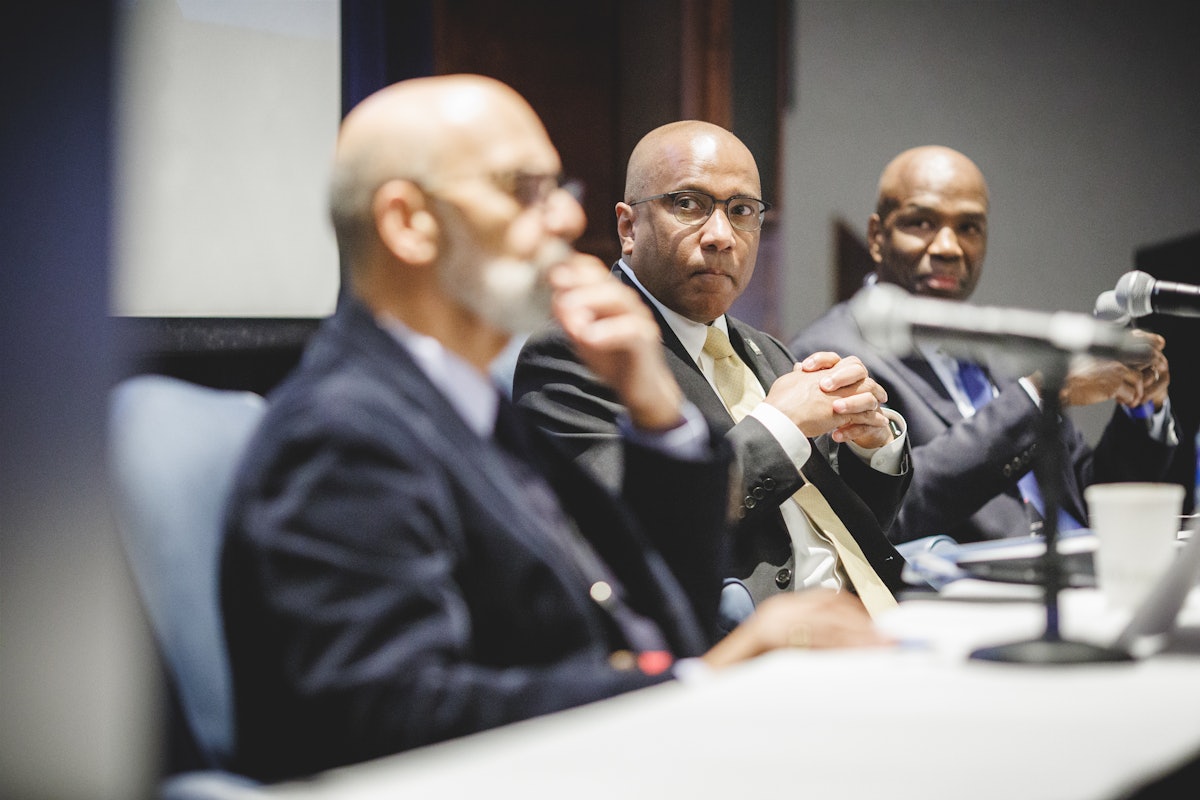
    Dr. Michael Lomax, Dr. Harry L. Williams, and Jim Runcie

    By Michael L. Lomax, Harry L. Williams and Jim Runcie 

    At a time when higher education is facing increased scrutiny, economic headwinds, and technological disruption, a group of institutions is charting a new path forward—one grounded in legacy, strengthened by collaboration and built for the future. These are historically Black colleges and universities (HBCUs). And they are proving that with the right investments and strategic partnerships, transformation is not only possible—it’s scalable.

    Four years ago, UNCF, Thurgood Marshall College Fund (TMCF) and Ed Advancement launched the HBCU Transformation Project—a collective effort to strengthen institutional sustainability, enhance student success and modernize campus operations across a growing network of these mission-driven institutions.

    The results speak volumes. Between 2020 and 2024, while national higher education enrollment declined, institutions participating in the HBCU Transformation Project grew their enrollment by 5.1%. In an era of enrollment contraction, these colleges are not only holding the line—they’re expanding their impact.

    “This effort is rooted in a networked approach,” according to Dr. Michael L. Lomax, president and CEO of UNCF. “When we combine institutional insight with philanthropic investment and aligned technical support, we can accelerate change in ways that benefit students, campuses and communities.”

    The initiative currently supports more than 40 HBCUs—from urban campuses to rural colleges—each selected to represent the diversity and strength of the sector. Through this initiative, campuses have redesigned their enrollment systems, implemented new technology platforms, modernized financial aid processes and invested in data-informed student support services.

    What ties these efforts together is a shared commitment to transformation to secure long-term institutional health and improve outcomes for students. It’s about building the infrastructure that allows these colleges to thrive in a fast-evolving higher education marketplace.

    “Our students need more than degrees. They need meaningful pathways to jobs, leadership and advancement,” according to Dr. Harry L. Williams, president and CEO of TMCF. “This work ensures our institutions are positioned to align with 21st-century workforce needs, opening doors to opportunity.”

    Beyond enrollment and academic programs, the Transformation Project is helping these institutions rethink how they operate. By investing in operations, shared services and scalable back-office solutions, the initiative is removing the all too pervasive obstacles of outdated systems and under-resourced departments. We are making foundational changes that will yield a lasting impact.

    Jim Runcie, CEO of Ed Advancement, put it simply: “We’re helping institutions do what they already do well—but with the right tools, systems and capacity behind them. Sustainable growth starts with operational strength.”

    The economic importance of HBCUs cannot be overstated. According to UNCF’s 2024 Economic Impact Report, these institutions generate $16.5 billion annually and support over 136,000 jobs nationwide. Their graduates—from engineers to educators, scientists to entrepreneurs—fuel industries, build communities and lead across sectors.

    And yet, this value has too often gone underrecognized. The HBCU Transformation Project is shifting that narrative—moving from proof-of-concept to proof-of-impact.

    UNITE 2025, UNCF’s annual convening of institutional leaders and strategic partners, will spotlight this progress. With the theme Together We Lead, UNITE is the premier platform for sharing solutions, surfacing new ideas and catalyzing partnerships. It’s where transformation moves from theory to practice.

    Looking ahead, the path is clear. We must continue to strengthen these institutions—through technology, leadership development, data utilization and investment. The transformation of HBCUs is a smart strategy for the future of American higher education and for maximizing the opportunity to link arms with international partners, seeking to mobilize global communities in a different way.

    Now is the time for more partners—investors, policymakers, employers and innovators—to join us. The groundwork has been laid. The momentum is building. And the opportunity is real.

    Together, we lead.


    Dr. Michael L. Lomax is president and CEO of the United Negro College Fund (UNCF).

    Dr. Harry L. Williams is president and CEO of the Thurgood Marshall College Fund (TMCF).

    Jim Runcie is CEO and co-founder of the Partnership for Education Advancement.


    Source link

  • How to Lead Through Uncertainty (opinion)

    How to Lead Through Uncertainty (opinion)

    Uncertainty is unavoidable. Whether it relates to relatively minor topics such as today’s traffic and weather or potentially life-altering issues such as our health and employment, coping with an unknown future is part of our daily lives. At the same time, we are living in a moment of extraordinary uncertainty, with numerous changes to the landscape of higher education and increasing economic instability.

    If you are in a leadership role—whether that means leading an academic unit or leading a research lab or classroom—you may be feeling the weight not only of managing uncertainty for yourself, but also of guiding those you lead through uncertain terrain. In doing so, you are likely to encounter situations where those you lead are looking for definitive information around questions that you are not able to answer.

    How do you lead in these situations? I’m a firm believer that leaders can always do something even when it is not the specific thing that people are hoping for. In this case, I propose that even when we can’t provide answers or predict what the future will hold, we can offer something that might be even more valuable—the skills needed to manage uncertainty.

    Empowering others in the face of uncertainty is a complex and nuanced process, and your approach will differ depending on each individual and context. However, some steps that are likely to be helpful are:

    • Acknowledge the challenge. As a leader, you may feel an urge to avoid talking about issues that you’re not able to solve. However, this does not make those issues any less real for those you lead. Start by validating what is at stake for an individual, whether this is job stability, research funding or admission to graduate school. You can also acknowledge the broader challenge that uncertainty brings and how it taxes us mentally and emotionally. Acknowledging challenges does not mean that you are taking the blame for their existence or that you will not advocate to uphold the rights of individuals and shared values of your institution. However, openly recognizing the reality of a situation can go a long way in building trust with those you lead.
    • Reflect on past resilience. Every person you lead is a unique individual with their own way of managing adversity. You can offer some general strategies, such as focusing on purpose and impact and leaning on community for support. Even more helpful is to empower each person by encouraging them to reflect on challenges they have faced in the past and think about what strategies and supports enabled them to manage those situations. Helping someone remember that they have overcome difficult situations in the past provides guidance as to how they can do so again and builds their self-confidence to do exactly that.
    • Focus on what you can control. One of the many things that uncertainty robs us of is our sense of self-determination. A natural response is to place the greatest focus on the areas where we have the least amount of control. Effectively managing uncertainty or adversity can require that we do the opposite. Importantly, our domain of control includes both what we do and how we do it. You can offer guidance to an individual on how to create a plan and take actions that are within their domain of control, while also reinforcing that they are the one in control of the values and ethics that will guide the choice and implementation of those actions.
    • Create space for self-care. When the challenges we face may stretch over weeks, months or even years, self-care is more critical than ever in sustaining ourselves for what is to come. Just as you can help each person you lead reflect on their unique coping strategies, you can help them make a plan for self-care activities that will provide the greatest benefit to their mental health. This might include time spent doing activities they enjoy alongside people they care about. It can also mean checking out for a set time and playing video games or streaming a show where the only value is entertainment.

    Depending on your leadership role, simply managing your current responsibilities may already feel overwhelming. Adding in the task of helping others manage uncertainty may seem impossible. You may also feel unprepared to navigate a topic for which you haven’t received specific training. Those are very real challenges, but they do not have to prevent you from taking action.

    The principles outlined above can be woven into everyday meetings and email discussions and thus reap benefit without increasing workload. You can also lean on existing resources and expertise to disseminate helpful ideas in a time-efficient manner. For example, consider sharing an article or podcast on resilience, uncertainty or self-care with your team and setting aside 15 to 20 minutes at your next meeting to discuss the advice offered by experts. Or for a deeper dive, you can choose a book and work through each chapter together over a monthly sack lunch.

    As a leader, there is always something that you can do. And even when you don’t have all of the answers, you can have a powerful positive impact by mindfully guiding yourself and others through uncertainty.

    Jen Heemstra is the Charles Allen Thomas Professor of Chemistry and chair of the Department of Chemistry at Washington University in St. Louis. Her research is focused on harnessing biomolecules for applications in medicine and the environment, and she is the author of the forthcoming book Labwork to Leadership (Harvard University Press, August 2025)

    Source link

  • Historian Dr. Jonathan Holloway to Lead Henry Luce Foundation Following Rutgers Presidency

    Historian Dr. Jonathan Holloway to Lead Henry Luce Foundation Following Rutgers Presidency

    Dr. Jonathan HollowayDr. Jonathan Holloway has been named the new President and CEO of the Henry Luce Foundation, following his five-year presidency at Rutgers University.

    The Henry Luce Foundation announced on Friday, that Holloway will become its seventh President and CEO in the organization’s 89-year history. The Foundation’s Board Co-Chairs, Debra Knopman and Terry Adamson, praised Holloway as “an eminent historian, a respected scholar of the humanities, a public intellectual, and an influential leader in higher education,” highlighting his “thoughtful approach to collaboration” and “firm commitment to the Foundation’s long-term view.”

    Holloway, who will succeed Dr. Mariko Silver (who departed in October 2024 to lead the Lincoln Center for the Performing Arts), expressed his enthusiasm for the new role.

    “I am honored to join the Henry Luce Foundation after I complete my tenure at Rutgers and to build upon its decades of remarkable work to foster discussion across differences, improve public discourse, and nurture ideas that will strengthen communities.”

    Holloway’s appointment comes after his term as Rutgers’ 21st president and first Black president in the university’s 250-year history. His tenure saw both accomplishments and challenges. In September 2023, the Rutgers University Senate passed a no-confidence vote (89-47) citing concerns about shared governance following decisions including the merger of medical schools and his handling of a faculty strike.

    Despite these challenges, Holloway championed several initiatives during his Rutgers presidency. He established the Rutgers Scarlet Service program, providing students with paid internships at nonprofit and government organizations. He also launched the Rutgers Democracy Lab at the Eagleton Institute of Politics in November 2024, focusing on democratic engagement and civil discourse. Under his leadership, the university saw record-breaking freshman enrollment with increased diversity and research grants reaching an unprecedented $970 million.

    Like many university presidents nationwide, Holloway navigated the complex landscape of campus protests, testifying before Congress about his administration’s response to demonstrations.

    Prior to Rutgers, Holloway served as provost at Northwestern University and held faculty roles at Yale University, where he was also Dean of Yale College. His scholarly work focuses on post-emancipation U.S. history, particularly social and intellectual history. He has authored several notable publications, including African American History: A Very Short Introduction and Jim Crow Wisdom: Memory & Identity in Black America Since 1940.

    The Luce Foundation Board expressed confidence that Holloway’s “exceptional listening skills, patience, and transparency will be instrumental in addressing the complex challenges that lie ahead” as the organization continues its work fostering discourse and strengthening communities.

    Source link

  • College Application Surge: Underrepresented Students Lead Growth in 2024-25 Admissions Cycle

    College Application Surge: Underrepresented Students Lead Growth in 2024-25 Admissions Cycle

    According to Common App’s latest “Deadline Update” report released Thursday, college applications for the 2024-25 admissions cycle continue to show strong growth, particularly among underrepresented and first-generation students.

    The report, which analyzes application data through March 1, 2025, reveals that 1,390,256 distinct first-year applicants submitted a total of 8,535,903 applications to 863 returning Common App member institutions—marking a 4% increase in applicants and a 6% increase in total applications compared to the same period last year.

    One of the most significant trends is the substantial growth among underrepresented minority applicants, which increased by 12% over last year. Specifically:

    • Latinx applicants rose by 13%
    • Black or African American applicants increased by 10%
    • The share of domestic applicants identifying as Black or African American grew from 13.3% to 14%
    • White applicants’ share of the applicant pool continued its long-term decline, dropping from 48.2% to 45.7%

    First-generation college students showed remarkable growth, with a 13% increase in applicants while continuing-generation applicants remained flat. Similarly, applicants eligible for Common App fee waivers increased by 9%, compared to just 2% for non-eligible students.

    Students from lower-income communities also made strong gains:

    • Applicants from ZIP codes with below-median household incomes increased by 8%
    • Applicants from above-median income ZIP codes grew by only 3%

    The report highlights several notable geographic patterns:

    • The Southwestern region experienced the fastest growth at 34%
    • Texas led state-level growth with a 37% increase in applicants
    • District of Columbia applicants grew by 18%
    • For the first time since 2019, domestic applicant growth (5%) outpaced international applicant growth, which declined by 1%

    Applications to public institutions grew at 10%, significantly outpacing the 2% growth rate for private institutions. Additionally, less selective institutions (those with admit rates above 25%) saw application growth of 6-7%, while the most selective institutions (admit rates below 25%) experienced the slowest growth at 4%.

    For the first time since the 2021-22 season, applicants reporting test scores (up 11%) outpaced those not reporting scores (down 1%). This reversal comes despite minimal change in the proportion of institutions requiring test scores (increasing only from 4% to 5% of member schools).

    This comprehensive report offers valuable insights into college application trends as institutions finalize their incoming classes for the 2025-26 academic year. A more detailed analysis is expected in August when Common App releases its full end-of-cycle report.

    Source link

  • Mary O’Kane to lead ATEC from July, UA chief’s pitch to press

    Mary O’Kane to lead ATEC from July, UA chief’s pitch to press

    Professor O’Kane will lead ATEC from July. Picture: Cath Piltz

    The chair of the Australian Universities Accord is to lead the yet-to-be-established Australian Tertiary Education Commission, Education Minister Jason Clare revealed on Wednesday night.

    Please login below to view content or subscribe now.

    Membership Login

    Source link