Tag: leader

  • Sonoma State University gets new leader after turbulent year of cuts

    Sonoma State University gets new leader after turbulent year of cuts

    Dive Brief:

    • Sonoma State University will have a new president in January as the public institution weathers continued enrollment declines and tries to pull off a financial turnaround after announcing massive budget cuts this year. 
    • The California State University system’s governing board on Wednesday named Michael Spagna as the new permanent leader of Sonoma State. Spagna currently serves as interim president of California State Polytechnic University, Humboldt. 
    • When he takes office on Jan. 20, Spagna will have to grapple with the institution’s financial challenges and continued enrollment declines — with its fall headcount down over 13% from last year.

    Dive Insight:

    Sonoma State has been without a permanent leader since former President Mike Lee resigned last spring after Cal State officials said he forged an agreement with pro-Palestinian protesters without proper approvals and put him on leave. 

    In Spagna, Sonoma State will get a veteran leader of the Cal State system, with years of experience as a provost at CSU Dominguez Hills and as a dean at CSU Northridge, among other positions. 

    “Sonoma State’s success is critically important to the CSU, and the committee was confident that Dr. Spagna possesses the experiences and qualities to lead the university at this consequential moment in its history,” Mark Ghilarducci, a Cal State trustee and chair of the presidential search committee, said in a statement Wednesday. 

    The enrollment declines of recent years have taken their toll on the institution. Early this year, Sonoma State’s current interim leader, Emily Cutrer, described “sobering news” as she confronted the depth of the university’s budget hole, with what was then a larger-than-expected deficit of nearly $24 million. 

    In January, Cutrer announced broad-based cuts to staff jobs and faculty contracts, and further planned to axe around two dozen academic programs and Sonoma State’s NCAA Division II athletic department.

    The cuts drew angry protests on campus, a rebuke from the university’s academic senate and a lawsuit over the elimination of sports.

    A turnaround plan the university released in the spring called for boosting enrollment, shaving costs, and creating new programs and career pathways for students. Specifically, Sonoma State is looking to increase enrollment 20% in five to seven years, to the equivalent of 6,800 full-time students. 

    In June, the state gave a one-time infusion of $45 million to the university to stabilize its finances, launch new programs in high-demand areas such as data science, and undo some of the cuts to jobs and programs. A portion of the funds will also support the continuation of NCAA athletics over three years. 

    For now, enrollment is still falling at Sonoma State. The university’s fall headcount fell to 5,000 students, down 13.2% from last year and down 30.2% from 2021, according to an October presentation from the university. But in the presentation officials also pointed to “silver linings” in the university’s targeted enrollment efforts. 

    Bright spots included increased enrollment from community college students and from smaller high school districts the university focused on. The university also saw the highest application levels in five years from larger cities, including Oakland and Sacramento.

    The university’s total fall head count also beat its budgeted headcount by 125 students.

    Source link

  • U.S. Remains Leader in Interdisciplinary Science

    U.S. Remains Leader in Interdisciplinary Science

    U.S. colleges and universities lead the world in interdisciplinary science research according to the Times Higher Education Interdisciplinary Science Rankings 2026 (THE is Inside Higher Ed’s parent company). 

    American institutions occupy six of the top 10 slots on this year’s table. The Massachusetts Institute of Technology is first for the second year in a row, followed by Stanford University in second, also retaining its 2025 position. The California Institute of Technology rose one spot to third place, and the University of California, Berkeley, debuts on the list in fourth position. 

    Duke University dropped from fifth to sixth rank this year, and the Georgia Institute of Technology appears on the list for the first time, coming in seventh. 

    On a country level, nearly a quarter of the top 100 institutions in the ranking are from the US, more than any other nation. 

    Launched in 2024 in association with Schmidt Science Fellows, the rankings were created to improve scientific excellence and collaboration across disciplines and to help universities benchmark their interdisciplinary scientific work

    THE broadened the interdisciplinary scope of research for this year’s list to cover any project that comprises multiple scientific disciplines or one or more scientific disciplines combined with the social sciences, education, psychology, law, economics or clinical and health.

    The U.S.’s performance in the rankings is driven by high scores for outputs metrics, which include the number and share of interdisciplinary science research publications, the citations of interdisciplinary science research, and the reputation of support for interdisciplinary teams. 

    “For more than 80 years, research universities have advanced our understanding of the world, leading to dramatic improvements in health, economic prosperity, and national security. That work fundamentally is done best when people ideate and collaborate without regard for disciplinary boundaries within and between scientific areas,” Ian A. Waitz, vice president for research at MIT, said in a statement. 

    “Scientific research that breaks down academic silos and crosses traditional disciplines is increasingly understood to be essential for the next generation of big breakthroughs and the key to solving the world’s most pressing problems,” said Phil Baty, THE’s chief global affairs officer.

    “The world’s biggest challenges are highly complex and require cutting-edge knowledge and fresh ideas from a wide range of specialisms.”

    Source link

  • University of Nebraska-Lincoln leader reduces program cuts from 6 to 4

    University of Nebraska-Lincoln leader reduces program cuts from 6 to 4

    This audio is auto-generated. Please let us know if you have feedback.

    Dive Brief:

    • University of Nebraska-Lincoln’s chancellor on Monday unveiled a final budget recommendation that would cut four academic programs at the university, two fewer than he originally proposed in September.
    • However, Chancellor Rodney Bennett’s new plan would eliminate two programs that a university committee voted to recommend keeping. His proposal also comes amid concerns raised by faculty over program evaluation metrics and the budget reduction process.
    • The program cuts would trim $6.7 million from UNL’s budget, mainly through doing away with roughly four dozen full-time equivalent jobs. Bennett’s proposal also calls for merging four academic departments into two new schools and reducing budgets at four UNL colleges.

    Dive Insight:

    Ultimately, Bennett proposed axing UNL’s departments of Earth and atmospheric sciences; educational administration; statistics; and textiles, merchandising and fashion design — all as part of an effort to save $27.5 million annually to address a structural deficit. 

    He spared two programs that he recommended cutting earlier: landscape architecture, and community and regional planning. The University of Nebraska System’s regents plan to consider Bennett’s final recommendations at their December meeting. 

    Bennett’s initial proposal — and how he arrived at his recommended cuts — drew opposition from affected faculty and other stakeholders.

    Based on hearings and nearly 3,000 filed comments, UNL’s Academic Planning Committee — made up of faculty, staff, administrators and students — voted in October to oppose closing four of the programs in Bennett’s original plan. 

    Two of those programs — statistics, and Earth and atmospheric sciences — are nonetheless on the chopping block in Bennett’s final plan. 

    The committee didn’t oppose Bennett’s plans to cut the educational administration and textiles programs, or to merge UNL’s departments of entomology and plant pathology into one interdisciplinary school and the departments of agricultural economics and agricultural leadership, education and communication into another.

    However, the committee called on Bennett and UNL leaders to extend the timeline for making existential decisions about any of the programs. 

    “We strongly recommend to the Chancellor, the President, and the Board of Regents that the approval of any budget cuts be delayed allowing time for units to identify creative alternative solutions that reduce or prevent the need for these cuts,” the committee said in an Oct. 24 memo. But Bennett and UNL leaders appear undeterred and are sticking with their original timelines. 

    The committee also pointed to concerns raised by UNL stakeholders about the metrics and data that officials used to decide on programs. 

    Faculty members have said that the data was incomplete and sometimes incorrect and that the administration wasn’t transparent with them about how programs were being statistically evaluated. They also contended that the programs’ full value to the university and state weren’t taken into account. 

    UNL officials reviewed the programs “in accordance with performance metrics that align with UNL standards and external accountability frameworks,” Bennett said in a public message Monday. “The metrics were also shaped through extensive consultation in the spring with academic deans, college leadership teams, department executive officers and the APC.”

    Still, some faculty continued to slam the metrics for a lack of transparency. 

    “What are these new performance expectations, and where do we find them?” Sarah Zuckerman, an educational administration professor at UNL and head of its American Association of University Professors chapter, said in a Tuesday blog post titled “No Real Metrics, Only Vibes.” UNL’s AAUP chapter has actively opposed the cuts. 

    Zuckerman added, “This feels like not only have administrators changed the rules of the game while it is still being played, but they didn’t bother to tell us.”

    UNL’s faculty senate plans to consider a no confidence vote for Bennett on Nov. 18 over his handling of the budget cuts.

    Source link

  • ICE Nabs Iowa School Leader – The 74

    ICE Nabs Iowa School Leader – The 74

    School (in)Security is our biweekly briefing on the latest school safety news, vetted by Mark KeierleberSubscribe here.

    The top campus security story this week is the resignation of Iowa’s largest school district superintendent, who was detained by federal immigration authorities on allegations he was living and working in the U.S. without authorization. 

    In a “targeted enforcement operation” a week ago, Immigration and Customs Enforcement agents arrested Ian Roberts, a 54-year-old native of Guyana, who has led Des Moines Public Schools since 2023.

    The fast-moving chain of events raises questions about why ICE agents specifically sought the arrest of the public official and the city’s first Black schools superintendent, whom federal officials said had a previously unreported final order of removal issued by an immigration judge on May 29. Yesterday, he was accused of federal firearm charges for possessing a gun at the time of his arrest.

    The Trump administration has already tied Roberts’ detainment to the president’s broader crackdown on affirmative action. The Justice Department announced Tuesday it would investigate Des Moines Public Schools to determine if it engaged in race-based hiring. 

    In 2021, the district’s former human resources manager said that out of Des Moines Public Schools’ 4,000 staff members, some 400 were Black. His comments were made as the district reflected on hiring Iowa’s first Black teacher 75 years earlier.

    The unraveling of Roberts’ career is also a story of purported deception. The school board, whose vetting practices have come under scrutiny, released a letter this week saying it is “also a victim,” after Roberts was accused of falsifying records about his immigration status and academic credentials.

    Roberts, an Olympic runner for his native Guyana who came to the U.S. in 1999 on a student visa, previously served in leadership roles at school districts in Pennsylvania and Missouri and at a major charter school network. 

    Get up to speed with this step-by-step explainer by the Des Moines Register.


    In the news

    A TikTok post led to the arrest of a Kennewick, Washington, 14-year-old who officials say had guns, a color-coded map of his high school and a manifesto outlining plans to carry out a campus shooting. | Tri-City Herald

    In California, authorities say an anonymous tip thwarted a potential school shooting after a student posted “detailed threats” on social media including a “mapped-out plan.” | NBC News
    The Education Department announced it would withhold more than $65 million in federal grants to the New York City, Chicago and Fairfax, Virginia, school districts for upholding equity policies designed to support transgender and Black youth. | The New York Times

    Campus speech at the forefront: More than 350 complaints have been submitted to the Texas education department against public school employees accused of publishing social media posts that praised the assassination of conservative activist Charlie Kirk. | Fort Worth Report

    • The Los Angeles Unified School District faces accusations that its social media policy, which allows educators to ban parents from campus for making threatening or racist online comments about school officials, violates the First Amendment. | LAist
    • ‘Truly scandalous’: The Trump administration engaged in the “unconstitutional suppression of free speech” when federal immigration enforcement officials arrested and sought to deport international college students for their pro-Palestinian activism. | The Washington Post
    • A new PEN America report warns of a “disturbing normalization of censorship” in public schools where book bans have risen sharply in the last few years. The 1962 novel A Clockwork Orange by Anthony Burgess topped the list. | NPR 
    • Lawrence, Kansas, school officials were accused of censoring high school journalists and intimidating their adviser in violation of state law after current and former students filed a federal lawsuit alleging the district’s use of a digital student surveillance tool violated their privacy and press freedom rights. | Student Press Law Center
      • The student activity monitoring tool Gaggle, which flags keywords like “kill” and “bomb,” “has helped our staff intervene and save lives,” the Lawrence district says. But students say the system subjected them to false allegations. | The Washington Post
      • The 74 throwback: Meet the gatekeepers of students’ private lives. | The 74

    ‘Places of care, not chaos’: California Gov. Gavin Newsom signed into law new rules that require federal immigration enforcement officers to show a warrant or court order before entering a school campus or questioning students. | EdSource

    Minnesota’s red flag gun law, which allows authorities to confiscate firearms from people with violent plans, has been used to prevent school shootings but its use is inconsistent, an investigation found. | The Minnesota Star Tribune

    A middle school boy from New York was arrested on allegations of catfishing classmates by impersonating a girl online, convincing male classmates to send him sexually revealing photographs and extorting them for cash or gift cards. | The New York Times

    Sign-up for the School (in)Security newsletter.

    Get the most critical news and information about students’ rights, safety and well-being delivered straight to your inbox.

    The Trump administration plans to overhaul a student loan forgiveness program for employees at nonprofits that officials claim are engaged in “illegal activities” — a justification that could be used to target organizations that serve immigrants and transgender youth. | The Associated Press

    A Michigan school district, where four elementary school girls said they were groped by a classmate on the playground, is accused of waiting eight days to report the incident to the police. | Lansing State Journal


    ICYMI @The74

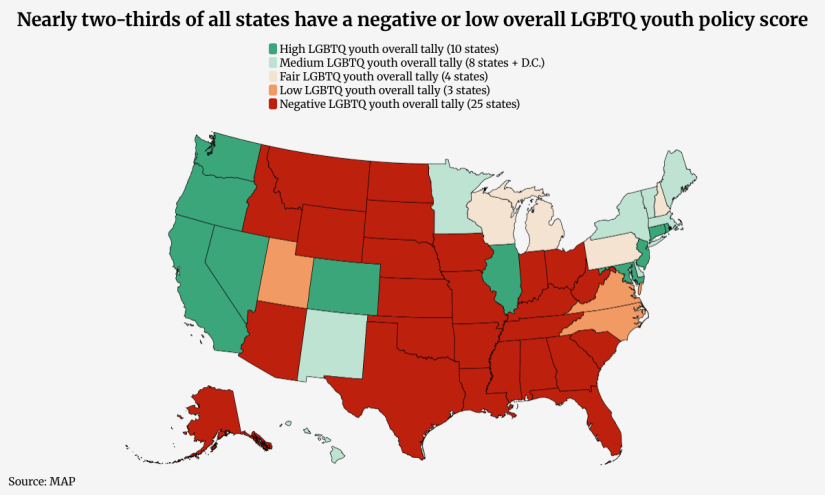
    As the LGBTQ Youth Population Doubles, Number of Bills Targeting Them Triples

    Goblins AI Math Tutoring App Clones Your Teacher’s Looks and Voice

    From Screen Time to ‘Green Time’: Going Outside to Support Student Well-Being


    Emotional Support

    The 74 will meet for a company summit in Minneapolis next week. Matilda wasn’t invited, but she couldn’t care less.


    Get stories like these delivered straight to your inbox. Sign up for The 74 Newsletter

    Source link

  • Dr. Earl S. Richardson, Transformative HBCU Leader and Civil Rights Champion, Dies at 81

    Dr. Earl S. Richardson, Transformative HBCU Leader and Civil Rights Champion, Dies at 81

    Dr. Earl S. Richardson, the visionary leader who transformed Morgan State University during a remarkable 25-year presidency and spearheaded a groundbreaking legal victory that secured hundreds of millions in funding for historically Black colleges and universities, died Saturday. He was 81.

    Dr. Earl S. RichardsonRichardson’s death was announced by Morgan State University, where he served as the institution’s ninth president from 1984 to 2010. Under his stewardship, the Baltimore university experienced what became known as “Morgan’s Renaissance”—a period of unprecedented growth that saw enrollment double, the campus expand with new buildings, and the institution elevated to doctoral research university status.

    But Richardson’s most enduring legacy may be his role as the architect of a historic 15-year legal battle that resulted in one of the largest settlements ever secured for HBCUs. The lawsuit, filed in 2006 and settled in 2021, compelled the state of Maryland to provide $577 million in supplemental funding over 10 years to four historically Black institutions, addressing decades of systematic underfunding.

    The case drew comparisons to Brown v. Board of Education for its challenge to educational disparities, though it focused on higher education rather than K-12 schools. During the trial, state attorneys even attempted to have Richardson removed from the courtroom, though he remained as an expert witness, providing crucial historical testimony.

    Richardson’s leadership style combined the tactical wisdom of a seasoned administrator with the moral clarity of a civil rights activist. In 1990, when students occupied Morgan’s administration building for six days to protest deteriorating facilities—leaking roofs, outdated science labs, and dilapidated dorms—Richardson subtly guided their anger toward the real source of the problem: insufficient state funding.

    When Richardson arrived at Morgan State in November 1984, he found a struggling institution with 3,000 students housed in aging buildings. By the time he stepped down in 2010, enrollment had grown to more than 7,000 students, and the university had received approximately $500 million for new construction and renovations.

    Major projects completed during his tenure included a $54 million school of architecture, a $40 million fine arts building, new engineering facilities, a student union, and stadium expansions. Richardson also oversaw the addition of new academic schools, including programs in architecture and social work, while elevating Morgan’s research profile.

    “Our vision has been to transform Morgan from a liberal arts institution to a doctoral research university,” Richardson told Diverse in 2009. “We lead the state in graduating African-Americans.”

    His impact extended far beyond physical infrastructure. Richardson strengthened faculty excellence, raised admission standards, and championed the unique mission of HBCUs in educating both the most talented Black students and those who might not otherwise consider higher education accessible.

    Richardson’s advocacy extended beyond Morgan State to become a national voice for historically Black colleges and universities. In a 2008 testimony before the U.S. House of Representatives, he articulated the dual mission of HBCUs: serving high-achieving students while also reaching those who faced barriers to higher education access.

    “We can make them the scientists and the engineers and the teachers and the professors—all of those things,” he told lawmakers. “But only if we can have our institutions develop to a level of comparability and parity so that we are as competitive as other institutions.”

    His legal victory in Maryland put a national spotlight on funding disparities that have long plagued HBCUs, which are more likely than other institutions to rely on government funding and receive smaller portions of their revenue from private donations and grants.

    An Air Force veteran, Richardson brought military discipline and strategic thinking to his educational leadership. He often spoke of participating in civil rights demonstrations during his own student years, experiences that shaped his understanding of both the power of organized protest and the importance of strategic action in pursuing justice.

    Current Morgan State President Dr. David K. Wilson, who followed Richardson in the presidency, credited his predecessor with building the foundation for continued success.

    “The foundation he built allowed us to continue Morgan’s upward trajectory, and much of what we have achieved in recent years is possible because of the strong platform he left behind,” Wilson said in announcing Richardson’s death.


    Source link

  • University of California would need $5B if it lost federal funding, leader says

    University of California would need $5B if it lost federal funding, leader says

    This audio is auto-generated. Please let us know if you have feedback.

    Dive Brief:

    • The University of California system’s president warned state lawmakers Wednesday that it would need at least $4 billion to $5 billion to minimize harm in the event of a major loss of federal funding
    • In a letter to state Sen. Scott Wiener, chair of California’s joint legislative budget committee, UC President James Milliken said the Trump administration’s actions “place the entire University of California system at risk,” noting there is a“distinct possibility of more to come.”
    • The federal government in August suspended $584 million in grants to the University of California, Los Angeles over antisemitism-related allegations. Milliken responded at the time that cuts “do nothing to address antisemitism.”

    Dive Insight:

    In his letter to Wiener, Milliken detailed the many ways the University of California depends on federal funding. That includes $5.7 billion in research funding and $1.9 billion in student financial aid per year. UCLA alone received over $875 million in federal grants and contracts in fiscal 2024, according to the latest system financials.

    He also described the potential impacts of losing this funding in dire terms. 

    “Classes and student services would be reduced, patients would be turned away, tens of thousands of jobs would be lost, and we would see UC’s world-renowned researchers leaving our state for other more seemingly stable opportunities in the US or abroad,” he wrote.

    Cutting off research funding, largely for scientific studies, has been the primary tool of the Trump administration when targeting colleges. Federal officials often link the cuts to allegations that colleges aren’t doing enough to respond to campus antisemitism that the administration ties to protests over Israel’s war against Hamas. 

    In some cases, the tactic has paid off for the federal government. Columbia University agreed to settle allegations by paying $221 million to the federal government in return for having most of its $400 million in suspended research grants restored. 

    The administration is also seeking $500 million from Harvard University, which has been navigating a multi-agency attack from the federal government. 

    However, a federal judge on Wednesday ruled that the Trump administration’s suspension of $2.2 billion of Harvard’s funding was unlawful. The judge in the case concluded that the evidence does not “reflect that fighting antisemitism was Defendants’ true aim in acting against Harvard.”

    On the West Coast, the U.S. Department of Justice announced in June it was investigating the UC system over “potential race- and sex-based discrimination in university employment practices.”

    Meanwhile, the administration has also demanded $1 billion from UCLA specifically. While the UC system and UCLA have negotiated with the administration, Milliken in August said the sum “would completely devastate our country’s greatest public university system as well as inflict great harm on our students and all Californians.”

    State officials have panned the administration’s demand in fiercer terms, with both Gov. Gavin Newsom and Wiener describing it as extortion. 

    In an August statement, Wiener likened the $1 billion demand to “classic mob boss behavior,” describing the administration as “threatening to illegally revoke funding — here, science funding — or take other punitive steps unless the university submits to his control, pays him off, and submits to his racist, transphobic, xenophobic dictates.”

    As it navigates the numerous financial risks at the federal level, as well as other structural financial pressures, UCLA has paused faculty hiring and is moving to consolidate its IT operations to save costs on top of past budget moves.

    In his letter to Wiener, Milliken described the current moment as “one of the gravest threats in UC’s 157-year history,” and suggested further actions from the Trump administration could be in store later. 

    In outlining the amounts the UC system would need to survive a blow to federal funding, he said that the UC system “will need the resolve and partnership of our state’s leaders.

    Source link

  • Making PD meaningful in today’s classrooms

    Making PD meaningful in today’s classrooms

    Key points:

    As a classroom teacher and district leader with over 26 years of experience, I’ve attended countless professional development (PD) sessions. Some were transformative, others forgettable. But one thing has remained constant: the need for PD that inspires, equips, and connects educators. Research shows that effective PD focuses on instructional practice and connects to both classroom materials and real- world contexts.

    I began my teaching career in 1999 through an alternative certification program, eager to learn and grow. That enthusiasm hasn’t waned–I still consider myself a lifelong learner. But over time, I realized that not all PD is created equal. Too often, sessions felt like a checkbox exercise, with educators asking, “Why do I have to be here?” instead of “How can I grow from this?”

    Here are some of my favorite PD resources and experiences:

    edWeb

    edWeb is free to join, and once you’re in, you can dive into as many sessions as you want. The service offers a live calendar of events or on-demand webinars covering a range of topics. Plus, the webinars come with CE certificates, which are approved for teacher re-licensure in states like New York, Massachusetts, Texas, Pennsylvania, Arkansas, Utah, and Nevada.

    You can go deeper into the state-specific options with an interactive map. I also love the community aspect of the platform, as you can connect with peers and learn from experts on so many topics for all preK-12 educators.

    Career Connect
    This summer, I attended the Discovery Education Summer of Learning Series at the BMW facility in Spartanburg, South Carolina, for a day-long professional learning event focused on workforce readiness and preparing students for evolving career landscapes. It was an energizing day being surrounded by passionate educators. One standout resource we dove into more deeply is Career Connect by Discovery Education. Career Connect is within Discovery Education Experience and is available to all educators in South Carolina by the Department of Education.

    This is quickly becoming a priority tool in our district. With early access in the spring, we’ve integrated it across grade levels–from elementary STEM classrooms to our Career Center. The platform offers students live interactions with professionals in various fields, making career exploration both engaging and real. I witnessed this firsthand during a virtual visit with an engineer from Charlotte, N.C., whose insights captivated our students and sparked meaningful conversations about future possibilities.

    Professional Development Hub
    The ASCD + ISTE professional learning hub offers sessions on innovative approaches and tools to design and implement standards-aligned curriculum. Each session is led by educators, authors, researchers, and practitioners who are experts in professional learning. Schools and districts receive a needs assessment, so you know the learning is tailored to what educators really need and want.

    Tips for Meaningful PD
    With over 26 years of experience as a classroom teacher and district leader, I have participated in my fair share of professional learning opportunities. I like to joke that my career began in the late 1900s, but professional development sessions from those first few years of teaching now do feel like they were from a century ago compared to the possibilities presented to teachers and leaders today.

    Over these decades I’ve seen a lot of good, and bad, sessions. Here are my top tips to make PD actually engaging:

    • Choose PD that aligns with your goals. Seek out sessions that connect directly to your teaching practice or leadership role.
    • Engage with a community. Learning alongside passionate educators makes a huge difference. The Summer of Learning event reminded me how energizing it is to be surrounded by people who lift you up.
    • Explore tech tools that extend learning. Platforms like Career Connect and others aren’t just add-ons–they’re gateways to deeper engagement and real-world relevance.

    Professional development should be a “want to,” not a “have to.” To get there, though, the PD needs to be thoughtfully designed and purpose-driven. These resources above reignited my passion for learning and reminded me of the power of connection–between educators, students, and the world beyond the classroom.

    Latest posts by eSchool Media Contributors (see all)

    Source link

  • George Mason University leader rebukes Trump administration’s apology demand

    George Mason University leader rebukes Trump administration’s apology demand

    This audio is auto-generated. Please let us know if you have feedback.

    George Mason University President Gregory Washington’s lawyer on Monday firmly repudiated the Trump administration’s allegations that the public Virginia institution had violated civil rights law.

    Last week, the U.S. Department of Education’s Office for Civil Rights alleged that George Mason’s hiring and promotion practices violated Title VI, which bans federally funded institutions from discriminating based on race, color or national origin. An agency official singled out Washington as the leader of a “university-wide campaign to implement unlawful DEI policies that intentionally discriminate on the basis of race,” and the department demanded that he apologize.

    In an 11-page letter to the college’s governing board sent on Washington’s behalf, his attorney Douglas Gansler called OCR’s allegations “a legal fiction,” and stressed that George Mason’s leadership has kept the university in compliance with federal law. “Far from needing to apologize, you all have a shared record to be proud of,” he wrote.

    Since July, the Trump administration has opened at least four investigations into George Mason, targeting the large research institution over universitywide diversity initiatives, of which Washington has been a champion.

    The Education Department’s findings came just six weeks after the agency opened the investigation, citing a complaint from “multiple professors at GMU” alleging that the university’s leaders had approved policies illegally giving certain underrepresented groups preferential treatment since 2020.

    Gansler called out the brief length of the agency’s investigation and said OCR’s letter shows that federal officials “have not spent sufficient time finding critical and materials facts.”

    “It is glaringly apparent that the OCR investigation process has been cut short, and ‘findings’ have been made in spite of a very incomplete fact-finding process, including only two interviews with university academic deans,” Gansler wrote.

    Since January, George Mason has renamed its diversity, equity and inclusion center and cut or restructured DEI-related positions to comply with federal directives, he also noted.

    The Education Department’s announcement last week focused much of its ire on Washington, alleging the university president’s prior statements were proof of “support for racial preferencing.”

    But some of the department’s evidence was out-of-context or “gross mischaracterizations of statements made by Dr. Washington” that didn’t lead to policy changes, Gansler wrote. And one contested policy would have predated Washington’s tenure, he argued.

    In one example, the Education Department quoted a 2021 statement from Washington on adopting an inclusive hiring framework.

    “If you have two candidates who are both ‘above the bar’ in terms of requirements for a position, but one adds to your diversity and the other does not, then why couldn’t that candidate be better, even if that candidate may not have better credentials than the other candidate?” Washington said at the time.

    Gansler said the quote was pulled out of context and never resulted in a policy being enacted.

    “His question was just that: a question, offered to provoke dialogue within the university community, as should be expected of a faculty member and academic leader of a university,” the attorney wrote. “The question does not suggest hiring minority candidates of lesser credentials, but rather considering how two equally qualified candidates may contribute differently to the campus.”

    He added that Washington is not directly involved in evaluating candidates for faculty positions and that OCR would be unable to cite “any discriminatory hiring decision made based on it.”


    It is glaringly apparent that the OCR investigation process has been cut short, and “findings” have been made in spite of a very incomplete fact-finding process.

    Douglas Gansler

    Attorney for George Mason University President Gregory Washington


    The Education Department gave George Mason 10 days to voluntarily agree to a proposal it said would resolve the alleged violations. Part of that proposal would require Washington to publicly apologize to the university community “for promoting unlawful discriminatory practices in hiring, promotion, and tenure processes.”

    In response, Gansler advised George Mason’s trustees against agreeing to the Education Department’s demand for an apology.

    Source link

  • Higher education could make space for many types of leader and ways of leading

    Higher education could make space for many types of leader and ways of leading

    The Global Majority Mentoring Programme, delivered by London Higher, aims to support career progression for Black, Asian, and minority ethnic (BAME) staff by providing tailored mentoring relationships and learning opportunities for academics and professional services staff.

    I joined the programme as a mentee in 2023–24 while seeking support during my time as head of two merged divisions in the School of Law and Social Sciences. For me, mentoring is an exchange of knowledge and experience, and I was looking for a woman of colour in a leadership role outside my own institution with whom I could turn to for advice on navigating the unique challenges I was facing in confidence.

    The programme was recommended to me by a colleague who recognised that, as the only non-white member of the school leadership team, I faced specific challenges which, although acknowledged by the rest of the team, could only be supported to a limited extent given that the remainder of the team were white. They understood that someone with lived experience of both race and gender might be better placed to offer the kind of support I needed. I was matched with someone in an Associate Dean role who I met with regularly for three months. She validated my experiences especially when I was second guessing myself, she also offered me guidance and advice on navigating career progression and insights on HE headhunters.

    In addition to the mentoring, I also took part in the two-day Learning Leaders Workshop, delivered in partnership with the mentoring programme and the University of Westminster. I approached the workshop ambivalently while hoping it would offer more than the surface-level training I had experienced in the past. Previous programmes had often been underwhelming, failing to meet expectations and lacking depth. One in particular was overcrowded, with more than twenty participants, which made it difficult to engage in the kind of deep thinking that individual and collective inquiry needs.

    Surface pressure

    Reflecting on these past experiences, I began to question the broader purpose and structure of leadership development in higher education. Despite good intentions, many leadership development initiatives in higher education appear to remain disconnected from the structural changes reshaping the sector. And it is not always clear why line managers support staff participation in these programmes when, in practice, there appears to be limited opportunities to apply or build on the learning.

    This concern feels especially pressing now, as the sector undergoes significant transformation, with widespread voluntary redundancies affecting many institutions across the UK. I fear that higher education is losing emerging talent at an alarming rate. While the current focus is largely on financial viability, we may be overlooking a more profound long-term issue, the need to reimagine what leadership in higher education looks like. The urgency of building a future-focused leadership pipeline is growing, particularly as ongoing threats to equity, diversity and inclusion continue to challenge the sector’s values and resilience.

    Amid this context of uncertainty, where many of us are increasingly time-poor and juggling demanding workloads, I hoped the Learning Leaders workshop would offer a more meaningful and impactful experience. Taking time out of our busy schedules for training must feel worthwhile, rather than merely another tick-box exercise to meet 360 performance management targets. To my surprise, several aspects of the workshop turned out to be both unusual and thought-provoking.

    Leadership through lived experience

    Notably, there were just six of us in the room, all women, all from the global majority. Throughout the two days, I found myself reflecting on this. Why is it that I so often see more women than men who feel the need to be “trained up” for leadership? This prompted broader questions about gender, expectations and who is seen as ‘ready’ for leadership roles in our institutions. Women lead in many areas of life, particularly those of us who are parents or and carers. We are skilled problem-solvers, strong networkers, and we manage complex responsibilities every day.

    In my role as Head of Division, I noticed a recurring frustration among female academics who felt that the emotional labour involved in providing pastoral care to students often went unrecognised. There was a shared sense that this responsibility frequently fell to them, with both students and male colleagues appearing to expect them to take it on. Yet we rarely describe care and pastoral work as leadership.

    The programme was not a traditional form of training in any sense. Instead, it offered a series of facilitated sessions that created space for us to reflect, share, and learn from one another’s experiences. Together, we explored how we each learn which was presented in four quadrants – body, heart, mind, and spirit – and how to make the most of this intel within a team setting. This deeper understanding uncovered the strengths within our own leadership styles and helped us consider how best to apply them in our professional contexts. We took time to reflect on how leadership is defined and, more importantly, where it is learned and practised.

    Leadership, we came to understand, is not something taught in a conventional way but rather something that evolves through lived experience. It happens in both personal and professional settings, though we might not always recognise it as leadership in a formal or professionalised sense. The workshop took a holistic approach and illustrated how knowledge can emerge through embodied learning, incorporating philosophical inquiry to uncover deeper insights into our individual and collective strengths. This is when it occurred to me, for the first time, that developing leadership practice is best done in communities of practice.

    By the end of the two days, we weren’t “trained” by the facilitator in any traditional sense. Instead, the leadership wisdom we uncovered emerged from within our own group, the Super Six, which is what we have come to be known as and was brought to light through Keith’s expert and highly unconventional facilitation, which gently led us to that shared discovery.

    Many paths to leadership

    In hindsight, the Learning Leaders workshop gave me the space to actively explore the “what next” and “how next” of leadership. A series of thoughtful one-to-one conversations with one of the Super Six proved particularly impactful. Their questions led me to reflect deeply on new possibilities for academic leadership, including working as a freelance scholar, moving to a different institution, or stepping outside the sector altogether. I have always held a personal principle not to remain in one institution for more than ten years, out of concern for becoming institutionalised and limiting my professional growth. After several thoughtful conversations with my Dean, I came to the difficult but right decision to leave at the end of 2024.

    Since then, I have had the privilege of working with several universities and organisations from teaching, advising, researching and collaborating on projects – all of which have been intellectually energising and impactful. There is no one way to lead, and the Learning Leaders workshop reminded me that there are many paths to leadership, each shaped by context, values and personal experience.

    If there is any advice that I could offer to emerging leaders from global majority backgrounds, it would be to identify a sponsor with decision making power within the institution, a mentor outside of the university for confidential developmental advice and identify role models across different sectors and who do leadership well so you can begin building your own community of practice.

    This article is one of four exploring London Higher’s Global Majority Mentoring Programme – you can find the others here.

    Source link