Tag: leader

  • The move from principal to district leader was fraught–here’s what I missed the most

    The move from principal to district leader was fraught–here’s what I missed the most

    This story was originally published by Chalkbeat. Sign up for their newsletters at ckbe.at/newsletters.

    I didn’t expect to grieve.

    I knew taking a central office role meant trading the school building for a district badge. I knew the days would be filled with policy, meetings, and personnel issues. What I didn’t know was how much I would miss morning announcements, front office chatter, and the small but sacred chaos of classroom life.

    When I accepted my central office role at Knox County Schools nearly three years ago, I heard words of congratulations and encouragement, and a lot of “You’ll be great at this.” What I didn’t hear was, “You’re going to miss the cafeteria noise” or “You’ll feel phantom pain for your walkie and reach for it like it’s still there.” No one warned me I’d find myself lingering too long during school visits, trying to feel like I still belong.

    What I lost wasn’t just proximity; it was identity.

    As a principal, I was part of everything. Students shouted greetings across the parking lot. Parents stopped me in the grocery store to ask about bus routes or share weekend news. Teachers popped into my office with questions or just to drop off a piece of cake from the lounge. I wasn’t above the work. I was in it. I was woven into the messy, beautiful rhythm of a school day.

    Shifting to the central office changed not just the pace of my day, but the feel of the work. The space was quieter, the communication more deliberate. There are no morning announcements. No car rider line and morning high-fives from kids. No spontaneous TikTok dances during class change. I moved from the rhythm of a living, breathing school to a place where school leadership feels more technical, more filtered, and more removed.

    The relationships changed, too. As a principal, you’re not just part of a team; you’re a part of a family. You laugh together, carry each other’s burdens, and share both the stress and the wins. Move into a district role, and you’re now “from downtown,” even if your heart still lives on campus. You walk into buildings with a badge that means something different, and the conversations shift just enough for you to notice.

    None of this means the central office work doesn’t matter. It does. Or that I don’t love it. I do. Central office work gives me a systems-level view of how our schools function. I find purpose in improving not just individual outcomes, but the structures that guide them.

    Still, the change in relational gravity caught me off guard. And once the initial disorientation passed, it left me with a deeper concern: How will I stay connected to how the work is actually experienced and carried out in schools if I’m no longer living in it each day?

    At first, I told myself it was just a learning curve, that it would pass, that I’d find new rhythms soon enough. And I did — but not before realizing that central office leadership requires a different kind of muscle. One I hadn’t needed before.

    As a principal, I lived in fast feedback loops. I saw the effects of my decisions by lunchtime. I knew which teachers were having a hard week, which student needed extra eyes, which parent was about to call. Even hard conversations came with a certain clarity because I was close to the context and knew the culture I wanted to build.

    At the district level, the impact is broader but harder to track. The wins take longer to see. The feedback is quieter.

    I had to become more intentional about noticing what I could no longer see. That meant listening differently during school visits, paying closer attention to what leaders were navigating, and asking better questions. Not just about what was happening, but what it was costing them to make it happen.

    One of the advantages of working at a systems level is being able to recognize patterns across multiple settings. They can reveal root causes that individual concerns might never expose. That clarity opens the door to more aligned, lasting support.

    I began thinking less about whether expectations were clear and more about whether they were sustainable. My role was not to direct the work but to support the people carrying it out.

    These changes didn’t come naturally. They came because I didn’t want to become a leader who made good decisions in theory but stayed out of touch in practice. I didn’t want to lead by spreadsheet, even though color-coded tabs bring me great joy. I wanted to lead by understanding.

    Eventually, I began to see that even though I was no longer in the thick of the school day, I could still choose to stay connected — to show up, to ask real questions, to build trust not just through policy, but through presence.

    The classroom educators and school leaders I supported didn’t need someone who had knowledge of what it was like to be a teacher or principal. They needed someone who remembered what it felt like to be one. Someone who hadn’t forgotten the rush of the morning bell or the weight of a tough parent meeting or the impossible feeling of juggling school culture, teacher evaluations, instructional priorities, and a leaky roof all before noon.

    I think back often to my first year in central office. The silence. The absence of bells and kids and chaos. The invisible weight of missing something no one warned me I would lose. I remember walking through a school one afternoon and instinctively reaching for my walkie talkie. It wasn’t there. Of course it wasn’t there. But the reflex reminded me of something important: I still wanted to be tuned in.

    Leadership doesn’t have to grow lonelier as it grows broader. But staying connected takes intention. It takes habits, not just memories.

    I didn’t expect to grieve. But I’m grateful I did. Because grief has a way of reminding you what still deserves your presence.

    Chalkbeat is a nonprofit news site covering educational change in public schools.

    For more news on district management, visit eSN’s Educational Leadership hub.

    Latest posts by eSchool Media Contributors (see all)

    Source link

  • UNCF Taps Veteran HBCU Leader Dr. Walter M. Kimbrough for Key Research and Engagement Role

    UNCF Taps Veteran HBCU Leader Dr. Walter M. Kimbrough for Key Research and Engagement Role

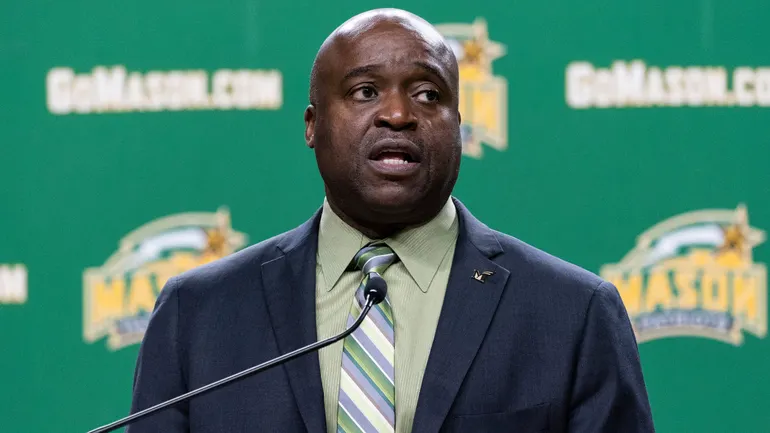
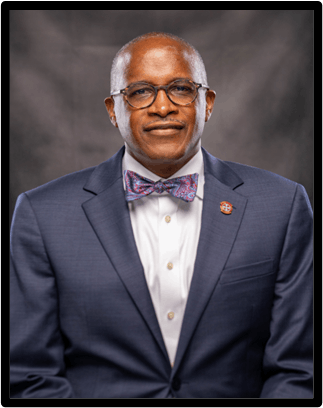
    Dr. Walter M. KimbroughThe United Negro College Fund (UNCF) has appointed Dr. Walter M. Kimbrough, a seasoned higher education administrator known for his transformational leadership at historically Black colleges and universities, to serve as Executive Vice President of Research & Member Engagement, effective September 2, 2025.

    The appointment represents a strategic move by UNCF to strengthen its support for member institutions through enhanced research capabilities and deeper engagement initiatives. 

    Kimbrough, who is an expert on Black fraternities and sororities, brings decades of presidential experience from multiple UNCF member institutions, positioning him uniquely to understand the challenges and opportunities facing HBCUs today.

    “Dr. Kimbrough’s appointment is the culmination of our lengthy search for a transformational leader,” said Dr. Michael L. Lomax, UNCF President and CEO, in announcing the selection to UNCF staffers.

    Kimbrough’s extensive presidential portfolio includes leadership roles at three UNCF member institutions: Dillard University in New Orleans, Philander Smith College (now University) in Arkansas, and most recently as interim president at Talladega College in Alabama. UNCF officials add that this breadth of experience across different regions and institutional contexts provides him with an insider’s perspective on the diverse needs of UNCF’s 37 member institutions.

    In his new role, Kimbrough will report directly to the Office of the President, working alongside Dr. Lomax on strategic initiatives while collaborating with the Chief Operating Officer on operational priorities. His portfolio encompasses four major UNCF initiatives that span the educational pipeline from K-12 through higher education.

    The Frederick D. Patterson Research Institute (FDPRI), one of the key components under his leadership, serves as UNCF’s research arm, producing critical data and analysis about HBCUs and their impact on American higher education. As chief research officer and principal editor of research publications, Kimbrough will guide the institute’s scholarly output while serving as a spokesperson for UNCF in media appearances and external engagements.

     Kimbrough will also oversee the Institute for Capacity Building (ICB), positioning him as UNCF’s lead consultant for member institutions seeking to strengthen their operational and academic capabilities. This role leverages his presidential experience, allowing him to provide peer-to-peer guidance to current HBCU leaders navigating similar challenges he has faced throughout his career.

    His responsibilities also extend to HBCUv® Digital Learning Solution, UNCF’s innovative technology platform designed to support online and hybrid learning at member institutions—a particularly relevant initiative in the post-pandemic educational landscape.

    “I have had the great honor to serve four UNCF member institutions, three as president, and for over 20 years I benefited from the advocacy and support of UNCF,” Kimbrough told Diverse. “This position allows me to pour back into UNCF, its member institutions and students.”

    Source link

  • House Minority Leader Jeffries giving marathon speech criticizing GOP tax cut bill (PBS News Hour)

    House Minority Leader Jeffries giving marathon speech criticizing GOP tax cut bill (PBS News Hour)

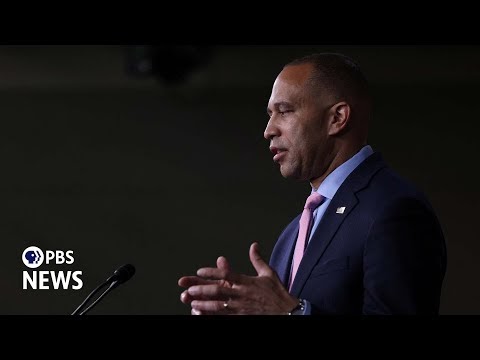
    US House Minority Leader Hakeem Jeffries (D-NY) gives a marathon speech, calling out the destructive path that House Republicans are going down. This is a Bill that undermines the United States of America and its national security.  It is also a threat to democracy.  Folks should listen to every minute of this historical speech. 

    Source link

  • AGB leader resigns abruptly after six months

    AGB leader resigns abruptly after six months

    Less than a year into the job, Framroze Virjee is out as president and CEO of the Association of Governing Boards of Universities and Colleges.

    Virjee retired, a decision that was effective Saturday, according to an email from Ross Mugler, chair of AGB’s Board of Directors, who has been tapped as acting president and CEO.

    “Fram shared that after working diligently to further the organization’s mission, he determined that the president/CEO role at AGB did not align operationally with his personal and professional goals, and he decided to step down from the organization. The AGB Board of Directors accepted his resignation and offered its appreciation for his accomplishments during his tenure,” Mugler wrote in a Monday email.

    In a message to AGB staff, Virjee wrote, “This was a difficult decision and not one that I made casually, but instead only after careful consideration and thought. As I leave AGB, I remain committed to its mission of supporting excellence in board governance and leadership and remain dedicated to the value of higher education in the lives of students, our communities, and our nation.”

    Virjee, president emeritus of California State University, Fullerton, formally started in mid-August after his predecessor, former AGB president and CEO Henry Stoever, resigned amid plagiarism allegations in late 2023.

    AGB did not respond to a request for comment from Inside Higher Ed on Monday about Virjee’s sudden exit, but the organization’s website has been updated to reflect the leadership change.

    “As a result of this announcement, I have agreed to serve as acting president and CEO while the AGB Board of Directors finalizes details regarding new leadership,” Mugler wrote Monday.

    Mugler recently retired as commissioner of the revenue for Hampton, Va., a post he held for more than three decades. Mugler has been on AGB’s board since 2018 and was appointed five times to Old Dominion University’s Board of Visitors.

    Source link

  • Community College Leader Dr. Walter Bumphus to Step Down After Transformative Era

    Community College Leader Dr. Walter Bumphus to Step Down After Transformative Era

    Dr. Walter G. BumphusAfter steering America’s community colleges through unprecedented challenges and opportunities, Dr. Walter G. Bumphus announced he will retire as president and CEO of the American Association of Community Colleges (AACC) at the end of 2025, capping a remarkable 15-year tenure that helped reshape higher education access nationwide.

    The announcement marks the end of a chapter for community colleges that saw dramatic shifts in workforce development, educational technology, and the role of two-year institutions in American society. Under Bumphus’s leadership, community colleges strengthened their position as essential providers of affordable education and workforce training, working closely with four presidential administrations to advance their mission.

    “When you look at the landscape of higher education today, you can see Dr. Bumphus’s influence everywhere,” said Dr. Sunita Cooke, who chairs AACC’s board of directors and serves as superintendent/president of MiraCosta College. “He understood that community colleges needed to be at the table for every major conversation about America’s future workforce and educational opportunities.”

    Bumphus’s career, spanning more than five decades, coincided with community colleges’ emergence as critical players in addressing skills gaps and workforce needs. His expertise led to appointments on several high-profile national committees, including the American Workforce Policy Advisory Board and the Department of Homeland Security’s Academic Advisory Council.

    Beyond his policy work, colleagues say Bumphus’s greatest legacy may be the network of educational leaders he helped develop. As the A. M. Aikin Regents Endowed Chair at The University of Texas at Austin, he mentored hundreds of administrators who went on to leadership positions at community colleges across the country.

    His achievements have been widely recognized, including receiving the ACCT Marie Y. Martin CEO of the Year Award and the 2021 Baldridge Foundation’s Award for Leadership Excellence in Education. In 2013, Bumphus was awarded the Diverse Champions award by Diverse: Issues In Higher Education. 

    But Bumphus maintains that the real measure of success lies in the millions of students who have benefited from community college education during his tenure.

    “Every time I meet a graduate who tells me how community college changed their life, I’m reminded of why this work matters so much,” Bumphus said in his retirement announcement. “These institutions are the backbone of opportunity in America, and I’m confident they’ll continue to evolve and serve students for generations to come.”

    His 15-year leadership of AACC stands as the second-longest in the organization’s history. As he prepares for retirement, Bumphus remains characteristically focused on the future: “The work of expanding educational opportunity never ends. I’m grateful to have played a part in it.”

    Source link

  • QUT anti-semitism review leader announced, responds to parliamentary inquiry

    QUT anti-semitism review leader announced, responds to parliamentary inquiry

    Professor Margaret Sheil (right) speaks to the press. Picture: John Gass

    The Queensland University of Technology has announced more details about its independent review into last month’s controversial National Symposium on Unifying Anti-Racist Research and Action event.

    Please login below to view content or subscribe now.

    Membership Login

    Source link

  • MackinVIA Earns Prestigious Platinum Modern Library AwardFrom LibraryWorks For Its 10th Consecutive Yea

    MackinVIA Earns Prestigious Platinum Modern Library AwardFrom LibraryWorks For Its 10th Consecutive Yea

    Burnsville, MN – January 16, 2025 – Mackin, a leader in providing print and digital
    educational resources for PK-12, is proud to announce that its free digital content management platform, MackinVIA, has earned the Platinum Award in LibraryWorks’ 10th annual Modern Library Awards (MLAs). This prestigious accolade marks MackinVIA’s 10th consecutive win, solidifying its position as a top choice for digital content management in schools worldwide.

    The MLAs, which celebrate the best products and services in the library industry, are awarded based on an unbiased voting process involving over 80,000 librarians from public, K-12, academic, and special libraries. Judges evaluated submissions on a range of criteria, including functionality, value, and customer service. MackinVIA received an outstanding score of 9.25, a testament to its continued excellence and innovation.

    “We’re honored to receive the Platinum Award for the 10th year in a row,” said Troy Mikell, Director of Marketing and Communications at Mackin. “Since launching MackinVIA over a decade ago, we’ve continually focused on creating a powerful, user-friendly platform for educators and students. Our relentless drive for improvement and exceptional customer service has fueled MackinVIA’s success, and it’s thrilling to see that effort recognized once again.”

    MackinVIA is accessible by more than 9 million students worldwide, providing access to over 4 million eBooks, audiobooks, read-alongs, databases, and video resources. Its digital platform offers a dynamic and comprehensive solution for PK-12 schools looking to streamline content management and improve student engagement.

    Jenny Newman, Publisher and MLA Program Manager, noted, “MackinVIA’s consistent excellence in functionality and service is what has kept them at the forefront of the industry for over 40 years. Their innovative approach continues to break barriers and set new standards.”

    About Mackin
    For over 40 years, Mackin has provided PK-12 grade libraries and classrooms with access to nearly 4 million printed and digital titles. The 24-time, multi-award-winning, digital content management system, MackinVIA, along with divisions Mackin Classroom, MackinMaker, Mackin Learning, and the brand-new, whole school resource management system, MackinVision, help to create a truly unique and robust educational resource company that schools and educators have relied on, year after year. For more information, visit www.mackin.com or call 800-245-9540.

    About LibraryWorks
    LibraryWorks helps library administrators make informed decisions regarding technology, automation, collection management, staffing, and other key areas that support efficient library operations. Their resources empower libraries to implement best practices, monitor trends, evaluate products and services, and more.

    About the Modern Library Awards (MLAs)
    The MLAs recognize outstanding products and services that enhance library operations and improve the user experience. Entries are judged by library professionals based on their relevance, functionality, and impact on the library sector.

    eSchool News Staff
    Latest posts by eSchool News Staff (see all)

    Source link

  • Biden Issues Historic Posthumous Pardon to Civil Rights Leader Marcus Garvey

    Biden Issues Historic Posthumous Pardon to Civil Rights Leader Marcus Garvey

    In one of his final acts as president, Joe Biden granted a posthumous pardon to Marcus Mosiah Garvey Jr., the influential civil rights leader and founder of the UniversalMarcus Garvey Negro Improvement Association (UNIA), clearing his name of a 1923 mail fraud conviction that many have long viewed as unjust.

    The pardon, announced just before the Martin Luther King Jr. holiday, came after years of advocacy from Howard University School of Law professors and students, led by Professor Justin Hansford, who worked closely with Garvey’s son, Dr. Julius Garvey.

    “In the words of Dr. Martin Luther King, Marcus Garvey was ‘the first man of color in the history of the United States to lead and develop a mass movement,’” said Hansford, who published Jailing a Rainbow: The Unjust Trial and Conviction of Marcus Garvey last year. “He was convicted of mail fraud in a trial widely recognized as a miscarriage of justice.”

    The pardon effort gained significant support from 21 members of Congress, primarily from the Congressional Black Caucus, who urged Biden to “honor his work for the Black community, remove the shadow of an unjust conviction, and further your administration’s promise to advance racial justice.” Last year, Diverse featured a podcast on the subject. 

    Garvey, Jamaica’s first national hero, was convicted in 1923 on one count of mail fraud related to his role as president of the Black Star Line shipping company. He received the maximum sentence of five years imprisonment and a $1,000 fine.

    The UNIA founder was a pioneering advocate for human rights and Pan-Africanism, building a movement that reached 6 million members across 40 countries.

    The presidential pardon marks the end of a century-long struggle to clear Garvey’s name. Previous attempts included congressional hearings in 1987 led by Representatives John Conyers and Charlie Rangel, who introduced resolutions to exonerate him.

    The exoneration comes 84 years after Garvey’s death in 1940, affirming his innocence and recognizing his significant contributions to civil rights and human rights advocacy worldwide.

    Source link

  • Despite being global leader, UK cannot afford to rest on its laurels in digital, AI and green skills

    Despite being global leader, UK cannot afford to rest on its laurels in digital, AI and green skills

    By Matteo Quacquarelli, Vice President of Strategy and Analytics at QS Quacquarelli Symonds.

    Across the globe, economies are grappling with skills and talent challenges. From talent saturation to workforce reskilling, each country is facing its own unique issues as it prepares for the evolution of the digital age.

    The QS World Future Skills Index, just launched, offers a detailed breakdown of the globe’s higher education systems, their links with industries and how countries are preparing for the next industrial evolution. Using exclusive QS data, it identifies where economies and countries need to align their higher education outcomes with the needs of industry in three key areas – green, AI and digital.

    The analysis delves into 81 economies and finds that UK higher education is currently one of the world’s best for cultivating students with the future skills business and industry are calling out for.

    It measures four indicators linked to skills like AI proficiency, digital literacy and environmental sustainability that will form the bedrock of the industries of tomorrow.

    Skills Fit measures how well countries are equipping graduates with the skills employers desire. In this, no country is currently better than the UK. Using data from both our own largest-of-its-kind QS Global Employer Survey and the World Bank Group, we identified that UK employers have the highest satisfaction rates with the skills graduates bring with them, anywhere in the world – but perhaps only for the time being.

    Additionally, the UK received top marks in the Academic Readiness dimension, measuring the preparedness of a country in regard to the future of work. The UK’s success in the QS World University Rankings by Subject allowed it to flourish here.

    However, the UK must not rest on its laurels. Higher education in other markets globally is innovating at a far more rapid rate than in the UK. The reputational strength of the UK – built on its history and tradition of delivering excellent teaching and learning – is unlikely to be the key driver of satisfaction going forward.

    The UK was slightly less successful than its closest rivals in the areas of Future of Work and Economic Transformation.

    Future of Work measures how well the job market is prepared to meet the growing demand for digital, AI and green skills, using 1Mentor data of over 280m job postings worldwide.

    Economic Transformation analyzes whether a country has the infrastructure, investment power, and talent available to transition to industries driven by AI, digital transformation, green technologies and high-skilled work. This indicator used data from the World Bank Group, UNESCO Institute for Statistics and the Education Policy Institute.

    This lower score is reflective of the slow-to-no economic growth seen in the UK over the past decade and the tightening of the public purse strings strangling investment in R&D and new business innovation (evidenced by decline not only in public but also private sector funding in the UK).

    The latest economic forecasts signal a further period of stagnation for the UK economy might be on the horizon.

    Just as the importance of investment in future skills cannot be understated, nor can the importance of higher education in AI breakthroughs and innovation.

    Funnelling research innovation down the value chain into industry has been the bedrock of economic innovation worldwide. Without Stanford University, there would be no Silicon Valley. In Germany, the universities of Stuttgart and Tübingen are key in the country’s Cyber Valley initiative. If Melbourne didn’t have its outstanding higher education institutions, the city would not hold the crown of tech capital of Australia.

    The QS Future World Skills Index highlights the example of South Korea, where there is a correlation between increasing numbers of young adults attaining tertiary education and GDP growth.

    The UK government’s new AI Opportunities Action Plan, announced earlier this week sets out a clear ambition strategy to maintain Britain’s position as one of the world’s AI superpowers and has been widely welcomed by industry.

    The prime minister says his government will make it easier for experts to come to the UK via its talent visas and for future leaders to learn here. Tens of thousands of additional AI professionals will be needed by 2030, he has said.

    The Government also wants to ‘increase its share of the world’s top 1,000 AI researchers’ and will launch an AI scholarship scheme to support 100 students to study in the UK.

    While the UK was also top in Europe for talent creation, with 46,000 students graduating from an AI-relevant higher education program ahead of Germany in terms of absolute numbers with 32,000, the UK is still behind Finland on a per capita basis. Without specific policy and commitment, the UK risks losing its leading position.

    The UK is missing ‘frontier conceptual, cutting-edge companies‘. DeepMind, the AI research laboratory, was one such company that was founded in the UK before being acquired by Google in 2014. But where was it established? The three co-founders meet while studying at University College London.

    The new AI Growth Zones the government has announced, with the first starting in Culham, will need to engage universities up and down the country. Higher education must also be closely involved in the Digital and Technology Sector Plan, which is set to be published in the coming months.

    The government has also previously pledged to become a green energy superpower. The QS Future World Skills Index suggests that both the UK’s job market and its higher education system is well set up to capitalise on that opportunity.

    To succeed, government policy, the needs of industry and higher education curricula must all align to create an environment where the country can succeed and be future-ready.

    Economies and higher education systems that invest in high-quality academic programmes in AI, digital and sustainability are setting themselves up for long-term success.

    For the full QS World Future Skills Index: https://www.qs.com/reports-whitepapers/world-future-skills-index

    The UK Spotlight is available here: https://www.qs.com/reports-whitepapers/uk-spotlight-qs-world-future-skills-index

    Source link

  • National Student Ombudsman legislation passed, leader announced

    National Student Ombudsman legislation passed, leader announced

    The new independent National Student Ombudsman will be led by Sarah Bendall (L), pictured with Jason Clare, in an image posted to social media on November 29, 2024. Picture: Facebook

    A highly experienced lawyer has been appointed to lead the anticipated university watchdog and complaints function, after the legislation passed in the last sitting week of parliament.

    Please login below to view content or subscribe now.

    Membership Login

    Source link