Tag: leader

  • Biden Issues Historic Posthumous Pardon to Civil Rights Leader Marcus Garvey

    Biden Issues Historic Posthumous Pardon to Civil Rights Leader Marcus Garvey

    In one of his final acts as president, Joe Biden granted a posthumous pardon to Marcus Mosiah Garvey Jr., the influential civil rights leader and founder of the UniversalMarcus Garvey Negro Improvement Association (UNIA), clearing his name of a 1923 mail fraud conviction that many have long viewed as unjust.

    The pardon, announced just before the Martin Luther King Jr. holiday, came after years of advocacy from Howard University School of Law professors and students, led by Professor Justin Hansford, who worked closely with Garvey’s son, Dr. Julius Garvey.

    “In the words of Dr. Martin Luther King, Marcus Garvey was ‘the first man of color in the history of the United States to lead and develop a mass movement,’” said Hansford, who published Jailing a Rainbow: The Unjust Trial and Conviction of Marcus Garvey last year. “He was convicted of mail fraud in a trial widely recognized as a miscarriage of justice.”

    The pardon effort gained significant support from 21 members of Congress, primarily from the Congressional Black Caucus, who urged Biden to “honor his work for the Black community, remove the shadow of an unjust conviction, and further your administration’s promise to advance racial justice.” Last year, Diverse featured a podcast on the subject. 

    Garvey, Jamaica’s first national hero, was convicted in 1923 on one count of mail fraud related to his role as president of the Black Star Line shipping company. He received the maximum sentence of five years imprisonment and a $1,000 fine.

    The UNIA founder was a pioneering advocate for human rights and Pan-Africanism, building a movement that reached 6 million members across 40 countries.

    The presidential pardon marks the end of a century-long struggle to clear Garvey’s name. Previous attempts included congressional hearings in 1987 led by Representatives John Conyers and Charlie Rangel, who introduced resolutions to exonerate him.

    The exoneration comes 84 years after Garvey’s death in 1940, affirming his innocence and recognizing his significant contributions to civil rights and human rights advocacy worldwide.

    Source link

  • Despite being global leader, UK cannot afford to rest on its laurels in digital, AI and green skills

    Despite being global leader, UK cannot afford to rest on its laurels in digital, AI and green skills

    By Matteo Quacquarelli, Vice President of Strategy and Analytics at QS Quacquarelli Symonds.

    Across the globe, economies are grappling with skills and talent challenges. From talent saturation to workforce reskilling, each country is facing its own unique issues as it prepares for the evolution of the digital age.

    The QS World Future Skills Index, just launched, offers a detailed breakdown of the globe’s higher education systems, their links with industries and how countries are preparing for the next industrial evolution. Using exclusive QS data, it identifies where economies and countries need to align their higher education outcomes with the needs of industry in three key areas – green, AI and digital.

    The analysis delves into 81 economies and finds that UK higher education is currently one of the world’s best for cultivating students with the future skills business and industry are calling out for.

    It measures four indicators linked to skills like AI proficiency, digital literacy and environmental sustainability that will form the bedrock of the industries of tomorrow.

    Skills Fit measures how well countries are equipping graduates with the skills employers desire. In this, no country is currently better than the UK. Using data from both our own largest-of-its-kind QS Global Employer Survey and the World Bank Group, we identified that UK employers have the highest satisfaction rates with the skills graduates bring with them, anywhere in the world – but perhaps only for the time being.

    Additionally, the UK received top marks in the Academic Readiness dimension, measuring the preparedness of a country in regard to the future of work. The UK’s success in the QS World University Rankings by Subject allowed it to flourish here.

    However, the UK must not rest on its laurels. Higher education in other markets globally is innovating at a far more rapid rate than in the UK. The reputational strength of the UK – built on its history and tradition of delivering excellent teaching and learning – is unlikely to be the key driver of satisfaction going forward.

    The UK was slightly less successful than its closest rivals in the areas of Future of Work and Economic Transformation.

    Future of Work measures how well the job market is prepared to meet the growing demand for digital, AI and green skills, using 1Mentor data of over 280m job postings worldwide.

    Economic Transformation analyzes whether a country has the infrastructure, investment power, and talent available to transition to industries driven by AI, digital transformation, green technologies and high-skilled work. This indicator used data from the World Bank Group, UNESCO Institute for Statistics and the Education Policy Institute.

    This lower score is reflective of the slow-to-no economic growth seen in the UK over the past decade and the tightening of the public purse strings strangling investment in R&D and new business innovation (evidenced by decline not only in public but also private sector funding in the UK).

    The latest economic forecasts signal a further period of stagnation for the UK economy might be on the horizon.

    Just as the importance of investment in future skills cannot be understated, nor can the importance of higher education in AI breakthroughs and innovation.

    Funnelling research innovation down the value chain into industry has been the bedrock of economic innovation worldwide. Without Stanford University, there would be no Silicon Valley. In Germany, the universities of Stuttgart and Tübingen are key in the country’s Cyber Valley initiative. If Melbourne didn’t have its outstanding higher education institutions, the city would not hold the crown of tech capital of Australia.

    The QS Future World Skills Index highlights the example of South Korea, where there is a correlation between increasing numbers of young adults attaining tertiary education and GDP growth.

    The UK government’s new AI Opportunities Action Plan, announced earlier this week sets out a clear ambition strategy to maintain Britain’s position as one of the world’s AI superpowers and has been widely welcomed by industry.

    The prime minister says his government will make it easier for experts to come to the UK via its talent visas and for future leaders to learn here. Tens of thousands of additional AI professionals will be needed by 2030, he has said.

    The Government also wants to ‘increase its share of the world’s top 1,000 AI researchers’ and will launch an AI scholarship scheme to support 100 students to study in the UK.

    While the UK was also top in Europe for talent creation, with 46,000 students graduating from an AI-relevant higher education program ahead of Germany in terms of absolute numbers with 32,000, the UK is still behind Finland on a per capita basis. Without specific policy and commitment, the UK risks losing its leading position.

    The UK is missing ‘frontier conceptual, cutting-edge companies‘. DeepMind, the AI research laboratory, was one such company that was founded in the UK before being acquired by Google in 2014. But where was it established? The three co-founders meet while studying at University College London.

    The new AI Growth Zones the government has announced, with the first starting in Culham, will need to engage universities up and down the country. Higher education must also be closely involved in the Digital and Technology Sector Plan, which is set to be published in the coming months.

    The government has also previously pledged to become a green energy superpower. The QS Future World Skills Index suggests that both the UK’s job market and its higher education system is well set up to capitalise on that opportunity.

    To succeed, government policy, the needs of industry and higher education curricula must all align to create an environment where the country can succeed and be future-ready.

    Economies and higher education systems that invest in high-quality academic programmes in AI, digital and sustainability are setting themselves up for long-term success.

    For the full QS World Future Skills Index: https://www.qs.com/reports-whitepapers/world-future-skills-index

    The UK Spotlight is available here: https://www.qs.com/reports-whitepapers/uk-spotlight-qs-world-future-skills-index


    Source link

  • National Student Ombudsman legislation passed, leader announced

    National Student Ombudsman legislation passed, leader announced

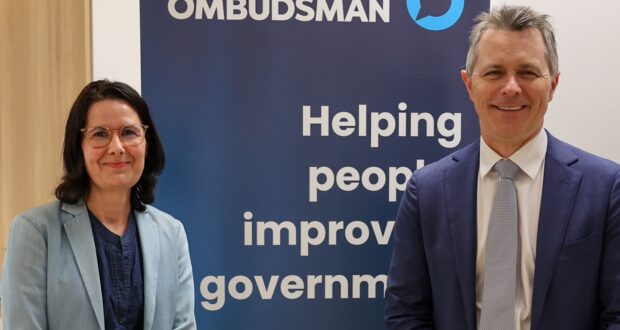
    The new independent National Student Ombudsman will be led by Sarah Bendall (L), pictured with Jason Clare, in an image posted to social media on November 29, 2024. Picture: Facebook

    A highly experienced lawyer has been appointed to lead the anticipated university watchdog and complaints function, after the legislation passed in the last sitting week of parliament.

    Please login below to view content or subscribe now.

    Membership Login

    Source link

  • PED repeals teacher leader programs

    PED repeals teacher leader programs

    With little fanfare and in the face of strong educator opposition, the  New Mexico Public Education Department has repealed a rule designed to foster leadership opportunities for teachers while keeping them in the classroom, a program widely praised for its impact on professional development and teacher retention.

    The written repeal of Rule 6.65.4, dated Sept. 9, came during a brief period when the state had no secretary of education. Arsenio Romero resigned on Aug. 28, and Mariana Padilla was named as his successor on Sept. 10. 

    The repeal order was signed by Candice Castillo, deputy cabinet secretary. 

    “The department notes that the program is still supported by PED guidance, and PED remains committed to maintaining the Teacher Leader Network and Advisory Committee and the Teacher Liaison programs,” a PED document announcing the decision says. 

    The rule was introduced by PED in 2018.

    A public hearing on the proposed repeal held on August 20 at the Jerry Apodaca Education Building in Santa Fe, attracted significant attention, with more than 200 educators voicing their opposition to the repeal.

    Rachael Sewards, Founder and Head of School at Solare Collegiate Charter School, described the potential repeal as a “strong negative message” to the education sector. “Removing teacher leadership from rule communicates that PED doesn’t believe there’s a seat for teacher leaders at decision-making tables, nor does it see value in building up our field with young and aspiring leaders.” Sewards wrote.

    Sewards, along with many other educators, credited the Teacher Leader Development Framework with having a profound impact on her career. Her journey from participating in the inaugural Teacher Leader Network to founding her own school is a testament to the program’s influence, she said.

    During the public comment period leading up to the hearing, the NMPED received a flood of responses, totaling 80 pages of complaints, from educators who said they have benefited from the program. 

    Joe Lovato, a teacher involved in PED’s past leadership initiatives, expressed his concerns: “The repeal of these programs will be viewed by us as educators as the devaluing of our input and leadership potential,” Lovato stated in his written comments.

    Kelly Pearce, a former teacher ambassador, echoed these sentiments, emphasizing the personal and professional growth she experienced thanks to the program. Now working in a national education role, Pearce said she is concerned about the message the repeal sends to future educators.

    Some educators went beyond opposing the repeal, offering suggestions to modernize the framework to better align with current educational goals. These suggestions include focusing on literacy, supporting students impacted by the Yazzie-Martinez lawsuit, and ensuring consistent and relevant data collection. 

    As of now, the PED has not provided detailed reasons for the repeal. However, officials have hinted that certain elements of the Teacher Leader Development Framework may continue in some form on the department’s website, though they will no longer be codified in state rules.

    With the hearing concluded, the decision now lies with the Public Education Department, which is now without a Secretary. Educators across New Mexico are left in suspense, hoping their voices have been heard and that the state will reconsider the repeal.

    Source link