Tag: Leadership

  • It’s Time for Higher Education Leadership to Embrace ‘Good Trouble’

    It’s Time for Higher Education Leadership to Embrace ‘Good Trouble’

    Dr. Detris AdelabuOn the day of his death in 2020, an op-ed appeared in the New York Times, pre-written by Congressman John Lewis, urging Americans to stand up for justice and what he called “good trouble, necessary trouble.  Even in his death, Congressman Lewis fought for a more equitable America, where every individual recognizes their moral obligation to persist in the struggle for a more just nation.

    The recent Supreme Court decision striking down race-conscious admissions policies, followed by anti-equity legislation across more than 40 states and at the highest level of government, erodes decades of collective efforts to rectify a history of gross social and structural inequities. In higher education, these legislative attacks have led to a decline in Black and Latino student enrollment at selective colleges and universities and have prompted institutions to abandon their commitment to equity.  Universities such as Harvard, Rutgers, Northeastern, the University of Texas, and Louisiana State University are scrubbing their website of all references to diversity, equity, and inclusion, shuttering DEI offices and laying off staff, and scrutinizing the curriculum for any references to DEI.  If ever there was a time for “good trouble” in higher education, that time is now.  But can higher education leadership muster the political will to stand firm for equity?

    Institutional Responsibility and Moral Leadership

    Legislative setbacks to equity beckon colleges and universities to take bold and creative strategies to reaffirm their commitment to equitable access to resources and opportunities in education. Institutions can, for example, place greater emphasis on partnering with under-resourced high schools and expand outreach to marginalized communities to signal their commitment to equity. While such measures are imperfect, they signal a refusal to yield to a regressive interpretation of equity and justice.

    Higher education institutions can leverage their platforms to articulate their mission and commitment to equity beyond their campuses by working together to:

    1. Form Multi-Institutional Alliances to Challenge Anti-DEI Legislation: Colleges and universities can form alliances on a national scale to amplify their collective advocacy against policies that restrict access to resources and opportunities. Sharing strategies and best practices can strengthen collective efforts to promote equity. Dr. Felicity CrawfordDr. Felicity Crawford
    2. Invest in Community Partnerships: By deepening relationships with K-12 schools, particularly those in strategically under-resourced areas, institutions can create robust pathways for diverse talent. Mentorship programs, financial support, and academic preparation initiatives can help bridge gaps in access and opportunity.
    3. Prioritize Transparency and Accountability: By publishing detailed reports on their equity and diversity metrics, institutions can enhance accountability and demonstrate their progress towards equity.

    Upholding the Educational Mission of Higher Education

    The mission of higher education extends beyond the transmission of knowledge. It encompasses the cultivation of informed, engaged, and socially responsible citizens. Failing to prioritize equity undermines this mission, leaving graduates ill-equipped to navigate the complexities of a global society. Institutions that acquiesce to the erosion of equity risk not only their reputations but also their relevance in a rapidly changing world.

    Resisting harmful laws and policies that oppose equity is not without risks. Institutions may face political backlash, reduced funding, or legal challenges. However, the cost of inaction—both in terms of societal impact and institutional integrity—is far greater. By taking a principled stand, colleges and universities can position themselves on the right side of history, inspiring future generations to do the same. Equity, when implemented with fidelity, fosters diversity.

    The current sociopolitical landscape presents a defining moment for higher education. Gross social and structural inequities will not resolve themselves. Left unattended, they will continue to generate detrimental social and economic consequences for American society, with effects that can span generations. By developing innovative strategies, advocating for systemic change, and upholding their educational missions, institutions can resist attacks on progress and continue to serve as beacons of opportunity and justice. In doing so, they not only honor their moral and societal obligations but also preserve the transformative power of education for generations to come.Dr. Linda Banks-SantilliDr. Linda Banks-Santilli

    This moment calls for moral leadership in higher education that not only resists the immediate consequences of anti-DEI legislation but also envisions a more just and inclusive future. This moment calls for good trouble. To echo the words of Dr. Martin Luther King, Jr.:

    “In this unfolding conundrum of life and history, there is such a thing as being too late. This is no time for apathy or complacency. This is a time for vigorous and positive action.”

    Dr. Detris Honora Adelabu is a Clinical Professor at the Boston University Wheelock College of Education and Human Development

    Dr. Felicity A. Crawford is a Clinical Associate Professor at the Boston University Wheelock College of Education and Human Development

    Dr. Linda Banks-Santilli is a Clinical Associate Professor at the Boston University Wheelock College of Education and Human Development

    Source link

  • Top female district leaders share do’s and don’ts of climbing the professional ladder in 2025

    Top female district leaders share do’s and don’ts of climbing the professional ladder in 2025

    Key points:

    Professional growth is often at the top of New Year’s Resolution lists. As educators and education leaders plan for the year ahead, we asked some of the nation’s top female school district leaders to give fellow women educators the do’s and don’ts of climbing the professional ladder. Here’s what they said.

    Do: Believe in yourself.

    Though women make up 76 percent of teachers in K-12 school settings, just a small percentage of women hold the most senior role in a district. But the climb to leadership isn’t an easy one; women in educational leadership report a range of biases–from interpersonal slights to structural inequities–that make it difficult to attain and persist in top positions.

    Professional groups like Women Leading Ed are working to change that by highlighting long standing gender gaps and calling for policies and practices to improve conditions at all levels. Female education leaders are also working to rewrite the narrative around what’s possible for women educators and encouraging their peers.

    Among those education leaders is Shanie Keelean, deputy superintendent of Rush-Henrietta Central School District in New York. When asked to share advice to her peers, she said, “You just have to continually push yourself forward and believe in yourself. So very often women, if they don’t check all the boxes, they decide not to go for something. And you don’t have to check all the boxes. Nobody knows everything in every job. You learn things as you go. Passion and energy go a long way in being really committed.”

    Nerlande Anselme, superintendent of Rome City School District in New York, agreed: “We have directors in this field, we have coordinators in this field, we have psychologists who are doing amazing work, but they will dim themselves and figure that they cannot get to the top. Don’t dim your light.”

    Don’t: Keep your career goals a secret.

    When you decide to pursue a leadership position, don’t keep it a secret. While it may feel “taboo” to announce your intentions or desires, it’s actually an important first step to achieving a leadership role, said Kathleen Skeals, superintendent of North Colonie Central School District in New York.

    “Once people know you’re interested, then people start to mentor you and help you grow into the next step in your career,” Skeals said.

    Kyla Johnson-Trammell, superintendent of Oakland Unified School District in California, echoed: “Make your curiosity and your ambition known. You’ll be pleasantly surprised how that will be received by many of the folks that you work for.”

    Do: Find a strong mentor.

    A strong mentor can make all the difference in the climb to the top, leaders agreed.

    “Seek out a leader you respect and ask for a time where you could have a conversation about exploring some possibilities and what the future might bring to you,” said Mary-Anne Sheppard, executive director of leadership development for Norwalk Public Schools in Connecticut.

    It’s especially helpful to connect with someone in a position that you want to be in, said Melanie Kay-Wyatt, superintendent of Alexandria City Public Schools in Virginia. “Find someone who’s in the role you want to be in, who has a similar work ethic and a life that you have, so they can help you,” she said.

    Don’t: Be afraid to ask questions.

    “Start asking a lot of questions,” said Keelean. She suggested shadowing a mentor for a day or asking for their help in creating a career map or plan.

    And don’t be afraid to take risks, added Johnson-Trammell. “Could you get me 15 minutes with the superintendent or the chief academic officer?”

    Do: Build your skill set and network.

    “Increase your impact by developing relational skills and leadership skills,” said Rachel Alex, executive director of leadership development of Aldine Independent School District in Texas.

    And cultivate a network, said Heather Sanchez, chief of schools for Bellevue School District in Washington. “We can’t do it alone. Find that network, cultivate that network.”

    Don’t: Give up.

    “People are always going to tell you no, but that does not stop you,” said Kimberley James. “Continue to live beyond the noise and the distractions and stay focused on what it is that you want to accomplish for our students.”

    “I would say to any woman aspiring to any level of leadership that first of all, never sell yourself short,” said Sanchez. “You have it in you.”

    Interviews were conducted as part of the Visionary Voices video series. Responses have been edited for clarity and brevity.

    Latest posts by eSchool Media Contributors (see all)

    Source link

  • The Role of Social Science in Shaping Inclusive Leadership

    The Role of Social Science in Shaping Inclusive Leadership

    Senior Vice President of Human Services Julie Kochanek discusses how social science informs her leadership at American Institutes for Research (AIR), emphasizing trust, collaboration, and community-building in research.

    Julie Kochanek

    Senior Vice President, Human Services Division, American Institutes for Research (AIR)

    How does your experience in behavioral and social science research inform your approach to leadership?

    As a leader, I always return to themes I observed while training to be a researcher: trust, culture, and community. In graduate school, I studied how East African nations used education as a mechanism to build community. I dug deeper into this community theme as part of my Ph.D. studies, focusing on how U.S. schools operate organizationally and how teachers, school leaders, and parents must all interact to better support student learning. 

    How do you build strong teams to accomplish AIR’s mission?

    At AIR, collaboration is key to our success. Project teams at AIR often include staff with different backgrounds, various methodological expertise, unique content knowledge, and/or experience working directly with community leaders. Our work is strengthened by bringing people together. This allows us to fully consider the challenge we’re studying and understand the needs of the communities we serve.

    As a leader, I am responsible for creating the conditions to help staff develop meaningful partnerships, recognize everyone’s contributions, and reward meaningful collaboration. We collect and share information on staff interests, skills, and experiences so teams can easily identify those they might recruit to fill a gap. My weekly internal messages to staff often highlight examples of great team building and how our work is strengthened by diverse teams. 

    What are some of the most important results you have uncovered across your 20+ years in the research sector?

    Discussions about education policy often inadvertently leave people and human connection out of the equation. Throughout our work, I am constantly reminded that working collaboratively and building relationships among educators and students is an essential part of setting the right conditions for learning. 

    I’m impressed, for example, by how educators, researchers, and school leaders have partnered to build stronger support systems for students who are at risk of not graduating from high school. Researchers help school districts collect and interpret data on early warning signs and develop an evidence-based approach to address the challenge and boost graduation rates. As more districts across the country adopt these early warning systems, we’re seeing real results: More young people are able to continue on the path to success. 

    Another example is how we use research and technical assistance to help teachers strengthen their reading and literacy instruction. There are proven strategies (e.g., the science of reading) to help kids learn to read. Working alongside teachers and giving them the tools they need to adopt evidence-based approaches has been successful. However, this requires hands-on training, coaching, and human connection — a significant investment. We know that making this kind of investment in our nation’s teachers is well worth the reward.  

    What advice would you give women just beginning their careers in research?

    Women are better represented in behavioral and social science research than in other scientific fields, but we still face barriers, including balancing work and family, dealing with bias, and having fewer opportunities for funding and leadership. Addressing these barriers is important because evidence shows that diverse research teams bring more innovative and effective solutions. 

    Whatever your field, I think it is important to live with integrity. Remember that there is not one right path to follow. Upon completing my post-doctoral position and considering my next move, I worried about making a career-defining wrong turn. This is normal. I definitely made choices that concerned my graduate school advisors, but I don’t regret any of them. I’ve gotten to where I am today by learning from the different contexts in which I’ve worked, taking some risks, and staying true to my values. 

    Source link

  • The UK-Ukraine 100 year partnership and its commitment to educational leadership

    The UK-Ukraine 100 year partnership and its commitment to educational leadership

    As we are marking three years since the start of the full-scale invasion of Ukraine and 11 years since the start of the Revolution of Dignity, it is impossible not to notice the scars and the suffering but also Ukraine’s resolve to continue rebuilding, innovating and even thriving among adversity.

    Support from the UK remains unwavering. President Volodymyr Zelenskyy and Prime Minster Keir Starmer have signed a 100-year partnership agreement between Ukraine and the United Kingdom with historic significance to strengthen the ties between the two nations. It includes two “pillars” with items of particular significance to the education community: Pillar 8, focused on partnerships in science, technology, and innovation; and Pillar 9, focused on harnessing socio-cultural ties. These two pillars outline the development of new and the strengthening of existing links between higher education institutions and academic communities. It is this kind of constructive collaboration that creates hope against a background of the recent volte-face of the US towards Ukraine.

    Twinning and British Council

    Building on the success of the HE Twinning scheme, launched at the start of the full scale invasion, led by Cormack Consultancy with support from Universities UK International (UUKi), the 100 year agreement seeks to twin 100 schools in Ukraine and the United Kingdom to establish partnerships between learners and educators in secondary and primary education.

    The British Council, a key funder and supporter of many educational initiatives, will continue to organise English language courses for Ukrainian civil servants and contribute to the professional development of English language teachers. In a more directed effort, the British Council has funded expertise exchange visits for senior leaders from Ukrainian universities to UK universities, and repeat-funded collaborations coming forth from such visits.

    In our own case at Warwick, the visits from senior colleagues from V.N.Karazin Kharkiv National University have led to a flourishing research and expertise exchange on developing new forms of teacher training, educational leadership development, and trauma informed teaching and leadership practices. An international conference later this year will allow others in the HE sector to benefit from the insights the collaboration has brought forward.

    Building leadership capacity for educational reforms

    The UK has also made a commitment to “support education recovery and reform ambitions through policy exchanges, technical assistance, leadership training, education partnerships, and sharing best practice including on funding systems.” Warwick’s Leadership for Educational Transformation (LET) programme, founded in partnership with the Ukrainian Leadership Academy, has showed the significance and impact of such programmes on individual educational leaders as well as on building the cadre of educational leadership in Ukraine.

    Programmes such as the Leaders of University Transformation for Ukraine’s Reinvention (LUTUR) Programme and the Training Programme for Academic Managers due to start in April 2025 have also sent significant ripples across the community. Under the 100-year partnership, British universities are also expected to expand educational offerings in Ukraine, including through pilot projects in transnational education.

    Science, innovation and entrepreneurship

    There is a commitment to “seek opportunities to collaborate in science, technology and innovation” including interest in developing AI and its related governance and regulation, building on Ukraine’s advancement in e-governance, transferring the experience into the gov.uk wallet (with, for example, an initial move to a digital driving licence).

    Higher education in Ukraine is growing its stake in the rebuilding of the country and in innovation. There are many lessons that can be learnt from the UK experience, and indeed, thanks to the UK International Development and the Good Governance Fund, Kyiv Aviation Institute (KAI) will become one of the first universities in Ukraine to establish a science park, paving the way for the universities to become hubs for innovation where science, industry and education will join forces to develop Ukraine’s innovation potential. Having officially presented the concept of KAI Science Park at the end of January as part of the Win-Win 2030 strategy KAI will focus its research in deep tech, remotely piloted/unmanned aerial vehicles), cybersecurity, defence tech, AI, machine learning, materials, robotics and engineering.

    There is also much to exchange in the entrepreneurship education space. Whilst the UK has some incredible success stories around knowledge transfer, student and regional entrepreneurship development, the European Startup National Alliance (ESNA), in 2024 ranked Ukraine fourth among 24 European countries (after Lithuanian, Spain and France) exceeding the average by 12 per cent for supporting start ups, enabled by its sophisticated digital ecosystem.

    Other partnerships between the academic communities mentioned in the two pillars include space, increasing diversity in science, and particularly focusing on women in STEM, women’s rights more broadly, student mobility, sports and culture, youth programmes.

    Of critical value is also medicine and healthcare innovation. As Ukraine faces unprecedented medical challenges due to the war, there is a pressing need to build expertise in hospital management, medical training, and rehabilitation – fields that remain underdeveloped. Collaboration between universities, research institutions, and healthcare professionals can lay the foundation for new academic programmes, joint research initiatives, and knowledge exchange in areas such as med tech, mental health, and especially trauma treatment.

    A journey of 100 years

    From our own experience working on the LET programme, we have seen the sense of purpose colleagues experience from collaborations between Ukrainian and UK institutions. Moreover, following Brexit and the current recasting of geopolitical alliances, the UK’s commitment to contributing positively to Europe may look different than before, but this is a prime opportunity to renew our commitment to prosperity and peace on the continent. With the financial squeeze on many UK institutions, we must also remain pragmatic as securing projects, funding and commitments is becoming harder. Seeking opportunities for win-win collaborations will be the way forward.

    For instance:

    • Exchanging guest lecturing opportunities to offer different perspectives in the classroom and support each other with developing international ties, presence and impact.
    • Mentoring on all aspects of academic careers, building on the success of Science for Ukraine.
    • Co-developing and seeking out Ukrainian cases to be used in the curriculum. The Ukrainian Catholic University Center for Leadership, for instance, champions and disseminates Ukrainian leadership research.
    • Exchanging data access opportunities to build mutually beneficial research dissemination partnerships.

    Education has always been and will remain a catalyst for peace, and unity during tough times can help to nurture hope. Educational partnerships are making a tangible difference. And whilst there are many challenges ahead of our two education communities, the shared commitment to building resilience outlined in the 100-year partnership makes one thing clear: we must continue standing with Ukraine, as there is much to be done and to be gained from working together.

    In 2024 the authors coordinated a series on Ukraine, the UK and higher education on Wonkhe: you can see all the articles in the series and our coverage of the conflict in Ukraine here.

    Source link

  • Spring 2025 Inclusive Growth and Racial Equity Thought Leadership Lecture Series (Howard University)

    Spring 2025 Inclusive Growth and Racial Equity Thought Leadership Lecture Series (Howard University)

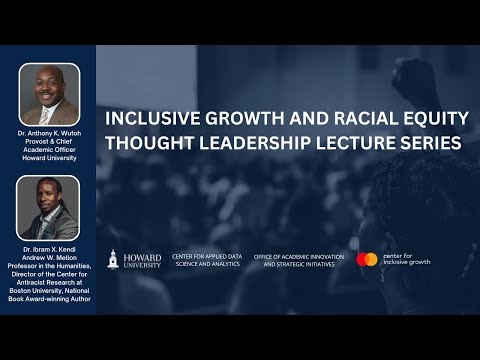
    Scheduled for Feb 20, 2025. The Spring 2024 Inclusive Growth and Racial Equity Thought Leadership Lecture Series will feature a fireside chat with Dr. Ibram X. Kendi, Andrew W. Mellon Professor in the Humanities, Professor of History, Director of the BU Center for Antiracist Research, and National Book Award-winning Author.


    Source link

  • What works for leadership in higher education now?

    What works for leadership in higher education now?

    We all know higher education has undergone a seismic shift from being a stable, traditional environment in the late twentieth century to a dynamic, complex and fast-moving sector. This transformation isn’t only in the UK – it’s global as well.

    Leaders in higher education are now tasked with navigating political and regulatory changes, financial pressures, shifts in social dynamics and technological advancements. And that’s before they are faced with enhancement challenges like building student experience initiatives or boosting research impact.

    In the past, leadership has perhaps been viewed as something of an anathema in academia, but its importance today permeates every level of an organisation. It is now a crucial component in the higher education sector’s efforts to successfully navigate current challenges.

    We’ve created the Framework for Leading in Higher Education to address these multifaceted issues which can’t be left to executive teams alone. What’s needed most is a joined-up approach, engaging formal and informal leaders right across the institution. The mission, vision and values need to feel intuitive and fitting, so that, in an ideal world, everyone would want to frame their actions around the strategic plans to meet them and to feel part of the bigger picture. And this alignment must be two-way, fostering a sense of ownership and inclusivity, whether it’s about building inclusive cultures or understanding financial imperatives.

    The journey to the framework

    The story of our framework began in 2021 when Doug Parkin, former Principal Consultant at Advance HE and a research team led by Richard Watermeyer from the University of Bristol asked a deceptively simple question: “what works for leadership in higher education?” This question sparked a literature search and a scoping study, engaging leaders at all levels and functions from around the world. This was followed by Advance HE’s Leadership Survey, published in 2023.

    After the report’s publication, we convened a rather brilliant steering group of colleagues from the UK, Australia and the Middle East, chaired by Ben Calvert, vice chancellor at the University of South Wales, and Shân Waring, vice chancellor at Middlesex University. We engaged with the sector through roundtables and workshops in the UK, Australia and Southeast Asia initially, to understand if a framework was wanted and then to determine its details.

    The desire for a framework was clear.

    We heard repeatedly about the importance of elevating leadership as a career path alongside research or teaching and supporting learning. The need for a common understanding and vocabulary around higher education leadership came across loud and clear.

    In the back of our minds throughout all of this was a sense of disconnection between people and institutions. A sense that, sometimes, leadership is like wading through treacle with an intensity of policies, regulations and workload holding us back from being the leaders that we want to be. Unfortunately, the framework can’t shift all the treacle, but it might help find some pathways through, help to join-up thinking across institutions and help us to make friends with the structures, strategies and resources that are needed to sustain the whole organisation.

    Who’s it for?

    The framework is designed for leaders, aspiring leaders and those involved in leadership and organisational development. It’s intended for a global audience, recognising the many ways to lead in higher education across diverse cultures, contexts, structures and institutions.

    Leadership happens throughout an institution, and this framework enables engagement from leaders operating formally and informally, from institutional to individual contributors, and from aspiring leaders to highly experienced ones. It’s designed to be inclusive in terms of culture, geography, institution type, level of responsibility, experience, and function.

    The framework explained

    Advance HE leadership framework

    At the core of the framework are three sets of leadership attributes, encompassing “knowledge and understanding”, “values and mindsets”, and “skills and applications”. Each of these is broken down into five dimensions for deeper exploration.

    Moving outward, the framework articulates the context in which the leader operates: place, people and practice. The outer ring, intentionally blurred to remind us that the lines between individual attributes, context and institutional goals are never clearly defined, and that disruption is most likely to occur in those grey zones.

    We’ve then defined three essential functions of university leadership as:

    1. Developing, defining, and operating within organisational culture, strategy and vision: recognising that these will undoubtedly shape you as a leader as they are shaped by you.
    2. Achieving internal measurable outcomes: performance and quality, financial sustainability, employability, curriculum quality and relevance, student and staff attraction, retention, progression, partnerships and collaborations, research and knowledge exchange.
    3. Generating impact on the external world: generating local growth, reputation, addressing and solving global problems, creating economic value, developing cultural capital, social mission and graduate impact.

    You might be tempted to ask, “is everyone supposed to do all of that?” To which, thankfully, the answer is no.

    This is an all-encompassing framework, and not all leaders will engage with every aspect. Less experienced leaders might focus on a few of the dimensions, while senior leaders might engage across all of them. Similarly, not everyone will be involved in every function of the outer circle, but everyone will be directly or indirectly involved in some aspects.

    How to use the framework

    Leaders seeking self-development might use the framework for individual reflection, considering their strengths and areas for development, and how their organisation’s people, places and practices support or impede their progress. New leaders might use the framework to understand leadership in the context of higher education, considering their strengths and experiences, and how these contribute to the outer wheel’s functions. Leaders preparing for promotion might reflect on past impacts, connect them to leadership attributes, and identify further development needs.

    Team leaders and leadership developers might assess team strengths and attributes, understand how context shapes performance, and use the framework for future-focused conversations. Institutions might use this framework to inform their own context-specific leadership frameworks and development programs.

    Organisation development and learning and development professionals might consider the cultural and development needs of their leaders, ideally in consultation with them, to determine necessary structures and interventions for succession planning or responding to change initiatives.

    What’s next?

    We’ll be launching the framework over several months, with podcasts, interviews, seminars and workshops in the UK, Australia, Europe and the Middle East.

    We want the sector to experiment, test it out, and help us shape it into something that will have a lasting impact. In the future, we’re looking at building accreditation to recognise those leading in higher education, similar to how we currently recognise those in teaching and supporting learning with the Professional Standards Framework.

    We welcome thoughts, suggestions and feedback on this as well. And if you are involved in research activities in this area, we’d be delighted to hear from you.

    Find out more about the Framework for Leading in Higher Education.

    Source link

  • The Power of Storytelling: Women Shaping Leadership and Change

    The Power of Storytelling: Women Shaping Leadership and Change

    By Dr Monika Nangia, Academic Registrar and Director of Student & Academic Services at Durham University.

    In a world increasingly aware of the value of diversity, the role of women in leadership is more critical – and undervalued – than ever. Despite encouraging strides, women, particularly women of colour, continue to face systemic barriers to advancement. This is a story of resilience, inequity, and hope.

    The conversation around diversity and inclusion is urgent, and storytelling has emerged as one of the most potent tools to address these challenges. It connects us on a human level, fosters empathy, and confronts biases. At its best, storytelling is transformational.

    In my career, I have witnessed the transformative power of storytelling in ushering in meaningful change. The stories we carry as women – of resilience, determination, and overcoming barriers – are far more powerful than any statistic or corporate policy. These personal narratives, shared boldly, have the potential to inspire, to challenge, and to reshape how we think about leadership.

    Why We Need Women in Leadership

    The benefits of gender-diverse leadership are unequivocal. According to Deloitte’s Global Human Capital Trends, organisations with inclusive cultures achieve 2.3 times higher cash flow per employee, 1.4 times more revenue, and are 120% more capable of meeting financial targets. Diverse boards, particularly those with greater gender and ethnic representation, also demonstrate better resilience and crisis management – evident during the COVID-19 pandemic.

    But beyond numbers lies the human impact. Women leaders bring ‘cognitive diversity’, which accelerates learning and performance in complex and uncertain situations. Their leadership fosters a sense of belonging, improves employee engagement, and reduces turnover.

    Yet, despite the clear advantages, women remain underrepresented at every level of leadership.

    The “Broken Rung” and Barriers to Progress

    The journey to leadership for women is fraught with challenges. The ‘broken rung’ effect—where women are less likely than men to be hired or promoted into entry-level managerial roles – creates a bottleneck that compounds over time. For every 100 men promoted to manager, only 81 women make the same leap, with even fewer opportunities for women of colour.

    Racial inequalities exacerbate this gap. McKinsey’s 2020 report highlights that women of colour face the steepest drop-off in career advancement at the transition from middle to senior management. Cultural expectations and resistance to authority further hinder their progress.

    These systemic inequities are reflected starkly in higher education. According to the HEPI Report 2020, Mind the Gap: Gender differences in HE, while women now constitute 55% of university staff in the UK, they occupy only 29% of vice-chancellor roles. Among professors, women account for 29.7%, but Black women make up less than 1%.

    The Power of Storytelling

    Stories have a unique ability to amplify voices, challenge biases, and inspire inclusivity. Neuroscience tells us that engaging narratives release oxytocin in the brain, promoting empathy and altruistic behaviour. More than data or policy, storytelling humanises diverse experiences and catalyses change.

    I’ve seen firsthand how storytelling transforms workplaces. Women leaders who share their personal journeys of resilience and ambition inspire others to envision new possibilities. Their stories break down preconceived notions, fostering an inclusive mindset that leads to behavioural change.

    One colleague who spoke candidly about her experience being the only woman of colour in a senior leadership team. She described how, despite excelling in her role, her authority was often questioned, and she had to work twice as hard to gain the same respect as her peers.

    Her story resonated deeply, not just because of the challenges she faced, but because of the hope and strength she embodied. By sharing her experience, she is creating a ripple effect – encouraging others to speak up, address inequities, and push for change.

    Storytelling is also about accountability. In fact, it is far more important to confront the untold stories, the contributions of women whose voices have been silenced or overlooked. This is especially true for women of colour, whose experiences often fall at the intersection of gender and race-based inequities.

    Mending the ‘Broken Rung’

    A combination of stories like hers, with corresponding datasets as evidence, expose the structural barriers that continue to hold women back. The ‘broken rung’ is a vivid example of this.

    Another story that sticks with me is from a woman in higher education, who spoke about being overlooked for a leadership role despite being the most qualified candidate. She later discovered that her ambition had been perceived as ‘sharp-elbowed’ and intimidating – a stark contrast to how her male counterparts were described.

    Hearing her story compelled me to reflect on how ambition in women is often misinterpreted, reinforcing stereotypes that undermine their credibility. At a recent workshop, a senior leader shared her journey of overcoming immense personal and professional obstacles to lead a major organisational transformation. Her authenticity and vulnerability moved the room, sparking conversations about resilience, leadership, and the need for systemic change.

    Building a Legacy of Inclusive Leadership

    The path to inclusive leadership requires intentionality. It means addressing both visible and invisible barriers, from hiring practices to cultural attitudes. The stories we share today will shape the leadership landscape of tomorrow. As women, we have the opportunity – and the responsibility – to use our narratives to drive change.

    Organisations with diverse leadership teams outperform their peers not just financially but also in innovation and problem-solving. The evidence is clear: diversity is not just a moral imperative – it is a strategic advantage. But the true value of diversity goes beyond metrics. It’s about creating workplaces where everyone feels they belong, where their contributions are valued, and where they can thrive.

    Source link

  • A Wicked Perspective: Faculty and Leadership in Academia – Faculty Focus

    A Wicked Perspective: Faculty and Leadership in Academia – Faculty Focus

    Source link

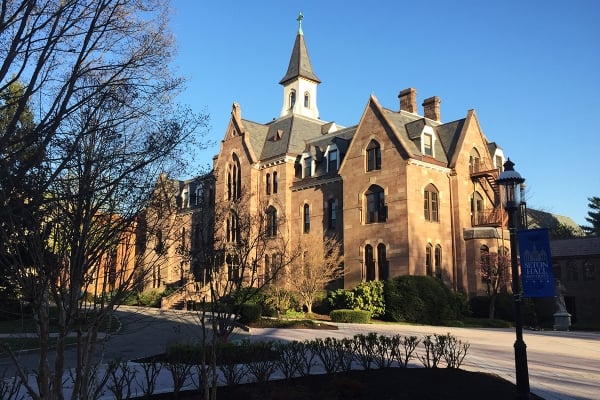
  • Dual leadership controversies plague Seton Hall

    Dual leadership controversies plague Seton Hall

    Seton Hall University president Monsignor Joseph Reilly is facing mounting pressure from public officials and demands for transparency following a report alleging that he looked the other way on sexual abuse cases.

    At the same time, the university is contending with a lawsuit filed last year by former president Joseph Nyre, which alleges retaliation, breach of contract and various other misdeeds by the Board of Regents.

    The regents have remained silent on the Reilly situation and said little about Nyre’s lawsuit, beyond a report issued in July. Now lawmakers are ratcheting up pressure on the private institution to take action, raising questions about how the board is navigating the dual controversies behind closed doors with little public oversight.

    A Bombshell Report

    Reilly, who was hired as president in April, has a long history with Seton Hall.

    The new president earned a psychology degree from the university in 1987; in 2002, he became rector of the College Seminary at St. Andrew’s Hall, the undergraduate seminary of the Archdiocese of Newark, which is part of Seton Hall. A decade later Reilly became rector and dean of the university’s graduate seminary, a position he held until 2022. Then he took a yearlong sabbatical before returning as vice provost of academics and Catholic identity.

    Reilly also served on Seton Hall’s Board of Trustees—one of two governing bodies—during his time as an administrator.

    It was during his time at the graduate School of Theology that Reilly is accused of knowing about sexual abuse allegations that he did not report, according to documents reviewed by Politico. The case is linked to sprawling sexual abuse allegations involving disgraced cardinal Theodore McCarrick, the news outlet reported, who “created a culture of fear and intimidation” and “used his position of power as then–Archbishop of Newark”—which sponsors Seton Hall—“to sexually harass seminarians” for decades, according to a university report released in 2019.

    McCarrick, who sat on both of Seton Hall’s boards, was defrocked by the Vatican after he was found guilty of sexual misconduct in a canonical trial. A criminal case against McCarrick was suspended last year due to his inability to stand trial because of a dementia diagnosis.

    While Seton Hall never released to the public its full report on the abuse McCarrick allegedly committed, Politico’s review of the findings revealed that Reilly knew about the allegations against the cardinal and failed to report to university officials a student complaint about sexual assault by a seminarian. Politico also reported that Reilly dismissed another seminarian in 2012 who had allegedly been sexually abused and that he did not investigate the incident. In another instance, Reilly was allegedly made aware of a 2014 sexual harassment charge and did not report it.

    Politico also reported that Reilly did not fully cooperate with a 2019 investigation into McCarrick’s alleged abuse. A task force set up in 2020 to mete out discipline after the McCarrick scandal reportedly recommended removing Reilly from board and leadership roles.

    As the controversy has unfolded, Seton Hall has said little publicly.

    “As part of the search for the university’s 22nd president, the Board of Regents reviewed several candidates and overwhelmingly selected Monsignor Joseph Reilly to lead Seton Hall in recognition of his decades of effective service and leadership,” a Seton Hall spokesperson wrote in an email to Inside Higher Ed. “The Board of Regents remains unequivocal in its support of Monsignor Reilly and firmly believes in his ability and vision to enhance Seton Hall’s standing as one of the nation’s foremost Catholic universities.”

    The university did not provide a requested interview with regents, but the spokesperson added that following a 2019 review by a law firm, “the board determined that Monsignor Reilly should remain in his role and eligible for future roles at the University.” Seton Hall declined to provide a copy of the report.

    Demanding Answers

    Seton Hall’s silence has not gone unnoticed by Democratic state senator Andrew Zwecker, who chairs the Senate Oversight Committee and is vice chair of the higher education committee.

    “I’m appalled at the fact that they’ve just doubled down at this point without any transparency, just generic statements about values and doing a good job, et cetera,” he told Inside Higher Ed.

    Though Seton Hall is private, Zwecker noted that it receives about $2.5 million in state funding for certain programs. He added that the state could cut those funds—an option he might pursue if the university doesn’t respond transparently to concerns that Reilly ignored sexual abuse.

    “That is a lever that we must absolutely consider to keep the pressure on,” Zwecker said.

    He’s also weighing a public hearing. But Zwecker said he would rather see Seton Hall address the issue and answer questions about what Reilly knew about sexual abuse and whether the Board of Regents ignored those findings when it voted to hire him.

    If regents knew and “voted to install this president anyway, they should resign immediately,” Zwecker said.

    Democratic governor Phil Murphy also weighed in last week.

    “The Governor is deeply concerned by the allegations and believes that Seton Hall University must release the full report,” press secretary Natalie Hamilton told Inside Higher Ed by email.

    The Star-Ledger editorial board has challenged the university on its opacity, publishing an opinion piece on Monday under the headline “Why is Seton Hall hiding this sex abuse report?

    Faculty members at Seton Hall are also pressing for transparency.

    Nathaniel Knight, chair of Seton Hall’s Faculty Senate, noted “considerable concern” among the professoriate and said he wants to see a “greater degree of transparency” from the university.

    Knight said he supported Reilly’s hiring when he was named president, noting he “had the institutional memory” given his years of service and seemed to “embody the spirit of Seton Hall.” But now Knight wants the university to fully explain the concerns around the new president.

    “I support Monsignor Reilly. I supported his hiring. I think he’s a good man, a man of integrity and religious faith, and is someone who brought a promise of bringing the university, the community, together around its core values as a Catholic institution of higher education. Whatever is out there, I’d like to be able to weigh that against the positives that I see with Monsignor Reilly,” Knight said.

    An Explosive Lawsuit

    For Seton Hall, the Reilly controversy comes on the heels of Nyre’s unexpected exit in 2023, which shocked many in the community.

    “It was a surprise. I think we were bewildered. He had been brought in with great fanfare not long before,” Knight said. “He saw the university through the COVID years with a steady hand and was in the process of implementing this strategic plan that he had crafted. We saw no indication that there were any problems in the works. It was out of the blue and had us all scratching our heads.”

    Nyre sued Seton Hall last February, alleging breach of contract and retaliation by the board.

    In the lawsuit, Nyre alleges he was pushed out by the Board of Regents following a clash with then-chair Kevin Marino, whom he accused of micromanagement, improperly inserting himself into an embezzlement investigation at the law school and sexually harassing his wife, Kelli Nyre, among other charges. Marino, who is no longer on the board, was not named as a defendant in the lawsuit despite being at the center of many of the allegations.

    “Our litigation centers on the alleged systemic failures of the Board of Regents and their unwillingness to comply with federal laws, including Title IX, Title VII, and Title IV, as well as university bylaws and policies,” Matthew Luber, an attorney representing Nyre, said in a statement. “As alleged in the Complaint, the Defendants prioritized self-preservation, suppressing dissent and retaliating against individuals like Dr. Nyre who reported misconduct and advocated for meaningful change. As further alleged in the Complaint, the Board of Regents not only neglected their fiduciary responsibilities, but exposed the University and its personnel to significant risk. No matter the outcome, change is urgently needed at Seton Hall.”

    The university has pushed back in court. Officials filed a motion to dismiss last March, alleging that Nyre failed to state a claim and that the terms of his exit agreement barred him from filing a lawsuit against Seton Hall and/or its Board of Regents. Lawyers for Seton Hall wrote in a brief that Nyre’s lawsuit “can best be described as gamesmanship, and at worst sheer dishonesty.”

    University officials did not address the Nyre lawsuit in a statement to Inside Higher Ed, but last July they released a report from an outside law firm rejecting the claims against Marino. Attorneys for the firm, Perry Law, wrote that they “found no evidence to substantiate Mrs. Nyre’s allegations regarding Mr. Marino, despite the purported harassment allegedly occurring in public places in close proximity to numerous other individuals.”

    The Perry Law report was issued July 2, one day after Reilly assumed office. The report did not include interviews with the Nyres, who the authors noted did not participate in the investigation. Witnesses present for the alleged incidents told investigators that they did not see Marino engage in the behavior he is accused of, and the former board chair has denied the claims and blasted the lawsuit as “desperate and pathetic.” And, in a statement to Inside Higher Ed last year, Seton Hall said the claims were without merit.

    As controversies around Seton Hall’s current and former leaders play out, more details are likely to emerge in the Nyre case, barring a dismissal or settlement. But the Reilly review may remain shrouded in mystery as Seton Hall hunkers down, ignoring widespread calls for transparency.

    Source link

  • Resolving the tensions in campus culture requires leadership from within

    Resolving the tensions in campus culture requires leadership from within

    You’ve heard a version of this story before.

    The 16 days against gender-based violence campaign has been running around the world for over 30 years now, and manifestations on campus can include everything from assertiveness and self-defense workshops to panels on violence, discrimination and harassment in student life.

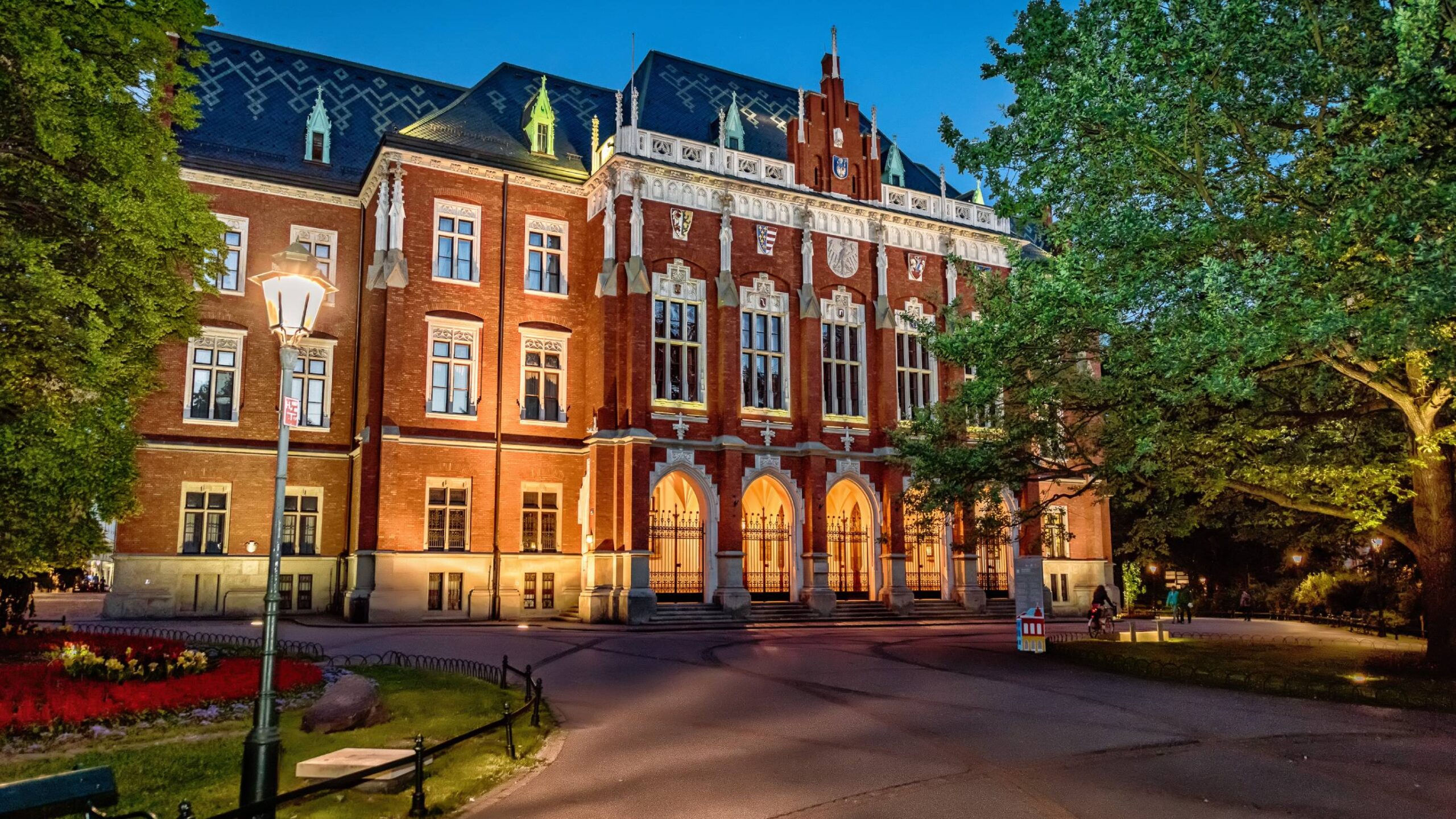
    Back in 2021, students at the oldest university in Poland had put together a programme of activity for the campaign that included a lecture on the criminological aspects of the murders of women from a lecturer in the Department of Criminology.

    But days before she was due to give the talk, the Forensic Psychology Section of the Scientific Association of Psychology Students at Jagiellonian University in Krakow (one of the co-organisers alongside the LGBTQ+ society and the SU) announced that the lecture had been cancelled:

    When inviting Dr. Magdalena Grzyb to give a lecture, we were not aware of the views she represents. We would also like to point out that we absolutely do not agree with the opinions she expresses, and we do not consent to any manifestations of transphobia in the university space.

    The previous year, Grzyb had penned a piece in Kultura Liberalna – a weekly Polish magazine focusing on liberal values, intellectual debate, and cultural analysis – critiquing the acceptance of non-binary and queer identities in liberal and progressive circles, suggesting that prioritising individual self-identification over systemic efforts to deconstruct stereotypes and achieve real gender equality was a problem:

    Does every man, even a serial rapist or a domestic torturer, if he says he feels like a woman, have the right to demand to be placed in a cell with women, often victims of such men? (…) A woman who repairs a dishwasher at home is also non-binary. Heck, a woman who earns more than her husband is also non-binary. A man who irons his clothes and washes the floor with a mop is also non-binary. (…) Do they deserve special treatment and a place in a cell with women because of this?

    A few days later Jerzy Pisuliński, Dean of the Faculty of Law and Administration at Jagiellonian, issued a statement making clear that the lecture would take place after all, on the basis that the university should be a place for “debate on important social problems” and that it “cannot avoid controversial topics”.

    Setting an example

    That was an announcement welcomed by HE minister Przemysław Czarnek, whose conservative and nationalist Law and Justice Party (Prawo i Sprawiedliwość, PiS) had only months previously, egged on by the Ordo Iuris Institute for Legal Culture, proposed an amendment to the Law on Higher Education that sought to tackle wokery and cancel culture:

    I welcome with satisfaction the decision of the Rector of the Jagiellonian University to restore the lecture of Ms. Dr. Magdalena Grzyb. The Jagiellonian University is setting an example.

    A year previous a sociology lecturer at the University of Silesia in Katowice resigned in protest after students accused her of promoting intolerant anti-choice and homophobic views in her classes. The university’s disciplinary official found evidence of intolerance – prompting Czarnek’s predecessor Jarosław Gowin to condemn what he termed “ideological censorship”:

    The Bill will be intended to help the university community and the rector to ensure that these freedoms are not violated, that the university is a temple of freedom of speech, freedom of exchange of views and discussion.

    When it eventually appeared a few months later, it proposed to guarantee academic teachers’ freedoms in teaching, speech, research, and publication; protect the expression of religious, philosophical, or worldview beliefs, ensuring they would not constitute disciplinary offenses; and oblige university rectors to uphold respect for these freedoms, all aimed at guaranteeing an environment of “ideological pluralism” within academic institutions.

    Campaign groups weren’t happy – arguing that student organisations should be able to invite or not invite lecturers to their events:

    …that is their sacred right, just as it is not a restriction of freedom of speech that I or any other person was not invited. Other people may not like it and may criticise this decision.

    Just as in the UK, some argued that the reforms could undermine the independence of academic institutions – allowing government influence over academic discourse and research priorities, and discouraging open discussion and critical analysis on topics that might conflict with the government’s conservative stance.

    Others puzzled over the practical differences between not refusing a speaker and forcing a voluntary student group to go ahead with one even if it didn’t want to – the sort of detail lost in the noise in cases like this.

    But back at Jagiellonian, there was the thorny issue of Ernest Figiel to resolve.

    Enemies of the people

    Figiel, a trans activist student at Jagiellonian had accused Grzyb of being a Trans-Exclusionary Radical Feminist, and in the process had called for TERFs to be “thrown into a sack and into a lake”, disposed of “in lime pits” and had praised Stalin’s methods of dealing with “enemies of the people” – which he thought should apply to Grzyb and her ilk.

    And as disciplinary proceedings against Figiel ensued and a counter campaign kicked off, it was down to Beata Kowalska, who in 2020 became the university’s first Advocate [Ombusperson] for Academic Rights and Values, to chart a way through:

    It does not matter who the hate speech comes from. Allegations of hate speech are carefully investigated in the case of any member of the university community. As is well known, hate speech can have disastrous consequences when used publicly, sometimes contrary to the original intentions of the sender… Figiel publicly used polemical statements of a dehumanizing nature against his opponents, using extermination and genocidal metaphors…

    Such statements are unacceptable in the academic community. Trivializing the extermination or using in an allegedly humorous way images of genocide, which Mr. Figiel publicly wished for his opponents, constitute a flagrant transgression of the boundaries of freedom of speech.

    The full statement is excellent – carefully integrating concerns that discrimination against non-heteronormative people had intensified with the need to uphold freedom of speech as a “pillar of democratic debate”. And while that was not a universally popular intervention, it pretty much doused the flames and helped the university community move on. The question is how and why.

    What goes on tour

    Jagiellonian in Krakow and Silesia in Katowice were two of the universities we visited on this year’s Wonkhe SUs January bus tour of students’ unions – which took in the Visegrad countries of Hungary, Slovakia, Czechia and Poland.

    Over the past few years, we’ve been assembling groups of SU officers (and the staff that support them) to meet with students’ unions, guilds, associations across countries in Europe – and we’ve seen any number of fascinating projects, initiatives, buildings, services and schemes that students deliver in the student interest.

    But on the long (and often winding) roads between university towns and cities across Europe, we’ve also been trying to work out what it is that underpins all of the impressive stuff that we’ve seen.

    Much like the other three countries’ systems, Polish higher education’s governance is effectively a communitarian power-sharing arrangement that “combines the preferences of policymakers towards the market model” with the legacy of the “institutionalized, deeply-entrenched, and change-resistant academic self-governance model” that was reintroduced in 1990 after communist rule.

    The Law on Higher Education has an extensive section on student rights – setting out a positive role for students’ unions to deliver training on those rights to students, as well as recognising their role in giving voice to student concerns, and organising activities aimed at the social integration and cultural development of students.

    Built almost entirely on pyramids of faculty-based student involvement that start with summer student integration camps and talks for new students on rights and obligations, we met any number of impressive, unpaid student leaders who were keen to support other students because they themselves had experienced being supported by others.

    The law also provides for state universities to be partially democratically run both at faculty and institutional level – with students given at least 20 per cent of seats and veto power over key decisions like who gets to be Dean or Rector, and what goes into study programmes.

    At Silesia, the SU President – who started his talk with a slide quoting from the law – concluded by turning to the Vice-Rector for Student Affairs to say that “we often argue, but we couldn’t wish for anyone better for the job”. That’s partly because to get elected, she had to command the confidence of those electing her. And it’s partly because him and his colleagues obviously thought they had real power in the process.

    He, like all the other SUs we had met in Poland, had mentioned the Ombudsperson at the university as a key figure that students had the right to access – and as we burned through SIM data between visits, we set about trying to understand why.

    Law 2.0

    In 2018, ruling party PiS had enacted a new Law on Higher Education and Science, commonly known as Law 2.0, to modernize higher education. University councils (as opposed to Senates) were given external stakeholders, funding mechanisms were modernised to promote research excellence, universities were given more flexibility in financial management, and toughened duties were placed on universities to uphold ethical standards, including those related to freedom of speech and debate.

    A handful of academic ombudspeople were already in place at the University of Warsaw, the Nicolaus Copernicus University in Toruń, the Catholic University in Lublin and the Medical University of Warsaw – but Law 2.0 gave a group of universities the opportunity to integrate democratic governance and student rights and obligations into an optional model charter for universities, Section V of which provided for the appointment of an ombudsman for academic rights and values.

    Jagiellonian’s students and staff were among those who’d spotted a need to be seen to be both integrating and providing leadership on EDI and freedom of speech – and the job spec for their first ombuds oozes a need to command confidence.

    They have to be an academic teacher who has been employed at the university for at least ten years and holds a professor or university professor position. They can’t hold any managerial or governing roles and should be widely respected within the university community, demonstrating strong social sensitivity.

    Candidates can be nominated by various groups, including the Senate, university employees, both the UG and doctoral SUs, and the trade unions. Their job is to monitor and address violations of academic rights and values, provide support to affected parties, mediate disputes, and collaborate with university entities to create a respectful academic environment.

    They investigate reported violations, recommend corrective measures to university bodies, and advocate for affected individuals during proceedings. They also have the authority to advise on initiating disciplinary or mediation processes and can request information or documentation from university bodies as needed. And every year, they submit a comprehensive report to the Senate detailing their activities and cases handled – which is subsequently made publicly available.

    No to parameterization

    This interview with the inaugural postholder Beata Kowalska – a feminist sociologist involved in the Scholars at Risk Network – is inspiring:

    A university is not a place where we collect points and are subjected to parameterization, but rather a community of people who work together. They do not work only individually to build their own careers, the mission of the university is much broader.

    Universities are spaces where academic freedom and equality should flourish. This means identifying solutions, sharing good practices, and creating tools that will support these goals. I plan to hold discussions on topics like climate change and academic integrity. Recently, we even used sociological “teams” during the pandemic lockdown to address social isolation among students.

    One challenge is bridging the gap between academic life and society. Universities must be critical spaces where ideas are debated freely and without fear of discrimination or exclusion. This applies not only to faculty and students but to the broader society they serve.

    In year one, Kowalska’s office handled 236 cases involving staff, students, and doctoral candidates, addressing issues like academic ethics, workplace conditions, and conflict resolution, as well as the promotion of academic values, mediation efforts, and educational programmes to support a culture of respect and dialogue within the university.

    And since then her office and team of mediators have gone on to tackle violations of students’ rights by academics, wider academic values, workplace conditions, unwanted behaviours and harassment, complaints about study organisation, anti-discrimination training and cultural events – as well as collaborating internationally.

    Somehow we know more about how the University of Jagiellonian has been handling disputes between students, staff and the university by using Google Translate on a couple of PDFs than pretty much any university in the UK with their bulletproof PR processes and bland press statements when a row ensues.

    And so successful have the institutional ombudspeople been at commanding confidence that PiS backed off on further reforms – and now, along with announcements on encouraging mergers (federalisation first), financial aid for doctoral students, a plan to build more places in dorms and scholarships for students engaged in running activities for others, last September the new government announced that it would strengthen the powers of student and doctoral student ombuds.

    In December HE minister Dariusz Wieczorek ended up embroiled in some kind of whistleblowing scandal, but you get a real sense that the Donald Tusk-led coalition has students’ concerns at heart:

    According to the Central Statistical Office, there are over a million students in Poland. I really want each of you to have the best possible conditions for learning and pursuing your passions, so that your studies are a chance for you to deepen your knowledge, acquire new skills, but also a time for making friends and comprehensive development. That is why at the Ministry of Science and Higher Education we consistently introduce solutions that will ensure high quality of education at Polish universities, we transfer funds for investments related to the teaching activities of universities, and we also co-finance the construction and modernization of dormitories.

    In addition, a student culture support program will be launched in the first quarter of 2025, aimed at clubs, teams and organizations operating in higher education institutions. I am convinced that it will allow for the activation and integration of the environment, and above all, it will contribute to the development of student culture in Poland.

    Commanding confidence

    As ever on our study tours, back on the bus we tended to conclude that there’s lots to be proud of in the UK – in particular, for all of the issues that present, we figure that our sector’s work on mental health and the progress being made on harassment and sexual misconduct and access and participation really is streets ahead of many other countries’ efforts.

    But when it comes to treating students as real stakeholders, it’s not the size of the SU’s block grant that matters – and when it comes to the tensions between academic freedom and EDI, the pausing of the implementation of the Higher Education (Freedom of Speech) Act is less a defeat or victory, and more a reflection of the “jury’s out” position that pretty much everyone has on the sector’s ability to reconcile the tensions in a way that will command real confidence.

    Democracy in universities – real democracy, not events where you can scrawl ideas that consultants ignore on sheets of flipchart paper – is in pretty short supply in a UK sector that has largely abolished it in universities and only really turns to it for a popularity contest for leaders in March in SUs. And universities back home are never wrong – at least not in public.

    If nothing else, what we saw in various forms across the Visegrad group this year was real democracy in action – imperfect, messy, bureaucratic and uncomfortably open, but powerfully symbolic of the sort of society that universities hope their graduates will want to build in the future.

    Back on the academic freedom and freedom of speech issue, the truth is that there have always been and always will be tensions and conflicts – between freedom from harm and freedom to speak, between supporters of Israel and Palestine, between protecting the university and protecting students, between the young keen to be on the right side of history and an older generation defensive of it, and between the role that universities play both critiquing society and being a part of it. Conflicts require resolution.

    Having the confidence to take the national widespread credibility of the OIA and establish local versions of it like that exemplified by Beata Kowalska at Jagiellonian – commanding the confidence of students, staff, management, politicians and the wider public by being somewhere independent where folk can raise and resolve disputes – wouldn’t be a defeat for the UK sector, and nor would it represent a risk.

    It would be a reflection of what higher education in the UK often says it is – an open, reflective, capable and self-critical community of students and staff – but all too often is too defensive and too proud to trust its own people to make it a reality.

    Source link