Tag: Learners

  • 12 Ways to Improve College for Military Learners

    12 Ways to Improve College for Military Learners

    SDI Productions/Getty Images

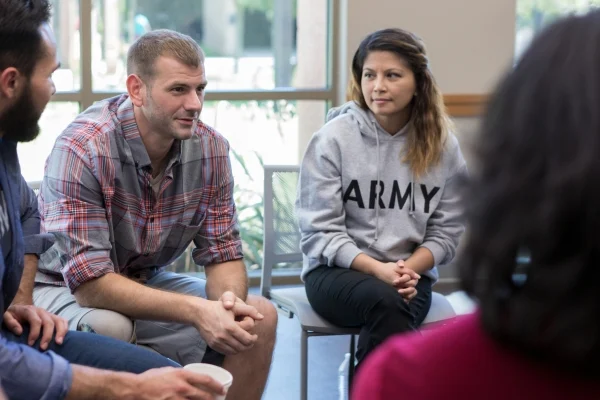
    Approximately 5 percent of all undergraduate learners are active-duty military, reservists, National Guard or veterans, but many systems within colleges aren’t set up to accommodate their needs.

    A November research brief from the Center for Higher Education Policy and Practice outlines some of the barriers to military students’ success while they’re enrolled and offers strategies to improve their college experiences. The report draws on interviews with students, recent graduates, higher education faculty and staff, policy experts, and past research.

    1. Clearly outline program costs and the support services available to military-connected learners. Colleges should also share data on military student enrollment, completion and job outcomes, such as on a dedicated military-student web page.
    1. Streamline credit transfer policies using the American Council on Education’s Military Guide as a starting point for military experience. Providing quality transfer advising can also ensure maximum allowable credits are awarded for prior service and can explain how a major program may increase or decrease transferred credits.
    2. Provide financial aid counseling for military-connected students so they know the benefits available for them at federal, state and institutional levels. The college should also allocate dollars in the case of benefit delays or work with appropriate offices to expedite funds.
    3. Create peer mentorship programs to connect incoming students with currently enrolled military learners who have similar lived experiences. Affinity groups on campus, such as the Student Veterans of America, can also instill a sense of belonging.
    1. Offer professional development training for faculty and staff to be culturally competent about military-specific needs. Green Zone Ally Training is one example that helps higher education professionals support veterans on campus.
    2. Offer flexible courses that accommodate active-duty service members and their families, who may be navigating deployments or relocations. These could include online classes or competency-based education.
    3. Establish policies for service-related disruptions including deadline extensions, rescheduling exams or alternative-format course materials to mitigate disruptions to students’ academic timelines.
    1. Provide accessibility across systems so veterans with disabilities gain equitable access to resources. In instances when accommodations are needed, creating a streamlined process to qualify for accommodations through the disability services office ensures veterans can access all resources.
    2. Create partnerships with external agencies who also support military-connected individuals, such as Veterans Service Organizations and the local Veterans Affairs office.
    3. Connect students with career coaches who can translate their military experience and training into the civilian workforce as well as liaise between veteran-friendly employers and students. Some military-connected students may need additional advice on how professional demeanor and formality expectations vary in the civilian workforce, the report noted.
    1. Expand access to co-op programs and internships that are tailored to military learners and career exploration opportunities. Military-focused career events can make the match between veteran-friendly organizations and future employees.
    2. Track career outcomes for military-affiliated students and align offerings with labor market opportunities.

    How does your college or university provide specialized resources to military-affiliated students? Tell us more here.

    Source link

  • Adult Student Priorities Survey: Understanding Your Adult Learners 

    Adult Student Priorities Survey: Understanding Your Adult Learners 

    The Adult Student Priorities Survey (ASPS) is the instrument in the family of Satisfaction-Priorities Surveys that best captures the experiences of graduate level students and adult learners in undergraduate programs at four-year institutions. The Adult Student Priorities Survey provides the student perspectives for non-traditional populations along with external national benchmarks to inform decision-making for nearly 100 institutions across the country.

    Why the Adult Student Priorities Survey matters

    As a comprehensive survey instrument, the Adult Student Priorities Survey assesses student satisfaction within the context of the level of importance that students place on a variety of experiences, both inside and outside of the classroom. The combination of satisfaction and importance scores provides the identification of institutional strengths (areas of high importance and high satisfaction) and institutional challenges (areas of high importance and low satisfaction). Strengths can be celebrated, and challenges can be addressed by campus leadership to build on the good where possible and to re-enforce other areas where needed.

    With the survey implementation, all currently enrolled students (based on who the institution wants to include) can provide feedback on their experiences with instruction, advising, registration, recruitment/financial aid, support services and how they feel as a student at the institution. The results deliver external benchmarks with other institutions serving adult learners, including data that is specific to graduate programs, and the ability to monitor internal benchmarks when the survey is administered over multiple years. (The national student satisfaction results are published annually). The delivered results also provide the option to analyze subset data for all standard and customizable demographic indicators to understand where targeted initiatives may be required to best serve student populations.

    Connecting ASPS data to student success and retention

    Like the Student Satisfaction Inventory and the Priorities Survey for Online Learners (the other survey instruments in the Satisfaction-Priorities family), the data gathered by the Adult Student Priorities Survey can support multiple initiatives on campus including to inform student success efforts, to provide the student voice for strategic planning, to document priorities for accreditation purposes and to highlight positive messaging for recruitment activities. Student satisfaction has been positively linked with higher individual student retention and higher institutional graduation rates, getting right to the heart of higher education student success.

    Learn more about best practices for administering the online Adult Student Priorities Survey at your institution, which can be done any time during the academic year on the institutions’ timeline.

    Ask for a complimentary consultation with our student success experts

    What is your best approach to increasing student retention and completion? Our experts can help you identify roadblocks to student persistence and maximize student progression. Reach out to set up a time to talk.

    Request now

    Source link

  • Why early STEAM education unlocks the future for all learners

    Why early STEAM education unlocks the future for all learners

    Key points:

    When we imagine the future of America’s workforce, we often picture engineers, coders, scientists, and innovators tackling the challenges of tomorrow. However, the truth is that a student’s future does not begin in a college classroom, or even in high school–it starts in the earliest years of a child’s education.

    Early exposure to science, technology, engineering, arts, and mathematics (STEAM) builds the foundation for critical thinking, collaboration, and creativity. Research indicates that children introduced to STEAM concepts before the age of eight are significantly more likely to pursue STEM-related fields later in life. Yet for too many children, especially neurodivergent learners and those in underserved communities, STEAM education comes too late or not at all. That gap represents a missed opportunity not only for those children, but also for the industries and communities that will rely on their talents in the future.

    The missed opportunity in early education

    In most school systems, STEAM instruction ramps up in middle school or high school, long after the formative years when children are naturally most curious and open to exploring. By waiting until later grades, we miss the chance to harness early curiosity, which is the spark that drives innovation.

    This late introduction disproportionately affects children with disabilities or learning differences. These learners often benefit from structured, hands-on exploration and thrive when provided with tools to connect abstract concepts to real-world applications. Without early access, they may struggle to build confidence or see themselves as capable contributors to fields like aerospace, technology, or engineering. If STEAM employers fail to cultivate neurodivergent learners, they miss out on theirunique problem-solving skills, specialized strengths, and diverse thinking that drives true innovation. Beyond shrinking the talent pipeline, this oversight risks stalling progress in fields like aerospace, energy, and technology while weakening their competitive edge.

    The result is a long-term underrepresentation of neurodivergent individuals in high-demand, high-paying fields. Without access to an early STEAM curriculum, both neurodivergent students and employers will miss opportunities for advancement.

    Why neurodivergent learners benefit most

    Neurodivergent learners, such as children with autism, ADHD, or dyslexia, often excel when lessons are tactile, visual, and inquiry-based. Early STEAM education naturally aligns with these learning styles. For example, building a simple bridge with blocks is more than play; it’s an exercise in engineering, problem-solving, and teamwork. Programming a toy robot introduces logic, sequencing, and cause-and-effect.

    These types of early STEAM experiences also support executive functioning, improve social-emotional development, and build persistence. These are crucial skills in STEM careers, where theories often fail, and continued experimentation is necessary. Additionally, building these skills helps children see themselves as creators and innovators rather than passive participants in their education.

    When neurodivergent children are given access to STEAM at an early age, they are not only better equipped academically but also more confident in their ability to belong in spaces that have traditionally excluded them.

    Houston as a case study

    Here in Houston, we recognize the importance of early STEAM education in shaping our collective future. As the world’s Energy Capital and a hub for aerospace innovation, Houston’s economy will continue to rely on the next generation of thinkers, builders and problem-solvers. That pipeline begins not in a university laboratory, but in preschool classrooms and afterschool programs.

    At Collaborative for Children, we’ve seen this firsthand through our Collab-Lab, a mobile classroom that brings hands-on STEAM experiences to underserved neighborhoods. In these spaces, children experiment with coding, explore engineering principles, and engage in collaborative problem-solving long before they reach middle school. For neurodivergent learners in particular, the Collab-Lab provides an environment where curiosity is encouraged, mistakes are celebrated as part of the learning process, and every child has the chance to succeed. Additionally, we are equipping the teachers in our 125 Centers of Excellence throughout the city in practical teaching modalities for neurodivergent learners. We are committed to creating equal opportunity for all students.

    Our approach demonstrates what is possible when early childhood education is viewed not just as childcare, but as workforce development. If we can prioritize early STEAM access in Houston, other cities across the country can also expand access for all students.

    A national priority

    To prepare America’s workforce for the challenges ahead, we must treat early STEAM education as a national priority. This requires policymakers, educators and industry leaders to collaborate in new and meaningful ways.

    Here are three critical steps we must take:

    1. Expand funding and resources for early STEAM curriculum. Every preschool and early elementary program should have access to inquiry-based materials that spark curiosity in young learners.
    2. Ensure inclusion of neurodivergent learners in program design. Curricula and classrooms must reflect diverse learning needs so that all children, regardless of ability, have the opportunity to engage fully.
    3. Forge stronger partnerships between early education and industry. Employers in aerospace, energy, and technology should see investment in early childhood STEAM as part of their long-term workforce strategy.

    The stakes are high. If we delay STEAM learning until later grades, we risk leaving behind countless children and narrowing the talent pipeline that will fuel our nation’s most critical industries. But if we act early, we unlock not just potential careers, but potential lives filled with confidence, creativity and contribution.

    Closing thoughts

    The innovators of tomorrow are sitting in preschool classrooms today. They are building with blocks, asking “why,” and imagining worlds we cannot yet see. Among them are children who are neurodivergent–who, with the proper support, may go on to design spacecrafts, engineer renewable energy solutions, or code the next groundbreaking technology.

    If we want a future that is diverse, inclusive, and innovative, the path is clear: We must start with STEAM education in the earliest years, for every child.

    Source link

  • 3 Steps for Re-Enrolling Adult Learners (opinion)

    3 Steps for Re-Enrolling Adult Learners (opinion)

    About 3.8 million new high school graduates are expected to enroll in higher education next fall. The number of former students with some college credits but no credential is, at nearly 38 million working-age American adults, 10 times larger. If institutions could re-engage just 1 percent of the some college, no credential (SCNC) learners, they would net nearly 400,000 additional enrollments.

    Stopped-out learners represent an enormous market—and colleges should be competing for them. But these former students and other adult learners require much different approaches from a postsecondary institution than do 18-year-olds straight out of high school. Here are three simple actions institutions can take to connect with adult learners and put them on a more direct path to enroll.

    Start With Your Own Stopped-Out Students

    The fiercely competitive market for adult students is dominated by national online universities that pump millions of dollars each year into sophisticated marketing campaigns. That makes it difficult for traditional colleges to make inroads with adult learners. But traditional institutions have a leg up on one subset of adult learners: their own former students.

    These students know their institutions. They might remember some classmates, professors or classes they took. And they probably still live nearby—if not in the same community, then in the same state.

    Institutions unsure about enrolling these students should look at the examples set by other nearby and national colleges that are successfully re-enrolling their own stop-outs. More likely than not, they’re emphasizing what they can do specifically for adult learners and offering a rapid and simplified admissions process. Successful institutions also apply credit for prior learning before a learner re-enrolls and can tell incoming students exactly how long a program will take and how much it costs. Institutions that can convince their former students to re-enroll can increase the odds of attracting other adults with no connection to the institution.

    Make It Easier for Former Students to Enroll

    Colleges should configure the re-enrollment process to address the particular situations of stopped-out students. That means colleges should map the start-to-finish re-enrollment process for stopped-out students just like they have for their first-time, first-year students, and then streamline it to meet the needs of returning adult learners. One key place to begin is identifying the academic, financial or procedural barriers that prevent adult learners from re-enrolling and then communicating options for remediation.

    Before students begin classes, institutions should be ready to illustrate the most direct pathway for students to complete a credential, one that accommodates the complicated lives of time-crunched adult learners and leads to a postgraduation job in a high-demand, high-paying field. Institutions should clarify pathways and credit requirements for learners looking to change from their original major.

    Institutions should also consider devoting a section of their website to their own stopped-out students. That webpage should contain detailed re-enrollment information tailored to the specific needs and support services that can assist with the transition back to college.

    Assist Them Financially

    Here’s a quiz for institutions: How does your tuition discount rate for re-enrolling students compare to that for first-time students? Chances are, it’s extremely low relative to other enrollment segments.

    Unlike first-time, first-year students, adult learners are financially independent and must squeeze college expenses into already tight household budgets. Even a small increase in the discount rate for returning learners can increase the likelihood that they’ll re-enroll. Even better, calling it an “academic scholarship” confers prestige on the recipient and can give a stopped-out student the boost they need to come back strong.

    If stopped-out students have outstanding balances from their previous enrollment, consider reducing or waiving those unpaid fees to eliminate one more barrier to re-enrollment. For institutions that spend millions of dollars annually to recruit and retain traditional-age students, small-dollar investments in adult learners can pay big enrollment dividends.

    Adult learners and stopped-out students are no longer a niche population in the higher education ecosystem, and the data suggests that they’re a worthwhile investment for institutions concerned about evolving demographics, enrollment cliffs and their precarious bottom lines. If institutions can reconnect with their own stopped-out students, make it easier for them to enroll and provide some financial assistance, they can begin to bring back more of these learners and stand a little taller in the crowded higher education marketplace.

    Scott Lomas is the chief strategy officer for ReUp Education.

    Source link

  • Illinois Launches Effort to Re-Enroll Adult Learners

    Illinois Launches Effort to Re-Enroll Adult Learners

    Photo illustration by Justin Morrison/Inside Higher Ed | rawpixel | Anand Raj/Pexels

    Illinois has launched a statewide effort to re-enroll students who stopped out of college, in partnership with ReUp Education, a company focused on recruiting and supporting adult learners, according to a news release. ReUp has established a re-enrollment marketplace in Illinois that will connect stopped-out learners with 19 participating community colleges and universities and provide them with live coaching and other resources.

    The platform will be accessible to 200,000 Illinois residents who have earned some college credits but not completed a degree. Nationwide, about 43 million Americans fall into that category.

    Illinois joins several other states and institutions that have begun making a concerted effort to bring stopped-out individuals back to college. According to ReUp’s release, the company has supported 40,000 students in re-enrolling in college.

    “Building a brighter future requires looking long and hard at the economic realities facing Illinois’ families and work force,” State Rep. Katie Stuart, chair of the Illinois House Higher Education Committee, said in the release. “Partnering with an established name in the adult education space to get more people skilled up for high-paying jobs is a big step in the right direction.”

    Source link

  • AI Teaching Learners Today: Pick Your Pedagogy

    AI Teaching Learners Today: Pick Your Pedagogy

    University budgets across the country are broken. Overall revenue and accumulated financial support appear to be declining for a wide variety of reasons.

    New funding policies, administrative reorganizations such as those at the Department of Education, lean fiscal times for states, diminished regard for higher learning, fewer requirements for degrees among employers hiring for entry-level positions and the impact of artificial intelligence all come together to reduce the pool of new students, tuition revenues and grants. As a result, new initiatives are stifled unless they show promise to immediately reduce costs and generate new revenue.

    The cost of developing, designing and teaching classes is often largely determined by the faculty and staff costs. Long-running lower-division classes at some universities may be taught by supervised teaching assistants or adjunct faculty whose salaries are lower than tenure-track faculty’s. However, we are now confronted with highly capable technologies that require little to no additional investment and can bring immediate revenue positive opportunities. Each university very soon will have to determine to what extent AI will be permitted to design and deliver classes, and under what oversight and supervision.

    However, few of us in higher ed seem to realize that such technologies are freely available today. The tsunami of new and improving AI technologies has inundated us over the past three years so quickly that many in academe have not been able to keep up.

    Case in point is the rapidly expanded and enhanced AI app. We know them by the names Gemini, ChatGPT, Claude and a few others that we tried out in 2023 or 2024. Early on, they were deficient in many ways, including hallucinations and a strictly limited number of words you could put into a prompt. That has largely changed, though hallucinations can still happen—which is why it is good practice to compare prompts submitted at multiple sites, as has been suggested previously in this column.

    AI is now capable of teaching higher learners in a highly sophisticated way. Given a thoughtful, detailed prompt, it is able to implement most of the proven pedagogical approaches, many of which are unknown to our teaching faculty. It is able to dig more deeply into a topic with more recent data than many of the faculty members are using. It can interpolate, extrapolate and pursue conjectures to their statistical conclusions, revealing unexpected outcomes. It can be friendly, supportive, patient and also challenging at the appropriate times.

    My point is that the prompt today can be a most powerful teaching tool that can consistently create a robust, engaging learning environment. It can even offer material through a variety of pedagogies. A well-written, detailed prompt can be the equal of many of our teaching assistants, adjunct faculty and, yes, full-time faculty members who have not been deeply trained in effective pedagogy and current practice.

    Let’s test out one of these technologies right now!

    This one below, shared by the “There’s an AI for That” newsletter, provides an online tutor to teach students using an assortment of time-tested technologies and pedagogies. The first step begins with merely a prompt, albeit not a short one. The Interactive Learning Tutor is a virtual instructor that runs on the leading frontier AI app models (Gemini, ChatGPT and Claude). Most interesting is not only the vast range of topics it is prepared to deliver, but the range of pedagogies it will enable at the request of the learner. So, the learner can pick their pedagogy rather than being subject to the designer’s and instructor’s choice of teaching and learning methods.

    This prompt turns AI into a dual-role system that first helps learners choose the most effective study techniques for their subject, then switches into live teaching using those chosen methods. In Navigator Mode, the system gathers details about what the user wants to learn and how they prefer to learn it, then presents a curated set of three to five evidence-based methods from its catalog. Each method is explained in depth, with strengths, limitations, step-by-step applications and concrete examples tied to the user’s subject. It also suggests learning archetypes, outlines pitfalls and fixes, creates an integrated action plan, and provides tools like reflection prompts, comparison tables, and pathways matrices to help learners see their options clearly.”

    This is a highly qualified virtual teaching assistant, eager and well prepared to take on the task of teaching an individual in an online tutorial or class. Imagine 30 students, with a week or so initial orientation, running this app to achieve specified learning outcomes in an engaging, interactive way. The materials provided in the individual tutorial could be augmented through a syllabus of supplementary readings, reference materials and periodic assessments leading up to a final project or paper to be submitted individually or by groups in the class. The prompt and app take over the most important role of engaging and guiding the student in ways proven to be successful.

    So, let’s give this a road test! Step one is to copy the 1,112-word prompt that begins with and ends with . Paste this into the input box of your chosen AI app and press enter. After a brief moment for processing, the app will reply with an invitation to share the topic about which you would like to learn. This would be defined by the instructor of the course along with the learning outcomes for the class. As an enthusiastic learner who is going to attend an outdoors bluegrass music festival today, I typed in, “I want to learn about bluegrass music, including how it evolved, its popularity, the geographic range of its performance, the instruments used and cultural impact.” Including such learning outcomes will streamline the process for later assessments.

    Gemini replied, “That’s a fantastic topic! Bluegrass music has a rich history and a vibrant culture. We can definitely break down its evolution, instruments, and cultural impact.” Gemini went on to write,

    Now, to help me suggest the best learning methods for you, could you tell me a bit about how you prefer to learn? For example, when you’re trying to understand something new, do you find it helps to:

    • Discuss it and ask lots of questions?
    • Organize information visually, maybe with timelines or diagrams?
    • Listen to examples (like different songs) and connect them back to the concepts?
    • Try to explain it to someone else to make sure you’ve grasped it?

    Gemini also offered a personalized action plan to set the schedule.

    Integrated Action Plan

    • Immediate Actions (First 1-2 Hours): Use the Socratic method to generate a list of foundational questions about bluegrass. Use dual coding to create a simple timeline of major events (e.g., Bill Monroe forms the Blue Grass Boys, Earl Scruggs joins, the Newport Folk Festival).
    • Medium-Term Actions (First Week): Use the Storytelling method to weave those timeline events into a narrative about the birth of the genre. Pick one specific concept (e.g., “the high lonesome sound”) and use the Feynman technique to explain it in your own words.
    • Long-Term Actions (Ongoing): Continue to build out your visual library (dual coding) with instrument diagrams and regional maps. As you learn more, continuously refine your core story (Storytelling) and test your understanding of complex subtopics (Feynman technique).

    Further details were shared by Gemini in table format to ensure that the learner understood the different approaches. Then it gave me, the learner, the chance to affirm that I wanted to blend those modes. And then we were off and running.

    This format seems ideal to prototype just-in-time certificate programs, over-demand programs where insufficient numbers of faculty are readily available and other instances where time or finances may not permit full design and teaching staffing. Carefully monitor each student by asking them to share their exchanges with the app. Be vigilant to protect the learner’s FERPA rights. Use secure methods for quizzing and other assessments. Compare the outcomes to other such classes and gather feedback from the participating learners. Modify the original prompt to meet your needs and refine the results for the next offering.

    Source link

  • Supporting neurodiverse learners requires more than accommodation: It demands systemic change

    Supporting neurodiverse learners requires more than accommodation: It demands systemic change

    Key points:

    Approximately 1 in 5 children in the United States are estimated to be neurodivergent, representing a spectrum of learning and thinking differences such as autism, ADHD, dyslexia, and more. These children experience the world in unique and valuable ways, but too often, our education systems fail to recognize or nurture their potential. In an already challenging educational landscape, where studies show a growing lack of school readiness nationwide, it is more important than ever to ensure that neurodivergent young learners receive the resources and support they need to succeed.

    Early support and intervention

    As President and CEO of Collaborative for Children, I have personally seen the impact that high-quality early childhood education can have on a child’s trajectory. Birth to age five is the most critical window for brain development, laying the foundation for lifelong learning, behavior, and health. However, many children are entering their academic years without the basic skills needed to flourish. For neurodivergent children, who often need tailored approaches to learning, the gap is even wider.

    Research indicates that early intervention, initiated within the first three years of life, can significantly enhance outcomes for neurodivergent children. Children who receive individualized support are more likely to develop stronger language, problem-solving, and social skills. These gains not only help in the classroom but can also lead to higher self-confidence, better relationships and improved well-being into adulthood.

    The Collaborative for Children difference

    Collaborative for Children in Houston focuses on early childhood education and is committed to creating inclusive environments where all children can thrive. In Houston, we have established 125 Centers of Excellence within our early childhood learning network. The Centers of Excellence program helps child care providers deliver high-quality early education that prepares children for kindergarten and beyond. Unlike drop-in daycare, our certified early childhood education model focuses on long-term development, combining research-backed curriculum, business support and family engagement.

    This year, we are expanding our efforts by providing enhanced training to center staff and classroom teachers, equipping them with effective strategies to support neurodivergent learners. These efforts will focus on implementing practical, evidence-based approaches that make a real difference.

    Actionable strategies

    As educators and leaders, we need to reimagine how learning environments are designed and delivered. Among the most effective actionable strategies are:

    • Creating sensory-friendly classrooms that reduce environmental stressors like noise, lighting, and clutter to help children stay calm and focused.
    • Offering flexible learning formats to meet a range of communication, motor, and cognitive styles, including visual aids, movement-based activities, and assistive technology.
    • Training teachers to recognize and respond to diverse behaviors with empathy and without stigma, so that what is often misinterpreted as “disruption” is instead seen as a signal of unmet needs.
    • Partnering with families to create support plans tailored to each child’s strengths and challenges to ensure continuity between home and classroom.
    • Incorporating play-based learning that promotes executive functioning, creativity, and social-emotional development, especially for children who struggle in more traditional formats.

    Benefits of inclusive early education

    Investing in inclusive, high-quality early education has meaningful benefits not only for neurodivergent children, but for other students, educators, families and the broader community. Research indicates that neurotypical students who learn alongside neurodivergent peers develop critical social-emotional skills such as patience, compassion and acceptance. Training in inclusive practices can help educators gain the confidence and tools needed to effectively support a wide range of learning styles and behaviors as well as foster a more responsive learning environment.

    Prioritizing inclusive early education can also create strong bonds between families and schools. These partnerships empower caregivers to play an active role in their child’s development, helping them navigate challenges and access critical resources early on. Having this type of support can be transformative for families by reducing feelings of isolation and reinforcing that their child is seen, valued, and supported.

    The benefits of inclusive early education extend far beyond the classroom. When neurodivergent children receive the support they need early in life, it lays the groundwork for increased workforce readiness. Long-term economic gains can include higher employment rates and greater earning potential for individuals. 

    Early childhood education must evolve to meet the needs of neurodivergent learners. We cannot afford to overlook the importance of early intervention and tailored learning environments. If we are serious about improving outcomes for all children, we must act now and commit to inclusivity as a core pillar of our approach. When we support all children early, everyone benefits.

    Latest posts by eSchool Media Contributors (see all)

    Source link

  • Refocusing apprenticeships towards younger learners will require a renewed focus on student support

    Refocusing apprenticeships towards younger learners will require a renewed focus on student support

    A recent announcement from the Department for Education promised “radical skills reforms” and focused the government’s sights on developing the “next generation” of home-grown talent.

    It included eye-catching offerings to sectors in need of rejuvenation such as construction and healthcare – and a refocusing of funding away from older learners on level 7 apprenticeships. This is significant as, although the number of young people not in education, employment or training (NEET) has fallen slightly of late, ONS statistics still record half a million economically inactive young people in the UK.

    The revised strategy points to purposeful investment in the country’s youth, which should encourage further green shoots of economic recovery. For a young generation constrained by coronavirus restrictions and economic stagnation, securing their future will be vital to economic prosperity.

    Given this shift in government narrative, we wanted to explore how age impacts apprentices’ learning experiences.

    Does age make a difference?

    Our research is based on experiences of the Chartered Management Degree Apprenticeship, a cornerstone of skills development in leadership and management, where employed apprentices learn both at work, and with a higher education institution for one day a week. Our data includes interviews with both apprentices and their line managers supporting their learning in the workplace.

    Our findings show very different approaches to ownership of learning depending on prior workplace experience. While apprenticeship alumni acknowledge the benefits of a degree apprenticeship programme and its worth to them and their careers, we found distinct differences in the way that learners connect with their studies and the amount of support they require.

    Weighing up apprenticeships as an alternative option to traditional university study is now well-trodden ground for young people, their families, and careers advisers in schools and colleges. We found, however, that starting an apprenticeship straight out of school presents unique challenges for younger learners.

    Prior research has shown that older workers have also benefited from apprenticeship initiatives and parity of opportunity. These learners – that we term “upskillers” – have typically been mature learners requiring a degree to progress with their existing employers. Our research shows that upskillers, in contrast to younger apprentices, lean into the challenges of degree apprenticeships, bolstered by the personal agency and independence that experience brings.

    Straight from school?

    We found much positivity amongst younger learners undertaking degree apprenticeships as an alternative to enrolling in a traditional degree. For them, having “a job secured” provided a strong rationale for the apprenticeship route, with individuals rating the opportunity to gain experience at such a young age. They noted that it was “very, very, beneficial”, and emphasised that “campus is not the only way to start your career”.

    However, one young alum noted the programme was “not an easy ask”, going on to comment:

    If you put in all the work, and you’re inclined to really work hard at age 18, 19, you’ll reap the rewards… [yet] once you package the entire full picture of a young person’s life and then you’re asking for this on top… it becomes a tough ask.

    Others highlighted downsides and stresses of starting an apprenticeship straight from school, rather than after at least a brief experience of working life:

    You’d need at least a year before doing it… you need that context… you don’t even know what a business is, what it entails, how it runs… you don’t know the real-life workings.

    Employer respondents could also see the benefit of apprentices having at least some work experience and organisational understanding before commencing an apprenticeship. They argued that apprentices needed a “baseline of knowledge” to be able to “give it your all”, in terms of “managing people [and] managing situations”.

    Older dogs, new tricks?

    Young people’s experiences contrasted with work-experienced apprentices who took opportunities with both hands, including evaluating the pros and cons of different universities and the qualification on offer. One older apprentice talked about the freedom to “go and have a look to see what else I could find” when the existing workplace scheme recommended by his employer didn’t meet his needs. The travelling nature of his job meant he was keen to do his degree apprenticeship remotely, rather than having to spend “time on campus every week”.

    Reliance on programme structure and planning was also less important for more mature learners. Two took time to reflect on their ability to be proactive in managing their learning: “I have to negotiate with the team… and plan my own time”. Another spoke of having both organisational understanding and skill available to choose their own final year project, ensuring it was relevant and useful to both him and his organisation. This made the qualification more valuable than having someone else direct their study.

    Wonkhe analysis has noted that older degree apprentices are more likely to complete their studies. This fits with the sentiment of seizing a chance later in life in line with one of our upskillers commenting that “the older you are… you’ll just get it done, whatever.”

    Horses for courses

    If funding switches to younger people, providers will need to call on their expertise to support changing learner demographics if they are to retain high completion rates.

    What works in one situation might not be right for another. If “national renewal” is to be achieved through developing young talent, implementation must account for the unique needs of young apprentices.

    We hope and believe however that – despite the myriad challenges of national economic renewal – continued collaboration between the government, higher education institutions, and business will enable us to find a productive way forward within the degree apprenticeship arena.

    Source link

  • How to Make Career Connections for Online College Learners

    How to Make Career Connections for Online College Learners

    Assuring positive career outcomes for college students is a growing priority for institutions, policymakers and students themselves as they consider the value of higher education. A July report from the Center for Higher Education Policy and Practice at Southern New Hampshire University identifies opportunities for institutions to enhance career readiness for online learners and nontraditional students, a growing demographic within undergraduate populations.

    The report authors urge college leaders to consider the unique needs and circumstances of working and older students and to develop creative solutions to connect classroom and career learning.

    What’s the need: Most students attend college to improve their economic circumstances or to secure employment, according to the report.

    Risepoint’s Voice of the Online Learner survey for 2025 finds that majorities work full-time while pursuing a degree (75 percent), are enrolled in a program related to their current industry (78 percent) and are parents with children under the age of 18 (53 percent). The greatest share of students pay for college out of their income and savings (48 percent) or federal loans (41 percent).

    However, not every student will participate in a work-based learning experience, and nontraditional students often face the biggest barriers to participation.

    A 2024 Student Voice survey by Inside Higher Ed and Generation Lab found that 34 percent of respondents working more than 30 hours a week (n=1,106) said they have had no experience with the career center on their campus. Of that group, students 25 and older (n=501) were far more likely to say they hadn’t engaged with the career center (76 percent).

    As a result, the report advocates for flexible, workforce-aligned and embedded strategies to help older students prepare for careers and their lives after college.

    Making career connections: CHEPP defines “career connection strategies” as activities, services and experiences that help students select, prepare for and pursue a career path, according to the report. These strategies range from internships to informational interviews and career exploration events.

    One opportunity is workforce-aligned curriculum, which focuses on developing students’ skills and competencies in connection to future employment roles. Workforce-aligned curricula can be particularly beneficial for adult and working learners because it makes materials engaging and “keeps them from having to choose between pursuing a degree or work-relevant training,” the report authors wrote.

    For example, Calbright College in California, an online public community college, has 10 “durable skills”—such as critical thinking and collaboration—embedded into the curriculum with dedicated modules for each that award students badges upon completion. All academic programs include at least two of these modules in their curriculum.

    The authors also advocate for career exploration opportunities that are flexible and tailored to the individual, such as offering career advising alongside credit for prior learning assessments, remote job shadows and employer relations events.

    Making career services more accessible on campus should also be a top priority for administrators, because many adult learners do not take advantage of these supports, as highlighted in the Student Voice data.

    To accommodate these students, SNHU offers professional communication and career planning courses that focus on career development. Calbright College assigns each student a student success counselor who can address some career readiness and exploration topics and connect them with workshops offered by the career services team.

    Key elements: When considering traditional models of career preparation and readiness, the report encourages higher education practitioners and policymakers to determine how best to meet adult and nontraditional students where they are, including by:

    • Establishing authentic workforce opportunities that promote real-world professional development, such as having an assignment supervisor or participating in team meetings.
    • Respecting and validating learners’ existing skills from previous life experiences, including through credit for prior learning.
    • Offering paid opportunities, which allow students to forgo earnings from work in order to pursue new career experiences or development events.
    • Pairing advising with comprehensive supports to help students understand options, develop a plan and leverage existing skills.
    • Embedding career prep into existing commitments to limit the competing priorities students must balance and the number of hours they spend on career development outside the classroom.
    • Identifying clear goals for student learning, including the duties students will perform and outcomes from the experience.
    • Instituting good data practices to ensure continuous improvement and gauge employer and student satisfaction at the end of experiences.

    Do you have a career-focused intervention that might help others promote student success? Tell us about it.

    Source link

  • From Non-Traditional Learners to the New Traditional Learners: Investing in America’s Future Workforce

    From Non-Traditional Learners to the New Traditional Learners: Investing in America’s Future Workforce

    Title: Online by Design: Improving Career Connection for Today’s Learners

    Authors: William Carroll and Brenae Smith

    Source: The Center for Higher Education Policy and Practice

    The Center for Higher Education Policy and Practice (CHEPP) recently published a report on building new career services and strengthening work-based learning strategies for the ever-growing share of adult, working, and online learners at institutions of higher education.

    CHEPP found that “new traditional learners”—which represent the one-third of all students who are adult learners, the two-thirds of all students who are working while in school, and the more than half that are enrolled in online courses—face increasing barriers to four-year institution’s traditional in-person career services. Research shows that work-based learning improves career and employment outcomes upon graduation, yet these opportunities are significantly difficult to pursue for online learners and working adults who cannot forgo their online status, working hours or wages to participate.

    The report introduces a taxonomy of career connection strategies which categorize effective programs that can be implemented by colleges and integrated into curriculum to better serve new traditional learners.

    Some of the key strategies outlined in the taxonomy include:

    • Workforce-aligned curriculum: Learning outcomes of a program are mapped to specific career skills and competencies.
    • Career exploration, exposure, and skills assessment: Institutions can create individualized and efficient pathways towards student career goals based on prior learning, work experience, and certifications.
    • Career services and advising: Institutions can utilize community employer partnerships to provide more meaningful resume development, professional development, and career exposure programming.
    • Work-based learning: Institutions are responsible for alleviating barriers to entry in work-based learning that affect new traditional learners, like adequate compensation, connecting students with relevant and authentic work experience, and comprehensive supports through mentorship.

    The report concludes that ultimately better data is needed on this relatively new student group and how these groups interact with career strategies. Further data will inform institutions and policymakers which strategies are most effective. CHEPP also finds that while there are substantial trade-offs when prioritizing new traditional learners, bolstering the integration and accessibility of career connection strategies will only strengthen the nation’s workforce.

    Read the full report here.

    —Harper Davis


    If you have any questions or comments about this blog post, please contact us.

    Source link