In classrooms across the country, students are mastering their ABCs, solving equations, and diving into science. But one essential life skill–behavior–is not in the lesson plan. For too long, educators have assumed that children arrive at school knowing how to regulate emotions, resolve conflict, and interact respectfully. The reality: Behavior–like math or reading–must be taught, practiced, and supported.
Today’s students face a mounting crisis. Many are still grappling with anxiety, disconnection, and emotional strain following the isolation and disruption of the COVID pandemic. And it’s growing more serious.
Further complicating matters is social media and device usage. Students and adults alike have become deeply reliant on screens. Social media and online socialization–where interactions are often anonymous and less accountable–have contributed to a breakdown in conflict resolution, empathy, and recognition of nonverbal cues. Widespread attachment to cell phones has significantly disrupted students’ ability to regulate emotions and engage in healthy, face-to-face interactions. Teachers, too, are frequently on their phones, modeling device-dependent behaviors that can shape classroom dynamics.
It’s clear: students can’t be expected to know what they haven’t been taught. And teachers can’t teach behavior without real tools and support. While districts have taken well-intentioned steps to help teachers address behavior, many initiatives rely on one-off training without cohesive, long-term strategies. Real progress demands more–a districtwide commitment to consistent, caring practices that unify educators, students, and families.
A holistic framework: School, student, family
Lasting change requires a whole-child, whole-school, whole-family approach. When everyone in the community is aligned, behavior shifts from a discipline issue to a core component of learning, transforming classrooms into safe, supportive environments where students thrive and teachers rediscover joy in their work. And when these practices are reinforced at home, the impact multiplies.
To help students learn appropriate behavior, teachers need practical tools rather than abstract theories. Professional development, tiered supports, targeted interventions, and strategies to build student confidence are critical. So is measuring impact to ensure efforts evolve and endure.
Some districts are leading the way, embracing data-driven practices, evidence-based strategies, and accessible digital resources. And the results speak for themselves. Here are two examples of successful implementations.
Evidence-based behavior training and mentorship yields 24 percent drop in infractions within weeks
With more than 19,000 racially diverse students across 24 schools east of Atlanta, Newton County Schools prioritized embedded practices and collaborative coaching over rigid compliance. Newly hired teachers received stipends to complete curated, interactive behavior training before the school year began. They then expanded on these lessons during orientation with district staff, deepening their understanding.
Once the school year started, each new teacher was partnered with a mentor who provided behavior and academic guidance, along with regular classroom feedback. District climate specialists also offered further support to all teachers to build robust professional learning communities.
The impact was almost immediate. Within the first two weeks of school, disciplinary infractions fell by 24 percent compared to the previous year–evidence that providing the right tools, complemented by layered support and practical coaching, can yield swift, sustainable results.
Pairing shoulder coaching with real-time data to strengthen teacher readiness
With more than 300,000 students in over 5,300 schools spanning urban to rural communities, Clark County School District in Las Vegas is one of the largest and most diverse in the nation.
Recognizing that many day-to-day challenges faced by new teachers aren’t fully addressed in college training, the district introduced “shoulder coaching.” This mentorship model pairs incoming teachers with seasoned colleagues for real-time guidance on implementing successful strategies from day one.
This hands-on approach incorporates videos, structured learning sessions, and continuous data collection, creating a dynamic feedback loop that helps teachers navigate classroom challenges proactively. Rather than relying solely on reactive discipline, educators are equipped with adaptable strategies that reflect lived classroom realities. The district also uses real-time data and teacher input to evolve its behavior support model, ensuring educators are not only trained, but truly prepared.
By aligning lessons with the school performance plan, Clark County School District was able to decrease suspensions by 11 percent and discretionary exclusions by 17 percent.
Starting a new chapter in the classroom
Behavior isn’t a side lesson–it’s foundational to learning. When we move beyond discipline and make behavior a part of daily instruction, the ripple effects are profound. Classrooms become more conducive to learning. Students and families develop life-long tools. And teachers are happier in their jobs, reducing the churn that has grown post-pandemic.
The evidence is clear. School districts that invest in proactive, strategic behavior supports are building the kind of environments where students flourish and educators choose to stay. The next chapter in education depends on making behavior essential. Let’s teach it with the same care and intentionality we bring to every other subject–and give every learner the chance to succeed.
Dr. Tami Dean, The Equity Hour Podcast & Kareeme Hawkins, RethinkEd and Pivot Path Strategic Solutions
Dr. Tami Dean is a veteran educator, coach, and leader with over 20 years of experience in classroom instruction, curriculum design, and educational leadership. She supports K-12 and higher education through strategic planning, professional development, and innovative program design and hosts The Equity Hour Podcast™, where she leads thought-provoking conversations on teaching, leadership and transformation in education.
Kareeme Hawkins is an education leader, executive coach, and SEL expert with over 15 years of experience in K–12 instruction, counseling, and edtech leadership. As national director of Client Success at RethinkEd and an executive coach with Pivot Path Strategic Solutions, she drives strategic initiatives, fosters partnerships, and empowers leaders to navigate change and advance equity-driven practices.
Latest posts by eSchool Media Contributors (see all)
In higher education, assignment titles often serve a functional purpose, indicating the sequence of assignments rather than their specific objectives. However, intentionally structuring assignment titles and formats can significantly influence student engagement and learning outcomes, especially in online courses. Applying adult learning theory, we redesigned assignments to emphasize process-based learning and offer scaffolded opportunities for students to engage with authentic tasks. This approach clarified expectations, enhanced performance, and fostered a more collaborative relationship between faculty and instructional designers.
We grounded our redesign in adult learning theory (andragogy) because our student population skews older, with an average age of 25, and many are returning learners balancing coursework with careers and family responsibilities. Adult learning theory emphasizes that adults learn best when they understand why they are learning something, see clear relevance to real-world contexts, and are given opportunities to reflect and apply their knowledge authentically. With these principles in mind, we aligned assignments with professional scenarios, built feedback opportunities into the workflow, and broke tasks into logical phases to support reflection and critical thinking.
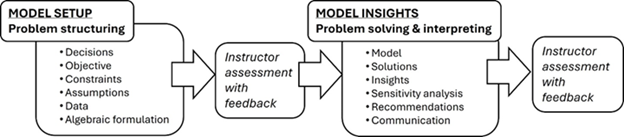
Building on this foundation, we reconsidered how assignments were labeled and structured. Traditionally, assignments were labeled “Homework 1” or “Homework 2.” These labels communicated sequence but not purpose. To foster student understanding and engagement in a Prescriptive Analytics course that focuses on model building and model analysis, we restructured assignments around two key phases—Model Setup and Model Insights—and renamed them using a consistent structure—Model Setup and Model Insights—followed by a number (e.g., Model Setup 3, Model Insights 3). This format clarified each assignment’s stage in the modeling process without overwhelming students with overly complex titles.
Figure 1. The revised prescriptive analytics modeling format and goals emphasize the modeling process and are split into two submissions with interim instructor feedback.
To enhance student learning, we divided the homework assignments into two submissions with an interim instructor assessment. For instance, in one assignment where students had to match project managers to various projects, they first reviewed fictional emails presenting the problem, constraints, and necessary data. After completing their project’s initial setup, students received individualized instructor feedback that encouraged them to think critically about how they approached the problem and the assumptions they made before moving on to analyze their results. This opportunity for early intervention provided support, reduced confusion, and built students’ confidence to better prepare them for creating and running their spreadsheet models. Overall, this two-step approach fostered deeper thinking and engagement with the instructional material and interpreted the outcomes through additional questions and presentations.
To support student learning and prepare them for the graded modeling assignments, we introduced each module with a sequence of low-stakes, formative quizzes built around simplified case-based scenarios using business-style communication such as mock emails and voicemails. These activities helped students build familiarity with core modeling concepts and decision-making logic before tackling more complex tasks.
Graded modeling assignments were framed using business-style communications such as mock emails and memos to reinforce real-world relevance. For example, in Model 4, students received a series of emails outlining a realistic assignment problem, including objectives, constraints, and relevant data. Students submitted their Model 4 Setup individually and received instructor feedback before advancing to the Model 4 Insights phase, where they used Excel to build an optimization model, interpret the results, and respond to scenario-specific questions in a timed quiz. A short video presentation accompanied their submissions to explain their recommendations and rationale. Excel was selected as the modeling platform because it is freely accessible to our students and includes Solver functionality. This two-phase assignment format, supported by structured templates and clearly defined expectations, offered early guidance, encouraged iterative learning, and promoted deeper engagement with course concepts while supporting individual accountability.
The results were clear when comparing course participation before and after implementing the new approach. Submission rates for all modeling assignments increased by 18 percentage points. In addition to higher completion rates, students demonstrated measurable improvements in problem formulation, critical thinking, and communication skills. These changes aligned closely with the course learning outcomes and were reinforced through targeted quiz prompts and structured instructor feedback.
Most notably, engagement in the “new approach course” extended beyond basic requirements. While at least one sensitivity analysis was required, nearly half of the students voluntarily completed an additional, optional analysis. Given how difficult it can be to motivate students to complete even required coursework, this level of voluntary participation highlights the power of purposeful assignment design to drive deeper student investment.
Based on this redesign experience, we recommend several strategies for instructors and instructional designers aiming to create more engaging, authentic assignments. These include using purposeful titles, scaffolding complex tasks, framing assignments in real-world contexts, and integrating tools that support communication and feedback.
Table 1 provides an overview of these strategies and design recommendations:
Strategy
Example
Purpose
Descriptive Titles
“Model Setup 4” “Model Insights 4”
Clarifies the purpose and phase of work
Scaffolding
Two-part submissions with feedback
Reduces cognitive overload, reinforces learning
Real-World Framing
Case-based prompts, mock business emails
Builds relevance and engagement
Technology Integration
Spreadsheet model, video reflection
Supports student modeling practice, professional communication of a problem statement, solution approach, and recommendation with diverse student expression
By renaming assignments, scaffolding tasks, incorporating real-world scenarios, and integrating student-centered feedback mechanisms, we helped students move from performative task completion to meaningful, process-oriented learning. Our collaboration demonstrated that intentional course design, grounded in adult learning principles, can make assignments more than a grade. It can make them matter.
Most importantly, these strategies are highly transferable. While our work was rooted in a prescriptive analytics course, the principles of clear purpose, scaffolded structure, and authentic engagement can be applied across disciplines and modalities. Faculty and instructional designers can adapt these approaches for various disciplines in the humanities, sciences, or professional programs to support meaningful learning.
This redesign also reinforces the value of partnership between instructors and instructional designers. Through open collaboration, we combined disciplinary expertise with design thinking to create a learning experience that was more intentional, more engaging, and ultimately, more effective.
Salina Randall, MEd, is the Associate Director of the Center for Teaching, Learning, and Technology at the University of West Florida. She leads initiatives focused on instructional design, faculty development, and digital accessibility. With over a decade of experience in higher education, she supports faculty in designing inclusive, engaging, and data-informed learning experiences. Her work spans course design, accessibility compliance, and strategic communication, with a particular emphasis on empowering faculty through collaboration and practical solutions.
Dr. Julie Ann Stuart Williams is a Professor of Business Administration at the University of West Florida. Her research spans operations management and business education, with recent work focusing on improving business student writing and modeling-based learning. She has co-authored papers with students in journals such as the European Journal of Operational Research and Business and Professional Communication Quarterly. A recipient of UWF’s Faculty Excellence in Teaching Award, Dr. Williams also serves on the editorial board of INFORMS Transactions on Education and as 2nd Vice Chair of the INFORMS Committee on Teaching and Learning. She holds a Ph.D. in Industrial and Systems Engineering from Georgia Tech.
Everywhere you look, someone is telling students and workers to “learn AI.”
It’s become the go-to advice for staying employable, relevant and prepared for the future. But here’s the problem: While definitions of artificial intelligence literacy are starting to emerge, we still lack a consistent, measurable framework to know whether someone is truly ready to use AI effectively and responsibly.
And that is becoming a serious issue for education and workforce systems already being reshaped by AI. Schools and colleges are redesigning their entire curriculums. Companies are rewriting job descriptions. States are launching AI-focused initiatives.
Yet we’re missing a foundational step: agreeing not only on what we mean by AI literacy, but on howweassessit in practice.
Two major recent developments underscore why this step matters, and why it is important that we find a way to take it before urging students to use AI. First, the U.S. Department of Education released its proposed priorities for advancing AI in education, guidance that will ultimately shape how federal grants will support K-12 and higher education. For the first time, we now have a proposed federal definition of AI literacy: the technical knowledge, durable skills and future-ready attitudes required to thrive in a world influenced by AI. Such literacy will enable learners to engage and create with, manage and design AI, while critically evaluating its benefits, risks and implications.
Second, we now have the White House’s American AI Action Plan, a broader national strategy aimed at strengthening the country’s leadership in artificial intelligence. Education and workforce development are central to the plan.
What both efforts share is a recognition that AI is not just a technological shift, it’s a human one. In many ways, the most important AI literacy skills are not about AI itself, but about the human capacities needed to use AI wisely.
Sadly, the consequences of shallow AI education are already visible in workplaces. Some 55 percent of managers believe their employees are AI-proficient, while only 43 percent of employees share that confidence, according to the 2025 ETS Human Progress Report.
One can say that the same perception gap exists between school administrators and teachers. The disconnect creates risks for organizations and reveals how assumptions about AI literacy can diverge sharply from reality.
But if we’re going to build AI literacy into every level of learning, we have to ask the harder question: How do we both determine when someone is truly AI literate and assess it in ways that are fair, useful and scalable?
AI literacy may be new, but we don’t have to start from scratch to measure it. We’ve tackled challenges like this before, moving beyond check-the-box tests in digital literacy to capture deeper, real-world skills. Building on those lessons will help define and measure this next evolution of 21st-century skills.
Right now, we often treat AI literacy as a binary: You either “have it” or you don’t. But real AI literacy and readiness is more nuanced. It includes understanding how AI works, being able to use it effectively in real-world settings and knowing when to trust it. It includes writing effective prompts, spotting bias, asking hard questions and applying judgment.
This isn’t just about teaching coding or issuing a certificate. It’s about making sure that students, educators and workers can collaborate in and navigate a world in which AI is increasingly involved in how we learn, hire, communicate and make decisions.
Without a way to measure AI literacy, we can’t identify who needs support. We can’t track progress. And we risk letting a new kind of unfairness take root, in which some communities build real capacity with AI and others are left with shallow exposure and no feedback.
What can education leaders do right now to address this issue? I have a few ideas.
First, we need a working definition of AI literacy that goes beyond tool usage. The Department of Education’s proposed definition is a good start, combining technical fluency, applied reasoning and ethical awareness.
Second, assessments of AI literacy should be integrated into curriculum design. Schools and colleges incorporating AI into coursework need clear definitions of proficiency. TeachAI’s AI Literacy Framework for Primary and Secondary Education is a great resource.
Third, AI proficiency must be defined and measured consistently, or we risk a mismatched state of literacy. Without consistent measurements and standards, one district may see AI literacy as just using ChatGPT, while another defines it far more broadly, leaving students unevenly ready for the next generation of jobs.
To prepare for an AI-driven future, defining and measuring AI literacy must be a priority. Every student will be graduating into a world in which AI literacy is essential. Human resources leaders confirmed in the 2025 ETS Human Progress Report that the No. 1 skill employers are demanding today is AI literacy. Without measurement, we risk building the future on assumptions, not readiness.
And that’s too shaky a foundation for the stakes ahead.
Amit Sevak is CEO of ETS, the largest private educational assessment organization in the world.
This story about AI literacy was produced by The Hechinger Report, a nonprofit, independent news organization focused on inequality and innovation in education. Sign up for Hechinger’s weekly newsletter.
The Hechinger Report provides in-depth, fact-based, unbiased reporting on education that is free to all readers. But that doesn’t mean it’s free to produce. Our work keeps educators and the public informed about pressing issues at schools and on campuses throughout the country. We tell the whole story, even when the details are inconvenient. Help us keep doing that.
This story was originally published by CalMatters. Sign up for their newsletters.
More than 250,000 students in Los Angeles Unified will be eligible for extra tutoring, summer school and other academic help after the district settled a class-action lawsuit alleging that its remote learning practices during the pandemic were discriminatory.
The settlement, filed in Los Angeles County Superior Court, was announced Wednesday by the law firm representing families who said their children fell disastrously behind during the Covid-related school shutdown in 2020-21.
“After five years of tireless advocacy on behalf of LAUSD students and families, we are proud to have secured a historic settlement that ensures students receive the resources they need to thrive,” said Edward Hillenbrand, a partner at the law firm Kirkland & Ellis. “This critical support will help pave the way for lasting educational equity.”
Los Angeles Unified had no comment on the case because the settlement has yet to be approved by the court. A hearing is set for December, although the settlement goes into effect immediately.
During the COVID-19 pandemic, Los Angeles and nearly every other school district in California closed for in-person learning from March 2020 through fall 2021. Students attended classes virtually, and most fell behind academically. Test scores statewide plummeted after schools reopened. Chronic absenteeism soared.
In fall 2020, a group of families whose children were languishing during remote learning sued Los Angeles Unified, saying the district wasn’t doing enough to ensure students were receiving an adequate education.
One parent, Akela Wroten Jr., said that his second-grade daughter was behind before the pandemic and became even more lost during remote learning. She struggled with reading and never got the extra attention she needed because teachers weren’t assessing her progress.
Another parent, Vicenta Martinez, said her daughter didn’t get any instruction in spring 2020, in part because she never received logon information for remote instruction and the school never followed up. When she finally did access remote classes, the lessons were short and teachers offered little feedback.
“LAUSD’s remote learning plan fails to provide students with even a basic education and is not preparing them to succeed,” the lawsuit alleged.
The suit singled out an agreement between the district and its teachers union that said teachers would only be required to work four hours a day, wouldn’t have to give tests and weren’t required to deliver live lessons — their lessons could be asynchronous, or recorded beforehand. In addition, the agreement said the district wouldn’t evaluate or monitor teachers during that time.
United Teachers Los Angeles supports the settlement, saying it provides more assistance for students while leaving teachers’ “hard-won contractual rights” intact and avoiding “unwarranted judicial interference” in the district.
The union also noted that student test scores have recovered significantly since the pandemic..
The plaintiffs argued that the district’s policies discriminated against low-income, Black, Latino, disabled and English learner students, because those were the students least likely to have adequate support to succeed in remote learning. Those student groups also comprise the vast majority of students in the district, the nation’s second-largest.
The settlement requires the district to offer a host of academic support, including summer school and after-school tutoring, to the 250,000 students who were enrolled in L.A. Unified during the pandemic and are still with the district. Among those students, 100,000 who are performing below grade level will be eligible for 45 hours of one-on-one tutoring every year through 2028.
Approximately 65 percent of the 1.2 million active-duty service members in the U.S. armed forces have less than an associate degree level of education, according to 2023 data; many of them hold some college credits but no degree. Federal aid programs make enrolling in college and earning a degree more accessible for military-affiliated students, but not every student is aware of academic interventions that can help them complete a credential sooner, including credit for prior learning.
A 2024 research article found that prospective students with military experience were most likely to prioritize academic programming when selecting a college, followed by financial assistance and affordability. CPL is one way colleges and universities seek to expedite student veterans’ ability to enroll in and graduate from college, recognizing the learning already accomplished while in the armed forces.
In the most recent episode of Voices of Student Success, host Ashley Mowreader speaks with three experts from the Kentucky Council on Postsecondary Education—senior fellows Matt Bergman and Dallas Kratzer, and Tracy Teater, associate director of adult learner attainment—to discuss the state’s adult education attainment goals, challenges in CPL rollout and other models of success across the country.
An edited version of the podcast appears below.
Inside Higher Ed: Just to get us started, Matt, can you talk a little about the connection between credit for prior learning and adult learner success? What is that link and why is this an important starting point when it comes to engaging adult learners?
Matthew Bergman, senior fellow at the Kentucky Council on Postsecondary Education and an associate professor at the University of Louisville
Matt Bergman: Credit for prior learning has been around quite a long while, from the early 1930s to when we saw the transition of many military back into higher education. [We were] thinking about, how we could transition individuals that are work-ready but have some college-level and credit-worthy learning that would create more efficient pathways?
Credit for prior learning has been a huge benefit to so many of those folks with that experience. And this is just not experience alone; this is very thoroughly and rigorously assessed learning that we can translate and map directly to curriculum.
The University of Louisville was part of a 72-institution study by the Council on Adult and Experiential Learning, or CAEL, and the CPL Boost came out with some really hard-hitting empirical evidence that not only do people get to graduation faster, but they graduate at a higher rate, and also those that actually engage in this work take more credit hours.
That might seem a bit counterintuitive, but what it boils down to is this idea that you increase retention and persistence by percentage points that create a net-positive revenue for institutions along the way. So the myth of taking away tuition from the university is gone. We’ve got empirical evidence that not only does it benefit students and they save money, but actually the institutions are making more money in the long term because they are creating paths that are efficient, meaningful and impactful for these adult learners, military and beyond.
Inside Higher Ed: Why are students with military experience a focus area when it comes to CPL?
Dallas Kratzer, senior fellow at the Kentucky Council on Postsecondary Education
Dallas Kratzer: The American Council on Education has done the evaluation of a lot of military workplace learning, which can include not only the courses they’ve taken in their military careers but also the learning that they’ve had on the job.
In the military, we have a lot of different types of things that we do, and ACE has evaluated many of those. In those evaluations, the great thing is, those types of jobs and skills line up to the civilian sector. About 85 percent of what we do in the military is done in the civilian sector. So, if we can get it right and benchmark off of what ACE has done, it makes it really easy for a higher ed institution to then step across the line to the civilian sector and say, “ACE evaluated it this way. This is how it looks in the civilian sector. We can take that same credit recommendation and make some linkage there.”
As a matter of fact, O*NET has a military jobs crosswalk to civilian jobs. So linking all of that together, and the program that Matt worked on at the University of Louisville, he and I both worked with it, they use it really heavily to make that crosswalk, or that linkage between those two.
Inside Higher Ed: Part of this is from the institution side—making it clear how military experience fulfills civilian responsibilities or those job functionalities. But there’s also making that linkage for the student; if you are somebody with military experience, maybe you haven’t considered the ways that that can translate into the transition outside the civilian world.
Kratzer: You are so on the mark with that comment, because so many folks in the military just see that they’re doing their job. I did 35 years in the Air Force and worked extensively with the Army in the later years, and [military personnel] often think that what they’ve learned on the job or the things that they are doing in their career fields are just that—a job. They don’t see the experiential learning that comes along with that and how that can be translated into college credit.
I’ve had times where I’ve worked with individuals, and I’m like, “So have you gone to college?” Yes, some of them have. “Have you completed a degree?” “No, but I’ve got some college.” And then about a third of them don’t even think about it, and they would say, “No, I don’t have any college [credit] at all.” I’m like, “Actually, you do. There’s this thing called a joint service transcript, and your workplace learning, your military courses have been evaluated, and you have this pot of credits that you need to take to your higher ed institution and say, ‘How does this translate into me completing my degree?’”
Inside Higher Ed: Kentucky has a large plan at the state level to support adults and nontraditional students; how does CPL fit into this vision of student success?
Tracy Teater, associate director of adult learner attainment
Tracy Teater: The Kentucky Council on Postsecondary Education is committed to supporting and improving learner pathways, both to access and then successfully complete postsecondary goals across the age continuum, whether that is a traditional or a post-traditional student. We recognize that supporting our adult learners—whether they be adults with high school equivalency diplomas, adults enrolling for the first time or adults re-enrolling to finish their degree—leads to increased economic mobility for them and their families, increased workforce for Kentucky, of course, and an increased college-going rate for the next generation.
Because our adult learners are often parents, I can’t stress that point enough: By investing in our adult learners and our adult learner returners, we are investing in those generations to come.
Credit for prior learning is a key part of Kentucky’s larger vision for student success. It removes barriers and accelerates pathways for those adults to earn meaningful credentials. That supports Kentucky’s 60 by 30 goal, our North Star, if you will.
To ensure 60 percent of working-age adults hold that postsecondary credential by 2030, it requires that we recognize the learning and experiences that our adults often bring with them from military service, from work, from industry certifications and from their life experiences. This saves tuition dollars for our families and increases return on investment, as Matt shared earlier on, for both the campus and the state. I think also important and sometimes overlooked in this conversation is the fact that it sends a powerful message to the learner that you belong on campus and you’re respected and valued for the college credit–worthy experiences you bring. And so this sense of belonging, I think, impacts persistence towards learning goals. And so CPL for Kentucky is not a stand-alone effort. It’s woven into the broader student success agenda as a way to re-engage adults, and it’s been really exciting to be a part of the work, because Kentucky has a demonstrated commitment to adult learners.
The goals of the Kentucky Student Success Collaborative are we want to set the conditions for a culture of collaboration, and we want to build capacities of our campus partners to innovate and then ultimately accelerate progress.
Kratzer: I’d like to make a comment or tag on to what Tracy just said about one part of that, and that is the tuition dollars and how we can reduce the cost of going to college or returning to college through credit for prior learning. But more importantly, to the military community, the thing that we need to keep in mind is if they have already earned the training and the learning, and we don’t recognize that in higher ed, we’re not being a good steward of the taxpayers’ dollars, because we’re having them go back and take training that they’ve already accomplished. So this is such an important aspect to that military credit recommendation.
Inside Higher Ed: We’ve laid out a lot of the reasons why CPL is so beneficial to the state, to the institution, to the student, to their families, to their future families. But if CPL were easy to do, everyone would be doing it, and they’d be doing it well. So I wonder if we can talk about some of those hurdles when it comes to implementing and executing CPL effectively, and what sort of resources and time it takes to do this work and to do it well.
Bergman: There are a number of barriers, because it is labor-intense. In some ways now, as a result of the American Council on Education, we have military acknowledgment and recommendations for these credits that make it very tangible, almost as though it is transfer credit for most institutions. But the portfolio process that goes beyond that is a bit more labor-intense and faculty-driven. So that is a bit of a barrier.
But what we are seeing as a result of the people on this call here—Dallas, Tracy and so many others that are doing research in this field—we have seen barriers declining. The skepticism of this whole process is starting to wane in a way that is creating pathways for us to reach other institutions in Kentucky, but also nationally. And that’s good. A lot of thanks goes to some of the seminal authors in this work, like Nan Travers and Becky Klein-Collins. These individuals have produced scholarship that has really rooted empirical proof that this is most valuable. It creates efficiency. It helps with tax dollars, and when you boil down all of the pieces and parts, it becomes very process-oriented and very standard in approach.
Now, that has been a long road getting to this moment. So when you talk about barriers, they have been there for so many years that they are starting to diminish, and we are so grateful for that—not only in the Commonwealth of Kentucky, but beyond, because institutions and specifically faculty, which were the biggest barrier in acknowledgment of CPL, are starting to come onboard. Not only because of the demographic cliff, but also because of some of the skepticism that we have in higher education and the shortages that we have in enrollment now. [Faculty] are more likely open to this concept because we are taking this work, we are showing the process, we are showing a portfolio and we are being very transparent about how we calculate and assess learning and translate that to academic credit. In the moment that we do that, we show the robust process. We have new advocates for this work.
When we think about military personnel directly, we plug those individuals into some of those more traditional classes and disciplines, and those faculty are immediately like, “Bring every military learner into my class. They are so mission-driven. They are so committed to this goal of getting to the degree that I want every military learner in my classroom.”
When institutions become military-friendly, that’s when you see the pipeline. Because military folks are insular in their process of communicating about the programs that work well, that are very “military engaged,” to use the phrase from Dallas, but you have to be military engaged and ready for these learners if you’re going to serve them well. And more and more institutions are doing that, showing that commitment.
Kratzer: Just to add to what Matt’s talking about, this whole thing really boils down to awareness. And back in 2015, ACE and a couple of other organizations got together and produced this document called “Credit for Prior Learning: Charting Institutional Practice For Sustainability,” and they identified four major challenges: organizational structure, organizational awareness, student awareness and student engagement. When we see what the challenges are and then address those challenges, it’s really awareness. People just need to become more aware of the population and how what we do in the military can be translated to other sectors and other affinity groups and very easily done.
We’re in a spot right now in higher education. And Tracy alluded to this with the demographic cliff, that we see that adult learners have become a recognized population, and in that adult learner population are different subsets that we can engage with. I think the military one is the best one to start with, because so much of the work has been done and it’s just capitalizing on that. Additionally, the military community is a different set of learners. Military training is about learning, and in the military today, it is very technical thought processes, processing information, very much focused on that academic rigor. So that’s why they make some of the best students today, and anything that we can do to help attract them to our institutions will be incredibly beneficial for all of us.
Inside Higher Ed: We’ve mentioned CAEL and ACE and some other well-known organizations who are supporting this work, but are there other states that you’re learning from or other organizations that you think are doing this work well?
Bergman: One in particular is North Carolina, and through the Belk [Endowment], my buddy Mike Krause is making magic happen down there through InsideTrack and their connection to reconnecting learners that have some college and no degree, but also tying in CPL and then military-connected learners. They are going full force with the type of resources to really re-engage those learners and create a very clear path.
Oftentimes when trying to reconnect with people, they need to see how this might fit into a compartment of their lives. Because we know, as we serve these learners, they have No. 1, No. 2, No. 3 priorities and then education might come into the conversation [later]. So it’s really important for when we engage these types of learners, when we think about military learners, we have to understand that [education] is not likely priority No. 1.
I use this analogy of “Would you give up some streaming services or social media scrolling to the tune of four to five hours a week for a bachelor’s degree in two years?” And oftentimes people are going to say, “What do you mean? Of course I would.” And I say, “OK, let me break this down and work backwards,” and you look at the number of credits one can earn that they get from CPL, but also what they’ve accumulated thus far, and you start to put the pieces of the puzzle together.
States like North Carolina, Tennessee have done an absolutely wonderful job. California has gone all in on CPL as well, to really try and reconnect learners and show them that the light at the end of the tunnel is quite bright.
We learn from one another—these people are just colleagues in the weeds, really grinding, trying to find ways to really replicate and make it respective to our own institutions and just chop and drop these policies so that we really can scale and impact more and more learners. Now we have battled for years and years and years, and you can hear my passion in this, but we have fought the very traditional mechanisms of institutions, and we are starting to break down so many of those barriers, partially because of the demographic cliff, partially because of some of the skepticism. But as Dallas said, adult learners, military learners are on the forefront. We are at the table for traditional higher ed, and that is a huge change in such a benefit for these learners, because there are new funding models, there are scholarships, grants and then CPL, creating efficiency that we just didn’t have 15 years ago.
Kratz: A couple of organizations that I think are doing some interesting work here … the Council of College and Military Educators. They do an amazing job at bringing the senior leadership of the Department of Education, Department of Labor, Veterans Affairs, all these folks together to talk about education related to the military community.
One that I see as a rising star is NASPA Vets. They have a military-connected students conference every year. I was very excited to see what they’re doing, because it’s helping student affairs administrators to better understand the military population, and part of this is this whole awareness and how we can serve that community.
Of course, Student Veterans of America, it’s a great organization to have on your campus. The work they’re doing in getting the word out to service members is so important … “Hey, come and be in higher education, because we have space for you. This is part of your culture and you can be part of it through this student organization.”
Some states to add on to what Matt was saying about Tennessee and California: Ohio started this thing called Collegiate Purple Star, and I think we need to do that across the country. The reason for that is everybody’s military-friendly right now, but with both Ohio and Indiana’s Collegiate Purple Star, it’s about not only being military-friendly, but military-ready, meaning that you’ve gone the extra mile and you’ve created the pathways to degree completion for service members based on their experiential learning that they’ve had during their military careers.
Inside Higher Ed: How are you all tracking effectiveness and the impact of the work that you’re doing? What does it mean to apply data to CPL for military-affiliated students? What are some of those metrics that you’re tracking?
Teater: I would back up one step to say that data alignment has been a gap that we have learned firsthand about during this pilot. One of the things that we know is that across the broader CPL opportunities, our campus partners are tracking that in different ways, which means that it is a definite gap of how we can track impact as a state without having aligned ways to do that. I wouldn’t call it a challenge; I think I’d call it an opportunity. But it’s something that we definitely want to end this with state recommendations so that we can do a really, really good job of tracking all types of CPL across the state. That’s one gap we’ve seen that I think we will be able to end this with a definite solution to and again, looking at some of our neighboring states and how they’ve been able to address that.
Bergman: It’s important to note that the state work that we’re engaged in, the CPL Council on Postsecondary Education initiative, we are collecting data around metrics directly in growth of CPL, total numbers of credits earned, those programs that are offering them—so additional programs beyond just single adult-friendly programs at institutions—and then actually the number of humans that are connected in the work, so hiring individuals that are responsible for CPL and tracking data through the institutional research office.
We are seeing great growth there, but this is also a direct by-product of what we are seeing in the field, in research and scholarship. I did my dissertation roughly 15 years ago, and it was a really challenging enterprise to find empirical work and scholarship that would really drive my dissertation forward, looking at adult military persistence. What I see today, as I am looking at journals almost daily, is new articles, new empirical pieces and new national work and research that is popping up almost monthly now that is focused on these populations. It is such a boon to our work, because individuals are doing this work, not only for their dissertations, but in their research and scholarship field.
There were not a lot of folks doing this work many years ago, but now we have a new crop of young people jumping in as advocates and allies of military and adult learners, and it truly is making a direct impact, because we have data to lean on and say, “Here is empirical proof of how this directly impacts this individual program or this particular state or this region,” and using that to guide a lot of our push and our nudging that we do, both in Kentucky and beyond, to make institutions think differently about how they formalize policy to really attract these folks and know that they can get them to and through more efficiently.
Kratzer: ACE and CAEL just partnered together to do the national landscape of credit for prior learning, talking about how states are making those recommendations. And I think there’s a lot of work to be done yet to help states, particularly at the legislative position, to understand how to help systems better collect the information. Because from the state, we hear them say, “Yes, you must accept military credit recommendations.” And the schools go, “OK, we accepted, but we don’t apply it well.” We need to be better at counting how we apply it so that we can provide back better information to say, “It does. It is valued in our state. It’s not just brought in as elective credit, but it’s brought in as degree credit that will accelerate degree completion,” and we’re not tracking that as well as I think we could.
Inside Higher Ed: I think you bring up a really valuable point there about the different types of credit. Just because it’s accepted doesn’t necessarily mean it’s helpful to the student in their specific career goal. But I think making sure that all credit is recognized and supported as part of a degree pathway is definitely the next step that we need to see.
Bergman: I would be remiss if I didn’t mention the fact that we have nearly 150 institutions involved in the prior learning assessment network. So for listeners that are checking in on this particular podcast, you can say, “Hey, I’m going to connect with Dallas,” or “I’m going to reach out to Matt and join this prior learning assessment network and hear from these institutions that are doing this work on the ground.” Each month, it costs zero money—we have a featured individual from an institution talking about, whether it be marketing or military credit recommendation or policy implementation or the admissions process in CPL; we are looking at all angles of CPL through the prior learning assessment network from people on the ground.
Inside Higher Ed: That’s amazing. I love especially when we can talk about different institution sizes and types, because what works for one institution might not be easy to do at another.
Bergman: And the best part of that is it’s free. We are not charging individuals. We are just a community of committed professionals that have been working for so many years trying to make an impact, and now we see our crop of individuals growing and growing every single month.
Inside Higher Ed: I want to hear more about what’s next for the state as you all consider adult learners and that lofty goal of 60 percent attainment.
Teater: Matt laid it out beautifully from a national perspective; from a Kentucky perspective, we hope to do the exact same thing.
We are exploring ways to align data collection efforts so we can accurately gauge impact across the state, impact for the institutions and then impact, of course, for the adult learner. We also hope to explore ways to align and standardize credit mobility across our two-year and four-year campuses, so that credit earned at one institution can be recognized at another, so that our two-year graduates can seamlessly transfer to our four-year campuses, and then this will lead to state standards and policies to further support CPL efforts. We’re looking to some of our neighboring states on best practices there.
Then finally, we are, in the fall, launching our Kentucky Adult Attainment Network, from which we will convene a state working group and community of practice to continue to build champions for the work, but also share resources, best practices and be able to offer up policy recommendations that will enact to further address this key part of our adult learner action plan.
Inside Higher Ed: Do you have any advice or insight for others looking to support military-affiliated learners?
Kratzer: I think the big thing that my peers need to know and to understand about the military community is that there’s a significant amount of learning that they gain from their military experience. However, the service member doesn’t always appreciate it the way that we as academics can understand it. They just say, “Hey, I was just doing my job.”
Well, that job has worth and value beyond what you did when you were in the service. There’s so much more we can do. The leadership training that they get—business and industry are just dying for that kind of professional development, so let’s recognize it. Let’s help them to see how they can transition to the civilian sector and bring those great learning skills into the workplace and into higher education.
Bergman: CPL for military and beyond is being done very effectively. If your institution is not doing it perfect or is not even involved, it is being done and there are so many people that are ready to provide open-source information, policy practice, forms, strategies, techniques and nuanced information to your institution directly for free, so that you can engage in this work without having to start from scratch. So to boil it down, you don’t have to start from scratch. So many institutions are doing so well in this work, and if you want to engage, just reach out and we will plug you into the prior learning assessment network or any type of forums at the University of Louisville or share data or information that we use in the state of Kentucky’s CPL initiative. We are ready to share these things because it matters and it’s impactful.
Teater: The awareness is critical, and that’s awareness across states, across institutions and within institutions. One of the things that we have seen is sometimes just a gap in awareness on what’s possible, what’s available and then how best to pull the technical levers to make those things happen for students. So I would say every single conversation that we come out of, we learn something new, and hopefully others learn something new as well. And I just think that that awareness can’t be underestimated.
Even as in-person classes return post-pandemic, online courses haven’t gone away. In fact, many students still opt for online learning because of the flexibility it offers. But one thing is clear: not all online courses are created equal, and one of the biggest differences lies in something many instructors overlook: the course webpage.
Whether you’re using Brightspace, Canvas, or Moodle, how you design your course webpage can make or break your students’ experience. Based on our systematic review of recent studies on online learning and student satisfaction, here’s what we learned—and how you can apply it in your own teaching.
Why Course Webpages Matter More Than You Think
Students form impressions about your course page in less than a second (Lindgaard et al., 2006). If it’s cluttered, confusing, or bland, you might lose them before they even start the first lecture.
We reviewed research involving over 1,600 university students from seven countries. Across the board, students reported that a course webpage’s ease of use, usefulness, and visual appeal significantly influenced their satisfaction and engagement (Lazard & King, 2020; Younas et al. 2021).
How We Did the Research
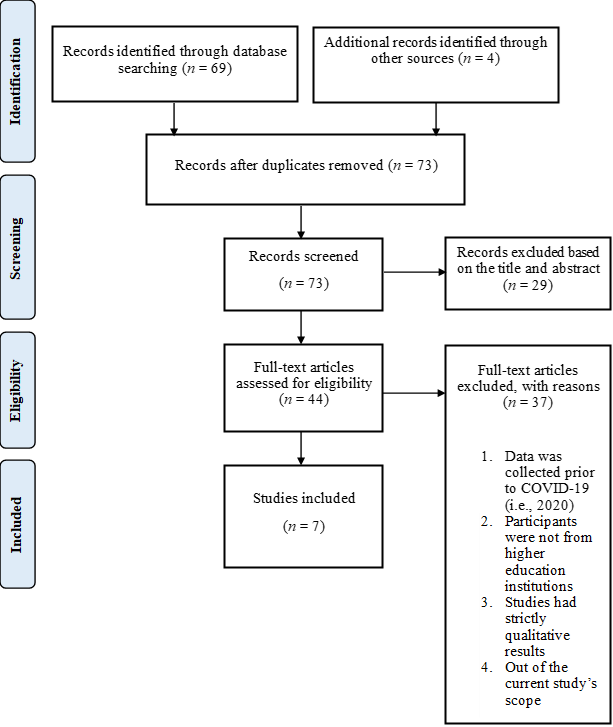
To better understand what works in online course webpage design, we conducted a systematic review following PRISMA guidelines. Here’s what that looked like:
Databases searched: LearnTechLib, Omni (Carleton University), and reference lists from relevant papers
Keywords: “COVID,” “website,” “online learning,” and “pedagogy”
Inclusion criteria: Peer-reviewed, quantitative studies from 2020–2023, focused on higher education
Total included: 7 studies, 1,614 participants across Australia, China, South Africa, Lebanon, Pakistan, Malaysia, and the U.S.
Figure 1. PRISMA Flow Diagram for the Course Webpage Design Search
Practical Tips for Smarter Course Design
Below are research-based, practical tips instructors can use—that don’t require you to be a web designer. These ideas are easy to implement and can make a big difference.
1. Make Navigation a No-Brainer
Think of your course webpage like your storefront. If people can’t find what they need, they won’t stick around. This makes your life as an instructor harder: you will get more students with last-minute requests for accommodations, as well as students struggling with procrastination.
Use a consistent layout, organize materials by weeks or modules, and give each section clear, descriptive titles. Students should never have to hunt for a syllabus or lecture slides (Bachman & Stewart, 2011; Plous, 2000). I found that having a hyperlink directly on the first page of the course website, helped reduce the amount of student emails on syllabus-related questions (a joy).
Pro tip: Use drop-down menus and collapsible folders to reduce visual clutter.
2. Keep It Clean and Simple
Visual overload is real. Too many colours, clashing fonts, or random clipart can be overwhelming. Stick to a minimalist design with just enough contrast and white space to guide the eye. Use consistent font styles and colours to help students focus (Lazard & King, 2020).
Students reported feeling more satisfied when they could personalize their learning environment—for example, setting their own notification preferences or receiving automatic updates about grades and deadlines (Younas et al., 2021). If your platform allows it, show students how to use these features. Most announcement tools allows you to include the student’s name in the communication by using the code: {firstname} (e.g., Brightspace: https://community.d2l.com/brightspace/kb/articles/6105-automatically-customize-course-content-using-replace-strings). I cannot count the number of students who said they appreciated this customization of information.
Protip: Include a quick walkthrough video or FAQ page on how to customize settings.
4. Build Trust Through Transparency
Technology glitches can tank your credibility fast. Provide assessment submission confirmations, test your hyperlinks, and use clear, timely communication to reduce student anxiety (Hsu et al., 2022).
Protip: Create a “Tech Check” page with test links and troubleshooting steps.
From Theory to Practice: A Usability Framework
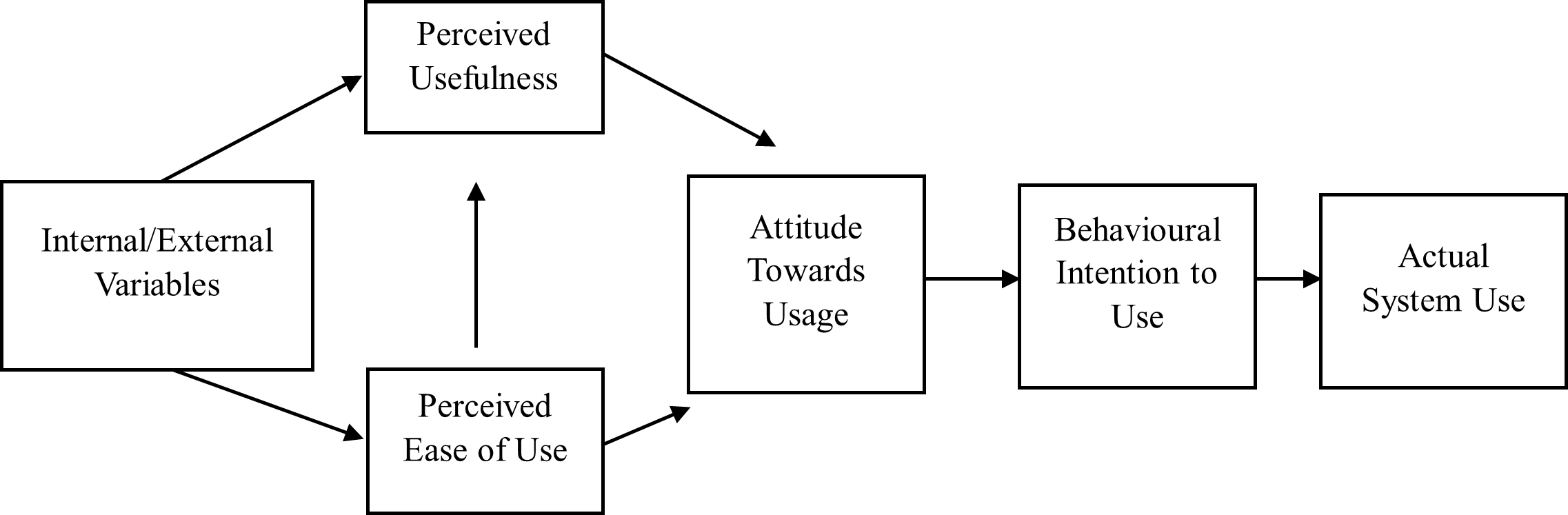
Our review supports the Technology Acceptance Model (TAM): a course site is more likely to be used—and liked—if students find it both easy to use and useful (Davis, 1989).
Figure 2. Adapted from “The Technology Acceptance Model (TAM) and its Application to the Utilization of Mobile Learning Technologies,” D. G. Mugo, K. Njagi, B. Chemwei, and J. O. Motanya, 2017, British Journal of Mathematics & Computer Science, 20, p. 4 (DOI: 10.9734/BJMCS/2017/29015). In the public domain.
But we also found that students valued more than just functionality. Our systematic review supported features like customization, organization, and aesthetic appeal as beneficial to student use of the course website (which contributed to higher grades and completion rates).
Quick Design Checklist
Feature
Example
Research Support
Clear navigation
Weekly modules, labeled folders
Bachman & Stewart, 2011
Aesthetic simplicity
Balanced colour palette, consistent fonts
Lazard & King, 2020
Customization
Notification settings, adaptable layout
Younas et al., 2021
Confirmation of actions
Email receipt of submissions
Hsu et al., 2022
Mobile compatibility
Testing on phones and tablets
Plous, 2000
Collaborate with Your Students
Want the best feedback on your course webpage? Ask your students. Mid-semester feedback surveys or co-design sessions can go a long way in improving usability (Yoshida & Thammetar, 2021). I have benefited from undergraduate student input, and these translated to higher ratings for my courses.
Bottom Line: Thoughtful Design = Better Learning
Course webpage design isn’t just about looking polished—our systematic review suggests it’s a key factor in student satisfaction and learning success. Students are more likely to engage when the site is:
Adaptable to their needs
Regularly maintained and updated
So we, as instructors, need to spend some time fine-tuning our websites. The good news is that once you do this for one course, many platforms offer cloning or importing, which makes it easy to transfer your work from one course to another.
If you’re feeling stuck, reach out to your campus teaching and learning centre, look at exemplars, or co-create the website with students. You don’t have to do it alone.
Dr. Kelly M. Babchishin is an assistant professor at Carleton University who specializes in forensic psychology. She teaches large undergraduate and graduate courses, many of which use online or hybrid formats.
Emma J. Holmes is a graduate student and teaching assistant at Carleton University (Department of Psychology). Emma is supported in part by funding from the Social Sciences and Humanities Research Council and the Ontario Graduate Scholarship.
Alexis G. Hinkson was an undergraduate student (Department of Psychology) at Carleton University and is now completing her law degree at the University of Ottawa. Alexis has served as a teaching assistant and was hired by Kelly Babchishin to assist her in course design and provided the student perspective.
References
Bachman, C. M., and C. Stewart. 2011. “Self-Determination Theory and Web-Enhanced Course Template Development.” Teaching of Psychology 38 (3): 180–88. https://doi.org/10.1177/0098628311411798.
Davis, F. D. 1989. “Perceived Usefulness, Perceived Ease of Use, and User Acceptance of Information Technology.” MIS Quarterly 13 (3): 319–40. https://doi.org/10.2307/249008.
Hsu, P. S., E. M. Lee, and T. J. Smith. 2022. “First-Year Instructor’s Designing and Teaching an Online Undergraduate Engineering Course during the COVID-19 Epidemic.” Journal of Computers in Mathematics and Science Teaching 41 (3): 215–43.
Lazard, A. J., and A. J. King. 2020. “Objective Design to Subjective Evaluations: Connecting Visual Complexity to Aesthetic and Usability Assessments.” International Journal of Human-Computer Interaction 36 (1): 95–104. https://doi.org/10.1080/10447318.2019.1606976.
Lindgaard, G., G. Fernandes, C. Dudek, and J. Brown. 2006. “Attention Web Designers: You Have 50 Milliseconds to Make a Good First Impression.” Behaviour & Information Technology 25 (2): 115–26. https://doi.org/10.1080/01449290500330448.
Younas, A., C. M. N. Faisal, M. A. Habib, R. Ashraf, and M. Ahmad. 2021. “Role of Design Attributes to Determine the Intention to Use Online Learning via Cognitive Beliefs.” IEEE Access 9: 94181–94202. https://doi.org/10.1109/ACCESS.2021.3093348.
Yoshida, M., and T. Thammetar. 2021. “Education between GovTech and Civic Tech.” International Journal of Emerging Technologies in Learning 16 (4): 52–68. https://doi.org/10.3991/ijet.v16i04.18769.
By now, it’s no secret that phones are a problem in classrooms. A growing body of research and an even louder chorus of educators point to the same conclusion: students are distracted, they’re disengaged, and their learning is suffering. What’s less clear is how to solve this issue.
Of late, school districts across the country are drawing firmer lines. From Portland, Maine to Conroe, Texas and Springdale, Arkansas, administrators are implementing “bell-to-bell” phone bans, prohibiting access from the first bell to the last. Many are turning to physical tools like pouches and smart lockers, which lock away devices for the duration of the day, to enforce these rules. The logic is straightforward: take the phones away, and you eliminate the distraction.
In many ways, it works. Schools report fewer behavioral issues, more focused classrooms, and an overall sense of calm returning to hallways once buzzing with digital noise. But as these policies scale, the limitations are becoming more apparent.
But students, as always, find ways around the rules. They’ll bring second phones to school or slip their device in undetected–and more. Teachers, already stretched thin, are now tasked with enforcement, turning minor infractions into disciplinary incidents.
Some parents and students are also pushing back, arguing that all-day bans are too rigid, especially when phones serve as lifelines for communication, medical needs, or even digital learning. In Middletown, Connecticut, students reportedly became emotional just days after a new ban took effect, citing the abrupt change in routine and lack of trust.
The bigger question is this: Are we trying to eliminate phones, or are we trying to teach responsible use?
That distinction matters. While it’s clear that phone misuse is widespread and the intent behind bans is to restore focus and reduce anxiety, blanket prohibitions risk sending the wrong message. Instead of fostering digital maturity, they can suggest that young people are incapable of self-regulation. And in doing so, they may sidestep an important opportunity: using school as a place to practice responsible tech habits, not just prohibit them.
This is especially critical given the scope of the problem. A recent study by Fluid Focus found that students spend five to six hours a day on their phones during school hours. Two-thirds said it had a negative impact on their academic performance. According to the National Center for Education Statistics, 77 percent of school leaders believe phones hurt learning. The data is hard to ignore.
But managing distraction isn’t just about removal. It’s also about design. Schools that treat device policy as an infrastructure issue, rather than a disciplinary one, are beginning to implement more structured approaches.
Some are turning to smart locker systems that provide centralized, secure phone storage while offering greater flexibility: configurable access windows, charging capabilities, and even low admin options to help keep teachers teaching. These systems don’t “solve” the phone problem, but they do help schools move beyond the extremes of all-or-nothing.
And let’s not forget equity. Not all students come to school with the same tech, support systems, or charging access. A punitive model that assumes all students have smartphones (or can afford to lose access to them) risks deepening existing divides. Structured storage systems can help level the playing field, offering secure and consistent access to tech tools without relying on personal privilege or penalizing students for systemic gaps.
That said, infrastructure alone isn’t the answer. Any solution needs to be accompanied by clear communication, transparent expectations, and intentional alignment with school culture. Schools must engage students, parents, and teachers in conversations about what responsible phone use actually looks like and must be willing to revise policies based on feedback. Too often, well-meaning bans are rolled out with minimal explanation, creating confusion and resistance that undermine their effectiveness.
Nor should we idealize “focus” as the only metric of success. Mental health, autonomy, connection, and trust all play a role in creating school environments where students thrive. If students feel overly surveilled or infantilized, they’re unlikely to engage meaningfully with the values behind the policy. The goal should not be control for its own sake, it should be cultivating habits that carry into life beyond the classroom.
The ubiquity of smartphones is undeniable. While phones are here to stay, the classroom represents one of the few environments where young people can learn how to use them wisely, or not at all. That makes schools not just sites of instruction, but laboratories for digital maturity.
The danger isn’t that we’ll do too little. It’s that we’ll settle for solutions that are too simplistic or too focused on optics, instead of focusing not on outcomes.
We need more than bans. We need balance. That means moving past reactionary policies and toward systems that respect both the realities of modern life and the capacity of young people to grow. It means crafting strategies that support teachers without overburdening them, that protect focus without sacrificing fairness, and that reflect not just what we’re trying to prevent, but what we hope to build.
The real goal shouldn’t be to simply get phones out of kids’ hands. It should be to help them learn when to put them down on their own.
Emily Smith, HonestWaves
Emily Smith is the founder of HonestWaves, a California-based company that designs and suppliesphone charging solutions, including smart lockers and charging stations, for businesses and public spaces.
Latest posts by eSchool Media Contributors (see all)
Drat. I missed getting to officially contribute to the votes for this year’s Top 100 Tools for Learning, collected and analyzed by Jane Hart. I’m still going to write mine up, as I do like to reflect on the tools I’m relying on for my own and others’ learning, but I’ll need to wait until 2026 to get back into the mix of having my votes reflected in the grand total.
I used to be more regular with my votes, but did miss a few along the way. Here are my past Top 100 Tools for Learning: 2015, 2016, 2017, 2018, 2019, 2021, 2022, and 2024. I avoid looking at the prior year’s lists until I have identified my votes for current year.
This year, given that I missed the deadline for submitting my top ten list, I’m using a longer format than normal and structuring this reflection on Harold Jarche’s personal knowledge (PKM) framework, since so much of my learning is centered on it:
Seek > Sense > Share
Throughout all of my days, I’m plugged into intentional ways of seeking knowledge, wisdom, and sources of curiosity. In a way, sense-making is a part of my way of being, especially on those days when I allow myself to slow down enough for the deeper insights. Finally, I’m someone who delights in fueling my curiosity and imagination even further by sharing what I’m learning and inviting others to do the same.
Curious to learn more about personal knowledge mastery? My absolute favorite source for more than a decade now is Harold Jarche, who defines PKM as:
Personal knowledge mastery (PKM) is a set of processes, individually constructed, to help each of us make sense of our world and work more effectively. PKM keeps us afloat in a sea of information — guided by professional communities and buoyed by social networks. – Harold Jarche
Seeking is finding things out and keeping up to date. Building a network of colleagues is helpful in this regard. It not only allows us to “pull” information, but also have it “pushed” to us by trusted sources. Good curators are valued members of knowledge networks. – Harold Jarche
Overcast
Not a day goes by that I don’t use Overcast, my preferred podcast catcher. On my iPhone, it is always my most used app on any given week.
Get ready to celebrate International Podcast Day on September 30. I’ve already got an episode queued up featuring Dominic Conroy & Warren Kidd to commemorate the event. Get your ears on and subscribe to Teaching in Higher Ed, if you haven’t already, using your favorite podcast app (search for Teaching in Higher Ed and hit subscribe/follow), YouTube, or Spotify.
While my backlog of episodes yet to be listened to is ridiculously long, Overcast’s playlists feature means I can tailor my audio consumption according to genre (news, technology, teaching, etc.), to my incoming priority/preferred podcasts, or to the queue list I have saved for the good stuff I want to get to when I have long drives or alone time.
Unread
While Overcast is for the spoken word, Unread is primarily for written pieces. Powered by real simple syndication (RSS), Unread presents me headlines of unread stories across all sorts of categories, which I can tap (on my iPad) to read, or scroll past to automatically mark as read. I use Unread in conjunction with Inoreader, which is a robust RSS aggregator that can either be used as an RSS reader, as well, or can be used in conjunction with an RSS reader, such as Unread. – From my 2024 Top 10 blog post (note: I only copied this text over after identifying what tools would be on this year’s list, as in I didn’t “cheat”).
One of the things I love about Unread is that I an perform the entire reading process with two thumbs (insert that joke/about “who has two thumbs and can…” and then add “operate Unread” at the end of it). I can browse the different folders/collections I have set up to skim headlines. When I want to read one of the stories associated with a given headline, I can go into it and read with just a tap. To get back out to the headlines, again, I just swipe right.
One big update that Unread 4.5 gave us is support for reading paywalled articles within the app. As of me writing this, I haven’t had a chance to experiment with that feature, but am excited to do so over this long, holiday weekend in the U.S. Anything I can do to reduce friction in my PKM system helps me be able to expand my possibilities for deeper learning.
YouTube
Once I found out that I could subscribe to new YouTube videos on my RSS reader, Inoreader, it changed how often I watch YouTube videos. That, plus subscribing to YouTube Premium, which means we get ad-free viewing as a family, makes me spending a lot more time with YouTube. I even have my own YouTube channel, which I occasionally post videos on. – From 2024 Top ten post
YouTube Premium continues to be a way of life for our entire family. If you watch a lot of YouTube and don’t have a means for watching ad-free, I can’t recommend it highly enough.
This past year, we added a Teaching in Higher Ed YouTube Channel. Each time an audio podcast episode gets posted on our hosting platform, Blubrry, it automatically gets shared on the channel. They used to not allow audio-only podcasts on the platform but made changes their rules such that now it is encouraged. In addition to listening to Teaching in Higher Ed, or watching an episode with Dr. Stephenie Cawthon accompanied by two ASL interpreters, you can also see other videos I’ve made this past year, such as:
Kindle App
I primarily read digitally and find the Kindle iPad app to be the easiest route for reading. I read more, in total, when I am disciplined about using the Kindle hardware, but wind up grabbing my iPad most nights. – 2024 Top 10 Post
Audible
New on the list for this year is Audible. I was attempting for a few months to better balance my daily news reading with sources that would give me a longer-term view of the world. As I write these words, I feel like I’m back to failing at this, but it was a good pursuit there for a while. Part of this attempt at balancing was made possible through listening to audio books in addition to podcast episodes.
Sometimes audio is better because it allows us to get more reading into our days. Other times, audio does something that the written word could never do. In the list below of some favorite audio boos from this past year, I’ll indicate with (best via audio book) at the end of the line if the audio book was particularly geared toward the audio medium.
Sensing is how we personalize information and use it. Sensing includes reflection and putting into practice what we have learned. Often it requires experimentation, as we learn best by doing. – Harold Jarche
StoryGraph
I decided to move off of Amazon’s Goodreads for my reading tracking this year and have been loving StoryGraph so far. I just wish more people were there to be friends with and share reading ideas. What I mostly use StoryGraph for is setting an annual reading goal and tracking my progress toward that. I also have quite a large queue of books I would like to read someday.
I understand that some people have a hard time finding something to read. This is not my problem. Trust me. I’ve got the what to possibly read thing down pat. But for those who are looking for suggestions, StoryGraph has that feature nailed, too. If anyone is on StoryGraph and wants to connect, my StoryGraph username is Bonni208 (as it is across most social networks that I’m on). Those curious about why the number 208 is significant to me, check out Teaching in Higher Ed Episode 208, where Dave helps me tell the 208 origin story.
Obsidian
Dave has been using Obsidian for years now and long-heralded the way that these types of note apps don’t lock you in, long-term. Using plain text (Markdown) documents that are stored where you want to keep them (not locked within the note service/subscription/app) means that Obsidian gets used as a way of viewing and adding to your plain text documents. That’s an oversimplification and one that meant I took longer than others to get to the party that is Obsidian.
One thing to know about Obsidian is that there is a learning curve. I would suggest not trying to go your own way on it, but instead to invest in some tools to help with your onboarding. I have three recommendations:
The MacSparky Obsidian Field Guide – This course takes you through how to get started with Obsidian and set up systems to use this note-taking powerhouse to fuel your capacity for learning and teaching.
Obsidian Starter Vault from Mike Schmitz – It can be hard starting from an entirely blank slate in Obsidian, so this starter vault can give you some content to work from and some tips for how to: “get more out of your notes and ideas effortlessly.”
LifeHQ from Mike Schmitz – If you want to go even further with a system built by someone else, you can check out this extensive, customizable vault. I purchased it and over time have found ways to combine how Mike uses Obsidian to something that works better for me, most notably to incorporate my own custom version of Johnny Decimal (which I call Bonni Decimal; Let’s just say it has some emojis in the mix, in addition to the decimals/numbers, which I find quite satisfying) and doesn’t attempt to incorporate task management the way Mike has, instead relying on my beloved OmniFocus Pro.
ChatGPT
Ok. Here goes. I use artificial intelligence, despite knowing that there are plenty of ethical reasons that people may choose not to use AI. I encourage anyone thinking about shaming me or others who use it to read Maha Bali’s post suggesting that we not jump straight to that binary way of thinking about peoples’ use of these technologies. I don’t use it without continually refining my knowledge of what it is and isn’t capable of… but I do find that to be effective in my job, I am required to use it. Additionally, to enable us to cost-effectively offer transcripts for our podcasts and otherwise make our materials more accessible, AI is a must there, too.
I list ChatGPT here, since that is my most frequently-used AI tool, as it relates to learning. I pay for the $20/month paid service and occasionally find myself needing to use the separate pay-as-you-go API key for nichè use-cases. I asked ChatGPT to use what it knows about me to list off the ways that I use it in my learning (seeking, sensing, and sharing), and here is an edited version of it’s bulleted output:
Seeking: exploring big questions about teaching, learning, and AI; summarizing complex articles or reports.
Sensing: refining my “messy”/“chicken scratch” notes into themes, comparing frameworks, and generating questions that deepen reflection and conversation (with colleagues, students, or even my own family).
Sharing: drafting polished communications – everything from faculty emails and strategic planning documents to podcast show notes and library fundraising blurbs.
Iterating: co-creating interactive materials (like Twine games, PollEverywhere prompts, or Canva copy) where I can ask ChatGPT to generate multiple versions until it “clicks.”
Blending Personal + Professional Contexts: whether it’s planning a weekly meal prep strategy, crafting conference questions, or designing playful activities for faculty, ChatGPT helps me weave learning into both my work and life.
It didn’t mention this, but I have been closely following Mike Caulfield‘s experimentation and research on what it can do using argumentation theory to come alongside us in our fact checking with his Deep Background GPT. There’s so much more I could say here, but I’ll save it for future posts.
Readwise
It is so easy to highlight sections of what I’m reading on the Kindle app and have those highlights sync over to a service called Readwise. The service “makes it easy to revisit and learn from your ebook and article highlights. – 2024 Top 10 post
I saw a video the other night which made mention of the ability to sync Readwise highlights with Obsidian (note taking tool) and that got me excited about that possibility. For now, I’ll be disciplined about placing that idea on my someday/maybe list and not going down the rabbit hole at this exact moment. Another thing on my someday/maybe list to look into more is Lance Eaton’s AI Practice: Building My Quote Collection.
Share
Sharing includes exchanging resources, ideas, and experiences with our networks as well as collaborating with our colleagues. – Harold Jarche
Raindrop
Much of my digital life revolves around digital bookmarking. I could have easily placed Raindrop in with sense making, as on an almost hourly basis, I find myself saving links and placing them in all the various collections (which are like folders) I have on Raindrop and applying tags. Whether I’m reading on my web browser, or via my smartphone or tablet, I can easily save bookmarks and have them accessible to me anytime in the future.
Just the other day, I was talking with a friend who is doing a lot of reflection and reading about loneliness and I asked if he had ever watched Andrea Dorfman’s How To Be Alone. He hadn’t and it was such a delight to be able to resurface that masterpiece and share it with him. I had an insight while watching it this time that since I have been spending more time working in our library lately that it seems like it may be the one place students feel more comfortable being alone than in other spots.
Another fun discovery, found within the deep crevasses of Raindrop was The Gap, by Ira Glass. “Your taste is good enough that you can tell that what you’re making is kind of a disappointment to you… Most everybody I know who does interesting, creative work, went through this phase for a few years…” Ira normalizes this gap of knowing what you’re doing could be better and being able to “fight your way through the gap.”
While most of my saved bookmarks (tags and collections) are private, I did decide recently to make an RSS feed and page with my saved links within an AI collection from Raindrop. This means that each time I save something related to AI on Raindrop, that anyone subscribed to that feed will have it show up in their RSS aggregator. Additionally, anyone who visits the page will see everything I’ve saved about AI within Raindrop. Candidly, as public as I am with the podcast and many other things, sharing this feed makes me a bit nervous, as I wouldn’t want people to think that I’m necessarily endorsing everything I’m saving. I’m pretty sure people would know that but given how polarizing the topic of AI can be, I still feel a bit nervous about this aspect of my sharing.
This blog was kindly authored by Professor Lynne Bianchi, Vice Dean for Social Responsibility & Equality, Diversity, Inclusion and Accessibility, at the University of Manchester
I recently had the fortune to be part of a panel discussing the place of Service Learning in higher education, chaired by HEPI. My reflections before and since may inspire you to take time to think about your perspective on the nature and role of Service Learning in fast-changing university and civic landscapes. In its simplest sense, Service Learning is an educational approach that combines academic study with community service.
In my role within a large science and engineering faculty, I have rallied our staff and students to think seriously about the features, advantages and benefits of Service Learning in science and engineering contexts. For our university, this teaching and learning approach isn’t new, with expertise in the biomedical sciences and humanities teaching us much about the way in which undergraduate students can create benefit for our local communities whilst enriching their own academic experiences.
In this blog, I build on my own background as a teacher and higher education academic and draw on my experience in curriculum design when focusing on how we can provide authentic and impactful Service Learning experiences for our undergraduates.
What do we mean by the ‘right’ learning experiences?
It doesn’t take long working in this area to unearth a wide range of terms that are used interchangeably – from place-based learning, real-world learning, community-engaged learning, practice-based learning, critical urban pedagogy, industry-inspired learning and more. A gelling feature is that to get Service Learning working well there must be an authentic benefit to each party involved. The students should develop skills and understanding directly required within their degree, and the partner should have a problem explored, solved, or informed. In essence, the experience must lead to a ‘win-win’ outcome(s) to be genuine.
In our context in science and engineering, we have envisioned Service Learning working well, and considered this to include when:
For students:
Learning has relevance: work on a project, individually or in groups, is contextualised by a problem, issue or challenge that is authentic (as opposed to hypothetical).
Learning has resonance: developing and applying skills and knowledge to inform the problem, issue or project that dovetails with existing course specifications and requirements.
For partners:
They are engaged: partners are involved in the design and delivery of the project to some extent. This may vary in the depth or level of engagement and requires both sides to appreciate the needs of each other.
They are enriching: partners identify real issues that matter and expose elements of the work environment that enrich students’ awareness of the workplace and career pathways.
When is the right time for students to engage in service learning?
I am still pondering this question as there are so many variables and options that influence the choice. Which year group should service learning drop into? Or, does a developmental over time approach suit better? Is Service Learning more impactful in the later undergraduate years, or should it be an integral part of each year of their experience with us? Realistically, there won’t be a one-size-fits-all all model, and there are benefits and challenges to each. What will need to underpin whichever approach we take, will be the focused need to elicit the starting points of our students, our staff and our partners in whichever context.
Going from ‘zero to hero’ in Service Learning will require training and support for all parties. My experience working across the STEM sector for nearly three decades has taught me that no one partner is the same as another – what is a big deal to one can mean nothing to another. My thinking is that we need to see each person involved in the Service Learning experience as a core ‘partner’ and each has learning starting points, aspirations and apprehensions. Our role as programme leaders is to identify a progression model that appreciates that this is ‘learning’ and that scaffolds and key training will be required at different times – even within the process itself.
What support will be required to mobilise this model at scale?
In my early career at this university, I spent time within the Teaching & Learning Student Experience Professional Support teams, where I saw firsthand the integral way that any university programme relies on expertise in taking theoretical ideas into practice. The interplay between project management, planning, timetabling, eLearning, marketing and communications and student experience support teams, to name some, will have play such critical roles in achieving excellence in Service Learning. Working at scale in our faculty across 10 different discipline areas, will require integrated work with other faculties to harness the power of interdisciplinary projects and digital support for course delivery and assessment that can embrace an internal-external interface.
Support for scaling up will also require a culture of risk-taking to be valued and championed. Over the introductory years, we need to provide a sense of supported exploration, a culture of learning and reflection, and an ethos where failure is rarely a negative, but an opportunity. Of course, science and engineering disciplines bring with them our obligations to accrediting bodies, and a close dialogue with them about ambition, relevance and need for this enriching approach needs to be clearly articulated and agreed so that any course alteration becomes a course invigoration rather than a compromise.
Faculty culture and the way the university and the sector views and reviews SL will have a significant implication on practice and people feeling safe to innovate. As the university forges and launches its 2035 strategy the spaces for innovation and development are increasingly championed, and the months and years ahead will be ones to watch in terms of establishing a refreshed version of teaching and learning for our students.
In closing this short exploration of Service Learning, I can feel a positive tension in the air – the excitement to work together to further invigorate our student experience whilst supporting our staff and partners to embrace varied new opportunities. The ‘getting it right’ story will have many chapters, many endings as the genres, characters and plots are there for us all to create – or more pertinently ‘co-create’! What drives me most to remain in this space of uncertainty for a while longer is the anticipation of creating experiences that truly make a difference for good. As our universities transform themselves over the coming years, I invite you to join us in the dialogue and development as we have so much to learn through collaboration.
Over the past decade, local newsrooms have been disappearing from the U.S., leaving communities without a trusted information source for happenings in their region. But a recently established initiative from the State University of New York aims to deploy student reporters to bolster the state’s independent and public news organizations.
Last year SUNY launched the Institute for Local News, engaging a dozen student reporting programs at colleges across the state—including Stony Brook University, the University at Buffalo and the University at Albany—to produce local news content. Faculty direct and edit content produced by student journalists for local media partners.
This summer, the Institute sent its first cohort of journalism interns out into the field, offering 20 undergraduates paid roles in established newsrooms. After a successful first year, SUNY leaders plan to scale offerings to include even more student interns in 2026.
The background: The Institute for Local News has a few goals, SUNY chancellor John B. King told Inside Higher Ed: to mobilize students to engage in local news reporting in places that otherwise may not be covered, to instill students with a sense of civic service and to provide meaningful experiential learning opportunities.
News deserts, or areas that lack news sources, can impact community members’ ability to stay informed about their region. New York saw a 40 percent decrease in newspaper publications from 2004 to 2019, according to data from the University of North Carolina.
Research from the University of Vermont’s Center for Community News found that over 1,300 colleges and universities are located in or near counties defined as news deserts, but last year nearly 3,000 student journalists in university-led programs helped those communities by publishing tens of thousands of stories in local news outlets.
A 2024 study from the Business–Higher Education Forum found a lack of high-quality internships available for all college students, compared to the number of students who want to partake in these experiences. Research also shows students believe internships are a must-have to launch their careers, but not everyone can participate, often due to competing priorities or financial constraints.
To combat these challenges, SUNY, aided by $14.5 million in support from the New York State budget, is working to expand internship offerings—including in journalism—by providing pay and funds for transportation and housing as needed.
“We think having those hands-on learning opportunities enriches students’ academic experience and better prepares them for postgraduation success,” King said.
The Institute for Local News is backed by funding from the Lumina Foundation and is part of the Press Forward movement.
On the ground: Grace Tran, a rising senior at SUNY Oneonta majoring in media studies, was one of the first 20 students selected to participate in an internship with a local news organization this summer.
Tran and her cohort spent three days at Governor’s Island learning about journalism, climate issues and water quality in New York City before starting their assignments for the summer. Tran worked at Capital Region Independent Media in Clifton Park as a video editor and producer, cutting interviews, filming on-site and interviewing news sources.
“I wasn’t a journalism buff but more [focused on] video production,” Tran said. “But having this internship got me into that outlet, and it taught me so much and now I feel like a journalism buff.”
In addition to exploring new parts of the region and digging deeper into news principles, Tran built a professional network and learned how to work alongside career professionals.
“It’s my first-ever media job and there were no other interns there; it was just me with everyone else who’s been in this industry for such a long time,” Tran said. “It built a lot of [my] communication skills—how you should act, professionalism, you know, you can’t go to a site in jeans or with a bad attitude.”
Meeting the other SUNY journalism interns before starting full-time was important, Tran said, because it gave her peers for feedback and support.
What’s next: SUNY hopes to replicate this year’s numbers of 160 students publishing work and 20 summer interns through the Institute for Local News and expand internships in the near future, King said.
The Institute for Local News is just one avenue for students to get hands-on work experience, King said. SUNY is building out partnerships with the Brooklyn and New York Public Library systems for internships, as well as opportunities to place interns with the Department of Environmental Conservation to focus on climate action.
“We have a ways to go to get to our goal for every SUNY undergraduate to have that meaningful internship experience,” King said. “But we really want to make sure every student has that opportunity.”
Do you have a career-focused intervention that might help others promote student success? Tell us about it.