Tag: Learning

  • Crafting technology-driven IEPs

    Crafting technology-driven IEPs

    Key points:

    Individualized Education Plans (IEP) have been the foundation of special education for decades, and the process in which these documents are written has evolved over the years.

    As technology has evolved, writing documents has also evolved. Before programs existed to streamline the IEP writing process, creating IEPs was once a daunting task of paper and pencil. Not only has the process of writing the IEP evolved, but IEPs are becoming technology-driven.

    Enhancing IEP goal progress with data-driven insights using technology: There are a variety of learning platforms that can monitor a student’s performance in real-time, tailoring to their individual needs and intervening areas for improvement. Data from these programs can be used to create students’ annual IEP goals. This study mentions that the ReadWorks program, used for progress monitoring IEP goals, has 1.2 million teachers and 17 million students using its resources, which provide content, curricular support, and digital tools. ReadWorks is free and provides all its resources free of charge and has both printed and digital versions of the material available to teachers and students (Education Technology Nonprofit, 2021).

    Student engagement and involvement with technology-driven IEPs: Technology-driven IEPs can also empower students to take an active role in their education plan. According to this study, research shows that special education students benefit from educational technology, especially in concept teaching and in practice-feedback type instructional activities (Carter & Center, 2005; Hall, Hughes & Filbert, 2000; Hasselbring & Glaser, 2000). It is vital for students to take ownership in their learning. When students on an IEP reach a certain age, it is important for them to be the active lead in their plan. Digital tools that are used for technology-driven IEPs can provide students with visual representations of their progress, such as dashboards or graphs. When students are given a visual representation of their progress, their engagement and motivation increases.

    Technology-driven IEPs make learning fun: This study discusses technology-enhanced and game based learning for children with special needs. Gamified programs, virtual reality (VR), and augmented reality (AR) change the learning experience from traditional to transformative. Gamified programs are intended to motivate students with rewards, personalized feedback, and competition with leaderboards and challenges to make learning feel like play. Virtual reality gives students an immersive experience that they would otherwise only be able to experience outside of the classroom. It allows for deep engagement and experiential learning via virtual field trips and simulations, without the risk of visiting dangerous places or costly field trip fees that not all districts or students can afford. Augmented reality allows students to visualize abstract concepts such as anatomy or 3D shapes in context. All these technologies align with technology-driven IEPs by providing personalized, accessible, and measurable learning experiences that address diverse needs. These technologies can adapt to a student’s individual skill level, pace, and goals, supporting their IEP.

    Challenges with technology-driven IEPs: Although there are many benefits to
    technology-driven IEPs, it is important to address the potential challenges to ensure equity across school districts. Access to technology in underfunded school districts can be challenging without proper investment in infrastructures, devices, and network connection. Student privacy and data must also be properly addressed. With the use of technologies for technology-driven IEPs, school districts must take into consideration laws such as the Family Educational Rights and Privacy Act (FERPA).

    The integration of technology into the IEP process to create technology-driven IEPs represents a shift from a traditional process to a transformative process. Technology-driven IEPs create more student-centered learning experiences by implementing digital tools, enhancing collaboration, and personalized learning experiences. These learning experiences will enhance student engagement and motivation and allow students to take control of their own learning, making them leaders in their IEP process. However, as technology continues to evolve, it is important to address the equity gap that may arise in underfunded school districts.

    Latest posts by eSchool Media Contributors (see all)

    Source link

  • Direct and Indirect Assessment Measures of Student Learning in Higher Education – Faculty Focus

    Direct and Indirect Assessment Measures of Student Learning in Higher Education – Faculty Focus

    Source link

  • Gale Receives Platinum in 2025 Modern Library Awards from LibraryWorks for the Fourth Consecutive Year

    Gale Receives Platinum in 2025 Modern Library Awards from LibraryWorks for the Fourth Consecutive Year

    FARMINGTON HILLS, Mich. – Gale, part of Cengage Group, is pleased to announce that it has received four platinum awards in LibraryWorks’ eleventh annual Modern Library Awards (MLAs) for its adult learning and youth large print resources. The MLAs were created to recognize the top products and services in the library industry in a truly unbiased format. This is the fourth consecutive year Gale has been recognized by the MLAs for product excellence.

    “Being recognized for the fourth year running is a testament to Gale’s unwavering commitment to innovative learning resources,” said Paul Gazzolo, senior vice president and general manager at Gale. “Customer motivation is at the heart of everything we do to provide the best accessible learning and reading experiences for learners of all ages. This recognition is more validation that our products continue to break barriers and reach new heights in education, and we are thrilled to receive such an honor.”

    Products and services were submitted to LibraryWorks in the fall of 2024 and sent to more than 90,000 librarians at public, K-12, academic and special libraries. Only customers experienced with these products/services in their facilities were permitted to judge them, resulting in a truly unbiased score. 

    Each judge scored the products on a numeric basis from 1-10, based on a series of questions regarding functionality, value, customer service experience and overall satisfaction.

    Gale’s 2025 MLA platinum award winners include:

    • Gale Presents: Peterson’s Test and Career Prep (platinum award): offers a comprehensive set of tools to support individuals on their educational and professional journeys. Whether for high school students preparing for standardized tests, working adults seeking career changes, or those pursuing further education, the platform provides resources for success.

    “This is the best database relating to college and career preparation for teens that we use at our library! It has so many resources and the patrons love it!” –MLA judge

    • Gale Presents: Excel Adult High School (platinum award): A 21.5-credit, self-paced online high school completion program that allows public libraries to offer accredited high school diplomas to adults who wish to prepare for entry into the workforce, further their careers, or attend college.

    “Our patrons have overcome significant challenges to achieve their goal of earning a high school diploma through the Gale Presents: Excel Adult High School. I cannot emphasize enough just how impactful this program is and how it improves the lives of our graduates. Gale has helped our library system further our mission to provide services that have a truly positive impact on our community.” –MLA judge

    • Thorndike Press – Youth Large Print (platinum award): A viable reading intervention tool, similar in size as standard print with the same cover art. These books have been proven to improve decoding, increase comprehension, and reduce anxiety in developing, below-grade-level, and emerging bilingual readers.

    “Thorndike Large Print books for youth have been instrumental in helping me reach students who are struggling with reading, students who don’t enjoy reading and students who have no issues with reading! These books are for ALL my students, and because they are so accessible, ALL students can enjoy them and reap the benefits. I couldn’t highly recommend them enough.” –MLA judge

    • Gale Presents: Udemy (platinum award): Public libraries can connect patrons to nearly 30,000 on-demand video courses for upskilling or reskilling in business, technology, and personal development. Thousands of courses are taught by native speakers in 14 different languages, helping libraries reach their diverse communities.

    “(Our) Public Library is proud to offer Udemy Business as a valuable resource for our community. It provides access to a wide range of professional development courses. It helps equip our patrons with educational tools so that they are able to be successful in their career and beyond.” –MLA judge

    Jenny Newman, publisher and MLA program manager noted, “It’s hardly a surprise that Gale continues to score high. The strong partnerships they have established with libraries are what differentiate and drive their industry leadership. The quality and innovation of their adult learning and youth large print resources are truly impacting and changing the lives of all learners, keeping the company at the forefront of the market.”

    About Cengage Group and Gale

    Cengage Group, an education technology company serving millions of learners in 165 countries, advances the way students learn through quality, digital experiences. The company currently serves the K-12, higher education, professional, library, English language teaching and workforce training markets worldwide. Gale, part of Cengage Group, provides libraries with original and curated content, as well as the modern research tools and technology that are crucial in connecting libraries to learning, and learners to libraries. For more than 65 years, Gale has partnered with libraries around the world to empower the discovery of knowledge and insights – where, when and how people need it. Gale has 500 employees globally with its main operations in Farmington Hills, Michigan. For more information, please visit  www.gale.com.

    Follow Gale on:

    About LibraryWorks

    LibraryWorks helps administrators to make informed decisions about library technology, automation and software, collection development and management, facilities and furnishings, staffing, purchasing, and other areas that drive effective strategic planning and day-to-day operations. Our family of resources can enable you to identify best practices, monitor trends, evaluate new products and services, apply for grants and funding, post or find a job, and even enjoy some library humor. https://www.libraryworks.com/

    About the Modern Library Awards program The Modern Library Awards (MLAs) is a review program designed to recognize elite products and services in the market which can help library management personnel enhance the quality-of-experience for the library user and increase the performance of their library systems. https://www.modernlibraryawards.com/

    eSchool News Staff
    Latest posts by eSchool News Staff (see all)

    Source link

  • How AI Has Gone To The Dogs

    How AI Has Gone To The Dogs

    One highlight from FETC’s Startup Pavilion is Florida-based Scholar Education, which uses AI chatbot dogs to help tutor students and give feedback to teachers. How it works: A friendly AI-powered classroom assistant provides academic guidance and encourages engagement. The AI dogs will deliver daily reports to parents so they can see feedback on their kids’ learning, creating a direct line of communication between home and school. See it in action for yourself:

    Kevin Hogan
    Latest posts by Kevin Hogan (see all)

    Want to share a great resource? Let us know at [email protected].

    Source link

  • Korean reality TV showcases language learning in the UK

    Korean reality TV showcases language learning in the UK

    The series, premiering on February 5, was filmed at Bell English Schools’s Cambridge premisis in August 2025, which hosted Dong-Il Sung, Kwang-Kyu Kim, Ki-Jun Um, Hyuk Jang, and Seung-Hwan Shin for two weeks in August 2024.  

    The program, Shala Shala, follows the actors’ authentic experiences of learning English alongside other students, taking part in activities, and staying with host families and in Bell Cambridge’s on-campus residences.  

    “These are male, middle-aged actors who are famous in South Korea, but who have got to a certain point in their career and maybe they want to try more roles in English or maybe they want to travel personally with their families,” Rebecca Stead, head of marketing at Bell Educational Services told The PIE News. 

    “So, the premise of the show was that it’s never too late to late to learn English,” Stead added.  

    To make it as authentic as possible, 50 hidden cameras were set up around the school to capture the actors’ true experiences taking classes with Bell’s summer learners. 

    While Stead maintained that the actors were “great students”, the program’s trailer reveals a somewhat bumpy path to language learning success.  

    “It was a big operation and really interesting for us staff to see how a TV program is made, and the other students were really excited to have the actors around,” she added.  

    The premise of the show was that it’s never too late to late to learn English

    Rebecca Stead, Bell English

    With seven schools for adult students and young learners across the UK, Bell’s Cambridge institution is its flagship location offering year-round language courses to learners of all ages.  

    “We’ve got these beautiful gardens and traditional buildings, and it’s in Cambridge, which is such an attractive destination. It’s very much that quintessential image of what a lot of people from other countries imagine the UK to be like,” Stead noted.

    “Not only are we showcasing Bell but we’re also showcasing the UK and what a valuable experience it is to study and travel here, so hopefully it will be a positive thing for the industry as a whole.”  

    The program comes at a time of slowing recovery for the UK’s ELT sector, with levels likely to be a “new normal” for the sector, according to a recent report by English UK.  

    The program will be airing on YouTube as well as the South Korean television network JTBC on February 5, 2025.  

    Source link

  • Wildfire aid coming to California schools as educators plan to restart learning

    Wildfire aid coming to California schools as educators plan to restart learning

    This audio is auto-generated. Please let us know if you have feedback.

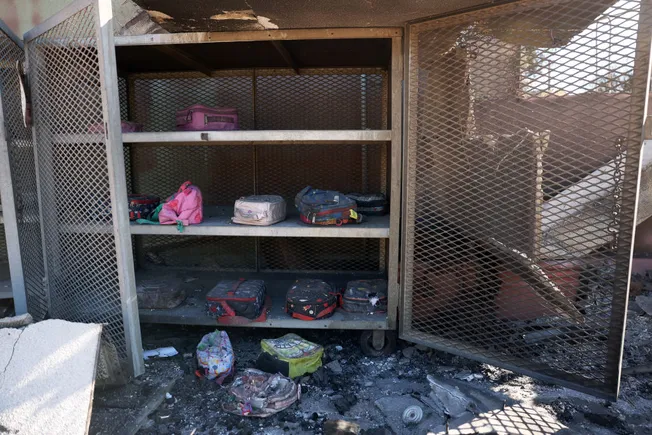
    Schools across Southern California impacted by devastating wildfires this month are working to ensure students, families and staff are safe and have basic needs — all while attempting to restart instruction and as-normal-as-possible school routines after school closures. 

    At least 335 schools from Los Angeles, San Bernardino, Riverside, Ventura and San Diego counties had closed temporarily when fires broke out last week, affecting more than 211,000 students, according to the California Department of Education. 

    Two schools in the Los Angeles Unified School District — Palisades Charter Elementary and Marquez Charter Elementary — will need to be rebuilt due to fire damage, LAUSD said in a Jan. 13 statement. 

    At an event Tuesday in Washington, D.C., to highlight U.S. Department of Education initiatives under the Biden administration, Deputy Secretary of Education Cindy Marten, who previously served as superintendent of San Diego Unified School District, said the area is close-knit and that people have been “deeply affected” by the destructive wildfires. 

    “What we know is that precious schools have burned down and communities are reeling,” said Marten, adding that the U.S. Education Department will provide training and funding to communities affected by the disaster.

    According to the California Department of Forestry and Fire Protection, known as CAL FIRE, 40,695 acres have burned and more than 12,300 structures have been destroyed. Several fires that started Jan. 7 or after still have not been fully contained. 

    Most schools in LAUSD — the second largest school system in the nation — reopened Monday after district employees cleaned schools and others worked “around the clock” over the weekend to ensure campuses were safe for students and staff, a Jan. 13 district statement said. By Wednesday, outdoor activities including P.E. and recess could resume at all campuses pending local conditions, and students at the two schools destroyed by fire were relocated to two other campuses, the district said.

    “We have a unique opportunity to show the strength and resilience of our community in the face of adversity,” said Pamela Magee, executive director and principal of Palisades Charter High School, in a statement Jan 13. “By coming together, we can ensure that our students can stay in their learning environment, with their friends and mentors, at a time when they need it most.” 

    Schools in Malibu are closed through at least Jan. 21, while Santa Monica schools are open, according to the Santa Monica-Malibu Unified School District. The district and its partners have organized optional gathering spaces for children and teens displaced by the fires and not in school.

    In the Pasadena Unified School District, more than 1,300 Pasadena USD staff members had homes within the burn zone, and the district is still determining the exact number of students and families impacted. That number is anticipated to be in the thousands, according to the California Department of Education. 

    The district is closed through Jan. 17, although students had access to optional, self-directed learning options, Superintendent Elizabeth Blanco wrote in a statement to the school district community Jan. 10. 

    The health and safety of our PUSD community remain our highest priority as we navigate the significant impact of the fire on so many of our students, families, and staff,” said Blanco, adding that nearly half of the district’s employees live within the fire evacuation zone and that many staff, students and families lost their homes.

    Odyssey Charter Schools, South Campus, in Altadena, California, and authorized by PUSD, was destroyed by the Eaton fire on Jan. 8. The 7-year-old school served about 375 students in grades TK-8. 

    “While our campus is closed, Odyssey Charter Schools South continues and will move forward stronger than ever. We’ve already built this school from an idea to a full institution. Then we rebuilt it again online during COVID and we built it a third time when we had to relocate so we are a resilient community and we already weathered many challenges,” said a video showing the fire’s destruction to the campus.

    https://www.youtube.com/watch?v=/Q9sOZLdDcBg

    Providing basic needs, making adjustments

    With the widespread impact of the wildfires and ongoing firefighting, the focus on learning is taking a backseat to supplying students, families and school employees with basic needs.  

    Source link

  • Call for Submissions for Special Edition – “Trends in the Use of Generative Artificial Intelligence for Digital Learning.” (Anthony Picciano)

    Call for Submissions for Special Edition – “Trends in the Use of Generative Artificial Intelligence for Digital Learning.” (Anthony Picciano)


    Dear Commons Community,

    Patsy Moskal and I have decided to be guest editors for Education Sciences for a special edition entitled,

    “Trends in the Use of Generative Artificial Intelligence for Digital Learning.” (See below for a longer description.)

    It is a most timely topic of deep interest to many in the academy. We would love to have you contribute an article for it. Your submission can be research, practitioner, or thought-based. It also does not have to be a long article (4,000-word minimum). Final articles will be due no later than July 1, 2025.

    You can find more details at: https://www.mdpi.com/journal/education/special_issues/6UHTBIOT14#info

    Thank you for your consideration!

    Tony


    Source link

  • How the university can support student digital learning freedom

    How the university can support student digital learning freedom

    Feelings of belonging have a significant positive impact on academic success and progression, but we know that creating belonging isn’t as simple as putting up a welcome sign.

    Belonging is not something that can be automatically created by an institution, regardless of its commitment to access and inclusion. To make students feel they belong in a higher education environment, having the power to shape and co-create the environments in which they participate is essential.

    For students in higher education, liminal digital spaces (those informal areas of interaction that sit between formal academic environments and students’ broader social contexts) offer unique opportunities for students to lead, collaborate, learn and foster a sense of belonging, and the freedom to shape their learning environment and exercise agency in ways that may not be available within more formal institutional frameworks. They also offer opportunities for institutions to create places that nurture academic success without assuming responsibility for the development and delivery of all support.

    But squaring the ownership, credibility and safeguarding triangle is complex, so how can universities do this while also embracing digital tools?

    Taking ownership for learning

    Focusing on digital spaces allows institutions to expand the space their students feel comfortable inhabiting and learning in, without limiting engagement from those who may not be free to meet at a specific time or be able to meet in person.

    Digital learning resources can help students connect to their peers, further strengthening their sense of place within the institution. These spaces could act as connectors between university resource and student-driven exploration and learning in a way that more formal mechanisms sometimes fail to. At Manchester, resources such as My Learning Essentials (a blended skills support programme) can be used by the students within the spaces (via online resources) and signposted and recommended by peers (for scheduled support sessions).

    Although this model exists elsewhere, at Manchester it is enhanced by the CATE-awarded Library Student Team, a group of current students who appreciate and often inhabit these spaces themselves. The combination of always available online, expert-led sessions and peer-led support means there is a multiplicity of avenues in the support. This allows the University to partner with, for example, its Students’ Union, and work alongside students and the wider institution by hosting these digital spaces, acting as mediators or facilitators, and ensuring the right balance of autonomy and support.

    Keeping learning credible

    Wider institutional support like My Learning Essentials already takes advantage of digital spaces by delivering both asynchronous online support and scheduled online sessions, and it can be easily integrated, signposted and shaped by the students using it.

    These spaces need to be connected to the institution in such a way as to feel relevant and powerful. “Leaving” students to lead in spaces, giving them leadership responsibility without institutional support or backing, sets both them and these spaces up for failure.

    Universities can work alongside students to help them define collective community values and principles, much like the community guidelines found in spaces like MYFest, a community-focused annual development event. Doing so ensures these liminal spaces are inclusive and responsive to the needs of all participants. Such spaces can also help students transition ‘out’ of the university environment and support others to build skills that they have already developed, such as by mentoring a student in a year below.

    Safeguarding in a digital world

    Universities should also allow students to follow the beat of their own drum and embrace digital outside of university spaces to further their learning.

    Kai Prince, a PhD candidate in Maths at The University of Manchester, who runs a popular Discord server for fellow students, notes:

    If the servers are led by a diverse group of students, I find that they’re also perfect for building a sense of belonging as students feel more comfortable in sharing their difficulties pseudo-anonymously and receiving peer-support, either by being informed on solutions or having their experiences, such as impostor syndrome, acknowledged.

    Spaces like Discord allow students to engage in peer-led learning, but universities can enhance the quality of that learning by making available and investing in (as is done with My Learning Essentials) high-quality online materials, clear paths to wider support services and formal connections with societies or other academic groups. These mechanisms also help to keep the space within a student’s university experience, with all the expectations for behaviour and collegiality that entails.

    The higher education sector is a complex and diverse space, welcoming new members to its communities each year. But it is often mired in a struggle to effectively engage and include each individual as a true part of the whole.

    Work to address this needs to incorporate the students in spaces where the balance of power is tilted, by design, in their favour. Recognising the potential for digital spaces, for accessibility, support and familiarity for students as they enter higher education means that universities can put their efforts towards connecting, but not dictating, the direction of students and helping them forge their own learning journeys as part of the wider university community.

    Source link

  • The value of having a National Learning Framework incorporating school, college and higher education

    The value of having a National Learning Framework incorporating school, college and higher education

    By Michelle Morgan, Dean of Students at the University of East London.

    In the UK, we have a well-established education system across different levels of learning including primary, secondary, further and higher education. For each level, there is a comprehensive structure that is regulated and monitored alongside extensive information. However, at present, they generally function in isolation. 

    The Government’s recent Curriculum and Assessment Review has asked for suggestions to improve the curriculum and assessment system for the 16-19 year study group. This group includes a range of qualifications including GCSEs, A-levels, BTECs, T Levels and apprenticeships. The main purpose of the Review is to

    ensure that the curriculum balances ambition, relevance, flexibility and inclusivity for all children and young people.

    However, as part of this review, could it also look at how the different levels of study build on one another? Could the sectors come together and use their extensive knowledge for their level and type of study, to create an integrated road map across secondary, further and higher education where skills, knowledge, competencies and attributes (and how they translate into employability skills) are clearly articulated? We could call this a National Learning Framework. It could align with the learning gain programme led by the Office for Students (OfS).

    The benefits of a National Learning Framework

    There would be a number of benefits to adopting this approach:

    • It would provide a clear resource for all stakeholders, including students and staff in educational organisations, policymakers, Government bodies, Regulators and Quality Standard bodies (such as Ofsted, the Office for Students and QAA) and business and industry. It would also help manage the general public perception of higher education. 
    • This approach would join up the regulatory bodies responsible for the different sectors. It would help create a collaborative, consistent learning and teaching approach, by setting and explaining the aims and objectives of the various types of education providers.
    • It would explain and articulate the differences in learning, teaching and assessment approaches across the array of secondary and further education qualifications that are available and used as progression qualifications into higher education.  For example, A-Levels are mainly taught in schools and assessed by end-of-year exams. ‘Other’ qualifications such as BTEC, Access and Other Level 3 qualifications taught in college have more diverse assessments.
    • It would help universities more effectively bridge the learning and experience transition into higher education across all entry qualifications.  We know students from the ‘Other’ qualification groups are often from disadvantaged backgrounds, which can affect retention, progression and success at university as research highlights (see also this NEON report).  Students with other qualifications are more likely to withdraw than those with A-Levels. However, as this recent report Prior learning experience, study expectations of A-Level and BTEC students on entry to university highlights, it is not the BTEC qualification per se that is the problem but the transition support into university study that needs improvement.
    • It would also address assumptions about how learning occurs at each level of study. For example, because young people use media technology to live and socialise, it is assumed the same is the case with learning. Accessing teaching and learning material, especially in schools, remains largely traditional: the main sources of information are course textbooks and handwritten notes, although since the Covid-19 Pandemic, the use of coursework submission and basic virtual learning environments (VLEs) is on the increase.
    • If we clearly communicate to students the learning that occurs throughout each level of their study, and what skills, knowledge, competencies and attributes they should obtain as a result, this can help with their confidence levels and their employability opportunities as they can better articulate what they have achieved.

    What could an integrated learning approach across all levels of study via a National Learning  Framework look like?

    The  Employability Skills Pyramid created for levels 4 to 7 in higher education with colleagues in a previous university where I worked could be extended to include Levels 2/3 and apprenticeships to create a National Learning Framework. The language used to construct the knowledge, skills and attribute grids used by course leaders purposely integrated the QAA statements for degrees (see accompanying document Appendix 1) .

    By adding Levels 2 and 3, including apprenticeship qualifications and articulating the differences between each qualification, the education sector could understand what is achieved within and between different levels of study and qualifications (see Figure 1).

    Key stakeholders could come together from across all levels of study to map out and agree on the language to adopt for consistency across the various levels and qualifications.

    Integrated National Learning Framework across Secondary, Further and Higher Education

    Alongside the National Learning Framework, a common transition approach drawing on the same definitions across all levels of study would be valuable. Students and staff could gain the understanding required to foster successful transitions between phases.  An example is provided below.

    Supporting transitions across the National Learning Framework using similar terminology

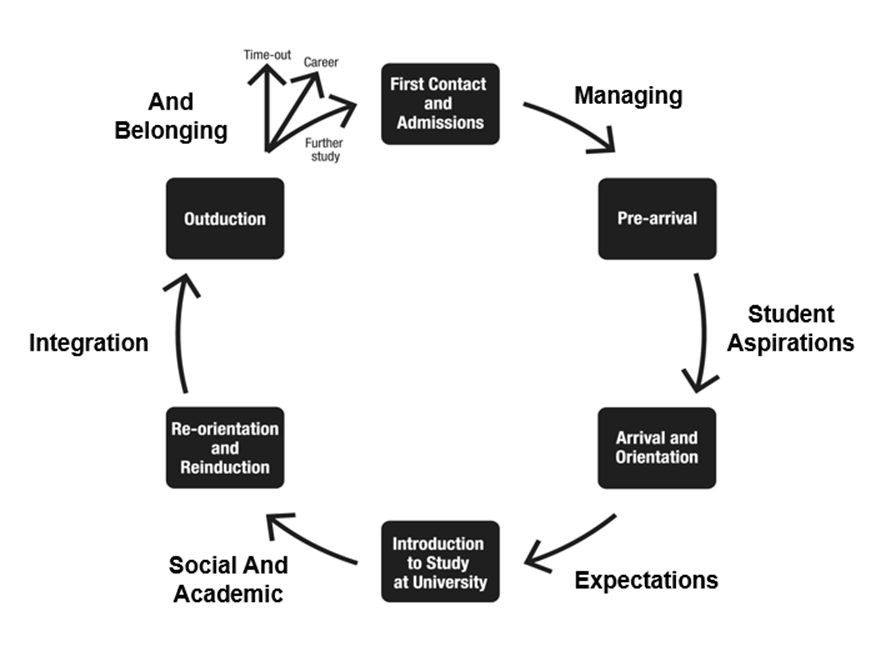
    The Student Experience Transitions (SET) Model was designed to support courses of various lengths and make the different stages of a course clearer. It was originally designed for higher education but the principles are the same across all levels of study (see Figure 2). Students need to progress through each stage which has general rules of engagement. The definitions of each stage and the mapping of each stage by length of course are in the accompanying document in Appendix 2.

    Figure 2: The Student Experience Transitions Model. Source: Morgan 2012

    The benefits for students are consistency and understanding what is expected for their course. At each key transition stage, students would understand what is expected by reflecting on what they have previously learnt, how the coming year builds on what they already know and what they will achieve at the end.

    Taking the opportunity to integrate

    The Curriculum Review provides a real opportunity to join up each level of study and provide clarity for all stakeholders. Importantly, a National Learning Framework could provide and help with the Government’s aims of balancing ambition, relevance, flexibility and inclusivity for all learners regardless of level of study.

    Appendices

    Source link

  • Challenging climate hypocrisy in higher education learning and teaching 

    Challenging climate hypocrisy in higher education learning and teaching 

    By Dr Adrian Gonzalez (@AGonzalez05) Senior Lecturer in Sustainability and Director of Learning and Teaching, Department of Environment and Geography at the University of York.

    Climate hypocrisy in Higher Education

    The climate crisis and global attempts at strengthening the sustainable and low-carbon transition is arguably the most critical issue we face and there is clear evidence to show strong Higher Education (HE) support for this twin approach. However, HE, particularly in the Global North, faces increasing scrutiny and critique over its implementation of the sustainability agenda. This has led to accusations of greenwashing, in which universities (willingly or perhaps erroneously) overmarket and/or underdeliver their sustainability policies, and climate hypocrisy, where an internationalist agenda frames student recruitment (the drive towards overseas markets), research activities and partnerships. For example, in UK tertiary education (further education and higher education), the largest sources of travel emissions are student flights, but there has been limited focus on the emissions stemming from learning and teaching, particularly fieldtrips, which this post is keen to reflect on.

    Destination long haul; Higher Education residential undergraduate student fieldtrips

    Outdoor education, particularly fieldtrips, offer a wide array of learner benefits and can be integral to different undergraduate programmes such as Geography, Earth and Environmental Sciences (GEES), archaeology, history and classics. However, the competitive UK higher education market has helped generate an internationalisation of undergraduate fieldtrips which are now used as a critical marketing tool to attract prospective students, who as ‘consumers’, are increasingly keen on knowing where these trips go to inform applications. For example, a brief internet search of UK GEES departments shows undergraduate trips heading to exotic locations such as the Amazonia region, Colombia (BSc Environmental Science), Bahamas (BSc Ocean Science and Marine Conservation) and Malawi (BA Human Geography). 

    Climate hypocrisy is evident here; students are studying programmes that acknowledge and grapple with the climate crisis and the need for transformational structural changes, yet at the same time will be enrolled on degrees that facilitate long-haul international learning opportunities without significant acknowledgement or reflection of the environmental impacts. Whilst there is no reliable publicly available data on the level of carbon emissions generated by GEES and other subject fieldtrips in UK higher education, I can give an indication by drawing on a case study of the department I work in.

    Department of Environment and Geography, University of York

    The department runs a wide variety of one-day and residential fieldtrips across its undergraduate and postgraduate programmes. It is the undergraduate residential trips that, owing to their design, have particularly significant carbon emissions and were made the focus of the subsequent investigation. Until 2022-2023, the department ran several residential fieldtrips that encompassed both UK and overseas destinations for its four undergraduate programmes (BSc Environmental Science; BSc Physical Geography and Environment; BSc Environment, Economics and Ecology; BA Human Geography and Environment). 

    I used the University of York’s carbon calculator, which draws upon the UK government’s Department for Environment, Food and Rural Affairs greenhouse conversion factors to calculate the carbon emissions stemming from travel and accommodation and the offsetting requirements. The table below shows the residential fieldtrips and carbon emissions from travel (including coach and flights where relevant) and accommodation on a per-person and 50-person basis. For four 50-person trips, this generated 108,521.85 kg CO2e (or 109 metric tonnes rounded up), equating to a carbon offsetting cost of £3,437.97 for the Department on an annual basis.

    Table 1: Department of Environment and Geography, University of York fieldtrips up to 2022-2023

    What does this total figure equate to? A good comparison is the Stockholm Environment Institute (SEI), an international non-profit that focuses on environment and development challenges and employs 170 staff working across several international regional centres. At the time of these fieldtrips operating, SEI’s 2020 annual report indicated that its air travel emissions were almost 550 metric tonnes CO2e (in 2019). So these department fieldtrips made up the equivalent of almost 20% of the total air travel emissions of a major international research organisation.

    Conclusion: a call to action

    These figures indicate the scale of the socio-environmental impacts caused and the urgent need for UK higher education learning and teaching operations, particularly in GEES given the subject areas, to be seen as ‘walking the talk.’ There have been recent efforts to address this issue through the work of the RGS-IBG who have developed a list of voluntary principles to guide geography fieldwork, including the adoption of ‘sustainable fieldtrips’ which acknowledge the need to recognise and justify the resulting carbon impacts. Whilst it is positive to see 31 institutions signed up, this is less than half of the UK GEES departments and does not incorporate any wider disciplinary commitments. 

    This article raises a call to action for all learned institutions and UK HE departments operating residential fieldtrips to adopt sustainable fieldtrip principles and operations. Without system-wide change, climate hypocrisy remains unchallenged in UK higher education learning and teaching. 

    To support academic staff and departments, several steps towards sustainable fieldtrips can be taken:

    • Conduct a carbon audit of fieldtrips to ascertain the impacts as undertaken at the Department of Environment of Environment and Geography, University of York
    • Using this data, consider revising long-haul fieldtrip locations to relevant localised destinations that can be reached through low carbon (i.e. no flights) transport; 
    • Publish the carbon costs on the department or university website to support wider debate and discussion of sustainable fieldtrips;
    • Implementing sustainable fieldtrips can lead to multiple Equity, Diversity and Inclusion (EDI) benefits, particularly around accessibility and inclusivity. Use this opportunity to review and seek to strengthen the EDI agenda. 
    • Disseminate best practice guidance through research and conference outputs;
    • Lobby learned institutions to adopt sustainable fieldtrip principles that align with those adopted by the RGS-IBG;

    Through these steps, UK higher education can begin to create a more holistic, robust and transparent sustainability and decarbonisation agenda. 

    However, these actions cannot happen in isolation or nullify wider critical discussions around the UK HE sustainability agenda. One of the most significant discussion points is the impact of international students studying in the UK, a country which is the second most popular study destination in the world. Whilst these students provide significant economic benefits to the UK economy (£41.9 billion between 2021/22) and are vital to the UK higher education business model (one in six universities get over a third of their total income from overseas students), the carbon footprint far surpasses the UK higher education fieldtrip contribution. A 2023 report from 21 UK further education and higher education providers concluded that student flights accounted for 2.2 metric tonnes of CO2e or 12% of total emissions, whilst globally, student mobility is estimated to generate at least 14 megatones of Co2e per year (14 million metric tonnes). It is clear therefore that in the UK context, there is an urgent need for a robust policy debate on UK higher education funding and student mobility, otherwise the sector’s decarbonisation agenda will remain only partially addressed through sustainable fieldtrips. 

    Source link