eSchool News is counting down the 10 most-read stories of 2025. Story #6 focuses on DEI in education.
Key points:
Diversity, equity, and inclusion (DEI) initiatives have become integral to educational institutions across the United States. DEI aims to foster environments where all students can thrive regardless of their backgrounds. The programs are designed to address systemic inequalities, promote representation, and create inclusive spaces for learning. However, as DEI becomes more prevalent, it also faces scrutiny and debate regarding its effectiveness, implementation, and impact on educational outcomes.
One of the main advantages of DEI in education is the promotion of a more inclusive and representative curriculum. Students gain a broader understanding of the world by integrating diverse perspectives into course materials. This enhances critical thinking and empathy. Furthermore, the approach prepares students to navigate and contribute to our increasingly globalized society. Moreover, exposure to diverse viewpoints encourages students to challenge their assumptions and develop a more nuanced perspective on complex issues.
DEI initiatives also contribute to improved academic outcomes by fostering a sense of belongingness amongst students. When students see themselves reflected in their educators and curricula, they are more likely to feel valued and supported. This leads to increased engagement and motivation. This sense of inclusion can result in higher retention and graduation rates (particularly among historically marginalized groups). Furthermore, diverse learning environments encourage collaboration and communication skills because students learn to work effectively with peers from different backgrounds.
In addition to benefiting students, DEI programs can enhance faculty satisfaction and retention. Institutions that prioritize diversity in hiring and promotion practices create more equitable workplaces. This can lead to increased job satisfaction among faculty members. Mentorship programs and professional development opportunities focused on DEI can also support faculty in creating inclusive classroom environments, which further benefits students.
Despite these benefits, DEI initiatives are not without challenges. One significant concern is the potential for resistance and backlash from individuals who perceive DEI efforts as a threat to traditional values (in other words, a form of reverse discrimination). This resistance can manifest in various ways (opposition to DEI policies, legal challenges, and political pressure). Such opposition can hinder the implementation and effectiveness of DEI programs, thereby creating a contentious atmosphere within educational institutions.
Another challenge is the difficulty in measuring the success of DEI initiatives. Without clear metrics, it can be challenging to assess the impact of these programs on student outcomes, faculty satisfaction, or institutional culture. The lack of quantifiable data can lead to skepticism about the efficiency of DEI efforts, thus resulting in reduced support or funding for such programs. Additionally, the absence of standardized definitions and goals for DEI can lead to inconsistent implementation across institutions.
Resource allocation is also a critical issue in the execution of DEI initiatives. Implementing comprehensive DEI programs often requires significant financial investment (funding for specialized staff, training, and support services). In times of budget constraints, institutions may struggle to prioritize DEI efforts. This may lead to inadequate support for students and faculty. Without sufficient resources, DEI programs may fail to achieve their intended outcomes thus further fueling criticism and skepticism.
The potential for tokenism is another concern associated with DEI initiatives. When institutions focus on meeting diversity quotas without fostering genuine inclusion, individuals from underrepresented groups may feel marginalized or exploited. Tokenism may undermine the goals of DEI by creating superficial diversity that does not translate into meaningful change or equity. To avoid this, institutions must commit to creating inclusive environments where all individuals feel valued and empowered to contribute fully.
Furthermore, DEI programs can sometimes inadvertently reinforce stereotypes or create division among student populations. For example, emphasizing differences without promoting commonalities may lead to increased social fragmentation or feelings of isolation among certain groups. Educators must carefully balance the celebration of diversity with the promotion of unity and shared values to foster cohesive learning communities.
In summary, DEI initiatives in education offer numerous benefits, but these programs also face significant challenges. To maximize the positive impact of DEI efforts, educational institutions must commit to thoughtful, well-resourced, and inclusive implementation strategies that promote genuine equity and inclusion for all members.
Latest posts by eSchool Media Contributors (see all)
As educators, we frequently encounter challenging situations, often involving aggressive or defensive responses that feel like a verbal assault.
I learned this firsthand as a new administrator when a student was seated in the office for detention and another child walked up, knocked on the window, and made fun of him. I redirected the heckler, and later that night I was stunned at what happened: the parent of the heckler wrote a letter to the superintendent, complaining that I had verbally assaulted his son and demanded I be fired; I was clearly unfit to work with children.
After thousands of encounters with difficult people, I developed microstrategies, which are quick, practical, and immediately impactful solutions that educators and leaders can use to manage daily interactions and challenges, saving time and keeping the focus on students.
The ability to adapt and successfully navigate hostile people demands recognizing how to manage and understand them. The key is to never match a difficult person’s aggressiveness, no matter how wrong they are, or how defensive you feel. Instead, always keep a steady eye on objectivity.
Understanding and Countering Blame Displacement
Blame displacement happens when people deflect responsibility for problems or failures onto others, resulting in avoidance rather than accountability. This deflection often stems from ego, which Ryan Holiday characterizes in Ego Is the Enemy, as a deep-seated desire to protect self-image and avoid the discomfort of perceived shortcomings. This ego-driven defensiveness manifests as subtle manipulations to offload responsibilities and maintain a perception of blamelessness and accusations.
To counter this, educators should deploy methods such as Todd Whitaker’s approach on Shifting the Monkey. Effective leaders must consistently and respectfully deflect “monkeys” (responsibilities, problems, and complaints) back to their rightful owners to protect good employees and kids, and maintain an organization’s focus on student success.
For example, when a parent attempts to displace blame for their child’s struggles on educators trying to help, strategic responses to recognize this transfer allows us to skillfully return the monkey back to where it belongs, through skillful redirection. A strategic redirection might be: “I’ve provided the resources and guidance and now I’d like to hear what strategies you believe would be most effective in helping your child meet these goals.”
Tools and ideas to transform education. Sign up below.
Displacing blame perpetuates confusion and misunderstanding for children and that’s when kids lose. School leaders have to manage the monkeys, so students don’t have to and win.
The 90/10 Rule
While educators experience disproportionate and aggressive responses, it’s important to maintain perspective. Most families I encounter have a trusting and reasonable response to our management system for student conduct and development, which I refer to as the 90/10 Rule (or “rule of nines”): 90% of people are decent, understanding, and reasonable in our shared encounters, yet the difficult and exasperating 10% approach concerns with aggression, defensiveness, and insult and and occupy an inordinate majority of time and resources.
This small, significant minority makes themselves well known, having made the cashier at Target cry, insulted the security officer, etc. While challenging and even hostile, they are often doing the best that they can. We must implement strategies to manage our responses to them, not to avoid them.
Strategy Shifting and Taking the Higher Ground
Effectively countering blame displacement requires both a procedural approach to shift ownership and a conscious, objective alternative redirection to the ego-driven narrative fueling it. We must always take the higher ground, keeping in mind our most important role: how we are helping their child develop and thrive, serving as a role model for our students and them.
When a difficult person attacks, accountability is confronted by recentering the dialogue and reminding them that civility comes first for the sake of the child. A powerful redirection I use is: “I will never speak to you or your child like that and I expect the same in return.” This often shocks parents back into reality.
Clearly communicate expectations, focus on collaborative problem-solving that includes the difficult person’s role, and consistently reinforce that while the school plays a vital part, the parent’s collaboration is crucial in student success. By refusing to accept displaced blame, educators protect their time and energy, allowing them to focus on supporting students in ways that are truly within our professional landscape.
The parent who demanded I be fired long ago eventually came to me (three years later), thanking me for my patience and understanding. He acknowledged his own shortcomings, realizing that I was not “after” his son, as he instinctively assumed. This was a strangely liberating and unexpected turnaround.
While most blame-displacers will not come around as he did, some will and that is the promise I offer. It has remained my true reward, because a child can see the other side, not a combative educator validating their parent’s irrational reaction, but a civil even-handed approach to their success.
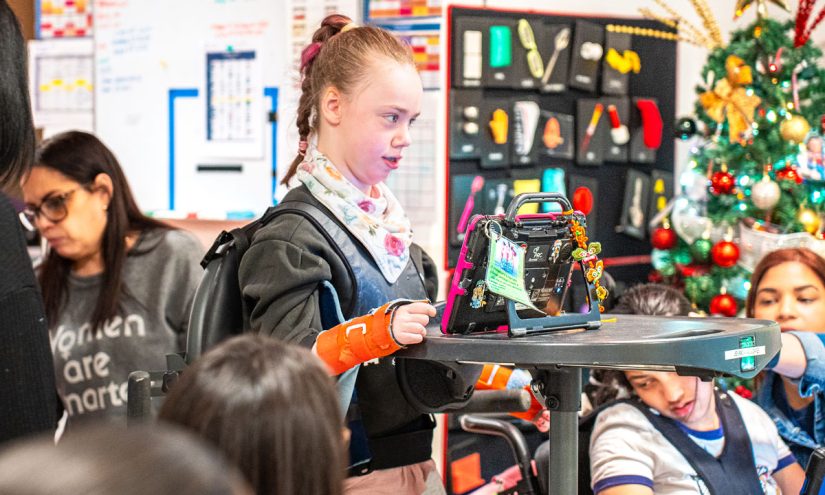
Sitting in his wheelchair at a highly specialized private school in Manhattan designed for students with severe and multiple disabilities, Joshua Omoloju, 17, uses assistive technology to activate his Spotify playlist, sharing snippets of his favorite songs in class — tracks even his parents were unaware he loved.
It’s a role this deejay is thrilled to fill at a school that encourages him to express himself any way he can. The magnetic and jovial Omoloju, a student at The International Academy of Hope, is legally blind, hearing impaired and nonverbal. But none of that stopped him from playing Peanut Butter Jelly Time by Buckwheat Boyz mid-lesson on a recent morning.
“OK, Josh!” his teachers said, swiveling their hips and smiling. “Let’s go!”
iHOPE, as it’s known, was established in Harlem in 2013 for just six children and moved to its current location blocks from Rockefeller Center in 2022. It now serves 150 students ages 5 through 21 and is currently at capacity with 27 people on its waitlist, according to its principal.
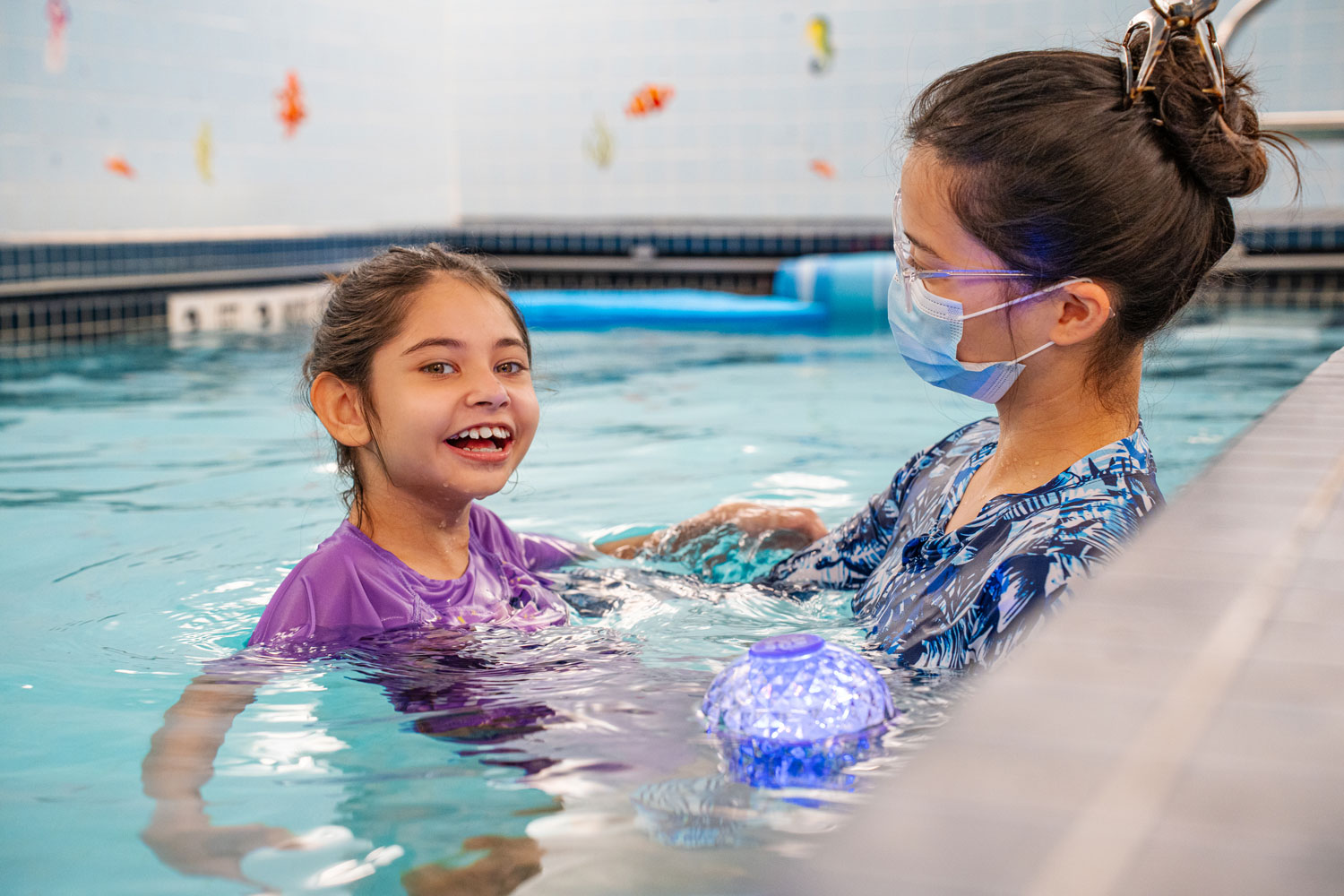
The four-story, nonprofit school offers age-appropriate academics alongside physical, occupational and speech therapy in addition to vision and hearing services.Every student at iHOPE has a full-time paraprofessional, who works with them throughout the day, and at least half participate in aquatic therapy in a heated cellar pool.
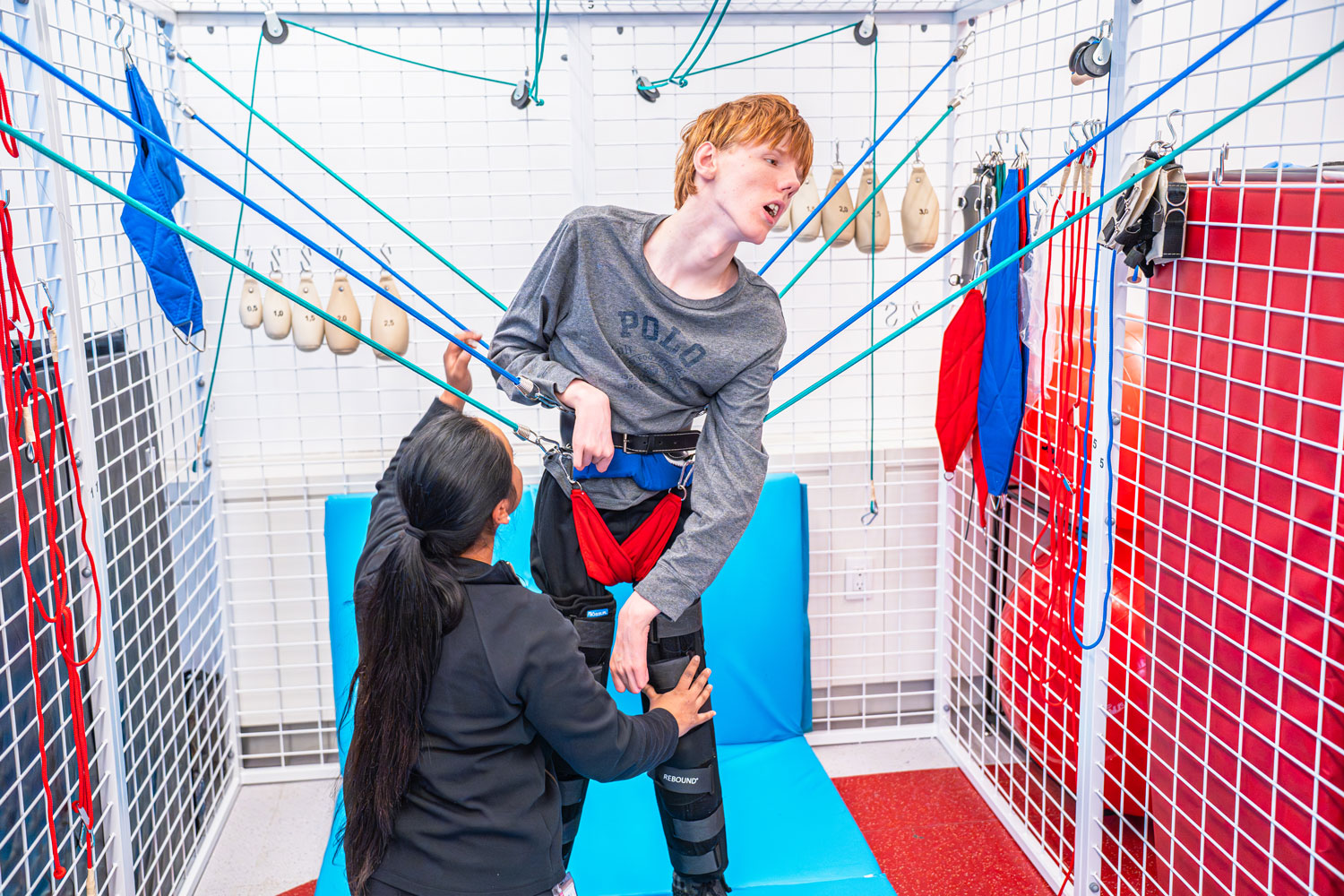
The school has three gymnasiums fitted with equipment to increase students’ mobility, helping many walk or stand, something they rarely do because of their physical limitations.
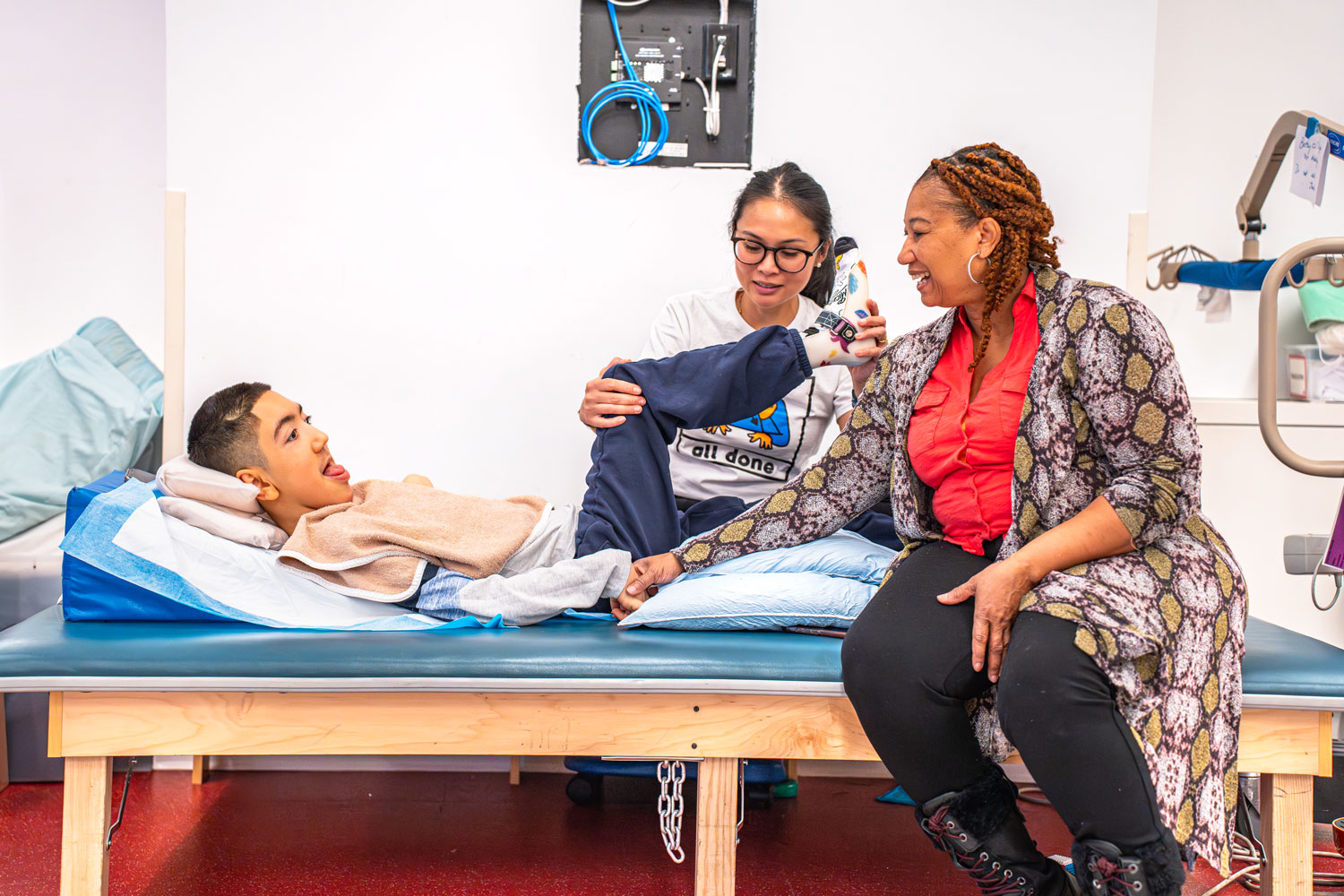
Arya Venezio, 12, with physical therapist Kendra Andrada (Heather Willensky)
Edward Loakman, 18, with physical therapist Navneet Kaur (Heather Willensky)
Gabriel Torres, 15, with physical therapist Jeargian Decangchon and his one-to-one nurse, Guettie Louis. (Heather Willensky)
Its 300-member staff includes four full-time nurses and its six-figure cost averages $200,000 annually depending on each child’s needs. Parents can seek tuition reimbursement from the New York City Department of Education through legal processes set out by the Individuals with Disabilities Education Act, arguing that the public school cannot adequately meet their child’s needs.
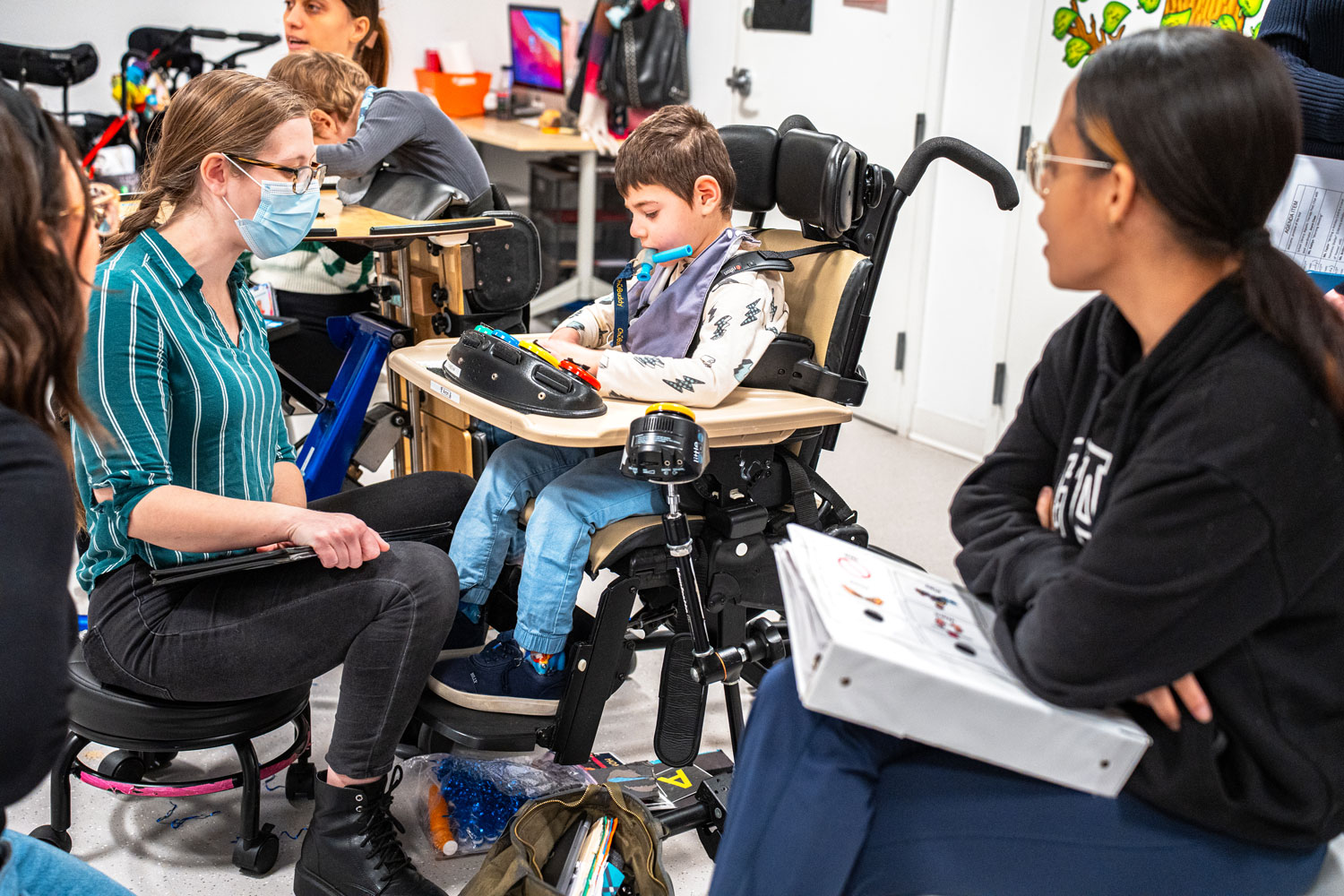
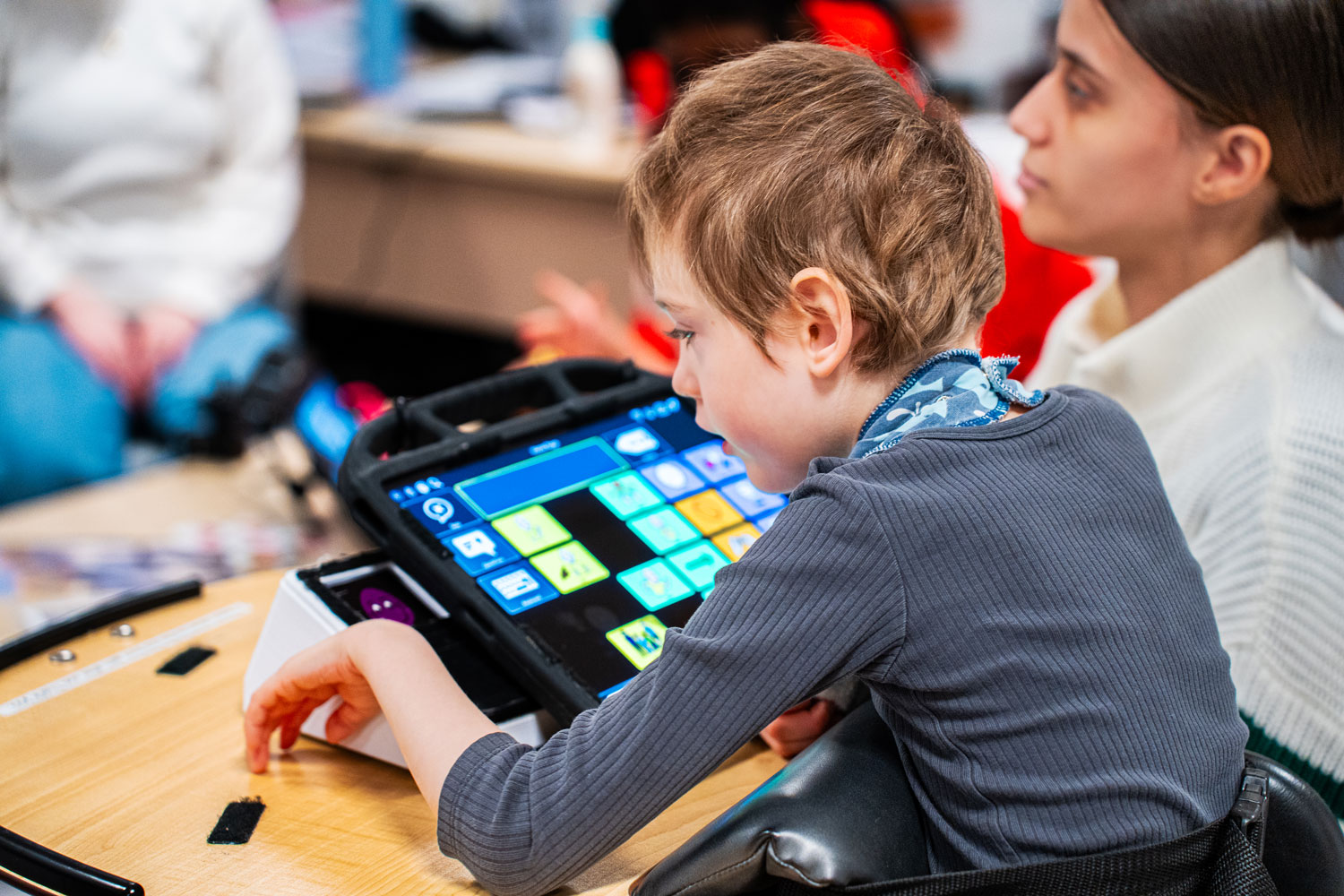
iHOPE focused primarily on rehabilitation in its early years but is now centered on academics and assistive technology, particularly augmentative and alternative communication devices that improve students’ access to learning. Mastery means users can take greater control of their lives. Shani Chill, the school’s principal and executive director, said working at iHOPE allows her to witness this transformational magic each day.
“Every student who comes here is a gift that is locked away inside and the staff come together to figure that out, saying, ‘I can give you this device, this tool, these tactiles’ and suddenly the student breaks through and shows us something amazing about themselves,” she said. “You see their personality, their humor, and the true wisdom that comes from students who would otherwise be sitting there in a wheelchair with everything being done for them — or to them.”
Aron Mastrangelo, 5, with his occupational therapist, Rose Siciliano, to his left and and his paraprofessional, Emely Ayala, to his right. (Heather Willensky)
Some devices, like the one Omoloju uses in his impromptu deejay booth, track students’ pupils, allowing them to answer questions and express, for example, joy or discomfort, prompting staff to make needed modifications.
Because he’s unable to speak, Omoloju’s parents, teachers and friends assess his mood through other means, including his laughter, which arrives with ease and frequency at iHOPE. It’s a welcome contrast to what came before it at a different school, when a sudden eruption of tears would prompt a call to his mother, who would rush down to the campus, often too late to glean what upset him.
“One of the things we saw when we first visited (iHOPE) was that they knew exactly how to work with him,” Terra Omoloju said earlier this week. “That was so impressive to me. I don’t feel anxious anymore about getting those calls.”
Yosef Travis, father to 8-year-old Juliette, said iHOPE embodies the idea that children with multiple disabilities and complex syndromes can grow with the right support.
Juliette has a rare genetic disorder that impacts brain development and is also visually impaired. She squeals with joy with one-on-one attention and often taps her feet in excitement, Chill said.
“Juliette has grown in leaps and bounds over the past three and a half years and the dedication and creativity of the staff played a significant role,” her father said. “When she is out sick or on school vacation, we can tell that she misses them.”
Travis said his family considered many options, both public and private, before choosing iHOPE.
“iHOPE was the only one that could provide a sound education without sacrificing the necessary supports and related services she needs for her educational journey,” he said.
iHOPE currently serves one child from Westchester but all the others are from New York City. Parents are not referred there by their local district: They learn about it from social workers, therapists, doctors or through their own research, the principal said.
Those seeking enrollment complete an intake process to ensure their child would be adequately served there. Parents typically make partial payments or deposits upfront — the amount varies depending on income — while seeking tuition reimbursement from the NYC DOE.
iHOPE does not receive state or federal funding but some organizations that aid its students saw their budgets slashed by the Trump administration, reducing the amount of support they can provide to families in the form of services and equipment.
You can have classrooms that feel like a babysitting facility with kids in wheelchairs given colored paper and crayons, which makes no sense. Or you have a place like iHOPE, which takes advantage of the age in which we are.
Shani Chill, iHope principal and executive director
Principal Chill said her school is devoted to giving children the tools they need, even if it means absorbing added costs.
“We’ll get it from somewhere,” she said, noting iHOPE can turn to partner organization YAI and to its own fundraising efforts to pay those expenses so that every child, no matter their challenges, can learn.
‘He knows he is in the right place’
Omoloju’ symptoms mimic cerebral palsy and he also has scoliosis. He’s prone to viruses and other ailments, is frequently hospitalized and has undergone surgeries for his hip and back.
“He is also very charming,” his mother said. “He likes to have fun. He loves people. I feel very blessed that he is so joyous — even when he’s sick. He is very resilient. I love that about him. He teaches me so much.”
Joshua Omoloju’s parents said their son is a happy young man who loves his school. (Nicole Chase)
This is Omoloju’s fourth year at iHOPE. He’s in the upper school program — iHOPE does not use grade levels — which serves students ages 14 through 21.
He has made marked improvements in his mobility and communication since his enrollment. And his parents know he loves it there: Josh’s father, Wale, saw that firsthand after he dropped his son off at campus after a recent off-site appointment.
“I wish I had a video for when Keith [his son’s paraprofessional] came out of the elevator,” his father said. “[Josh] was beside himself laughing and was so excited to see him. He absolutely loves being there. I know he is in the right place and we love that.”
Principal Chill notes many of these students would not have been placed in an academic setting in decades past. Instead, she said, they would have been institutionalized, a cruel loss for them, their families and the greater community.
“These kids deserve an education and what that looks like runs the spectrum,” she said. “You can have classrooms that feel like a babysitting facility with kids in wheelchairs given colored paper and crayons, which makes no sense. Or you have a place like iHOPE, which takes advantage of the age in which we are.”
Chill notes that assistive and communication-related devices have improved dramatically in recent years and are only expected to develop further. She’s not sure how AI might transform their lives moving forward, but highly sensitive devices that can be operated with a glance or a light touch could be life changing, for example, allowing students to activate smart devices in their own living space.
Benjamin Van den Bergh, 6, with paraprofessional Mirelvys Rodriguez (Heather Willensky)
“This is a great time when you look at all of the technology that is available,” she said.
‘Moved to tears’
Miriam Franco was thrilled about the progress her son, Kevin Carmona, 16, made in just his first six months at iHOPE, she said.
Kevin, a high-energy student who thrives on praise from his teachers, is also good at listening: Ever curious, he’ll keep pace with a conversation from across the room if it interests him.
Kevin has cerebral palsy and a rare genetic disorder that affects the brain and immune system. He has seizures, hip dysplasia and is fed with a gastronomy tube.
“He was able to receive a communication device, which opened an entirely new world for him and allowed him to express himself in ways he could not before,” his mother said. “He also became more engaged and independent during his physical therapy and occupational therapy sessions. His attention and focus improved when completing tasks or responding to prompts, leading to greater engagement and participation.”
His enthusiasm for the school shows itself each morning, Franco said.
“You can see how happy he is while waiting for the bus and greeting his travel paraprofessional,” she said. “It starts from the moment he wakes up and continues as he gets ready for school. In every part of his current educational setting, Kevin is given real opportunities to participate, with the support in place to make that possible.”
Principal Chill said she cherishes the moment parents visit the site for the first time, imagining all their child is capable of achieving.
“They are moved to tears, saying, ‘Now I can picture what my child can do someday,” she said.
Did you use this article in your work?
We’d love to hear how The 74’s reporting is helping educators, researchers, and policymakers. Tell us how
This blog was kindly authored by Isabelle Bambury, Managing Director UK and Europe at Studiosity, a HEPI Partner
New research highlights a vital policy window: deploying Artificial Intelligence (AI) not as a policing tool but as a powerful mechanism to support student learning and academic persistence.
Evidence from independent researcher Dr Rebecca Mace, drawing on data generated by a mix of high, middle and low-tariff UK universities, suggests a compelling, positive correlation between the use of ethically embedded ‘AI for Learning’ tools and student retention, academic skill development and confidence. The findings challenge the predominant narrative that focuses solely on AI detection and academic misconduct, advocating instead for a clear and supportive policy framework to harness AI’s educational benefits.
Redefining the AI conversation: from threat to partner
The initial response of higher education institutions to generative AI has been, understandably, centred on fear of disruption. However, this focus overlooks its immense potential to address perennial challenges in the sector, particularly those related to retention and academic preparedness.
Understanding the purpose and pedagogical role of different types of AI – distinguishing between AI for learning, AI for correction, and AI for content generation – is crucial for their responsible and effective use in higher education, shaping institutional policy and student experience.
As Professor Rebecca Bunting, Vice-Chancellor of the University of Bedfordshire, notes in her Foreword to the new research:
The real conversation we should be having is not about whether students should use AI, but how it can be used ethically and effectively to improve learning outcomes for our students.
This sentiment was echoed in a recent webinar discussing the findings, where guest panelists argued that framing AI as a constant threat leads to a fundamental misunderstanding of how students perceive and use the technology.
HEPI’s Director, Nick Hillman OBE, reinforces the policy relevance of this shift in his own contribution to the new report:
The roll-out of AI is a great opportunity to improve all that higher education institutions do.
It is now becoming increasingly clear that AI is a tool for use by humans rather than a simple replacement for humans.
The measurable impact: confidence, skills, and retention
The new research focuses on a specific AI for Learning tool from Studiosity in which the AI acts as a learning partner, prompting reflection and supporting students in developing their own ideas, as opposed to generating content on their behalf.
The quantitative findings are striking:
Retention: There is a positive correlation on retention and progression for students using Studiosity . Students accessing this formative feedback were significantly more likely to continue their studies than those who did not. For high-risk students, in particular, higher engagement with Studiosity correlated with greater persistence. This suggests the tool acts as a ‘stabilising scaffold’, addressing not just academic gaps but also the psychological barriers (like low self-efficacy) that lead to attrition.
Academic skills development: Students showed measurable improvement across academic writing types, with the most significant gains observed in text analysis, scientific reports and essays. Critically, lower-performing students improved fastest, suggesting an equalising effect. This is because the Studiosity tool supports higher-order thinking skills like criticality, use of sources and complexity of language, not just mechanics.
Student voice and belonging: Students frequently said the Studiosity tool helped them ‘articulate their ideas more clearly’ and to ‘say it right’ rather than generating thoughts for them. During one of the focus groups, as one student said, ‘It’s not the ideas I struggled with; it’s how to start writing them down in the right way’. This function, sometimes called academic code-switching, is crucial for students from underrepresented backgrounds and is vital to fostering a sense of academic belonging.
Bridging the policy-practice divide and the need for equity
However, the research revealed a ‘concerning discrepancy’ between student perception and institutional regulation. A ‘low-trust culture’ appears to be developing, driven by vague institutional messaging, which sees students hiding their use of AI even when it is for legitimate support.
Staff often centre their concerns on policy enforcement and ‘spotting misuse’ while students focus on the personal anxiety of unintentionally crossing ‘ill-defined ethical lines’. As one student explained, ‘I would feel so guilty’ even if the AI would make their life easier, a sign that the guilt is ‘not rooted purely in fear of being caught, but in a deeper discomfort about presenting work as their own’.
Moreover, there is a clear equity issue. Paywalled AI tools risk deepening the digital divide and penalising students from lower-income backgrounds. Students with low AI literacy are more likely to be flagged for misconduct because they use AI clumsily, while digitally fluent students can blend AI support more subtly.
Recommendations for an ethical AI strategy
The solution is not to resist AI but to integrate it with intentionality, strategy and clarity. The research offers clear and constructive policy proposals for the sector:
Choose the right tool for the job: Focus on dedicated AI for Learning tools that develop skills and maintain academic integrity, rather than all-purpose content-generating chatbots.
Design clear and consistent policy: Develop nuanced policies that move beyond a binary definition of ‘cheating’ to reflect the complex and iterative ways students are now using AI, ensuring consistency across the institution.
Promote transparency: Educators should disclose their own appropriate AI use to remove stigma and foster a culture of critical engagement, allowing students to speak openly about their support needs.
Prioritise equitable access: Institutions should invest in institutionally funded tools to mitigate the digital literacy and economic divides, ensuring all students – especially those most at risk – have fair and transparent access to academic support.
In conclusion
The report concludes that AI offers a substantial policy opportunity to boost a student’s sense of legitimacy and belonging, directly contributing to one of the sector’s most pressing concerns: student success and retention. Policymakers should now shift their attention from policing to pedagogy. You can access a copy of the full report here.
Studiosity is writing feedback and assessment security to support students and validate learning outcomes at hundreds of universities across five continents, with research-backed evidence of impact.
Soon, I’ll teach a graduate course centered around teaching and learning online. In my roles as an adjunct instructor in higher education and the Director of Distance Learning for a community college, I live and breathe this modality. One of the assignments my students will be asked to do is to create an “Online Teaching and Learning Manifesto” in which they share their current beliefs. I love the reflective nature of this assignment and thought it was the right time to put mine on (digital) paper. In no particular order, here are some of the tenets that shape my beliefs and reflect how I teach graduate courses asynchronously and how I would like to be taught.
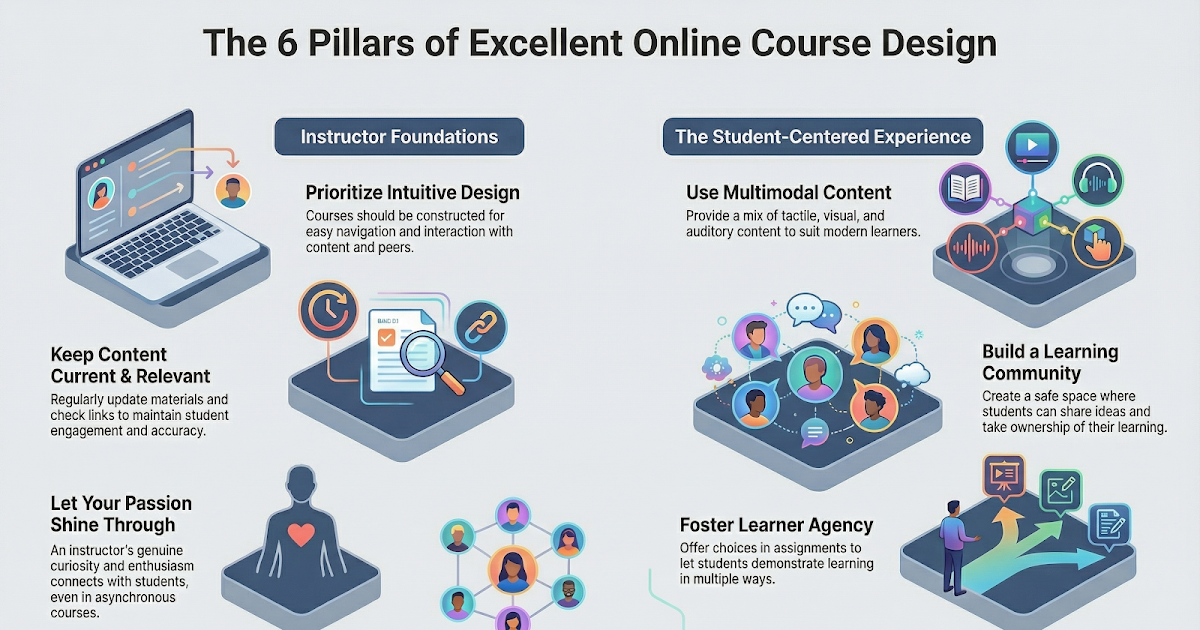
Design matters. From user experience (UX) to interaction design (IX/ID), every decision made by an online instructor is important. Many students (and instructors) have bitter memories of in-person courses being moved online during 2020’s Emergency Remote Learning. Taking an in-person course and moving it online with no change to design or pedagogy is a disservice to the modality and to the students. Online courses should be constructed to help students easily navigate the interface while interacting with classmates, content, and the instructor.
Content knowledge matters. Good teachers never stop learning and are open to learning alongside their students. Using materials that are current and relevant helps students stay engaged and connect course concepts to real-world experiences. I keep a living document throughout the year that contains links, articles, and ideas to implement each time I teach. Updating content, checking links, and being mindful of accessibility every time a course runs should be the norm for all teachers.
Passion matters. Each semester, I give an anonymous survey to my students asking for feedback on design, pedagogy, and content. Regularly, I receive comments about how well the course is designed and how my passion for technology in education comes through. These are asynchronous courses- yet my passion for my subject matter still comes through to my students. Having a sense of curiosity and wonder, along with continuous learning on my own and with my students, helps them feel connected to the content. Some begin to develop passions of their own.
Multimodal content is important. We live in a world where snackable content and short attention spans are the norm. This isn’t a judgment or an excuse; it’s our reality. To meet our students where they are (and how they learn), we need to provide content that is tactile, visual, auditory, and more. In 2025, this isn’t difficult to do, and we owe it to our students to meet them where they are, not where we are.
Building community is important. I am a strong believer in Participant Pedagogy. I am not the ‘keeper of all knowledge’ for my students. I want to learn with them and from them! I help my students take ownership of their learning by providing a safe space for them to share ideas, express wonderings, and connect with classmates, all while adding their own personal touch. My students blog instead of using our LMS discussion platform. Expressing themselves and responding to classmates in this format makes them feel more connected to each other, as if they are having casual conversations instead of meeting a course requirement.
Learner agency is important. In education, there is no such thing as ‘one size fits all!’ This is another reason why multimodal content is so important. Students not only learn in complex, individual ways but should have the ability to demonstrate this learning through multiple avenues. I offer choice in assignments and allow students to tailor work to fit their current or intended career paths.
This isn’t a complete list of my beliefs, and I didn’t arrive here overnight. Throughout my time in education, I’ve had to learn to move away from being the ‘center of attention’ in my courses and acting more in the interest of policy than in individuals. I’m continuing to practice showing more grace and assuming positive intent.
I’m still a work in progress- and I always hope to be.
P.S. I inserted my manifesto into NotebookLM and asked it to generate two infographics based on my writing. The results are below!
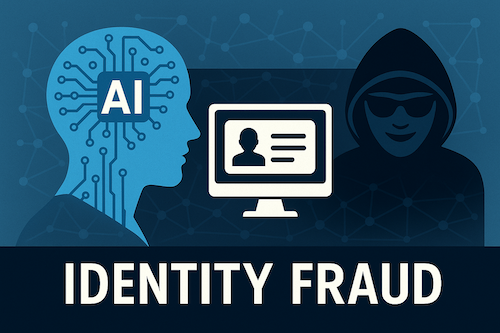
In today’s schools, whether K-12 or higher education, AI is powering smarter classrooms. There’s more personalized learning and faster administrative tasks. And students themselves are engaging with AI more than ever before, as 70 percent say they’ve used an AI tool to alter or create completely new images. But while educators and students are embracing the promise of AI, cybercriminals are exploiting it.
In 2025, the U.S. Department of Education reported that nearly 150,000 suspect identities were flagged in recent federal student-aid forms, contributing to $90 million in financial aid losses tied to ineligible applicants. From deepfakes in admissions to synthetic students infiltrating online portals and threatening high-value research information, AI-powered identity fraud is rising fast, and our educational institutions are alarmingly underprepared.
As identity fraud tactics become more scalable and convincing, districts are now racing to deploy modern tools to catch fake students before they slip through the cracks. Three fraud trends keep IT and security leaders in education up at night–and AI is supercharging their impact.
1. Fraud rings targeting education
Here’s the hard truth: Fraudsters operate in networks, but most schools fight fraud alone.
Coordinated rings can deploy hundreds of synthetic identities across schools or districts. These groups recycle biometric data, reuse fake documents, and share attack methods on dark web forums.
To stand a fair chance in the fight, educational institutions must work with identity verification experts that enable a holistic view of the threat landscape through cross-transactional risk assessments. These assessments spot risk patterns across devices, IP addresses, and user behavior, helping institutions uncover fraud clusters that would be invisible in isolation.
2. Deepfakes and injected selfies in remote enrollment
Facial recognition was once a trusted line of defense for remote learning and test proctoring. But fraudsters can now use emulators and virtual cameras to bypass those checks, inserting AI-generated faces into the stream to impersonate students. In education, where student data is a goldmine and systems are increasingly remote, the risk is even more pronounced.
In virtual work environments, for example, enterprises are already seeing an uptick in the use of deepfakes during job interviews. By 2028, Gartner predicts 1 in 4 job candidates worldwide will be fake. The same applies to the education sector. We’re now seeing fake students, complete with forged government IDs and a convincing selfie, slide past systems and into financial aid pipelines.
So, what’s the fix? Biometric identity intelligence, trusted by a growing number of students, can verify micro-movements, lighting, and facial depth, and confirm whether a real human is behind the screen. Multimodal checks (combining visual, motion, and even audio data) are critical for stopping AI-powered identity fraud.
3. Synthetic students in your systems
Unlike stolen identities, synthetic identities are crafted from real–and fake–fragments, such as a legit SSN combined with a fake name. These “students” can pass enrollment checks, get campus credentials, and even apply for financial aid.
Traditional document checks aren’t enough to catch them. Today’s identity verification tools must use AI to detect missing elements, like holograms or watermarks, and flag patterns including identical document backgrounds, which is a key sign of industrial-scale fraud.
AI-powered identity intelligence for education
As digital learning becomes the norm and AI accelerates, identity fraud will only get more sophisticated. However, AI also offers educators a solution.
By layering biometrics, behavioral analytics, and cross-platform data, schools can verify student identities at scale and in real time, keeping pace with advancing threats, and even staying one step ahead.
Ashwin Sugavanam, Jumio Corporation
Ashwin Sugavanam is currently the VP, AI & Identity Analytics at Jumio Corporation. Ashwin is a visionary Data and Analytics leader with two decades of overall experience out of which he has spent the last decade in helping organizations incubate and scale Data & AI practices. Over the last couple of years Ashwin has helped organizations drive measurable business outcomes by responsibly scaling Data and AI initiatives, implementing modern concepts like Data Mesh and MLOps, and leveraging tools such as the Data Scientist Co-Pilot to accelerate impact. He can be reached on LinkedIn and at the company website https://www.jumio.com/ .
Latest posts by eSchool Media Contributors (see all)
A trending AI song went viral, but in my classroom, it did something even more powerful: it unlocked student voice.
When teachers discuss AI in education, the conversation often focuses on risk: plagiarism, misinformation, or over-reliance on tools. But in my English Language Learners (ELL) classroom, a simple AI-generated song unexpectedly became the catalyst for one of the most joyful, culturally rich, and academically productive lessons of the year.
It began with a trending headline about an AI-created song that topped a music chart metric. The story was interesting, but what truly captured my attention was its potential as a learning moment: music, identity, language, culture, creativity, and critical thinking–all wrapped in one accessible trend.
What followed was a powerful reminder that when we honor students’ voices and languages, motivation flourishes, confidence grows, and even the shyest learners can find their space to shine.
Why music works for ELLs
Music has always been a powerful tool for language development. Research consistently shows that rhythm, repetition, and melody support vocabulary acquisition, pronunciation, and memory (Schön et al., 2008). For multilingual learners, songs are more than entertainment–they are cultural artifacts and linguistic resources.
But AI-generated songs add a new dimension. According to UNESCO’s Guidance for Generative AI in Education and Research (2023), AI trends can serve as “entry points for student-centered learning” when used as prompts for analysis, creativity, and discussion rather than passive consumption.
In this lesson, AI wasn’t the final product; it was the spark. It was neutral, playful, and contemporary–a topic students were naturally curious about. This lowered the affective filter (Krashen, 1982), making students more willing to take risks with language and participate actively.
From AI trend to multilingual dialogue
Phase 1: Listening and critical analysis
We listened to the AI-generated song as a group. Students were immediately intrigued, posing questions such as:
“How does the computer make a song?”
“Does it copy another singer?”
“Why does it sound real?”
These sparked critical thinking naturally aligned with Bloom’s Taxonomy:
Understanding: What is the song about?
Analyzing: How does it compare to a human-written song?
Evaluating: Is AI music truly ‘creative’?
Students analyzed the lyrics, identifying figurative language, tone, and structure. Even lower-proficiency learners contributed by highlighting repeated phrases or simple vocabulary.
Phase 2: The power of translanguaging
The turning point came when I invited students to choose a song from their home language and bring a short excerpt to share. The classroom transformed instantly.
Students became cultural guides and storytellers. They explained why a song mattered, translated its meaning into English, discussed metaphors from their cultures, or described musical traditions from home.
This is translanguaging–using the full linguistic repertoire to make meaning, an approach strongly supported by García & Li (2014) and widely encouraged in TESOL practice.
Phase 3: Shy learners found their voices
What surprised me most was the participation of my shyest learners.
A student who had not spoken aloud all week read translated lyrics from a Kurdish lullaby. Two Yemeni students, usually quiet, collaborated to explain a line of poetry.
This aligns with research showing that culturally familiar content reduces performance anxiety and increases willingness to communicate (MacIntyre, 2007). When students feel emotionally connected to the material, participation becomes safer and joyful.
One student said, “This feels like home.”
By the end of the lesson, every student participated, whether by sharing a song, translating a line, or contributing to analysis.
Embedding digital and ethical literacy
Beyond cultural sharing, students engaged in deeper reflection essential for digital literacy (OECD, 2021):
Who owns creativity if AI can produce songs?
Should AI songs compete with human artists?
Does language lose meaning when generated artificially?
Students debated respectfully, used sentence starters, and justified their opinions, developing both critical reasoning and AI literacy.
Exit tickets: Evidence of deeper learning
Students completed exit tickets:
One thing I learned about AI-generated music
One thing I learned from someone else’s culture
One question I still have
Their responses showed genuine depth:
“AI makes us think about what creativity means.”
“My friend’s song made me understand his country better.”
“I didn’t know Kurdish has words that don’t translate, you need feeling to explain it.”
The research behind the impact
This lesson’s success is grounded in research:
Translanguaging Enhances Cognition (García & Li, 2014): allowing all languages improves comprehension and expression.
Self-Determination Theory (Deci & Ryan, 2000): the lesson fostered autonomy, competence, and relatedness.
Lowering the Affective Filter (Krashen, 1982): familiar music reduced anxiety.
Digital Literacy Matters (UNESCO, 2023; OECD, 2021): students must analyze AI, not just use it.
Conclusion: A small trend with big impact
An AI-generated song might seem trivial, but when transformed thoughtfully, it became a bridge, between languages, cultures, abilities, and levels of confidence.
In a time when schools are still asking how to use AI meaningfully, this lesson showed that the true power of AI lies not in replacing learning, but in opening doors for every learner to express who they are.
I encourage educators to try this activity–not to teach AI, but rather to teach humanity.
Nesreen El-Baz, Bloomsbury Education Author & School Governor
Nesreen El-Baz is an ESL educator with over 20 years of experience, and is a certified bilingual teacher with a Master’s in Curriculum and Instruction. El-Baz is currently based in the UK, holds a Masters degree in Curriculum and Instruction from Houston Christian University, and specializes in developing in innovative strategies for English Learners and Bilingual education.
Latest posts by eSchool Media Contributors (see all)
In a long, passionate, well-reasoned, thoroughly evidenced cri de coeur published at Current Affairs, San Francisco State professor Ronald Purser declares, “AI Is Destroying the University and Learning Itself.”
That attention-grabbing headline is a bit misleading, because as Purser makes clear in the article, it is not “AI” itself that is destroying these things. The source of the problem is human beings, primarily the human beings in charge of universities that have looked at the offerings from tech companies and, failing to recognize the vampire prepared to drain their institutions of their life force, not only invite them across the threshold but declare them their new bosom buddies.
Dartmouth University recently announced a deal with Anthropic/Amazon Web Services that university president Sian Beilock declared “is more than a collaboration.” The promises are familiar, using AI “to augment—not replace—student learning,” as though this is something we know how to do, and that this is best explored en masse across all aspects of the university simultaneously, rather than through careful experimentation. I think I understand some of the motivation to these kinds of deals—to seize some sense of agency in uncertain times—but the idea that even an institution as august as Dartmouth with such a long history in the development of artificial intelligence will be “collaborators” with these two entities is wishful thinking, IMO.
Purser’s piece details much of what I’ve heard in my travels from institution to institution to speak and consult on these issues. There is a lot of well-earned angst out there, particularly in places where administrations have made bets that look like a Texas Hold’em player pushing all in on a pair of eights. No consultation, no collaboration, no vision beyond vague promises of future abundance. A recent AAUP report stemming from a survey of 500 of its members shows that one of the chief fears of faculty is being sidelined entirely as administrations strike these deals.
This uninvited guest has thrown much of what we would consider the core purpose of the university in doubt. As Purser says, “Students use AI to write papers, professors use AI to grade them, degrees become meaningless, and tech companies make fortunes. Welcome to the death of higher education.”
While Purser’s account is accurate to a degree, I also want to say that it is not complete. As I wrote a couple of months ago, there are also great signs of progress in terms of addressing the challenges of the moment. The kind of administration and institutional carelessness that Purser documents is not universal, and even under those conditions, faculty and students are finding ways to do meaningful work. Many people are successfully addressing what I’ve long believed is the core problem, the “transactional model” of schooling that actively dissuades students from taking the required risks for learning and personal development.
One of the most frequent observations I’ve made in doing this work is that many, perhaps even most, students have no real enthusiasm for an AI-mediated future where their thoughts and experiences are secondary to the outputs of an LLM model. The fact that they find the model outputs useful in school contexts is the problem.
I was greatly cheered by this account from Matt Dinan, who details how he built the experiences of his course from root pedagogical values in a way that clearly signals to students the importance of doing the work for themselves, the importance of their thoughts and the sincere belief that taking a risk to learn is worth doing and well supported.
What we see is that success comes from giving instructors the freedom to work the problem under conditions that allow the problem to be solved. Note that this does not de facto require a rejection of AI. There’s plenty of room for those more interested in AI to explore its integration, but it does mean doing more than signaling to faculty and students, “You’re going to use AI and you’re going to like it.”
Much of what Purser describes is not only the imposition of AI, but the imposition of AI in a system that has been worn down through austerity measures over many decades, leaving it vulnerable to what is nothing more than an ideology promising increased efficiency and lower cost while still allowing the institutions to collect tuition revenue. This thinking reduces the “value proposition” of higher ed to its credentialing purpose.
I know that the popular image of colleges and universities is that they are slow to change, but I have actually been surprised at the speed at which many institutions are making this AI future bet, particularly when we don’t know what future we’re betting on.
Applying the tech ethos of “move fast and break things” to education has gained some traction because there is evidence to point toward and say, “This thing is already broken, so what do we have to lose?”
We could lose a lot—and lose it forever.
I remain open to the idea that generative AI and whatever comes after it can have positive effects on higher education, but I am increasingly convinced that when it comes to the experiences of learning, we know very little as to how this should be done. As Justin Reich wrote recently at The Chronicle, “stop pretending you know how to teach AI.”
We shouldn’t abandon the things we do know how to teach (like writing) while we experiment with this new technology. We shouldn’t dodge the structural barriers that Ronald Purser outlines in his piece, hoping for an AI savior around the corner. This isn’t what students want, it’s not what students need and it is not a way to secure an ongoing value proposition for higher education.
A recent study examining credit evaluation across five public community colleges and universities found pronounced pain points for both learners and the campus personnel supporting them in evaluating their coursework and other college-level learning. In their own words, learners described the process with frustration, resignation, and, at times, outright indignation:
A community college transfer student described the process of having their previous courses evaluated as a “six- to eight-month battle” that soured the joy of transfer admission and sent them on a wild goose hunt to track down prior course materials to prove their worth. “I had to fight with my department and contact all of my old professors from my community college and get syllabi and [approval] took so long … I had to send it back three times.”
A learner transferring from a private university expressed the heightened anxiety they experienced in the process and the high stakes at hand: “I think maybe three of my courses transferred over two years. I submitted like over 20 petitions just to get my credits to transfer over … it’s been a little bit difficult and really stressful because my program specifically kicks you out if you don’t graduate in two years.”
A student working full-time who sought a prior learning assessment, only to be met with silence and delays over the course of a year, spoke frankly: “My faith … dropped each semester and I got to the point of acceptance, like, ‘Oh, it’s OK. I’ll just take the classes again … It’s gonna be easy because I’ve already taken them before. I’ll be fine. I won’t have to study as much.’ But yeah, it’s just extra classes that I could have minimized.”
A community college student who learned after being accepted and deciding to enroll that they would have to go back and take additional general education courses: “I was upset because when I got here, they were like, ‘You need more GE requirements.’ And I was like, ‘What did I do all that work for? Why did you accept me, if I needed more GE requirements?’”
These firsthand accounts demonstrate a painful truth: Learning evaluation decisions shape learners’ trajectories. A decision to not award credit can add time and money to a learner’s educational path and ultimately impact whether they decide to continue. Indeed, a national poll of adult Americans by Public Agenda for Beyond Transfer found that negative credit transfer experiences can erode trust in higher education and even dissuade adults from pursuing a college credential altogether.
Such data should be a clarion call to higher education. Too often, though, it is treated like background noise. This is why we came together nearly 18 months ago to launch the Learning Evaluation and Recognition for the Next Generation Commission (co-convened by Sova and the American Association of Collegiate Registrars and Admissions Officers), and why this week we issued our final report outlining a robust set of actions for institutional, state and system leaders to dramatically transform learning evaluation policy and practice.
Taking up the commission’s charge was a pointed call to action for each of us, who in our varied roles as campus administrators, registrars, former faculty, student success professionals, researchers, accreditor leaders and advocates have dedicated our careers to expanding postsecondary opportunity and attainment. From our own firsthand knowledge and collective experience, we readily understood some of the challenges beleaguering learning evaluation. As discussed in this column last fall, learning evaluation at most institutions—including institutions of all levels and sizes—is a highly manual and decentralized process riddled with inefficiency, inconsistency and a lack of transparency.
Yet, we were still struck by what we uncovered. Drawing on AACRAO’s broad research base, the LEARN Commission reviewed national transfer student outcomes data, institutional survey insights and findings from qualitative studies to assemble a full picture of the many challenges, untapped potential and missed opportunities that abound. The public can access the full set of green papers that guided our work on the commission’s webpage.
Based on the evidence, we reached an important conclusion: Learning evaluation is working exactly as it was designed—to control and limit credential-applicable credit because of the assumption that some learning is inherently of lesser quality.
Thus, any effort to change learning evaluation requires a collective willingness to confront the unspoken norms that regularly devalue certain types of learning, including what community college students and adult learners bring to the table. Focusing on structural change (i.e., changing policies and resource flows) alone without considering relational and transformational change (i.e., changes in human relationships, power dynamics and mental modes) will not shift the conditions that hold the status quo in place.
The LEARN Commission calls on institutions and systems to start with a shift in mindsets: All involved should seek to maximize credential applicability and embrace the assumption that a learner is prepared for additional education unless proven otherwise. We outline specific recommendations to make this significant shift, including:
Base decisions to award and apply credit on learning outcomes alignment of at least 70 percent, without invoking additional criteria. Additional criteria do little to preserve academic quality and could introduce bias.
When learning outcomes do not overlap by at least 70 percent, prioritize evidence of whether learners are prepared enough for subsequent coursework and provide appropriate support to promote student success, as needed.
Collect and use student outcome data to continually refine evaluation processes, learning outcome goals, curricular pathways, classroom pedagogy and student support services.
Once an institution decides to award and apply credit, that decision should set a precedent for all future learners (unless substantive curricular changes occur).
An additional set of 10 recommendations that accompany these addresses the elements of strong institutional policy design and resource allocations needed to make this shift in practice. The report outlines ways that institutions, systems and states are advancing these ideas in the real world to provide further guidance on where we can start.
And, while we recognize the significant power and decision-making authority that institutional, state and system leaders already hold, we also recognize that for institutions to accelerate this work at scale, we must activate other stakeholders across the full ecosystem—including policymakers, higher education associations and technical assistance providers, private philanthropy, and institutional accreditors. The report discusses three specific levers to do so:
Enhancing student data and technology systems
Investing in human capital
Building supportive policy conditions
We invite all stakeholders to read the report and, in the months ahead, will ask how we can partner to support your efforts to make change.
The LEARN Commission is convened by AACRAO and Sova as part of the Beyond Transfer initiative. The LEARN Commission and Beyond Transfer are generously supported by Ascendium Education Group, ECMC Foundation and the Kresge Foundation.
As it stands the Lifelong Learning Entitlement mostly represents a reorganisation of higher education funding and systems for quite a lot of short term operational pain and very little payoff.
But for institutions prepared to play the long game, it could represent a real shift in how higher education is configured and how it integrates with the labour market.
That doesn’t just mean taking existing courses that were designed for three years of intensive study and breaking them up into constituent parts – though in some cases the ability to do that could offer a lifeline for students needing to earn before they can learn. The larger prize on offer is courses that are actively designed for the contemporary labour market, in which the building blocks of the curriculum are skills and work-related competences, rather than academic knowledge.
Let’s acknowledge from the outset the false dichotomy – knowledge requires skills to acquire and apply it, and skills require a structured context of knowledge to be meaningful and applicable. But the “skills-based curriculum” is gaining traction around the world for a reason: primarily to address a perceived demand among students and employers for learning that is practical and applied, and that prepares students to succeed in the contemporary labour market, which requires a complex mix of technical and interpersonal skills. It promises more than the embedding of in-demand skills into a traditional academic curriculum; skills-based curriculum centres work-based skills as the primary learning outcome.
Opportunities and risks
One corollary is that the learning itself becomes more hands-on, project-based, active, and collaborative, in order to foster those skills. Students are very clear from the outset what they are learning to do and what the workplace application will be. As some employers turn to skills-based hiring practices, graduates can readily match their experience to employers’ expectations and demonstrate, with evidence, their competences, reducing the need for a long tail of additional experience to supplement the degree certificate in the name of “employability.”.The focus on authentic learning environments and assessments also goes some way towards AI-proofing the curriculum: AI can be deployed authentically in workplace-relevant ways, not used as a shortcut to evidencing thought.
This all sounds fantastic and straightforward, even hyper-efficient. The relevance to the LLE’s intention of a more flexible, stackable HE model lies both in the notional desirability of education oriented towards work and employment, and in the efficiency and transparency of the relationship between skills developed through education, and work.
But there are risks, too, for both providers and students. In the absence of any kind of agreed national (or global) taxonomy of skills, that could allow for a body of practice to develop around the pedagogies and environments that demonstrably allow students to develop them, any provider may claim to offer something “skills-based” with little in the way of evidence or robust quality assurance. In an open market, students may be drawn in by the promise of work-readiness, only to discover that their learning adds up to very little. Skills England has in the last few weeks published a new UK standard skills classification that addresses the first problem; the second remains open for solutions.
The market for such provision in the UK remains untested; the current premise of the LLE rests on the assumption that existing programmes can be disaggregated meaningfully into modules that simultaneously offer something of value as a short course of study, while also contributing towards a larger qualification. While this may be true in some cases, it certainly will not readily apply to all. Introducing skills as a core outcome, while it may work quite well for a module or short course, opens up the question of which aggregated sets of skills can be said to be meaningful in a journey towards a substantive qualification. This is a significant challenge for higher education as it is currently configured, going far beyond the merely functional and operational, touching on the core purposes and processes of higher education and the need to manage carefully the consequences of bringing “skills” to the forefront of higher education pedagogy.
More prosaically, all this active, authentic learning doesn’t come cheap, and it requires a strong relationship with employers to deliver, raising questions about whether it is possible to develop a high-quality skills-based offer at scale. And that’s before you start questioning what the regulatory implications might be.
These risks are only risks, not insuperable obstacles – UK HE providers, such as the London Interdisciplinary School, have adopted a “skills first” model of higher education without incident. While appetite within the sector to develop a more skills-focused offer is variable, there are institutions – such as Kingston University – that have developed an explicitly skills-focused element to complement existing programmes, and others that are interested in the potential for reconfiguring or extending their offer around skills, especially in light of the creation of Skills England and the prospect of a more systematic approach to meeting national skills needs.
What needs to be true
But for this model to become more widely embedded across higher education providers, and to realise the potential of the LLE to facilitate innovation in curriculum content as well as delivery, some things that are not currently true will need to become so. At the Festival of Higher Education, together with Ellucian colleagues, we hosted a private round table discussion exploring what a student journey through a more skills-based, “stackable” offer might need to look like.
Not everything needs to be done collaboratively all the time, but there are moments in which there can be greater strategic advantage in collective innovation than in being the first mover, and significant higher education innovation could be one of them. Working collectively creates greater security both for institutions and students that the offer is well thought through and robustly quality assured, and that it will be legible to prospective students seeking to explore their choices, and have credibility in the labour market. Pooling risks in this way could help to reduce the stakes in making the decision to roll out a novel kind of provision, and potentially allow for some sharing of start-up costs.
One area that is lacking is better market intelligence – the assumption that there is a sustainable demand for shorter and stackable higher education courses remains unproven, and some investment in exploring the nature of that demand would help institutions to tailor their offer more effectively rather than spinning up provision that is at high risk of failure either because it does not recruit or because it does not adequately meet the needs of the people who are attracted to it on principle.
In the domain of core learning and teaching there is a need for exploration of the pedagogic frameworks and approaches that can support a high-quality and academically robust skills-based offer. Some degree of consistency in approach to building pathways through programmes designed around skills could offer an alternative to reliance on credit as the currency that notionally allows for portability between providers and in practice is very hard to implement. Retaining student choice and the possibility of personalisation is typically important to students and providers alike, so there is a flexibility imperative there that it would be hard to tackle as an individual provider.
Accessing this type of higher education, in this way, opens up the question of reimagining the “student experience” and the underpinning systems that can enable institutions to manage it. Students will need clarity about access to work – through placement, internships or joint provision with employers – the relationship between work, learning and skills development, and ultimately who is responsible for their experience. Access to services will need to be tailored to the student, and both students and providers will need to accurately keep track of modules completed, and skills acquired, and when.
Curriculum management systems will need to allow students to chart their way through a particular pathway and register for modules, while incorporating guardrails to avoid students choosing pathways that add up to, in the words of one attendee, a “smorgasbord of nonsense.” Support for students in mapping or curating their chosen pathways will need to be built in from their very first module, and they would need to be able to request and access a “transcript” that details their skills at the point of completion of any module.
Skills-based curriculum needn’t be stackable and stackable higher education needn’t be skills-based, but there is clear potential for synergies between the two. Just as skills-based curriculum is unlikely to replace traditional knowledge-based curriculum wholesale, modular study is unlikely to replace the full-time experience. That doesn’t rule out the possibility of significant change though.
Opinion is divided as to whether the LLE will enable higher education growth through innovation and access to new demand, function to create some ease and flex in a system that will enhance access to those who find engaging with the current system a struggle, or neither (or something else as-yet-unanticipated). But as higher education institutions consider the future, growth and access seem like the right targets to be aiming for. Skills-based curriculum, if developed strategically and thoughtfully, avoiding “innovation theatre,” could be helpful in both cases.
This article is published in association with Ellucian. Take a glimpse at the technology supporting the future of lifelong learning here.






.png)