Tag: legislative

  • Six States Lead Nation in Anti-DEI Legislative Push, New Report Finds

    Six States Lead Nation in Anti-DEI Legislative Push, New Report Finds

    A new policy brief from the University of Southern California reveals that six states—Texas, Missouri, Tennessee, Iowa, Oklahoma, and Indiana—have emerged as national leaders in efforts to dismantle diversity, equity, and inclusion (DEI) programs in higher education, with significant consequences for students and faculty of color.

    The report, “DEI Under Fire: Policy, Politics, and the Future of Campus Diversity,” released by USC’s Black Critical Policy Collective, analyzed legislative trends across all 50 states between August 2024 and July 2025. Researchers developed a composite scoring system based on bills introduced and laws passed, identifying states with the most aggressive anti-DEI activity.

    Texas topped the rankings with a composite score of 16, having introduced 10 bills and passed three laws restricting DEI efforts. Missouri followed with 15 bills introduced, though none passed into law. Tennessee, Iowa, Oklahoma, and Indiana rounded out the top six states, all scoring between 9 and 14 on the composite scale.

    As of July 2025, 14 states have passed a total of 20 anti-DEI laws, up from 12 states with 14 laws when data collection began in December 2024. These laws typically target four main areas: elimination of DEI offices and staff, bans on mandatory diversity training, prohibitions on diversity statements in hiring, and restrictions on identity-based preferences in admissions and employment.

    “Diversity, equity, and inclusion are not peripheral ideals. They are institutional functions—woven into the operational, cultural, and legal architecture of colleges and universities,” wrote Dr. Kendrick B. Davis, series editor for the Critical Policy Collective, in the report’s introduction. “When those functions are restricted or removed, the effects are material.”

    The institutional responses have been swift and substantial. At the University of Texas System, at least 49 DEI-related employees were terminated following the passage of three bills in 2023. The system shut down its Multicultural Engagement Center and Gender & Sexuality Center at UT-Austin and eliminated funding for student identity-based organizations and scholarships for undocumented students.

    In Iowa, following Senate File 2435’s passage in May 2024, the University of Iowa eliminated its Office of Inclusive Education and Strategic Initiatives and laid off 11 DEI-related staff members. The university also removed scholarships specifically aimed at racially minoritized students, redirecting funds to support low-income students more broadly. By October 2024, Iowa’s state universities had reallocated more than $2.1 million from DEI programs.

    Indiana University announced one of the most sweeping academic restructurings in its history, planning to suspend, eliminate, or consolidate at least 43 undergraduate programs, including African American and African Diaspora Studies, Gender Studies, and multiple language programs. The changes follow passage of Senate Bills 202 and 289, which banned DEI offices and prohibited diversity statements in hiring.

    Preliminary enrollment data following the 2023 Supreme Court decision in Students for Fair Admissions v. Harvard—which effectively ended race-conscious admissions—shows declining representation of students of color at several elite institutions. At Harvard Law School, Black student enrollment in 2024 dropped to 19 first-year students, down from 43 the previous year. MIT reported a 1% decrease in the proportion of Hispanic and Black students, while UNC-Chapel Hill experienced a 5% decrease in Black, Indigenous, and people of color students overall.

    “The ongoing attacks on DEI, manifested in policy restrictions forcing institutions to comply with race-evasive policies, have significant implications for racial and ethnic diversity, student access and success, and workforce development,” the report states.

    Research shows faculty diversity benefits all students by fostering critical thinking and better preparing graduates for diverse workforces. However, DEI rollbacks make it significantly more difficult to recruit faculty of color, as institutions are now restricted from considering race in hiring decisions—a limitation reinforced by the Harvard ruling.

    The report’s authors—Mya Haynes, Glenda Palacios Quejada, Shawntae Mitchum, and Alexia Oduro—note that even private institutions like Vanderbilt University have implemented similar changes despite not being subject to state laws, “reflecting broader anxieties within the private sector about maintaining—or being seen to maintain—equity-oriented infrastructure under political scrutiny.”

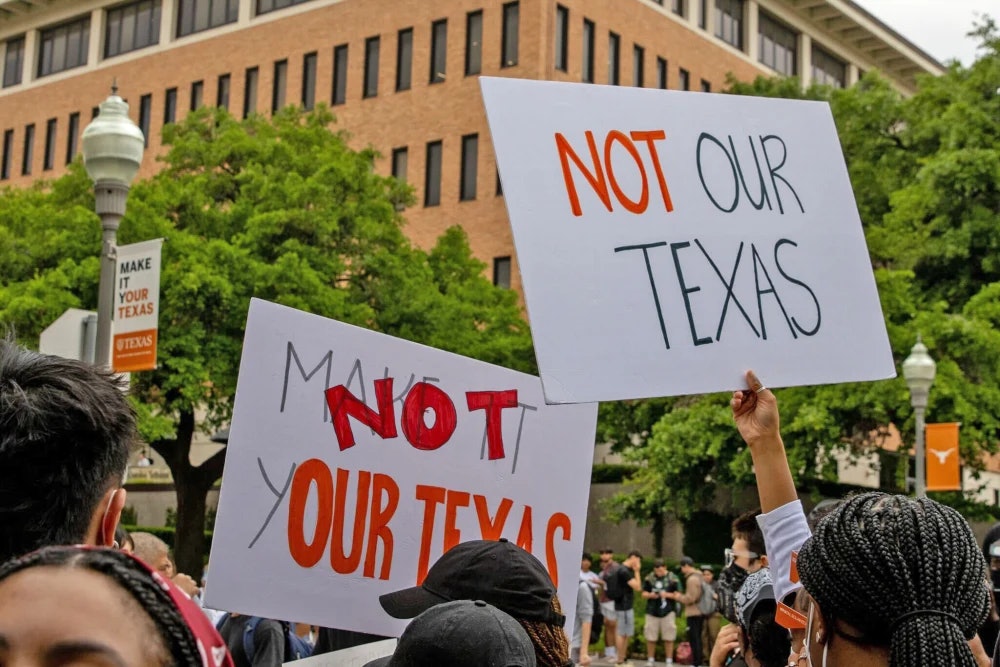
    Student activism has emerged in response to the restrictions. Iowa State University students organized rallies and petitions opposing the elimination of the DEI office and restructuring of the LGBTQIA+ Center. In Alabama, university professors and students filed a lawsuit challenging the state’s DEI ban, arguing it violates First Amendment rights.

    “What is one of the things that’s sometimes difficult to see is the level of coordination between states,” Davis said in an interview. “Texas, Oklahoma, Iowa, Indiana, Tennessee, and Missouri—they’re not just a random collection. They’re a coordinated collection of states that have made some formal, some informal decisions, but what is clear through the legislation is that they share a common goal in restricting access to anything that is culturally relevant or sensitive to racially and ethnically minoritized groups in this country.” 

    Davis noted that while federal actions have dominated recent headlines, states initiated the anti-DEI movement shortly after 2020.

    “We have to remember the states started this anti-DEI, anti-critical race theory movement shortly after 2020,” he explained. “This has been a long time in the making, and I think the current federal efforts are just complementary to what states had already been doing.” The report aims to help policymakers and practitioners “get through some of the noise” and track the escalating legislative activity across multiple states, Davis said.

    The report recommends that institutions embed DEI principles within broader student success initiatives, leverage private funding where public funding is restricted, and strengthen alliances among students, faculty, staff, and community organizations to advocate for institutional accountability.

    Missouri represents a notable exception in the analysis. Despite introducing 14 bills targeting DEI—more than any state except Texas—none have passed into law. The report attributes this to intense legislative gridlock, ideological conflicts within the Republican majority, and strong opposition from educational institutions and community organizations. However, the 2025 legislative session has seen renewed efforts to advance anti-DEI policies.

    The researchers emphasize that the policy shifts carry particular consequences for Black, Latino, and Indigenous communities, who are losing access to culturally affirming resources, mentorship opportunities, and financial aid programs specifically designed to address historical inequities in higher education access.

    “If access is conditional and inclusion retractable, higher education cannot claim to serve the public,” Davis wrote.

    The report represents the third in a series examining how equity is being withdrawn across the education pipeline.

     

    Source link

  • The risk of opening a legislative backdoor into the sector’s pocket

    The risk of opening a legislative backdoor into the sector’s pocket

    It’s 2029. The international student fee levy is finally in place, after a complicated legislative passage, further consultation, and squabbles over implementation.

    Still riding high in the polls, though with an eye to accusations of unfunded spending commitments, Reform’s manifesto promises to jack up the levy to 40 per cent, explicitly labelling it a lever to cut net migration and unsurprisingly deaf to its effects on university balance sheets (as well as to arguments that this could in fact reduce the overall take – they have modelling which says it won’t).

    After all, the primary legislation to operationalise the government top-slice of universities’ student income leaves the exact amount of the levy to the discretion of the Secretary of State. It will be a relatively simple laying of regulations to have the new percentage in place by autumn.

    Scratch that – it’s 2032. The Conservatives are back in power (somehow). The industrial strategy has been binned, and with it the underpinnings of the “priority subject areas” that have determined which students and which courses are eligible for maintenance grants. With the pretext that those who benefit from higher education should in later life foot the bill – and the entirely accurate observation that whether maintenance is in the form of of grant or loan doesn’t actually affect whether students are “working every hour God sends” to support themselves while studying – the Conservative government decides to end the confusing patchwork of targeted grants it has inherited and (once again) shift student support over to maintenance loans. (Oh and the levy income will instead be used to plug the growing apprenticeship overspend.)

    Now when the act passed there was nothing that made a cast-iron link between grants and the fee levy – indeed, there’s not a single mention of how the funds should be spent on the face of the bill, because that’s not the kind of thing you can practically legislate for. Backbenchers flagged this, ministers said it was a commitment and they would stick to it, and Labour’s majority held up.

    This hypothetical Tory Treasury is still antsy about expanding the loan book – gilts are still high, the era of rock-bottom interest rates seems a distant memory – and the price of raising borrowing for maintenance is the announcement of a multi-year freeze on tuition fees. Here we go again.

    How about this one: it’s halfway through Labour’s second term in office, and it’s becoming clear that the modular LLE hasn’t really taken off. The demand for several thousand pounds of plan 5 loan debt in return for a short course has, shockingly, not materialised. As happened with the pilot exercise, DfE tries to tempt learners in with student support grants, rather than chunked up maintenance loans. When this doesn’t bear much fruit, as with the modular acceleration programme the next play is to entirely waive tuition fees for technical courses, just deducting them from LLE entitlement instead.

    Despite low demand, the need to keep finding little pots of cash to spend for the incentivising of modular provision has stretched DfE’s willingness to let too much of the levy income go towards maintenance grants for full degrees (especially as, to the surprise of few, the department was never intending to allocate the whole haul to maintenance grants).

    Maybe there’s a damning National Audit Office report. Maybe there are anecdotal reports of spotty financial controls and agents encouraging students onto certain newly launched courses to get access to lump sums of maintenance, rather than for genuine study. With an eye on the next election and the 10-year NHS workforce plan’s final year looming, the thought pops up – wouldn’t it be politically expedient to just bring back grants for nursing students rather than fiddling around with all these industrial strategy bits and pieces?

    Final one. It’s 2038 or something, and the Office for National Statistics is finally approaching the end of its review of the classification of higher education in the national accounts which it began in 2017. To be fair to the beleaguered stats body, each UK nation has either made large changes to its higher education system in the interim, or announced wholesale reviews which have then not led to much change, leading to one pause after another. Finally though, the ONS is in a position to weigh up all the dimensions of the government’s oversight and control of the English higher education sector, which now includes the ability to skim off a set percentage of all international student income – and decides on classification within the public sector.

    All the sector submissions and parliamentary interventions which tried to advocate against the levy on these very grounds – the scare stories of controls on borrowing, limits on senior staff pay, and changes to how accounts are managed – are vindicated. (However, as Julian Gravatt has pointed out in the definitive article on the topic, the government of the day then carefully takes steps to address just enough of the specifics of the ONS’ decision and thus move universities back out of the public sector. It doesn’t want to lose out on the income the levy brings, so instead it makes changes elsewhere, to regulation perhaps, or pensions. It’s all a bit of a mess.)

    Through the trapdoor

    However the government decides to legislate for the fee levy – it might be a standalone bill, or wrapped up in a larger HE Act – it’s going to be a complicated process. Labour backbenchers have been expressing concerns since it was first mooted, but the grafting on of maintenance grants means that it will be harder for MPs to vote against.

    The sector has largely marshalled two arguments against it: that it will enormously destabilise finances, and that it’s unfair and risky to further cross-subsidise home students with international income. On the first, it’s clear that the government is not convinced that there isn’t a bit more to be squeezed, especially as it has seen much of the sector impose year after year of inflation-busting increases to overseas fee sticker prices – it’s probably no surprise that the white paper modelling saw the cost of the levy passed on, even though some universities will be unable to achieve this in practice. It’s still a sensible argument to make, though until we see to what extent the government is slow-rolling a wider package of tuition fee increases it’s hard to know whether it can gain traction.

    Equally, the argument about cross-subsidy is proving and will continue to prove ineffective, given that DfE has hinted its intention to claim that this helps higher education make the case for international student recruitment to the wider public on exactly those grounds.

    But there’s a larger, longer-term case to be made to ministers and parliamentarians, that considers the enormous unintended consequences and political risks that prising open HE balance sheets in this way will enable. Once the backdoor has been installed, it’s there for hostile actors to take advantage of, and for user error to compound the problems. It is verging on a certainty that the legislation will neither restrict the level the levy is set at nor ringfence how its takings are used.

    Now the announcement has been made it’s almost certainly too late, but the need for the government to legislate to make this a reality points to missed opportunities around cooperation on access – a sector-owned and co-funded pot of money for student support and, yes, redistribution would have been far more effective at staying out of the political fray. This levy will be square in the middle of it, for many years to come.

    Source link

  • Black Women Reach Record State Legislative Representation Despite Persistent Gaps at Higher Levels

    Black Women Reach Record State Legislative Representation Despite Persistent Gaps at Higher Levels

    Black women achieved record-high representation in state legislatures and made historic gains in the U.S. Senate in 2025, according to a new report tracking their political progress over the past decade.

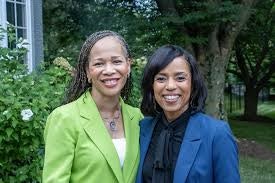
    Senators Lisa Blunt Rochester of Delaware and Angela Alsobrooks of Maryland.The “Black Women in American Politics 2025” report, released by Higher Heights Leadership Fund and the Center for American Women and Politics at Rutgers University, documents significant advances for Black women in elected office while highlighting continued underrepresentation at the highest levels of government.

    Black women now hold 401 state legislative seats nationwide, representing 5.4% of all state legislators and 16.2% of all women state legislators. This marks a 67.1% increase from 240 seats in 2014, when the organizations began tracking these statistics.

    The most dramatic change occurred in the U.S. Senate, where two Black women now serve simultaneously for the first time in American history. Angela Alsobrooks of Maryland and Lisa Blunt Rochester of Delaware both won open seats in the 2024 election, doubling Black women’s representation in the upper chamber.

    “This year also marks the first time in history that two Black women serve together in the United States Senate,” Alsobrooks and Blunt Rochester wrote in the report’s foreword. “That milestone is not a coincidence; it’s a culmination. It’s the result of investments made, barriers challenged, and generations of Black women who refused to be sidelined.”

    At the congressional level, 29 Black women currently serve as voting members, including 27 in the House and two in the Senate. This represents nearly double the 15 Black women who served in Congress when tracking began in 2014. All current Black congresswomen are Democrats except for the two senators.

    The 2024 election cycle was particularly significant because Vice President Kamala Harris became the first Black woman to head a major-party presidential ticket. Though Harris lost the election, her 107-day campaign raised $81 million in its first 24 hours and nearly doubled Democratic voter enthusiasm, according to the report.

    Black women also made notable gains in municipal leadership. Three new Black women became mayors of major cities: Cherelle Parker in Philadelphia, Sharon Tucker in Fort Wayne, and Barbara Lee in Oakland. Eight Black women now serve as mayors of the nation’s 100 most populous cities, matching their proportion of the U.S. population.

    However, significant representation gaps persist at higher levels. No Black woman has ever served as governor, and Black women remain underrepresented in statewide executive offices. Currently, 10 Black women serve in such positions nationwide, including four lieutenant governors, two attorneys general, two secretaries of state, one auditor, and one controller.

    The report notes that 34 states have never elected a Black woman to statewide executive office. Since 2014, only 25 Black women have ever held such positions across 17 states.

    “In our nation’s 249-year history, a Black woman has never served as governor of a state or as president of the United States,” the senators wrote. “That reality is a stark reminder that our work is not done.”

    The growth in Black women’s representation has occurred almost exclusively among Democratic officeholders. The report documents only seven Black Republican women state legislators nationwide and notes that all Black congresswomen are Democrats.

    State-level representation varies significantly by region. Maryland leads with Black women comprising 18.6% of state legislators, followed by Georgia at 17.4%. Conversely, five states have no Black women in their legislatures: Hawaii, Idaho, Montana, North Dakota, and South Dakota.

    The report also highlights institutional leadership gains. Twenty Black women now hold state legislative leadership positions, including six who lead their chambers. In Congress, Black women hold over 22% of House Democratic leadership positions.

    Looking ahead, the organizations identify opportunities for continued growth. Virginia Lieutenant Governor Winsome Earle-Sears, a Republican, is running for governor in 2025 and could become the first Black woman governor in U.S. history if successful. Additionally, over 200 statewide offices will be up for election in 2026.

    This marks the eighth iteration of the annual report series, which began in 2014 and has been published in 2015, 2017, 2018, 2019, 2021, and 2023. The comprehensive analysis tracks Black women’s political participation across federal, state, and local levels, providing the most detailed picture available of their representation in American politics.

    Source link

  • House Introduces Bipartisan Paid Leave Legislative Proposal – CUPA-HR

    House Introduces Bipartisan Paid Leave Legislative Proposal – CUPA-HR

    by CUPA-HR | May 13, 2025

    On April 30, Representatives Stephanie Bice (R-OK-5) and Chrissy Houlahan (D-PA-6) introduced the More Paid Leave for More Americans Act, the result of more than two years of work by the House Paid Family Leave Working Group, which Bice and Houlahan co-chair. The package consists of two parts: the Paid Family Leave Public-Private Partnerships Act and the Interstate Paid Leave Action Network (I-PLAN) Act.

    The Legislation

    The first bill of the package — the Interstate Paid Leave Action Network (I-PLAN) Act — would create a national framework “to provide support and incentives for the development and adoption of an interstate agreement that facilitates streamlined benefit delivery, reduced administrative burden, and coordination and harmonization of State paid family and medical leave programs.” It is intended to help resolve the confusion and inconsistencies across the state programs, in particular for the distribution of benefits to workers who work across state lines. The network will also work to identify best practices from existing state paid leave programs, help states harmonize their policies and resolve conflicts with other states’ programs, and help employees access their benefits.

    The second bill — the Paid Family Leave Public-Private Partnerships Act — would establish a three-year pilot program in which the Department of Labor would provide competitive grants to states that establish paid family leave programs that meet certain criteria. To qualify, states would be required to partner with private entities via Public-Private Partnerships (PPP) and participate in I-PLAN. The state programs would be required to offer at least six weeks of paid leave for the birth or adoption of a new child and provide a wage replacement rate between 50% and 67% depending on the income of the individual. Individuals at or below the poverty line for a family of four must receive 67% of their wages, while individuals earning more than double the poverty line for a family of four must receive 50% of their wages. The maximum benefit a worker can receive is 150% of a state’s average weekly wage.

    Looking Ahead

    Bice and Houlahan are optimistic about the package’s prospects, as both bills do maintain bipartisan support and President Trump has indicated an interest in pursuing a federal paid leave program. That said, it is uncertain if and when the House and Senate labor committees would take up these bills for a markup, which is the first step in getting the bill to a floor vote. CUPA-HR will continue to keep members apprised of updates related to this bill and other paid leave proposals that emerge from Congress.


    Source link

  • Florida Dreamers Seek Tuition Relief as Legislative Session Extends

    Florida Dreamers Seek Tuition Relief as Legislative Session Extends

    AGaby Pachecos Florida lawmakers extend their legislative session through June 6, TheDream.US is intensifying calls for a provision that would allow approximately 6,000 undocumented students currently enrolled in Florida colleges and universities to complete their education at in-state tuition rates.

    The advocacy comes in response to the legislature’s earlier repeal of the in-state tuition waiver for undocumented students, which is set to take effect July 1, 2025. Without intervention, these students would face tuition increases of up to four times their current rates.

    “Florida’s state lawmakers now have another month to do the right thing for Dreamers and Florida’s future: ‘grandfather in’ the 6,000 Dreamers who will be forced out of college in July and instead allow them to finish their college degrees,” said Gaby Pacheco, Miami-based President and CEO of TheDream.US, the nation’s largest college and career success program for Dreamers.

    Pacheco highlighted the unfairness of changing tuition rates midstream for students who began their education under different financial expectations.

    “Among TheDream.US Scholars alone, there are more than 70 students in Florida who are less than one year from completing their degrees,” she noted.

    The organization has been actively mobilizing around this issue. In April, following the repeal announcement, TheDream.US organized a three-day “Freedom Ride for Tuition Fairness” journey from Miami to Tallahassee, with stops highlighting the importance of affordable higher education.

    This recent campaign builds on a similar effort in 2023 that successfully delayed the passage of the in-state tuition repeal until this year. One participant in that earlier campaign was Britney, a TheDream.US Scholar who recently graduated with a business marketing degree from University of Central Florida despite the uncertainty surrounding tuition policies.

    “We hope to celebrate more graduations like Britney’s after lawmakers add in new, grandfathering language in the coming weeks,” Pacheco said.

    Education advocates argue that allowing current students to complete their education at promised rates represents both a moral and practical consideration. A fact sheet released by TheDream.US notes that Florida has already invested in these students’ K-12 education and partial college education, making it economically sensible to ensure they can graduate and contribute to the state’s workforce and tax base.

    TheDream.US has provided more than 11,000 college scholarships to undocumented students attending nearly 80 partner colleges across 20 states and Washington, D.C. The organization recently released its 10-year impact report, “From Dreams to Destinations: A Decade of Immigrant Achievements and the Future Ahead,” documenting how increased access to higher education catalyzes social mobility and positive outcomes for Dreamers and their communities.

    The Florida legislature has until June 6 to consider amendments to the in-state tuition repeal that would protect currently enrolled students.

    Source link

  • A legislative solution to student suicide prevention: advocating for opt-out consent in response to student welfare concerns

    A legislative solution to student suicide prevention: advocating for opt-out consent in response to student welfare concerns

    Authored by Dr Emma Roberts, Head of Law at the University of Salford.

    The loss of a student to suicide is a profound and heartbreaking tragedy, leaving families and loved ones devastated, while exposing critical gaps in the support systems within higher education. Each death is not only a personal tragedy but also a systemic failure, underscoring the urgent need for higher education institutions to strengthen their safeguarding frameworks.

    Recent government data revealed that 5.7% of home students disclosed a mental health condition to their university in 2021/22, a significant rise from under 1% in 2010/11. Despite this growing awareness of mental health challenges, the higher education sector is grappling with the alarming persistence of student suicides.

    The Office for National Statistics (ONS) reported a rate of 3.0 deaths per 100,000 students in England and Wales in the academic year ending 2020, equating to 64 lives lost. Behind each statistic lies a grieving family, unanswered questions and the haunting possibility that more could have been done. These statistics force universities to confront uncomfortable truths about their ability to support vulnerable students.

    The time for piecemeal solutions has passed. To confront this crisis, bold and systemic reforms are required. One such reform – the introduction of an opt-out consent system for welfare contact – has the potential to transform how universities respond to students in crisis.

    An opt-out consent model

    At present, universities typically rely on opt-in systems, where students are asked to nominate a contact to be informed in emergencies. This has come to be known as the Bristol consent model. Where this system exists, they are not always invoked when students face severe mental health challenges. The reluctance often stems from concerns about breaching confidentiality laws and the fear of legal repercussions. This hesitancy can result in critical delays in involving a student’s support network at the time when their wellbeing may be most at risk, leaving universities unable to provide timely, life-saving interventions. Moreover, evidence suggests that many students, particularly those experiencing mental health challenges, fail to engage with these systems, leaving institutions unable to notify loved ones when serious concerns arise.

    Not all universities have such a system in place. And some universities, while they may have a ‘nominated person’ process, lack the infrastructure to appropriately engage the mechanism of connecting with the emergency contact when most needed.

    An opt-out consent model would reverse this default, automatically enrolling students into a system where a trusted individual – such as a parent, guardian or chosen contact – can be notified if their wellbeing raises grave concerns. Inspired by England and Wales’ opt-out system for organ donation, this approach would prioritise safeguarding without undermining student autonomy.

    Confidentiality must be balanced with the need to protect life. An opt-out model offers precisely this balance, creating a proactive safety net that supports students while respecting their independence.

    Legislative provision

    For such a system to succeed, it must be underpinned by robust legislation and practical safeguards. Key measures would include:

    1. Comprehensive communication: universities must clearly explain the purpose and operation of the opt-out system during student onboarding, ensuring that individuals are fully informed of their rights and options.
    2. Defined triggers: criteria for invoking welfare contact must be transparent and consistently applied. This might include extended absences, concerning behavioural patterns or explicit threats of harm.
    3. Regular reviews: students should have opportunities to update or withdraw their consent throughout their studies, ensuring the system remains flexible and respectful of changing personal circumstances.
    4. Privacy protections: institutions must share only essential information with the nominated contact, ensuring the student’s broader confidentiality is preserved.
    5. Staff training: university staff, including academic and professional services personnel, must receive regular training on recognising signs of mental health crises, navigating confidentiality boundaries and ensuring compliance with the opt-out system’s requirements. This training would help ensure interventions are timely, appropriate and aligned with legal and institutional standards.
    6. Reporting and auditing: universities should implement robust reporting and auditing mechanisms to assess the effectiveness of the opt-out system. This should include maintaining records of instances where welfare contact was invoked, monitoring outcomes and conducting periodic audits to identify gaps or areas for improvement. Transparent reporting would not only enhance accountability but also foster trust among stakeholders.

    Lessons from the organ donation model

    The opt-out system for organ donation introduced in both Wales and England demonstrates the effectiveness of reframing consent to drive societal benefit. Following its implementation, public trust was maintained and the number of registered organ donors increased. A similar approach in higher education could establish a proactive baseline for safeguarding without coercing students into participation.

    Addressing legal and cultural barriers

    A common barrier to implementing such reforms is the fear of overstepping legal boundaries. Currently, universities are hesitant to breach confidentiality, even in critical situations, for fear of breaching trust and privacy and prompting litigation. Enshrining the opt-out system in law to include the key measures listed above would provide institutions with the clarity and confidence to act decisively, ensuring consistency across the sector. Culturally, universities must address potential scepticism by engaging students, staff and families in dialogue about the system’s goals and safeguards.

    The need for legislative action

    To ensure the successful implementation of an opt-out consent system, decisive actions are required from both the government and higher education institutions. The government must take the lead by legislating the introduction of this system, creating a consistent, sector-wide approach to safeguarding student wellbeing. Without legislative action, universities will remain hesitant, lacking the legal clarity and confidence needed to adopt such a bold model.

    Legislation is the only way to ensure every student, regardless of where they study, receives the same high standard of protection, ending the current postcode lottery in safeguarding practices across the sector.

    A call for collective action

    Universities, however, must not wait idly for legislation to take shape. They have a moral obligation to begin addressing the gaps in their welfare notification systems now. By expanding or introducing opt-in systems as an interim measure, institutions can begin closing these gaps, gathering critical data and refining their practices in readiness for a sector-wide transition.

    Universities should unite under sector bodies to lobby the government for legislative reform, demonstrating their collective commitment to safeguarding students. Furthermore, institutions must engage their communities – students, staff and families – in a transparent dialogue about the benefits and safeguards of the opt-out model, ensuring a broad base of understanding and support for its eventual implementation.

    This dual approach of immediate institutional action paired with long-term legislative reform represents a pragmatic and proactive path forward. Universities can begin saving lives today while laying the groundwork for a robust, consistent and legally supported safeguarding framework for the future.

    Setting a New Standard for Student Safeguarding

    The rising mental health crisis among students demands more than institutional goodwill – it requires systemic change. While the suicide rate among higher education students is lower than in the general population, this should not be a cause for complacency. Each loss is a profound tragedy and a clear signal that systemic improvements are urgently needed to save lives. Higher education institutions have a duty to prioritise student wellbeing and must ensure that their environments offer the highest standards of safety and support. An opt-out consent system for welfare contact is not a panacea, but it represents a critical step towards creating safer and more supportive university environments.

    The higher education sector has long recognised the importance of student wellbeing, yet its current frameworks remain fragmented and reactive. This proposal is both bold and achievable. It aligns with societal trends towards proactive safeguarding, reflects a compassionate approach to student welfare and offers a legally sound mechanism to prevent future tragedies.

    The loss of 64 students to suicide in a single academic year is a stark reminder that the status quo is failing. By adopting an opt-out consent system, universities can create a culture of care that saves lives, supports grieving families and fulfils their duty to protect students.

    The time to act is now. With legislative backing and sector-wide commitment, this reform could become a cornerstone of a more compassionate and effective national response to student suicide prevention.

    Source link

  • FIRE kicks off legislative season by opposing speech-restrictive AI bill

    FIRE kicks off legislative season by opposing speech-restrictive AI bill

    The legislative season is in full swing, and FIRE is already tackling a surge of speech-restrictive bills. We started with Washington’s House Bill 1170, which would require AI-generated content to include a disclosure.  

    FIRE Legislative Counsel John Coleman testified in opposition to the bill. In his testimony, John emphasized what FIRE has been saying for years, that the “government can no more compel an artist to disclose whether they created a painting from a human model as opposed to a mannequin than it can compel someone to disclose that they used artificial intelligence tools in creating an expressive work.” 

    Artificial intelligence, like earlier technologies such as the printing press, the camera, and the internet, has the power to revolutionize communication. The First Amendment protects the use of all these mediums for expression and forbids government interference under most circumstances. Importantly, the First Amendment protects not only the right to speak without fear of government retaliation but also the right not to speak. Government-mandated disclosures relating to speech, like those required under HB 1170, infringe on these protections and so are subject to heightened levels of First Amendment scrutiny. 

    FIRE remains committed to defending the free speech rights of all Americans and will continue to advocate against overbroad policies that stifle innovation and expression.

    Of course, as John stated, “Developers and users can choose to disclose their use of AI voluntarily, but government-compelled speech, whether that speech is an opinion or fact or even just metadata . . . undermines everyone’s fundamental autonomy to control their own expression.”

    In fact, the U.S. Court of Appeals for the Ninth Circuit (which includes Washington state) reiterated this fundamental principle just last year in X Corp. v. Bonta when it blocked a California law requiring social media platforms to publish information about their content moderation practices. Judge Milan D. Smith, Jr. acknowledged the government’s stated interest in transparency, but emphasized that “even ‘undeniably admirable goals’ ‘must yield’ when they ‘collide with the . . . Constitution.’”

    This principle is likely to put HB 1170 in significant legal jeopardy.

    FIRE statement on legislative proposals to regulate artificial intelligence

    News

    Existing laws and First Amendment doctrine already address the vast majority of concerns that legislators are seeking to address.


    Read More

    Another major problem with the policy embodied by HB 1170 is that it would apply to all AI-generated media rather than targeting a specific problem, like unlawful deceptive uses of AI, such as defamation. John pointed out to lawmakers that “if the intent of the bill is to root out deceptive uses of AI, this bill would do the opposite” by fostering the false impression that all AI-generated media is deceptive. In reality, AI-generated media — like all media — can be used to share both truth and falsehood. 

    Moreover, people using AI to commit actual fraud will likely find ways to avoid disclosing that AI was used, whether by removing evidence of AI use or using tools from states without disclosure requirements. As a result, this false content will appear more legitimate than it would in a world without the disclosures required by this bill because people will be more likely to believe that content lacking the mandated disclosure was not created with AI.

    Rather than preemptively imposing blanket rules that will stifle free expression, lawmakers should instead assess whether existing legal frameworks sufficiently address the concerns they have with AI. 

    FIRE remains committed to defending the free speech rights of all Americans and will continue to advocate against overbroad policies that stifle innovation and expression.

    Source link

  • FIRE statement on legislative proposals to regulate artificial intelligence

    FIRE statement on legislative proposals to regulate artificial intelligence

    As the 2025 legislative calendar begins, FIRE is preparing for lawmakers at both the state and federal levels to introduce a deluge of bills targeting artificial intelligence. 

    The First Amendment applies to artificial intelligence just as it does to other expressive technologies. Like the printing press, the camera, and the internet, AI can be used as an expressive tool — a technological advance that helps us communicate with one another and generate knowledge. As FIRE Executive Vice President Nico Perrino argued in The Los Angeles Times last month: “The Constitution shouldn’t be rewritten for every new communications technology.” 

    We again remind legislators that existing laws — cabined by the narrow, well-defined exceptions to the First Amendment’s broad protection — already address the vast majority of harms legislatures may seek to counter in the coming year. Laws prohibiting fraud, forgery, discrimination, and defamation, for example, apply regardless of how the unlawful activity is ultimately carried out. Liability for unlawful acts properly falls on the perpetrator of those acts, not the informational or communicative tools they use. 

    Some legislative initiatives seeking to govern the use of AI raise familiar First Amendment problems. For example, regulatory proposals that would require “watermarks” on artwork created by AI or mandate disclaimers on content generated by AI violate the First Amendment by compelling speech. FIRE has argued against these kinds of efforts to regulate the use of AI, and we will continue to do so — just as we have fought against government attempts to compel speech in school, on campus, or online

    Rather than compelling disclaimers or imposing content-based restrictions on AI-generated expression, legislators should remember the law already protects against defamation, fraud, and other illegal conduct. 

    Lawmakers have also sought to regulate or even criminalize the use of AI-generated content in election-related communications. But courts have been wary of legislative attempts to control AI’s output when political speech is implicated. Following a First Amendment challenge from a satirist who uses AI to generate parodies of political figures, for example, a federal district court recently enjoined a California statute aimed at “deepfakes” that regulated “materially deceptive” election-related content. 

    Content-based restrictions like California’s law require strict judicial scrutiny, no matter how the expression is created. As the federal court noted, the constitutional protections “safeguarding the people’s right to criticize government and government officials apply even in the new technological age when media may be digitally altered.” So while lawmakers might harbor “a well-founded fear of a digitally manipulated media landscape,” the court explained, “this fear does not give legislators unbridled license to bulldoze over the longstanding tradition of critique, parody, and satire protected by the First Amendment.” 

    Artificial intelligence, free speech, and the First Amendment

    Issue Pages

    FIRE offers an analysis of frequently asked questions about artificial intelligence and its possible implications for free speech and the First Amendment.


    Read More

    Other legislative proposals threaten the First Amendment by imposing burdens directly on the developers of AI models. In the coming months, for example, Texas lawmakers will consider the Texas Responsible Artificial Intelligence Governance Act, or TRAIGA, a sweeping bill that would impose liability on developers, distributors, and deployers of AI systems that may introduce a risk of “algorithmic discrimination,” including by private actors. The bill vests broad regulatory authority in a newly created state “Artificial Intelligence Council” and imposes steep compliance costs. TRAIGA compels developers to publish regular risk reports, a requirement that will raise First Amendment concerns when applied to an AI model’s expressive output or the use of AI as a tool to facilitate protected expression. Last year, a federal court held a similar reporting requirement imposed on social media platforms was likely unconstitutional.

    TRAIGA’s provisions incentivize AI developers to handicap their models to avoid any possibility of offering recommendations that some might deem discriminatory or simply offensive — even if doing so curtails the models’ usefulness or capabilities. Addressing unlawful discrimination is an important legislative aim, and lawmakers are obligated to ensure we all benefit from the equal protection of the law. At the same time, our decades of work defending student and faculty rights has left FIRE all too familiar with the chilling effect on speech that results from expansive or arbitrary interpretations of anti-discrimination law on campus. We will oppose poorly crafted legislative efforts that would functionally build the same chill into artificial intelligence systems.

    The sprawling reach of legislative proposals like TRAIGA run headlong into the expressive rights of the people building and using AI models. Rather than compelling disclaimers or imposing content-based restrictions on AI-generated expression, legislators should remember the law already protects against defamation, fraud, and other illegal conduct. And rather than preemptively saddling developers with broad liability for an AI model’s possible output, lawmakers must instead examine the recourse existing laws already provide victims of discrimination against those who would use AI — or any other communicative tool — to unlawful ends.

    FIRE will have more to say on the First Amendment threats presented by legislative proposals regarding AI in the weeks and months to come.

    Source link