Tag: Levels

  • SAT and ACT participation remains below pre-pandemic levels

    SAT and ACT participation remains below pre-pandemic levels

    This audio is auto-generated. Please let us know if you have feedback.

    Dive Brief:

    • Five years after COVID-19 shut down classrooms and shifted college admissions testing policies, the SAT and ACT are still drawing fewer students than during pre-pandemic years.
    • Some 1.38 million students took the ACT in 2025 compared to 1.78 million in 2019, and about 2 million students took the SAT this year versus 2.22 million in 2019, data released recently by the testing companies show. 
    • ​​​​​​​SAT scores, meanwhile, increased only slightly from the high school class of 2024 to the class of 2025, while ACT scores stayed about level. In both cases, scores fell below those from the pre-pandemic year of 2019. 

    Dive Insight:

    The slight uptick in SAT scores and level ACT scores for the high school graduating class of 2025 are still positive trends compared to last year, when average scores on both tests declined year-over-year compared to 2023.

    Still, SAT scores were still “substantially lower than average scores prior to the pandemic,” said College Board, the organization that publishes the test. In 2025, average SAT scores were 521 in reading and writing and 508 in math. In 2019, those averages were 10 points higher for reading and writing (531) and 20 points higher for math (528).

    The ACT average composite score, 19.4, also fell lower than the 2019 score of 20.7.

    For ACT test-takers, 30% met three or more of the four college readiness benchmarks in English, math, reading and science. The ACT benchmarks indicate that students have a 50% chance of earning a B or better in first-year college courses of the same subject and a 75% chance of a C or better. 

    Meanwhile, the dip in overall test takers for both exams continues a trend that dates to at least the pandemic, when colleges shifted toward test-optional policies. For the ACT, however, the numbers began declining much earlier. 

    While testing experts had expected the pandemic to trigger a shift away from K-12 standardized tests, ​​that didn’t materialize to a great degree and standardized and high-stakes testing are still core to K-12. 

    More than 90% of four-year colleges in the U.S. were not expected to require applicants for fall 2026 admission to submit ACT or SAT scores, according to data released in September by FairTest, a nonprofit that advocates for limiting college entrance exams. That’s over 2,000 of the nation’s bachelor-degree granting institutions. 

    Since fall 2020, the number of test-optional or test-free colleges have increased overall, the organization’s annual count shows.

    In the meantime, FairTest said the number of institutions requiring entrance exams minimally increased — from 154 for fall 2025 admissions to 160 for fall 2026 admissions.

    “While a handful of schools have reinstated testing requirements over the past two admissions cycles for a variety of institutional reasons and in response to external pressures, ACT/SAT-optional and test-blind/score-free policies remain the normal baseline in undergraduate admissions,” said FairTest Executive Director Harry Feder in a September statement. “Test-optional policies continue to dominate at national universities, state flagships, and selective liberal arts colleges.”

    Source link

  • Cosmetology schools and other certificate programs got exemption from rules on graduates’ earning levels

    Cosmetology schools and other certificate programs got exemption from rules on graduates’ earning levels


    Remiah Ward’s shift at the SmartStyle salon inside Walmart was almost over, and she’d barely made $30 in tips from the haircuts she’d done that day. It wasn’t unusual — a year after her graduation from beauty school, tips plus minimum wage weren’t enough to cover her rent.

    She scarcely had time to eat and sleep before she had to drive back to the same Walmart in central Florida to stock shelves on the night shift. That job paid $14 an hour, but it meant she sometimes spent 18 hours a day in the same building. She worked six days a week but still struggled to catch up on bills and sleep. 

    The admissions officer at the American Institute of Beauty, where she enrolled straight out of high school, had sold her on a different dream. She would easily earn enough to pay back the $10,000 she borrowed to attend, she said she was told. Ward had no way of knowing that stylists from her school earn $20,200 a year, on average, four years after graduating. Seven years later, her debt, plus interest, is still unpaid.

    In July, Republicans in Congress pushed through policies aimed at ensuring that what happened to Ward wouldn’t happen to other Americans on the government’s dime; colleges whose graduates don’t earn at least as much as someone with a high school diploma will now risk losing access to federal student loans. But one group managed to slip through the cracks — thousands of schools like the American Institute of Beauty were exempt. 

    Remiah Ward worked two jobs while trying to make it as a hair stylist but never made enough to pay her all her bills and has had to put her dream career on hold. Credit: Courtesy Remiah Ward

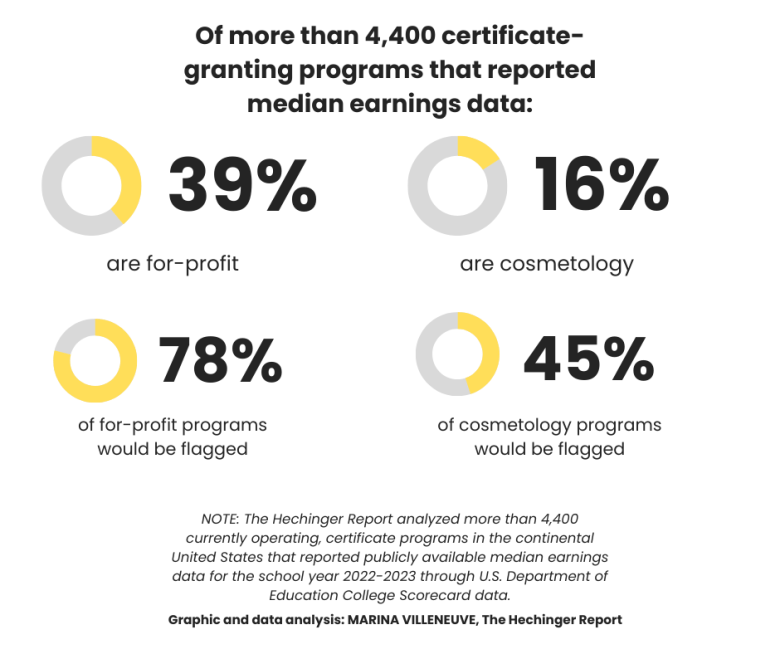
    Certificate schools succeeded in getting a carve-out. The industry breathed a collective sigh of relief, and with good reason. At least 1,280 certificate-granting programs, which enrolled more than 220,000 students, would have been at risk of losing federal student loan funding if they had been included in the bill, according to a Hechinger Report analysis of federal data. [See table.] About 80% of those are for-profit programs, and 45 percent are cosmetology schools.

    “There is this very strange donut hole in accountability where workforce programs are held accountable, two-year degree programs are held accountable, but everything in between gets off without any accountability,” said Preston Cooper, a senior fellow at the conservative think tank American Enterprise Institute.

    The schools spared are known as certificate programs and, with their promise of an affordable and relatively quick path to economic security, are the fastest growing part of higher education. They usually take about a year to complete and train people to be hair-stylists, welders, medical assistants and cooks, among other jobs.

    As with traditional colleges, there are big differences in quality among certificate programs. Some hair stylists can make a middle-class living if they work in a busy salon. But for people who have to pay back hefty student loans, the low wages for stylists in the early years can be an insurmountable obstacle.

    Ward found herself facing that dilemma. When she could no longer sustain the lack of sleep from her double shifts at Walmart, she pressed pause on her styling career and took a job with Amazon, loading and unloading planes. She wasn’t ready to give up her dream career, though, so in addition to her 10-hour days moving boxes, she took part-time gigs at local hair salons. She didn’t have family to help pay rent, not to mention loan payments, so she couldn’t afford to work fulltime at a salon, which is essential to build up a regular clientele — and bigger tips. Without that, she couldn’t get much beyond minimum wage. 

    A representative from the American Institute of Beauty denied that Ward was told she would easily repay her loan.

    “No admissions representative, not at AIB or elsewhere, would ever make such a statement,” Denise Herman, general counsel and assistant vice president of AIB, said in an email. 

    The high cost of many for-profit cosmetology schools — tuition can be upward of $20,000, usually for a one-year program  — can leave former students mired in debt. In May, the government released data showing 850 colleges where at least a third of borrowers haven’t made a loan payment for 90 days or more, putting them on track to default. About 42 percent of those were for-profit cosmetology and barbering schools (including AIB).

    Brittany Mcnew says she loves working as a stylist but that her income takes a hit when traffic is slow in her salon in Bethlehem, Pennsylvania. Credit: Meredith Kolodner/The Hechinger Report

    Herman blamed the Biden administration policy that after the pandemic let borrowers forgo payments without any penalty.

    “Debtors became ‘comfortable’ not making payments,” said Herman. “AIB provides the graduate with the information graduates need to make their payments. What that graduate decides to pay, or not pay, is not influenced by AIB.”

    Under the “big beautiful bill” passed in July, two- and four-year colleges must ensure that, after four years, graduates on average make at least as much as someone in their state who has only a high school diploma. The colleges must inform students if they fail that test, and if it happens for two out of three years, the college will be ineligible to receive federal loan funds.

    Some for-profit certificate schools lobbied hard for an exemption. The American Association of Career Schools, which represents proprietary cosmetology schools, spent $120,000 lobbying the Education Department and Congress, including on the “big beautiful bill,” in the first six months of this year. At the group’s major lobbying event in April, Sen. Bill Cassidy, chairman of the Senate Health, Education, Labor and Pensions Committee, was the keynote speaker.

    Cassidy declined to answer questions about why certificate programs were excluded, but a fact sheet from his committee noted that they are already covered by something else, the gainful employment rule, which is also being challenged by the for-profit cosmetology industry.

    That federal gainful employment regulation, updated in 2023, requires in essence that graduates from career-oriented schools earn enough to be able to pay back their loans and earn more than a high school graduate. It also requires that consumers, like Ward, be given more information about how graduates from all colleges fare in the workplace.

    The rule posed an existential threat to a huge swath of cosmetology schools.

    In 2023, the American Association of Career Schools sued to block the gainful employment rule. 

    “AACS supports fair and reasonable accountability measures,” Cecil Kidd, the AACS’s executive director, said in an email. “However, we strongly object to arbitrary or discriminatory policies such as the US Department of Education’s Gainful Employment rule, which unfairly targets career schools while exempting many public and private non-profit institutions that fail to meet comparable outcomes.”

    He pointed to public comments in which AACS has argued that the rule imposes an unfair burden on cosmetology schools since stylists are predominantly women, who are more likely to have “personal commitments” that affect their earnings, and who rely on tips that are often pocketed as unreported income.

    Cameron Vandenboom is a successful hair stylist but says the high cost of her private beauty school wasn’t worth thousands of dollars in student debt: “I absolutely should have gone to community college.” Credit: Courtesy Shanna Kaye Photo

    In a twist that surprised advocates on both sides, the Education Department in May asked the court to effectively dismiss AACS’ lawsuit. 

    If the court rules in favor of the cosmetology schools, certificate programs will be free of all accountability requirements on their graduates’ earning levels, because they got the carveout in July. 

    Even if the court rules against cosmetology schools, advocates are pessimistic that the Trump administration will implement the gainful rules. The first Trump administration got rid of the original rules back in 2019 and Nicholas Kent, now the U.S. undersecretary of education, was previously the chief policy officer for Career Education Colleges and Universities, or CECU, the trade group that represents for-profit colleges, including certificate programs. He is a well-known critic of the rule.

    “I would be very surprised, if the unlikely scenario plays out that the Biden rule is upheld, that this Department of Education would just say, OK, the court has spoken,” said Jason Altmire, CECU’s executive director. “We are not opposed to accountability for certificate programs, so long as it’s fair to everybody and we have a voice in how you’re measuring programs.”  

    Altmire said CECU didn’t lobby for certificate programs to be carved out of Congress’ bill, but did argue against the earnings formula that Congress landed on. Altmire said it doesn’t take into account part-time work and the gender gap in wages.

    One objection from AACS, raised by CECU as well, is that the earnings measured don’t include tips, which are crucial to hair stylists’ income. Analyzed without including tips, 576 of 724 cosmetology schools in the Hechinger Report analysis would fail Congress’ earnings test. But even if tips were included and raised stylists’ income by 20 percent, 526 cosmetology schools would still fail.

    Earlier this year, Remiah Ward made the difficult decision to leave Florida and move to Kentucky, where the cost of living was more forgiving. She’s working from 7 p.m. to 7 a.m. at an aluminum factory for $19.50 an hour. 

    One day, she might go back to styling after her debt is paid off. Like many former beauty school students, she wishes she’d had more information when she decided to enroll.

    “They really sugar-coated it. I was 18 years old, and I needed a trade that I was already pretty good at,” said Ward, who is now 26. “Everybody thinks they’re going to make a high return, and it’s just not the reality.”

    Marina Villeneuve contributed data analysis to this story. 

    This story about cosmetology schools produced by The Hechinger Report, a nonprofit, independent news organization focused on inequality and innovation in education. Sign up for the Hechinger higher-education newsletter.

    The Hechinger Report provides in-depth, fact-based, unbiased reporting on education that is free to all readers. But that doesn’t mean it’s free to produce. Our work keeps educators and the public informed about pressing issues at schools and on campuses throughout the country. We tell the whole story, even when the details are inconvenient. Help us keep doing that.

    Join us today.

    Source link

  • A levels and acceptances, 2025

    A levels and acceptances, 2025

    This article covers broad trends in results and university place acceptances. It’s not something you need to read if you are, or are supporting, someone on results day or with applying to university. This might be helpful though

    Though it is a perilous time to be a university one thing that is holding up seems to be undergraduate applications.

    It is a bumper year – good news for students, who are more likely to be starting on the course and at the provider they really want to be at this autumn, and good news for the sector, who may have started believing the narrative that university is declining in popularity.

    But we do need to separate things out – performance, both by students in achieving qualifications, by providers in running increasingly efficient and attractive recruitment operations, does mask some underlying issues. We’ve somehow reached a situation where study is becoming less affordable for students (especially relating to living costs, and especially affecting students from less advantaged backgrounds) and for universities (with the real value of fees far below 2012 levels, and changes in the market seeing growth among traditionally selective providers).

    Today’s results are spectacular news for the higher education sector, but it surely must be clear to everyone that we are beginning to run out of road.

    UCAS acceptances

    A record number of 18 year old applicants has yielded a record number and proportion (excepting 2021) taking up their firm offers in 2025. Just under 250,000 applicants (representing 63.51 per cent of all 18 year olds applying via UCAS) have started JCQ results day knowing that the university and course they had set their heart on will be where they will study next year.

    Couple this with a recovery in insurance places being taken up, and we have a historically low proportion of 18 year olds entering clearing. Just 15.15 per cent of applicants are currently in clearing, plus another 12.8 per cent still holding offers but yet to confirm.

    The picture is slightly different if you look at all ages – mature applicants are more likely to be in clearing than their younger counterparts – although a non-pandemic record proportion (57.25 per cent) of all students are taking up firm offers.

    That said, it is going to be a hugely competitive few days for admissions teams, but correspondingly good news for applicants looking for a place: there will be more courses looking for students.

    [Full screen]

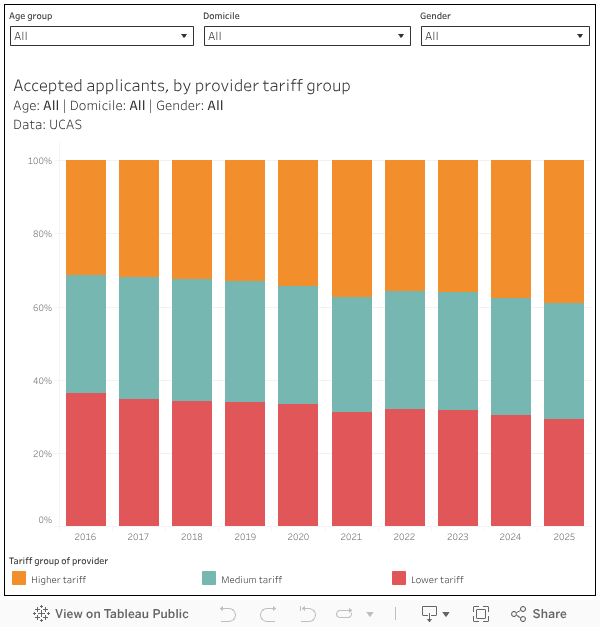
    The sector will have an eye on the distribution of students across types of provider, and will see another entry in a time series that shows the growth of high tariff providers. A record 39 per cent of students who have accepted places on JCQ results day have done so at a high tariff provider – just 29.3 per cent will be starting at a low tariff provider (a record low). What’s “high tariff” these days? Anything above about 125.8 tariff points, according to DfE.

    [Full screen]

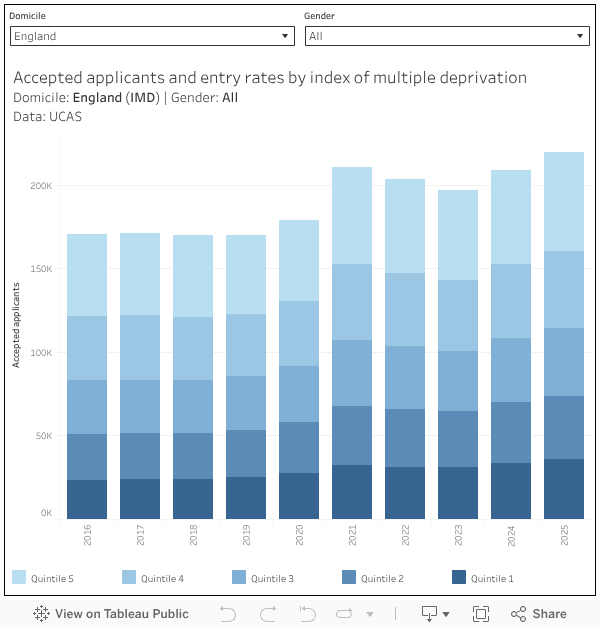
    The entry rate for the most disadvantaged quintile of 18 year olds in England was 22.9 per cent – the highest proportion on record, but still a long way off the 44.5 per cent of the most advantaged quintile that will start university this autumn. Expect clearing activity to shift this slightly.

    [Full screen]

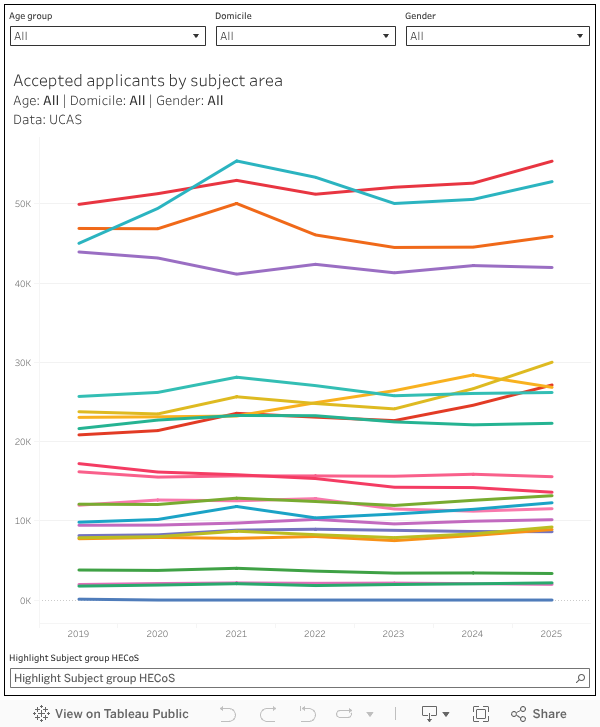
    We also have data on subject area choices (at the top level of the common academic hierarchy). Of those students who have already accepted a place, business and medicine-related courses continue to grow in attractiveness – there’s been an increase in social sciences, engineering, and law (continuing a post-pandemic trend) and a sharp drop in interest for computing courses.

    [Full screen]

    It is worth remembering that this represents just the first flush of acceptances – a historically large number of students, but far from the totality of this cohort. Most of the action in clearing happens early, and we’ll be covering that on Wonkhe over the next few days.

    International acceptances

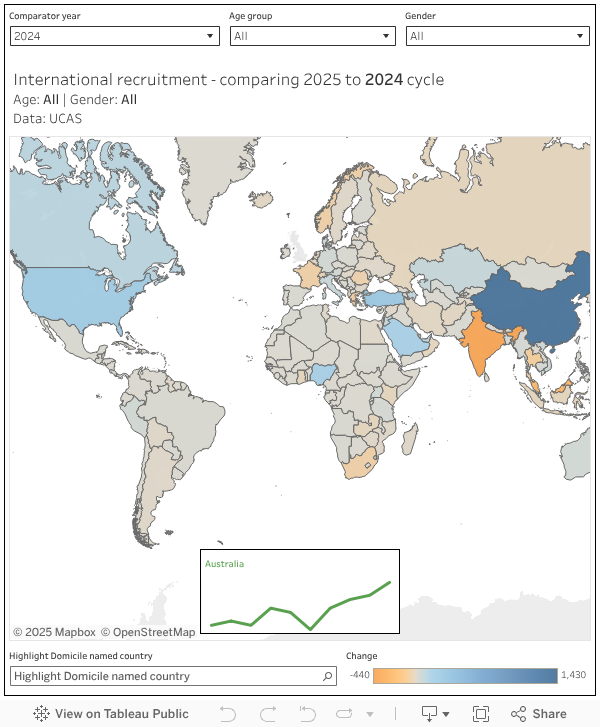
    Not all international recruitment flows through UCAS or conforms to what is (for most of the world) artificial deadlines like JCQ, so this is by necessity an incomplete picture. But, again in contrast to prevailing narratives, numbers are up – there were 52,640 acceptances (up 2.9 per cent on last year) in 2025. We see strong year on year growth in China (up 14.6 per cent), the US (up 10.38 per cent), and Turkey (up 21.71 per cent). India is declining (down 9.42 per cent) and Nigeria is starting to recover (up 20.83 per cent) but still a long way off the peaks of 2022 and 2023.

    [Full screen]

    A level results

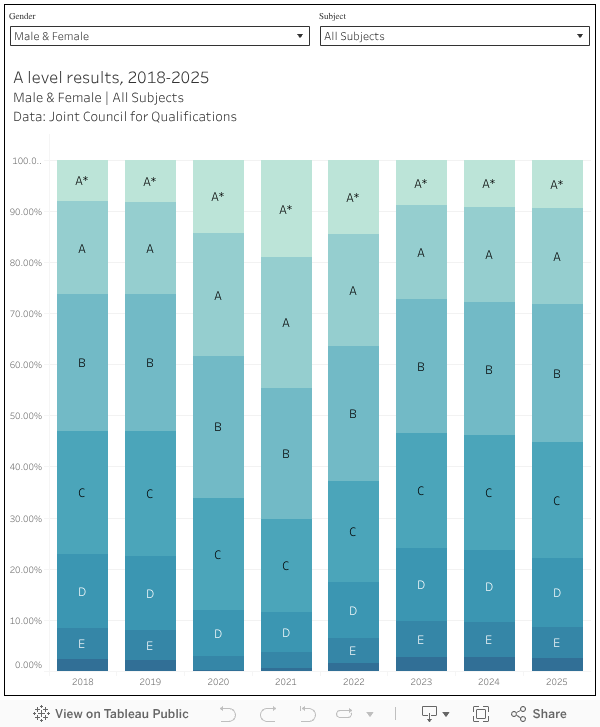
    A level performance (for students in England, Northern Ireland, and Wales) generally tends to see movements below the margin of error, as the methodology underpinning the award of marks contains elements of norm-referenced methodologies). The pandemic years (2020, 2021, 2022) are the exceptions here due to changes in the grading process.

    [Full screen] proportions

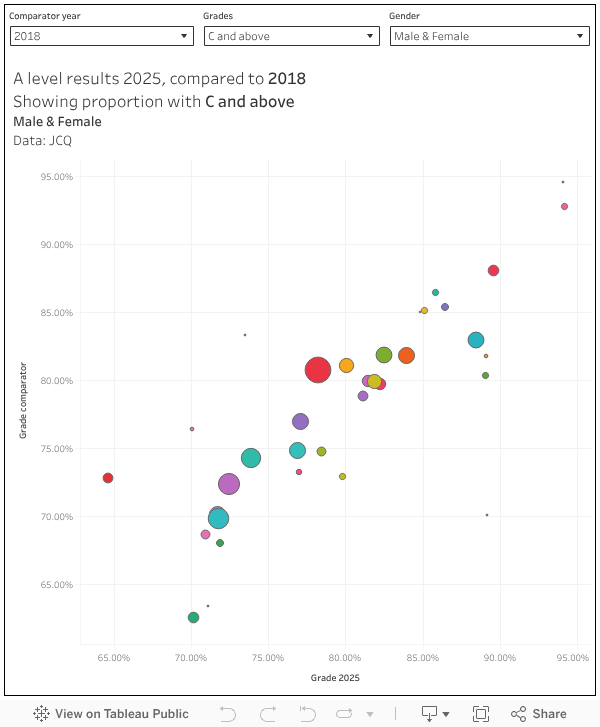
    That said, there are some interesting underlying trends. Overall performance in 2025 is up (nearly 78 per cent got C and above this year, compared to 76.3 per cent last year) – this is based on a smaller (entries were down 0.5 per cent) and academically stronger (the popularity of vocational routes is growing, this was the first cohort to have non-compensated GCSE grades) group of students.

    And, as always, there is huge variation by subject. Law remains the most difficult A level to achieve C and above in – just 64.6 per cent managed this in 2025, compared to 88.4 per cent in art and design disciplines. And law has got harder over time – in 2018 the proportion was 72.7 per cent.

    [Full screen]

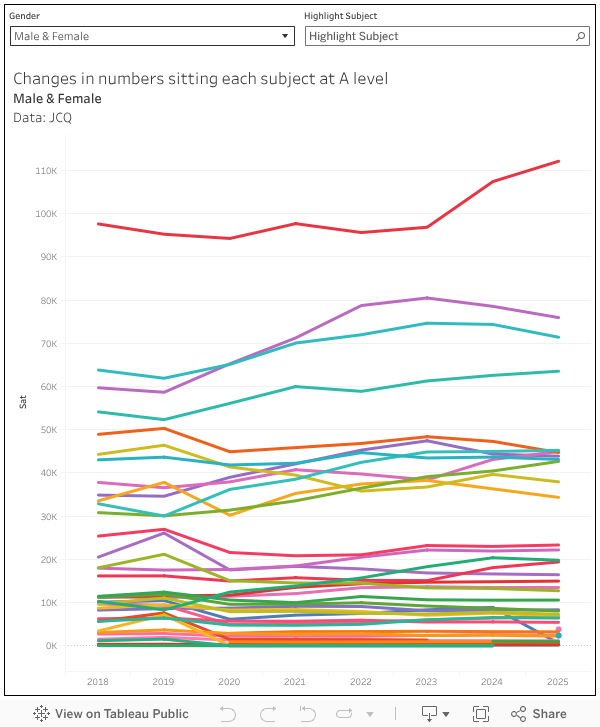
    Law still remains moderately popular (there were just under 15,000 entries in 2025, up 1 per cent on last year) but is a long way behind the “big four”: maths (112,000, 4.4 per cent), psychology (76,000, down 3.3 per cent), biology (71,000, down 4 per cent), and chemistry (63,500, up 1.5 per cent).

    [full screen] sat

    What of the more than 250,000 level 3 vocational and technical qualifications awarded by JCQ today? The majority of these are what JCQ call “applied generals” (BTECs and the like) – there were 220,553 awarded, compared to 12,000 T levels.

    Business and social policy qualifications are the dominant subject groups here (both had around 44,000 entries each). For the (most popular) medium sized qualifications – worth one-and-a-half A levels – 80 per cent achieved a Merit or above, and (for those graded A* to E) 75 per cent achieved a C above.

    This is the fourth year of T levels, the new style of vocational and technical level 3 qualification invented by the last government and available in England only – there are now 18 subject routes available. Of the 12,000 or so taking T levels, some 65 per cent achieved a Merit or above, 91 per cent achieved a Pass or above. The numbers are small but growing rapidly, making year on year comparisons tricky – DfE has published some data on these results that goes into a little more depth.

    The Ofqual release shows, once again, that independent and selective school settings have seen the highest proportions of top A level grades, with further education colleges seeing the lowest proportions. As usual, there is no data (or seemingly, interest) in performance at special schools – and neither the main release nor the analytics dashboard feel like special needs status is worth reporting on.

    Source link

  • Black Women Reach Record State Legislative Representation Despite Persistent Gaps at Higher Levels

    Black Women Reach Record State Legislative Representation Despite Persistent Gaps at Higher Levels

    Black women achieved record-high representation in state legislatures and made historic gains in the U.S. Senate in 2025, according to a new report tracking their political progress over the past decade.

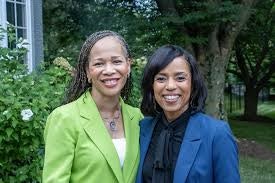
    Senators Lisa Blunt Rochester of Delaware and Angela Alsobrooks of Maryland.The “Black Women in American Politics 2025” report, released by Higher Heights Leadership Fund and the Center for American Women and Politics at Rutgers University, documents significant advances for Black women in elected office while highlighting continued underrepresentation at the highest levels of government.

    Black women now hold 401 state legislative seats nationwide, representing 5.4% of all state legislators and 16.2% of all women state legislators. This marks a 67.1% increase from 240 seats in 2014, when the organizations began tracking these statistics.

    The most dramatic change occurred in the U.S. Senate, where two Black women now serve simultaneously for the first time in American history. Angela Alsobrooks of Maryland and Lisa Blunt Rochester of Delaware both won open seats in the 2024 election, doubling Black women’s representation in the upper chamber.

    “This year also marks the first time in history that two Black women serve together in the United States Senate,” Alsobrooks and Blunt Rochester wrote in the report’s foreword. “That milestone is not a coincidence; it’s a culmination. It’s the result of investments made, barriers challenged, and generations of Black women who refused to be sidelined.”

    At the congressional level, 29 Black women currently serve as voting members, including 27 in the House and two in the Senate. This represents nearly double the 15 Black women who served in Congress when tracking began in 2014. All current Black congresswomen are Democrats except for the two senators.

    The 2024 election cycle was particularly significant because Vice President Kamala Harris became the first Black woman to head a major-party presidential ticket. Though Harris lost the election, her 107-day campaign raised $81 million in its first 24 hours and nearly doubled Democratic voter enthusiasm, according to the report.

    Black women also made notable gains in municipal leadership. Three new Black women became mayors of major cities: Cherelle Parker in Philadelphia, Sharon Tucker in Fort Wayne, and Barbara Lee in Oakland. Eight Black women now serve as mayors of the nation’s 100 most populous cities, matching their proportion of the U.S. population.

    However, significant representation gaps persist at higher levels. No Black woman has ever served as governor, and Black women remain underrepresented in statewide executive offices. Currently, 10 Black women serve in such positions nationwide, including four lieutenant governors, two attorneys general, two secretaries of state, one auditor, and one controller.

    The report notes that 34 states have never elected a Black woman to statewide executive office. Since 2014, only 25 Black women have ever held such positions across 17 states.

    “In our nation’s 249-year history, a Black woman has never served as governor of a state or as president of the United States,” the senators wrote. “That reality is a stark reminder that our work is not done.”

    The growth in Black women’s representation has occurred almost exclusively among Democratic officeholders. The report documents only seven Black Republican women state legislators nationwide and notes that all Black congresswomen are Democrats.

    State-level representation varies significantly by region. Maryland leads with Black women comprising 18.6% of state legislators, followed by Georgia at 17.4%. Conversely, five states have no Black women in their legislatures: Hawaii, Idaho, Montana, North Dakota, and South Dakota.

    The report also highlights institutional leadership gains. Twenty Black women now hold state legislative leadership positions, including six who lead their chambers. In Congress, Black women hold over 22% of House Democratic leadership positions.

    Looking ahead, the organizations identify opportunities for continued growth. Virginia Lieutenant Governor Winsome Earle-Sears, a Republican, is running for governor in 2025 and could become the first Black woman governor in U.S. history if successful. Additionally, over 200 statewide offices will be up for election in 2026.

    This marks the eighth iteration of the annual report series, which began in 2014 and has been published in 2015, 2017, 2018, 2019, 2021, and 2023. The comprehensive analysis tracks Black women’s political participation across federal, state, and local levels, providing the most detailed picture available of their representation in American politics.

    Source link

  • PRINCIPAL VOICE: Inviting families into our classrooms slashed absenteeism and raised reading levels

    PRINCIPAL VOICE: Inviting families into our classrooms slashed absenteeism and raised reading levels

    Two years ago, I bought each of the teachers at Hamilton Elementary in San Diego’s City Heights neighborhood a blue chair. I told them to put it in the back of their classrooms, and that if a parent or caregiver wanted to visit to see how their children are learning — no matter what the reason — that this would be a dedicated space for them.

    I may have earned some exaggerated eye-rolls from educators that day. After all, I can appreciate the disruption to learning that classroom visitors can sometimes cause, especially among excitable elementary schoolers.

    But school is our home, and it is our responsibility to invite families into our home and welcome them. And this was a necessary olive branch, my way of saying to families: “From here on out, things are going to be different.”

    And they were. They also can be different at other schools, because the benefits of family engagement go well beyond student achievement.

    Related: A lot goes on in classrooms from kindergarten to high school. Keep up with our free weekly newsletter on K-12 education.

    Research has long shown that when parents and caregivers are involved and engaged with their children’s education — whether that’s by attending parent-teacher conferences or participating in school events — student achievement, motivation and social-emotional well-being increase.

    Parent involvement with reading activities has a positive impact on reading achievement, language comprehension, expressive language skills and level of attention in the classroom, according to the National Literacy Trust.

    Research also shows that educators enjoy increased job satisfaction and are more likely to keep teaching at the school, families enjoy stronger relationships with their children and feel less isolated, and even school districts themselves become better places to live and raise children.

    None of this was the case when we returned to normalcy following Covid. Just 13 percent of students were reading on grade level, and 37 percent were chronically absent. I knew right away that before we even attempted to tackle academics, we needed to engage families and make them feel deeply connected and committed to the community I envisioned building here.

    Today, 45 percent of students are reading at grade-level, and chronic absenteeism, at 12 percent on the most recent official numbers, is down to 10 percent in our own tracking, with a goal of pushing it down to 8 percent in 2025-26.

    But it wasn’t easy given the distrust that had boiled over during the pandemic, with families skeptical of our ability to effectively support their children and school staff feeling defensive and exhausted.

    It was clear to me that families weren’t excited to send their kids to school, didn’t feel informed about what was happening on our campus and, moreover, didn’t feel comfortable — let alone capable — of communicating their needs to us.

    Complicating matters further was the need to share information across many languages other than English, which can make relationship-building and communicating expectations difficult.

    Roughly half of our students are English learners, and while the majority of their families are Spanish-speakers, there are growing populations of students whose first languages are Haitian-Creole, Pashto and Vietnamese.

    Related: What the research says about the best way to engage parents

    The first thing I did was establish open communication with parents using ClassDojo, a mobile app that gives families an easy, intuitive central access point to our teachers and staff, automatically translates all messages into parents’ native languages and allows us to share stories about what is happening in school.

    It became an easy way to build trust and collaboration between families and staff.

    Creating that type of visibility was key to breaking down walls between us. And in those early days, we didn’t post about literacy, math or anything related to academics. Instead, we focused solely on attendance and getting families to come inside the school as much as possible.

    We focused on relationship-building activities and joyful learning. We hosted after-school art classes and monthly family Fridays, when families could come to school to engage in a fun activity.

    We organized a Halloween costume drive with candy and fun games for kids; we hosted a Read Across America event where we passed out Play-Doh; and we organized other low-stakes events at school, rooted in building a partnership between home and school.

    Again, our goal wasn’t learning during these meet-ups. It was all in service of building trust and creating meaningful relationships with students and their families.

    Once we had the foundation in place, we added a focus on academics — though we rooted that learning in family engagement, too. For example, our schoolwide focus last year was phonics, so we sent activities home for families to complete with their children that were tied specifically to concepts the students needed reinforced, based on their individual assessments, like long vowel patterns and sight words.

    These activities were taught by the students and their teachers to family members during conferences.

    Beyond helping students, the exercise challenged a false narrative so many families had assumed — that they either didn’t know enough about what was happening in school to help, weren’t confident enough to help or didn’t have enough time.

    Today, the atmosphere at Hamilton feels radically different than when I first walked through the doors. When we first started hosting Family Fridays, about 10 family members and their children showed up.

    Now, we have roughly 200 caregivers at every meet-up. Families run most of the community-based initiatives at the school — from a boutique where families can shop among donated clothes twice a month, to a food distribution center, to a book club, English classes and a monthly meet-up where families can socialize.

    When district leaders visit, they’re always impressed by the participation. I tell them, if you care about family engagement, it has to be so deeply embedded into the system that people don’t have a choice but to do it.

    That’s why I’m constantly thinking about how to center family engagement in staff meetings, in attendance meetings, in literacy and math plans, in behavioral and counseling plans and in meetings about school procedures and budgets.

    It’s a strategy that not only involves families but also supports academic achievement and student well-being. For me, family engagement is the ultimate strategy for academics.

    Sometimes in the K-12 world we keep outreach and academics separate, but in reality, engagement is the key that unlocks our ability to hit academic goals and create a joyful school community.

    Dr. Brittany Daley is the principal of Hamilton Elementary School in San Diego, California.

    Contact the opinion editor at [email protected].

    This story about family engagement was produced by The Hechinger Report, a nonprofit, independent news organization focused on inequality and innovation in education. Sign up for Hechinger’s weekly newsletter.

    The Hechinger Report provides in-depth, fact-based, unbiased reporting on education that is free to all readers. But that doesn’t mean it’s free to produce. Our work keeps educators and the public informed about pressing issues at schools and on campuses throughout the country. We tell the whole story, even when the details are inconvenient. Help us keep doing that.

    Join us today.

    Source link

  • Special educators are in short supply at all levels. A cohesive fix is needed, experts say.

    Special educators are in short supply at all levels. A cohesive fix is needed, experts say.

    This audio is auto-generated. Please let us know if you have feedback.

    ALEXANDRIA, Va. — To address chronic shortages of special educators and disability experts, leaders in the field are looking at best practices across early childhood, K-12 and postsecondary to focus on the similar challenges all three levels face in attracting, preparing and retaining special education professionals. 

    The cohesive approach to filling shortages of early interventionists, teachers, administrators, paraprofessionals and specialized instructional support personnel — as well as trying to reverse a decline in teacher education enrollment —  reflects a shared mission to support students with disabilities at all age levels, speakers said July 14 at a legislative summit hosted by the Council for Exceptional Children and the Council of Administrators of Special Education. 

    “Schools are facing a significant shortage of qualified special education teachers — a challenge that directly affects the support and outcomes for students with disabilities,” said Kevin Rubenstein, president of CASE.

    Rubenstein added that finding enough teachers to fill staff vacancies “feels like trying to spot a unicorn,” because it’s “rare but magical.”

    At the start of the 2024-25 school year, 74% of both elementary and middle schools reported difficulty filling special education teacher vacancies with fully certified teachers, according to federal data. Early childhood education is also facing challenges in recruiting and retaining early interventionists.

    At the higher education level, enrollment in teacher preparation programs has plummeted by 45% in one decade, according to CASE.

    Supporting special educators

    Developing a comprehensive special educator pipeline can better support teacher prep activities so future educators can eventually help boost outcomes for students at all levels, speakers said.

    According to Amanda Schwartz, associate project director of the Maryland Early EdCorp Apprenticeship Program at the University of Maryland, some solutions to recruiting and retaining early interventionists include: boosting salaries, reducing teacher-student ratios, and training on high standards for early intervention services. 

    Recruiting and retaining qualified early interventionists is critical to children’s development, Schwartz said. “We want our teachers to have all this content in order to be able to deliver appropriate practice in classrooms,” she said. 

    David Krantz, executive director of special education at Michigan’s Saginaw Intermediate School District, said it’s helpful to have robust data that can pinpoint where there are staffing struggles. 

    Krantz then pointed to specific ways districts can attract and retain paraprofessionals who support special educators in the classroom. For starters, he said, paraprofessionals need to know their work matters.

    “If people don’t feel valued in their service, they’re going to leave,” Krantz said.

    The Michigan Association of Administrators of Special Education started a paraeducator learning series in January to provide professional development and other support to paraprofessionals. About 350 paraprofessionals have participated so far, Krantz said.

    In the higher education field, Kyena Cornelius, an education professor at the University of Florida, put it bluntly: “Our supply pipeline is broken.” 

    While alternative pathways to the teaching profession have grown, those programs often don’t provide the depth of training into teaching pedagogy or disability-specific knowledge needed, she said. The alternative pathways, Cornelius added, were never meant to replace traditional teacher preparation programs

    She highlighted CEC’s professional standards for special educators as a blueprint for the knowledge and skills teachers need so they are ready to serve students with disabilities and stay in the profession. 

    “We need to think about how we can not only attract and retain but how we can comprehensively prepare teachers in an affordable way, how we can make it attractable and get them the skills,” Cornelius said.

    Source link

  • Defunding level 7 apprenticeships in health and care may backfire on lower levels

    Defunding level 7 apprenticeships in health and care may backfire on lower levels

    Well, it finally happened. Level 7 apprenticeship funding will disappear for all but a very limited number of younger people from January 2026.

    The shift in focus from level 7 to funding more training for those aged 21 and under seems laudable – and of course we all want opportunities for young people – but will it solve or create more problems for the health and social care workforce?

    The introduction of foundation apprenticeships, aimed at bringing 16- to 21-year-olds into the workforce, includes health and social care. Offering employer incentives should be a good thing, right?

    Care is not merely a job

    Of course we need to widen opportunities for careers in health and social care, one of the guaranteed growth industries for the foreseeable future regardless of the current funding challenges. But the association of foundation apprenticeships with those not in education, employment or training (NEETs) gives the wrong impression of the importance of high-quality care for the most vulnerable sectors of our society.

    Delivering personal care, being an effective advocate, or dealing with challenging behaviours in high pressured environments requires a level of skill, professionalism and confidence that should not be incentivised as simply a route out of unemployment.

    Employers and education providers invest significant time and energy in crafting a workforce that can deliver values-based care, regardless of the care setting. Care is not merely a job: it’s a vocation that needs to be held in high esteem, otherwise we risk demeaning those that need our care and protection.

    There are already a successful suite of apprenticeships leading to careers in health and social care, which the NHS in particular makes good use of. Social care providers (generally smaller employers) report challenges in funding or managing apprenticeships, but there are excellent examples of where this is working well.

    So, do we need something at foundation level? How does that align with T level or level 2 apprenticeship experiences? If these pathways already exist and numbers are disappointing, why bring another product onto the market? And are we sending the correct message to the wider public about the value of careers in health and social care?

    Career moves

    The removal of funding for level 7 apprenticeships serves as a threat to the existing career development framework – and it may yet backfire on foundation or level 2 apprenticeships. The opportunity to develop practitioners into enhanced or advanced roles in the NHS is not only critical to the delivery of health services in the future, but it also offers a career development and skills escalator mechanism.

    By removing this natural progression, the NHS will see role stagnation – which threatens workforce retention. We know that the opportunity to develop new skills or move into advanced roles is a significant motivator for employees.

    If senior practitioners are not able to move up, out or across into new roles, how will those entering at lower levels advance? Where are the career prospects that the NHS has spent years developing and honing? Although we are still awaiting the outcome of the consultation around the 10-year plan – due for publication this week with revisions to the long-term workforce plan to follow – I feel confident in predicting that we will need new roles or skill sets to successfully deliver care.

    So, if no development is happening through level 7 apprenticeships, where is the money going to come from? The NHS has been suggesting that there will be alternative funding streams for some level 7 qualifications, but this is unlikely to offer employers the flexibility or choice they had through the levy.

    Could level 6 be next?

    Degree apprenticeships at level 6 have also come in for some criticism about the demographics of those securing apprenticeship opportunities and how this has impacted opportunities for younger learners – an extrapolation of the arguments that were made against level 7 courses.

    Recent changes to the apprenticeship funding rules, requirements of off the job training and the anticipated changes to end-point assessment could lead to pre-registration apprenticeships in nursing and allied health being deemed no longer in line with the policy intent because of the regulatory requirements associated with them.

    The workforce plan of 2023 outlined the need for significant growth of the health and social care workforce, an ambition that probably is still true although how and when this will happen may change. Research conducted by the University of Derby and University Alliance demonstrated some of the significant successes associated with apprenticeship schemes in the NHS, but also highlighted some of the challenges. Even with changes to apprenticeship policy, these challenges will not disappear.

    Our research also highlighted challenges associated with the bureaucracy of apprenticeships, the need for stronger relationships between employers and providers, flexibility in how the levy is used to build capacity and how awareness of the apprenticeship “brand” needs to be promoted.

    A core feature of workforce development

    The security of our future health and social care workforce lies in careers being built from the ground up, regardless of whether career development is funded by individuals themselves or via apprenticeships. However, the transformative nature of apprenticeships, the associated social mobility, the organisational benefits and the drive to deliver high quality care in multiple settings means that we should not be quick to walk further away from the apprenticeship model.

    Offering apprenticeships at higher (and all) academic levels is critical to delivering high quality care and encouraging people to remain engaged in the sector.

    So, as Skills England start to roll out change, it is crucial that both the NHS and higher education remain close to policymakers, supporting and challenging decisions being made. While there are challenges, these can be overcome or worked through. The solutions arrived at may not always be easy, but they have to be evidence-based and fully focused on the need to deliver a health and social care workforce of which the UK can be proud.

    Source link

  • Teacher stress levels have surpassed pandemic-era highs

    Teacher stress levels have surpassed pandemic-era highs

    Key points:

    America’s K-12 educators are more stressed than ever, with many considering leaving the profession altogether, according to new survey data from Prodigy Education.

    The Teacher Stress Survey, which polled more than 800 K-12 educators across the U.S., found that nearly half of teachers (45 percent) view the 2024-25 school year as the most stressful of their careers. The surveyed educators were also three times more likely to say that the 2024-25 school year has been the hardest compared to 2020, when they had to teach during the height of the COVID-19 pandemic.

    Student behavior challenges (58 percent), low compensation (44 percent), and administrative demands (28 percent) are driving teacher burnout and turnover at alarming rates. Public school teachers were more likely to report stress from unrealistic workloads, large class sizes, school safety concerns, and student behavior issues than their private school counterparts.

    “The fact that stress levels for so many teachers have exceeded those of the pandemic era should be a wake-up call,” said Dr. Josh Prieur, director of education enablement at Prodigy Education and former assistant principal in the U.S. public school system. “Teachers need tangible, meaningful, and sustained support … every week of the year.”

    Additional key findings include:

    • The vast majority of teachers (95 percent) are experiencing some level of stress, with more than two-thirds (68 percent) reporting moderate to very high stress. K-5 teachers were the most likely to feel extremely/very stressed (33 percent). Sixty-three percent of teachers report that their current stress levels are higher than when they first started teaching. 
    • Nearly one in 10 teachers surveyed (9 percent) are planning to leave the profession this year, while nearly one in four (23 percent) are actively thinking about it. One-third of teachers do not expect to be teaching three years from now, likely because nearly half (48 percent) of teachers don’t feel appreciated for the work that they do.
    • Teachers are finding ways to prioritize their well-being, but time limits and job pressures often get in the way. Seventy-eight percent of teachers say they actively make time for self-care, but nearly half (43 percent) feel guilty for spending time on self-care and 78 percent have skipped self-care due to work demands. Implementing school-provided self-care perks and mandatory self-care breaks would appeal to teachers, with 85 percent and 76 percent taking advantage of each benefit, respectively.
    • Top solutions that would reduce teachers’ stress include a higher salary (59 percent), a four-day school week (33 percent), stronger classroom discipline policies (32 percent), and smaller class sizes (25 percent). Public school teachers were more likely to prefer a shorter week, while private school educators opted for higher pay. 

    “Teacher Appreciation Week should serve as the starting point for building systems that show we value teachers’ time, talent, and well-being,” said Dr. Prieur. “Districts can do this by investing in tools that reduce the burden on teachers, prioritizing time for self-care and implementing policies that reinforce teachers’ value as an ongoing commitment to bettering the profession.”

    This press release originally appeared online.

    Laura Ascione
    Latest posts by Laura Ascione (see all)

    Source link

  • What’s driving low levels of full economic cost recovery in research?

    What’s driving low levels of full economic cost recovery in research?

    Media attention has emphasised that the financial issues facing universities continue to worsen. While research is a cornerstone and strength of the sector, it is often regarded as a cost, which leads to scrutiny as part of institutional savings targets. Despite calls to acknowledge the value of research, the focus understandably remains on research costs.

    The focus of universities on the volume and cost of unfunded research, or more accurately, internally funded research, is a question that must be addressed. Institutions are reflecting on and revising internal research allowances as part of their efforts to achieve a more sustainable financial position, as the cross-subsidy from international student fees is no longer as viable as it once was.

    The question of funded research, however, is a different matter. For quite some time, there have been questions about what constitutes the full economic cost (FEC) and how these costs are recovered when projects are funded. Both issues have once again come to the forefront in the current climate, especially as institutions are failing to recover the eligible costs of funded projects.

    As part of the Innovation & Research Caucus, an investment funded by UKRI, we have been investigating why the recovery of UKRI-funded research is often below the stated rates. To put it simply, if the official recovery rate is 80 per cent FEC, why is 80 per cent not being recovered on UKRI-funded projects?

    Understanding under-recovery

    We conducted a series of interviews with chief financial officers, pro vice chancellors for research, and directors of research services across mission groups, the Transparent Approach to Costing (TRAC) group, and various geographic regions. They identified several key reasons why universities are not recovering the funding to which they are entitled.

    Before exploring the causes of under-recovery on UKRI-funded projects, the project aimed to establish the extent to which TRAC data was curated and utilised. Notably, the study found that the data collected for TRAC does not exist within research organisations and would not otherwise be collected in this form if it were not for the TRAC reporting requirement.

    While scrutinising TRAC data was less of a priority when the financial situation was more stable, in many institutions, it is now of interest to the top table and serves as the basis for modelling, projections, and scenario planning. That said, such analysis did not always recognise TRAC’s limitations in terms of how it was compiled and, therefore, its comparability.

    In many of the research organisations consulted, the responsibilities for TRAC, project costing, and project delivery are distinct. Given the growing significance of TRAC data in influencing resource allocation and strategic decision-making, it is essential for research organisations to adopt a more integrated approach to compiling and utilising TRAC data to achieve improved outcomes.

    Drivers of under-recovery

    A wide range of factors explains why the cost recovered at the end of a funding grant is less than anticipated at the point of submission and award. Almost all respondents highlighted three factors as significant in low cost recovery:

    1. Equipment and facilities costs were consistently cited as a factor, including issues associated with allocating and costing overheads and estates. Several institutions highlighted the difficulty in realistically costing equipment and facilities shared between research projects or between research projects and teaching.
    1. Staff under-costing was frequently mentioned, as principal investigators (PIs) underestimated their own and their colleagues’ time commitment to projects. This ineffective practice was driven by a (mis)perception that lower costs will likely improve success rates – despite the emphasis being on value rather than cost within a specific funding envelope.
    2. Inflation has been identified as a factor affecting all cost elements – from staff costs related to pay settlements and promotions to the rising expenses associated with consumables, equipment, and energy. This reveals a growing gap in applications, delivery, and reporting.

    Beyond these top three, the report highlights the implications of the often “hidden” costs associated with supporting and administering UKRI grants, the perennial issues of match funding, and the often inevitable delays in starting and delivering projects – all of which add to the cost and increase the prospect of under-recovery.

    In addition, an array of other contributing factors were also raised. These included the impact of exchange rates, eligibility criteria, the capital intensity of projects, cost recovery for partners, recruitment challenges, lack of contingency, and no cost extensions. While not pinpointing the importance of a single factor, the interplay and cumulative effect were considered to result in under-recovery.

    Addressing under-recovery

    Universities bear the cost of under-recovery, but funders and universities can take several actions to improve under-recovery – some of which are low- or no-cost, could be implemented in the short term, and would make a real difference.

    Funders, such as UKRI, should provide clearer guidance for research organisations on how to cost facilities and equipment, as well as how to include these costs in research bids. Similarly, applicants and reviewers should receive clearer guidance regarding realistic expectations from PIs in leading projects, emphasising that value should be prioritised over cost. Another area that warrants clearer guidance is match funding, specifically for institutions regarding expectations and for reviewers on how match funding should be assessed. We are pleased to see that UKRI is already taking steps to address these points in its funding policies [editor’s note: this link will be live around 9am on Friday morning].

    In the medium term, research funders could also review their approaches to indexation, which could help mitigate the impact of inflation in driving under-recovery, although this is, of course, not without cost. Another area worth exploring by both research organisations and funders is the provision of shared infrastructures and assets, both within and across institutions – again, a longer-term project.

    We are already seeing institutions taking steps to manage and mitigate under-recovery, and there is scope to extend good practice. Perhaps the main challenge to improving cost recovery is better managing the link between project budgets – based on proposal costs – and project delivery costs. Ensuring a joined-up approach from project costing to reporting is important, but more important is developing a deeper understanding across these areas.

    A final point is the need to ensure that academics vying for funding really understand the new realities of cost and recovery. This has not always been the case, and arguably still is not the case. These skills – from clarifying the importance of realistic staff costs to accurately costing the use of facilities to effectively managing project budgets – will help close the cost recovery gap.

    The real FEC of research funding

    The current project has focused on under-recovery in project delivery. The next step is to understand the real cost to research organisations of UKRI grant funding.

    This means understanding the cost of developing, preparing and submitting a UKRI grant application – whether successful or not. It means understanding the costs associated with administering and reporting on a UKRI grant during and beyond the life of a project (think ResearchFish!).

    For more information, please get in touch – or watch this space for further findings.

    The Innovation & Research Caucus report, Understanding low levels of FEC cost recovery on UKRI grants, will be published on the UKRI site later today.

    Source link

  • Education Levels in the US, by State and Attainment

    Education Levels in the US, by State and Attainment

    Attainment has always been an interesting topic for me, every since I first got stunned into disbelief when I looked at the data over time.  Even looking at shorter periods can lead to some revelations that many don’t make sense at first.

    Here is the latest data from NCES, published in the Digest of Education Statistics. Please note that this is for informational purposes only, and I’ve not even attempted to visualize the standard errors in this data, which vary from state-to-state. 

    There are four views year, all looking at educational attainment by state in 2012 and 2022.  

    The first shows data on a map: Choose the year, and choose the level of attainment.  Note that the top three categories can be confusing: BA means a Bachelor’s degree only; Grad degree means at least a Master’s (or higher, of course); and BA or more presumably combines those two.  Again, standard errors might mean the numbers don’t always add up perfectly.

    The second shows the data on a bar chart, in three views: 2012 data, 2022 data, and the change, in percentage points.  You can choose the attainment level, and then use the control to decide which column to sort the data by.

    The third view is a slope chart, where you can see the two years for any state.  Choose the attainment level, and then highlight the state you’re interested in.  Hover over the points for details. 

    And finally, the scatter shows the same data, with the same controls; the bubbles are sized by percentage-point change.  Additionally, you can use the filter to see which states have changed the most or the least.

    If anything surprises you here, drop a comment below, or send me an email.

    Source link