Tag: Life

  • How to Prepare for Placements – Worcester Student Life

    How to Prepare for Placements – Worcester Student Life

    Placement is a key part of many courses at the University of Worcester. It’s an opportunity to apply your knowledge in real-world settings, gain valuable experience, and develop as a professional.

    But what should you expect before you go? How do you navigate an unfamiliar setting? Are you concerned about support and your PPAP form? Here’s a guide to help you through your placement journey.

    Understanding the PPAP Form

    Before starting placement, you may come across the PPAP (Practice Placement Adjustment Plan) form. This is a useful tool if you require additional support or have specific needs, such as caring responsibilities or transport requirements. You can complete this form with your Personal Academic Tutor (PAT) or the Disability and Dyslexia team if needed.

    The PPAP is your document, meaning you can include as much or as little information as you feel comfortable with. While some may choose to disclose their needs, others may not, and that is entirely your choice. The PPAP exists to support you, and you decide when and how to share it.

    Preparing for Placement

    Once you receive your placement allocation, your mind will likely be filled with questions: What will it be like? What hours will I work? What should I bring? To help ease any anxiety, write down your questions and make a list. While you’ll receive some placement information, additional queries will naturally arise.

    A pre-placement visit is highly recommended. Email your practice educator to arrange a visit or a call to discuss your questions. This shows initiative and enthusiasm—qualities that leave a great first impression. It also helps ease first-day nerves by allowing you to familiarise yourself with the location and key contacts. If an in-person visit isn’t possible, a phone call or Teams meeting can be just as helpful. This is also an excellent time to bring up your PPAP document if applicable.

    First Day: What to Expect

    First impressions matter, so arrive on time, wear an ironed uniform, and bring a positive attitude. The professionals you meet during your placement may be your future colleagues!

    On the first day, you’ll have an initial interview and orientation. This is a great opportunity to:

    • Discuss your expectations and learning outcomes.
    • Understand the support available to you.
    • Ask any questions or address any concerns.
    • Establish clear communication with your practice educator.

    Remember, your practice educator is there to help you succeed, so don’t hesitate to seek guidance.

    Essential Tips for Placements

    1. Keep a Notebook

    A notebook is invaluable for jotting down key information, terminology, and reflections. Before using one, check with your practice educator regarding confidentiality and GDPR regulations.

    2. Stay Hydrated and Energized

    A refillable water bottle is a must—long days can make it easy to forget to drink enough water. Pack snacks and lunch to keep your energy up, as breaks may vary in timing and structure.

    3. Use a Fob Watch

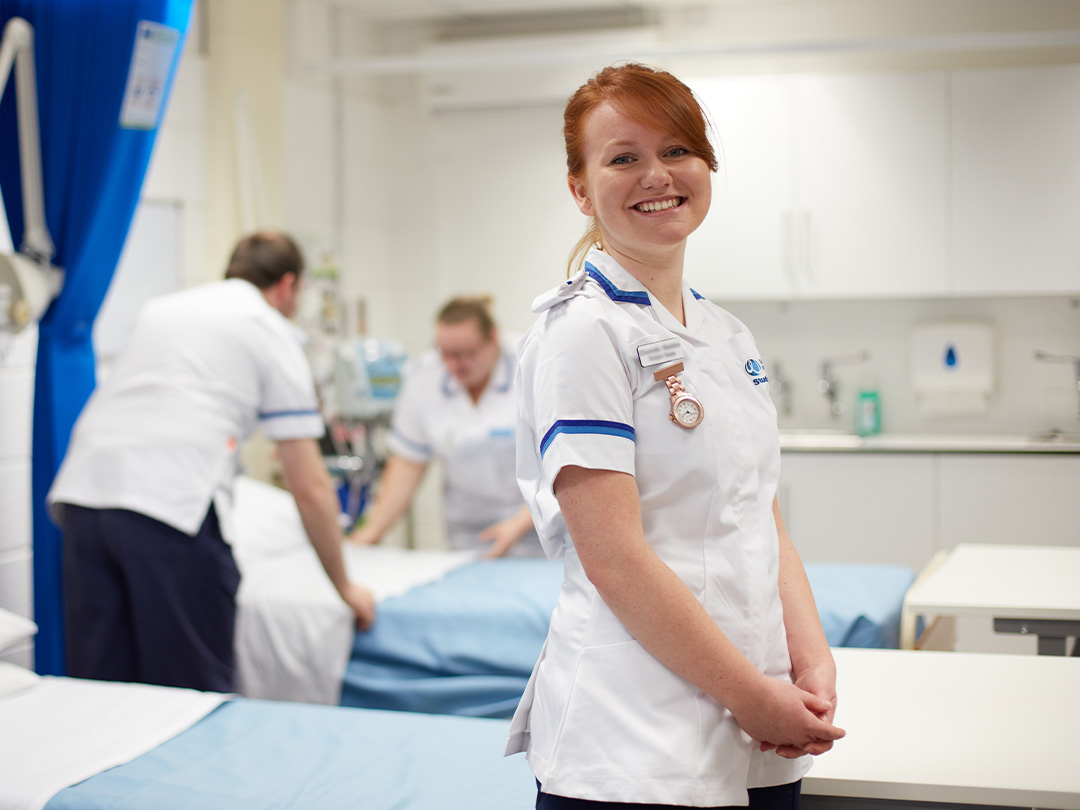
    For healthcare placements, a fob watch is essential. You’ll be surprised how often you need to check the time! If your placement is non-clinical, check whether a regular wristwatch is acceptable.

    4. Research Your Placement

    A little preparation goes a long way. Reading up on your placement setting, its policies, and relevant topics beforehand will make you feel more confident and show that you are proactive and engaged.

    5. Be Honest and Open

    If a placement isn’t aligned with your strengths or interests, or if you need more guidance, be honest. Learning is a process, and you’re not expected to know everything. Speak up if you require additional support, prefer more independence, or learn better in a different way.

    6. Start Your Evidence Collection Early

    From day one, think about how you will evidence your learning outcomes. Planning ahead reduces stress and helps you stay on top of your placement requirements.

    Final Thoughts

    Placement has been one of the highlights of my course. It’s given me the chance to apply my knowledge, develop skills, and gain real-world experience in occupational therapy. Initially, I was nervous about one of my placements, but by approaching it with an open and positive mindset, I ended up having an incredible experience. I’ve been encouraged to learn from mistakes, apply theory to practice, and explore different areas of the profession.

    If you have placement tips, share them with your cohort! If you’ve completed a placement that someone else is about to start, pass on your insights—it can make a huge difference.

    Good luck, and enjoy your placement journey!
    Source link

  • Introducing The Edge, a Breakthrough SEL and Life Skills Curriculum for Middle and High School Students

    Introducing The Edge, a Breakthrough SEL and Life Skills Curriculum for Middle and High School Students

    Los Angeles, CA — As students navigate an increasingly complex world defined by artificial intelligence, social media, and rapid technological change, the need for essential life skills has never been greater. The Edge, an innovative, research-based social-emotional and life skills curriculum, creates a dynamic and effective learning environment where middle and high school students can build the social-emotional and life-readiness skills needed to succeed in school, relationships, and life. 

    Designed in collaboration with educators and aligned with the CASEL framework, The Edge is the first curriculum to meet educators’ demands for high-quality instructional materials for SEL and life-skills readiness. The curriculum helps students cultivate communication, problem-solving, and self-awareness, as well as essential life skills like entrepreneurship, negotiation, financial literacy, and networking, to boost their academic abilities.

    “The Edge represents a paradigm shift in education,” says Devi Sahny, Founder and CEO of The Edge and Ascend Now. “It’s not just about helping students excel academically—it’s about helping them understand themselves, connect with others, and develop the resilience to face life’s challenges head-on.”

    By combining bite-sized lessons with project-based learning, The Edge creates a dynamic and effective learning environment with ready-to-use, adaptable resources educators use to help students develop both hard and soft skills. Its advanced analytics track student progress whilesaving valuable preparation time. Designed to enable educators to adapt as needed, the curriculum is flexible and requires minimal preparation to support all learning environments—asynchronous and synchronous learning, even flipped learning.

     Key highlights include:

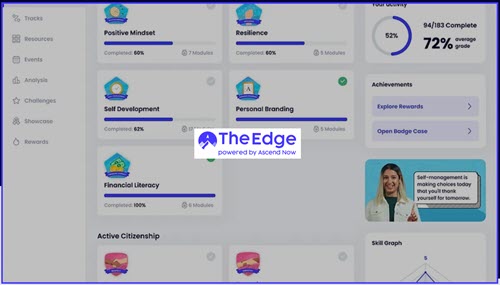
    • Integrated Skill Framework: A robust curriculum featuring 5 pillars, 24 essential skills, and 115 modules, blending SEL with employability and life skills such as negotiation, financial literacy, and digital literacy, all aligned with CASEL, ASCA, and global educational standards.
    • Educator-Friendly Design: With over 1,000 customizable, MTSS-aligned resources, The Edge saves teachers time and effort while allowing them to adapt materials to meet their unique classroom needs.
    • Hard Skill Development Meets SEL: By engaging in activities like entrepreneurship, critical thinking, and leadership training, students develop technical proficiencies while enhancing communication, empathy, and resilience.
    • Real-Time Analytics: Advanced data tools provide administrators with actionable insights into student progress, enabling schools and districts to measure outcomes and improve program alignment with educational goals.
    • Compelling Content. The curriculum features engaging content that integrates the latest insights from learning sciences with professional writing from skilled authors affiliated with SNL, Netflix, and HBO Max. This combination guarantees that the material is educationally solid, relevant, and thought-provoking.

    The Edge immerses students in real-life, complex scenarios that challenge them to think critically, collaborate effectively, and apply social-emotional learning (SEL) to everyday situations. For example, one lesson about conflict resolution uses an actual problem that Pixar faced when allocating resources for new movies. 

    Early adopters of The Edge have reported remarkable results. The Edge was used by rising high school seniors during a three-week summer college immersion program (SCIP) at Georgetown University, which prepares high school students from underserved backgrounds to apply for college. At the end of the program, 94% reported learning important skills, and 84% said they discovered something new about themselves.

    ABOUT THE EDGE

    The Edge is the latest innovation from Ascend Now US, dba The Edge, a US-based education startup committed to increasing both college and career readiness for all students.  Sahny founded The Edge in the US after building and scaling Ascend Now Singapore, which has provided personalized academic and entrepreneurship tutoring to over 10,000 students and 20+ international schools over the last decade. 

    eSchool News Staff
    Latest posts by eSchool News Staff (see all)

    Source link

  • How Spokane Public Schools is helping kids engage in real life

    How Spokane Public Schools is helping kids engage in real life

    Key points:

    Social media has connected kids like never before, but what they get in likes and shares, they lose in real, meaningful engagement with their peers and classmates. Lunch hours are spent hunched over smartphones, and after-school time means less sports and more Snapchat.

    The adverse effects of this excessive screen time have significantly impacted students’ social- emotional health. Forty-one percent of teens with the highest social media usage struggle with mental health issues, and between 2010 and 2020, anxiety among adolescents skyrocketed by 106 percent.

    At Spokane Public Schools (SPS), educators and administrators are reversing the side effects of social media by re-connecting with students through school-based extracurricular activities. Through its transformative Engage IRL (Engage in Real Life) initiative, the district is encouraging kids to get off their devices and onto the pickleball court, into the swimming pool, and outside in the fresh air. With more than 300 clubs and sports to choose from, SPS students are happier, healthier, and less likely to reach for their smartphones.

    An innovative approach to student engagement

    Even before the pandemic, SPS saw levels of engagement plummet among the student population, especially in school attendance rates, due in part to an increase in mental health issues caused by social media. Rebuilding classroom connections in the era of phone-based childhoods would require district leaders to think big.

    “The question was not ‘How do we get kids off their phones?’ but ‘How do we get them engaged with each other more often?’” said Ryan Lancaster, executive director of communications for SPS. “Our intent was to get every kid, every day, involved in something positive outside the school day and extend that community learning past the classroom.” 

    To meet the district’s goal of creating a caring and connected community, in 2022, school leaders formed a workgroup of parents, community members, coaches, and teachers to take inventory of current extracurriculars at all district schools and identify gaps in meeting students’ diverse interests and hobbies.

    Engaging with students was a top priority for workgroup members. “The students were excited to be heard,” explained Nikki Otero Lockwood, SPS board president. “A lot of them wanted an art club. They wanted to play board games and learn to knit. No matter their interests, what they really wanted was to be at school and be connected to others.”

    Working with community partners and LaunchNW, an Innovia Foundation initiative focused on helping every child feel a sense of belonging, SPS launched Engage IRL–an ambitious push to turn students’ ideas for fun and fulfillment into real-life, engaging activities.

    Over the past two years, Engage IRL has been the catalyst for increasing access and opportunities for K-12 students to participate in clubs, sports, arts activities, and other community events. From the Math is Cool Club and creative writing classes to wrestling and advanced martial arts, kids can find a full range of activities to join through the Elite IRL website. In addition, five engagement navigators in the district help connect families and students to engagement opportunities through individual IRL Plans and work with local organizations to expand programming.

    “All day, every day, our navigators are working to break down barriers and tackle challenges to make sure nothing gets in the way of what kids want to be involved in and engaged in,” said Stephanie Splater, executive director of athletics and activities for SPS. “For example, when we didn’t have a coach for one of the schools in our middle school football program, our navigators mobilized for really good candidates in a short amount of time just from their personal outreach.”

    In only two years, student engagement in extracurriculars has nearly doubled. Furthermore, according to Lancaster, since the Engage IRL launch, SPS hasn’t experienced a day where it dipped below 90 percent attendance. 

    “That’s an outlier in the past few years for us, for sure, and we think it’s because kids want to be at school. They want to be engaged and be part of all the cool things we’re doing. We’ve had a really great start to the 2024-2025 school year, and Engage IRL has played a huge role.”

    Engage IRL also helped SPS weather student blowback when the district launched a new cell phone policy this year. The policy prohibits cell phone use in elementary and middle school and limits it to lunch and periods between classes for high school students. Because students were already building personal connections with classmates and teachers through Engage IRL, many easily handled social media withdrawal.

    Creating opportunities for all kids

    Key to Engage IRL’s success was ensuring partnerships and programs were centered in equity, allowing every child to participate regardless of ability, financial or transportation constraints, or language barriers.

    Establishing a no-cut policy in athletics by creating additional JV and C teams ensured kids with a passion for sports, but not college-level skills, continued to compete on the court or field. Partnering with Special Olympics also helped SPS build new unified sports programs that gave children with disabilities a chance to play. And engagement navigators are assisting English language learners and their families in finding activities that help them connect with kids in their new country.

    For Otero Lockwood, getting her daughter with autism connected to clubs after years of struggling to find school activities has been life-changing.

    “There are barriers to finding community for some kids,” she shared. “We know kids with disabilities are more likely to be underemployed as adults and not as connected to the community. This is something we have the power to do that will have a lasting impact on the children we serve.”

    Through Engage IRL, SPS has redefined student engagement by expanding access and opportunity to 6,000 students across 58 schools. In just two short years, the district has seen attendance increase, student wellness improve, and dependence on smartphones diminish. By continuing to listen to the needs of students and rallying the community to partner on out-of-school activities, Spokane Public Schools is successfully fostering the face-to-face connections every child needs to thrive.

    Latest posts by eSchool Media Contributors (see all)

    Source link

  • Butterflies and Biology for Life

    Butterflies and Biology for Life

    Reading Time: 4 minutes

    When I was in sixth grade, my homeroom teacher brought monarch caterpillars into our classroom. One of our homework assignments was to walk around our backyard and find milkweed (the only kind of plant monarch caterpillars eat) to feed our caterpillars. Now, over 25 years later, I still clearly remember the excitement of hunting around in my backyard to find milkweed and checking every day to see the metamorphosis from caterpillar to butterfly.

    You might say that raising monarch caterpillars gave me the bug to want to be a biologist.

    An early interest in biology sparks a lifelong dedication

    As the years went by, my interest in biology didn’t wane. In college, molecular biology became my primary focus area. During graduate school and beyond, I trained in both molecular biology and the learning sciences, settling into a career in biology education. I taught Non-Majors and Majors Biology while running a research lab dedicated to understanding how people learn biology.

    A lack of enthusiasm from students

    When I taught Non-Majors Biology, I noticed a concerning trend among my students: All in all, they didn’t like biology.

    That may be too gentle. The comments from an “introduce yourself” activity that I use in the first week of class revealed that most of my students were either afraid to take a biology class, thought the subject was boring, or didn’t think they could succeed at it. Some people even flat-out admitted they hated the subject.

    Now, as a self-professed biology nerd, those comments took me aback. As a learning sciences researcher, I wanted to know why there were such pervasive negative feelings about biology. As a biology educator, I wanted to know what to do about it.

    A common point of view

    Negative perceptions around biology are common, driving people away from engaging with the big biology issues we face today. Lack of knowledge around scientific topics can make it easier to be duped by misinformation, leading one to potentially make decisions against their own best interests. We see this with issues ranging from climate change to vaccines.

    Acknowledging that biology is all around us is important not only because it enriches our lives, but because it’s also important to the health and welfare of our society. Biology is everywhere, and engagement starts with reimagining how we think about biology’s role in our lives. It’s about reigniting wonder and emphasizing  relevance. It’s about giving students the chance to learn biological material in a way that makes sense to them. When we start to make connections between the classroom and the real world,  it becomes easier to engage with bigger concepts and ideas.

    Connecting biology to the everyday

    Let’s look at hand washing, as an example of how to relate lipid biochemistry to our everyday routines.

    Okay, fine, we all know we’re supposed to do it, and yet nasty microorganisms like norovirus (transmitted mainly by the fecal-oral route, ahem) still tend to spread rampantly. Isn’t hand sanitizer sufficient? Or Lysol? The soap dispenser is out again — does it matter?

    According to the Centers for Disease Control, hand sanitizer doesn’t work well against norovirus. Think of norovirus as wearing a protective coat — hand sanitizer doesn’t penetrate, and since the virus doesn’t readily dry out on surfaces, it remains ready to infect on the surface of the skin. In order to effectively remove the virus, you have to use soap and water and rub your hands together. Why?

    Soap particles have water-repellant and water-loving components. Those water-repellant portions, combined with rubbing your hands back in forth, causes the virus to break apart. The soap particles surround the bits of virus, and water washes it away.

    If I talked about the structure of soap as a fatty acid with a carboxylic acid functional group, sodium ion, and fatty acid tail, and how with other fatty acids, it forms a micelle in water, students’ eyes would glaze over. On the contrast, breaking down the basics of why hand-washing works to illustrate the biochemistry proves far more interesting.

    Impacting student perceptions

    When biological principles are applied to our daily lives, they become inherently interesting. When students realize they can understand the biological principles behind their daily experiences, it becomes accessible. By viewing biology through a personal lens, students learn to appreciate rather than hate the subject.

    When students see biology everywhere, as an integral part of their lives, they are more likely to engage. As they engage, they realize they can understand biology, and that it’s actually interesting.

    Think back to the opening example — my homework was looking in my backyard for milkweed to feed to the classroom caterpillars. Biology was relatable and accessible and that made it exciting. That’s the driving framework behind my biology education practice. I always consider the relevancy in students’ lives as the main touchstone in my teaching practice.

    What is something that you can do in your classroom to bring your own excitement about the material in? What kind of real-world examples can you bring into your classroom? Come tell me about it on social media!

    LinkedIn

    Facebook

    Instagram

    Written by Dr. Melanie Peffer, Teaching Assistant Professor and Research Scientist Level II at the University of Colorado Boulder, and author of “Biology for Life: A Guide to Our Living World,” 1e.


    Interested in this first edition text for your biology course? Look for Peffer’s first edition text, “Biology for Life: A Guide to Our Living World,” 1e coming spring, 2025, and check out other available biology titles on the discipline page. 


    Source link

  • A short college course for students’ life, academic skills

    A short college course for students’ life, academic skills

    While many students experience growing pains in the transition from high school to college, today’s learners face an extra challenge emerging from the COVID-19 pandemic. Many students experienced learning loss in K-12 as a result of distance learning, which has stunted their readiness to engage fully in academia.

    Three faculty members in the communications division at DePaul University noticed a disconnect in their own classrooms as they sought to connect with students. They decided to create their own intervention to address learners’ lack of communication and self-efficacy skills.

    Since 2022, DePaul has offered a two-credit communication course that assists students midway through the term and encourages reflection and goal setting for future success. Over the past four terms, faculty members have seen demonstrated change in students’ self-perceptions and commitment to engage in long-term success strategies.

    The background: Upon returning to in-person instruction after the pandemic, associate professor Jay Baglia noticed students still behaved as though their classes were one-directional Zoom calls, staring blankly or demonstrating learned helplessness from a lack of deadlines and loose attendance policies.

    “We were seeing a greater proportion of students who were not prepared for the college experience,” says Elissa Foster, professor and faculty fellow of the DePaul Humanities Center.

    Previous research showed that strategies to increase students’ collaboration and participation in class positively impacted engagement, helping students take a more active role in their learning and classroom environment.

    The faculty members decided to create their own workshop to equip students with practical tools they can use in their academics and their lives beyond.

    How it works: Offered for the first time in fall 2022, the Communication Fundamentals for College Success course is a two-credit, five-week course that meets for two 90-minute sessions a week, for a total of 10 meetings. The class is housed in the College of Communication but available to all undergraduate students.

    The course is co-taught and was developed by Foster and Kendra Knight, associate professor in the college of communication and an assessment consultant for the center for teaching and learning. Guest speakers from advising and the Office of Health Promotion and Wellness provide additional perspective.

    (from left to right) Jay Baglia, Elissa Foster and Kendra Knight developed a short-form course to support students’ capabilities in higher education and give them tools for future success.

    Aubreonna Chamberlain/DePaul University

    Course content includes skills and behaviors taught in the context of communication for success: asking for help, using university resources, engaging in class with peers and professors, and learning academic software. It also touches on more general behaviors like personal awareness, mindfulness, coping practices, a growth mindset, goal setting and project management.

    The demographics of students enrolled in the course vary; some are transfers looking for support as they navigate a university for the first time. Others are A students who wanted an extra course in their schedule. Others are juniors or seniors hoping to gain longer-term life skills to apply to their internships or their lives as professionals and find work-life balance.

    Throughout the course, students turned in regular reflection exercises for assessment and the final assignment was a writing assignment to identify three tools that they will take with them beyond this course.

    What’s different: One of the challenges in launching the course was distinguishing its goals from DePaul’s Chicago Quarter, which is the first-year precollege experience. Baglia compares the college experience to taking an international vacation: While you might have a guidebook and plan well for the experience beforehand, once you’re in country, you face challenges you didn’t anticipate or may be overwhelmed.

    Orientation is the guidebook students receive before going abroad, and the Communication for Success Class is their tour guide along the way.

    “I think across the country, universities and college professors are recognizing that scaffolding is really the way to go, particularly with first-generation college students,” Baglia says. “They don’t always have the language or the tools or the support or the conversations at home that prepare them for the strangeness of living on their own [and navigating higher education].”

    A unique facet of the course is that it’s offered between weeks three and seven in the semester, starting immediately after the add-drop period concludes and continuing until midterms. This delayed-start structure means the students enrolled in the course are often looking for additional credits to keep their full-time enrollment status, sometimes after dropping a different course.

    The timing of the course also requires a little time and trust, because most students register for it later, not during the course registration period. Baglia will be teaching the spring 2025 term and, as of Jan. 10, he only has two students registered.

    “It has not been easy convincing the administrators in our college to give it some time … Students have to register for this class [later],” Baglia says.

    The results: Foster, Knight and Baglia used a small grant to study the effects of the intervention and found, through the data, a majority of students identified time management and developing a growth mindset as the tools they want to keep working on, with just under half indicating self-care and 40 percent writing about classroom engagement.

    In their essays, students talked about mapping out their deadlines for the semester or using a digital calendar to stay on top of their schedules. Students also said they were more likely to view challenges as opportunities for growth or consider their own capabilities as underdeveloped, rather than stagnant or insufficient.

    The intervention has already spurred similar innovation within the university, with the College of Science and Health offering a similar life skills development course.

    Course organizers don’t have plans to scale the course at present, but they are considering ways to collect more data from participants after they finish the course and compare that to the more general university population.

    Get more content like this directly to your inbox every weekday morning. Subscribe to the Student Success newsletter here.

    This article has been updated to clarify the course is housed in the College of Communication.

    Source link

  • Joe Biden Commutes Life Sentence of Indigenous Activist Leonard Peltier (APTN News)

    Joe Biden Commutes Life Sentence of Indigenous Activist Leonard Peltier (APTN News)

    From Minnesota Public Radio News

    In one of his last official acts before leaving the White House, President Joe Biden released Leonard Peltier from prison. The action is an extraordinary move that ends a decades-long push by Indigenous activists, international religious leaders, human rights organizations who argued that the 80-year-old Native American activist was wrongly convicted.

    Source link

  • How to prepare for university – Worcester Student Life

    How to prepare for university – Worcester Student Life

    During the summer break, it can be difficult to gauge what you should do next.  I’ve put together a few tips on ways to get prepared for students who are looking to go to university for the first time or for those who are coming back!

    Organise your academic materials

    Before the semester begins, take some time to organize your notes, textbooks, and other academic materials. Most courses will provide a list of resources that will be used during your studies— you don’t have to buy every textbook but do read through to get a gauge for the materials you’ll need to use. You may be able to find second-hand copies or more affordable cheaper PDF versions.

    If you’ve studied the subject before, it can also be helpful to review your notes and identify any gaps in your understanding. This will help you refresh your memory and get ready for more advanced study.

    Plan your schedule

    A well-planned schedule can make a significant difference in managing your time effectively. Start by reviewing the course catalogue and selecting your classes for the upcoming semester. Having a schedule ahead of time will make things easier over the next months and help you feel more comfortable in the busy environment of academia.

    I would recommend using an online calendar (or physical one) to help span out how the months will be going ahead of time. Allocate specific times for studying, attending classes, and extracurricular activities. Remember to also leave room for socialising!

    Two students on a sofa

    Set academic and personal goals

    Setting goals can give you a clear sense of direction and motivation. Your goals should be specific, measurable, achievable, relevant, and time-bound. In other words, don’t expect too much or too little! Give yourself plenty of room to breathe and relax.

    For academic goals, one of my tips would be to aim for a specific grade boundary. Assess the marks you would need to obtain through your assessments and have a clear understanding of what you would like to achieve and how to do so.

    For personal goals, it can be incredibly beneficial mentally and physically to join a club, improve on your fitness or learn a new skill. It’s important to keep your mind active outside of academic studies and embrace the new, exciting environment you’ll be in.

    Develop good study habits

    Good study habits are crucial for academic success. Use the summer to evaluate and improve your study techniques. This can be from finding an ideal study environment to practising active learning techniques.

    One of my tips would be to look back on your previous academic achievements, gauge your understanding of how you could improve and what are your strongest skills when it comes to assignments.

    A hand highlighting words written in a notebook

    Familiarise yourself with campus resources

    Universities offer a wealth of resources to support students. Familiarise yourself with what’s available and how to access these services. This can include using tutoring services for difficult subjects, navigating the university’s libraries, as well as research databases and study spaces.

    I would recommend meeting with a Programme Advisor to discuss your course plan and career goals if you are confused over the summer about where you should be taking your career.

    A student speaking to the Firstpoint reception

    Budget and financial planning

    Financial stability is important for reducing stress and focusing on your studies. It’s incredibly beneficial to create a budget to manage your expenses throughout the semester.

    You could use a budgeting app or spreadsheet to monitor your income and expenses. This can help provide a clear view of your expectations of money and clear anxieties about the unknown.

    Set up a savings account and set aside a portion of your budget for unexpected expenses. It’s impossible to see into the future and plan for every possible scenario, however with a savings account you could gain some interest on your savings and prepare for the inevitable.

    Finally, I would recommend that you explore financial aid. Look into scholarships, grants, and part-time job opportunities to support your education in the summer so that when the year finally rolls around, you’re prepared and well-resourced.

    A hand inserting coins into a piggy bank

    Stay healthy and active

    Your physical and mental health significantly impact your academic performance. Develop healthy habits over the summer to maintain your well-being during the school year.

    I would recommend exercising regularly by incorporating some kind of physical activity into your everyday or weekly routine. This can be going to the gym, jogging in the mornings or practising a soothing yoga session in your room.

    Eating nutritiously is also incredibly important. By focusing on a balanced diet that includes plenty of fruits, vegetables, and whole grains, you can support your body and your mind.

    Finally, I would also recommend aiming for 7-9 hours of sleep per night to ensure you’re well-rested and alert.

    Two students using a weight rack at the gym

    Build a support network

    Having a strong support network can help you navigate the challenges of university life. Connect with family, friends, and fellow students over the summer to ensure that your well-formed social groups are still thriving.

    My tips for this would be to maintain regular contact with loved ones to keep your support network strong, either through texts, calls or hanging out face-to-face.

    I would also recommend joining online communities by participating in social media groups related to your university or field of study. This can help better your understanding of the social circle you’ll be expected to join when the year starts as well as helping you meet new people.

    Three students watching TV together

    To conclude, preparing for the academic year during the summer break can help you start the semester with confidence and a clear plan. By organizing your materials, planning your schedule, setting goals, developing study habits, familiarizing yourself with campus resources, budgeting, maintaining your health, and building a support network, you’ll be well-equipped to tackle the challenges and make the most of your university experience. Enjoy your summer, and here’s to a successful academic year ahead!

    Source link

  • My Goodbye to Trent University – THE STUDENT LIFE BLOG

    My Goodbye to Trent University – THE STUDENT LIFE BLOG

    Photos and written by Amy Bridges

                This post is not only my goodbye to the 2021-2022 year but my goodbye to the blog and Trent University. The winter semester was my last semester of my B.A. which also means it was my last semester at Trent University. My experience at Trent University has been a long hard journey.

                I knew that my decision to go to university was going to change my life but I did not realize how much. Choosing Trent University was one of the best decisions of my life. While at Trent I was able to find my passion and gain the confidence to follow it, meet people who have made a huge impact on my life and was even able to gain experiences I wouldn’t have anywhere else.  

                In my four years at Trent, I have changed majors, went on an archaeological dig, gained experience working in a museum, worked for a professor and for 2 other departments in the university, moved apartments, had one of the worst seizures of my life, dealt with a pandemic, and was accepted to a Masters program. It has been a rollercoaster of an experience but I would not have traded it in for anything. These last four years have been challenging but the most rewarding.

    Even though I have been finished classes and set to graduate for a couple of weeks now I am still conflicted about leaving Trent. I am excited to be finished and I am proud of what I have accomplished, but I am sad that it means I will be leaving Trent and that I won’t be seeing the same people every week. Moving onto U of T for my Masters is going to be an exciting next step but terrifying at the same time.

                As I struggle with saying goodbye to Trent, I am also saying goodbye to this blog. This will be my last post on The Student Life Blog. I have been writing for the blog for 3 out of the 4 years I have been at Trent. I will be handing off the blog to another writer and in September you will be able to continue your journey at Trent with them. I am sure they will love this blog as much as I have over the past 3 years and I look forward to seeing where this blog goes in the future. Thank you for reading!

    Colour outside the lines,

    Amy Bridges 

    Source link

  • Find joy in the small things – THE STUDENT LIFE BLOG

    Find joy in the small things – THE STUDENT LIFE BLOG

    Photos and written by Amy Bridges

                   If the pandemic has taught me anything its that you need to find joy in the small things. These last couple of years have been hard and unforgiving and it has been hard to find joy amongst the mess. I have had to teach myself to find joy in the small things so that I don’t completely lose my mind. Since it has been a long journey to get here, I’m going to give you a list of some of the small things I have learned to appreciate a little more.

    Treats

                   I have learned to get excited and to enjoy even the small treats like a cupcake or a special drink. I have found that a bad day can get better with a cupcake or currently because I haven’t had them all winter a bowl of berries! They aren’t much in the grand scheme of things but doing a happy dance because I have a small bowl of strawberries has made a big difference in my day. I have also found that there are non-food treats that I have gotten excited about that again are small but make the day a little brighter. One being a new water bottle, or a new book. They are small but have a large impact!

    Music

                   The last couple of years music has been a great outlet. I have been using music to help curb my mood. When I’m having a bad day, I blare a song I know I can’t help but move to and it helps to boost my mood. Sometimes its only a little bit but that little bit helps.

    A small luxury

                   The most recent small joy I have found is in bath bombs. Normally I only take a 45-minute bath which again isn’t that long in the grand scheme of things but it is enough. I have found a great local business BombzRUs who makes fantastic bath bombs and the colours and smells that come from them are just wonderful. The 45-minutes I spend just enjoying the colourful sparkly water is just what I needed to make the day better or to set myself up for a good sleep for the next day.

    Sunrises

                   Since I work at 8am and I take transit I leave the house at 7am. I am not a morning person but I have had to learn how to be. Recently there has been one upside to getting up and leaving the house by 7am and that is the sunrises. The only way I would have been able to see them is if I was up early. So, I will take the small joy of a beautiful sunrise since I have to be up early anyways.

    While I am sure there are more these are currently the small joys that I have been focusing on while I try to minimize the impacts of rough days.

    Source link