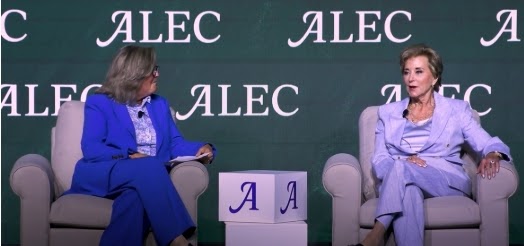
Tag: Linda

  • Linda McMahon and the College Meltdown

    Linda McMahon and the College Meltdown

    July 2025 was not simply a busy month for the U.S. Department of Education—it was a deliberate and coordinated effort to reshape higher education in line with the political goals of the Trump administration. Under the leadership of Education Secretary Linda McMahon, the Department issued a torrent of investigations, policy changes, and legal maneuvers aimed at asserting control over universities and redefining the role of postsecondary education in American life.

    What emerged was not the repair of a broken system, but the acceleration of a political project: to narrow the mission of higher education, undermine its independence, and punish institutions that resist the administration’s agenda.

    A Month of Directives

    The month began with the Department entering a resolution agreement with the University of Pennsylvania over Title IX violations (July 1). By July 2, the administration had concluded a negotiated rulemaking session focused on reshaping the Public Service Loan Forgiveness program—signaling that student aid reforms would now be filtered through political priorities rather than bipartisan consensus.

    On July 4, the One, Big, Beautiful Bill Act was signed into law. This sweeping legislation gave the administration a mandate to implement provisions on accreditation, federal aid restrictions, civil rights compliance, and so-called “viewpoint neutrality.” Within two weeks, McMahon’s team was already implementing key parts of the bill, using it to alter the rules that govern financial aid eligibility and institutional recognition.

    “Civil Rights” Enforcement as a Political Strategy

    Throughout the month, the Department launched a wave of investigations under Title VI and Title IX. But the choice of targets raised concerns. Rather than focus on systemic discrimination or long-standing legal violations, the Department directed its attention toward cases that aligned with conservative cultural concerns.

    • On July 8, an investigation was opened into the Connetquot Central School District after it banned a Native American logo.

    • On July 10, George Mason University became the subject of a Title VI probe.

    • On July 23, five universities were flagged for offering scholarships that allegedly favored foreign-born students.

    • By July 25, five Northern Virginia school districts were found in violation of Title IX.

    Harvard, Columbia, Duke, the University of Michigan, and Brown University were all pulled into scrutiny, with Columbia agreeing to pay $200 million and submit to new data-reporting requirements. These actions may appear to be standard enforcement but taken together they reflect a pattern of choosing high-profile or politically charged institutions as symbolic examples.

    The use of federal compliance tools to pressure institutions seen as ideological opponents is not unprecedented—but under McMahon, it has become routine.

    Policy Realignment and Workforce Redirection

    On July 10, the Department announced the termination of federal aid for undocumented students, marking a sharp reversal from past practices. Just five days later, the Department entered into a new partnership with the Department of Labor to promote workforce training, part of a longer-term effort to reorient higher education toward narrow economic outcomes rather than liberal arts or civic development.

    While such initiatives are framed as “efficiency” or “innovation,” the underlying message is clear: colleges that do not align themselves with federal job-training goals or cultural expectations may find their access to funding, recognition, and legal protections limited.

    Restructuring the System

    The Supreme Court’s decision on July 14 to permit a reduction in federal staffing has further empowered the Department to cut or replace internal personnel. By July 24, two new negotiated rulemaking committees were established, tasked with translating the One, Big, Beautiful Bill into enforceable rules. These committees will likely define the next phase of McMahon’s agenda—on issues like accreditation, financial eligibility, foreign influence, and institutional autonomy.

    At the state level, the Department approved Missouri’s new pilot assessment program on July 31, continuing a pattern of promoting alternatives to standardized federal oversight. Meanwhile, state education officials were encouraged (July 29) to request waivers from burdensome federal requirements—an invitation to bypass regulations established under previous administrations.

    What This Means for Higher Education

    The July timeline reflects not just a burst of administrative activity, but a broader strategy to centralize decision-making power and reshape the ideological landscape of U.S. higher education. The Department has moved away from serving as a neutral enforcer of civil rights and federal law, and toward acting as a gatekeeper for cultural and political conformity.

    Colleges that emphasize diversity, global engagement, or progressive research are increasingly viewed with suspicion. Those that fail to meet the administration’s evolving definition of compliance may face costly investigations, public shaming, or the loss of federal support.

    The term “College Meltdown” once referred to financial instability, enrollment declines, and the erosion of public trust. Under Linda McMahon, it now also refers to a deliberate restructuring of the postsecondary system—where ideological alignment may determine institutional survival as much as financial solvency.

    Sources:

    • U.S. Department of Education, July 2025 public statements and press releases

    • One, Big, Beautiful Bill Act, signed July 4, 2025

    • Columbia University settlement, July 23, 2025

    • Supreme Court ruling on federal workforce reductions, July 14, 2025

    • Negotiated Rulemaking updates from the Office of Postsecondary Education

    • Brown University agreement with the Department of Education, July 30, 2025

    Source link

  • Programs like tutoring in jeopardy after Linda McMahon terminates COVID aid spending extensions

    Programs like tutoring in jeopardy after Linda McMahon terminates COVID aid spending extensions

    This story was originally published by Chalkbeat. Sign up for their newsletters at ckbe.at/newsletters.

    HVAC projects to improve indoor air quality. Tutoring programs for struggling students. Tuition support for young people who want to become teachers in their home communities.

    More News from eSchool News

    Almost 3 in 5 K-12 educators (55 percent) have positive perceptions about GenAI, despite concerns and perceived risks in its adoption, according to updated data from Cengage Group’s “AI in Education” research series.

    Our school has built up its course offerings without having to add headcount. Along the way, we’ve also gained a reputation for having a wide selection of general and advanced courses for our growing student body.

    When it comes to visual creativity, AI tools let students design posters, presentations, and digital artwork effortlessly. Students can turn their ideas into professional-quality visuals, sparking creativity and innovation.

    Ensuring that girls feel supported and empowered in STEM from an early age can lead to more balanced workplaces, economic growth, and groundbreaking discoveries.

    In my work with middle school students, I’ve seen how critical that period of development is to students’ future success. One area of focus in a middle schooler’s development is vocabulary acquisition.

    For students, the mid-year stretch is a chance to assess their learning, refine their decision-making skills, and build momentum for the opportunities ahead.

    Middle school marks the transition from late childhood to early adolescence. Developmental psychologist Erik Erikson describes the transition as a shift from the Industry vs. Inferiority stage into the Identity vs. Role Confusion stage.

    Art has a unique power in the ESL classroom–a magic that bridges cultures, ignites imagination, and breathes life into language. For English Language Learners (ELLs), it’s more than an expressive outlet.

    In the year 2025, no one should have to be convinced that protecting data privacy matters. For education institutions, it’s really that simple of a priority–and that complicated.

    Teachers are superheroes. Every day, they rise to the challenge, pouring their hearts into shaping the future. They stay late to grade papers and show up early to tutor struggling students.

    Want to share a great resource? Let us know at [email protected].

    Source link

  • Secretary of Education Linda McMahon Scheduled for ASU+GSV Summit, April 8, 2025

    Secretary of Education Linda McMahon Scheduled for ASU+GSV Summit, April 8, 2025

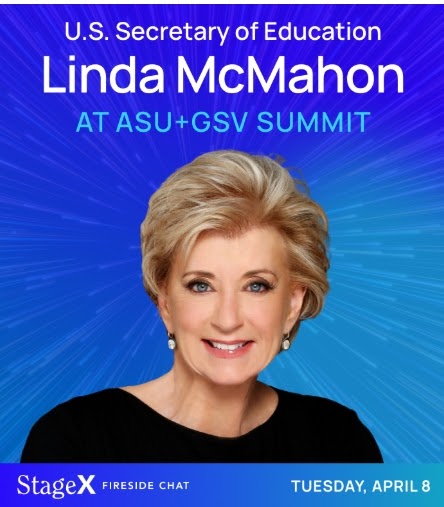
    On April 8, 2025, US Secretary of Education Linda McMahon will give a fireside chat at ASU+GSV, an edtech conference held in San Diego, California.  

    President Trump has tasked McMahon with dismantling the federal agency that oversees federally funded K-12 and higher education programs. In less than two weeks she has done just that.  

    Half of ED’s staff have already been fired or taken a payout, and the $1.7T student loan portfolio is likely to be transferred to the US Treasury. 

    There is no word yet on whether there will be demonstrators at the conference, but we expect some form of vocal nonviolent resistance.  AFT President Randi Weingarten is also scheduled to appear.  

    Source link

  • Senate vote finalizes Linda McMahon as education secretary

    Senate vote finalizes Linda McMahon as education secretary

    Linda McMahon was narrowly confirmed along party lines as President Trump’s secretary of education in a 51-to-45 Senate vote late Monday afternoon and sworn in shortly after at the Department of Education building.

    All eyes are now on the White House as educators, policy experts and advocates anxiously wait to see if Trump will sign a controversial but highly anticipated executive order to abolish the very department McMahon has been confirmed to lead.

    The president and his allies have promoted the idea of dismantling the 45-year-old agency since the early days of his campaign for a second term, saying the department has grown too big and interferes in matters best left to local and state authorities.

    But the idea isn’t entirely new, nor would it be easy to implement. It would require legislative support, as the department’s existence is written into statute. Shuttering it would require a majority vote in both houses of Congress.

    “We can expect there to be a bit of a panic when the order comes out,” Emmanual Guillory, senior director of government relations at the American Council on Education, told Inside Higher Ed.

    It remains unclear to observers what mechanisms the Trump administration would use to close the department, however.

    “This will all depend on what dismantling the department truly means,” Guillory said. “I believe that the executive order would be somewhat broad, like we’ve seen [in the case of the diversity, equity and inclusion orders], and it will give the department the opportunity to refine the details.”

    Still, Trump has continued to promote the concept, and red states across the country have backed it. Chatter about the executive order began circling just days after he took office in January, and the plans were confirmed by multiple news sources in early February, though specifics were still unclear.

    Since the plans were leaked, Trump himself has publicly confirmed his intention to dismantle the department, although he did not disclose specific details on how he would do so.

    Guillory believes that much like when Republicans have tried to get rid of the department in the past, they will lack the congressional votes needed to officially do so. But Trump could keep the skeleton of the department and move its core functions elsewhere, he said.

    “Our thinking, because we’ve seen this before, is that likely a lot of the functionality of the department would get placed at other agencies, but we would be curious as to what functions would be terminated entirely,” he said. “That would cause the most concern for our members … Will those things simply be moved to another agency, or will some of those things not?”

    There are certain functions that are protected by the Higher Education Act of 1965, Guillory said. “The department legally would not necessarily be able to just terminate student aid programs, for example.” But he still worries the transition of oversight from one department to another may not be seamless.

    Shortly before the vote began on Monday, the Senate minority leader, Chuck Schumer of New York, made the Democrats’ stance on McMahon’s nomination clear.

    “Before colleagues vote on Linda McMahon’s nomination for secretary of education, they should remember a vote for Mrs. McMahon is a vote for draconian cuts to education … That’s why I am so proud that every Democrat will vote no,” he said.

    Other democratic lawmakers warned during floor comments on Thursday that McMahon’s confirmation, and the major department-level changes she’s backed, could risk the future of the department.

    Senator Gary Peters of Michigan said the country needs a secretary of education “who values and respects public education.”

    “Instead of working to protect funding,” he said, “she’s blatantly supported efforts to dismantle our education system.”

    For more background on what senators have said about McMahon, check out Inside Higher Ed’s live blog from her confirmation hearing, or read the five key takeaways.

    Senator Alex Padilla of California noted the cuts that have already been made to more than 100 departmental research contracts and countless nonpartisan career staff members.

    “They’re making it clear that this is just the beginning,” he said. “We could talk about Linda McMahon’s qualifications, or frankly lack thereof, but I’m not shocked, because President Trump isn’t looking for someone with the background or commitment to public education in America. He’s looking for someone to destroy it.”

    Although no Republicans commented Thursday, they voted unanimously to confirm McMahon in Monday’s vote (Republican senators Shelley Moore Capito of West Virginia and Cynthia Lummis of Wyoming were not present for the vote. Two Democrats were also absent). The majority leader, Senator John Thune of South Dakota, spoke in support of McMahon before the final confirmation.

    “Mrs. McMahon is an accomplished businesswoman and public servant,” he said. “I’m glad that Mrs. McMahon plans to work in a way that empowers those closest to the student, because they are in the best position to do what’s right for that student … I look forward to working with Mrs. McMahon to limit bureaucracy, empower state governments and let good teachers do what they’re best at.”

    Top Agenda Items

    Guillory expects McMahon to pick up accreditation policies as one of the first issues up for discussion.

    He also is expecting the new secretary to prioritize rethinking and potentially amending the financial value transparency and gainful-employment rule, a policy initiated by the Biden administration to better hold higher ed institutions accountable for students’ outcomes. A lawsuit was filed against the regulation in 2023, but federal judgment has been put on pause to allow the new administration’s Education Department to determine its position on the policy.

    It still remains unclear whether Trump will try to protect the gainful-employment rule or repeal it and drop the case, but Guillory has been encouraged by the line of communication between the department and higher ed leaders on the topic.

    “They’ve been really good about listening to and hearing from our members directly on some of the issues that they’ve experienced while they were reporting [financial transparency data] and they are really trying to get feedback on how can we make this better,” he said.

    Other topics of focus for McMahon will likely include expanded details on Trump’s enforcement of Title IX; his diversity, equity and inclusion orders; and the freeze of applications to income-driven repayment plans for student loans, Guillory said.

    Source link

  • 3 takeaways from Linda McMahon’s confirmation hearing

    3 takeaways from Linda McMahon’s confirmation hearing

    This audio is auto-generated. Please let us know if you have feedback.

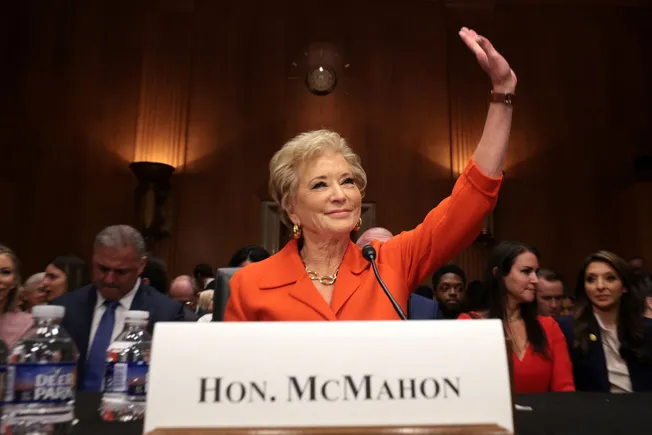
    WASHINGTON — U.S. education secretary nominee Linda McMahon told a Senate panel Thursday that, if confirmed, she would not defund public schools but would seek to reform the U.S. Department of Education by reducing federal bureaucracy and bringing schools back to the basics of reading and math. 

    “We are failing our students, our Department of Education, and what we are doing today is not working, and we need to change it,” McMahon said.

    However, when asked about some specific changes she would make to Education Department programming, McMahon said, if confirmed, she would evaluate department functions before making recommendations. She said she would “reorient the department toward helping educators, not controlling them.”

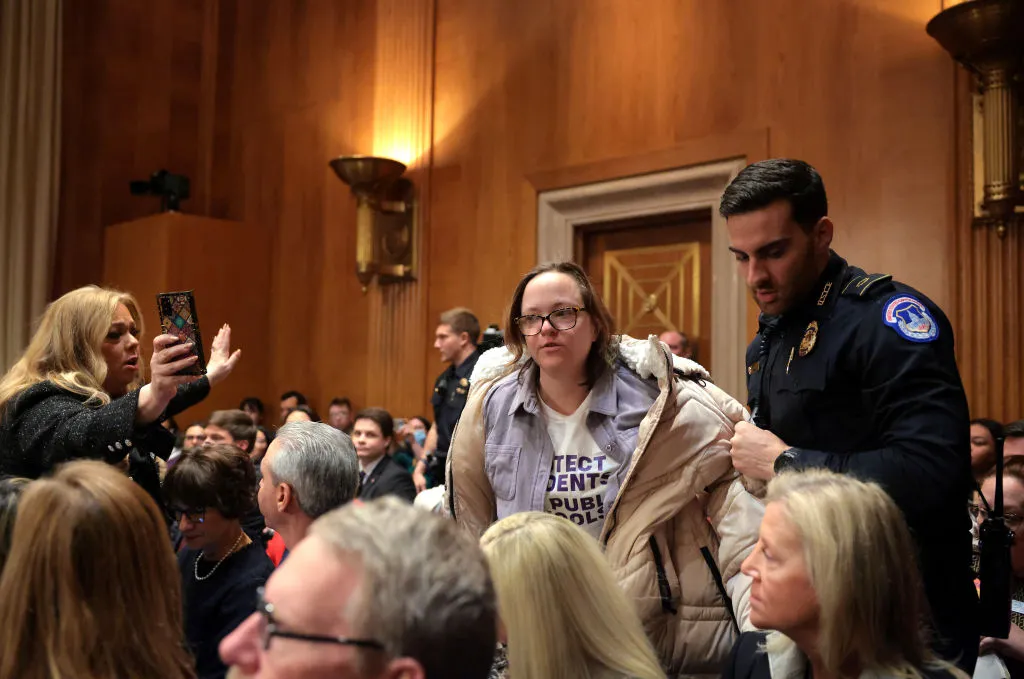
    The 2 ½-hour confirmation hearing, held by the Committee on Health, Education, Labor and Pensions, was briefly interrupted five times by people protesting McMahon’s nomination. The Republican-controlled Senate is expected to approve McMahon’s nomination in the coming days.

    McMahon’s confirmation hearing comes amid drastic changes at the Education Department. President Donald Trump has already issued various executive orders that severely limit federal funding, prohibit activities related to diversity, equity and inclusion, and call for an end to “indoctrination” in K-12 schools, which he said includes “gender ideology and discriminatory equity ideology.” 

    Trump is also expected to issue an executive order that would significantly reduce the Education Department’s authority and responsibility in the federal government. 

    In fiscal year 2024, the Education Department received $79.1 billion from Congress. Lawmakers have yet to approve FY 2025 funding. 

    Among the Education Department’s responsibilities is managing $1.6 trillion in higher education student loans.


    A person is standing near another person in a uniform. The room is full with other people sitting. Another person is standing and holding a cell phone

    A protester disrupts Linda McMahon, President Donald Trump’s nominee to be U.S. education secretary, as she testifies during her Senate Health, Education, Labor and Pensions Committee confirmation hearing on Capitol Hill on Feb. 13, 2025, in Washington, D.C.

    Kayla Bartkowski via Getty Images


    Trump nominated McMahon just weeks after winning the November election. McMahon served as administrator of the Small Business Administration for two years in Trump’s first administration. She is also a former president and CEO of World Wrestling Entertainment.

    McMahon is also board chair at America First Policy Institute, a nonprofit think tank that supports free enterprise and nationalism. At the state level, McMahon served on the Connecticut State Board of Education. She also served as a trustee at Sacred Heart University, a private Catholic school in Fairfield, Connecticut. She is currently the treasurer on the university’s Board of Trustees, according to the school’s website.

    In 2012, she won the Connecticut Republican primary for U.S. Senate but lost to current Democratic Sen. Chris Murphy, who is a member of the HELP committee.

    If the Senate approves McMahon’s nomination, she would succeed Miguel Cardona as the 13th U.S. education secretary since the department’s founding in 1979.

    Here are three takeaway exchanges from the confirmation hearing.

    Antisemitism on college campuses

    Several Republican senators asked McMahon about antisemitism on college campuses.

    “​​Will you make sure that Jewish Americans are safe on our campuses, for heaven’s sake?” asked Sen. Josh Hawley, R-Mo., referring to “a wave of antisemitism” particularly since the Oct. 7, 2023, Hamas attack on Israel. “Will you make sure that this stops on our college campuses that are getting all of this federal tax money?”

    McMahon said she would “absolutely,” or schools would “face defunding of their monies.”

    Several senators asked McMahon about the Education Department’s responsibility for the federal student loan program. Sen. Tim Kaine, D-Va., questioned McMahon’s commitment to existing public service loan forgiveness programs passed by Congress.

    “Those that have been passed by Congress? Yes, that’s the law,” McMahon said.

    Committee Chair Bill Cassidy, R-La., said McMahon’s experience overseeing the Small Business Administration “would be a great asset as the department looks to reform a very broken student loan program.”

    During the hearing, McMahon also voiced support for more skill-based learning and dual enrollment in K-12. “I think we have to look at education and say our vocational and skill-based training is not a default education,” McMahon said. 

    Closing the Education Department

    Several Democratic lawmakers probed McMahon about Trump’s push to eliminate the Education Department. On Wednesday, Trump referred to the department as a “big con job” and said he wanted the agency closed immediately. 

    “The president has given a very clear directive that he would like to look in totality at the Department of Education, and believes that the bureaucracy of it should be closed, that we should return education to our states, that the best education is that closest to the kids,” McMahon said.

    Source link

  • 3 takeaways from Linda McMahon’s confirmation hearing

    3 takeaways from Linda McMahon’s confirmation hearing

    This audio is auto-generated. Please let us know if you have feedback.

    WASHINGTON — U.S. education secretary nominee Linda McMahon told a Senate panel Thursday that, if confirmed, she would not defund public schools but would seek to reform the U.S. Department of Education by reducing federal bureaucracy and bringing schools back to the basics of reading and math. 

    McMahon also said her priorities as education secretary would be to expand school choice and skills-based learning, give local schools and parents more decision-making power, and to protect students from discrimination and harassment. 

    “I’m very hopeful that we will get back to the basics of education so that our children can read when they leave 3rd grade, and that 8th grade students can do math and reading proficiently,” McMahon said. “We are failing our students, our Department of Education, and what we are doing today is not working, and we need to change it.” 

    However, when asked about some specific changes she would make to Education Department programming, McMahon said, if confirmed, she would evaluate department functions before making recommendations. She said she would “reorient the department toward helping educators, not controlling them.”

    The 2 ½-hour confirmation hearing, held by the Committee on Health, Education, Labor and Pensions, was briefly interrupted five times by people protesting McMahon’s nomination. The Republican-controlled Senate is expected to approve McMahon’s nomination in the coming days.

    McMahon’s confirmation hearing comes amid drastic changes at the Education Department. President Donald Trump has already issued various executive orders that severely limit federal funding, call for expansion of private school choice, prohibit activities related to diversity, equity and inclusion, and call for an end to “indoctrination” in K-12 schools, which he said includes “gender ideology and discriminatory equity ideology.” 

    Trump is also expected to issue an executive order that would significantly reduce the Education Department’s authority and responsibility in the federal government. 

    Federal education funding represents just about 14% of total K-12 spending in 2024, with the rest provided by local and state governments and other sources. Still, education experts say federal investments are important for supporting funding equity and accountability.

    In fiscal year 2024, the Education Department received $79.1 billion from Congress. Lawmakers have yet to approve FY 2025 funding. 

    Among the Education Department’s responsibilities is managing $1.6 trillion in higher education student loans.

    District and state K-12 programs also received $189.5 billion over the past five years in federal COVID-19 emergency funds to support pandemic recovery efforts. 

    A person is standing near another person in a uniform. The room is full with other people sitting. Another person is standing and holding a cell phone

    A protester disrupts Linda McMahon, President Donald Trump’s nominee to be U.S. education secretary, as she testifies during her Senate Health, Education, Labor and Pensions Committee confirmation hearing on Capitol Hill on Feb. 13, 2025, in Washington, D.C.

    Kayla Bartkowski via Getty Images


    Trump nominated McMahon just weeks after winning the November election. McMahon served as administrator of the Small Business Administration for two years in Trump’s first administration. She is also a former president and CEO of World Wrestling Entertainment.

    McMahon is also board chair at America First Policy Institute, a nonprofit think tank that supports free enterprise and nationalism. At the state level, McMahon served on the Connecticut State Board of Education. She also served as a trustee at Sacred Heart University, a private Catholic school in Fairfield, Connecticut. She is currently the treasurer on the university’s Board of Trustees, according to the school’s website.

    In 2012, she won the Connecticut Republican primary for U.S. Senate but lost to current Democratic Sen. Chris Murphy, who is a member of the HELP committee.

    If the Senate approves McMahon’s nomination, she would succeed Miguel Cardona as the 13th U.S. education secretary since the department’s founding in 1979.

    Here are three takeaway exchanges from the confirmation hearing.

    Closing the Education Department

    Several Democratic lawmakers probed McMahon about Trump’s push to eliminate the Education Department. On Wednesday, Trump referred to the department as a “big con job” and said he wanted the agency closed immediately. 

    “The president has given a very clear directive that he would like to look in totality at the Department of Education, and believes that the bureaucracy of it should be closed, that we should return education to our states, that the best education is that closest to the kids,” McMahon said.

    She acknowledged that only Congress has the power to shut down the agency. And McMahon noted that programs established by federal statute, such as Title I for low-income schools and services to students with disabilities under the Individuals with Disabilities Education Act, would need to continue with or without an Education Department. 

    Source link

  • Senate holds confirmation hearing for Linda McMahon

    Senate holds confirmation hearing for Linda McMahon

    President Trump’s pick to lead the Education Department, Linda McMahon, will appear today before a key Senate committee to kick off the confirmation process.

    The hearing comes at a tumultuous time for the Education Department and higher education, and questions about the agency’s future will likely dominate the proceedings, which kick off at 10 a.m. The Inside Higher Ed team will have live updates throughout the morning and afternoon, so follow along.

    McMahon has been through the wringer of a confirmation hearing before, as she was appointed to lead the Small Business Administration during Trump’s first term. But this time around the former wrestling CEO can expect tougher questions, particularly from Democrats, as the Trump administration has already taken a number of unprecedented, controversial and, at times, seemingly unconstitutional actions in just three short weeks.

    Our live coverage of the hearing will kick off at 9:15 a.m. In the meantime, you can read more about McMahon, the latest at the department and what to expect below:

    will embed youtube


    Source link

  • Senate schedules Linda McMahon’s confirmation hearing

    Senate schedules Linda McMahon’s confirmation hearing

    Linda McMahon, President Donald Trump’s nominee for education secretary, will appear before the Senate Health, Education, Labor and Pensions Committee next week—a key step in her confirmation process.

    And though the former business mogul was originally expected to sail through the confirmation process, she’ll likely have to answer questions at the hearing next Thursday about recent upheavals in the Education Department and the president’s plan to get rid of the agency.

    In the last week, news broke that the Trump administration put dozens of department employees on paid leave and is planning an executive order to shut down the department, setting off alarm bells across the higher ed sphere. At the same time, Trump’s attempts to freeze thousands of federal grants and push agency staff toward “deferred resignation” are caught up in court. Education advocacy groups say that halting the grants violates the constitutional principle of separation of powers and that cutting the number of unionized agency staff is not only illegal but also could hinder key operations like the federal student aid program.

    But while many of Trump’s executive orders remain in limbo, department appointees who don’t require confirmation are quickly moving behind the scenes to carry out Trump’s education agenda. They’ve opened multiple civil rights investigations into colleges over antisemitism and transgender participation in women’s sports, announced changes to the federal aid application, and removed more than 200 DEI-related webpages from the department’s website.

    Trump has yet to announce who will join McMahon and fill other key agency roles, such as under secretary and head of Federal Student Aid, nor has he formally named all the acting officials who will fill those roles in the meantime. The lack of transparency regarding who will lead the department and who is currently serving in temporary roles now has only heightened concerns among higher education officials, policy experts, lobbyists and advocacy groups. The lack of clarity makes it hard to decipher what Trump’s regulatory priorities will be and how colleges, universities, accreditors, students and others should prepare for the next four years. But many are hopeful that McMahon’s hearing will shed some light on the subject.

    The secretary-designate, who is best known as the former CEO of World Wrestling Entertainment, has limited experience in education policy aside from serving for one year on the Connecticut State Board of Education and a long-running tenure on the Sacred Heart University Board of Trustees. And to this date, she has made little comment about her views on public education.

    She does, however, have some experience working in Washington. McMahon served as director of the Small Business Administration during Trump’s first term. Then, in 2021, as the president reluctantly left office, she helped found the America First Policy Institute, a pro-Trump think tank.

    Now, the billionaire is likely to lead the very department Trump has said he wants to see dismantled. The president told White House reporters Tuesday that he told McMahon, “I hope you do a great job and put yourself out of a job.

    The Wall Street Journal and The Washington Post reported earlier this week that the new administration is preparing an executive order about the department’s future, though the specifics are still in the works.

    Sources told the Journal that the order could “shut down all functions of the agency that aren’t written explicitly into statute or move certain functions to other departments,” but other sources familiar with talks about the order told Inside Higher Ed that the order could direct McMahon, once confirmed, to come up with a plan to break up the department entirely. (The second suggested order, and its resulting plan, would have to include legislative action from Capitol Hill, as the department’s existence is written into law.)

    But for now, McMahon is awaiting confirmation and the department still exists. So who’s running the agency and carrying out its statutory duties?

    So far, the White House has only formally announced an acting secretary, Denise Carter, who had previously served as acting head of the Federal Student Aid office. A news release from the department several days later listed 10 other appointees, ranging from chief of staff to deputy general counsel. On Thursday, the department shared the names of six more officials, including deputy under secretary and senior adviser of the communications office.

    But the department’s announcements about appointees haven’t indicated who is temporarily filing some of the top jobs at the department, such as under secretary. Under federal law, the default acting official is the first assistant to the vacant position or the top deputy for that office, though the president can designate someone else who meets the criteria. Details about who is serving as those acting officials has instead come from other department statements.

    For example, James Bergeron—president of the National Council of Higher Education Resources and a Republican former House policy adviser—was named deputy under secretary Thursday. But on Tuesday, the department identified him in a news release as acting under secretary. Before Tuesday’s release, Bergeron had not been listed as an appointee at all. Thursday’s announcement only referred to him as deputy under secretary, not acting.

    In another instance, the department named Craig Trainor—who worked under Trump’s attorney general Pam Bondi as an AFPI senior litigation counsel—deputy assistant secretary for policy in the Office for Civil Rights. And then, in later news releases, the agency identified Trainor as the acting assistant secretary for civil rights.

    Although the department has yet to announce an acting chief operating officer for FSA, a department official told Inside Higher Ed that Carter is wearing two hats and continuing to lead FSA while serving as acting secretary. Phillip Juengst, a longtime FSA official, they said, is also helping lead the agency.

    The Education Department did not respond to Inside Higher Ed’s request for further detail about who is serving in what acting role and why it hasn’t formally been announced. Instead, they pointed reporters back to the news releases mentioned prior.

    Most of the appointees so far are unfamiliar faces to D.C. area policy experts and former department staffers.

    Bergeron, however, is an exception. He worked at the National Council of Higher Education Resources starting in 2014, advocating for higher education service agencies that work in the student loan space. Some debt-relief groups raised concerns about Bergeron’s appointment. But former department officials described Bergeron as a competent and more reasonable choice than some other Trump appointees. Before serving as president of NCHER, he worked as a staffer on the House Education and the Workforce Committee.

    Emmanual Guillory, senior director of government relations at the American Council on Education, said the day after Trump took office that the initial lack of clarity about who was serving in what role didn’t concern him. He didn’t expect Carter or other acting appointees to carry out substantial policy actions before confirmed appointees took control. Guillory said Thursday that his comments haven’t changed, so he remains unconcerned two weeks later.

    Source link

  • President-Elect Trump Nominates Lori Chavez-DeRemer for DOL Secretary and Linda McMahon for Education Secretary

    President-Elect Trump Nominates Lori Chavez-DeRemer for DOL Secretary and Linda McMahon for Education Secretary

    by CUPA-HR | December 10, 2024

    Over the past few weeks, President-elect Donald Trump has announced several nominations for leads at federal agencies. Of relevance to CUPA-HR members, Trump has nominated Rep. Lori Chavez-DeRemer (R-OR) to serve as secretary at the Department of Labor (DOL) and Linda McMahon to serve as the Department of Education (ED) secretary. The following analysis dives into how Chavez-DeRemer and McMahon may lead each agency’s regulatory action on a few of the most pressing policy issues.

    DOL Secretary

    FLSA

    Chavez-DeRemer was nominated to serve as labor secretary on November 22. Chavez-DeRemer was viewed as a surprising pick for many in the labor and employment policy space given her Congressional record and support from labor unions. Her nomination raises questions about the direction in which DOL will go under the Trump administration with respect to certain policies and regulations, such as the overtime regulations under the Fair Labor Standards Act (FLSA), joint employer regulations, and independent contractor regulations.

    As a reminder, the Biden administration’s overtime regulations were struck down in federal court on November 15. The ruling strikes down all components of the Biden administration’s rule, including the July 2024 and January 2025 salary thresholds and the triennial automatic updates. On November 26, however, the Biden administration filed a notice of appeal to the 5th U.S. Circuit Court of Appeals in hopes of reinstating the rule before their term ends.

    Chavez-DeRemer has not publicly supported or opposed the Biden administration’s overtime rule, but labor unions have supported the rule through regulatory comments and public statements. Many anticipated that a second Trump administration’s DOL would stop defending the Biden rule in court if the Biden administration chose to appeal. Given organized labor’s support of Chavez-DeRemer, there is a chance that DOL under her authority would continue to defend the rule in court. However, it appears unlikely that the rule in its entirety would be defended, and it is more likely that DOL would attempt to defend the July salary threshold only. As a reminder, the salary threshold increase that took effect on July 1, 2024, used the Trump administration’s 2019 overtime rule methodology to determine the level, which could lead to a possible reasoning for defending the July salary threshold level.

    Joint Employer and Independent Contractor Rules

    Similar to the overtime regulations, the future of other labor and employment regulations relevant to higher ed HR appears uncertain in the face of Chavez-DeRemer’s nomination. Two DOL regulations — the joint employer and independent contractor rules — seem certain to swing back in favor of policies like those implemented under the first Trump administration, but Chavez-DeRemer’s inconsistent record in Congress on both issues makes it unclear how DOL under Trump will regulate them.

    Notably, Chavez-DeRemer is one of three Republican cosponsors of the Protecting the Right to Organize Act, a Democrat-backed bill that would expand organized labor’s power over workers and employers. There are provisions in the PRO Act that a second Trump DOL is not anticipated to implement, including provisions to apply a controversial “ABC” test for worker classification under the National Labor Relations Act and to adopt a broader joint employer standard under the NLRA than the standard implemented by the Trump administration. Given her support for the PRO Act, Chavez-DeRemer could change direction from the anticipated actions expected from the Trump administration with respect to joint employment and independent contractor status, along with other labor policies.

    Education Secretary

    Linda McMahon was nominated to serve as ED secretary on November 19. McMahon’s nomination was also considered a surprise, but for reasons surrounding her previous experience. During Trump’s first term, McMahon served as the administrator of the U.S. Small Business Administration, and most recently, she served as co-chair of Trump’s transition team. She was previously an executive for World Wrestling Entertainment (WWE). With respect to education, McMahon served as a trustee for Sacred Heart University for over a decade, and she also briefly served on the Connecticut Board of Education.

    Title IX

    McMahon’s previous positions and experience do not provide much insight into her stance on higher education policy. That being said, we expect that McMahon will largely follow the education policy direction of President-elect Trump if she is confirmed. With respect to Title IX, it is expected that Trump will seek to reimplement his administration’s 2020 Title IX regulations nationwide, which we anticipate McMahon will follow. It remains to be seen if McMahon and the Trump administration’s ED will attempt to issue new Title IX regulations that may be more conservative than those issued in 2020 to address concerns regarding rights and protections for transgender students.

    Looking Ahead

    Both Chavez-DeRemer and McMahon will face Senate confirmation hearings by relevant oversight committees and votes by the full Senate. During confirmation hearings, more information about the nominees’ priorities at their respective agencies will be revealed. CUPA-HR will keep members apprised of any updates related to the confirmation process of Chavez-DeRemer and McMahon as well as regulatory updates from DOL and ED.


    Source link