Tag: Live

  • Students to live, learn with seniors at UC – Campus Review

    Students to live, learn with seniors at UC – Campus Review

    The Australian Capital Territory is set to welcome its first intergenerational retirement and aged care community, to be developed on the University of Canberra’s (UC) Bruce campus.

    Please login below to view content or subscribe now.

    Membership Login

    Source link

  • Join Robert Reich for a free live watchalong of The Last Class (Elliot Kirschner and Heather Lofthouse)

    Join Robert Reich for a free live watchalong of The Last Class (Elliot Kirschner and Heather Lofthouse)

    Dear friends,

    The Last Class continues to be shown across the country with people watching it in person, in community, and in theaters. It’s being shown on screens in 47 states and in Canada! By January we will be in all 50 states, thanks to you!

    So, we’re excited to offer a one-time-only live online watchalong of the film — Monday, December 8 at 5:30 pm PT / 8:30 pm ET — with Prof. Reich joining us to speak before and after the film, and provide some commentary while it plays.

    If you haven’t already seen The Last Class, the illuminating film about Robert Reich’s final semester of teaching (or even if you have), gather with friends for this special one-of-a-kind event!

    Sign up for the watchalong now here, or by clicking this orange button:

    Sign Up For The Watchalong Here

    We continue to prioritize in-person screenings, thrilled that the film is bringing people together. Later next year, we plan to offer the film online via “video on demand” and hopefully a streaming service.

    Here’s what you need to know:

    • The watchalong is Monday, December 8 at 5:30 pm PT / 8:30 pm ET.

    • When you sign up you will be added to a special watchalong email list.

    • The morning of Monday, December 8, you will receive an email with a YouTube link.

    • At 5:30 pm PT/ 8:30 pm ET this link will go live with Prof. Reich, Heather, and Elliot.

    • Bob, Heather, and Elliot will offer some live commentary during the film (71 mins).

    • short Q&A will follow.

    • When the event ends, the link for the film will no longer be watchable.

    • Signing up for the watchalong is FREE. But for those that can afford it, we will offer the opportunity to donate so that the film can be shared more widely.

    Additional information: This is a LIVE event, so there will be no ability to pause or rewind the film while watching, sort of like television was in the olden days. If you sign up within an hour of the start time, your confirmation email will redirect you to the live YouTube link. The RSVP page will close 15 minutes after the film starts (5:45 pm PT), but the YouTube link will be live and accessible the whole time.

    Please share this email or the signup link with others. There is no cap on total viewers and we hope to see as many of you as possible.

    If you want us to answer a specific question about the film during the watchalong, you can start by adding your thoughts to the comments section below.

    Sign Up For The Watchalong Here

    Hope to see you on December 8th,
    Elliot and Heather

    Source link

  • Do you live in a healthy media ecosystem?

    Do you live in a healthy media ecosystem?

    We are bombarded with information from news sites, friends, entertainment platforms and companies — through articles, messages, images, videos, ads and graphics. It can be difficult to know or even think about where the information is coming from. 

    Whether you realize it or not, this tsunami of information affects you: It shapes what you know about events, how you see the world and how you feel about people, issues and products. 

    In order to further understand big global issues such as climate change, and how it affects communities all over the world, it is helpful to understand how the media functions, what journalists do and how you can communicate about the climate crisis yourself. 

    The media can and, ideally, should perform a variety of critical functions in any society. It should: 

    • Keep the public informed of current events and issues; 

    • Foster informed debate and discussion on matters of public importance;

    • Hold powerful governmental and private actors to account. 

    Where media falls short

    In reality, the media often fails to do that in part because some foundational “building blocks” that keep media strong and independent have eroded. A World Bank How-To Guide on media development identifies five building blocks for a robust and independent media sector: 

    1. Infrastructure: Everything from transmission towers and cables, to news disseminators, to cell phone ownership should be publicly-owned or in a competitive landscape of corporate owners. 

    2. Professional Skills and Editorial Independence: A country must have enough journalism professionals trained to gather, produce and publish information according to ethical standards, and who are protected by law and policies from interference by governmental or business actors. 

    3. Financial Sustainability: Media organizations must have financially-sustainable business models that enable them to employ journalism professionals and fund the gathering, production and dissemination of news content. 

    4. Policy and Regulatory Environment: A country’s legal and policy framework must support and protect the gathering and disclosure of information, uphold editorial independence and protect journalists and their sources. 

    5. Civil Society and the Public: There must be a media-literate public, journalists’ unions and free press watchdogs to both protect the journalists doing their jobs and hold them to account for transgressions of ethical codes. 

    How healthy is your media ecosystem? 

    Many countries around the world lack some or all of the core building blocks of a robust media sector. As a result, the media content available in these countries is often poor, and the media fails to perform its good governance functions. 

    You can evaluate the state of the media sector in different countries by referring to a variety of online resources, including Reporters Without Borders’ World Press Freedom Index and the Media Ownership Monitor. 

    But even in places where the press seems to have a great deal of freedom, the media most people consume might be in the control of a very few corporate owners and some of those corporations are privately held by one person or family. 

    Can you think of some reasons why governments and families might have an interest in controlling the media? 

    The short answer is that owning media enables you to control the message. You can influence: 

    • What information is supplied; 

    • How much information is provided on any particular person, issue or topic; and

    • How the information is presented. 

    A sustainable media ecoystem

    In a sustainable media ecosystem both government and private media owners would fulfill the “good governance” functions discussed above: keeping the public informed, fostering debate and holding the powerful to account. 

    Media owners do this when they put institutional safeguards in place to ensure that the people it employs can report on issues without restraint or fear of repercussion. 

    This is essential because a journalist is the eyes and ears of the public. Few people have the time or energy or attention to keep an eye on all the things their government does or all the decisions corporations make that affect their lives. 

    That’s why historically people subscribed to newspapers and why people now follow news sites and journalists on social media. We rely on journalists to go out into the world to ask questions, observe what is happening and gather factual information to report it all back to us. 

    In practice, many media outlets fall short of this goal. 

    Profits and the press

    One way reputable media organizations protect editorial independence separating the editorial aims of the organization from its profit making function; the organization’s business operations don’t interact with the employees who produce its media content. That leaves journalists free to pursue important news stories, even if doing so could hurt the media outlet’s ability to sell ads or risks losing subscribers. 

    By doing this, the media organization builds and maintains credibility; It becomes a place where people come for information they can rely on. This information helps them make important decisions about their lives. Is it a good time to buy a house? Can they feel safe where they live? Will they be able to keep their jobs or find new ones? 

    Unfortunately, many media owners have found that it might be more profitable in the short term to focus news coverage in a way that pleases core audiences and advertisers. That happens when media consumers decide they will pay only for information that aligns with their beliefs and reject media that contradicts what they wish to believe.

    Ultimately, we have to think of the media ecosystem as a buffet you can go to for your meals. If too many people choose only the foods that satisfy their cravings for the sweet and salty, not only will their own health suffer, but the people who stock the buffet will start eliminating healthy foods altogether. What seems like a lot of choice in what you consume will end up as a lot of the same and none of it healthy. 

    So what can you do to support a healthier and sustainable media ecosystem? 

    Understand who owns the media you consume. Diversify the sources from where you get your information and seek out contrasting perspectives. If you can afford it, pay for subscriptions to outlets that have a record of independence. Support organizations that fight for a free and robust press. 

    As a consumer of media, you have power you can exercise. Media producers rely on you to read or listen to or watch what they produce. If you choose to do so, you support what they are doing. If you don’t, you tell them a different message altogether. 


    Questions to consider:

    1. What is a media ecosystem?

    2. How many information sites have you visited in the last three days? Can you list them? 

    3. Pick one of those sites. Can you figure out who owns it? Is that company based in your country?


    Source link

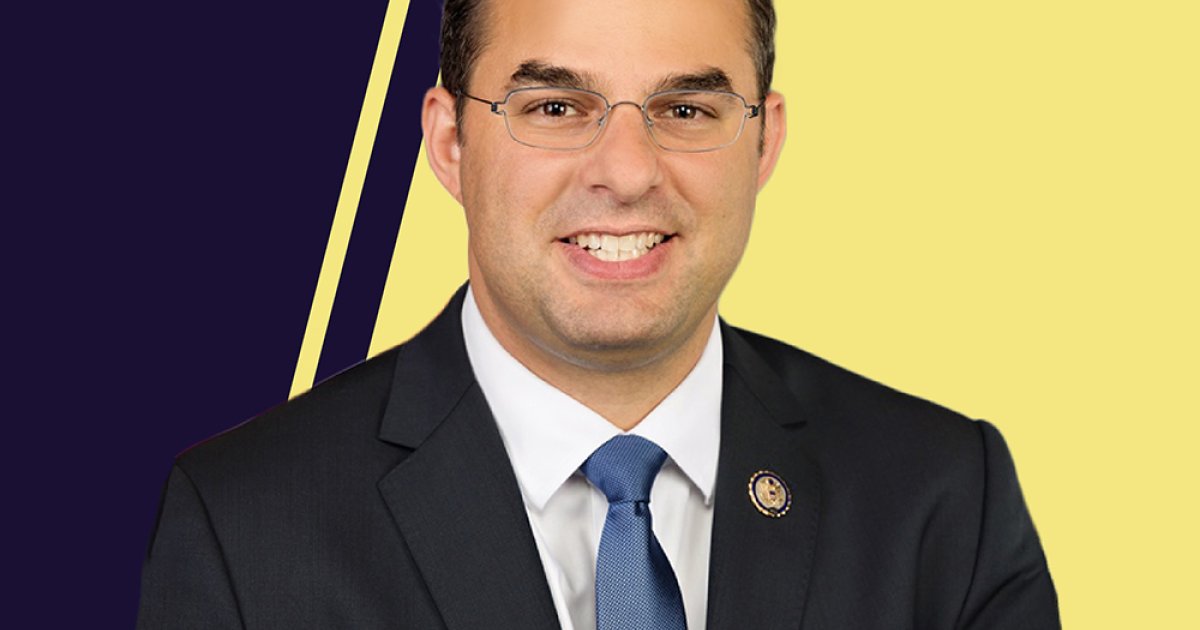
  • Live with former Rep. Justin Amash

    Live with former Rep. Justin Amash

    Throughout his career, former Congressman Justin Amash has been a strong advocate for freedom of speech, writing that “The value of free speech comes from encountering views that are unorthodox, uncommon, or unaccepted…Free speech is a barren concept if people are limited to expressing views already widely held.”

    In this special live episode, filmed in front of 200+ high schoolers attending FIRE’s Free Speech Forum at American University in Washington, D.C., Amash takes questions from the audience and discusses his upbringing, his political career, the state of American politics, and how the Constitution guided his work in Congress.

    Earlier this year, Congressman Amash joined FIRE’s Advisory Council.

    Timestamps:

    00:00 Intro

    03:30 Upbringing

    06:21 Law school

    13:15 Time in Congress

    15:59 Why Amash publicly explained each of his votes

    26:30 On being the first libertarian in Congress

    30:57 Connection between his principles and free speech

    33:10 Trump’s first impeachment

    42:48 Dealing with pushback from constituents

    46:03 Term limits for members of Congress?

    55:25 How high schoolers can pursue a career in politics

    59:45 Has there been a regression in First Amendment protections?

    01:07:32 What Amash is up to now

    01:08:06 Outro

    Enjoy listening to the podcast? Donate to FIRE today and get exclusive content like member webinars, special episodes, and more. If you became a FIRE Member through a donation to FIRE at thefire.org and would like access to Substack’s paid subscriber podcast feed, please email [email protected].

    Source link

  • What’s not talked about when you live overseas

    What’s not talked about when you live overseas

    The first time someone told me I was “too loud” in Latvia, I laughed. Not because it was funny, but because I genuinely hadn’t realized I was being loud. We were eating pizza one evening at Easy Wine in Riga, and despite being the only one not tipsy on the refreshments, I was still somehow the rowdiest at the table. 

    I shrank down an inch in my seat. The moment gave me pause. It was oddly familiar, like déjà vu. Everything around me felt almost known, just slightly askew, like it had been tilted on its axis. 

    The shame of taking up too much space? That I knew. But this time, it didn’t come from being Brown. It came from being American. 

    In the United States, my race is always top of mind. I’m a university student, and as a Government major, it’s a regular feature of my coursework. Having grown up in a nearly all-White town, I’ve been explaining my identity to others since I could talk. 

    With nearly two decades of practice under my belt, I’m well-versed in how my skin color and ancestry shape the world around me, and how to articulate that for others. So, the longer I spent in Riga, the more unsettled I felt by how absent race seemed from the conversation. 

    Conversations not had

    Hours spent gazing out the windows of trolleybuses gliding through the city confirmed what I suspected: Riga is not very diverse. Among the small number of people of color I did see, most were other South Asians, like me. In the United States, race is an ever-present topic, whether it’s in political debates, academic syllabi or heated threads on X. In Latvia, it felt like race had slipped out of the cultural vocabulary altogether. 

    As part of my study abroad program, we often heard from expert guest lecturers. And as each one spoke, a quiet confusion grew inside me: Why is nobody talking about race? I started to feel like a foreign lunatic, playing an internal game of “spot the non-white person” on every street. But the more I searched, the more questions I had. Where was the discussion? Why wasn’t it happening? 

    So, I brought it up with a friend I’d made in my hostel. Arsh is an Indian student studying mechanical engineering at Riga Technical University. He had been living in the city since February. When I asked if he’d experienced discrimination as a visibly Punjabi Sikh, his answer surprised me. 

    “No,” he said. 

    And then he added something that completely shifted my perspective. 

    “Nobody talks.”

    Silence and race

    I’d known Latvians were famously quiet, but I’d never considered how that silence might shape their understanding and construction of race. 

    In the United States, your racial identity is often the first thing people ask about. Strangers want to know what you are and where you’re from. Race in America is personal, political and inescapable. The constant conversation can be both exhausting and empowering: it pushes systems to change, creates space for shared stories of resilience and holds people accountable.

    But it also creates a kind of fatigue. As a person of color, you’re constantly on: explaining, reacting, defending. You’re visible, but often through a lens of trauma or tension. 

    In Latvia, it was different. What I came to think of as a kind of “quiet neutrality” reigned. People didn’t ask where I was from. They didn’t comment on my skin tone. They didn’t bring up diversity or inclusion, mainly because they weren’t speaking to me in the first place. 

    At first, that silence felt like relief. But eventually, it began to feel like an absence, because bias still exists, even if no one’s talking about it. 

    The power of passive racism

    After speaking with Arsh, I turned to the Internet, searching for other South Asian perspectives on racism in Latvia. I found plenty. 

    One Quora user bluntly wrote, “Indians are treated like shit here in Latvia.” Another shared that she didn’t know if others felt negatively about her brown skin, but if they did, they didn’t confront her about it. A Redditor described being told to “go back to your own country.” These stories varied wildly from hate crimes to total indifference, but they painted a clear picture: racism existed here. It just didn’t look the same. 

    Curious to dig deeper, I reached out to Gokul from @lifeinlatviaa on Instagram. A popular Indian content creator who’s lived in Latvia for seven years, Gokul shares his takes on life in the Baltics. Many of his videos humorously cover topics of social culture, stereotypes, education and work. He also co-hosts the podcast Baltic Banter with Brigita Reisone. 

    When I asked Gokul about his experience, he described the racism in Latvia as mostly “passive.” Latvians, he said, are reserved. “If they don’t like something, they won’t be in your face about it,” he said. 

    Still, he shared more overt examples, like housing ads that openly say Indians need not call. He noted persistent stereotypes, too: that Brown people are dirty kebab shop owners or delivery drivers. 

    The familiarity of bias

    None of this was unfamiliar to me. I’ve experienced housing discrimination. I’ve been called dirty by a White person. The common style of racism in Latvia was new to me: distant and quiet. In the United States, I once had a tween boy bike past me and mock an Indian accent — it was less traumatic than it was bizarre. There was certainly nothing subtle about it though. 

    Looking further, I found several reports from Latvian Public Broadcasting documenting hate crimes and prejudice against South Asians. So no, it’s not that racism doesn’t exist in Latvia. It’s that it shows up differently, and more importantly, it’s not widely discussed. 

    That difference matters.

    Race is fluid and contextual; its meaning shifts with time, place and history. In the United States, racism is foundational. It began with colonization and slavery, extending through the systemic injustice known as Jim Crow in the 19th and 20th centuries, to modern-day Islamophobia and racial profiling by police. Racial violence and resistance are woven into the country’s DNA. 

    Latvia’s history tells a different story. Latvia is a nation shaped more by being colonized than by colonizing. Ethnic Latvians have fought for sovereignty under foreign rule, whether by Germans or Soviets. Today, its population is overwhelmingly White, and ethnic tensions tend to focus on Latvians and Russians, or Roma communities. Immigration is relatively new here, so the language to talk about race may simply not have developed yet. 

    And that brings me back to volume. 

    In the United States, being loud is often classed and racialized as “trashy,” especially when tied to communities of color. In Latvia, loudness is framed differently: it’s seen as a kind of cultural rudeness. It’s not about being Brown, it’s about being foreign. And because everyone is generally quieter, the social cues around race, identity and belonging shift, too. 

    Little things like volume, friendliness and eye contact build the scaffolding around how race is perceived in different societies. They may seem like surface-level quirks, but they shape deep-rooted assumptions.

    And they remind us: racism may look different in various places, but it doesn’t disappear. It just changes form. And recognizing that change is the first step to dismantling it.


    Questions to consider:

    1. Why do many people outside the United States connect loudness with being American?

    2. Why was the author troubled about the lack of conversation about racism in Latvia?

    3. What kind of conversations do you have about race and do they make you feel more or less comfortable?


    Source link

  • Colleges Need to Tell Their Stories, Then Live Up to Them

    Colleges Need to Tell Their Stories, Then Live Up to Them

    According to Gallup, after reaching an all-time low in the past two years, American confidence in higher education has risen to where those expressing “quite a lot” or “a great deal” of confidence is now 42 percent (up from 36 percent), while those with little or no confidence has decreased from 32 percent to 23 percent.

    A poll out of New America shows that Democrats and Republicans align with about 42 percent of respondents from both parties saying that higher education is “fine as it is.”

    Higher education appears to be experiencing the “thermostatic model” of public opinion, where opinion moves in opposition to government action. The Trump administration attacks on higher ed have triggered some measure of backlash among public opinion, creating a certain rallying effect around the sector. Republicans saying that higher ed is “fine as it is” is essentially a declaration that they’d like to see institutions left alone.

    Considering the scope and severity of the attacks, this is not particularly good news, but it is interesting news, and it is news that higher ed institutions should note and make use of moving forward. One of the realities I think everyone in higher ed must embrace is that the future is going to be different from the past and attempts to return to the past are unlikely to be successful, particularly since the return will be predicated on a rose-colored-glasses view of that past, rather than recognizing the real tensions prior to the present assault.

    I am a believer in the thinking of Brendan Cantwell, a Michigan State professor who works on issues of institutional structure and operations and who believes in an “impoverished” future. As Cantwell says, “I do not believe Trump will be able to destroy American higher education, but his administration will try, and the sector will suffer.”

    The aftermath of the suffering and how public opinion may ameliorate that suffering is what we’re talking about here.

    During my post–grad school career as a market research consultant, I learned about something called SWOT analysis, where you draw a plus sign to make four quadrants, headlining the individual boxes with “strengths,” “weaknesses,” “opportunities” and “threats” and then listing the things you can think of that fit under the different categories in the individual boxes.

    I will admit, I rolled my eyes the first time I witnessed this exercise, and continued to roll my eyes many times after that, because it often felt like a SWOT analysis was just something to do because you have to do something, rather than a truly useful tool.

    For example, when “no one likes our product because it doesn’t work like we claim” is in the weakness category, whatever you might find in the opportunity box isn’t relevant.

    That said, when there is something solid and meaningful at the core, threats often do come bundled with opportunities. My messaging around teaching writing and large language models has been to acknowledge the threat, but also to suggest that the existence of these text extruders can be viewed as an opportunity to move toward work that is meaningful to humans.

    If we are in the midst of a rise in positive feeling toward higher education, the opportunity to shape public opinion around the attacks and to bolster the defenses must be seized.

    Deeper in the data from New America, we see specific alignment around what institutions should be doing. As reported by Kathryn Palmer here at IHE, interpreting the results, “the vast majority of Americans, including both Republicans and Democrats, believe higher education should function as more than a transaction. They say it should not only equip students with the skills and knowledge to succeed in their chosen fields (97 percent of Democrats; 98 percent of Republicans), but also help students become informed citizens (97 percent of Democrats; 89 percent of Republicans) and critical thinkers (97 percent of Democrats; 92 percent of Republicans).”

    People also want colleges and universities to do what colleges and universities do. They believe in education and opportunity and research and helping people reach their potential. Those of us who work within or are close observers of higher education understand that while these institutions are significantly flawed and could do better at this work, they also, often and for millions of people … work.

    It’s important to recognize that this increased confidence has nothing to do with actions universities have taken thus far. If thermostatic politics are at work—and I think the evidence is significant—it is the outside attacks that have fueled it. It seems as though figures like Chris Rufo are overplaying their hand, as he did again recently in a statement published at the Manhattan Institute in which he declares, “Now, the truth is undeniable. Beginning with the George Floyd riots and culminating in the celebration of the Hamas terror campaign, the institutions of higher education finally ripped off the mask and revealed their animating spirit: racialism, ideology, chaos.”

    The recent public opinion polling cited above suggests that a core plurality or majority of the public does not believe this. This is an opportunity.

    The unfortunate wrinkle in seizing this opportunity is that what bipartisan supermajorities want from higher ed institutions (skills and knowledge to succeed, informed citizens, critical thinkers) is open to many different interpretations when it comes to actual institutional operations.

    Indiana University has recently pivoted to becoming a place where the humanities are almost absent. Those currently in power at the University of Virginia are apparently trying to revivify the past, when it was primarily a finishing school for landed gentry. Florida has put their money down on being “anti-woke.”

    Some schools will insist that the future is AI. Others will go the opposite way. As vague as those public desires are, and as unhelpful as they are in determining the specific path an institution must take, they are an excellent guide for how to frame the work of your institution, whatever it might be doing.

    It is also a way to push back against things like the gutting of the student loan program, an initiative that will make it hard to impossible to do these things everyone wants colleges to do.

    The assault on universities, first prosecuted by people like Rufo and partially fueled—whether intentional or not—by groups like Heterodox Academy before being put to work by Trump, was a narrative not really based in reality but sufficiently plausible to enough people to make things happen.

    Resistance starts with a counternarrative. We have enough data to get going.

    Source link

  • A decade connecting young people to the world they live in

    A decade connecting young people to the world they live in

    To understand the chaos that is the world today it helps to look back a decade.

    This past year, world representatives met at COP29 to fight climate change in a place led by an authoritarian regime dependent on fossil fuels. The Israeli government under Prime Minister Benjamin Netanyahu has been massacring Palestinians in Gaza. The United States bombed Iran in an attempt to eliminate its nuclear capability. And U.S. President Donald Trump and an increasing number of European leaders have closed their doors to immigrants and refugees.

    In great contrast, when News Decoder launched 10 years ago, 196 nations signed onto the landmark agreement known as the Paris Accords, ushering in the hope that together we could cool down the planet. The administration of then-U.S. President Barack Obama signed a historic agreement with Iran, in which Iran would get rid of 97% of its supply of enriched uranium. A million refugees flooded into Europe from conflicts in Syria and elsewhere.

    In the years in between, the world locked down during the Covid-19 pandemic, Great Britain exited the European Union, the #MeToo movement erupted across the world, nations across the globe began legalizing same sex marriage, Russia invaded Ukraine, Trump got elected, tossed out and re-elected and we began ceding everything to artificial intelligence.

    Can you imagine coming of age in that world?

    Decoding world events

    When Nelson Graves founded News Decoder to help young people “decode” the world through news, it seemed that we lived in an age of optimism. Now young people feel helpless and disconnected. In April 2024, the World Economic Forum reported that young people worldwide are increasingly unhappy and this trend would have real consequences for the future.

    “We live in a world where teenagers grapple with a sense of crisis before adulthood; a time when young people, historically beacons of optimism, report lower happiness than their elders,” the report said.

    But even back in 2015, Nelson knew things would change. He’d spent years as a foreign correspondent covering world events. 

    “Anyone with a sense of history and someone with experience in following current events — especially a foreign correspondent — would have known that the world is most likely to change when you’re least expecting it,” he said. “Nothing is immutable — except the truism that the political pendulum is always swinging.”

    The roots of Brexit, the Make America Great Again movement in the United States and antipathy towards immigrants were already deep in 2015, even if they were largely underground and out of sight, he said. 

    A decade later, News Decoder’s mission of connecting young people to the world around them seems more relevant than ever.

    For 10 years, the high school students News Decoder has worked with have explored — through articles, podcasts, videos and photo essays and in live, cross-border dialogues — how problems in their communities connect to things happening elsewhere in the world. In 2016, for instance, a student studying abroad in China worked with News Decoder to explore how growing consumerism was leading to mountains of trash and created an army of people who mined that trash building up around them.

    That same year in an online roundtable, News Decoder brought together students from the Greens Farms Academy in the United States with students from Kings Academy in Jordan, Aristotle University in Greece and School Year Abroad in France to discuss the ongoing war in Syria and the worldwide crisis of Syrian refugees.

    Kindling curiosity

    One of the Greens Farms Academy students who participated, Samyukt Kumar, further explored the topic in an article News Decoder published that year. Looking back, he now tells, the practical experience it gave him was valuable.

    “Less for the substance but more for the practical experience,” he said. “My views on these topics evolved significantly as I received greater education and real-world exposure. But I still reap the benefits from gaining more confidence in my writing, learning to embrace the editing process and engaging my curiosity about the world.”

    In 2017, a News Decoder student at Haverford College in the United States explored the problem of migrants flooding into her home country of Italy. She came to this conclusion:

    “The roots of the problem lie outside of Italy, which nonetheless bears a heavy burden as the first EU destination for thousands of Africans crossing the Mediterranean,” she wrote. “A solution to the migration crisis depends not only on Italy’s good will — now being stretched to the limits — but also on the willingness of the rest of Europe and the international community to tackle the armed conflicts, poverty and human rights abuses that stir so many Africans to attempt the perilous Mediterranean crossing.”

    Fast forward to 2025. News Decoder worked with high school students in the British Section at the Lycée International Saint-Germain-en-Laye outside of Paris to take what they learned about the United Nations Sustainable Development Goals and find and tell narrative stories through podcasts. They explored such things as the problem of poverty in resource-rich areas of Africa and the connection between actions of multinational corporations and climate change.

    Crossing borders

    In Switzerland, News Decoder worked with students at Realgymnasium Rämibühl Zürich on a series of articles that explored gender inequity in sports, the connection between social media and the decline of democracy, how a local community is affected when it hosts a world conference and the connection between the quality of life in a country and the people’s willingness to pay for that through high prices and high taxes.

    And in monthly “Decoder Dialogues” News Decoder put together students from countries such as the United States, Colombia, France, India, Belgium and Rwanda in online roundtables to discuss such topics as the future of journalism, climate action, censorship, leadership and artificial intelligence.

    Through the exploration of a problem in the world, by seeking out experts who can put it into context and by seeking out different perspectives from other places, students make sense out of chaos. They begin to see that there are people out there thinking about these problems in different ways and seeking solutions to them.

    Ultimately, the message News Decoder wants students to take away is that you don’t need to run from complicated problems. You don’t need to disengage from the news and the events happening around you. By delving more into a topic or issue or controversy, you can begin to understand it and see the path forward.

    At News Decoder, we believe people should be able to listen to each other and exchange viewpoints to work through problems across differences and borders. Back in 2015, Graves posed this challenge: How to tap into the intellectual energy of the generation that will soon assume leadership in business, government, academia and social enterprise? 

    For the past 10 years we have worked to empower young people by giving them the information they need, connecting them to the world around them and providing them a forum for expression. For a decade we have helped them find coherence out of the chaos around them — and we intend to continue doing that for the next 10 years. 

    One thing we know: 10 years from now the world will be a lot different from what it is now. 

    “While no one has a perfect crystal ball, you can be sure that nothing remains unchanged for long,” Graves said. “Yesterday’s mortal enemy can become a fast friend — think of U.S. relations with Vietnam since the 1950s. Lesson: Always expect change, even if you can’t anticipate the precise contours, and don’t project linearly into the future. As ever, keep an open mind and beware confirmation bias.”

    That’s the message News Decoder tries to instill in the young people we work with. After all, a decade from now, they will be the ones making that change happen. 

    Source link

  • Can we keep live music venues from dying out?

    Can we keep live music venues from dying out?

    What is happening to the local music scene?

    I remember my parents telling me when I was a child that one of the best ways to spend a Saturday night as an adult was to visit a local bar and watch live bands with friends. However, as I grew older, I found it increasingly difficult to find such venues.

    With the music industry generating billions in global revenue — from Taylor Swift’s stadium tours to Coldplay’s international sellouts — one might expect local scenes to benefit.

    Instead, small venues from Pennsylvania to rural Ireland are shuttering at alarming rates. Vibrant shows, diverse crowds and strong community support for musicians should be the norm. Yet, in recent years, the opposite has happened. Attendance at small venues has plummeted and emerging artists are finding fewer opportunities to perform publicly.

    While the COVID-19 pandemic accelerated this decline, the trend had already been in motion for years. Fewer people are as interested in local music these days. But why?

    One major factor is the rise of social media. With music accessible at our fingertips, listeners no longer rely on their local scene to discover new artists. Instead of attending live performances, they can explore endless music from home.

    Digitized music

    Bassist and lead singer of the band Heaven’s Gate, 21-year-old Mike Danocwzi, offers insight on the matter. “People have forgotten what it’s like to have to leave their home to experience a song,” Danocwzi said. “Instead, they get too lost in their feed to even appreciate the vibes.”

    Having played guitar alongside Danocwzi at several shows, I can’t help but agree. Turnout is often disappointing and those who do attend seem more focused on their phones — texting, scrolling or recording — than on the performance itself. 

    A study by the Pew Research Center found that 99% of Americans and Canadians over 18 have a cell phone with social media. The Deloitte Center for Technology and Communications reported that 86% of Gen Z listeners discover new music through social media rather than live shows.

    Economic factors have also played a role. The rising cost of living has left many young adults with less disposable income for entertainment. This, combined with the skyrocketing cost of college — nearly triple what it was in the 1990s — has created a growing divide between artists and audiences.

    Another issue is the commercialization of the modern music industry. The so-called “middle class” of musicians is disappearing, mirroring the growing wealth gap in society. There is an ever-widening divide between mega-stars and independent artists.

    People flock to the big stars.

    Superstars like Drake, Taylor Swift and Metallica dominate the industry, leaving little room for smaller musicians to thrive. Music is no longer about unity through sound but rather unity through the artist — a shift that has changed how people engage with the industry.

    Virginia musician and local staple Jerry Reynolds believes this change has altered the very definition of being an artist. “These new stars don’t understand what made the industry fucking great,” Reynolds said. “I remember starting in bars not so I could make fucking money, just so I could fucking play in my damn community.”

    Reynolds, who chose to stay in the local circuit rather than chase stardom, argues that music should be about the song, not commercial success. He believes today’s artists have lost sight of what truly matters.

    The decline of guitar-driven music is another factor. Before social media, being a skilled guitarist was one of the coolest things a person could do, often launching musicians to stardom. Legends like Eddie Van Halen, Jimi Hendrix and Eric Clapton became icons through sheer talent and showmanship.

    Now, however, technical skill alone is no longer enough. The internet has accelerated the exchange of musical ideas to such an extent that virtuoso guitarists are no longer a rarity. As a result, the spectacle of live performance has lost some of its magic.

    Local venues struggle across the globe.

    This isn’t just a local issue. Around the world, small music venues and local cultural hubs are in decline. A 2023 Guardian article reported that the UK lost over 120 grassroots music venues in a single year — roughly 15% of its total. In Ireland, the closure of rural pubs — many of which double as performance spaces — is becoming a social crisis. These establishments often serve as the heart of small communities, acting as gathering places for conversation, connection and live music.

    Similar stories have emerged in Australia, Canada and parts of Europe, where independent venues are battling rising rents, insurance costs and shrinking audiences. The Music Venue Trust in the UK warns that without intervention, the cultural backbone of the live music scene could collapse entirely.

    At the same time, the stadium concert economy is booming. Taylor Swift’s Eras Tour grossed over $1 billion globally. Coldplay has sold out massive stadiums with capacities of over 70,000, with average ticket prices reaching several hundred dollars. The contrast is stark: while the biggest names in music break records, many local artists struggle to draw a crowd or even cover travel costs for a performance.

    What does this mean for the future of local music? And more importantly, can anything be done to reverse this trend?

    The short answer is simple: support your local scene. Look up small venues, ask about upcoming shows and show up for independent artists. Better yet, start a band or organize a local event.

    This isn’t just a problem in your neighborhood — it’s a global cultural shift. But change can start small. 

    The biggest obstacle facing live music is our own reluctance to step outside the comfort of our homes. If more people make the effort to rediscover the excitement of live performances, the local music scene could experience a revival. And with that resurgence, small artists may once again find a home within their communities.


    Questions to consider:

    1. Why are many small music venues struggling?

    2. What is one reason younger people are not going to clubs to see live music?

    3. What was the last live music you saw? How was it different from streaming the music?


    Source link

  • QS boss wins lifetime achievement award at PIE Live Europe 2025

    QS boss wins lifetime achievement award at PIE Live Europe 2025

    The PIE Live Europe, held between March 11-12 in central London, brought together leading figures in the international education sector. Delegates at the two-day conference heard key immigration updates, debated the future of the ELT sector and highlighted the value that international students bring to the UK.

    As the conference drew to a close, the winner of the event’s lifetime achievement award was revealed to be Nunzio Quacquarelli, who founded the global higher education and insights company QS in 1990.

    Famed for its university rankings, QS has expanded under Quacquarelli’s leadership to employ more than 900 people from over 30 countries.

    Quacqarelli said it was a “great feeling” to win the award, having been a supporter of The PIE since it was a “fledgeling business”.

    On what was next for QS, he added: “We’re really committed to providing trusted data and insights to the higher education sector and we really believe in the need for universities to transform, to adopt AI – so we’ve launched a responsible AI consortium with Imperial College.

    “And we really believe the need to deliver the emerging skills of the fifth industrial revolution, so we are developing huge amounts of insight on skills and occupations… to identify whatever skills are going to be demanded by employers of the future to guide curricular reform and university transformation.”

    You can watch his full interview in the video below.

    Source link