Tag: long

  • Higher Education’s Long Reckoning With Indigenous Oppression

    Higher Education’s Long Reckoning With Indigenous Oppression

    [Editor’s note: United American Indians of New England host the National Day of Mourning. Their website is at United American Indians of New England – UAINE.]

    Each November, while much of the United States celebrates Thanksgiving, Indigenous communities and their allies gather in Plymouth, Massachusetts, and across the country for the National Day of Mourning. It is a day that confronts the mythology of national innocence and replaces it with historical clarity. For Higher Education Inquirer, the significance of this day extends directly into the heart of American higher education—a system built, in no small part, on the expropriation of Indigenous land, the exploitation of Native Peoples, and the continued structural racism that shapes their educational opportunities today.

    From the earliest colonial colleges to the flagship research institutions of the twenty-first century, U.S. higher education has never been separate from the project of settler colonialism. It has been one of its instruments.

    Land, Wealth, and the Origins of the University

    America’s oldest colleges—Harvard, Yale, William & Mary, Dartmouth—were founded within the colonial order that dispossessed Indigenous communities. While missionary language framed some of these institutions’ early purposes, they operated through an extractive logic: the seizure of land, the conversion of cultural worlds, and, eventually, the accumulation of immense academic wealth.

    The Morrill Land-Grant Acts of 1862 and 1890 expanded this pattern on a national scale. Recent research documented by the “Land-Grab Universities” project shows that nearly eleven million acres of Indigenous land—taken through coercive treaties, forced removal, or outright theft—were funneled into endowments for public universities. Students today walk across campuses financed by displacements their own institutions have yet to fully acknowledge, let alone remedy.

    Higher Education as an Arm of Assimilation

    The United States also used education as a tool for forced assimilation. The Indian boarding school system, with the Carlisle Industrial School as its model, operated in partnership with federal officials, church agencies, and academic institutions. Native children were taken from their families, stripped of their languages, and subjected to relentless cultural destruction.

    Universities contributed research, training, and personnel to this system, embedding the logic of “civilizing” Indigenous Peoples into the academy’s structure. That legacy endures in curricula that minimize Indigenous knowledge systems and in institutional cultures that prize Eurocentric epistemologies as default.

    Scientific Racism, Anthropology, and the Theft of Ancestors

    American universities played a central role in producing scientific racism. Anthropologists and medical researchers collected Indigenous remains, objects, and sacred items without consent. Museums and university labs became repositories for thousands of ancestors—often obtained through grave robberies, military campaigns, or opportunistic scholarship.

    The 1990 Native American Graves Protection and Repatriation Act (NAGPRA) was designed to force institutions to return ancestors and cultural patrimony. Yet decades later, many universities are still out of compliance, delaying repatriation while continuing to benefit from the research collections they amassed through violence.

    Contemporary Structural Racism in Higher Education

    The oppression is not confined to history. Structural racism continues to constrain Native Peoples in higher education today.

    Native students remain among the most underrepresented and under-supported groups on American campuses. Chronic underfunding of Tribal Colleges and Universities (TCUs) reflects a broader political disregard for Indigenous sovereignty and self-determination. Meanwhile, elite institutions recruit Native students for marketing purposes while failing to invest in retention, community support, or Indigenous faculty hiring.

    Some universities have begun implementing land acknowledgments, but these symbolic gestures have little impact when institutions refuse to confront their material obligations: returning land, committing long-term funding to Indigenous programs, or restructuring governance to include tribal representatives.

    What a Real Reckoning Would Require

    A genuine response to the National Day of Mourning would require far more than statements of solidarity. It would involve confronting the ways American higher education continues to profit from dispossession and the ways Native students continue to bear disproportionate burdens—from tuition to cultural isolation to the racist violence that still occurs on and around campuses.

    Real accountability would include:

    • Full compliance with NAGPRA and expedited repatriation.

    • Transparent reporting of land-grant wealth and the return or shared governance of those lands.

    • Stable, meaningful funding for TCUs.

    • Hiring, tenure, and research policies that center Indigenous scholarship and sovereignty.

    • Long-term institutional commitments—financial, curricular, and political—to Indigenous communities.

    These steps require institutions to shift from performative recognition to structural transformation.

    A Day of Mourning—And a Call to Action

    The National Day of Mourning is not merely a counter-holiday. It is a reminder that the United States was founded on violence against Native Peoples—and that its colleges and universities were not passive beneficiaries but active participants in that violence.

    For higher education leaders, faculty, and students, the question is no longer whether these histories are real or whether they matter. They are documented. They are ongoing. They matter profoundly.

    The real question is what institutions are willing to give up—land, power, wealth, or narrative control—to support Indigenous liberation.

    On this National Day of Mourning, HEI honors the truth that Indigenous survival is an act of resistance, and Indigenous sovereignty is not a symbolic aspiration but an overdue demand. The future of higher education must move through that truth, not around it.

    Sources

    Roxanne Dunbar-Ortiz, An Indigenous Peoples’ History of the United States.

    The Land-Grab Universities Project (High Country News & Land-Grab Universities database).

    David Treuer, The Heartbeat of Wounded Knee.

    Margaret D. Jacobs, A Generation Removed: The Fostering and Adoption of Indigenous Children in the Postwar World.

    NAGPRA regulations and compliance reports.

    Source link

  • Epstein, Dershowitz, Summers, and the Long Arc of Elite Impunity

    Epstein, Dershowitz, Summers, and the Long Arc of Elite Impunity

    For many observers, Jeffrey Epstein, Alan Dershowitz, and Larry Summers appear as separate figures orbiting the world of elite academia, finance, and politics. But together—and through the long lens of history—they represent something far more revealing: the modern expression of a centuries-old system in which elite institutions protect powerful men while sacrificing the vulnerable.

    The Epstein-Dershowitz-Summers triangle is not a scandal of individuals gone astray. It is the predictable result of structures that make such abuses almost inevitable.

    The Modern Version of an Old System

    Jeffrey Epstein built his influence not through scholarship or scientific discovery—he had no advanced degrees—but by inserting himself into the financial bloodstream of the Ivy League. Harvard and MIT accepted his money, his introductions, and his promises of access to ultra-wealthy networks. Epstein did not need credibility; he purchased it.

    Larry Summers, as president of Harvard from 2001 to 2006, continued to engage with Epstein after the financier’s first arrest and plea deal. Summers’ administration accepted substantial Epstein donations, including funds channeled into the Program for Evolutionary Dynamics. Summers and his wife dined at Epstein’s Manhattan home. After leaving Harvard, Summers stayed in touch with Epstein even as the financier’s abuses became increasingly public. Summers used the same revolving door that has long connected elite universities, Wall Street, and presidential administrations—moving freely and comfortably across all three.

    Alan Dershowitz, Epstein’s close associate and legal strategist, exemplifies another pillar of this system: elite legal protection. Dershowitz defended Epstein vigorously, attacked survivors publicly, and remains embroiled in litigation connected to the case. Whether one believes Dershowitz’s claims of innocence is secondary to the structural fact: elite institutions reliably shield their own.

    Together, Epstein offered money and connections; Summers offered institutional prestige and political access; Dershowitz offered legal insulation. Harvard, meanwhile, offered a platform through which all three profited.

    Knowledge as a Shield—Not a Light

    For centuries, elite universities have served as both engines of knowledge and fortresses of power. They are not neutral institutions.

    They defended slavery and eugenics, supplying “scientific” justification for racial hierarchies.

    They exploited labor—from enslaved workers who built campuses to adjuncts living in poverty today.

    They marginalized survivors of sexual violence while protecting benefactors and faculty.

    They accepted fortunes derived from war profiteering, colonial extraction, hedge-fund predation, and private-equity devastation.

    Epstein did not invent the model of the toxic patron. He merely perfected it in the neoliberal era.

    A Four-Step Pattern of Elite Impunity

    The scandal surrounding Epstein, Dershowitz, and Summers follows a trajectory that dates back centuries:

    1. Wealth accumulation through exploitation

      From slave plantations to private equity, concentrated wealth is generated through systems that harm the many to benefit the few.

    2. The purchase of academic legitimacy

      Endowed chairs, laboratories, fellowships, and advisory roles allow dubious benefactors to launder reputations through universities.

    3. Legal and cultural shielding

      Elite lawyers, confidential settlements, non-disclosure agreements, and institutional silence create protective armor.

    4. Silencing of survivors and critics

      Reputational attacks, threats of litigation, and internal pressure discourage transparency and accountability.

    Epstein operated within this system. Dershowitz defended it. Summers benefited from it. Harvard reinforced it.

    Larry Summers: An Anatomy of Power

    Summers’ career illuminates the deeper structure behind the scandal. His trajectory—Harvard president, U.S. Treasury Secretary, World Bank chief economist, adviser to hedge funds, consultant to Big Tech—mirrors the seamless circulation of elite power between universities, finance, and government.

    During his presidency, Harvard publicly embraced Epstein’s donations. After Epstein’s first sex-offense conviction, Summers continued to meet with him socially and professionally. Summers leveraged networks that Epstein also sought to cultivate. And even after the Epstein scandal fully broke open, Summers faced no meaningful institutional repercussions.

    The message was clear: individual wrongdoing matters less than maintaining elite continuity.

    Higher Education’s Structural Complicity

    Elite universities were not “duped.” They were beneficiaries.

    Harvard returned only a fraction of Epstein’s donations, and only after the press exposed the relationship. MIT hid Epstein’s gifts behind false donor names. Faculty traveled to his island and penthouse without demanding transparency.

    Meanwhile:

    Adjuncts qualify for food assistance

    Students carry life-crippling debt

    Administrators earn CEO-level pay

    Donors dictate priorities behind closed doors

    This is not hypocrisy—it is hierarchy. A system built to serve wealth does exactly that.

    A Timeline Much Longer Than Epstein

    To understand the present, we must zoom out:

    Oxford and Cambridge accepted slave-trade wealth as institutional lifeblood.

    Gilded Age robber barons endowed libraries while crushing labor movements.

    Cold War intelligence agencies quietly funded research centers.

    Today’s oligarchs, tech billionaires, and private-equity titans buy influence through endowments and think tanks.

    The tools change. The pattern does not.

    Universities help legitimate the powerful—even when those powerful figures harm the public.

    Why This Still Matters

    The Epstein scandal is not resolved. Court documents continue to emerge. Survivors continue to speak. Elite institutions continue to stall and deflect. Harvard still resists meaningful transparency, even as its endowment approaches national GDP levels.

    The danger is not simply that another Epstein will emerge. It is that elite universities will continue to provide the conditions that make another Epstein inevitable.

    What Breaking the Pattern Requires

    Ending this system demands more than symbolic gestures or public-relations apologies. Real reform requires:

    Radical donor transparency—with all gifts, advisory roles, and meetings disclosed

    Worker and student representation on governing boards

    Strong whistleblower protections and the abolition of secret NDAs

    Robust public funding to reduce reliance on elite philanthropy

    Independent journalism committed to exposing institutional power

    Ida B. Wells, Jessica Mitford, Upton Sinclair, and other muckrakers understood what universities still deny: scandals are symptoms. The disease is structural.

    Epstein was not an anomaly.

    Dershowitz is not an anomaly.

    Summers is not an anomaly.

    They are products of a system in which universities serve power first—and truth, only if convenient.

    If higher education wants to reclaim public trust, it must finally decide which side of history it is on.

    Source link

  • How CTE inspires long and fulfilling careers

    How CTE inspires long and fulfilling careers

    This post originally published on iCEV’s blog, and is republished here with permission.

    A career-centered education built on real experience

    One of the most transformative aspects of Career and Technical Education is how it connects learning to real life. When students understand that what they’re learning is preparing them for long and fulfilling careers, they engage more deeply. They build confidence, competence, and the practical skills employers seek in today’s competitive economy.

    I’ve seen that transformation firsthand, both as a teacher and someone who spent two decades outside the classroom as a financial analyst working with entrepreneurs. I began teaching Agricultural Science in 1987, but stepped away for 20 years to gain real-world experience in banking and finance. When I returned to teaching, I brought those experiences with me, and they changed the way I taught.

    Financial literacy in my Ag classes was not just another chapter in the curriculum–it became a bridge between the classroom and the real world. Students were not just completing assignments; they were developing skills that would serve them for life. And they were thriving. At Rio Rico High School in Arizona, we embed financial education directly into our Ag III and Ag IV courses. Students not only gain technical knowledge but also earn the Arizona Department of Education’s Personal Finance Diploma seal. I set a clear goal: students must complete their certifications by March of their senior year. Last year, 22 students achieved a 100% pass rate.

    Those aren’t just numbers. They’re students walking into the world with credentials, confidence, and direction. That’s the kind of outcome only CTE can deliver at scale.

    This is where curriculum systems designed around authentic, career-focused content make all the difference. With the right structure and tools, educators can consistently deliver high-impact instruction that leads to meaningful, measurable outcomes.

    CTE tools that work

    Like many teachers, I had to adapt quickly when the COVID-19 pandemic hit. I transitioned to remote instruction with document cameras, media screens, and Google Classroom. That’s when I found iCEV. I started with a 30-day free trial, and thanks to the support of their team, I was up and running fast. 

    iCEV became the adjustable wrench in my toolbox: versatile, reliable, and used every single day. It gave me structure without sacrificing flexibility. Students could access content independently, track their progress, and clearly see how their learning connected to real-world careers.

    But the most powerful lesson I have learned in CTE has nothing to do with tech or platforms. It is about trust. My advice to any educator getting started with CTE? Don’t start small. Set the bar high. Trust your students. They will rise. And when they do, you’ll see how capable they truly are.

    From classroom to career: The CTE trajectory

    CTE offers something few other educational pathways can match: a direct, skills-based progression from classroom learning to career readiness. The bridge is built through internships, industry partnerships, and work-based learning: components that do more than check a box. They shape students into adaptable, resilient professionals.

    In my program, students leave with more than knowledge. They leave with confidence, credentials, and a clear vision for their future. That’s what makes CTE different. We’re not preparing students for the next test. We’re preparing them for the next chapter of their lives.

    These opportunities give students a competitive edge. They introduce them to workplace dynamics, reinforce classroom instruction, and open doors to mentorship and advancement. They make learning feel relevant and empowering.

    As explored in the broader discussion on why the world needs CTE, the long-term impact of CTE extends far beyond individual outcomes. It supports economic mobility, fills critical workforce gaps, and ensures that learners are equipped not only for their first job, but for the evolution of work across their lifetimes.

    CTE educators as champions of opportunity

    Behind every successful student story is an educator or counselor who believed in their potential and provided the right support at the right time. As CTE educators, we’re not just instructors; we are workforce architects, building pipelines from education to employment with skill and heart.

    We guide students through certifications, licenses, career clusters, and postsecondary options. We introduce students to nontraditional career opportunities that might otherwise go unnoticed, and we ensure each learner is on a path that fits their strengths and aspirations.

    To sustain this level of mentorship and innovation, educators need access to tools that align with both classroom needs and evolving industry trends. High-quality guides provide frameworks for instruction, career planning, and student engagement, allowing us to focus on what matters most: helping every student achieve their full potential.

    Local roots, national impact

    When we talk about long and fulfilling careers, we’re also talking about the bigger picture:  stronger local economies, thriving communities, and a workforce that’s built to last.

    CTE plays a vital role at every level. It prepares students for in-demand careers that support their families, power small businesses, and fill national workforce gaps. States that invest in high-quality CTE programs consistently see the return: lower dropout rates, higher postsecondary enrollment, and greater job placement success.

    But the impact goes beyond metrics. When one student earns a certification, that success ripples outward—it lifts families, grows businesses, and builds stronger communities.

    CTE isn’t just about preparing students for jobs. It’s about giving them purpose. And when we invest in that purpose, we invest in long-term progress.

    Empowering the next generation with the right tools

    Access matters. The best ideas and strategies won’t create impact unless they are available, affordable, and actionable for the educators who need them. That’s why it’s essential for schools to explore resources that can strengthen their existing programs and help them grow.

    A free trial offers schools a way to explore these solutions without risk—experiencing firsthand how career-centered education can fit into their unique context. For those seeking deeper insights, a live demo can walk teams through the full potential of a platform built to support student success from day one.

    When programs are equipped with the right tools, they can exceed minimum standards. They can transform the educational experience into a launchpad for lifelong achievement.

    CTE is more than a pathway. It is a movement driven by student passion, educator commitment, and a collective belief in the value of hard work and practical knowledge. Every certification earned, every skill mastered, and every student empowered brings us closer to a future built on long and fulfilling careers for everyone.

    For more news on career readiness, visit eSN’s Innovative Teaching hub.

    Latest posts by eSchool Media Contributors (see all)

    Source link

  • DHS Moves to Restrict How Long Foreign Students Can Stay

    DHS Moves to Restrict How Long Foreign Students Can Stay

    Photo illustration by Justin Morrison/Inside Higher Ed | aapsky/iStock/Getty Images | Chip Somodevilla/Getty Images

    After months of speculation, the Department of Homeland Security publicly released its plans to limit how long international students can stay in the United States—a proposal that advocates say will only add to uncertainty and chaos that this group is already facing.

    Currently, students can stay in the country as long as they are enrolled at a college or university. But the proposed rule released Wednesday would allow students to stay for the duration of their program, but no longer than four years. That isn’t enough time for students to complete a doctoral program, and it’s less time than the average student takes to complete a bachelor’s degree. Students who want to stay longer would have to seek authorization to extend their visa.

    The first Trump administration tried to make this change, which would roll back at 1991 rule known as duration of status. However, the Biden administration withdrew the proposal. Officials said in a news release that setting a fixed time for students on visas to stay would curb what they call abuses and allow the government to better oversee these individuals. Additionally, officials alleged that the current policy incentivizes international students to “become ‘forever’ students,” who are “perpetually enrolled in higher education courses to remain in the U.S.”

    DHS will take public comments on the proposal until Sept. 29. Before the agency can finalize the rule, it will have to review and respond to those comments.

    Advocates for international students have been sounding the alarm about this plan since DHS first sought approval in June to make the proposal, and those warnings continued this week now that the plan is public. Changing the rule, they say, would be another hurdle for international students who want to come to the United States. These others include vetting students’ social media profiles and more scrutiny on current visa holders. Since President Trump took office, the State Department has revoked 6,000 student visas.

    More than one million students from other countries enrolled in at a U.S. college or university in 2024, making up about 6 percent of the total student population. Experts predict the number of international students to drop off significantly this academic year.

    Fanta Aw, executive director of NAFSA, the association of international educators, said in a statement that the DHS proposal is a “bad idea” and “a dangerous overreach by government into academia.”

    “These changes will only serve to force aspiring students and scholars into a sea of administrative delays at best, and at worst, into unlawful presence status—leaving them vulnerable to punitive actions through no fault of their own,” Aw added.

    Miriam Feldblum, president and CEO of the Presidents’ Alliance on Higher Education and Immigration, described the proposal in a statement as “another unnecessary and counterproductive action aimed against international students and scholars.”

    “This proposed rule sends a message to talented individuals from around the world that their contributions are not valued in the United States,” she said. “This is not only detrimental to international students—it also weakens the ability of U.S. colleges and universities to attract top talent, diminishing our global competitiveness. International students, scholars, and exchange visitors contribute economically, intellectually, and culturally to American society. They drive innovation, create jobs, and advance groundbreaking research.”

    Source link

  • For women athletes, world recognition is a long time coming

    For women athletes, world recognition is a long time coming

    Last year was arguably the best year for women’s sports yet.

    According to data analysis company S&P Global, in-person attendance and viewership were higher, with women’s professional sports sponsorships increasing by 22% since 2023. According to UN Women Australia, globally, there has been a lack of interest in women’s sports. But it seems that they might finally be getting the attention they deserve.

    To find out what is driving this change in attitude towards women’s sports, I interviewed 10 women athletes across high school, university, and coaching. 

    Historically, women’s sports have not gotten the recognition that they deserve. However, during 2024, women’s collegiate basketball had a significant increase in viewership compared to the previous year. The Final Four game in 2024 was a showdown between two players from two U.S. universities: Caitlin Clark of the University of Iowa and Paige Bueckers of the University of Connecticut. The game drew in a peak audience of 16.1 million, according to an article in Sports Illustrated

    Women’s media coverage has tripled since 2019. At this rate, if coverage trends continue, women’s share of coverage could reach 20% by the end of this year, according to Women.org, an organization within the United Nations devoted to gender equality and the empowerment of women. 

    Gender parity in sports

    The Paris Olympic and Paralympic Games were officially the first to see 50:50 coverage in gender equality.

    Avery Elliot, a track and field athlete from the University of Pennsylvania, attended the Paris Olympics as a spectator and said she noticed the change – more social media presence and sponsorships, particularly highlighting women of color, especially in women’s gymnastics, spurred by the popularity and success of U.S. athletes Simone Biles and Jordan Chiles and Brazilian Rebeca Andrade. 

    The lack of media coverage of women has always played a role in the lack of recognition that they receive. Lanae Carrington, a track star at Lehigh University in the U.S. state of Pennsylvania, said that in the past, women athletes would get dismissed for getting a low number of views or for the belief that women’s games were not as entertaining as those of men. “Overall, women are making a stronger impact in the entertainment industry, whether that’s more highlight reels on TikTok or screen time on TV,” Carrington said. “It’s finally becoming normalized.” 

    One of the hardest things to deal with as an athlete is a lack of support, whether from the media, in person or on the sidelines. 

    Brianna Gautier, a volleyball and basketball sensation at Neumann University in Pennsylvania, said it is hard to play a game where you’re not going to have a full house. “But it’s kind of helped me learn to just play for myself instead of waiting for people to show up and relying on that to bring some type of energy because I feel like it starts within you and your teammates,” she said.

    Play for yourself first

    As a track and field athlete, I have seen this firsthand. It is unfortunate to see people walk away after the men are finished competing. But I found that when you start showing up for yourself with energy, success comes rolling in. Gautier has embraced the idea of playing for herself and nobody else.

    It used to be that at Neumann, people would attend the men’s basketball games but never stay afterward to support the women. She also expressed the importance of the support of NBA players such as Steph Curry, who came out to watch several women’s Stanford basketball games in 2023. Gautier said that people think to themselves that if their favorite male basketball players are tuning in to watch women’s sports, it must be worthwhile. 

    Carrington said parents also need to support their daughters in athletics. “This is important because many girls don’t have parents who encourage them to play more traditionally masculine sports, such as basketball and soccer,” she said. 

    Most of the women I interviewed commented on the change in the WNBA as the catalyst for the change in women’s sports.. 

    Liz Spagnolo is a soccer player at Tower Hill High School in the U.S. state of Delaware who appreciates the opportunities she now has. “Women in sports is big for us because based on women 100 years ago, we wouldn’t be expected to play sports, or be expected to do something like cheer,” Spagnolo said. 

    The Caitlin Clark effect

    Arianna Montgomery, an athlete at The Tatnall School, the private school in Delaware that I also attend, said she appreciates the change in women’s basketball.

    “It’s gotten a lot more fame, definitely more college sports have gotten a lot more fame,” Montgomery said. “I think women’s games are starting to become more popular. People are starting to look more towards women’s sports as well as men’s sports, and even since before, instead of men’s sports now, a decade ago, that wasn’t the case.”

    Many of the women I spoke to said that a big contributor to the success of women’s sports is due to the Catlin Clark effect. The Caitlin Clark effect is a term that was created after her record-breaking seasons playing women’s basketball at the University of Iowa during the years of 2023-2024.

    As a result, she has become the all-time leading scorer in college basketball before entering the WNBA,  and has reportedly signed sponsorship deals worth more than $11 million. 

    Ruth Hiller, a lacrosse coach at my school said that are a number of successful women athletes that young women can now look up to, including tennis superstars Venus and Serena Williams and Alex Morgan, the former captain of the U.S. women’s soccer team, women’s tennis pioneer Billie Jean King and Charlotte North, a professional lacrosse player who broke the all-time goals record in college lacrosse. 

    Women now rack up medals and points

    Daija Lampkin, my track and field coach, pointed to Alison Felix, who won more medals than any other U.S. track and field athlete, and tennis superstar Serena Williams.

    It is important, Lampkin said, that women support women. “Our body is critical, and some women are self-conscious that they are going to be muscular,” Lampkin said. “It can tear down your confidence. It’s not talked about in sports how women look at their bodies. People tear down Serena Williams and her body all the time, but look at where she is and how much she has accomplished”. 

    I have been participating in sports since I was 3 years old, when my parents signed me up for gymnastics. I run track and field and am a runner, jumper and hurdler. I began training for track and field competitions at the age of 8, and my dad has been my coach since the very beginning. 

    In my experience, my father was instrumental in encouraging me to participate in dance and gymnastics growing up, while also encouraging me to run track and play basketball and soccer for fun.

    With opportunity comes pressure, and Gautier said it is important for girls not to put too much pressure on themselves. “When you are an athlete, you tend to feel that you have to perform a certain way to be successful or please everyone else, but I feel you kind of get blinded by the fact that you are doing it for yourself,” she said. 


    Questions to consider:

    1. Why have women not gotten the same recognition and pay as male athletes in sports? 

    2. What does “parity” mean when it comes to gender in sports?

    3. Should there be any differentiation when it comes to gender in sports and why?


    Source link

  • A proper review of student maintenance is now long overdue

    A proper review of student maintenance is now long overdue

    Elsewhere on the site, Esther Stimpson, Dave Phoenix and Tony Moss explain an obvious injustice.

    Universal Credit (UC) reduces by 55p for every £1 earned as income – unless you’re one of the few students entitled to UC, where instead it is reduced by £1 for every £1 you are loaned for maintenance.

    To be fair, when Universal Credit was introduced, the income disregards in the old systems that recognised that students spend out on books, equipment and travel were rolled into a single figure of £110 a month.

    Taper rates were introduced to prevent “benefit traps” where increasing earnings led to disproportionately high reductions in support – and have gone from 65p initially, then to 67p, and now to 55p.

    But for students, there’s never been a taper rate – and that £110 for the costs of books, equipment and travel hasn’t been uprated in over 13 years. Lifelong learning my eye.

    The olden days

    The student finance system in England is full of these problems – probably the most vexing of which is the parental earnings threshold over which the system expects parents to top up to the maximum.

    It’s been set at £25,000 since 2008 – despite significant growth in nominal earnings across the economy since then. IFS says that if the threshold had been uprated since 2008, it would now be around £36,500 (46 per cent higher) in 2023/24.

    That explains how John Denham came to estimate that a third of English domiciled students would get the maximum maintenance package back in 2007. We’re now down to about 1 in 5.

    Add in the fact that the maximums available have failed to increase by inflation – especially during the post-pandemic cost of living spikes – and there’s now a huge problem.

    It’s a particular issue for what politics used to call a “squeezed middle” – the parents of students whose families would have been earning £25,000 in 2007 now have £4,000 more a year to find in today’s money.

    And thanks to the increases in the minimum wage, the problem is set to grow again – when the Student Loans Company comes to assess the income of a single parent family in full time (40 hours) work, given that’s over the £25,000 threshold, it will soon calculate that even that family has to make a parental contribution to the loan too.

    It’s not even as if the means test actually works, either.

    Principles

    How much should students get? Over twenty years ago now, the higher education minister charged by Tony Blair with getting “top-up fees” through Parliament established two policy principles on maintenance.

    The first was Charles Clarke’s aspiration to move to a position where the maintenance loan was no-longer means tested, and made available in full to all full-time undergraduates – so that students would be treated as financially independent from the age of 18.

    That was never achieved – unless you count its revival and subsequent implementation in the Diamond review in Wales some twelve years later.

    Having just received results from the Student Income and Expenditure Survey (SIES) the previous December, Clarke’s second big announcement was that from September 2006, maintenance loans would be raised to the median level of students’ basic living costs –

    The principle of the decision will ensure that students have enough money to meet their basic living costs while studying.

    If we look at the last DfE-commissioned Student Income and Expenditure Survey – run in 2021 for the first time in eight years – median living and participation costs for full-time students were £15,561, so would be £18,888 today if we used CPI as a measure.

    The maximum maintenance loan today is £10,227.

    The third policy principle that tends to emerge from student finance reviews – in Scotland, Wales and even in the Augar review of Post-18 review of education and funding – is that the value of student financial support should be linked somehow to the minimum wage.

    Augar argued that students ought to expect to combine earning with learning – suggesting that full-time students should expect to be unable to work for 37.5 hours a week during term time, and should therefore be loaned the difference (albeit with a parental contribution on a means test and assuming that PT work is possible for all students on all courses, which it plainly isn’t).

    As of September, the National Living Wage at 37.5 hours a week x 30 weeks will be £13,376 – some £2,832 more than most students will be able to borrow, and more even than students in London will be able to borrow.

    And because the Treasury centrally manages the outlay and subsidies for student loans in the devolved nations for overall “equivalence” on costs, both Scotland and Wales have now had to abandon their minimum wage anchors too.

    Diversity

    Augar thought that someone ought to look at London weighting – having not managed to do so in the several years that his project ran for, the review called London a “subject worthy of further enquiry”.

    Given that the last government failed to even respond to his chapter on maintenance, it means that no such further work has been carried out – leaving the uprating of the basic for London (+25 per cent) and the downrating for those living at home (-20 per cent) at the same level as they were in the Education (Student Loans) Regulations 1997.

    Augar also thought student parents worthy of further work – presumably not the subject of actual work because it was DfE officials, not those from the DWP, who supported his review. Why on earth, wonder policymakers, are people putting off having kids, causing a coming crisis in the working age/pensionable age ratio? It’s a mystery.

    Commuters, too. The review supported the principle that the away/home differential should be based on the different cost of living for those living at home but it “suggested a detailed study of the characteristics and in-study experience of commuter students and how to support them better.” It’s never been done. Our series would be a good place to start.

    Things are worse for postgraduates, of course. Not only does a loan originally designed to cover both now go nowhere near the cost of tuition and maintenance, the annually updated memo from the DWP (buried somewhere in the secondary legislation) on how PG loans should be treated viz a vis the benefits system still pretends that thirty per cent of the loan should be treated as maintenance “income” for the purposes of calculating benefits, and the rest considered tuition spend.

    (Just to put that into context – thirty per cent of the current master’s loan of £12,471 is £3,741. 90 credits is supposed to represent 1800 notional hours that a student is spending on studying rather than participating in the labour market. The maintenance component is worth £2.08 an hour – ie the loan is £16,851 short on maintenance alone for a year which by definition involves less vacation time).

    Carer’s Allowance is available if you provide at least 35 hours of care a week – as long as you’re not a full-time student. Free childcare for children under fives? Only if you’re not a full-time student. Pretty much all of the support available from both central government and local authorities during Covid? Full-time students excluded.

    When ministers outside of DfE give answers on any of this, they tell MPs that “the principle” is that the benefits system does not normally support full-time students, and that instead, “they are supported by the educational maintenance system.” What DWP minister Stephen Timms really means, of course, is thank god our department doesn’t have to find money for them too – a problem that will only get worse throughout the spending review.

    Whose problem?

    Back in 2004, something else was introduced in the package of concessions designed to get top-up fees through.

    As was also the case later in 2012, the government naively thought that £3,000 fees would act as an upper limit rather than a target – so Clarke announced that he would maintain fee remission at around £1,200, raise the new “Higher Education grant” for those from poorer backgrounds to £1,500 a year, and would require universities to offer bursaries to students from the poorest backgrounds to make up the difference.

    It was the thin end of a wedge. By the end of the decade, the nudging and cajoling of universities to take some of their additional “tuition” fee income and give it back to students by way of fee waivers, bursaries or scholarships had resulted in almost £200m million being spent on financial support students from lower income and other underrepresented groups – with more than 70 per cent of that figure spent on those with a household income of less than £17,910. By 2020-21 – the last time OfS bothered publishing the spend – that had doubled to £406m.

    It may not last. The principle is pretty much gone and the funding is in freefall. When I looked at this last year (via an FOI request), cash help per student had almost halved in five years – and in emerging Access and Participation Plans, providers were cutting financial support in the name of “better targeting”.

    You can’t blame them. Budgets are tight, the idea of redistributing “additional” fee income a lost concept, and the “student premium” funding given to universities to underpin that sort of support has been tumbling in value for years – from, for example, £174 per disabled student in 2018/19 to just £129 now.

    All while the responsibility for the costs to enable disabled students to access their education glide more and more onto university budgets – first via a big cut in the last decade, and now via slices of salami that see pressure piled on to staff who get the blame, but don’t have the funding to claim any credit.

    Pound in the pocket

    What about comparisons? By European standards, our core system of maintenance looks fairly generous – in this comparison of monthly student incomes via Eurostudent, for example, we’re not far off top out of 20 countries:

    But those figures in Euros are deceptive. Our students – both UG and PG – spend fewer years as full time students than in almost every other country. Students’ costs are distorted by a high proportion studying away from home – something that subject and campus rationalisation will exacerbate rather than relieve.

    And anyway, look at what happens to the chart when we adjust for purchasing power:

    How are students doing financially three years on? The Student Income and Expenditure Survey (SIES) has not been recommissioned, so even if we wanted to, we’d have no data to supply to the above exercise. The Labour Force Survey fails to capture students in (any) halls, and collects some data through parents. Households Below Average Income – the key dataset on poverty – counts tuition fee loans as income, despite my annual email to officials pointing out the preposterousness of that. How are students doing financially? We don’t really know.

    And on costs, the problems persist too. There’s no reliable data on the cost of student accommodation – although what there is always suggests that it is rising faster than headline rates of inflation. The basket of goods in CPI and RPI can’t be the same as for a typical student – but aside from individual institutional studies, the work has never been done.

    Even on things like the evaluation of the bus fare cap, published recently by the Department for Transport, students weren’t set up as a flag by the department – so are unlikely to be a focus of what’s left from that pot after the spending review. See also health, housing, work – students are always DfE’s problem.

    Student discounts are all but dead – too many people see students as people to profit from, rather than subsidise. No government department is willing to look at housing – passed between MHCLG and DfE like a hot potato while those they’d love to devolve to “other” students as economic units or nuisances, but never citizens.

    The business department is barely aware that students work part-time, and the Home Office seems to think that international students will be able to live on the figure that nobody thinks home students can live on. DfE must have done work, you suppose they suppose.

    In health, we pretend that student nurses and midwives are “supernumerary” to get them to pay us (!) to prop up our creaking NHS. And that split between departments, where DfE loans money to students for four years max, still means that we expect medical students in their final two years – the most demanding in terms of academic content and travelling full time to placements – to live on £7,500 a year. Thank god, in a way, that so few poor kids get in.

    It’s not even like we warn them. UK higher education is a £43.9 billion sector educating almost 3m students a year, professes to be interested in access and participation, and says it offers a “world-class student” experience. And yet it can’t even get its act together to work out and tell applicants how much it costs to participate in it – even in one of the most expensive cities in the world.

    Because reasons

    Why are we like this? It’s partly about statecraft. There was an obvious split between education and other departments when students were all young, middle class and carefree, and devolution gave the split a sharper edge – education funding (devolved) and benefits (reserved).

    It’s partly about participation. It’s very tempting for all involved to only judge student financial support on whether it appears to be causing (or at least correlates with) overall enrolment, participation and completion – missing all of the impacts on the quality of that participation in the process.

    Do we know what the long-term impacts are on our human capital of “full-time” students being increasingly anxious, lonely, hungry, burdened and, well, part-time? We don’t.

    Efficiency in provider budgets is about getting more students to share cheaper things – management, space, operating costs and even academics. Efficiency for students doesn’t work like that – it just means spending less and less time on being a student.

    The participation issue is also about the principal – we’ve now spent decades paying for participation expansion ambitions by pushing more and more of the long-run run cost onto graduates – so much so that there’s now little subsidy in the system left.

    And now that the cost of borrowing the money to lend to students is through the roof, increases in the outlay look increasingly impossible.

    Lifelong moaning

    But something will have to give soon. Some five years after Boris Johnson gave a speech at Exeter College announcing his new Lifetime Skills Guarantee, there’s still no news on maintenance – only ever a vague “maintenance loan to cover living costs for courses with in-person attendance” to accompany the detailed tables of credits that get chunked down from the FT £9,535.

    The LLE was partly a product of Augar (more on that on Wonk Corner) – who said that maintenance support should be reserved for those studying at a minimum level of intensity – 25 per cent (15 ECTS a year), and then scaled by credit.

    But think about that for a moment, setting aside that increasingly arbitrary distance learning differential. Why would a student studying for 45 credits only get 3/4 of an already inadequate loan? Will students studying on one of those accelerated degrees get 1.5 x the loan?

    The centrality of credit to the LLE – and its potential use in determining the level of student financial support for their living and participation costs – is fascinating partly because of the way in which a row between the UK and other member states played out back in 2008.

    When ECTS was being developed, we (ie the UK) argued that the concept focused too heavily on workload as the primary factor for assigning credits. We said that credits should be awarded based on the actual achievement of learning outcomes, rather than simply the estimated workload.

    That was partly because the UK’s estimate at the time of 1,200 notional learning hours (derived from an estimate of 40 hours’ notional learner effort a week, multiplied by 30 weeks) was the lowest in Europe, and much lower than the 1,500-1,800 hours that everyone else in Europe was estimating.

    Annex D of 2006’s Proposals for national arrangements for the use of academic credit in higher education in England: The Final report of the Burgess Group put that down to the UK having shorter teaching terms and not clocking what students do in their breaks:

    It could be argued that considerably more learner effort takes place during the extended vacations and that this is not taken into account in the total NLH for an academic year.

    Those were the days.

    In the end an EU fudge was found allowing the UK to retain its 20 notional hours – with a stress that “how this is applied to a range of learning experiences at a modular or course level will differ according to types of delivery, subject content and student cohorts” and the inclusion of “time spent in class, directed learning, independent study and assessment.”

    A bit like with fees and efficiency, if in the mid noughties it was more likely that students were loaned enough to live on, were posh, had plenty of spare time and had carefree summers, that inherent flex meant that a student whose credit was more demanding than the notional hours could eat into their free time to achieve the learning outcomes.

    But once you’ve got a much more diverse cohort of students who are much more likely to need to be earning while learning, you can’t really afford to be as flexible – partly because if you end up with a student whose characteristics and workload demand, say, 50 hours a week, and a funding system that demands 35 hours’ work a week, once you sleep for 8 hours a night you’re left with less than 4 hours a day to do literally anything else at all.

    Think of it this way. If it turns out that in order to access the full maintenance loan, you have to enrol onto 60 ECTS a year (the current “full-time” position), we are saying to students that you must enrol onto credits theoretically totalling at the very very least 1,200 hours of work a year. We then loan them – as a maximum – £8.52 an hour (outside London, away from home). No wonder they’re using AI – they need to eat.

    If it then turns out that you end up needing to repeat a module or even a year, the LLE will be saying “we’ve based the whole thing on dodgy averages from two decades ago – and if you need to take longer or need more goes at it, you’ll end up in more debt, and lose some of your 4 years’ entitlement in the process”. Charming.

    A credit system whose design estimated notional learning hours around students two decades ago, assumed that students have the luxury of doing lots of stuff over the summer, and fessed up that it’s an unreliable way of measuring workload is not in any world a sensible way to work out how much maintenance and participation cost support to loan to a student.

    Pretty much every other European country – if they operate loans, grants or other entitlements for students – regards anyone studying more than 60 (or in some cases, 75) credits as studying “full-time”.

    That allows students to experience setbacks, to accumulate credit for longer, to take time out for a bereavement or a project or a volunteering opportunity – all without the hard cliff edges of “dropping out”, switching to “part-time” or “coming back in September”. Will our student finance system ever get there? Don’t bet on it.

    If the work (on workload) isn’t done, we’ll be left with definitions of “full-time” and “part-time” student that are decades old – such that a full-time student at the OU can’t get a maintenance loan, while an FT UG at a brick university that barely attends in-person can – that pretty much requires students to study for more credit than they can afford to succeed in.

    Oh – and if the loan is chunked down for a 30 credit module, how will the government prevent fraud?

    Via an FOI request, the SLC tells me that last year, almost 13,000 students FT students in England and Wales managed to pull down installment 1 of their loan without their provider pulling down installment 1 of the fee loan. Anyone that thinks that’s all employer funding will shortly be getting my brochure on bridges.

    Maintenance of a problem

    Our system for student living and participation costs may, by comparison with other systems, appear to be a generous one – especially if you ignore the low number of years that students are in it, and how much they eventually pay back. But make no mistake – our student finance system is completely broken – set up for a different sector with different students that has no contemporary basis in need, ambition or impact.

    Its complexity could not be less helpful for driving opportunity, its paucity is likely to be choking our stock of human (and social) capital (and resultant economic growth), and its immediate impacts have normalised food banks on campus – real poverty that universities neither can nor should be expected to alleviate with other students’ fees and debt.

    The signals and signs are of danger ahead – a minister keen to stress that the “fundamentals” of the system we have for funding higher education won’t change reminds us both of a lack of money and a bandwidth issue. It’s one whose solution requires real research, cross-departmental and nations working, and a proper sense of what we want students to be, experience and learn. Sadly, that also sounds like a solution that lends itself to long grass.

    Given everything else going on in the world right now, maybe that’s inevitable. But decade after decade, every time we put off a proper review, or over-prioritise university rather than student funding in the debates, we dodge the difficult questions – because they’re too complex, because the data isn’t there, because it’s another department’s problem, because reasons.

    If Bridget Phillipson is serious about “fixing the foundations” to “secure the future of higher education” so that “students can benefit from a world-class education for generations to come”, she needs to commission a dedicated student maintenance review. Now.


    Source link

  • Short term Trump and long term trends (Bryan Alexander)

    Short term Trump and long term trends (Bryan Alexander)

    Here I look into the past month of Trump’s actions and see how they might shape long-term trends. Specifically I touch on demographics, climate change, populism, technology, and a bit more. It’s a weird way to celebrate my birthday, but hopefully a productive one.


    Source link

  • Student Aid in Canada: The Long View

    Student Aid in Canada: The Long View

    Note: this is a short version of a paper which has just appeared in issue 72:4 the Canadian Tax Journal. How short? I’m trying for under 1000 words. Let’s see how I do.

    Canadian student aid programs existed in scattered forms since just after World War I but became a “national program” when the Dominion-Canadian Student Aid Program (DCSAP) was created in 1939. Under this program, the Government of Canada provided block cash grants to provinces who administered their own scholarship programs which provided aid based on some combination of need and merit. The actual details of the program varied significantly from one province to another; at the time, the government of Canada did not place much importance on “national programs” with common elements.

    In 1964, this DCSAP was replaced by the Canada Student Loans Program (CSLP)—recently re-named the Canada Student Financial Assistance Program (CSFAP). This has always been a joint federal-provincial enterprise. But where the earlier program was a block grant, this program would be a single national entity run more or less consistently across all provinces, albeit with provincial governments still in place as responsible administrative agencies able to supplement the plan as they wished. Some provinces would opt out of this program and received compensation to run their own solo programs (Quebec at the program’s birth, the Northwest Territories in 1984 and Nunavut in 1999). The others, for the most part, built grant programs that kicked in once a student had exhausted their Canada Student Loan eligibility.

    Meanwhile, a complimentary student aid program grew up in the tax system, mainly because it was a way to give money to students that didn’t involve negotiations with provinces. Tuition fees plus a monthly education amount were made into a tax deduction in 1961 and then converted to a tax credit in 1987. Registered Education Savings Plans (RESPs), which are basically tax-free growth savings accounts, showed up in 1971.

    Although the CSLP was made somewhat more generous over time in order to keep up with rising student costs, program rules went largely unchanged between 1964 and 1993. Then, during the extremely short Kim Campbell government, a new system came into being. The federal government decided to make loans much larger, but also to force provinces in participating provinces to start cost-sharing in a different manner—basically, they had to step up from a student’s first dollar of need instead of just taking students with high need. Since this was the era of stupidly high deficits, provinces responded to these additional responsibilities by cutting the generosity of their programs, transforming from pure grants to forgivable loans. For the rest of the decade, student debt rose—in some cases quite quickly: in total loans issued doubled between 1993 and 1997.

    And then, everything went into reverse.

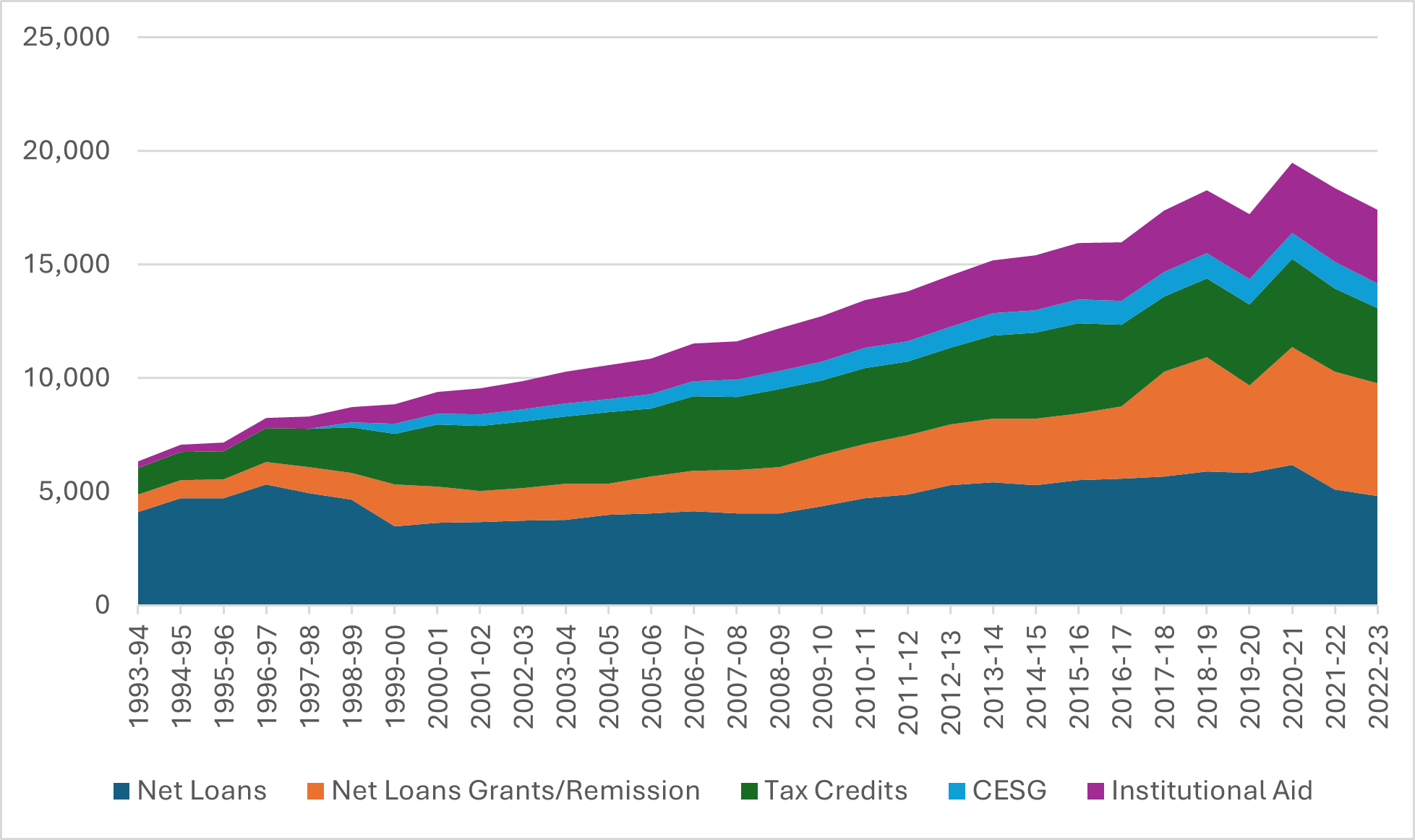
    In a series of federal budgets between 1996 and 2000, billions of dollars were thrown into grants, tax credits and a new program called “Canada Education Savings Grants,” which were a form of matching grant for contributions to RESPs. Grants and total aid rose; loans issued fell by a third, mainly between 1997 and 2001 (a recovering economy helped quite a bit). Tax expenditures soared, which due to a rule change allowing tax credits to be carried forward meant either students got to keep more of their work income or got to reduce their taxes once they started working.

    Since this period of rapid change at the turn of the century, student aid has doubled in real terms. And nearly all of that has been an increase in non-repayable aid. Institutional scholarships? Tripled. Education scholarships? Quadrupled. Loans? They are up, too, but there the story is a bit more complicated.

    Figure 1: Student Aid by Source, Canada, 1993-94 to 2022-23, in thousands of constant $2022

    For the period from about 2000 to 2015, all forms of aid were increasing at about inflation plus 3%. Then, in 2016, we entered another period of rapid change. The Governments of Canada and Ontario eliminated a bunch of tax credits and re-invested the money into grants. Briefly, this led to targeted free tuition in Ontario, before the Ford government took an axe to the system. Then, COVID hit and the CSFAP doubled grants. Briefly, in 2020-21, total student aid exceeded $23 billion/year (the figure above does not include the $4 billion per year paid out through the Canada Emergency Student Benefit), with less than 30% of it made up of loans.

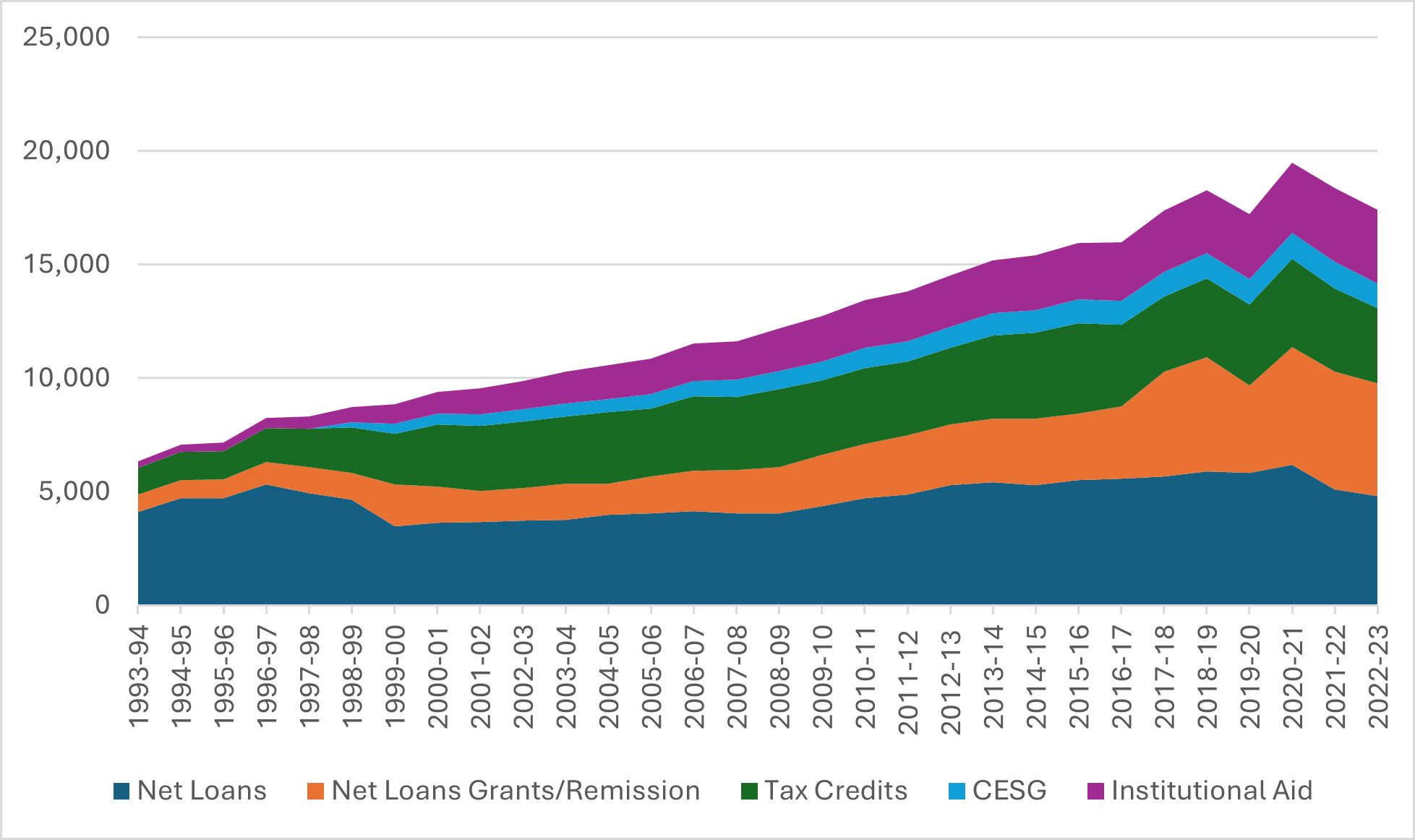
    One important thing to understand about all this is that while the system became much larger and much less loan-based, something else was going on, too. It was becoming much more federal. Over the past three decades, provincial outlays have risen about 30% in real terms; meanwhile, federal ones have quadrupled. In the early 1990s, the system was about 45-55 federal-provincial; now, it’s about 70-30 federal. It’s a stunning example of “uploading” of responsibilities in an area of shared-jurisdiction.

    Figure 2: Government Student Aid by Source, Figure 1: Student Aid by Source, Canada, 1993-94 to 2022-23, in thousands of constant $2022

    So there you go: a century of Canadian student aid in less than 850 words. Hope you enjoyed it.

    Source link

  • Rachel Reeves and the Oxford-Cambridge Arc: Right time. Right place. Long live the Growth Corridor!

    Rachel Reeves and the Oxford-Cambridge Arc: Right time. Right place. Long live the Growth Corridor!

    The idea of a growth corridor between Oxford and Cambridge announced today is not new. Our region was fortunate with the announcements today: being ready, and in the right place at the right time armed with a good piece of policy background from Public First and Rachel Wolf.   

    While it has had many changes of name and cast, the idea of connecting this region has been around for at least 25 years. The idea has waxed and waned as it has acted as the poster child for Coalition, Tory and now Labour governments. It is estimated the Corridor could boost the economic contribution of the region by up to £78 billion, so has formed the centrepiece of the speech on growth given by Chancellor, Rachel Reeves. The Chancellor is going for growth in the Oxford-to-Cambridge Growth Corridor (formerly known as the Corridor, Arc, Region and now Corridor) with the ingredients of world-class companies with world-class talent and research and development.  

    It may even feel as if the Arc Universities Group – ‘working together towards inclusive and sustainable economic growth in an area of designated national economic significance’ – was formed in 2018 in anticipation of such a moment. This is a very long-term project which promises to bear fruit in 30-to-50 years. Universities are able to understand and span such timeframes. My own involvement, for a mere seven years, is transitory and many others have come and gone.  

    The universities in our region, and the relationships that they enjoy with industry and others, have played a pivotal role. There are several reasons for this, including:  

    1. We have been able to act as the honest broker and use our convening power to bring together people and conversations.  
    2. There has been a lot to learn as we face adaptive and existential challenges and these are the stock of universities.  
    3. We are largely independent in our actions, able to tell it how it is, free from the pressures of the electoral cycle or the vicissitudes of policy change. 
    4. Our universities have maturity of governance and stability of leadership, with vice-chancellors serving for at least five years, whereas Secretaries of State sometimes last only a few weeks. 
    5. The region, like many others, hosts a great diversity of institutions. The missions of our members are complementary  in their offering.  
    6. There is significant scale and influence with universities often being the biggest employers. With the benefit of money from the Higher Education Innovation Fund (HEIF), we have been able to act quickly and take risks that others have not and we have been able to hold the space while other processes catch up. 
    7. We have developed a great interface with industry and the private sector. 
    8. Partnerships: Perhaps the most valuable outcome of working in the wings for so many years is the alliances that have been formed between actors. We have formed a strategic alliance with East West Rail, with the private sector and with the sub-regional transport body, as well as the pan-regional partnership.  
    9. More recently we have cemented the relationship between universities and the private sector, in the formation of the Supercluster Board. 

    As our Chair, Alistair Fitt, the Vice-Chancellor of Oxford Brookes University and Chair of the Arc Universities Group, has reflected: 

    This region hosts a great diversity and scale of universities. Together we offer a wide range of key contributions: globally renowned research brilliance, the powerhouse of skills provision provided by cutting edge teaching, world-class knowledge transfer and commercialisation. Our universities, working in close partnership, in alliance with others – particular the private sector – are organised into the Arc Universities Group. We stand ready for the challenge. We welcome the oversight and experience that the leadership of Sir Patrick Vallance brings to the region, and we look forward to helping deliver the Chancellor’s aspirations for growth.

    The Supercluster Board (SCB) has been formed to ensure the UK can achieve its ambition to become a science and technology superpower. The SCB comprises a group of globally recognised scientific enterprises, investors and world-leading universities alongside the local enterprise partnerships, all of which have a vested interest in the region and will seek to work constructively with a wide range of stakeholders, including the UK Government, to deliver on the ambition for the Oxford-Cambridge Growth Corridor. 

    There is significant representation on this new group, with four university representatives on the main board, including Alistair Fitt, and with an expert panel comprising all the vice-chancellors or their near proxy. It is the private sector voice that has succeeded in landing the message about the region’s potential with Rachel Reeves.  

    I’m grateful to the many colleagues who have kept the faith. It is not always been easy, especially given the recent financial constraints, but the future looks promising and we can be greatly encouraged by the Chancellor’s recognition of the potential. The next challenge will be to see how we all deliver under the sudden power of the spotlight that will inevitably follow the announcements.  

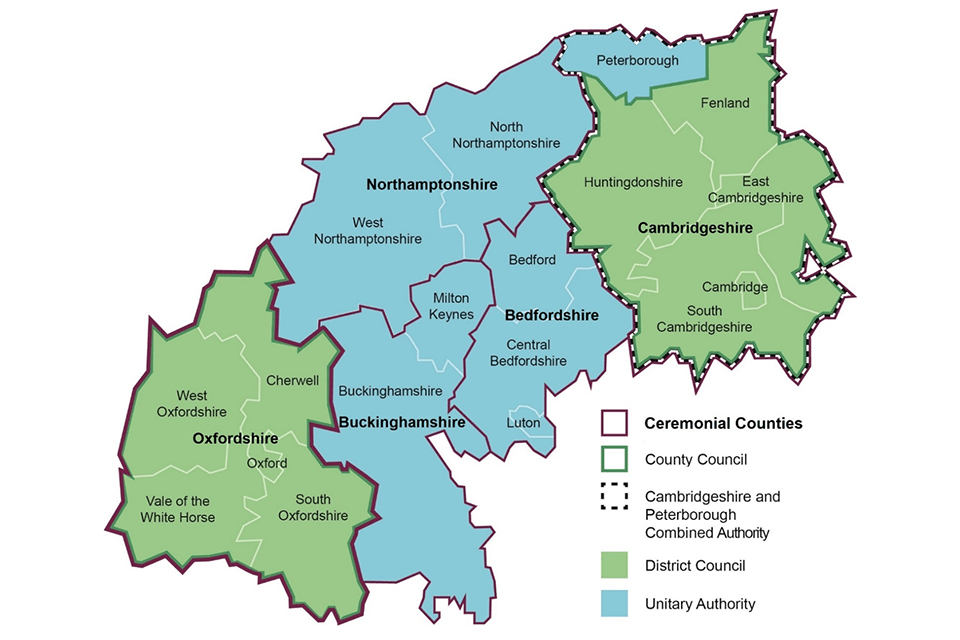
    The photo accompanying this blog on the HEPI website is taken from https://www.gov.uk/government/publications/oxford-cambridge-arc/oxford-cambridge-arc

    Source link

  • LA Schools Reopen, But Recovery Will Be Long and Painful – The 74

    LA Schools Reopen, But Recovery Will Be Long and Painful – The 74


    Get stories like this delivered straight to your inbox. Sign up for The 74 Newsletter

    It was just after 1 am when Los Angeles charter school superintendent Ian Mcfeat started getting text messages and phone calls at a relative’s house where he was sheltering from the fires. 

    His neighbors said his house was burning down in the wildfires – along with his entire Altadena neighborhood of Los Angeles.

    Aveson School of Leaders, which McFeat runs and where his kids attended school just three blocks from his house, was also burning.

    Unable to sleep, Mcfeat drove away from his in-law’s house that he’d been evacuated to and made the drive back to Altadena.

    He drove through the fire lines and into his neighborhood to see if he could salvage anything, save anyone, or put out the fires that had raged on the east side for more than 48 hours straight, and decimated the Palisades in the west. 

    He was greeted with a scene out of a horror movie. Fueled by a violent windstorm and piles of brush left from a particularly wet winter last year, the firestorm was like a tornado shooting flames, blasting through his neighborhood.

    “It was like driving through a bomb scene,” said Mcfeat. “There were homes exploding. I probably shouldn’t have been there.” 

    Despite the devastating losses, Mcfeat can’t imagine not rebuilding his home and school right where they were in Altadena. But the road to recovery will be a long and painful one.

    “No doubt about it. We are going to rebuild,” said Mcfeat. Aveson has started a GoFundMe. At this point, a new site for the school has not been identified. The district hasn’t been able to help them yet.

    “I don’t know what we’re going to do,” said Mcfeat.

    The wildfires that burned Los Angeles this month are the costliest and most destructive in the city’s history, displacing more than 150,000 residents and killing at least 25 people. Two massive blazes fed by windstorms, the Palisades Fire and the Eaton Fire, simultaneously scorched the city from the sea to the mountains, filling the air with vast plumes of ash and smoke.

    As the wind and flames began to retreat last week, and firefighters gained control of the fires, schools began to reopen. And the kids began to return to class.

    The Los Angeles Unified School District, which is by far the largest district of about 80 in Los Angeles County, resumed instruction Monday after being totally closed since last Thursday. Seven schools remain shut because they’re located in evacuation zones. Another three won’t reopen because their buildings were badly burned or destroyed in the fires.  

    Dozens of much smaller districts in Los Angeles County also reopened this week, with the exceptions of two districts, Pasadena Unified, which encompasses Altadena, and La Cañada Unified, which neighbors Altadena to the west. 

    The Eaton fire has destroyed at least five schools but was mostly contained by Friday. 

    Kids from two of the LAUSD schools that burned in the Palisades, Marquez Charter Elementary School and Palisades Charter Elementary School, were placed, with intact school rosters, in close-ish LAUSD school buildings that already had other schools in them.

    The students who attended the burned schools were given their own entrances, classrooms and courtyards for kids to play. When parents dropped them off at class this week, there were a lot of tearful reunions.

    Families from Palisades Charter were somber, but excited to return to normalcy with their new space located inside of Brentwood Science Magnet School.  

    Joseph Koshki, a parent from the Palisades whose son attends third grade at Palisades Charter, walked holding hands with his son to their new classroom at Brentwood Science, which had been stacked with balloons.

    “When he saw his school burned on the news he was crying for days,” Koshki said of his child. “But when he heard that he was going to his new school with his old friends, he was so happy”.

    Nina Belden, a parent of a Palisades Charter student who had made an emergency evacuation from her house in the Palisades with her family, said it was important for the students at her daughter’s school to stay together and receive in-person instruction.

    “We were worried they were going to do something like remote learning,” said Beldon.

    Marquez Charter, which also burned in the Palisades fire, has a long history in the community, having opened in 1955 when the Palisades still had a frontier feel, before the neighborhood became a favorite of Hollywood stars and media execs.

    For Victoria Flores, who works as a paraeducator at Marquez, the school is part of her family. Flores went to Marquez when she was in elementary school, and her mother works in the cafeteria.

    “It was my home away from home. We are devastated by what happened,” Flores said.

    But Flores said she and the rest of the staff were glad to be relocated together at a LAUSD school called Nora Sterry, about ten miles from the burned Marquez campus.

    “We are a really close family,” said Flores. “That’s helped us a lot.”

    Upstairs at Nora Sterry, Clare Gardner’s class had about eight of twenty students show up on the first day of relocation.

    Her third-grade class was playing with clay and Mrs. Gardner, who is a twenty-seven-year veteran of Marquez, held back her tears as she helped students arrive into class.

    “We always call it the Marquez family,” Gardner said as the children greeted each other.

    One boy in Mrs. Gardner’s class said he was happy to be around his friends and teacher but sad about his classroom fish and books, which were lost in the fire.

    Later in the morning, LAUSD Superintendent Alberto Carvalho went to visit parents at Nora Sterry.

    After nearly a week off school, Carvalho says attendance is still below normal.

    “I think where that attendance is lacking is in schools that were directly affected” by the fires, Carvalho said.

    Also hurting attendance, Carvalho said, is the fact that many families are enduring temporary relocations, while others lack stable housing entirely.

    LAUSD staff attendance is back to normal, he said, while student attendance is about 88% — down from an average of about 90%, representing about 10,000 fewer students than normal.

     “As conditions of the families begin to normalize and stabilize, those [attendance] numbers will rise,” said Carvalho.

    For other schools in other areas of Los Angeles, recovery may be longer in the making. 

    Bonnie Brinecomb, principal of Odyssey Charter School – South in Altadena, which burned to the ground in the Eaton Fire, estimates that the homes of 40% of the students enrolled in the school also burned.

    Families and school staffers are scrambling to ensure displaced families have food, shelter and clothing, Brinecomb said. Some students are turning up for daycare at a nearby Boys and Girls Club that offered to take them in.  

    Brinecomb said Odyssey has partnered with McFeat’s school Aveson to search for new facilities. But the double loss of students’ homes and the schools’ campuses is a gutpunch.  

    “It’s just heartbreak. Pure shock,” she said. “You don’t even process how bad of a situation just happened.”

    Like Aveson, Odyssey has launched an online fundraiser and Brinecomb says the school will rebuild. How long that will take, though, remains an open question.  

    From the perspective of displaced children and families, the faster things return to normal, the better, said Dr. Frank Manis, professor emeritus of psychology at the University of Southern California. 

    The experience of trauma can intensify if routines are disrupted for longer periods, and the intensity of the disruption matters as well, said Manis. Kids who lost their homes to fires may have a harder time bouncing back than those who only lost their schools, he said.    

    “It’s sort of on that spectrum of wartime PTSD, but not as bad,” said Manis. “So what it could lead to is nightmares, difficulty sleeping, and emotional or behavior problems that can last for quite a while.”

    Children fighting post-traumatic stress from the fires may become withdrawn, or act out in class, said Manis. But mostly, he said, the research from past natural disasters shows that even children badly impacted by the fires may begin to feel normal within a few months. 

    “Kids are pretty resilient,” said Manis. “But trauma can disappear for a while, and then it can resurface later. When everyone’s forgotten how bad it was, it can resurface.” 


    Get stories like these delivered straight to your inbox. Sign up for The 74 Newsletter

    Source link