Tag: longer

  • U.S. campuses are no longer safe spaces

    U.S. campuses are no longer safe spaces

    Leslie Ortega is pursuing her second bachelor’s degree in botany at a university in California. She earned her first degree in business administration back in December 2016. That was before U.S. President Donald Trump took office. The experience was much different then. 

    “Obama was president when I was in college from 2012-2016 and I remember how happy everyone was around me,” Ortega said. “There was an oblivious feel to it where we felt safe. Now being in school I notice that there is definitely more fear in classrooms.”

    With Trump in office for a second term, Ortega said she sees a major shift. It is no longer easy to be blind to the realities of how so many lives are changing. 

    “Existing in a world where your neighbor or your favorite food vendor can be snatched off the street on the basis of their skin color and occupation is impossible to hide from,” she said. “This has always been happening even during Obama but we had rose colored glasses when he was in office.”

    As someone who recently graduated two months ago with a bachelor of arts focused in ethnic studies, I have to agree with Ortega. I cannot ignore the current political state of the country, especially as students and universities remain potential targets of U.S. Immigration and Customs Enforcement (ICE) raids. 

    An attack on diverse perspectives

    On top of that, conservatives are actively taking actions that threaten diversity, equity and Inclusion measures and certain subjects like critical race theory. My major, rooted in critical race theory, is deemed controversial by some because it teaches students to critically analyze information and question authority in a sense. Ethnic Studies courses are typically taught to engage people to uncover history from non-white perspectives, unveiling a legacy of imperialism and racism. 

    Actions that make it difficult to teach or learn these concepts are being enacted by people in power who seem to lack consideration for how marginalized communities will be affected. 

    At the California university I attended, two emails from the administration addressed the topic of immigration this past semester. The first was a letter from the interim president back in February 2025 which outlined guidance for university employees and students on how to interact with ICE officers if they ever showed up on campus. 

    It stated that since a large portion of the campus is open to the general public, it is therefore open to federal officers.

    However, ICE agents could not enter areas not open to the public such as residence halls, confidential meeting rooms, employee offices or classrooms while the university was in session. This email also outlined resources students and staff could turn to such as the Coalition for Humane Immigrant Rights and a new center for “Dreamers” – undocumented people who had been brought into the United States as children. It also explained how to create an immigration preparedness plan. 

    A second email was sent out two months later, with quick guide cards and a link to an immigration resources page on the university website.

    Will campus be an unsafe haven?

    It is currently summer. How the university will actually respond if ICE were to show up on campus is really up in the air. It is one thing to voice concern and another to actually intervene in the face of injustice to protect targeted individuals. 

    While I will not return to campus this fall, I have no doubt that it will be students and staff of color who will ultimately serve as the first line of defense. Given how the university has responded in the past to student activist efforts, I would not be surprised if the campus administration did little should ICE arrive. 

    Across the country, university students have watched the detainment of student activists by ICE agents. Merely advocating against Israel’s ongoing genocide of the Palestinian people in Gaza, has been deemed a crime worthy of detention and deportation.

    These detainees included Mohsen Mahdawi and Mahmoud Khalil from Columbia University and Rumeysa Ozturk from Tufts University. Khalil spent more than three months in detention before his release on 20 June. 

    The arrests of students simply for speaking out angers students like Ortega. 

    “It is infuriating to hear about student’s visas being revoked for their stance on supporting Palestine during a presidency that criminalizes opposition to the status quo,” Ortega said. “[This is] referring to anyone that critiques American ideology, the military complex or simply the American flag.”

    Arrests in the City of Angels

    Los Angeles has seen a surge of undocumented immigrants being arrested. According to the Los Angeles Times, nearly 2,800 people have been picked up by masked ICE agents on the streets, at job sites, Home Depot parking lots and even outside immigration court hearings since 6 June 2025.

    Across the country these numbers could rise. In July, the U.S. Congress passed a national budget called the “Big Beautiful Bill” which will greatly increase the number of ICE agents and detention centers. 

    I view this bill as a way to cement discrimination against immigrants into the U.S. legal framework. We are already seeing the rapid construction and opening of detention centers such as Alligator Alcatraz in Florida – a tent city that can hold up to 3,000 people 

    According to public and internal data from the U.S. Customs and Border Protection agency, as collected by NBC News, more than 56,000 people were being held in ICE detention centers as of 1 Aug. 2025.

    All this has created a state of fear. I spoke to someone who lives in California and currently holds a student visa holder. I’m not identifying the person because of fear that doing so will make them a target. The student recently earned a master’s degree in education and is currently in the admission process to a teaching credential program. 

    “There’s a culture here [in the U.S.] that when they hear that you don’t have a social security number, they stop helping you as if you were a pariah,” the person said. “I couldn’t work on campus, I lost a lot of opportunities because I didn’t have a social security number. Sometimes I could get stipends or fellowships but it was because of people who understand immigrants.”

    Silencing of student activism

    They now have a work visa and hope to get permanent residency, but given all the threats the current presidential administration has made to student visa holders, they wonder about their prospects. 

    “The silencing of the student activists is sending a message to everyone that if you dissent, if you protest, if you do not agree with what’s going on right now, then there will be consequences,” they said. 

    They said they used to be politically active, but no longer feel safe to do so here, or at least to the same degree. 

    “There’s an executive order that says that the first thing they’re going to look at about you is your social media, so you cannot even post about what you think, what you defend,” they said. “You cannot talk about the ongoing genocide anymore, because then, all the money that you have invested in changing your migratory status will be thrown to the trash. You give all your money, that’s dispossession without violence, you make this enormous sacrifice and then you don’t want to lose it, right, so you are forced, you are silenced.”

    I am choosing to censor the person’s name for the sake of their own safety and wellbeing, I can’t help but wonder if doing so represents yet another way immigrants are silenced. 

    Fighting desensitization

    All of this is to say that being a person of color and a student during this presidential administration has been exceptionally difficult. That’s particularly true for someone like Ortega, who attends school in a predominantly White area.

    “It is emotionally and mentally draining to be focusing on your safety existing on a campus that doesn’t support you if you choose to wear a keffiyeh or a patch in opposition of a felon as a president,” Ortega said. 

    I recognize that as a person of color, I might not have the same advantages as someone who is White. As an American citizen though, I have some sense of protection in speaking up. But it is my Mexican and Guatemalan heritage that fuels my fight. 

    My existence is a result of immigration; I would not be where I am today if it were not for my family members who chose to come to the United States.

    While it can be easy to become desensitized, especially with a new devastating headline every day, I urge others to hold onto some sense of hope by leaning into community resistance. Only by letting go of the belief that “this doesn’t personally affect me, so I don’t care” can we truly begin to dismantle systems of power.

    Only seven months have passed since Trump returned to the presidential office. As he continues to carry out his seemingly racist agenda that targets anyone who is low-income, disabled, queer or non-White, university campuses that are supposed to be havens for learning and connecting with new ideas, are now filled with fear and suspense.


    Questions to consider:

    1. Why are increasing numbers of university students in the United States afraid to speak out?

    2. Why do you think the author feels she doesn’t have the same protections as a U.S. citizen as someone who is White?

    3. Do you think that people who want to study in another country should be able to do so? 


    Source link

  • VA Office of Inspector General no longer accepting emails and VA chatbot has no answers.

    VA Office of Inspector General no longer accepting emails and VA chatbot has no answers.

    The Department of Veterans Affairs, Office of Inspector General (VA OIG), is no longer accepting tips from veterans who have been ripped off by predatory subprime colleges–at least not via email. The Higher Education Inquirer, at one time, was an important source for information for the VA OIG, but the VA’s watchdogs stopped corresponding with us a few years ago for no apparent reason. This failure to communicate is part of a longstanding pattern of indifference by the US Government (VA, DOD, ED, and DOL) and veterans’ organizations towards military servicemembers, veterans, and their families who are working to improve their job skills and job prospects.   

    VA’s chatbot also has much to be desired.

    Source link

  • Department of Education No Longer Posting Freedom of Information Requests

    Department of Education No Longer Posting Freedom of Information Requests

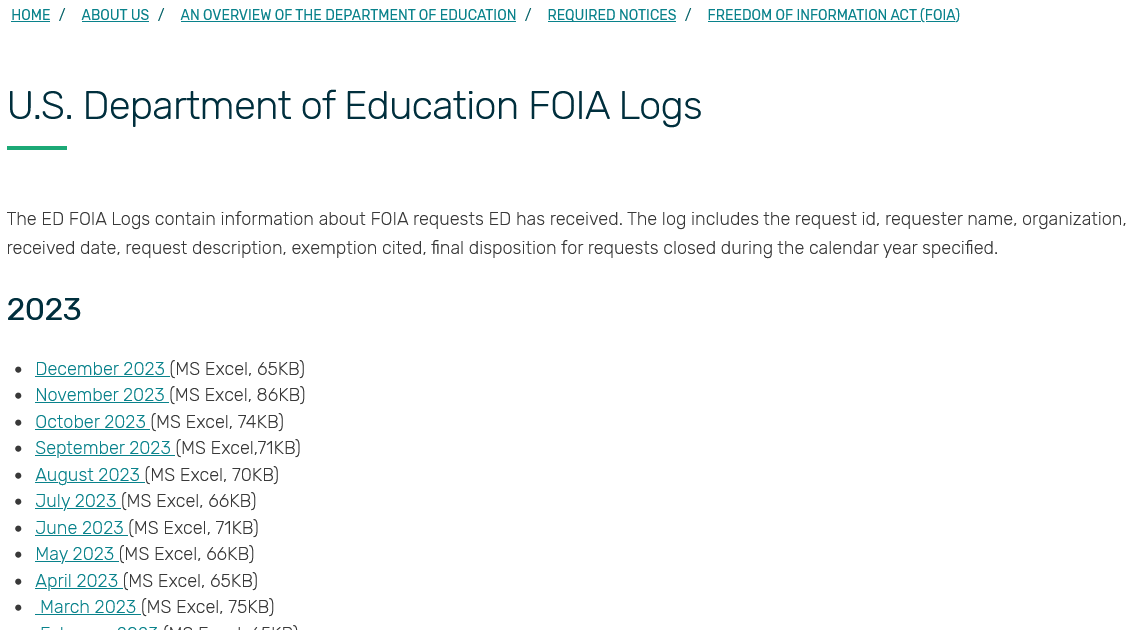
    The US Department of Education (ED) has stopped posting up-to-date Freedom of Information (FOIA) logs. These logs had been posted and updated from 2011 to September 2024 to improve transparency and accountability to the agency.  We have reached out ED for a statement. We are also awaiting for a number of information requests, some of which have taken more than 18 months for substantive replies. 


    Source link

  • Universities that expand access have graduates who take longer to repay their loans

    Universities that expand access have graduates who take longer to repay their loans

    I’ll admit that the Neil O’Brien-powered analysis of graduate repayments in The Times recently annoyed me a little.

    There’s nothing worse than somebody attempting to answer a fascinating question with inappropriate data (and if you want to read how bad it is I did a quick piece at the time). But it occurred to me that there is a way to address the issue of whether graduate repayments of student loans do see meaningful differences by provider, and think about what may be causing this phenomenon.

    What I present here is the kind of thing that you could probably refine a little if you were, say, shadow education minister and had access to some numerate researchers to support you. I want to be clear up top is that, with public data and a cavalier use of averages and medians, this can only be described as indicative and should be used appropriately and with care (yes, this means you Neil).

    My findings

    There is a difference in full time undergraduate loan repayment rates over the first five years after graduation by provider in England when you look at the cohort that graduated in 2016-17 (the most recent cohort for which public data over five years is available).

    This has a notable and visible relationship with the proportion of former students in that cohort from POLAR4 quintile 1 (from areas in the lowest 20 per cent of areas).

    Though it is not possible to draw a direct conclusion, it appears that subject of study and gender will also have an impact on repayments.

    There is also a relationship between the average amount borrowed per student and the proportion of the cohort at a provider from POLAR4 Q1.

    The combination of higher average borrowing and lower average earnings makes remaining loan balances (before interest) after five years look worse in providers with a higher proportion of students from disadvantaged backgrounds..

    On the face of it, these are not new findings. We know that pre-application background has an impact on post-graduation success – it is a phenomenon that has been documented numerous times, and the main basis for complaints about the use of progression data as a proxy for the quality of education available at a provider. Likewise, we know that salary differences by gender and by industry (which has a close but not direct link to subject of study).

    Methodology

    The Longitudinal Educational Outcomes dataset currently offers a choice of three cohorts where median salaries are available one, three, and five years after graduation. I’ve chosen to look at the most recent available cohort, which graduated in 2016-17.

    Thinking about the five years between graduation and the last available data point, I’ve assumed that median salaries for year 2 are the same as year 1, and that salaries for year 4 are the same as year 3. I can then take 9 per cent of earnings above the relevant threshold as the average repayment – taking two year ones, two year threes, and a year five gives me an average total repayment over five years.

    The relevant threshold is whatever the Department for Education says was the repayment threshold for Plan 1 (all these loans would have been linked to to Plan 1 repayments) for the year in question.

    How much do students borrow? There is a variation by provider – here we turn to the Student Loans Company 2016 cycle release of Support for Students in Higher Education (England). This provides details of all the full time undergraduate fee and maintenance loans provided to students that year by provider – we can divide the total value of loans by the total number of students to get the average loan amount per student. There’s two problems with this – I want to look at a single cohort, and this gives me an average for all students at the provider that year. In the interests of speed I’ve just multiplied this average by three (for a three year full time undergraduate course) and assumed the year of study differentials net out somehow. It’s not ideal, but there’s not really another straightforward way of doing it.

    We’ve not plotted all of the available data – the focus is on English providers, specifically English higher education institutions (filtering out smaller providers where averages are less reliably). And we don’t show the University of Plymouth (yet), there is a problem with the SLC data somewhere.

    Data

    This first visualisation gives you a choice of X and Y axis as follows:

    • POLAR % – the proportion of students in the cohort from POLAR4 Q1
    • Three year borrowing – the average total borrowing per student, assuming a three year course
    • Repayment 5YAG – the average total amount repaid, five years after graduation
    • Balance 5YAG – the average amount borrowed minus the average total repayments over five years

    You can highlight providers of interest using the highlighter box – the size of the blobs represents the size of the cohort.

    [Full screen]

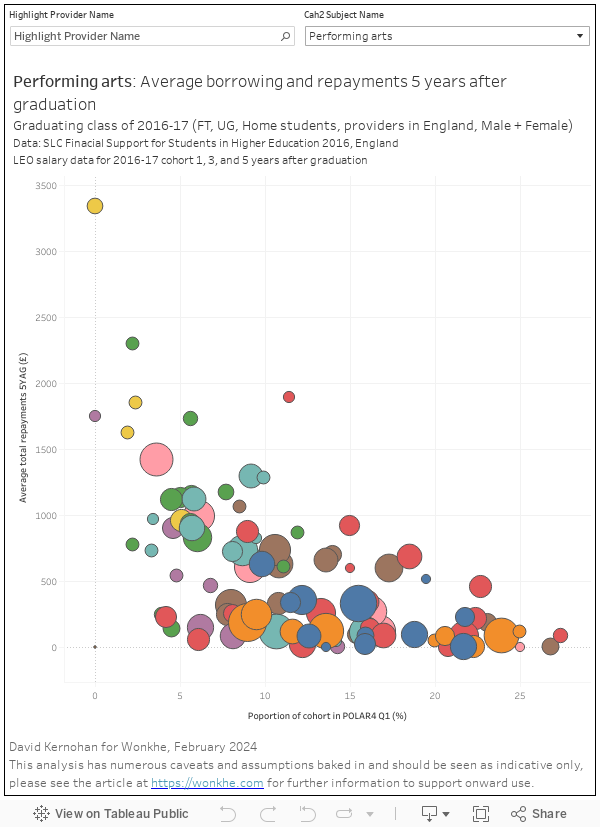
    Of course, we don’t get data on student borrowing by provider and subject – but we can still calculate repayments on that basis. Here’s a look at average repayments over five years by CAH2 subject (box on the top right to choose) – I’ve plotted against the proportion of the cohort from POLAR4 Q1 because that curve is impressively persistent.

    [Full screen]

    For all of the reasons – and short cuts! – above I want to emphasise again that this is indicative data – there are loads of assumptions here. I’m comfortable with this analysis being used to talk about general trends, but you should not use this for any form of regulation or parliamentary question.

    The question it prompts, for me, is whether it is fair to assume that providers with a bigger proportion of non-traditional students will be less effective at teaching. Graduate outcome measures may offer some clues, but there are a lot of caveats to any analysis that relies solely on that aspect.

    Source link

  • Can we manage disasters that are no longer anomalies?

    Can we manage disasters that are no longer anomalies?

    In July 2024, the state of Kerala in southern India was struck by a massive landslide that devastated several villages, including Punchirimattam, Chooralmala and Mundakkai. The impact was catastrophic: nearly 300 people died and hundreds more injured. 

    This tragedy, triggered by unprecedented rainfall during the monsoon season, drew attention to a stark and growing concern: India’s ability to manage and mitigate the increasing frequency of natural disasters effectively. 

    Over the past few years, India has witnessed an alarming rise in the intensity and frequency of natural disasters, be it floods, heatwaves, cyclones or landslides. 

    This surge is being driven by the changing climate. With global warming altering weather patterns, India finds itself vulnerable to an array of disasters that threaten its people, infrastructure and economy. In response, there are calls for legislative reform, particularly an overhaul of the Disaster Management Act of 2005, so that the country will be better prepared to respond to natural disasters. 

    India’s experience can serve as a lesson for other nations in the region and globally. 

    Breathtaking landscapes become landslides.

    Kerala, located in southwest India on the Malabar Coast, is renowned for its lush landscapes, tranquil backwaters and tea plantations. The state is no stranger to monsoon rains, but in July 2024 it faced a sudden, violent landslide that wreaked havoc in the hilly region of Wayanad. 

    These areas, often prone to landslides, were overwhelmed by incessant rainfall, which led to soil erosion and a massive collapse of hillsides. 

    The villages of Punchirimattam, Chooralmala and Mundakkai were hit the hardest, with homes and buildings buried under tons of mud. Most residents were asleep when the disaster struck before dawn, leaving little time for evacuation. The landslides not only caused a tremendous loss of life but also rendered thousands homeless, further deepening the crisis. 

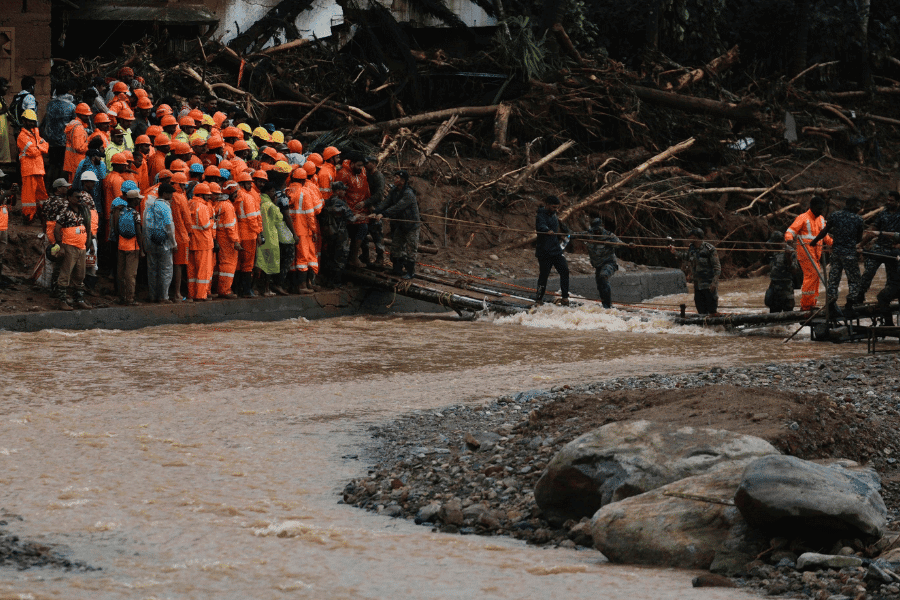
    In the aftermath, rescue operations were launched swiftly by the National Disaster Management Authority (NDMA), the Indian Army and the Air Force, along with local government authorities and communities. 

    Ramakrishnan, a tea estate employee in Mundakkayam, said that emergency relief included immediate financial assistance of Rs. 3,000 per individual. To put that into context 3,000 rupees is about U.S. $35 and the average person in Kerala earns the equivalent of about U.S $23,000 per year. They also received food and medical supplies. 

    Helping people after a disaster

    Affected families were relocated to temporary shelters, and school-going children were enrolled in nearby schools to continue their education. The National Disaster Response Force and state disaster funds provided crucial support for these efforts. 

    Yet, despite these swift actions, the Kerala government’s request for additional federal support, under the provisions of the Disaster Management Act, was delayed. 

    By October 2024, the High Court of Kerala had raised concerns about the delay in the disbursement of relief funds. This incident highlights some of the systemic flaws in India’s current disaster management framework — flaws that have become increasingly apparent as natural disasters grow in scale and frequency. 

    While the Wayanad landslide is one of the deadliest in recent memory, it is far from an isolated event. Over the last few years, India has experienced a disturbing rise in natural disasters, exacerbated by climate change. 

    In 2020, according to the United Nations Disaster Risk Reduction’s Prevention Web, the northeastern state of Assam faced catastrophic flooding that affected over five million people, leaving much of the region submerged. Back in 2018, the Indian Express newspaper reported that dust storms in Rajasthan not only caused widespread destruction but also revealed significant gaps in the country’s disaster management infrastructure, such as the lack of effective early warning systems and inadequate public awareness campaigns.

    Similarly, heatwaves, which have always been a concern in India, are becoming more extreme and frequent, leading to an increase in deaths and health crises.

    Inequity in disaster management

    Some weather events seem to get more attention than others, said Prathiksha Ullal, an advocate whose interests lie primarily at the intersection of environmental law and feminist perspectives. 

    “Despite heat waves being a major concern, they receive little attention, whereas cold waves are highlighted in discussions in the Lok Sabha [lower house of India’s Parliament],” Ullal said. 

    These disasters, which are often compounded by inadequate infrastructure and preparation, point to the urgent need for a restructured disaster management framework that can adapt to the growing threats posed by climate change. 

    The Disaster Management Act of 2005 was enacted to provide a comprehensive framework for disaster preparedness, response and recovery In response to India’s vulnerability to natural disasters. The act established the NDMA to coordinate disaster management efforts at the national level, as well as State Disaster Management Authorities (SDMAs) to manage disasters within individual states.

    The 2005 Act was an important step forward, but under it, there is confusion over the roles of national, state and local authorities in response to disasters; it doesn’t allocate enough money for disaster preparedness or response; and it doesn’t address climate-induced disasters such as heatwaves, droughts and extreme rainfall events. 

    This has made the framework less relevant in an era where climate change is increasingly contributing to the frequency and severity of disasters.

    Improving how a government responds to disasters

    Recognizing the shortcomings of the 2005 Act, the Indian government has proposed amendments to strengthen the country’s disaster management framework. The Disaster Management (Amendment) Bill of 2024 seeks to address many of these issues and build a more robust system to tackle the growing threat of natural disasters. 

    One of the central features of the bill is the strengthening and increased funding of the NDMA and the establishment of state disaster response forces. 

    The amendment aims to improve response times and coordination during disasters by providing state governments with more autonomy and resources. The bill also emphasizes disaster risk reduction, which focuses on preventing and mitigating the impact of disasters before they occur. This is a shift away from the previous focus solely on response and recovery. 

    Critics argue that the bill still centralizes too much power in the hands of the central government, limiting the autonomy of local authorities. Additionally, the bill’s failure to explicitly include climate-induced disasters, such as heatwaves and droughts, means that it may not fully address the risks posed by climate change. 

    India’s vulnerability to natural disasters is closely linked to the impacts of climate change. Rising temperatures, unpredictable monsoons and increased frequency of extreme weather events are all exacerbating the country’s disaster risk.

    State-specific disasters

    The 2024 Amendment Bill does begin to address climate change by incorporating disaster risk reduction as a key component, but it does not go far enough. For instance, heatwaves — which have become a major concern in India — are not adequately covered. 

    The DT Next newspaper reported that the South Indian state of Tamil Nadu has taken the initiative to declare heatwaves a state-specific disaster, enabling them to provide relief and take preventive measures. However, this is a localized response, and a more comprehensive national approach is needed. 

    The bill also does not fully address the role of technology in disaster management. Experts suggest that incorporating artificial intelligence and real-time data monitoring systems could significantly improve India’s ability to predict, track and respond to disasters. According to the AI company Ultralytics, AI models can be trained to provide early warning systems and help reduce the impacts of natural disasters.

    For example, predictive modeling and vulnerability mapping could help authorities better prepare for floods, landslides or heatwaves by identifying high-risk areas and populations. 

    India’s disaster management struggles are not unique. Bangladesh, Nepal, the Philippines and other countries in the region face similar challenges, with frequent floods, cyclones and landslides causing significant loss of life and economic damage. 

    India’s evolving approach to disaster management, particularly through the Amendment Bill, could serve as a model for these countries, helping them build more resilient systems for managing climate-related disasters. 

    The tragic landslide in Wayanad serves as a poignant reminder of the increasing vulnerability of India’s communities to natural disasters. While immediate relief efforts were swift and commendable, they also underscored the need for deeper, systemic changes in how India manages its disaster response. 

    In the face of escalating natural disasters, India has the opportunity to lead the way in developing disaster management policies that are not only reactive but proactive. 


    Questions to consider:

    1. What can cause a landslide in parts of India?
    2. What was wrong with the Disaster Management Act of 2005?
    3. What are some dangers climate change poses in your area?


    Source link