Tag: Los Angeles

  • California Schools Now Offer Free Preschool for 4-Year-Olds. Here’s What They Learn – The 74

    California Schools Now Offer Free Preschool for 4-Year-Olds. Here’s What They Learn – The 74


    Join our zero2eight Substack community for more discussion about the latest news in early care and education. Sign up now.

    Every 4-year-old in California can now go to school for free in their local districts. The new grade is called transitional kindergarten — or TK — and it’s part of the state’s effort to expand universal preschool.

    In 2021, Gov. Gavin Newsom and the state legislature moved to expand transitional kindergarten in a $2.7 billion plan so that all 4-year-olds could attend by the 2025-26 school year. (Prior to this, TK was only available for kids who missed the kindergarten age cutoff by a few months). While it’s not mandatory for students to attend, districts must offer them as an alternative to private preschool.

    As a free option, it can save parents a lot of money. Parents also must weigh how sending their kids into a school-based environment compares to a preschool they might already know and like, as well as other needs like all-day care, and how much play their child does.

    One big question we’ve heard: What do kids actually do and learn in a TK classroom? Educators say it’s intended to emphasize play, but what does that mean?

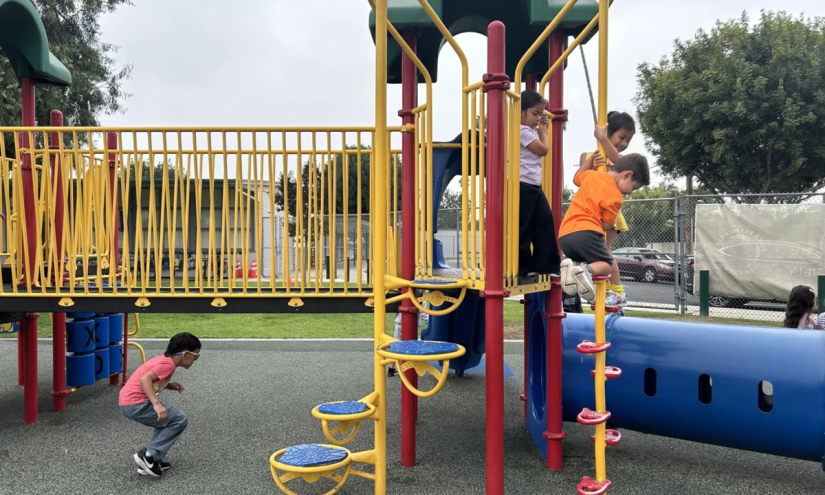
    A social skill students can learn in transitional kindergarten is how to take turns on the playground. (Mariana Dale/LAist)

    To help parents get a better sense of this new grade as they make their decisions, LAist reporters spent the day in three different classrooms across the Southland. Here are five things we saw children do.

    Get used to the structure and routines of school

    For many students, transitional kindergarten is their first introduction to a formal school preschool setting. Crystal Ramirez sent her 4-year-old to TK at Marguerita Elementary School in Alhambra, so he could get used to the rhythm and rigors of school.

    “I didn’t wanna put him straight into kindergarten when he was five, six, so he at least knows a routine, already,” she said. “Now, as soon as he sees that we’re in school, he loves it.”

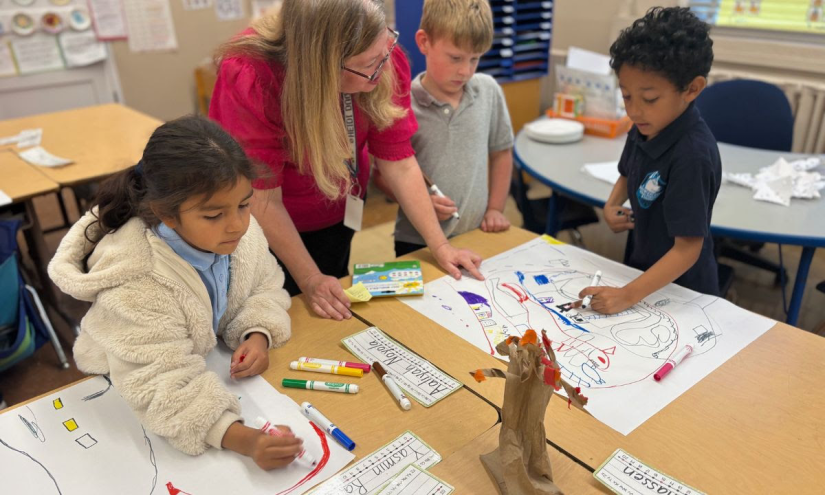
    TK students, like other elementary school students, follow a schedule: morning bell, recess, lunch, second recess and dismissal. They’re also learning how to listen to instructions or stand in a line. Some are learning to go to the cafeteria for lunch.

    “ I wanna make sure that their first experience in a public school setting is one that is joyful, where they feel loved, where they feel welcomed, where they get to really transition nicely into like the rigor of the school,” said Lauren Bush, a TK teacher at Lucille Smith Elementary in Lawndale.

    Claudia Ralston, a TK teacher at Marguerita Elementary, said it can be hard for young kids to get up early and leave their moms and dads. But seven weeks in, many of her students have learned their routines already. She helps with the morning transitions by turning on soft instrumental music in the classroom, and allowing them free play until they regroup on the mat to discuss the day.

    “They’re four years old. I want them to feel safe at school, know that this is a special place for learning and that they play,” she said.

    Learn how to socialize and communicate

    In TK, social-emotional learning is a big part of the curriculum. That’s a fancy word, but it just means they’re learning how to be in touch with their emotions

    At Price Elementary in Downey, the teacher has her kids give an affirmation: “I am safe. I am kind. I matter. I make good choices. I can do hard things. All of my problems have solutions!” (They also have these sentences on classroom wall signs.)

    The children also learn how to interact with their peers. In some schools, there are no assigned desks so the kids can learn how to share the space.

    “ They’re able to problem solve. They’re able to use communication to get their needs, regulating their emotions. They do better than students who come in without this experience,” said Cristal Moore, principal at Lucille Smith Elementary.

    On the playground, a student named Ava told teacher assistant Lizbeth Orozco that another student pushed her.

    “How did that make you feel?” Orozco asked.

    “Mad!”

    Orozco encouraged Ava to express her feelings to her classmate.

    “ We give them options of how to solve a problem and then they go in and solve it themselves,” Orozco said. “If they need extra help, they always come back and we can help them.”

    Arguing over toys can be a common occurrence in a TK classroom. At Price Elementary in Downey, educators help kids work through a solution. On a recent morning, one 4-year-old used two tongs to pick up paper shapes in a sensory bin, leaving another kid upset.

    “What’s the rule about sharing?” asked Alexandria Pellegrino, a teacher who gives extra support for one TK classroom.

    The boy handed over a tong to his peer. “Thank you so much for being a good friend,” Pellegrino said.

    “[It’s]  about being kind friends and making friends and using our manners. So we do build that foundation at the beginning of the year,” said Samantha Elliot, the classroom’s lead instructor.

    At the end of the day in Alvarez’s Lawndale TK class, she counts up the stars next to each student’s name earned throughout the day — earned for positive behavior like being kind, solving problems, trying something challenging, or showing effort in other ways. Ten stars earns a small prize from the treasure chest.

    “If we don’t get something today are we going to get mad?” Alvarez asked the class.

    “No!” they responded.

    “I’m not going to cry!” one boy piped up, followed by his classmate and a “Me too!” from another student.

    “That’s [a] positive attitude,” Alvarez said. “Because tomorrow you can get more stars!”

    Get exposed to numbers, shapes, letters

    In Elliot’s TK class, students use their own little lightsabers to trace letters in the air.

    “They’re learning the letter, the sound, and then a little action to go with it. They’re wiggling and moving and they’re also learning those letter sounds and they don’t really realize, so it’s incorporating instruction,” she said.

    There’s no mandated curriculum in TK, but instruction is supposed to align with the state’s Preschool/Transitional Kindergarten Learning Foundations. “Kindergarten is basically where the state standards go and kick in. There are standards in TK, but it’s a little bit different,” said Tom Kohout, principal at Marguerita Elementary.

    Students might put playdough into letter molds, or the teacher might pull out toys from a bag that all start with a letter “E.” Kids will play with little plastic toys that connect — or “manipulatives” — that can help them recognize numbers and patterns.

    “It’s play with a purpose,” Ralston said. “They’re just being introduced to the numbers, the colors, writing. But again, we’re not doing worksheets.”

    Build fine motor skills

    Molding pretend cakes with kinetic sand. Connecting small LEGO bricks. Cutting playdough. It might not seem like much, but children this age are still learning how to use their bodies.

    “Tearing paper is really hard and it’s a really amazing fine motor skill for them because the same muscles you use to tear paper are the same muscles that you use to hold a pen or a pencil,” said Lauren Bush, a TK teacher at Lucille Smith Elementary in Lawndale.

    “You see kids playing with dinosaurs. I see kids sorting by color, doing visual, you know, eye hand coordination and visual discrimination. I see them using their fine motor skills,” she said.

    At lunch, kids learn how to open up a milk carton or open a packaged muffin. At PE, they learn to balance on a block or walk in a straight line — learning spatial awareness.

    “They’re learning how to run, stop, things like that and playing because their bodies are so young,” said Principal Kohout.

    Learn independence

    For some kids, it might be the first time where mom and dad aren’t there to help carry their backpacks or help them go to the bathroom. TK is meant to help focus on their independence, though aides can help.

    TK classrooms are also usually set up with play centers, so kids can have the choice to explore on their own.

    “ I want them to be independent, to be able to solve their problems, you know, with assistance,” Ralston said.

    Samantha Elliot, the TK teacher in Downey, says she encourages kids to talk to their teammates first to figure out an activity before going to a teacher.

    “It’s just gaining the confidence and building that independence from basically the start of the school year,” she said.

    Parent Crystal Ramirez has already noticed a change in her 4-year-old this year since starting school. “ [He’s] socializing a little bit more, talking a little bit more, trying to express himself as well.”


    Did you use this article in your work?

    We’d love to hear how The 74’s reporting is helping educators, researchers, and policymakers. Tell us how
    Source link

  • In Los Angeles, 45 Elementary Schools Beat the Odds in Teaching Kids to Read – The 74

    In Los Angeles, 45 Elementary Schools Beat the Odds in Teaching Kids to Read – The 74

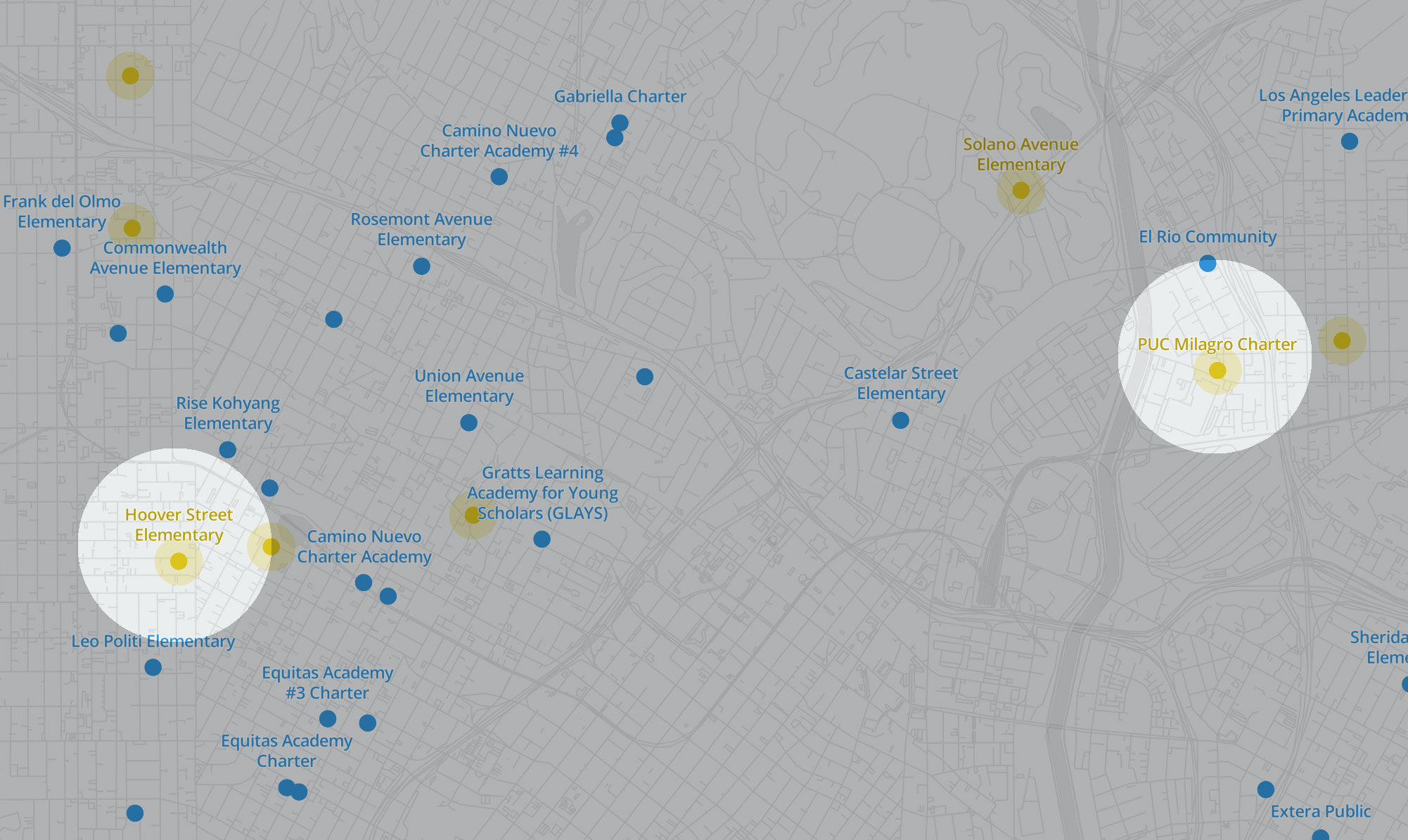
    This article is part of Bright Spots, a series highlighting schools where every child learns to read, no matter their zip code. Explore the Bright Spots map to find out which schools are beating the odds in terms of literacy versus poverty rates.

    This story is part of The 74’s special coverage marking the 65th anniversary of the Los Angeles Unified School District. Read all our stories here.

    When The 74 started looking for schools that were doing a good job teaching kids to read, we began with the data. We crunched the numbers for nearly 42,000 schools across all 50 states and Washington, D.C. and identified 2,158 that were beating the odds by significantly outperforming what would be expected given their student demographics. 

    Seeing all that data was interesting. But they were just numbers in a spreadsheet until we decided to map out the results. And that geographic analysis revealed some surprising findings. 

    For example, we found that, based on our metrics, two of the three highest-performing schools in California happened to be less than 5 miles apart from each other in Los Angeles. 

    The PUC Milagro Charter School came out No. 1 in the state of California. With 91% of its students in poverty, our calculations projected it would have a third grade reading rate of 27%. Instead, 92% of its students scored proficient or above. Despite serving a high-poverty student population, the school’s literacy scores were practically off the charts.  

    PUC Milagro is a charter school, and charters tended to do well in our rankings. Nationally, they made up 7% of all schools in our sample but 11% of those that we identified as exceptional. 

    But some district schools are also beating the odds. Just miles away from PUC Milagro is our No. 3-rated school in California, Hoover Street Elementary. It is a traditional public school run by the Los Angeles Unified School District. With 92% of its students qualifying for free- or reduced-price lunch, our calculations suggest that only 23% of its third graders would likely be proficient in reading. Instead, its actual score was 78%. 

    For this project, we used data from 2024, and Hoover Street didn’t do quite as well in 2025. (Milagro continued to perform admirably.)

    Still, as Linda Jacobson reported last month, the district as a whole has been making impressive gains in reading and math over the last few years. In 2025, it reported its highest-ever performance on California’s state test. Moreover, those gains were broadly shared across the district’s most challenging, high-poverty schools. 

    Our data showed that the district as a whole slightly overperformed expectations, based purely on the economic challenges of its students. We also found that, while Los Angeles is a large, high-poverty school district, it had a disproportionately large share of what we identified as the state’s “bright spot” schools. L.A. accounted for 8% of all California schools in our sample but 16% of those that are the most exceptional. 

    All told, we found 45 L.A. district schools that were beating the odds and helping low-income students read proficiently. Some of these were selective magnet schools, but many were not. 

    Map of Los Angeles Area Bright Spots

    Some of the schools on the map may not meet most people’s definition of a good school, let alone a great one. For example, at Stanford Avenue Elementary, 47% of its third graders scored proficient in reading in 2024. That may not sound like very many, but 97% of its students are low-income, and yet it still managed to outperform the rest of the state by 4 percentage points. (It did even a bit better in 2025.)

    Schools like Stanford Avenue Elementary don’t have the highest scores in California. On the surface, they don’t look like they’re doing anything special. But that’s why it’s important for analyses like ours to consider a school’s demographics. High-poverty elementary schools that are doing a good job of helping their students learn to read deserve to be celebrated for their results.


    Did you use this article in your work?

    We’d love to hear how The 74’s reporting is helping educators, researchers, and policymakers. Tell us how



    Source link

  • Parents Sued LAUSD Over Remote Learning. How the Settlement Will Benefit Students – The 74

    Parents Sued LAUSD Over Remote Learning. How the Settlement Will Benefit Students – The 74


    Get stories like this delivered straight to your inbox. Sign up for The 74 Newsletter

    This story was originally published by CalMatters. Sign up for their newsletters.

    More than 250,000 students in Los Angeles Unified will be eligible for extra tutoring, summer school and other academic help after the district settled a class-action lawsuit alleging that its remote learning practices during the pandemic were discriminatory.

    The settlement, filed in Los Angeles County Superior Court, was announced Wednesday by the law firm representing families who said their children fell disastrously behind during the Covid-related school shutdown in 2020-21.

    “After five years of tireless advocacy on behalf of LAUSD students and families, we are proud to have secured a historic settlement that ensures students receive the resources they need to thrive,” said Edward Hillenbrand, a partner at the law firm Kirkland & Ellis. “This critical support will help pave the way for lasting educational equity.”

    Los Angeles Unified had no comment on the case because the settlement has yet to be approved by the court. A hearing is set for December, although the settlement goes into effect immediately.

    During the COVID-19 pandemic, Los Angeles and nearly every other school district in California closed for in-person learning from March 2020 through fall 2021. Students attended classes virtually, and most fell behind academically. Test scores statewide plummeted after schools reopened. Chronic absenteeism soared.

    In fall 2020, a group of families whose children were languishing during remote learning sued Los Angeles Unified, saying the district wasn’t doing enough to ensure students were receiving an adequate education.

    One parent, Akela Wroten Jr., said that his second-grade daughter was behind before the pandemic and became even more lost during remote learning. She struggled with reading and never got the extra attention she needed because teachers weren’t assessing her progress.

    Another parent, Vicenta Martinez, said her daughter didn’t get any instruction in spring 2020, in part because she never received logon information for remote instruction and the school never followed up. When she finally did access remote classes, the lessons were short and teachers offered little feedback.

    “LAUSD’s remote learning plan fails to provide students with even a basic education and is not preparing them to succeed,” the lawsuit alleged.

    The suit singled out an agreement between the district and its teachers union that said teachers would only be required to work four hours a day, wouldn’t have to give tests and weren’t required to deliver live lessons — their lessons could be asynchronous, or recorded beforehand. In addition, the agreement said the district wouldn’t evaluate or monitor teachers during that time.

    United Teachers Los Angeles supports the settlement, saying it provides more assistance for students while leaving teachers’ “hard-won contractual rights” intact and avoiding “unwarranted judicial interference” in the district.

    The union also noted that student test scores have recovered significantly since the pandemic..

    The plaintiffs argued that the district’s policies discriminated against low-income, Black, Latino, disabled and English learner students, because those were the students least likely to have adequate support to succeed in remote learning. Those student groups also comprise the vast majority of students in the district, the nation’s second-largest.

    The settlement requires the district to offer a host of academic support, including summer school and after-school tutoring, to the 250,000 students who were enrolled in L.A. Unified during the pandemic and are still with the district. Among those students, 100,000 who are performing below grade level will be eligible for 45 hours of one-on-one tutoring every year through 2028.

    This article was originally published on CalMatters and was republished under the Creative Commons Attribution-NonCommercial-NoDerivatives license.


    Get stories like these delivered straight to your inbox. Sign up for The 74 Newsletter

    Source link

  • Veronica Alvarez’s Journey in Arts Education – The 74

    Veronica Alvarez’s Journey in Arts Education – The 74


    Get stories like this delivered straight to your inbox. Sign up for The 74 Newsletter

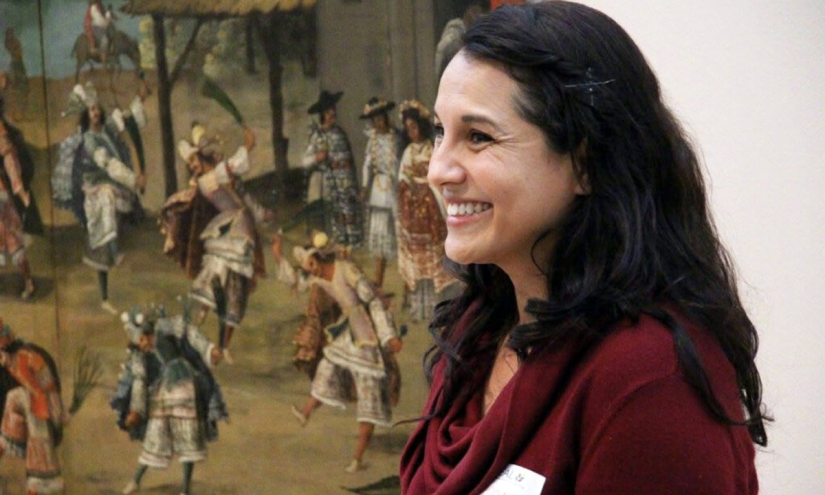
    Veronica Alvarez was 4 when her family came to the U.S. from Cotija in Michoacán, Mexico, a small town famed for its cheese. Her father picked avocados amid the scorching heat in the San Fernando Valley, while her mother cleaned houses. One of nine children, she learned how to scrimp and save, how to work hard and how to dream big.

    “We were so poor, I knew not to ask for much,” said Alvarez, 52, now executive director of Los Angeles-based Create CA, one of the state’s leading arts education advocacy organizations. “Looking back on those years now, I don’t know how my parents did it. I have a white-color job and two sons, and I can barely afford it.”

    Her sunny disposition belies a steely resolve. She remembers well the sting of being an undocumented immigrant in the age of Gov. Pete Wilson, an era when some felt ashamed to even speak Spanish in public. She brings that fire to her arts education mission. 

    “I believe access to the arts is a social justice issue,” as she puts it.

    “Unfortunately, students that have the most need do not get equal access and opportunities.”

    Her chops as a fighter, someone who doesn’t give up on a cause, are part of what makes her special, arts advocates say.

    “Veronica is an inspiring and dedicated arts education advocate and leader,” said Merryl Goldberg, a veteran music and arts professor at Cal State San Marcos, who also serves on the Create CA board. “Her commitment to equity and lifting student voices is front and center.”

    Alvarez didn’t become fluent in English until about the fourth grade, but she instinctively understood that education was the key to escaping poverty. 

    Education was my path out of poverty. That was always my thing. I loved school.

    Veronica Alvarez

    The only one in her family to graduate from high school, for her, school was always a matter of sink or swim. She chose to dive deep. She paid her way through college working at Chuck E. Cheese, where she honed her chops in engaging children.

    “I’ve always been pretty driven,” said Alvarez, a mother of two boys with a doctorate in education and a master’s in ancient history. “Education was my path out of poverty. That was always my thing. I loved school.”

    She also loved to walk to the library. It conjured an oasis of calm amid her raucous household.

    “I’d come home with bags of books and sit in a corner to read and immerse myself in the world created by the author,” she remembers. “That love of reading has lasted to this day.”

    At first, she wanted to be an artist, but her fourth grade teacher said she lacked talent. 

    “I loved making art as a child,” said Alvarez. “But I had always been taught to respect your elders. I didn’t think it was my place to question it.”

    So, she stopped trying to make art, channeling her drive into academics. Determined to graduate early, she took every AP class she could in high school and found her happy place in art history. A self-professed nerd, she always felt drawn to the world of books and ideas.

    “To be able to sit and read and learn always seemed like a luxury to me,” she said. 

    As a child, she was first entranced by Caravaggio and Bernini, and later became beguiled by the works of Frida Kahlo and Graciela Iturbide. 

    Making sure everyone can participate in the arts is what drives Veronica Alvarez, now head of Create CA. (Courtesy of Veronica Alvarez)

    “I loved Bernini’s ‘David’ because of his teeth biting his lip; he looked vulnerable and intense — along with the fact that he was mid-motion as he threw the rock at Goliath,” she remembers. “The ‘Barberini Faun’ made me blush. A big piece of marble made me blush.”

    She’s a full-fledged museum addict and a politics junkie with a passion for the place of women in antiquity, particularly Greek and Roman history. That expertise is what led her to the Getty Museum, where she helped launch the Getty Villa. 

    “My parents would’ve never dreamed of taking us to museums; that was not a place for us,” said Alvarez, who later became the director of school and teacher programs at the Los Angeles County Museum of Art. “My passion has always been about access and equity, making a place for everyone.”

    While at the Getty, she worked on an English learners program with migrant workers who often start work at 4 a.m., which means language classes happened at all hours of the day and night. It was a struggle to convey the meanings of words until she landed on using the visual realm. 

    “When you learn a new language, you learn ‘manzana’ means apple, and then you see a picture of an apple,” she recalls. “I thought, why don’t we use Cézanne’s ‘Still Life with Apples’? And the conversations suddenly got so much more interesting. We got the students to really engage, centered around the artwork.” 

    That obsession with making sure everyone, not just the lucky few, can feel the transformative power of the arts is why she feels right at home at Create CA, which has been helping schools navigate the rules around Proposition 28, the state’s arts education mandate. 

    The organization has long fought for expanding access to arts education and helped advocate for arts educators and teaching artists in the classroom. One of the biggest challenges facing the organization now is making sure Prop. 28 funds are spent as they were intended, as well as pushing for more funding.

    “With the passage of Prop. 28 and dedicated funds for arts education, people may think we have solved arts education,” she said. “However, while a billion dollars may sound like a lot of money, we have 6 million students in CA. When we parcel out what that means to individual school districts, especially in rural areas, sometimes the funds aren’t sufficient to hire one art teacher.”

    Alvarez is known for her poise and her ability to keep the peace amid intense personalities.

    “I’ve been struck by her powerfully calm demeanor and her openness to advocacy as a ground-up endeavor versus a top-down activity,” said Goldberg. “Being an arts leader can be challenging in so much as there are many voices in the mix and they don’t all agree.”

    Alvarez has the polish to be diplomatic in a deeply divided world, partly because she puts the cause first. 

    “She brings a worldly and positive energy to the discussions, and she strikes me as very much always in the problem-solving and equity-centered mode,” said Letty Kraus, director of the California County Superintendents Statewide Arts Initiative. “I also have experienced her as hands-on, participatory, and collegial in her approach.” 

    For Alvarez, art is the tether that connects us to our shared human heritage. It’s a bridge to the past that all should be encouraged to cross. 

    “Human beings are unique,” she said. “Out of all the animals, we have the ability to create art, to connect across time and culture. That’s why I love the arts so much. The craftsmanship of the human hand, the human eye, is so important to me.”

    As an educator, the elusive nature of cognition — why the human mind absorbs some concepts while discarding others — also fascinates her. 

    “To me, what you have to teach is the love of learning,” she said. “How does the mind retain information? It’s all about making connections. You learn something in history, and then you apply it in English. It’s about providing the full context; that’s how you retain information.”

    If something truly moves us, she suggests, we may remember it forever. That’s why the arts can push us to transcend boundaries and grasp universal truths. 

    “The arts are essential to students’ creativity,” she said. “When students can’t access the traditional curriculum, the arts allow them to express themselves, their feelings, and tell their stories. The arts are essential to our well-being.” 


    Get stories like these delivered straight to your inbox. Sign up for The 74 Newsletter

    Source link

  • L.A. County’s Failure to Educate Incarcerated Youth is ‘Systemic – The 74

    L.A. County’s Failure to Educate Incarcerated Youth is ‘Systemic – The 74


    Get stories like this delivered straight to your inbox. Sign up for The 74 Newsletter

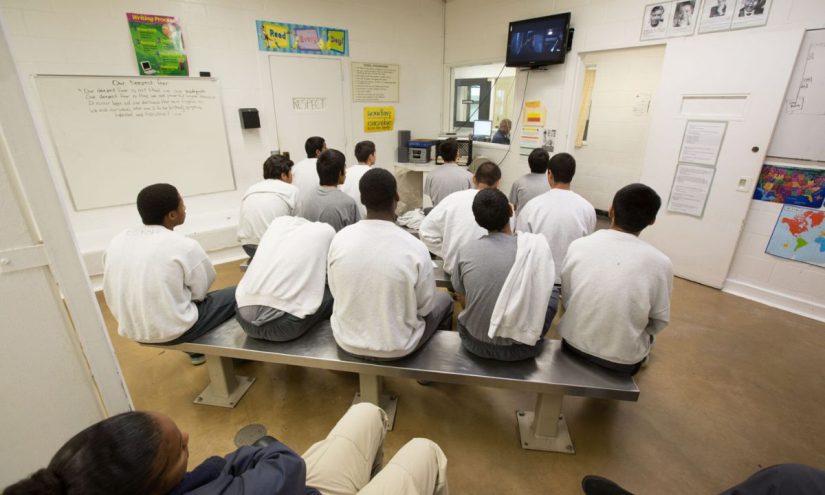
    Local government agencies in charge of youth violated the educational and civil rights of students in Los Angeles County’s juvenile justice facilities for decades by punting responsibility and inaction, according to a report released Wednesday.

    Who has the power? Chronicling Los Angeles County’s systemic failures to educate incarcerated youth” blames the disconnected, vast network of local and state agencies — from the board of supervisors to the local probation department to the county office of education and more — that play one role or another in managing the county’s juvenile legal system, for the disruption in the care and education of youth in one of the nation’s largest systems.

    “This broken system perpetuates a harmful cycle of ‘finger-pointing,’ often between Probation and Los Angeles County Office of Education, which hinders the resolution of issues that significantly affect the education of incarcerated youth,” wrote the Education Justice Coalition, authors of the report.

    The coalition includes representatives from Children’s Defense Fund-California, ACLU of Southern California, Arts for Healing and Justice Network, Disability Rights California, Youth Justice Education Clinic at Loyola Law School, and Public Counsel.

    The authors listed three demands for the board of supervisors, including reducing youth incarceration by way of implementing the previously approved Youth Justice Reimagined plan, providing access to high-quality education, and adopting transparency and accountability measures.

    Decades of documented rights violations

    A timeline outlines repeated student rights violations, some of which have resulted in class-action lawsuits and settlements requiring the county to be monitored by the federal and state departments of justice for years at a time.

    Since 2000, the timeline notes that Los Angeles County has faced:

    • A civil grand jury report calling on the board of supervisors to “improve collaboration” between the probation and education departments in order to address unmet educational needs
    • An investigation by the federal Department of Justice — and subsequent settlements — found significant teacher shortages, lack of consistency in daily instruction, and issues with support for students with special needs
    • A class action lawsuit against the county office of education and the probation department
    • An investigation by the state Department of Justice, followed by settlements, found excessive use of force and inadequate services
    • Multiple findings by a state agency of L.A. County juvenile facilities being “unsuitable for the confinement of minors”

    Most recently, the state attorney general has requested receivership, which would mean full state ownership of the county’s juvenile halls.

    The Los Angeles Board of Supervisors, the probation department, and the Office of Education did not immediately respond to a request for comment.

    The lasting impact of academic disruptions

    Dovontray Farmer experienced the mismanaged system when he entered Los Padrinos Juvenile Hall a second time as a 10th grader. Now 24 and serving as a youth mentor with the Youth Justice Coalition, Farmer said that his time in L.A. County facilities “played a major role in not being able to get properly educated — I felt betrayed, honestly.”

    Returning to school after being released was difficult, he said, because he quickly realized he was several grade levels below his classmates at his local high school.

    He’d also been part of his school’s football team before his detention at Los Padrinos when he was 17, and said he tried returning to the team once released but wasn’t allowed back.

    He said the disruption to his education and participation on the football team, which he saw as a positive influence, affected how he viewed his life.

    “There was nothing I really could do, so I was really giving up,” he said. “Like, everything that I really cared for was already gone.”

    The environment at the juvenile facilities didn’t help matters. 

    Los Padrinos recently came under fire after a video published by the Los Angeles Times showed probation officers standing idle as detained youths fought. Thirty officers have been indicted on criminal charges for encouraging or organizing gladiator-style fights among youths.

    Farmer said he was put through those same types of fights when he was at Los Padrinos as a teenager.

    “A lot of the coverage recently has been about the recent gladiator fights in 2023, but clearly this is a very systemic issue that even when a problem is resolved in the short term, we’re uncovering that it’s really indicative of a larger systemic problem,” said Vivian Wong, an education attorney and director of the Youth Justice Education Clinic at Loyola Law School, whose recent clients have included Los Padrinos students.

    Education data across several years backs Farmer’s experiences while detained.

    The most recent state data available when Farmer was detained at Los Padrinos is from 2018, when 39% of students were chronically absent, less than 43% graduated, and 12% were suspended at least once.

    That same year, the state’s average was 9% for chronic absenteeism, 83.5% for graduation, and 3.5% for suspension.

    Ongoing education concerns

    The report’s authors note that students across several facilities have lost thousands of instructional minutes, with a “lack of transparency and concrete planning to ensure that the missed services are adequately made up for, leaving students at risk of falling further behind educationally.”

    While compensatory education has typically been used to resolve instructional minutes owed, “I am not sure that’s the most realistic way to remedy the injustice that young people face, because they have endured so much abuse in these facilities,” said Wong. “It’s much more than just a loss of instruction.”

    A more appropriate response to the loss of instructional time would be a consistent investment in avoiding detention and keeping young people in their communities to maintain school stability, she added.

    Past attempts at reform have often been “done without community input or leadership, both in the design and in the implementation of those reforms,” Wong said.

    The new report, she added, is meant to be a tool toward implementing Youth Justice Reimagined, or YJR, a model against punitive measures that was largely developed with input from community organizations to restructure the local juvenile legal system.

    Three demands

    Youth Justice Reimagined, approved by the Los Angeles County Board of Supervisors in November 2020 to reform the local juvenile legal system, would move the county away from punitive approaches, such as detention, and toward rehabilitative support through counseling, family and vocational programming, small residential home placements, and more.

    Youth detention results in “severe disconnection from and disruption to their education trajectory,” wrote the report’s authors, as they urged the board to address abysmal educational access and achievement by fully funding and implementing YJR.

    The disconnect, they added, is exacerbated by delayed school enrollment when detained and upon release, the constant presence of probation officers, and turnover of educators and classmates.

    These common experiences are particularly difficult for students with learning disabilities or a history of trauma, they wrote.

    “After more than a decade of incremental reform, it is time for the County to truly reimagine youth justice,” wrote Supervisors Sheila Kuehl and Mark Ridley-Thomas in their November 2020 motion to approve YJR. “In the same way that the Board has embraced a care first, jail last approach to the criminal justice system, it is incumbent upon the Board to embrace a care first youth development approach to youth justice.”

    Despite the approval, a report published in August 2024 by the state auditor found that less than half of the YJR recommendations had been implemented by mid-2024.

    To address the high rates of chronic absenteeism, poor testing results and instructional minutes owed, the Education Justice Coalition’s second demand is to adapt educational opportunities “to address the unique and significant needs of the court school population.”

    They listed 18 actions the county probation and education departments should work together on, including:

    • Appropriate education support for students with disabilities 
    • Access to A-G approved courses for every student in a juvenile facility
    • Classrooms led by educators, rather than probation officers
    • Appropriately credentialed and culturally competent educators
    • Education access that is not disrupted due to probation staffing issues

    The coalition’s third demand centered on transparency and accountability measures by providing families with access to education planning for their children and establishing work groups that include community members.

    This story was originally published on EdSource.


    Get stories like these delivered straight to your inbox. Sign up for The 74 Newsletter

    Source link

  • L.A. Schools Telehealth Vendor Waited 8 Months to Report Breach – The 74

    L.A. Schools Telehealth Vendor Waited 8 Months to Report Breach – The 74

    School (in)Security is our biweekly briefing on the latest school safety news, vetted by Mark KeierleberSubscribe here.

    It’s another hot summer Friday and another day with news about a data breach — this one jeopardizing both student health and campus safety data.

    And once again, the development is unfolding in the country’s second-largest school district.

    Kokomo Solutions, which the Los Angeles district contracts with to provide telehealth services to students during the school day and to track campus safety threats, disclosed a data breach after it discovered an “unauthorized third party” on its computer network. The discovery happened in December 2024, but the notice to the California attorney general’s office wasn’t made until Aug. 5.  

    It’s the latest in a series of data privacy incidents affecting L.A. schools, including a high-profile 2022 ransomware attack exposing students’ sensitive mental health records and last year’s collapse of a much-lauded $6 million artificial intelligence chatbot project. 


    In the news

    Students at the center of Trump’s D.C. police takeover: In an unprecedented federal power grab, the Trump administration’s seizure of the D.C. police department and National Guard deployment is designed to target several vulnerable groups — including kids. | NPR

    • The move comes at a time when crime in the nation’s capital is on the decline. But a deep-dive from June explores how the district’s failure to prevent student absences has contributed to “the biggest youth crime surge in a generation.” | The Washington Post
    • Here’s what young people have to say about Trump’s D.C. takeover. | NBC 4
    • City police will roll out a youth-specific curfew Friday in the Navy Yard neighborhood. | Fox 5

    A new Ohio law requires school districts to implement basic cybersecurity measures in response to heightened cyberattacks. What the law doesn’t do, however, is provide any money to carry out the new mandate. | WBNS 

    News in Trump’s immigration crackdown: A federal judge in Minnesota has released from immigration detention a nursing 25-year-old mother, allowing her to return to her children as her case works its way through the court. | The Minnesota Star Tribune 

    • The Trump administration has revived one of its most controversial immigration policies from the president’s first term: Separating families. | The New York Times
    • Federal immigration officials quizzed an Idaho school resource officer about an unaccompanied migrant student, part of a broader national effort to conduct “welfare checks” on immigrant youth who came to the U.S. without their parents. | InvestigateWest
    • Leading Oklahoma Republican lawmakers have partnered with the Trump administration in a lawsuit challenging a state law allowing undocumented students to receive in-state college tuition. | InsideHigherEd
    • Los Angeles community members have organized to create protective perimeters around the city’s campuses after immigration agents reportedly drew their guns on a student outside a high school. | Los Angeles Times
      • The district announced new bus routes designed to improve student safety while commuting to school during heightened immigration enforcement. | NBC 4
    • The nonprofit Southwest Key, which for years has been the federal government’s largest provider of shelters for unaccompanied migrant children, has laid off thousands in Texas and Arizona after losing federal grants. The Trump administration dropped a lawsuit in March over allegations the nonprofit subjected migrant children to widespread sexual abuse. | ABC 15
    • A Texas court blocked the state attorney general’s request to depose and question a nun who leads Catholic Charities of the Rio Grande Valley, one of the largest migrant aid groups in the region. | The Texas Tribune
    Sign-up for the School (in)Security newsletter.

    Get the most critical news and information about students’ rights, safety and well-being delivered straight to your inbox.

    Microphone-equipped sensors installed in school bathrooms to crack down on student vaping could be hacked, researchers revealed, and turned into secret listening devices. | Wired

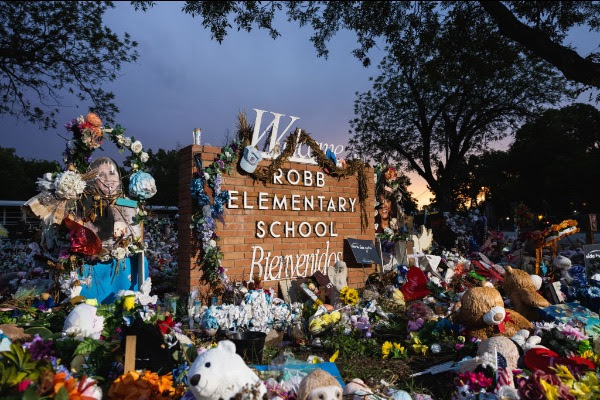
    ‘These are innocent children, sir’: New video of the delayed police response to the 2022 mass school shooting in Uvalde, Texas, shows the campus police chief attempting to negotiate with the gunman for more than 30 minutes. | The New York Times

    Kansas schools have become the latest target in the Trump administration’s campaign against districts that permit transgender students to participate in school athletics. | KCTV

    • The Loudoun County, Virginia, school board has refused to comply with an Education Department order to end a policy allowing transgender students to use restroom facilities that match their gender identity. | LoudounNow 
    • The Education Department’s Office for Civil Rights has opened an investigation into allegations the Baltimore school district ignored antisemetic harassment by students and educators. | The Baltimore Banner

    Lots of drills — little evidence: A congressionally mandated report finds that active shooter drills vary widely across the country — making it difficult to understand their effect on mental and emotional health. | National Academies of Sciences, Engineering, and Medicine

    A federal judge has blocked a new Arkansas law requiring that public schools display the Ten Commandments in all classrooms. It’s the second state Ten Commandments law to be halted this year. | Axios 

    ICYMI: I did a deep-dive into the far-right Christian nationalists behind more than two dozen state Ten Commandments-in-schools bills nationally — each of which are inherently identical. | The 74

    Is Texas up next? Civil rights groups will ask a judge on Friday to prevent a similar law from going into effect. | Houston Chronicle


    ICYMI @The74

    Despite Court Order, Education Department’s Civil Rights Staff Still On Leave

    ‘So Many Threats to Kids’: ICE Fear Grips Los Angeles at Start of New School Year


    Emotional Support

    Don’t sleep on this Bloomberg feature into “Doodlemania” — the billion-dollar industry for hypoallergenic (and floofy!) designer pups.


    Get stories like these delivered straight to your inbox. Sign up for The 74 Newsletter

    Source link

  • LA Preschool Teacher Closed Her Doors After Almost 20 Years. What It Says About the State of Childcare – The 74

    LA Preschool Teacher Closed Her Doors After Almost 20 Years. What It Says About the State of Childcare – The 74


    Get stories like this delivered straight to your inbox. Sign up for The 74 Newsletter

    After almost 20 years in business, Milestones Preschool in Inglewood closed its doors this month.

    It was a decision that preschool director Milena Bice had been putting off for years. She’d turned her family home into a small business, transforming the house on a quiet tree-lined street into a playground of childish delights, complete with a sand pit, fruit trees and even a brood of chicks waddling around a small pen.

    Bice loved her preschool. She loved the way it allowed her to care for her own kids when they were little, and how she could continue to apply therapeutic approaches to her work long after they’d outgrown preschool. Over the years, she developed a reputation for her care for children with neurological differences.

    But child care is no easy business. Margins were about as slim as can be. When parents couldn’t afford to pay full tuition, Bice felt it was her duty to keep caring for their kids anyway. The question of closing loomed over her as her business survived the ups and downs of the global economy: first, the 2008 recession, and the COVID-19 pandemic more than a decade later.

    But this month, Bice finally called it quits. She was sick of charging families high fees and still struggling to pay herself at the end of the month. And for the first time this year, she said her preschool didn’t have anyone on her waitlist. One reason is universal transitional kindergarten — or TK — no-cost public kindergarten that becomes an option for all California 4-year-olds this fall.

    “ I can’t compete with free,” she told LAist in a recent interview. “And in this economy, I think a lot of families are hurting.”

    Bice’s predicament mirrors a statewide challenge. As families sign their 4-year-olds up for TK, some childcare and preschool providers say they’re losing enrollment and it’s threatening their businesses. While teachers struggle to adjust, childcare remains an unaffordable and unmet need for many families across California, especially with very young children.

    Child care is still a major need for CA families

    Even as transitional kindergarten expands, there’s no shortage of need for child care. The California Budget & Policy Center estimates that just 19% of infants, toddlers and preschool-aged children who are eligible for state subsidized care are enrolled. The need is especially great for children age 2 or younger — the most expensive age group to care for.

    recent report from the Center for the Study of Child Care Employment found that most early education programs will need to pivot to younger kids to meet the need and stay in business, and that centers and home-based childcares are hurting from declined enrollment since the pandemic.

    Anna Powell, the lead author of that report, said early educators struggling to adapt to the changing landscape of their industry are a byproduct of the state’s massive investment in universal TK, but lack of similar investment in others.

    “ If one area, for example TK, receives a lot of resources to scale up to reach demand, in theory, that is positive,” she said. “What happens when you don’t invest in all the quadrants at the same time is that there can be these unintended consequences.”

    Transitioning to younger kids is a challenge

    Powell said that caring for younger kids requires a number of shifts in how child care programs operate. Teaching expertise is different for younger children, and staffing ratios are smaller. The time a provider might expect to have a child enrolled is also shorter, since kids are heading to the public school system earlier. This means early educators could face more turnover.

    There’s also the matter of teaching preferences. Caring for a 3- or 4-year-old is very different from taking care of a 1-year-old. In a survey of nearly 1,000 early educators, just 20% said they’d be interested in teaching infants and toddlers.

    David Frank, who runs a preschool in Culver City, told LAist in April that he’s also closing his doors this year. He said that 4-year-olds used to make up a third of the school’s students, and his enrollment was down from 34 to 13. His preschool already took 2 -year-olds, but he didn’t want to go any younger. One reason is it would require him to reconfigure the school to create a separate space for the youngest children.

    Frank said he’s not against TK, but he couldn’t keep making it work.

    “ I’m happy that children will have good, free education,” he said. “But as a person trying to run a business … it’s just no longer a viable plan to stay open anymore.”

    Advocates say even more investment is needed

    California’s transitional kindergarten is a plan years in the making, and, despite kinks, it has achieved a big goal: offering a free option for every family with a 4-year-old in the state.

    That program runs through the public school system, but child care and early education offerings for the state’s youngest children continue to be a patchwork of different types of care with no similar central system. The state funds a public preschool program for 2- to 5-year-olds for low-income families, which has received more money in recent years. Many private programs receive state subsidies for serving low-income families, and the state has increased the number of seats it funds in recent years.

    It also bumped up reimbursement rates for 3-year-olds to entice more providers to take younger kids.

    Gov. Gavin Newsom’s office pointed to these changes, telling LAist that it has invested heavily in a universal Pre-K program that extends beyond transitional kindergarten.

    Some advocates and childcare providers say still more game-changing investment is needed. The state has promised the childcare providers that receive its subsidies to overhaul its payment system to reflect the “true cost” of care, but this year deferred offering them pay bumps. The union representing those workers is currently bargaining with the state, saying providers can’t wait for a raise.

    Patricia Lozano, the executive director of advocacy organization Early Edge California, said TK’s ripple effect on early education programs shows that the state needs to do more to provide for its youngest children.

    “ TK was one of the key things we’ve been advocating since it was passed,” she said. “But that’s just one piece. I think the whole system itself is problematic. It’s underfunded.”

    Lozano pointed to New Mexico as a potential model for California. The state has boosted teacher pay and expanded eligibility for free care by directing gas and oil revenue to state childcare programs. She said this type of consistent source of money is especially important amid threats to federal funding and state budget cuts.

    “The  bottom line is we need to have that source of funding protected,” she said.

    In the meantime, Milena Bice’s preschool in Inglewood is closed. She’s not sure exactly what happens next. She can’t go work at a public school. Despite decades in the business, she doesn’t have a bachelor’s degree or teaching credential.

    While she debates the future, Bice is holding onto her childcare license. Who knows? Maybe she’ll want to reopen someday.


    Get stories like these delivered straight to your inbox. Sign up for The 74 Newsletter

    Source link

  • Introducing The Edge, a Breakthrough SEL and Life Skills Curriculum for Middle and High School Students

    Introducing The Edge, a Breakthrough SEL and Life Skills Curriculum for Middle and High School Students

    Los Angeles, CA — As students navigate an increasingly complex world defined by artificial intelligence, social media, and rapid technological change, the need for essential life skills has never been greater. The Edge, an innovative, research-based social-emotional and life skills curriculum, creates a dynamic and effective learning environment where middle and high school students can build the social-emotional and life-readiness skills needed to succeed in school, relationships, and life. 

    Designed in collaboration with educators and aligned with the CASEL framework, The Edge is the first curriculum to meet educators’ demands for high-quality instructional materials for SEL and life-skills readiness. The curriculum helps students cultivate communication, problem-solving, and self-awareness, as well as essential life skills like entrepreneurship, negotiation, financial literacy, and networking, to boost their academic abilities.

    “The Edge represents a paradigm shift in education,” says Devi Sahny, Founder and CEO of The Edge and Ascend Now. “It’s not just about helping students excel academically—it’s about helping them understand themselves, connect with others, and develop the resilience to face life’s challenges head-on.”

    By combining bite-sized lessons with project-based learning, The Edge creates a dynamic and effective learning environment with ready-to-use, adaptable resources educators use to help students develop both hard and soft skills. Its advanced analytics track student progress whilesaving valuable preparation time. Designed to enable educators to adapt as needed, the curriculum is flexible and requires minimal preparation to support all learning environments—asynchronous and synchronous learning, even flipped learning.

     Key highlights include:

    • Integrated Skill Framework: A robust curriculum featuring 5 pillars, 24 essential skills, and 115 modules, blending SEL with employability and life skills such as negotiation, financial literacy, and digital literacy, all aligned with CASEL, ASCA, and global educational standards.
    • Educator-Friendly Design: With over 1,000 customizable, MTSS-aligned resources, The Edge saves teachers time and effort while allowing them to adapt materials to meet their unique classroom needs.
    • Hard Skill Development Meets SEL: By engaging in activities like entrepreneurship, critical thinking, and leadership training, students develop technical proficiencies while enhancing communication, empathy, and resilience.
    • Real-Time Analytics: Advanced data tools provide administrators with actionable insights into student progress, enabling schools and districts to measure outcomes and improve program alignment with educational goals.
    • Compelling Content. The curriculum features engaging content that integrates the latest insights from learning sciences with professional writing from skilled authors affiliated with SNL, Netflix, and HBO Max. This combination guarantees that the material is educationally solid, relevant, and thought-provoking.

    The Edge immerses students in real-life, complex scenarios that challenge them to think critically, collaborate effectively, and apply social-emotional learning (SEL) to everyday situations. For example, one lesson about conflict resolution uses an actual problem that Pixar faced when allocating resources for new movies. 

    Early adopters of The Edge have reported remarkable results. The Edge was used by rising high school seniors during a three-week summer college immersion program (SCIP) at Georgetown University, which prepares high school students from underserved backgrounds to apply for college. At the end of the program, 94% reported learning important skills, and 84% said they discovered something new about themselves.

    ABOUT THE EDGE

    The Edge is the latest innovation from Ascend Now US, dba The Edge, a US-based education startup committed to increasing both college and career readiness for all students.  Sahny founded The Edge in the US after building and scaling Ascend Now Singapore, which has provided personalized academic and entrepreneurship tutoring to over 10,000 students and 20+ international schools over the last decade. 

    eSchool News Staff
    Latest posts by eSchool News Staff (see all)

    Source link

  • LA Wildfires Reduce Classrooms to Ashes, Uproot Students’ Lives – The 74

    LA Wildfires Reduce Classrooms to Ashes, Uproot Students’ Lives – The 74

    Republish This Article

    We want our stories to be shared as widely as possible — for free.

    Please view The 74’s republishing terms.


    Source link