Tag: Louisiana

  • Louisiana Joins Southern States in Alternative Accreditation Initiative

    Louisiana Joins Southern States in Alternative Accreditation Initiative

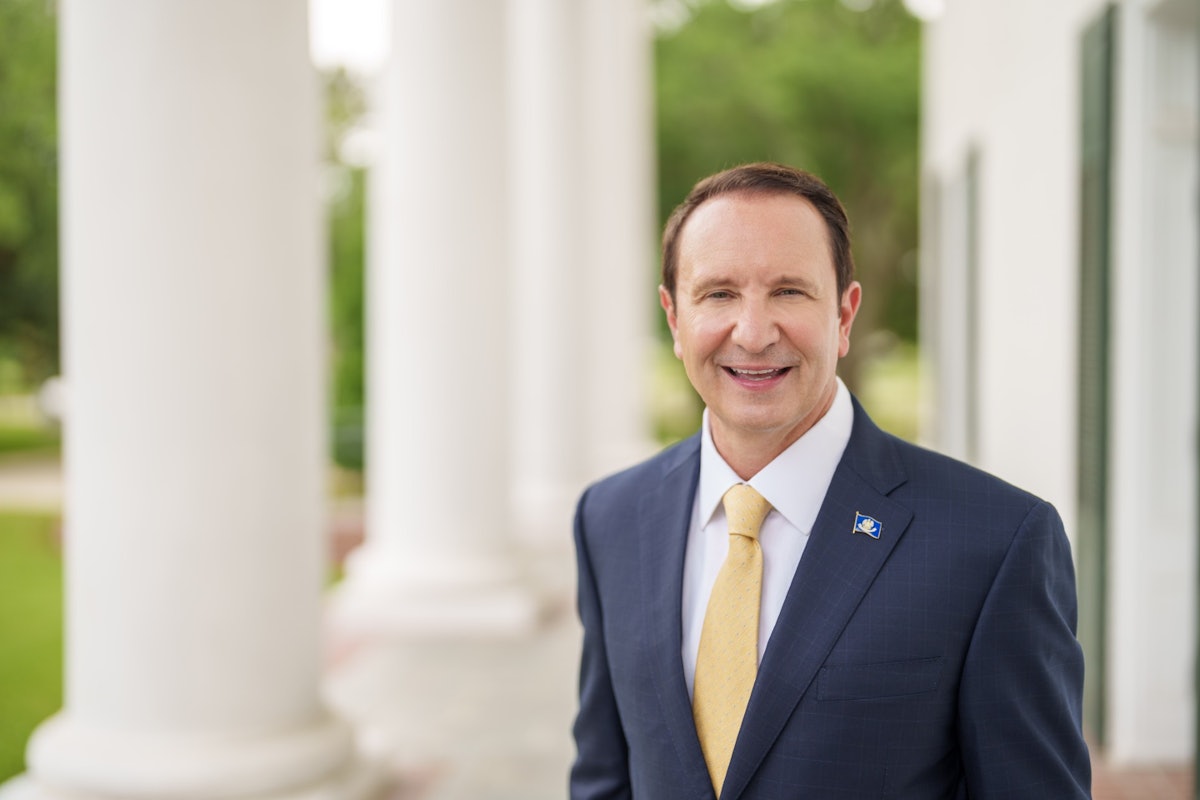
    Louisiana Governor Jeff LandryLouisiana Governor Jeff Landry announced that his state will join six other Southern university systems in creating an alternative accrediting body, marking a significant departure from established higher education standards. Through an executive order, Louisiana becomes the seventh state to participate in the Commission for Public Higher Education, which launched in June with university systems from Florida, Georgia, North Carolina, South Carolina, Tennessee and Texas.

    The new commission is currently seeking expedited approval from the U.S. Department of Education to serve as an official accreditor responsible for maintaining quality standards at colleges and universities. This development represents a direct challenge to the Southern Association of Colleges and Schools Commission on Colleges, the traditional accrediting body that currently evaluates institutions across Louisiana and ten other Southern states including Alabama, Florida, Georgia, Kentucky, Mississippi, North Carolina, South Carolina, Tennessee, Texas and Virginia.

    The formation of this alternative accrediting body stems from growing tensions between conservative politicians and established accreditors. These conflicts have centered on traditional accreditors’ standards related to diversity, equity and inclusion initiatives, as well as their requirements for safeguards designed to limit external political influence in public higher education governance.

    Landry’s executive order establishes a Task Force on Public Higher Education Reform charged with developing recommendations for implementing the new commission. The task force will specifically focus on creating a pilot program for dual accreditation, allowing Louisiana schools to maintain authorization from both the new commission and the Southern Association simultaneously.

    The governor highlighted the ideological motivations behind the move in his announcement. 

    “This task force will ensure Louisiana’s public universities move away from DEI-driven mandates and toward a system rooted in merit-based achievement,” Landry said.

    Florida Governor Ron DeSantis, who helped launch the original commission, articulated similar sentiments when announcing the new accreditor in June. 

    “[The Commission for Public Higher Education] will upend the monopoly of the woke accreditation cartels, and it will provide institutions with an alternative that focuses on student achievement, rather than the ideological fads that have so permeated those accrediting bodies over the years,” DeSantis declared.

    The practical implementation of this new accrediting system faces a significant hurdle, as U.S. Department of Education approval is mandatory before any institution accredited solely by the new commission can receive federal financial aid. This requirement could potentially affect students’ access to federal funding programs if the transition is not handled carefully.

    The composition of Louisiana’s new task force reflects the governor’s significant influence over the state’s higher education leadership structure. With the exception of Commissioner of Higher Education Kim Hunter Reed, every task force member has been directly appointed by Landry or his conservative legislative allies. The task force includes Board of Regents Chairwoman Misti Cordell, University of Louisiana System Board Chairman Mark Romero, LSU System Board Chairman Scott Ballard, Southern University System Board Chairman Tony Clayton, Louisiana Community and Technical College Systems Chairman Tim Hardy, Senate Education Committee Chairman Sen. Rick Edmonds, and House Education Committee Chairwoman Rep. Laurie Schlegel.

    Additionally, Landry has appointed his executive counsel Angelique Freel and Commissioner of Administration Taylor Barras to the task force, with the option for them to send designees in their place. The governor retains the authority to select three additional task force members, further consolidating his influence over the group’s composition and direction.

    This level of gubernatorial control over higher education governance represents a recent shift in Louisiana’s political landscape. Last year, Landry successfully advocated for legislative changes that granted him direct appointment power over the chairs of the state’s five higher education boards, positions that were previously elected from within the boards’ memberships. An earlier version of this legislation would have extended Landry’s authority to include direct hiring of university system presidents, but this provision was ultimately removed due to concerns that such concentration of political power could jeopardize existing accreditation status.

    The task force operates under a compressed timeline that reflects the urgency Landry places on this initiative. The group must convene its inaugural meeting no later than August 31 and maintain a regular schedule with meetings occurring at least once every two months. The task force faces a deadline of January 30, 2026, to submit its comprehensive recommendations for implementing the new accrediting system in Louisiana.


    Source link

  • Louisiana Seeks to Join Florida’s New Accreditor

    Louisiana Seeks to Join Florida’s New Accreditor

    Louisiana will join the new accrediting body Florida established earlier this month in conjunction with five other states, according to an executive order Gov. Jeff Landry signed Tuesday.

    Florida governor Ron DeSantis announced the formation of the new accreditor, the Commission for Public Higher Education (CHPE), last month, decrying higher education’s “woke ideology” and vowing to take down the “accreditation cartel.” CPHE’s business plan said the idea arose from “growing dissatisfaction with current practices among the existing institutional accreditors and the desire for a true system of peer review among public institutions.”

    In addition to the state university system of Florida, Louisiana now aims to join public university systems in Georgia, North Carolina, South Carolina, Tennessee and Texas in switching to the new accreditor.

    “Louisiana stands to benefit from early engagement with CPHE, both by diversifying accreditation options and by shaping the standards and procedures that align with the public mission of its institutions,” Landry’s executive order said. “CPHE will focus on student outcomes, streamline accreditation standards, focus on emerging educational models, modernize the accreditation process, maximize efficiency, and ensure no imposition of divisive ideological content on institutions.”

    The order establishes a task force “to lead statewide engagement on accreditation reform aligned with institutional autonomy, academic excellence, and federal requirements.”

    Landry will appoint the 13 members of the task force, which is required to reports its findings and recommendations no later than January 30, 2026.

    CPHE still needs to secure recognition from the Department of Education, a process that could take years. In the meantime, higher ed institutions can retain their current accreditors, according to the CPHE business plan.

    Louisiana’s public institutions are currently accredited by the Southern Association of Colleges and Schools Commission on Colleges (SACSCOC).

    Source link

  • Louisiana Sees Improved Pass Rates With Corequisite Model

    Louisiana Sees Improved Pass Rates With Corequisite Model

    During the 2020–21 academic year, only 12 percent of students attending a public institution in Louisiana who attempted to complete a credit-bearing English class passed. This past fall, success rates among learners jumped to 60 percent.

    The change reflects an overhaul of remedial education courses at the state level, led by the Louisiana Board of Regents, to improve completion rates across the system’s 28 colleges and universities.

    The initial numbers, coupled with high passing rates among mathematics courses, are a step in the right direction to support credential attainment for adults in Louisiana, said Tristan Denley, deputy commissioner of academic affairs and innovation for the Board of Regents.

    What’s the need: The overhaul of remedial education is tied to the state’s strategic initiative, Louisiana Prospers, which sets a goal for 60 percent of the state’s adult population to have at least a credential of value. At present, the state is at 51 percent attainment, up six percentage points from 2021.

    “One of the fundamental changes that had to be made to be able to increase that attainment in that way is really the barrier of early math and English success,” Denley explained.

    Compared to remediation, corequisite courses reflect an asset-based approach to student success that indicates institutional readiness for student achievement. Research shows students who are placed in corequisite courses are more likely to retain, save money and graduate earlier, compared to their peers.

    “A traditional approach to remediation sort of says, ‘Well, I know you think you’re in college, but maybe not quite yet,’” Denley said.

    Other states, including California, Georgia, Illinois and Tennessee have also prioritized corequisite courses over remedial education offerings to boost student success.

    Building better: The process of rolling out corequisite education began in spring 2022, providing each of the state’s 28 institutions 18 months to launch the math program and then another 18 months for English courses.

    Louisiana launched its corequisite course structure for math courses in starting in fall 2023, and during that academic year, 52 percent of students in a corequisite class completed a college-level math course, up 41 percentage points from 2020–21, when only 11 percent of remedial math students completed a credit-bearing course.

    Implementing corequisite education at scale is a large undertaking, requiring work from math and English faculty as well as the registrar’s office and others, and each rollout looked a little different depending on the college and its needs.

    The system office hosted technical assistance and professional development events to support campuses, including semesterly corequisite academies, which brought together 150 faculty who teach corequisite math and English to share best practices, identify common challenges and establish a community of practice.

    “Interestingly, there are lessons to be learned from the math folk for the English folk, and vice versa, as well as among themselves in those different disciplines,” Denley said.

    One important facet of the corequisite model is addressing students’ self-perceptions of themselves as learners—particularly in math courses where students experience math anxiety—so the board established “Mindset Meauxtivators,” a faculty development course that emphasizes a growth mindset. Two hundred–plus corequisite faculty have completed the course, and a dozen or so serve as faculty champions for this work within their own campuses or regions.

    What’s next: The state will continue to collect data and parse through to identify trends in completion of credit-bearing English and math courses across student groups and institutions.

    Identifying opportunities to support faculty with modern pedagogy that assist with corequisite education is another focus for the board, because the teaching style is much different from remedial.

    Attainment is the goal of this current strategic plan, but future student success work in Louisiana will address socioeconomic mobility and ensuring students “make good on the credential they earn,” Denley said. “After they’ve earned that, what are ways in which we can make sure that that credential is life-changing, both to themselves and to their families and their communities?”

    We bet your colleague would like this article, too. Send them this link to subscribe to our newsletter on Student Success.

    Source link

  • The Keyword Generator from the University of Louisiana at Lafayette Library

    The Keyword Generator from the University of Louisiana at Lafayette Library

    Research and Writing Tool: The Keyword Generator from the University of Louisiana at Lafayette Library

    The University of Louisiana at Lafayette has an incredible tool for students and faculty  writing papers. Sometimes, I have a difficult time brainstorming ideas for a particular research topic (I know that I cannot be the only person), In the past few weeks, I stumbled upon a database quick search tool from U of L Lafayette, “https://www.millennialprofessor.com/2024/04/Keyword Generator“. 

    This is a ChatGPT prompt and it can help you develop keywords for your topic!

    Basically, you place your search terms or your associated keywords and the system provides some associated terms for you.

    Step 1 – I searched for “rural education”

    Step 2 – The keyword generator developed these keywords for me:


    1. Rural schools 

    2. Access to education in rural areas 

    3. Challenges in rural education 

    4. Remote learning in rural communities 

    5. Educational equity in rural schools 

    6. Technology in rural education 

    7. Teacher recruitment and retention in rural areas 

    8. School infrastructure in rural communities 

    9. Dropout rates in rural schools 

    10. Special education in rural areas 

    11. Community involvement in rural education 

    12. Funding for rural schools 

    13. Curriculum development for rural schools 

    14. Impact of poverty on rural education 

    15. Student achievement in rural schools 

    16. Distance education in rural areas 

    17. Cultural diversity in rural schools 

    18. Professional development for rural educators 

    19. Government policies affecting rural education 

    20. Best practices in rural education.

    Step 3 – After you view your results, you can copy and paste the results AND you can utilize ChatGPT without having to log in!

    What do you think about this tool? I will definitely use it! Thanks University of Louisiana at Lafayette!

    ***

    Check out my book – Retaining College Students Using Technology: A Guidebook for Student Affairs and Academic Affairs Professionals.

    Remember to order copies for your team as well!


    Thanks for visiting! 


    Sincerely,


    Dr. Jennifer T. Edwards
    Professor of Communication

    Executive Director of the Texas Social Media Research Institute & Rural Communication Institute

    Source link

  • Higher Ed Without Borders speak with President Jim Henderson of the University of Louisiana System – Edu Alliance Journal

    Higher Ed Without Borders speak with President Jim Henderson of the University of Louisiana System – Edu Alliance Journal

    On this podcast episode of Higher Ed Without Borders co-hosted by Edu Alliance Founders Dr. Senthil Nathan and Dean Hoke speak with Dr. Jim Henderson, President of the University of Louisiana System.

    Dr. James Henderson, President of the University of Louisiana System, a multi-university campus system with an enrollment of approximately 90,000 students. Prior to being appointed as President of the System, Dr. Henderson served as President of Northwestern State University.  He is a native of Shreveport Louisiana. He received his Master’s in Administration from the University of West Florida, and his Doctor of Management degree from the University of Maryland – University College.

    In an October 2021 newspaper article in the Acadiana Advocate, Dr. Henderson’s wife Tonia discussed her husband and love of learning. “Jim has “gone through a lot of schooling” during their marriage and he is a constant reader. He earned his master’s and doctorate while they were married. He also has routinely taken coursework where available — he oftentimes takes Massive Open Online Courses, or MOOCs — most recently one in Irish literature. “He’s always trying to learn new things,” she said.

    His penchant for lifelong learning made an impact on their three children; only the youngest lives at home now. She says she gets inspired by watching him use his time so well. He allots time for work, family, and his own study.”

    Senthil and Dean discussed with Dr. Henderson about the university system and his views on education and leadership.

    Comments and Suggestions:

    Higher Ed Without Borders would love to hear your ideas for future topics and guests. Connect with Dr. Senthil Nathan or Dean Hoke on LinkedIn. You can also visit the Edu Alliance website. To hear the entire series please subscribe to Higher Ed Without Borders on your preferred podcast platforms such as Apple, Spotify, or Google. The podcast is sponsored by Edu Alliance, an education consulting firm located in Bloomington Indiana, and Abu Dhabi, United Arab Emirates.

    We assist higher education institutions worldwide on a variety of mission-critical projects. Production support was provided by White Rabbit Printing and Design.

    If your organization wants to know more about how Edu Alliance can best serve you, please contact either Dean Hoke or Dr. Senthil Nathan.

    Source link