Tag: Machine

  • Unlock High-Impact Machine Learning Projects with Source Code for MBA Project

    Unlock High-Impact Machine Learning Projects with Source Code for MBA Project

    Machine learning is the new trend which is transforming how the business world makes decisions. For MBA students, who are integrating the machine learning projects with source code into final year project work would be adding a real value and to differentiate their profile in placements or higher studies.

    Why MBA Students Should Explore Machine Learning Projects?

    Unlike computer science students, MBA students mainly focus on solving business problems. Still, machine learning opens doors to:

    • Marketing – Customer churn prediction, recommendation engines
    • Finance – Fraud detection, risk scoring, stock price forecasting
    • HR – Employee attrition prediction, talent acquisition analytics
    • Operations – Demand forecasting, supply chain optimization

    Working on machine learning projects for final year, MBA students would be bridging their gap between management and technology.

    Where to Find Machine Learning Projects with Source Code?

    1. Machine Learning Projects Kaggle

    Kaggle offers real-world datasets and pre-built models. For MBA projects, students can explore:

    • Sales forecasting
    • Retail Customer churn
    • Social media analysis and Brand sentiment.

    2. Machine Learning Projects GitHub

    GitHub repositories contain ready-to-use machine learning projects with source code. Mba Final year students can download them, customize datasets, and align them with their final year project theme.

    Best Machine Learning Project Ideas for MBA Final Year

    Marketing Analytics

    • Customer segmentation using K-Means on Fitness Centre
    • Customer Churn on local restaurant
    • Sentiment analysis of customer churn prediction in Banks

    Finance Analytics

    • Comparative study of Loan approval prediction using machine learning Methods.
    • Machine learning prediction on Stock price trend forecasting.

    HR & Operations

    • Comparative study of employee attrition prediction of an organization
    • Utilization of Machine learning in Demand and inventory forecasting.
    • Get more machine leaning titles in this link.Click here

    How MBA Students Can Use These Projects

    1. Students should choose the relevant topics (Marketing, Finance, HR, or operations).
    2. They have to Download machine learning projects with source code from Kaggle or GitHub.
    3. Modifying the datasetsas per the project context.

    Should be focussing on business insights and not just algorithms.

    Check out this video for more indepth knowledge on Machine Learning

    Conclusion

    For MBA students, machine learning projects with source code are not about becoming data scientists—it’s about using data intelligently to make right business decisions.

    By leveraging Kaggle and GitHub, students can transform their final year project into a powerful showcase of management plus analytics skills.

    The main intent of the blog is to help students understand how to find the right mentor who can guide mba students to provide hands-on experience with ml code base.

    This content will help gain more knowledge for capstone projects,thesis work or mba project by applying customer analytics, finance strategy to complement theoretical business knowledge in machine learning and build portfolio for job interviews or internships.

    Download machine learning projects for final year pdf

    Latest Blogs

    Source link

  • TEF6: the incredible machine takes over quality assurance regulation

    TEF6: the incredible machine takes over quality assurance regulation

    If you loved the Teaching Excellence Framework, were thrilled by the outcomes (B3) thresholds, lost your mind for the Equality of Opportunity Risk Register, and delighted to the sporadic risk-based OfS investigations based on years-old data you’ll find a lot to love in the latest set of Office for Students proposals on quality assurance.

    In today’s Consultation on the future approach to quality regulation you’ll find a cyclical, cohort based TEF that also includes a measurement (against benchmarks) of compliance with the thresholds for student outcomes inscribed in the B3 condition. Based on the outcomes of this super-TEF and prioritised based on assessment of risk, OfS will make interventions (including controls on recruitment and the conditions of degree awarding powers) and targeted investigation. This is a first stage consultation only, stage two will come in August 2026.

    It’s not quite a grand unified theory: we don’t mix in the rest of the B conditions (covering less pressing matters like academic standards, the academic experience, student support, assessment) because, in the words of OfS:

    Such an approach would be likely to involve visits to all providers, to assess whether they meet all the relevant B conditions of registration

    The students who are struggling right now with the impacts of higher student/staff ratios and a lack of capacity due to over-recruitment will greatly appreciate this reduction in administrative burden.

    Where we left things

    When we last considered TEF we were expecting an exercise every four years, drawing on provider narrative submissions (which included a chunk on a provider’s own definition and measurement of educational gain), students’ union narrative submissions, and data on outcomes and student satisfactions. Providers were awarded a “medal” for each of student outcomes and student experience – a matrix determined whether this resulted in an overall Bronze, Silver, Gold or Requires Improvement.

    The first three of these awards were deemed to be above minimum standards (with slight differences between each), while the latter was a portal to the much more punitive world of regulation under group B (student experience) conditions of registration. Most of the good bits of this approach came from the genuinely superb Pearce Review of TEF conducted under section 26 of the Higher Education and Research Act, which fixed a lot of the statistical and process nonsense that had crept in under previous iterations and then-current plans (though not every recommendation was implemented).

    TEF awards were last made in 2023, with the next iteration – involving all registered providers plus anyone else who wanted to play along – was due in 2027.

    Perma-TEF

    A return to a rolling TEF rather than a quadrennial quality enhancement jamboree means a pool of TEF assessors rather than a one-off panel. There will be steps taken to ensure that an appropriate group of academic and student assessors is selected to assess each cohort – there will be special efforts made to use those with experience of smaller, specialist, and college-based providers – and a tenure of two-to-three years is planned. OfS is also considering whether its staff can be included among the storied ranks of those empowered to facilitate ratings decisions.

    Likewise, we’ll need a more established appeals system. Open only to those with Bronze or Needs Improvement ratings (Gold and Silver are passing grades) it would be a way to potentially forestall engagement and investigations based on an active risk to student experience or outcomes, or a risk of a future breach of a condition of registration for Bronze or Requires Improvement.

    Each provider would be assessed once every three years – all providers taking part in the first cycle would be assessed in either 2027-28, 2028-29, or 2029-30 (which covers only undergraduate students because there’s no postgraduate NSS yet – OfS plan to develop one before 2030). In many cases they’ll only know which one at the start of the academic year in question, which will give them six months to get their submissions sorted.

    Because Bronze is now bad (rather than “good but not great” as it used to be) the first year’s could well include all providers with a 2023 Bronze (or Requires Improvement) rating, plus some with increased risks of non-compliance, some with Bronze in one of the TEF aspects, and some without a rating.

    After this, how often you are assessed depends on your rating – if you are Gold overall it is five years till the next try, Silver means four years, and Bronze three (if you are “Requires Improvement” you probably have other concerns beyond the date of your next assessment) but this can be tweaked if OfS decides there is an increased risk to quality or for any other reason.

    Snakes and ladders

    Ignore the gradations and matrices in the Pearce Review – the plan now is that your lowest TEF aspect rating (remember you got sub-awards last time for student experience and student outcomes) will be your overall rating. So Silver for experience and Bronze for outcomes makes for an overall Bronze. As OfS has decided that you now have to pay (likely around £25,000) to enter what is a compulsory exercise this is a cost that could lead to a larger cost in future.

    In previous TEFs, the only negative consequence for those outside of the top ratings have been reputational – a loss of bragging rights of, arguably, negligible value. The new proposals align Bronze with the (B3) minimum required standards and put Requires Improvement below these: in the new calculus of value the minimum is not good enough and there will be consequences.

    We’ve already had some hints that a link to fee cap levels is back on the cards, but in the meantime OfS is pondering a cap on student numbers expansion to punish those who turn out Bronze or Requires Improvement. The workings of the expansion cap will be familiar to those who recall the old additional student numbers process – increases of more than five per cent (the old tolerance band, which is still a lot) would not be permitted for poorly rated providers.

    For providers without degree awarding powers it is unlikely they will be successful in applying for them with Bronze and below – but OfS is also thinking about restricting aspects of existing providers DAPs, for example limiting their ability to subcontract or franchise provision in future. This is another de facto numbers cap in many cases, and is all ahead of a future consultation on DAPs that could make for an even closer link with TEF.

    Proposals for progression

    Proposal 6 will simplify the existing B3 thresholds, and integrate the way they are assessed into the TEF process. In a nutshell, the progression requirement for B3 would disappear – with the assessment made purely on continuation and completion, with providers able to submit contextual and historic information to explain why performance is not above the benchmark or threshold as a part of the TEF process.

    Progression will still be considered at the higher levels of TEF, and here contextual information can play more of a part – with what I propose we start calling the Norland Clause allowing providers to submit details of courses that lead to jobs that ONS does not consider as professional or managerial. That existing indicator will be joined by another based on (Graduate Outcomes) graduate reflections on how they are using what they have learned, and benchmarked salaries three years after graduation from DfE’s Longitudinal Educational Outcomes (LEO) data – in deference to that random Kemi Badenoch IFS commission at the tail end of the last parliament.

    Again, there will be contextual benchmarks for these measures (and hopefully some hefty caveating on the use of LEO median salaries) – and, as is the pattern in this consultation, there are detailed proposals to follow.

    Marginal gains, marginal losses

    The “educational gains” experiment, pioneered in the last TEF, is over: making this three times that a regulator in England has tried and failed to include a measure of learning gain in some form of regulation. OfS is still happy for you to mention your education gain work in your next narrative submission, but it isn’t compulsory. The reason: reducing burden, and a focus on comparability rather than a diversity of bespoke measures.

    Asking providers what something means in their context, rather than applying a one-size-fits-all measure of student success was an immensely powerful component of the last exercise. Providers who started on that journey at considerable expense in data gathering and analysis may be less than pleased at this latest development – and we’d certainly understood that DfE were fans of the approach too.

    Similarly, the requirement for students to feed back on students in their submissions to TEF has been removed. The ostensible reason is that students found it difficult last time round – the result is that insight from the valuable networks between existing students and their recently graduated peers is lost. The outcomes end of TEF is now very much data driven with only the chance to explain unusual results offered. It’s a retreat from some of the contextual sense that crept in with the Pearce Review.

    Business as usual

    Even though TEF now feels like it is everywhere and for always, there’s still a place for OfS’ regular risk-based monitoring – and annex I (yes, there’s that many annexes) contains a useful draft monitoring tool.

    Here it is very good to see staff:student ratios, falling entry requirements, a large growth in foundation year provision, and a rapid growth in numbers among what are noted as indicators of risk to the student experience. It is possible to examine an excellent system designed outside of the seemingly inviolate framework of the TEF where events like this would trigger an investigation of provider governance and quality assurance processes.

    Alas, the main use of this monitoring is to decide whether or not to bring a TEF assessment forward, something that punts an immediate risk to students into something that will be dealt with retrospectively. If I’m a student on a first year that has ballooned from 300 to 900 from one cycle to the next there is a lot of good a regulator can do by acting quickly – I am unlikely to care whether a Bronze or Silver award is made in a couple of years’ time.

    International principles

    One of the key recommendations of the Behan review on quality was a drawing together of the various disparate (and, yes, burdensome) streams of quality and standards assurance and enhancement into a unified whole. We obviously don’t quite get there – but there has been progress made towards another key sector bugbear that came up both in Behan and the Lords’ Industry and Regulators Committee review: adherence to international quality assurance standards (to facilitate international partnerships and, increasingly, recruitment).

    OfS will “work towards applying to join the European Quality Assurance Register for Higher Education” at the appropriate time – clearly feeling that the long overdue centring of the student voice in quality assurance (there will be an expanded role for and range of student assessors) and the incorporation of a cyclical element (to desk assessments at least) is enough to get them over the bar.

    It isn’t. Principle 2.1 of the EQAR ESG requires that “external quality assurance should address the effectiveness of the internal quality assurance processes” – philosophically establishing the key role of providers themselves in monitoring and upholding the quality of their own provision, with the external assurance process primarily assessing whether (and how well) this has been done. For whatever reason OfS believes the state (in the form of the regulator) needs to be (and is capable of being!) responsible for all, quality assurance everywhere, all the time. It’s a glaring weakness of the OfS system that urgently needs to be addressed. And it hasn’t been, this time.

    The upshot is that while the new system looks ESG-ish, it is unlikely to be judged to be in full compliance.

    Single word judgements

    The recent use of single headline judgements of educational quality being used in ways that have far reaching regulatory implications is hugely problematic. The government announced the abandonment of the old “requires improvement, inadequate, good, and outstanding” judgements for schools in favour of a more nuanced “report card approach” – driven in part by the death by suicide of headteacher Ruth Perry in 2023. The “inadequate” rating given to her Cavendish Primary School would have meant forced academisation and deeper regulatory oversight.

    Regulation and quality assurance in education needs to be rigorous and reliable – it also needs to be context-aware and focused on improvement rather than retribution. Giving single headline grades cute, Olympics-inspired names doesn’t really cut it – and as we approach the fifth redesign of an exercise that has only run six times since 2016 you would perhaps think that rather harder questions need to be asked about the value (and cost!) of this undertaking.

    If we want to assess and control the risks of modular provision, transnational education, rapid expansion, and a growing number of innovations in delivery we need providers as active partners in the process. If we want to let universities try new things we need to start from a position that we can trust universities to have a focus on the quality of the student experience that is robust and transparent. We are reaching the limits of the current approach. Bad actors will continue to get away with poor quality provision – students won’t see timely regulatory action to prevent this – and eventually someone is going to get hurt.

    Source link

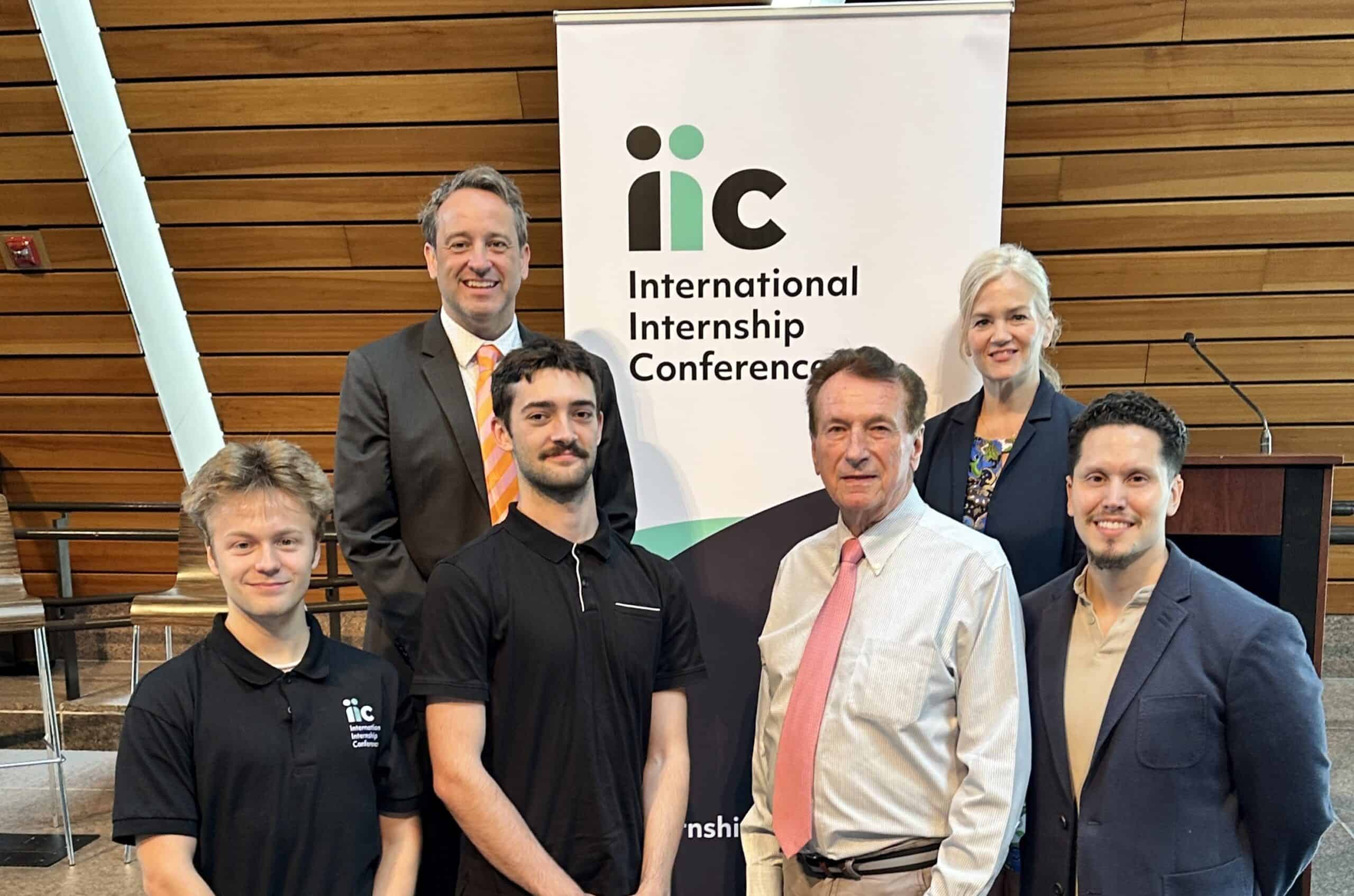
  • ‘Man versus machine’ up for debate at the International Internship Conference

    ‘Man versus machine’ up for debate at the International Internship Conference

    Welcoming delegates with a lyric from Minnesotan, Bob Dylan, International Internship Network founder and conference organiser, Matt Byrnes, set a reflective tone: “Come in… I’ll give you shelter from the storm.” 

    “We’re in the midst of a storm in post-secondary education,” explained Byrnes, who believes that IIC can offer colleagues a refuge from the onsalught on recent policy decisions that are impacting international education globally.

    “IIC fosters an environment of tranquillity and confidence, where attendees explore study abroad solutions and partnerships that benefit their institutions and students,” he said.

    Attendees from across the globe gathered to engage in sessions that ranged from employer site visits to focused panels and social receptions. Delegates included international internship providers, faculty, government representatives, employers, and students.

    Central to the program was the conference’s annual debate. This year’s square off was entitled ‘Man vs Machine’ and tackled questions surrounding AI’s role in internship design and delivery. Moderated by The PIE‘s Maureen Manning, the session featured Kate Moore, principal and co-founder of the Global Career Center (GCC), Balaji Krishnan, vice provost at the University of Memphis, Greg Holz, assistant director for global engagement at the Univerity of Central Missouri, and Rishab Malhotra, founder and CEO of AIDO.

    The panellists brought diverse perspectives, from AI ethics and corporate supervision to startup innovation and campus life. They debated how technology can support rather than supplant the human experience in relation to international expeiences.

    Krishnan emphasised the importance of ethical frameworks in guiding AI development, warning against unchecked reliance on algorithmic tools without human oversight. Malhotra noted that while artificial intelligence can optimise logistics and placement processes, it cannot replicate human empathy or intercultural sensitivity – qualities central to global internships. Meanwhile, Holz offered a perspective from the corporate side, suggesting that when used thoughtfully, AI can streamline operations and free up supervisors to provide more meaningful mentorships. Moore closed by framing technology as an enabler rather than a replacement; a tool, not a teacher.

    These discussions reflected a core concern echoed throughout the conference: how to maintain the integrity and purpose of internships while leveraging digital tools to scale access and impact.

    Byrnes commented on the relevance of the conference’s direction: “IIC’s focus on the future of internships and technology is on point. At a time when academia is pivoting to prepare students for how AI is transforming the workplace, IIC attendees return to their campuses with much more knowledge about emerging technologies and how they can evolve internship programs to meet the needs of their students.”

    The event also highlighted the important role of government partnerships in advancing work-integrated learning. International Experience Canada (IEC), one of the central partners of the conference, stated: “We congratulate IIC for its role as a leading organisation in advancing dialogue and partnerships on international experiential education, work-integrated learning and internships, and as one of IEC’s newest recognised organisation partners.”

    Tech knowledge alone is not enough. We must support students to think critically, navigate complexity, and adapt with agility
    Maria Angeles Fernandes Lopez, Universidad de Camilo Jose Cela

    Throughout the three-day event, many delegates indicated to the PIE that it is not a question of whether technology will shape the future of internships, but rather how to ensure that these tools enhance, not eclipse, the human dimensions of learning: mentorship, reflection, and cross-cultural understanding.

    “Tech knowledge alone is not enough. We must support students to think critically, navigate complexity, and adapt with agility,” asserted Maria Angeles Fernandes Lopez, vice rector at Universidad de Camilo Jose Cela, the host institution for the IIC in 2026. At the passing of the torch ceremony at the conclusion of the conference, Byrnes and Lopez indicated their hope to build on the momentum and dialogue sparked in Minneapolis on the intersection between technology and humanity.

    Source link

  • Machine learning technology is transforming how institutions make sense of student feedback

    Machine learning technology is transforming how institutions make sense of student feedback

    Institutions spend a lot of time surveying students for their feedback on their learning experience, but once you have crunched the numbers the hard bit is working out the “why.”

    The qualitative information institutions collect is a goldmine of insight about the sentiments and specific experiences that are driving the headline feedback numbers. When students are especially positive, it helps to know why, to spread that good practice and apply it in different learning contexts. When students score some aspect of their experience negatively, it’s critical to know the exact nature of the perceived gap, omission or injustice so that it can be fixed.

    Any conscientious module leader will run their eye down the student comments in a module feedback survey – but once you start looking across modules to programme or cohort level, or to large-scale surveys like NSS, PRES or PTES, the scale of the qualitative data becomes overwhelming for the naked eye. Even the most conscientious reader will find that bias sets in, as comments that are interesting or unexpected tend to be foregrounded as having greater explanatory power over those that seem run of the mill.

    Traditional coding methods for qualitative data require someone – or ideally more than one person – to manually break down comments into clauses or statements that can be coded for theme and sentiment. It’s robust, but incredibly laborious. For student survey work, where the goal might be to respond to feedback and make improvements at pace, institutions are open that this kind of robust analysis is rarely, if ever, the standard practice. Especially as resources become more constrained, devoting hours to this kind of detailed methodological work is rarely a priority.

    Let me blow your mind

    That is where machine learning technology can genuinely change the game. Student Voice AI was founded by Stuart Grey, an academic at the University of Strathclyde (now working at the University of Glasgow), initially to help analyse student comments for large engineering courses. Working with Advance HE he was able to train the machine learning model on national PTES and PRES datasets. Now, further training the algorithm on NSS data, Student Voice AI offers literally same-day analysis of student comments for NSS results for subscribing institutions.

    Put the words “AI” and “student feedback” in the same sentence and some people’s hackles will immediately rise. So Stuart spends quite a lot of time explaining how the analysis works. The word he uses to describe the version of machine learning Student Voice AI deploys is “supervised learning” – humans manually label categories in datasets and “teach” the machine about sentiment and topic. The larger the available dataset the more examples the machine is exposed to and the more sophisticated it becomes. Through this process Student Voice AI has landed on a discreet number of comment themes and categories for taught students and the same for postgraduate research students that the majority of student comments consistently fall into – trained on and distinctive to UK higher education student data. Stuart adds that the categories can and do evolve:

    “The categories are based on what students are saying, not what we think they might be talking about – or what we’d like them to be talking about. There could be more categories if we wanted them, but it’s about what’s digestible for a normal person.”

    In practice that means that institutions can see a quantitative representation of their student comments, sorted by category and sentiment. You can look at student views of feedback, for example, and see the balance of positive, neutral and negative sentiment, overall, segment it into departments or subject areas, or years of study, then click through to see the relevant comments to see what’s driving that feedback. That’s significantly different from, say, dumping your student comments into a third party generative AI platform (sharing confidential data with a third party while you’re at it) and asking it to summarise. There’s value in the time and effort saved, but also in the removal of individual personal bias, and the potential for aggregation and segmentation for different stakeholders in the system. And it also becomes possible to compare student qualitative feedback across institutions.

    Now, Student Voice AI is partnering with student insight platform evasys to bring machine learning technology to qualitative data collected via the evasys platform. And evasys and Student Voice AI have been commissioned by Advance HE to code and analyse open comments from the 2025 PRES and PTES surveys – creating opportunities to drill down into a national dataset that can be segmented by subject discipline and theme as well as by institution.

    Bruce Johnson, managing director at evasys is enthused about the potential for the technology to drive culture change both in how student feedback is used to inform insight and action across institutions:

    “When you’re thinking about how to create actionable insight from survey data the key question is, to whom? Is it to a module leader? Is it to a programme director of a collection of modules? Is it to a head of department or a pro vice chancellor or the planning or quality teams? All of these are completely different stakeholders who need different ways of looking at the data. And it’s also about how the data is presented – most of my customers want, not only quality of insight, but the ability to harvest that in a visually engaging way.”

    “Coming from higher education it seems obvious to me that different stakeholders have very different uses for student feedback data,” says Stuart Grey. “Those teaching at the coalface are interested in student engagement; at the strategic level the interest is in strategic level interest in trends and sentiment analysis and there are also various stakeholder groups in professional services who never get to see this stuff normally, but we can generate the reports that show them what students are saying about their area. Frequently the data tells them something they knew anyway but it gives them the ammunition to be able to make change.”

    The results are in

    Duncan Berryman, student surveys officer at Queens University Belfast, sums up the value of AI analysis for his small team: “It makes our life a lot easier, and the schools get the data and trends quicker.” Previously schools had been supplied with Excel spreadsheets – and his team were spending a lot of time explaining and working through with colleagues how to make sense of the data on those spreadsheets. Being able to see a straightforward visualisation of student sentiment on the various themes means that, as Duncan observes rather wryly, “if change isn’t happening it’s not just because people don’t know what student surveys are saying.”

    Parama Chaudhury, professor of economics and pro vice provost education (student academic experience) at University College London explains where qualitative data analysis sits in the wider ecosystem for quality enhancement of teaching and learning. In her view, for enhancement purposes, comparing your quantitative student feedback scores to those of another department is not particularly useful – essentially it’s comparing apples with oranges. Yet the apparent ease of comparability of quantitative data, compared with the sense of overwhelm at the volume and complexity of student comments, can mean that people spend time trying to explain the numerical differences, rather than mining the qualitative data for more robust and actionable explanations that can give context to your own scores.

    It’s not that people weren’t working hard on enhancement, in other words, but they didn’t always have the best possible information to guide that work. “When I came into this role quite a lot of people were saying ‘we don’t understand why the qualitative data is telling us this, we’ve done all these things,’” says Parama. “I’ve been in the sector a long time and have received my share of summaries of module evaluations and have always questioned those summaries because it’s just someone’s ‘read.’ Having that really objective view, from a well-trained algorithm makes a difference.”

    UCL has tested two-page summaries of student comments to specific departments this academic year, and plans to roll out a version for every department this summer. The data is not assessed in a vacuum; it forms part of the wider institutional quality assurance and enhancement processes which includes data on a range of different perspectives on areas for development. Encouragingly, so far the data from students is consistent with what has emerged from internal reviews, giving the departments that have had the opportunity to engage with it greater confidence in their processes and action plans.

    None of this stops anyone from going and looking at specific student comments, sense-checking the algorithm’s analysis and/or triangulating against other data. At the University of Edinburgh, head of academic planning Marianne Brown says that the value of the AI analysis is in the speed of turnaround – the institutionl carries out a manual reviewing process to be sure that any unexpected comments are picked up. But being able to share the headline insight at pace (in this case via a PowerBI interface) means that leaders receive the feedback while the information is still fresh, and the lead time to effect change is longer than if time had been lost to manual coding.

    The University of Edinburgh is known for its cutting edge AI research, and boasts the Edinburgh (access to) Language Models (ELM) a platform that gives staff and students access to generative AI tools without sharing data with third parties, keeping all user data onsite and secured. Marianne is clear that even a closed system like ELM is not appropriate for unfettered student comment analysis. Generative AI platforms offer the illusion of a thematic analysis but it is far from robust because generative AI operates through sophisticated guesswork rather than analysis of the implications of actual data. “Being able to put responses from NSS or our internal student survey into ELM to give summaries was great, until you started to interrogate those summaries. Robust validation of any output is still required,” says Marianne. Similarly Duncan Berryman observes: “If you asked a gen-AI tool to show you the comments related to the themes it had picked out, it would not refer back to actual comments. Or it would have pulled this supposed common theme from just one comment.”

    The holy grail of student survey practice is creating a virtuous circle: student engagement in feedback creates actionable data, which leads to education enhancement, and students gain confidence that the process is authentic and are further motivated to share their feedback. In that quest, AI, deployed appropriately, can be an institutional ally and resource-multiplier, giving fast and robust access to aggregated student views and opinions. “The end result should be to make teaching and learning better,” says Stuart Grey. “And hopefully what we’re doing is saving time on the manual boring part, and freeing up time to make real change.”

    Source link

  • 5 Ways to Turn College Startups Into a Recurring Revenue Machine

    5 Ways to Turn College Startups Into a Recurring Revenue Machine

    Starting a college project is fascinating; nevertheless, maintaining profitability is quite another matter. Many college businesses find it difficult to maintain revenue growth between increasing running expenses, administrative inefficiencies, and erratic cash flow. Actually, cash flow issues cause 82% of small firms to fail; education startups are not an exception.

    The fix? smarter, data-based ideas for college recurrent income. Supported by actual data, let’s explore five tested strategies to make your college startup a revenue-generating machine.


    Five Data-Based Strategies for College Recurring Revenue to Increase Profits


    1. Automate Fee Collection: Save Up to 30% of Costs

    Unbelievably, mistakes in manual fee processing could cost organizations up to 25% of their whole income. Automating your fee collecting guarantees faster payments, less billing errors, and simplifies the process. Studies reveal that companies implementing automation cut their running expenses by thirty percent; consider what that could mean for the financial situation of your college.

    Using a cloud-based fee management solution can help you to automatically handle receipts, cut manual invoicing, and send quick payment reminders.


    2. Strengthener student relationships – boost enrollment by eighteen percent

    Automate Fee Collection: Save Up to 30% of Costs

    Unbelievably, mistakes in manual fee processing could cost organizations up to 25% of their whole income. Automating your fee collecting guarantees faster payments, less billing errors, and simplifies the process. Studies reveal that companies implementing automation cut their running expenses by thirty percent; consider what that could mean for the financial situation of your college.

    Using a cloud-based fee management solution can help you to automatically handle receipts, cut manual invoicing, and send quick payment reminders.


    3. Smart Reminders & Communication — 45% Less Late Payments

    Weary of hunting payments? When institutions deliver timely SMS, email, and push notifications, a shockingly 45% of late fees are paid within a week. Automated reminders guarantee parents and students never miss a deadline, therefore reducing late payments and improving cash flow.

    To expedite collections and save administrative expense, schedule automated reminders for due dates, past-due penalties, and payment acknowledgements.


    4. Control Your Spending Track About sixty percent of operational expenses

    Unchecked expenses cause colleges to bleed money; but, systematic expense tracking helps to control 60% of operational costs. Institutions can recognize early overspending, maximize resource allocation, and increase profitability by real-time cost capture and manual expenditure entry elimination.

    Use cost control tools to oversee vendor payments, check program budgets, and guarantee every dollar counts.


    5. Improve Real-Time Data Insights to Increase Revenue 20%

    Think about predicting financial constraints. Data analytics boosts revenue by 20% for institutions tracking revenue, costs, and student performance. Late payments, course profitability, and untapped income potential are visible in real time dashboards.

    With a real-time performance metrics dashboard, track cash flow, find income trends, and improve financial agility.


    Ready to Turn Your College Startup into a Revenue Powerhouse?

    The path to a sustainable, recurring revenue model isn’t about working harder — it’s about working smarter. By embracing automation, student relationship management, expense control, and data-driven decision-making, your college startup can maximize revenue, minimize costs, and scale faster than ever.

    Ready to future-proof your revenue strategy? Let Creatrix Campus help you build a smarter, more profitable institution — starting today.

    Source link

  • I Am Captcha: ‘Ghost’ Students and the AI Machine

    I Am Captcha: ‘Ghost’ Students and the AI Machine

    I Am Captcha: ‘Ghost’ Students and the AI Machine

    justin.morriso…

    Fri, 02/21/2025 – 03:00 AM

    Adam Bessie and Jason Novak capture the higher educator’s dilemma in the age of generative AI.

    Source link