
Tag: male

  • Do male teachers make a difference? Not as much as some think

    Do male teachers make a difference? Not as much as some think

    by Jill Barshay, The Hechinger Report
    November 17, 2025

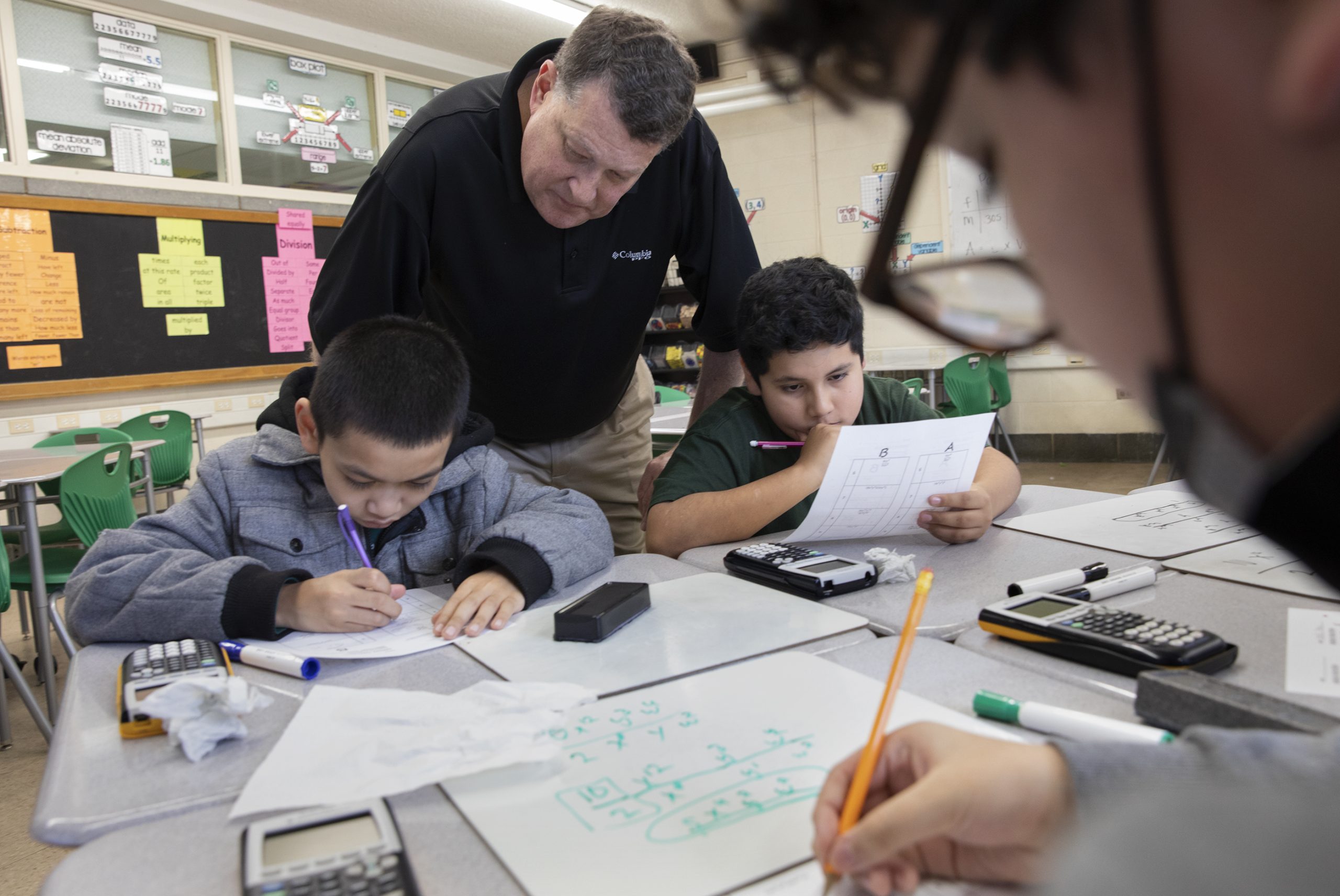
    The teaching profession is one of the most female-dominated in the United States. Among elementary school teachers, 89 percent are women, and in kindergarten, that number is almost 97 percent.

    Many sociologists, writers and parents have questioned whether this imbalance hinders young boys at the start of their education. Are female teachers less understanding of boys’ need to horse around? Or would male role models inspire boys to learn their letters and times tables? Some advocates point to research that lays out why boys ought to do better with male teachers.

    But a new national analysis finds no evidence that boys perform or behave better with male teachers in elementary school. This challenges a widespread belief that boys thrive more when taught by men, and it raises questions about efforts, such as one in New York City, to spend extra to recruit them.

    “I was surprised,” said Paul Morgan, a professor at the University at Albany and a co-author of the study. “I’ve raised two boys, and my assumption would be that having male teachers is beneficial because boys tend to be more rambunctious, more active, a little less easy to direct in academic tasks.”

    Related: Our free weekly newsletter alerts you to what research says about schools and classrooms.

    “We’re not saying gender matching doesn’t work,” Morgan added. “We’re saying we’re not observing it in K through fifth grade.”

    Middle and high school students might see more benefits. Earlier research is mixed and inconclusive. A 2007 analysis by Stanford professor Thomas Dee found academic benefits for eighth-grade boys and girls when taught by teachers of their same gender. And studies where researchers observe and interview a small number of students often show how students feel more supported by same-gender teachers. Yet many quantitative studies, like this newest one, have failed to detect measurable benefits for boys. At least 10 since 2014 have found zero or minimal effects. Benefits for girls are more consistent.

    This latest study, “Fixed Effect Estimates of Teacher-Student Gender Matching During Elementary School,” is a working paper not yet published in a peer-reviewed journal.* Morgan and co-author Eric Hu, a research scientist at Albany, shared a draft with me.

    Morgan and Hu analyzed a U.S. Education Department dataset that followed a nationally representative group of 8,000 students from kindergarten in 2010 through fifth grade in 2017. Half were boys and half were girls. 

    More than two-thirds — 68 percent — of the 4,000 boys never had a male teacher in those years while 32 percent had at least one. (The study focused only on main classroom teachers, not extras like gym or music.)

    Among the 1,300 boys who had both male and female teachers, the researchers compared each boy’s performance and behavior across those years. For instance, if Jacob had female teachers in kindergarten, first, second and fifth grades, but male teachers in third and fourth, his average scores and behavior were compared between the teachers of different genders.

    Related: Plenty of Black college students want to be teachers, but something keeps derailing them

    The researchers found no differences in reading, math or science achievement — or in behavioral and social measures. Teachers rated students on traits like impulsiveness, cooperation, anxiety, empathy and self-control. The children also took annual executive function tests. The results did not vary by the teacher’s gender.

    Most studies on male teachers focus on older students. The authors noted one other elementary-level study, in Florida, that also found no academic benefit for boys. This new research confirms that finding and adds that there seems to be no behavioral or social benefits either.

    For students at these young ages, 11 and under, the researchers also didn’t find academic benefits for girls with female teachers. But there were two non-academic ones: Girls taught by women showed stronger interpersonal skills (getting along, helping others, caring about feelings) and a greater eagerness to learn (represented by skills such as keeping organized and following rules).

    When the researchers combined race and gender, the results grew more complex. Black girls taught by women scored higher on an executive function test but lower in science. Asian boys taught by men scored higher on executive function but had lower ratings on interpersonal skills. Black boys showed no measurable differences when taught by male teachers. (Previous research has sometimes found benefits for Black students taught by Black teachers and sometimes hasn’t.)**

    Related: Bright black students taught by black teachers are more likely to get into gifted-and-talented classrooms

    Even if data show no academic or behavioral benefits for students, there may still be compelling reasons to diversify the teaching workforce, just as in other professions. But we shouldn’t expect these efforts to move the needle on student outcomes.

    “If you had scarce resources and were trying to place your bets,” Morgan said, “then based on this study, maybe elementary school isn’t where you should focus your recruitment efforts” to hire more men.

    To paraphrase Boyz II Men, it’s so hard to say goodbye — to the idea that young boys need male teachers.

    *Clarification: The article has not yet been published in a peer-reviewed journal but has undergone some peer review.

    **Correction: An earlier version incorrectly characterized how researchers analyzed what happened to students of different races. The researchers focused only on the gender of the teachers, but drilled down to see how students of different races responded to teachers of different genders. 

    Contact staff writer Jill Barshay at 212-678-3595, jillbarshay.35 on Signal, or [email protected].

    This story about male teachers was produced by The Hechinger Report, a nonprofit, independent news organization focused on inequality and innovation in education. Sign up for Proof Points and other Hechinger newsletters.

    This <a target=”_blank” href=”https://hechingerreport.org/proof-points-male-teachers-elementary-school/”>article</a> first appeared on <a target=”_blank” href=”https://hechingerreport.org”>The Hechinger Report</a> and is republished here under a <a target=”_blank” href=”https://creativecommons.org/licenses/by-nc-nd/4.0/”>Creative Commons Attribution-NonCommercial-NoDerivatives 4.0 International License</a>.<img src=”https://i0.wp.com/hechingerreport.org/wp-content/uploads/2018/06/cropped-favicon.jpg?fit=150%2C150&amp;ssl=1″ style=”width:1em;height:1em;margin-left:10px;”>

    <img id=”republication-tracker-tool-source” src=”https://hechingerreport.org/?republication-pixel=true&post=113362&amp;ga4=G-03KPHXDF3H” style=”width:1px;height:1px;”><script> PARSELY = { autotrack: false, onload: function() { PARSELY.beacon.trackPageView({ url: “https://hechingerreport.org/proof-points-male-teachers-elementary-school/”, urlref: window.location.href }); } } </script> <script id=”parsely-cfg” src=”//cdn.parsely.com/keys/hechingerreport.org/p.js”></script>


    Source link

  • A Critical Look at Charlie Kirk’s Hypothesis on Male Happiness

    A Critical Look at Charlie Kirk’s Hypothesis on Male Happiness

    Conservative commentator Charlie Kirk has repeatedly asserted that men are most fulfilled when they marry and have children. This idea, rooted in a traditionalist worldview, has gained traction among some segments of the population, particularly those seeking a return to what they perceive as the moral and social stability of the past. But does the scientific evidence support this claim? A closer look at research from sociology, psychology, and economics suggests a more complex and less ideologically convenient reality.

    Marriage and Happiness: The Nuanced Evidence

    It is true that some studies show a correlation between marriage and higher reported levels of happiness and well-being. For example, a 2002 study published in the Journal of Marriage and Family found that married individuals reported higher happiness levels than their unmarried counterparts. However, the effect size was relatively modest, and subsequent research has nuanced these findings.

    A 2012 meta-analysis by Lucas and Dyrenforth in Personality and Social Psychology Bulletin suggested that the happiness boost associated with marriage is temporary. On average, individuals experience a honeymoon period after marriage, followed by a return to baseline happiness levels within a few years. This phenomenon, known as hedonic adaptation, undermines the idea that marriage itself produces sustained happiness.

    Moreover, the benefits of marriage appear to be highly contingent on the quality of the relationship. A study published in Journal of Family Psychology (Carr et al., 2014) found that people in high-conflict marriages reported significantly lower well-being than unmarried individuals. Men in unhappy marriages often experience increased psychological distress, which may lead to health problems, substance abuse, and even premature death (Whisman et al., 2006).

    Children and Male Well-being: A Complicated Relationship

    Kirk’s view also hinges on the assumption that fatherhood enhances male happiness. While parenthood is often meaningful and rewarding, the scientific literature offers mixed findings regarding its impact on overall well-being.

    A major study by Nelson et al. (2014) in Psychological Bulletin found that the association between parenthood and well-being is neither universally positive nor negative. The effects depend heavily on contextual factors like marital status, socioeconomic resources, and the age of the children. Fathers in stable, supportive relationships often report satisfaction from parenting, but those facing financial stress, lack of social support, or conflict with a co-parent frequently experience declines in mental health.

    Another longitudinal study by Herbst and Ifcher (2016) found that fathers experience both gains and losses in subjective well-being. While they may report a greater sense of purpose and life meaning, they also experience declines in leisure time, sleep quality, and perceived freedom—all factors associated with lower happiness levels. Notably, single fathers and those in contentious co-parenting arrangements report lower life satisfaction than child-free men.

    The Importance of Autonomy and Purpose

    Perhaps most revealing are studies showing that autonomy and life purpose are stronger predictors of long-term happiness than marital or parental status alone. Deci and Ryan’s Self-Determination Theory, which has been widely validated across cultures, suggests that autonomy, competence, and relatedness are the key psychological needs for well-being. Marriage and children can contribute to these needs, but they can also undermine them, especially if the roles are imposed or filled with conflict.

    Research from the Pew Research Center and Gallup also shows that life satisfaction is more closely tied to financial security, meaningful work, physical health, and strong social networks than to marital or parental status alone. Men who are engaged in purposeful careers, maintain close friendships, and have control over their time report higher levels of happiness—even if they are single or child-free.

    The Rise of Alternative Lifestyles

    Recent demographic trends reflect changing attitudes about what constitutes a fulfilling life. Census data show that marriage rates among men have declined steadily over the past 50 years. Meanwhile, increasing numbers of men are choosing to remain child-free or delay fatherhood. A 2021 Pew Research Center report found that 44% of men under 50 without children expected to remain child-free, a marked increase from previous decades.

    While some conservatives view these changes as signs of cultural decline, others interpret them as evidence that men are exercising greater personal agency in crafting their lives outside traditional expectations. Men who reject marriage and fatherhood are not necessarily unhappy or aimless. For many, this path allows greater freedom to travel, pursue creative or intellectual goals, contribute to their communities, or engage in activism and caregiving in non-familial forms.

    What About Mental Health?

    Importantly, mental health outcomes among men do not uniformly improve with marriage and children. According to the National Institute of Mental Health, men in high-conflict or financially strained marriages report elevated rates of depression, anxiety, and substance abuse. Fatherhood under conditions of instability or poverty can exacerbate stress levels. Conversely, single men who cultivate strong support systems and engage in regular exercise, therapy, or meaningful social activities often show comparable or better mental health outcomes than married peers.

    Beyond Simplistic Narratives

    Charlie Kirk’s assertion that men are “happiest” when married with children oversimplifies a set of deeply personal and variable life experiences. While marriage and fatherhood can be sources of joy, meaning, and fulfillment, they are not universal prescriptions for happiness. The scientific consensus indicates that well-being is shaped by a complex interplay of autonomy, relationship quality, health, socioeconomic status, and personal values.

    Higher education—particularly in the social sciences—has a role to play in challenging ideological assumptions with empirical research. In a pluralistic society, young men deserve the freedom to critically examine diverse paths to meaning and well-being, without being pressured into a one-size-fits-all model of masculinity. If anything, the data reveal that the happiest men are not necessarily husbands and fathers, but those who are allowed to define their own lives on their own terms.

    Sources:

    • Lucas, R. E., & Dyrenforth, P. S. (2012). Does the honeymoon last? Personality and Social Psychology Bulletin.

    • Carr, D., Freedman, V. A., Cornman, J. C., & Schwarz, N. (2014). Happy marriage, happy life? Journal of Family Psychology.

    • Nelson, S. K., Kushlev, K., & Lyubomirsky, S. (2014). Is parenthood associated with well-being? Psychological Bulletin.

    • Whisman, M. A., Uebelacker, L. A., & Weinstock, L. M. (2006). Marital distress and mental health. Journal of Consulting and Clinical Psychology.

    • Deci, E. L., & Ryan, R. M. (2000). The “what” and “why” of goal pursuits: Human needs and the self-determination of behavior. Psychological Inquiry.

    • Pew Research Center. (2021). More Americans say they are unlikely to have children.

    • Herbst, C. M., & Ifcher, J. (2016). The increasing happiness of U.S. parents. Review of Economics of the Household.

    • National Institute of Mental Health. (2023). Mental Health and Marriage.

    • Gallup (2022). Global Emotions Report.

    Source link

  • Lunchtime Reading: Will having more male teachers as role models solve ‘the boy question’?

    Lunchtime Reading: Will having more male teachers as role models solve ‘the boy question’?

    • Mark Roberts is an English teacher and Director of Research at Carrickfergus Grammar School. He is the author of several books, including Boys Don’t Try? and The Boy Question, both published by Routledge.

    Spurred on by the huge response to the TV series ‘Adolescence’, Bridget Phillipson MP, Secretary of State for Education, has this week called for more male teachers to act as role models for disaffected boys.

    As a teacher who has been writing about issues with boys and education for many years, I’m delighted to see an increased focus on the debate about how best to support boys in school.

    Yet, while the idea of male teachers as role models is an alluring one, the plan is deeply flawed. Even if we can persuade lots of men to take up the call to arms to rescue our boys, there’s little evidence to suggest that the plan will work.

    The case for more male teachers

    Just as we have pushed more girls into STEM professions, we should be pushing more boys into HEAL (Health, Education, Admin and Literacy) professions. As I wrote in my book The Boy Question (2021):

    Seeing more men in teaching roles, and especially in primary settings, would help change attitudes towards both education and society at large. It would probably encourage more boys to consider teaching as a possible future career  option for themselves.

    But, in the rush to save boys from Tate and his ilk, we need to ask a key question: Will more men in teaching actually make a difference? In the age of the manosphere, would more male teachers help shift boys’ attitudes? And, from the perspective of participation in higher education, would these new recruits help improve their academic outcomes?

    The problem with male teachers as role models

    Unfortunately, there are numerous problems with the role model plan:

    1. Men are reluctant to go into teaching

      Given the relatively low pay, workload expectations and lack of status, attracting men into teaching is a challenging prospect. Efforts to recruit 6500 new teachers already look dubious, with only 200 more trainee teachers signing up in 2024/25. Without a plan to tackle negative perceptions of teaching as a career prospect, the idea is doomed from the start.

      2. Nobody can agree on what a male teacher role model looks like

        Cushman (2008) surveyed 250 New Zealand primary school principals to discover what qualities they were seeking in male teachers[i]. The principals had a long list of often contradictory desirable qualities, including outstanding sporting prowess. Research by Brownhill (2014) listed 65 different role model requirements[ii]. Meeting this idealised checklist is a big ask for any individual. Pupils, parents and politicians would also have their own role model requirements. Is any one man capable of being all those things, all the time, to all stakeholders? And even if these Supermen are capable of all this, are they also equally confident talking about misogyny as talking about algebra or Shakespeare?

        3. Children very rarely view teachers as role models

        Even if teachers were willing to try and adopt the position of idealised male teacher, there’s little evidence to suggest that boys would see them as father figures. Bricheno & Thornton (2007) found that between the age of 10-16, boys named relatives as their ‘most important role models’. Compared to 32% of young people who said they looked up to a parent, a mere 2.4% of students identified a teacher as a role model. [iii]

        4. There’s little evidence to suggest boys learn better with male teachers

        One key reason given for more male role model teachers is the suggestion that disaffected boys will respond better to teachers of their own gender. But the evidence doesn’t stack up. A 2010 study by Lam et al. of nearly 5,000 Grade 4 students in Hong Kong found no evidence that boys improved their reading when taught by men[iv]. In 2008, Carrington et al. found no teacher gender effect on attainment data and pupil attitudes in British primary schools[v]. In the same year, Marsh et al. found ‘little or no evidence’ to support the idea that boys will be more motivated by male than female teachers in secondary maths, science and English classes’[vi]. I could go on. While I welcome any efforts to recruit more male teachers, we shouldn’t expect this to lead to better results for boys.

        5. It judges female teachers unfairly

        Many of the calls for more male teachers come from voices bemoaning the ‘feminisation’ of schools. Such voices believe that female teachers are incapable of providing guidance for boys and helping them become productive members of society. This deficit model is frankly insulting to the many thousands of female teachers doing a wonderful job of educating boys in often challenging circumstances.

        Rather than getting distracted by the male role model debate, we should focus on fully supporting teachers to help boys succeed academically and get the grades required to, should they wish, enter higher education. Because that, above all, will make the biggest difference to boys’ lives.


        [i] Cushman, P. (2008) ‘So what exactly do you want? What principals mean when they say ‘male role model’’, Gender and Education, 20:2, pp. 123–136.

        [ii] Brownhill, S. (2014) ‘‘Build me a male role model!’ A critical exploration of the perceived qualities/characteristics of men in the early years (0–8) in England’, Gender and Education, 26:3, pp. 246–261.

        [iii] Bricheno, P., & Thornton, M. (2007) ‘Role model, hero or champion? Children’s views concerning role models’, Educational Research, 49:4, pp. 383–396.

        [iv] Lam, Y.H., Tse, S.K., Lam, J.W.I., & Loh, K.Y.E. (2010) ‘Does the gender of the teacher matter in the teaching of reading literacy? Teacher gender and pupil attainment in reading literacy in Hong Kong’, Teaching and Teacher Education, 26, pp. 754–759.

        [v] Carrington, B., Tymms, P., & Merrell, C. (2008) ‘Role models, school improvement and the ‘gender gap’ – Do men bring out the best in boys and women the best in girls?’ British Educational Research Journal, 34, pp. 315–327.

        [vi] Marsh, H., Martin, A., & Cheng, J. (2008) ‘A multilevel perspective on gender in classroom motivation and climate: potential benefits of male teachers for boys?’ Journal of Educational Psychology, 100, pp. 78–95.

    Source link