Back-to-school season arrives every year with a mixed bag of emotions for most educators, including anticipation and excitement, but also anxiety. The opportunity to catch up with friendly colleagues and the reward of helping students connect with material also comes with concern about how best to present and communicate that material in a way that resonates with a new classroom.
An annual challenge for K-12 educators is creating a syllabus that engages students and will be used throughout the year to mutual benefit rather than tucked in a folder and forgotten about. Today’s digital transformation can be a means for educators to create a more dynamic and engaging syllabus that meets students’ and parents’ needs.
While it can be overwhelming to think about learning any new education technology, the good news about a digital syllabi is that anyone who’s sent a digital calendar invite has already done most of the technical-learning legwork. The more prescient task will be learning the best practices that engage students and enable deeper learning throughout the year.
Step one: Ditch the PDFs and print-outs
Creating a syllabus that works begins with educators stepping into the shoes of their students. K-12 classrooms are full of students who are oriented around the digital world. Where textbooks and binders were once the tools of the trade for students, laptops and iPads have largely taken over. This creates an opportunity for teachers to create more dynamic syllabi via digital calendars, rather than printed off or static PDFs with lists of dates, deadlines, and relevant details that will surely change as the year progresses. In fact, many learning management systems (LMS) already have useful calendar features for this reason. Again, teachers need only know the best way to use them. The digital format offers flexibility and connectivity that old-school syllabi simply can’t hold a candle to.
Tips for creating an effective digital syllabus
Classroom settings and imperatives can vary wildly, and so can the preferences of individual educators. Optimization in this case is in the eye of the beholder, but consider a few ideas that may wind up on your personal best practices list for building out your digital syllabus every year around this time:
Make accessing the most up-to-date version of the syllabus as frictionless as possible for students and parents. Don’t attach your syllabus as a static PDF buried in an LMS. Instead, opt-in to the calendar most LMS platforms offer for the mutual benefit of educators, students, and parents. To maximize engagement and efficiency, teachers can create a subscription calendar in addition or as an alternative to the LMS calendar. Subscription calendars create a live link between the course syllabus and students’ and/or parents’ own digital calendar ecosystem, such as Google Calendar or Outlook. Instead of logging into the LMS to check upcoming dates, assignments, or project deadlines, the information becomes more accessible as it integrates into their monthly, weekly, and daily schedules, mitigating the chance of a missed assignment or even parent-teacher conference. Students and parents only have to opt-in to these calendars once at the beginning of the academic year, but any of the inevitable changes and updates to the syllabus throughout the year are reflected immediately in their personal calendar, making it simpler and easier for educators to ensure no important date is ever missed. While few LMS offer this option within the platform, subscription calendar links are like any hyperlink–easy to share in emails, LMS message notifications, and more.
Leverage the calendar description feature. Virtually every digital calendar provides an option to include a description. This is where educators should include assignment details, such as which textbook pages to read, links to videos or course material, grading rubrics, or more.
Color-code calendar invitations for visual information processors. Support different types of information processors in the classroom by taking the time to color-code the syllabus. For example, purple for project deadlines, red for big exams, yellow for homework assignment due dates. Consistency and routine are key, especially for younger students and busy parents. Color-coding, or even the consistent naming and formatting of events and deadlines, can make a large impact on students meeting deadlines.
Encourage further classroom engagement by integrating digital syllabus “Easter eggs.” Analog syllabi often contain Easter eggs that reward students who read it all the way through. Digital syllabi can include similar engaging surprises, but they’re easy to add throughout the year. Hide extra-credit opportunities in the description of an assignment deadline or add an invitation for last-minute office hours ahead of a big quiz or exam. It could be as simple as a prompt for students to draw their favorite animal at the bottom of an assignment for an extra credit point. If students are aware that these opportunities could creep up in the calendar, it keeps them engaged and perhaps strengthens the habit of checking their classroom syllabus.
While the start of the new school year is the perfect time to introduce a digital syllabus into the classroom, it’s important for educators to keep their own bandwidth and comfortability in mind. Commit to one semester with a digital syllabus and spend time learning the basic features and note how the classroom responds. From there, layer in more advanced features or functionality that helps students without being cumbersome to manage. Over time, educators will learn what works best for them, their students and parents, and the digital syllabus will be a classroom tool that simplifies classroom management and drives more engagement year-round.
Joep Leussink, AddEvent
Joep Leussink is the Head of Growth at AddEvent, a San Francisco-based platform that provides event and calendar marketing solutions. With a proven track record in driving growth for B2B SaaS companies from Series B to post-IPO, Joep leverages his expertise in demand generation and growth marketing to make AddEvent known and accessible to everyone.
Latest posts by eSchool Media Contributors (see all)
Timely college completion has benefits for both the student and the institution. Learners who graduate on time—within two or four years, depending on the degree program—hold less debt and have greater earnings potential because they’re able to enter the workforce sooner.
National data reveals that only 17 percent of students at public two-year colleges complete a degree in two years, and 40 percent of students at public four-year institutions graduate on time. While a variety of personal challenges can limit students’ timely completion, institutional processes can also have an impact. According to the course scheduling software provider Ad Astra’s 2024 Benchmark Report, which included data from 1.3 million students, 26 percent of program requirement courses were not offered during the terms indicated in pathway guidance, leaving students without a clear road map to completion.
A new resource from Ad Astra and Complete College America identifies ways institutions can reconsider class scheduling to maximize opportunities for student completion.
What’s the need: Students report a need for additional support in scheduling and charting academic pathways; a 2024 Student Voice survey by Inside Higher Ed and Generation Lab found that 26 percent of respondents want their college to create or clarify academic program pathways. An additional 28 percent want their institution to introduce online platforms to help them plan out degree progress.
Nontraditional students, including adult learners, parenting students and working students, are more likely to face scheduling challenges that can also impede their progress. A 2024 survey of online learners (who are primarily older, working and caregiving students) found that 68 percent of respondents considered time to degree completion a top factor in selecting their program and institution.
But making the switch to a better system isn’t exactly a cakewalk for higher ed institutions, and establishing strong top-down policies can create its own hurdles. “Because leadership changes in organizations and institutions, because we get more and more students enrolling and registering, we still have to continue to reiterate this message about how important academic scheduling is,” said Complete College America president Yolanda Watson Spiva. “But we’re happy to do it because it still remains one of the best levers for helping students to persist and complete college.”
Becoming a student-centered institution with predictable and flexible scheduling also benefits the institution because it means continuous enrollment, Watson Spiva said
“Whether it’s Uber or Amazon, all these things are meant to make life easier, and yet for some reason, in higher ed, we haven’t caught up to that, that convenience is a major factor” in improving student enrollment and retention, Watson Spiva said. “Until we change our mindset in terms of embracing students as agents of change and having agency in and of themselves, I think we’re going to continue to grapple with this pervasive issue.”
The new report is a playbook of sorts to help institutions prepare to make change, said Ad Astra’s president, Sarah Collins. “This is one of the next big things that institutions really need to get their arms around, I think, because it’s so culturally difficult and very big, very hairy and scary,” Collins said.
How to make change: For institutions that want to do better and overhaul current practices, Ad Astra’s report provides starting points that administrators can consider, including:
Assessing the institution’s readiness for change, including current scheduling practices, faculty concerns and priorities, as well as the institution’s context, such as previous efforts and resource constraints. Administrators should identify existing inefficiencies, as well as resources and staff capacity, to implement and sustain change.
Being aware that making adjustments requires more than technical training; it also demands capabilities to engage in change leadership practices and sustained support to ensure changes are embedded into the institutional culture.
Celebrating and recognizing positive changes. Data and storytelling can measure impact as well as affirm how practices make a difference in student success.
Evaluating the organizational structure of the institution is one key piece, Collins said, because colleges tend to be designed around a strategy rather than a student. Institutions should also prioritize data collection and distribution, because that’s a frequent sticking point in change-management practices.
“Making sure that the data tells a story, convincing people to believe the data, making sure that the things you’re trying to measure are the things that actually matter and they actually map to the bigger thing you’re trying to accomplish,” Collins explained.
Additionally, prioritizing the student voice in conversations about course scheduling can ensure that the institution is centered on learners’ needs. “It should not just be the traditional-age student,” Watson Spiva said. “It should also include post-traditional students—working learners, parenting learners—because their scheduling needs are going to be very, very diverse.”
The first few weeks of school are more than a fresh start–they’re a powerful opportunity to lay the foundation for the relationships, habits, and learning that will define the rest of the year. During this time, students begin to decide whether they feel safe, valued, and connected in your classroom.
In my work helping hundreds of districts and schools implement character development and future-ready skills programs, I’ve seen how intentionally fostering belonging from day one sets students–and educators–up for success. Patterns from schools that do this well have emerged, and these practices are worth replicating.
Here are three proven steps to build belonging right from the start.
1. Break the ice with purpose
Icebreakers might sound like old news, but the reality is that they work. Research shows these activities can significantly increase engagement and participation while fostering a greater sense of community. Students often describe improved classroom atmosphere, more willingness to speak up, and deeper peer connections after just a few sessions.
Some educators may worry that playful activities detract from a serious academic tone. In practice, they do the opposite. By helping students break down communication barriers, icebreakers pave the way for risk-taking, collaboration, and honest reflection–skills essential for deep learning.
Quick-think challenges: Build energy and self-awareness by rewarding quick and accurate responses.
Collaborative missions: Engage students working toward a shared goal that demands communication and teamwork.
Listen + act games: Help students develop adaptability through lighthearted games that involve following changing instructions in real time.
These activities are more than “fun warm-ups.” They set a tone that learning here will be active, cooperative, and inclusive.
2. Strengthen executive functioning for individual and collective success
When we talk about belonging, executive functioning skills–like planning, prioritizing, and self-monitoring–may not be the first thing we think of. Yet they’re deeply connected. Students who can organize their work, set goals, and regulate their emotions are better prepared to contribute positively to the class community.
Research backs this up. In a study of sixth graders, explicit instruction in executive functioning improved academics, social competence, and self-regulation. For educators, building these skills benefits both the individual and the group.
Here are a few ways to embed executive functioning into the early weeks:
Task prioritization exercise: Help students identify and rank their tasks, building awareness of time and focus.
Strengths + goals mapping: Guide students to recognize their strengths and set values-aligned goals, fostering agency.
Mindful check-ins: Support holistic well-being by teaching students to name their emotions and practice stress-relief strategies.
One especially powerful approach is co-creating class norms. When students help define what a supportive, productive classroom looks like, they feel ownership over the space. They’re more invested in maintaining it, more likely to hold each other accountable, and better able to self-regulate toward the group’s shared vision.
3. Go beyond the first week to build deeper connections
Icebreakers are a great start, but true belonging comes from sustained, meaningful connection. It’s tempting to think that once names are learned and routines are set, the work is done–but the deeper benefits come from keeping this focus alive alongside academics.
The payoff is significant. School connectedness has been shown to reduce violence, protect against risky behaviors, and support long-term health and success. In other words, connection is not a “nice to have”–it’s a protective factor with lasting impact.
Here are some deeper connection strategies:
Shared values agreement: Similar to creating class norms, identify the behaviors that promote safety, kindness, and understanding.
Story swap: Have students share an experience or interest with a partner, then introduce each other to the class.
Promote empathy in action: Teach students to articulate needs, seek clarification, and advocate for themselves and others.
These activities help students see one another as whole people, capable of compassion and understanding across differences. That human connection creates an environment where everyone can learn more effectively.
Take it campus-wide
These strategies aren’t limited to students. Adults on campus benefit from them, too. Professional development can start with icebreakers adapted for adults. Department or PLC meetings can incorporate goal-setting and reflective check-ins. Activities that build empathy and connection among staff help create a healthy, supportive adult culture that models the belonging we want students to experience.
When teachers feel connected and supported, they are more able to foster the same in their classrooms. That ripple effect–staff to students, students to peers–creates a stronger, more resilient school community.
Belonging isn’t a single event; it’s a practice. Start the year with purpose, keep connection alive alongside academic goals, and watch how it transforms your classroom and your campus culture. In doing so, you’ll give students more than a positive school year. You’ll give them tools and relationships they can carry for life.
Brandy Arnold, Wayfinder
Brandy Arnold is Chief Customer Officer at Wayfinder, where she supports schools nationwide in implementing character development and future-ready skills programs that help students thrive and lead purposeful lives.
Latest posts by eSchool Media Contributors (see all)
In the not-so-distant past, colleges and universities had tremendous control over how their brands were perceived. From glossy viewbooks mailed to high school students to well-crafted press releases, institutions shaped their reputations from the inside out.
The rise of digital media, the power of algorithms and now the proliferation of AI-generated content have fundamentally reshaped the reputation landscape. Today, your institution’s brand is built not just by what you say, but by what others say — and how machines interpret it.
This major shift was a focus of our recent webinar, Reimagine Higher Ed: Connecting Revenue and Reputation for Sustainable Growth. If you missed it, here’s a summary: Forward-thinking leaders recognize that reputation shapes not only enrollment outcomes, but philanthropy, faculty and staff recruitment, media visibility and institutional resilience. Take heart: You can manage and strengthen your institution’s reputation with the right approach and partners. First, let’s take a brief trip down a reputation memory lane.
A Historical Look at How Reputation Management Transformed Higher Education
The 1980s–1990s: Print and Prestige
If we look back to the 1980s-1990s, when some of us were around (I will admit it) to help tell it, the story one told was the story the public heard. Colleges curated narratives via brochures, campus tours and alumni magazines. Prospective students and parents rarely heard as many counterpoints to what a college wanted them to hear. The media coverage was more limited to local newspapers, occasional coverage in national outlets and at least one higher ed publication you may have heard of: The Chronicle of Higher Education.
Rankings began to chip away at this monopoly. When U.S. News & World Report published its first college rankings in 1983, Special Projects Editor Mel Elfin introduced a powerful player in the perception game. Institutions adapted begrudgingly, and many eventually developed strategies to boost their standing. Reputation was still primarily within institutional control, but cracks were forming.
The 2000s: Rise of the Website
By the early 2000s, the college website was the brand’s central hub. Information had to be continuously updated, visually compelling and accessible to increasingly tech-savvy audiences. Students and families could compare dozens of institutions side-by-side, all without speaking to an admissions officer. We referred to it as people doing their “stealth research.”
Still, institutions owned their domains, literally and narratively. Marketing teams curated words and images, yet they were certainly no longer the only storytellers.
The 2010s: Social Media Disrupts the Narrative
Social media decentralized brand authority and reputational control even further. A single tweet or post could go viral, or a family member’s or alum’s Facebook rant could spiral into a local news headline. Yelp and RateMyProfessor gave voice to myriad opinions, no matter how informed or unfounded. Remember when that was one of the worst things to happen, a bad rating on RateMyProfessor?
Reputation was co-created. Marketing teams needed to monitor, engage and adapt. Reputation management moved from sending press releases and posting web stories to real-time response.
For higher education, the stakes became exceptionally high. Campus incidents that may have once stayed local or at least close to internal could quickly play out nationally and globally. Institutional values, leadership decisions and student culture became fair game for public scrutiny and judgment. All laundry could be aired, and anonymity made it even harder.
The 2020s: The Machines Are Interpreting Your Brand
If social media “democratized” storytelling, AI is mechanizing it.
Search engines, generative AI tools and digital assistants now synthesize information from thousands of sources to summarize, even simplify what your institution appears to represent. AI scrapes your website, news articles, Reddit threads, government databases and third-party rankings. Go ahead and enter this overly basic and now common prompt, “Is my [fill in name of your college here] college a good college?” and prepare to see what we mean.
These AI tools are increasingly the first line of engagement for prospective students, donors or reporters. So, what does the digital world say about your institution? Do you know what’s out there? Are outdated rankings or older controversies showing up in summaries about your institution? Is your website giving the right signals to large language models? Is the content you prefer to share getting picked up, or is it buried?
The Right Reputation Partner Pays Off
This is a defining moment. The institutions that adapt now will build durable brands and resilient reputations. Those that don’t may find others writing, rewriting and rewriting their narrative again.
We work with campus communications and marketing teams that are doing more than ever, including working on enrollment, advancement, student engagement, crisis response, and day-to-day storytelling. Modern reputation management is an interdisciplinary, 24/7 task. It requires real-time media monitoring, data analysis, content optimization, stakeholder engagement and increasingly, AI fluency. That’s where the right partner comes in.
An effective reputation partner does more than defend against crises. You’re often kept busy with that, to be sure, but what about proactively monitoring sentiment, amplifying your institution’s wins, ensuring alignment across your digital footprint and preparing your team for the fast-evolving reputational challenges ahead?
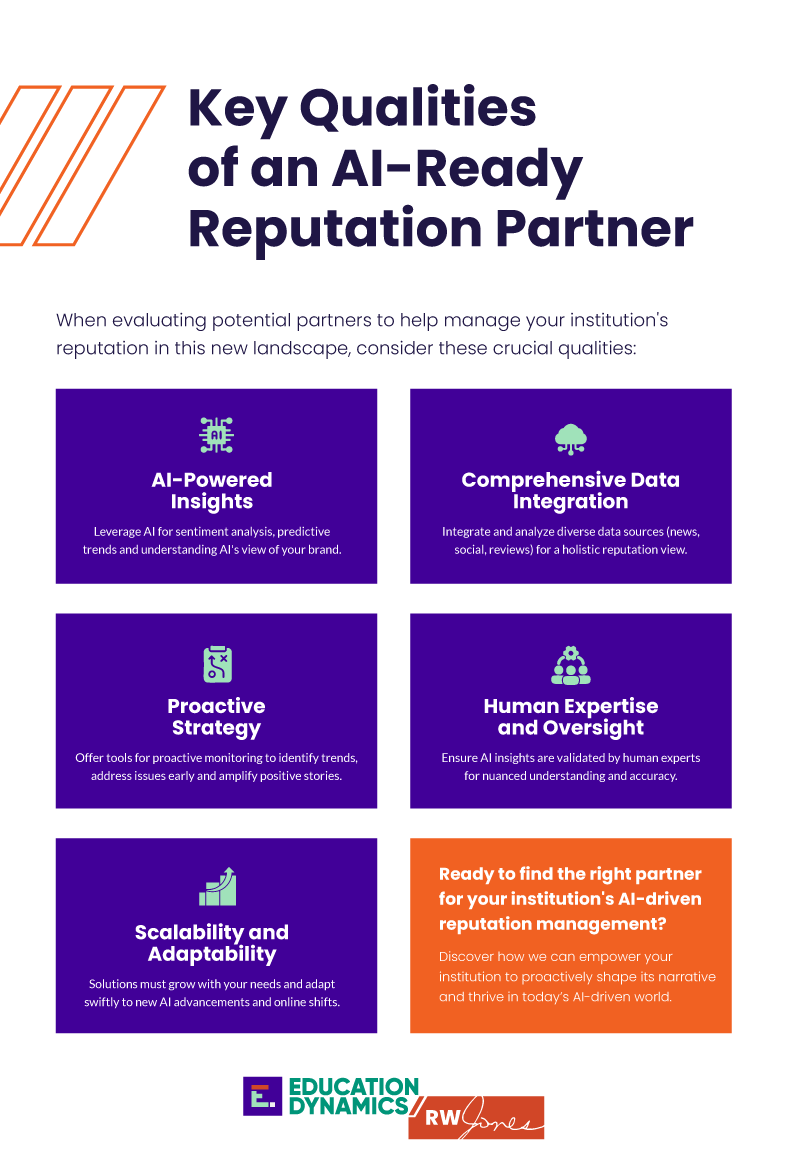
Key Qualities of an AI-Ready Reputation Partner
When evaluating potential partners to help manage your institution’s reputation in this new landscape, consider these crucial qualities:
Specific AI Capabilities Do they leverage AI for sophisticated sentiment analysis, predictive analytics to foresee potential issues, or to help you understand how AI models are interpreting your institution’s online presence?
Comprehensive Data Integration Look for partners who can integrate and analyze information from a wide array of sources—news articles, social media, review platforms, and your own digital assets—to provide a holistic and accurate view of your reputation.
Proactive Monitoring and Strategy Beyond simply reacting to crises, a strong partner will offer tools and strategies for proactive monitoring. This allows you to identify emerging trends, address minor issues before they escalate, and seize opportunities to amplify positive stories.
Human Expertise and Oversight While AI is powerful, human insight remains indispensable. Inquire about their process for ensuring that AI-generated insights are reviewed and validated by experienced professionals to provide nuanced understanding and prevent misinterpretations or “hallucinations.”
Scalability and Adaptability The digital and AI landscapes are constantly changing. Your partner should offer solutions that can scale with your institution’s evolving needs and adapt swiftly to new technological advancements and shifts in online behavior.
Take Back Your Narrative
Colleges and universities never fully owned their institutions’ reputations, but they once controlled more of the variables. Today, this equation is far more complex. What hasn’t changed is the ability to set the tone, guide the conversation and invest in the tools and partners to shape your institution’s future resilience.
Your institution’s story is being written and rewritten daily. Make sure it is one you want to read and repeat.
Discover how we help institutions proactively shape their narrative in an AI-driven world. Contact us at RW Jones and EducationDynamics for a personalized discussion.
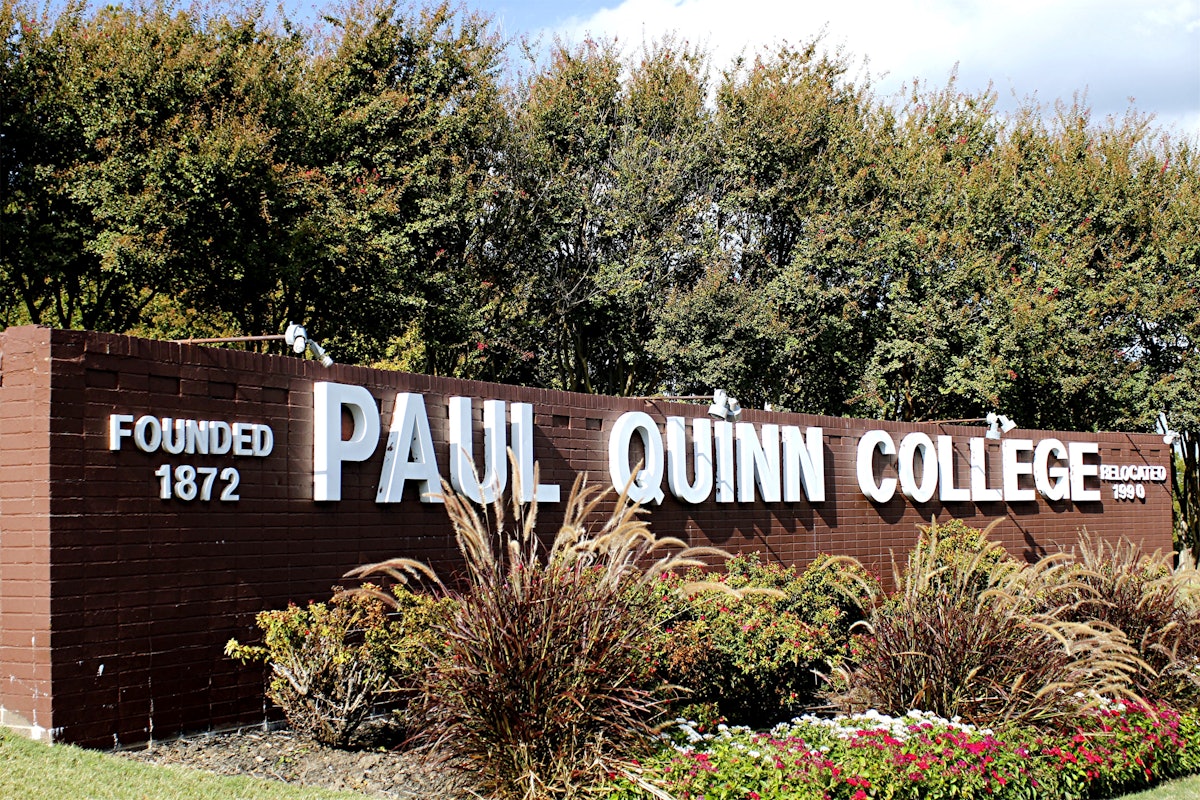
Cynt Marshall The Dallas Mavericks and Paul Quinn College have announced a partnership that establishes the nation’s first NBA team-sponsored sports management major at a historically Black college or university. The innovative “Mavs Sports Management Major” officially launched Friday with an opening convocation featuring former Mavericks CEO Cynt Marshall as the keynote speaker.
The program, formally titled “Leadership, Innovation, Sports Management, Technology, Entrepreneurship, and Networking” (LISTEN), represents a significant investment in diversifying the sports industry pipeline while addressing educational equity in higher education.
Paul Quinn College, Dallas’s only HBCU, will integrate the new major into its existing curriculum structure, with students receiving comprehensive support that includes Target-sponsored care packages containing dorm essentials and other student necessities.
The program distinguishes itself through extensive real-world application opportunities. Students will engage with Mavericks executives through weekly guest lectures and participate in hands-on projects addressing actual business challenges facing the organization. The curriculum includes case study analysis, creative brief development, and student-led presentations proposing solutions to current Mavericks business scenarios.
Beyond classroom learning, the partnership includes campus engagement initiatives with sponsored events throughout the academic year, entrepreneurship support through integration into the Mavs Business Assist program, and a planned residence hall renovation featuring custom Mavericks-designed murals.
The collaboration aligns with the Mavericks’ “Take ACTION!” initiative, which specifically targets racial inequities and promotes sustainable change in North Texas. Sports management and administration have long struggled with representation issues, particularly in executive and leadership positions.
According to industry data, while Black athletes comprise significant portions of professional sports rosters, representation drops dramatically in front office and management roles. This program aims to address that pipeline gap by providing structured pathways from education to industry entry.
As K-12 leaders look for ways to strengthen trust, engagement, and belonging, a growing number of districts are turning to a key partner in the work: their students.
A new national report from the National School Public Relations Association (NSPRA) and SchoolStatus reveals that districts that incorporate student voice into their communication strategies–through videos, messaging, and peer-created content–are seeing real results: stronger family engagement, increased student confidence, and more authentic school-community connection.
The report, Elevating Student Voice in School Communications: A Data-Informed Look at Emerging Practices in School PR, is based on a spring 2025 survey, which received 185 responses from K-12 communications professionals. It includes real-world examples from school districts to explore how student perspectives are being incorporated into communication strategies. It highlights the growing use of first-person student storytelling, direct-to-student messaging, and student internships as strategies to build trust, improve engagement, and strengthen school-community relationships.
“School communicators do more than share information. They help build connection, trust, and belonging in our communities,” said Barbara M. Hunter, APR, Executive Director of NSPRA. “Elevating student voice is not just a feel-good initiative. It is a powerful strategy to engage families, strengthen relationships, and improve student outcomes.”
Key findings include:
Video storytelling leads the way: 81 percent of districts using student voice strategies rely on video as their primary format.
Direct communication with students is growing, but there is room for improvement in this area: 65 percent of districts report at least some direct communication with students about matters that are also shared with families, such as academic updates, behavioral expectations or attendance
However, just 39 percent of districts copy students on email messages to families, and just 37 percent include students in family-teacher conferences, allowing them to be active participants
Internships on the rise: 30 percent of districts now involve students as interns or communication ambassadors, helping create content and amplify student perspectives
Equity efforts around student storytelling vary significantly. While some districts say they intentionally recruit students with diverse perspectives, fewer encourage multilingual storytelling or provide structured support to help students share their stories
Early results are promising: Districts report improved engagement, stronger student confidence, and more authentic communication when students are involved.
61 percent of districts that track comparisons report student-led content generates higher engagement than staff-created communications
80 percent of respondents observe that student voice positively impacts family engagement
A majority (55 percent) said direct communication with students improves academic outcomes
Building Inclusive Student Voice Strategies The report outlines a three-part approach for districts to strengthen student voice efforts:
Start with student presence by incorporating quotes, videos, and creative work into everyday communications to build trust and visibility
Develop shared ownership through internships, ambassador programs, and student participation in content creation and feedback
Build sustainable systems by aligning student voice efforts with district communications plans and regularly tracking engagement
The report also highlights inclusive practices, such as prioritizing student consent, offering mentorship and support for underrepresented students, featuring diverse stories, involving student panels in review processes and expanding multilingual and accessible communications.
“When districts invite students to take an active role in communication, it helps create stronger connections across the entire school community,” said Dr. Kara Stern, Director of Education for SchoolStatus. “This research shows the value of giving students meaningful opportunities to share their experiences in ways that build trust and engagement.”
The report also explores common challenges, including limited staff time and capacity, privacy considerations and hesitancy around addressing sensitive topics. To address these barriers and others, it offers practical strategies and scalable examples to help districts start or expand student voice initiatives, regardless of size or resources.
eSchool Media staff cover education technology in all its aspects–from legislation and litigation, to best practices, to lessons learned and new products. First published in March of 1998 as a monthly print and digital newspaper, eSchool Media provides the news and information necessary to help K-20 decision-makers successfully use technology and innovation to transform schools and colleges and achieve their educational goals.
The anticipation of a new school year brings a complex mix of emotions for both students and teachers in K-12 education. As the 2025-2026 academic year approaches, experiencing anxiety about returning to the classroom is a natural response to change that affects everyone differently.
From elementary students facing new classroom environments to high school teachers preparing for curriculum changes, these feelings manifest uniquely across age groups. Young children often worry about making new friends or adjusting to new teachers, while older students grapple with academic performance pressures and social dynamics. Teachers face their own challenges, including meeting diverse student needs, implementing new edtech tools and digital resources, and maintaining high academic standards while supporting student well-being.
Early identification of anxiety symptoms is crucial for both educator and student success. Young children might express anxiety through behavioral changes, such as becoming more clingy or irritable, while older students might demonstrate procrastination or avoidance of school-related topics. Parents and educators should remain vigilant for signs like changes in sleeping patterns and/or eating habits, unusual irritability, or physical complaints. Schools must establish clear protocols for identifying and addressing anxiety-related concerns, including regular check-ins with students and staff and creating established pathways for accessing additional support when needed.
Building strong support networks within the school community significantly reduces anxiety levels. Schools should foster an environment where students feel comfortable expressing concerns to teachers, counselors, or school psychologists. Regular check-ins, mentor programs, and peer support groups help create a supportive school environment where everyone feels valued and understood. Parent-teacher partnerships are essential for providing consistent support and understanding students’ needs, facilitated through regular communication channels, family engagement events, and resources that help parents support their children’s emotional well-being at home.
Practical preparation serves as a crucial anxiety-reduction strategy. Teachers can minimize stress by organizing classrooms early, preparing initial lesson plans, and establishing routines before students arrive. Students can ease their transition by visiting the school beforehand, meeting teachers when possible, and organizing supplies. Parents contribute by establishing consistent routines at home, including regular sleep schedules and homework times, several weeks before school starts. Schools support this preparation through orientation events, virtual tours, welcome videos, and sharing detailed information about schedules and procedures well in advance.
The importance of physical and emotional well-being cannot be overstated in managing school-related anxiety. Schools should prioritize regular physical activity through structured PE classes, recess, or movement breaks during lessons. Teaching age-appropriate stress-management techniques, such as deep breathing exercises for younger students or mindfulness practices for older ones, provides valuable tools for managing anxiety. Schools should implement comprehensive wellness programs addressing nutrition, sleep hygiene, and emotional regulation, while ensuring ready access to counselors and mental health professionals.
Creating a positive classroom environment proves essential for reducing anxiety levels. Teachers can establish predictable routines, clear expectations, and open communication channels with students and parents. Regular class meetings or discussion times allow students to express concerns and help build community within the classroom. The physical space should consider lighting, noise levels, and seating arrangements that promote comfort and focus. Implementing classroom management strategies that emphasize positive reinforcement and restorative practices rather than punitive measures helps create a safe space where mistakes are viewed as learning opportunities.
Technology integration requires careful consideration to prevent additional anxiety. Schools should provide adequate training and support for new educational technologies, introducing digital tools gradually while ensuring equitable access and understanding. Regular assessment of technology needs and challenges helps schools address barriers to effective use. Training should encompass basic operational skills, digital citizenship, online safety, and responsible social media use. Clear protocols for technology use and troubleshooting ensure that both students and teachers know where to turn for support when technical issues arise.
Professional development for teachers should focus on managing both personal and student anxiety through trauma-informed teaching practices and social-emotional learning techniques. Schools must provide regular opportunities for skill enhancement throughout the year, incorporating both formal training sessions and informal peer learning opportunities. Creating professional learning communities allows teachers to share experiences, strategies, and support, while regular supervision and mentoring provide additional support layers.
Long-term success requires commitment from all stakeholders–including administrators, teachers, support staff, students, and families–working together to create a supportive educational environment where everyone can thrive in the upcoming 2025-2026 school year.
Dr. Jason Richardson, Garden City Elementary School & the International University of the Caribbean
Dr. Jason Richardson is a Teacher Leader at the Garden City Elementary School in Savannah, Georgia and a Professor of Graduate Studies at the International University of the Caribbean (Jamaica). He holds a Diploma in Principalship from the National Leadership College of Jamaica, Bachelor of Education from the International University of the Caribbean, Master of Science in Counseling and Consulting Psychology from the International University of the Caribbean, Educational Specialist Degree and a Doctor of Education Degree in Leadership and Management from the William Howard Taft University.
Latest posts by eSchool Media Contributors (see all)
Why Higher Education Leaders Can No Longer Afford to Wait on AI Adoption
Just a few years ago, AI in higher education was largely a topic for innovation labs and speculative white papers. Today, it has moved from the periphery to the absolute core of institutional viability, particularly in the critical areas of marketing and enrollment management. Leaders who still view AI as a future investment, rather than an immediate operational imperative, risk being outmaneuvered by a competitive landscape that is already embracing this transformative power.
The global AI software market is projected to hit an astounding $126 billion by the end of 2025. From healthcare to transportation AI is now an integral part of daily operations, with a significant 78% of organizations reporting AI usage in 2024—a sharp increase from 55% in 2023. Generative AI specifically saw its usage in at least one business function jump from 33% in 2023 to a staggering 71% in 2024.
Here’s the uncomfortable truth: while your most proactive staff are already leveraging AI to drive results, many institutions are held back by analysis paralysis and strategic inaction. This is a direct threat to talent retention and competitive advantage.
While the general sentiment toward AI is increasingly positive, the report highlights that individual university staff are often far more receptive to using emerging technologies than their institutions. This leads to a significant gap between receptivity to AI in marketing and enrollment management and organization-changing operationalization of AI at an institutional level.
In 2025, 65% of survey respondents reported actively using emerging technologies like AI in their marketing and enrollment efforts, a substantial increase from 40% in 2024. However, this leaves over one-third of higher education marketing and enrollment management professionals on the outside of the AI revolution, falling further behind by the day. More troubling, only 61% indicated their institution is open to using these technologies. While the evidence suggests a growing openness to adopting critical technology, only 56 percent of institutions have a plan for upskilling staff in AI-driven tools.
Many respondents recognize a gap in their institutional AI readiness. A striking 56% of respondents don’t consider their institution a leader in implementing AI for marketing and enrollment management functions. When compared to peer institutions, 38% felt they were on pace, but 36% believed they were behind, with only 21% considering themselves ahead. This sentiment underscores a growing urgency to adopt AI, coupled with a pervasive feeling of being “behind the curve.”
AI is the Invisible Engine Driving Higher Ed
AI is a core component embedded directly in the recruitment, engagement and conversion platforms institutions already rely on. This widespread integration is transforming daily operations, as the 2025 survey highlights:
Nearly two-thirds (65%) of institutions utilize AI-enhanced creative and design tools.
Over half (51%) use social media management tools with embedded AI.
Customer relationship management (CRM) systems and data analytics platforms with AI features are used by 31% of institutions respectively.
The perceived effectiveness of these AI-powered tools is on the rise. Content generation, the most widely used AI application, was rated most effective, with 47% deeming it “very effective” or “effective.” Other applications like content optimization (41% effective) and customized ad and message delivery (39% effective) also showed strong results.
Moving beyond perceived effectiveness, AI integration is yielding direct, quantifiable improvements across marketing and enrollment operations:
69% of respondents reported improved efficiency in their workflows due to AI.
More than half (52%) observed an increase in the quality of their work.
Nearly half (48%) believe AI tool integration has positively impacted their enrollment funnel.
The study identified key areas where AI is delivering the strongest return on investment (ROI) including customized ad messaging, lead generation and creative content development. Content optimization also stood out, with 36% of respondents noting a “very high” or “high” ROI. If nearly 70% see efficiency gains and almost half see a positive impact on enrollment, why aren’t more institutions fully embracing this?
The Future is AI-Expected
Modern Learners Are Already There
Student engagement is AI-dependent. For Modern Learners artificial intelligence is a fundamental tool in their college search, essential for information discovery. This profound shift in how the next generation interacts with information demands institutions meet this baseline expectation. Otherwise, they risk being perceived as outdated, irrelevant or having their reputation pre-determined by AI itself.
Modern Learners are using AI to seek information on:
Tuition fees (57%)
Course offerings (51%)
Admission requirements (43%)
Campus facilities (37%)
Student reviews (35%)
This highlights the imperative for institutions to ensure their AI-accessible content, whether via chatbots or search optimization, directly aligns with what students are actively seeking.
What Leaders Are Envisioning
Looking ahead, institutional leaders envision even greater potential for AI-driven tools. Within the next two years, innovations such as:
…are expected to have a significant transformative impact on higher education marketing and enrollment management. These tools promise to address persistent challenges like the need for personalized outreach, improved insights into student behaviors and increased efficiency with limited resources.
The Barriers to AI Integration Progress
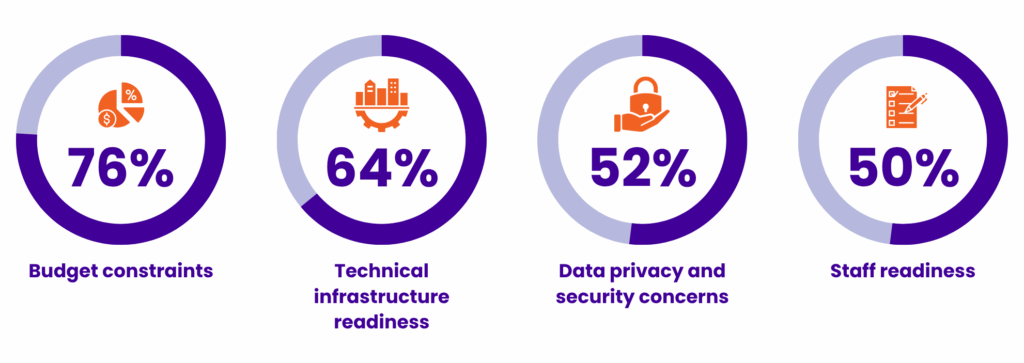
Despite the growing enthusiasm and proven benefits, institutions continue to face significant barriers to full AI integration. The top challenges cited by respondents include:
Budget constraints (76%)
Technical infrastructure readiness (64%)
Data privacy and security concerns (52%)
Staff readiness (50%)
Notably, these barriers have become even more pronounced since 2024, underscoring the urgent need for strategic investment and institutional alignment. Alarmingly, 44% of respondents reported their institution lacks a plan to upskill or support staff in adopting AI-driven technologies. This is a leadership failure, not a staff deficiency. Your most valuable asset, your people, are signaling a readiness for growth, yet nearly half of institutions are failing to provide the essential support.
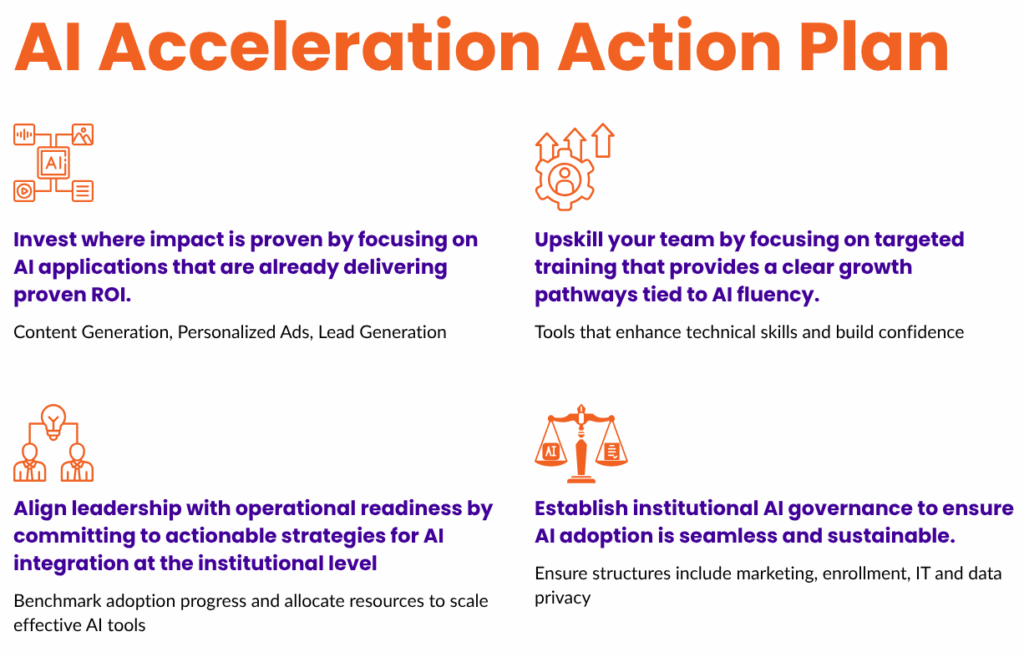
The Only Action Plan You Need for AI Acceleration
The findings from the UPCEA and EducationDynamics study present clear implications for higher education leaders. The time for passive observation is over. Decisive action is required.
Invest Where Impact Is Proven Focus resources on AI applications already delivering proven ROI, starting with content creation, personalized ads and lead generation. Maximize every dollar in a constrained environment and accelerate returns and free up capacity for further innovation by allocating strategically.
Upskill Teams Invest in targeted training for both technical skills and change management is crucial to empower staff to effectively use AI tools and build confidence. Providing clear growth pathways tied to AI fluency can significantly improve staff engagement and retention, especially given that 34% of staff now report that their institution’s stance on AI impacts their likelihood of staying at that institution—a dramatic jump from just 1% in 2024. Furthermore, 90% of respondents view AI as a useful tool for their own professional growth. Failing to invest in AI fluency for your teams is effectively disarming them in a rapidly escalating competitive battle.
Align Leadership with Operational Readiness The nearly doubling of “lack of alignment with strategic priorities” as a major barrier (from 18% in 2024 to 33% in 2025) is an indictment of existing leadership structures. Institutional leaders must move beyond passive support and commit to actionable strategies for AI integration at an institutional level. This involves benchmarking adoption progress, embedding AI into strategic plans and allocating necessary resources to scale effective tools.
Establish Institutional AI Governance Without robust governance, AI adoption will be chaotic, risky and unsustainable. Creating governance structures that include marketing, enrollment, IT and data privacy leaders is essential. These groups should collaborate to develop responsible AI use policies, establish ethical guidelines and transparently communicate data privacy practices to prospective students. Only 49% of institutions currently have measures in place for ensuring student data security and privacy when using AI tools, though this is an improvement from 30% in 2024. Protect your institution’s reputation, ensuring ethical practice and safeguarding student data in an increasingly scrutinized environment.
A Bet Your Institution Can’t Afford
The 2025 study is a revelation of present realities. AI is the operational backbone of competitive higher education marketing and enrollment management. Institutions that have adopted AI are reporting measurable gains in effectiveness efficiency and ROI. The report unequivocally reinforces that delaying implementation means facing the significant risk of falling permanently behind, not only compared to AI-embracing peers but also in meeting the evolving expectations of students and staff.
For higher education, the challenge now lies in converting receptivity into decisive action, and scattered AI adoption into a cohesive institutional strategy. EducationDynamics provides the expertise, data-driven strategies and solutions to help institutions navigate the complexities of AI integration, meet the expectations of Modern Learners and secure a competitive edge in marketing and enrollment management. The future of higher education is AI-expected, and with EducationDynamics, your institution can lead the charge.
One shaped by search queries, digital experiences, instant communication, and high expectations. Today’s prospective students demand speed, personalization, and clarity from their first interaction. For institutions that want to grow, scale, and compete, relying on spreadsheets or legacy databases is no longer sustainable.
You need a system that works as hard as your team does. One that doesn’t just manage applicants, but empowers strategy, fosters connection, and drives retention.
That’s the promise of a modern Enrollment Management System (EMS), but only if you choose the right one.
What Is an Enrollment Management System?
An Enrollment Management System is more than a tool for admissions; it’s a digital backbone for your recruitment, application, and onboarding processes. Think of it as an intelligent, data-powered engine that drives student acquisition and supports institutional growth goals.
While many systems include basic applicant tracking and form building, a true EMS integrates across departments, touching admissions, marketing, student services, financial aid, and beyond. It’s designed to give your team a real-time view of the applicant pipeline while also enabling automation, analytics, and multichannel communication.
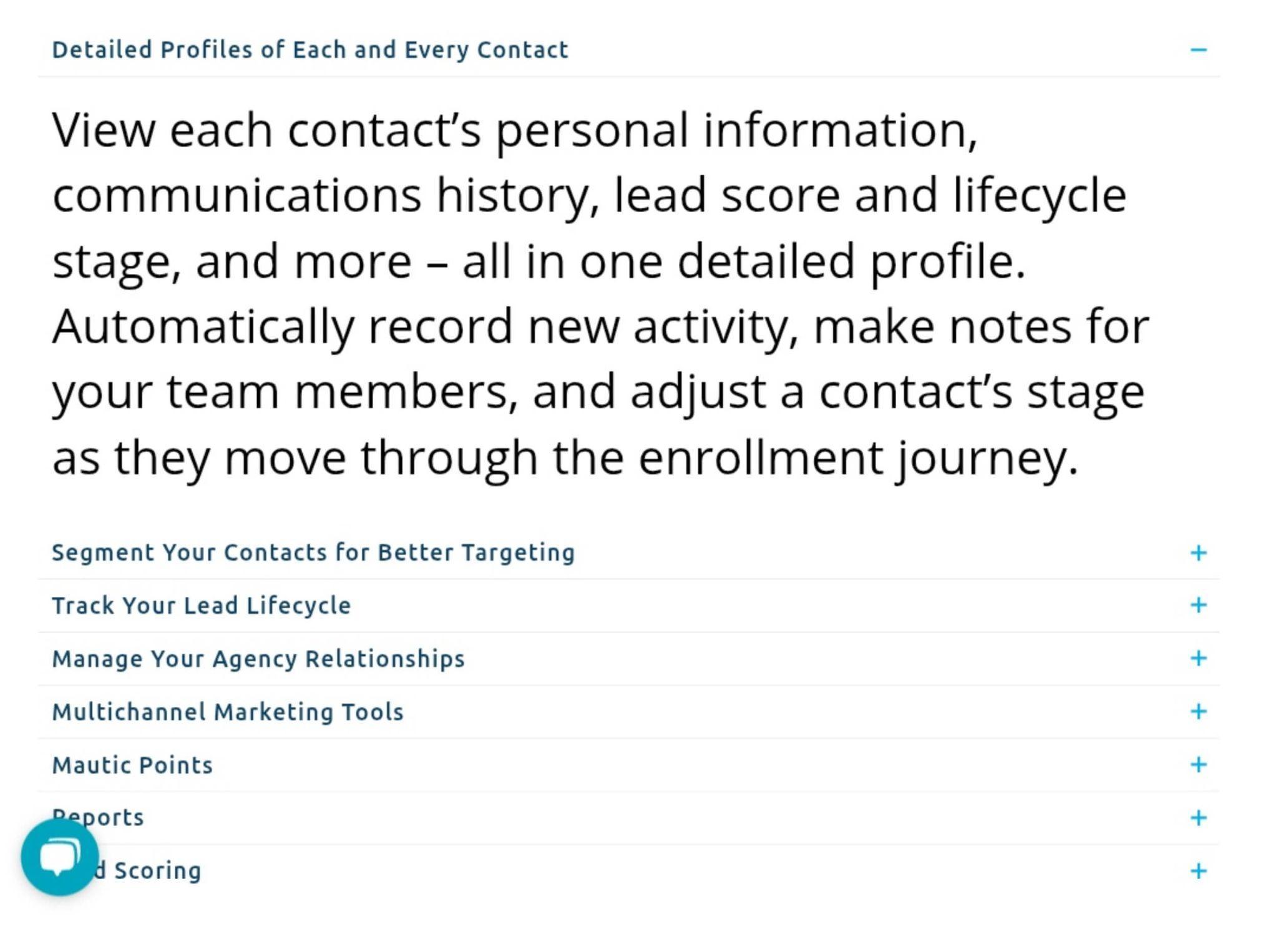
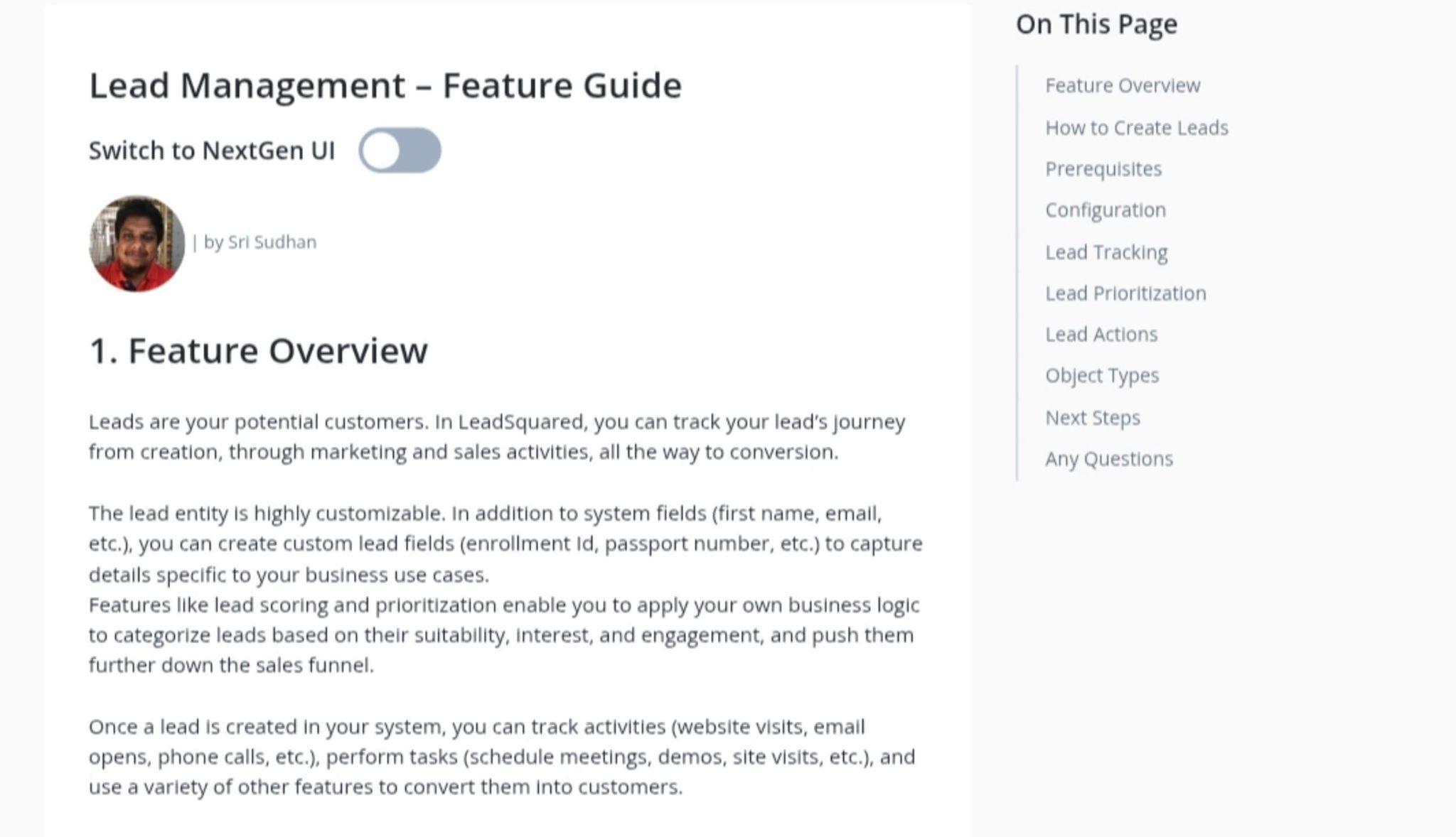
Example: Mautic by HEM is a dedicated, all-in-one CRM and marketing automation platform for education, built on the open-source Mautic tool. It facilitates thorough applicant tracking by letting schools define custom stages and funnels for the enrollment journey: admissions teams can monitor each contact’s progress through stages (inquiry, application, accepted, etc.) and even apply lead scoring to prioritize the most engaged prospects.
The best platforms don’t just move information. They orchestrate outcomes.
A modern EMS aligns your people, data, and processes so that your team spends less time chasing forms and more time building relationships. It adapts to your enrollment strategy, whether that’s growing international reach, increasing diversity, boosting conversion, or all of the above.
What Does an Enrollment System Do?
It streamlines student recruitment and admissions, enabling your team to launch campaigns, collect inquiries, and track applicant engagement without toggling between multiple platforms. While “enrollment management” is often associated with software, it’s fundamentally a strategic function, and the right EMS becomes a catalyst for this function to succeed.
Here’s how:
It streamlines student recruitment and admissions, enabling your team to launch campaigns, collect inquiries, and track applicant engagement without toggling between multiple platforms. From inquiry to enrollment, every stage is logged, measured, and improved.
Example: Tools like TargetX make it easy to launch campaigns, track lead engagement, and move prospects from inquiry to enrollment. TargetX is built on Salesforce and tailored for higher education, especially career colleges that need efficient outreach.
It enables marketing and communications teams to segment audiences, trigger campaigns, and personalize outreach across email, text, and student web portals, all with full visibility into what converts.
Example: EMS platforms such as Finalsite Enrollment combine CRM and marketing automation to segment audiences and personalize outreach across email, SMS, and web. Designed for independent K–12 schools, Finalsite ensures your message resonates from the first click.
It supports financial aid and yield strategy by syncing with your student information system (SIS) or CRM. That means your staff can track aid packages, award statuses, and net tuition impact, all within the same ecosystem.
Example: Integrated EMS like Anthology allows institutions to view aid packages, tuition forecasts, and academic data in one place. Anthology is especially powerful for institutions with complex admissions models or rolling start dates.
It strengthens student retention by providing advisors with access to academic history, risk indicators, and automated nudges that support at-risk students from the very start of their academic journey.
Example: By giving advisors access to risk flags and real-time data, platforms like Salesforce Education Cloud enable timely interventions that support students long after they’ve enrolled.
And most importantly, it delivers data analysis and forecasting that lets institutional leaders plan with precision. From demographic breakdowns to conversion rates, it provides insight into not just who applied but why they enrolled.
Example: With advanced analytics, tools like Technolutions Slate offer actionable insights into yield, demographics, and conversion rates, helping you refine your enrollment strategy over time.
What is the point of strategic enrollment management? The point of strategic enrollment management (SEM) is to align an institution’s recruitment, admissions, retention, and graduation strategies with its long-term goals, using data and coordinated planning to optimize student success and institutional sustainability. An effective EMS ensures that your strategic enrollment plan becomes an operational reality, daily, seamlessly, and at scale.
Core Features to Look For in an EMS
1. Centralized Database and CRM
A unified database helps you keep track of every applicant and their journey, from interactions and submitting forms to uploading documents and communication history. Look for systems that include robust CRM tools with inquiry tracking, source attribution, and segmentation capabilities.
Example: TargetX (Liaison): Provides a single dashboard with a 360° view of each student, consolidating everything from event registrations and communication touchpoints to financial aid info, all in the same place. This unified database supports data-driven decision making in recruitment and admissions.
Choose a system with customizable forms, document upload functionality, e-signature support, and user-friendly applicant portals. Features like drag-and-drop form builders and application status tracking can greatly improve the experience for both students and staff.
Example: Classe365 supports paperless admissions with custom online application forms. Students can easily apply from home, and submitted form data is automatically mapped into the school’s SIS to avoid manual re-entry. This makes the entire application-to-enrollment workflow smooth and efficient for both applicants and staff.
A strong student enrollment management system allows you to send personalized, automated messages via email, SMS, or in-app notifications. You should be able to build workflows, for example, a welcome message on inquiry, a reminder to complete an application, or an invitation to an open house. Some systems even offer AI chatbots for 24/7 engagement.
Example: Mautic by HEM features built-in email and text messaging automation, enabling schools to send personalized emails or SMS updates triggered by prospect behavior.
Source: HEM
4. Workflow Automation and Task Management
Look for features that reduce manual work, automatic task assignment, follow-up reminders, and to-do lists. These help your admissions team stay on top of deadlines and reduce errors.
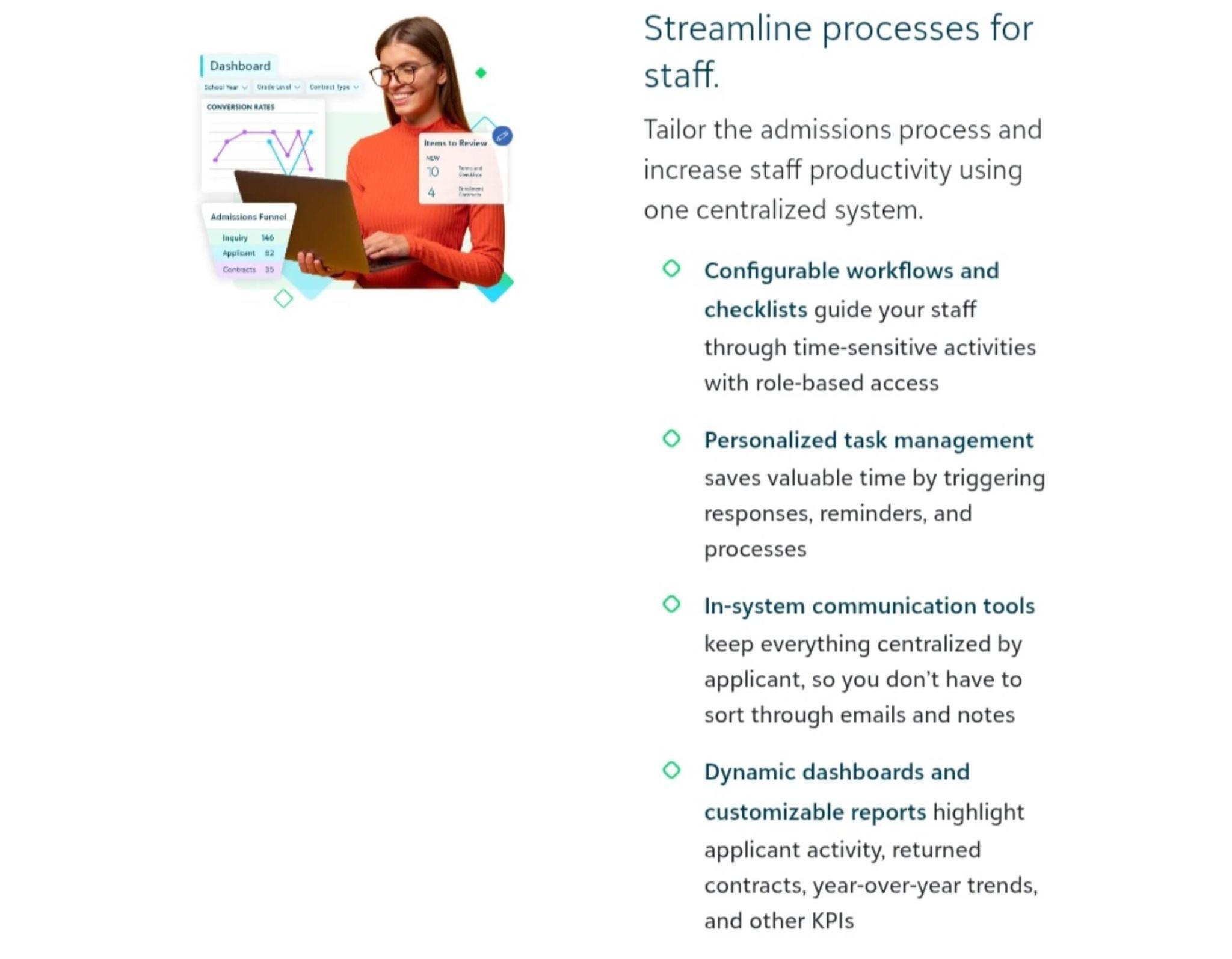
Example:Blackbaud Enrollment Management allows schools to tailor their admissions process with configurable workflows and checklists in one centralized system. Staff have personalized task dashboards, and the system automatically triggers next steps, sending follow-up reminders, updating statuses, or notifying counselors based on defined rules. This saves time and keeps the team on schedule
Your EMS should integrate with your SIS, LMS, financial software, and marketing tools. Data should flow without duplication. Look for open APIs or pre-built integrations with platforms you already use.
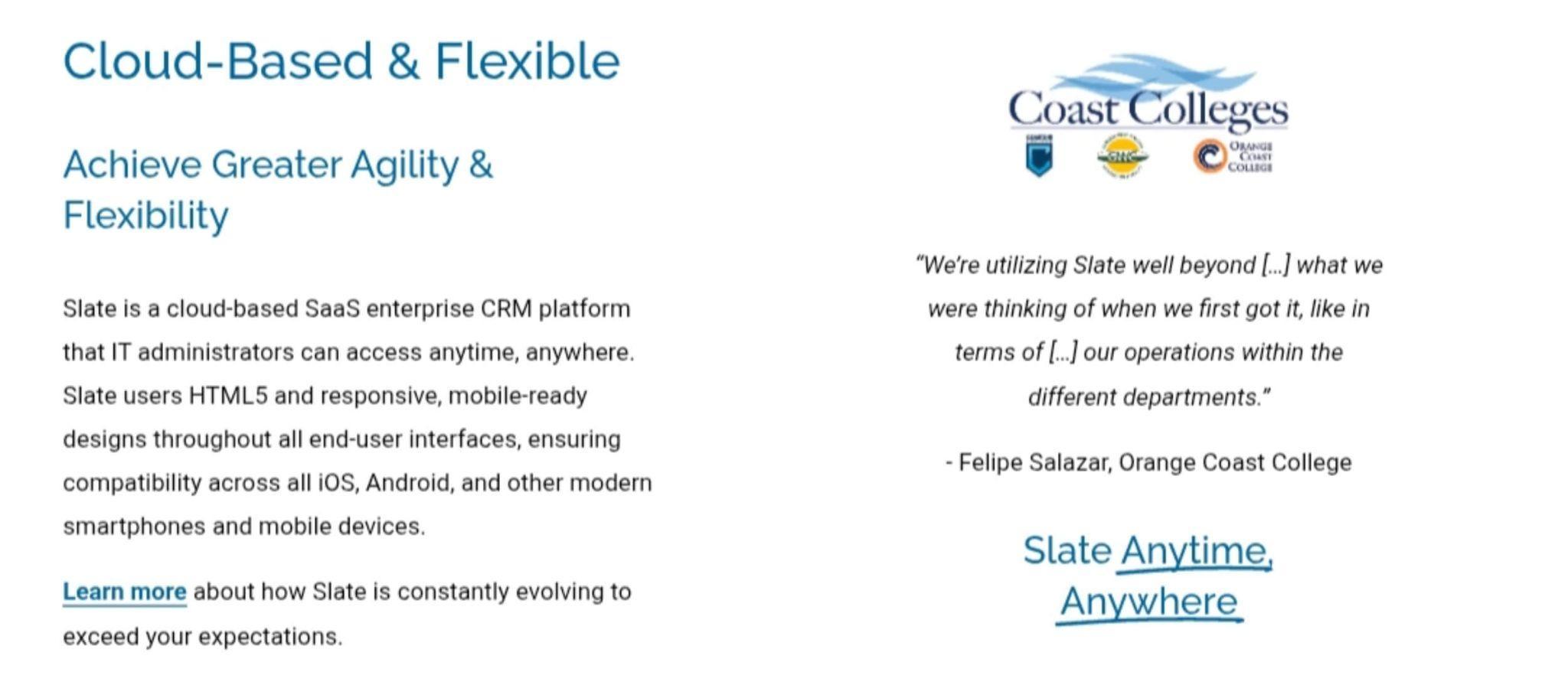
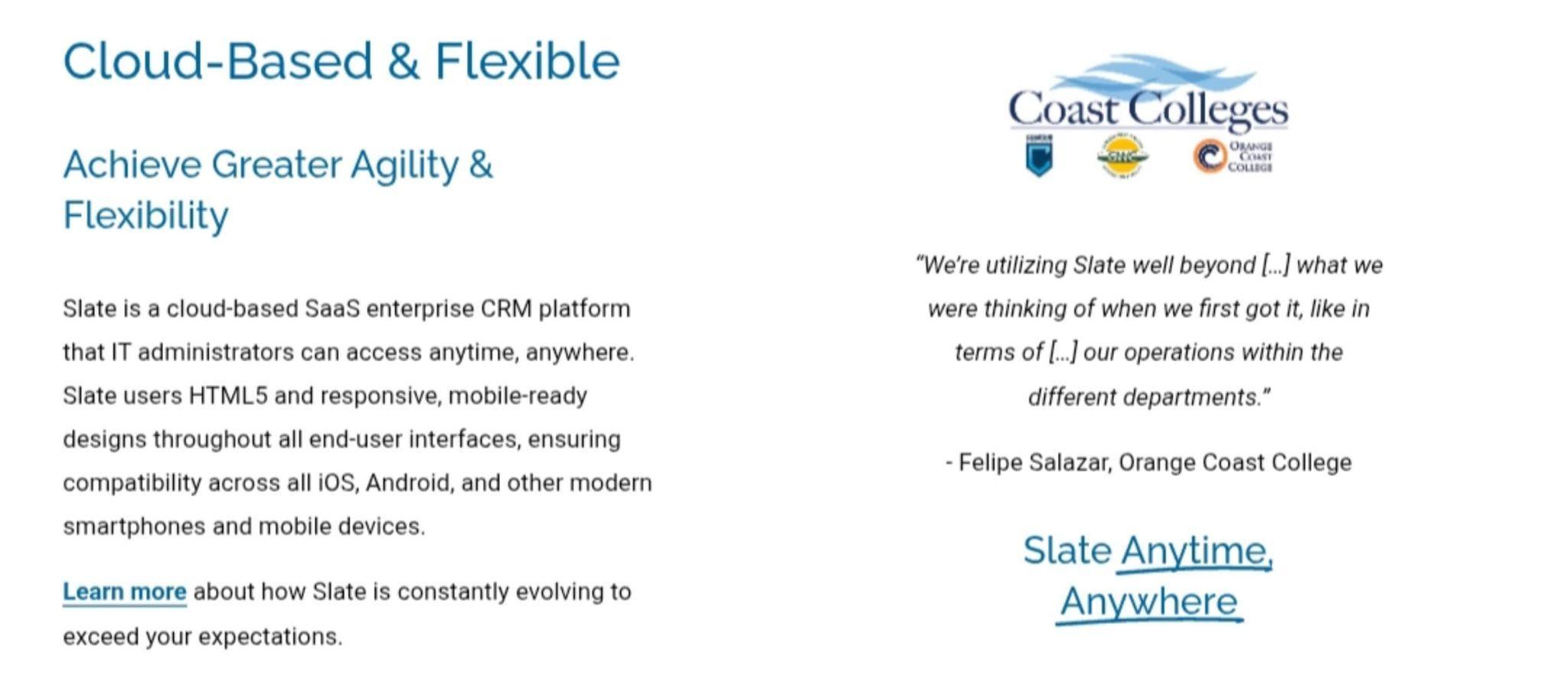
Example: Slate supports bi-directional data exchange with campus systems. It can push and pull data to external SIS, LMS, financial aid systems, content management systems, and more via its Integration Center. This means application data or status updates in Slate can automatically appear in the SIS, and vice versa, ensuring consistency across all systems.
Analytics tools allow you to track conversion rates, demographic trends, and recruitment performance. Some EMS platforms even offer predictive analytics to identify at-risk applicants or forecast yield.
Example: TargetX goes beyond basic reporting by incorporating predictive analytics features. It includes a Prospect Scoring tool that lets schools apply tailored scoring models to their applicant pool. This means the system can automatically evaluate and rank prospective students based on likelihood to enroll (or other success indicators), helping admissions teams focus their efforts on the best-fit leads. Of course, standard reports and real-time dashboards are also available in TargetX for monitoring application trends and campaign performance at a glance.
No two schools are the same. Ensure your EMS allows you to customize application workflows, add custom fields, configure user roles, and scale as your institution grows.
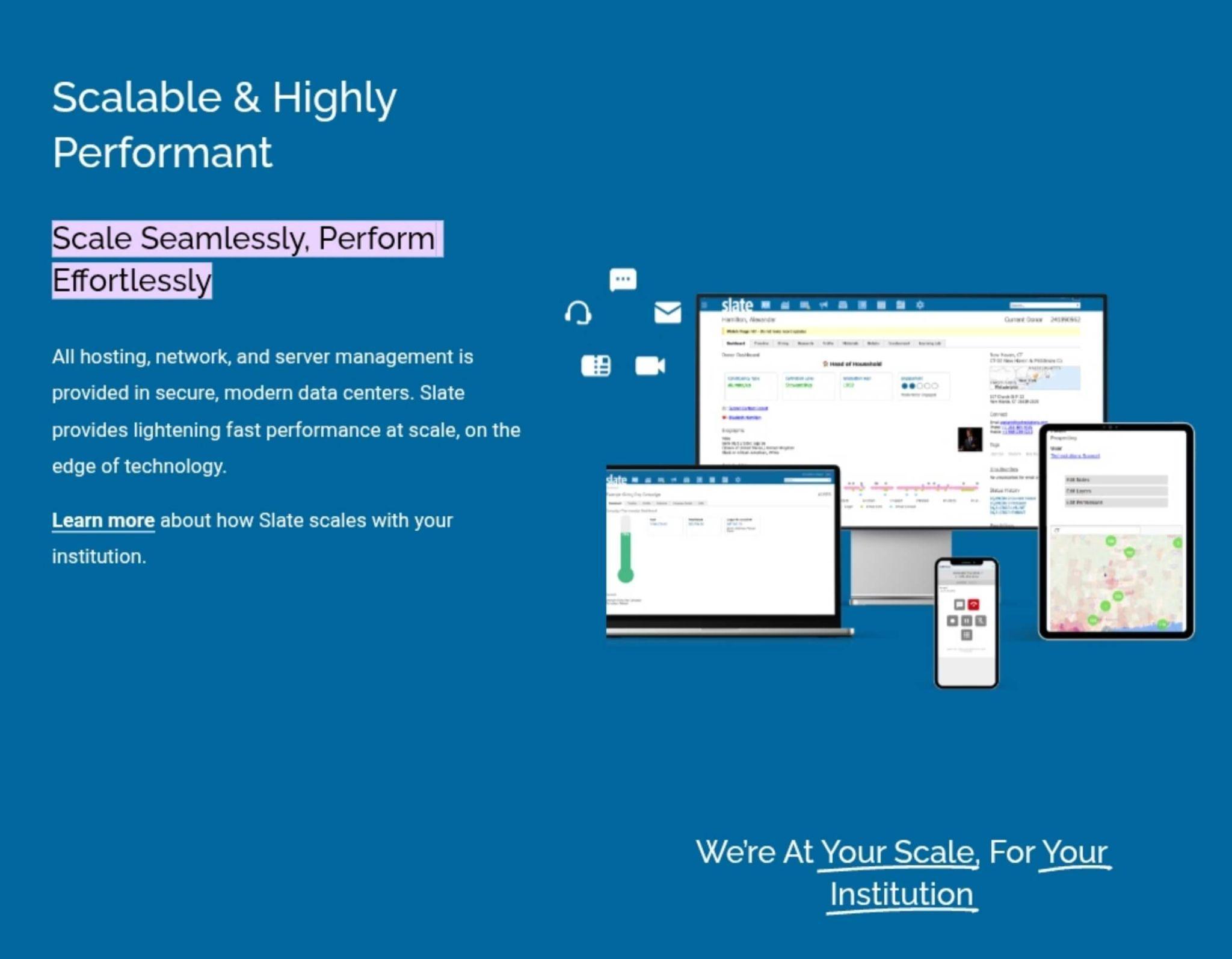
Example:A cloud-based SaaS platform, Slate, is designed to “scale seamlessly” with an institution’s growth. All technical infrastructure is managed in modern, secure data centers, and Slate regularly updates with new features at no extra cost. This means an organization can start small and trust that Slate will accommodate more applicants, programs, or campuses over time without needing a major system overhaul. In short, EMS vendors focus on both customization (to meet unique local needs) and scalability (to support more users, records, and features as needed).
Adoption hinges on usability. During demos, pay attention to how intuitive the interface is for both staff and applicants. If the system is difficult to use, your team simply won’t use it to its full potential.
Example: User experience drives adoption. During evaluations, platforms like Classe365 and Class by Infospeed regularly earn praise for intuitive interfaces, which is important when your team has limited tech support.
Modern students (and parents) expect mobile-friendly platforms. Responsive design or dedicated mobile apps improve application completion rates and accessibility.
Example: Slate: Entirely web-based and built with responsive HTML5 design, so all end-user interfaces are mobile-ready by default. Admissions officers and applicants can access Slate “anytime, anywhere,” and the system is compatible across iOS, Android, and other modern smartphones without any special app required.
Data privacy is critical. Look for FERPA, GDPR, or other compliance features, role-based access controls, encryption, and regular security audits.
Example:Slate emphasizes that security is an “absolute commitment.” Slate encrypts all data in transit and at rest, and is fully compliant with regulations including PCI-DSS, NACHA, FERPA, GDPR, ADA Section 508, and more. Each client institution’s data is siloed in its own private database, and features like single sign-on integration and multi-factor authentication are supported, all to protect sensitive student information.
Source: Slate
How to Choose the Right System: The Smart Institution’s Guide
Too often, institutions jump into vendor demos before clearly understanding their own needs. But choosing an EMS isn’t like buying a software license. It’s like hiring a new department, one that will touch nearly every part of your student journey.
Too many schools choose an EMS the way they might buy a printer—look at features, pick the cheapest, hope for the best.
That’s a mistake.
Here’s how to do it right:
1. Audit Your Current Process
Bring your admissions, marketing, IT, and registrar teams together. Map the journey from first touch to enrolled student. Identify bottlenecks, duplicate data entry, communication gaps, and missed opportunities.
Ask:
Where are we losing leads?
What’s manual that should be automated?
What data are we not capturing?
Example: EMS tools like LeadSquared often shine here by centralizing fragmented workflows.
Example: If your institution works with international agents, Class by Infospeed is built for managing agent relationships and complex course offerings, a crucial feature for language schools and ESL programs.
Admissions staff. Recruiters. Advisors. These are the people who will live in the system every day. Their input is gold. Make them part of demos. Let them ask tough questions. Choosing a solution like SchoolMint, praised for its intuitive design, becomes easier when usability is prioritized.
4. Research Vendors Strategically
Not all systems serve all markets equally. Some are better for K-12. Others shine in graduate admissions. Some are strong in portfolio management; others in agent tracking.
Look for:
Reviews from schools like yours
Live or recorded demos
Transparent pricing models
Implementation timelines
Shortlist 3–5 vendors. Your shortlist should reflect your institution’s specific context. For graduate schools, Liaison CAS platforms are especially effective. For community colleges, TargetX offers a powerful combination of CRM and enrollment tools without requiring heavy configuration.
5. Evaluate Integration and Migration
Ask each vendor:
How do you integrate with our SIS, LMS, and payment gateways?
Can you support our CRM, or replace it?
How will you handle data migration?
Do you offer API access?
A disconnected EMS is a ticking time bomb. Ask vendors like Technolutions Slate or Salesforce Education Cloud about APIs and migration support—they’re known for smooth onboarding and flexibility.
6. Test the User Experience
Never buy blind. Ask for a sandbox account or personalized demo. Simulate key tasks: submitting an application, assigning leads, pulling a report. Include both staff and mock student journeys.
What feels intuitive? What’s clunky? What’s fast?
Your system is only as good as the people who use it.
7. Scrutinize Support and Training
Great technology without support is useless. Ask:
Who handles onboarding?
Is training included or extra?
What’s your support SLA?
Can we talk to a current client?
Look for a partner, not just a vendor. Look to vendors like Anthology, which are known for offering detailed implementation timelines, role-based training, and strong post-launch support.
8. Evaluate Total Cost and ROI
Look beyond license fees. Consider:
Implementation and training costs
User seat pricing
Support packages
Future upgrade fees
Opportunity cost of inefficiency
For example, Classe365 offers bundled modules that can be more cost-effective for institutions seeking an all-in-one platform.
Then flip the question:
How much time, enrollment yield, and data quality could we gain?
What to Avoid: Mistakes That Derail Enrollment Success
Let’s be clear: choosing the wrong EMS won’t just slow you down, it can undermine your enrollment goals for years.
Common mistakes include:
Prioritizing brand over fit. The best-known system is not always the best match for your institution’s size, staff capacity, or audience.
Skipping the discovery phase. Without understanding your real process needs, you risk choosing a tool that solves the wrong problems.
Overcomplicating the solution. Feature-rich platforms are great—if your team has the time and training to use them. Don’t choose complexity over usability.
Neglecting integration. A system that doesn’t talk to your CRM or SIS will create data silos and extra work.
Ignoring security and compliance. Your EMS will hold sensitive student data. Ensure it meets regulatory requirements like FERPA or GDPR, and ask vendors for proof of their data protection protocols.
Leaving end-users out of the process. If admissions and marketing staff don’t weigh in, you may end up with a system that leadership likes, but staff resents.
Rushing implementation. A fast deployment might sound appealing, but skipping onboarding, testing, and training will lead to low adoption and missed ROI.
A better approach? Take your time. Do the homework. Involve your people. And choose a system that solves your real problems, not just your imagined ones.
A Strategic Investment, Not Just a Tech Upgrade
The right Enrollment Management System is more than a technology purchase. It’s a strategic accelerator. When implemented well, it becomes the operating system for your admissions engine, fueling smarter campaigns, stronger applicant engagement, faster decision-making, and ultimately, better student outcomes.
Institutions that invest intentionally in their EMS see tangible results: higher yield rates, improved retention, deeper applicant insights, and more efficient operations. They don’t just fill classes, they shape them.
But none of this happens by chance. It requires a clear vision, a methodical evaluation, and a commitment to ongoing improvement.
Partnering for Enrollment Success
Choosing an EMS is just the beginning. Implementing it well, and aligning it with your enrollment strategy requires experience, insight, and a steady hand.
That’s where Higher Education Marketing (HEM) comes in. We’ve helped institutions across Canada and beyond design, implement, and optimize enrollment solutions that work. Whether you need a student-facing CRM portal, a smarter communication strategy, or guidance on vendor selection, our team can help.
Book a free consultation with HEM today, and let’s build an enrollment strategy that’s as forward-thinking as your institution. Because better tools don’t just make your job easier, they make your goals achievable.
Need help sorting through the multitudes of enrollment management systems for the right one for your school? Contact HEM today for more information.
Frequently Asked Questions
Question: What is an enrollment management system?
Answer: An Enrollment Management System is more than a tool for admissions; it’s a digital backbone for your recruitment, application, and onboarding processes
Question: What does an enrollment system do?
Answer: It streamlines student recruitment and admissions, enabling your team to launch campaigns, collect inquiries, and track applicant engagement without toggling between multiple platforms.
Question: What is the point of strategic enrollment management?
Answer: The point of strategic enrollment management (SEM) is to align an institution’s recruitment, admissions, retention, and graduation strategies with its long-term goals, using data and coordinated planning to optimize student success and institutional sustainability.
This audio is auto-generated. Please let us know if you have feedback.
Dive Brief:
Management of key federal workforce development programs will begin shifting from the U.S. Department of Education to the U.S. Department of Labor under an interagency agreement signed in May, according to a joint announcement by the agencies Tuesday.
Adult education and family literacy programs under Title II of the Workforce Innovation and Opportunity Act and career and technical education programs under the Carl D. Perkins Career and Technical Education Act will be managed by the Labor Department alongside Education Department staff, according to the agencies.
Tuesday’s announcement comes just one day after the U.S. Supreme Court stayed an injunction in McMahon v. New York, granting the Education Department the ability to move forward with a sweeping reduction in force. That decision meant the workforce development interagency agreement with the Labor Department could go forward.
Dive Insight:
Under the May 21 interagency agreement behind the workforce development partnership, the Labor Department will take on daily administration of the programs. The Education Department will continue statutory responsibilities, policy authority and program oversight.
While the interagency agreement was stalled in court, leading organizations for CTE directors and professionals raised concerns over the contract. Advance CTE and the Association for Career and Technical Education predicted “far-reaching negative impacts on CTE programs and learners across the country” in a June 11 joint statement, adding that the agreement “directly circumvents existing statutory requirements” under the Perkins Act.
These programs, the organizations said, “are not merely job training programs; these programs are comprehensive educational and career preparation programs that prepare secondary and postsecondary learners for lifelong success by connecting academic and technical learning with the real world skills that learners need to thrive.”
The agreement, however, is in line with President Donald Trump’s April executive order, “Preparing Americans for High-Paying Skilled Trade Jobs of the Future. That order called, in part, for the secretaries of labor, commerce and education to find opportunities to integrate systems and realign resources to address critical workforce needs and in-demand skills in emerging industries, identify ineffective federal workforce development and education programs, and streamline information collection.
“The current structure with various federal agencies each managing pieces of the federal workforce portfolio is inefficient and duplicative. Support from the Department of Labor in administering the Department of Education’s workforce programs is a commonsense step in streamlining these programs to better serve students, families, and educators,” said U.S. Education Secretary Linda McMahon in a Tuesday statement.