Tag: manager

  • Digital Learning Project Manager at Notre Dame

    Digital Learning Project Manager at Notre Dame

    I heard from my friend Sonia Howell, director of the Office of Digital Learning at the University of Notre Dame, that she is recruiting for a digital learning project manager. I asked Sonia if she wanted to share more about the role in this Featured Gig series.

    Q: What is the university’s mandate behind this role? How does it help align with and advance the university’s strategic priorities?

    A: Excellence in undergraduate education is essential to how Notre Dame envisions itself fulfilling its institutional mission. The digital learning project manager will contribute directly to the educational experience of our undergraduate students, working with faculty, learning designers, a media team and other project management professionals to create cutting-edge digital offerings meant to enhance Notre Dame’s signature residential learning environment.

    In addition, the person in this role will manage initiatives that bring elements of Notre Dame’s academic life to learners beyond our campus. These range from online courses open to the general public to online pathway programs for current high school students exploring college opportunities and incoming first-year Notre Dame students prepping for the rigors of a university curriculum.

    Q: Where does the role sit within the university structure? How will the person in this role engage with other units and leaders across campus?

    A: The digital learning project manager is a member of the Office of Digital Learning, which is part of a larger unit, reporting to the Office of the Provost, called Notre Dame Learning. Housing the ODL and the Kaneb Center for Teaching Excellence, Notre Dame Learning brings together their teaching and learning expertise along with that of the Office of Information Technology’s Teaching and Learning Technologies group to serve as the hub of learning excellence and innovation at Notre Dame.

    Working in the ODL will give the person in this position the chance to collaborate directly with instructors, the university’s academic departments and colleges, and colleagues across the Notre Dame Learning organization. They will work closely with the ND Learning leadership team to advance the organization’s strategic priorities.

    Q: What would success look like in one year? Three years? Beyond?

    A: From day one, building relationships will be paramount in this position. The Notre Dame family embodies a strong sense of community, and successful project managers on our campus are those who embrace the human component of their work, recognizing that shepherding a project from initiation to completion requires personal connection as much as it does the ability to keep a group on task. The importance of being able to understand faculty priorities and concerns, interface with administrators both internal and external to Notre Dame, and partner with colleagues across the ODL and Notre Dame Learning more generally cannot be overstated. As these relationships deepen over time, the digital learning project manager will become a go-to member of the Notre Dame Learning team and assume a larger role in driving its initiatives.

    Q: What kinds of future roles would someone who took this position be prepared for?

    A: Given all the different skill sets someone in this position will draw on and/or develop—e.g., project management, client/stakeholder relations, written and verbal communication, familiarity with media production and learning design processes, knowledge of higher education and organizational dynamics more broadly—it is a role that can serve as a springboard into opportunities with expanded leadership components. This might be within a unit like the Office of Digital Learning, in other areas of higher ed such as student services or information technology, or in fields outside academia altogether. Named as America’s Best Large Employer by Forbes earlier this year, Notre Dame is a great place both to work and build toward future career success.

    Please get in touch if you are conducting a job search at the intersection of learning, technology and organizational change. If your gig is a good fit, featuring your gig on Featured Gigs is free.

    Source link

  • The accidental facility manager: Robert Alemany

    The accidental facility manager: Robert Alemany

    This audio is auto-generated. Please let us know if you have feedback.

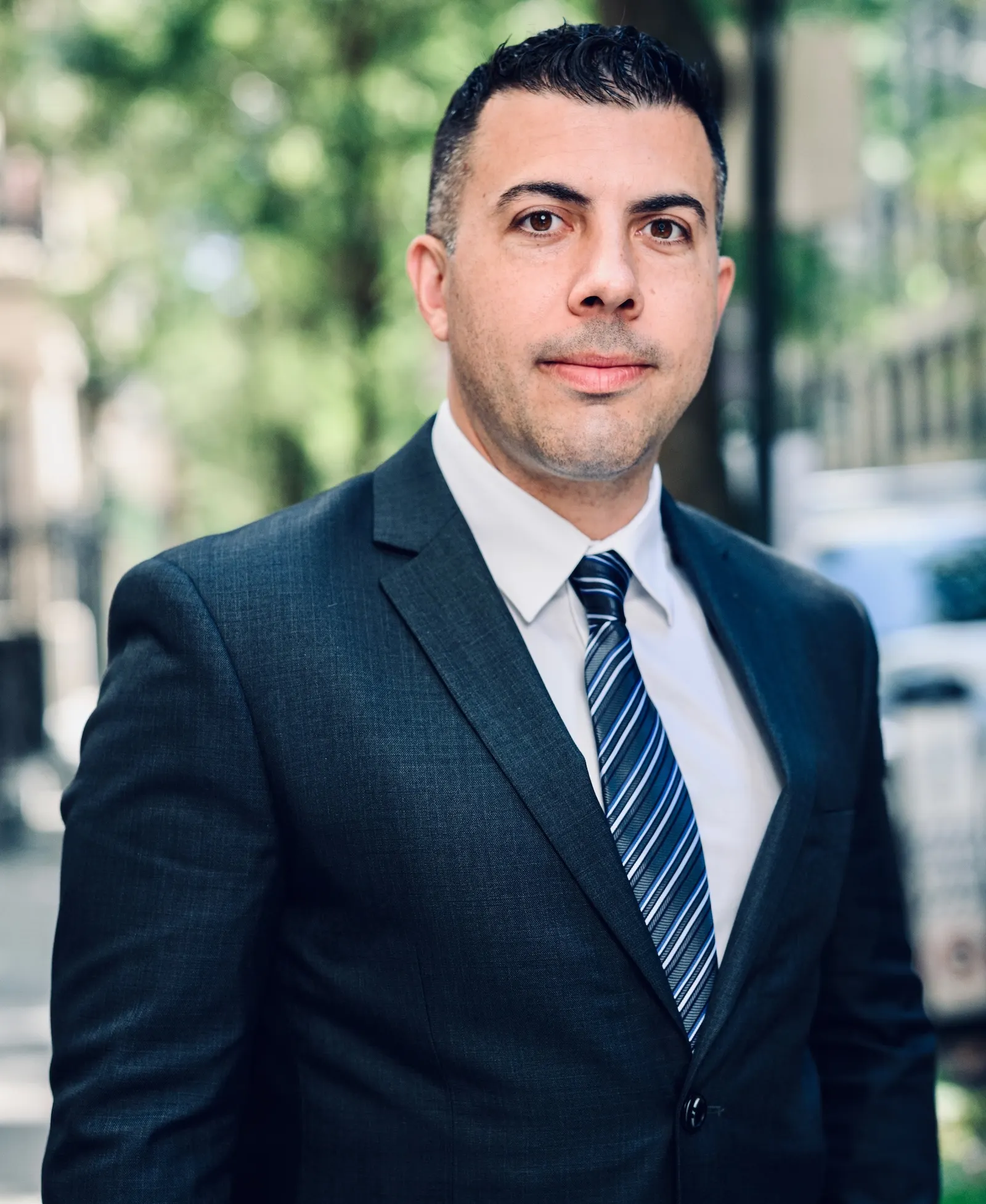
    Relationship building is the most important skill Robert Alemany says he brings to his role as director of facilities at The Buckley School, a private K-9 school in New York City.

    Headshot of Robert Alemany, director of facilities at The Buckley School, NYC.

    Robert Alemany

    Permission granted by The Buckley School, NYC


    With a background in teaching and business management, he had to learn the technical side of facility management from scratch when he shifted to that line of work about five years ago. Yet it’s people management that he relies on most to succeed in his role overseeing a four-building campus of close to 400 students, he says.

    Among his big challenges this year is meeting the energy efficiency goals under New York City’s Local Law 97. One of the school’s older buildings needs upgrades if it’s to meet the city’s tough building performance standards. To learn about his career path and how he’s tackling the challenges that come with the job, Facilities Dive sat down with Alemany for a short conversation.

    The following Q&A has been edited for clarity and length. 

    FACILITIES DIVE: How did you become involved in facilities management?

    ROBERT ALEMANY: It was accidental. I started out teaching at public schools in different roles. I decided I didn’t want to be a teacher forever and got an MBA. I thought I’d go work in finance, but I kept getting these managerial roles at educational places, then got a job at a church in New York City. The church bought a parking garage, gutted it and turned it into this really contemporary facility. They decided that Monday through Saturday they would rent it out as space and just use it for church on Sundays. They used the income from the event space to pay off the mortgage. 

    I ran operations there for a while. They had somebody taking care of the building [who departed, then they] said, “Why don’t you step into this role?” I was like, “I really appreciate it, but I don’t know which way to hold a screwdriver, so I don’t think I’m your guy.” And they said, “We appreciate your management skills and the kind of person you are. You can get the skills to excel in this role,” and they gave me a shot. I started cold calling facilities managers in similar roles, getting books and doing online courses and just loved it. 

    A few years down the line, a position opened up at the school I’m at now and I thought it was a perfect fit; I had these newly acquired facility skills and I’d been a teacher. I know what they experience every day. That led me to where I am now.

    Talk about your training. 

    ALEMANY: I continue to build off what I learned and got my real estate license. I still talk to people in the field, invest in books and do online courses whenever I can. You just never stop talking to people. Even when we have vendors come in, I ask, “Why? What kind of stuff are you doing here?” 

    What’s the most important skill the job requires?

    ALEMANY: People management, which is not something that [typically] comes to mind. When people think of facilities, they think of pipes and HVAC systems and all that. But there are people that are involved in maintaining and repairing that equipment. So it’s about building relationships, especially in a city as busy as New York City. To get emergency service here, for example, relationships make a difference. We might not be on the top of the list of a company. We’re just a small fish in the pond. But by building relationships, we become a priority for others. And when you have to negotiate contracts and work through different things, people skills are at the top.

    Are there laws or regulations that cause you the most challenge? How do you manage compliance? 

    ALEMANY: Here in New York City, it’s Local Law 97 which is the law that’s governing carbon emissions. One of the buildings was last renovated in 1974. We’re fine for this year, but by 2030 we’re not going to meet the threshold that they’ve set. We’re going to be fined about $35,000 or something like that. So we’re undergoing a renovation project and engaging architects and some engineers to help us with that to reduce our carbon footprint. 

    As it relates to school buildings, some of it is health department stuff because we’ve got a nurse here. So, it’s making sure that chemical cleaners are away and out of reach of kids. We also face a lot of the regulations that other buildings do, but when they come in and do their inspections, they’re a lot stricter with us because we’re a school.

    What keeps you up at night? 

    ALEMANY: Just the idea that every facilities manager has: that something weird is going to go wrong, where you forgot if you did something or forgot to talk to someone. The unexpected. But that comes with the role. There’s a level of unpredictability, but it drives you to be as well organized as you can and think through things. Even if something doesn’t happen, you think through multiple steps and say, “Okay, if it did, what would I do? How would I respond?”  

    What advice do you have for someone who’s interested in becoming a facility manager?

    ALEMANY: Be humble, ask questions and learn from those around you. There are a lot of people that have done this before, and it’s not just facility managers, but those that have worked in the trades that love to share their passion for what they do. Don’t try to re-create the wheel. Absorb knowledge and create friendships and relationships. If anybody would want to pursue the career, I would encourage them to do it, because it really is a great career.  

    Did you have a unique journey into facilities management? Are you managing through challenges others could benefit from learning about? If you’re interested in sharing your story with others in your field, Facilities Dive would appreciate hearing from you. Send an email to [email protected]

    Correction: We have updated this story to correct the number of students at the school and clarify Alemany’s remarks about the age and condition of one building and his career path.


    Source link

  • Offering student loan payment assistance a ‘no brainer,’ benefits manager says

    Offering student loan payment assistance a ‘no brainer,’ benefits manager says

    This audio is auto-generated. Please let us know if you have feedback.

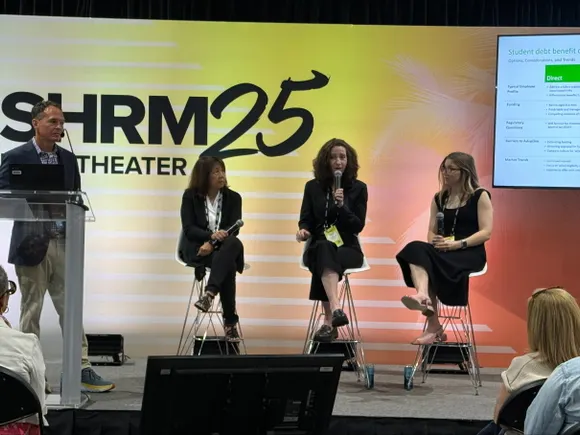
    SAN DIEGO — Applied Materials’ student loan repayment program for employees reaped such rewards that the company more than doubled its annual contribution after the first year, Tes Fernandez, director of U.S. benefits for the company said during a panel discussion at the annual conference for SHRM, formerly known as Society for Human Resource Management.

    In year one, the manufacturing company contributed $2,000 per employee in direct repayment of workers’ student loans. In the years that have followed, Applied Materials now pays out $4,800 per employee and uses the benefit as both a way to support generally newer hires, recent graduates and some underrepresented groups and as a recruiting tool.

    “They had to go up to the CFO and ask for extra millions of dollars to add this benefit. A year later, they more than doubled the benefit amount, not because the CFO got generous, but because they were seeing the results of the benefits,” Chris Rinko, VP and student debt and health and wellness benefits administration account executive at Fidelity Investments, said during the panel, which he moderated.

    When it comes to student loan debt assistance, employers have two choices, Rinko explained. They can either provide a direct payment to student loan servicers to help pay down employees’ loans, or they can elect to offer matching contributions in the 401(k) plans of workers who demonstrate they are making student loan payments.

    The direct payment method can be targeted to only apply to certain groups — those who earn less or those in a specific job, for example — and can have a set end date, Rinko said, while matching contributions are tied to a company’s overall 401(k) plan offering and can’t exclude any workers.

    Tracey Gannon, a senior benefits manager at eBay, said it was “kind of a no-brainer” for the e-commerce company to offer matching funds after the passage of the SECURE 2.0 Act. The law gave employers the ability to match employee contributions to certain student loan payments.

    “We felt that this was just such an easy first step,” Gannon said.

    The company already budgets for all employees to get the full matching contribution in their retirement plans and has a 96% participation rate, Gannon said. That meant the new offering wasn’t a big budget item for the company but could provide support to some employees in need.

    Similarly, offering a matching contribution seemed like “an easy win” for The Walt Disney Co. and its workers, said Marianne Lynch, a senior manager of executive benefits and hypercare for the company.

    “It’s a huge, huge benefit to reduce that burden” of student loan debt, Lynch said. At Disney, 97% of employees already receive the full 401(k) match, but for those who don’t, it’s a way not to miss out on the matching funds to which they’re already entitled, she added.

    “The only change here is you’re giving them another way to earn that match by paying their student debt,” Rinko said.

    At companies where most employees already receive the full matching contribution, some leaders may ask, “Why bother?” with a student loan repayment match, Rinko said.

    “The reason is, if it’s just 1% or 2%, if you can find a path for that small number, for those people who are usually in the greatest need to earn the match, why not?” Rinko said.

    Source link