Tag: mandate

  • Ethnic Studies Mandate in California Schools Stalls Over Money, Politics – The 74

    Ethnic Studies Mandate in California Schools Stalls Over Money, Politics – The 74


    Get stories like this delivered straight to your inbox. Sign up for The 74 Newsletter

    This story was originally published by CalMatters. Sign up for their newsletters.

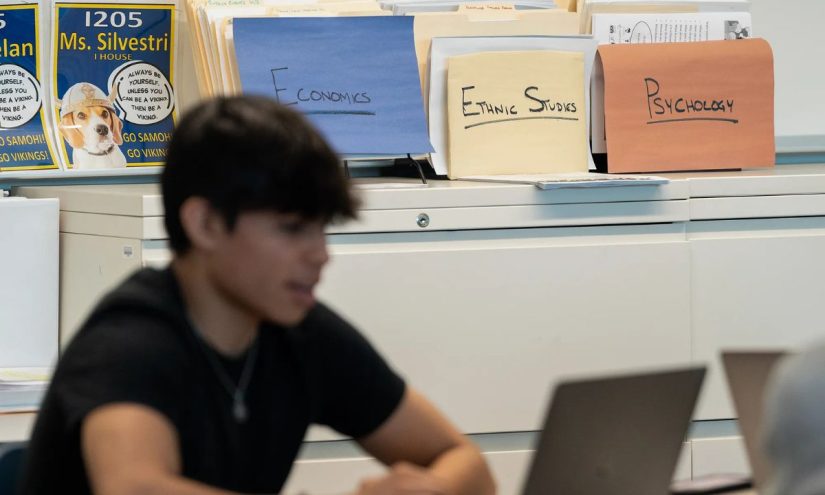
    This fall, every high school in California was supposed to offer ethnic studies — a one-semester class focused on the struggles and triumphs of marginalized communities.

    But the class appears stalled, at least for now, after the state budget omitted funding for it and the increasingly polarized political climate dampened some districts’ appetite for anything that hints at controversy.

    “Right now, it’s a mixed bag. Some school districts have already implemented the course, and some school districts are using the current circumstances as a rationale not to move forward,” said Albert Camarillo, a Stanford history professor and founder of the university’s Center for Comparative Studies in Race and Ethnicity. “But I’m hopeful. This fight has been going on for a long time.”

    California passed the ethnic studies mandate in 2021, following years of debate and fine-tuning of curriculum. The class was meant to focus on the cultures and histories of African Americans, Asian Americans, Native Americans and Latinos, all of whom have faced oppression in California. The state’s curriculum also encourages schools to add additional lessons based on their student populations, such as Hmong or Armenian.

    The course would have been required for high school graduation, beginning with the Class of 2030.

    But the state never allotted money for the course, which meant the mandate hasn’t gone into effect. The Senate Appropriations Committee estimated that the cost to hire and train teachers and purchase textbooks and other materials would be $276 million. Some school districts have used their own money to train teachers and have started offering the class anyway.

    Accusations of antisemitism

    Meanwhile, fights have erupted across the state over who and who isn’t included in the curriculum. Some ethnic studies teachers incorporated lessons on the Gaza conflict and made other changes put forth by a group of educators and activists called the Liberated Ethnic Studies Model Curriculum Consortium. That’s led to accusations of antisemitism in dozens of school districts.

    Antisemitism has been on the rise generally in California, not just in schools. Statewide, anti-Jewish hate crime rose 7.3% last year, according to the California Department of Justice. In Los Angeles County, hate crimes — including slurs— against Jewish people rose 91% last year, to the highest number ever recorded, according to the county’s Commission on Human Relations.

    Those numbers in part prompted a pair of legislators to propose a bill addressing antisemitism in California public schools. Assembly Bill 715, which is now headed to Gov. Gavin Newsom, would beef up the discrimination complaint process in schools and create a statewide antisemitism coordinator to ensure schools comply. Another bill, which died, would have directly addressed antisemitism in ethnic studies classes by placing restrictions on curriculum.

    ‘On life support’

    But the delays and public controversies have taken a toll. No one has tracked how many schools offer ethnic studies, or how many require it, but some say the momentum is lost.

    It’s already on life support and this could be one more arrow,” said Tab Berg, a political consultant based in the Sacramento area.

    Berg has been a critic of ethnic studies, saying it’s divisive. A better way to encourage cultural understanding is to eliminate segregation in schools and ensure the existing social studies curriculum is comprehensive and accurate, he said. “We should absolutely find ways to help students appreciate and understand other cultures. But not in a way that leads to further polarization of the school community.”

    Carol Kocivar, former head of the state PTA and a San Francisco-based education writer, also thinks the class may be stalled indefinitely.

    “I think the people who supported ethnic studies didn’t realize they were opening a can of worms,” Kocivar said. “Until there’s an agreement on the ideological guardrails, I just don’t see it moving forward on a broad scale.”

    Kocivar supports the ethnic studies curriculum generally, but thinks it should be woven into existing classes like English, history and foreign language. That would leave room in students’ schedules for electives while still ensuring they learn the histories of marginalized communities.

    Schools moving ahead

    In Orange County, nearly all high schools are offering ethnic studies as a stand-alone elective course or paired with a required class like English or history. Teachers use curriculum written by their districts with public input, drawn from the state’s recommended curriculum. They also have the option of adding lessons on Vietnamese, Hmong or Cambodian culture, reflecting the county’s ethnic makeup.

    “The feedback has been overwhelmingly positive,” said Marika Manos, manager of history and social science for the Orange County Department of Education. “Students see themselves in the curriculum and in the broader story of America. … It’s a wonderful opportunity for them to get some joy in their day.”

    A handful of districts are waiting to see if the state authorizes funding, but the rest have found their own money to hire and train teachers and purchase materials. There was some pushback against Santa Ana Unified when two Jewish civil rights groups sued, claiming the district’s ethnic studies courses contained antisemetic material. The district settled earlier this year and changed the course curriculum.

    Polarized political climate

    Camarillo, the Stanford professor, said the national political climate “no question” has had a significant effect on the ethnic studies rollout. Parents might have genuine concerns about what’s being taught, “but we’re also seeing the impact of extremist groups that are fomenting distrust in our schools.”

    He pointed to book bans, attacks on “woke” curriculum and other so-called culture war issues playing out in schools nationwide.

    But the fight over ethnic studies has been going on for decades, since the first student activists pushed for the course at San Francisco State in the 1960s, and he’s hopeful that the current obstacles, especially the fights over antisemitism, will eventually resolve.

    “I hate to see what’s happening but I think there’s hope for a resolution,” he said. “Ethnic studies can help us understand and appreciate each other, communicate, make connections. I’ve seen it play out in the classroom and it’s a beautiful thing.”

    ‘A really special class’

    In Oakland, Summer Johnson has been teaching ethnic studies for three years at Arise High School, a charter school in the Fruitvale district. She uses a combination of liberated ethnic studies and other curricula and her own lesson plans.

    She covers topics like identity, stereotypes and bias; oppression and resistance; and cultural assets, or “the beautiful things in your community,” she said. They also learn the origins of the class itself, starting with the fight for ethnic studies at San Francisco State.

    Students read articles and write papers, conduct research, do art projects and give oral presentations, discuss issues and take field trips. She pushes the students to “ask questions, be curious, have the tough conversations. This is the place for that.”

    She’s had no complaints from parents, but sometimes at the beginning of the semester, students question the value of the class.

    “When that happens, we have a discussion,” Johnson said. “By the end of the class, students learn about themselves and their classmates and learn to express their opinions. Overall students respond really well.”

    Johnson, who has a social studies teaching credential, sought out training to teach ethnic studies and feels that’s critical for the course to be successful. Teachers need to know the material, but they also need to know how to facilitate sensitive conversations and encourage students to open up to their peers.

    “It’s a really special class. I’d love to see it expand to all schools,” Johnson said. “The purpose is for students to have empathy for each other and knowledge of themselves and their communities. And that’s important.”

    This article was originally published on CalMatters and was republished under the Creative Commons Attribution-NonCommercial-NoDerivatives license.


    Get stories like these delivered straight to your inbox. Sign up for The 74 Newsletter

    Source link

  • Not Just a Legacy but a Mandate: What the Life of Dr. Earl S. Richardson Demands of Us

    Not Just a Legacy but a Mandate: What the Life of Dr. Earl S. Richardson Demands of Us

    The passing of Dr. Earl S. Richardson is not only a moment for reflection. It is a call to responsibility. For scholars of higher education and leaders at historically Black colleges and universities, his legacy must not be confined to warm memories or ceremonial praise. His life’s work demands more than tribute. It demands action. It demands accountability. It demands that we ask ourselves, urgently and honestly, whether we are doing enough to build upon the foundation he laid.

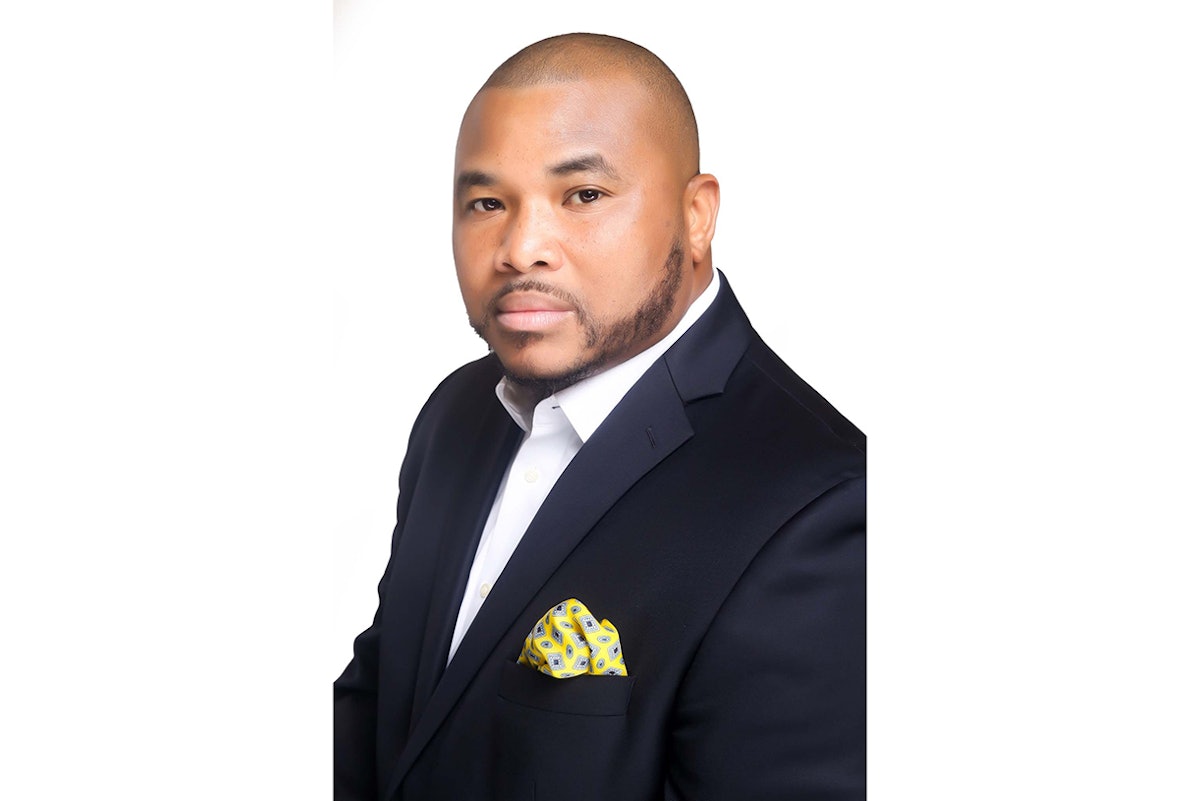
    Dr. Adriel A. HiltonDr. Richardson served as the ninth president of Morgan State University from 1984 to 2010. Under his leadership, Morgan did not simply grow. It transformed. It rose to become a national leader in graduating African American students in science, technology, engineering and mathematics. It expanded its infrastructure, enhanced its academic reputation and centered student success in every strategic decision. Dr. Richardson did not wait for others to validate his vision. He led with clarity, conviction and courage. 

    He was a master builder in every sense of the term. He saw potential where others saw limits. He saw the value of HBCUs not as a second option but as essential to the American higher education ecosystem. His leadership challenged a state system that had long underfunded and undervalued Black institutions. His efforts helped bring national attention to Maryland’s long-standing inequities in higher education funding and set in motion the legal battles and policy changes that continue to shape the landscape today. 

    What made Dr. Richardson different was that he understood the stakes. For him, education was not abstract. It was urgent. It was necessary. It was justice. He never forgot the students who came from under-resourced communities. He never stopped believing in the transformative power of institutions that were built by and for Black people. He knew that when HBCUs thrive, entire communities thrive. And he gave everything he had to make sure that happened.

    Years ago, I was invited by Chancellor James T. Minor to introduce Dr. Richardson at a gathering of HBCU leaders in Atlanta. It was a moment I will never forget. After the formalities, he pulled me aside, embraced me and spoke just three words: “Hilton, continue on.” I have carried those words with me ever since. They were not just encouragement. They were instruction. And now, in the wake of his passing, they are challenge and charge.

    To those of us who study higher education, we must be more than chroniclers of injustice. We must be architects of equity. It is not enough to publish about access. We must dismantle the structures that deny it. It is not enough to measure disparities. We must eradicate them. Dr. Richardson did not write about transformation. He led it. His career reminds us that research must inform action and that theory must be in service to the students whose lives hang in the balance.

    To leaders of our HBCUs, I say this as a researcher and as someone who deeply respects the weight of your responsibility. Dr. Richardson raised the standard. It is ours to meet and exceed. If we claim to honor his legacy, then we cannot be satisfied with survival. We must pursue excellence with purpose and with boldness. We must ask difficult questions. Are we growing in ways that reflect our mission? Are we advocating with full voice for the resources our institutions deserve? Are we leading with vision or simply managing with caution? 

    Our students do not need caretakers of tradition. They need disruptors of inequality. They need leaders who will challenge broken systems, fight for full funding, and refuse to accept a future that mirrors the past. They need us to be as courageous as Dr. Richardson was and as committed as he remained throughout his life.

    Dr. Richardson believed in leading with love. Love for students. Love for community. Love for institutions that have long stood as beacons of opportunity against overwhelming odds. But love, as he modeled it, was not passive. It was active. It was strategic. It was unapologetic. It was the kind of love that demands more, not less. That refuses to compromise when the stakes are too high. That knows the fight for educational equity is not about charity but about justice. 

    Let us be clear. Dr. Richardson’s story is not one of ease. It is one of struggle, persistence and vision. He faced resistance. He faced doubt. But he pressed on. And in doing so, he created new possibilities for generations of students who might otherwise have been left behind.

    If we are to honor him now, we must take up his mantle with urgency. We must refuse to be complicit in systems that marginalize Black institutions. We must lead in ways that are bold, strategic and student centered. We must act with the same clarity and commitment that defined his presidency.

    Dr. Richardson did not just leave a legacy. He left a blueprint. The question is whether we will follow it. 

    We thank you, Dr. Richardson. We mourn your passing, but more than that, we commit ourselves to your example. We will remember your words. We will continue on.

    And we will do so with purpose.

    ________

    Dr. Adriel A. Hilton (a proud graduate of three Historically Black Colleges and Universities (HBCUs), is a passionate advocate for the power and promise of HBCUs. Now a resident of Chicago, Illinois, he brings his deep commitment to educational excellence to his new role as Vice President of Institutional Strategy and Chief of Staff at Columbia College Chicago.


    Source link

  • Why California Still Doesn’t Mandate Dyslexia Screening – The 74

    Why California Still Doesn’t Mandate Dyslexia Screening – The 74


    Get stories like this delivered straight to your inbox. Sign up for The 74 Newsletter

    California sends mixed messages when it comes to serving dyslexic students.

    California Gov. Gavin Newsom is the most famous dyslexic political official in the country, even authoring a children’s book to raise awareness about the learning disability. And yet, California is one of 10 states that doesn’t require dyslexia screening for all children. 

    Education experts agree that early screening and intervention is critical for making sure students can read at grade level. But so far, state officials have done almost everything to combat dyslexia except mandate assessments for all students.

    “It needs to happen,” said Lillian Duran, an education professor at the University of Oregon who has helped develop screening tools for dyslexia. “It seems so basic to me.”

    Since 2015, legislators have funded dyslexia research, teacher training and the hiring of literacy coaches across California. But lawmakers failed to mandate universal dyslexia screening, running smack into opposition from the California Teachers Association.

    The union argued that since teachers would do the screening, a universal mandate would take time away from the classroom. It also said universal screening may overly identify English learners, mistakenly placing them in special education. 

    The California Teachers Association did not respond to requests for comment for this story. In a letter of opposition to a bill in 2021, the union wrote that the bill “is unnecessary, leads to over identifying dyslexia in young students, mandates more testing, and jeopardizes the limited instructional time for students.”

    In response, dyslexia experts double down on well-established research. Early detection actually prevents English learners — and really, all students — from ending up in special education when they don’t belong there.  

    While California lawmakers didn’t vote to buck the teachers union, they haven’t been afraid to spend taxpayer money on dyslexia screening. In the past two years, the state budget allocated $30 million to UC San Francisco’s Dyslexia Center, largely for the development of a new screening tool. Newsom began championing the center and served as its honorary chair in 2016 when he was still lieutenant governor. 

    “There’s an inadequate involvement of the health system in the way we support children with learning disabilities,” said Maria Luisa Gorno-Tempini, co-director of UCSF’s Dyslexia Center. “This is one of the first attempts at bridging science and education in a way that’s open sourced and open to all fields.”

    Parents and advocates say funding dyslexia research and developing a new screener can all be good things, but without mandated universal screening more students will fall through the cracks and need more help with reading as they get older.

    Omar Rodriguez, a spokesperson for the governor did not respond to questions about whether Newsom would support a mandate for universal screening. Instead, he listed more than $300 million in state investments made in the past two years to fund more reading coaches, new teacher credentialing requirements and teacher training.

    The screening struggle

    Rachel Levy, a Bay Area parent, fought for three years to get her son Dominic screened for dyslexia. He finally got the screening in third grade, which experts say could be too late to prevent long-term struggles with reading. 

    “We know how to screen students. We know how to get early intervention,” Levy said. “This to me is a solvable issue.”

    Levy’s son Dominic, 16, still remembers what it felt like trying to read in first grade.

    “It was like I was trying to memorize the shape of the word,” he said. “Even if I could read all the words, I just wouldn’t understand them.”

    Dyslexia is a neurological condition that can make it hard for students to read and process information. But teachers can mitigate and even prevent the illiteracy stemming from dyslexia if they catch the signs early.

    Levy, who also has dyslexia, said there’s much more research today on dyslexia than there was 30 years ago when she was first diagnosed. She said she was disappointed to find that California’s policies don’t align with the research around early screening.

    “Unfortunately, most kids who are dyslexic end up in the special education system,” Levy said. “It’s because of a lack of screening.”

    Soon after his screening in third grade, Dominic started receiving extra help for his dyslexia. He still works with an educational therapist on his reading, and he’s just about caught up to grade level in math. The biggest misconception about dyslexia, Dominic said, is that it makes you less intelligent or capable.

    “Dyslexics are just as smart as other people,” he said. “They just learn in different ways.”

    The first step to helping them learn is screening them in kindergarten or first grade.

    “The goal is to find risk factors early,” said Elsa Cárdenas-Hagan, a speech-language pathologist and a professor at the University of Houston. “When you find them, the data you collect can really inform instruction.”

    Cárdenas-Hagan’s home state of Texas passed a law in 1995 requiring universal screening. But she said it took several more years for teachers to be trained to use the tool. Her word of caution to California: Make sure teachers are not only comfortable with the tool but know how to use the results of the assessment to shape the way they teach individual students.

    A homegrown screener

    UC San Francisco’s screener, called Multitudes, will be available in English, Spanish and Mandarin. It’ll be free for all school districts. 

    Multitudes won’t be released to all districts at once. UCSF scientists launched a pilot at a dozen school districts last year, and they plan to expand to more districts this fall. 

    But experts and advocates say there’s no need to wait for it to mandate universal screenings. Educators can use a variety of already available screening tools in California, like they do in 40 other states. Texas and other states that have high percentages of English learners have Spanish screeners for dyslexia.

    For English learners, the need for screening is especially urgent. Maria Ortiz is a Los Angeles parent of a dyslexic teenager who was also an English learner. She said she had to sue the Los Angeles Unified School District twice: once in 2016 to get extra help for her dyslexic daughter when she was in fourth grade and again in 2018 when those services were taken away. Ortiz said the district stopped giving her daughter additional help because her reading started improving.

    “In the beginning they told me that my daughter was exaggerating,” Ortiz said.

     “They said everything would be normal later.”

    California currently serves about 1.1 million English learners, just under a fifth of all public school students. For English learners, dyslexia can be confused with a lack of English proficiency. Opponents of universal screening, including the teachers association, argue that English learners will be misidentified as dyslexic simply because they can’t understand the language. 

    “Even the specialists were afraid that the problem might be because of the language barrier,” Ortiz said about her daughter’s case.

    But experts say dyslexia presents a double threat to English learners: It stalls them from reading in their native language and impedes their ability to learn English. And while there are some Spanish-language screeners, experts from Texas and California say there’s room for improvement. Current Spanish screeners penalize students who mix Spanish and English, they say. 

    Duran, who helped develop the Spanish version of Multitudes, said the new screener will be a better fit for how young bilingual students actually talk. 

    “Spanglish becomes its own communication that’s just as legitimate as Spanish on its own or English on its own,” Duran said. “It’s about the totality of languages a child might bring.”

    Providing Multitudes free of cost is important to schools with large numbers of low-income students. Dyslexia screeners cost about $10 per student, so $30 million might actually be cost-effective considering California currently serves 1.3 million students in kindergarten through second grade. The tool could pay for itself in a few years. Although there are plenty of screeners already available, they can stretch the budgets of high-poverty schools and districts.

    “The least funded schools can’t access them because of the cost,” Duran said.

    In addition to the governor, another powerful state lawmaker, Glendale Democratic state Sen. Anthony Portantino, is dyslexic. While chair of the Senate Appropriations Committee, he has repeatedly, and unsuccessfully, authored legislation to require public schools to screen all students between kindergarten and second grade. 

    Portantino’s 2021 bill received unanimous support in the Senate Education and Appropriations committees, but the bill died in the Assembly Education Committee. Portantino authored the same bill in 2020, but it never made it out of the state Senate.

    “We should be leading the nation and not lagging behind,” Portantino said. 

    Portantino blamed the failure of his most recent bill on former Democratic Assemblymember Patrick O’Donnell, who chaired the Assembly Education Committee, for refusing to hear the bill. 

    “It’s no secret, Patrick O’Donnell was against teacher training,” Portantino said. “He thought our school districts and our educators didn’t have the capacity.”

    O’Donnell did not respond to requests for comment. Since O’Donnell didn’t schedule a hearing on the bill, there is no record of him commenting about it at the time.

    Portantino plans to author a nearly identical bill this year. He said he’s more hopeful because the Assembly Education Committee is now under the leadership of Assemblymember Al Muratsuchi, a Democrat from Torrance. Muratsuchi would not comment on the potential fate of a dyslexia screening bill this year.

    Levy now works as a professional advocate for parents of students with disabilities. She said without mandatory dyslexia screening, only parents who can afford to hire someone like her will be able to get the services they need for their children.

    “A lot of high school kids are reading below third-grade level,” she said. “To me, that’s just heartbreaking.”

    This was originally published on CalMatters.


    Get stories like these delivered straight to your inbox. Sign up for The 74 Newsletter

    Source link

  • After FIRE lawsuit, California community colleges will not enforce DEI mandate in classroom

    After FIRE lawsuit, California community colleges will not enforce DEI mandate in classroom

    FRESNO, Feb. 10, 2025 — After a lawsuit from the Foundation for Individual Rights and Expression challenged regulations mandating the evaluation of professors based on their commitment to “diversity, equity, inclusion, and accessibility” (DEIA), the California Community Colleges system and a community college district attested in court that the regulations do not require community college professors to teach and endorse the state’s pro-DEIA views in the classroom.

    In March 2023, the California Community College system amended its tenure and employee review guidelines to “include diversity, equity, inclusion, and accessibility standards in the evaluation and tenure review of district employees.” The new regulations stated that faculty members “shall employ teaching, learning, and professional practices that reflect DEIA and anti-racist principles” and mandated they “promote and incorporate culturally affirming DEIA and anti-racist principles.”

    That August, FIRE filed suit against California Community Colleges and the State Center Community College District on behalf of six Fresno-area community college professors who oppose the highly politicized concepts of “DEIA” (more often called “DEI”) and “anti-racism” and thus did not want to incorporate them into their teaching.

    Forced to defend the regulations in court, the state chancellor and district quickly disclaimed any intention to use the state guidelines or the district’s faculty contract to police what professors teach in the classroom or to punish them for their criticism of DEI. 

    Specifically, the Chancellor’s Office “disavowed any intent or ability to take any action against Plaintiffs” for their classroom teaching. The district likewise confirmed that none of the plaintiffs’ “proposed future actions” for their courses violate the rules or the faculty contract. It added that plaintiffs are not “prohibited from presenting” their “viewpoints or perspectives in the classrooms” and will not “be disciplined, terminated, or otherwise punished for doing so.” 

    In particular, the Defendants denied they would punish Plaintiffs for any of their proposed speech, including “assigning certain literary works, such as Martin Luther King Jr.’s Letters from Birmingham Jail,” using “methodologies and course materials in their classroom” intended to encourage debate and discussion about the merits of DEI viewpoints, criticizing concepts like “anti-racism,” or supporting a color-blind approach to race in their self-evaluations. 

    On Jan. 28, U.S. District Judge Kirk E. Sherriff relied on those assurances to hold as a legal matter that because of the college officials’ disavowals, the professors had not suffered a harm sufficient to challenge the regulations’ constitutionality. In dismissing the lawsuit, Judge Sherriff emphasized that neither the DEI Rules nor the faculty contract “mandate what professors teach or how any DEIA principles should be implemented.”

    “FIRE filed suit to prevent California’s community colleges from evaluating our faculty clients on the basis of their classroom commitment to a political ideology, and that’s exactly the result we’ve achieved,” said FIRE attorney Daniel Ortner. “As a result of our suit, the state and the district promised a federal judge they won’t interfere with our clients’ academic freedom and free speech rights. The classroom is for discussion and exploration, not a top-down mandate about what ideas must take priority. We’ll make sure it stays that way.”

    “FIRE will be watching like a hawk to ensure that the state chancellor and district live up to their word,” said FIRE attorney Zach Silver. “If they force any professors to parrot the state’s DEI views, or punish them for criticizing the state’s position, we’ll be ready to stand up for their rights.”

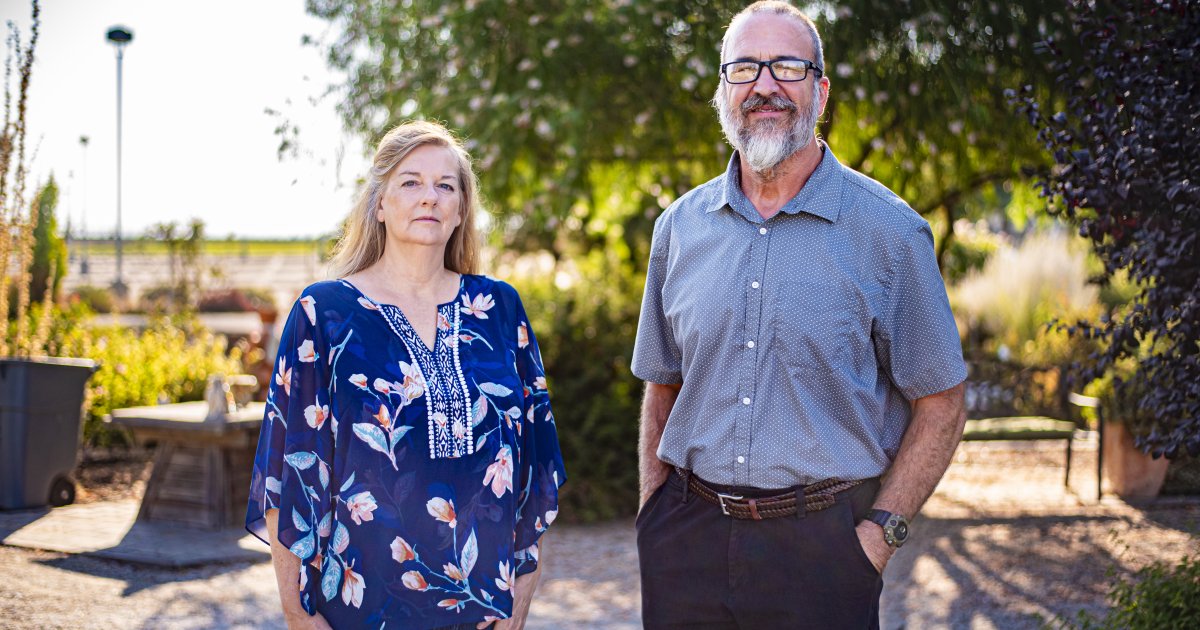
    COURTESY PHOTOS OF PLAINTIFFS FOR MEDIA USE

    Despite unobjectionable-sounding labels, “diversity, equity, and inclusion” and “anti-racism” frameworks often encompass political topics and ideology that are contested and controversial. The glossary of DEI terms put out by California Community Colleges, for example, stated that “persons that say they are ‘not a racist’ are in denial,” while denouncing “colorblindness” as a concept for “perpetuat[ing] existing racial inequities.”

    DEI requirements are also highly controversial within academia. FIRE’s most recent faculty survey indicated that half of faculty think it is “rarely” or “never” justifiable for universities to make faculty candidates submit statements pledging commitment to DEI before being considered for a job (50%) or to be considered for tenure or promotion (52%).

    Since FIRE filed its lawsuit in 2023, many top universities and university systems have voluntarily moved away from mandatory DEI, including Harvard, the Massachusetts Institute of Technology, and the University of Arizona system. Most recently, the University of Michigan dropped the use of diversity statements in hiring and firing in December 2024 following a viral New York Times article that detailed how the school’s DEI practices stifled academic freedom and discourse at the school.

    FIRE sued on behalf of six professors, James Druley, David Richardson, Linda de Morales, and Loren Palsgaard of Madera Community College, Bill Blanken of Reedley College, and Michael Stannard of Clovis Community College. (Professors Stannard and Druley withdrew from the case in 2024 upon retiring from teaching.)

    “Wherever you stand on the debate over DEI, the important thing is there is a debate in the first place,” said Palsgaard. “I’m happy that thanks to our lawsuit, we know that debate will continue in California, both inside and outside the classroom.”


    The Foundation for Individual Rights and Expression (FIRE) is a nonpartisan, nonprofit organization dedicated to defending and sustaining the individual rights of all Americans to free speech and free thought — the most essential qualities of liberty. FIRE recognizes that colleges and universities play a vital role in preserving free thought within a free society. To this end, we place a special emphasis on defending the individual rights of students and faculty members on our nation’s campuses, including freedom of speech, freedom of association, due process, legal equality, religious liberty, and sanctity of conscience.

    CONTACT:

    Alex Griswold, Communications Campaign Manager, FIRE: 215-717-3473; [email protected]

    Source link

  • Supreme Court Blocks OSHA Vaccine and Testing ETS and Upholds CMS Healthcare Worker Vaccine Mandate – CUPA-HR

    Supreme Court Blocks OSHA Vaccine and Testing ETS and Upholds CMS Healthcare Worker Vaccine Mandate – CUPA-HR

    by CUPA-HR | January 14, 2022

    On January 13, the U.S. Supreme Court blocked enforcement of the Occupational Safety and Health Administration (OSHA)’s Emergency Temporary Standard (ETS) that would mandate vaccines or testing requirements for employers with 100 or more employees, but reinstated enforcement of the Centers for Medicare and Medicaid Services (CMS)’s mandate that would require COVID-19 vaccinations for healthcare workers working at facilities that participate in Medicare and Medicaid.

    In December, the U.S. Court of Appeals for the 6th Circuit vacated the 5th Circuit Court’s nationwide emergency motion to stay the OSHA ETS, paving the way for OSHA to continue enforcement of the ETS vaccine and testing requirements. The decision led several business groups and Republican-led states to file emergency applications with the Supreme Court seeking to reinstate the stay. The Supreme Court heard oral arguments on the OSHA mandate on January 7, leading to the court’s decision to block the vaccine and testing mandate.

    Additionally, the Supreme Court heard oral arguments on the CMS healthcare worker mandate on January 7. They ultimately ruled in favor of allowing the CMS healthcare worker vaccine mandate to take effect while the mandate is being litigated in several U.S. district courts and circuit courts. The CMS mandate was previously stayed in 25 states after four lawsuits were filed against CMS in district courts in Missouri, Louisiana, Florida and Texas.

    Though not heard or ruled on by the Supreme Court, the federal contractor vaccine mandate, which requires all federal contractors to mandate COVID-19 vaccinations for their employees, remains stayed by the U.S. District Court for the Southern District of Georgia, which issued a nationwide preliminary injunction against the mandate on December 7. The Biden administration has appealed the decision to the 11th Circuit Court, which has since upheld the lower court’s injunction but has not yet ruled on the legal merits of the mandate. Litigation continues for this rule in the 11th Circuit Court.

    The Supreme Court’s decisions bring the rules back to the lower courts to continue litigation on their merits; however, the recent decisions do signal how the Supreme Court would likely rule on the merits of the cases if they are once again appealed to the higher court.

    CUPA-HR will continue to keep members apprised of any legal updates as they relate to the fate of the OSHA ETS, the CMS healthcare vaccine mandate, and the federal contractor vaccine mandate.


    Source link