
Tag: Mark

  • Can the Pentagon strip Mark Kelly’s rank over speech?

    Can the Pentagon strip Mark Kelly’s rank over speech?

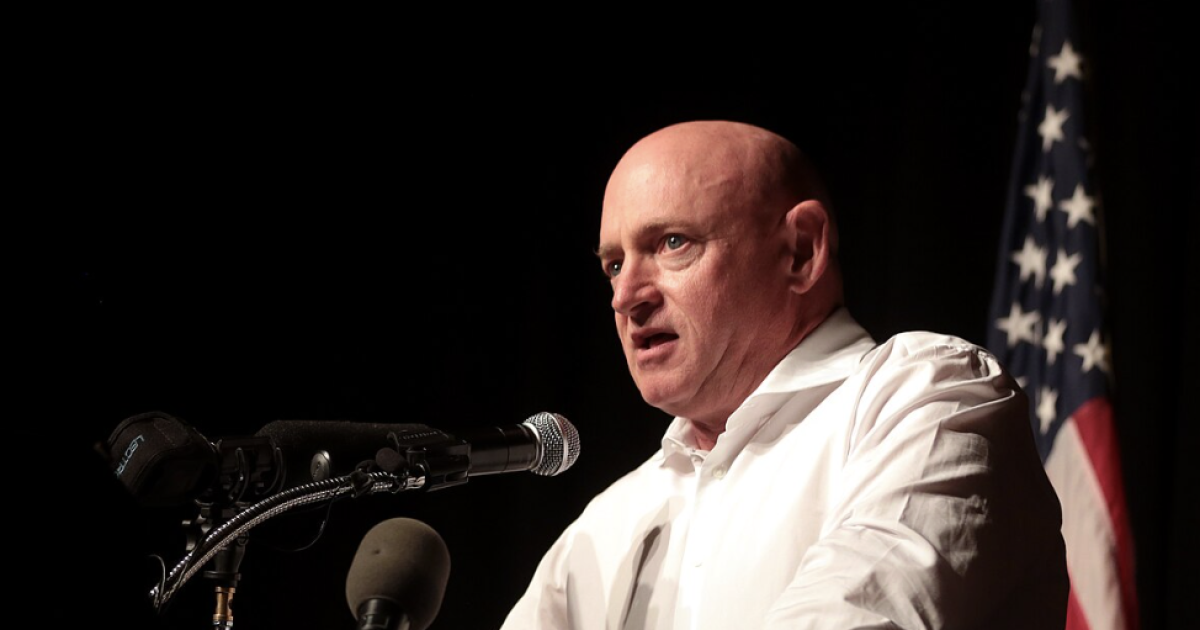
    Defense Secretary Pete Hegseth says the Pentagon is moving to dock Senator Mark Kelly’s captain rank and retirement pension after Kelly released a video, joined by five Democratic congressional colleagues who also served in the military, saying “Our laws are clear: You can refuse illegal orders.”

    On Monday, Hegseth wrote on X that the video was “reckless and seditious.” Hegseth also accused Kelly, a retired U.S. Navy captain and current member of the Senate Armed Services Committee, of “reckless misconduct” and said the Defense Department has initiated proceedings under 10 U.S.C. § 1370(f), which governs the rank of retired officers. 

    Despite Hegseth’s comments, Kelly merely stated the law. Page 402 of the Manual for Courts-Martial establishes that while orders are presumed to be lawful, that presumption “does not apply to a patently illegal order, such as one that directs the commission of a crime.” Indeed, servicemembers are only bound to follow “lawful orders” — not unlawful ones. Hegseth wants to argue that Kelly encouraged dereliction of duty, but simply stating the law is protected under the Constitution.

    Here’s what you need to know about how the First Amendment governs active duty and retired servicemembers’ speech. 

    Can the government court-martial military retirees?

    Yes, Congress has established that military retirees remain subject to military courts under 10 U.S.C. § 802(a)(4). Kelly served in the Navy for 25 years, so he’s subject to the Uniform Code of Military Justice.

    Do military members have First Amendment rights?

    Military members do have First Amendment rights, though military prosecution for speech-based offenses operates under a different constitutional framework than civilian cases.

    In Parker v. Levy (1974), the Supreme Court grounded limits on active-duty service members’ speech in “military necessity,” reasoning that the armed forces are a “separate society” dependent on rank, discipline, and obedience. That logic doesn’t fit for retirees, whose speech typically poses no immediate risk to day-to-day order and discipline.

    Can the military demote a retired servicemember?

    By law, a service member’s retired grade is based on the “highest permanent grade” in which the officer served “satisfactorily.” But § 1370(f) allows the government to reconsider a retiree’s rank for things like fraud. Additionally, § 1370(f)(2)(D) allows demotion for “good cause” — a catchall provision left to the Pentagon’s discretion. Hegseth is arguing that Kelly violated UCMJ articles 133 and 134, constituting good cause.

    Did Kelly commit “conduct unbecoming an officer” under Article 133?

    Article 133 bans “conduct unbecoming an officer.” The Court of Appeals for the Armed Forces (CAAF), the highest appellate court for military justice, applies a simple test here. The accused must have committed an act, or used language, unbecoming an officer. Hegseth believes the video in question qualifies. But the bar is high. In United States v. Voorhees (2019), the CAAF described unbecoming conduct as “more serious than slight” misbehavior “of a material and pronounced character.”

    When the alleged misconduct is otherwise protected speech, the CAAF layers on extra protections based on the First Amendment. The speech must pose a “clear and present danger” of “dishonoring or disgracing the officer, seriously compromis[ing]” the officer’s standing.

    In United States v. Howe (1967), the court upheld an Article 133 conviction for an active-duty officer who called President Johnson an “ignorant fascist.” The court reasoned that, in context, such contempt toward senior civilian leadership presented a “clear and present danger” to military discipline.

    Later, in United States v. Hartwig (1994), the CAAF upheld an active-duty officer’s conviction for sending a sexually explicit letter to a stranger he had reason to know was a minor. The court reasoned that this was inherently dishonorable.

    Notably, the government hasn’t brought an Article 133 case against a retiree since Hooper v. Hartman (1958), leaving little guidance as to whether the CAAF might layer on additional speech protections (like Article 134’s nexus requirement, addressed below). Indeed, Hooper wasn’t even a speech case. It involved a servicemember’s same-sex relationship, now constitutionally protected under Lawrence v. Texas (2003).

    Kelly didn’t dishonor or disgrace another officer, so the government’s theory must be self-disgrace. It’s hard then to see how accurately stating the law creates a “clear and present danger.” Unlike in Hartwig, stating the law isn’t inherently dishonorable conduct. The government will need to prove Kelly’s statement, not mere political disagreement, tends to disgrace him personally or brings disrepute to the officer corps.

    In fact, the military’s 2024 Operational Law Handbook (page 86) expressly states that troops should learn the duty to refuse “manifestly” illegal orders. If troops are regularly taught this basic law-of-armed-conflict precept, why would it be “seditious,” as Hegseth suggested, for Kelly to remind servicemembers of that obligation?

    A plaque at the U.S. Military Academy at West Point explaining that military officers must not obey illegal orders. 

    Did Kelly “prejudice good order” under Article 134?

    Article 134 prohibits “service discrediting” speech, meaning speech that could “prejudice… good order and discipline in the armed forces.” The Department of Defense Manual for Courts-Martial further states that under Article 134, “certain disloyal statements” may be “punishable,” including “praising the enemy, attacking the war aims of the United States, or denouncing our form of government with the intent to promote disloyalty or disaffection.”

    What civilians can say freely, active-duty troops often can’t. Parker v. Levy’s “military necessity” doctrine allows limits on active-duty troops’ exercise of First Amendment rights, even though military courts do sometimes impose constraints on speech-based court-martials.

    For example, in United States v. Wilcox (2008)the CAAF established a nexus test for service discrediting speech. If the speech is otherwise protected outside the military context, there must be a “reasonably direct and palpable connection between the speech and the military mission or military environment” before the court continues to balance First Amendment interests against the military’s interest in order.

    In Wilcox, an army paratrooper was court-martialed under Article 134 for posting online comments supporting the KKK. Because the record showed no evidence that his comments were directed at service members, reached his unit, or had any demonstrated operational or disciplinary effect, the CAAF held that there was no nexus and thus dismissed the case.

    In the retiree context, the nexus requirement functions as a free-speech safeguard. Without evidence tying a retiree’s comments to concrete disruption within the ranks of the military, an Article 134 court-martial will likely fail.

    Kelly is no longer in the military, but his remarks were directed toward active service members. Still, the content of those comments matter. Telling troops to “refuse illegal orders” is not the same as telling them to refuse duty. It’s an articulation of the very real legal boundaries that service members must respect, as outlined in Article 92. The government will have to show that Kelly’s comments had some operational or disciplinary effect. 

    Hegseth has not yet offered any such proof.

    What’s the significance of the Pentagon’s move against Kelly? 

    The law here is less developed than civilian First Amendment doctrine, making outcomes hard to predict. So, broad use of Articles 133 and 134 against retirees risks chilling their participation in public debate about U.S. military actions. This is especially risky for a sitting United States senator — one serving on the Armed Services Committee — elected by the citizens of his state specifically to debate and form U.S. policy, including military actions.

    Under Articles 133 and 134 — as well as many others in the UCMJ — the Pentagon can stretch vague wording to punish active duty and retired servicemembers for ordinary criticism. But if the First Amendment means anything, civilians and veterans alike should be free to discuss — or even criticize — military policy without fear of punishment. As Eugene Fidell, a military law expert at Yale, predicted: “None of this will stand up.”

    Many of America’s servicemembers have given their lives to protect these freedoms. Those who retire from service should not be refused those same liberties.

    Source link

  • Veritas, My Ass (Mark Twain*)

    Veritas, My Ass (Mark Twain*)

    “The pleasure we experience in seeing a beautiful
    cathedral reminds us to admire the church’s architect. How much more should
    viewing the universe’s infinite variety stir us to praise the Beauty of its
    Creator. Consider, for a moment, the whole of creation. The splendor of the
    starry skies, the various flowers in a flower garden, the stately majesty of a
    cluster of trees, the melodious songs of birds, the variations of creatures in
    the animal kingdom, the sense and intellectual faculties of a human person, are
    like so many voices that praise the Beauty of their Author. Words fail us in
    our effort to describe adequately what the beauty of the universe tells us of
    the Divine Artist’s Beauty. Does triumphant music come closer to expressing
    God’s Beauty?”
      Bruce Ashford
    quoting Saint Augustine’s reflection on Psalm 26

    Throughout human history, our ancestors have tried to make
    sense of our being in the universe by focusing on things transcendent.   The basis of this inquiry really led to the
    formal inquiry which would soon become philosophy and theology – and the basis
    of the modern university.    It is our
    concern with these four transcendental values – the Good, the True, the Just,
    and the Beautiful that have given us the pillars on which to build a more
    enlightened community.    It is the
    second Transcendental, Veritas (Truth) that I wish to turn my attention to
    today.

    You cannot walk 10 steps at Harvard University across the
    Charles without coming upon its logo proudly proclaiming its worthy mission in
    a single word.   Veritas.   That leap of faith not only is the guiding
    principle for all who are fortunate to have professional life there, it is the
    promise that it makes throughout the centuries to continue the proud habits of
    being concerned with things transcendental.

    Veritas – the truth – always seems filled with multiple
    paradoxes.   In order to base your entire
    reason for being and professional life on such a belief, one must first accept
    that We can actually know truth.   That
    said, we tacitly understand that the most important truths are sometimes
    unknown and unknowable.   We still
    try.   The efforts that we put into
    discovering truth remind us how important they are when we find them.   Harvard was first established because the
    act of knowing truth (Veritas) is a way of coming to know the mind of our
    Creator (Harvard was established to allow young farm boys to become ministers). 

    Sometimes, we know that we are close to the truth because of
    a visceral resonance that “moves” us.  
    It shakes our soul.   It is the
    sensation that the Nobel Laureate, Romaine Rolland called the sensation of the
    Oceanic.   This is an altogether
    different feeling than the savage raw animal emotion we have become all too
    fond of, like the roar of the crowd at a professional wrestling match.   Here, we are well aware that the whole
    spectacle is simply an act – a staged falsehood (how ironic that our Education Secretary
    was once in charge of this spectacle).

    When we replace this raw emotion as a fake substitute of the
    moments that truly move us, we become less human and cease searching for the
    mind of our Creator.   This is the
    tragedy that essayist Neil Postman alludes to in his brilliant “Amusing
    Ourselves to Death” (he also warned us of the same urges in his “End of
    Education”).

    For Christians, our Guide is the Way, the Truth, and the
    Life (These are all capital to remind us of the transcendental).   We know how difficult these are because the
    founder of our religion had to suffer and die, largely because he made so many angry
    by hearing Truths (Veritas) they never wanted to heal.   Veritas is not only difficult to attain but
    once attained often makes the teller of it a target.   We need to remind ourselves that this
    Veritas exists outside what the common belief is.   Ask Galileo.   What we think, and whether we like what we
    hear has no bearing on the Truth of things. 
    Veritas.

    Scientists know that they are getting closer to the truth of
    things, the mind of the Creator, when they try to prove themselves wrong and
    have a more difficult time doing so with each attempt.   The reason for these attempts at
    falsification (and the eyes of keen editors) is to keep scientists from
    appearing foolish for advocating claims not resonant with the truth.   Just because some can convince a third of
    her fellows of a false claim, the claim remains false and they remain a fool
    (or worse, a liar).

    When a university capitulates to a fool and does not defend
    Veritas, it ceases to live up to its centuries old tradition of searching for
    Truth (as best we can).  No wonder people
    no longer take universities seriously.  
    Absent this commitment to single-mindedly fight for Veritas, there is no
    reason for the university to exist. 
    There are far less expensive ways to train for a job.

    I challenge those inside the university to redouble their
    commitment to Veritas.  This is why
    tenure is such a serious and sacred privilege.  
    Scholars understand that some Truths are so difficult for the masses to
    accept that those whose life it is to discover these inconvenient and sometimes
    dangerous Truths can risk personal dangers.  
    Therefore, if you have been honored by the recognition of tenure,
    investigate truths dangerous enough to enjoy that Privilege.  And remind all around you why the word is on every
    building and letterhead.   It is a sacred
    duty and a protection from those fools who believe they know all and should not
    be challenged by facts. 

    *Mark Twain is the pen name of a well-respected friend of the Higher Education Inquirer

    Source link

  • USyd makes $500m surplus, Mark Scott gets $150k pay rise – Campus Review

    USyd makes $500m surplus, Mark Scott gets $150k pay rise – Campus Review

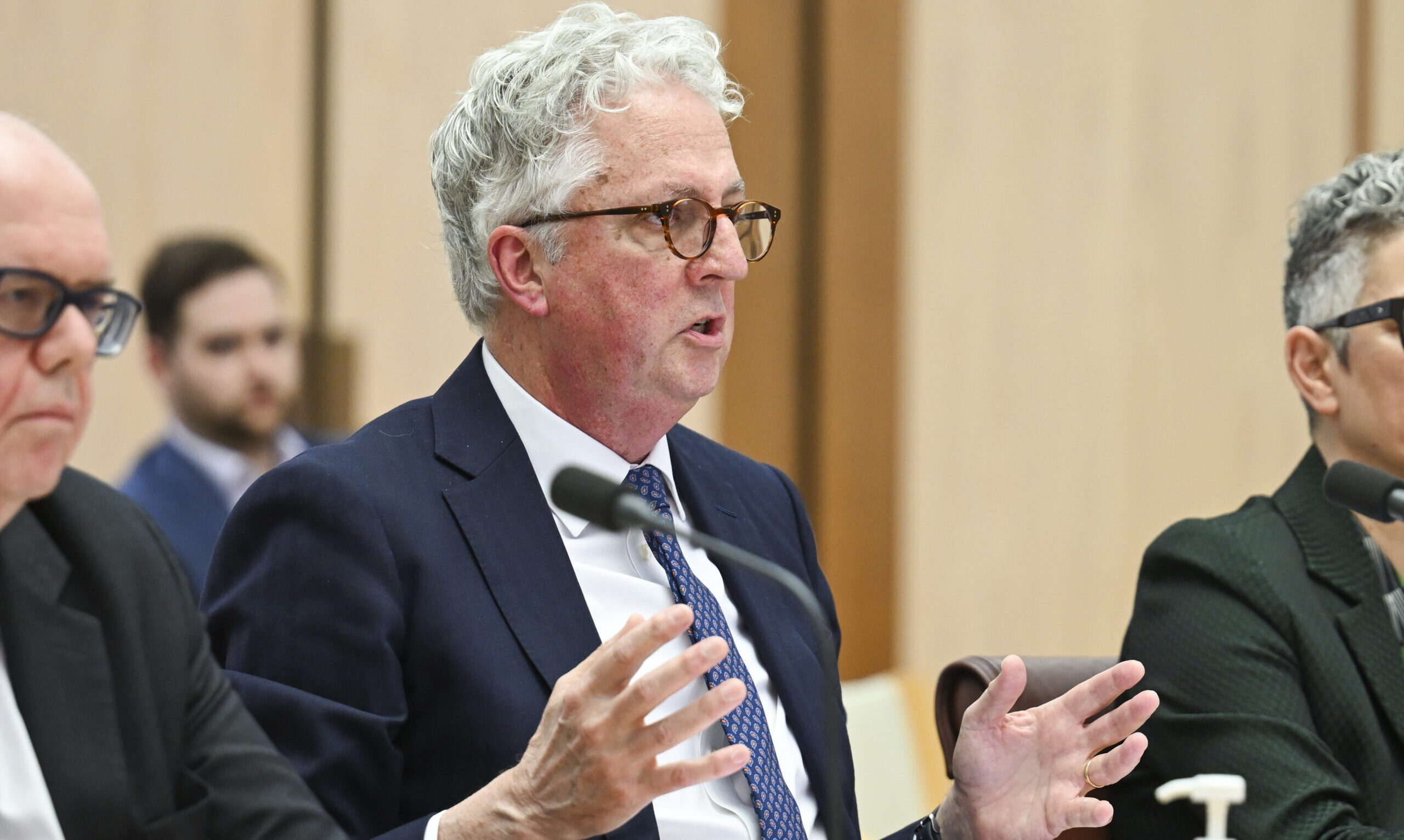
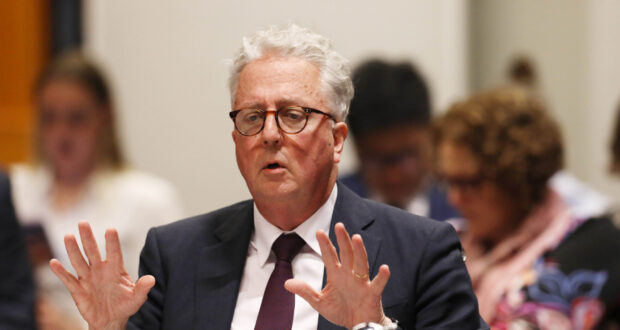
    The University of Sydney (USyd) recorded a $500 million surplus in 2024 and boosted its vice-chancellor Mark Scott’s pay by $150,000 to a $1.349 million salary, its 2024 financial result showed.

    Please login below to view content or subscribe now.

    Membership Login

    Source link

  • Immigration policies in focus as Mark Carney sworn in as Canadian PM

    Immigration policies in focus as Mark Carney sworn in as Canadian PM

    Succeeding Justin Trudeau as Canada’s 24th Prime Minister, Carney’s swearing-in ceremony was conducted by governor general Mary Simon at Rideau Hall in Ottawa.

    Carney’s appointment as Canada’s leader comes at a time when the country is navigating through an increasingly tumultuous relationship with its closest neighbour and ally, the United States.

    Canada’s ties with the US have worsened after President Donald Trump imposed steep tariffs on Canadian goods and floated the idea of integrating Canada into the US, sparking strong backlash.

    Considered a political newcomer, who played significant roles as the governor of the Bank of Canada and the Bank of England between 2008 to 2020, Carney is known for having a tough stance on immigration. 

    Calling Canada’s immigration policy “failures of executions”, Carney stated that Canada has taken in more people than its economy has been able to handle. 

    “I think what happened in the last few years is we didn’t live up to our values on immigration,” he said at a Cardus event – a Christian non-partisan think tank – in November last year, according to Canadian media reports.

    “We had much higher levels of foreign workers, students and new Canadians coming in than we could absorb, that we have housing for, that we have health care for, that we have social services for, that we have opportunities for. And so we’re letting down the people that we let in, quite frankly.”

    Carney’s statement suggests that he will uphold the Canadian federal government’s plan to reduce immigration targets over the next three years.

    Recently, the federal government announced a shift in its immigration strategy, cutting the number of newcomers by 21% – from approximately 500,000 in 2024 to 395,000 in 2025 and 380,000 in 2026.

    In its race to reduce temporary residency numbers and overall inflow of immigrants, international students in Canada have faced the brunt of policy changes in the country.

    Canada has imposed more caps on study permits, eliminated fast-track study permit processing, increased PGWP eligibility and English proficiency requirements, in an effort to “align its immigration planning with capacity”.  

    Over the past year, policy restrictions have already had a significant impact in Canada, with the total number of study permits processed by the IRCC expected to be 39% lower than in 2023.

    A former international student himself, Carney is expected to continue with restrictive policies on the cohort, as he previously blamed Canadian provinces for “underfunding higher education”, which pushed institutions to rely on international students. 

    “Do we value higher education in this country or not? Well, if we value higher education, maybe we should start funding our universities,” stated Carney. 

    “On the foreign student side, it’s more on provincial policy, on squeezing universities, in a sense.”

    Daljit Nirman, an immigration lawyer based in Ottawa and founder, Nirman’s Law, believes aggressive student recruitment has contributed to housing shortages, an oversaturated job market, and increased strain on health care, making effective newcomer integration in Canada more difficult.

    “Given Carney’s stance and these recent policy changes, it is likely that Canada will continue implementing stricter controls on international student admissions during his tenure,” Nirman told The PIE News.

    “This measured approach aims to preserve the benefits of international education while ensuring that Canada’s infrastructure can effectively support those who choose to study and settle in the country.”

    According to Priyanka Roy, senior recruitment advisor at York University, while Carney’s stance on immigration may appear stricter, it will ultimately result in a more “balanced approach.”

    “While it may seem like a tougher stance on immigration, we believe that Prime Minister Carney’s stance is to create a balanced approach to immigration, ensuring that international student enrolment aligns with Canada’s economic capacity and does not place undue pressure on local infrastructure,” Roy told The PIE News.

    “York is proactively adapting by offering sustainable solutions, such as a four-year housing guarantee, on-campus job opportunities, and co-op programs; provisions that help our international students integrate into Canadian life while maintaining a balanced and healthy relationship with the local community.”

    Prime Minister Carney’s leadership presents a valuable opportunity to rebuild stronger ties between India and Canada, fostering an environment of trust and collaboration
    Priyanka Roy, York University

    The former banker, who won the Liberal Party race by 86% of the votes, also acknowledged immigration’s role in contributing to Canada’s economic future. 

    Emphasising the need for productivity and a growing labour force, Carney has previously highlighted that Canada’s growing labour force is “going to largely come through new young Canadians”.

    With immigration poised to be a key issue, rebuilding ties with India – one of Canada’s largest sources of migrants – will be crucial for the prime minister-designate.

    Having already expressed a willingness to mend relations following a major diplomatic crisis, Carney’s efforts to indulge in discussions with India could spell good news for Indian students eyeing Canada as a study destination.

    “Prime Minister Carney’s leadership presents a valuable opportunity to rebuild stronger ties between India and Canada, fostering an environment of trust and collaboration,” stated Roy.

    “As diplomatic relations improve, we are confident that more Indian students will continue to view Canada as an attractive destination for higher education and realign their preference for higher education in Canada.”

    Source link

  • Mark Scott says international students are “a down payment on the future”

    Mark Scott says international students are “a down payment on the future”

    Mark Scott was a major advocate for no overseas student cap last year. Picture: Jane Dempster

    University of Sydney vice-chancellor Mark Scott reaffirmed that all international students are welcome at his university during a meeting of student unions on Wednesday.

    Please login below to view content or subscribe now.

    Membership Login

    Source link