Tag: Market

  • How market shifts are impacting Chinese agencies

    How market shifts are impacting Chinese agencies

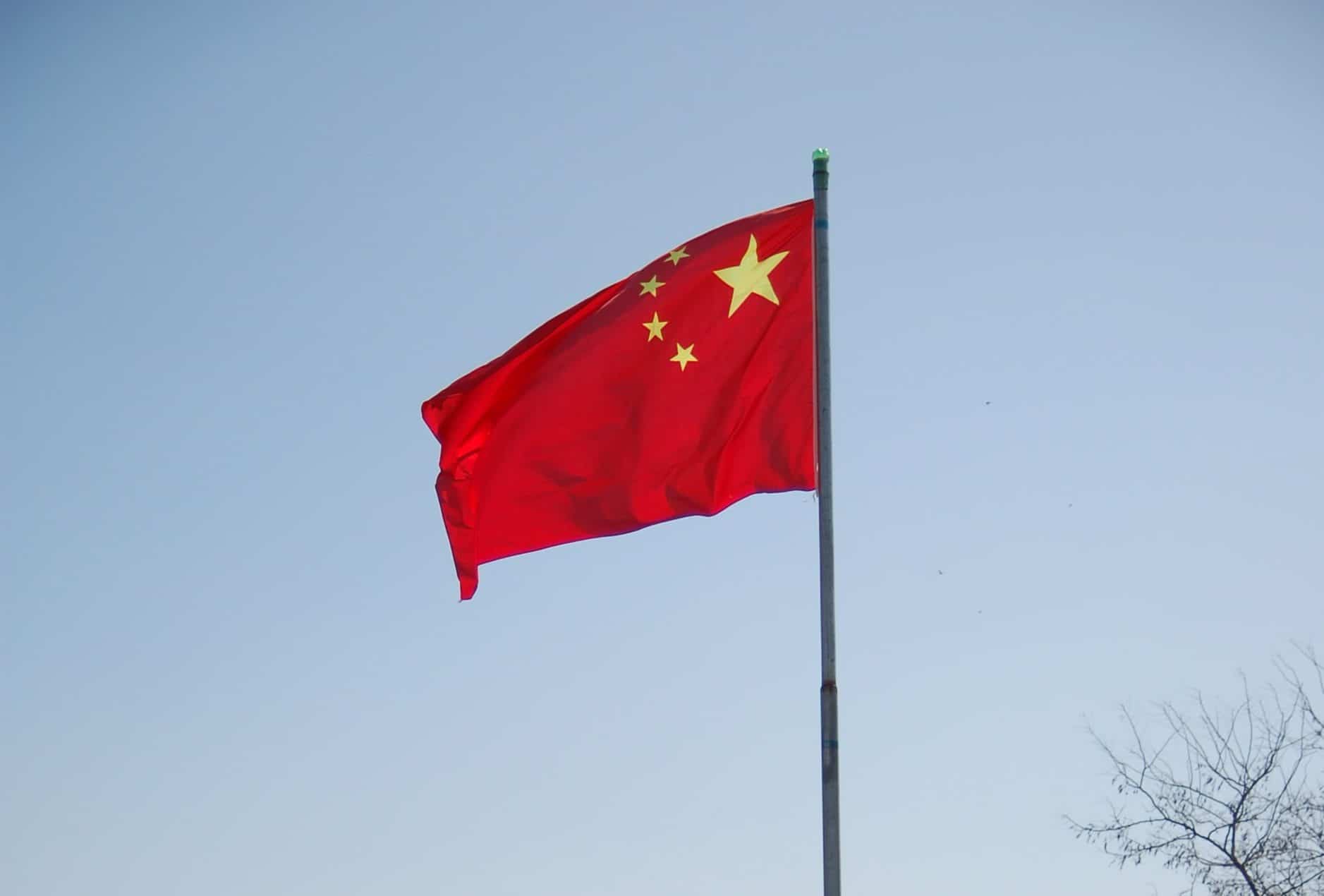
    Since the pandemic, China has experienced a surge in new study abroad companies, particularly in Tier 2 and Tier 3 cities. Consultancies such as Bonard and Sunrise have each confirmed a notable increase in new agency incorporation these past several years.

    However, the total number of students has not recovered as expected post-Covid. This, coupled with the emergence of international education programs in the market, such as foundation courses and 2+2 programs in the public and private sector, has meant that many established study abroad agents are struggling to survive due to rising management costs.

    Consequently, the market looks challenging, increasing the difficulty of student recruitment for foreign institutions that traditionally rely on agencies.

    Challenges for established agencies

    This rapid market expansion has presented challenges for even well-established agencies. Many are struggling to adapt to the changing dynamics. For instance, a prominent agency reported that many of their counsellors are earning minimal salaries due to declining client numbers and difficulties in securing new business. This highlights the increasing pressure on agencies to remain competitive in this rapidly evolving market.

    Fundamentally, the challenges for established agencies arise from cost and revenue pressures. Costs include tax, venue, human resources, and promotions, with human resources and promotion being the most critical.

    Agencies need professional personnel to maintain service standards and capacity in the labour-intensive study abroad industry. Promotion methods have changed rapidly in the past five years. Social media platforms and short-form video platforms have gained prominence, often becoming more important than search engines and other traditional methods.

    Fundamentally, the challenges for established agencies arise from cost and revenue pressure

    Furthermore, these new marketing channels tend to favour personal profiles over organisational accounts. This is largely due to the platforms’ recommendation algorithms. Moreover, many counsellors are not comfortable appearing on camera, despite possessing extensive experience and professional knowledge, they lack the skills and topics to capture audience attention.

    On the revenue side, acquiring customers is even more difficult than in the pre-Covid period. Customers are becoming more price-sensitive and are increasingly willing to work with smaller study abroad studios for personalised services.

    The impact of enhanced information accessibility

    The rise of digital platforms has fundamentally altered the information landscape for prospective students. With readily available information on social media platforms such as WeChat, Redbook, and TikTok, students and parents are now empowered to conduct independent research on universities, read reviews, and even connect with current students.

    This increased access to information has lessened the reliance on traditional agency channels. In some cases, agents also find themselves competing with university marketing and recruitment teams who support students directly.

    The rise of master agents and aggregators

    In response to these market shifts, many established agencies have transitioned to the “master agent” or “aggregator” model. This involves acting as intermediaries between universities and smaller agencies, facilitating student recruitment while generating additional revenue streams. However, this model presents challenges for universities, particularly those with lower rankings.

    Mingze Sang clarifies” “I would refer to aggregators as international university resource-holders or platforms.” Aggregators have existed in China for a while. However, the “risen” aggregators are often new agencies with strong connections to some foreign educators, enabling them to offer special programs. Some aggregators take the stance: “Every university is welcome on my platform. It’s up to you whether you can attract students.”

    The number of agencies and agents is increasing, while the number of students is not growing at the same rate. Therefore, the market is transforming into a resource-driven one.

    Aggregators have existed in China for a while. However, the “risen” aggregators are often new agencies with strong connections to some foreign educators, enabling them to offer special programs

    Currently, many parents and students in China are seeking the best outcomes with the least investment. Consequently, those with strong connections to well-ranking universities and who can provide special programs to students are highly sought after. Regarding the traditional aggregators in China, who have been present for at least 15 years, the competition is even more fierce than among agencies. They are struggling with issues such as commission percentages and counselling services, and are focused on survival rather than growth.

    Evolving student and parent priorities

    The priorities of Chinese students and parents have also undergone significant evolution. While university rankings were once the primary determinant, factors such as career prospects, student experience, and the quality of life in the chosen city are now gaining greater importance. This necessitates a more nuanced and student-centric approach to recruitment.

    Sang observes that the priorities of parents and students are employment after graduation. University rankings remain a key factor influencing their employment decisions. With foreign enterprises departing China and private companies facing challenges, parents often favour employers “in the system,” such as state-owned enterprises, hospitals, and universities. University ranking is crucial for standing out in a competitive job market. Furthermore, parents increasingly inquire about graduation requirements and the difficulty level of graduation.

    Student motivations

    Economic factors are influencing student choices in China. Post-Covid economic challenges have increased demand for international courses offered locally. These programs, offering global qualifications without the necessity of overseas travel, are attractive to many. Transnational education (TNE) programs are becoming more selective, enhancing their reputation and attracting students seeking high-quality international education experiences.

    As Sang notes: “Excellent students are seeking top universities with specialised majors. Average students are seeking top universities regardless of majors. Below average students are seeking degrees, prefer to go abroad as late as possible, and desire special, safe, and affordable services.”

    How universities can navigate the market

    Foreign institutions hoping to maintain a strong presence in China must evolve with the market. The traditional reliance on agencies is no longer sufficient. Instead, universities must:

    • Explore new opportunities beyond agency recruitment, diversifying their approach to attract Chinese students through multiple channels.
    • Invest in TNE partnerships, including 2+2 programs, foundation courses, and collaborations with Chinese universities, which provide direct access to students without heavy reliance on agencies.
    • Develop strong institutional collaborations with international schools in China, positioning themselves as trusted higher education pathways for students already enrolled in globally focused secondary education.
    • Leverage digital spaces effectively by producing compelling, authentic content that speaks directly to students and parents.
    • Enhance student experiences to attract and retain international talent.
    • Embrace innovation through virtual campus tours, interactive Q&A sessions, and personalised communication.

    Sang concludes: “For those well-ranking universities, such as the Australian Group of Eight, focus on ranking, maintain reasonable commissions, and be strict on graduation but not overly harsh on enrolment.

    “For those lower-ranking universities, spend more time engaging with Chinese colleges and universities; as there are thousands of them in China, be flexible when dealing with universities, and rely on a bit of luck.”

    Source link

  • From Soviet Influence to Market Economy: Mongolia’s Higher Education Journey

    From Soviet Influence to Market Economy: Mongolia’s Higher Education Journey

    It’s been a while since we did an episode looking at the higher education system of a far-flung corner of the world. Recently I was perusing the pages of International Higher Education, a wonderful quarterly publication out of Boston College, and I saw a great little article about the challenges facing Mongolian higher education, and I knew this was something we had to cover on the podcast.

    Unless you spend a lot of time reading about the Chinggis Khan Empire, or in my case, watching the upper echelons of professional Sumo, my guess is you probably don’t think about Mongolia that often.

    As a state it’s only a little over a century old, a child of the disintegration of the Chinese empire, which found protection under the Soviet banner. Its fortunes, both as a country and as a higher education system, therefore, look a lot like those from the further flung stands of Central Asia — that is seriously under-resourced and heavily influenced by a Russian model, which splits teaching and research into two very different buckets.

    Today my guest is Dendev Badarch, a professor at the Mongolian University of Science and Technology in Ulan Bator, and one of the co-authors of that IHE article. He has an interesting take on the current situation in Mongolia and the likely keys to the system’s future success as the country moves towards upper-middle-income status and deals with the challenge of becoming a service economy.

    But enough for me. Let’s turn it over to Dendev. 


    The World of Higher Education Podcast
    Episode 3.24 | From Soviet Influence to Market Economy: Mongolia’s Higher Education Journey 

    Transcript

    Alex Usher (AU): Let’s start with a brief history of Mongolian higher education. You’re from the oldest university in the country, and the National University of Mongolia is only about 80 years old, founded in 1942, if I’m not mistaken. My guess is that, at the start, the system would have been heavily dependent on the Soviet model.

    How did higher education develop during the socialist period up to the late 1980s? Beyond training government cadres, what industries was it designed to support, and how quickly did Mongolian become the primary language of instruction?

    Badarch Dendev (BD): First of all, thank you very much for inviting me to this podcast. Yes, you are correct—the Mongolian higher education system was heavily influenced by the Soviet system. The first university, the National University of Mongolia, was established in 1942, and its curriculum, structure, and administration closely followed the Soviet model.

    To meet the needs of Mongolia’s planned economy, several small, specialized schools were established from the 1950s to the 1960s, including institutions for medical training, agriculture, teacher education, and polytechnic studies. These schools played a significant role in supplying specialists with the skills necessary to support the Mongolian economy.

    In its early years, instruction at the university was conducted in Russian. However, as more Mongolian specialists graduated with higher education degrees, Mongolian gradually became the primary language of instruction. By the 1960s, many courses—particularly in the social sciences and humanities—were being taught in Mongolian.

    AU: By the 1970s, Mongolia had a system that was producing professionals, and instruction was primarily in the Mongolian language. Then, at the end of the 1980s, there was a shift to a market economy, which must have had a profound impact on higher education. What were the biggest changes that occurred in that first decade of a market economy?

    BD:  The Democratic Revolution of 1989–1990 marked a historic transition in our country. We moved from a socialist one-party system to a multi-party democracy and a free-market economy. This shift led to significant changes in higher education.

    In response to the pressure from the new democratic system, the government, in my opinion, took three key steps.

    The first was significant changes to public institutions, reclassifying old public institutes as universities and giving them more authority. Mongolia faced economic difficulties at the time. Under socialism, higher education was fully funded by the government—covering tuition, student stipends, faculty salaries, and more. But after the transition to democracy, we faced a very difficult situation.

    Second, under socialism, all higher education institutions were public. With the reforms, the government allowed the establishment of private universities and colleges, which significantly increased access to higher education.

    The third major step was the adoption of Mongolia’s first higher education law. These three key steps taken by the government shaped Mongolia’s higher education system as it exists today.

    AU: What’s the division now between public and private higher education? In countries like China and Russia, maybe three-quarters of students are still in public universities, but there’s still a significant private or non-state sector that educates about a quarter of the students. Is that the case in Mongolia as well? How big is the private sector?

    BD: You see, when the government made the decision to establish private institutions, there was a boom—a surge of small private colleges that had no infrastructure, no proper teaching facilities, and not enough qualified faculty. At one point, there were almost 200 private colleges.

    But as of last year, the 2022–2023 academic year, we have 69 higher education institutions—19 public and 50 private.

    However, in terms of student numbers, 60 percent of students are in public universitiesbecause of reputation, infrastructure, and other factors. In total, Mongolia has about 145,000 students.

    AU: My understanding is that both public and private institutions rely heavily on tuition fees, and that tuition fees are quite high. Is that good for financial sustainability, or does it create risks for institutions?

    BD: Tuition fees are not high, but universities and higher education institutions depend almost entirely on tuition. About 90 percent of their income comes from tuition. There is no public funding—except for some government subsidies for students.

    AU: So, in that situation, it’s not really a question of whether a high dependence on tuition is bad. If there’s no public subsidy, it’s simply the only way to operate, right?

    BD: Yes. Exactly.

    AU: Badarch, another critical function of universities is research. How does Mongolia compare internationally in terms of scientific research? What are the successes, and what are the biggest barriers to developing a stronger research culture?

    BD: You know, from the beginning, Mongolian universities were primarily training institutions, not research institutions. But in the last 10 years, there has been significant investment in higher education, especially in public universities. For the first time, university professors have started publishing internationally. In fact, the five largest public universities now produce 65% of all internationally published research papers. However, in Mongolia, higher education and research have been separate from the start, following the Russian model.

    AU: You would have an Academy of Sciences?

    BD: Yes, research was traditionally conducted by the Academy of Sciences. But universities have received significant investment in research infrastructure. For example, the National University of Mongolia now has more than 40 research laboratories in fields like biology, environmental sciences, and even nuclear physics. The Mongolian University of Science and Technology has supercomputer laboratories and modern mechanical engineering facilities. In addition, we now have many graduates returning from foreign universities to work in Mongolian universities, and they are contributing to research.

    But there are still major challenges. Universities do not receive sufficient research funding because most of the research budget goes to the Academy of Sciences. There is very little collaboration with industry and almost no funding from the private sector. There are also no endowment funds or other financial support systems for university research.

    Another critical issue is the weak graduate programs. Almost 99% of graduate students are part-time—there are no full-time graduate students. This severely limits research output. Without strong graduate programs, research activity remains low. This is one of the biggest challenges for Mongolian universities.

    AU: A couple of years ago, a set of laws were passed aimed at increasing university autonomy—governance, leadership selection, those kinds of things. Do universities now have real independence, or does political influence remain a challenge? And what did the laws do to promote political independence?

    BD: Over the last three years, there were extensive discussions about the concept and details of these new laws. In July 2023, Parliament adopted a set of education laws. For the first time, these laws covered all levels of education as a single system, creating better interconnection between different stages of education. That is a very good sign.

    Second, for the first time, the law explicitly recognized academic freedom as a key principle of higher education, which is another positive step.

    The third important issue relates to governance. According to the law, if implemented correctly, universities should have independent governing boards. Another key aspect is the diversification of funding for universities, as well as strengthening university research. The law also states that public universities should receive government subsidies to help cover maintenance costs.

    I think these are the positive aspects of the new law. However, in reality, the implementation of these important measures has not yet happened. Political interference still exists, particularly in the selection of university directors and key leadership appointments.

    AU: We’ve talked a lot about the challenges in Mongolian higher education. What do you see as the opportunities? Where do you think the greatest improvements could happen in the next few years?

    BD: Yes, there are definitely opportunities. First, universities are expanding their cooperation with international communities, and they are learning a lot from these collaborations. Also, as I mentioned earlier, we have a new wave of young specialists and graduates from world-leading universities. We need to hire them. If we bring in these young professionals, give them opportunities to conduct research, teach, and help reform higher education institutions, we will see positive changes soon.

    Second, there is a major opportunity in digital technologies. If we use them smartly and correctly—things like AI, online learning, and MOOCs—then Mongolian universities can take a big step forward.

    But in order to take advantage of these opportunities, we need to ensure that the new laws are properly implemented.

    AU: If we think even further ahead, maybe to 2050, what do you think the system will look like? Will Mongolia have caught up with countries like China, Korea, or Japan? Do you think the system will have developed to the point where it can be considered alongside those peers?

    BD: You may know that the government has adopted the “Vision 2050” long-term strategic development plan. According to this plan, by 2050, Mongolia should have one of the leading universities in the region.

    I see two possible scenarios for the development of higher education in Mongolia by 2050—one optimistic and one pessimistic.

    Starting with the optimistic scenario: If we can reduce government and political interference in university governance and give universities full autonomy, that would be a big step forward. The government should also increase its support for universities, establish strong links with industry, and adopt models like the triple helix approach. Additionally, partnerships with leading international universities would help improve graduate programs.

    If these changes happen, Mongolia could develop strong higher education institutions. But right now, many of the most talented secondary school students are not choosing local universities—they are looking abroad for their education.

    The pessimistic scenario is that if things continue as they are today, universities will still exist, but they will lack freedom and independence. The issues we are currently facing—political interference, funding limitations, and weak institutional autonomy—will persist. That would be very unfortunate. However, I hope that we will see changes in government policy and that Mongolia will implement best practices from other higher education systems around the world.

    AU: Thank you so much for joining us today.

    BD: Thank you.

    AU: And before we go, I’d like to thank our excellent producers, Tiffany MacLennan and Sam Pufek, as well as our listeners, viewers, and readers for tuning in. If you have any questions or comments about today’s podcast, please don’t hesitate to contact us at [email protected]. If you’re worried about missing an episode of The World of Higher Education, why not subscribe to our YouTube channel? Go there today—don’t delay—never miss an episode!

    Join us next week when our guest will be Steven Mintz, a professor of history at the University of Texas at Austin. We’ll be discussing his new book, The Learning-Centered University. Bye for now.

    *This podcast transcript was generated using an AI transcription service with limited editing. Please forgive any errors made through this service. Please note, the views and opinions expressed in each episode are those of the individual contributors, and do not necessarily reflect those of the podcast host and team, or our sponsors.

    This episode is sponsored by Studiosity. Student success, at scale – with an evidence-based ROI of 4.4x return for universities and colleges. Because Studiosity is AI for Learning — not corrections – to develop critical thinking, agency, and retention — empowering educators with learning insight. For future-ready graduates — and for future-ready institutions. Learn more at studiosity.com.

    Source link

  • Open universities: between radical promise and market reality

    Open universities: between radical promise and market reality

    by Ourania Filippakou

    Open universities have long symbolised a radical departure from the exclusivity of conventional universities. Conceived as institutions of access, intellectual emancipation, and social transformation, they promised to disrupt rigid academic hierarchies and democratise knowledge. Yet, as higher education is increasingly reshaped by market logics, can open universities still claim to be engines of social progress, or have they become institutions that now reproduce the very inequalities they sought to dismantle?

    This question is not merely academic; it is profoundly political. Across the globe, democratic institutions are under siege, and the erosion of democracy is no longer an abstraction – it is unfolding in real time (cf EIU, 2024; Jones, 2025). The rise of far-right ideologies, resurgent racism, intensified attacks on women’s and LGBTQ+ rights, and the erosion of protections for migrants and marginalised communities all point to a crisis of democracy that cannot be separated from the crisis of education (Giroux, 2025). As Giroux (1984) argues, education is never neutral; it can operate as both a potential site for fostering critical consciousness and resistance and a mechanism for reproducing systems of social control and domination. Similarly, Butler (2005) reminds us that the very categories of who counts as human, who is deemed grievable, and whose knowledge is legitimised are deeply political struggles.

    Open universities, once heralded as radical interventions in knowledge production, now find themselves entangled in these struggles. Increasingly, they are forced to reconcile their egalitarian aspirations with the ruthless pressures of neoliberalism and market-driven reforms. The challenge they face is no less than existential: to what extent can they uphold their role as spaces of intellectual and social transformation, or will they become further absorbed into the logics of commodification and control?

    My article (Filippakou, 2025) in Policy Reviews in Higher Education, ‘Two ideologies of openness: a comparative analysis of the Open Universities in the UK and Greece’, foregrounds a crucial but often overlooked dimension: the ideological battles that have shaped open universities over time. The UK Open University (OU) and the Hellenic Open University (HOU) exemplify two distinct yet converging trajectories. The UK OU, founded in the 1960s as part of a broader post-war commitment to social mobility, was a political project – an experiment in making university education available to those long excluded from elite institutions. The HOU, by contrast, emerged in the late 1990s within the European Union’s push for a knowledge economy, where lifelong learning was increasingly framed primarily in terms of workforce development. While both institutions embraced ‘openness’ as a defining principle, the meaning of that openness has shifted – from an egalitarian vision of education as a public good to a model struggling to reconcile social inclusion with neoliberal imperatives.

    A key insight of this analysis is that open universities do not merely widen participation; they reflect deeper contestations over the purpose of higher education itself. The UK OU’s early success inspired similar models worldwide, but today, relentless marketisation – rising tuition fees, budget cuts, and the growing encroachment of corporate interests – threatens to erode its founding ethos.

    Meanwhile, the HOU was shaped by a European policy landscape that framed openness not merely as intellectual emancipation but as economic necessity. Both cases illustrate the paradox of open universities: they continue to expand access, yet their structural constraints increasingly align them with the logic of precarity, credentialism, and market-driven efficiency.

    This struggle over education is central to the survival of democracy. Arendt (1961, 2005) warned that democracy is not self-sustaining; it depends on an informed citizenry capable of judgment, debate, and resistance. Higher education, in this sense, is not simply about skills or employability – it is about cultivating the capacity to think critically, to challenge authority, and to hold power to account (Giroux, 2019). Open universities were once at the forefront of this democratic mission. But as universities in general, and open universities in particular, become increasingly instrumentalised – shaped by political forces intent on suppressing dissent, commodifying learning, and hollowing out universities’ transformative potential – their role in sustaining democratic publics is under threat.

    The real question, then, is not simply whether open universities remain ‘open’ but how they define and enact this openness. To what extent do they serve as institutions of intellectual and civic transformation, or have they primarily been reduced to flexible degree factories, catering to market demands under the guise of accessibility? By comparing the UK and Greek experiences, this article aims to challenge readers to rethink the ideological stakes of openness in higher education today. The implications extend far beyond open universities themselves. The broader appeal of this analysis lies in its relevance to anyone interested in universities as sites of social change. Open universities are not just alternatives to conventional universities – they represent larger struggles over knowledge, democracy, and economic power. The creeping normalisation of authoritarian politics, the suppression of academic freedom, and the assault on marginalised voices in public discourse demand that we reclaim higher education as a site of resistance.

    Can open universities reclaim their radical promise? If higher education is to resist the encroachment of neoliberalism and reactionary politics, we must actively defend institutions that prioritise intellectual freedom, civic literacy, and higher education for the public good. The future of open universities – and higher education itself – depends not only on institutional policies but on whether scholars, educators, and students collectively resist these forces. The battle for openness is not just about access; it is about the kind of society we choose to build – for ourselves and the generations to come.

    Ourania Filippakou is a Professor of Education at Brunel University of London. Her research interrogates the politics of higher education, examining universities as contested spaces where power, inequality, and resistance intersect. Rooted in critical traditions, she explores how higher education can foster social justice, equity, and transformative change.

    Author: SRHE News Blog

    An international learned society, concerned with supporting research and researchers into Higher Education

    Source link