Tag: Mason

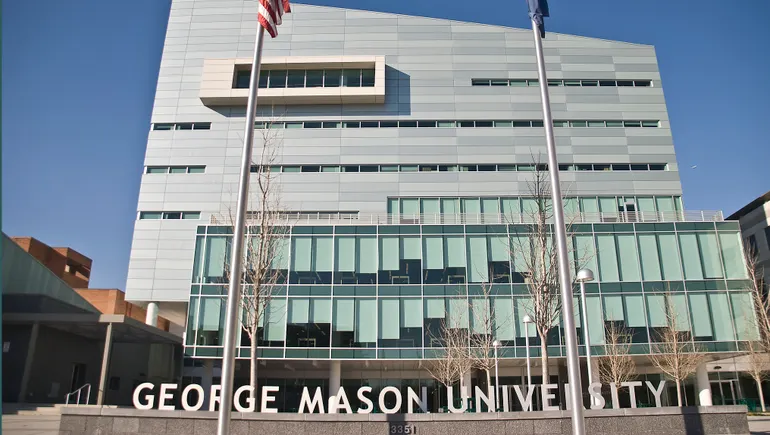
  • Trump administration opens a fourth probe into George Mason University

    Trump administration opens a fourth probe into George Mason University

    This audio is auto-generated. Please let us know if you have feedback.

    Dive Brief:

    • The U.S. Department of Justice has opened a probe into George Mason University over its admissions and scholarship practices as well as its response to antisemitism, the agency announced Monday. It follows a probe into the university’s employment practices announced last week.
    • In a letter to the head of George Mason’s board, Harmeet Dhillon, assistant attorney general for the Justice Department’s civil rights division, said the agency would consider whether George Mason’s student practices violate Title VI, which prohibits discrimination based on race, color or national origin at federally funded institutions. 
    • Dhillon’s letter made no specific allegations against the university, and an agency spokesperson declined to comment Tuesday on what prompted the probe. In a statement Monday, the university’s board of visitors said it would “respond fully and promptly to the requests from the U.S. Government.”

    Dive Insight:

    The Trump administration has set its sights on George Mason as it widens its attacks on universities based on their diversity programs, approach to pro-Palestinian protests and other practices that run counter to the president’s political agenda.

    The latest investigation is at least the fourth probe the Trump administration has launched into the university. Dhillon gave George Mason until Aug. 1 to provide “a series of certifications, responses, and productions of information, data, and materials” to the agency. 

    In its statement, the university’s board of visitors said that it has a fiduciary obligation “to ensure that the University continues to thrive as the largest public university in Virginia,” adding, “This includes making sure that GMU fully complies with federal anti-discrimination laws as it excels in its mission.”

    Rep. Bobby Scott, a Virginia Democrat and the ranking member on the House’s education committee, blasted the Trump administration’s investigations into George Mason in a statement Tuesday.

    “Under this Administration, the government’s Offices of Civil Rights have adopted a radical reinterpretation of our civil rights laws to attack diversity, equity, inclusion and accessibility,” Scott said. “The Trump Administration’s selective actions undermine the pursuit of justice, and the independence and academic freedom of America’s institutions of higher education.” 

    Late last week, Dhillon informed the university of a similar probe under Title VII, which bars employment discrimination based on race, color, religion, sex or national origin.  

    In a July 17 letter, she alleged that George Mason “may be engaged in employment practices that discriminate against employees, job applicants, and training program participants based on race and sex.” 

    Dhillon cited internal emails and comments from George Mason President Gregory Washington seeking to promote diversity and equity in the hiring and tenure processes, as well as antiracism throughout the university’s operations. 

    Prior to that, the Trump administration opened two separate investigations over claims that the university hasn’t done enough to respond to antisemitism and illegally uses race in employment decisions.

    In a July 18 post, Washington rejected the government’s allegations of discrimination and explained that the comments cited by Dhillon came in the wake of the murder of George Floyd, who was Black, by a White police officer in 2020. 

    “As part of addressing this national reckoning, we were examining ourselves, looking for ways to become better,” Washington said, adding that diversity efforts were part of a state-mandated initiative, and the public expected George Mason to “play a meaningful part in creating structures and programming to address old biases and persistent inequalities in business operations.”  

    He also said, “It is inaccurate to conclude that we created new university policies or procedures that discriminated against or excluded anyone,” and added that “our systems were enhanced to improve on our ability to consistently include everyone for consideration of every employment opportunity.”

    The Trump administration’s targeting of George Mason comes shortly after the Justice Department pushed former University of Virginia President Jim Ryan to announce his abrupt resignation in June. The university was, like George Mason, under investigation by the administration over its diversity initiatives.

    Source link

  • George Mason University faces federal probe into hiring and promotion practices

    George Mason University faces federal probe into hiring and promotion practices

    This audio is auto-generated. Please let us know if you have feedback.

    The U.S. Department of Justice on Thursday opened an investigation into George Mason University to determine whether it discriminates against employees based on sex and race, including in promotion and tenure decisions.

    The news comes after the U.S. Department of Education opened two investigations into the public institution earlier this month over claims the university hasn’t done enough to respond to antisemitism and illegally uses race in employment decisions.

    The flurry of federal inquiries raises questions regarding the future of George Mason’s president, after pressure from the Justice Department pushed former University of Virginia President Jim Ryan to announce his abrupt resignation in June.

    3 probes in 3 weeks

    In a Thursday letter to George Mason, DOJ alleged that “race and sex have been motivating factors in faculty hiring decisions to achieve ‘diversity’ goals” under President Gregory Washington’s tenure. The agency cited Biden administration-era emails and statements from Washington in which he discussed a desire to support diversity and faculty of color and oppose racism on an institutional level.

    The DOJ’s letter opens an investigation into whether the university has violated Title VII, which bars employers from discriminating based on race, color, religion, sex or national origin. 

    “When employers screen out qualified candidates from the hiring process, they not only erode trust in our public institutions — they violate the law, and the Justice Department will investigate accordingly,” Harmeet Dhillon, assistant attorney general of DOJ’s civil rights division, said in a statement.

    The agency said it has “not reached any conclusions” yet and called on the university to provide relevant information.

    George Mason did not immediately respond to a Friday request for comment on DOJ’s investigation.

    “Painted as discriminatory”

    On Wednesday, Washington strongly repudiated similar allegations from the Education Department. The agency is investigating the university’s faculty hiring practices over potential violations of Title VI, which bars federally funded institutions from discriminating based on race, color or national origin.

    “Our diversity efforts are designed to expand opportunity and build inclusive excellence — not to exclude or advantage any group unlawfully,” he said in a statement July 16.

    The university’s faculty performance evaluations do not “use race or anti-racism measures as determinants of institutional success,” Washington said, and George Mason’s promotion and tenure policies do not give preferential treatment based on protected characteristics.

    The university president said that all inclusivity work done by a task force at George Mason aligned with the One Virginia Plan, a state-level initiative promoting diversity and inclusion in the state government’s workforce.

    The plan, established during former Democratic Gov. Ralph Northam’s administration, is set to conclude at the end of 2025 and is unlikely to be extended by Republican Gov. Glenn Youngkin, a vehement opponent of diversity and inclusion efforts.

    Washington, the first Black president to lead George Mason, also commented on “the “profound shift in how Title VI is being applied,” in what he called “a stark departure from the spirit in which civil rights law was written.”

    “Longstanding efforts to address inequality — such as mentoring programs, inclusive hiring practices, and support for historically underrepresented groups — are in many cases being reinterpreted as presumptively unlawful,” Washington said. “Broad terms like ‘illegal DEI’ are now used without definition, allowing virtually any initiative that touches on identity or inclusion to be painted as discriminatory.”

    The Education Department never publicly announced its first investigation into George Mason, which alleges that the university failed to respond “effectively to a pervasive hostile environment for Jewish students and faculty.” George Mason confirmed the investigation on July 3, though a conservative news outlet began publishing government documents about the case the day before.

    Washington predicted many of the obstacles George Mason has faced this month in an interview with ProPublica and The Chronicle of Higher Education

    Source link

  • George Mason Faces 2 Title VI Investigations

    George Mason Faces 2 Title VI Investigations

    George Mason University in Virginia is under investigation for alleged violations of Title VI of the Civil Rights Act, the Department of Education announced Thursday.

    Multiple university professors reportedly filed complaints that the institution “illegally uses race and other immutable characteristics in university policies, including hiring and promotion,” according to the news release. 

    The accusations come less than two weeks after the University of Virginia’s president was pressured to resign by the Department of Justice for similar DEI-related complaints. Thursday’s announcement sparked concerns among some higher education professionals that George Mason president Gregory Washington, who is Black, could face similar pressure. This is the second civil rights investigation that the Education Department has opened at George Mason this month. The other one is focused on allegations that university didn’t sufficiently respond to antisemitic incidents.

    “It looks like the Trump administration is trying to force out George Mason’s president,” Robert Kelchen, an education policy professor at the University of Tennessee, wrote on BlueSky.

    “When people ask why Higher Ed presidents aren’t being publicly vocal—here’s why,” responded Dan Collier, a higher education professor at the University of Memphis.

    Department officials said in the news release that the investigation is justified by the university’s “unlawful DEI policies.” The release cited policies aimed at ensuring a diverse applicant pool and that departments at George Mason embrace antiracism and inclusiveness. The department declared race-based programming and activities illegal in guidance earlier this year, but a federal judge blocked that directive.

    “This kind of pernicious and wide-spread discrimination—packaged as ‘anti-racism’—was allowed to flourish under the Biden Administration, but it will not be tolerated by this one,” said Acting Assistant Secretary for Civil Rights Craig Trainor in the release.

    Source link

  • Higher education postcard: Mason Science College

    Higher education postcard: Mason Science College

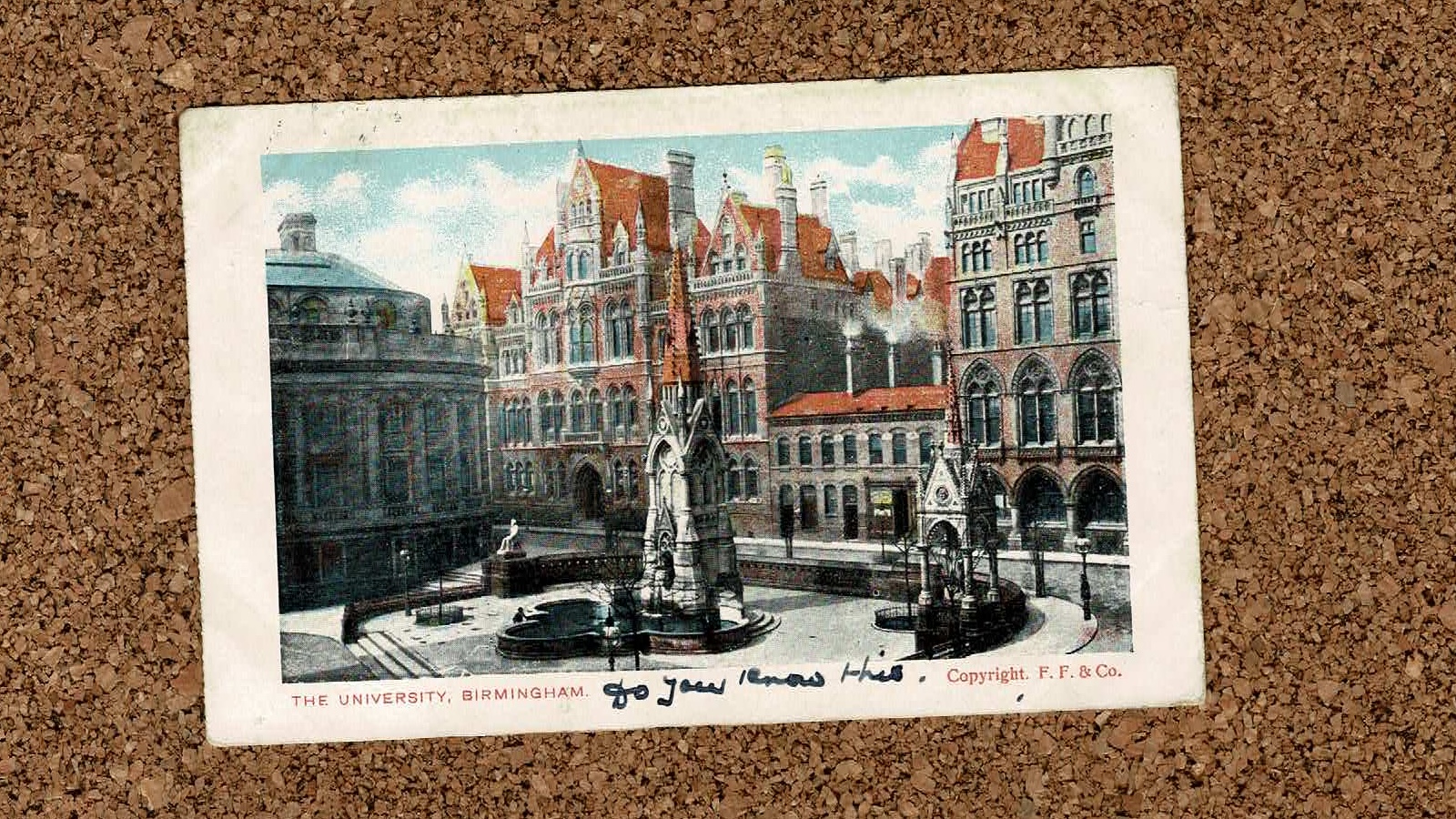
    Greetings from Birmingham!

    This is Mason Science College, founded in 1875 by Sir Josiah Mason. It was one of the institutions which formed the nucleus of the University of Birmingham in 1900 (the other was Queen’s College, founded in 1825 as the Birmingham Medical School). The buildings were used by the university until the 1960s but are now gone.

    Mason had made his fortune in manufacturing – mostly steel pens, but other products too.

    The card was posted on 17 April 1905 in Bournemouth to an address in Doncaster.

    Thanks for letter and will answer in a day or so. Went to hear Sousa’s band today. Have you heard him? I trust you are stronger dear. Love in haste …

    John Philip Sousa and his band were touring Britain in 1905, but I can’t pin down where they played on Monday 17 April.

    Here’s a jigsaw of the card.

    Apologies for the brevity of this post – I’m under the cosh this week, with work and other stuff, so the postcard blog is short and sweet. Hopefully back to normal next week!

    Source link

  • George Mason University calls cops on student for article criticizing Trump

    George Mason University calls cops on student for article criticizing Trump

    In 1787, Thomas Jefferson declared that “The tree of liberty must be refreshed from time to time with the blood of patriots and tyrants.” George Mason — the founding father for whom GMU is named — championed the right to resist tyranny, penning the 1776 Virginia Declaration of Rights that helped inspire the First Amendment.

    Fast forward 250 years, and GMU is calling the police on a student for daring to echo those revolutionary sentiments in modern terms.

    It seems GMU has forgotten its namesake’s legacy. So here’s a reminder: calling the cops over political commentary has no place at an American university bound by the First Amendment. 

    On April 16, GMU student Nicholas Decker published a Substack essay titled “When Must We Kill Them?,” a provocative piece exploring whether violence is ever justified as a last resort against what he perceives as tyranny under the Trump administration. The essay explicitly warns that force is only defensible when all peaceful and legal avenues have been exhausted. Decker invokes the founding fathers to argue that violence “is to be employed only in defense of our Constitution, and of democracy.”

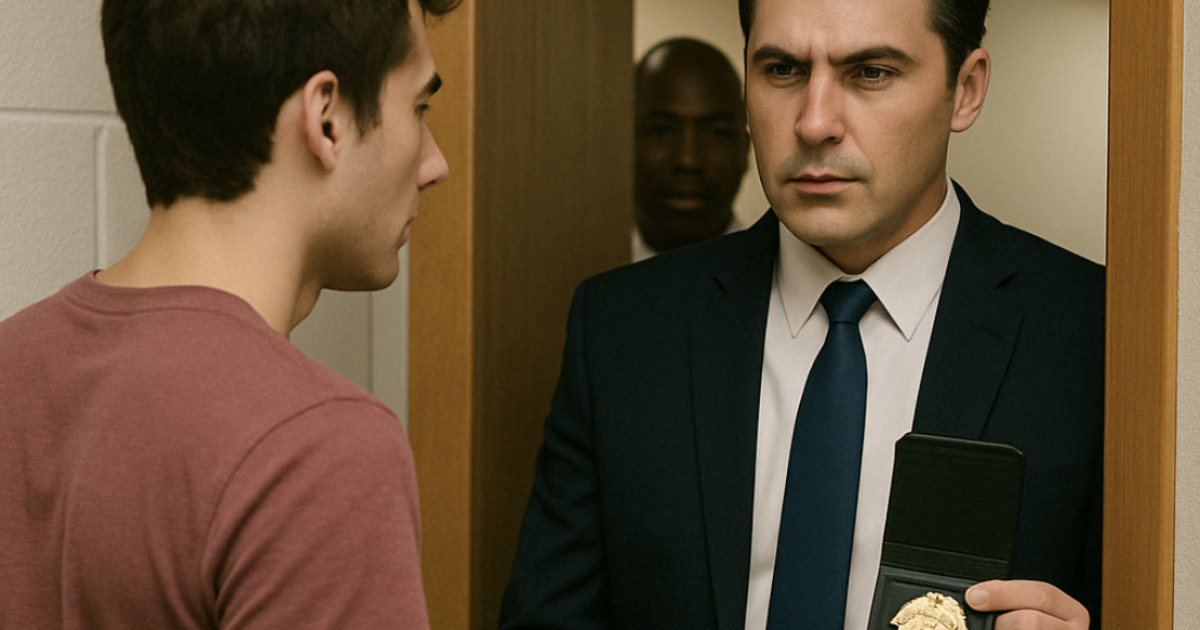
    The next day, GMU referred Decker to “state and federal law enforcement for evaluation of criminal behavior” and denounced his essay as “not the Mason way.” Then came a knock at Decker’s door from the Secret Service. After reviewing his words, they agreed he broke no laws.

    GMU’s overreaction has sent a dangerous message: write something controversial, and the feds might show up at your door. That’s chilling and, frankly, un-American.

    A university dedicated to free thought should know better. The First Amendment draws a clear line between unprotected “true threats” and core political speech. Speech is only a true threat when it demonstrates a serious, specific, and imminent intent to commit unlawful violence against a particular individual or group. That’s a high bar — and for good reason. It’s meant to protect public debate, especially about uncomfortable topics. Advocacy for violence, no matter how disturbing, remains protected unless it crosses that line.

    Decker’s essay never comes close. It’s abstract, hypothetical, and lacks any indication of intent to commit violence. Asking about the moral propriety of force is philosophy, not a true threat. And while deeply offensive speech may upset many, that doesn’t make it unlawful, as intense political debate will inevitably offend someone

    But it should never have come to this. GMU’s overreaction has sent a dangerous message: write something controversial, and the feds might show up at your door. That’s chilling and, frankly, un-American. When administrators start acting like King George III, they’ve lost their way. Ironically, GMU’s behavior resembles that of UK speech police, where citizens are arrested for criticizing public officials online.

    Thankfully, in America, the First Amendment answers the question of whether robust political debate is “criminal behavior.” Students expressing themselves on public issues is very much “the Mason way.” FIRE calls on GMU to ensure this mistake does not become an accepted practice.


    FIRE defends the rights of students and faculty members — no matter their views — at public and private universities and colleges in the United States. If you are a student or a faculty member facing investigation or punishment for your speech, submit your case to FIRE today. If you’re a faculty member at a public college or university, call the Faculty Legal Defense Fund 24-hour hotline at 254-500-FLDF (3533). If you’re a college journalist facing censorship or a media law question, call the Student Press Freedom Initiative 24-hour hotline at 717-734-SPFI (7734).


    Source link