Tag: Materials

  • Conservative Org. Requests Materials for 70 Chapel Hill Courses

    Conservative Org. Requests Materials for 70 Chapel Hill Courses

    The Oversight Project, a spinoff of the conservative Heritage Foundation known for deluging government agencies with public records requests, has set its sights on the University of North Carolina at Chapel Hill.

    According to Chapel Hill’s open records request database, Mike Howell, the Oversight Project’s president, submitted a sweeping request to the university on July 2, asking for syllabi and class materials presented to students in roughly 70 courses that contain “any of the following search terms, whether in titles, body text, footnotes, metadata, or hyperlinks.” He then listed 30 search terms he wanted Chapel Hill to use, including “Diversity, Equity, Inclusion, and Belonging”; “gender identity”; “intersectionality”; “white privilege”; “cultural humility”; “racial equity”; “implicit bias”; “microaggressions”; “queer”; and “sexuality.”

    The courses whose materials he asked the university to search included Gender and Sexuality in Islam, Increasing Diversity in STEM Research and Black Families in Social and Contemporary Contexts, as well as Right-Wing Populism in Global Perspective; First-Year Seminar: Mobility, Roads, NASCAR, and Southern Culture; and Introduction to the American Stage Musical.

    Howell also asked the university to waive any fees for searching for or providing these possibly voluminous records. His explanation for why the Oversight Project deserved to pay nothing suggested what he was seeking to do with the information.

    “Disclosure of these records will contribute significantly to the public’s understanding of university operations and student-facing programming, particularly considering ongoing public concern regarding institutional compliance with current Executive Orders issued by the President of the United States,” Howell wrote, specifically mentioning President Trump’s anti-DEI executive orders from January. The records “will shed light on potential inconsistencies between internal practices and public representations made by officials in a matter of substantial national importance,” he wrote.

    Government agencies that are subject to open records requests such as the one the Oversight Project has submitted often charge for such work; the State Department’s fees range from $21 to $76 per hour, depending on the personnel fulfilling the request, and $0.15 per page, for example.

    It’s another example of conservatives using open records laws to target what’s being researched or taught—or what they think is being taught—at public universities. And using keyword searches for terms such as “DEI” echoes the approach federal agencies under Trump have adopted to search grants to determine which might be canceled. Some universities have also conducted their own similar hunts to find content on internal websites and within courses that may run afoul of federal or state prohibitions related to DEI.

    In February, the UNC system ordered its 16 public universities to immediately stop requiring “course credits related to diversity, equity and inclusion,” without defining what that meant. Some university administrations used keyword searches of course descriptions, looking for terms such as “cultural” to choose which courses to review. The system allowed institutional chancellors to grant waivers for dozens of courses with diversity themes that remain necessary for certain degrees. A system administrator said about 95 percent of programs identified for exemptions “had accreditation and licensure requirements attached.”

    The request for syllabi is also another example of conservative groups targeting UNC system campuses for allegedly continuing to practice DEI, despite multiple efforts by the UNC system Board of Governors to stamp it out. Since April, another group, Accuracy in Media, has released undercover videos allegedly showing staffers at other UNC institutions still promoting DEI.

    Chris Petsko’s business course, Leading and Managing, was among those the Oversight Project requested records for. Petsko, an assistant professor of organizational behavior, said a small part of the course includes segments on stereotyping and prejudice as they relate to workplace outcomes, such as hiring.

    Petsko said the university notified him of the request, and he looked up what the Oversight Project was. Based on what he found, he won’t give up his course materials, he said. He didn’t like the request’s implication that he was violating executive orders and said those sympathetic to the Trump administration seem “perfectly willing to make outlandish legal arguments that they know will lose in lower courts simply to give their ideology some kind of legitimacy.” The Oversight Project has been accused of releasing misleading information before.

    Petsko said he didn’t want to give the Oversight Project something to “twist” in its mission to keep “targeting public universities for doing the work they need to do.”

    ‘Meant to Intimidate’

    Chapel Hill says it’s a faculty member’s right not to share their course information. Though the media relations office didn’t provide an interview Monday, a university spokesperson wrote in an email, “The University has not responded to this public records request and is still in the process of identifying what—if any—records will be produced. Course materials, including but not limited to exams, lectures, assignments and syllabi, are the intellectual property of the preparer and are owned by the preparer as non-traditional work.”

    The Oversight Project also didn’t provide an interview to Inside Higher Ed. In an email, Howell wrote, “UNC is a public school which has a long track record of discrimination. Syllabi are public records and belong to the public. We intend to let the public know what is being taught at a public school. That’s not intimidation, it’s good governance and transparency. If a professor is too much of a wimp to let me read his syllabus then he’s in the wrong business.”

    When asked to provide a list of donors to the Oversight Project, Howell responded, “And no of course I’m not sending you a list of donors but please do send donors to our website.”

    Petsko shared his research into the rules regarding responding to Howell’s group with other faculty on LinkedIn.

    “At many public universities, syllabi are considered intellectual property,” he wrote in a post. “As such, at many schools (mine included) professors are not required to share their syllabi in response to public records requests. My advice is to check what your university policy is prior to complying with requests in advance.”

    He also wrote that “at public universities, you have a legal right to decide how to teach your course and to decide what topics to include” if it’s relevant to the course.

    “Keep doing the work you were trained to do,” he wrote. “Keep educating others. Keep sharing your expertise. And don’t let vague references to executive orders make you question whether you have a right to be sharing your knowledge with the world.”

    Zach Greenberg, a First Amendment attorney at the Foundation for Individual Rights and Expression, said his organization advocates for narrow exemptions to open records laws to keep private faculty records, correspondence and other written materials for the purpose of scholarship, research and teaching.

    “These very broad and vague requests for faculty academic records such as syllabi and faculty communications about their academic pursuits chill free speech by putting a large burden on the faculty members and revealing private academic information they use to teach their classes,” Greenberg said. Forcing disclosure, he said, can result in altering these courses.

    Joan Scott, a member of the American Association of University Professors’ Committee A on Academic Freedom and Tenure and one of the founders of Chapel Hill’s women’s studies program, said this use of open records requests is “not a new tactic.” She said these requests are “meant to intimidate” and suggested the targeting of Chapel Hill is part of a pressure campaign on state legislators to overturn the Democratic governor’s veto of anti-DEI legislation.

    “Whatever they’re claiming the legal right is, it’s a violation of academic freedom, it’s a violation of individual free speech rights and it’s an intrusion into the teaching of university faculty in the name of, it seems to me, a right-wing ideological agenda,” Scott said.

    Source link

  • NEA Executive Committee Reverses Member Vote to Boycott ADL Educational Materials

    NEA Executive Committee Reverses Member Vote to Boycott ADL Educational Materials

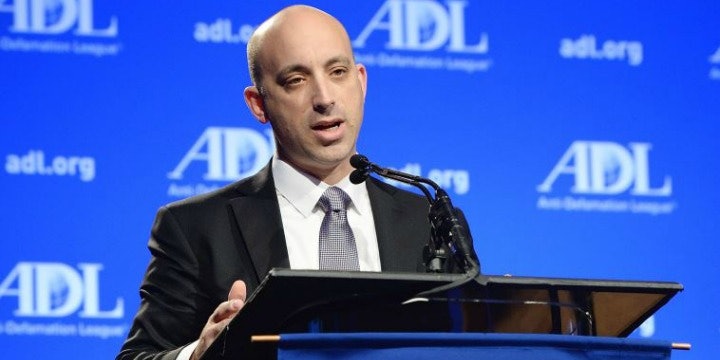
    ADL CEO Jonathan GreenblattThe National Education Association’s (NEA) executive committee has rejected a resolution passed by union members that would have severed ties with the Anti-Defamation League (ADL), preserving access to educational materials on antisemitism and Holocaust education amid rising campus tensions.

    The decision, announced Friday by NEA President Becky Pringle, came after the union’s Representative Assembly voted last week in Portland, Oregon, to cut ties with the civil rights organization over its characterization of campus protests related to the Gaza conflict as antisemitic.

    “Following the culmination of a thorough review process, it was determined that this proposal would not further NEA’s commitment to academic freedom,” Pringle said in a statement. The rejection preserves educators’ access to ADL curricula and professional development programs that address antisemitism in educational settings.

    The controversy highlights the complex challenges facing educational institutions as they navigate discussions about antisemitism, campus climate, and academic freedom in the aftermath of increased tensions following the October 7, 2023 Hamas attacks and subsequent Gaza conflict.

    The executive committee’s decision followed an unprecedented coalition effort, with nearly 400 Jewish organizations and dozens of elected officials urging the NEA to reject the boycott proposal. The coalition argued that excluding ADL materials would harm efforts to combat antisemitism in schools and marginalize Jewish educators and students.

    “This resolution was not just an attack on the ADL, but a larger attack against Jewish educators, students, and families,” said a joint statement from ADL CEO Jonathan Greenblatt, American Jewish Committee CEO Ted Deutch, Conference of Presidents of Major American Jewish Organizations COO Stephanie Hausner, and Jewish Federations of North America Executive Vice President Shira Hutt.

    The Jewish leaders emphasized that the proposed boycott would have normalized “antisemitic isolation, othering, and marginalization of Jewish teachers, students and families in our schools,” even as teachers’ unions have limited power to dictate curriculum.

    The debate reflects broader tensions on college and K-12 campuses nationwide, where Jewish students and faculty have reported increased incidents of antisemitism alongside pro-Palestinian advocacy efforts. The ADL’s annual reporting on antisemitic incidents has itself become a point of contention, with some progressive Jewish leaders questioning whether the organization conflates legitimate criticism of Israeli government policies with antisemitism.

    Amy Spitalnick, CEO of the Jewish Council for Public Affairs, offered a nuanced perspective: “It’s possible to disagree with ADL without cutting off all engagement — which would undercut our shared goals of countering antisemitism and broader hate and bias.”

    Pringle clarified that rejecting the boycott proposal was not an endorsement of “the ADL’s full body of work” but acknowledged the organization’s role in addressing rising antisemitism. She met with ADL CEO Greenblatt to discuss the union’s processes and reaffirm the NEA’s commitment to combating antisemitism.

    Source link

  • Following Trump EOs, Naval Academy prohibits class materials

    Following Trump EOs, Naval Academy prohibits class materials

    The U.S. Naval Academy’s provost told faculty last week not to use course readings “or other materials that promote” critical race theory, “gender ideology” and other topics targeted by the Trump administration, The Baltimore Banner reported.

    The institution pointed to Trump’s multiple executive orders, which include one specifically restricting the curricula of military academies.

    Provost Samara Firebaugh told faculty in the email to search materials for “diversity,” “minority” and other words and forbade them from using “materials that can be interpreted to assign blame to generalized groups for enduring social conditions, particularly discrimination or inequality,” the Banner reported. The Naval Academy confirmed the email to Inside Higher Ed but declined to provide a copy, saying it doesn’t share internal emails.

    “That was a leak,” a representative from the institution’s public affairs office said.

    In an email to Inside Higher Ed, the Naval Academy’s media relations arm said the provost’s message “provided more detailed guidance and clarity to ensure course materials and assignments are in alignment with all executive orders.” Commander Ashley Hockycko, public affairs officer at the Naval Academy, said the provost’s letter wasn’t meant to further restrict curriculum and coursework beyond the presidential executive orders—it’s just meant to provide “amplifying guidance and clarification.”

    A Jan. 27 executive order titled “Restoring America’s Fighting Force” said educational institutions operated or controlled by the Defense Department and military “are prohibited from promoting, advancing or otherwise inculcating the following un-American, divisive, discriminatory, radical, extremist and irrational theories.” It then went on to list “gender ideology,” “divisive concepts,” “race or sex stereotyping,” “race or sex scapegoating” and the idea “that America’s founding documents are racist or sexist.”

    On Jan. 29, Defense Secretary Pete Hegseth sent a memo saying, “No element within DoD will provide instruction on critical race theory, DEI or gender ideology as part of a curriculum or for purposes of workforce training“ and that military academies “shall teach that America and its founding documents remain the most powerful force for good in human history.”

    The U.S. Air Force Academy and the U.S. Military Academy at West Point didn’t respond to requests for comment Tuesday about whether they’ve released similar guidance.

    Source link

  • Community college to reconsider removed DEI materials

    Community college to reconsider removed DEI materials

    Des Moines Area Community College is planning to reintroduce to its website some materials related to diversity, equity and inclusion that it had removed in anticipation of anti-DEI legislation, The Iowa Capital Dispatch reported.

    The college first removed information about DEI on Jan. 25 in response both to President Trump’s executive order banning DEI “preferences, mandates, policies, programs, and activities” and to a state bill that would have prohibited DEI offices at community colleges. That bill was later tabled.

    The institution’s president, Rob Denson, told the Board of Trustees that the institution is now reviewing what information can be returned to its website. “What can come back, will come back,” he said.

    Source link

  • 10 Reasons to Go Digital with Your Course Materials – Eric Stoller

    10 Reasons to Go Digital with Your Course Materials – Eric Stoller


    When I was a college student, there were times when I skipped out on buying a required textbook for a course. Finances were always tight, so I tried to balance my checkbook with buying actual books. Even then, textbooks weren’t cheap. Today, students are paying more and more for their higher education experience. If a university can find ways to make attending college more affordable, accessible, and “high-tech/high-touch”, well, it’s not really an option, it’s a necessity.

    Today’s technology makes it easy to distill course materials into digital formats and enhances them as a result.  Colleges and universities are quickly shifting from books to bytes to improve the student experience and boost course outcomes.

    Here are 10 reasons why your university should go digital with its course materials:

    1. Affordability: This may seem like an obvious reason to move to digital delivery of course materials. Students will end up paying less for digital course materials. From production to shipping, textbooks require a lot of costly infrastructure. Digital materials eliminate these costs and pass the savings on to students.
    2. A better experience for students with disabilities. Unlike print books, modern eTextbooks can be accessible “out of the box.”  When eTextbooks include features such alternative text descriptions of visuals and content that can be used with assistive technology, students can start reading right away, without waiting for a disability services department to create a file.
    3. Learning Analytics and Digital Integration: Can you remember when a physical book connected to a digital learning system? It’s just not possible. However, with digital course materials, integration with the campus LMS/VLE is possible. Plus, with learning analytics built in, digital materials can help support at-risk learners who may need additional assistance.
    4. Recruitment: Digital course materials might not seem like they give universities a recruitment edge, but in an increasingly competitive enrollment landscape, everything helps. Students seek modern solutions for their educational experience. For bring-your-own-device (BYOD) campuses and institutions that provide technology platforms for students, digital course materials hit the sweet spot. They create more affordances for student success and showcase a university experience that is effectively using the latest technologies.
    5. Multi-Platform Capability: The ability to view course materials on a variety of devices represents a huge advantage for digital course materials. If a student needs to read a chapter while on the go, odds are, they will be able to access it on whichever device they have with them. Also, it’s a good bet that no one misses having a backpack filled with textbooks.
    6. Seamless Group Work: University campuses are filled with versatile seating and project workspaces. You can’t project a textbook onto a large screen, but you can with digital course content. It’s simply a matter of either plugging in or wirelessly beaming content to a screen. It makes group work and collaboration a much easier task. 
    7. Always Current: Have you ever tried to update a textbook? Editions come and go, each one costing more than the last. With digital course materials, content is as up to date as possible and it doesn’t cost students more for this “always current” content. Who wants a used book when you can have a new digital version? 
    8. Instant Access: No longer do students have to search for the lowest price option or wait until after term starts. Instant access to digital materials, through programs such as Pearson Inclusive Access and others, ensures all students are ready to learn on the first day of class, not the third week. It’s as easy as logging into the university system, selecting the appropriate course, and downloading the material to a compatible device.
    9. Interactivity: Textbooks have been surpassed in form, function, and capability. Digital course materials allow authors the opportunity to embed audio and video into their work. This makes for a much more interactive and “real” experience for students. 
    10. Retention: Anything that a college or university can do to assist students with their academic success is a good thing. Digital course materials aid and enhance an institution’s ability to improve their overall retention rates and bolster student success with all of the supportive elements in this list. 

    What would you add to this list?

    Digital course materials are not the future for higher education; they’re the present. It’s only a matter of time before your institution goes digital for student success.


    This post was sponsored by Pearson as part of a higher education influencers collaboration.


    Source link