Tag: Means

  • What today’s report on living costs means for students, universities and parents – and policymakers

    What today’s report on living costs means for students, universities and parents – and policymakers

    • HEPI Director, Nick Hillman OBE, takes a look at why today’s landmark report on student maintenance from HEPI, TechnologyOne and the Centre for Research in Social Policy at Loughborough University is so important.
    • Later today, HEPI will be hosting a free webinar with UCAS on this year’s admissions round – see here for details and to register for a free place.

    A recent Wonkhe article by Will Yates of Public First noted, ‘It really was not that long ago that maintenance grants were the norm and student life was cheap and cheerful.’ We probably all know what he means.

    When I went to the University of Manchester 35 years ago, I had no tuition fees and got to collect a grant cheque even though my parents were in secure middle-class jobs. Since then, life has become harder financially for students. Costs have gone up and grants have disappeared (in England). Meanwhile, the student body has diversified to include more people from disadvantaged backgrounds.

    As if battling with the impact of COVID on their secondary schooling was not enough, today’s students face big financial obstacles. During my nine years as a Trustee of the University of Manchester (which sadly came to an end last month), I regularly ascended those same stairs I used to climb to collect my physical grant cheque in order to attend Board meetings at which we would discuss student poverty and its impact.

    Will Yates’s conclusion needs qualifying of course. Just as it is true that there are today many poor pensioners alongside all the well-off ones who have cleaned up thanks to intergenerational inequities, so there have always been some students who struggled to survive on the maintenance support they received. I recently stumbled across the following exchange in Hansard from 1969, for example, on whether parents were making up the income of their student offspring in the way they have long been supposed to:

    Mrs. Shirley Williams: I appreciate that students who do not receive the full parental contribution often suffer hardship. My Department recently wrote to local education authorities asking them to ensure that parents were made aware of the importance of making up the student’s grant. But I do not think it would be desirable or practicable to impose a legal obligation on parents to make their contributions. (Source: Hansard, 30 January 1969)

    Plus ça change… Aside from the reference to local education authorities (which no longer have a role in student maintenance), the answer could have come from pretty much any one of the last seven decades.

    These issues are topical in part because the threshold at which parents are expected to start contributing to their adult student offspring’s living costs has not increased for over 15 years – it was set at £25,000 for England by Gordon Brown (six Prime Ministers ago…). So parents in English households on just over £25,000 a year are expected to cough up – the situation is even worse elsewhere (just over £19,000 in Northern Ireland).

    The recent HEPI / Advance HE Student Academic Experience Survey shows over two-thirds of full-time undergraduates now do paid work during term time, and often at a dangerous number of hours (‘dangerous’ in the sense of impacting their academic work). So what has changed is the proportion of students who feel wickedly under-resourced financially.

    The biggest lie told about students today is that they are pathetic ‘snowflakes’ who melt on contact with real life; in fact, when financially challenged, they tend to confront the problem head on by going out and finding paid work. Norman Tebbit would have been proud.

    While my generation of students were debating or politicking or going to gigs, today’s students are more often serving those who do have the money to go out. In the UPP Foundation / Public First research that Will Yates was writing about, the students said they thought ‘it was them (rather than the university, the government, the OfS or any other body) who took responsibility for ensuring that they could afford to study and socialise.’

    In my view, one of the very best projects we do at HEPI is the HEPI / TechnologyOne Minimum Income Standard. This is completely different to the student money surveys that ask students what their income is and how they spend it. Those are useful but only up to a point because what if the income is not enough? Knowing I have X pounds and spend X pounds is only of modest value if I actually need 2X pounds in order to afford the bus to campus, join my favourite student society and buy personal healthcare items (on this, see HEPI’s recent report by Rose Stephenson on menstruation and learning).

    So the Minimum Income Standard starts with a blank sheet of paper plus a tried-and-tested methodology developed by the Centre for Research in Social Policy at Loughborough University to consider how much students really need to live with dignity – the calculation is not for a plush lifestyle nor a monastic one, but rather for a fairly basic-but-safe one and is based on the extensive experience of the research team as well as detailed focus groups with multiple students around the UK.

    This year, the second such study dwells upon first-year students in Purpose-Built Student Accommodation (university halls and privately-owned student accommodation blocks). So it supplements last year’s study of second and third-years in shared ‘off-street’ housing. (In my view, it should really be called ‘on-street’ housing as it tends to be on normal residential streets, but I digress.)

    While TechnologyOne have generously funded this vitally important work, I must stress that neither they nor HEPI have had any editorial control over the core central numbers, which are entirely Loughborough’s work and based on what students have told them. HEPI’s input has included feeding in supplementary figures for accommodation costs , with the help of Student Crowd and Students, and thinking through the possible policy consequences of the research.

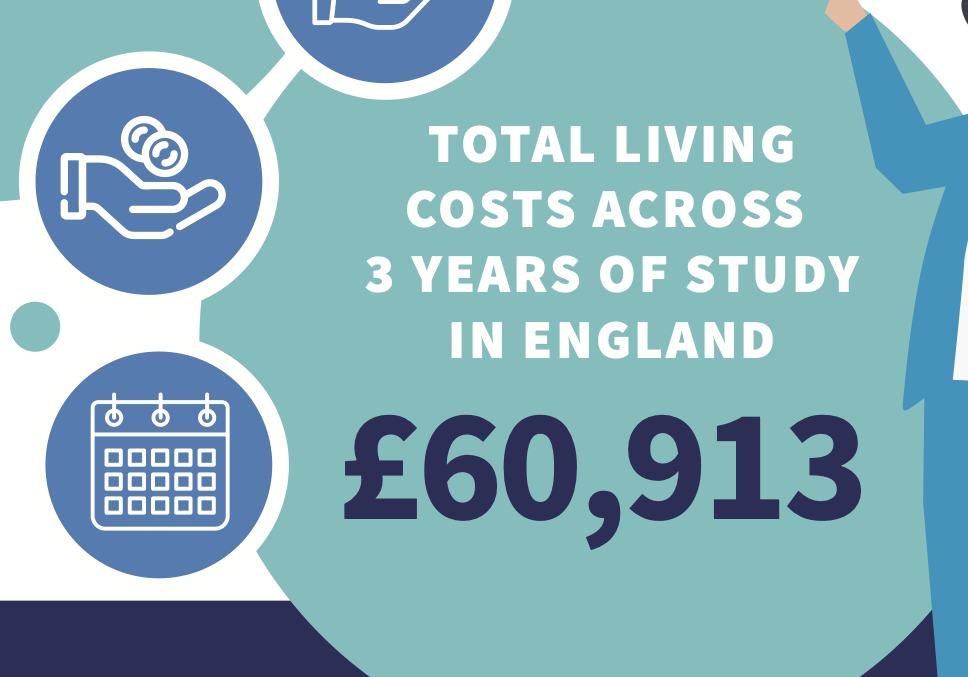
    The top-level finding is that first-year students living in halls need £418 a week – over £20,000 a year and double the maximum maintenance support package in England. Even if a student (in England, living away from home and studying outside London) is in receipt of the maximum maintenance loan, they need to work 20 hours a week throughout the year to earn enough money to hit the Minimum Income Standard. Remember, these are people on full-time courses. As a society, we are now expecting people to do full-time study and half-time paid work and then we wonder why young students struggle to feel a sense of belonging to their institution…

    People should look carefully at the methodology and conclusions to see if they agree with them. As a think tank, our job is to make people think; we can identify the main challenges and propose solutions but we are not a lobby group, so we would never claim we have all the answers. There may be elements of the Minimum Income Standard for Students that people want to pore over, challenge and improve.

    Some of the issues people may want to consider on the back of the MISS include:

    1. As the report makes clear, student life is generally a temporary phase that lasts no more than three or four years. So is it reasonable to apply the same methodology as is used for defining the basic minimum income for someone in work or in retirement? It is valid, in my view, because three years still represents a substantial proportion of a young person’s life up to that point and undergraduate study is often the first period of real independence for people – plus some other phases of life for which the minimum income methodology has been applied are also not always very long term. For example, someone on a ‘living wage’ is likely to hope to rise above it in due course as they gain experience. Besides, in one sense, no phase of life is permanent.
    2. A second important question is whether letting students define their own minimum standard of living via focus groups will always tend towards larger monetary sums. The Minimum Income Standard for Students assumes students are likely to have gym membership, a short UK holiday and other costs (like wireless headphones, a modest alcohol budget and food for takeaways) that some people may deem to be non-essentials or at least not things that should be subsidised by taxpayer-funded income-contingent student loans (though, on the other hand, we only include very small sums for study-related costs). The MISS also includes some costs than some people might deem relevant only to a minority of students (such as paying to store items between terms). But the MISS is about having enough money for every student to live reasonably, with dignity and safety; it is not designed to be a ‘bare minimum’ or to represent the lifestyle of an ascetic. This is one of a number of reasons, further explored below, why we studiously avoid ever saying we think the Government should automatically set the maximum maintenance package at exactly (or even roughly) the level of the MISS. Moreover, students are not spendthrift – one interesting change this year compared to last, for example, is that they no longer deem a TV Licence as a must-have item so it has been removed from the calculation.
    3. What we call a ‘minimum’ is also an ’average’; some cities are notably more expensive than others – London aside, we generally ignore this in the calculation and so the MISS might look too high or too low depending on where someone is studying and their own personal circumstances. For example, this means some of the freebies – such as prescriptions and bus travel – enjoyed by many Scottish students are ignored.
    4. Should we be looking to reduce costs by giving applicants and students better information? A modest amount of the first-year premium (the extra costs that first-years seem to accrue) comes from being unused to budgeting and feeding themselves. The MISS for first-year students even includes a small additional sum for the first 12 weeks while students settle down and get used to things like eating up food before it goes off. Would better information of the students are crying out for fix at least some of the need for this? Similarly, would better information on the different consequences of different accommodation preferences shape better decisions, which in turn could shape the supply of student accommodation, and lead to a reduction in the MISS?
    5. One particular policy challenge is explaining how any extra student maintenance support that could be offered now or later is likely to be spent in practice. Ministers will be less likely to give students improved maintenance packages if they think they will be entirely swallowed up by higher rent levels. One real challenge here, as so often, is that student accommodation tends to fall through the cracks in Whitehall, so it is not always clear who should be approached for these conversations.

    Above all, HEPI is a policy body so for us the key question is always: what are the possible policy ramifications? On this, and notwithstanding the important fact that the report gives a clear indication of a preferred direction of travel, we are still working them out.

    For example, the report concludes that the maximum maintenance package is only half of what students need to live. It clearly needs to be higher and available to more people. It would be absurd (literally absurd) to think parents could easily fill in the gap from their take-home pay unless they are on very good salaries indeed. It is similarly absurd, however, to think the Government can easily fill the whole gap, given the fiscal situation and the much larger number of students than in the past.

    So what level of paid employment is it reasonable to assume students might do (and in holidays or term-time or both)? Or should students opt for a more basic standard of living (no en suite perhaps or more shared rooms, as in the United States)? Or should more students live at home as commuter students but at the cost of experiencing a full traditional student experience? These are difficult questions and, again, the answers will be different in different cases. Nonetheless, we welcome all thoughts in response.

    As I sometimes say when speaking in schools, if and when it comes to my own children going to higher education, I will tell them three things:

    1. good social spaces are more important than things like en suite facilities – if you are living a full student lifestyle, you may spend less time in your room than you originally expected;
    2. taking a temporary full-time job in the holidays is generally preferable to doing a high number of hours of paid employment during term time, if you’re lucky enough to have the choice; and
    3. in general, it tends to be better not to be a commuter student, unless there are specific individual reasons for being one.

    Yet like most parents, I will also have to accept they will take what I say with a large pinch of salt and then find their own way.

    Source link

  • Responsible recruitment means fostering diverse leadership potential

    Responsible recruitment means fostering diverse leadership potential

    Unfortunately, it is no secret that the higher education sector has a long way to go when it comes to equity in progression to senior leadership.

    While the number of staff from global majority ethnic backgrounds in universities has nearly tripled over the last 20 years (now c. 24 per cent), HESA data shows that still only 3.8 per cent of black academics in the UK hold the title of Professor, and less than one per cent of all professors in the UK are black. Though there has been an incredible 93.8 per cent increase since 2012–13, still only 30.8 per cent of professors in the UK identify as women. There has been real progress, but it has been slow.

    Recruitment from the inside

    In our position as a consultancy supporting talent development across higher education and wider sectors driven by social purpose, we’re constantly reminded of the barriers faced by global majority candidates in recruitment processes. We see selection bias; we see lack of communication and clarity around promotion criteria; we see challenges in individual confidence and imposter syndrome; we see anxiety around tokenism.

    There’s additionally a risk that diversity is becoming less of a priority in these times of financial challenge, when obvious questions around sustainability come to the fore. With many institutions going through restructures and cost-saving exercises, executive boards are under enormous pressure to justify any new appointments and associated expenditure. The ability to lead change, diversify income streams, and drive growth with limited resources are now constant topics in our conversations with candidates for senior roles.

    In part due to these pressures, recruitment panels seem increasingly less willing to think widely when appointing to leadership roles. There is often an increased sense of perceived risk when considering candidates from other sectors, overseas, or who would be taking a step up into the role, rather than making a sideways move. As domestic funding challenges worsen, international student numbers continue to decline, and operational costs rise across the sector, there’s understandably often a preference for candidates who have “been there, done that.” This has obvious implications for overall diversity in the sector.

    Though there has been some improvement, staff from global majority backgrounds are still disproportionately concentrated in lower-level roles and underrepresented in senior roles across the sector. It is less likely that a candidate from a global majority background will be in a position to make such a sideways move for a senior role. In our search work, we encourage committees to place a greater emphasis on capability and competence, alongside experience, and to consider which essential requirements on the job description might be more flexible than others. We do also see a growing recognition that things have to change and a genuine commitment to strive for greater representation at all levels.

    As headhunters, we have to strike a difficult balance between supporting and challenging the organisations we work with, particularly around such questions of equity of opportunity and perceived risk. We are committed to making a difference on a very practical level, and we work closely with clients and candidates to find ways to make our search processes more equitable. We take time in briefings meetings to really get a feel for the culture of each organisation we work with; we advise on the accessibility of recruitment material; and we structure interview processes so candidates can engage with an opportunity and organisation in multiple fora, for example.

    There is an inherent limitation to the work that we do as advisors on senior appointment processes, however. Through the lists of candidates we bring together for a role, and the way we support candidates and panels through these processes, we can have a direct impact on the individual and organisation, but we often feel that the most positive impact we can have on the composition of senior teams is through our broader leadership development work.

    Insider information

    We’ve been involved in the London Higher Global Majority Mentoring Programme for the last few years. In our annual masterclass with the programme’s participants, we discuss practical topics about engaging with opportunities for development and progress including at the level of CVs and cover letters, navigating informal interviews, internal marketing, and LinkedIn. We aim to demystify the recruitment process and help equip them with some tools to help them move into their next leadership positions. These topics are framed in the context of structural barriers to progression facing individuals from marginalised groups, which often hold candidates back from bringing their authentic selves to recruitment processes.

    We often hear about candidates’ experience of covering parts of their identities in interviews, feeling imposter syndrome when interviewing with a panel of white senior leaders, and concern around being a “token” on a shortlist.

    Several years ago, we developed Aspire, which is a pro-bono programme that supports mid-career professionals from global majority ethnic backgrounds as they work to move into senior leadership positions. The programme runs over six months and explores themes such authenticity and leadership profiles alongside practical approaches to promotion and recruitment. The programme aims to create a space in which participants can share their lived experience and create a community of practice as they look for their next role.

    Launched last year, Board Prospects pairs individuals from historically under-represented groups with non-executive boards. The participants join the board without voting rights for a year, before being appointed as full members.

    Participants across the programmes we work on have reported promotions, external job offers and more – though it is of course impossible to determine exactly how much the specific programme contributed to this success. The most significant impact reported is often the networks created through the sessions, and the sense of empowerment which can develop from a space in which experiences, support, and advice are shared safely. We’ve seen research collaborations, invitations to conferences and more emerge from these communities of practice.

    Our involvement in the Global Majority Mentoring Programme, and our work on our own leadership development programmes, is valuable in helping us shape our executive search work to be as inclusive and equitable as possible. We’ve learnt (and continue to learn) a huge amount from the programmes and their participants. Through hearing about participants’ lived experiences of career progression, we learn more about where we can provide the best support for development, and how we might advise clients on the “sticking points” in recruitment processes which can be especially limiting or off-putting to individuals from underrepresented groups.

    We also recognise that recruiting diverse talent is just one step in building inclusive and equitable organisations. Creating an environment in which staff from marginalised groups can thrive and progress requires a much more holistic approach that seeks to fundamentally change working cultures. Our work with individual institutions, such as the LEAP into Leadership Programme with the University of Greenwich, in which a group of mid-career delegates from global majority ethnic backgrounds are formally paired with a senior sponsor within the institution, has also stressed to us the need to acknowledge and engage with structural barriers and allyship at all levels of an institution if we are to ever meaningfully break down barriers to senior leadership.

    While recognising the huge amount of work that still needs to be done, and the ever-growing challenges facing universities across the UK, we’re hopeful that collaborative schemes like the Global Majority Mentoring Programme, alongside a commitment to challenging and adapting recruitment processes, can ultimately have a real impact in creating more diverse leadership teams which better reflect society and are best equipped to deal with sector challenges.

    This article is one of four exploring London Higher’s Global Majority Mentoring Programme – you can find the others here.

    Source link

  • ‘Big, Beautiful Bill’ Means Big Changes for Higher Ed

    ‘Big, Beautiful Bill’ Means Big Changes for Higher Ed

    Following a flyover by a B-2 bomber, President Donald Trump signed a sweeping policy bill into law Friday, celebrating the Fourth of July and commending congressional Republicans for meeting his self-imposed deadline.

    The legislation, which narrowly passed the House on Thursday, promises to significantly change how colleges operate. Higher education groups and advocates warned that the bill will hurt low-income families while proponents praised the changes as necessary reforms.

    Much of the debate over the bill dubbed the One Big Beautiful Bill Act centered on the nearly $1 trillion in cuts to Medicaid, as well as changes to the tax code that will benefit the very rich. But the 870-page piece of legislation also overhauls higher education policy to cap some student loans, eliminate the Grad PLUS program and use students’ earnings to hold colleges accountable. Taken together, higher education experts say, the legislation would transform the sector, hurt universities’ finances and hinder college access.

    But the legislation doesn’t include some of the proposals that most worried college leaders, such as cuts to the Pell Grant program and a 21 percent endowment tax rate. Wealthy private colleges will still face a higher tax rate on their endowments, up to 8 percent. (The current rate is 1.4 percent.)

    Some higher ed lobbyists commended Republicans for backing off some of the deeper cuts, but they are worried about a number of changes in the bill.

    Eliminating Grad PLUS loans could mean fewer students attend graduate school, which would be a hit to universities’ bottom lines, especially at institutions that rely heavily on graduate programs for tuition revenue. Similarly, capping Parent PLUS loans at $65,000 per student could hurt Black and Latino families, who disproportionately use the loans. The legislation also consolidates repayment plans, giving future borrowers two options. Consumer protection advocates worry the bill will exacerbate the student debt crisis and drive students to private loans.

    The student loan changes take effect July 2026.

    Catch Up on Our Coverage of the Bill

    Lawmakers also agreed to expand the Pell Grant to short-term job-training programs, achieving a long-sought goal for community colleges and other groups. In a last-minute change, the expansion excludes unaccredited providers.

    “While somewhat improved over its original version, [the bill] contains a mix of new taxes and spending cuts that will force even more difficult decisions on chief business officers and further strain revenue that helps make college affordable for students and families,” said Kara Freeman, president of the National Association of College and University Business Officers. “The long-term implications of this legislation for higher education and American innovation are likely to be profound.”

    Over all, the One Big Beautiful Bill Act will add about $3.3 trillion to the national debt over the next 10 years, according to the Congressional Budget Office. Republicans said they had hoped to curb spending and address the growing deficit with the legislation, and some conservatives balked at the price tag. Still, pressure from the president to deliver a legislative victory won out, even as some lawmakers waffled for hours over whether to support the bill. Politico reported that Trump called lawmakers and met with them in person to make his case.

    Republicans lawmakers and Trump administration officials praised the legislation, saying it would lower the cost of college and boost accountability. One of the major changes ties colleges’ access to federal student loans to students’ earnings. Programs that fail to show their graduates earn more than an adult with only a high school diploma could be cut off from loans. One rough analysis found that fewer than half of two-year degree programs would pass the earnings test, but community colleges are less reliant on loans.

    “Overall, the Senate’s ‘do no harm’ proposal would strengthen the higher education system,” wrote Preston Cooper, a senior fellow at the conservative American Enterprise Institute, who conducted the analysis. “But the current political environment presents a once-in-a-generation chance to fix the broken federal role in higher education. Lawmakers shouldn’t miss the opportunity to go further.”

    Another analysis from the Postsecondary Education and Economics Research Center at American University found that programs that would fail the earnings test enroll about 1 percent of students. But the test wouldn’t apply to certificate programs, where one in five students are pursuing a credential that doesn’t provide the necessary earnings boost, according to the PEER Center. Other experts have argued that the accountability plan should’ve taken into account the cost of programs and students’ debt loads.

    Colleges generally preferred the earnings-based accountability plan, which is similar to the Biden administration’s gainful-employment rule, though lobbyists had wanted lawmakers to make some changes. House Republicans had planned to make institutions pay an annual penalty based on students’ unpaid loans, which could’ve cost colleges billions.

    Jason Altmire, president of Career Education Colleges and Universities, the national trade association representing for-profit institutions, congratulated Congress in a statement Thursday for passing the “monumental legislation.”

    He praised the short-term Pell expansion as well as the “no tax on tips” policy, among other provisions. But he’s concerned about parts of the new accountability framework, though “we strongly support the fact that the measure applies equally to all schools in all sectors of higher education, a longtime CECU priority.”

    Altmire and CECU oppose the loan caps and eliminating Grad PLUS loans. “These cuts will negatively impact students and limit access for those who are most in need,” he said in the statement. “These provisions are ill-advised and we hope Congress will revisit them in the future. Overall, we are grateful that our voice was heard and so many of our longtime priorities were included in the final bill. We look forward to working with Congress to make improvements through future legislation.”

    Charles Welch, president of the American Association of State Colleges and Universities, said in a statement that the cuts to Medicaid and other programs will hurt regional public universities, which are typically “the first victim of tightened budgets.”

    “Never has the federal government divested itself of financial responsibility to such an extent, imperiling previously stretched state and local budgets as they seek to cover newly obligated burdens,” Welch said.

    Welch added that colleges in the association must put their “profound disappointment in the reconciliation bill aside” to focus on the appropriations process, which will kick into high gear this month. The appropriations bills in Congress set the spending limits and direct agencies how to dole out federal dollars. The Trump administration has proposed deep cuts to the Education Department’s budget, including zeroing out college-access programs like TRIO.

    “The American Association of State Colleges and Universities urges Congress to reassert its constitutionally endowed authority over government expenditures, eliminating executive overreach and fully funding the programs, grants, and institutions that serve our nation’s postsecondary students,” Welch said.

    Source link

  • Data lag and ambition aggregation means APPs are fundamentally flawed

    Data lag and ambition aggregation means APPs are fundamentally flawed

    In her letter to the sector last November, Secretary of State Bridget Phillipson said that she expects universities to play a stronger role in expanding access and improving outcomes for disadvantaged students.

    Her letter noted that the gap in outcomes from higher education between disadvantaged students and others is unacceptably large and is widening, with participation from disadvantaged students in decline for the first time in two decades.

    She’s referring to the Free School Meals (FSM) eligible HE progression rate – 29 percent in 2022–23, down for the first time in the series.

    Of course in 2023–24, or this year, the numbers for FSM and any number of other factors could be much worse – but on the current schedule, we won’t be seeing an update to OfS’ access and participation data dashboard until “summer or autumn 2025”, and even then only for 2023–24.

    If you’re prepared to brave the long loading times – which for me generate a similar level of frustration to that I used to experience watching Eurovision national finals 20 years ago – you can drill down into that dashboard by provider.

    It’s a mixed picture, with a lot of splits to choose from. But what the data doesn’t tell us is how providers are doing when compared to their signed off targets in their (mainly 2020–21 to 2024–25) access and participation plans.

    The last time OfS published any monitoring data was for the 2020–21 academic year – almost three years ago, in September 2022.

    That means that we can’t see how well providers are doing against their targets, and nor do we have any sense of any action that OfS may (or may not) have taken to tackle underperformance.

    So I decided to have a go. I restricted my analysis to the Russell Group, and extracted all of the targets from the 2020–21 to 2024–25 plans that were measurable via the dashboard.

    I then compared the 2022–23 performance with the relevant milestone, and with the original baseline. Where the target was unclear on what type of student was in scope, I assumed FT, first degree students.

    The results are pretty worrying.

    Baseline 2022-23 Milestone 2022-23 Actual Behind milestone? Behind baseline?
    PROG Disabled Percentage difference in progression to employment and further study between disabled and non-disabled. 3.00 2.00 0.10 N N
    PROG Ethnicity Percentage difference in graduate employability between white and black students 7.9 4.70 -2.50 N N
    CONT Disabled Percentage difference in non-continuation rates non-disabled and students with mental health conditions 7.00 5.50 1.80 N N
    CONT Disabled Percentage difference in continuation rates between disabled students and non-disabled students. 6.4 3 1.3 N N
    CONT Low Participation Neighbourhood (LPN) Percentage difference in non-continuation rates between POLAR4 quintile 5 and quintile 1 students. 5 3.5 2.3 N N
    CONT Low Participation Neighbourhood (LPN) Percentage difference in non-continuation rates between POLAR4 quintile 5 and quintile 1 students. 4 2.5 3.40 Y N
    CONT Low Participation Neighbourhood (LPN) Close the gap in non-continuation between POLAR 4 Q1 and Q5 undergraduate students from 3.8% in 2016/2017 to 1.5% in 2024/25 3.8 3 6.4 Y Y
    CONT Low Participation Neighbourhood (LPN) POLAR4 Q1 non-continuation gap v Q5 (relates to KPM3) 4 3.25 6.1 Y Y
    CONT Low Participation Neighbourhood (LPN) Percentage difference in non-continuation rates between POLAR4 quintile 5 and quintile 1 students 2.40 1.00 6.90 Y Y
    CONT Low Participation Neighbourhood (LPN) Percentage difference in continuation rates between the most (POLAR Q5) and least (POLAR Q1) representative groups. 2.4 1.5 3.1 Y Y
    CONT Mature Percentage point difference in non-continuation rates between young (under 21) and mature (21 and over) students. 10 9 6.8 N N
    CONT Mature Percentage difference in continuation rates of mature first degree entrants when compared to young students. 10.2 7 -0.4 N N
    CONT Mature Significantly raise the percentage of our intake from mature students 5.90 7.00 4.10 N Y
    CONT Mature Percentage difference in non-continuation rates mature and non-mature students 9.00 6.00 7.40 Y N
    CONT Mature Percentage difference in non-continuation rates between mature (aged 21+) and young (aged 8.00 5.00 5.10 Y N
    CONT MATURE Close the gap in non-continuation between young and mature full-time, first degree students from 7.8% in 2016/2017 to 4.4% in 2024/2025. 7.8 6.8 10.2 Y Y
    CONT Mature Mature v Young non-continuation gap 9 8.5 10.1 Y Y
    CONT Mature Close the gap in continuation rates between young and mature students (by 1pp each year) by 2024/25. 5 3 6.1 Y Y
    CONT Mature Percentage difference in non-continuation rates between mature and young students 5.30 3.80 5.80 Y Y
    ATTAIN Disabled Percentage difference in degree attainment (1st and 2:1) between disabled students and other students 2.60 1.72 0.9 N N
    ATTAIN Disabled Disabled students attainment gap v non-disabled 3 1.5 1.2 N N
    ATTAIN Disabled To significantly reduce the difference in degree attainment (1st and 2:1) between disabled students and students with no known disability 4.4 2 0.30 N N
    ATTAIN Disabled Percentage point difference in good degree attainment (1st and 2:1) between disabled and not known to be disabled students. 6 5 -2.2 N N
    ATTAIN Disabled To remove the absolute gap in degree outcomes for students with a disability (OfS KPM5). 4.0 2.0 -0.60 N N
    ATTAIN Disabled Percentage difference in degree attainment (1st and 2:1) between disabled and non-disabled students 3.90 2.00 3.60 Y N
    ATTAIN Disabled Percentage difference in degree attainment (1st and 2:1) between students with registered mental health disabilities and non-disabled students 5.80 3.00 4.7 Y N
    ATTAIN Disabled Percentage difference in degree attainment (1st and 2:1) between disabled students and non-disabled students 4.2 2.3 3.6 Y N
    ATTAIN Ethnicity Black students attainment gap v White (relates to KPM4) 20 15.5 11.2 N N
    ATTAIN Ethnicity By 2025, reduce the attainment gap between Asian and white students 8.4 5.2 4.80 N N
    ATTAIN Ethnicity Percentage difference in degree attainment (1st and 2:1) between black and white students (5 year rolling average). 12 8.6 4.60 N N
    ATTAIN Ethnicity Percentage difference in degree attainment (1st and 2:1) between white and asian students. 19 17 14.4 N N
    ATTAIN Ethnicity Percentage difference in degree attainment (1st and 2:1) between white and black students. 14.00 11.00 9.90 N N
    ATTAIN Ethnicity To close the gap between Black and White student continuation rates (reducing the gap by 4 percentage points, from 8% to 4%, by 2024/2025). 8 5.6 5.5 N N
    ATTAIN Ethnicity To close the gap between BME and White student attainment (reducing the gap by 3 percentage points from 11% to 8% by 2024/25). 17 13.1 11.6 N N
    ATTAIN Ethnicity Close the unexplained gap between proportion of BAME and white full-time, first degree students attaining a 2:1 or above from 12.7% in 2017/2018 to 5.5% in 2024/2025. 12.7 10.3 10.8 Y N
    ATTAIN Ethnicity Significantly increase the percentage of our intake from Black students 2.30 3.80 2.90 Y N
    ATTAIN Ethnicity Percentage difference in degree attainment (1st and 2:1) between white and black students 15.70 9.815 11.6 Y N
    ATTAIN Ethnicity Percentage difference in degree attainment (1st and 2:1) between white and Asian students 12.5 8.375 11.4 Y N
    ATTAIN Ethnicity Percentage difference in degree attainment (1st and 2:1) between black and white students. 20 15 19.00 Y N
    ATTAIN Ethnicity Percentage difference in degree attainment (1st and 2:1) between white and BME students. 5.20 2.00 4.60 Y N
    ATTAIN Ethnicity Percentage difference in degree attainment (1st and 2:1) between white and black students. 13.8 6 12.9 Y N
    ATTAIN Ethnicity Percentage difference in degree attainment (1st and 2:1) between BAME and White students. 7.00 4.00 7.50 Y Y
    ATTAIN Ethnicity Percentage difference in degree attainment (1st and 2:1) between white and black students 4.50 3.00 31.00 Y Y
    ATTAIN Ethnicity Percentage difference in degree attainment (1st and 2:1) between white and BAME students 9.50 6.00 11.60 Y Y
    ATTAIN Ethnicity By 2025, reduce the attainment gap between black and white students 8.7 5.9 10.70 Y Y
    ATTAIN Ethnicity To significantly reduce the difference in degree attainment (1st and 2:1) between white and black students 11.6 10 20.00 Y Y
    ATTAIN Ethnicity To significantly reduce the difference in degree attainment (1st and 2:1) between white and Asian students 10.6 10 14.50 Y Y
    ATTAIN Ethnicity Percentage point difference in good degree attainment (1st and 2:1) between white and black students. 18 14 22.1 Y Y
    ATTAIN Ethnicity Percentage difference in degree attainment (1st and 2:1) between white and black students. 17 15 22.9 Y Y
    ATTAIN Ethnicity Halve the gap in attainment that are visible between black and white students (OfS KPM4). 10.0 7.0 15.80 Y Y
    ATTAIN Ethnicity To close the gap between Black and White student attainment (by raising the attainment of Black students) reducing the gap by 8.5 percentage points from 17% to 8.5% by 2024/25 11 9.5 24 Y Y
    ATTAIN Low Participation Neighbourhood (LPN) Percentage difference in degree attainment (1st and 2:1) between POLAR4 quintile 5 and quintile 1 students 9.10 4.645 8.7 Y N
    ATTAIN MATURE Close the unexplained gap between proportion of mature and young full-time, first degree students attaining a 2:1 or above from 12.1% in 2017/2018 to 6.8% in 2024/2025. 12.1 8.8 12.6 Y Y
    ATTAIN Socio-economic Percentage difference in degree attainment (1st and 2:1) between students from most and least deprived areas (based on IMD) 10.20 6.00 12.30 Y Y
    ATTAIN Socio-economic To significantly reduce the difference in degree attainment (1st and 2:1) between the most and least advantaged as measured by IMD. 10.4 8.8 15.60 Y Y
    ATTAIN Socio-economic Reduce the gaps in attainment that are visible between IMD Q1 and Q5 (OfS KPM3). 10.0 7.0 13.70 Y Y
    ACCESS Disabled By 2025, increase the proportion of students with a declared disability enrolling from the baseline of 9% to 13% 9 11 15.70 N N
    ACCESS Ethnicity Significantly increase the percentage of our intake from Asian students 6.90 8.50 9.70 N N
    ACCESS Ethnicity Percentage of BAME entrants 10.10 12.50 12.70 N N
    ACCESS Ethnicity Increase percentage proportion of students identifying as black entering to at least match or exceed sector average (11%). 9.5 10.5 11.7 N N
    ACCESS Ethnicity To increase the proportion of Black, young, full-time undergraduate entrants by 1.2 percentage points, from 2.4% to 3.6% by 2024/25. 2.4 2.8 2.1 Y Y
    ACCESS Low Participation Neighbourhood (LPN) Ratio in entry rates for POLAR4 quintile 5: quintile 1 students 7.4:1 6:1 4.5 N N
    ACCESS Low Participation Neighbourhood (LPN) Reduce the ratio in entry rates for POLAR4 quintile 5: quintile 1 students 3.9:1 3.4:1 3.4:1 N N
    ACCESS Low Participation Neighbourhood (LPN) By 2025, reduce the gap in access between those from the highest and lowest POLAR4 quintiles enrolling from the baseline of 49% to 41% 49 45 41.00 N N
    ACCESS Low Participation Neighbourhood (LPN) Ratio of students from POLAR Q1 compared to POLAR Q5. 01:14 01:11 8.5 N N
    ACCESS Low Participation Neighbourhood (LPN) Close the gap in access between Q1 and Q5 students from a ratio of 5.5 in 2017/2018 to 3.5 by 2024/2025. 5.5 3.64 4.2 Y N
    ACCESS Low Participation Neighbourhood (LPN) Reduce ratio in entry rates for POLAR4 quintile 5: quintile 1 students 12:1 8:1 8.5 Y N
    ACCESS Low Participation Neighbourhood (LPN) To reduce the gap in participation and ratio in entry rates for POLAR 4 Quintile 5: Quintile 1 students Ratio Q5:Q1 of 5.2:1 500 students from POLAR 4 Q1 4.5 or 500 Y N
    ACCESS Low Participation Neighbourhood (LPN) LPN determined by POLAR 4 data. Looking specifically at increasing the intake for LPN Quintile 1 students, and thereby reduce the ratio of Q5 to Q1. (Target articulated as both a percentage and number). 8.0%, 391 10%, 490 8.6, 400 Y N
    ACCESS Low Participation Neighbourhood (LPN) Ratio in entry rates for POLAR4 quintile 5: quintile 1 students. 7.4:1 5.5:1 6.9 Y N
    ACCESS Low Participation Neighbourhood (LPN) Ratio in entry rates for POLAR4 quintile 5: quintile 1 students. All undergraduates. 6.2:1 5.1:1 6.3 Y Y
    ACCESS Low Participation Neighbourhood (LPN) Ratio in entry rates for POLAR4 quintile 5: quintile 1 students. 4.2:1 3.5:1 4.3 Y Y
    ACCESS Low Participation Neighbourhood (LPN) Ratio in entry rates for POLAR4 quintile 5: quintile 1 students. Reduce gap to 3.0 to 1.0 by 2024-25 (OfS KPM2). 5:2 to 1 4 5.2 Y Y
    ACCESS Low Participation Neighbourhood (LPN) To increase the proportion of young, full-time undergraduate entrants from POLAR4 Q1 by 2.5 percentage points, from 7.8% to 10.3%, by 2024/25. 7.8 8.9 10.3 Y Y
    ACCESS Low Participation Neighbourhood (LPN) To increase the proportion of young, full-time undergraduate entrants from POLAR4 Q2 by 2.5 percentage points, from 12.4% to 14.9%, by 2024/25. 12.4 13.9 15.4 Y Y
    ACCESS Mature Percentage of mature entrants 5.80 7.20 3.70 Y Y
    ACCESS Mature Percentage of mature students as part of the overall cohort. 9.2 11.0 6.70 Y Y
    ACCESS Multiple Increase the proportion of BME students from Q1 and Q2 backgrounds 5.2 8 7.6 N Y
    ACCESS Socio-economic Eliminate the IMD Q5:Q1 access gap by 2024/25. 5 2 -4.5 N N
    ACCESS Socio-economic By 2025, reduce the gap in access between those from the highest and lowest IMD quintiles from the baseline of 16.4% to 10.4% 16.4 13.5 7.00 N N
    ACCESS Socio-economic Percentage point difference in access rates between IMD quintile 1 and 2 and quintile 3, 4 and 5 students. 51.8 43.8 53.4 Y Y

    Milestones and baselines

    If we start with access, of the 25 targets that can be analysed, 14 behind milestone – and 10 show a worse performance than the baseline.

    On continuation, 11 of the 17 are behind milestone, and 9 are behind the baseline. And on attainment, 25 of the 38 are behind milestone, and 14 behind baseline.

    Notwithstanding that some of the other targets might have been smashed, and that in all cases the performance may well have improved since then, that looks like pretty poor performance to me.

    It’s the sort of thing that we might have expected to result in fines, or at least specific conditions of registration being imposed.

    But as far as we know, nothing beyond enhanced monitoring has been applied – and even then, we don’t know who has been under enhanced monitoring.

    And the results are a problem. When OfS launched this batch of plans, it noted that young people from the most advantaged areas of England were over six times as likely to attend one of the most selective universities – including Oxford, Cambridge and other members of the Russell Group – as those from the most disadvantaged areas, and that that gap had hardly changed despite a significant expansion in the number of university places available.

    At the rates of progress forecast under those plans, the ratio was supposed to be less than 4:1 by 2025. It was still at 5.44 in the Russell Group in 2022–23.

    It was supposed to mean around 6,500 extra students from the most disadvantaged areas attending those universities each year from 2024-25 onwards. The Russell Group isn’t the whole of “high tariff” – but it had only increased its total of POLAR1 students by 1350 by 2022/23.

    OfS also said that nationally, the gap between the proportion of white and black students who are awarded a 1st or 2:1 degree would drop from 22 to 11.2 percentage points by this year. As we’ve noted before on the site, the apparent narrowing during Covid was more of a statistical trick than anything else. It was up at 22.4 in 2022–23.

    And the gap in dropout rates between students from the most and least represented groups was supposed to fall from 4.6 to 2.9 percentage points – it was up at 5.3pp in 2022–23.

    The aggregation of ambition into press-releasable targets appears to have suffered from a similar fate to the equivalent exercise over financial sustainability.

    What a wonderful thing

    Of course, much has happened since January 2020. To the extent to which there were challenges over the student life cycle, they were likely exacerbated by the pandemic and a subsequent cost of living crisis.

    But when you’re approving four year plans, changes in the external risk environment ought to mean that it revises what it now calls an Equality of Opportunity Risk Register to reflect that – and either allows providers to revise targets down, or requires more action/investment to meet the targets agreed.

    Neither of those things seem to have happened.

    It’s also the case that OfS has radically changed how it regulates in this area. Back then, the director for fair access and participation was Chris Millward. It’s now John Blake. And the guidance, nature of the plans expected and monitoring regimes have all been revamped.

    But when we’re dealing with long-term plans, a changing of the guard does run the risk that the expectations and targets agreed under any old regime get sidelined and forgotten about – letting poor performers off the hook.

    It certainly feels like that’s the case. And while John Blake is widely respected, it’s hard to believe that he’ll still be the director for fair access and participation by the end of the latest round of plans – 2029.

    Hindsight is a wonderful thing, of course, but notwithstanding the external environment changes, few anticipated that any of the gaps, percentages or ratios would worsen for any of the targets set back in 2019.

    That matters because of that OfS aggregation issue. It’s not just that some providers can drag down the performance of the sector as a whole. It’s that no provider was set the target of not getting any worse on the myriad of measures that it didn’t pick for its plan.

    For all we know, while a certain number of providers might have set and agreed a target, say, on POLAR1 access or IMD attainment, performance could have worsened in all of those that didn’t – and that poses a major problem for the regulator and the design of the thing.

    It remains the case that we’re lacking clarity on the way in which the explosion of franchised, urban area business provision has impacted the stats of both the providers that have lit that blue touch paper, and the sector’s scores overall. For me, improvements in access via that method look like cheating – and declines in continuation, completion or progression ought to mean serious questions over funding policy within the Department for Education.

    We don’t really know – but need to know – the impact of other providers’ behaviour on an individual provider’s external environment. If, for example, high tariff universities scoop up more disadvantaged students (without necessarily actually narrowing the gap), that could end up widening the gap elsewhere too. There’s only so many moles to whack when you’re looking at access.

    We still can’t see A&P performance by subject area – which has always been an issue when we think about access to the professions, but is an even bigger issue now that whole subject areas are being culled in the face of financial problems.

    And the size and shape question lingers too. UCAS figures at the close of clearing suggested that high tariff providers were set to balance the books by expanding in ways they claimed were impossible when the “mutant algorithm” hit in 2020.

    Much of continuation, completion and progression appears to be about the overall mix of students at a provider – something that’s made much more challenging in medium and lower tariff providers if high-tariff ones lower theirs.

    In the forthcoming skills white paper, we should expect exhortations from ministers that the sector improves its performance on access and participation. It will have choices on provider type, subject area, the types of disadvantage to focus on, and the mix of measures between things inside its control in the external environment, and things within providers’ control (or at least influence) that OfS should expect.

    Whatever it chooses, on the evidence available, it will have real problems judging either its own performance, its regulator’s, groups of providers or even individuals’. If you think the sector still has some distance to go on fairness, that just won’t do.


    Source link

  • UK universities are trapped in a box. Here’s what that means in practice

    UK universities are trapped in a box. Here’s what that means in practice

    • This guest blog has been kindly written by Professor Diana Beech, Director of the new public policy institute – the Finsbury Institute – and Assistant Vice-President of Policy and Government Affairs at City St George’s, University of London. Diana is one of the two authors of the latest HEPI debate paper (Debate Paper 40) and she writes here about the piece came about…

    Explaining the challenges facing UK universities today is not easy. The pace of change is rapid, the policy pressures are competing and the landscape is shaped by complex interplays between funding, regulation, mounting costs and increasing expectations.

    This makes the job of university governors particularly taxing. Many governors come from other sectors and industries, bringing valuable external experience, but often without a deep knowledge of higher education per se. As an independent governor myself – at the University of Worcester where I am also Vice-Chair of the Board – but with a background and experience in higher education policy, I’ve long felt a responsibility to help my fellow governors across the sector make sense of it all. That’s why I created a visual tool I call the ‘HE Box’.

    The original ‘HE Box’

    At first, the ‘HE Box’ was simple. It was a two-dimensional model created to depict a sector squeezed on all sides. It illustrated the four immediate pressures that were boxing universities in. These comprise:

    • The resource wall: Domestic per-student funding has been declining in real terms across the UK, meaning the money received no longer covers the basic costs of delivery.
    • The cost wall: Institutions are facing rising and often hidden operational costs – some a result of government policy changes, others responding to changing student expectations – but the net result is pressure on already constrained resource.
    • The regulatory floor: Instead of supportive foundations, universities face growing, disproportionate, disjointed – and sometimes even politicised – regulatory demands.
    • The international lid: Changes to visa and immigration terms and post-study work entitlements are threatening the continued flow of overseas students into UK universities.

    Although basic, this 2D box helped me to explain to university governors on my ‘board roadshow’ the main tension that has been growing in the sector of late – namely universities being forced to do more with less, with little relief or flexibility from any direction.

    The moving box

    Over the past year, the ‘HE Box’ has shifted in response to various policy changes. In England, for example, the one-off domestic fee increase granted by the Education Secretary should be offering some financial breathing room for providers from September 2025. Yet, any relief from the announcement was short-lived, with the hike in employers’ National Insurance contributions in April 2025 more than offsetting the gains in the scheduled domestic undergraduate fee rises.

    Similarly, the regulatory floor in England should have also seen some easing last year with the promise to ‘reset’ the Office for Students’ approach to regulation following the House of Lords’ report and Independent Public Bodies Review. Yet this, too, has been recently undercut by the UK Government’s Immigration White Paper, which pledged to reduce the post-study work rights of international graduates from UK universities from two years to 18 months. Gains on one side of the box have therefore been quickly reversed by pressures from another.

    Expanding the box

    Short-term pressures are, however, not the whole picture of the challenges facing UK universities. After presenting my original 2D model to the Council of City St George’s, University of London, shortly before joining in April 2025, Professor André Spicer helped evolve it into a more comprehensive 3D box – adding two more sides of long-term challenges to the ‘HE Box’ based on his own thinking on the sector’s predicament. These two new sides focus on:

    • Demographic shifts: The UK’s domestic 18-year-old population is projected to shrink over the next decade. Meanwhile, key overseas markets like China and India are experiencing major population changes of their own, as a result of declining birth rates or societal shifts related to the education of women.
    • Alternative pathways: From apprenticeships to online micro-credentials, viable alternatives to traditional university degrees are growing fast. In an age of scepticism about value for money and returns on investment, universities must work harder than ever to prove their worth for individuals and for wider society.

    Why the ‘HE Box’ matters

    The six sides of the ‘HE Box’ capture the full range of pressures currently squeezing the sector, both immediate and existential. Our latest report outlines these pressures in more detail and suggests how university governors, senior leadership teams and policymakers, together, can help universities break free from this dire ‘boxed-in’ situation.

    Of course, the sides of the ‘HE Box’ will shift again as policies evolve. But the 3D model as it stands today offers a practical framework to:

    • help new governors quickly grasp the policy landscape;
    • support better decision-making under pressure; and
    • push for a stronger, more strategic relationship between universities and governments right across the UK.

    The challenges for the UK’s higher education sector are real, but their outcomes are not inevitable. With clearer thinking and a shared understanding of the constraints, it is my sincere hope that we can start to find our way out of the ‘HE Box’ together.

    Source link

  • What the Employment Rights Bill means for higher education

    What the Employment Rights Bill means for higher education

    The Employment Rights Bill received its third and final reading in the House of Commons in April and is due to complete its committee stage in the House of Lords next month.

     Following extensive amendments in the Commons, the current version of the Bill (at over 300 pages) is nearly twice as long as the original version published a year ago.

    Although the Bill is likely to be added to the statute book in the next few months, most of the measures will not be commenced until 2026 at the earliest.

    Unfair dismissal

    The Bill abolishes the two-year qualifying period for unfair dismissal but introduces a new framework for a lighter touch unfair dismissal regime during an “initial period of employment”. In previous government statements, this has been described as an exception for probationary periods, though it may turn out to be wider than that.

    It means that employees must have started work to benefit from the day one right. Existing provisions on automatically unfair dismissals will be retained and will continue to apply from the point the employment relationship starts.

    To come within this more relaxed regime during the initial period of employment, an employer will need to demonstrate a potentially fair reason for dismissal which relates to the individual employee. This means that dismissals on redundancy grounds during the initial period of employment will not fall within these new rules.

    Yet to be made regulations will define the length of the initial period of employment and how it is calculated. This is understood to be a minimum of six months and could be as long as a year: currently, the government supports a compromise of nine months. Regulations may also specify that a dismissal will be regarded as fair if certain procedural steps have been followed. These might include, for example, holding a meeting with the employee before reaching a decision to dismiss and confirming the reasons for the decision in writing.

    On the face of it, protecting all employees from unfair dismissal from day one will have a broadly equal impact on all employers. However, complex organisations like universities will need to invest more time reviewing their existing procedures than most other businesses. If they want to take advantage of the new “light touch” unfair dismissal regime, they will need to align their procedures on probationary periods with the new statutory framework. Again, this may not be straightforward, particularly for academic staff.

    Zero hours contracts

    Universities have taken a lot of criticism for using zero hours contracts in certain circumstances. As of 2023–24 there are around 4,000 academics on a zero hour contract. Although we don’t have the data, it is likely that the numbers are higher for other staff.

    As it stands there are three groups of measures to protect zero-hours workers:

    1. The right to guaranteed hours after the end of every reference period, which reflects the hours worked during that period;
    2. The right to reasonable notice of shifts (including change and cancellation); and
    3. The right to payment for cancelled, moved and curtailed shifts where sufficient notice has not been given

    Similar rights will be extended to agency workers via a new schedule, which was inserted in the Bill at report stage in the House of Commons. The government introduced provisions at this stage which would make it possible for employers and workers to modify the application of these provisions via a collective agreement.

    Regulations will define the reference period for guaranteed hours and other conditions of entitlement, as well as the procedural requirements around the offer of a new contract. They will also specify the minimum notice period for the cancellation of shifts, the compensation due and when it must be paid.

    According to the Bill’s impact assessment, the education sector as a whole has a higher-than-average user of variable hours contracts, an assessment that reflects our experience advising higher education clients. What may raise eyebrows in the sector is the potential for significant direct and indirect costs in complying with these measures, which are among the most complex in the Bill. They will need to wait for the regulations before making detailed plans, but at this stage, providers should establish which workers and agency staff are likely to be covered by these provisions.

    It would also be worth exploring the possibility of entering into a collective agreement to create tailor-made arrangements to protect variable hours workers in place of the statutory regime. However, with a caution that we are still awaiting details of any restrictions on “contracting out” in this way.

    The use of fixed-term contracts with fixed hours is not targeted by these measures, although there may be some anti-avoidance measures to prevent abuse. This is encouraging news for higher education institutions, which had been concerned about measures in the Workers (Predictable Terms and Conditions) Act 2023. This Act will no longer be brought into effect.

    Collective redundancies

    You don’t have to have read much about higher education recently to be aware that the majority of universities now have some kind of redundancy scheme in place. There are three interlocking groups of measures in the Bill concerning collective redundancies.

    The rules on the numerical threshold that triggers the collective consultation requirements will be changed by introducing a new rule for multiple site redundancies. Though the threshold for single-site redundancies will stay at twenty, an alternative method of calculation will be applied when the workers involved are spread across different sites – once again, the details will be set out in regulations still to be published.

    It will become automatically unfair to dismiss an employee for not agreeing to a variation to their contract, or if the employer dismisses the employee to replace or to re-engage them on varied contractual terms (so called “fire and rehire”, something which some universities have been called out for).

    However, there is an exception to these rules if the employer can show the reason for the variation was to “eliminate, prevent, significantly reduce or significantly mitigate the effects of financial difficulties which, at the time of the dismissal, were affecting the employer’s ability to carry on the business as a going concern” and could not reasonably have avoided the need to make the variation.

    While this new rule also applies to one-off dismissals, it is most likely to be engaged where an employer is seeking to restructure, where the obligation to consult collectively will usually apply too.

    These new rules create a new category of “automatically unfair” dismissal – ie an unfair dismissal claim to which the employer will have no defence – will make it very difficult for employers to restructure without paying the employees involved significant compensation.

    This is because the defence that dismissal was to mitigate “financial difficulties” is so narrowly drawn. We had been expecting amendments to this provision to be put forward in the House of Lords, but there is no sign of these so far.

    The maximum period covered by a protective award for breach of collective consultation requirements will be increased from 90 to 180 days. However, proposals to introduce a new right to claim interim relief where they have been breached have been dropped.

    Fire and rehire

    As highly unionised organisations, universities will be acutely aware of the increased penalties for failing to comply with collective redundancy consultation. Consequently, breaches of these requirements are rare in the sector. To maintain this record employers will need to quickly get across the new rules.

    Likewise, fire-and-rehire is rare (though reports are growing), but universities should be aware that the Bill’s provisions to target this practice could also be engaged when negotiating with their unions about changes to terms and conditions, if dismissal and re-engagement are being considered as a last resort.

    There are other measures in the Bill relating to trade unions and industrial action, which are outside the scope of this article. These include the repeal of almost all of the last government’s trade union legislation, which is likely to take effect later this year. There is an overview of these measures in our briefing here.

    The combination of good HR practices and very vocal union opposition to any breaches means that higher education providers, while far from perfect, are pretty good employers overall.

    The Bill is targeted elsewhere, but with the rules changing (and likely to continue changing with subsequent legislations), employment rights compliance cannot be taken as a given and universities will need to make active efforts to stay up to date.

    Source link

  • A Michigan research professor explains how NIH funding works − and what it means to suddenly lose a grant – Campus Review

    A Michigan research professor explains how NIH funding works − and what it means to suddenly lose a grant – Campus Review

    In its first 100 days, the Trump administration has terminated more than US$2 billion in federal grants, according to a public source database compiled by the scientific community, and it is proposing additional cuts that would reduce the $47 billion budget of the US National Institutes of Health, also known as the NIH, by nearly half.

    Please login below to view content or subscribe now.

    Membership Login

    Source link

  • Pell Grant Dollars Are Left Unclaimed: What That Means for Students and States

    Pell Grant Dollars Are Left Unclaimed: What That Means for Students and States

    Title: Pell Dollars Left on the Table

    Authors: Louisa Woodhouse and Bill DeBaun

    Source: National College Attainment Network

    Pell Grants have long supported low-income students as they pursue higher education, increasing the financial capabilities and academic opportunities afforded to students. However, receiving federal financial aid through Pell Grants is dependent on filing the Free Application for Federal Student Aid (FAFSA), which can serve as a barrier to students.

    The National College Attainment Network (NCAN) has published a report on the unclaimed Pell Grants left on the table by high school graduates. Approximately 830,000 Pell Grant-eligible students did not complete FAFSA in the 2024 cycle, resulting in nearly $4.4 billion in unclaimed Pell Grant awards. These unclaimed funds are valuable to both students and states, with the ability to further the educational pursuits of low-income students and strengthen state economies.

    NCAN has run reports detailing the value of unclaimed Pell Grants over the past four years. Typically, nearly 60 percent of high school graduates complete the FAFSA by June 30, with completion rates trailing off markedly as students begin their summer.

    However, due to the technical challenges and delayed launch of FAFSA that occurred in the 2024 cycle, by the end of June, only 50 percent of high school graduates had completed the form. By August 30, 57 percent of students had filed the FAFSA, decreasing the amount of financial aid left on the table. The implications are clear: hindrance to the financial aid application process, whether that be through technical difficulties, decreased assistance, or short staffing, can result in many students losing access to Pell Grant funds.

    The impact of lower FAFSA completion rates, and therefore more unclaimed Pell Grants, is not felt exclusively by students but by states as well. In 2024, students in California and Texas each left nearly $550 million in Pell Grant awards unclaimed. While these states lose the most when FAFSA completion rates are low, they also stand to gain the most if completion rates increase.

    Analysis from NCAN finds that if FAFSA completion rates had increased by an additional 10 percentage points this year, California would have seen a $145 million increase in Pell Grant awards while Texas would have received an additional $130 million. The additional federal aid could translate into more students attending postsecondary institutions, filling workforce gaps and strengthening the states’ economies.

    In establishing the significance of increasing FAFSA filing rates for low-income students, NCAN offers commentary on how states can better support students, especially in the wake of potential policy changes directed at higher education. States can fund FAFSA completion efforts, providing additional in-school and online resources for students to access when filing. Additionally, FAFSA data sharing among states may enable high school counselors and local college access partners to better target students that could benefit from additional assistance.

    To read more about unclaimed Pell Grants and the role states can play on bolstering FAFSA completion rates, click here.

    —Julia Napier


    If you have any questions or comments about this blog post, please contact us.

    Source link

  • Adjusting to Generative AI in Education Means Getting to the Roots

    Adjusting to Generative AI in Education Means Getting to the Roots

    To help folks think through what we should be considering regarding the impact on education of generative AI tools like large language models, I want to try a thought experiment.

    Imagine if, in November 2022, OpenAI introduced ChatGPT to the world by letting the monster out of the lab for a six-week stroll, long enough to demonstrate its capacities—plausible automated text generation on any subject you can think of—and its shortfalls—making stuff up—and then coaxing the monster back inside before the villagers came after it with their pitchforks.

    Periodically, as new models were developed that showed sufficient shifts in capabilities, the AI companies (OpenAI having been joined by others), would release public demonstrations, audited and certified by independent expert observers who would release reports testifying to the current state of generative AI technology.

    What would be different? What could be different?

    First, to extend the fantasy part of the thought experiment, we have to assume we would actually do stuff to prepare for the eventual full release of the technology, rather than assuming we could stick our heads in the sand until the actual day of its arrival.

    So, imagine you were told, “In three years there will be a device that can create a product/output that will pass muster when graded against your assignment criteria.” What would you do?

    A first impulse might be to “proof” the assignment, to make it so the homework machine could not actually complete it. You would discover fairly quickly that while there are certainly adjustments that can be made to make the work less vulnerable to the machine, given the nature of the student artifacts that we believe are a good way to assess learning—aka writing—it is very difficult to make an invulnerable assignment.

    Or maybe you engaged in a strategic retreat, working out how students can do work in the absence of the machine, perhaps by making everything in class, or adopting some tool (or tools) that track the students’ work.

    Maybe you were convinced these tools are the future and your job was to figure out how they can be productively integrated into every aspect of your and your students’ work.

    Or maybe, being of a certain age and station in life, you saw the writing on the wall and decided it was time to exit stage left.

    Given this time to prepare, let’s now imagine that the generative AI kraken is finally unleashed not in November 2022, but November 2024, meaning at this moment it’s been present for a little under six months, not two and a half years.

    What would be different, as compared to today?

    In my view, if you took any of the above routes, and these seem to be the most common choice, the answer is: not much.

    The reason not much would be different is because each of those approaches—including the decision to skedaddle—accepts that the pre–generative AI status quo was something we should be trying to preserve. Either we’re here to guard against the encroachment of the technology on the status quo, or, in the case of the full embrace, to employ this technology as a tool in maintaining the status quo.

    My hope is that today, given our two and a half years of experience, we recognize that because of the presence of this technology it is, in fact, impossible to preserve the pre–generative AI status quo. At the same time, we have more than info information to question whether or not there is significant utility for this technology when it comes to student learning.

    This recognition was easier to come by for folks like me who were troubled by the status quo already. I’ve been ready to make some radical changes for years (see Why They Can’t Write: Killing the Five-Paragraph Essay and Other Necessities), but I very much understood the caution of those who found continuing value in a status quo that seemed to be mostly stable.

    I don’t think anyone can believe that the status quo is still stable, but this doesn’t mean we should be hopeless. The experiences of the last two and a half years make it clear that some measure of rethinking and reconceiving is necessary. I go back to Marc Watkins’s formulation: “AI is unavoidable, not inevitable.”

    But its unavoidability does not mean we should run wholeheartedly into its embrace. The technology is entirely unproven, and the implications of what is important about the experiences of learning are still being mapped out. The status quo being shaken does not mean that all aspects upon which that status quo was built have been rendered null.

    One thing that is clear to me, something that is central to the message of More Than Words: How to Think About Writing in the Age of AI: Our energies must be focused on creating experiences of learning in order to give students work worth doing.

    This requires us to step back and ask ourselves what we actually value when it comes to learning in our disciplines. There are two key questions which can help us:

    What do I want students to know?

    What do I want students to be able to do?

    For me, for writing, these things are covered by the writer’s practice (the skills, knowledge, attitudes and habits of mind of writers). The root of a writer’s practice is not particularly affected by large language models. A good practice must work in the absence of the tool. Millions of people have developed sound, flexible writing practices in the absence of this technology. We should understand what those practices are before we abandon them to the nonthinking, nonfeeling, unable-to-communicate-with-intention automated syntax generator.

    When the tool is added, it must be purposeful and mindful. When the goal of the experience is to develop one’s practice—where the experience and process matter more than the outcome—my belief is that large language models have very limited, if any, utility.

    We may have occasion to need an automatic syntax generator, but probably not when the goal is learning to write.

    We have another summer in front of us to think through and get at the root of this challenge. You might find it useful to join with a community of other practitioners as part of the Perusall Engage Book Event, featuring More Than Words, now open for registration.

    I’ll be part of the community exploring those questions about what students should know and be able to do.

    Join us!

    Source link

  • How Harvard Is Standing Up to Trump Means Everything

    How Harvard Is Standing Up to Trump Means Everything

    When it comes to fighting the current authoritarian threats coming out of the Trump administration, it’s important to remember that the symbol is the substance.

    Frankly, this is always true of politics generally, but it’s more true and more important than ever in this moment.

    We have an object example of this principle at work presently in the different responses from Harvard and Columbia when it comes to the threats to funding and demand for control by the Trump administration.

    Columbia appeared to capitulate, forging an “agreement” to take steps sought by Trump, ostensibly to address antisemitism on campus, but this fig leaf was unconvincing, and Trump himself quickly dropped the pretense, as we all understand he has no interest in combating antisemitism and every interest in sending signals of domination and stoking fear that turns into pre-emptive compliance from other institutions.

    Columbia looked unprincipled and weak in the face of the authoritarian threat, and the internal and external backlash against Columbia has been significant.

    In contrast, once Harvard received the Trump administration demands, it crafted a careful public response, producing multiple public-facing communications meant to speak to different audiences (press, public, students, faculty, alumni) with different needs, including a letter from Harvard president Alan Garber to the university community that invoked a shared responsibility to defend the core values of the institution specifically and higher education in general.

    To be fair, the call was much easier for Harvard than Columbia for several reasons. For one, Harvard had seen what happened to Columbia, where what looked like capitulation to outsiders still proved insufficient, because, again, Trump is interested in subservience, not reaching a mutual agreement. When Trump-world figures like JD Vance and Chris Rufo say they intend to destroy higher education, we should take them seriously.

    The Trump administration demands of Harvard were also so extreme—amounting essentially to a takeover of the university—that it had no choice but to resist and take every possible step to rally others to the fight. The public thirst for an institutional response to Trump’s lawless power grabs has been so great that even the New York Times editorial board has weighed in with its approval of Harvard’s actions and the university’s explicit pledge to stand against violations of the rule of law.

    An interesting bit of information in the form of an op-ed by Columbia history professor Matthew Connelly has come out that perhaps sheds additional light on Columbia’s actions. Writing at The New York Times, Connelly laments the hapless situation his institution finds itself in, first receiving blows from Trump and then being subjected to the “circular firing squad” of those who oppose Trump signing on to a collective boycott of Columbia.

    Connelly argues that we should not view Columbia as “capitulating” to Trump because, “In fact, many of the actions the Columbia administration announced on March 21 are similar to those originally proposed last August by more than 200 faculty members.”

    In other words, in agreeing with Trump, Columbia is only doing what it was possibly going to do anyway. Connelly goes on to argue that Columbia would never give in on key principles of institutional operations, and acting Columbia University president Claire Shipman has subsequently declared that Columbia would not sign any agreement that would “require us to relinquish our independence and autonomy as an educational institution.”

    Columbia’s actions look similar to those taken by some of the big law firms that have reached vaguely worded “agreements” with Trump that have them pledging not to do “illegal DEI hiring” and to donate tens or hundreds of millions of dollars to pro bono causes favored by Trump. At Talking Points Memo, Josh Marshall has gone digging into some of these agreements and found that there’s not much of specific substance to be found, the wording often so generalized and vague that it would be easy for firms to fulfill the agreements without doing anything beyond their usual patterns and practices.

    I’m not entirely unsympathetic to Connelly’s irritation or the decisions by the big law firms; they thought they could make Trump go away with a little performative minor supplication and get back to their substantive work.

    They’ve obviously misread the moment badly. I don’t know what more evidence we need to conclude that Trump intends to govern as an authoritarian. In both the cases of these law firms and Columbia University, the entire battle was over Trump being allowed to claim a symbolic victory over these institutions, to get them to be seen capitulating.

    It is strange to say that the symbolic fight is the genuine battle over principles, but this is obviously the case. Trump wants to make others fearful of standing up to his authoritarian aims, so he will simply defy the rule of law until someone forces the victims to fight. There is no choice but to test the administration’s resolve. Trump’s response on Truth Social following Harvard’s action shows a lot of bluster aimed at tearing down Harvard’s reputation with a lot of right-wing tropes, but the rhetoric shows how nonexistent his substantive case is.

    Any capitulation, real or even perceived, is a loss. Either choice will come with costs. Trump is going after Harvard’s funding and nonprofit status, and there will be significant turbulence for the university in the foreseeable future. But turbulence is not the same thing as a plane heading for the ground.

    Harvard had its legal strategy prepared before the fight even went public. Law and precedent appear to be on its side, though this is not a guarantee of success. Trump seems determined to hold back whatever money he can in his ongoing attempts at coercion.

    What we are learning is that there is no such thing as accommodating or reaching an agreement with an authoritarian project. Harvard’s stand is an important symbolic illustration of this, and because of the symbolism, it is proving to be hugely substantive.

    Let’s hope it’s only the first example of how to fight back.

    Source link