On June 18, the Department of State issued a cable to all U.S. diplomatic and consular posts formally expanding the screening and vetting process for applicants of F, M and J (FMJ) nonimmigrant visas. The State Department guidance resumes FMJ appointment scheduling after a previous announcement from the agency paused all student visa interviews as they prepared for the new social media screening and vetting guidance.
Background
At the end of May, the State Department announced that U.S. embassies and consular sections were pausing new student visa interviews as they awaited further guidance on new social media screening and vetting requirements. CUPA-HR joined the American Council on Education and other higher education associations on a letter to Secretary of State Marco Rubio requesting the agency quickly implement the new vetting measures to ensure new student visas could be efficiently processed before the 2025-2026 academic year. No further guidance was publicly announced between the announced pausing of student visa interviews and the cable sent out to all diplomatic and consular posts.
New Screening and Vetting Guidance
The cable directs consular sections to resume scheduling FMJ appointments after implementing the new vetting procedures. The guidance requires officers to conduct “a comprehensive and thorough vetting of all FMJ applicants, including online presence, to identify applicants who bear hostile attitudes toward our citizens, culture, government, institutions, or founding principles; who advocate for, aid, or support designated foreign terrorists and other threats to U.S. national security; or who perpetrate unlawful antisemitic harassment or violence.” The posts are directed to implement the new guidance within five business days.
As explained in the cable, consular officers are directed to conduct intake and interviews in accordance with standard procedures, but once an FMJ applicant is otherwise eligible for the requested nonimmigrant status, officers must temporarily refuse the case under Section 221(g) of the Immigration and Nationality Act (INA). After refusing the case, officers must request the applicant set all social media accounts to “public,” after which the officer must examine “the applicant’s entire online presence — not just social media activity — using any appropriate search engines or other online resources.”
The new vetting procedures could limit the consular officers’ ability to process student visa applications quickly and efficiently as the cable also mentions that consular sections should “consider the effect of this guidance on workload” when resuming the scheduling of FMJ appointments. Even with these concerns, the cable does request expedited appointments for certain FMJs, including J-1 physicians and F-1 students seeking to study at U.S. institutions where the international student body constitutes 15 percent or less of the total student population.
While much of the advocacy from interested stakeholders on this issue revolves around students, individuals seeking J-1 visas to participate in cultural and educational exchange programs to conduct research or teach at institutions could be subject to an enhanced level of scrutiny. CUPA-HR will continue to monitor for updates related to the FMJ vetting processes.
New social media privacy requirements come just as US government lifts four week-long study visa interview freeze, leading to fears of a backlog.
Concerns of added complications where consular officers responsible for social media vetting do not speak the applicant’s language.
Policy extends even to those who have been issued US visas in the past.
In an update sent to consulates last week, the US government has advised that all those applying for F, M or J nonimmigrant visas are “requested” to make their social media accounts available to view by anybody so that their identity can be verified and they can be thoroughly vetted before entering the country.
Immigration experts have criticised the move because of the huge additional workload it will place on immigration officers, meaning that visa issuance is likely to slow down considerably.
US immigration lawyer James Hollis said he “almost [felt] bad” for consular officers.
“It’s going to grind processing to a halt and will likely result in increased wait times for all nonimmigrant visas, let alone the student and exchange visitor applicants,” the business immigration specialist at the McEntee Law Group warned – noting that there are added complications where applicants were posting on social media in their own local language if officers do not understand what they have written.
It appears that the new policy will be mandatory from June 25 onwards, and all applicants will be vetted in this way even if they have been issued a US visa in the past.
It’s going to grind processing to a halt and will likely result in increased wait times for all nonimmigrant visas, let alone the student and exchange visitor applicants James Hollis, McEntee Law Group
Consulates are advised that they should consider whether active social media privacy settings “reflect evasiveness or otherwise call into question the applicant’s credibility”.
Officers have been told to reject a visa application in cases where the applicant has:
expressed “hostile attitudes” toward the US in terms of its citizens, culture, government, institutions, or founding principles;
advocated for or supported “designated foreign terrorists and other threats to US national security”;
shown or supported anti-semitism;
even if they have otherwise proven they are not an immigration risk;
and are not already ineligible for a visa (ie does not post a risk to US national security).
In these cases, the US can deny entry on national security or foreign policy grounds.
The US has asked visa applicants to provide social media information on their application forms for the past five years – including all social media names or handles of every platform they have used over the past five years. Failing to include this information could lead to an applicant’s visa being denied and being ineligible for future visas.
It comes after a tumultuous few weeks for prospective international students eyeing a place at US institutions. After stretching a study visa interview freeze into its fourth week – despite assurances that the pause would be quick – officials last week resumed interviews with additional social media vetting for applicants.
US stakeholders have repeatedly expressed concerns that the Trump administration’s extreme social media crackdown could inflict untold damage upon the country’s international education sector.
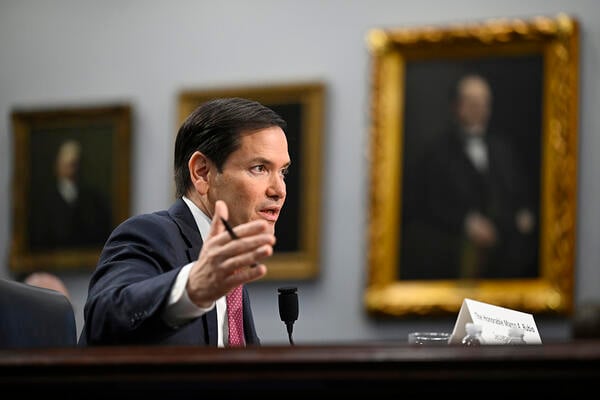
Rubio paused visa interviews last month while the State Department created rules for the social media screenings.
John McDonnell/Getty Images
The U.S. State Department is rolling out sweeping new rules for vetting student visa applicants using their social media presence, according to Politico.
The new process will include screening for “any indications of hostility towards the citizens, culture, government, institutions or founding principles of the United States,” according to an internal State Department cable.
Department officials will also look for posts that signal “advocacy for, aid or support for foreign terrorists and other threats to national security” and “support for antisemitic harassment or violence,” specifically citing support for Hamas—a charge commonly levied against student protesters advocating for Palestinian rights—as grounds for rejection. The cable also directs officials to cull applicants who “demonstrate a history of political activism.”
The news comes a few weeks after Secretary of State Marco Rubio paused all student visa interviews in order to implement a new screening policy focusing on students’ online activity. The Associated Press reported that the department rescinded the pause, but applicants who don’t allow the government to review their social media accounts could be rejected.
The cable is the Trump administration’s latest effort to curtail the flow of international students to the U.S., as tens of thousands of foreign students await approval of their visas after months of delays and with only weeks until the start of the fall semester.
State Department spokespeople did not respond to a list of questions from Inside Higher Ed in time for publication.
Pitching compelling storylines and sources are the crux of any public relations strategy. In the higher education digital marketing space, we at Archer Education leverage the expertise of professors from our partner institutions to help increase the school’s visibility, student enrollment, thought leadership, and brand awareness.
Professors make excellent sources for stories through unmatched expertise and experience in their respective fields, but without the correct messaging and communication strategy, this opportunity could be missed.
In this article, we’ll go over how to write a media pitch in higher education and review the most common types of media pitches.
What Is a Media Pitch?
Media pitches in higher education are strategic communications sent to journalists, editors, or media outlets to promote faculty expertise, research, or institutional initiatives. These pitches typically highlight faculty insights on current events, groundbreaking studies, or thought leadership in their field.
These pitches are particularly key to faculty promotion because they enhance visibility, establish credibility, and position faculty as subject matter experts. Media coverage can lead to invitations for speaking engagements, collaborative research opportunities, and increased citations — all of which contribute to professional advancement for the faculty member and enhanced institutional reputation.
How to Create Your Media Pitch
Before we dive into best practices, tips, and examples of PR pitching, let’s go over some of the basics of how to structure a media pitch. Creating a set standard for yourself and your team will not only streamline the process and allow you to be as efficient as possible, but it will also ensure consistency amongst your team and allow for smooth training programs.
Select the Right Type of Journalism Lead
Before you even start writing a pitch, you want to make sure you find a lead that will entice whoever you are reaching out to. The lead is the angle into your story that makes everything relevant. You can look for two types of leads that are applicable throughout journalism:
A news peg is a trending story or topic in the news that relates to what you’re pitching. For example, leveraging a political debate or a new medical study that was just released. This allows you to hook the reader with a relevant and widespread story.
A time peg represents an upcoming date or event. For example, anniversaries of days like 9/11 or Hurricane Katrina, days or weeks dedicated to specific causes like “Health IT Week” or “Mental Health Awareness Day,” or even months like “Breast Cancer Awareness Month.”
These types of dates and events can be easily leveraged for PR purposes as media outlets will often shape content around significant or relevant time pegs. In order to keep track and take advantage of these dates, it’s helpful to create and consistently update an internal editorial calendar with your team.
Develop Your Pitch Structure
Below is the basic outline/structure you should consider when writing a media pitch:
As mentioned above, start with the lead. This should be the first thing the reporter or editor reads. An enticing lead that is relevant to their beat will ensure they continue through your pitch.
The second part is your call-to-action. This is the action you want your audience to take. Whether it is writing a product review, publishing a piece of content, or conducting an interview, it’s important to make your intention here as clear as possible.
Next comes your value proposition. This is a key piece of the puzzle as it will be the meat of the pitch; this is where you can showcase the value of what you are offering and why they should be interested in it. It is essential in differentiating yourself from the hundreds of other pitches they receive.
The last piece of the pitch is your conclusion. This is a straightforward recap that includes a recap of the call-to-action and a thank you.
Use the Right Subject Line for Your Pitch Email
Subject lines are the first and sometimes only thing that a media contact will see — often determining whether they will even bother to open your email or not. Ensuring that your subject line is clear, concise, and enticing is critical. According to Omeda, subject lines with 20 characters or fewer achieve the highest open rates, averaging 29.9%. Open rates decline to 17.3% for subject lines between 20 and 124 characters.
Interestingly, subject lines exceeding 174 characters see a slight recovery in open rates, averaging around 23%. However, due to potential display issues and the risk of being cut off, it’s generally recommended to keep subject lines concise. Prioritizing brevity ensures better visibility across various devices and enhances the likelihood of engagement.
While creating a subject line that produces an “open” should always be the goal, you should make sure to avoid using “click-bait” phrasing as a tactic to draw in the recipient, as this is considered unprofessional. The last thing you want to do is mislead your audience or appear spammy.
How to Pitch the Media: Communication Strategies
Now that you understand the basics on how to write and structure a media pitch, let’s cover some media pitching strategies that can lead to greater success.
Use Timely Stories and Research
Don’t deprive yourself of using relevant news pegs or research as your hook for your pitch. It’s no secret that the media lives off of news pegs, trending topics, and new research to tell their stories. To increase the chances of someone showing interest in your pitch, it’s important to make their job as easy as possible. It’s a good idea to spell out the story for them so that your source or story fits in seamlessly with trending news topics and their target audience’s interests.
Reporters and editors receive hundreds of pitches every day, so providing them with a story that their readers will be interested in and offering sources to help supplement that story will make them more compelled to move forward with the conversation.
Along these same lines, always try to include hyperlinks to any research or statistics that you reference in your pitch. You don’t want them to shy away from expressing interest or continuing the conversation simply because they don’t have time to do the legwork to track down the sources themselves.
Know the Reporter’s Beat
You can have the best pitch in the world, but if it doesn’t align with the reporter’s beat (the types of stories they cover), then it will provide no use or value to them. In fact, it will only blatantly show that you are sending out mass email distributions and aren’t doing the appropriate research and legwork before pitching them. While it’s not always realistic or feasible, personalize pitches whenever possible and mention any related articles that they recently wrote.
Keep it Concise and Know Your Story
As previously mentioned, media contacts receive hundreds of pitches a day. If you’re lucky enough to get yours opened, the worst thing that someone with very little time can be confronted with is an unnecessarily long pitch. Find out how to say everything that you need to say in a paragraph or less (with rare exceptions). The more specific and focused you can be, the better. It’s also crucial to understand and communicate the story you’re trying to tell and how it aligns with the larger media trends yet provides a unique angle to the storyline.
Follow Up Is Key to Media Pitching
Following up on initial email pitches is one of the most crucial elements of the pitching process. This is where most of your interest and responses will come from, so ensure that you schedule reminders to follow up.
Generally, it’s appropriate to wait about one week until you send follow-ups out; this will ensure that the media contact has sufficient time to get through their emails and respond if they are planning to. If the story is incredibly time-sensitive, you can follow-up a bit sooner. Similarly, if it is not a time-sensitive story at all, then waiting a little longer than a week can be a good strategy. Just be sure to include your original pitch at the bottom of your follow-up email to help jog the recipient’s memory and provide more context.
Media Pitch Examples
Now that you have the information that you need to be successful with your pitch writing, here are some real-life examples of media pitches and pitch letters that our team sent to the media.
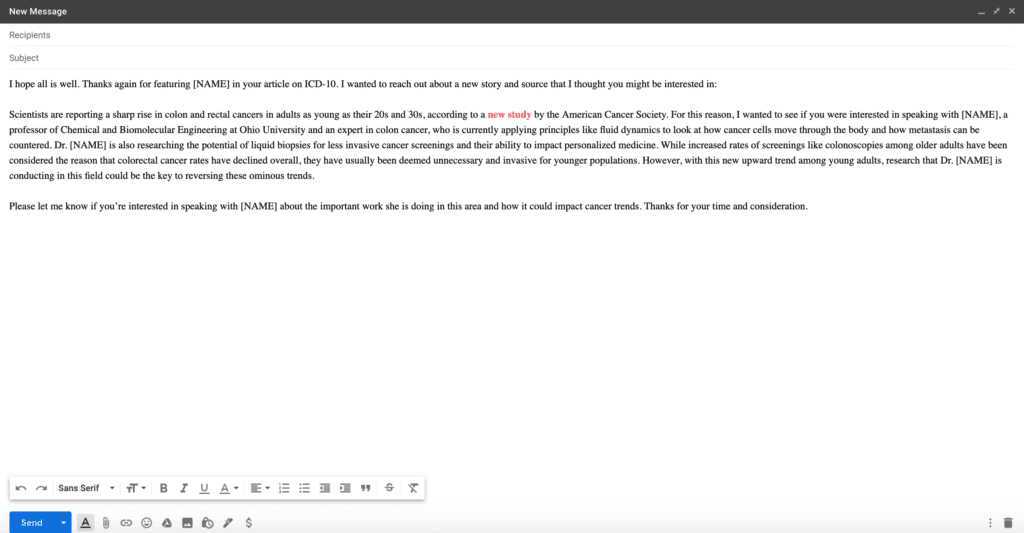
1. Cold Pitch
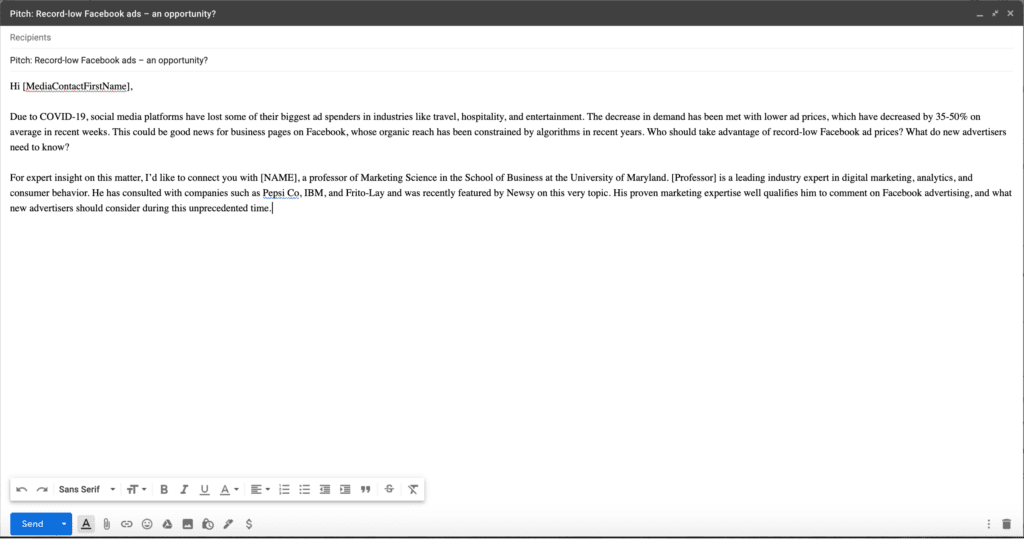
A cold pitch is an unsolicited email or message sent to a journalist or media outlet with whom there is no prior relationship. It typically introduces a faculty member’s expertise or research in hopes of securing media coverage.
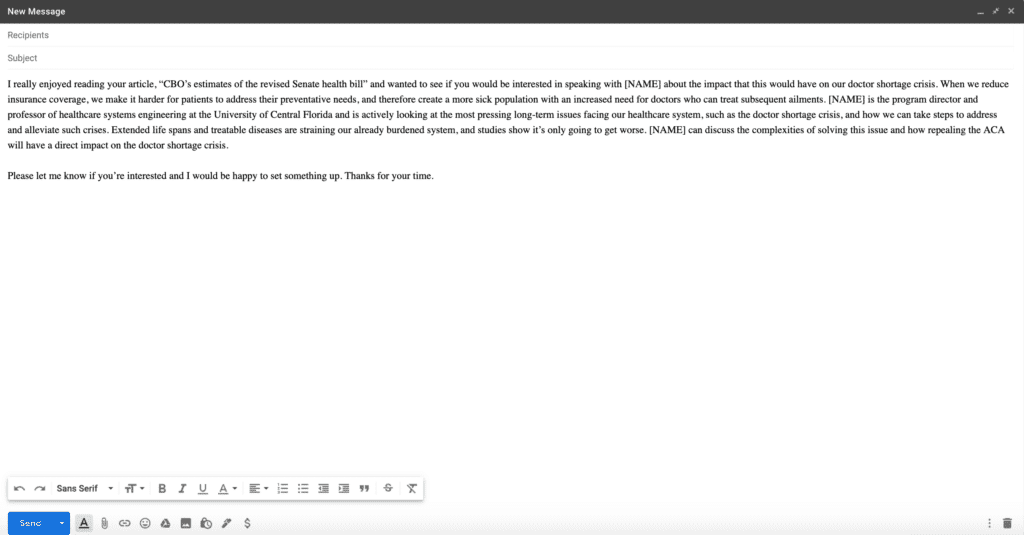
2. Pitch for Established Contact/Relationship
This type of pitch is sent to a journalist or media contact with whom a relationship already exists. It builds on past interactions, making it more likely to be well received and result in coverage.
3. Personalized Pitch
A personalized pitch is tailored specifically to a journalist’s interests, past work, or the needs of their publication. It demonstrates a clear understanding of their audience and increases the chances of engagement.
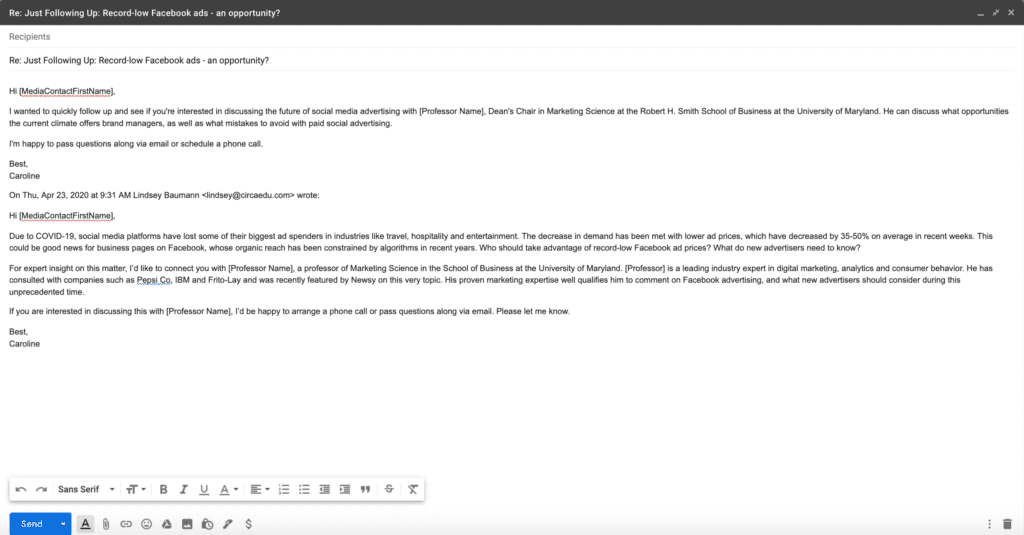
4. Follow-Up Pitch
A follow-up pitch is sent after an initial pitch to reinforce interest, provide additional details, or remind the recipient about the story idea. It’s essential for maintaining momentum and increasing response rates.
How to Write Media Pitches That Consistently Convert
In today’s media landscape, consistent PR exposure is essential for faculty members looking to establish themselves as thought leaders and elevate their institution’s brand. At Archer Education, we specialize in crafting strategic media pitches that align with timely news cycles, ensuring professors and researchers receive the visibility they deserve. Whether through cold outreach, leveraging existing media relationships, or personalized pitches, we help faculty secure media placements that enhance their credibility, attract prospective students, and showcase their expertise to a broader audience.
Our experience in higher education marketing allows us to effectively position faculty members in conversations that matter, increasing opportunities for interviews, guest articles, and thought leadership features. Don’t let valuable media opportunities go untapped — connect with us today to develop a custom PR strategy that amplifies your faculty’s impact and strengthens your institution’s reputation.
This audio is auto-generated. Please let us know if you have feedback.
Dive Brief:
Virginia Gov. Glenn Youngkin recently signed legislation banning cellphone use during school hours for all students. The law makes Virginia the 21st state to ban or limitcellphones in schools, according to a legislation tracker by Ballotpedia.
Starting January 2026, children in Virginia under the age of 16 will also only be allowed to use social media for an hour per day under another law signed by Youngkin in early May. That law, SB 854, mandates that social media companies verify a minor’s age and enforce a time limit of one hour per day for children and young teens.
In Florida, a similar — albeit stricter — law passed in 2024 that bans social media use for children under 14 years old hit a roadblock in court. On Tuesday, a federal judge temporarily barred parts of HB 3 from being enforced while the case moves forward, saying that the law’s restrictions are “likely facially unconstitutional.”
Dive Insight:
Pushes for bans or limits on cellphone and social media use among children are growing as lawmakers and some advocates note the harmful effects of technology on young people’s mental health and wellbeing.
In 2024, then-U.S. Surgeon General Vivek Murthy called for social media platforms to display warning labels similar to messages that accompany alcohol and cigarettes. Murthy said at the time that social media is an “important contributor” to the nation’s worsening teen mental health crisis.
Teens themselves are also increasingly aware of the harmful impacts social media can have on their mental health. A recent Pew Research Center survey of U.S. teens found that 48% said social media has a mostly negative impact on their peers — up 16 percentage points from 2022.
Laws enforcing cellphone bans in schools have also largely gained bipartisan support in both liberal and conservative-leaning states.
Upon signing Virginia’s K-12 cellphone ban, Youngkin said in a May 30 statement that “students will learn more and be healthier and safer” under this new legislation. “School should be a place of learning and human interaction — free from the distractions and classroom disruptions of cell-phone and social media use.”
Research from Common Sense Media finds that 1 in 4 children had their own cellphone by the age of 8 in 2024. A separate study from 2023 also revealed that 97% of teens use their phones to some extent during the school day, and that students were most likely to turn to social media, YouTube or gaming when doing so.
However, data privacy and cybersecurity concerns are rising alongside states’ efforts to enforce broader social media bans outside of school.
In the Florida case, Computer & Communications Industry Association and NetChoice v. James Uthmeier, challenging the state’s 2024 social media ban for children, the plaintiffs have alleged the law violates the First Amendment and puts Floridians’ online security at risk. The recent order from Chief U.S. District Judge Mark Walker temporarily prevents the law from requiring those in Florida to provide identification to access social media apps, said NetChoice in a Tuesday statement.
“HB 3 violates the First Amendment by forcing all Floridians to hand over their personal data just to access lawful, protected speech online,” NetChoice said of Walker’s order. “It requires websites to collect their users’ sensitive documentation, creating a cybersecurity risk by making private data more vulnerable to hackers and predators.”
The plans to expand social media screening, first reported by Politico, were outlined in a memo sent by Secretary of State Marco Rubio.
John McDonnell/Getty Images
The Trump administration is planning to implement a policy that would require all student visa applicants to undergo social media vetting, according to a cable sent by Secretary of State Marco Rubio, Politico reported Tuesday. All new student visa interviews have been paused in preparation for the new policy.
“The Department is conducting a review of existing operations and process for screening and vetting of student and exchange visitor (F, M, J) visa applicants, and based on that review, plans to issue guidance on expanded social media vetting for all such applicants,” the memo reads, according to a copy published in full on social media by independent journalist Marisa Kabas.
The planned changes come amid the federal government’s ongoing attacks on student visa holders, which began in March with the detention of multiple students and recent graduates who had been involved in pro-Palestinian protests on their campuses. Shortly after, the administration terminated thousands of student visa holders’ records in the Student Exchange and Visitor Information System, the database the houses international students’ records, leading to a slew of legal actions from students who feared they wouldn’t be able to continue studying in the U.S.
Most recently, the Trump administration announced last week that it would prohibit Harvard University from enrolling international students as punishment for allegedly failing to prevent antisemitism and harassment on campus during last year’s pro-Palestinian encampments. Though that action was quickly blocked by a judge, the move could be devastating for the Ivy League institution, where international students make up more than a quarter of the student body.
The proposed policy would increase the amount of time, manpower and resources required to process visa applications, according to experts.
Faye Kolly, an immigration attorney based in Texas, noted that it’s not unusual for immigration officials to review visa applicants’ social media profiles, which they are required to list on certain immigration forms. But the administration has begun specifically screening the social media accounts of some returning students with visas who had participated in pro-Palestinian campus protests, though Politico reported that State Department officials had found the guidance on how to complete those screenings vague.
It is not clear how this expanded vetting process will unfold; Rubio included no details in the memo, which said further guidance would be disseminated in the coming days. Though the memo didn’t say as much, Kolly predicted that the extra screening will involve looking “at [applicants’] social media handles more closely for what I’m assuming is going to be speech that could be considered either anti-Israel or pro-Gaza.”
International education advocates have sounded the alarm on the proposed policy, arguing that it limits prospective students’ right to free expression and illustrates the Trump administration’s devaluation and distrust of international students.
Fanta Aw, the CEO of NAFSA, an association for international educators, told Politico, “The idea that the embassies have the time, the capacity and taxpayer dollars are being spent this way is very problematic. International students are not a threat to this country. If anything, they’re an incredible asset to this country.”
Kolly told Inside Higher Ed that the move harks back to the SEVIS terminations in March and April. Both actions, she said, indicate the administration’s lack “of nuance … regarding international students. It’s [taking] a simplistic approach to a very complex issue. When you target international students en masse, it’s irresponsible.”
Daryl Bish, the president of EnglishUSA, which represents all English language programs in the country, said the change will reverse recent progress on the visa approval process and have an “immediate impact” on enrollment in English language programs.
“The extraordinary decision to pause visa interviews, under the guise of security and enhanced vetting, is a dangerous precedent that will have immediate short-term consequences,” Bish said. “Visa appointment wait times have, generally, improved since the pandemic. This means that many students apply for the visa close to their program start date. The pause in interviews, if protracted, will force these students to change their plans.”
Elora Mukherjee, a law professor at Columbia University and the director of the law school’s Immigrants’ Rights Clinic, also criticized the government for pausing new student visa interviews in the interim—especially as the memo gave no indication of how long the pause might last.
“The pause is destructive to our national interests and America’s reputation in the world, and its effects may be felt for years. It has thrown the lives of tens of thousands of prospective international students into turmoil and will cause chaos and disruption at colleges and universities across the country. International students have been preparing for months to join U.S. colleges and universities in the fall, and schools have been preparing to welcome them,” she wrote in an email to Inside Higher Ed.
“It is unclear how long the ‘pause’ will be in place, what heightened scrutiny visa applicants will face once the pause is lifted, and the extent to which decisions about granting visas may be tainted by prejudices based on race, religion, and national origin.”
As global digital participation grows, our ability to connect emotionally may be shifting. Social media has connected people across continents, but it also reshapes how we perceive and respond to others’ emotions, especially among youth.
Empathy is the ability to understand and share another’s feelings, helping to build connections and support. It’s about stepping into someone else’s shoes, listening and making them feel understood.
While platforms like Instagram, TikTok and X offer tools for global connection, they may also be changing the way we experience empathy.
Social media’s strength lies in its speed and reach. Instant sharing allows users to engage with people from different backgrounds, participate in global conversations and discover social causes. But it also comes with downsides.
“People aren’t doing research for themselves,” says Marc Scott, the diversity, equity and community coordinator at the Tatnall School, the private high school that I attend in the U.S. state of Delaware. “They see one thing and take it for fact.”
Communicating in a two-dimensional world
That kind of surface-level engagement can harm emotional understanding. The lack of facial expressions, body language and tone — key elements of in-person conversation — makes it harder to gauge emotion online. This often leads to misunderstandings, or worse, emotional detachment.
In a world where users often post only curated highlights, online personas may appear more polished than real life. “Someone can have a large following,” Scott said. “But that’s just one person. They don’t represent the whole group.”
Tijen Pyle teaches advanced placement psychology at the Tatnall School. He pointed out how social media can amplify global polarization.
“When you’re in a group with similar ideas, you tend to feel stronger about those opinions,” he said. “Social media algorithms cater your content to your interests and you only see what you agree with.”
This selective exposure limits empathy by reducing understanding of differing perspectives. The disconnect can reinforce stereotypes and limit meaningful emotional connection.
Over exposure to media
Compounding the problem is “compassion fatigue” — when constant exposure to suffering online dulls our emotional response. Videos of crisis after crisis can overwhelm users, turning tragedy into background noise in an endless scroll.
A widely cited study published in the journal Psychiatric Science in 2013 examined the effects of exposure to media related to the 9/11 attacks and the Iraq War. The study led by Roxanne Cohen Silver, found that vicariously experienced events, such as watching graphic media images, can lead to collective trauma.
Yet not all emotional connection is lost. Online spaces have also created powerful support systems — from mental health communities to social justice movements. These spaces offer users a chance to share personal stories, uplift one another and build solidarity across borders. “It depends on how you use it,” Scott said.
Many experts agree that digital empathy must be cultivated intentionally. According to a 2025 Pew Research Center study, nearly half of U.S. teens believe that social media platforms have a mostly negative effect on people their age, a significant increase from 32% in 2022. This growing concern underscores the complex nature of online interactions, where the potential for connection coexists with the risk of unkindness and emotional detachment.
So how do we preserve empathy in a digital world? It starts with awareness. Engaging critically with content, seeking out diverse viewpoints and taking breaks from the algorithm can help. “Social media can expand your perspectives — but it can also trap you in a single mindset,” Scott said.
I initially started thinking about this topic when I was having the same conversations with different people and feeling a sense of ignorance. It wasn’t that they didn’t care — it was like they didn’t know how to care.
The way they responded to serious topics felt cold or disconnected, almost like they were watching a video instead of talking to a real person.
That made me wonder: has social media changed the way we understand and react to emotions?
Ultimately, social media isn’t inherently good or bad for empathy. It’s a tool. And like any tool, its impact depends on how we use it. If we use it thoughtfully, we can ensure empathy continues to grow, even in a world dominated by screens.
Questions to consider:
1. What is empathy and why is it important?
2. How can too much time spent on social media dull our emotional response?
2. How do you know if you have spent too much time on social media?
The year is 2025, and the influence of a rapidly evolving social media space in shaping education marketing campaigns is as critical as ever. While it has undoubtedly brought up several opportunities for those in the picture, it has also thrown up a few challenges that require the right gears to navigate. The stats are quite interesting: An increasing number of Gen Z users now turn to TikTok and Instagram as search tools, often preferring them over Google for quick information and exploration. This simply means that having a social presence for your school is no longer open to debate, it is an absolute necessity.
Today’s prospective students spend a lot of time browsing through multiple social media platforms. They make key decisions about their academic future based on what they see on these platforms. This is why an active social media presence is a key part of today’s educational marketing campaigns. However, beyond being active on these platforms, it takes a deliberate and strategic social marketing strategy to curate and create winning margins in this space.
At Higher Education Marketing Agency, we have several years of experience helping schools navigate the social space, converting interest into enrollment, and producing positive outcomes for many schools. Our personal, tested, and tried social media playbook for education marketers combines insights from leading education marketing experts with real-world examples. This playbook is designed to help your institution not just survive but thrive in today’s digital ecosystem. Read on to find out how.
Struggling with enrollment?
Our expert digital marketing services can help you attract and enroll more students!
The New Social Landscape: Multiple Platforms, Multiple Touchpoints
With social media evolving and becoming even more powerful, it is no longer a good idea to focus all your school’s attention on one platform. Today’s prospective students split most of their time among different platforms, and that’s why schools must be visible everywhere.
Prospective students might discover your school through a friend’s TikTok, research your programs on Instagram, watch alumni testimonials on YouTube, and check what parents are saying about you on Facebook, all before visiting your website. Your presence on each of these social media platforms will offer you unique opportunities to engage with different audiences.
Here’s a brief outline of the roles that different social media trends and platforms can play in your education marketing efforts.
Instagram: Great for visual storytelling, event promotions, and engaging reels showing student experiences.
TikTok: Ideal for short, fun, and informative content that drives brand awareness among younger audiences.
YouTube: The best place to show long-form videos, student testimonials, virtual tours, and other educational content.
Facebook: Essential for connecting with parents, alums, and local communities.
LinkedIn: Great for professional connections and showing academic credibility, targeting parents and graduate prospects.
While having a presence across key platforms is essential, mastering the content formats that resonate most, particularly short-form video, has become equally critical.
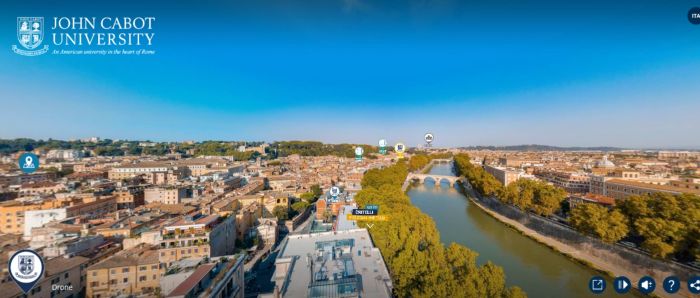
Example: John Cabot University offers virtual tours of its campuses, some of which you’ll find via its social media pages, YouTube, and straight off its website.
The influence of short-form video in shaping social media trends is at an all-time high today. Gen Z and Gen Alpha consume information fast, they don’t want to watch traditional ads or sit through long videos all day. Prospective students want to see what life at a school looks like in under 60 seconds.
A large number of these students now turn to TikTok and its bite-sized videos for everything from study tips to campus tours. This is why things like TikTok and Instagram Reels have become key for student recruitment, school branding, and engagement.
“Your goal is to freeze the thumb,” as one marketing expert puts it, creating content compelling enough to make someone stop scrolling.For best results, it is crucial to create educational short-form videos along these lines:
1. Day-in-the-life glimpses: A student takes viewers through their campus routine
2. Quick tips/educational snippets: A professor explaining a complex concept in 30 seconds
3. Behind-the-scenes peeks: Showing areas of campus rarely seen on official tours
4. Celebration moments: Capturing authentic reactions during events like graduation or move-in day
5. “Did you know” facts about your institution’s unique features or history
How can schools use short-form video to attract students? The key to creating winning short-form videos is to go for authenticity. Start by identifying what makes your institution stand out, whether it’s a unique program, a beloved campus tradition, or exceptional career outcomes.
You can then showcase these elements through quick, visually engaging stories highlighting your unique value proposition.
The Authenticity Advantage: User-Generated Content
The content created by your existing community is a powerful tool for building trust and driving engagement. User-generated content (UGC) from students, faculty, and alumni offers authentic perspectives as it comes from a real person, hence its effectiveness. Research shows that 84% of consumers trust UGC more than polished advertisements.
How can we get user-generated content from students? One proven strategy in this line is to allow a student to manage your school’s Instagram Stories for a day, sharing their authentic campus experience. These glimpses into real student life help prospective students envision themselves at your institution in ways that traditional marketing cannot achieve.
Here are some ways to incorporate UGC in your education marketing efforts:
Find your existing ambassadors: Search your school’s hashtags and location tags to find students already creating content about your institution. These natural enthusiasts often make the best collaborators.
Create participation opportunities: Develop challenges, contests, or hashtag campaigns encouraging content creation. For example, a “#MyFirstDayAt[YourSchool]” campaign can generate authentic content while welcoming new students.
Feature diverse voices: Ensure your UGC represents various perspectives, undergraduate and graduate students, international students, faculty members, alumni at different career stages, and parents.
Provide gentle guidance without controlling: When working with student content creators, provide general themes or questions but allow their authentic voice to shine through. Over-scripting defeats the purpose.
Amplify and appreciate contributors: Always credit creators when sharing their content and express genuine appreciation. This encourages continued participation while signaling to others that their contributions are valued.
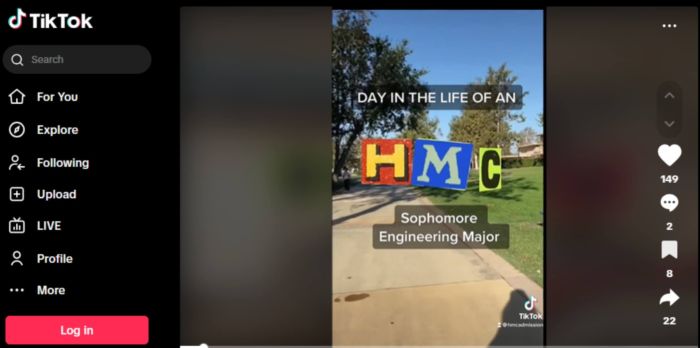
Example: Harvey Mudd College frequently posts user-generated content of its students on its social media pages, like this one featuring a day-in-the-life of a sophomore engineering student posted on TikTok.
Social Media as Search Engines: Optimizing for Discoverability
Today, social media platforms are increasingly taking on the role of search engines for young people. Two-thirds of Gen Z use social platforms to research topics, including potential schools. A teenager is more likely to find your school by watching videos and posts on TikTok or Instagram than by visiting your website or Googling the school. This brings us to Social SEO, a way to optimize your content to be discoverable via social media platform searches.
What is social SEO, and why is it important? Social SEO is the practice of optimizing your content to be discoverable through social media platform search functions. It’s important because younger audiences now use platforms like TikTok and Instagram as search engines. Optimizing SEO for visibility on these platforms helps schools reach and engage prospective students where they’re already searching.
Here are some key steps to improve your school’s visibility in social media searches:
Profile optimization: Treat your social profiles like mini homepages. Use clear, keyword-rich descriptions, consistent branding, and up-to-date contact information across all platforms.
Content that answers questions: Create videos and posts that address common queries, such as “What’s the student-faculty ratio at [Your School]?” or “What’s housing like at [Your School]?” These directly match what prospective students search for.
Strategic hashtags and keywords: Research what terms and keywords your target audience uses when searching for educational content. Incorporate these naturally into your posts, captions, and hashtags.
Geo-tagging: Always tag your location in posts. Many users search by location when researching schools in specific areas.
Consistent posting: Regular activity signals relevance to algorithms, improving your visibility in search results.
It is important to note that these social platforms have different search algorithms; a hashtag strategy that worked on Instagram may need to be adjusted for TikTok or LinkedIn. To make your school more discoverable, explore and learn what best practices apply to each platform and what topics drive current conversations.
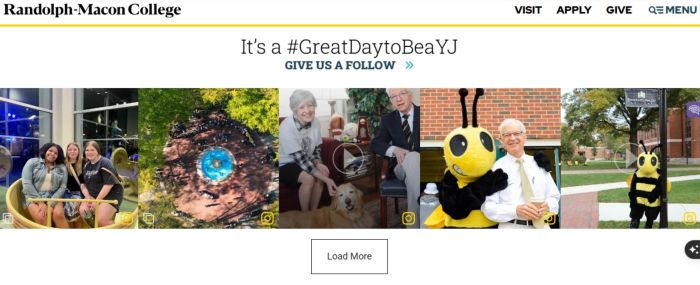
Example: Randolph-Macon College frequently posts social media content featuring catchy headlines and hashtags, such as the one seen here promoting its athletics team, the Yellow Jackets.
Although maintaining a presence across multiple social platforms is great, using a tailored approach for each one is even better. Here’s how you can leverage the strengths of major platforms.
Facebook
Often dismissed as an “older person” platform, Facebook continues to be key to reaching parents who double as key decision-makers for many prospective students. It is great for community building and event promotion. Here’s how to successfully use Facebook marketing for schools in your social marketing campaigns:
Use Facebook Events for open houses, application deadlines, and virtual info sessions
Create targeted ad campaigns using Facebook’s detailed demographic filters
Establish groups for admitted students or parents to foster community
Share longer-form content like student success stories and program highlights
Instagram
Instagram is a predominantly visually driven platform favored by people of different age groups. It is great at showcasingcampus aesthetics and student experiences.
Post high-quality photos showcasing campus beauty and student life
Use Stories for day-in-the-life content, quick announcements, and behind-the-scenes glimpses
Create highlight collections for key topics (Admissions, Student Life, Athletics)
Utilize Reels for short-form video marketing
Leverage the Explore page for discovery by new audiences
TikTok
TikTok, the fast-growing epicenter of youth engagement and viral content, is important for reaching Gen Z. Some students now select schools based on how the schools will look on TikTok.
Create authentic, entertaining content that aligns with platform trends
Feature charismatic students or faculty who connect naturally with viewers
Participate in challenges relevant to education (with your institutional twist)
Use TikTok’s native editing tools and popular sounds to boost algorithm visibility
Don’t be afraid of humor and personality. TikTok rewards authenticity over polish
YouTube
YouTube for education favors long-form content and resources that can be searched.
Produce both longer videos (3-10 minutes) and YouTube Shorts
Optimize video titles and descriptions with relevant keywords
Use cards and end screens to guide viewers to related content
Consider hosting live Q&A sessions during key decision periods
LinkedIn
LinkedIn is an underutilized tool that can help shape your education marketing. It is great for engagingparents, graduate prospects, and professionals.
Share thought leadership from faculty and administrators
Highlight alum success stories and career outcomes
Post about research innovations and academic achievements
Engage in industry conversations relevant to your programs
Encourage faculty and alumni to mention your institution in their profiles
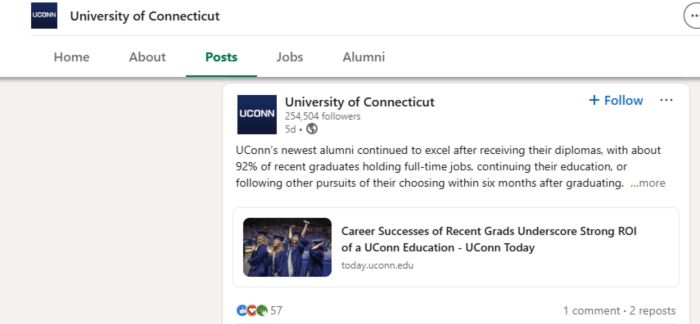
Example: The University of Connecticut regularly posts news about its recent graduates, alumni, and students on its LinkedIn page. The LinkedIn post below highlights the success of its recent graduates.
Education marketing should be serious and informative, but serious does not mean bland and uninspiring. This is where gamification comes in, for fun and engaging learning. With gamification, you incorporate game-like elements and interactive content into your school’s content, effectively turning passive scrolling into active participation. Here are some gamification content and approaches:
Instagram Story quizzes about campus facts or traditions
TikTok challenges that showcase student creativity
Digital scavenger hunts across your website and social platforms
“Day in the life” simulation content where viewers “choose their adventure”
Trends are the main driver of conversations across social media. Connecting your content to a broader cultural conversation can give your school more relevance in the social space. Follow these three trends to place your institution in a position of opportunity.
Nostalgia Marketing: For institutions with some history to draw from, using content that brings back some memories of the past can provoke nostalgic feelings and add value to social marketing campaigns. This is nostalgia marketing. For best results, share throwback campus photos, compare “then and now” scenes, or invite alumni to submit memories. This content typically generates high engagement and shares.
Values and Social Impact: Today’s students care deeply about the position their schools take on issues of social and environmental relevance. To leverage this situation, highlight your school’s sustainability initiatives, community service programs, or research contributions. Point students to recycling initiatives and green campus programs via your social media videos and blogs.
Wellness and Mental Health: Any content that addresses student well-being will resonate strongly with prospects and parents concerned about support systems. This is why you must ensure you share resources from your counseling center and feature student wellness initiatives in your content. Also, create content acknowledging the stresses of academic life and how your institution helps students manage them. A student testimonial about how a mentor or counselor helped them thrive can help humanize your brand, so consider it.
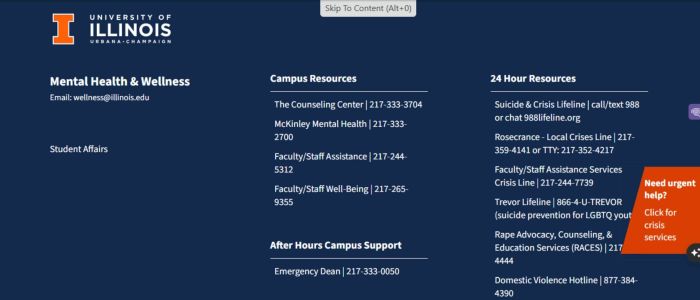
Example: The University of Illinois runs a mental health and awareness program with a full complement of staff and resources committed to student and staff welfare on campus.
Successful social media marketing calls for consistency in learning and adaptation. Platform algorithms are subject to regular changes that affect content visibility and engagement. Here’s what you can do to stay visible and ahead of the curve:.
Monitor metrics to identify which content types perform best
A/B test different formats and approaches
Stay alert to algorithm changes and platform updates
Focus on generating quality engagement (comments, shares)
Adopt new platform features early for visibility boosts
Although social engagement is key to positive brand building, it’s not the ultimate goal. That would be converting interest into action, from website visits to inquiries or applications.
To effectively bridge the gap between interest and action, here are a few tips worth considering:
Optimize your social profiles: Link every platform you’re active on to relevant landing pages. Consider using “link in bio” tools that offer multiple destination options (Apply Now, Virtual Tour, Financial Aid, etc.).
Strategic calls to action: Not every post needs a CTA, but regularly include invitations to learn more, especially on high-interest content. For example, after sharing a student success story, add something like “Discover how you can follow in Sarah’s footsteps—check out our Business program (link in bio).”
Track and analyze traffic sources: Find out which social platforms and specific posts drive the most valuable traffic using resources like UTM parameters. With this information in hand, you can refine your strategy toward what converts.
Amplify high-performing content: When a post generates strong engagement organically, extend its reach to similar audiences by allocating an ad budget to it. By putting out content that resonates with your existing community, you can reach prospects who share similar interests and achieve the desired engagement result.
Align social and search strategies: While many prospects might discover your school on social media, they often go on to later search your name on Google. This is why you must ensure that your search engine marketing complements your social strategy for a seamless user journey.
Building Your School’s Social Media Playbook
As social media continues to evolve and draw more prospective students, today’s schools have to target it with intentional and strategic content. The most successful education marketers approach social media as conversations with future students, current community members, parents, and alumni.
The goal of these conversations goes beyond promoting your institution, it involves bringing its unique culture and value to life in ways that traditional marketing can not achieve. This is why schools must develop an effective social media marketing strategy that factors in all the essentials and adds some extras. While at it, remember a few things: authenticity resonates, visual content engages, and genuine connection converts.
By embracing short-form video, leveraging user-generated content, optimizing for social search, and maintaining a strategic presence across platforms, you create multiple pathways for meaningful connection. Add gamification elements and cultural relevance, and you have a formula for visibility and genuine engagement that drives enrollment outcomes.
See the full Webinar here:
Struggling with enrollment?
Our expert digital marketing services can help you attract and enroll more students!
Frequently Asked Questions
Question: What is social SEO, and why is it important?
Answer: Social SEO is the practice of optimizing your content to be discoverable through social media platform search functions. It’s important because younger audiences now use platforms like TikTok and Instagram as search engines. Optimizing for visibility on these platforms helps schools reach and engage prospective students where they’re already searching.
Question: How can we get user-generated content from students?
Answer: One proven strategy in this line is to allow a student to manage your school’s Instagram Stories for a day, sharing their authentic campus experience. These glimpses into real student life help prospective students envision themselves at your institution in ways that traditional marketing cannot achieve.
Question: How can schools use short-form video to attract students?
Answer: The key to creating winning short-form videos is to go for authenticity. Start by identifying what makes your institution stand out, whether it’s a unique program, a beloved campus tradition, or exceptional career outcomes.
You can then showcase these elements through quick, visually engaging stories highlighting your unique value proposition.
All of the vile executive orders issued by the Trump administration against law firms refer to purported “significant risks” associated with them, and have the same whiff of oppression:
Below the veneer of such boilerplate claims lies a repressive truth: they’re designed to be punitive, and to produce a fear that leads to robotic subservience. They are but a part of Trump’s enemies list. And his orders are to be executed by his lackey Attorney General Pam Bondi — the same person who once said: “I will fight every day to restore confidence and integrity to the Department of Justice and each of its components. The partisanship, the weaponization will be gone.”
Mr. Sellers filed the amicus brief on behalf of 61 media organizations and press freedom advocates in the case of Perkins Coie v. U.S. Department of Justice. At the outset he exposes the real agenda of the authoritarian figure in the White House:
“The President seeks the simultaneous power to wield the legal system against those who oppose his policies or reveal his administration’s unlawful or unethical acts—who, in many cases, have been members of the press—and then deny them access to the system built to defend their rights. The President could thus ‘permit one side to have a monopoly in expressing its views,’ which is the “antithesis of constitutional guarantees.’”
Mr. Sellers reminds us that “‘freedom of the press holds an . . . exalted place in the First Amendment firmament,’ because the press plays a vital role in the maintenance of democratic governance. To fulfill that function, the press relies on the work of lawyers. Lawyers assist the press in obtaining access to records and government spaces . . . because the press plays a vital role in the maintenance of democratic governance.”
Andrew Sellars
To honor that principle, Sellers argues that “the press relies on the work of lawyers. Lawyers assist the press in obtaining access to records and government spaces. They advise the press on how to handle sensitive sources and content. And they defend the press against civil and criminal threats for their publications.”
Among other key points made in this important brief is the following one:
If the Executive Order stands, many lawyers will be chilled from taking on work so directly in conflict with the President, out of fear for the harm it would cause to their clients whose relationship with the government is more transactional. For the lawyers that remain, the threat of a similar executive order aimed at them or their law firms would practically prevent them from doing their jobs, by denying their access to the people and places necessary to adjudicate their issues.
Some of the lawyers who signed this amicus brief include Floyd Abrams, Lee Levine, Seth Berlin, Ashley Kissinger, Elizabeth Koch, Lynn B. Oberlander, David A. Schulz, and Charles Toobin.
The Table of Contents appears below:
Introduction & Summary of Argument
Interests of Amici
Argument
A Free Press Allows the Public to Check Overreaching Government but Requires Legal Support.
The Oppositional Role of the Press Will Not Function if the Court Allows This executive order.
The government will inevitably use this authoritarian power to target the press.
The executive order will chill lawyers from working with the press.
The lawyers that remain will be unable to do their jobs.
Without a Robust Press, the Public will Lose a Key Vindicator of First Amendment Rights.
Related
Pronoun punishment policy in the Trump administration
You know those email signatures at the end of messages? The ones that include a range of information about the senders — phone numbers, addresses, social media handles. And in recent years, pronouns — letting the recipient know that the sender goes by “she,” “he,” “they” or something else, a digital acknowledgement that people claim a range of gender identities.
Among those who don’t agree with that are President Donald Trump and members of his administration. They have taken aim at what he calls “gender ideology” with measures like an executive order requiring the United States to recognize only two biological sexes, male and female. Federal employees were told to take any references to their pronouns out of their email signatures.
That stance seems to have spread beyond those who work for the government to those covering it. According to some journalists’ accounts, officials in the administration have refused to engage with reporters who have pronouns listed in their signatures.
The New York Times reported that two of its journalists and one at another outlet had received responses from administration officials to email queries that declined to engage with them over the presence of the pronouns. In one case, a reporter asking about the closure of a research observatory received an email reply from Karoline Leavitt, the White House press secretary, saying, “As a matter of policy, we do not respond to reporters with pronouns in their bios.”
Dare one ask? Is pro-Palestinian speech protected?
The first target of these threats was Mahmoud Khalil, a pro-Palestinian activist and former student of Columbia University, who was a negotiator for Columbia students during talks with university officials regarding their tent encampment last spring, according to The Associated Press.
Since his arrest, more than half a dozen scholars, professors, protesters and students have had their visas revoked with threats of deportation. Two opted to leave the country on their own terms, unsure of how legal proceedings against them would play out.
Free speech and civil liberties organizations have raised concerns over the arrests, claiming the Trump administration is targeting pro-Palestinian protesters for constitutionally protected political speech because of their viewpoints.
[ . . . ]
First Amendment Watch spoke with Esha Bhandari, deputy director of the ACLU’s Speech, Privacy and Technology Project, about the First Amendment implications of the Trump administration’s alleged targeting of pro-Palestinian protesters and activists. Bhandari explained how actions taken under the Immigration and Nationality Act need to be consistent with the First Amendment, described the importance of the right to peacefully assemble, and expressed that all Americans, regardless of their viewpoint, should be concerned with the Trump administration’s actions and its chilling of speech.
[Interview follows]
David Cole on the war on the First Amendment
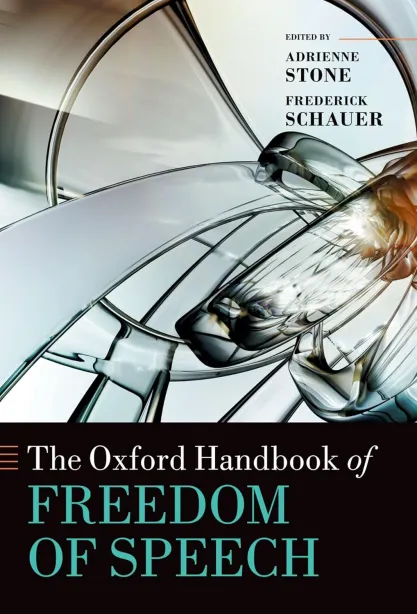
Just released: Oxford University Press handbook on free speech
Freedom of speech is central to the liberal democratic tradition. It touches on every aspect of our social and political system and receives explicit and implicit protection in every modern democratic constitution. It is frequently referred to in public discourse and has inspired a wealth of legal and philosophical literature. The liberty to speak freely is often questioned; what is the relationship between this freedom and other rights and values, how far does this freedom extend, and how is it applied to contemporary challenges?
“The Oxford Handbook on Freedom of Speech” seeks to answer these and other pressing questions. It provides a critical analysis of the foundations, rationales, and ideas that underpin freedom of speech as a political idea, and as a principle of positive constitutional law. In doing so, it examines freedom of speech in a variety of national and supranational settings from an international perspective.
Compiled by a team of renowned experts in the field, this handbook features original essays by leading scholars and theorists exploring the history, legal framework, and controversies surrounding this tenet of the democratic constitution.
Forthcoming book on free speech and social media platforms
Northeastern University Professor John Wihbey
Why social media platforms have a responsibility to look after their platforms, how they can achieve the transparency needed, and what they should do when harms arise.
The large, corporate global platforms networking the world’s publics now host most of the world’s information and communication. Much has been written about social media platforms, and many have argued for platform accountability, responsibility, and transparency. But relatively few works have tried to place platform dynamics and challenges in the context of history, especially with an eye toward sensibly regulating these communications technologies.
In ”Governing Babel,” John Wihbey articulates a point of view in the ongoing, high-stakes debate over social media platforms and free speech about how these companies ought to manage their tremendous power.
Wihbey takes readers on a journey into the high-pressure and controversial world of social media content moderation, looking at issues through relevant cultural, legal, historical, and global lenses. The book addresses a vast challenge — how to create new rules to deal with the ills of our communications and media systems — but the central argument it develops is relatively simple. The idea is that those who create and manage systems for communications hosting user-generated content have both a responsibility to look after their platforms and have a duty to respond to problems. They must, in effect, adopt a central response principle that allows their platforms to take reasonable action when potential harms present themselves. And finally, they should be judged, and subject to sanction, according to the good faith and persistence of their efforts.
Franks and Corn-Revere to discuss ‘Fearless Speech’
Dr. Mary Anne Franks Eugene L. and Barbara A. Bernard Professor in Intellectual Property, Technology, and Civil Rights Law, George Washington Law School; President and Legislative & Tech Policy Director, Cyber Civil Rights Initiative
Robert Corn-Revere Chief Counsel, Foundation for Individual Rights and Expression (FIRE)
Moderators
William Araiza, Stanley A. August Professor of Law, Brooklyn Law School
Ron Collins, Co-founder of the History Book Festival and former Harold S. Shefelman Scholar, University of Washington Law School
Sarah C. Haan, Class of 1958 Uncas and Anne McThenia Professor of Law, Washington and Lee University School of Law
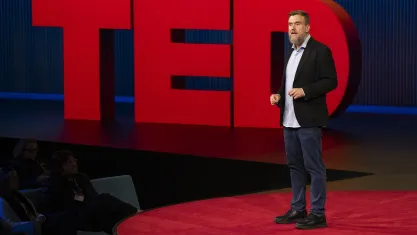
Lukianoff’s TED talk
FIRE President and CEO Greg Lukianoff (Photo by Gilberto Tadday / TED)
Last Wednesday, FIRE’s Greg Lukianoff delivered his first TED talk at TED 2025 in Vancouver. He spoke on why so many young people have given up on free speech and how to win them back. As he noted in a recent post for his Substack newsletter, The Eternally Radical Idea:
“After months of seemingly endless writing, rewriting, and rehearsing, I’m very happy with how it turned out! (Many thanks to Bob Ewing, Kim Hemsley, Maryrose Ewing, and Perry Fein for helping me prepare. Couldn’t have done it without them!)
We’re not yet sure when the full talk will be available online, but we’ll keep you posted!”
‘So to Speak’ podcast: The plight of global free speech
We travel from America to Europe, Russia, China, and more places to answer the question: Is there a global free speech recession?
2024-2025 SCOTUS term: Free expression and related cases
Cases decided
Villarreal v. Alaniz(Petition granted. Judgment vacated and case remanded for further consideration in light of Gonzalez v. Trevino, 602 U. S. ___ (2024) (per curiam))
Murphy v. Schmitt (“The petition for a writ of certiorari is granted. The judgment is vacated, and the case is remanded to the United States Court of Appeals for the Eighth Circuit for further consideration in light of Gonzalez v. Trevino, 602 U. S. ___ (2024) (per curiam).”)
TikTok Inc. and ByteDance Ltd v. Garland (9-0: The challenged provisions of the Protecting Americans from Foreign Adversary Controlled Applications Act do not violate petitioners’ First Amendment rights.)
Review granted
Pending petitions
Petitions denied
Emergency applications
Yost v. Ohio Attorney General (Kavanaugh, J., “It Is Ordered that the March 14, 2025 order of the United States District Court for the Southern District of Ohio, case No. 2:24-cv-1401, is hereby stayed pending further order of the undersigned or of the Court. It is further ordered that a response to the application be filed on or before Wednesday, April 16, 2025, by 5 p.m. (EDT).”)
Free speech related
Thompson v. United States (decided: 3-21-25/ 9-0 w special concurrences by Alito & Jackson) (interpretation of 18 U. S. C. §1014 re “false statements”)
This article is part of First Amendment News, an editorially independent publication edited by Ronald K. L. Collins and hosted by FIRE as part of our mission to educate the public about First Amendment issues. The opinions expressed are those of the article’s author(s) and may not reflect the opinions of FIRE or Mr. Collins.
The Department of Homeland Security is formalizing a policy to search the social media accounts of all foreign applicants for U.S. visas or other benefits, according to a memo issued Wednesday morning.
U.S. Citizenship and Immigration Services will collect applicants’ social media handles and scour their accounts for any “antisemitic activity.” Social media content “endorsing, espousing or promoting antisemitic terrorism, antisemitic terrorist organizations, or other antisemitic terrorist activity” is now “grounds for denying immigration benefit requests.”
“This will immediately affect aliens applying for permanent resident status, foreign students and aliens affiliated with educational institutions linked to antisemitic activity,” the memo continued.
Secretary of State Marco Rubio proposed the policy last month, drawing criticism from free speech advocates. Others objected to the broad scope of the proposal, which included not just visa applicants but also current residents and green card holders. The new policy is just as broad.
The news comes after weeks of escalating attacks on international students, many of whom have had their visas and legal resident status revoked for pro-Palestinian speech under an obscure legal clause that allows the secretary of state to determine if a visa holder is a “foreign policy threat.” An Axios report found that the State Department was already using artificial intelligence to scan student visa holders’ social media accounts looking for the allegedly antisemitic speech referenced in the new memo.
Many more students have had their visas revoked over minor criminal infractions; others have no clear understanding why their status was terminated.
An Inside Higher Ed analysis found that nearly 450 students have had their visas revoked as of Wednesday afternoon. Follow along with our interactive map and tracker.