On April 9, the U.S. Citizenship and Immigration Services (USCIS) announced that it will begin considering “aliens’ antisemitic activity on social media and the physical harassment of Jewish individuals as grounds for denying immigration benefit requests.” According to the announcement, the guidance is effective immediately and impacts individuals applying for lawful permanent resident status, foreign students, and “aliens affiliated with educational institutions” linked to antisemitic activity.
Under the new guidance, USCIS will look at social media content that indicates a requestor “endorsing, espousing, promoting, or supporting antisemitic terrorism, antisemitic terrorist organizations, or other antisemitic activity as a negative factor in any USCIS discretionary analysis when adjudicating immigration benefit requests.” The announcement states that DHS and USCIS aim to enforce all relevant immigration laws to the maximum degree, consistent with President Trump’s executive orders on combatting antisemitism and national security controls to protect against foreign terrorists.
In early March, USCIS published a proposal to collect social media information on applications for immigration-related benefits. USCIS claimed that such collection of information was necessary to comply with Trump’s national security executive order discussed above. The comment period for this information collection proposal is still open. The comment period closes May 5.
CUPA-HR continues to monitor for updates on immigration policy changes that could potentially impact student and nonimmigrant work visas used by the higher education community.
SAN DIEGO, CA — Community members will gather at the San Diego Civic Center Plaza for
a “Hands Off!” march on April 5 to protest DOGE and the Trump
administration’s attack on programs and services used by San Diego
residents. The local march will coincide with a nationwide day of
demonstrations expected to be attended by hundreds of thousands…
Organizers
describe the event as a collective response to policies impacting our
community. “San Diegans who are veterans, who are postal workers and
teachers, who rely on Social Security, Medicaid or Medicare, and who are
horrified at the Trump-Musk billionaire takeover of our government are
coming together to protest the Trump Administration’s attacks on the
rights and services they depend upon, many of them for survival” said
Angela Benson, a member of the organizing coalition.
Event Details:
What:
Over 10,000 San Diegans expected to peacefully demand “HANDS OFF!”
their rights and services in one of over 1,000 HANDS OFF! events
scheduled nationwide on April 5
Who: Coalition of San Diego Pro-Democracy Groups
When: Saturday, April 5, noon, 1 mile march to leave approximately 12:15 PM
Where: March starts at Civic Center Plaza Fountain by 1200 Third St., ends at Hall of Justice at 330 W Broadway
Transportation: Participants are encouraged to take public transit to the event
Planning group:
Change Begins With ME
CBFD Indivisible
Indivisible49
Indivisible North San Diego County
Democratic Club of Carlsbad and Oceanside
Encinitas and North Coast Democratic Club
SanDiego350
Swing Left/Take Action San Diego
Activist San Diego
50501 San Diego
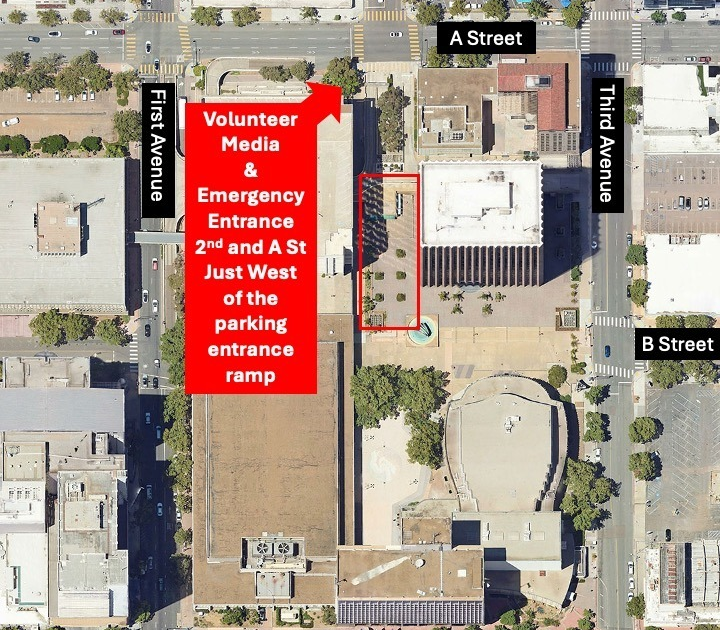
Media Opportunities:
The following representatives will be available day-of the march for interviews.
If interested, please coordinate with Richard (770-653-6138) prior to
the event, and plan to arrive at the location marked below by 11:30 AM
Pacific
Representatives
Sara Jacobs – House of Representatives, CA-51 district
Scott Peters – House of Representatives, CA-50 district
Chris Ward – California State Assemblymember, 78 district
Stephen Whitburn – San Diego Councilmember
Reverend Madison Shockley II – Pilgrim United Church of Christ
Yusef Miller – Executive Director of North County Equity & Justice Coalition
Brigette Browning – Executive Secretary San Diego and Imperial Counties Labor Council and President, Unite Here!
Crystal Irving – President, Service Employees International Union (SEIU)
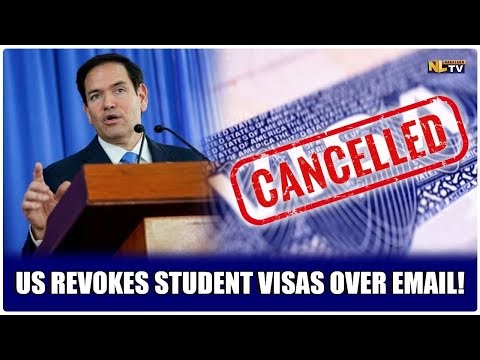
Hundreds of international students in the US have received emails from the Department of State (DOS) instructing them to self-deport after their F-1 visas were revoked due to campus activism or social media posts. This crackdown targets not just those who physically participated in activism, but also those who shared or liked ‘anti-national’ posts. Some Indian students may also be affected.
The US Secretary of State, Marco Rubio, confirmed the visa revocations, stating that over 300 visas had been revoked for “anti-national activities.” He also launched an AI-powered app, “Catch and Revoke,” to identify and cancel visas of students supporting designated terrorist groups like Hamas. New student visa applications are also under scrutiny, with applicants potentially being denied entry.
The email sent to affected students warns them to self-deport, stating their visas were revoked under Section 221(i) of the Immigration and Nationality Act. It also informs students that staying in the US without lawful status could lead to fines, detention, or deportation, and they would need to apply for a new visa to return in the future.
If you were planning to post an edited photo online of a Virginia political candidate during the next election, you might’ve been in trouble.
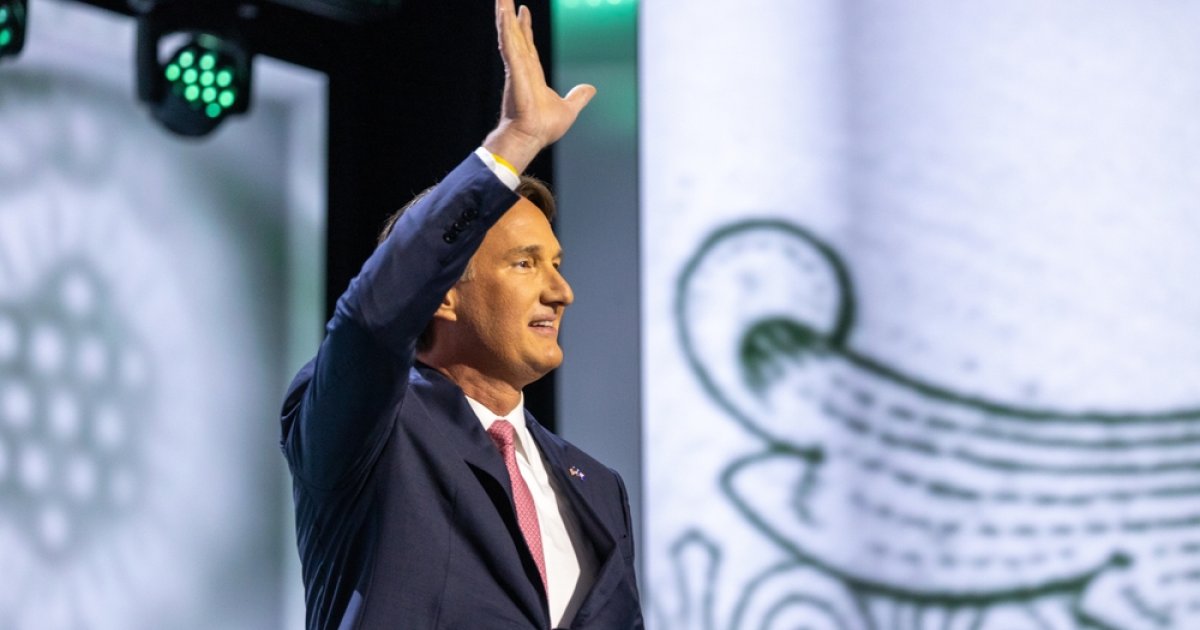
After FIRE’s opposition and outreach on this bill, Gov. Glenn Youngkin just prevented that from happening by vetoing HB 2479.
The Virginia General Assembly passed HB 2479 to suppress “altered” and AI-generated depictions of candidates — enforced with threats of fines and even jail time — unless a conspicuous disclaimer was added. Instead of trusting the public to decide what’s true, false, or credible, HB 2479 would have violated the free speech rights of Virginians to make the government into the arbiter of truth.
This bill would’ve made it illegal for virtually any Virginian to sponsor an “electioneering communication” that contains “altered” or AI-generated images or audio recordings of identifiable candidates running for elected office. This included messages appearing in print, TV, radio, or online platforms within 60 days of an election.
Not only would it have included traditional paid campaign ads, but anyone’s speech expressing support for or against a candidate that involves the exchange of something of value and appears in a paper, a broadcast, or is promoted online for a fee. This could include using an AI tool that requires a paid license or even posting on a social media platform using a paid premium account that many platforms offer to extend the content’s visibility and reach.
What “altered” means is anyone’s guess — but the government would be the decider. Any edit that created a “fundamentally different impression” of the photo or video could count, meaning it could have covered even simple edits like cropping a photo. If an image of a candidate was cropped to fit onto a page, an aggrieved candidate could sue and argue that the crop created a “fundamentally different impression” from the original if the portion cropped out removed some kind of context — such as part of the background or another person.
And every speaker was covered, not just mud-slinging political opponents. Suppose a small business owner buys space in a newspaper to highlight how a mayor running for reelection failed to address public safety concerns outside her shop. If she includes a slightly edited and unflattering image of the mayor, she could have been sued — even if the content is not misleading (or even relevant).
The disclaimer requirement wouldn’t have solved the bill’s problems, and in fact created new ones. The First Amendment protects both your right to speak your mind and to hold your tongue, but disclaimers force you to utter government-mandated speech. Even worse, the disclaimer here could have actually misled voters into thinking that someone is spreading falsehoods — even if the ad was factually accurate — simply because edited or AI-generated material was included.
Lawmakers certainly need to protect the electoral process, but this bill would have done the opposite, and it restricted far more speech than necessary to prevent true voter deception. It therefore was unlikely to withstand judicial scrutiny.
The better, constitutional way to fight falsehoods that arise during campaigns is to let candidates fight speech with more speech. If an ad is misleading or outright wrong, candidates can and should point it out. Should any depictions of candidates rise to the level of being actually defamatory, Virginia already has laws to address it. Otherwise, the First Amendment protects our right to use expressive tools like AI to enhance political communication.
Our system of government hinges on the freedom to freely express our opinions about candidates for public office. We commend Youngkin for his veto, which will help preserve the First Amendment rights of Virginians and ensure a vibrant, open political discourse.
“The algorithm won’t push posts that aren’t dramatic enough,” Keller said. “If I want something to go viral, I need to communicate differently.”
Popularity and popular elections
Effects of algorithms can be seen all around the world. In Romania, the 2024 presidential election was annulled due to alleged disinformation on social media platforms. During the 2022 national election campaign in the Philippines, social media played a significant role in the rapid spread of disinformation narratives.
In Germany, social media significantly influenced the 10% increase in votes in the recent election for the far right party Alternative for Germany(AfD) compared to 2021. A notable factor was Elon Musk’s promotion of the AfD on Twitter.
In Switzerland, direct democracy allows citizens to vote directly on laws and policies. This system is a core part of its governance, with frequent referendums and initiatives shaping political decisions.
On average, there are 3-4 national votes per year, which could make the direct democracy even more susceptible to social media than other types of democracies, as people get to vote on smaller issues than presidential elections, which only happen once every four years. This makes the political processes more inclusive.
As online campaigns grow more popular, social media can play a larger role in votes. However, Switzerland still relies heavily on traditional media sources for political news consumption. A recent report by research and consulting firm Publicom AG found that 58% of voters form their opinions through radio, TV or print media. Most of these are neutral and based on the information given by the national news agency SRG. That means there is less polarization.
A generational change
By contrast, only 16% actively turn to social media to establish a viewpoint. However, these numbers may be misleading. The popularity of social media has been on the rise; for instance, in 2017, just 12% of the population sourced their news from these platforms. It is also important to note that the study groups all voters into one category.
When focusing specifically on the younger demographic, aged 15–29, the shift is more pronounced. In this age group, social media usage for news has increased by 11 percentage points since 2020, now reaching 40%.
Despite the significant engagement of young people with news through social media, Switzerland’s democratic system remains largely unaffected. Keller said that the average voter in the country is approximately 55.
While the influence of social media in Switzerland right now may only be marginal, this could change in the future, once these younger generations, which heavily rely on social media for news, enter the political landscape.
Many of the students we go to school with acknowledged that social media shapes their beliefs. “It depends on how reliable the source is,” said one 16-year old who we spoke to. “But if a lot of people say the same thing and if I also hear it on multiple platforms, then I’ll probably start believing it too.”
Positive aspects of social media
A repeated theme seemed to be, appropriately, repetition. Our schoolmates seem to equate repetition with credibility. “I think it could [influence my beliefs], if I see the same information multiple times across multiple platforms,” said one student, aged 15.
Another said that he would question the information he sees but ultimately he would end up believing it. “If I see 10 posts about the CDU [German political party], for example, and they are all positive, I think about what their arguments are, and if they make sense, then yeah, I think I’d believe it,” he said.
So even though it might not be necessary to implement additional regulations regarding the usage of social media in political campaigns right now, it might become necessary in the future as social media continues to grow in importance.
Social media in the political process isn’t all about misinformation. It can also provide a platform for people to discuss political issues, regardless of their party. Keller sees social media as an opportunity.
“I’m more of an optimist than a pessimist,” Keller said.
For example, Keller said, if he wanted to start a referendum campaign, he could post about that and find other people to help organize it. That also allows people the opportunity to communicate directly with politicians.
“Nowadays a lot of them are on social media platforms,” he said. “You can tell them your opinion directly … and sometimes they even reply.”
For more about the power of repetition in news coverage check out this News Decoder Top Tip.
Three questions to consider:
1. How can a single social media post affect an election? 2. What do the authors mean by politicians becoming “personalities”? 3. In what ways are you influenced by what you read or see on social media?
Recently, on a WBUR public radio program with Willis Ryder Arnold and Deborah Becker, author and leading First Amendment attorney James Goodale had some things to say about Donald Trump’s attempts to intimidate the press.
He has been called “the father of the reporter’s privilege” in the Hastings Law Journal because of his interpretation of the Branzburg case.
And now on to Goodale’s comments on WBUR regarding Trump:
So, if you’re not going to fight for your creativity, you’re not going to have a company left. And that applies not only to newspapers, but obviously movies, too. And let me say also, finally, that if you don’t fight, what Trump is going to do, he’s going to go from media company to media company with quasi true cases and pick up money. He’s just on a . . . bribery trail. And I say that from some experience here in New York City, which is exactly what he did before he ran for president. He’d sue everybody who was in the media business and drive them nuts, and the cases would finally go away.
But guess what? It cost the media company some bucks to defend it.
[. . .]
I believe that once the press starts making settlements where it has no real basis, in my humble opinion, for making them, it undercuts that whole role, and more importantly, I think it encourages someone like Trump to keep on doing it.
Similarly, in an exchange with Trevor Timm for The Freedom of the Press Foundation on Feb. 12, Goodale had this to say:
If CBS decides to settle [the “60 Minutes” lawsuit], it will be an absolute disaster for the press. It would be one more domino falling down, handing Trump an undeserved victory against the press. . . . [ABC’s] cowardly settling its case in which George Stephanopoulos said “rape” instead of “sexual abuse,” but since then, Facebook has settled Trump’s even more outlandish suit, and for what? CBS should be standing up and fighting Trump. If I’m them, I’m not letting Trump make me look foolish. Because if it happens, there will be no end. Trump will bring lawsuits against every part of the media, and it will put pressure on everyone else to settle.
Let me make clear that the lawsuit is a bunch of nonsense. Trump’s legal theory doesn’t exist anywhere in the law, and so not only is the settlement bad in terms of putting the onus on everyone else to settle, but the entire premise of the lawsuit is ridiculous. News outlets are allowed to edit interviews! Hard to believe it even has to be said.
[ . . . ]
The suit is from Mars. To my knowledge, I’ve never seen a suit brought like this one where editing is being criticized as constituting consumer fraud. It has no basis in law as far as I’m concerned, and what’s going to happen — if, in fact, the case is settled — is there will be more consumer fraud cases every time the media edits an interview, not only with Trump, but other politicians. And the First Amendment will suffer.
[ . . . ]
[And] the response by the press as we speak has been pathetic. There’s no spokesperson for the press who is out there leading the charge and coordinating a united front with all the news outlets on the same page.
Related
Revenge Storm: ‘Chill all the Lawyers’
“Under my watch, the partisan weaponization of the Department of Justice will end. America must have one tier of justice for all.” — Pamela Bondi (Confirmation hearing for U.S. Attorney General, Jan. 15)
“There are a lot of people in the FBI and also in the DOJ who despise Donald Trump, despise us, don’t want to be there. We will find them. Because you have to believe in transparency, you have to believe in honesty, you have to do the right thing. We’re gonna root them out and they will no longer be employed.” — Pamela Bondi (March 3)
WATCH VIDEO: Trump Signs Anti-Weaponization Executive Order: ‘The Deranged Jack Smith Signing!’
The administration is acting in ways that will necessarily chill a growing number of lawyers from participating in any litigation against the federal government, regardless of who the client is. That, in turn, will make it harder for many clients adverse to the Trump administration to find lawyers to represent them — such that at least some cases either won’t be brought at all or won’t be brought by the lawyers best situated to bring them.
[ . . . ]
[W]hat the Trump administration is doing is far more than just bad behavior; it’s a direct threat to the rule of law—almost as much as defying court orders would be.
Related
Executive Watch
President Donald Trump and his ally Elon Musk portray themselves as near-absolutists when it comes to free speech, engaged in an epic fight to let Americans speak openly again after years of enduring liberal efforts to shut down conservative voices.
But since taking office, the president has mounted what critics call his own sweeping attack on freedom of expression. Some of it aims to stamp out diversity, equity and inclusion and what he terms “radical gender ideology.” Some of it is aimed at media organizations whose language he dislikes. In other cases, the attacks target opponents who have spoken sharply about the administration.
Together, critics — and in some cases, judges — have said Trump’s efforts have gone beyond shaping the message of the federal government to threaten the First Amendment rights of private groups and individuals.
New report on state threats to free speech advocacy and donor privacy
Hurt feelings from the campaign trail fuel retaliatory disclosure demands across the U.S.
Legislative and regulatory proposals in as many as 34 states pose a potential threat to the privacy and free speech rights of donors to the nonprofit community, a new report finds. People United for Privacy Foundation (PUFPF), a national privacy rights advocacy group, warns that state officials are increasingly targeting the ability of nonprofit supporters to maintain their privacy as political polarization rises.
“After a bruising campaign season, many politicians are out for revenge against the groups and donors that dared to criticize them. These efforts reach far beyond traditional political committees to target nonprofits that discuss elected officials’ voting records or advocate on policy issues. Forcing nonprofits to publish their supporters’ names and home addresses is an intimidation tactic that chills free speech and violates personal privacy,” said PUFPF Vice President Matt Nese, a co-author of the report.
The report, “2025 State Threats to Donor Privacy and Nonprofit Advocacy,” analyzes current and past legislation, regulatory proposals, and statements by public officials to catalog potential threats to donor privacy in state legislative sessions occurring across the country.
Forthcoming book on how foreign authoritarian influence undermines freedom and integrity within American higher education
Sarah McLaughlin
A revealing exposé on how foreign authoritarian influence is undermining freedom and integrity within American higher education institutions.
In an era of globalized education, where ideals of freedom and inquiry should thrive, an alarming trend has emerged: foreign authoritarian regimes infiltrating American academia. In Authoritarians in the Academy, Sarah McLaughlin exposes how higher education institutions, long considered bastions of free thought, are compromising their values for financial gain and global partnerships.
This groundbreaking investigation reveals the subtle yet sweeping influence of authoritarian governments. Universities leaders are allowing censorship to flourish on campus, putting pressure on faculty, and silencing international student voices, all in the name of appeasing foreign powers. McLaughlin exposes the troubling reality where university leaders prioritize expansion and profit over the principles of free expression. The book describes incidents in classrooms where professors hesitate to discuss controversial topics and in boardrooms where administrators weigh the costs of offending oppressive regimes. McLaughlin offers a sobering look at how the compromises made in American academia reflect broader societal patterns seen in industries like tech, sports, and entertainment.
Meticulously researched and unapologetically candid, Authoritarians in the Academy is an essential read for anyone who believes in the transformative power of education and the necessity of safeguarding it from the creeping tide of authoritarianism.
Sarah McLaughlin is a senior scholar of global expression at the Foundation for Individual Rights and Expression
Nadine Strossen on ‘The Weimar Fallacy’
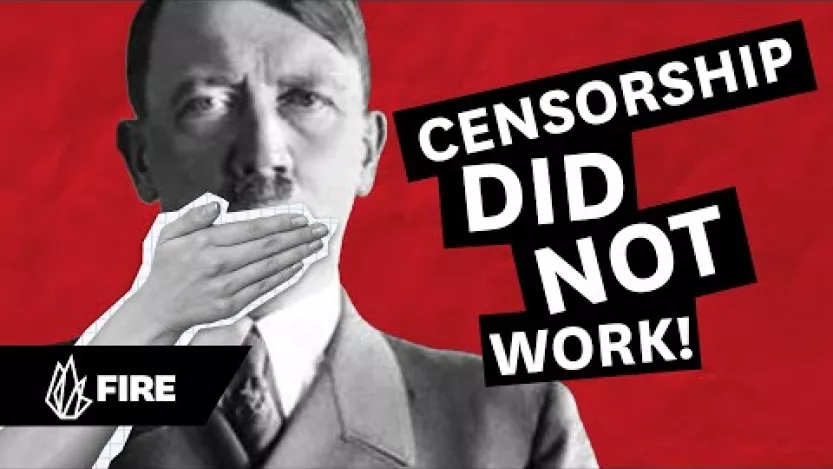
FIRE Senior Fellow and former ACLU President Nadine Strossen discusses what is commonly known as The Weimar Fallacy: The idea that, if only the Weimar Republic in Germany had tamped down on Nazis and anti-Semitic speech, Hitler’s rise and the horrors of the Holocaust could have been averted.
As the daughter of a Holocaust survivor, Nadine knows just how ugly anti-Semitism can be — but censorship only makes it worse.
The truth is, there were many hate speech laws in Weimar Germany, and they were strongly enforced against the Nazis — including Hitler himself.
Not only did those hate speech laws help the Nazis gain power, they also helped the Nazis censor anyone who challenged it.
WATCH VIDEO: Would “hate speech” laws have stopped the Nazis?
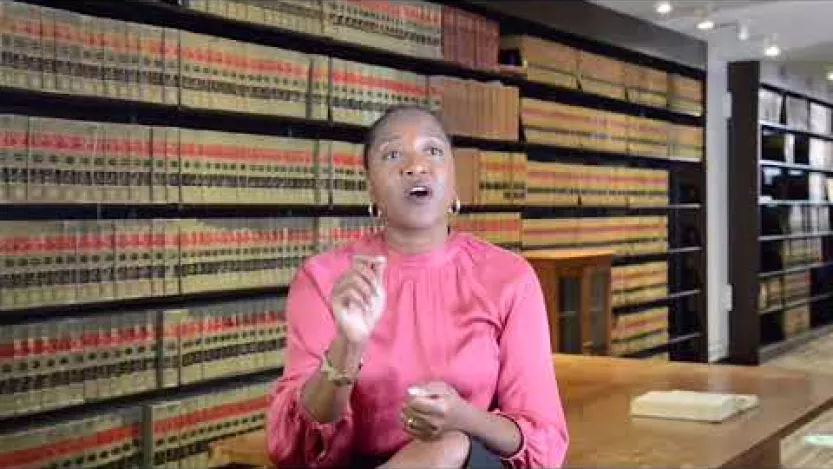
NAACP-LDF’s Janai Nelson on racism and book banning
LDF Associate Director-Counsel Janai Nelson speaks on the legal challenges to banned books, LDF’s legacy of using the law in order to transform society, and why progress toward racial justice requires we tell the truth about our nation’s history.
WATCH VIDEO: Banned Books Week: Janai Nelson on Ideas & Action
New Book by Gene Policinski traces history of First Amendment
First amendment, threats and defenses have, for much of the past 100 years, largely focused on protecting individual speech, the right of any one of us to express ourselves without interference or punishment by the government. But there is an increasing danger to our core freedoms from systemic challenges, which often involve other issues or circumstances, but which carry a First Amendment impact, if not wallop. – Gene Policinski
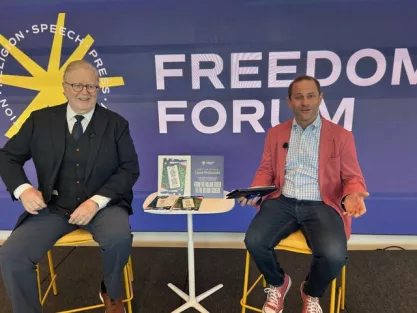
Gene Policinski (left) and Kevin Goldberg at Freedom Forum on Feb. 26, 2025. (Credit: Ron Collins)
This fast-paced history of the First Amendment will engage students, educators, scholars and other fans of our nation’s most fundamental freedoms.
In “The First Amendment in the 21st Century,” Gene Policinski, Freedom Forum senior fellow for the First Amendment and past First Amendment Center president, traces the history of the First Amendment through its winding social and legal paths as it has intertwined with world events and cultural change.
He explores how this history shows today’s potential for a First Amendment renaissance even amid new technological challenges.
Deeply researched and clearly written, “The First Amendment in the 21st Century” reconciles the past and the present and opines on the future of our First Amendment freedoms — from the courtroom to the chat room.
New scholarly article: First Amendment Right to Affirmative Action
I discuss various complexities and counterarguments: (1) Race is not different from sex or sexual orientation for purposes of the doctrine. (2) The market context may not matter, especially after 303 Creative. (3) The conditional-federal-funding context does give the government more power than a simple regulatory context; the government will still be able to induce race-neutrality by the threat of withdrawing federal funds, but the unconstitutional conditions doctrine precludes draconian penalties such as withdrawing all funds from the entire institution based only on affirmative action in some units. (4) This theory doesn’t apply to public institutions.
I also explore the potential flexibilities of this theory, based on recent litigation. The scope of the Boy Scouts exception might vary based on (1) what counts as substantial interference with expressive organizations, (2) what counts as a compelling governmental interest, and, most importantly, (3) what it takes for activity to be expressive.
More in the news
2024-2025 SCOTUS term: Free expression and related cases
Cases decided
Villarreal v. Alaniz(Petition granted. Judgment vacated and case remanded for further consideration in light of Gonzalez v. Trevino, 602 U. S. ___ (2024) (per curiam))
Murphy v. Schmitt (“The petition for a writ of certiorari is granted. The judgment is vacated, and the case is remanded to the United States Court of Appeals for the Eighth Circuit for further consideration in light of Gonzalez v. Trevino, 602 U. S. ___ (2024) (per curiam).”)
TikTok Inc. and ByteDance Ltd v. Garland (The challenged provisions of the Protecting Americans from Foreign Adversary Controlled Applications Act do not violate petitioners’ First Amendment rights.)
This article is part of First Amendment News, an editorially independent publication edited by Ronald K. L. Collins and hosted by FIRE as part of our mission to educate the public about First Amendment issues. The opinions expressed are those of the article’s author(s) and may not reflect the opinions of FIRE or Mr. Collins.
College students often have a complicated relationship with social media, with a large number of learners active on multiple social media platforms but also aware of the negative mental health consequences social media can have.
Teens receive hundreds of notifications on their phones every day, with over half of one study’s participants receiving more than 237 notifications per day. Nearly one in five teens say they’re on YouTube or TikTok almost constantly, according to a 2023 survey from Pew Research.
A May 2024 Student Voice survey by Inside Higher Ed found one-third of respondents indicated social media was one of the biggest drivers of what many call the college mental health crisis.
A recent study authored by a group of researchers from Michigan State University and published in the Journal of Contemporary Issues in Education evaluates how students with disabilities interact on social media and build social capital.
Researchers found disabled students—including those with autism, anxiety, attention-deficit and/or hyperactivity disorder—were more likely to seek out new relationships and engage in active social media posting, which can advance connectedness and relationships among learners.
The background: While social media can offer users social supports, such as promoting a sense of belonging during times of transition or crisis, it also poses risks for young people, including cyberbullying and online harassment, according to the study.
Previous studies show youth with disabilities experience higher rates of cyberbullying compared to their peers, but students with disabilities are also more likely to report they receive social support through social media, which could be tied to the social isolation they can experience in person.
Existing literature often focuses on the negative effects of social media for young adults with disabilities, but it is not known if there are differences between the experiences of those with and without disabilities and their social media habits.
“Understanding different learners’ experiences with social media could help college faculty, special education professionals, and counselors not only consider using social media to create more welcoming and supportive learning environments but also how they might play a role in building individual learner’s capacity for positive digital participation,” researchers wrote.
Methodology: Researchers conducted a survey of college undergraduates in the U.S. with and without disabilities in fall 2021, collecting data on social media use, social capital and psychological well-being. In total, 147 students responded to the survey.
From this sample, researchers selected five individuals with and five individuals without disabilities to participate in semistructured interviews. Participants were matched based on social media habits and demographic factors, such as gender.
Results: Through postsurvey interviews with 10 students, researchers learned that while both groups of students engage on social media for personal entertainment and to stay connected with people in their social circles, students with disabilities were more likely to say they used social media to initiate and grow relationships.
All five participants without disabilities used Snapchat to interact with friends or keep in touch with loved ones in an informal manner, and all participants used Instagram to stay up-to-date with their peers.
Among the five participants with disabilities, students reported using more social media platforms individually, and these learners were more likely to use TikTok (which in fall 2021 first hit one billion monthly active users compared to Instagram’s then-two billion users) compared to their peers. Students reported using TikTok for watching videos, sharing humor with their friends or participating in larger community building, including professional learning networks or cosplaying.
Students without disabilities were more likely to say social media made no difference on their relationships or that it positively impacted their relationships by allowing them to stay in touch over geographical distances or other barriers.
Similarly, all students with disabilities said social media assisted with their relationships, allowing them to connect with new people, expand their community and help manage their disabilities by connecting with others.
Some respondents with disabilities said they felt more confident to engage with strangers in a safe way online and that social media was an avenue to find like-minded people they wouldn’t ordinarily interact with, allowing them to build new relationships. This was a unique trend to students with disabilities; those without were more likely to say they use social media to engage with people they already had relationships with.
Students with disabilities may have greater challenges with in-person socialization, which researchers theorize makes social media particularly important for these learners, who also said they’re more likely to post on social media versus passively scroll.
Interacting with others in the disability community and breaking stigma around disability was another theme in conversations with disabled students. These interactions could be with peers who share their disability or from medical professionals or support groups who provide new information.
One limitation to the research was social desirability bias, or respondents’ tendency to answer questions in a way that would please researchers, meaning students underreport undesirable behaviors. The sample included only female and nonbinary students, which creates further limitations to the data.
Put in practice: Researchers offered some suggestions for how educators can utilize this data to create a more inclusive learning environment, including:
Integrating social media into the classroom. While some digital learning platforms have forums for community building, such as a discussion board, these platforms can be less accessible than traditional social media platforms.
Facilitating personalized learning environments. Higher education leaders can consider ways to use social media to create formal and informal learning experiences in and around courses. These learning environments can also include methods for peer communication and connection, helping make learning more collaborative.
Engaging on social media themselves. Self-disclosure by professors can help build relationships in the classroom and enhance learning, but instructors must weigh safety, privacy and other legal boundaries in their social media usage. This could be one way to model positive social media usage for students, including how to have productive interactions with others.
In the future, researchers see opportunities for analysis of design, implementation and evaluation of social media interventions for connection among students with disabilities, such as peer mentoring programs, online support groups or digital storytelling. There should also be consideration of the long-term effects of social media use on students’ mental health and well-being.
Get more content like this directly to your inbox every weekday morning. Subscribe here.
AUSTIN, Texas, Feb. 7, 2025 — After a lawsuit from the Foundation for Individual Rights and Expression and Davis Wright Tremaine, a district court today stopped enforcement of a Texas law that would have blocked access to broad categories of protected speech for minors and forced websites to collect adults’ IDs or biometric data before they can access social media sites.
Northern District of Texas Judge Robert Pitman granted FIRE’s motion for a preliminary injunction against provisions of the Securing Children Online through Parental Empowerment Act (SCOPE Act) requiring content monitoring and filtering, targeted advertising bans, and age-verification requirements, ruling that these measures were unconstitutionally overbroad, vague, and not narrowly tailored to serve a compelling state interest.
“The court determined that Texas’s law was likely unconstitutional because its provisions restricted protected speech and were so vague that it made it hard to know what was prohibited,” said FIRE Chief Counsel Bob Corn-Revere. “States can’t block adults from engaging with legal speech in the name of protecting children, nor can they keep minors from ideas that the government deems unsuitable.”
The SCOPE Act would have required social media platforms to register the age of every new user. Platforms would have been forced to track how much of their content is “harmful” to minors and, once a certain percentage is reached, force users to prove that they are 18 or older. In other words, the law would have burdened adults who wanted to view content that is fully legal for adults, serving as an effective ban for those who understandably don’t trust a third-party website with their driver’s license or fingerprints.
The law also required websites to prevent minors from being exposed to “harmful material” that “promotes, glorifies, or facilitates” behaviors like drug use, suicide, or bullying. That definition was far too vague to pass constitutional muster: whether speech “promotes” or “glorifies” an activity is inherently subjective, and platforms had testified that they would be forced to react by censoring all discussions of those topics.
Today’s ruling should serve as yet another warning to states tempted to jump on the unconstitutional bandwagon of social media age verification bills.
“At what point… does alcohol use become ‘substance abuse?’” asked Judge Pitman in his ruling. “When does an extreme diet cross the line into an ‘eating disorder?’ What defines ‘grooming’ and ‘harassment?’ Under these indefinite meanings, it is easy to see how an attorney general could arbitrarily discriminate in his enforcement of the law.”
FIRE sued on August 16 on behalf of three plaintiffs who use the Internet to communicate with young Texans and keep them informed on issues that affect them. A fourth plaintiff, M.F., is a 16-year-old rising high school junior from El Paso who is concerned that Texas is blocking his access to important content.
Lead plaintiff Students Engaged in Advancing Texas represents a coalition of Texas students who seek to increase youth visibility and participation in policymaking.
Nope to SCOPE: FIRE sues to block Texas’ unconstitutional internet age verification law
Press Release
Texans browsing your favorite websites, beware. If the state has its way, starting next month, the eyes of Texas may be upon you.
“Young people have free speech rights, too,” said SEAT Executive Director Cameron Samuels. “They’re also the future voters and leaders of Texas and America. The SCOPE Act would make youth less informed, less active, and less engaged on some of the most important issues facing the nation.”
Earlier, Judge Pitman enjoined the content moderation requirements while ruling on a separate lawsuit from the Computer & Communications Industry Association and Netchoice. Judge Pitman ruled in August that Texas “cannot pick and choose which categories of protected speech it wishes to block teenagers from discussing online.”
“This is a tremendous victory against government censorship, especially for our clients—ordinary citizens—who stood up to the State of Texas,” said Adam Sieff, partner at Davis Wright Tremaine. “The Court enjoined every substantive provision of the SCOPE Act we challenged, granting even broader relief than its first preliminary injunction. We hope this decision will give other states pause before broadly restricting free expression online.”
Texas lawmakers perhaps could have predicted today’s ruling. Age verification laws have been enjoined by courts across the country in states like California, Arkansas, Mississippi, Ohio, and even initially in Texas, in another law currently before the Supreme Court for review.
“Today’s ruling should serve as yet another warning to states tempted to jump on the unconstitutional bandwagon of social media age verification bills,” said Corn-Revere. “What these laws have in common is that they seek to impose simplistic one-size-fits-all solutions to address complicated problems.”
The Foundation for Individual Rights and Expression (FIRE) is a nonpartisan, nonprofit organization dedicated to defending and sustaining the individual rights of all Americans to free speech and free thought — the most essential qualities of liberty. FIRE educates Americans about the importance of these inalienable rights, promotes a culture of respect for these rights, and provides the means to preserve them.
CONTACT:
Alex Griswold, Communications Campaign Manager, FIRE: 215-717-3473; [email protected]
Administrators at the University of Wyoming have agreed to cut student media funding by only 8.5%, repudiating a censorial student government proposal to punish student media by cutting the funding by 75% because students “don’t like” student newspaper the Branding Iron’s editorial choices. The change came after FIRE wrote to the university, explaining that the proposed funding cut was based on the content of the student newspaper, flagrantly violating the First Amendment.
On Nov. 19, the Associated Students of the University of Wyoming passed a resolution recommending a drastic 75% cut to the fee that funds student media, including the student newspaper Branding Iron. The resolution, drafted by the Tuition Allocation and Student Fee Review Committee, cited staffing challenges, the quantity of advertising, and supposed “errors” in content as reasons for the cut. During the debate, several senators made their true motivations plain, tying their votes to personal distaste for the Branding Iron’s editorial choices, writing quality, and student opinions.
When they distribute student fee funding, student government members exercise state power. The First Amendment bars the government, and the students to whom it delegates its power, from taking away resources based on the content of a media outlet’s expression. For good reason.
Student media often have to write critical stories about their peers, administrators, and student government officials. So it goes when serving as a check on power, but that work would be nigh impossible without the First Amendment’s guarantee that citizens cannot be retaliated against for what they say. Cutting funding based on content impairs student journalists’ ability to confidently report on the world around them, and FIRE has beat backsimilarefforts across the country.
Student media is the microphone that makes sure all these voices are heard. And FIRE is here to make sure that mic is never cut off.
Though several student senators argued they had no “vendetta” against the student paper, their reliance upon opinions about the content of student media was enough to render their decision content-based. And any content-based restriction, however innocuous the stated motivation, must be regarded with a jaundiced eye lest those in power go unchecked.
Thanks to FIRE’s efforts, student journalists at UW are back to covering events in their community and beyond.
Having such dedicated staff on the local beat is especially important in places like Wyoming, where there are fewer outlets to cover local issues.
“When we look at the University of Wyoming, and we consider that it is the only four year university in our entire state, our student media’s impact is so much more important,” said Branding Iron editor-in-chief Ven Meester. “We are a college campus in one of the reddest states in the nation. From student organizations, to speakers, to community events, we have an exceptional amount of political diversity.”
Student media is the microphone that makes sure all these voices are heard. And FIRE is here to make sure that mic is never cut off.
FIRE defends the rights of students and faculty members — no matter their views — at public and private universities and colleges in the United States. If you are a student or a faculty member facing investigation or punishment for your speech, submit your case to FIRE today. If you’re a faculty member at a public college or university, call the Faculty Legal Defense Fund 24-hour hotline at 254-500-FLDF (3533). If you’re a college journalist facing censorship or a media law question, call the Student Press Freedom Initiative 24-hour hotline at 717-734-SPFI (7734).
What happens to freedom of the press when the president can bully media outlets he doesn’t like into paying big money to end his meritless lawsuits against them?
Buckle up. We’re about to find out.
Per reports, Paramount Global — the parent company of CBS News — is in talks to settle a $10 billion dollar lawsuit President Donald Trump filed against the network last November shortly after the election. The president’s lawsuit claims “60 Minutes,” the network’s flagship news program, violated the Texas Deceptive Trade Practices Act by editing an interview with Vice President Kamala Harris to make her more appealing to viewers.
The suit is flatly without merit. For starters, editing interviews is standard journalistic practice. Just ask FOX News, which has edited its own interviews and coverage of the president to tighten up rambling answers. Those cuts are protected by the First Amendment, which guarantees the press broad freedom to make editorial decisions about the content they print or air. And laws like Texas’ are designed to prevent used car salesmen from passing off lemons to unsuspecting buyers, not to police journalism.
That’s why CBS’ initial public statements about Trump’s suit rightly struck a defiant and principled tone. The network promised it would “vigorously defend” itself, correctly arguing Trump’s attempt to “punish” CBS for its editorial choices is “barred by the First Amendment.”
So what happened? Why is CBS now reported to be capitulating? There are two reasons, neither of them good for our free and independent press: Money and power.
Trump’s lawsuit isn’t concerned with winning so much as imposing a financial and political cost on people that say things he doesn’t like.
First, the money. Paramount Global hopes to merge with Skydance Media, a deal worth some $8 billion to heiress Shari Redstone, Paramount’s owner — but only if it’s approved by the Federal Communications Commission.
That’s where the raw governmental power comes in. Brendan Carr, Trump’s pick to run the FCC, has made clear in public comments that the agency’s review of the merger will take into consideration Trump’s “news distortion complaint.” And in private, Carr reportedly warned Paramount that addressing Trump’s dissatisfaction was a precursor to approval. In other words: Nice little network you got there — be a shame if anything happened to it.
This kind of pressure from government regulators — “jawboning” — is all the more objectionable when it’s aimed toward the personal benefit of the president. Rather than stand up for the journalists at CBS, Redstone appears to be playing ball, even handing over an unedited transcript to the FCC after refusing to do so for months.
What is jawboning? And does it violate the First Amendment?
Issue Pages
Indirect government censorship is still government censorship — and it must be stopped.
Our litigious president is fresh off settling his 2021 lawsuit against Meta, which alleged the company’s decision to ban Trump from Facebook after Jan. 6, 2021, violated his First Amendment rights. Like his suit against CBS, Trump’s class action suit was without merit; private social media companies have their own First Amendment right to run their platforms as they see fit. They are not government actors, as the district court dismissing the cases against social media companies easily concluded. Nevertheless, the company agreed this week to pay $25 million to end the appeal. Meta CEO Mark Zuckerberg, who attended the president’s inauguration, appears to have concluded that settling the suit was a small price to pay for political favor and access.
Late last year, Trump also settled with ABC News for $15 million dollars, ending a defamation suit. That suit centered on a George Stephanopoulos interview with Rep. Nancy Mace during which Stephanopoulos mischaracterized the outcome of writer E. Jean Carroll’s successful sexual abuse and defamation claims against the former president. Stephanopoulos stated that Trump was “found liable for rape” and “defaming the victim of that rape,” when a jury had concluded Trump sexually abused Carroll — not that he raped her, as the term is narrowly defined in New York’s criminal code.
Trump’s dictatorial appetite to use lawfare to silence or punish outlets that publish content he doesn’t like is most plainly on display in his ongoing suit against pollster J. Ann Selzer and The Des Moines Register.
ABC’s case presented real challenges, but the network may have been able to mount a sturdy defense. The First Amendment provides news outlets significant breathing room when commenting on public figures like President Trump, as established in the Supreme Court’s landmark 1964 ruling New York Times v. Sullivan. While the jury specifically rejected finding Trump guilty of rape, the district court judge noted the “definition of rape in the New York Penal Law is far narrower than the meaning of ‘rape’ in common modern parlance, its definition in some dictionaries, in some federal and state criminal statutes, and elsewhere.”
Per reports, however, the network ultimately chose to settle what might have proven to be a challenging case rather than risk Trump’s ire — or provide the current Supreme Court a potential opportunity to weaken Sullivan’s broad protections. After all, the plaintiff has been loud and clear about his desire to “open up” American libel law.
Trump’s dictatorial appetite to use lawfare to silence or punish outlets that publish content he doesn’t like is most plainly on display in his ongoing suit against pollster J. Ann Selzer and The Des Moines Register.
FIRE’s defense of pollster J. Ann Selzer against Donald Trump’s lawsuit is First Amendment 101
News
A polling miss isn’t ‘consumer fraud’ or ‘election interference’ — it’s just a prediction and is protected by the First Amendment.
Selzer, hailed for decades by political observers as the dean of Iowa polling, conducted an early November poll published by The Register giving Harris a three-point lead in the Hawkeye State. Despite correctly forecasting Trump’s Iowa victories in 2016 and 2020, Selzer’s polling missed the mark this cycle. But Trump wasn’t content to take the win, choosing instead to file a claim against her under Iowa’s Consumer Fraud Act.
FIRE represents Selzer against the president’s bogus claim. Americans have a First Amendment right to make political predictions, and newspapers have a First Amendment right to publish them. But Trump’s lawsuit isn’t concerned with winning so much as imposing a financial and political cost on people that say things he doesn’t like. That’s un-American.
Elections have consequences, it’s true. But silence cannot be one of them. We must protect our free press against meritless lawsuits and the coercive power of the federal government — lest we miss it when it’s gone.