Tag: Meet

  • Spirit of adventure – meet the Nepalese study abroad guides

    Spirit of adventure – meet the Nepalese study abroad guides

    Nepal has long been synonymous with the legendary ‘Sherpa’ mountain guides, skilled in helping international travellers explore the Himalayas.

    There is also however, a more recent tradition of local education guides helping their compatriots to seek out adventure and opportunity through study abroad.

    In the past, this demand favoured Australia as a study destination, but since the Albanese government introduced increased visa restrictions, that demand has increasingly turned to alternative destinations like the US, France, Japan and the UK.

    According to ONS data, more than 9,000 study visas were issued to Nepalese students studying in the UK as of March 2024 but the true number is undoubtedly higher in the year since.

    The PIE News visited Franklin International, a leading local agent, to better understand the factors supporting growth.

    Away from the chaotic streets of Kathmandu, where thousands of agent offices operate within a square mile in a district known as ‘Putalisadak’, Franklin International has chosen instead to base its national headquarters in the foothills of peaceful Pokhara.

    Here we find an operation that feels more like a family than an agency. There aren’t any cut-outs of Big Ben; instead, they favour a comfortable working atmosphere for staff and students.

    There is an office full of people diligently running document checks, taking calls, and running webinars with their prospective students across Nepal.

    I meet a team packing for a 17-day tour of the country to meet applicants face-to-face – giving them a chance to outline important next steps and reassure family members.

    There are entire rooms of people dedicated to supporting universities like the University of Roehampton and the University of East London, for whom they facilitate close operational relationships that deliver hundreds of compliant student enrolments.

    “The UK demand is still in its infancy,” company CMO and co-founder, Deepak Khadka tells me.

    “The number of students applying has grown rapidly, but the knowledge about the UK process is limited among most people,” he continues.”There are too many agents looking for short-cut commission – so we have had to build a system in partnership with British universities to focus on the compliance checks they need.”

    This is a price-sensitive market, with only 15-20 universities offering financially viable course options. This has created a unique bubble where large numbers of students are following each other to the same university in each intake. Word of mouth is a key driver of demand.

    This volume has, in turn, triggered an explosion in Nepalese agent activity as the potential for high commission levels is clear.

    At a higher education event in Kathmandu, The PIE met teams of young friends, often still in their 20s or early 30s, keen to get involved and cash-in on prospective students from their neighbourhoods.

    “We have a choice to make in Nepal,” explains Khadka. “We either compete as agents, or we try and work together to best support the students.”

    Having completed his doctorate in agent supply chains from UWS, his understanding of the Nepalese market is crucial.

    “We try to act as supportive guides for these other guys. They have so much energy and ambition – but we must make sure the professional compliance is water-tight when processing applications,” he tells The PIE. “We have the expertise to do this correctly. We call this the Official University Representative network to convey that message.”

    Khadka is keen to stress that he and his fellow agents care far more about the students they work with than pitting themselves against one another.

    “I care about Nepal’s future. We don’t want to make the same mistakes as other countries or regions,” he says.

    “We want our young people to succeed in their study abroad adventures – and I would rather work together for a better system, than get drawn into a territorial battle. We are proud that this model is being recognised by our UK partners and local officials here.”

    Overseas education agencies must have government approval to operate in Nepal, leading to conflict over online aggregator models trying to undercut this licensing.

    I care about Nepal’s future. We don’t want to make the same mistakes as other countries or regions
    Deepak Khadka, Franklin International

    Local protocol can be complicated as students need to obtain a ‘No Obligation Certificate’ from the government to study abroad, and many turn to government-backed student finance options to prepare their budgets.

    Vidhi Mistry, head of international operations for the University of Roehampton, explains her approach to the market: “In Nepal, when there are thousands of agents, it’s not about being everywhere. A university doesn’t need to work with every agent.

    “A right partnership is about aligning values, intent and quality that prioritises reputation and longevity. Agents can elevate the sector or dilute it. Exclusivity when earned and aligned isn’t a restriction, it is a strategy for sustainable growth [in a chaotic market].”

    The PIE spoke to Sajan, a Nepalese student who has an offer to study at the University of West Scotland London campus. He explained his reasoning for working with an agency.

    “I have friends already at UWS London and they love it. I didn’t need help with choosing which university or course I wanted, but I had to make sure my finances and visa are processed correctly,” he says. “My father and I have been guided to understand my required budget and each step of the process. I am very grateful.”

    With the UK government announcing future plans to tighten visa issuance for countries linked to asylum claims, and to clamp down on universities linked to poor compliance metrics – it is important the Nepal market doesn’t grow too fast, too soon.

    Strong demand will undoubtedly bring greater competition, so only time will tell if universities and agents can get regulate themselves to realise the opportunity.

    Source link

  • English language requirements under the microscope: Do you have what it takes to meet your university’s English language entry requirements for international students?

    English language requirements under the microscope: Do you have what it takes to meet your university’s English language entry requirements for international students?

    • By Tamsin Thomas, Senior Strategic Engagement Manager, Duolingo English Test.

    The English language proficiency of international students is once again under the microscope. Heightened scrutiny is being driven by media coverage of international admissions, including The Times and BBC Radio 4’s File on 4, as well as the new immigration white paper. The Home Office is currently tendering for an English test for immigration purposes and has also undertaken a review of university English testing arrangements.

    There are growing questions about how UK universities assess English proficiency, which tests are accepted, and what governance arrangements are in place to ensure that students have the level of English they need to succeed. These are valid and necessary discussions.

    But it’s also true that much of the debate is happening without lived experience. Most contributors to this conversation — from media commentators to admissions professionals and policymakers — have never sat a high-stakes English language test themselves, certainly not as an entry requirement for studying in another country. That gap matters.

    How Do International Students Currently Meet English Language Requirements?

    UK universities have built robust and nuanced systems for assessing English proficiency, shaped by decades of global engagement. These typically fall into three broad categories:

    • Secondary school qualifications: Many countries offer high school-level English that meets UK university entry standards. For example, iGCSEs, the IB, Hong Kong’s HKDSE, or Germany’s Abitur are often accepted without additional testing.
    • Standardised English proficiency tests: Many international students – especially those from countries where English is not the primary language of instruction – take tests like IELTS, TOEFL, or the Duolingo English Test (DET) in addition to their school diplomas.
    • Evidence of prior study in English: If a student has completed at least three years of education in English at the tertiary level, this can meet requirements under a “Medium of Instruction” policy.

    In countries like India and Nigeria, the situation is more complex. Both operate parallel education systems – some in English, others in regional languages. Students with strong English scores in the Indian Standard XII (CBSE, ISC) or the West African WAEC are often accepted without further testing. Graduates of other boards may need to take a test.

    These frameworks are diverse by design – reflecting the deep, often country-specific, relationships and expertise UK universities have developed over time.

    While the media sometimes focuses on the small minority of international students whose English may fall short, it’s worth remembering that perfection is not the benchmark. Most international students meet entry requirements – and universities have systems in place to support language development throughout the degree. After all, only a small percentage of UK students get a Grade 9 in GCSE English, and developing academic English skills is part of what universities train students to do. Language proficiency exists on a spectrum – the question isn’t whether students are fluent on entry, but whether they have the foundation to succeed.

    What Happens When a New Test Enters the Market?

    As a relatively new entrant to this space, the Duolingo English Test – now accepted by over 40 UK universities – has seen firsthand how institutions evaluate and onboard new tests.

    Typically, the process reflects a practical need to expand the range of tests, paired with a careful scrutiny process – usually via committee:

    • Recruitment teams identify a test that meets student demand or addresses market access barriers.
    • Admissions teams assess delivery method, validity, and the external evidence base.
    • English-language colleagues evaluate whether the test provides evidence that students can succeed academically on campus.
    • Compliance teams consider immigration implications and policy compatibility – is the test secure?

    Tests are often accepted provisionally, with performance tracked for one to two years, however long it takes to build up enough data to make an informed decision. Institutions benchmark outcomes against long-accepted credentials: Do the score thresholds align, and are there heightened compliance risks?

    The process is rarely quick, but it is thorough.

    What Does Good Governance Look Like?

    While most UK universities use similar criteria for test evaluation, governance structures vary. In some institutions, decisions sit with dedicated English policy working groups; in others, with international admissions committees. Sometimes responsibility is split between professional services and academics. In others, it’s entirely devolved to professional services.

    This variation isn’t necessarily a problem but it does mean there’s no single ‘sector-wide’ process for evaluating or monitoring English tests.

    As an online test provider, one gap that has always seemed under-discussed is the practical reality of actually taking a test. If you’re a student in Afghanistan, where crossing borders is difficult and test centres don’t operate, how are you supposed to prove your English proficiency? If you’re a mobility-impaired test taker in a country without inclusive building regulations, how do you sit a test at all? The global distribution of test centres is far from comprehensive.

    Join the Conversation — Enter the DET University Challenge

    Here’s the challenge: put yourself in an international student’s shoes. Could you meet your own university’s English language entry requirements?

    The DET University Challenge 2025 invites UK university staff – whether English is their first language or not – to sit an English proficiency test similar to those taken by millions of international students each year.

    The Challenge offers a practical, engaging way for staff to experience a process usually reserved for students. It’s a prompt for reflection – and yes, maybe a little fun along the way.

    At a time when English requirements are under increasing public, political, and policy scrutiny, there’s real value in taking a closer look at the systems we rely on – and at how they feel from the other side.

    So: do you have what it takes to meet your university’s English language entry requirements?

    The DET University Challenge is open until 31 May 2025 with participants able to win up to £5,000 in prize money for their university or a designated Higher Education access charity. Terms and conditions apply.

    Source link

  • Meet the Students and Staff Shaping Your College Experience

    Meet the Students and Staff Shaping Your College Experience

    By knowing about and engaging with these key figures on campus, you can make the most of your college experience and set yourself up for success.

    Kate Lehman, Ph.D.

    Director, National Resource Center for the First-Year Experience and Students in Transition, University of South Carolina

    Katie Hopkins

    Associate Director for Faculty Development and Resources, University 101 Programs, University of South Carolina

    Congratulations! You’ve made it to your first day of classes! You are excited by the opportunities before you…and overwhelmed. Colleges and universities employ a host of staff and faculty whose primary role is to support your success. Part of your tuition and fees go to support these folks — you should use them! Meet the 10 people you need to maximize your college experience.

    Faculty, instructors, and teaching assistants (TAs)

    You’re surely familiar with the folks teaching your courses. Use office hours to get to know your instructors. Ask them how they got into their fields and why they love their work. You might be interested in a similar topic, land yourself a research opportunity, or find yourself a new mentor!

    Academic advisers

    Course registration should not be the last time you speak with your academic advisor! Academic advisers help anytime you are thinking about your course of study, whether you want to drop a class, change your major, add a minor, take a summer class, or figure out how to work a study abroad program into your plan. 

    Librarians

    Librarians have magical skills to make your classwork so much easier. Okay, it’s not really magic, but they can help you find awesome sources for class papers and teach you about technical resources like citation management software to make your work a lot easier!

    Student success and academic support staff

    Is chemistry or calculus stressing you out? Your institution has a student success center or a tutoring center to help. Our advice: Get help as soon as you start feeling overwhelmed. Don’t wait until you’re really behind!

    Financial aid team

    You have probably already received your financial aid package, but life happens. If your financial situation changes, the financial aid office is your first call. They might adjust your aid package and/or connect you to additional financial resources. 

    Health center and counseling center staff

    You probably know to go to the health center if you sprain an ankle or have a sinus infection, but the medical and counseling team can help with a lot more. If you are feeling overwhelmed or are struggling, schedule an appointment to gain access to counseling sessions, support groups, and workshops to help you feel your best (all things which are included in your tuition and fees). 

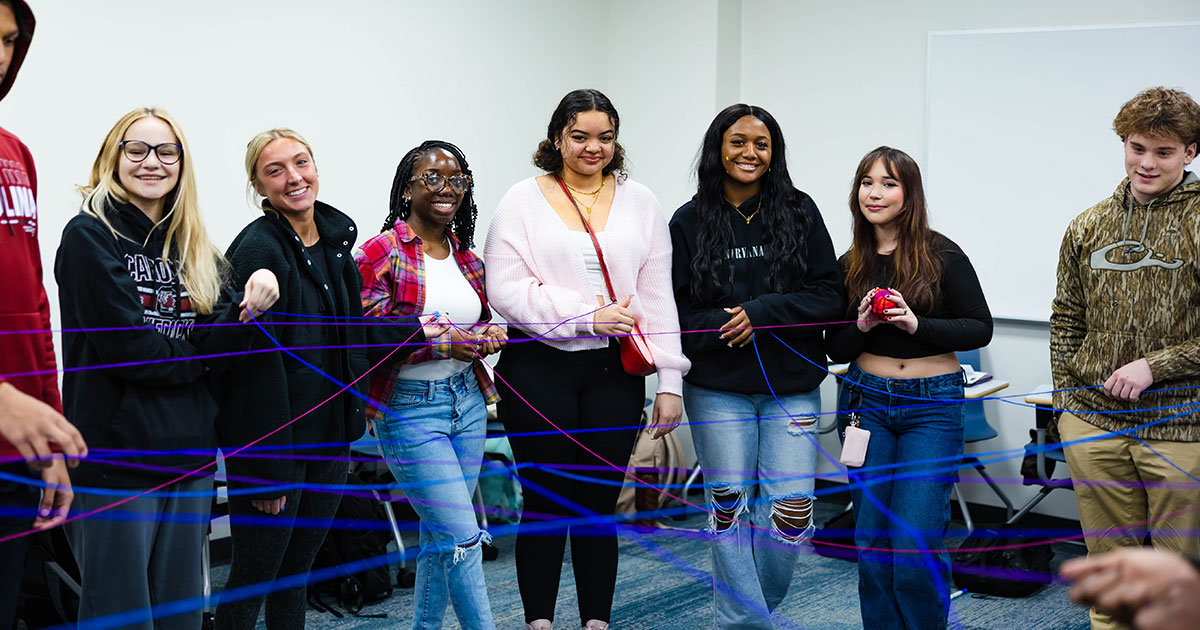
    First-year students at the University of South Carolina participate in a team-building activity in their first-year seminar course. | Photo by Logan White

    Career center staff

    Whether you have mapped out a career plan or have no clue what you want to do, your career center staff can help! It’s not just for seniors — career centers help with career exploration, internships, resume development, and interview skills. They might even be able to help you find an on-campus job so you can build career skills and start earning money while you’re a student. 

    Disability services staff

    If you received accommodations in high school, be sure to register with disability services on your campus, as those do not automatically roll over. These may be related to dietary restrictions, learning disabilities, or mental health conditions. They can work with you to ensure you have what you need to be successful! 

    Student activities and recreation services staff

    You didn’t just come to college to study and work, right? Join a student organization, attend fun events, play on an intramural sports team, or take a group exercise class! Besides having a good time, you’ll grow your leadership, teamwork, and communication skills and make friends.

    Friends and peer mentors

    Decades of research on college student success tell us that your fellow students, or your peers, are key to your success. Many of the campus offices employ student staff members, often called peer mentors. By getting involved on campus, you will make friends who support and encourage you. 

    The folks outlined here can help you get the most out of your college experience. Don’t ever hesitate to ask someone a question, introduce yourself, or try a new resource; it can only help! These amazing people will help find the opportunities that will shape your future. As you build connections with them, you will find friends and mentors to last a lifetime.

    Source link

  • CoSN2025 Takeaways: Meet the Winners

    CoSN2025 Takeaways: Meet the Winners

    Honors for edtech leaders across the country are always a highlight of one of edtech’s most influential events of the year. The innovations shared and insights delivered are what drive the best strategies for districts in the months and years to come. Below are some details:

    The CoSN Volunteer of the Year Award recognizes the achievements of one CoSN member who has provided exemplary support to the organization over the past year. Mike Daugherty of Chagrin Falls Exempted Village School District (OH) is this year’s winner. Mike has been a tireless volunteer and an invaluable leader in Ohio’s educational technology community. During the pandemic, he served as Chair of the Ohio CoSN chapter and extended his term an extra year to support the group during a critical time. One of his most impactful contributions has been the creation and leadership of a highly successful CETL study group. What began under his leadership during his time as Chair has grown into an annual fall cohort that meets weekly through the end of the year, guiding participants through the CETL framework. Thanks to Mike’s dedication, Ohio now has around 20 new CETLs each year — more than any other state.

    More News from eSchool News

    Teachers are superheroes. Every day, they rise to the challenge, pouring their hearts into shaping the future. They stay late to grade papers and show up early to tutor struggling students.

    We are again in uncertain times. We again find ourselves dealing with sudden changes and uncertainty. We seem to be in a state of constant change and ambiguity.

    In today’s evolving educational landscape, effective student assessment goes beyond multiple-choice tests and letter grades. According to a recent study, over 60 percent of educators believe traditional assessments fail to fully measure student understanding.

    Holden, my 21-month-old, has fallen in love.  His early morning snack and “couch time” includes a dose of “Tiger!”  This is toddler for, “Mom, turn on Daniel Tiger’s Neighborhood.”

    The COVID-19 pandemic left an indelible mark on K-12 education, placing immense pressure on teachers as they adapted, literally overnight, to new methods of instruction.

    Spring brings not only showers and flowers, but it also brings the opportunity to interview for new education positions. Preparing for an interview involves several key steps that can significantly impact the outcome.

    STEM careers are on the rise. According to the U.S. Bureau of Labor Statistics, employment in STEM occupations is expected to grow by 10.4 percent from 2023 to 2033, compared to just 3.6 percent for non-STEM occupations.

    The U.S. Department of Education is giving state education agencies 10 days to certify that their schools do not engage in any practices that the administration believes illegally promote diversity, equity, and inclusion.

    COVID had already killed thousands of people in other countries and was spreading in the United States when a top federal health official said schools should prepare to offer “internet-based teleschooling” in case they had to close for a period of time.

    More than half of educators (62 percent) are already making use of AI at school, with more than one-quarter using it daily for work purposes, according to a Twinkl survey of more than 3,500 U.S. teachers.

    Want to share a great resource? Let us know at [email protected].

    Source link

  • Trump Sets Demands Harvard Must Meet to Regain Federal Funds

    Trump Sets Demands Harvard Must Meet to Regain Federal Funds

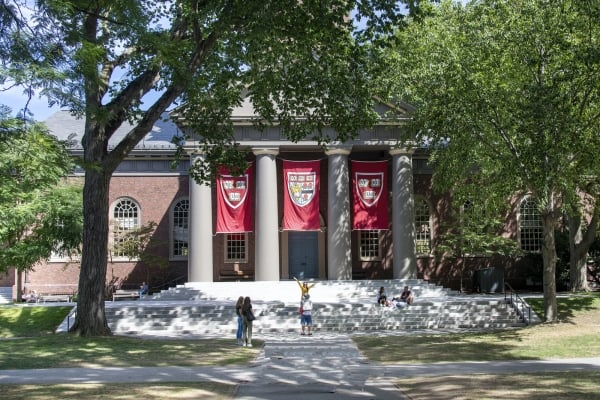
    The Trump administration presented Harvard University with a letter Thursday outlining “immediate next steps” the institution must take in order to have a “continued financial relationship with the United States government,” The Boston Globe reported and Inside Higher Ed confirmed.

    The ultimatum came just three days after the president’s Joint Task Force to Combat Anti-Semitism notified the university it had been placed under review for its alleged failure to protect Jewish students and faculty from discrimination. If the case follows the precedent set at other universities, Harvard and its affiliate medical institutions could lose up to $9 billion in federal grants and contracts if they do not comply.

    Sources say the move is driven less by true concern about antisemitism on campus than by the government’s desire to abolish diversity efforts and hobble higher ed institutions it deems too “woke.” This week alone, the administration has retracted funds from Brown and Princeton Universities. Before that, it targeted the University of Pennsylvania and Columbia University and opened dozens of civil rights investigations at other colleges, all of which are ongoing.

    Many of the task force’s demands for Harvard mirror those presented to Columbia last month, including mandates to reform antisemitism accountability programs on campus, ban masks for nonmedical purposes, review certain academic departments and reshape admissions policies. The main difference: Columbia’s letter targeted specific departments and programs, while Harvard’s was broader.

    For example, while the letter received by Columbia called for one specific Middle Eastern studies department to be placed under receivership, Harvard’s letter called more generally for “oversight and accountability for biased programs [and departments] that fuel antisemitism.”

    Inside Higher Ed requested a copy of the letter from Harvard, which declined to send it but confirmed that they had received it. Inside Higher Ed later received a copy from a different source.

    Some higher education advocates speculate that the Trump administration’s latest demands were deliberately vague in the hopes that colleges will overcomply.

    “What I’ve learned from various experiences with higher ed law is that it’s unusual to be general in legal documents,” said Jon Fansmith, senior vice president of government relations and national engagement for the American Council on Education. Trump’s “open-ended” letter “starts to look like a fishing expedition,” he added. “‘We want you to throw everything open to us so that we get to determine how you do this.’”

    But conservative higher ed analysts believe the demands—even when broadened—are justified.

    “Many of these are extremely reasonable—restricting demonstrations inside academic buildings, requiring participants and demonstrations to identify themselves when asked, committing to antidiscrimination policies, intellectual diversity and institutional neutrality,” said Preston Cooper, a senior fellow at the American Enterprise Institute.

    Still, he raised questions about how certain mandates in the letter will be enforced.

    “When you see this in the context of the federal government trying to use funding as a lever to force some of these reforms, that’s where one might raise some legitimate concern,” he said. “For instance, trying to ensure viewpoint diversity is a very laudable goal, but if the federal government is trying to … decide what constitutes viewpoint diversity, there is a case to be made that that is a violation of the First Amendment.”

    What Does the Letter Say?

    The demands made of Harvard Thursday largely target the same aspects of higher ed that Trump has focused on since taking office in January.

    Some center on pro-Palestinian protests, like the requirements to hold allegedly antisemitic programs accountable, reform discipline procedures and review all “antisemitic rule violations” since Oct. 7, 2023.

    Others focus on enforcing Trump’s interpretation of the Supreme Court’s 2023 ruling on affirmative action; the university must make “durable” merit-based changes to its admissions and hiring practices and shut down all diversity, equity and inclusion programs, which the administration believes promote making “snap judgments about each other based on crude race and identity stereotypes.”

    The letter was signed by the same three task force members who signed Columbia’s demand letter: Josh Gruenbaum, commissioner of the Federal Acquisition Service; Sean Keveney, acting general counsel for the Department of Health and Human Services; and Thomas Wheeler, acting general counsel for the Department of Education.

    The most notable difference in Harvard’s letter is that the task force is demanding “full cooperation” with the U.S. Department of Homeland Security. That department and its Immigration and Customs Enforcement agency have been arresting and revoking visas from international students and scholars who, the government says, are supporting terrorist groups by participating in pro-Palestinian protests.

    Will Harvard Capitulate?

    Harvard already appears to be taking steps to comply. On Wednesday, the university put a pro-Palestinian student group on probation. The week before, a dean removed two top leaders of the Center for Middle Eastern Studies, which has been accused of biased teaching about Israel.

    A letter to the campus community from university president Alan Garber also suggested capitulation is likely.

    “If this funding is stopped, it will halt life-saving research and imperil important scientific research and innovation,” Garber wrote following the task force’s review. “We will engage with members of the federal government’s task force to combat antisemitism.”

    But Fansmith noted such actions may not be enough to predict whether Harvard will fully acquiesce to the Trump administration’s demands.

    “If you look at all of these institutions over the last two years, they’ve been making a number of changes in policies, procedures, personnel and everything else,” he said. “And a lot of that was happening and was at pace before this administration took office and started sending letters.”

    Harvard was one of the first three universities that the House Committee on Education and the Workforce grilled about antisemitism on campus in December 2023. Shortly after, then-president Claudine Gay—the first Black woman to lead Harvard—resigned. The university has since been working to make changes at the campus level.

    Both Fansmith and Cooper pointed to Trump’s mandates regarding curriculum as the most likely to face opposition, as was the case at Columbia.

    A little over a week after the Trump administration laid out its ultimatum, Columbia capitulated and agreed to all but one demand: The university refused to put its department of Middle Eastern studies into receivership, a form of academic probation that involves hiring an outside department chair. Instead, it placed the department under internal review and announced it would hire a new senior vice provost to oversee the academic program.

    “You need to be making sure that Jewish students are not subject to harassment,” Cooper said. But “where that crosses the line is if the federal government is telling the universities … ‘this is how you have to appoint somebody to put an academic department into receivership,’ as was the original demand made of Columbia.”

    Regardless of how Harvard responds, one thing seems likely: There are more funding freezes to come.

    “A lot of folks were expecting Columbia to file a legal challenge, and when that didn’t happen, that might have emboldened the administration a bit to go after some of these other institutions,” Cooper said. But sooner than later, “one of these institutions might say, ‘We’re not going to make the reforms.’”

    “I don’t have a great guess as to which institution that will be,” he added, “but I would expect we probably will see a lawsuit at some point.”

    Source link

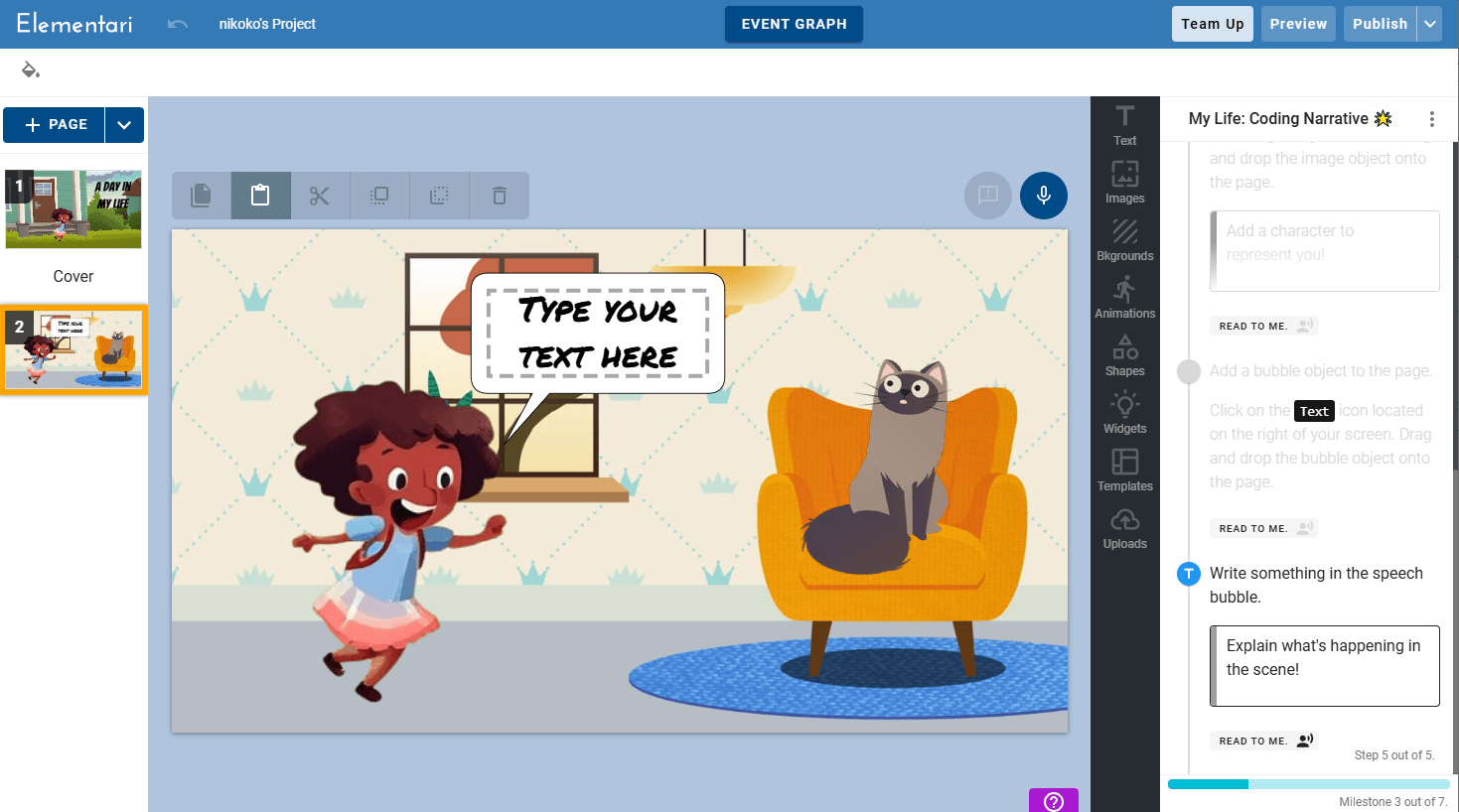
  • Elementari: Where Creativity and Coding Meet in Your Classroom

    Elementari: Where Creativity and Coding Meet in Your Classroom

    Introduction

    Ever stumble upon a tool that makes you think, “Where has this been all my teaching life?” That’s Elementari  —a platform where creativity, literacy, and coding come together to spark your students’ imaginations. From crafting interactive stories to designing apps and games, Elementari helps students bring their ideas to life while keeping things aligned with Common Core, ISTE, and other key standards.

    It’s the kind of tool that makes teaching feel a little more fun—and learning a lot more exciting.

    What Makes Elementari Shine

    Elementari isn’t just another edtech tool—it’s a creative playground designed to help students write, code, and share their big ideas. Here’s what sets it apart:

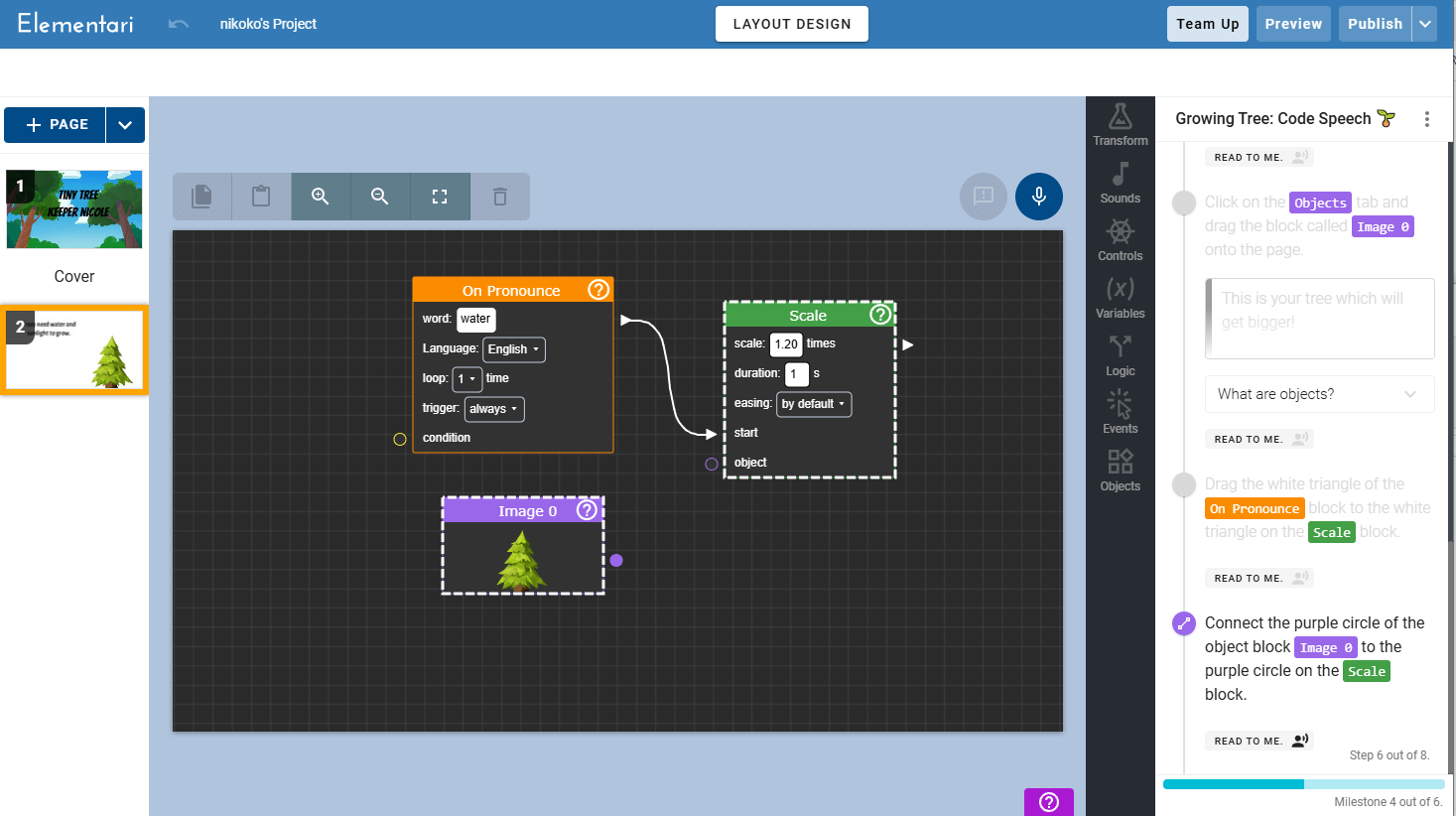
    • Step-by-Step Support: Writing and coding can feel intimidating, but Elementari guides students every step of the way with visual organizers, clear prompts, and auto-validating steps that build their confidence.
    • Drag-and-Drop Magic: Forget complicated coding syntax—students can animate, add voiceovers, and create interactions with a simple drag-and-drop interface inspired by professional platforms like Unreal Engine.
    • Professional-Quality Media Library: With thousands of illustrations and sound effects (or the option to upload their own), students can bring their stories to life. Bonus: every project automatically credits media assets.
    • Collaboration in Real Time: Whether it’s a group graphic novel or a team-built escape room game, Elementari’s collaboration tools make working together a breeze.

    With features like these, Elementari takes creativity to the next level while keeping it accessible for every student.

    Where Creativity Meets Every Curriculum

    Elementari isn’t just for ELA classrooms—it’s a versatile platform that fits into any subject with ease:

    • English Language Arts: Students can dive into storytelling by creating branching narratives, graphic novels, or even choose-your-own-adventure stories. It’s a fresh way to develop writing and revision skills.
    • Science: Bring STEM to life with projects like a water cycle story, complete with animations and voiceovers to illustrate key concepts.
    • Social Studies: Build interactive timelines or design a Climate Justice Activism App to encourage research, critical thinking, and problem-solving.
    • Research Across Subjects: Let students upload their own images, weave in research findings, and present their work as interactive stories or apps.

    No matter the subject, Elementari turns standard assignments into interactive, student-driven projects that spark engagement and deeper learning.

    Try It for Free (Really!)

    Elementari’s Forever Free Plan isn’t just a quick trial—it’s a full-fledged way to bring creativity and coding into your classroom without spending a dime. Here’s what’s included:

    • One Classroom, Up to 35 Students: Perfect for single-class use, this plan lets students dive into interactive storytelling, app design, and game creation.
    • Media Library Access: Students can choose from thousands of professional illustrations and sounds to make their projects shine.
    • Guided Lessons and Tools: With step-by-step guidance and drag-and-drop coding, students can build confidence while creating something truly their own.
    • Publishing and Sharing: Even with the free plan, students can publish their work responsibly, complete with automatic media credits to teach ethical creativity.

    Need a little more? Elementari’s paid plans offer additional features:

    • Teacher Plans: Support up to 150 student accounts, unlock custom image uploads, and access premium tools like detailed feedback options and exclusive illustrations.
    • School Plans: Starting at just $2 per student, these plans are scalable for schools and districts, offering bulk discounts to fit your budget.

    No matter the plan, Elementari makes creativity accessible, engaging, and affordable for every classroom.

    Empowering Educators, Inspiring Students

    Elementari isn’t just for students—it’s designed to make teachers’ lives easier while ensuring every student can thrive.

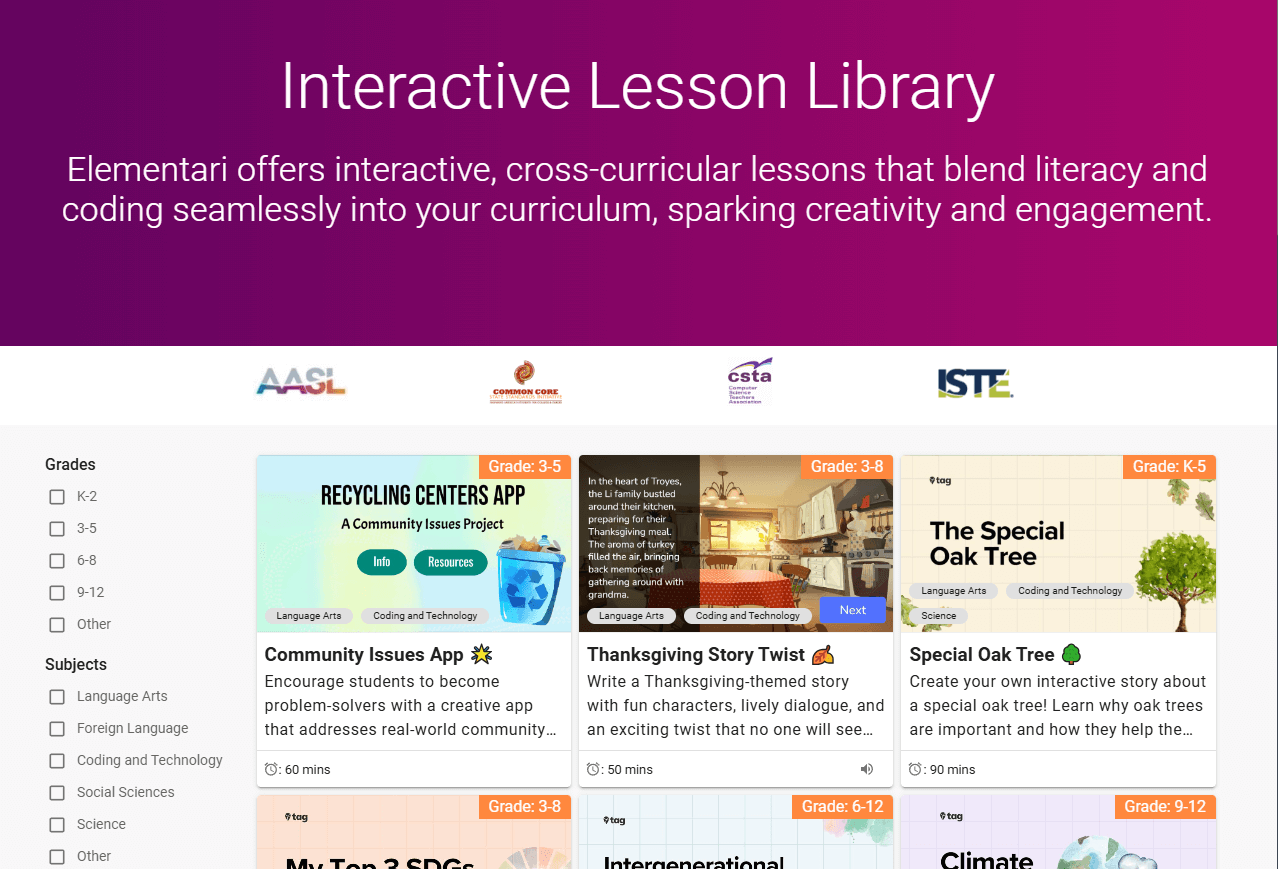
    • Standards-Aligned Lessons: Elementari’s library is packed with scaffolded lessons that meet Common Core, ISTE, and other key standards. Whether you’re teaching ELA, science, or social studies, you’ll find ready-made activities that save time without sacrificing quality.
    • Teacher-Friendly Features: From drag-and-drop tools to detailed feedback options, Elementari empowers teachers to guide students through creative projects, even without prior coding experience.
    • Seamless Integration: The platform works with Google Classroom, Clever, and Classlink, making setup quick and painless.

    Inclusivity is at the heart of Elementari’s mission, ensuring that all learners can succeed:

    • Accessible for All: With features like visual cues, multimedia options, and “read-to-me” functionality, Elementari supports neurodiverse learners,  ELL students, and those of varying abilities.
    • Projects for Every Age: Younger students can craft picture books or graphic novels, while older ones tackle advanced challenges like interactive apps or escape room games.
    • Collaboration and Creativity: Students can work together in real time, building teamwork skills while sharing ideas and learning from one another.

    Elementari’s thoughtful design ensures that no matter the classroom, every student and teacher has the tools they need to succeed.

    Time to Level Up Your Classroom

    If you’re ready to take creativity and learning to new heights, Elementari is your go-to platform. Whether your students are crafting their first graphic novel or building interactive timelines, Elementari brings coding, literacy, and storytelling together in a way that’s both fun and educational.

    Classwork.com  (formerly Classwork) is another fantastic tool to enhance your teaching. With its Content Assistant, you can easily create auto-graded assignments that align with your students’ Elementari projects, giving them a cohesive and interactive learning experience.

    Why wait? Explore Elementari’s Forever Free Plan today and see how it can ignite a passion for creativity and critical thinking in your classroom.

    Source link

  • Heat networks could help institutions meet net zero targets

    Heat networks could help institutions meet net zero targets

    Heat networks enable heat and hot water to be distributed from a central ‘energy centre’, via mainly underground pipes, to multiple buildings.

    Boiler systems in connected buildings would be replaced with new infrastructure, to enable circulation of heat from the network. The energy centre becomes the source of the heat supply.

    Heat networks have a long history — with the first networks being tested nearly 150 years ago. Distribution of heat from a centralised heat source was taken forward in New York city in the late nineteenth century. In the UK, heat networks were used in blocks of flats in the 1960s and 70s. Denmark was one of the first countries to start using heat networks on a wide scale, in response to the oil crisis in 1973. Currently, heat networks are commonly used in Scandinavia and Eastern Europe and in cities across the USA and Canada. There are around 14,000 heat networks in the UK with many being campus-style, providing heat to groups of social housing or hospital/NHS campuses.

    Modern heat networks can utilise sources of low carbon heat. These include energy from waste facilities, geothermal sources, solar thermal arrays, air and ground source heat pumps and data centres.

    Participating in a heat network is likely to be more environmentally friendly and, in some cases, more cost-effective than maintaining older, inefficient gas-fired heating systems.

    Funding available

    It’s estimated that fifty per cent of buildings in the UK are located in areas suitable for the construction of a heat network, which currently supply around 2 to 3 per cent of the UK’s heat. The Committee on Climate Change predicts that in order to meet net zero targets (with around 20 per cent of heat supply being from heat networks), it is estimated that investment will need to be around £60 to £80 billion by 2050.

    The government has confirmed its support for the sector, as re-iterated at November’s Association for Decentralised Energy Conference by Miatta Fahnbulleh, Minister for Energy Consumers. The government has set a target for at least 18 per cent of the UK’s heat demand to be met from heat networks by 2050. Over £600 million of government funding has been allocated to develop and improve heat networks.

    The government’s recently published “Clean Power 2030” action plan sets out that the national wealth fund will make available an expanded suite of financial instruments, as part of investment in heat networks and other clean energy sectors.

    The Department for Energy Security and Net Zero already significantly supports the sector via capital grant funding from the Green Heat Network Fund. Education institutions have a range of grant options available to them. One example is the Public Sector Decarbonisation Scheme (via its delivery body, Salix Finance), being a fund dedicated to supporting energy efficiency and decarbonisation initiatives.

    Financial support for heat networks is supplemented by the work of other bodies such as the Heat Networks Industry Council, which is a joint industry and Government forum that aims to grow the heat network sector.

    Taken together, it is clear that there is genuine ambition to ensure that heat networks play a key role in helping the UK meet its net zero ambitions.

    Notable heat network developments

    A number of major heat network projects are underway, including the hugely ambitious South Westminster Area Network (referred to as “SWAN”), which will supply low carbon heating to the Houses of Parliament, the National Gallery and large areas of Whitehall, and the Leeds PIPES heat network, which connects to over 3000 dwellings.

    The existence of these projects, and numerous others, is evidence of a growing trend in the emergence of heat networks as a major contributor to the UK’s net zero ambitions.

    Campus based networks

    Heat networks can work well on campus-style facilities. Given the location of the projects mentioned above, city-based higher education institutions should also consider whether it is feasible for their buildings to connect to a heat network, and whether a heat network is planned in their area.

    There are a number of recent adopters of heat networks in the education sector, including the University of Liverpool, the University of Bradford and the University of Warwick, with many more universities considering becoming heat off-takers.

    Heat networks present academic institutions with an exciting opportunity to forge the way in supporting both new sources of heat, and decarbonising heat in urban areas.

    Regulation matters

    Aside from regulations that govern billing and metering, the heat network sector is not regulated. This, however, will change – the heat networks market framework regulations 2025 (currently in draft) is to come into force in stages over the next 12 months.

    Future regulation is subject to ongoing consultation, which includes consideration of how different groups of consumers are to be protected, and specific arrangements on standards of conduct and billing transparency.

    In particular, the proposed regulations do not specifically refer to a ‘supplier of last resort’ regime, which would enable a state-nominated entity to continue the operation of a heat network where the relevant operator had become insolvent. We understand that Ofgem and the government are considering how this would work, given the complexity of arranging for the ownership transfer of infrastructure and capital assets. We await further developments on this.

    The scheme rules of the Heat Trust, which operates to protect the interests of domestic and micro-business customers of heat networks, partly informed the content of forthcoming regulations. The Heat Trust’s voluntary scheme is intended to establish common standards of heat supply and associated customer service (with standards of service comparable to those required by Ofgem of electricity and gas suppliers). We therefore anticipate robust standards to be introduced within the regulations, for a wider group of consumers.

    Connecting to a heat network involves technical aspects relating to design, maintenance, service standards, and availability of a ‘green’ heat supply. Legal support is essential in navigating new networks as well as specialised technical support. For example, procurement risks, design and delivery risks, real estate and contamination issues, constructions issues, particularly around connection work and secondary side works, exclusivity arrangements and “change in law” provisions given forthcoming regulatory requirements.

    Mills & Reeve advises a number of Universities and other bodies on their participation in heat networks.

    If you are considering participating in a heat network and would like to speak to us about how we can help, please do contact any member of the M&R team.

    Source link

  • Colleges scramble to meet federal anti-DEI deadline

    Colleges scramble to meet federal anti-DEI deadline

    The clock is running out on colleges as they mull how to respond to a sweeping federal order to end all race-based policies and programs.

    In the face of an imminent Friday night deadline, college leaders are scrambling to determine how to navigate the Feb. 14 Dear Colleague letter issued by the Education Department’s Office for Civil Rights, which declares all race-based educational programs and policies discriminatory and illegal. When they sent the letter on Valentine’s Day, department officials gave institutions two weeks to comply or face investigations and, possibly, the loss of federal funding.

    For many colleges, the challenge is figuring out how to avoid drawing unwanted government attention without abandoning key services for underrepresented students and staff.

    Institutions aren’t going to lose federal funding overnight. The investigative process is notoriously lengthy, and the Education Department has never revoked a college’s federal funding over civil rights concerns. The OCR may also be rendered impotent, at least temporarily, if a judge decides to halt enforcement while considering a lawsuit filed Tuesday challenging the letter.

    But college leaders are anxious about the threat of federal funding cuts, which would be catastrophic for the majority of postsecondary institutions. Ray Li, who previously worked as an attorney at the Office for Civil Rights, said he expects the office to launch investigations shortly and that many colleges will buckle under the pressure, shedding practices that fostered campus diversity and belonging.

    For now, colleges seem to be taking a slow and cautious approach, removing language about race and DEI buzzwords from the names of programs and launching internal policy reviews.

    University of Nebraska president Jeffrey P. Gold said system campuses are in the midst of a comprehensive review of programs and policies, but no changes have been made yet. The Nebraska Board of Regents discussed possible tweaks to its bylaws at a recent board meeting, like removing references to “cultural diversity” and revising language on equal opportunity in employment, but no final decisions were made.

    Gold said that as the review process continues, he doesn’t expect to “turn up anything that looks or feels like discrimination,” as the letter describes.

    But it’s possible “we will turn up some things that require some language changes or possibly some changes in titles, changes in offices … that could be misinterpreted by the Department of Education just because of [the] use of specific terminology.”

    He added that Nebraska banned affirmative action in 2008 and the state’s second attempt at an anti-DEI bill is pending in the Legislature, so “we have been changing websites [and] titles for years—that’s why I believe that there’s nothing substantive that we really have to change at this time.”

    The University of Montana undertook a similar compliance review that tasked senior administrators with assessing whether their departments had any policies or practices at odds with the Dear Colleague letter.

    “We made the decision to be as thorough as possible,” said Dave Kuntz, the university’s director of strategic communications. The review, however, led to “very minimal changes and really no changes at a programmatic or operational level.”

    University leaders over all concluded that the institution was already in compliance, though some programs, like the Women’s Leadership Initiative, chose to tweak their webpages to clarify that they don’t bar anyone who wants to participate.

    A spokesperson for the Education Department did not respond to multiple questions from Inside Higher Ed in time for publication.

    A Thorough Scrubbing

    Many institutions are responding by scrubbing their websites of words like “diversity” and “inclusion.” The University of Cincinnati, Carnegie Mellon University, the University of Pittsburgh, the University of Alaska system and many more all did so after the Dear Colleague letter; some colleges had already begun revising their digital presence in response to Trump’s executive order on DEI in January.

    The University of Colorado removed all references to a former DEI office and replaced them with a website for a new “Office of Collaboration.” The University of Pennsylvania scrubbed the websites for all 16 undergraduate and graduate schools of DEI keywords and removed references to diversity and affirmative action from its nondiscrimination policies.

    Shaun Harper, a professor of education, business and public policy at the University of Southern California, said he’s been disappointed that higher ed leaders are heavily revising their institutions’ online presences in the hopes that it will appease the OCR—a project he believes will prove futile. In the Dear Colleague letter, acting assistant secretary for civil rights Craig Trainor specifically warned against using “proxies for race” and promised to investigate race-neutral programs that “discriminate in less direct, but equally insidious, ways.”

    “Scrubbing websites, launching reviews—these are the easy things to do while colleges are in ‘wait and see’ mode, to find out if that will take the target off their backs,” said Harper, an Inside Higher Ed contributor who authored a blog post last week recommending ways colleges can fight back against the Dear Colleague letter. “I think it’s both weak and reckless.”

    Some institutions have gone one step further. Colorado State University issued a statement in which leaders simultaneously maintained that its policies are already race-neutral and promised to do more to comply with the new federal directives.

    “The new administration’s interpretation of law marks a change,” the statement reads. “Given the university’s reliance on federal funding, it is necessary to take additional steps.”

    And one day before the deadline, Ohio State University president Ted Carter announced the institution would shutter two DEI offices and eliminate more than a dozen staff positions, some of the most dramatic measures a college has taken during the new Trump administration.

    In a particularly telling move, OSU’s Office of Institutional Equity will be renamed the Office of Civil Rights Compliance to “more accurately reflect its work,” according to an email sent to students Thursday.

    ‘We’ve Seen This Film Before’

    For a glimpse of how anti-DEI compliance battles might play out between institutions and policymakers, consider the red states that have passed laws mandating similar cuts to race-conscious programs.

    In Texas and Florida, public colleges reacted to impending or newly signed anti-DEI laws by changing the names of university offices and campus resources, moving personnel to student support services, and removing DEI mentions from university materials and websites. But in both cases, lawmakers came down hard to ensure the institutions took more strident action, leading to significant layoffs, spending cuts and policy changes.

    “We’ve seen the prequel to this film before in Texas,” Harper said. “When that Senate bill was looming, many institutions thought they were very smartly getting ahead of it by just renaming things. That proved to be a failed strategy, and I very comfortably predict that some version of that will also happen nationally.”

    In some states, the “review and revamp” strategy for avoiding DEI crackdowns appeared to work for a while. The University of Arkansas eliminated its DEI office in June 2023 in part to pre-empt a bill that state lawmakers were considering to force spending cuts. And last year, the University of North Carolina system Board of Trustees passed an anti-DEI resolution just as legislation was gaining steam to mandate enforcement from the state; that legislation was never brought to a full vote.

    But circumstances have changed as the Trump administration launches direct attacks on DEI. Arkansas governor Sarah Huckabee Sanders signed a law earlier this month that will “prohibit affirmative action and preferential treatment in state-supported institutions,” including public colleges like the University of Arkansas. Even in Texas, where public universities underwent broad layoffs and spending cuts in response to state legislation, lawmakers have threatened to cut $400 million in higher ed funding unless colleges do more to comply.

    “If they don’t kick DEI out of their schools, they’re going to get a lot less,” Texas lieutenant governor Dan Patrick said at a policy forum last week.

    What Happens Next?

    Legal experts say it’s unclear what will happen after the OCR’s deadline passes. The Dear Colleague letter promised more detailed guidance, but none has materialized.

    “We’re kind of all in agreement that [the letter] is really confusing and overbroad, and the timeline is really outrageous,” said Andrea Stagg, director of consulting services at Grand River Solutions, a company that works with colleges on legal compliance issues. She noted that many underresourced colleges don’t have in-house legal teams to assess their risk by the deadline.

    “What actually happens after tomorrow? How fast will it be?” she said Thursday. “I don’t know.”

    Typically, the Office for Civil Rights opens investigations based on complaints from students, families or legal advocates, but it can also launch its own direct investigations. Most cases end with a voluntary resolution, in which the institution agrees to make certain changes. But unresolved cases can be referred to the U.S. Department of Justice for litigation.

    Li believes the OCR will likely receive complaints from anti-DEI groups as well as open some direct investigations into higher ed institutions with race-based scholarships, affinity group graduation ceremonies or other practices called out by the letter, starting next week. (He pointed out that the current OCR has already launched some direct investigations into universities related to Title IX.)

    But that doesn’t mean the day after the Dear Colleague deadline “schools are just going to lose all their federal funding”—assuming normal procedures are followed, he said. Such investigations can take months, even years.

    An investigation reaching the point of litigation is also “an incredibly rare step that, under most administrations, pretty much never happens,” Li said. And the Department of Education taking away federal funding over an OCR investigation would be completely unprecedented.

    “But, also, rare things are happening right now,” Li conceded.

    Stagg said it’s hard to tell to what extent normal processes will be followed, or how much the Department of Government Efficiency’s reductions to the federal workforce could affect investigations.

    “There is a real question as to who will do these investigations” and how the OCR will choose institutions to focus on, she said. “Is there going to be an AI tool to search [college] websites for certain terms, the way we saw with the flagging of grants? It could be that the president has a bad interaction at a meeting with a leader and then they are targeted for investigation.”

    An Education Department spokesperson did not respond to questions about planned investigations, agency capacity and enforcement mechanisms in time for publication.

    It’s also unclear how much resistance colleges will put up. Li believes there’s a strong case to be made that some of the practices targeted in the Dear Colleague letter are perfectly legal. Higher ed institutions under investigation could refuse to make changes and go head to head with the Department of Justice. But they’d be signing up for an onerous, likely expensive process that puts their funding in jeopardy.

    “The question is, is anyone willing to litigate it?” Li said.

    Even if the Dear Colleague letter is rescinded, Li said the Office for Civil Rights has clearly signaled its plans for the next four years, and he believes higher ed institutions will continue working to rid themselves of anything that could attract scrutiny.

    “I think there’s going to be an overcorrection,” he said. “It is going to lead to some perfectly legal programs that support fostering racially inclusive communities on campus being taken away.”


    Source link

  • The barriers that must be removed for degree apprenticeships to meet NHS workforce targets

    The barriers that must be removed for degree apprenticeships to meet NHS workforce targets

    The recent notion that level 7 apprenticeships will be ineligible for support from the apprenticeship levy has caused consternation amongst training providers, especially in healthcare.

    Training providers and employers are urgently seeking clarity on the government’s position – the current “announcement without action” leaves stakeholders unclear about next steps and further risks the reputation and role of apprenticeships in skills development.

    The development of advanced roles in health or shortened routes to registerable qualifications significantly relies on level 7 apprenticeships. The NHS Long Term Workforce Plan is full of examples of how advanced and new roles are needed now and in the future.

    Once again, decisions are being made by the Department for Education without consulting or collaborating with the Department of Health and Social Care, which means that questions are left unanswered. It is not the first time that training providers and University Alliance have called for joined up thinking and, unfortunately, it certainly won’t be the last.

    Expansion of opportunity

    Health apprenticeships at the University of Derby started small with level 5 provision about ten years ago (subsequently expanding to levels 6 and 7) – we could not have foreseen the enormous expansion of opportunity both in health and other industries that would follow.

    I am proud to say that “I was there” when the nurse degree apprenticeship standard was approved in 2017 – the culmination of two years’ collaboration between the Nursing and Midwifery Council, government, Skills for Health, employers and training providers.

    There were challenges, but we made it, and it opened the door to transformation in how healthcare professionals are educated.

    A bumpy road

    But the journey remains bumpy, and apprenticeships seem to be experiencing a particular period of turbulence. New research conducted by the University of Derby on behalf of University Alliance demonstrates the need for change in how the levy is utilised, the importance of partnership working, and the support that those involved with apprenticeship delivery need in order to secure successful outcomes.

    While the NHS Long Term Workforce Plan of 2023 is itself being refreshed, we can be confident that apprenticeships will continue to have a significant part to play in workforce development. However, our new research has shown how and where employers and training providers need support to make this happen.

    Employers told us how expensive they find it to support apprenticeships, with apprentice salaries, backfill and organisational infrastructure contributing to the financial burden. We know that apprentices need significant support through their learning journey, taking time and investment from employers.

    To make apprenticeships truly successful, the support required is over and above that normally expected in healthcare programmes, yet apprenticeships are specifically excluded from the NHS Healthcare Education and Training tariff. This feels like a double whammy – no support from the tariff and no flexibility in how the levy could be utilised differently, meaning that the responsibility remains with the employer to resource.

    Equally, training providers reported the additional activities and responsibilities associated with the delivery of apprenticeships. The University of Derby has recently successfully completed its inspection by Ofsted. The week of the inspection required input from teams across the University, but the enduring responsibilities of compliance and record keeping make this a continuous activity for a skilled and specialist team.

    The Education and Skills Funding Agency then came hot on the tails of Ofsted – while this is not unexpected, it has again required teams from across the University working long hours to be audit ready. These inspections have served as a reminder of the regulatory burden placed on training providers, especially in healthcare.

    A matter of commitment

    Today marks the start of National Apprenticeship Week. At the University of Derby, we are hosting a week of activities and events, encouraging aspirant apprentices and a range of employers to come and find out more about what apprenticeships can do for them. It is heartening to hear that the number of young people coming to the campus this year has more than doubled since last year’s event.

    Finally, the word is beginning to spread about apprenticeships, and we find school leavers are increasingly well informed about their post-16 and post-18 options.

    The week’s events will be ably supported by our employer partners and apprentices, truly reflecting the partnerships that have developed over the years. These partnerships take a significant amount of investment on all sides – anyone in the vocational education and training world will know that strong partnerships take time and effort to build and maintain. But even the briefest of conversations with apprentices will tell you that it is all worth it. Their confidence, passion and knowledge (their skills and behaviours too) shine through. In a city like Derby, the awareness of the positive difference you are making not only to the apprentice, but also to their family and friends, is never far from your thoughts.

    It is difficult to know how the advent of Skills England will impact the pace and scale of reform, but the present inertia may set the country back – and it certainly will if a blanket approach to level 7 apprenticeship funding is adopted, and lack of join-up between DfE and DHSC remains the status quo.

    National Apprenticeship Week 2025 has the potential to be a force for good – and should be the week that all stakeholders commit to making a difference.

    Source link

  • Voices of Innovation: Meet InsightsEDU 2025 Featured Speakers

    Voices of Innovation: Meet InsightsEDU 2025 Featured Speakers

    Higher Education Speakers of InsightsEDU

    Meet the thought leaders shaping the future of higher education at InsightsEDU 2025! Taking place from February 12-14, 2025 in New Orleans, LA, this conference brings together expert voices in higher education marketing, enrollment management, and leadership to discuss the evolution of today’s Modern Learner. This year, explore the future of higher education in 38+ sessions, where our speakers will share their vast expertise and unique perspectives. From higher education leaders to enrollment professionals, these speakers are vital to the InsightsEDU experience and are ready to equip you with insights to thrive in a new era of learning.

    The lineup of featured speakers for InsightsEDU 2025 is still growing—stay tuned for exciting new announcements! Below are the confirmed featured speakers as of November 7, 2024.

    Gregory Clayton

    President of Enrollment Management Services at EducationDynamics
    With over 30 years of experience in the higher education space, Greg brings valuable expertise in enrollment management and performance marketing. As President of Enrollment Management Services at EducationDynamics, he leads a comprehensive team offering agency marketing, enrollment services, strategic consulting, and research, all tailored to the higher ed sector. His leadership and career position him as a visionary strategist, equipped to offer insightful commentary on the higher education landscape and enrollment solutions. Join his session to learn more about how to better serve the Modern Learner and implement strategies that drive institutional success.

    Session: The Evolving Expectations of the Modern Learner: How Institutions Can Adapt and Thrive

    Wendy Colby

    Wendy Colby

    Vice President and Associate Provost for Boston University Virtual (BU Virtual)
    Throughout her career, Wendy has distinguished herself as a leader in online learning and enhancing the student experience. At BU Virtual, she focuses on delivering educational and technological excellence, positioning the program as a model of high-quality online education. Wendy’s commitment to advancing digital learning solutions ensures that students receive an exceptional learning experience. With extensive expertise in strategic leadership and global engagement, Wendy brings invaluable insights to InsightsEDU, where she will speak on best practices for collaborative strategies that optimize institutional success.

    Session: Bridging the Gap: Aligning Marketing & Enrollment Management for Success

    Roy Daiany

    Director, Education & Careers at Google
    With over 15 years of experience, Roy Daiany leads Google’s national team of education advertising strategists, partnering with top universities and EdTech companies to drive growth. A champion of technology-driven marketing, Roy will share valuable insights in his upcoming session, drawing on Google’s data to highlight key areas for optimizing student outreach and exploring innovative advertising practices.

    Session: Emerging Trends and Priorities for Higher Education

    Brent Fitch

    President of Rocky Mountain College of Art and Design
    Brent’s extensive career and leadership in higher education provide invaluable perspectives for InsightsEDU 2025. As President of Rocky Mountain College of Art and Design, he has played an instrumental role in shaping strategies that optimize student engagement. With a proven track record in developing innovative programs that enhance faculty, employee, and student outcomes, his strategic leadership offers InsightsEDU attendees exclusive access to tried and true best practices within higher education. Learn from Brent to gain a deeper understanding of how to navigate institutional challenges and embrace new strategies for ongoing success.

    Session: The Era of the Modern Learner: Redefining Higher Education

    Andrew Fleischer


    Head of Industry, Education at Google
    As Head of Industry for Education at Google, Andrew Fleischer leads a team dedicated to transforming how institutions and EdTech companies approach enrollment and brand positioning. With a background spanning strategic roles in Google’s App and Retail sectors, Andrew brings expertise in using data-driven advertising to address complex business goals. In his session at InsightsEDU 2024, Andrew will explore Google’s latest insights on the role of AI in higher education and share valuable strategies to navigate the evolving student journey.

    Session: Emerging Trends and Priorities for Higher Education

    Stephen Horn

    Chief Marketing Officer at The College of Health Care Professions (CHCP)
    Stephen Horn is an award-winning marketer known for his inventive strategies that drive growth and expand market share. With a strong background in brand-building and nurturing marketing talent, Steve has a proven track record of success. As Chief Marketing Officer for CHCP in Houston, his role has been critical to program success. InsightsEDU attendees can anticipate gaining valuable insights into effective strategies for enhancing student engagement and aligning marketing with cross-functional departments.

    Session: Bridging the Gap: Aligning Marketing & Enrollment Management for Success

    Dr. Melik Khoury

    Dr. Melik Khoury

    President of Unity Environment University
    Gain fresh insights and practical strategies for engaging Modern Learners with Dr. Melik Khoury, a pivotal leader in higher education. As President of Unity Environmental University, Dr. Khoury prioritizes student success and has spearheaded transformative initiatives to increase enrollment and retention. His commitment to affordability, accessibility, and flexibility are paramount to the university’s enduring success. Dr. Khoury’s tenure at Unity Environmental University has established him as an innovative and adaptable leader, making him an ideal expert to address today’s new era of learning and the unique needs of Modern Learners.

    Session: The Era of the Modern Learner: Redefining Higher Education

    Dr. Andy Miller

    Senior VP of Strategic Enrollment & Partnerships at Indiana Wesleyan University
    Andy Miller, PhD, brings a wealth of experience to InsightsEDU 2025. In his role as Sr. VP of Strategic Enrollment & Partnerships at Indiana Wesleyan University, Andy oversees enrollment and partnership initiatives, serving over 12,000 students. With expertise in building cross-industry partnerships and creating training pathways for adult learners to meet workforce demands, Andy is a pivotal leader in the field.

    Session: Bridging the Gap: Aligning Marketing & Enrollment Management for Success

    Dr. Joe Sallustio

    Dr. Joe Sallustio

    Vice President of Industry Engagement at Ellucian & Cofounder The EdUp Experience Podcast
    Dr. Joe Sallustio is a leading authority within the higher ed sector, recognized for his expertise in operations, finance, and academics. With over 20 years of experience, he has led teams across various institutional functions, including marketing, enrollment, finance, and student services, equipping him with the skills to successfully navigate the modern landscape of higher education. Dr. Sallustio leverages his extensive knowledge as co-founder and host of The EdUp Experience, a podcast that explores timely topics in the higher ed industry. Join his session to learn more about innovative strategies for addressing challenges and uncovering opportunities for student success amid changing times.

    Sessions: The Era of the Modern Learner: Redefining Higher Education

    Katie Tomlinson

    Katie Tomlinson

    Senior Director of Analytics and Business Intelligence at EducationDynamics
    Prepare to unlock insights with Katie Tomlinson. As the Senior Director of Analytics and Business Intelligence, Katie expertly manages data and reporting, uncovering key trends to support EducationDynamics in delivering data-driven solutions for the higher ed community. Learn from her as she discusses findings from EducationDynamics’ latest report, where attendees will gain a deeper understanding of the evolving learning environment and the significant factors that influence Modern Learners’ educational choices.

    Session: The Evolving Expectations of the Modern Learner: How Institutions Can Adapt and Thrive

    Engage with the Leaders Shaping Higher Education

    InsightsEDU 2025 promises to be another impactful conference, offering a forum for thought leadership, best practices, and meaningful networking among higher education professionals. This conference unites industry leaders and institutions to explore the key challenges and exciting opportunities facing the higher ed sector today. Taking place in early 2025, InsightsEDU is the perfect change to gain insights that will strengthen your institution’s foundation for the year ahead and beyond. Don’t miss out–Register today to secure your spot.

    Source link