Tag: Meets

  • White House Meets With Universities Regarding Compact

    White House Meets With Universities Regarding Compact

    After four universities rejected the Trump administration’s compact for higher education, the White House met Friday with some universities about the proposal. 

    A White House official confirmed plans of the meeting to Inside Higher Ed but didn’t say what the purpose of the gathering was or which universities would attend. Nine universities were asked to give feedback on the wide-ranging proposal by Oct. 20.

    The virtual meeting planned to include May Mailman, a White House adviser, and Vincent Haley, director of the White House’s Domestic Policy Council, according to a source with knowledge of the White House’s plans. Mailman, Haley and Education Secretary Linda McMahon signed the letter sent to the initial nine about the compact.

    So far, the Massachusetts Institute of Technology, Brown University, the University of Pennsylvania and the University of Southern California have publicly rejected the deal. Dartmouth College, the University of Arizona, the University of Texas at Austin, and Vanderbilt University haven’t said whether they’ll agree to the compact. UVA said late Friday afternoon that it wouldn’t agree to the proposal.

    The Wall Street Journal reported that Arizona State University, the University of Kansas and Washington University in St. Louis were also invited. According to the Journal, the goal of the meeting was to answer questions about the proposal and to find common ground with the institutions.

    Inside Higher Ed reached out to the universities, but none confirmed whether they attended the meeting.

    The nine-page document would require universities to make a number of far-reaching changes from abolishing academic departments or programs that “purposefully punish, belittle, and even spark violence against conservative ideas” to capping international undergraduate enrollment at 15 percent. Institutions also would have to agree to freeze their tuition and require standardized tests for admissions, among other provisions.

    Trump officials have said that the signatories could get access to more grant funding and threatened the funding of those that don’t agree. The Justice Department would enforce the terms of the agreement, which are vague and not all defined.

    After USC released its letter rejecting the proposal, Liz Huston, a White House spokesperson, told the Los Angeles Times that “as long as they are not begging for federal funding, universities are free to implement any lawful policies they would like.”

    Following the first rejection from MIT last Friday, President Trump posted on Truth Social that all colleges could now sign on. The White House has said that some institutions have already reached out to do so.

    The source with knowledge of the White House’s plans said that the meeting “appears to be an effort to regain momentum by threatening institutions to sign even though it’s obviously not in the schools’ interest to do so.”

    Former senator Lamar Alexander, a Tennessee Republican and trustee at Vanderbilt, wrote in a Journal op-ed that the compact was an example of federal overreach akin to previous efforts to impose uniform national standards on K–12 schools.

    “Mr. Trump’s proposed higher education compact may provoke some useful dialogue around reform,” he wrote. “But the federal government shouldn’t try to manage the nation’s 6,000 colleges and universities.”

    A Joint Warning

    The American Council on Education and 35 other organizations warned in a joint statement released Friday that “the compact’s prescriptions threaten to undermine the very qualities that make our system exceptional.”

    The organizations that signed requested the administration withdraw the compact and noted that “higher education has room for improvement.” 

    But “the compact is a step in the wrong direction,” the letter states. “The dictates set by it are harmful for higher education and our entire nation, no matter your politics.”

    The letter is just the latest sign of a growing resistance in higher ed to the compact. Faculty and students at the initial group of universities rallied Friday to urge their administrators to reject the compact. According to the American Association of University Professors, which organized the national day of action, more than 1,000 people attended the UVA event. 

    And earlier this month, the American Association of Colleges and Universities released a statement that sharply criticized the compact. The statement said in part that college and university presidents “cannot trade academic freedom for federal funding” and that institutions shouldn’t be subject “to the changing priorities of successive administrations.” Nearly 150 college presidents and associations have endorsed that statement.

    The joint statement from ACE and others, including AAC&U, was a way to show that the associations, which the letter says “span the breadth of the American higher education community and the full spectrum of colleges and universities nationwide,” are united in their opposition.

    “The compact offers nothing less than government control of a university’s basic and necessary freedoms—the freedoms to decide who we teach, what we teach, and who teaches,” the statement reads. “Now more than ever, we must unite to protect the values and principles that have made American higher education the global standard.” 

    But not everyone in the sector signed on. 

    Key groups that were absent from the list of signatories include the Association of Public and Land-grant Universities, the Association of American Universities, the American Association of State Colleges and Universities, the National Association of Independent Colleges and Universities, Career Education Colleges and Universities, and the American Association of Community Colleges.

    Inside Higher Ed reached out to each of those groups, asking whether they were invited to sign and, if so, why they chose not to do so. Responses varied.

    AAU noted that it had already issued its own statement Oct. 10. AASCU said it was also invited to sign on and had “significant concerns” about the compact but decided to choose other ways to speak out.  

    “We are communicating in multiple ways with our member institutions and policymakers about the administration’s request and any impact it might have on regional public universities,” Charles Welch, the association’s president, said in an email.

    Other organizations had not responded by the time this story was published.

    Jessica Blake contributed to this article.

    Source link

  • When AI Meets Engineering Education: Rethinking the University 

    When AI Meets Engineering Education: Rethinking the University 

    This HEPI blog was kindly authored by James Atuonwu, Assistant Professor at the New Model Institute for Technology and Engineering (NMITE). 

    Where machines of the past multiplied the strength of our hands, AI multiplies the power of our minds – drawing on the knowledge of all history, bounded only by its training data. 

    We are living through a moment of profound transition. The steam engine redefined labour, the computer redefined calculation, and now AI is redefining thought itself. Unlike earlier technologies that multiplied individual workers’ power, AI, particularly large language models (LLMs), multiplies the collective intelligence of humanity. 

    For engineering practice and universities alike, this shift is existential. 

    AI as Servant, Not Master 

    The old adage is apt: AI is a very good servant, but a very bad master

    • As a servant, AI supports engineers in simulation, design exploration, and predictive maintenance. For students, it provides on-demand access to resources, enables rapid testing of ideas, and helps them reframe problems.  
    • As a master, AI risks entrenching bias, undermining judgment, and reshaping educational systems around efficiency rather than values. 

    The challenge is not whether AI will change engineering education, but whether we can train engineers who command AI wisely, rather than being commanded by it. 

    This logic resonates with the emerging vision of Industry 5.0: a paradigm where technology is designed not to replace humans, but to collaborate with them, enhance their creativity and serve societal needs. If Industry 4.0 was about automation and efficiency, Industry 5.0 is about restoring human agency, ethics, and resilience at the heart of engineering practice. In this sense, AI in engineering education is not just a technical challenge, but a cultural one: how do we prepare engineers to thrive as co-creators with intelligent systems, rather than their servants 

    Beyond ‘AI Will Take Your Job’ 

    The phrase AI won’t take your job, but a person using AI will has become a cliché. It captures the competitive edge of AI literacy but misses the deeper truth: AI reshapes the jobs themselves.  

    In engineering practice, repetitive calculations, drafting, and coding are already being automated. What remains – and grows in importance – are those tasks requiring creativity, ethical judgment, interdisciplinary reasoning, and decision-making under uncertainty. Engineering workflows are being reorganised around AI-enabled systems, rather than human bottlenecks

    Universities, therefore, face a central question: Are we preparing students merely to compete with each other using AI, or to thrive in a world where the very structure of engineering work has changed? 

    Rethinking Assessment 

    This question leads directly to assessment – perhaps the most urgent pressure point for universities in the age of AI. 

    If LLMs can generate essays, solve textbook problems, and produce ‘good enough’ designs, then traditional forms of assessment risk becoming obsolete. Yet, this is an opportunity, not just a threat

    • Assessment must shift from recalling knowledge to demonstrating judgment. 
    • Students should be evaluated on their ability to frame problems, critique AI-generated answers, work with incomplete data, and integrate ethical, social, and environmental perspectives. 

    A further challenge lies in the generational difference in how AI is encountered. Mature scholars and professionals, who developed their intellectual depth before AI, can often lead AI, using it as a servant, because they already possess the breadth and critical capacity to judge its outputs. But students entering higher education today face a different reality: they arrive at a time when the horse has already bolted. Without prior habits of deep engagement and cognitive struggle, there is a danger that learners will be led by AI rather than leading it. 

    This is why universities cannot afford to treat AI as a mere technical add-on. They must actively design curricula and assessments that force students to wrestle with complexity, ambiguity, and values – to cultivate the intellectual independence required to keep AI in its rightful place: a servant, not a master. 

    Rediscovering Values and Ethics 

    AI forces a rediscovery of what makes us human. If algorithms can generate correct answers, then the distinctive contribution of engineers lies not only in technical mastery but in judgment grounded in values, ethics, and social responsibility

    Here the liberal arts are not a luxury, but a necessity

    • Literature and history develop narrative imagination, allowing engineers to consider the human stories behind data. 
    • Philosophy and ethics cultivate moral reasoning, helping engineers weigh competing goods. 
    • Social sciences illuminate the systems in which technologies operate, from environmental feedback loops to economic inequities. 

    In this light, AI does not diminish the need for a broad education – it intensifies it. 

    Reimagining the University 

    Yet, values alone are not enough. If universities are to remain relevant in the AI era, they must reimagine their structures of teaching, learning, and assessment. Several approaches stand out as particularly future-proof: 

    • Challenge-based learning, replacing rote lectures with inquiry-driven engagement in authentic problems. 
    • Industry and community co-designed projects, giving students opportunities to apply knowledge in practical contexts 
    • Interdisciplinary integration across engineering, business, and social perspectives. 
    • Block learning, enabling sustained immersion in complex challenges – a counterbalance to the fragmenting tendencies of AI-enabled multitasking. 
    • Professional skills and civic engagement, preparing graduates to collaborate effectively with both people and intelligent systems. 
    • Assessment through projects and portfolios, rather than traditional exams, pushing learners to demonstrate the judgment, creativity, teamwork and contextual awareness that AI can only imitate but not authentically embody. 

    These approaches anticipate what the AI era now demands of universities: to become sites of creation, collaboration, and critique, not simply repositories of content that AI can reproduce at scale. Some newer institutions, such as NMITE, have already experimented with many of these practices, offering a glimpse of how higher education can be reimagined for an AI-enabled world. 

    Closing Reflection 

    AI may be the greatest machine humanity has ever built – not because it moves steel, but because it moves minds. Yet, with that power comes a reckoning. 

    Do we let AI master our universities, eroding integrity?  
    Or do we make it serve as a co-creator, multiplier of human intelligence, and a tool for cultivating wise, ethical, creative engineers? 

    The answer will define not just the future of engineering training and practice, but the very shape of university education itself. 

    Source link

  • The PIE meets Taylor Shead

    The PIE meets Taylor Shead

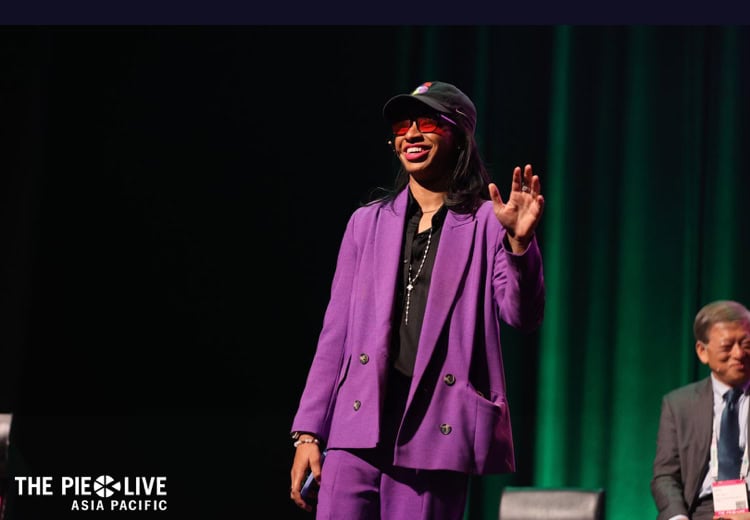
    “Who am I? I’m one of the people that can see the future well before it’s created.”

    Meet Taylor Shead, the athlete-turned tech entrepreneur who is on a mission to change the way students access and absorb education in the 21st century.

    A former college basketball scholar, her original goal was to train as a reconstructive plastic surgeon alongside her sporting career.

    But like many students, while sports held her attention, she found STEM subjects inaccessible due to the dense language of mathematical equations and chemical symbols.

    “Frankly, I was a little annoyed,” Shead explains. “I was in the best private schools in Texas, and I thought: if I’m in this privileged position where I’m going to college level and I don’t feel prepared, then what about everybody else from all kinds of backgrounds?

    “As an athlete, you have tutors [to help you succeed academically] and so I had a moment when I realised that the education system isn’t working.”

    The statistics back up her hypothesis. In the US, approximately 86% of kids graduate from high school, but only about 37% of them graduate from college. Only 66% of US students reach Level 2 proficiency in mathematics and fewer than 30% of high school students feel prepared to pursue a postsecondary pathway.

    “It was like, this isn’t a problem that’s black or white, it’s not male or female, it’s not rich or poor. This is a problem that impacts everybody,” says Shead.

    “There’s a problem with the current system, the way schooling and college prepares you for each next step, even when it’s the best of the best – so what’s the solution?”

    Building on a three-year stint as an Apple mentor and volunteering in inner city schools in Dallas and Fort Worth, Shead took the leap and founded Stemuli in 2016 as a platform to support kids in STEM subjects.

    Shortly after, the pandemic hit and the world pivoted to online learning. The moment catapulted the business forward and Shead became only the 94th black woman in the history of the world to raise over a million dollars in venture capital.

    The company raised over USD$10 million overall and won the prestigious United Nations AI for good competition in 2024.

    The Stemuli mission is to gamify the curriculum to engage a generation of learners who have grown up on video games. This isn’t online learning for the sake of it; the aim is to create learning opportunities in the co-creative worlds that exist in games.

    “There are 3.3 billion gamers around the world playing right now,” Shead explains. “Yet all the kids I meet in classrooms are bored. Games like Roblox and Minecraft have set the example of STEM learning crossing over to where kids want to be.”

    Stemuli is currently beta testing the third iteration of the platform, a one-world gaming environment where there are infinite possibilities to explore and learn.

    Only 66% of US students reach Level 2 proficiency in math and fewer than 30% of high school students feel prepared to pursue a postsecondary pathway

    “We used to produce a lot of work simulation games but now nobody knows what the future jobs are going to be. Technology is moving so fast,” explains Shead.

    “So we’ve created a much more entrepreneurial gaming experience where, together with an AI prompt assistant, you can test and learn all sorts of ideas in a safe environment. We’ve created a game for entrepreneurship.”

    Shead is keen to stress that there is a misconception that entrepreneurship means that you must aspire to be the boss of your own company. She equates entrepreneurship to a curiosity skillset that builds problem solving and resilience in a fast-changing world.

    “We are a Walton family funded organisation and they partnered with us at Stemuli to scale stimuli across 20 states in the heartland in order to make sure people in rural America have access to AI literacy skills through our video game,” she says.

    “I am obsessed about the idea of a little boy or girl sitting in a rural, remote town that’s seeing with their own eyes the problems that need to be solved in their community. They’re going to create the best technology because they understand the problem, whereas somebody on the coast or Silicon Valley, they’re not even thinking about it.”

    It is also is significant that Shead has achieved so much success in the edtech field, despite coming largely from an athletic background rather than a tech education.

    “Most people think athletes are dumb, but maybe we’re stubborn and hardworking and relentless enough to be the ones that actually can endure the pressure to make something like this happen, right?

    “I like to flip the narrative on its head to say it might take an athlete to go up against established systems and to believe that, in a world that is so structured, that education can actually change for the better. They don’t call athletes game-changers for nothing.”

    There will be many people who feel the status quo in education should be preserved, but the great promise of technology is the potential for companies like Stemuli to open access up for the majority rather than the privileged few.

    “It’s going to be hard, but there are people like me out there who feel inspired by this mission and that means it’s the best time to be alive” says Shead.

    Having seen Shead in action at The PIE Live Asia Pacific, we are inclined to believe her.

    Talor Shead was interviewed by The PIE’s Nicholas Cuthbert and took part in our conference debate – Will AI improve or damage higher education? at The PIE Live Asia Pacific. Watch Taylor explain why it’s the best time to be alive below.

    Source link

  • Workforce Planning Meets AI: A Blueprint for Smarter Surveys – CUPA-HR

    Workforce Planning Meets AI: A Blueprint for Smarter Surveys – CUPA-HR

    by Christy Williams | May 21, 2025

    For HR professionals in higher education, workforce planning has evolved into a strategic discipline. Filling positions is no longer enough — leaders must anticipate talent needs, support professional growth and align development opportunities with institutional goals. A well-designed needs assessment gives HR teams the insight to take action with confidence and create lasting impact.

    In the CUPA-HR webinar, Survey Says! Using HR Data and AI to Maximize Analysis of Needs, presenters from Harvard University’s Center for Workplace Development shared how their team designed and executed a large-scale, data-informed, AI-supported needs assessment. The goal? To better understand learning needs and create targeted strategies for professional growth across a decentralized institution.

    Here are the key takeaways from their process.

    Start With a Strategic Why

    Before sending a single survey question, clarify what you’re hoping to learn — and why it matters.

    At Harvard, the team began their needs assessment with a clear objective to understand learning and development needs across various employee groups as part of a larger workforce strategy. This meant designing a survey aimed at uncovering more than surface-level training needs, asking instead: What do our employees really need to grow and thrive in their roles?

    Their advice to other HR teams is to anchor your assessment in your institution’s strategic goals and organizational context. Let that “why” guide your survey design from the start.

    Design a Survey That Reflects Your Workforce

    A successful needs assessment is tailored to the specific population it serves rather than one-size-fits-all.

    Harvard’s workforce includes individual contributors, supervisors and executives across many schools and units. Their team created targeted questions for each group and pre-populated some responses using data from their HRIS system to reduce survey fatigue and improve accuracy.

    Make sure your questions are relevant to different audience segments, and use the data you already have to streamline the experience for respondents.

    Boost Participation Through Targeted Communications

    Even the best survey won’t produce results without strong participation. Driving engagement was one of the biggest challenges for Harvard, as it is for many institutions. Their team addressed this by securing leadership support, crafting targeted communications and clearly communicating the value of the survey to employees.

    To boost response rates on your own campus, consider using champions across departments, timing your outreach thoughtfully and explaining how the data will be used to benefit staff.

    Use AI Thoughtfully to Analyze Large Data Sets

    If your survey includes open-ended responses, you’ll likely end up with more data than you can quickly process — especially if your institution is large. This is where AI can help.

    Harvard’s team used a combination of AI tools to analyze thousands of comments and identify themes. But they stressed that the human element remained critical. They invested time in crafting the right prompts, testing outputs and verifying results before presenting them to stakeholders.

    Their approach to AI offers an important lesson: AI can accelerate analysis and bring fresh insights, but it’s not a shortcut. You need to build a process that includes human judgment, data verification and transparency.

    Integrate HR Data for Deeper Insights

    One of the most impactful decisions the Harvard team made was linking survey responses to existing HR data. This allowed them to connect learning needs to specific job roles, departments and demographics — enabling more targeted follow-up and planning.

    By incorporating HRIS data, they were also able to personalize survey questions and reduce respondent burden. That integration enhanced both the quality of their data and their ability to act on it.

    If you’re planning a survey, consider how existing HRIS data can be used to sharpen your questions and deepen your analysis.

    Turn Results Into Action

    The final — and perhaps most critical — step is using what you’ve learned.

    At the time of the webinar, the Harvard team was in what they described as the “where are we now” stage and had begun implementing some of the recommendations from their survey analysis. They emphasized the importance of translating results into practical strategies that support learning and development, talent mobility and organizational effectiveness.

    To do the same on your campus, be sure to:

    • Share key findings transparently with stakeholders.
    • Identify priority areas for development or investment.
    • Use insights to shape programming, leadership development or change management strategies.

    Embrace Experimentation and Continuous Learning

    The Harvard team acknowledged that this process wasn’t perfect — and that was okay. They embraced experimentation, learned from trial and error, and remained open to improving their approach as they went.

    Their experience is a reminder that innovation in higher ed HR — especially when integrating AI — is a journey. Don’t be afraid to pilot new tools and adjust your process.

    Watch the Webinar Recording

    Interested in learning more about Harvard’s process? The full webinar recording and slide deck are available here.

    More CUPA-HR Resources

    Harnessing the Power of Big Data for Sound HR Decision Making — This article examines using workforce data to make good business decisions with confidence.

    Data Visualization and Storytelling Tips and Tools for HR — This on-demand CUPA-HR webinar covers practical tips and tools you can use to share compelling data stories and data visualizations.

    AI in Higher Education HR Toolkit — Best practices and tools for using AI technologies thoughtfully and safely.


    Source link

  • National Advisory Committee on Institutional Quality and Integrity Meets February 19-20. (US Department of Education)

    National Advisory Committee on Institutional Quality and Integrity Meets February 19-20. (US Department of Education)


    Education Department

    Hearings, Meetings, Proceedings, etc.:

    National Advisory Committee on Institutional Quality and Integrity

    FR Document: 2025-01459
    Citation: 90 FR 7677 PDF Pages 7677-7679 (3 pages)
    Permalink
    Abstract: This notice sets forth the agenda, time, and instructions to access or participate in the February 19-20, 2025 meeting of NACIQI, and provides information to members of the public regarding the meeting, including requesting to make written or oral comments. Committee members will meet in-person while accrediting agency representatives and public attendees will participate virtually.

    Source link