Since the fallout of Occupy Wall Street in 2011, a small but persistent movement has sought to expose the widening inequities and systemic failures in U.S. higher education. We have agitated, analyzed, and educated, warning that the “market-driven” model championed by elite managers—presidents, trustees, CFOs, and state policymakers—would erode both academic quality and access. Today, that warning has become reality.
The College Meltdown is not a metaphor. It is a literal unraveling of an ecosystem where public support has eroded, tuition has skyrocketed, and students are left with crushing debt. Colleges are shuttering campuses, programs are disappearing, and adjuncts—already the backbone of instruction—face insecure employment. Meanwhile, neoliberal administrators, entrusted with guiding institutions through turbulence, have mostly engaged in cosmetic pruning rather than systemic reform.
This is not accidental. The managerial class in higher education—driven less by pedagogy than by budgets, branding, and financialization—has embraced austerity measures that protect elite interests while passing costs to students and staff. Endowment growth, athletics spending, and executive compensation often take priority over the academic mission. HBCUs and tribal colleges, already underfunded, bear the brunt of this mismanagement.
Efforts to stabilize the system have been tepid at best. Proposals for meaningful structural reform, from debt relief to state reinvestment, are watered down by political and market pressures. Neoliberals tout efficiency and innovation, yet rarely address the underlying moral crisis: the deliberate prioritization of profit over learning, and the failure to cultivate a socially responsible citizenry.
Our own engagement, since 2011, has aimed to shine light on these contradictions. We have chronicled how policies favoring privatization, corporate partnerships, and debt-financed tuition have created conditions ripe for collapse. We have amplified voices of students and faculty navigating these pressures. And we have challenged complacency in the academy, insisting that higher education be measured not just by financial metrics but by its capacity to educate, empower, and expand human potential.
“Pruning in Chernobyl” captures the essence of this moment: managerial actors trimming the edges while radioactive structural failures spread unchecked. Unless institutions confront the root causes—inequality, extractive financial models, and an erosion of public purpose—the meltdown will deepen. Our work remains to educate the public, hold decision-makers accountable, and imagine a higher education system that nurtures learning rather than merely managing decline.
Over the past four decades, neoliberalism has reshaped higher education into a market-driven enterprise, producing what can only be described as a global College Meltdown. Once envisioned as a public good—a tool for civic empowerment, social mobility, and national progress—higher education in the United States, the United Kingdom, and China has been transformed into a competitive market system defined by privatization, debt, and disillusionment.
The United States: From Public Good to Profit Engine
Nowhere has neoliberal ideology had a more devastating effect on higher education than in the United States. Beginning in the 1980s, with the Reagan administration’s cuts to federal grants and the expansion of student loans, higher education funding shifted from public investment to individual burden. Universities adopted corporate governance models, hired armies of administrators, and marketed education as a private commodity promising personal enrichment rather than collective advancement.
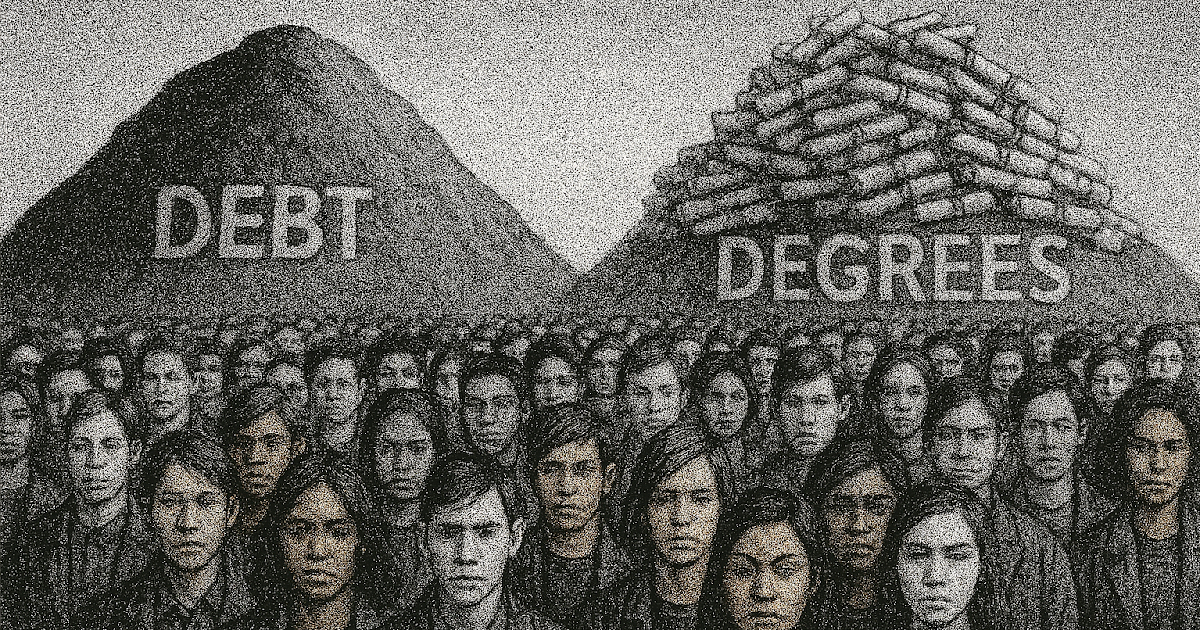
The results are visible everywhere: tuition inflation, student debt exceeding $1.7 trillion, and the proliferation of predatory for-profit colleges. Elite universities transformed into financial behemoths, hoarding endowments while relying on contingent faculty. Meanwhile, working-class and minority students were lured into debt traps by institutions that promised upward mobility but delivered unemployment and despair.
The U.S. College Meltdown—a term that describes the system’s moral and financial collapse—is a direct consequence of neoliberal policies: deregulation, privatization, and austerity disguised as efficiency. The profit motive replaced the public mission, and the casualties include students, adjuncts, and the ideal of education as a democratic right.
The United Kingdom: Marketization and Managerialism
The United Kingdom followed a similar trajectory under Margaret Thatcher and her successors. The introduction of tuition fees in 1998 and their tripling in 2012 marked the formal triumph of neoliberal logic over public investment. British universities became quasi-corporate entities, obsessed with league tables, branding, and global rankings.
The result has been mounting student debt, declining staff morale, and a hollowing out of intellectual life. Faculty strikes over pensions and pay disparities underscore a deeper crisis of purpose. Universities now function as rent-seeking landlords—building luxury dorms for international students while cutting humanities departments. The logic of “student-as-customer” has reduced education to a transaction, and accountability has been redefined to mean profit margin rather than social contribution.
The UK’s College Meltdown mirrors that of the U.S.—a story of financialization, precarious labor, and the erosion of public trust.
China: Neoliberalism with Authoritarian Characteristics
At first glance, China seems to defy the Western College Meltdown. Its universities have expanded rapidly, producing millions of graduates and investing heavily in research. But beneath this apparent success lies a deeply neoliberal structure embedded in an authoritarian framework.
Since the 1990s, China’s higher education system has embraced competition, rankings, and market incentives. Universities compete for prestige and funding; families invest heavily in private tutoring and overseas degrees; and graduates face a saturated labor market. The result is mounting anxiety and unemployment among young people—known online as the “lying flat” generation, disillusioned with promises of meritocratic success.
The Chinese model fuses state control with neoliberal marketization. Education serves as both an instrument of national power and a mechanism of social stratification. In this sense, China’s version of the College Meltdown reflects a global truth: the commodification of education leads to alienation, regardless of political system.
A Global System in Crisis
Whether in Washington, London, or Beijing, the pattern is strikingly similar. Neoliberalism treats education as an investment in human capital, reducing learning to a financial calculation. Universities compete like corporations; students borrow like consumers; and knowledge becomes a tool of capital accumulation rather than liberation.
This convergence of economic and ideological forces has created an unsustainable higher education bubble—overpriced, overcredentialized, and underdelivering. Across continents, graduates face debt, underemployment, and despair, while universities chase rankings and revenue streams instead of justice and truth.
Toward a Post-Neoliberal Education
Reversing the College Meltdown requires more than reform; it demands a new philosophy. Public universities must reclaim their civic mission. Education must once again be understood as a human right, not a private investment. Debt forgiveness, reinvestment in teaching, and democratic governance are essential first steps.
Neoliberalism’s greatest illusion was that markets could produce wisdom. The College Meltdown proves the opposite: when education serves profit instead of people, it consumes itself from within.
Sources:
Wendy Brown, Undoing the Demos (2015)
David Harvey, A Brief History of Neoliberalism (2005)
Tressie McMillan Cottom, Lower Ed (2017)
The Higher Education Inquirer archives on the U.S. College Meltdown
BBC, “University staff strikes and student debt crisis,” 2024
Caixin, “China’s youth unemployment and education anxiety,” 2023
In the neoliberal era, higher education has become less a public good and more a marketplace of promises. The ideology of “lifelong learning” has been weaponized into an endless treadmill of hyper-credentialism — a cycle in which students, workers, and institutions are trapped in perpetual pursuit of new degrees, certificates, and micro-badges.
From Education to Signaling
Once, a college degree was seen as a path to citizenship and critical thought. Today, it’s a market signal — and an increasingly weak one. The bachelor’s degree no longer guarantees stable employment, so the system produces ever-more credentials: master’s programs, micro-certificates, “badges,” and other digital tokens of employability.
This shift doesn’t solve economic precarity — it monetizes it. Workers internalize the blame for their own stagnating wages, believing that the next credential will finally make them “market ready.” Employers, meanwhile, use credential inflation to justify low pay and increased screening, outsourcing the costs of training onto individuals.
A Perfect Fit for Neoliberalism
Hyper-credentialism is not a side effect; it’s a feature of the neoliberal education economy. It supports four pillars of the model:
Privatization and Profit Extraction – Public funding declines while students pay more. Each new credential creates a new revenue stream for universities, online program managers (OPMs), and ed-tech corporations.
Individual Responsibility – The structural causes of unemployment or underemployment are reframed as personal failures. “You just need to upskill.”
Debt Dependency – Students and workers finance their “reskilling” through federal loans and employer-linked programs, feeding the student-debt industry and its servicers.
Market Saturation and Collapse – As more credentials flood the market, each becomes less valuable. Institutions respond by creating even more credentials, accelerating the meltdown.
The Education-Finance Complex
The rise of hyper-credentialism is inseparable from the growth of the education-finance complex — a web of universities, private lenders, servicers, and Wall Street investors. Firms like 2U, Coursera, and Guild Education sell the illusion of “access” while extracting rents from students and institutions alike. University administrators, pressured by enrollment declines, partner with these firms to chase new markets — often by spinning up online master’s programs with poor outcomes.
The result is a debt-driven ecosystem that thrives even as public confidence collapses. The fewer good jobs there are, the more desperate people become to buy new credentials. The meltdown feeds itself.
Winners and Losers
Winners: Ed-tech executives, university administrators, debt servicers, and the politicians who promote “lifelong learning” as a substitute for wage growth or labor rights.
Losers: Students, adjunct faculty, working-class families, and the public universities hollowed out by austerity and privatization.
The rhetoric of “upskilling” and “personal growth” masks a grim reality: a transfer of wealth from individuals to financialized institutions under the guise of opportunity.
A System That Can’t Redeem Itself
As enrollment declines and public trust erodes, the industry doubles down on micro-credentials and “stackable” pathways — small fixes to a structural crisis. Each badge, each certificate, is sold as a ticket back into the middle class. Yet every new credential devalues the old, producing diminishing returns for everyone except those selling the product.
Hyper-credentialism thus becomes both the symptom and the accelerant of the college meltdown. It sustains the illusion of mobility in a collapsing system, ensuring that the blame never reaches the architects of austerity, privatization, and financialization.
Sources and Further Reading
Brown, Wendy. Undoing the Demos: Neoliberalism’s Stealth Revolution.
Giroux, Henry. Neoliberalism’s War on Higher Education.
Cottom, Tressie McMillan. Lower Ed: The Troubling Rise of For-Profit Colleges in the New Economy.
The Higher Education Inquirer archives on the college meltdown, OPMs, and the debt economy.
(In 2017, we collaborated with Crush the Street on a video describing the College Meltdown.)
“Education is not merely a credentialing system; it is a humanizing act that fosters connection, purpose, and community.”
Origins
The College Meltdown began in the early 2010s as a blog chronicling the slow collapse of U.S. higher education. Rising tuition, mounting student debt, and corporatization were visible signs, but the deeper crisis was structural: the erosion of public accountability and mission.
By 2015, the warning signs were unmistakable to us. On some campuses, student spaces were closed to host corporate “best practices” conferences. At many schools, adjunct instructors carried the bulk of teaching responsibilities, often without benefits, while administrators celebrated innovation. Higher education was quietly being reshaped to benefit corporations over students and communities — a true meltdown.
Patterns of the Meltdown
Enrollment in U.S. colleges began declining as early as 2011, reflecting broader demographic shifts: fewer children entering the system and a growing population of older adults. Small colleges, community colleges, and regional public universities were hardest hit, while flagship institutions consolidated wealth and prestige.
Corporate intermediaries known as Online Program Managers (OPMs) managed recruitment, marketing, and course design, taking large portions of tuition while universities retained risk. Fully automated robocolleges emerged, relying on AI-driven templates, predictive analytics, and outsourced grading. While efficient, these systems dehumanized education: students became data points, faculty became monitors, and mentorship disappeared.
“Robocolleges and AI-driven systems reduce humans to data points — an education stripped of connection is no education at all.”
Feeding the AI Beast
As part of our effort to reclaim knowledge and influence public discourse, we actively contributed to Wikipedia. Over the years, we made more than 12,000 edits on higher education topics, ensuring accurate documentation of predatory practices, adjunct labor, OPMs, and corporatization. These edits both informed the public and, inadvertently, fed the AI beast — large language models and AI systems that scrape Wikipedia for training data now reflect our work, amplifying it in ways we could never have predicted.
“By documenting higher education rigorously, we shaped both public knowledge and the datasets powering AI systems — turning transparency into a tool of influence.”
Anxiety, Anomie, and Alienation
The College Meltdown documented the mental health toll of these transformations. Rising anxiety, feelings of anomie, and widespread alienation were linked to AI reliance, dehumanized classrooms, insecure faculty labor, and societal pressures. Students felt like credential seekers; faculty suffered burnout.
“Addressing the psychological and social effects of dehumanized education is essential for ethical recovery.”
Trump, Anti-Intellectualism, and Fear in the Era of Neoliberalism
The project also addressed the broader political and social climate. The Trump era brought rising anti-intellectualism, skepticism toward expertise, and a celebration of market logic over civic and moral education. For many, it was an era of fear: fear of surveillance, fear of litigation, fear of being marginalized in a rapidly corporatized, AI-driven educational system. Neoliberal policies exacerbated these pressures, emphasizing privatization, metrics, and competition over community and care.
“Living under Trump-era neoliberalism, with AI monitoring, corporate oversight, and mass surveillance, education became a space of anxiety as much as learning.”
Quality of Life and the Call for Rehumanization
Education should serve human well-being, not just revenue. The blog emphasized Quality of Life and advocated for Rehumanization — restoring mentorship, personal connection, and ethical engagement.
“Rehumanization is not a luxury; it is the foundation of meaningful learning.”
FOIA Requests and Whistleblowers
From the start, The College Meltdown relied on evidence-based reporting. FOIA (Freedom of Information Act) requests were used to obtain internal communications, budgets, and regulatory filings, shining light on opaque practices. Whistleblowers, including adjunct faculty and staff at universities and OPMs, provided firsthand testimony of misconduct, financial malfeasance, and educational dehumanization. Their courage was central to the project’s mission of transparency and accountability.
“Insider testimony and public records revealed the hidden forces reshaping higher education, from corporate influence to predatory practices.”
Historical Sociology: Understanding the Systemic Collapse
The importance of historical sociology cannot be overstated in analyzing the decline of higher education. By examining the evolution of educational systems, we can identify patterns of inequality, the concentration of power, and the commodification of knowledge. Historical sociology provides the tools to understand how past decisions and structures have led to the current crisis.
“Historical sociology reveals, defines, and formulates patterns of social development, helping us understand the systemic forces at play in education.”
Naming Bad Actors: Accountability and Reform
A critical aspect of The College Meltdown was the emphasis on naming bad actors — identifying and holding accountable those responsible for the exploitation and degradation of higher education. This included:
University Administrators: Prioritizing profit over pedagogy.
Corporate Entities: OPMs profiting at the expense of educational quality.
Political Figures and Ultraconservatives: Promoting policies that undermined public education and anti-intellectualism.
“Holding bad actors accountable is essential for meaningful reform and the restoration of education’s ethical purpose.”
Existential Aspects of Climate Change
The blog also examined the existential dimensions of climate change. Students and faculty face a dual challenge: preparing for uncertain futures while witnessing environmental degradation accelerate. Higher education itself is implicated, both as a contributor through consumption and as a forum for solutions. The looming climate crisis intensifies anxiety, alienation, and the urgency for ethical, human-centered education.
“Climate change makes the stakes of education existential: our survival, our knowledge, and our moral responsibility are intertwined.”
Mass Speculation and Financialization
Another critical theme explored was mass speculation and financialization. The expansion of student debt markets, tuition-backed bonds, and corporate investments in higher education transformed students into financial instruments. These speculative dynamics mirrored broader economic instability, creating both a moral and systemic crisis for the educational sector.
“When education becomes a commodity for speculation, learning, mentorship, and ethical development are subordinated to profit and risk metrics.”
Coverage of Protests and Nonviolent Resistance
The College Meltdown documented student and faculty resistance: tuition protests, adjunct labor actions, and campaigns against predatory OPM arrangements. Nonviolent action was central: teach-ins, sit-ins, and organized campaigns demonstrated moral authority and communal solidarity in the face of systemic pressures, litigation, and corporate intimidation.
Collaboration and Resistance
Glen McGhee provided exceptional guidance, connecting insights on systemic collapse, inequality, and credential inflation. Guest authors contributed across disciplines and movements, making the blog a living archive of accountability and solidarity:
Guest Contributors:
Bryan Alexander, Ann Bowers, James Michael Brodie, Randall Collins, Garrett Fitzgerald, Erica Gallagher, Henry Giroux, David Halperin, Bill Harrington, Phil Hill, Robert Jensen, Hank Kalet, Neil Kraus, the LACCD Whistleblower, Wendy Lynne Lee, Annelise Orleck, Robert Kelchen, Debbi Potts, Jack Metzger, Derek Newton, Gary Roth, Mark Salisbury, Gary Stocker, Harry Targ, Heidi Weber, Richard Wolff, and Helena Worthen.
Lessons from the Meltdown
The crisis was systemic. Technology amplified inequality. Corporate higher education rebranded rather than reformed. Adjunctification and labor precarity became normalized. Communities of color and working-class students suffered disproportionately.
Dehumanization emerged as a central theme. AI, automation, and robocolleges prioritized efficiency over mentorship, data over dialogue, and systems over human relationships. Rising anxiety, anomie, and alienation reflected the human toll.
“Rehumanization, mentorship, community, transparency, ethical accountability, and ecological awareness are essential to restore meaningful higher education.”
Looking Forward
As higher education entered the Trump era, its future remained uncertain. Students, faculty, and communities faced fear under neoliberal policies, AI-driven monitoring, mass surveillance, litigation pressures, ultraconservative influence, climate crises, and financial speculation. Will universities reclaim their role as public goods, or continue as commodified services? The College Meltdown stands as a testament to those who resisted dehumanization and anti-intellectualism. It also calls for Quality of Life, ethical practice, mental well-being, environmental responsibility, and Rehumanization, ensuring education serves the whole person, not just the bottom line.
Sources and References
Washington, Harriet A. Medical Apartheid. Doubleday, 2006.
Rosenthal, Elisabeth. An American Sickness. Penguin, 2017.
Skloot, Rebecca. The Immortal Life of Henrietta Lacks. Crown, 2010.
Nelson, Alondra. Body and Soul. University of Minnesota Press, 2011.
Paucek, Chip. “2U and the Growth of OPMs.” EdSurge, 2021. link
Ravitch, Diane. The Death and Life of the Great American School System. Basic Books, 2010.
Alexander, Bryan. Academia Next. Johns Hopkins University Press, 2020.
U.S. Department of Education. “Closed School Information.” 2016–2020. link
Federal Reserve Bank of New York. Student Debt Statistics, 2024. link
Wayback Machine Archive of College Meltdown Blog: link
The Fall 2025 semester begins under intensifying pressure in U.S. higher education. Institutions are responding to long-term changes in enrollment, public funding, demographics, technology, and labor markets. The result is a gradual disassembly of parts of the postsecondary system, with ongoing layoffs, program cuts, and institutional restructuring across both public and private sectors.
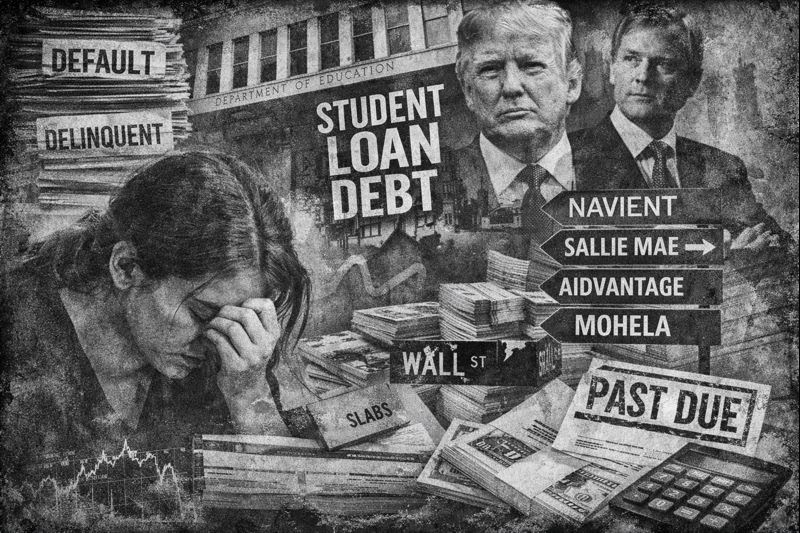
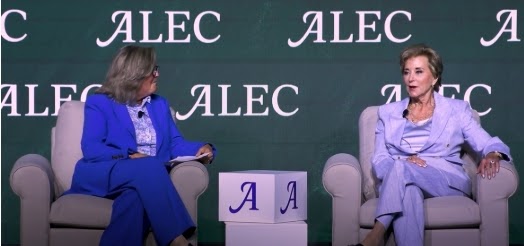
In a stunning turn, the U.S. Department of Education has undergone a massive downsizing, slashing nearly half its workforce as part of the Trump administration’s push to dismantle the agency entirely. Education Secretary Linda McMahon framed the move as a “final mission” to restore state control and eliminate federal bureaucracy, but critics warn of chaos for vulnerable students and families who rely on federal programs. With responsibilities like student loans, Pell Grants, and civil rights enforcement now in limbo, Higher Education Institutions face a volatile landscape. The absence of centralized oversight has accelerated the fragmentation of standards, funding, and accountability—leaving colleges scrambling to navigate a patchwork of state policies and shrinking federal support.
AI Disruption: Academic Integrity and Graduate Employment
Artificial Intelligence has rapidly reshaped higher education, introducing both powerful tools and profound challenges. On campus, AI-driven platforms like ChatGPT have become ubiquitous—92% of students now use them, and 88% admit to deploying AI for graded assignments. This surge has triggered a spike in academic misconduct, with detection systems struggling to keep pace and disproportionately flagging non-native English speakers Meanwhile, the job market for graduates is undergoing a seismic shift. Entry-level roles in tech, finance, and consulting are vanishing as companies automate routine tasks once reserved for junior staff. AI-driven layoffs have already claimed over 10,000 jobs in 2025 alone, and some experts predict that up to half of all white-collar entry-level positions could be eliminated within five years. For recent grads, this means navigating a landscape where degrees may hold less weight, and adaptability, AI fluency, and human-centered skills are more critical than ever.
Unsustainable Student Loan Debt and Federal Funding
A recent report from the American Enterprise Institute (AEI) highlights the depth of the crisis: more than 1,000 colleges could lose access to federal student aid based on current student loan repayment rates—if existing rules were fully enforced. The findings expose systemic failures in accountability and student outcomes. Many of these colleges enroll high numbers of low-income students but leave them with unsustainable debt and limited job prospects.
Institutional Cuts and Layoffs Across the Country
Job losses and cost reductions are increasing across a range of universities.
Stanford University is cutting staff due to a projected $200 million budget shortfall.
University of Oregon has announced budget reductions and academic restructuring.
Michigan State University is implementing layoffs and reorganizing departments.
Vanderbilt University Medical Center is eliminating positions to manage healthcare operating costs.
Harvard Kennedy School is reducing programs and offering early retirement.
Brown University is freezing hiring and reviewing academic offerings.
Penn State University System is closing three Commonwealth Campuses.
Indiana public colleges are merging administrative functions and reviewing low-enrollment programs.
These actions affect not only employees and students but also local communities and regional labor markets.
Enrollment Decline and Demographic Change
Undergraduate enrollment has fallen 14.6% since Fall 2019, according to the National Student Clearinghouse Research Center. Community colleges have experienced the largest losses, with some regions seeing more than 20% declines.
The “demographic cliff” tied to declining birth rates is now reflected in enrollment trends. The Western Interstate Commission for Higher Education (WICHE) projects a 15% decline in high school graduates between 2025 and 2037 in parts of the Midwest and Northeast.
Aging Population and Shifts in Public Spending
The U.S. population is aging. By 2030, all baby boomers will be over 65. The number of Americans aged 80 and older is expected to rise from 13 million in 2020 to nearly 20 million by 2035. Public resources are being redirected toward Social Security, Medicare, and elder care, placing higher education in direct competition for limited federal and state funds.
State-Level Cuts to Higher Education Budgets
According to the State Higher Education Executive Officers Association (SHEEO), 28 states saw a decline in inflation-adjusted funding per student in FY2024.
The California State University system faces a $400 million structural deficit.
West Virginia has reduced academic programs in favor of workforce-focused realignment.
Indiana has ordered cost-cutting measures across public campuses.
These reductions are leading to fewer courses, increased workloads, and, in some cases, higher tuition.
Closures and Mergers Continue
Since 2020, more than 100 campuses have closed or merged, based on Education Dive and HEI data. In 2025, Penn State began closing three Commonwealth Campuses. A number of small private colleges—especially those with enrollments under 1,000 and limited endowments—are seeking mergers or shutting down entirely.
International Enrollment Faces Obstacles
The Institute of International Education (IIE) reports a 12% decline in new international student enrollment in Fall 2024. Contributing factors include visa delays and tighter immigration rules. Students from India, Nigeria, and Iran have experienced longer wait times and increased rejection rates. Graduate programs in STEM and business are particularly affected.
Increased Surveillance and Restrictions on Campus Speech
Data from FIRE and the Electronic Frontier Foundation (EFF) show increased use of surveillance tools on campuses since 2023. At least 15 public universities now use facial recognition, social media monitoring, or geofencing. State laws in Florida, Texas, and Georgia have introduced new restrictions on protests and diversity programs.
Automated Education Expands
Online Program Managers (OPMs) such as 2U, Kaplan, and Coursera are running over 500 online degree programs at more than 200 institutions, enrolling more than 1.5 million students. These programs often rely on AI-generated content and automated grading systems, with minimal instructor interaction.
Research from the Century Foundation shows that undergraduate programs operated by OPMs have completion rates below 35%, while charging tuition comparable to in-person degrees. Regulatory efforts to improve transparency and accountability remain stalled.
Oversight Gaps Remain
Accrediting agencies continue to approve closures, mergers, and new credential programs with limited transparency. Institutions are increasingly expanding short-term credential offerings and corporate partnerships with minimal external review.
Cost Shifts to Students, Faculty, and Communities
The ongoing restructuring of higher education is shifting costs and risks onto students, employees, and communities. Students face rising tuition, fewer available courses, and increased reliance on loans. Faculty and staff encounter job insecurity and heavier workloads. Outside the ivory tower, communities will lose access to educational services, cultural events, and local employment opportunities tied to campuses.
The Higher Education Inquirer will continue to report on the structural changes in U.S. higher education—grounded in data, public records, and the lived experiences of those directly affected.
Sources:
National Student Clearinghouse Research Center, Western Interstate Commission for Higher Education (WICHE), U.S. Census Bureau, State Higher Education Executive Officers Association (SHEEO), Institute of International Education (IIE), Foundation for Individual Rights and Expression (FIRE), Electronic Frontier Foundation (EFF), Government Accountability Office (GAO), The Century Foundation, Stanford University, University of Oregon, Penn State University System, Harvard Kennedy School, Vanderbilt University Medical Center, Education Dive Higher Ed Closures Tracker, American Enterprise Institute (AEI).
July 2025 was not simply a busy month for the U.S. Department of Education—it was a deliberate and coordinated effort to reshape higher education in line with the political goals of the Trump administration. Under the leadership of Education Secretary Linda McMahon, the Department issued a torrent of investigations, policy changes, and legal maneuvers aimed at asserting control over universities and redefining the role of postsecondary education in American life.
What emerged was not the repair of a broken system, but the acceleration of a political project: to narrow the mission of higher education, undermine its independence, and punish institutions that resist the administration’s agenda.
A Month of Directives
The month began with the Department entering a resolution agreement with the University of Pennsylvania over Title IX violations (July 1). By July 2, the administration had concluded a negotiated rulemaking session focused on reshaping the Public Service Loan Forgiveness program—signaling that student aid reforms would now be filtered through political priorities rather than bipartisan consensus.
On July 4, the One, Big, Beautiful Bill Act was signed into law. This sweeping legislation gave the administration a mandate to implement provisions on accreditation, federal aid restrictions, civil rights compliance, and so-called “viewpoint neutrality.” Within two weeks, McMahon’s team was already implementing key parts of the bill, using it to alter the rules that govern financial aid eligibility and institutional recognition.
“Civil Rights” Enforcement as a Political Strategy
Throughout the month, the Department launched a wave of investigations under Title VI and Title IX. But the choice of targets raised concerns. Rather than focus on systemic discrimination or long-standing legal violations, the Department directed its attention toward cases that aligned with conservative cultural concerns.
On July 8, an investigation was opened into the Connetquot Central School District after it banned a Native American logo.
On July 10, George Mason University became the subject of a Title VI probe.
On July 23, five universities were flagged for offering scholarships that allegedly favored foreign-born students.
By July 25, five Northern Virginia school districts were found in violation of Title IX.
Harvard, Columbia, Duke, the University of Michigan, and Brown University were all pulled into scrutiny, with Columbia agreeing to pay $200 million and submit to new data-reporting requirements. These actions may appear to be standard enforcement but taken together they reflect a pattern of choosing high-profile or politically charged institutions as symbolic examples.
The use of federal compliance tools to pressure institutions seen as ideological opponents is not unprecedented—but under McMahon, it has become routine.
Policy Realignment and Workforce Redirection
On July 10, the Department announced the termination of federal aid for undocumented students, marking a sharp reversal from past practices. Just five days later, the Department entered into a new partnership with the Department of Labor to promote workforce training, part of a longer-term effort to reorient higher education toward narrow economic outcomes rather than liberal arts or civic development.
While such initiatives are framed as “efficiency” or “innovation,” the underlying message is clear: colleges that do not align themselves with federal job-training goals or cultural expectations may find their access to funding, recognition, and legal protections limited.
Restructuring the System
The Supreme Court’s decision on July 14 to permit a reduction in federal staffing has further empowered the Department to cut or replace internal personnel. By July 24, two new negotiated rulemaking committees were established, tasked with translating the One, Big, Beautiful Bill into enforceable rules. These committees will likely define the next phase of McMahon’s agenda—on issues like accreditation, financial eligibility, foreign influence, and institutional autonomy.
At the state level, the Department approved Missouri’s new pilot assessment program on July 31, continuing a pattern of promoting alternatives to standardized federal oversight. Meanwhile, state education officials were encouraged (July 29) to request waivers from burdensome federal requirements—an invitation to bypass regulations established under previous administrations.
What This Means for Higher Education
The July timeline reflects not just a burst of administrative activity, but a broader strategy to centralize decision-making power and reshape the ideological landscape of U.S. higher education. The Department has moved away from serving as a neutral enforcer of civil rights and federal law, and toward acting as a gatekeeper for cultural and political conformity.
Colleges that emphasize diversity, global engagement, or progressive research are increasingly viewed with suspicion. Those that fail to meet the administration’s evolving definition of compliance may face costly investigations, public shaming, or the loss of federal support.
The term “College Meltdown” once referred to financial instability, enrollment declines, and the erosion of public trust. Under Linda McMahon, it now also refers to a deliberate restructuring of the postsecondary system—where ideological alignment may determine institutional survival as much as financial solvency.
Sources:
U.S. Department of Education, July 2025 public statements and press releases
One, Big, Beautiful Bill Act, signed July 4, 2025
Columbia University settlement, July 23, 2025
Supreme Court ruling on federal workforce reductions, July 14, 2025
Negotiated Rulemaking updates from the Office of Postsecondary Education
Brown University agreement with the Department of Education, July 30, 2025
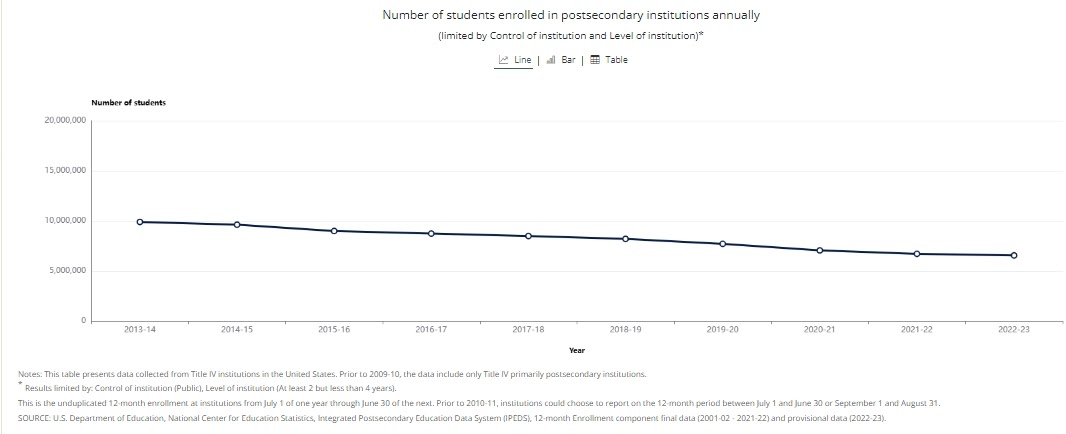
The question we are asking now is, where is the floor for the community college meltdown? The answer, from what we gather, is not clear. Folks should not assume the bottom has already been felt, even if there are signs of a rebound.
The downward path for community colleges is likely the result of several factors related to economics (including the economics of individual states and counties), demographics, and consumer choices. And we do not see these variables, in general, improving in the near future. Especially in states with declining youth and young adult populations.
If state-level austerity lies ahead for many states, the floor could be lowered, even though these community colleges provide job training at a fraction of the cost of state universities. Working class folks, in particular, would have to change the way they think about themselves and their perceptions of community colleges. And community colleges would need to provide stronger returns on investment for those who attend.