Tag: Member

  • LAWSUIT: New Jersey school board member silenced for asking constituents about a proposed tax increase

    LAWSUIT: New Jersey school board member silenced for asking constituents about a proposed tax increase

    ALLOWAY TOWNSHIP, N.J., Nov. 20, 2025 — A local school board member’s Facebook post to community members about a tax hike should have started a conversation — instead, it led to censorship.

    The Foundation for Individual Rights and Expression is suing the commissioner of New Jersey’s Department of Education and members of the state’s School Ethics Commission to stop them from abusing a law to chill the speech of an elected school board member who used social media to seek her constituents’ input. 

    “I didn’t join the school board to be told to shut up,” said Gail Nazarene, an elected school board member, Navy veteran, and grandma in Alloway Township. “New Jersey officials claim the authority to punish me simply for asking folks questions about important issues, particularly when it affects their wallets. I should be free to communicate with constituents and get their views without being censored by state officials.”

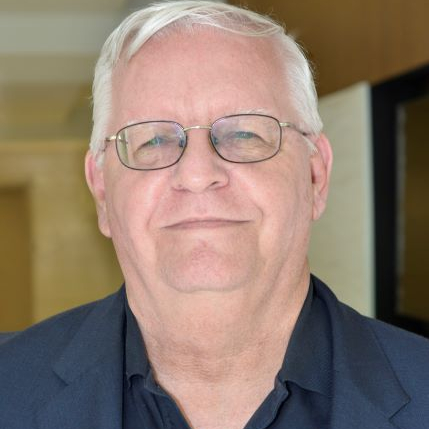
    COURTESY PHOTOS OF GAIL NAZARENE

    In April, Gail used Facebook to discuss tax increases and other school issues with constituents. In one post, she asked, “As a resident of Alloway, I am wondering what other residents think about a 9-15% school tax increase?” She clarified in her later posts that she was asking in her personal capacity. But another school board member saw the posts and filed a complaint against her, claiming Gail had violated New Jersey’s School Ethics Act because she allegedly had spoken on the board’s behalf. The complaint is pending before the state’s School Ethics Commission. 

    “Americans deserve to know what their elected officials think about important issues,” said FIRE attorney Daniel Zahn. “New Jersey is muzzling elected officials and preventing them from talking with their community, the very people they were elected to represent.”

    The state broadly interprets the School Ethics Act to bar elected officials from discussing issues relating to schools on social media. And this isn’t the first time it’s done so. The School Ethics Commission has previously warned elected officials against engaging with constituents on social media and previously interpreted the act to prevent elected school board members from discussing matters of public concern on social media and in op-eds

    But the First Amendment protects Gail’s right to speak freely on such issues. 

    Gail has stopped soliciting constituent feedback online. She fears any posts about school board issues will lead to punishment, including reprimand, censure, suspension, or removal. But she also is concerned about the loss of First Amendment freedoms for her and her constituents. 

    “When the state silences school board members, parents and taxpayers are kept in the dark,” said FIRE attorney Greg Greubel. “The School Ethics Act can’t be turned into an unconstitutional gag rule.”

    Today’s federal lawsuit asks the court to declare New Jersey’s School Ethics Act unconstitutional as interpreted by the state and stop its use against elected officials speaking out about public issues. 

    The Foundation for Individual Rights and Expression (FIRE) is a nonpartisan, nonprofit organization dedicated to defending and sustaining the individual rights of all Americans to free speech and free thought — the most essential qualities of liberty. FIRE educates Americans about the importance of these inalienable rights, promotes a culture of respect for these rights, and provides the means to preserve them.

    CONTACT
    Katie Stalcup, Communications Campaign Manager, FIRE: 215-717-3473; [email protected]

    Source link

  • California School Board Member Stipends Could Change Under New Bill – The 74

    California School Board Member Stipends Could Change Under New Bill – The 74


    Get stories like this delivered straight to your inbox. Sign up for The 74 Newsletter

    There’s more to being a diligent school board member than attending a couple of meetings a month.

    Those meetings require preparation, research and one-on-one conversations with school leadership. There are school site visits. Many districts require regular board training. Sometimes there are spinoff committee meetings about parcel taxes or school nutrition. There’s also an expectation that board members attend events like football games, PTA meetings and retirement ceremonies. Meetings with parents and other constituents are a core part of the role, too.

    For all of this, Woodland Joint Unified School District board president Deborah Bautista Zavala says she earns a stipend of $240 a month, minus taxes — the maximum allowed by the state for her district with just under 10,000 students.

    “You don’t do it for money, but to improve the education of students,” said Bautista Zavala.

    But the lack of money, she said, is a real problem for attracting and retaining qualified school board members who truly represent the community.

    That could change if Gov. Gavin Newsom signs Assembly Bill 1390, which would raise the maximum monthly stipend for school board members in both school districts and county offices of education.

    This would be the first time in over 40 years that school board members’ compensation has been reconsidered — and the measure comes at a time when school boards are grappling with financial deficits, consolidation, uncertainty about federal funding and potential school closures.

    Proponents of the bill have argued that while school board members dedicate large amounts of time to their position, they are not compensated adequately. Currently, school board members can earn no more than $60 each month in small districts or up to $1,500 for the state’s largest districts.

    There is also a clause in the current law that allows board member stipends to be raised by 5% each year beyond the maximum, but 7 out of 10 boards still have stipends at or below the maximum, according to Troy Flint, chief information officer for the California School Boards Association.

    Raising school board compensation has been a longstanding issue for the California School Boards Association, which sponsored the bill, but it has become more pressing in the years since the pandemic, Flint said.

    “The job is vastly more complex than it used to be,” said Flint. “It requires a strong knowledge of finance, an aptitude for community engagement, a working knowledge of educational theory and an ability to deal with culture wars and political issues.”

    The role is at an inflection point: More than 6 out of 10 school board members did not run for reelection over the past three cycles, Flint said.

    Legislative analysis referenced an EdSource article, which found that 56% of 1,510 school board races across 49 California counties did not appear on a local ballot in 2024, either because there was one unopposed candidate who became a guaranteed winner or because there were no candidates at all.

    The bill’s author, Assemblymember José Luis Solache Jr., D-Lynwood, argues that increasing board members’ compensation could lead to bigger, more diverse candidate pools. School boards often attract retirees or other professionals with stable income and spare time. Low stipends put the job out of reach for those from working families or younger people who are already struggling to make ends meet, Solache said.

    Solache would know: He began serving on the board for the Lynwood Unified School District starting in 2003, when he was 23 years old. He has since worked with other young elected officials to find ways to recruit young people into office. Solache sees this bill as a way to improve recruitment for an important community role.

    “It’s an underpaid job. We compensate the president, senators, Assembly members, state senators,” Solache said. “Why can’t you compensate the school board members that have jurisdiction over your child’s education?”

    Raising the stipends of elected officials can raise eyebrows in Sacramento, Solache said. The bill set the maximums by setting an amount between inflation since 1984, when rates were set, and what the maximum would have been if the boards had raised the rates 5% annually as allowed by law.

    Maximums for board members in the smallest districts saw the greatest increase. Currently, the maximum for a board member at a school district with fewer than 150 students is $60 a month. Under this bill, that same board member could earn up to $600 monthly, which Solache said is more equitable.

    But board members won’t necessarily see raises, even if Newsom signs it into law. The bill merely raises the ceiling for compensation. The decision to actually offer raises to school board members will happen at the local level, and that could be a tough sell given the budget constraints school districts are facing in the coming year.

    “There’s no getting around that: that in a time of limited resources, adding money for board members is taking money away from other places,” said Julie Marsh, a professor at USC’s Rossier School of Education, who recently served as the lead author of a study analyzing the experiences of 10 school board members across the state.

    “We need to just really keep in mind the demands of that role and the decisions that they’re making around the superintendent, the budgets for these places, the curricular decisions that are being made. And as a state, there’s been a lot put on these positions in terms of making really important decisions,” she said.

    Bautista Zavala believes it will be tough to make the case to some of her fellow board members at Woodland Unified, which is in a community 20 miles northwest of Sacramento. The district of 9,500 students struggled to pass a facilities bond last November, despite facilities in dire need of improvement. The optics of board members giving themselves a raise could be tricky if they’re also negotiating with teachers or classified staff.

    “You have to be strategic about bringing this forward,” she said.

    She encourages board members to raise stipends to bring new voices to school boards. She says members who believe they don’t need a raise can donate the stipend.

    Some people believe serving on a board is a civic duty, and compensation shouldn’t factor into the role, said Jonathan Zachreson, board member at Roseville City School District. But he said that’s not realistic for many people. He hopes that raising the stipends for board members will also mean raising the expectations for board members.

    Zachreson is concerned that some boards outsource policymaking to groups, including the California School Boards Association, rather than doing in-depth research themselves to find a solution that works best for the community.

    “It’s worth the time commitment to actually learn and not just rubber-stamp proposals,” said Zachreson.

    But some believe there could be unintended consequences in raising the stipends of board members.

    “The worst-case scenario, I think, from a superintendent’s point of view, would be if the increase in pay becomes attractive to the wrong kind of people, who want to micromanage the superintendent and want to be well compensated for that,” said Carl Cohn, a former superintendent of the Long Beach Unified School District and State Board of Education member.

    Some boards are exempt

    Some school districts and county boards of education are exempt from this model because they have their own local charter. This includes the Los Angeles Unified School District, the state’s largest school district with an $18.8 billion budget this academic year; it won’t be impacted by the bill should it become law. A separate LAUSD Compensation Review Committee outlines board members’ salaries — a strategy that Marsh said makes the district appear less self-serving.

    In 2017, Los Angeles Unified school board members who didn’t work elsewhere received a 174% pay increase.

    “With the increase in compensation in Los Angeles Unified, we saw candidates earlier in their careers, single parents, women of color, immigrants and others with similar lived experience to our students step up,” said board member Tanya Ortiz Franklin in a statement to EdSource. “I hope that will be the trend across the state and improve decision-making for California’s public schools.”

    According to a 2023 committee resolution, Los Angeles Unified board members made $127,500 annually if they weren’t employed elsewhere and $51,000 if they had another source of income. And on July 1 until 2027, board members would receive a 1% annual increase — leading most recently to salaries of $128,775 and $51,510, depending on outside employment.

    Meanwhile, compensation in the San Francisco Unified School District, currently $500 monthly for board members, is governed by the city and county and is also exempt. The board of supervisors must approve compensation for county board members in Alpine, San Benito and San Bernardino counties.

    Beyond compensation

    Increasing school board members’ compensation might help address issues such as poor recruitment and retention, Marsh said. But professional development and other non-financial support could go a long way, since board members come in with varying degrees of knowledge on data, governance and technology.

    “With the rapidly changing context around us — whether that’s around the politics and the political climate and the divisiveness, or shifting technology — I think there’s a need to further support folks,” Marsh said.

    This story was originally published on EdSource.


    Get stories like these delivered straight to your inbox. Sign up for The 74 Newsletter

    Source link

  • NEA Executive Committee Reverses Member Vote to Boycott ADL Educational Materials

    NEA Executive Committee Reverses Member Vote to Boycott ADL Educational Materials

    ADL CEO Jonathan GreenblattThe National Education Association’s (NEA) executive committee has rejected a resolution passed by union members that would have severed ties with the Anti-Defamation League (ADL), preserving access to educational materials on antisemitism and Holocaust education amid rising campus tensions.

    The decision, announced Friday by NEA President Becky Pringle, came after the union’s Representative Assembly voted last week in Portland, Oregon, to cut ties with the civil rights organization over its characterization of campus protests related to the Gaza conflict as antisemitic.

    “Following the culmination of a thorough review process, it was determined that this proposal would not further NEA’s commitment to academic freedom,” Pringle said in a statement. The rejection preserves educators’ access to ADL curricula and professional development programs that address antisemitism in educational settings.

    The controversy highlights the complex challenges facing educational institutions as they navigate discussions about antisemitism, campus climate, and academic freedom in the aftermath of increased tensions following the October 7, 2023 Hamas attacks and subsequent Gaza conflict.

    The executive committee’s decision followed an unprecedented coalition effort, with nearly 400 Jewish organizations and dozens of elected officials urging the NEA to reject the boycott proposal. The coalition argued that excluding ADL materials would harm efforts to combat antisemitism in schools and marginalize Jewish educators and students.

    “This resolution was not just an attack on the ADL, but a larger attack against Jewish educators, students, and families,” said a joint statement from ADL CEO Jonathan Greenblatt, American Jewish Committee CEO Ted Deutch, Conference of Presidents of Major American Jewish Organizations COO Stephanie Hausner, and Jewish Federations of North America Executive Vice President Shira Hutt.

    The Jewish leaders emphasized that the proposed boycott would have normalized “antisemitic isolation, othering, and marginalization of Jewish teachers, students and families in our schools,” even as teachers’ unions have limited power to dictate curriculum.

    The debate reflects broader tensions on college and K-12 campuses nationwide, where Jewish students and faculty have reported increased incidents of antisemitism alongside pro-Palestinian advocacy efforts. The ADL’s annual reporting on antisemitic incidents has itself become a point of contention, with some progressive Jewish leaders questioning whether the organization conflates legitimate criticism of Israeli government policies with antisemitism.

    Amy Spitalnick, CEO of the Jewish Council for Public Affairs, offered a nuanced perspective: “It’s possible to disagree with ADL without cutting off all engagement — which would undercut our shared goals of countering antisemitism and broader hate and bias.”

    Pringle clarified that rejecting the boycott proposal was not an endorsement of “the ADL’s full body of work” but acknowledged the organization’s role in addressing rising antisemitism. She met with ADL CEO Greenblatt to discuss the union’s processes and reaffirm the NEA’s commitment to combating antisemitism.

    Source link

  • RFK Jr. Falsely Claims New Vax Board Member Works at GWU

    RFK Jr. Falsely Claims New Vax Board Member Works at GWU

    Robert F. Kennedy Jr., secretary of the Department of Health and Human Services, falsely said he named a doctor from George Washington University to a federal vaccine advisory board, reported News 4, the NBC affiliate in Washington, D.C. 

    Last Monday, Kennedy, who denies that vaccines are safe and effective and whose department has previously cited fake studies to support parts of its public health agenda, fired all 17 members of the federal Advisory Committee on Immunization Practices. By Wednesday, he posted on X that he had “repopulated” it with eight new members.

    “The slate includes highly credentialed scientists, leading public-health experts, and some of America’s most accomplished physicians,” he wrote. “All of these individuals are committed to evidence-based medicine, gold-standard science, and common sense.”

    One of them, according to Kennedy, is Michael A. Ross, a clinical professor of obstetrics and gynecology at George Washington University and Virginia Commonwealth University, with a career spanning clinical medicine, research and public health policy.

    But a GWU spokesperson told News 4 that Ross hasn’t taught there in eight years; a VCU spokesperson also said Ross hasn’t taught there for four years. Instead, Ross is listed as an operating partner for the private equity fund Havencrest, and his company bio says he “serves on the boards of multiple private healthcare companies.”

    Kennedy’s post on X made no mention of Ross’s current involvement with the company.


    Source link

  • Youngkin Removes Controversial UVA Board Member

    Youngkin Removes Controversial UVA Board Member

    Virginia’s Republican governor, Glenn Youngkin, abruptly removed Bert Ellis—one of his own appointees—from the University of Virginia Board of Visitors, The Washington Post reported Wednesday.

    Youngkin confirmed the move in a letter to Ellis posted online.

    “While I thank you for your hard work, your conduct on many occasions has violated the Commonwealth’s Code of Conduct for our Boards and Commissions and the Board of Visitors’ Statement of Visitor Responsibilities,” Youngkin wrote.

    Youngkin, who appointed Ellis to UVA’s board in June 2022, reportedly disapproved of his combative style. The Post reported that the governor had asked him to step down, but Ellis balked at working with the administration to craft a statement about his resignation. Following that hesitation, Youngkin reportedly took the unusual step of removing Ellis from UVA’s board.

    Ellis was serving a four-year term set to end next June.

    As a member of UVA’s Board of Visitors, Ellis frequently caused controversy. Among other things, he insulted university staffers and sought to downplay the history of slavery at UVA, which was founded by Thomas Jefferson. Before he was appointed to the board, Ellis, who is a UVA graduate, sparked controversy for removing a poster that read “fuck UVA” from a student’s door on campus. Ellis has also been criticized for his connections to the Jefferson Council, a conservative alumni organization, which he led, that is frequently critical of UVA leadership.

    Neither UVA nor Ellis responded to requests for comment from Inside Higher Ed.

    Source link

  • UConn faculty member allegedly used funds for personal travel

    UConn faculty member allegedly used funds for personal travel

    A University of Connecticut faculty member has been charged with first-degree larceny after allegedly using more than $58,000 of university and grant funds for personal expenses and travel, including a trip to Disney World, The Hartford Courant reported.

    Sherry Lynn Zane, who is listed on the UConn website as a professor-in-residence of women’s, gender and sexuality studies, allegedly took 19 trips, “of which 17 were identified as potentially having unreported personal travel or lacking the sufficient documentation to support the purpose of business travel,” according to a report by UConn’s director of university compliance, Kimberly Hill.

    The compliance office referred the case to UConn police after receiving an anonymous report about Zane’s travel, which allegedly included seven trips to Belfast, Ireland, where her daughter had recently moved. According to the report, she was reimbursed for some of the travel through a grant provided to UConn by the Mellon Foundation.

    “Dr. Zane expensed trips where there were no actual planned business activities and then provided information or created documentation after the fact to justify the expenses incurred by the University,” the report said. “Dr. Zane also provided misleading or false information to the University on the travel request forms she submitted for the majority of these trips. In these circumstances, Dr. Zane’s actual activities while traveling were distinctly different and off-topic from the agreed-upon purpose.”

    Zane remains on administrative leave pending the completion of the university’s disciplinary process.

    Source link

  • CUPA-HR Participates in Hill Meetings With House Ways and Means Committee Member Offices – CUPA-HR

    CUPA-HR Participates in Hill Meetings With House Ways and Means Committee Member Offices – CUPA-HR

    by CUPA-HR | May 10, 2022

    Over the last month, CUPA-HR’s government relations team joined the American Council on Education (ACE) and other higher education organizations in virtual Capitol Hill meetings to discuss tax priorities for the higher education community. Meetings have been held with staffers of Members of the House Ways and Means Committee to advocate for tax policies and proposals to alleviate various burdens placed on students, employees and institutions alike.

    Specifically, the meetings have allowed the higher education community to encourage members’ action on the following issues:

    • Supporting the extension and expansion of the universal, non-itemizer charitable deduction;
    • Repealing the taxability of scholarships and grant aid, specifically for the Pell Grant and other scholarships for graduate and medical students;
    • Enhancing higher ed tax credits like the American Opportunity Tax Credit and the Lifetime Learning Credit;
    • Repealing the endowment tax;
    • Expanding and modernizing tax-free employer-provided educational assistance as granted under Section 127 of the Internal Revenue Code (IRC);
    • Reinstating advance refunding of tax-exempt bonds and expanding debt issuance with a Direct Pay Bonds program;
    • Creating “lifelong learning and training accounts” to provide workers and employers the opportunity to make tax-free contributions to pay for future training and credentials; and
    • Repealing the unrelated business income tax “basketing” provision.

    In June 2021, ACE sent a letter to House Ways and Means Committee and Senate Finance Committee leadership requesting these proposals and others be included in the American Jobs and American Families Plans. CUPA-HR signed onto this letter, along with several other higher education groups.

    CUPA-HR joined the most recent meetings specifically to advocate for the Section 127 expansion and modernization. Section 127 of the IRC is an educational assistance program that allows employers to pay or reimburse an employee tuition or student loan repayments on a tax-free basis up to $5,250. CUPA-HR previously advocated for the program to include student loan repayments, which was granted under the 2020 CARES Act and the Consolidated Appropriations Act of 2021, as well as to increase the annual exclusion cap of $5,250 to an amount closer to $12,000, to expand coverage to employee’s partners and dependents, and to expand coverage to gig workers and independent contractors, all of which were a focus during the meetings.

    CUPA-HR will continue to participate in these meetings and will keep members apprised of any legislative proposals that result from these meetings.


    Source link

  • Why You Should Be A Member of the American Association of University Administrators – Edu Alliance Journal

    Why You Should Be A Member of the American Association of University Administrators – Edu Alliance Journal

    April 11, 2020 by Dean Hoke – When I came back to the United States in 2017-18 I wanted to re-engage with the US university community. I joined NAFSA primarily due to my work in International Higher Education but I also wanted to be a part of a smaller organization where I could get to know the people better and attend conferences that would continue my professional development. I decided to join in 2018 The American Association of University Administrators (AAUA).

    Who is AAUA

    AAUA is a non-profit professional organization founded in 1970 for higher education leaders and administrative personnel. It is the only professional association for individuals who are interested in the entire range of higher education management (from department chair/unit director through president) in the entire diverse set of American colleges and universities (two- and four-year; public, private non-profit, private for-profit; comprehensive, research-focused, special mission).

    Membership in AAUA helps support the association’s mission. In addition, membership provides—for those members who have an interest—opportunities for professional networking and leadership. In addition to enrolling and serving a significant complement of administrators at the most senior levels, the association is also interested in assisting early-career practitioner administrators build/enhance their leadership portfolios by providing leadership opportunities through service on association committees, boards, and taskforces. Opportunities to collaborate on offering professional development services are available as well.

    Professional Development Opportunities

    Annual Leadership Seminar: In particular this is my favorite because of the networking and the presentations. The 50th Leadership Seminar of the American Association of University Administrators is scheduled for June 9-10, 2022. It will be held as a hybrid event, with in-person sessions meeting at the Marriott Stanton South Beach Hotel (Miami, Florida). In-person sessions are planned for June 9 (morning and evening) and June 10 (morning). On-line sessions will be held on the afternoon of June 9th. I will be attending in person.

    AAUA Professional Development Fellows Program : The Fellows Program is an individually designed, year-long, mentored professional development experience during which the candidate uses his/her day to-day responsibilities as the spring board for improving a set of self-identified professional skills to enhance his/her administrative competence.

    Cross-Institution Visits : Recognizing the value of learning from administrative peers at other institutions (both similar in nature and of radically different structure or purpose), AAUA facilitates short-term (one to three week) cross institution visits between like-role administrators. The association also occasionally organizes and conducts small group (6-10 people) two- and three-day visits to clusters of institutions for the purpose of learning about notable or unique programs.

    So What is the Cost of Membership?

    There are two types of memberships. One is Individual and the other is Institutional

    Individual: An active Membership (Open to any person interested in the administration of higher education) is $100. The Student (Open to any graduate student enrolled in an institution of higher education who is interested in the field of higher education administration. is $35.

    Institutional: Any college/university or any other organization/firm may sponsor the membership of individuals on the following basis:

    • 1-6 Supported Members – Total membership dues rate: $500
    • 7-15 Supported Memberships – Total membership dues rate: $1,000
    • 16-24 Supported Memberships – Total membership dues rate: $1,500
    • 25 or more Supported Memberships: $2,000

    I would encourage you to consider becoming a member of the AAUA. I have found the people you get to know are outstanding, the conferences educational and enjoyable and the cost of membership is well worth the value.

    If you have questions or wish to join feel free to contact me or better yet contact:

    Dan L. King, Ed.D., President, and Chief Executive Officer
    American Association of University Administrators
    1 Ralph Marsh Drive, Glen Mills, Pennsylvania 19342 (USA)Phone: 814-460-6498
    Email: [email protected]

    Dean Hoke is a Managing Partner of Edu Alliance Group in the United States and Co-Founder of Edu Alliance Ltd. in the United Arab Emirates. Dean has decades of progressively responsible and visionary leadership roles in higher education, communications & online learning. He has led numerous initiatives that have created innovation & positive change in the higher education & non-profit sector. 

    Dean began his career in 1975 with Bellarmine University working in various roles, including admissions and external relations. In 1983 he entered the broadcasting field, serving as a senior executive for Public Broadcasting System stations and a cable network. In 1998 he co-founded The Connected Learning Network, a full-service online learning company. In 2009 accepted an invitation to move to the United Arab Emirates serving in senior positions at Higher Colleges of Technology & Khalifa University.

    He participates in numerous advisory & consulting projects in the fields of international education, branding, business intelligence, and online learning. He is an active speaker and writer in the field of global higher education and distance learning. Dean has presented and written worldwide on leadership, higher education, and distance learning. Dean is a member of the Board of the American Association of University Administrators, the Franklin University School of Education Advisory Board, and a member of NAFSA. Mr. Hoke has a B. A from Urbana University, an M.S from the University of Louisville, and a Certificate in Executive Management from the University of Pennsylvania Wharton School.

    Source link