Tag: Mentors

  • Why empowering students sets the best course for future success

    Why empowering students sets the best course for future success

    Key points:

    When middle school students make the leap to high school, they are expected to have a career path in mind so their classes and goals align with their future plans. That’s a tremendous ask of a teenager who is unaware of the opportunities that await them–and emerging careers that have yet to exist.

    Mentors, parents, and educators spend so much time urging students to focus on their future that we do them a disservice by distracting them from their present–their passions, their interests, their hobbies. This self-discovery, combined with exposure to various career fields, fuels students’ motivation and serves as a guidebook for their professional journey.

    To meet their mission of directing every student toward an individualized post-secondary plan, schools need to prioritize recognizing each student’s lifestyle goals. That way, our kids can find their best-fit career and develop greater self-awareness of their own identity.

    Give students greater autonomy over their career exploration

    The most problematic aspect of traditional career-readiness programs is that they’re bound so tightly to the classes in which a student excels.

    For example, a high schooler on a technology track might be assigned an engineer as a mentor. However, that same student may also possess a love for writing, but because their core classes are science-based, they may never learn how to turn that passion into a career in the engineering field, whether as a UX writer, technical editor, or tech journalist. 

    Schools have the opportunity to help students identify their desired lifestyle, existing strengths, and possible career paths. In Aurora Public Schools in Nebraska, the district partnered with our company, Find Your Grind, an ESSA Tier 2 validated career exploration program, to guide students through a Lifestyle Assessment, enabling them to discover who they are now and who they want to become. Through this approach, teachers helped surface personalized careers, mentors, and pathway courses that aligned with students’ lifestyle goals.

    Meanwhile, in Ohio, school districts launched Lifestyle Fairs, immersive, future-ready events designed to introduce students to real-world career experiences, industry mentors, and interactive learning grounded in self-discovery. Hilliard City Schools, for example, welcomed more than seventh-grade students to a Lifestyle Fair this past May

    Rather than rely on a conventional booth-style setup, Hilliard offered interactive activations that centered on 16 lifestyle archetypes, including Competitor, Explorer, Connector, and Entrepreneur. The stations allowed students to engage with various industry leaders and participate in hands-on activities, including rocket launch simulations and creative design challenges, to ignite their curiosity. Following the Fair, educators reported increased student engagement and a renewed enthusiasm for learning about potential career paths.

    Create a fluidity path for future success

    According to the World Economic Forum, by 2030, 97 million jobs will be displaced by AI, significantly impacting lower-wage earners and workers of color. At the same time, 170 million new jobs are expected to be created, especially in emerging fields. By providing students more freedom in their career exploration, educators can help them adapt to this ever-changing 21st-century job market.

    Now is the time for school districts to ensure all students have access to equitable career planning programs and work to close societal disparities that hinder professional opportunities. Instead of setting students on a predetermined pathway toward a particular field–which may or may not exist a decade from now–educators must equip them with future-proof and transferable core skills, including flexibility, initiative, and productivity, in addition to job-specific skills. As the job market shifts, students will be prepared to change direction, switch jobs, and pivot between careers. 

    In Hawaii, students are taking advantage of career exploration curriculum that aligns with 21st-century career and technical education (CTE) frameworks. They are better prepared to complete their Personal Transition Plans, which are required for graduation by the state, and have access to micro-credentials that give them real-world experience in different industries rather than one particular field.

    For decades, career planning has placed students in boxes, based on what the adults in their lives expect of them. Ensuring every child reaches their full professional potential means breaking down the barriers that have been set up around them and allowing them to be at the center of their own career journey. When students are empowered to discover who they are and where they want to be, they are excited to explore all the incredible opportunities available to them. 
    Latest posts by eSchool Media Contributors (see all)

    Source link

  • Tapping Alumni to Be Career Mentors for Students

    Tapping Alumni to Be Career Mentors for Students

    For students at Gettysburg College in Pennsylvania, alumni mentors are becoming embedded in their experience. A recently launched mentorship program pairs each rising junior with a graduate from the college to provide advice and encouragement as they finish their last two years of college.

    The initiative, part of Gettysburg’s reimagining of career development, helps students build a professional network before they leave college and hopefully eases the transition into life after graduation, said Billy Ferrell, director of external relations in Gettysburg’s Center for Career Engagement.

    What’s the need: Professional mentors can be an asset for early-career professionals, offering insights into navigating the workforce and their specific industry, as well as personal support and encouragement. But a majority of Americans say they don’t have a mentor, according to a 2023 survey by the University of Phoenix, and one-third of respondents said a lack of mentorship has held them back in their careers.

    Within higher education, many students are asking their institutions for assistance in identifying role models.

    A spring 2024 Student Voice survey by Inside Higher Ed found that 29 percent of students believe their college or university should focus more on connecting students to alumni and other potential mentors. And a 2023 student survey found that 45 percent of students think their career center should help them find a professional mentor.

    However, only a fraction of students have participated in a formal mentoring program, either through their college or outside the institution, according to a 2021 survey by Inside Higher Ed.

    How it works: Gettysburg’s Alumni Mentoring Program launched this fall with the Class of 2027, who coincidentally were the first class to participate in the college’s guided co-curricular pathways, Ferrell said.

    Students could opt to add an alumni mentor to their advising team, which already includes a faculty adviser, career adviser and co-curricular adviser, who coaches students on their pathway. Alumni advising is focused on the student’s career but could include job exploration, the postcollege transition, networking and industry-specific trends, Ferrell said.

    The goal is for students to learn “real world” skills to navigate life after college, according to the college’s website.

    Students will meet with their mentor at least once a month starting in October and conclude in March, Ferrell said.

    Gettysburg recruited mentors through email campaigns, social media posts and the alumni magazine, Ferrell said. Interested alumni signed up through connectGettysburg, the college’s career networking platform, and completed a short intake survey. Students completed a similar questionnaire and a computer algorithm made the mentor match, Ferrell said.

    Mentors participated in an online training module to prepare them to take on an advising role. Additionally, the college established a handbook for mentor pairs to outline expectations for the relationship and offer topical sessions for students to choose from to guide conversations with mentors.

    These resources can address a common barrier to mentorship for students: a lack of awareness of what the relationship entails. A 2021 survey by Inside Higher Ed found that among students who lacked a mentor, 45 percent didn’t know what they would ask a mentor and 27 percent didn’t know what they would do with one.

    What’s next: Eighty-one juniors and alumni are participating in the initial program, and Gettysburg will survey students and alumni throughout the term to gauge the effectiveness of the initiative and ensure students are getting the kind of support they’re looking for, Ferrell said.

    Next year, Gettysburg will expand the program to junior and senior-level students.

    Source link

  • Peer Mentors Help Students Navigate Health Graduate Programs

    Peer Mentors Help Students Navigate Health Graduate Programs

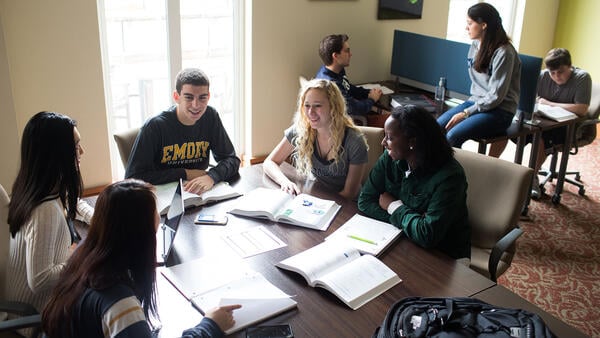
    As a first-year student at Emory University, Leia Marshall walked into the Pathways Center to receive advice on her career goals.

    She was a neuroscience and behavioral biology major who thought she might go to medical school. But after meeting with a peer mentor, Marshall realized she was more interested in optometry. “I didn’t really know a lot about the prehealth track. I didn’t really know if I wanted to do medicine at all,” she said. “Getting to speak to a peer mentor really affected the way that I saw my trajectory through my time at Emory and onwards.”

    Emory opened the Pathways Center in August 2022, uniting five different student-facing offices: career services, prehealth advising, undergraduate research, national scholarships and fellowships, and experiential learning, said Branden Grimmett, associate dean of the center.

    “It brings together what were existing functions but are now streamlined to make it easier for students to access,” Grimmett said.

    The pre–health science peer mentor program engages hundreds of students each year through office hours, advising appointments, club events and other engagements, helping undergraduates navigate their time at Emory and beyond in health science programs.

    The background: Prehealth advising has been a fixture at Emory for 20 years, led by a team of staff advisers and 30 peer mentors. The office helps students know the options available to them within health professions and that they’re meeting degree requirements to enter these programs. A majority of Emory’s prehealth majors are considering medicine, but others hope to study veterinary medicine, dentistry or optometry, like Marshall.

    How it works: The pre–health science mentors are paid student employees, earning approximately $15 an hour. The ideal applicant is a rising junior or senior who has a passion for helping others, Grimmett said.

    Mentors also serve on one of four subcommittees—connect, prepare, explore and apply—representing different phases of the graduate school process.

    Mentors are recruited for the role in the spring and complete a written application as well as an interview process. Once hired, students participate in a daylong training alongside other student employees in the Pathways Center. Mentors also receive touch-up training in monthly team meetings with their supervisors, Grimmett said.

    Peer mentors host office hours in the Pathways Center and advertise their services through digital marketing, including a dedicated Instagram account and weekly newsletter.

    Peer-to-peer engagement: Marshall became a peer mentor her junior year and is giving the same advice and support to her classmates that she received. In a typical day, she said she’ll host office hours, meeting with dozens of students and offering insight, resources and advice.

    “Sometimes students are coming in looking for general advice on their schedule for the year or what classes to take,” she said. “A lot of the time, we have students come in and ask about how to get involved with research or find clinical opportunities in Atlanta or on campus, so it really ranges and varies.”

    Sometimes Marshall’s job is just to be there for the student and listen to their concerns.

    “Once I met with a student who came in and she was really nervous about this feeling that she wasn’t doing enough,” Marshall said. “There’s this kind of impostor phenomenon that you’re not involved in enough extracurriculars, you’re not doing enough to set you up for success.”

    Marshall is able to relate to these students and help them reflect on their experiences.

    “That’s been one of my favorite parts of being a peer mentor: getting to help students recognize their strengths and guide them through things that I’ve been through myself,” she said.

    In addition to assisting their classmates, peer mentors walk away with résumé experience and better career discernment, Grimmett said. “Often our students learn a lot about their own path as they’re in dialogue with other students. It’s a full circle for many of our peer mentors.”

    “It’s funny to think about the fact that our role is to help others, but it really helps all of us as peer mentors as well,” Marshall said. “We learn to connect with a variety of students, and I think it’s been really valuable for me to connect with the advisers myself and get to know them better.”

    If your student success program has a unique feature or twist, we’d like to know about it. Click here to submit.

    This article has been updated to correct the spelling of Branden Grimmett’s name.


    Source link