
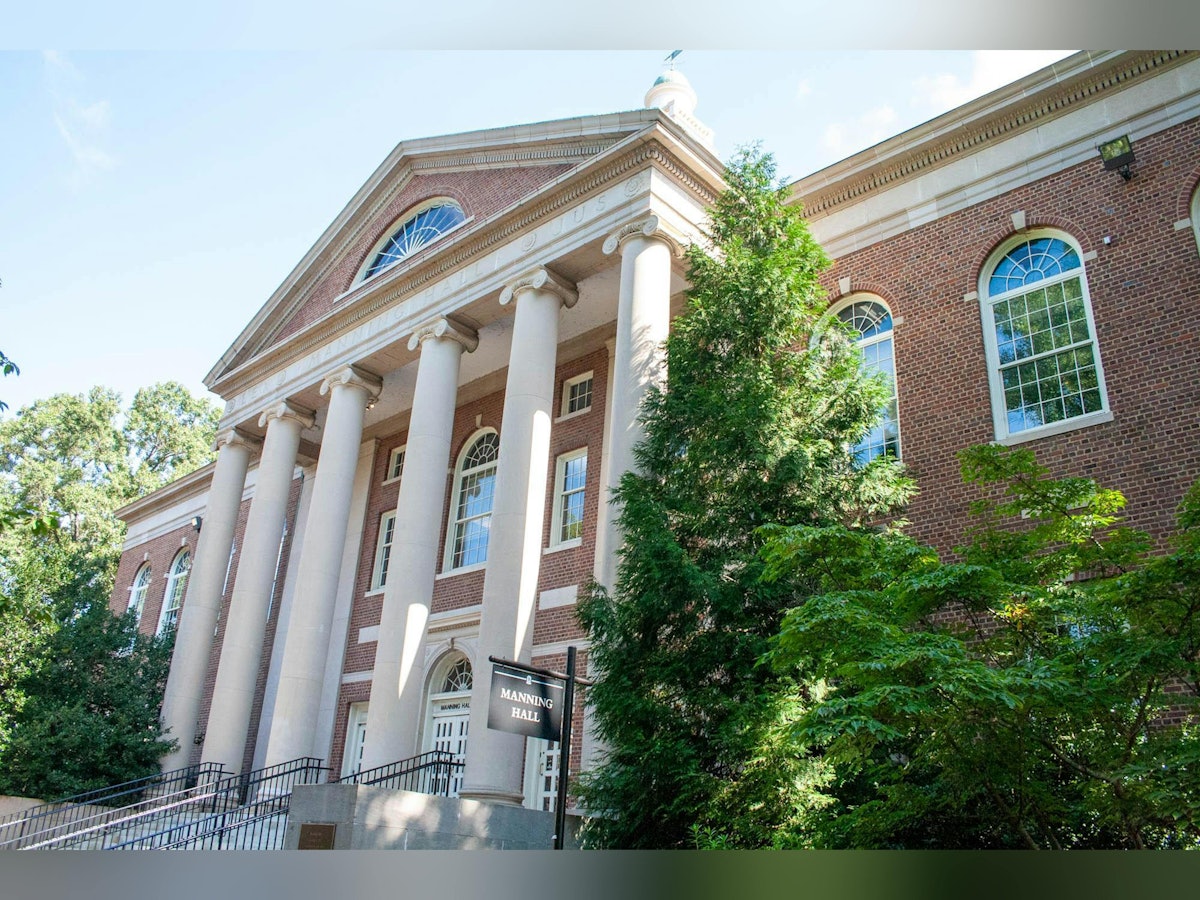
The merger, announced in a joint letter from Chancellor Lee H. Roberts and Interim Executive Vice Chancellor and Provost James W. Dean Jr., represents what administrators called “a bold step forward” in positioning Carolina as a national leader in data and AI education.
Dr. Stanley Ahalt, current dean of the School of Data Science and Society, will serve as inaugural dean of the new school. Dr. Jeffrey Bardzell, dean of the School of Information and Library Science, will continue leading SILS through the transition while also assuming a newly created secondary appointment as Chief Artificial Intelligence Officer and Vice Provost for AI.
“Information technologies, especially generative AI, are having a transformational impact,” the letter stated. “This new school is a bold step forward in our commitment to preparing students for a world increasingly shaped by data, information and artificial intelligence.”
The AI vice provost position, which will become full-time once the new school is operational, will coordinate the university’s response to artificial intelligence across all campus units.
“Dean Bardzell has been a key voice informing our thinking about AI campuswide,” Roberts and Dean wrote. “We are grateful to have his experience in the classroom, administration and research guiding our efforts.”
The announcement comes as universities nationwide grapple with integrating AI into curriculum and operations. UNC joins a growing number of institutions restructuring academic units to address what administrators describe as rapid technological change.
While the decision to merge has been finalized, administrators said that implementation plans remain under development. The university will establish a task force, advisory committee and multiple working groups to determine operational details.
“Faculty, staff and students will be engaged throughout,” the announcement stated. Both schools will maintain current academic programs during the transition, with administrators expressing hope the merger will support enrollment growth and expanded impact.
SILS, established in 1931, has approximately 600 students across bachelor’s, master’s and doctoral programs, with strengths in information ethics, library science and human-centered information design.
SDSS, founded in 2019, has grown to roughly 400 students and focuses on computational methods, statistical analysis and data science applications across disciplines.
“Both SILS and SDSS bring distinct strengths and areas of excellence to Carolina — technical expertise, humanistic inquiry and a deep understanding of the societal implications of emerging technologies,” administrators wrote.
The letter noted that the merger is “driven by long-term possibilities” rather than budget constraints, with a focus on growth and expanding both schools’ “powerhouse academic programs.”
University officials did not provide a timeline for completing the merger or naming the new school. They also did not specify budget details or projected enrollment targets.
The announcement marks the latest in a series of administrative restructuring efforts at UNC-Chapel Hill, which has seen several organizational changes in recent years as it responds to shifting academic priorities and funding models.
