Tag: Michigan

  • University of Michigan has ended private surveillance contracts but the chill on free speech remains

    University of Michigan has ended private surveillance contracts but the chill on free speech remains

    Clare Rigney is a rising second-year student at American University Washington College of Law and a FIRE summer intern.


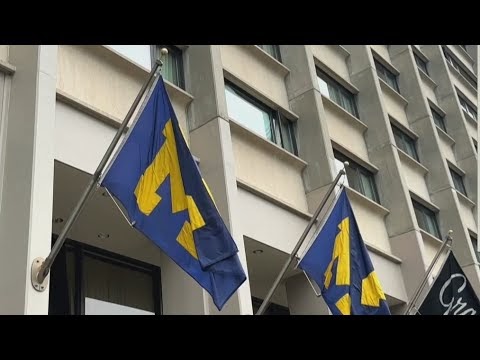
    After a news story last week that the University of Michigan was paying private investigators to spy on pro-Palestinian student protesters, the school quickly ended its contracts with the surveillance firm.

    In case anyone is unaware, the year is 2025. Not 1984.

    Now the university says this Orwellian practice has ended, but the chill on student speech will likely remain for some time.

    On June 6, The Guardian reported on the story, citing multiple videos and student accounts of investigators cursing at students and threatening them. Between June 2023 and September 2024, U-M reportedly paid about $800,000 to the Detroit-based security company City Shield to carry out this surveillance instead of using the funds to increase the size of the campus police force. 

    Several of the targeted students were members of Students Allied for Freedom and Equality, the local chapter of the Students for Justice in Palestine, causing critics to accuse the school of targeting pro-Palestinian speech.

    One student, Josiah Walker, said he counted 30 people following him at different times on and off-campus. (As a precaution, he started parking his car off-campus.) On one occasion, Walker believed a man at a campus protest was following him. The man seemed to have a speech impairment, so Walker felt bad about that assumption. However, he later saw the same man speaking in a completely normal manner. When Walker confronted him, the man pretended Walker was trying to rob him.

    The whole incident was caught on camera.

    On the recording, Walker said, “The degree to which all these entities are willing to go to target me is amazing. Guys, this doesn’t make sense. What are you doing? Leave me alone.”

    To serve their proper function, universities must facilitate an open and collaborative learning environment as a marketplace of ideas. U-M ostensibly knows this, saying it values “an environment where all can participate, are invited to contribute, and have a sense of belonging.” 

    Surveillance and intimidation do not cultivate such an environment. U-M’s surveillance will make students want to look over their shoulders before seeking to use their right to free speech.

    The Supreme Court’s ruling in Healy v. James requires universities to uphold their students’ First Amendment rights. This extends even to students whose speech the university deems offensive or “antithetical” to the school’s goals. 

    In Healy, the Court emphasized the danger of an institution targeting a group of students as particularly dangerous based on their viewpoint, noting, “the precedents of this Court leave no room for the view that, because of the acknowledged need for order, First Amendment protections should apply with less force on college campuses than in the community at large.”

    Indeed, an important function of college is to allow students to broaden their horizons and meet different kinds of  people. And freedom of association allows them to seek out individuals whose beliefs align with theirs so that they can work toward a common goal. 

    Unfortunately, universities have used these chilling tactics against student political protestors for years. 

    Amid protests demanding sick pay for frontline workers, the University of Miami in 2020 used facial recognition technology to identify protestors. The university then hauled these students into meetings where they were forced to review Miami’s events policies.

    “The take-home message that we got was basically, We’re watching you,” Esteban Wood, one of the student protesters, later said. 

    When colleges and universities surveil students, they chill speech and promote distrust between student activists and the police meant to protect them.

    In 2018, Campus Safety Magazine revealed that the University of Virginia had contracted with a private service called Social Sentinel. This service used an algorithm to monitor students’ social media posts and, if it deemed it necessary, report them to the police.

    That same year, FIRE reported on a similar situation at the University of North Carolina. During protests over a confederate statue, a UNC campus police officer masqueraded as an approachable civilian named “Victor” in order to gain information from protesters and track their movements. Later, when students confronted “Victor” in a police uniform, he revealed himself as Officer Hector Bridges, explaining he had pretended to be sympathetic to their cause as a part of his “work.” 

    “I”m representing the university right now,” Bridges admitted on video.

    The UNC Police Department later released a statement saying the university had a practice of sending “plain clothes” officers to patrol the statue to purportedly “maintain student and public safety.”

    Chilling student speech in the name of undisclosed and unspecified safety is nothing new. But if it is serious about change, it couldn’t hurt for U-M to start with reviewing its own policies. According to its Division of Public Safety and Security, its role is to foster “a safe and secure environment” where students learn to “challenge the present.” Furthermore, U-M’s Standard Practice Guide section on freedom of speech states that when any non-university security forces are needed, they should know and follow these policies. 

    While it’s possible to imagine a circumstance where student surveillance might be necessary, colleges should keep in mind that courts have generally disfavored such efforts. For example, in White v. Davis, the Supreme Court of California rebuked the Los Angeles Police Department’s unconstitutional surveillance of UCLA students:

    The censorship of totalitarian regimes that so often condemns developments in art, science and politics is but a step removed from the inchoate surveillance of free discussion in the university; such intrusion stifles creativity and to a large degree shackles democracy.

    When colleges and universities surveil students, they chill speech and promote distrust between student activists and the police meant to protect them. That can be dangerous for both the students and the officers. Police investigations will be more difficult if the student body does not trust them enough to cooperate when needed. Students may be less likely to contact the police for legitimate violations. 

    Colleges and universities should empower their students to boldly state their beliefs. That’s simply not possible if they are also hiring outside agencies to spy on them. While we are glad the University of Michigan ended the practice, this case should serve as a reminder that such heavy-handed surveillance tactics have no place at American universities. 
    Source link

  • University of Michigan paid firm to spy on activist students (News Nation)

    University of Michigan paid firm to spy on activist students (News Nation)

    Attorney Amir Makled joins “NewsNation Now” to discuss a report from The Guardian that the University of Michigan paid $800,000 to a private security firm to have undercover investigators surveil pro-Palestinian campus groups. Makled called the alleged conduct “really disturbing.”

    Source link

  • U Michigan Used Undercover Agents to Surveil Protesters

    U Michigan Used Undercover Agents to Surveil Protesters

    The University of Michigan hired dozens of private investigators to go undercover on campus and surveil pro-Palestinian student protesters, The Guardian reported Friday. 

    Some of the investigators, who work for a Detroit-based security firm, were caught on camera trailing, recording and harassing students; one reportedly drove a car at one student, who had to jump out of the way.

    “It’s so insane that they have spent millions of dollars to hire some goons to follow campus activists around,” one student who’d been followed by agents told The Guardian. “It’s just such a waste of money and time.”

    The agents have been gathering evidence against students for some time at the behest of the university; Michigan state prosecutors used evidence from their investigations to charge and jail student protesters in May 2024, according to The Guardian. The state attorney general dropped those charges two weeks ago. In April, police raided the homes of five pro-Palestinian student activists in Ann Arbor for alleged “acts of vandalism.”

    A spokesperson for the university did not deny hiring the investigators in responses to The Guardian’s questions and defended “security measures” as essential to “maintaining a safe and secure campus environment.”

    Source link

  • After Michigan State trustees told students to call professor a racist, his lawsuit is moving ahead

    After Michigan State trustees told students to call professor a racist, his lawsuit is moving ahead

    Professor Jack Lipton scored a victory for free speech last week after a federal court allowed his lawsuit to move forward against two Michigan State University trustees who he claims not only urged students to call him racist, but told them how to phrase it.

    In his lawsuit, Lipton alleged that two trustees, Rema Vassar and Dennis Denno, met with MSU students, encouraged them to file complaints against Lipton with MSU’s internal civil rights office, and asked students to condemn Lipton as racist in public statements, op-eds, and on social media. MSU hired the law firm Miller & Chevalier to conduct an independent investigation, producing a report you can read online. According to Lipton, it found that Vassar and Denno planned the attacks and even provided others with specific language to paint Lipton as racist, anti-Palestinian, and anti-Muslim.

    For example, in one recorded conversation, Denno told students, “The other thing you can do to help us is attack Jack Lipton, the Chair of the Faculty Senate . . . call him out, call him a racist.”

    What was Lipton’s “racist” crime?

    In October 2023, at a public Board of Trustees meeting that followed an open letter accusing then-BOT Chair Vassar of ethics violations, Lipton read a resolution on behalf of faculty calling for Vassar’s resignation. The meeting erupted in chaos, marked by jeers from Vassar’s supporters.

    The Constitution doesn’t cease to exist just because someone’s feelings got hurt at a trustee meeting.

    The next day, while making clear he was speaking in his personal capacity and not as a faculty representative, Lipton told a reporter that Vassar could have stopped the chaos of the meeting with “a single statement … yet she elected to let the mob rule the room.”

    That single word — mob — triggered what Lipton describes as a coordinated retaliation campaign by Vassar and Denno.

    Lipton apologized for using the word “mob,” as well as for any unintended racial undertones, but did not stop calling for accountability over Vassar’s alleged ethics violations — and he says Vassar and Denno’s harassment of him continued.

    In November 2023, the NAACP Michigan State Conference Youth & College Division released a statement accusing Lipton of “racial terrorism.” Also that month, the organization Diverse: Issues In Higher Education published an op-ed arguing that Lipton had used the word “mob” because he wanted to traumatize black and Palestinian students. At a BOT meeting that December, Denno read a statement accusing Lipton of “criminalizing students” and described his use of the word “mob” as “racism and violent language.”

    What’s more, even though the board eventually voted to censure both Vassar and Denno, as advised by investigators for a range of misconduct including their attacks on Lipton, Vassar didn’t stop there. At a meeting in September 2024, she mocked Lipton and questioned his right to speak on matters of civil discourse, which he cites as yet another effort to chill his speech.

    In language as dry as it was devastating, the court summarized the allegations that these trustees abused their power to carry out what amounts to a smear campaign. Lipton claims that Vassar and Denno “used their positions as BOT members to attack Lipton for the comment he made as a private citizen” and “used their BOT pulpit to funnel adverse action towards Lipton via proxies, leveraging their BOT membership to speak through students, supporters, and members of the public.”

    The court also noted that Lipton’s original “mob” comment was “speech regarding matters of public concern,” as it critiqued the behavior of a public official at a public meeting, and Lipton made the remark as a private citizen. The First Amendment protects faculty when they speak as private citizens on matters of public concern, such as raising state university ethics violations to the media, as Lipton did.

    UPDATE: Another federal appeals court backs academic free speech for public employees

    After FIRE secured a lawyer for a law professor at the University of Illinois Chicago, the school reached a resolution but later reneged on the deal. That’s when the professor sued.


    Read More

    While the court dismissed MSU and its Board of Trustees as defendants, Lipton is now free to pursue his claims against Vassar and Denno themselves — and they have not exactly covered themselves in glory. The university investigation that recommended their censure found that Vassar had taken courtside tickets and free flights while Denno had pressured consultants reviewing MSU’s response to the 2023 mass shooting on campus to tone down any criticism of the trustees. In fact, just this week, Gov. Gretchen Whitmer declined the MSU board’s official request to remove Vassar and Denno, though the governor’s counsel said this “by no means indicates a condoning of the conduct alleged in the referral.” Vassar and Denno may have retained their seats on the board, but they are hardly out of the woods. 

    Now, Lipton’s case moves to discovery, where we’ll get a closer look at how MSU’s top brass reacted when a faculty member stepped out of line by doing his civic duty, and potentially to trial. While this week’s court decision is far from a final ruling, it shows the court believes Lipton’s allegations deserve to be heard, and it’s a reminder that the Constitution doesn’t cease to exist just because someone’s feelings got hurt at a trustee meeting.

    Source link

  • Michigan Governor Declines to Remove Two MSU Trustees

    Michigan Governor Declines to Remove Two MSU Trustees

    After more than a year of uncertainty, Michigan governor Gretchen Whitmer has decided not to remove two Michigan State University trustees as requested by the board, The Lansing State Journal reported.

    Michigan State’s Board of Trustees asked the Democratic governor to remove Rema Vassar and Dennis Denno last year after a university investigation found both trustees violated MSU’s code of conduct. The investigation determined that the pair had “created a fear of retaliation amongst administrators and other MSU personnel,” according to the report, which said they encouraged students to call a frequently critical faculty member a racist. Vassar also accepted gifts from donors, including flights and tickets to athletic events, the report said.

    (Vassar and Denno are currently facing a lawsuit from the professor they allegedly targeted.)

    The report also found the duo intended to “embarrass and terrify” former interim president Teresa Woodruff. The trustees have refuted most allegations and taken issue with the findings.

    Both trustees were stripped of their duties by the board and Vassar stepped down as chair.

    While Whitmer called Vassar and Denno’s actions “shameful,” she decided not to remove her fellow Democrats. (Trustees at Michigan State are elected, unlike at most institutions nationally.)

    “The denial of the request by no means indicates a condoning of the conduct alleged in the referral,” Whitmer’s deputy legal counsel Amy Lishinski wrote in a letter to the MSU board obtained by the newspaper. “Rather, it only means that other considerations related to the Governor’s removal authority weigh against removal under these circumstances at this time.”

    Source link

  • Eastern Michigan University to cut ties with Chinese colleges amid lawmaker push

    Eastern Michigan University to cut ties with Chinese colleges amid lawmaker push

    This audio is auto-generated. Please let us know if you have feedback.

    Dive Brief: 

    • Eastern Michigan University is ending engineering teaching partnerships with two Chinese universities after a pair of prominent Republican lawmakers raised national security concerns. 
    • The university announced Wednesday it is terminating its partnership with Guangxi University and Beibu Gulf University. Eastern Michigan President James Smith said the university is working with Beibu Gulf to ensure affected students can complete their studies elsewhere. The Guangxi partnership did not enroll any students.
    • The move comes as Republican lawmakers increasingly raise research theft concerns about colleges’ partnerships with Chinese universities. The Trump administration is also moving to “aggressively revoke” the visas of international students from China, U.S. Secretary of State Marco Rubio said this week. 

    Dive Insight: 

    In February, two high-profile lawmakers from Michigan Rep. Tim Walberg, the chair of the House’s education committee, and Rep. John Moolenaar, the chair of the House Select Committee on the Chinese Communist Partycalled on Eastern Michigan and two other universities in their state to end their partnerships with Chinese colleges. 

    “The university’s [People’s Republic of China] collaborations jeopardize the integrity of U.S. research, risk the exploitation of sensitive technologies, and undermine taxpayer investments intended to strengthen America’s technological and defense capabilities,” the letter stated

    Shortly afterward, Oakland University said it would end its partnerships with three Chinese universities. The University of Detroit Mercy, the third institution that received a letter in February, is likewise ending its teaching partnerships with Chinese universities. 

    University of Detroit Mercy President Donald Taylor said in a Friday statement that the institution is working to ensure students can finish their studies. He also noted that the partnerships have not included any research or technology transfer. 

    “They are solely for undergraduate teaching programs only with course content that is available publicly,” Taylor said.

    In Eastern Michigan’s Wednesday announcement, Smith stressed that both partnerships had been exclusively focused on teaching and did not involve research or the transfer of technology. He added that the programs did not encompass cybersecurity teaching. 

    “The course content for all offered classes is widely available in the public domain,” Smith said. 

    In October, Moolenaar also urged the University of Michigan to end its two-decade partnership with Shanghai Jiao Tong University on a joint institute. Moolenaar alleged the partnership had helped the Chinese government advance their defense technologies, from rocket fuel research to improving imaging to detect flaws in military equipment. 

    The University of Michigan announced in January it would end academic collaboration with Shanghai Jiao Tong and ensure students enrolled in the joint institute’s programs would be able to complete their degrees. 

    Last year, the Georgia Institute of Technology also announced it would pull out of a partnership that established an overseas campus in China, while the University of California, Berkeley recently severed ties with Tsinghua University following a House report raising concerns with colleges’ partnerships with Chinese institutions. 

    The Trump administration recently opened an investigation into UC Berkeley over its partnership with Tsinghua University, alleging that it failed to properly report its foreign gifts and contracts. 

    Earlier this month, two House committees set their sights on Harvard University’s ties with China, arguing that some of its partnerships “raise serious national security and ethnical concerns.” Lawmakers demanded the Ivy League institution hand over internal documents related to its partnerships with China and certain other countries by June 2. 

    The Trump administration is also planning a crackdown on international students from China, citing national security concerns. Rubio said Wednesday that the federal government will revoke visas from Chinese students “with connections to the Chinese Communist Party or studying in critical fields,” though he didn’t specify what those disciplines would be.

    Source link

  • A Michigan research professor explains how NIH funding works − and what it means to suddenly lose a grant – Campus Review

    A Michigan research professor explains how NIH funding works − and what it means to suddenly lose a grant – Campus Review

    In its first 100 days, the Trump administration has terminated more than US$2 billion in federal grants, according to a public source database compiled by the scientific community, and it is proposing additional cuts that would reduce the $47 billion budget of the US National Institutes of Health, also known as the NIH, by nearly half.

    Please login below to view content or subscribe now.

    Membership Login

    Source link

  • University of Michigan President Dr. Santa Ono to Exit After Brief Tenure

    University of Michigan President Dr. Santa Ono to Exit After Brief Tenure

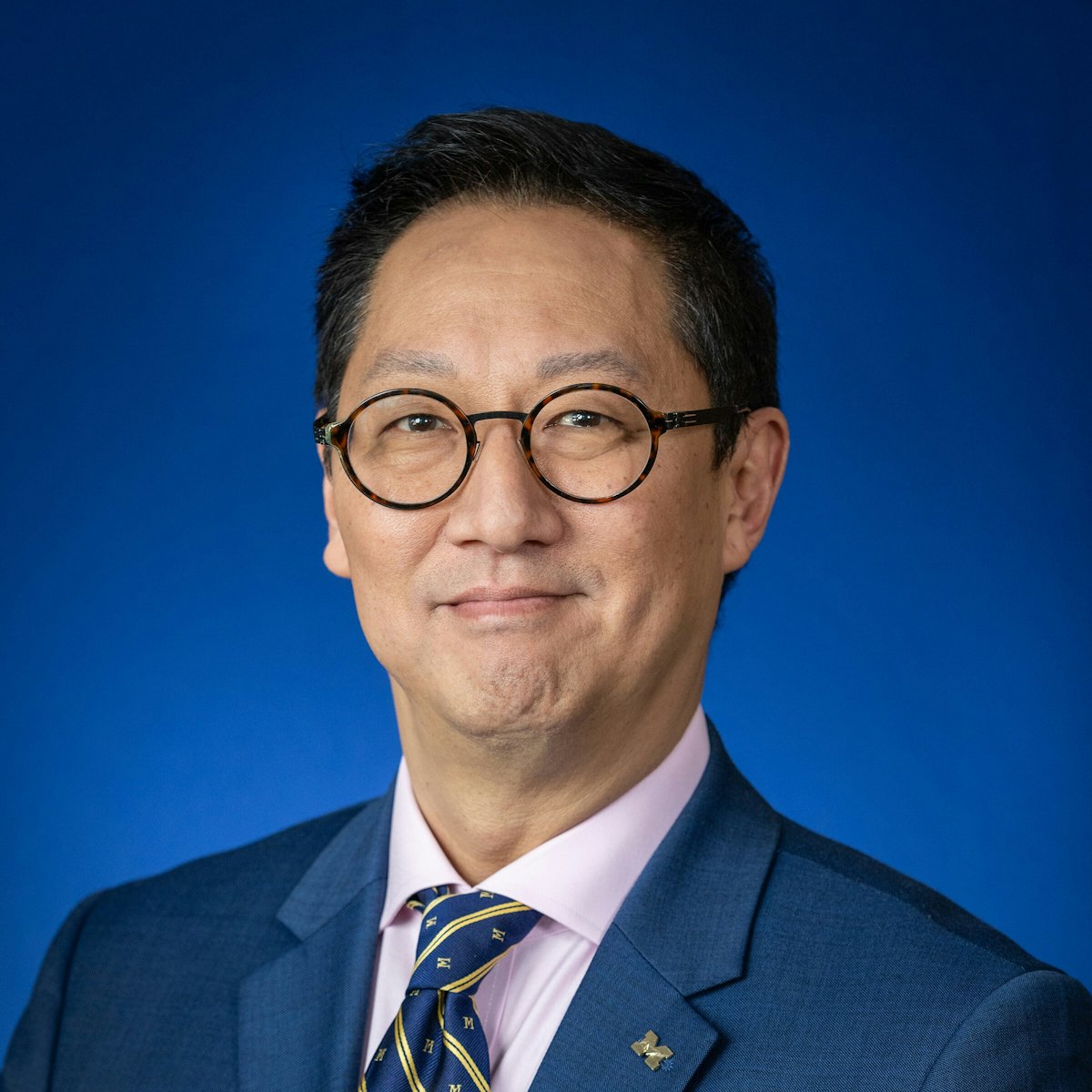
    Dr. Santa J. OnoUniversity of Michigan President Dr. Santa J. Ono has announced his departure after a remarkably brief three-year tenure, accepting the sole finalist position for the presidency at the University of Florida.

    In a statement released Sunday, Ono confirmed he plans to transition to his new role this summer, pending approval from Florida’s Board of Governors.

    “This decision was not made lightly, given the deep bond Wendy and I have formed with this extraordinary community,” Ono said in his announcement to the Michigan community.

    Ono’s short-lived presidency began in October 2022 when he was appointed to replace Dr. Mark Schlissel, who was terminated after an investigation revealed an inappropriate relationship with a subordinate. The leadership transition occurred during a turbulent period for the university, which was simultaneously managing litigation related to the Dr. Robert Anderson sexual abuse scandal and implementing reforms to its sexual misconduct policies.

    Before joining Michigan, Ono served as president at the University of British Columbia and the University of Cincinnati, establishing himself as an experienced higher education administrator before taking the helm at Michigan. In 2015, Diverse profiled Ono.

    His brief tenure at Michigan saw several notable developments, including the unveiling of Campus Plan 2050, a comprehensive blueprint for the Ann Arbor campus’s future development; progress on the University of Michigan Center for Innovation in Detroit; and the expansion of the Go Blue Guarantee, which now offers free tuition to families earning $125,000 or less.

    However, Ono’s administration has faced significant criticism for reducing investments in Diversity, Equity and Inclusion initiatives, including the controversial closure of the Office of DEI. Pro-Palestinian student activists have also criticized the administration’s handling of campus protests, claiming the university has restricted free expression and employed excessive measures to limit demonstrations.

    In his farewell message, Ono highlighted the establishment of the Institute for Civil Discourse as one of his accomplishments, describing it as an initiative aimed at strengthening “debate and dialogue across diverse ideologies and political perspectives.”

    “These accomplishments are a testament to the collaborative spirit, creativity, and dedication of our entire university community,” Ono said. “They reflect a deep commitment to ensuring that Michigan’s best days are still ahead.”

    The University of Michigan Board of Regents has not yet announced plans for identifying Ono’s successor or appointing an interim president.

    The University of Florida cited Ono’s “proven record of academic excellence, innovation and collaborative leadership at world-class institutions” in their announcement. If approved, Ono will replace former UF President Dr. Ben Sasse, who stepped down in July 2024.

    Source link

  • Michigan promotes college access and skills training for men

    Michigan promotes college access and skills training for men

    This audio is auto-generated. Please let us know if you have feedback.

    Michigan Gov. Gretchen Whitmer signed an executive directive that instructs education and labor state agencies to actively reach out to men and inform them about tuition-free opportunities for college and skills training, according to an April 10 announcement from the governor’s office.

    The directive is aimed at closing gender gaps in education and supporting Whitmer’s Sixty by 30 goal to increase the percentage of Michiganders with a post-secondary degree or certificate to 60% by 2030.

    “Here in Michigan, we have been working hard to reduce costs and make it easier for folks to achieve their goals. But too many men don’t have the resources they need to succeed,” Whitmer said in a statement. “That’s why I’m proud to sign this executive order that will ensure more Michiganders are aware of and can access key programs that will lower the cost of education, ensuring more men can get a good paying job and put more money back in their pockets.”

    Nationally, men are falling behind in education and employment, according to Whitmer’s office. Compared to 2004, the labor force participation rate for young men is 700,000 short. 

    Although most job growth has occurred in sectors where workers have degrees or training, undergraduate enrollment for men dropped by 10% in 2021. While about 55% of women nationwide hold an associate’s degree or higher, only 44% of men have reached the same level.

    In addition, 45,000 fewer boys graduate high school each year, as compared to girls. Boys’ literacy rates are also falling, and boys make up about two-thirds of the bottom 10% of students.

    Whitmer’s directive instructs the Michigan Department of Lifelong Education, Advancement and Potential and the Department of Labor and Economic Opportunity to review programming related to job training and post-secondary education, with an aim to lower costs for education and open up more job opportunities.

    Although men in the U.S. still earn more than women on average, young women now earn the same as or more than their male peers in 22 of 250 metro areas, according to a 2022 analysis by the Pew Research Center. The narrowing of the gender gap is tied in part to younger women outpacing men in college graduation, Pew said.

    Other factors play a role as well. Prescription opioids, for instance, could account for 44% of the national decrease in men’s labor force participation between 2001 and 2015, according to a report by the Federal Reserve Bank of Cleveland. Optimizing health benefits to serve employees’ needs can help.

    Creating effective learning and development programs can help as well, particularly executive-style training for all employees, according to a CYPHER Learning report. Flexible, engaging options can attract and retain talent, particularly if L&D opportunities match workers’ interests, enhance their skills and advance their careers, the report found. 

    Source link

  • Searches Were About Vandalism of Michigan Leaders’ Homes

    Searches Were About Vandalism of Michigan Leaders’ Homes

    The Michigan attorney general’s office revealed Thursday that the police searches Wednesday in Ann Arbor, Canton and Ypsilanti were part of a yearlong investigation into “evidently coordinated” vandalism, including pro-Palestine graffiti and in some cases shattered glass at the homes of the University of Michigan’s president, provost, chief investment officer and one regent, Jordan Acker.

    In a news release, the office of Attorney General Dana Nessel, a Democrat, said there were many “related criminal acts.” It listed 12 locations where incidents—spanning February 2024 to last month—are under investigation, including the four university leaders’ homes.

    “It is currently estimated that the total damage from these incidents is approximately $100,000,” the release said. “In all cases, the crimes were committed in the middle of the night and in one case upon a residence wherein children were sleeping and awoken. In multiple instances windows were smashed, and twice noxious chemical substances were propelled into homes. At every site, political slogans or messages were left behind.”

    No arrests have been made yet.

    Police—including local, state and the FBI—raided five homes connected to university pro-Palestinian activists Wednesday, according to Lavinia Dunagan, a Ph.D. student who is a co-chair of the university graduate student union’s communications committee. She said at least seven people, including at least one union member, were detained but not arrested. All are students, save for one employee of Michigan Medicine, she said.

    The union—the Graduate Employees’ Organization, or GEO—said in a news release Wednesday that “officers also confiscated personal belongings from multiple residences and at least two cars.”

    The state chapter of the Council on American-Islamic Relations said in a release Wednesday that “property damage at residences took place, and individuals were handcuffed without charges during the aggressive raids.”

    The attorney general’s office did say Thursday that “in one instance, an entryway was forcibly breached following more than an hour of police efforts to negotiate entry to satisfy the court-authorized search warrant.”

    Source link