Tag: million

  • National AI training hub for educators to open, funded by OpenAI and Microsoft

    National AI training hub for educators to open, funded by OpenAI and Microsoft

    This story was originally published by Chalkbeat. Sign up for their newsletters at ckbe.at/newsletters.

    More than 400,000 K-12 educators across the country will get free training in AI through a $23 million partnership between a major teachers union and leading tech companies that is designed to close gaps in the use of technology and provide a national model for AI-integrated curriculum.

    The new National Academy for AI Instruction will be based in the downtown Manhattan headquarters of the United Federation of Teachers, the New York City affiliate of the American Federation of Teachers, and provide workshops, online courses, and hands-on training sessions. This hub-based model of teacher training was inspired by work of unions like the United Brotherhood of Carpenters that have created similar training centers with industry partners, according to AFT President Randi Weingarten.

    “Teachers are facing huge challenges, which include navigating AI wisely, ethically and safely,” Weingarten said at a press conference Tuesday announcing the initiative. “The question was whether we would be chasing it or whether we would be trying to harness it.”

    The initiative involves the AFT, UFT, OpenAI, Microsoft, and Anthropic.

    The Trump administration has encouraged AI integration in the classroom. More than 50 companies have signed onto a White House pledge to provide grants, education materials, and technology to invest in AI education.

    In the wake of federal funding cuts to public education and the impact of Trump’s sweeping tax and policy bill on schools, Weingarten sees this partnership with private tech companies as a crucial investment in teacher preparation.

    “We are actually ensuring that kids have, that teachers have, what they need to deal with the economy of today and tomorrow,” Weingarten said.

    The academy will be based in a city where the school system initially banned the use of AI in the classroom, claiming it would interfere with the development of critical thinking skills. A few months later, then-New York City schools Chancellor David Banks did an about-face, pledging to help schools smartly incorporate the technology. He said New York City schools would embrace the potential of AI to drive individualized learning. But concrete plans have been limited.

    The AFT, meanwhile, has tried to position itself as a leader in the field. Last year, the union released its own guidelines for AI use in the classroom and funded pilot programs around the country.

    Vincent Plato, New York City Public Schools K-8 educator and UFT Teacher Center director, said the advent of AI reminds him of when teachers first started using word processors.

    “We are watching educators transform the way people use technology for work in real time, but with AI it’s on another unbelievable level because it’s just so much more powerful,” he said in a press release announcing the new partnership. “It can be a thought partner when they’re working by themselves, whether that’s late-night lesson planning, looking at student data or filing any types of reports — a tool that’s going to be transformative for teachers and students alike.”

    Teachers who frequently use AI tools report saving 5.9 hours a week, according to a national survey conducted by the Walton Family Foundation in cooperation with Gallup. These tools are most likely to be used to support instructional planning, such as creating worksheets or modifying material to meet students’ needs. Half of the teachers surveyed stated that they believe AI will reduce teacher workloads.

    “Teachers are not only gaining back valuable time, they are also reporting that AI is helping to strengthen the quality of their work,” Stephanie Marken, senior partner for U.S. research at Gallup, said in a press release. “However, a clear gap in AI adoption remains. Schools need to provide the tools, training, and support to make effective AI use possible for every teacher.”

    While nearly half of school districts surveyed by the research corporation RAND have reported training teachers in utilizing AI-powered tools by fall 2024, high-poverty districts are still lagging behind their low poverty counterparts. District leaders across the nation report a scarcity of external experts and resources to provide quality AI training to teachers.

    OpenAI, a founding partner of the National Academy for AI Instruction, will contribute $10 million over the next five years. The tech company will provide educators and course developers with technical support to integrate AI into classrooms as well as software applications to build custom, classroom-specific tools.

    Tech companies would benefit from this partnership by “co-creating” and improving their products based on feedback and insights from educators, said Gerry Petrella, Microsoft general manager, U.S. public policy, who hopes the initiative will align the needs of educators with the work of developers.

    In a sense, the teachers are training AI products just as much as they are being trained, according to Kathleen Day, a lecturer at Johns Hopkins Carey Business School. Day emphasized that through this partnership, AI companies would gain access to constant input from educators so they could continually strengthen their models and products.

    “Who’s training who?” Day said. “They’re basically saying, we’ll show you how this technology works, and you tell us how you would use it. When you tell us how you would use it, that is a wealth of information.”

    Many educators and policymakers are also concerned that introducing AI into the classroom could endanger student data and privacy. Racial bias in grading could also be reinforced by AI programs, according to research by The Learning Agency.

    Additionally, Trevor Griffey, a lecturer in labor studies at the University of California Los Angeles, warned the New York Times that tech firms could use these deals to market AI tools to students and expand their customer base.

    This initiative to expand AI access and training for educators was likened to New Deal efforts in the 1930s to expand equal access to electricity by Chris Lehane, OpenAI’s chief global affairs officer. By working with teachers and expanding AI training, Lehane hopes the initiative will “democratize” access to AI.

    “There’s no better place to do that work than in the classroom,” he said at the Tuesday press conference.

    Chalkbeat is a nonprofit news site covering educational change in public schools.

    For more news on AI training, visit eSN’s Digital Learning hub.

    Latest posts by eSchool Media Contributors (see all)

    Source link

  • K12 Earns High Marks for Excellence in Online Public Education

    K12 Earns High Marks for Excellence in Online Public Education

    RESTON, Va.(GLOBE NEWSWIRE) — K12, a portfolio brand of Stride, Inc. has been recognized for its steadfast commitment to quality education. In a recent review by Cognia, a global nonprofit that accredits schools, K12 earned an impressive Index of Education Quality (IEQ) score of 327, well above the global average of 296. Cognia praised K12 for creating supportive environments where students are encouraged to learn and grow in ways that work best for them. 

    For over 25 years, K12 has been a pioneer in online public education, delivering flexible, high-quality learning experiences to families across the country. Having served more than 3 million students, K12 has helped shape the future of personalized learning. This long-standing presence in the field reflects a deep understanding of what families need from a modern education partner. The recent Cognia review further validates K12’s role as a trusted provider, recognizing the strength of its learning environments and its commitment to serving all students. 

    “What stood out in this review is how clearly our learning environments are working for students,” said Niyoka McCoy, Chief Learning Officer at Stride, Inc. “From personalized graduation plans to real-time feedback tools and expanded course options, the Cognia team saw what we see every day, which is students being supported in ways that help them grow, stay engaged, and take ownership of their learning.” 

    K12’s impact extends well beyond the virtual classroom. In 2025, the organization was honored with two Gold Stevie® Awards for Innovation in Education and recognized at the Digital Education Awards for its excellence in digital learning. These awards highlight K12’s continued leadership in delivering meaningful, future-focused education. What sets K12-powered online public schools apart is a curriculum that goes beyond the basics, offering students access to STEM, Advanced Placement, dual-credit, industry certifications, and gamified learning experiences. K12’s program is designed to spark curiosity, build confidence, and help students thrive in college, careers, and life. 

    Through student-centered instruction and personalized support, K12 is leading the way in modern education. As the learning landscape evolves, K12 adapts alongside it, meeting the needs of today’s students while shaping the future of education. 

    To learn more about K12 and its accredited programs, visit k12.com.

    About Stride, Inc.  

    Stride Inc. (LRN) is redefining lifelong learning with innovative, high-quality education solutions. Serving learners in primary, secondary, and postsecondary settings, Stride provides a wide range of services including K-12 education, career learning, professional skills training, and talent development. Stride reaches learners in all 50 states and over 100 countries. Learn more at Stridelearning.com.

    eSchool News Staff
    Latest posts by eSchool News Staff (see all)

    Source link

  • Columbia University Settles Class Action Lawsuit Over Inflated Rankings Data for $9 Million

    Columbia University Settles Class Action Lawsuit Over Inflated Rankings Data for $9 Million

    Columbia University has reached a $9 million settlement agreement with undergraduate students who alleged the institution deliberately submitted false information to U.S. News & World Report to artificially boost its college rankings position.

    The preliminary settlement, filed last Monday in Manhattan federal court and pending judicial approval, resolves claims that Columbia misrepresented key data points to enhance its standing in the influential annual rankings. The university reached as high as No. 2 in the undergraduate rankings in 2022 before the alleged misconduct came to light.

    Students alleged that Columbia consistently provided inaccurate data to U.S. News, including the false claim that 83% of its classes contained fewer than 20 students. The lawsuit argued these misrepresentations were designed to improve the university’s ranking position and, consequently, attract more students willing to pay premium tuition rates.

    The settlement covers approximately 22,000 undergraduate students who attended Columbia College, the Fu Foundation School of Engineering and Applied Science, and the School of General Studies between fall 2016 and spring 2022.

    The controversy began in July 2022 when Columbia mathematics professor Dr. Michael Thaddeus published a detailed analysis questioning the accuracy of data underlying the university’s No. 2 ranking. His report alleged that much of the information Columbia provided to U.S. News was either inaccurate or misleading.

    Following the publication of Thaddeus’s findings, Columbia’s ranking plummeted to No. 18 in September 2022. The dramatic drop highlighted the significant impact that data accuracy has on institutional rankings and reputation.

    In response to the allegations, Columbia announced in June 2023 that its undergraduate programs would withdraw from participating in U.S. News rankings altogether. The university cited concerns about the “outsized influence” these rankings have on prospective students’ decision-making processes.

    “Much is lost when we attempt to distill the quality and nuance of an education from a series of data points,” Columbia stated in explaining its decision to withdraw from the rankings process.

    While denying wrongdoing in the settlement agreement, Columbia acknowledged past deficiencies in its reporting practices. The university stated it “deeply regrets deficiencies in prior reporting” and has implemented new measures to ensure data accuracy.

    Columbia now provides prospective students with information that has been reviewed by an independent advisory firm, demonstrating the institution’s commitment to transparency and accurate representation of its educational offerings.

    Columbia’s decision to withdraw from U.S. News rankings reflects a growing skepticism among elite institutions about the value and impact of college ranking systems. Harvard and Yale have also stopped submitting data to U.S. News for various programs, signaling a potential shift in how prestigious universities approach rankings participation.

    Under the terms of the agreement, student attorneys plan to seek up to one-third of the settlement amount for legal fees, which would leave approximately $6 million available for distribution among affected students. The settlement requires approval from a federal judge before taking effect.

    Student lawyers characterized the accord as “fair, reasonable and adequate” given the circumstances of the case and the challenges inherent in proving damages from ranking manipulation.

    Source link

  • Ignite Reading Again Approved as 1:1 High-Dosage Early Literacy Tutoring Provider in Massachusetts

    Ignite Reading Again Approved as 1:1 High-Dosage Early Literacy Tutoring Provider in Massachusetts

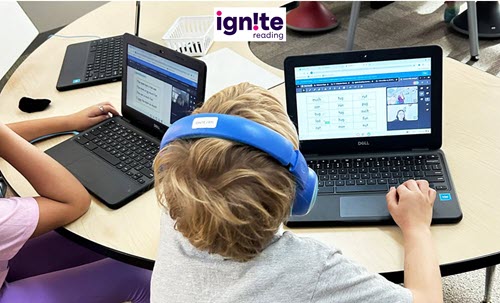
    BOSTON — Ignite Reading — a Science of Reading-based virtual tutoring program serving students in 18 states nationwide — today announced its approval by the Massachusetts Department of Elementary and Secondary Education (DESE) to continue providing 1:1 high-dosage evidence-based literacy tutoring to K-3 students across the commonwealth.

    Massachusetts Governor Maura Healey’s administration called on her state to invest heavily in high-dosage tutoring (HDT) earlier this year, earmarking $25 million in her state budget proposal to help accelerate literacy growth, “complementing the more systemic, long-term improvement work” being supported under the administration’s five-year literacy improvement campaign, Literacy Launch.

    In its approval process, DESE evaluated Ignite Reading’s services to Massachusetts districts over the past three school years and approved the literacy company to again provide school districts and charter schools with tutoring that is focused on building foundational skills — including phonological awareness, phonics knowledge and decoding skills — to help students become independent fluent readers in the early grades.

    Since Ignite Reading first gained DESE approval during the 2022-23 school year:

    • 30 Massachusetts schools and districts have partnered with Ignite Reading to provide students with 15 minutes of daily, 1:1 virtual tutoring.
    • Ignite Reading’s tutor educators have delivered differentiated, evidence-based early literacy instruction to more than 7,800 Massachusetts students.
    • Researchers at Johns Hopkins University’s Center for Research and Reform in Education have followed approximately 2,000 Massachusetts 1st graders enrolled in the program. The quasi-experimental study found the number of students reading on benchmark increased 213% after a year of Ignite Reading tutoring. At the same time, the percentage of students who required intensive reading intervention decreased 55%. All student groups — including Black and Hispanic students, those with IEPs and Multilingual Learners — had equitable skills growth, and those meeting end-of-year reading benchmarks grew more than 125%.

    The Healey-Driscoll Administration recently announced that schools and districts in Massachusetts are invited to apply for high-dosage early literacy tutoring for K-3 students with 1st grade as the state’s top priority.

    “When we get kids reading proficiently by the end of 1st grade, we set them up for a lifetime of academic success,” said Ignite Reading CEO Jessica Sliwerski. “Our continued approval by DESE means we can keep delivering the intensive, personalized support that Massachusetts 1st graders need to learn to read on grade level and on time. We are honored to be able to continue to partner with Massachusetts districts to ensure all students can access the tools they need to succeed as readers.”

    For more information about Ignite Reading’s Massachusetts partnerships, visit https://info.ignite-reading.com/massachusetts.

    About Ignite Reading

    Ignite Reading is on a mission to ensure every student can access the tools they need to be a confident, fluent reader by the end of 1st grade. School districts nationwide depend on Ignite Reading’s virtual tutoring program to deliver literacy support at scale for students who need help learning to read. Our highly trained tutors provide students with 1:1 tutoring in foundational literacy skills each school day, helping them go from learning to read to reading to learn.

    A recent study by the Center for Research and Reform in Education at Johns Hopkins University found that Ignite Reading students across demographics — including students who are English Learners, Black, Hispanic, and those with Individualized Education Programs (IEPs) — achieve the same outstanding gains of more than 5 months of additional learning during a single school year.  For more information about Ignite Reading, visit www.ignite-reading.com.

    eSchool News Staff
    Latest posts by eSchool News Staff (see all)

    Source link

  • Harvard Hit With Another $60 Million in Grant Cuts

    Harvard Hit With Another $60 Million in Grant Cuts

    The Trump administration has ended $60 million in federal grant funding for Harvard University amid an ongoing fight with the private institution over concerns about alleged campus antisemitism.

    The Department of Health and Human Services announced the move late Monday night.

    “HHS is taking decisive action to uphold civil rights in higher education,” the agency posted on social media. “Due to Harvard University’s continued failure to address anti-Semitic harassment and race discrimination, HHS is terminating multiple multi-year grant awards—totaling approximately $60 million over their full duration. In the Trump Administration, discrimination will not be tolerated on campus. Federal funds must support institutions that protect all students.”

    HHS also linked to a report from The Daily Caller, a right-wing website, which noted that the $60 million in grants came from funding via the Centers for Disease Control and Prevention.

    The Daily Caller reported that federal government officials sent a letter to Harvard that cites the university’s own findings of antisemitism on campus as detailed in a report published last month.

    A CDC official, according to The Daily Caller, told the university that funding an institution that the Trump administration perceives as discriminatory would be inconsistent with the CDC’s mission. The CDC official concluded that “no corrective action is possible here.”

    Harvard did not respond to a request for comment from Inside Higher Ed.

    The latest move comes as the Trump administration has already pulled other grants and federal contracts and frozen more than $2.7 billion in federal funding—about a third of Harvard’s federal funds.

    Harvard is also facing several investigations from the Trump administration.

    The university has been locked in conflict with the federal government for months since it spurned Trump’s demands to overhaul governance, hiring, admissions and more, which prompted retaliation in the form of a funding freeze. Harvard sued the Trump administration last month, arguing that it sought to “impose unprecedented and improper control over the university.”

    A hearing in that case is set for July.

    Source link

  • FIRE and Cosmos Institute launch $1 million grant program for AI that advances truth-seeking

    FIRE and Cosmos Institute launch $1 million grant program for AI that advances truth-seeking

    AUSTIN, Texas, May 16, 2025 — The Foundation for Individual Rights and Expression (FIRE) and the Cosmos Institute today announced the Truth-Seeking AI Grants Program, a new $1 million initiative to fund open-source projects that build freedom into the foundations of AI, rather than censorship or control.

    Truth-seeking AI: Why it matters

    Truth-seeking AI is artificial intelligence built to expand the marketplace of ideas and sharpen human inquiry — not replace it.

    AI already drafts our sentences, sorts our inbox, and cues our next song. But the technology is advancing rapidly. Soon, it could determine which ideas ever reach our minds — or form within them. Two futures lie ahead, and the stakes couldn’t be higher.

    In one, AI becomes a shadow censor. Hidden ranking rules throttle dissent, liability fears chill speech, and flattering prompts dull judgment until people stop asking “why.” That is algorithmic tyranny.

    In the other, AI works as a partner in truth-seeking: it surfaces counter-arguments, flags open questions, and prompts us to check the evidence and our biases. Errors are chipped away, knowledge grows, and our freedom — and habit — to question not only survives but thrives. 

    To ensure we build AI tools and platforms for freedom, not control, Cosmos and FIRE are putting $1 million in grants on the table to ensure the future of AI is free.

    “AI guides a fifth of our waking hours. The builders of these systems now hold the future of free thought and expression in their hands. We’re giving them the capital, computing resources, and community they need to seize that opportunity,” said Brendan McCord, founder and chair of Cosmos Institute.

    “The First Amendment restrains governments, but the principles of free speech must also be translated into code. We’re challenging builders to do exactly that and prioritize freedom over control,” said Greg Lukianoff, president and CEO of FIRE.

    “AI can already steer our thoughts. The future is AI that expands them, not controls them,” added Philipp Koralus, founding director, Oxford HAI Lab and Senior Research Fellow at Cosmos Institute.

    To read more about why we need to bake principles of free thought and expression into AI code, check out Brendan McCord, Greg Lukianoff, and Philipp Koralus’s piece at Reason

    How it works

    • Grant pool: $1 million (cash + compute); compute credits are from Prime Intellect, a platform for open, decentralized AI development
    • Typical award: $1k – $10k fast grants; larger amounts considered for standout ideas
    • Rolling review: decisions in ~3 weeks; applications open May 16 at CosmosGrants.org/truth
    • Sprint timeline: 90 days to ship a working prototype
    • Community: access to a vetted network of builders, mentors, and advisors at the AI and philosophy frontier
    • Showcase: Top projects funded by Nov 1, 2025 will be invited to demo at the Austin AI x Free Speech Symposium in December 2025; selection is competitive and at the program’s discretion

    What we’re funding

    • Marketplace of Ideas — projects that preserve viewpoint diversity and open debate.
    • Promoting Inquiry — systems that actively provoke new questions, surfacing counter-arguments and open issues that require more study.
    • Bold New Concepts — any approach that pushes AI toward the role of truth-seeking partner.

    Illustrative projects:

    We’re focused on prototypes that translate philosophy to code — embedding truth-seeking principles like Mill’s Trident and Socratic inquiry directly into open-source software.

    Possible projects could include:

    • AI challenger that pokes holes in your assumptions and coaches you forward
    • An open debate arena where swappable models argue under a live crowd score
    • A tamper-proof logbook that records every answer on a public ledger.

    About the Foundation for Individual Rights and Expression (FIRE)

    The Foundation for Individual Rights and Expression (FIRE) is a nonpartisan, nonprofit organization dedicated to defending and sustaining the individual rights of all Americans to free speech and free thought — the most essential qualities of liberty. FIRE educates Americans about the importance of these inalienable rights, promotes a culture of respect for them, and provides the means to preserve them. Learn more at www.thefire.org.

    About Cosmos Institute

    Cosmos Institute is a 501(c)(3) academy for philosopher-builders — technologists who unite deep reflection with practical engineering. Through research, fellowships, grants, and education, Cosmos advances human flourishing by translating philosophy to code across three pillars: truth-seeking, decentralization, and human autonomy. The Institute supported the creation of the new Human-Centered AI Lab at the University of Oxford, the first lab dedicated to embedding flourishing principles in open-source AI. Learn more at www.cosmos-institute.org.

    Media Contact
    Karl de Vries, Director of Media Relations, FIRE
    [email protected] | +1 215-717-3473

    Source link

  • Kenneth C. Griffin Donates $2 Million to Nonprofit Achieve Miami’s Teacher Accelerator Program to Strengthen South Florida’s Teacher Pipeline

    Kenneth C. Griffin Donates $2 Million to Nonprofit Achieve Miami’s Teacher Accelerator Program to Strengthen South Florida’s Teacher Pipeline

    Miami Achieve Miami, a nonprofit dedicated to equalizing educational opportunities for students throughout Miami-Dade County, has received $2.4 million from multiple philanthropic organizations and leaders, including a leadership gift of $2 million from Kenneth C. Griffin, founder and CEO of Citadel and founder of Griffin Catalyst. The funding, awarded over the past year, will further expand Achieve Miami’s transformative programs, reaching thousands of K-12 students through initiatives including Achieve Scholars, which prepares high schoolers for college success; Achieve Summer, a dynamic program combating learning loss through hands-on academics and enrichment; and the Teacher Accelerator Program (TAP), a groundbreaking effort to address Miami-Dade’s urgent teacher shortage.

    Kenneth C. Griffin’s $2 million leadership gift is specifically focused on supporting TAP in creating a pipeline of talent for the teaching profession through recruiting, preparing, and mentoring aspiring educators, including those who had not previously considered a career in education. This gift builds on Griffin’s $3.5 million gift to TAP in 2022, further strengthening Achieve Miami’s efforts to recruit and train qualified educators to teach in public, private and charter schools across Miami-Dade and close learning gaps in the city’s schools. Griffin has a longstanding commitment to improving education and has contributed more than $900 million to providing greater access to a high-quality education and pathways to success for students in Florida and across the country.

    Additional grants include:

    • $200,000 from the Bezos Family Foundation, which is a director’s gift supporting early and adolescent learning through grants and programs that advance the science of learning.
    • $100,000 from the Panera Bread Foundation, as part of its national initiative to support nonprofits that provide educational access to underserved youth.
    • $65,000 from Morgan Stanley, in support of Achieve Miami’s financial literacy and career readiness programs, which equip students in the organization’s Achieve Scholars program with essential money management skills for financial independence and future success. As part of its commitment, a team of Morgan Stanley employees guide students through financial literacy sessions across ten Miami-Dade County public schools, providing essential lessons on topics like budgeting, investing, entrepreneurship, savings, and credit.
    • $50,000 from City National Bank of Florida, as part of its long-term partnership with Achieve Miami in support of the Achieve Scholars program. City National Bank is planning financial literacy programming for students over the summer.

    “Every student deserves access to resources, mentors, and opportunities that can set them up for success,” said Leslie Miller Saiontz, Founder of Achieve Miami. “These generous grants, led by Ken Griffin, will enable us to expand our reach, empower more educators, and bridge opportunity gaps that are prevalent in Miami. By investing in students and teachers, we are building a stronger future for our community.”

    “Each of us has a story of how a teacher has changed our lives,” said Ken Griffin in February 2023 alongside his initial gift to Achieve Miami. “I care deeply about bringing more high-quality educators into Miami classrooms to help ensure the children of Miami will continue to enjoy the impact of life-changing teachers.”

    Despite being one of the fastest-growing states with the nation’s fourth-largest economy, Florida ranks #21 in per capita education funding. Achieve Miami’s initiatives aim to eliminate educational disparities by equipping students with the tools and support needed for success with a variety of diverse enrichment programs such as Achieve Scholars, Achieve Saturdays, and Achieve Music.

    Achieve Miami’s impact to-date includes support for over 10,000 Miami-Dade County students, college and career readiness programming for Achieve Scholars across ten high school sites, providing internet access to over 106,000 homes through Miami Connected, and the recruitment and training of nearly 200 new teachers through the Teacher Accelerator Program (TAP) since the initiative’s launch in 2023.

    ABOUT ACHIEVE MIAMI

    Achieve Miami is a nonprofit organization that is dedicated to fostering a transformational education ecosystem in Miami. Since its founding in 2015, the organization has supported over 10,000 K-12 students, bolstered programming for 60+ local schools, and engaged thousands of volunteers. Together with partners from the public and private sector, Achieve Miami designs and manages programs that bring together members from various parts of the community to extend learning opportunities for students, teachers, and community leaders. Learn more at www.achievemiami.org.

    ABOUT THE TEACHER ACCELERATOR PROGRAM

    Teacher Accelerator Program (TAP) is a non-profit organization creating a pipeline of talent for the teaching profession through recruiting, preparing, and mentoring aspiring educators. TAP’s comprehensive and streamlined program equips college students and career changers with the skills, knowledge, and certification necessary to excel in the classroom. TAP addresses the nationwide teacher shortage crisis by providing a built-in path to teaching, inspiring a new generation of educators.

    TAP participants take a one-semester course, followed by a six-week paid summer internship, earn a certificate to teach, and begin instructing in a Miami-Dade County public, private, or charter school classroom. TAP is an initiative of Achieve Miami, supported by Teach for America Miami-Dade, and is offered by the University of Miami, Florida International University and Miami-Dade College. Learn more at www.teacheraccelerator.org.

    eSchool News Staff
    Latest posts by eSchool News Staff (see all)

    Source link

  • Brown Takes Out $300 Million Loan

    Brown Takes Out $300 Million Loan

    Brown University is borrowing $300 million from an unspecified lender, according to a regulatory filing—a move that comes as other wealthy universities have tapped the bond market recently.

    The Trump administration has frozen $510 million in federal research funding to Brown over alleged antisemitism on campus related to pro-Palestinian protests.

    “Given the volatility in the capital markets and the uncertainty regarding future federal policy related to research and other important priorities of Brown, the University is fortunate to have a number of sources of liquidity, including commercial paper programs, bank lines and the private and public debt markets that are available to help us manage our finances and priorities during this period,” Brown spokesperson Amanda McGregor wrote to Inside Higher Ed by email.

    She added that Brown “chose to negotiate directly with a lender in order to tailor the loan to our particular objectives,” rather than leverage bonds, as some other institutions have done recently. Beyond threats to its federal funding, the university also announced last year that it had a $46 million budget deficit.

    Both Harvard University and Princeton University announced in recent weeks that they were issuing bonds. Harvard, which is issuing $750 million in bonds, told Inside Higher Ed the move was about “contingency planning for a range of financial circumstances.” Harvard recently had $2.2 billion frozen by the Trump administration after it rejected a series of demands. President Alan Garber argued that the government was asking Harvard to surrender its autonomy, calling such a demand “unconstitutional.”

    Princeton, which has clashed with the administration over academic freedom, also announced plans to issue $320 million in bonds but offered little specificity about the purpose of the funds.

    Source link

  • Almost 2,000 Schools and Districts Choose Lexia® English Language Development™ to Support Emergent Bilingual Students’ English Language Acquisition

    Almost 2,000 Schools and Districts Choose Lexia® English Language Development™ to Support Emergent Bilingual Students’ English Language Acquisition

    BOSTON (March 31, 2025) – In recent months, almost 2,000 schools and districts have purchased or renewed licenses for Lexia English Language Development (Lexia English) from Lexia, a Cambium Learning Group brand. Using powerful speech recognition technology, the program supports students in grades K-6 to build their linguistic confidence in academic English.

    “More than 162,000 students and 77,000 educators at 7,400 schools used the program during the 2024 school year. In addition, those students practiced academic conversations 4.3 million times in the program,” said Lexia President, Nick Gaehde. “The numbers show just how much students and educators have needed access to a culturally responsive language learning solution.”

    One of those educators who used the program is Lynmara Colón, the director of Student Opportunity and Multilingual Services at Prince William County Schools in Virginia. After a pilot, the district has allowed individual middle and elementary schools to purchase Lexia English during the 2024-2025 school year. Prince William County Schools serves more than 20,000 English learners who speak 140 languages. “We are the 10th most diverse district in the nation,” Colón said. “But when I try to find tools for diverse students, there’s not a lot that meets the specific needs of the student population we serve.”

    Colón noted that the program had boosted student growth to the point of reducing her worries about providing staff with a high-quality tool focused on helping Emergent Bilingual students. She expressed appreciation for the way the program helps her forecast and make sense of language acquisition data. “With Lexia, I can have visibility into how they’re doing with language comprehension,” she said. “I always know to expect the best from our Lexia partners. I have high expectations, and they never disappoint.”

    Lexia English’s approach to English language learning is to empower emergent bilinguals by honoring their heritage languages and offering culturally responsive, adaptive learning pathways to foster academic and linguistic growth. Seventeen characters with diverse backgrounds help students practice speaking skills by engaging with content in academic subjects such as math, science, social studies, and general knowledge.

    Gaehde concluded, “With Lexia English, educators can celebrate multilingualism in the classroom, providing students with the tools to succeed in both English language development and overall academic achievement.”

    About Lexia

    Lexia®, a Cambium Learning® Group brand, is transforming literacy education, driving change in 1 of every 3 school districts across the United States. For more than 40 years, Lexia has been a thought leader in literacy education, delivering award-winning, research-based solutions grounded in the science of reading. With a full spectrum of offerings, including professional learning, curriculum, and embedded assessment tools, Lexia provides educators with Structured Literacy solutions that are proven effective and designed to drive meaningful literacy outcomes. By empowering educators with unparalleled ease of use and the knowledge and tools they need, Lexia helps more students unlock their potential to read, write, and speak with confidence. For more information, visit lexialearning.com.

    About Cambium Learning Group

    Cambium Learning Group is the education essentials company, providing award-winning education technology and services for K-12 educators and students. With an intentional collection of respected global brands, Cambium serves as a leader, helping millions of educators and students feel more seen, valued, and supported every day. In everything it does, the company focuses on the elements that are most essential to the success of education, delivering simpler, more certain solutions that make a meaningful difference right now.

    To learn more, visit www.cambiumlearning.com or follow Cambium on Facebook, LinkedIn, and X. The Cambium family of brands includes: Cambium Assessment®, Lexia®, Learning A-Z®, ExploreLearning®, and Time4Learning®.

    eSchool News Staff
    Latest posts by eSchool News Staff (see all)


    Source link

  • How a Republican Plan to Cut Universal Free School Meals Could Affect 12 Million Students – The 74

    How a Republican Plan to Cut Universal Free School Meals Could Affect 12 Million Students – The 74


    Get stories like this delivered straight to your inbox. Sign up for The 74 Newsletter

    Every school in Kentucky’s LaRue County provides free breakfast and lunch to any student who wants it.

    It’s been that way for a decade, ever since the federal government launched a program allowing LaRue County Schools, and thousands of other districts nationwide, to skip the paperwork asking how much families earn.

    In these communities, lots of kids already receive other kinds of assistance for low-income families. Federal officials saw a way to make the subsidized meals program more efficient: Cover meal costs based on how many children are in similar assistance programs, rather than verify every family’s income.

    But LaRue County Schools won’t be able to do that anymore if sweeping changes to social programs proposed by congressional Republicans become law. GOP lawmakers say they want to ensure only eligible families get help and that taxpayer dollars are reserved for the neediest students, so that federal subsidies for school meals remain sustainable. But by one estimate, the Republicans’ plan would affect nearly a quarter of the students in the nation’s public schools.

    Research has found that universal free school meals can boost school attendance, increase test scores, and decrease suspensions, likely because it eliminates the stigma students often associate with the free meals. Taking them away from students on a large scale could also have downstream effects on everything from families’ household budgets to local unemployment.

    Stephanie Utley, the LaRue County district’s director of child nutrition, said that inevitably, fewer kids would eat school meals, either because their families no longer qualify for free breakfast and lunch or because they cannot produce documents to verify their income.

    When fewer kids eat school meals, it’s harder for districts to cover their costs. To save money, Utley would likely swap higher-quality foods for cheaper ones, she said.

    Apples and beef from local farms would go. The high school would serve fewer salads — they’d be too labor-intensive to prep. And a popular chicken breast sandwich would become a ground chicken patty.

    Utley may have to lay off staff, too, she said, which would hurt the rural community’s economy.

    “We’re the biggest restaurant in town,” she said. “It would be a nightmare.”

    GOP school meals proposals would impact states

    Republican lawmakers are considering a trio of proposals to help offset tax cuts sought by President Donald Trump that would be “devastating” to children and schools, said Erin Hysom, the senior child nutrition policy analyst for the nonprofit Food Research & Action Center.

    One proposal would dramatically increase the share of students who need to be enrolled in aid programs — such as the Supplemental Nutrition Assistance Program and Temporary Assistance for Needy Families — for schools to be eligible to serve free meals to all kids through the Community Eligibility Provision.

    Right now, schools need to show 25% of students are enrolled in those kinds of assistance programs to participate in community eligibility. The House Republican proposal would raise the share to 60% — higher than the threshold has ever been. That would kick more than 24,000 schools off of community eligibility, and some 12 million students would no longer automatically qualify for free meals, Hysom’s organization estimated.

    Essentially, only communities where nearly every child qualifies for free or reduced-price lunch could serve free meals to all kids.

    “They’ve really moved the needle to the upper echelon of poverty,” Hysom said. “You couldn’t get any higher than that.”

    Another proposal would require all families who don’t automatically qualify for free school meals through programs like SNAP to submit documents to verify their income with their application. That would burden families and schools with time-consuming added paperwork. Schools could end up cutting staff who serve food and work on school menus to hire more people to process applications.

    Together, those changes would save $12 billion over 10 years, according to the list of proposals circulated by U.S. Rep. Jodey Arrington, the Republican chair of the House budget committee.

    A third proposal would change how families qualify for SNAP and likely make over 1 million students no longer automatically eligible for free school meals. That would increase the paperwork burden even more.

    All of that would make it more costly for states with universal free school meals to run their programs, because they rely heavily on federal reimbursement. Some states were already weighing whether they could afford to keep up free meals for all.

    These three proposals are part of a process known as budget reconciliation that GOP lawmakers are using to make long-term changes to federal spending and revenue. As of Wednesday, Congress was considering a separate, stopgap budget that would keep funding essentially flat for the Agriculture Department, which pays for the school meal program, through the end of September.

    School staff and child nutrition advocates are taking the House’s budget reconciliation proposals seriously. The Trump administration has already cut a $1 billion Agriculture Department program that helped schools buy food from local producers.

    Free school meal cutbacks would have ripple effects

    If fewer kids have access to free meals at school, more families would likely struggle to afford groceries at home. Many families who don’t qualify for free meals struggle to pay for food. This school year, a family of four qualified for free school meals if they made under $40,560 a year.

    When schools eliminated free school meals for all following the pandemic, there was a surge in unpaid school meal debt, an issue school staff say will only intensify if these proposals go through.

    Right now, schools typically have to verify the family’s income for 3% of their applications. If schools had to check income for every application, the burden would be enormous, school staff and child nutrition advocates said.

    Many families who eke out a living working multiple jobs would have a hard time gathering up all the required documents to show how much they earn. Though children can participate in the school meals program regardless of their immigration status, undocumented parents may be afraid to hand over personal documents when Trump is threatening mass deportations.

    “Eligible children are going to fall through the cracks,” Hysom said.

    Many schools are already facing financial pressures from higher-than-usual food and labor costs, a 2024 survey of nearly 1,400 school nutrition directors showed. On top of that, schools are navigating new and stricter requirements for how much salt and sugar can be in food served by schools.

    Schools have to buy most of their food from American sources, but if Trump puts certain tariffs in place for the long term, that could create new financial constraints.

    “Cost is absolutely a concern,” said Diane Pratt-Heavner, a spokesperson for the School Nutrition Association, which represents school nutrition directors and conducted the survey. “When avocados or tomatoes from Mexico become much more expensive, that will cause an increase in demand for domestic produce, and an increase in price, as well.”

    Shannon Gleave, the president of the School Nutrition Association, understands the need to make sure the school meal program runs as it should.

    In Arizona’s Glendale Elementary School District, where Gleave is the director of food and nutrition, kids can speed through the lunch line because everyone qualifies for free meals. But staff scan student ID badges to make sure each kid only takes one meal, and that children with dietary restrictions get the right food.

    Upping the verification requirements a little could work, she said. But verifying 100% of applications “is not an efficient use of time.”

    “There is no way my existing staff could do that now,” she said. “You have to figure out a way to be good stewards of resources, but also look at the amount of administrative burden that it’s going to entail.”

    This story was originally published by Chalkbeat. Chalkbeat is a nonprofit news site covering educational change in public schools. Sign up for their newsletters at ckbe.at/newsletters.


    Get stories like these delivered straight to your inbox. Sign up for The 74 Newsletter

    Source link